
Bringing greenery into your home should feel joyful — not terrifying. But if you share your space with a curious cat, you’ve probably found yourself deep in a late-night Google spiral trying to figure out whether that pretty trailing vine is quietly dangerous. You’re not overreacting. Plants are one of the most common sources of accidental pet poisoning, and the ASPCA Animal Poison Control Center handles tens of thousands of plant-related calls every year. The good news? Dozens of gorgeous, easy-care cat safe plants exist — and this guide puts every single one through a rigorous verification process before recommending it to you.
Here, you’ll find 25+ ASPCA-verified picks organized by type, light level, and room — plus a complete section on keeping your cat away from even the safest plants. No guesswork. No anxiety. Just a clear, vet-backed green list you can bookmark and shop from with total confidence.
Cat safe plants are verified non-toxic by the ASPCA — meaning even if your cat chews one, the risk of serious harm is very low.
- The Green Light System: Every plant in this guide has been cross-referenced against the ASPCA’s Animal Poison Control database before inclusion.
- 25+ verified picks: Organized by type, light level, and room so you can find the right plant fast.
- Emergency contact: If your cat eats any plant, call the ASPCA Poison Control Hotline at 888-426-4435 immediately — even with “safe” plants.
What Is a Cat-Safe Plant? {#what-is-a-cat-safe-plant}
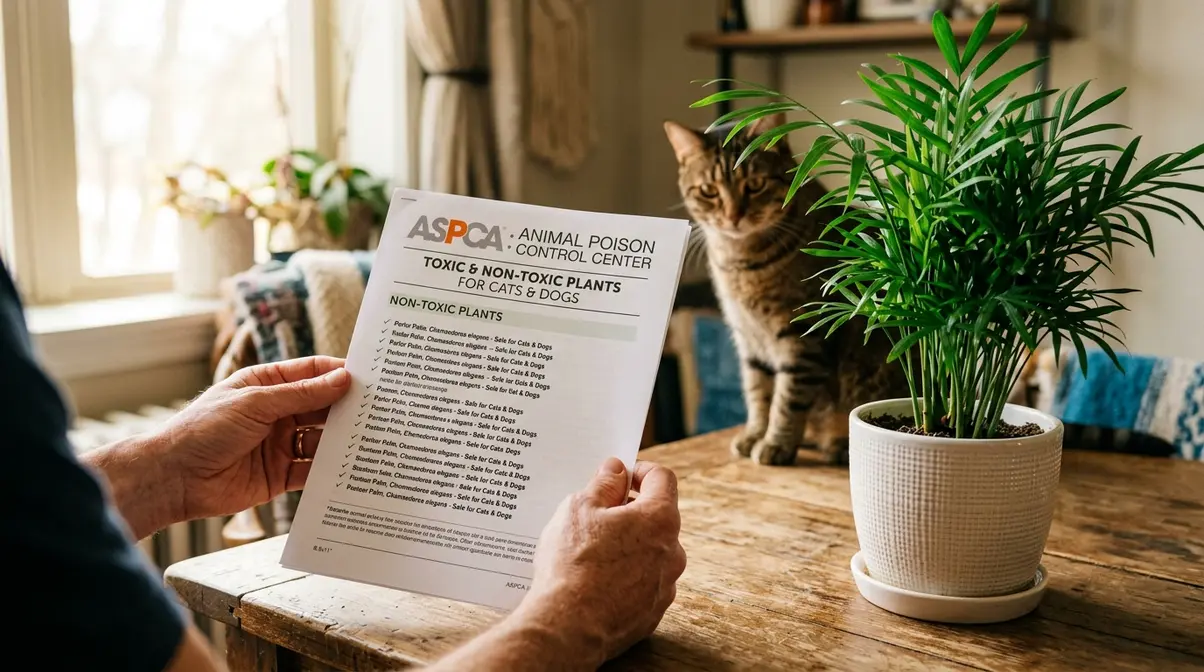
A cat-safe plant is one officially listed as non-toxic to cats by a recognized veterinary authority — most importantly, the ASPCA’s Animal Poison Control Center. The term doesn’t mean a plant is edible or nutritious for your cat. It means that if your cat chews a leaf or bats a flower to the floor and nibbles it, the risk of serious poisoning is extremely low. For a deeper dive into our foundational methodology, see our comprehensive guide to cat-safe plants.
This distinction matters enormously. The ASPCA Animal Poison Control Center received over 401,000 calls in 2026, with toxic plants ranking consistently among the top ten reported hazards for cats (ASPCA, 2026). Many cat owners assume that if a plant is sold in a mainstream garden center, it must be safe. That assumption is wrong — and it’s exactly the kind of confusion that leads to emergency vet visits.
ASPCA Plant Toxicity Defined
The ASPCA’s Animal Poison Control database classifies plants into two categories: toxic and non-toxic. A plant earns the “non-toxic” label when there is no documented evidence that it causes systemic poisoning, organ damage, or life-threatening reactions in cats. Mild gastrointestinal upset (vomiting, loose stools) can still occur with non-toxic plants — the ASPCA classification means the plant won’t harm your cat’s kidneys, liver, or heart.
The database is continuously updated by board-certified veterinary toxicologists. It is the single most authoritative, freely accessible reference for pet owners and the primary source used throughout this guide.
- Key terms to know:
- Toxic (calcium oxalate crystals): Microscopic needle-like crystals in plants like pothos and philodendrons that cause intense oral pain and swelling.
- Saponins: Natural compounds in some plants (like aloe vera) that cause vomiting and lethargy in cats.
- Non-toxic: No documented pathway to serious harm; mild stomach upset remains possible.
Introducing The Green Light System
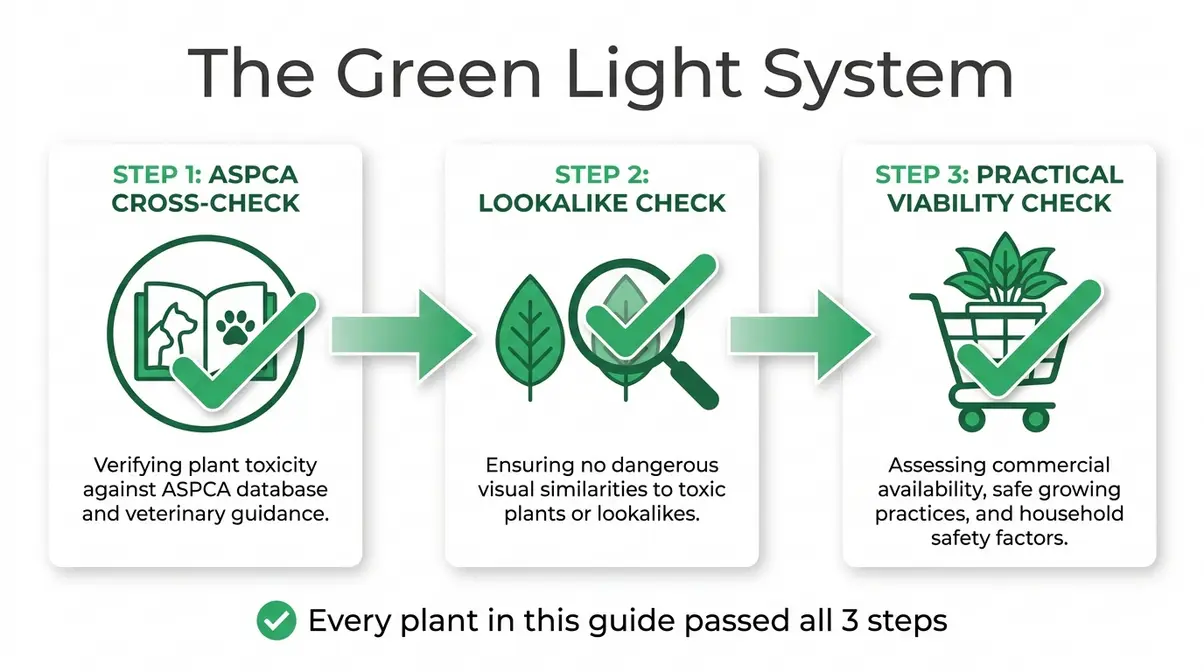
The Green Light System is our editorial framework for this guide: every plant recommended here has passed a three-step verification process before earning a spot on our list.
- Step 1 — ASPCA Cross-Check: The plant’s common name AND botanical name are verified against the ASPCA Animal Poison Control database.
- Step 2 — Lookalike Check: We confirm the plant cannot be easily confused with a toxic species (e.g., a “cat palm” vs. a toxic sago palm).
- Step 3 — Practical Viability Check: The plant must be realistically available to buy, beginner-friendly to care for, and genuinely useful as a home plant.
Only plants that pass all three steps receive a Green Light in this guide. This framework is what separates a trustworthy recommendation from a generic list — and it’s the standard you deserve when your cat’s health is on the line.
The Complete Cat-Safe Plants List {#complete-cat-safe-plants-list}
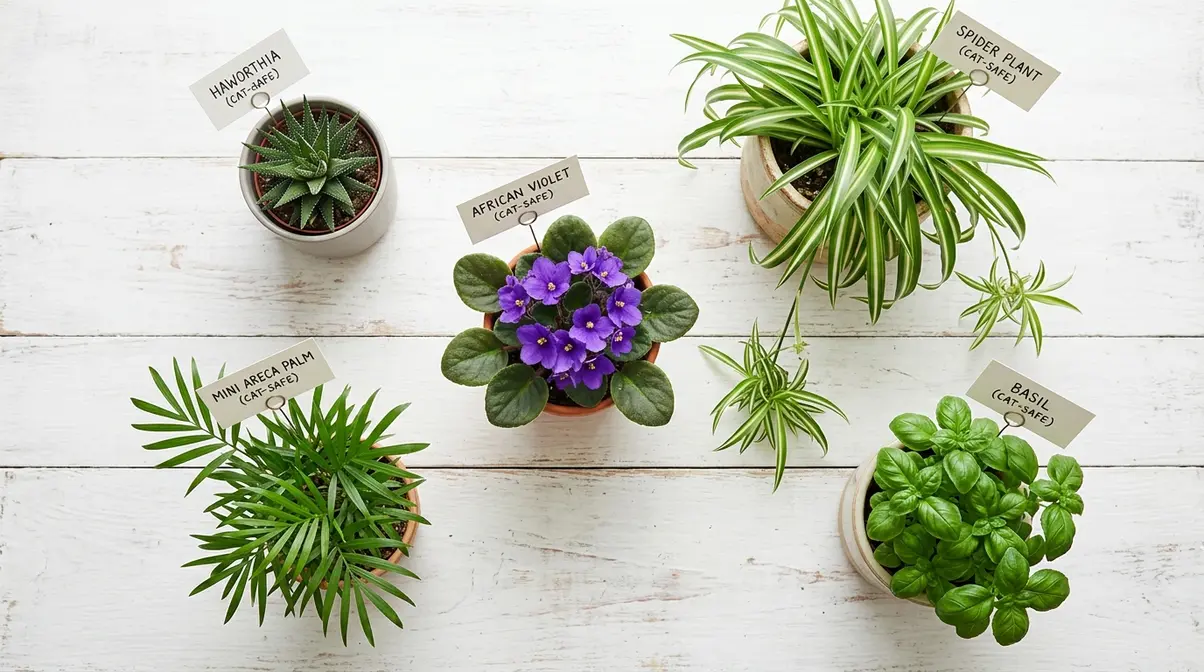
Every plant below has been cross-referenced against the ASPCA Animal Poison Control database. Our editorial team verified both common and botanical names for each entry, because a naming mismatch is one of the most common ways misinformation spreads in plant safety guides.
“All our plants listed here are not only cat-friendly but also incredibly hard to kill.”
How We Verified Every Plant on This List
Before a plant earns a recommendation here, our editorial team follows the Green Light System protocol described above. We search the ASPCA database using both the common name (e.g., “spider plant”) and the Latin botanical name (e.g., Chlorophytum comosum) to prevent errors caused by shared common names. For example, a “lily” can refer to dozens of species — some deadly, some harmless. We never rely on common names alone.
Additionally, we cross-referenced high-risk entries with the Cat Care Society’s plant safety guidance and Victoria State Government’s veterinary resources. No plant is listed without at least two source confirmations.
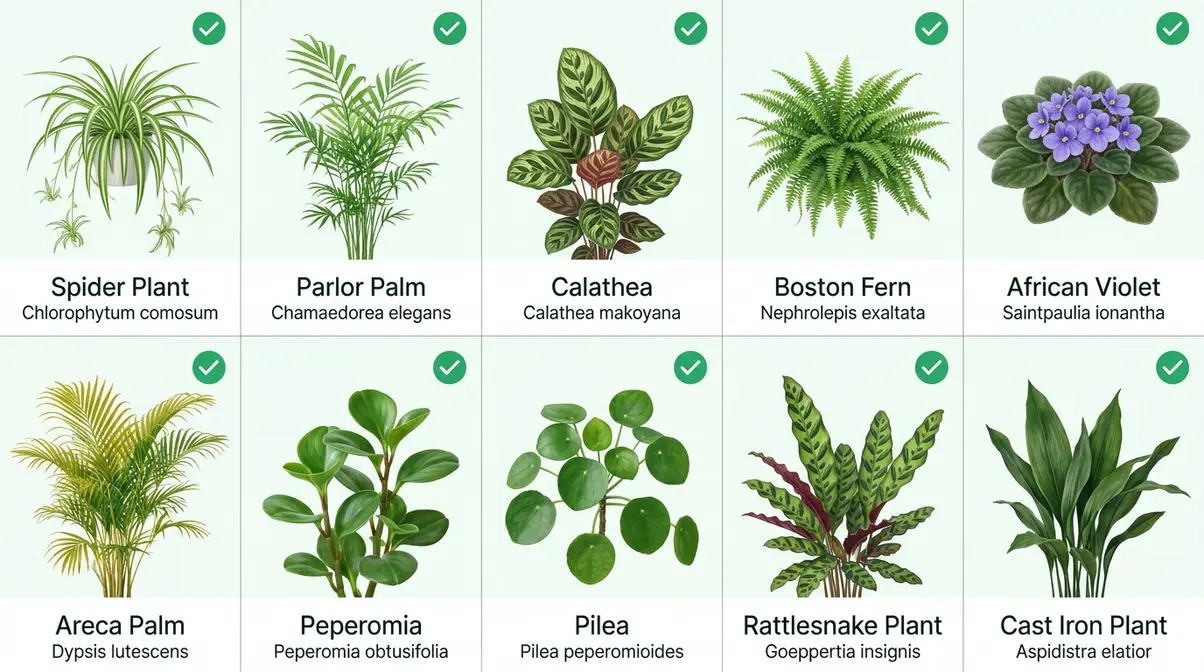
Top 10 Safe Plants for Beginners
These ten plants are the best starting point for any cat owner building their first indoor jungle. They’re hardy, widely available, and genuinely beginner-friendly.
| # | Plant | Botanical Name | Light Need | Difficulty |
|---|---|---|---|---|
| 1 | Spider Plant | Chlorophytum comosum | Low–Medium | Very Easy |
| 2 | Parlor Palm | Chamaedorea elegans | Low–Medium | Easy |
| 3 | Calathea / Prayer Plant | Calathea spp. / Maranta spp. | Low–Medium | Easy–Moderate |
| 4 | Boston Fern | Nephrolepis exaltata | Medium–High | Moderate |
| 5 | African Violet | Saintpaulia spp. | Medium | Easy |
| 6 | Areca Palm | Dypsis lutescens | Medium–High | Easy |
| 7 | Peperomia | Peperomia spp. | Low–Medium | Very Easy |
| 8 | Money Plant (Pilea) | Pilea peperomioides | Medium | Easy |
| 9 | Rattlesnake Plant | Goeppertia insignis | Low–Medium | Easy |
| 10 | Cast Iron Plant | Aspidistra elatior | Very Low | Very Easy |
*1. Spider Plant (Chlorophytum comosum)* — The ASPCA lists the spider plant as non-toxic to cats. However, it’s worth knowing that spider plants contain compounds mildly similar to opium, which can attract cats and cause them to chew on leaves. The result is usually harmless vomiting — not poisoning. Keep them out of reach if your cat is a dedicated chewer, or read our guide on managing cat interaction with spider plants.
*2. Parlor Palm (Chamaedorea elegans)* — One of the best low-light, pet-safe palms you can own. Veterinarians frequently recommend the parlor palm as an ideal statement plant for cat households. It’s slow-growing, tolerates neglect, and poses no toxicity risk according to the ASPCA database.
*3. Calathea & Prayer Plant (Calathea spp. / Maranta spp.) — Both of these stunning patterned-leaf plants are ASPCA-verified non-toxic to cats. Prayer plants (Maranta* spp.) are named for the way their leaves fold upward at night — a delightful quirk that costs you nothing in safety risk.
*4. Boston Fern (Nephrolepis exaltata)* — A classic hanging plant that is completely non-toxic to cats per the ASPCA. Boston ferns love humidity, making them ideal for bathrooms. One caveat: they shed fronds, so keep a vacuum nearby.
*5. African Violet (Saintpaulia spp.)* — A compact, flowering plant that’s fully ASPCA-verified safe for cats. African violets bloom repeatedly under the right conditions and are one of the few flowering houseplants with a clean safety record.
*6. Areca Palm (Dypsis lutescens)* — Also called the butterfly palm, this popular indoor tree is non-toxic to cats and doubles as a natural air humidifier. It’s a top pick for living rooms and bright corners.
*7. Peperomia (Peperomia spp.)* — With over 1,000 species in the genus, peperomias offer extraordinary variety. The ASPCA lists the genus as non-toxic to cats. They’re drought-tolerant, compact, and nearly indestructible — perfect for beginners.
*8. Money Plant / Chinese Money Plant (Pilea peperomioides) — The coin-shaped leaves of Pilea peperomioides are non-toxic to cats according to the ASPCA. Note: “money plant” is a shared name — Crassula ovata* (jade plant) is sometimes called a money plant and is toxic. Always verify by botanical name.
*9. Rattlesnake Plant (Goeppertia insignis)* — A striking calathea relative with dramatic spotted leaves, the rattlesnake plant is ASPCA-verified non-toxic. It thrives in low-to-medium light, making it an excellent choice for rooms without south-facing windows.
*10. Cast Iron Plant (Aspidistra elatior)* — True to its name, this plant is nearly impossible to kill. It tolerates deep shade, infrequent watering, and temperature fluctuations. The ASPCA confirms it is non-toxic to cats — making it the ultimate choice for low-maintenance, pet-safe greenery.
10 More Cat-Safe Plants Worth Exploring
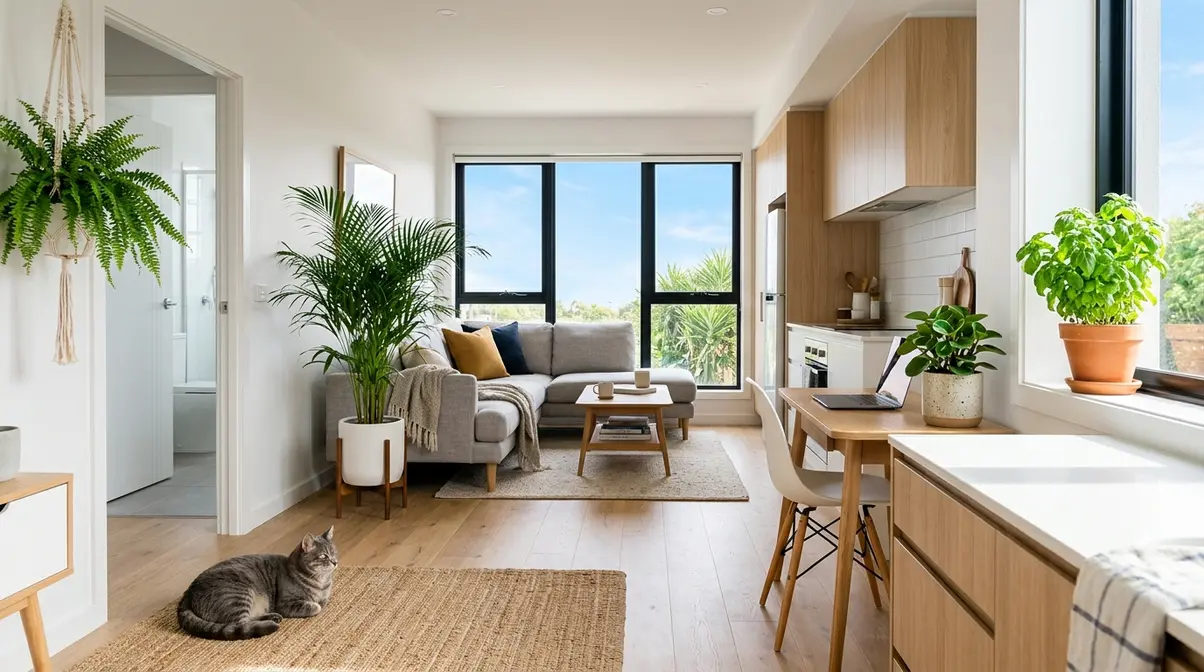
Once you’ve mastered the basics, these ten plants expand your options beautifully. All are ASPCA-verified non-toxic to cats.
| Plant | Botanical Name | Key Feature |
|---|---|---|
| Air Plant | Tillandsia spp. | No soil needed; completely non-toxic |
| Haworthia | Haworthia spp. | Succulent; safe unlike most succulents |
| Bamboo Palm | Chamaedorea seifrizii | Tall, tropical, great air purifier |
| Friendship Plant | Pilea involucrata | Textured leaves, compact, low-light |
| Ponytail Palm | Beaucarnea recurvata | Striking rosette; drought-tolerant |
| Swedish Ivy | Plectranthus australis | Trailing; easy to propagate |
| Wax Plant | Hoya carnosa | Waxy flowers; slow-growing, hardy |
| Bird’s Nest Fern | Asplenium nidus | Glossy fronds; thrives in bathrooms |
| Orchid | Phalaenopsis spp. | Elegant blooms; ASPCA-listed safe |
| Lemon Button Fern | Nephrolepis cordifolia | Compact, delicate, humidity-loving |
*Air Plant (Tillandsia spp.) stands out as a uniquely safe option: it grows with no soil, absorbs moisture from the air, and the ASPCA confirms the entire Tillandsia* genus is non-toxic to cats. Display them in glass globes, on driftwood, or in wall-mounted frames — they’re as decorative as they are safe.
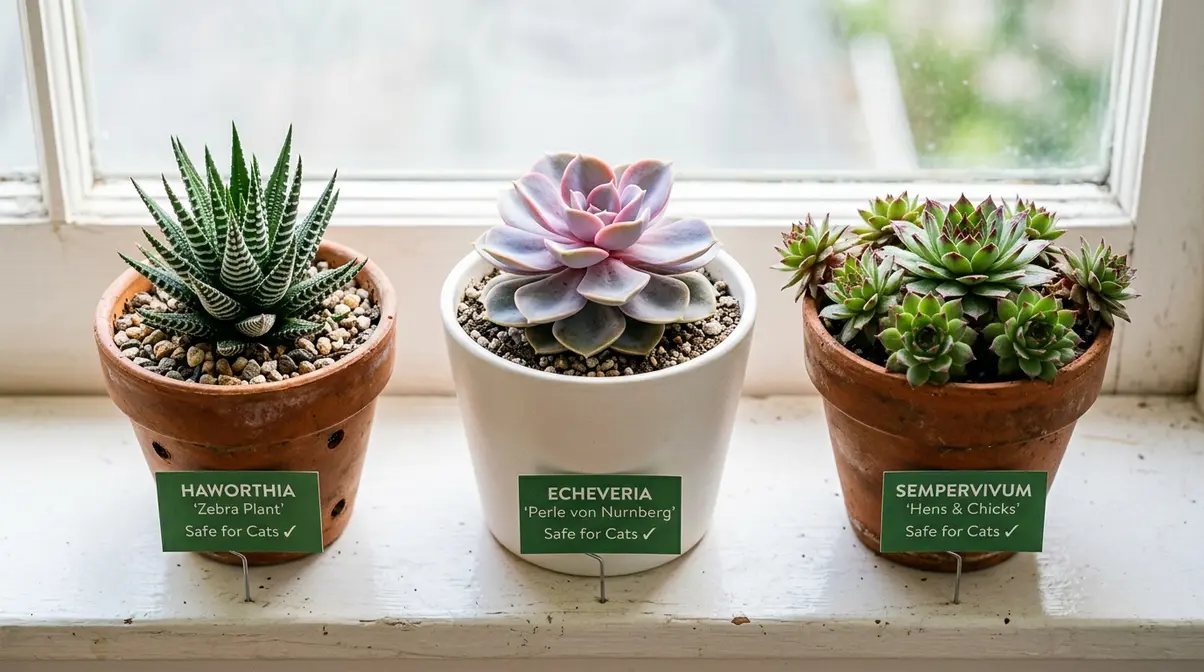
*Haworthia (Haworthia spp.)* is the succulent exception in a category full of hidden dangers. While most popular succulents (like aloe vera and jade) are toxic to cats, haworthia is ASPCA-listed as non-toxic. Its compact rosette shape and low water needs make it ideal for sunny windowsills.
*Orchids (Phalaenopsis spp.) deserve special mention. Many cat owners assume orchids are exotic and therefore risky. According to the ASPCA, Phalaenopsis* orchids are non-toxic to cats — so you can enjoy those elegant blooms without a second thought.
Cat-Safe Indoor Herbs
Growing your own herbs is one of the most satisfying things a home gardener can do — and several kitchen herbs are ASPCA-verified safe for cats.
| Herb | Botanical Name | ASPCA Status | Bonus Benefit |
|---|---|---|---|
| Basil | Ocimum basilicum | Non-toxic ✓ | Culinary + fragrant |
| Thyme | Thymus vulgaris | Non-toxic ✓ | Culinary + low-water |
| Dill | Anethum graveolens | Non-toxic ✓ | Culinary + feathery texture |
| Cilantro | Coriandrum sativum | Non-toxic ✓ | Culinary + fast-growing |
| Sage | Salvia officinalis | Non-toxic ✓ | Culinary + drought-tolerant |
| Catnip | Nepeta cataria | Non-toxic ✓ | Cats love it — great distraction plant |
*Catnip (Nepeta cataria)* is the ultimate cat-safe herb. It’s non-toxic per the ASPCA, and strategically growing it in a dedicated pot can actually redirect your cat’s chewing instincts away from your other plants. Think of it as a sacrificial but joyful decoy.
Note on rosemary: While Salvia rosmarinus (rosemary) is not listed as toxic by the ASPCA, it is classified as mildly irritating to cats in larger quantities. Use with caution and keep portions small if your cat is a dedicated nibbler.
Cat-Safe Plants by Type {#cat-safe-plants-by-type}
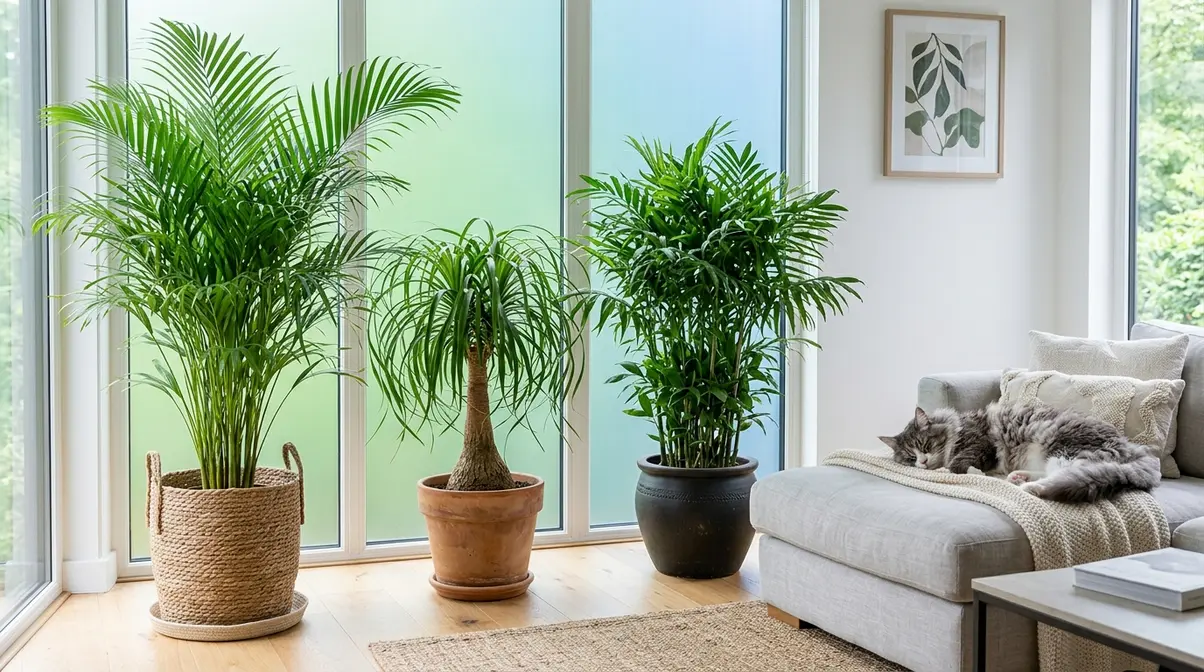
Choosing a plant by type helps you match the right species to your home’s style. The Cat Care Society emphasizes that organizing plants by visual category makes it easier for cat owners to make safe choices at the nursery — where labeling is often incomplete. Every plant below is ASPCA-verified non-toxic.
Cat-Safe Succulents
Succulents are one of the most dangerous categories for cat owners — not because they’re all toxic, but because toxic and non-toxic varieties look remarkably similar. Aloe vera (Aloe barbadensis), jade plant (Crassula ovata), and many Euphorbia species are toxic to cats and widely sold alongside safe varieties with no warning labels.
The safe succulents for cats are a shorter list — but they’re genuinely beautiful:
- *Haworthia (Haworthia spp.)* — Non-toxic ✓. Compact, striped rosettes. Perfect windowsill plant.
- *Echeveria (Echeveria spp.)* — Non-toxic ✓. Colorful rosettes in pink, purple, and blue-green.
- *Hens and Chicks (Sempervivum tectorum)* — Non-toxic ✓. Hardy, ground-spreading rosettes.
- *Sedum (Sedum spp.)* — Most species non-toxic ✓. Verify by botanical name before buying.
The safest rule: If you can’t confirm a succulent’s botanical name at the point of purchase, don’t buy it for a cat household. The visual similarity between safe and toxic succulents is genuinely dangerous.
Cat-Safe Flowering Plants
Flowering houseplants are notoriously tricky territory for cat owners. Lilies (Lilium and Hemerocallis spp.) are among the most deadly plants for cats — even the pollen can cause acute kidney failure. Yet the following flowering plants are ASPCA-verified safe:
- *African Violet (Saintpaulia spp.)* — Non-toxic ✓. Velvety blooms in purple, pink, and white. Compact and long-blooming.
- *Orchid (Phalaenopsis spp.)* — Non-toxic ✓. Elegant and long-lasting. For more tips, review our guide on choosing and displaying cat-safe orchids.
- *Gloxinia (Sinningia speciosa)* — Non-toxic ✓. Dramatic, trumpet-shaped blooms. Ideal for bright windowsills.
- *Snapdragon (Antirrhinum majus)* — Non-toxic ✓. Cheerful cottage-garden blooms, safe indoors and out.
- *Roses (Rosa spp.)* — Non-toxic ✓ (petals and leaves). However, thorns are a physical hazard — de-thorn stems if your cat is curious, and check our guide to cat-safe roses and their risks.
“Flowers that are 100% cat-safe” is one of the most-searched questions on this topic — and the honest answer is that “100% safe” is a high bar. The ASPCA lists these as non-toxic, meaning no documented toxicity pathway. Mild stomach upset after nibbling remains possible with any plant material.
Cat-Safe Hanging and Trailing Plants
Hanging plants are especially appealing to cats — swaying tendrils at eye level are basically an invitation. The good news is that several of the most popular trailing plants are genuinely safe:
- *Spider Plant (Chlorophytum comosum)* — Non-toxic ✓. The classic hanging plant. Produces cascading “spiderettes” that cats find irresistible. (See spider plant note above regarding mild attraction.)
- *Swedish Ivy (Plectranthus australis)* — Non-toxic ✓. Fast-growing, easy to propagate, and produces small white flowers.
- *Burro’s Tail (Sedum morganianum)* — Non-toxic ✓. Trailing succulent with plump, bead-like leaves. Handle gently — leaves detach easily.
- *Lemon Button Fern (Nephrolepis cordifolia)* — Non-toxic ✓. Compact, arching fronds with a subtle citrus scent.
- *Wax Plant (Hoya carnosa)* — Non-toxic ✓. Slow-growing but rewards patience with waxy, fragrant star-shaped flowers.
Important: Pothos (Epipremnum aureum) — including Marble Queen, Neon, and Golden varieties — is NOT safe and is one of the most commonly confused trailing plants. It looks similar to some safe philodendron-adjacent plants. Always verify before hanging.
Large Cat-Safe Statement Plants
Floor-standing statement plants are often the plants cat owners worry about most, because they’re accessible, large, and tempting to climb. These large plants are all ASPCA-verified safe:
- *Areca Palm (Dypsis lutescens)* — Non-toxic ✓. Can grow 6–8 feet indoors. Feathery fronds, tropical feel.
- *Parlor Palm (Chamaedorea elegans)* — Non-toxic ✓. Slower-growing, tolerates low light, elegant in corners.
- *Bamboo Palm (Chamaedorea seifrizii)* — Non-toxic ✓. Clustered canes with dense fronds. Excellent air quality plant.
- *Ponytail Palm (Beaucarnea recurvata)* — Non-toxic ✓. Technically a succulent tree — the bulbous trunk stores water. Extremely hardy.
- *Cast Iron Plant (Aspidistra elatior)* — Non-toxic ✓. Dark, strap-like leaves. Tolerates deep shade and near-total neglect.
“Sago palm” warning: The sago palm (Cycas revoluta) is sometimes sold near true palms and looks superficially similar. It is extremely toxic to cats — ingestion of even a single seed can be fatal. Never purchase a sago palm for a cat household.
Are Air Plants Safe for Cats?
*Yes — air plants (Tillandsia spp.) are listed as non-toxic to cats by the ASPCA*, making them one of the safest plant choices for cat households. They require no soil, absorb moisture from the air, and can be displayed in wall-mounted frames, glass globes, or on driftwood — making them naturally harder for cats to access and chew. Their minimal care requirements (a weekly misting or soak) make them ideal for beginner plant owners.
Cat-Safe Plants for Every Room {#cat-safe-plants-by-room}
Matching the right plant to the right room is as important as choosing a safe species. A plant that struggles in the wrong light becomes unhealthy, and stressed plants are more likely to drop leaves — which increases the chances of your cat investigating them. The Victoria State Government’s veterinary guidelines recommend placing plants thoughtfully to minimize feline access as a first line of defense.
Low-Light Cat-Safe Plants
Low-light rooms don’t have to be plant-free. These ASPCA-verified safe plants genuinely thrive in lower light conditions:
| Plant | Light Tolerance | Care Level | Notes |
|---|---|---|---|
| Cast Iron Plant | Very low | Very easy | Nearly indestructible |
| Parlor Palm | Low–medium | Easy | Great bedroom corner plant |
| Rattlesnake Plant | Low–medium | Easy | Dramatic patterned leaves |
| Prayer Plant | Low–medium | Easy | Folds leaves at night |
| Peperomia | Low–medium | Very easy | Compact, many varieties |
| Bird’s Nest Fern | Low–medium | Easy | Humidity-loving; ideal for bathrooms |
The cast iron plant and parlor palm are the top two recommendations for genuinely dark spaces. Both tolerate north-facing windows with no complaints and require minimal watering — reducing the temptation to overwater in low-light conditions.
Bright-Light Cat-Safe Plants
Bright, sunny spots support a wider range of plants. These ASPCA-safe options love direct or bright indirect light:
| Plant | Light Need | Notes |
|---|---|---|
| Echeveria | Bright direct | Colorful rosettes; drought-tolerant |
| Haworthia | Bright indirect | Easier than echeveria; shade-tolerant too |
| African Violet | Bright indirect | Blooms repeatedly; loves humidity |
| Ponytail Palm | Bright direct | Drought-tolerant; striking silhouette |
| Areca Palm | Bright indirect | Feathery fronds; fast-growing in good light |
| Herbs (basil, thyme, dill) | Bright direct | Functional and fragrant |
A sunny kitchen windowsill lined with basil, thyme, and dill is both practical and completely safe for cats. This is one of the easiest ways to build a small indoor jungle without any anxiety at all.
Cat-Safe Plants Room by Room
Bathroom: Boston fern, bird’s nest fern, lemon button fern. All love the humidity generated by showers. All ASPCA non-toxic.
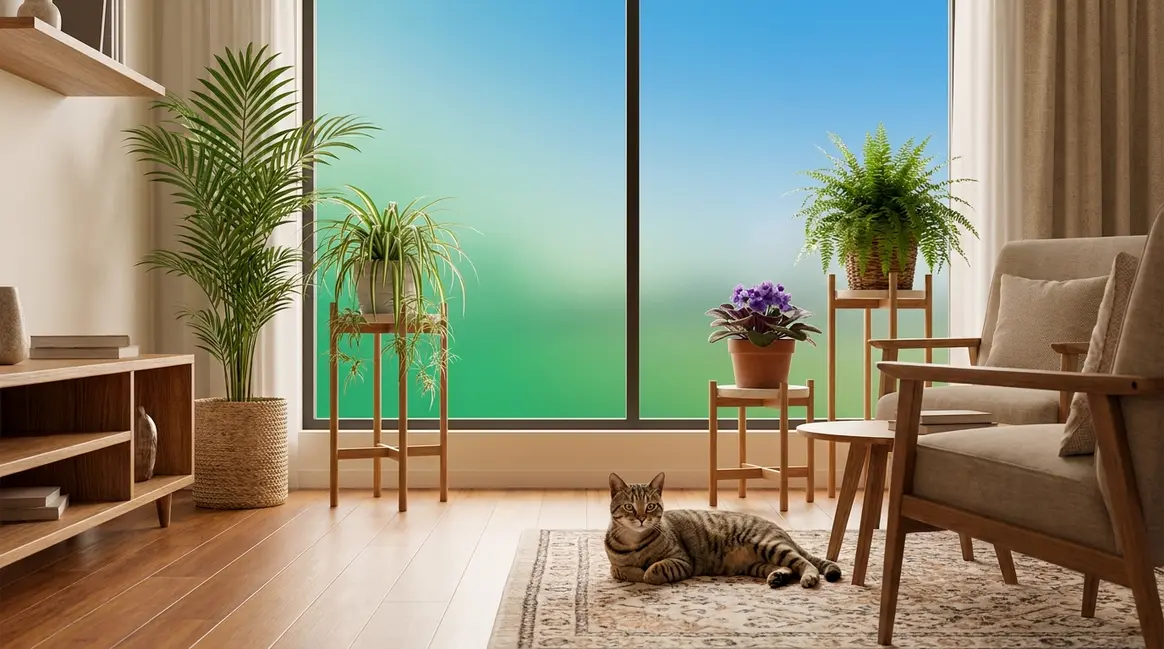
Living Room: Areca palm, ponytail palm, bamboo palm, calathea, peperomia. Mix heights and textures for a layered indoor jungle effect.
Bedroom: Cast iron plant, parlor palm, prayer plant, rattlesnake plant. All low-light tolerant and calming in the bedroom environment.
Kitchen: Herbs (basil, cilantro, dill, thyme), African violet, peperomia. Functional and decorative.
Home Office: Pilea, peperomia, air plant, haworthia. Compact plants that don’t compete with desk space.
Dangerous Houseplants to Avoid {#dangerous-plants-to-avoid}
Knowing what NOT to buy is just as important as knowing what to buy. These are the most commonly purchased toxic plants — and the safe alternatives that give you a similar look without the risk.
| Toxic Plant | Why It’s Dangerous | Safe Lookalike |
|---|---|---|
| Pothos (Epipremnum aureum) | Calcium oxalate crystals; oral pain, vomiting | Swedish Ivy (Plectranthus australis) |
| Snake Plant (Sansevieria trifasciata) | Saponins; vomiting, diarrhea | Cast Iron Plant (Aspidistra elatior) |
| ZZ Plant (Zamioculcas zamiifolia) | Calcium oxalate; irritation | Peperomia spp. |
| Jade Plant (Crassula ovata) | Mildly toxic; vomiting, depression | Haworthia spp. |
| Aloe Vera (Aloe barbadensis) | Saponins; vomiting, lethargy | Haworthia fasciata |
| Sago Palm (Cycas revoluta) | Cycasin; liver failure, potentially fatal | Areca Palm (Dypsis lutescens) |
| Peace Lily (Spathiphyllum spp.) | Calcium oxalate; oral pain, kidney stress | Calathea / Prayer Plant |
| Lilies (all Lilium spp.) | Nephrotoxic; acute kidney failure | Orchid (Phalaenopsis spp.) |
The pothos problem deserves special emphasis. Pothos is one of the most popular houseplants in the world — it’s sold in virtually every garden center, supermarket, and home goods store. It’s also one of the most frequently reported toxic plant exposures in cats, according to ASPCA data. Its trailing habit makes it especially accessible to curious cats. Do not buy pothos for a cat household in any variety — this includes Golden Pothos, Marble Queen, Neon Pothos, and Satin Pothos.
Similarly, the peace lily (Spathiphyllum spp.) is widely marketed as an air-purifying plant. It is toxic to cats due to calcium oxalate crystals and should be avoided entirely. A calathea or prayer plant gives you a similar tropical, lush aesthetic with zero toxicity risk. For a deeper dive into the specific dangers of true lilies, read our guide on understanding highly toxic lily plants.
Beyond the plants listed above, many owners struggle with identifying toxic Dracaena plants. If you suspect your cat has nibbled on one, refer to our guide on identifying toxic Dracaena plants for immediate signs to watch for.
Is the Snake Plant Safe for Cats?
*No — the snake plant (Sansevieria trifasciata, also called mother-in-law’s tongue) is NOT safe for cats. The ASPCA lists it as toxic due to saponins (natural chemical compounds) that cause vomiting, diarrhea, nausea, and drooling when ingested. Snake plants are extremely popular and widely sold, which makes this a common mistake. For more details, consult our complete safety guide for snake plants. The cast iron plant (Aspidistra elatior*) is a safe alternative with a similar upright, architectural look and comparable low-light tolerance.
How to Stop Your Cat From Eating Plants {#how-to-stop-cats-eating-plants}
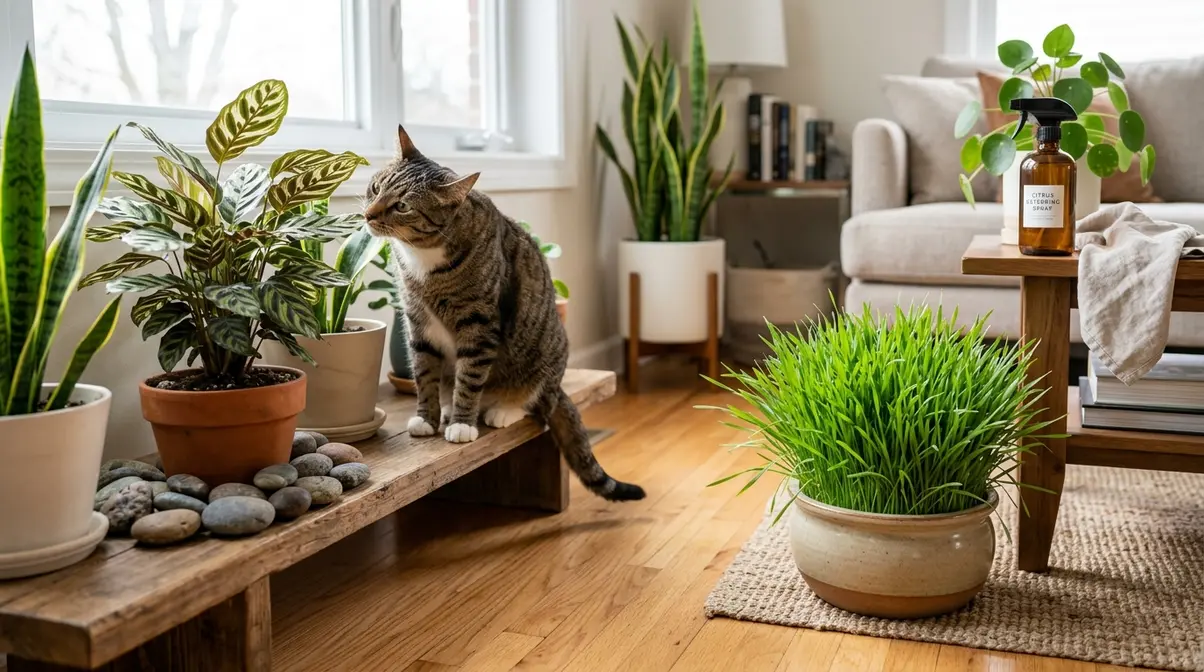
Even with a home full of ASPCA-verified cat safe plants, you probably don’t want your cat destroying your collection. Cats chew on plants for several reasons: boredom, curiosity, nutritional seeking (grass instinct), or because certain plants genuinely attract them. Understanding the “why” helps you choose the right solution.
Step-by-Step Deterrent Strategies
You’ll need: A few minutes, basic household items, and potentially a small investment in cat grass or a hanging system.
1. Grow a dedicated cat grass patch (10 minutes setup)
Plant oat grass (Avena sativa), wheatgrass, or catnip in a low pot and place it where your cat already likes to hang out. Cats often chew plants to satisfy a grass-eating instinct inherited from their wild ancestors. Giving them an approved outlet redirects the behavior naturally. Expected outcome: reduced interest in your other plants within 1–2 weeks.
2. Apply citrus deterrent spray (5 minutes)
Mix equal parts water and fresh lemon juice (or use diluted orange essential oil — 2 drops per cup of water) in a spray bottle. Apply to pot rims and lower leaves. Cats have an extremely sensitive sense of smell and typically avoid citrus-scented areas. Reapply every 2–3 days. Expected outcome: immediate reduction in plant investigation.
3. Use physical barriers for high-value plants (30 minutes setup)
Place decorative river rocks or pine cones on top of soil in pots. This prevents digging and makes the pot less inviting as a snacking spot. For hanging plants, ensure the lowest trailing tendrils are at least 18 inches above any surface your cat can reach from.
4. Elevate plants strategically
Cats are excellent jumpers, but they tend to lose interest in plants they can’t easily access. Use wall-mounted shelves, hanging macramé planters, or tall plant stands to move your collection out of the “casual nibble” zone. Place plants on surfaces your cat cannot access — not just high shelves (cats can reach those), but inside glass-fronted cabinets or terrariums.
5. Try commercial cat repellent
Products like bitter apple spray or commercial cat deterrent sprays are available at pet stores. Apply to pot rims (not leaves) according to package directions. These are generally non-toxic to cats but always check the ingredient list before use.
6. Enrich your cat’s environment
Many cats chew on plants out of boredom. Adding a window perch, puzzle feeder, or daily interactive play session (15–20 minutes) reduces plant-chewing behavior significantly. According to the Cornell Feline Health Center, environmental enrichment is one of the most effective long-term strategies for redirecting undesirable feline behaviors.
| Deterrent Method | Effort Level | Expected Effectiveness | Cost |
|---|---|---|---|
| Cat grass patch | Low | High (redirects instinct) | ~$5 |
| Citrus spray | Low | Medium–High | ~$0–3 |
| Physical barriers (rocks) | Low | Medium | ~$3–8 |
| Elevated placement | Medium | High | Varies |
| Commercial repellent | Low | Medium | ~$8–15 |
| Environmental enrichment | Medium | Very High (long-term) | Varies |
Why Cats Are Attracted to Certain Plants
Some plants are more attractive to cats than others. Spider plants, as noted, contain compounds mildly similar to nepetalactone (the active ingredient in catnip), which can cause cats to seek them out repeatedly. Valerian (Valeriana officinalis) has a similar effect. Knowing which of your plants might be “cat magnets” helps you decide where to place them, and understanding why cats interact with plants is key to protecting both your pet and your greenery.
Emergency Steps & When to Call Vet {#limitations-and-emergency}
This section is provided for informational purposes only and does not constitute veterinary advice. Always consult a licensed veterinarian for any health concerns about your cat.
Common Pitfalls to Avoid
Pitfall 1: Trusting common names alone.
“Lily” refers to dozens of species. Hemerocallis (daylily) is acutely toxic to cats; Lilium species can cause fatal kidney failure; but peace lily (Spathiphyllum) is a completely different genus. Always verify by botanical name on the ASPCA database before buying.
Pitfall 2: Assuming “non-toxic” means “harmless.”
ASPCA non-toxic status means no documented serious toxicity pathway — it does not mean your cat can eat unlimited quantities without any effect. Large amounts of any plant material can cause vomiting or diarrhea. Non-toxic plants should still be kept out of reach where possible.
Pitfall 3: Buying plants without labels.
Many nurseries and supermarkets sell plants with incomplete or missing botanical name labels. If you cannot confirm the exact species, don’t purchase it for a cat household. Reputable online plant retailers typically provide full botanical names and care information.
Pitfall 4: Forgetting about cut flowers and bouquets.
Florist bouquets often contain lilies — particularly in mixed “spring” or “Easter” arrangements. A single lily leaf or pollen dusting can cause acute kidney failure in cats. Remove any lilies from bouquets before bringing them into your home, or request lily-free arrangements.
Choosing Safer Alternatives
If your cat is a compulsive chewer: Even safe plants can cause repeated vomiting if consumed in large quantities. Consider a fully plant-free room as your cat’s primary living space, with plants only in rooms your cat cannot access unsupervised.
If you have a multi-pet household: Some plants safe for cats are toxic to dogs. Always cross-reference the ASPCA’s separate dog plant list if you have both species at home.
If you’re unsure about a plant already in your home: The ASPCA Animal Poison Control Center operates a 24/7 hotline — call 888-426-4435 (a consultation fee applies). This is the fastest way to get expert guidance for a specific plant.
What to Do If Your Cat Eats a Plant
Even with the best precautions, accidents happen. If your cat chews on a plant — safe or unknown — follow these steps immediately:
- Stay calm and remove your cat from the plant.
- Identify the plant by its full botanical name if possible. Take a photo of the plant and any chewed material.
- Check the ASPCA database at aspca.org for the plant’s toxicity status.
- Call your veterinarian or emergency animal clinic immediately if you cannot confirm the plant is non-toxic.
- Call the ASPCA Animal Poison Control Center at 888-426-4435 (24/7, consultation fee applies) for expert toxicology guidance.
- Do NOT induce vomiting unless specifically instructed by a veterinarian or poison control specialist.
- Bring a sample of the plant (or a clear photo) to the vet appointment.
When to Seek Veterinary Help Immediately
- Contact a veterinarian immediately — do not wait — if your cat shows any of the following after plant contact:
- Excessive drooling or pawing at the mouth
- Vomiting repeatedly (more than once)
- Lethargy, weakness, or collapse
- Difficulty breathing
- Seizures
- Swollen face, lips, or tongue
These symptoms can indicate a toxic plant exposure or an allergic reaction requiring urgent care. Time matters — especially with lily toxicity, where treatment within 6 hours dramatically improves survival outcomes.
FAQ: Top Cat Plant Safety Questions {#faq}
What plants are 100% safe?
No plant is “completely safe” in an absolute sense, but the ASPCA lists dozens of plants as non-toxic to cats — meaning they pose no documented pathway to serious harm. Top verified non-toxic options include the parlor palm (Chamaedorea elegans), spider plant (Chlorophytum comosum), African violet (Saintpaulia spp.), peperomia, calathea, areca palm, and air plants (Tillandsia spp.). Even with non-toxic plants, large quantities can cause mild stomach upset. The ASPCA database is the authoritative reference for any plant you’re unsure about.
What flowers are 100% cat-safe?
*The most reliably safe flowering houseplants are African violets, orchids (Phalaenopsis spp.), gloxinia, and snapdragons — all verified non-toxic by the ASPCA. Roses are also listed as non-toxic (petals and leaves), though thorns present a physical hazard. Avoid all true lilies (Lilium and Hemerocallis* spp.) — they are acutely toxic and potentially fatal to cats even in small amounts. For cut flower bouquets, always request lily-free arrangements from your florist.
What plants can I have if I have a cat?
You can have a wide variety of beautiful plants in a cat household — as long as you verify each one against the ASPCA database before buying. For beginners, the best starting plants are parlor palm, cast iron plant, peperomia, calathea, prayer plant, and Boston fern. For statement plants, areca palm and ponytail palm are excellent choices. For herbs, basil, dill, thyme, and cilantro are all ASPCA-verified safe. The key habit to build: always look up the botanical name of any new plant before it enters your home.
What should I do if my cat eats a plant?
Act immediately: identify the plant by botanical name, check the ASPCA database, and call your vet or the ASPCA Animal Poison Control Hotline at 888-426-4435. If the plant is confirmed non-toxic and your cat shows only mild vomiting, monitor closely and ensure fresh water is available. If the plant is unknown or potentially toxic, treat it as an emergency — do not wait for symptoms to worsen. Never induce vomiting unless a veterinarian specifically instructs you to. Bring a photo or sample of the plant to your vet appointment.
How to stop cats from chewing plants?
The most effective long-term strategy is a combination of redirection and deterrence. Start by growing a dedicated pot of cat grass or catnip to redirect your cat’s chewing instinct. Add citrus deterrent spray (diluted lemon juice) to pot rims, and place river rocks on top of soil to discourage digging. Elevate plants on wall-mounted shelves or in hanging planters where possible. According to the Cornell Feline Health Center, 15–20 minutes of daily interactive play significantly reduces plant-destructive behavior by addressing the underlying boredom that drives it.
Conclusion
For cat owners, building a beautiful indoor jungle no longer requires choosing between your love of plants and your cat’s safety. The ASPCA’s continuously updated Animal Poison Control database gives you a verified, authoritative reference for every plant you consider — and this guide has done the cross-referencing work for you. With 25+ ASPCA-verified cat safe plants organized by type, light level, and room, you now have everything you need to shop, plant, and decorate with complete confidence.
The Green Light System exists because cat owners deserve more than a generic list. Every recommendation here has passed an ASPCA cross-check, a toxic lookalike review, and a practical viability test. That three-step framework is your permanent filter — apply it to any new plant you encounter, and you’ll never have to guess again.
Your next step: pick two or three plants from the beginner list above, verify them one final time on aspca.org, and place your first order. Check out our other pet safety guides to continue pet-proofing your home, and buy your new plants from verified, pet-safe nurseries today. Save the ASPCA Animal Poison Control Hotline — 888-426-4435 — in your phone today, before you need it. A little preparation now means a greener, more joyful home for both you and your cat.

Dave King
Cat owner and writer at Mad Cat Man.