Are Spider Plants Safe for Cats? ASPCA-Verified Answer
Discover expert insights on Dracaena Toxic to Cats: 9 Signs Every Cat Owner Needs to Know + What to Do Now so you can make smarter decisions backed by Mad…

⚕️ Reviewed by , DVM | ** | Updated January 2026
This article is reviewed by a licensed veterinarian for accuracy. For emergencies, contact your vet or the ASPCA Animal Poison Control Center at (888) 426-4435.
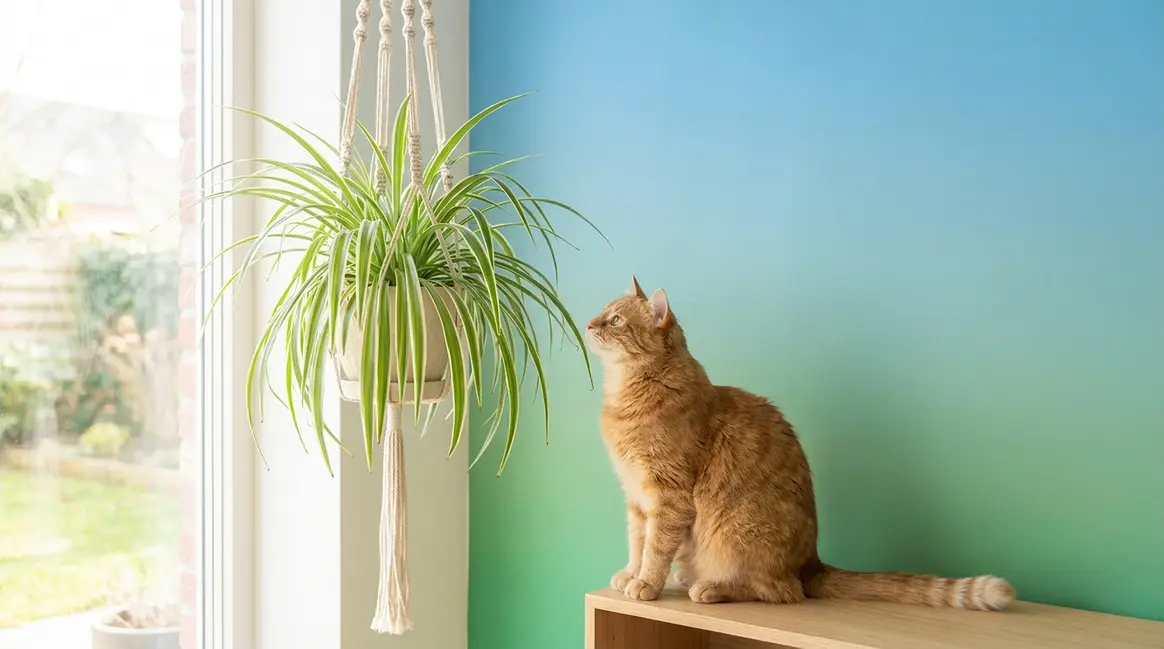
You glance over and catch your cat mid-nibble on your spider plant — again. Your stomach drops. Is this dangerous? Should you call someone? Take a breath: are spider plants safe for cats? Yes. According to the ASPCA’s official plant database, spider plants (Chlorophytum comosum — the long-leafed, trailing houseplant you know and love) are classified as non-toxic to cats and dogs. No emergency call required.
But here’s what most articles won’t tell you: “non-toxic” and “completely risk-free” are not the same thing. Your cat’s obsession with that plant has a real chemical explanation. And there are a handful of practical steps that will protect both your cat and your plant going forward.
This guide covers the science behind your cat’s fixation, the mild risks that do exist, and five concrete steps to keep everyone happy under one roof.
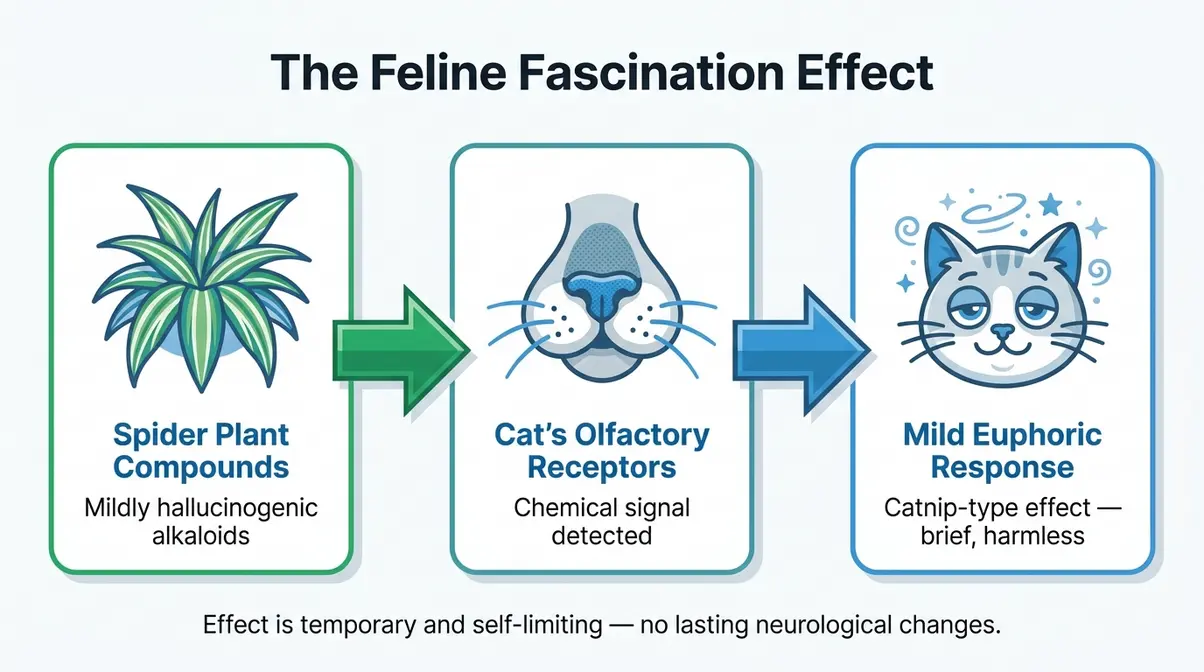
If you’re wondering, are spider plants safe for cats, the ASPCA confirms they’re non-toxic, but The Feline Fascination Effect explains why cats can’t stop nibbling them.
- Non-toxic, not risk-free: Large amounts can cause mild vomiting or diarrhea due to GI irritation.
- Chemical attraction is real: Spider plants contain compounds chemically similar to those in opium, triggering a mild catnip-type effect.
- Five steps protect both: Hanging, decoys, trimming, deterrents, and knowing when to call your vet are all you need.
⚠️ Medical Disclaimer: This article is for general informational purposes only. It is not a substitute for professional veterinary advice, diagnosis, or treatment. If your cat shows signs of distress after eating any plant, contact your veterinarian or the ASPCA Animal Poison Control Center at (888) 426-4435 immediately.
What to Know: Are Spider Plants Safe for Cats?
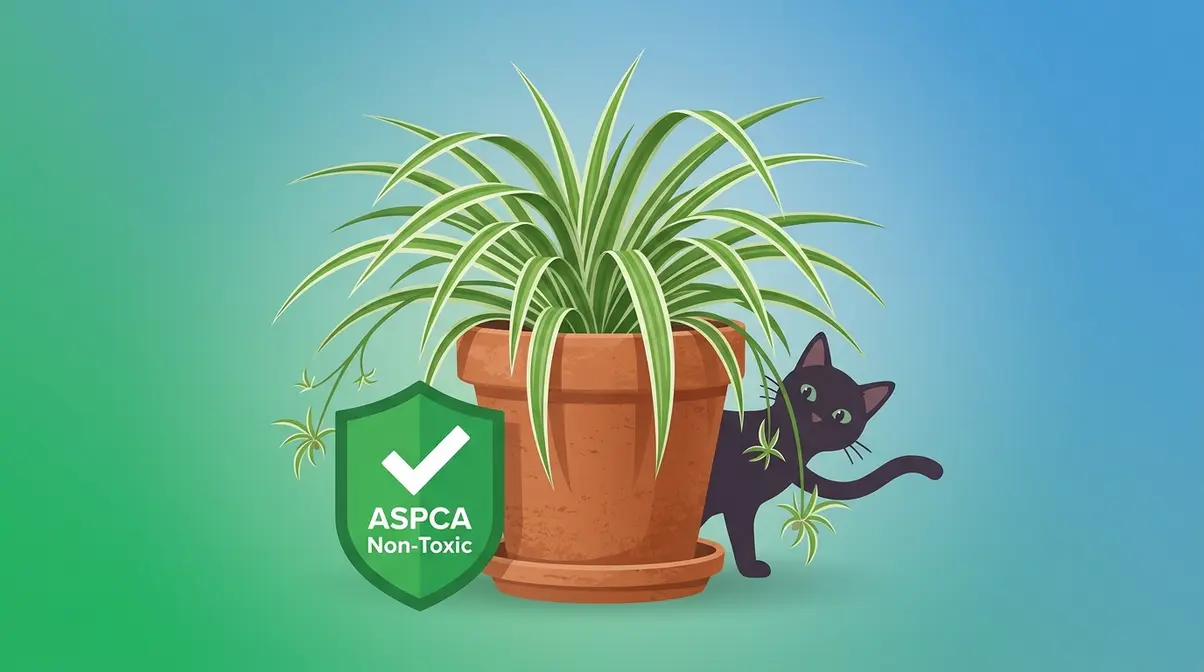
Spider plants are one of the most common houseplants in the world — and one of the most frequently chewed on by curious cats. Before you do anything else, understand the official safety picture. Veterinary sources confirm that the risk level here is low, but a nuanced read of the evidence matters.
ASPCA’s Official Toxicity Verdict
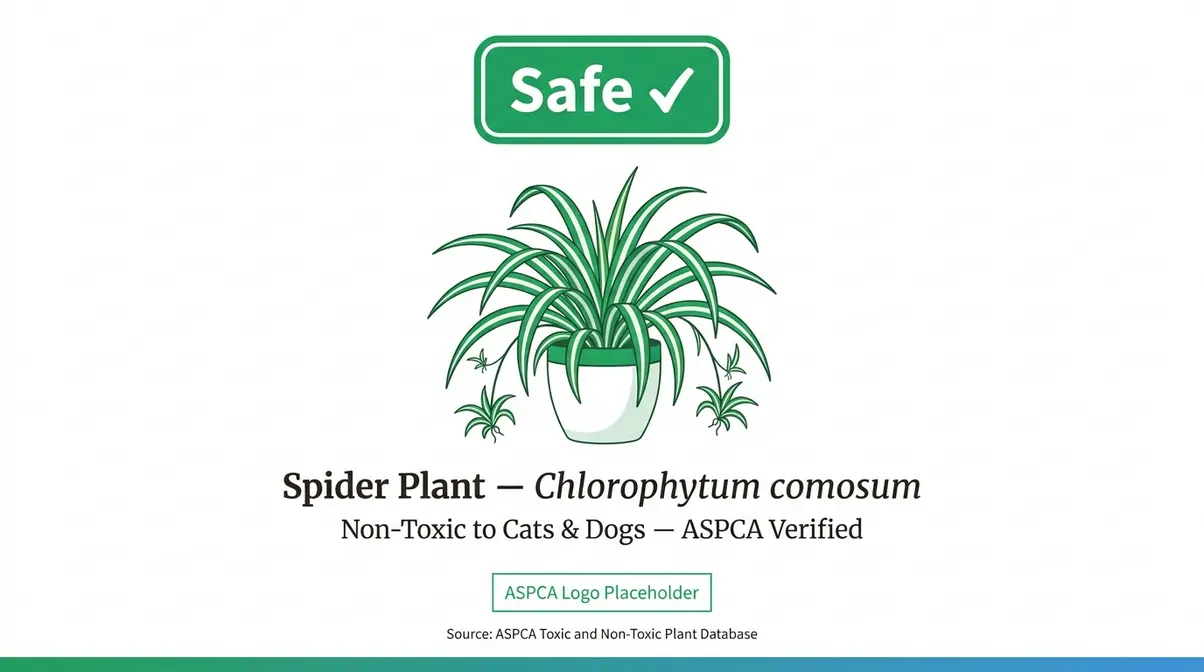
According to the ASPCA’s official toxic and non-toxic plant database, Chlorophytum comosum — commonly known as the spider plant — is non-toxic to both cats and dogs. The ASPCA is the gold-standard authority on pet plant safety in the United States, and their database is the primary resource veterinarians and poison control specialists reference when assessing plant exposure calls.
Spider plants are non-toxic to cats — this is the single most important fact in this article. If your cat chewed on a leaf this morning, you do not need to rush to an emergency vet. The plant does not contain compounds that cause organ failure, neurological damage, or life-threatening poisoning the way truly toxic plants do.
Non-Toxic Doesn’t Mean Risk-Free
Here is where most articles stop — and where this one goes further. While spider plants are non-toxic, they do contain chemical compounds that can mildly irritate your cat’s digestive system when consumed in larger quantities. Pet owners commonly report that their cats experience vomiting or loose stools after a significant nibbling session.
The FDA’s warnings on non-toxic plant ingestion note that even safe plants can cause mild gastrointestinal upset. The Pet Poison Helpline adds that this upset — including occasional vomiting, diarrhea, or excessive drooling — can occur when cats eat enough plant material. This isn’t poisoning. It’s the same kind of stomach response a person might have from eating too much of a food their body isn’t designed to digest. Your cat’s digestive system simply isn’t built to process large amounts of plant cellulose.
If you notice vomiting, diarrhea, lethargy, or loss of appetite after your cat has been chewing on a spider plant, contact your veterinarian. These symptoms are typically mild and self-limiting, but a vet call gives you peace of mind and professional guidance.
Are Spider Plants Safe for Dogs Too?
Yes — the same ASPCA classification applies to dogs. Spider plants are non-toxic to dogs as well as cats. Dogs who chew on spider plants may also experience mild GI upset for the same reasons, but the plant poses no serious toxic threat to canines. If you share your home with both cats and dogs, your spider plant is safe to keep — with the same practical precautions covered in the steps below.
The Feline Fascination Effect
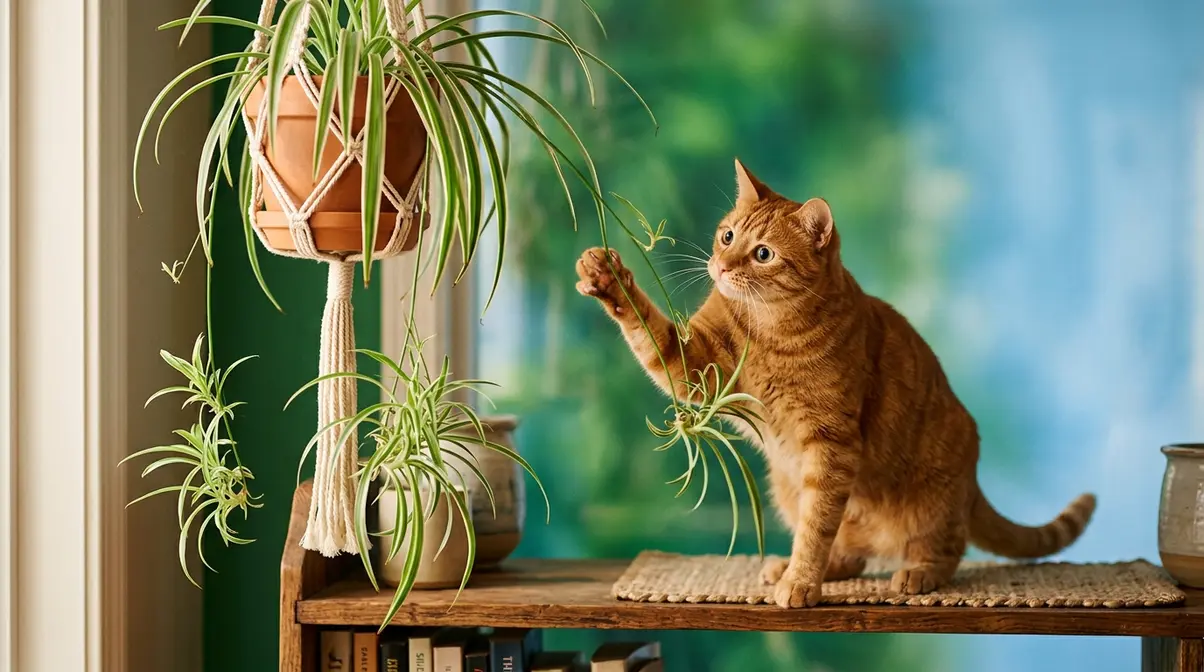
You’ve confirmed the plant is safe. When asking are spider plants safe for cats, understanding this chemical attraction is key. But now a new question nags at you: why is your cat so obsessed with it? This isn’t random mischief. There’s a genuine chemical and behavioral explanation — and understanding it is the first step toward managing the behavior. For more solutions, see our guide on 9 evidence-backed fixes for spider plants.
“Caught in the act!! Nibbling Dolly, (my rather ginormous spiderplant). I looked it up, spiderplants are fine for cats to nibble, in fact it gives them a ‘high’ similar to catnip. So THATS why Tammy two socks has a nibble every morning, shes getting her daily kick. 🤣”
— Cat owner, Reddit
Sound familiar? This reaction — equal parts discovery, relief, and amusement — is shared by cat owners everywhere. It has a name: The Feline Fascination Effect.
Chemicals Causing a Mild ‘High’
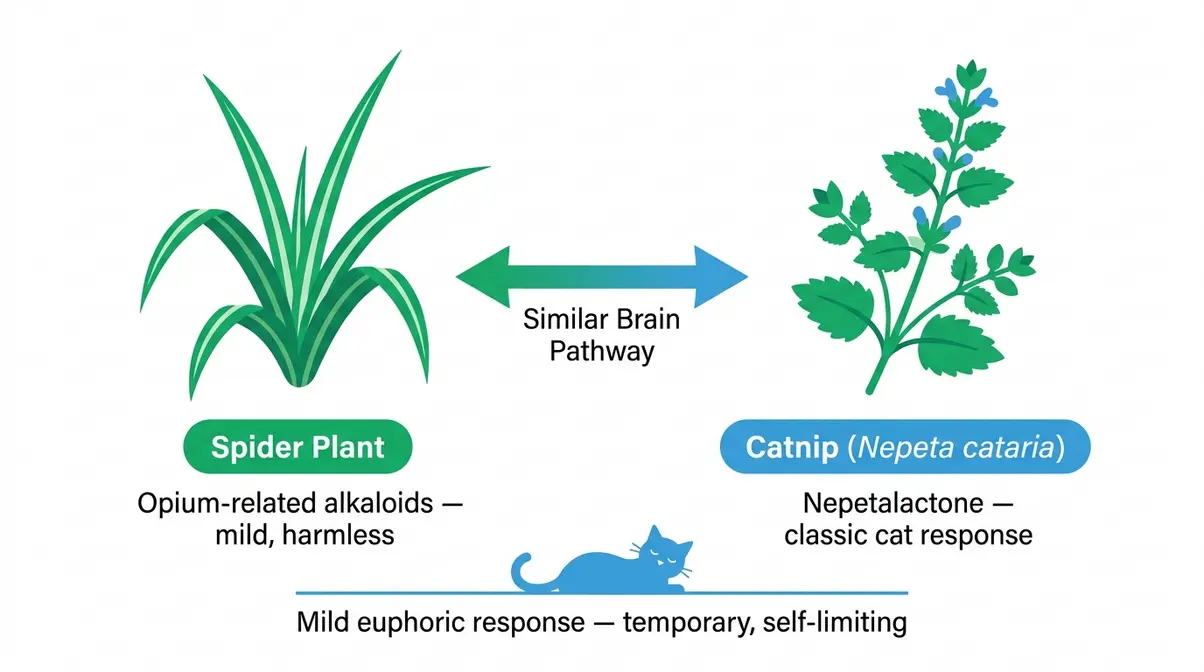
Spider plants contain naturally occurring chemical compounds that are mildly hallucinogenic (meaning they can cause subtle, altered perceptions) for cats. Research discussed by veterinary experts at Tufts University suggests these compounds are chemically related to those found in opium — though present in concentrations far too low to cause serious harm. They produce a catnip-type effect: a brief period of heightened stimulation, rolling, rubbing, or dreamy-eyed staring.
Catnip (Nepeta cataria) triggers its famous response through a compound called nepetalactone. Spider plants work through a different but structurally similar pathway — activating the same reward-seeking circuits in your cat’s brain that catnip does. The effect is milder and shorter-lived, but it’s real, and it explains why some cats return to the plant daily like clockwork, getting their morning kick.
Prey Drive and Dangling Leaves
The chemical attraction is only half the story. Pet owners commonly report that their cats attack spider plants even before taking a bite — swatting at the long, arching leaves and trailing “babies” (the small offshoots that dangle from the mother plant). This is prey drive at work.
Cats are hardwired hunters. Their visual system is tuned to detect movement, particularly objects that dangle, sway, or flutter — the same motion profile as a mouse tail or a bird’s wing. Spider plant leaves and their hanging offshoots move in exactly this way when there’s a breeze or when another cat bumps the pot. Your cat isn’t being destructive. She’s doing what three million years of evolution designed her to do.
Do Spider Plants Make Cats Hallucinate?
Technically, the answer is: probably a little, yes — but not in the dramatic way the word “hallucinate” implies. The chemical compounds in spider plants can produce mild sensory alterations — a brief, dreamy state, some light disorientation, or increased playful behavior. Veterinary sources confirm this is a temporary, self-limiting effect. There is no evidence that spider plants cause lasting neurological changes or distress.
Think of it less like a hallucinogenic drug experience and more like the gentle, floaty feeling some people get from chamomile tea. Your cat may appear briefly “zoned out” or extra affectionate after nibbling. Within minutes, she’ll be back to her normal self — possibly eyeing the plant again.
What You Need Before You Start Cat-Proofing
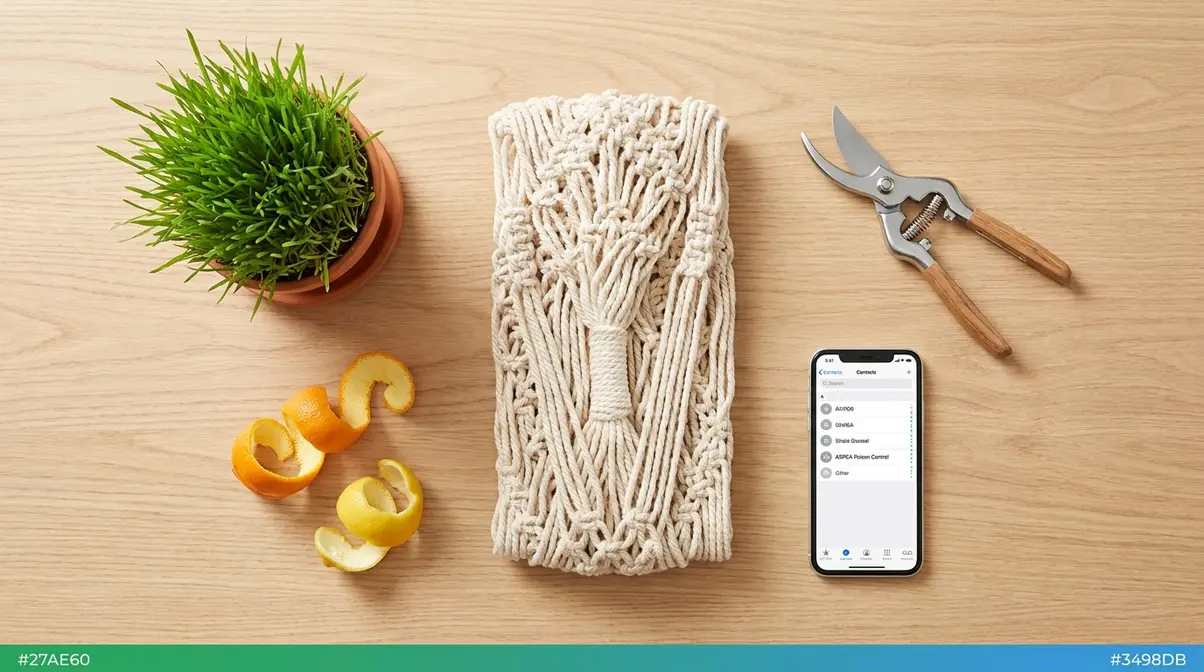
Before working through the five steps below, gather a few simple items. You won’t need all of them — choose the strategies that fit your home.
- You’ll need:
- A sturdy ceiling hook or macramé plant hanger (for Step 1)
- Cat grass seeds or a pre-grown cat grass kit (for Step 2)
- Clean scissors or garden shears (for Step 3)
- Citrus peels or a pet-safe bitter deterrent spray (for Step 4)
- Your veterinarian’s phone number and the ASPCA Poison Control number: (888) 426-4435 (for Step 5)
Total setup time: 30–60 minutes across all five steps.
Step 1 – Hang Your Spider Plant Out of Reach
The single most effective thing you can do is remove physical access. Spider plants actually thrive when hung — they’re natural trailers, and a hanging basket shows off their cascading leaves beautifully. More importantly, a properly hung plant puts it beyond the reach of even the most determined jumper.
How to do it:
- Choose a ceiling hook rated for at least 5 lbs — most spider plants in a 6-inch pot weigh under 2 lbs, but you want a safety margin.
- Install the hook in a ceiling joist, not just drywall, using a stud finder.
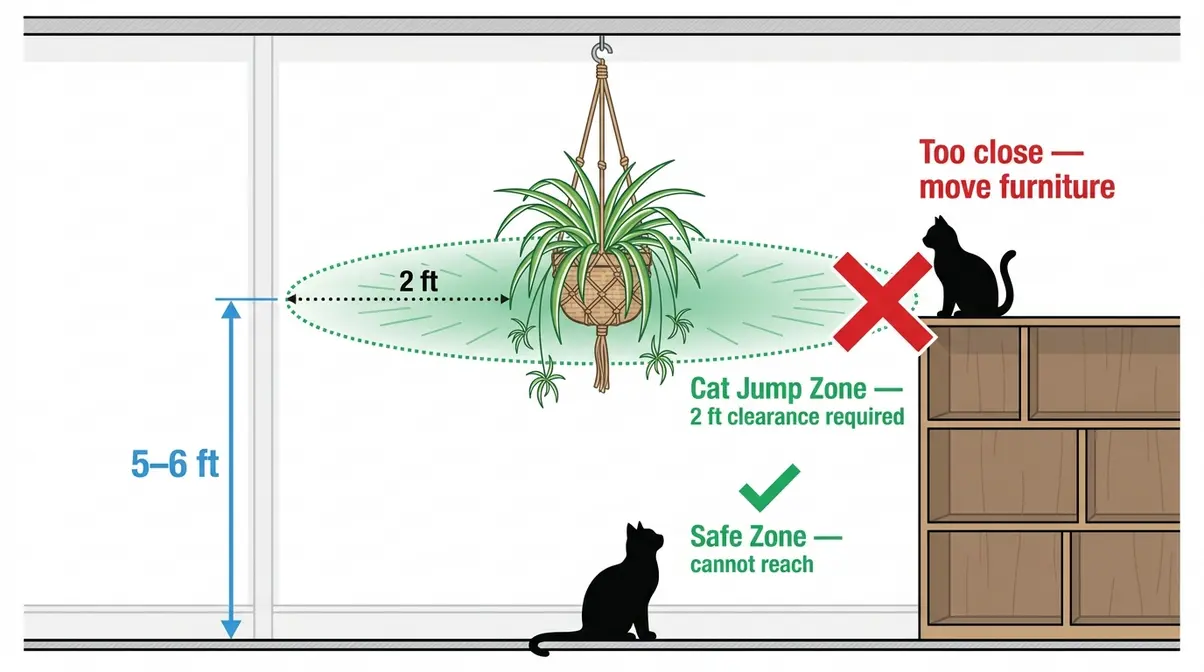
- Hang the plant at least 5–6 feet from the floor and at least 2 feet from any nearby shelf, bookcase, or furniture your cat could use as a launch pad.
- Check that no trailing “babies” hang low enough for a cat to snag from a nearby surface.
Why it works: Most cats won’t attempt a free-hanging jump to a swinging target with no landing surface. The combination of height and instability removes the plant from their accessible world.
Step 2 – Create a Cat Grass Decoy
Hanging the plant solves access. But your cat still has the urge to chew on greenery — and if you don’t redirect that urge, she’ll find something else to target. The solution is a cat grass decoy: a designated, cat-approved plant your cat can nibble freely.
How to do it:
- Purchase cat grass seeds (typically wheat grass, oat grass, or barley) or a pre-grown kit from any pet store or online retailer. Kits run $5–$15.
- Place the cat grass in a low, accessible spot — on the floor, a low shelf, or your cat’s favorite lounging area.
- Rub a tiny amount of catnip onto the grass blades on day one to attract your cat’s attention.
- Let her nibble freely. Cat grass is safe, digestible, and provides roughage that aids hairball control.
- Refresh the grass every 2–3 weeks as it gets chewed down.
Why it works: You’re not removing your cat’s instinct to chew on plants — you’re giving that instinct a safe, sanctioned outlet. Pet owners commonly report that introducing cat grass dramatically reduces interest in other houseplants within a week or two.
Step 3 – Trim Flowers and Seed Pods Promptly
Most guides stop at “spider plants are safe.” Here’s a detail they miss: the flowers and developing seed pods on spider plants carry a higher concentration of the mildly irritating compounds than the leaves do. While still not toxic, they are more likely to cause GI upset if your cat eats them.
How to do it:
- Check your spider plant weekly for new flower stalks — these are thin, wiry stems that emerge from the center of the plant.
- Using clean scissors or garden shears, snip flower stalks at the base as soon as you notice them.
- Dispose of trimmings immediately in a sealed bin — don’t leave them on the floor where a curious cat can find them.
- Do the same for any seed pods that form if a flower is pollinated before you catch it.
Why it works: Removing the highest-concentration parts of the plant reduces the likelihood of GI upset even if your cat manages to reach the plant. It also keeps your spider plant looking tidy — a bonus for the plant.
Step 4 – Use Safe Deterrents Around the Plant
For cats that are particularly persistent — or for spider plants you’d prefer to keep at floor level for aesthetic reasons — safe deterrents can discourage close investigation without harming your cat.
How to do it:
- Citrus peels: Place fresh orange, lemon, or lime peels around the base of the pot. Most cats dislike citrus scent strongly. Replace peels every 2–3 days as the scent fades.
- Bitter deterrent spray: Apply a pet-safe bitter apple or bitter lemon spray (available at pet stores) to the outer leaves of the plant. Reapply every few days. Always check the product label to confirm it is safe for use around cats.
- Physical barriers: Place decorative river rocks or pine cones on the soil surface. Cats dislike the texture underfoot and typically won’t dig or step into the pot.
- Double-sided tape: Lay a strip of double-sided tape on the surface near the pot. One or two encounters with sticky tape is usually enough to deter a cat from approaching.
Why it works: Deterrents work through your cat’s strong aversion responses — to certain scents, textures, and sensations. They don’t harm the cat; they simply make the plant area unpleasant enough to avoid.
Step 5 – Know When to Call Your Vet
This is the step most guides skip entirely, but it’s the one that matters most if something goes wrong. Knowing your action threshold in advance means you won’t freeze or second-guess yourself if your cat starts showing symptoms.
How to do it:
- Save these numbers in your phone right now:
- Your regular veterinarian’s direct line
- ASPCA Animal Poison Control Center: (888) 426-4435 (24/7, consultation fee may apply)
- Pet Poison Helpline: (855) 764-7661 (24/7)
- Monitor your cat for 30–60 minutes after any significant nibbling episode.
- Call your vet immediately if you observe: vomiting more than once, diarrhea, lethargy, drooling excessively, loss of coordination, or refusal to eat.
- When you call, be ready to tell them: what plant was eaten, how much you estimate was consumed, and when the nibbling happened.
- If your cat ate only a leaf or two and is acting completely normal, you can monitor at home — but don’t hesitate to call if you’re unsure.
Why it works: Spider plant ingestion is rarely a true emergency, but having a clear decision framework removes the anxiety of guessing. According to the ASPCA Animal Poison Control Center, most spider plant cases require only supportive care at home, if anything at all.
Verify Your Cat-Proofing Setup Is Working
After implementing the steps above, do a quick check at the 24-hour mark and again at the one-week mark to confirm the strategies are holding.
- 24-Hour Check:
- Is the plant hung securely with no accessible swing path from furniture?
- Has your cat shown interest in the cat grass decoy?
- Are deterrents in place and fresh?
- One-Week Check:
- Has nibbling on the spider plant stopped or significantly decreased?
- Is the cat grass being used regularly?
- Are flower stalks trimmed and disposed of?
If your cat is still accessing the plant after one week, revisit Step 1 (hanging height and clearance) and Step 2 (try adding more catnip to the decoy grass). Persistent cases may need a combination of all four deterrent strategies running simultaneously. Most cat owners find that two to three strategies used together solve the problem completely.
Other Cat-Safe and Toxic Houseplants
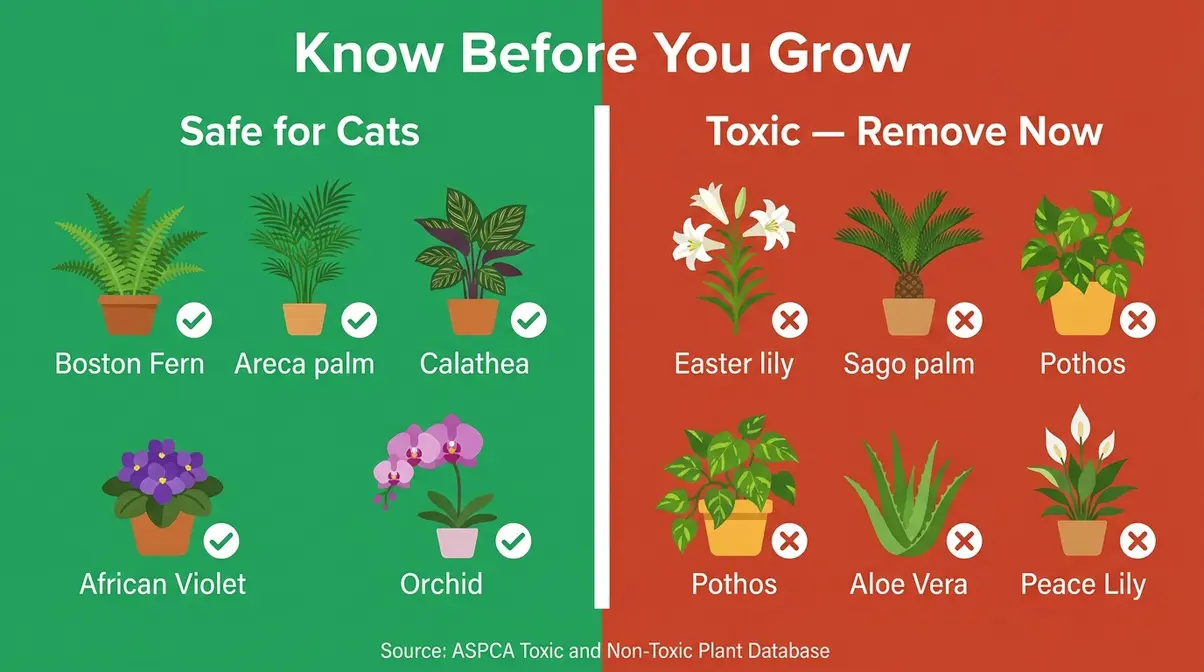
Now that we’ve answered are spider plants safe for cats, this naturally raises a bigger question: which other plants in your home are safe — and which ones need to go? Here’s a quick overview. For full lists with care details, see our complete guide to cat-safe plants.
7 Common Houseplants Safe for Cats
The following plants are classified as non-toxic to cats by the ASPCA and are generally considered safe to keep in a cat-friendly home:
| Plant | Why It’s Safe |
|---|---|
| Boston Fern | Non-toxic; mild GI upset possible only in very large amounts |
| Areca Palm | Safe for cats and dogs; non-irritating |
| Calathea | Non-toxic; popular for its striking foliage |
| African Violet | Confirmed non-toxic by ASPCA |
| Haworthia (Zebra Cactus) | Non-toxic succulent; safe alternative to aloe |
| Swedish Ivy | Non-toxic and trailing — similar aesthetics to spider plant |
| Orchid (Phalaenopsis) | Non-toxic to cats and dogs |
For a deeper dive into safe plant options with care tips, visit our cat-safe plants guide.
7 Toxic Houseplants to Remove Now
These plants pose serious — in some cases life-threatening — risks to cats. The Cornell Feline Health Center specifically warns that true lilies (Lilium species, including Easter lily, Tiger lily, and Daylily) are among the most dangerous plants a cat can encounter, capable of causing acute kidney failure from even small exposures.
| Plant | Toxicity Level | Primary Risk |
|---|---|---|
| Easter Lily / Tiger Lily | Severe | Acute kidney failure |
| Sago Palm | Severe | Liver failure, can be fatal |
| Oleander | Severe | Cardiac toxicity |
| Dieffenbachia | Moderate–High | Oral burning, swelling, difficulty breathing |
| Pothos (Devil’s Ivy) | Moderate | Oral irritation, vomiting |
| Aloe Vera | Moderate | GI upset, lethargy |
| Peace Lily | Moderate | Oral irritation, vomiting, drooling |
If you have any of these plants in your home, rehome them to a cat-free household or replace them with safe alternatives. For a full breakdown of toxic plants and symptoms, see our guide: hidden dangers in your home for cats.
Common Cat Owner Mistakes to Avoid
Even well-meaning cat owners make a few predictable errors when managing spider plants. Here are the most common ones — and the fixes.
Mistake 1: Assuming “non-toxic” means unlimited access is fine.
The ASPCA classification means the plant won’t poison your cat — it doesn’t mean daily heavy nibbling is harmless. Large amounts can still cause vomiting and GI upset. Use the five steps above to limit access even though the plant is technically safe.
Mistake 2: Hanging the plant too close to furniture.
A spider plant hung at 5 feet is useless if your cat can leap from a nearby bookshelf. Cats are capable of impressive jumps — up to six times their body length. Audit the 2-foot clearance zone in every direction before calling the hanging “done.”
Mistake 3: Skipping the cat grass decoy.
Removing access without providing an alternative leaves the underlying urge unaddressed. Pet owners commonly report that cats simply redirect to another houseplant. The decoy strategy is the most underused but most effective long-term solution.
Mistake 4: Using deterrents that aren’t cat-safe.
Some online sources suggest using essential oils like eucalyptus or tea tree oil as plant deterrents. These are toxic to cats and should never be used around them. Stick to citrus peels and ASPCA-verified bitter sprays only.
Mistake 5: Not knowing the emergency numbers in advance.
Most cat owners look up the Poison Control number after a problem starts — while panicked and distracted. Save (888) 426-4435 in your phone right now, before you need it.
Frequently Asked Questions
What if a cat eats a spider plant?
In most cases, nothing serious happens when a cat eats a spider plant. The ASPCA classifies spider plants as non-toxic, meaning the plant does not contain compounds that cause organ damage or poisoning. However, eating a significant amount may cause mild vomiting, diarrhea, or drooling due to GI irritation — similar to what happens when cats eat grass. These symptoms are typically short-lived and self-limiting. If vomiting persists, your cat seems lethargic, or you’re concerned, contact your veterinarian or the ASPCA Animal Poison Control Center at (888) 426-4435.
Why is my cat obsessed with this plant?
Your cat is drawn to spider plants by both chemistry and instinct. Spider plants contain naturally occurring compounds that are mildly hallucinogenic (causing subtle altered perceptions) — chemically related to compounds found in opium, but in harmless concentrations. These trigger a catnip-type effect that makes the plant genuinely appealing to your cat’s brain. On top of that, the long, dangling leaves and trailing offshoots mimic the movement of prey, activating your cat’s natural hunting instincts. Together, these two forces — The Feline Fascination Effect — explain why your cat returns to the plant daily.
Do cats hallucinate from spider plants?
Cats likely experience a mild, temporary sensory alteration — but not a full hallucination. Veterinary sources confirm that the chemical compounds in spider plants can cause brief periods of heightened stimulation, dreamy behavior, or increased affection in cats — similar to a gentle catnip response. The effect is short-lived, typically fading within a few minutes, and there is no evidence it causes lasting neurological changes or distress. Think of it as a very mild, passing “buzz” rather than a dramatic hallucinogenic episode.
Can I keep spider plants with cats?
Yes — spider plants and cats can absolutely coexist safely. The ASPCA confirms spider plants are non-toxic, and millions of cat owners keep them without issue. The key is managing access with the five steps in this guide: hang the plant at height, provide a cat grass decoy, trim flowers promptly, use safe deterrents, and know your vet’s number. With these measures in place, your spider plant stays beautiful and your cat stays safe. For households with multiple pets, the same approach applies — spider plants are also non-toxic to dogs.
So, are spider plants safe for cats? Yes, by every authoritative measure, and the mild effects of occasional nibbling are far from dangerous. Spider plants and cats are a famously complicated pairing — but they don’t have to be a stressful one. What makes the difference between anxiety and confidence is understanding why your cat behaves this way (The Feline Fascination Effect) and having a clear, actionable plan to manage it.
Work through the five steps — hang, decoy, trim, deter, and know your threshold — and you’ll have a home where both your plants and your cat thrive. Most cat owners who implement even two or three of these steps find the obsessive nibbling drops off within a week.
Save the ASPCA Poison Control number (888) 426-4435, give your cat her cat grass, and enjoy your spider plant without the worry. You’ve got this.
For specific health concerns about your cat, always consult a licensed veterinarian. This article is reviewed for accuracy but is not a substitute for professional veterinary advice.

Dave King
Cat owner and writer at Mad Cat Man.