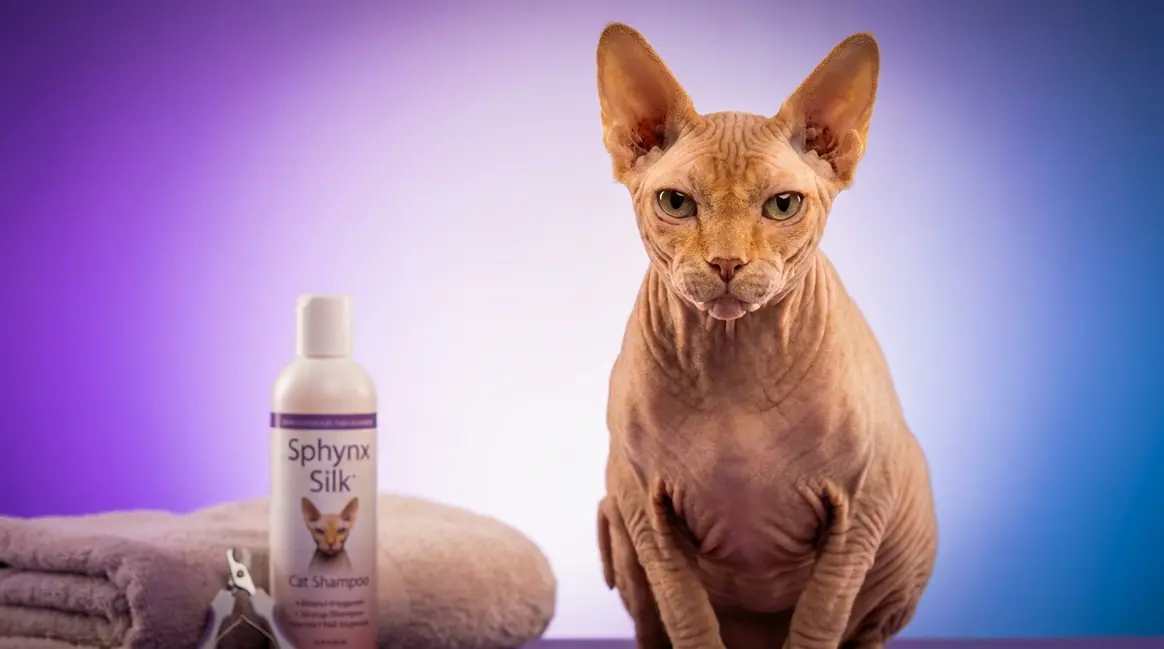

Sphynx cats are extraordinary companions — and one of the most demanding breeds to care for correctly. This sphynx cat care guide covers everything a new owner needs: weekly bathing protocols, skin care routines, breed-specific health risks, and a complete supplies checklist — all backed by veterinary sources.
Almost every Sphynx owner says the same thing: “I wish I’d known what I was getting into.” The oily skin, the ear wax, the “toe jam” — none of it shows up in the glossy breed photos. Without a clear care routine, those oils build up fast — leaving brown residue on your furniture, and a cat that’s uncomfortable and prone to skin problems. The wrong shampoo, the wrong temperature, the wrong diet: each mistake has a real cost.
By the end of this guide, you’ll have a complete, step-by-step Sphynx care plan — covering grooming, health monitoring, nutrition, and the supplies you actually need — so you can give your cat a healthy, happy life from the very first week. We start with a reality check on ownership, move through the weekly care routine, cover the health risks that matter most, and finish with a practical supplies list.
Sphynx cats require significantly more hands-on care than typical cats — including mandatory weekly baths to manage skin oil buildup, confirmed by Texas A&M University’s School of Veterinary Medicine.
- Weekly baths are non-negotiable: Sphynx skin produces oils that fur-coated cats absorb naturally — without a coat, that oil builds up on skin and furniture within days
- The Sphynx 3-3-3 Adaptation Rule: Expect 3 days of stress, 3 weeks to establish grooming routines, 3 months to feel truly settled — hairless cats have unique adjustment needs that follow a predictable pattern
- HCM is the #1 health risk: Sphynx cats are genetically predisposed to Hypertrophic Cardiomyopathy (HCM — a condition where the heart muscle thickens, reducing its pumping ability) — annual cardiac screening is essential
- Caloric needs run higher: Sphynx cats burn more energy regulating body temperature without fur — underfeeding is a common first-time owner mistake
- Raw meat is a serious risk: The AVMA discourages feeding cats any raw or undercooked animal-source protein due to Salmonella, E. coli, and Listeria contamination risks (AVMA Policy, 2022)
What to Know Before Getting a Sphynx {#pre-ownership}
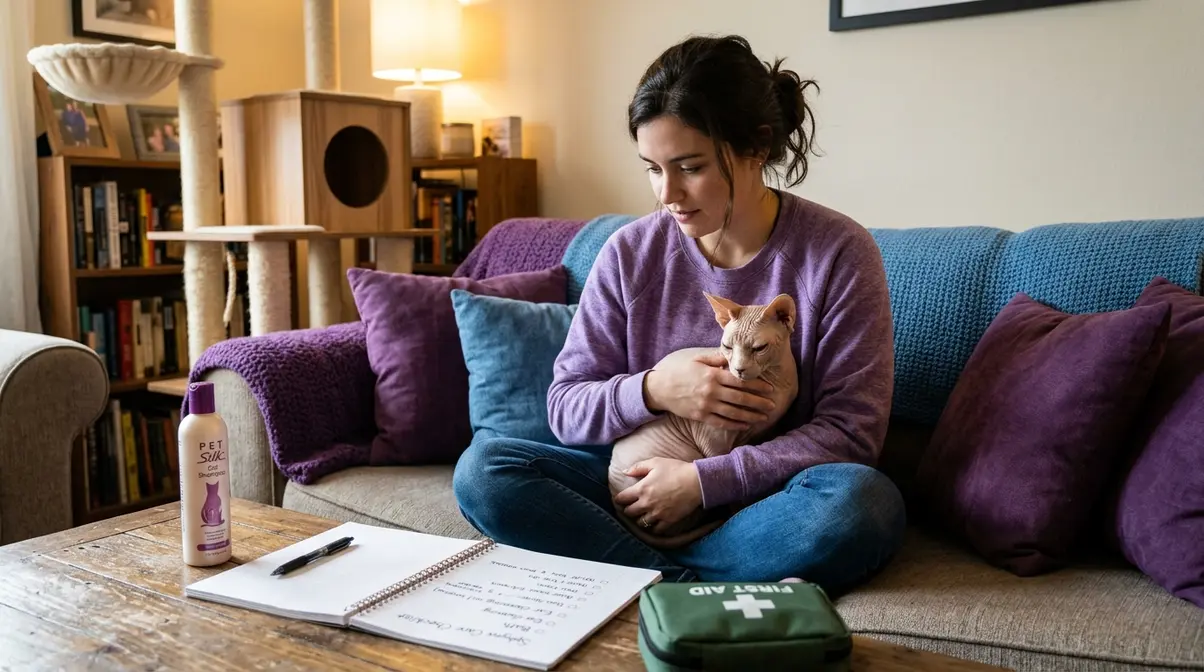
Sphynx cats are genuinely high-maintenance — not as a warning, but as a fact worth knowing before you fall in love with one. They require weekly baths, regular ear cleaning, and annual cardiac screening that most cat breeds never need. If you want to learn about Sphynx cat ownership, understanding this upfront is what separates owners who thrive from those who feel overwhelmed by week two.
“Sphynx cats are one of the most rewarding — and most demanding — breeds to own, requiring weekly grooming and annual cardiac screening that most cat breeds never need.” That’s not a scare tactic — it’s the consensus drawn from NC State and Texas A&M veterinary guidance, and it’s the foundation of a confident ownership experience.
Are Sphynx Cats High-Maintenance?
Yes — Sphynx cats are high-maintenance compared to most domestic breeds, and the honest answer to “is it hard to take care of a Sphynx cat?” is: harder than average, but completely manageable with the right routine. The difficulty isn’t complexity — it’s consistency. You’re committing to a weekly bathing schedule, regular ear cleaning, and proactive vet visits, every single week.
Across the Sphynx owner community on Reddit’s r/sphynx, the consistent feedback is that the learning curve peaks in the first month. After that, the routine becomes second nature. The Sphynx cat, a hairless breed developed in Canada in the 1960s, is known for its warm, wrinkled skin and extroverted personality. That personality is a genuine reward — these are “velcro cats” who follow you from room to room, curl under blankets with you, and greet visitors at the door.
The challenges are real, though. Without fur to absorb sebaceous (skin) oils, those oils accumulate on the skin surface and transfer to everything they touch — your couch, your sheets, your clothes. Without regular cleaning, the buildup causes skin splotches, blackheads, and discomfort for your cat. It’s completely normal to feel overwhelmed when you first see how quickly the greasiness returns after a bath. That’s not a sign you’re doing it wrong — it’s just Sphynx biology.
“What’s some things you… wish you would’ve known before…” — a recurring question in Sphynx owner communities, and the honest answer almost always includes: the bathing schedule, the ear wax, and the vet bills.
The Sphynx 3-3-3 Adaptation Rule
The Sphynx 3-3-3 Adaptation Rule is a framework that gives new owners a concrete, realistic timeline for the settling-in period — something no competitor guide currently offers. Here’s how it works:
3 Days: Your Sphynx will likely hide, vocalize more than usual, or refuse food. This is normal stress behavior. Don’t force interaction. Provide a warm, quiet space with familiar smells (a piece of your worn clothing works well) and let them come to you.
3 Weeks: This is when you establish the grooming routine. Your cat will resist the first few baths — that’s expected. By the end of three weeks, most Sphynx cats tolerate bathing with minimal fuss if you’re consistent, gentle, and use the same sequence every time. The routine itself is the reassurance.
3 Months: By the three-month mark, your Sphynx should feel fully at home, and you should feel genuinely confident in the care protocol. The grooming routine is automatic. You know what normal skin looks like versus what needs attention. You’ve had your first vet checkup and understand your cat’s baseline health.
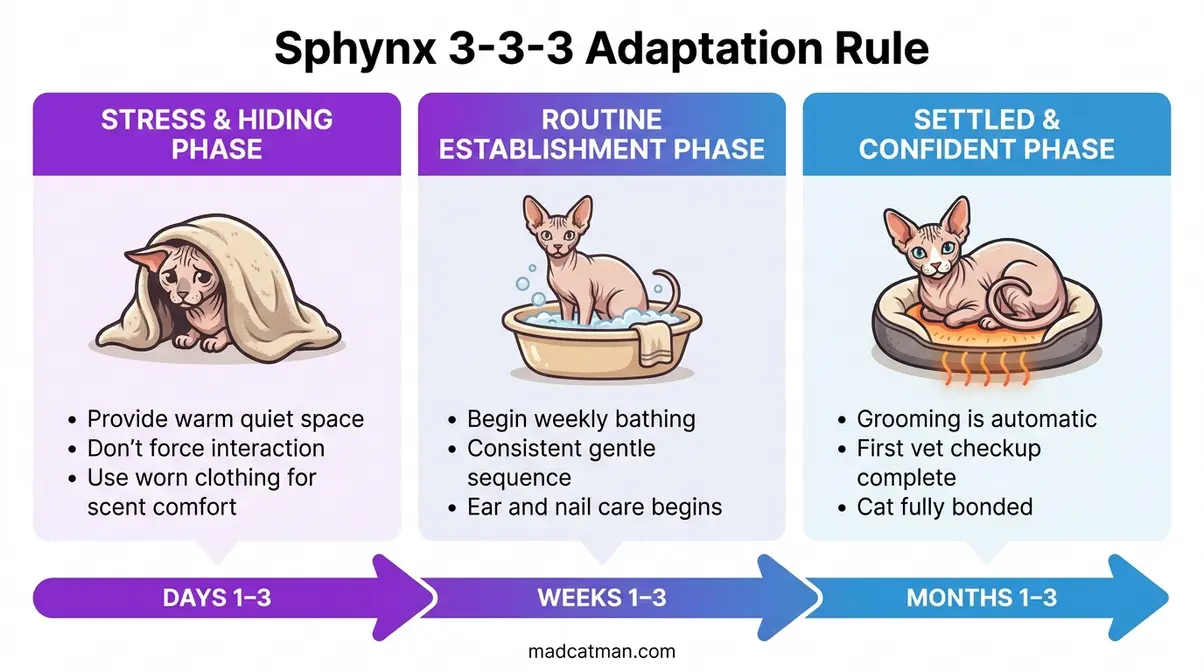
Reference the Sphynx 3-3-3 Adaptation Rule whenever you feel like you’re failing in the first few weeks. The rule exists because the adjustment period is genuinely predictable — and it ends.
Common Sphynx Cat Misconceptions
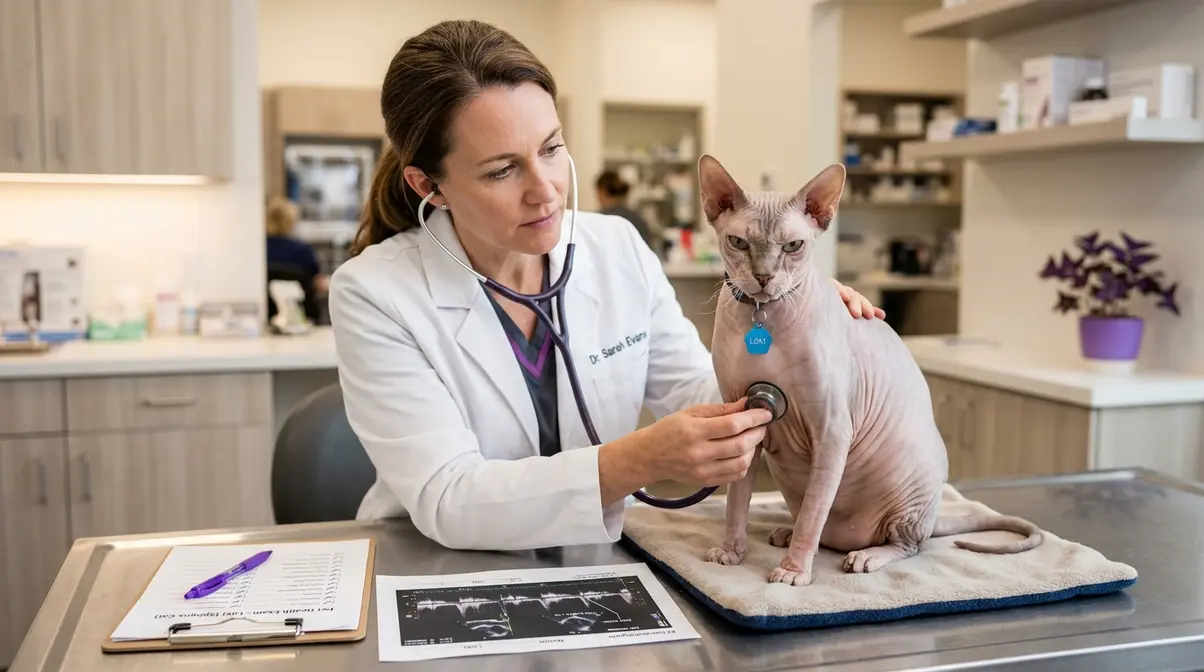
The most persistent myth about Sphynx cats is that they’re hypoallergenic. They are not. Cat allergies are primarily triggered by a protein called Fel d 1, which is produced in a cat’s saliva, skin glands, and urine — not in the fur itself. Because Sphynx cats still produce Fel d 1, and because their skin oils transfer directly to surfaces (rather than being partially trapped in a coat), some allergy sufferers actually react more to Sphynx cats than to coated breeds.
What not to do with a Sphynx cat: don’t skip baths assuming they “stay clean” because they have no fur. The opposite is true. Don’t assume they tolerate cold temperatures well — a Sphynx without a sweater in a 65°F room is genuinely uncomfortable. And don’t underestimate the social demands. These cats do not do well alone for long stretches. Ignoring their need for company leads to anxiety behaviors and destructive habits.
- Other common misconceptions:
- “They’re low-allergen.” Incorrect — see Fel d 1 above.
- “No fur means no grooming.” Incorrect — skin, ears, nails, and eyes all require regular attention.
- “They’re fragile.” Not exactly — they’re robust cats, but they are temperature-sensitive and health-risk-prone in specific ways.
Real Costs and What to Expect
The downsides of Sphynx cats are real, and they’re worth knowing before you commit. Here’s an honest breakdown:
| Cost Category | Estimated Range | Notes |
|---|---|---|
| Kitten purchase (breeder) | $1,500–$3,000 | Show quality can reach $5,000 |
| First-year ownership | ~$2,000 | Includes HCM screening, supplies, vaccines |
| Annual ongoing costs | $500–$1,500+ | Higher with cardiac screening |
| Annual vet (with specialist) | $500–$1,500+ | Echocardiograms add significant cost |
| Pet insurance (recommended) | $30–$60/month | Strongly advised for this breed |
Sphynx cats commonly live 8–14 years, though a 2024 peer-reviewed UK study found a breed-average life expectancy of approximately 6.7 years (Finka et al., Journal of Feline Medicine and Surgery, 2024) — notably lower than the domestic cat average of 11.7 years. HCM is the primary driver of that gap, which is exactly why proactive cardiac screening matters so much.
The biggest downsides of Sphynx cats are: the grooming time commitment (30–60 minutes per week), the higher-than-average vet costs, the temperature sensitivity, and the intense social needs that make them poorly suited to households where they’d be alone for 8+ hours daily.
Weekly Sphynx Grooming Routine {#grooming}
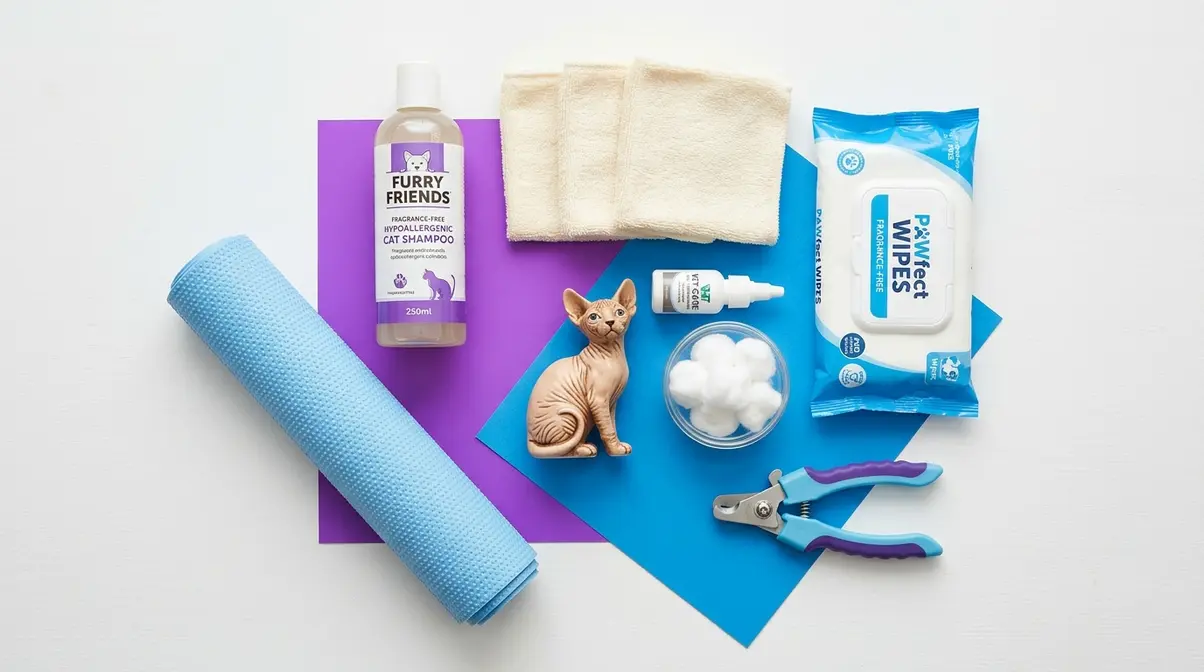
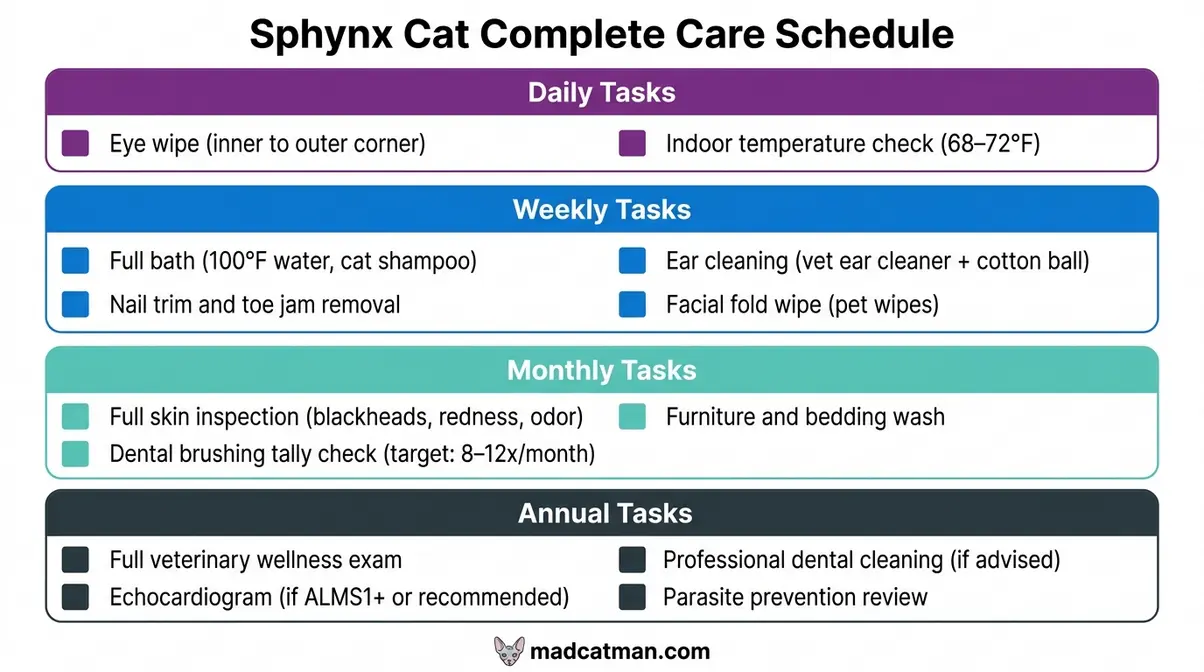
A consistent Sphynx grooming routine — caring for your hairless cat’s skin, ears, nails, and eyes — is the single most important thing you can do for their health and comfort. Veterinary guidance from multiple animal hospitals confirms that Sphynx and other hairless breeds require approximately weekly bathing because their oily residue builds up rapidly without fur to absorb it (Summerville Animal Hospital, 2026; Olive Branch Vet, 2026). This section gives you the exact protocol.
- What You’ll Need Before You Start:
- Cat-specific shampoo (hypoallergenic, fragrance-free — NOT Dawn dish soap for routine use)
- Shallow, warm-water basin or sink
- Non-slip mat for the basin
- Soft cotton washcloths (2–3)
- Cotton balls and veterinary ear cleaner
- Pet nail clippers or a nail file
- Fragrance-free baby wipes or pet wipes
- Soft, warm towel for drying
How to Bathe Your Sphynx Cat
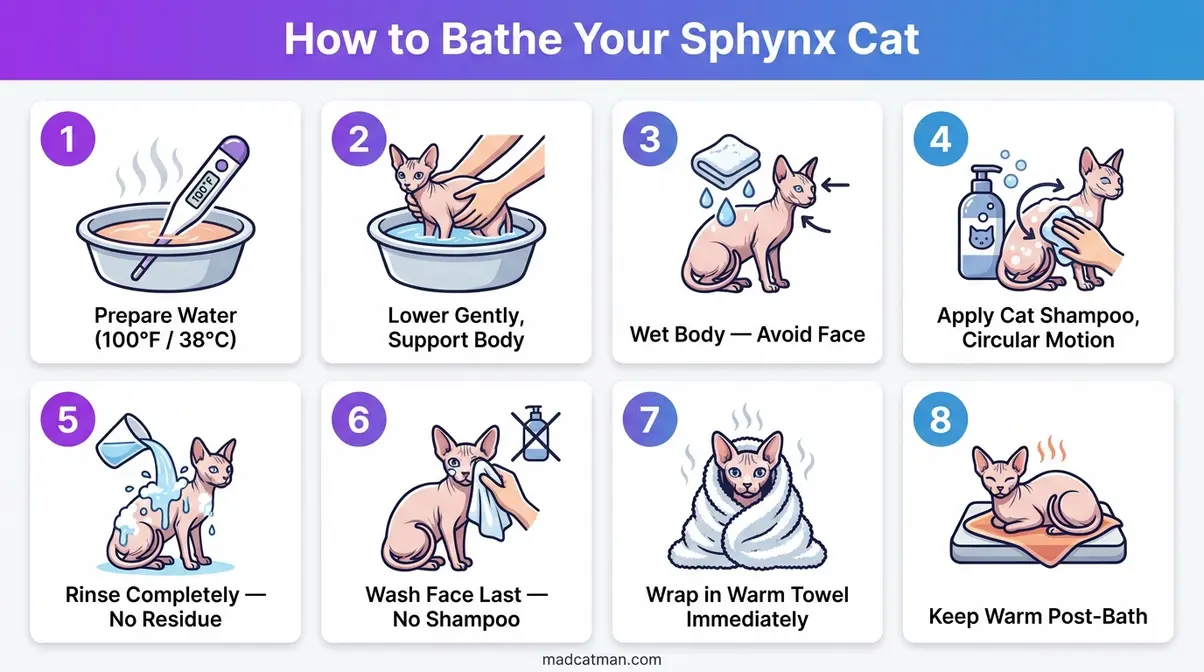
Bathing a Sphynx is straightforward once you’ve done it a few times. The goal is warm water, a gentle cat-safe shampoo, and a calm, consistent sequence that your cat learns to predict.
Step 1 — Prepare the water first. Fill a shallow sink or basin with 2–3 inches of warm water (around 100°F / 38°C — similar to a comfortable human wrist test). Never run water while the cat is in the sink; the sound startles them.
Step 2 — Lower your Sphynx gently into the water. Support their chest and hindquarters. Speak calmly and keep movements slow. Let them stand — don’t force them to sit or lie down.
Step 3 — Wet the body with a washcloth. Avoid the face, ears, and eyes at this stage. Saturate the skin thoroughly — the oils need water contact to loosen.
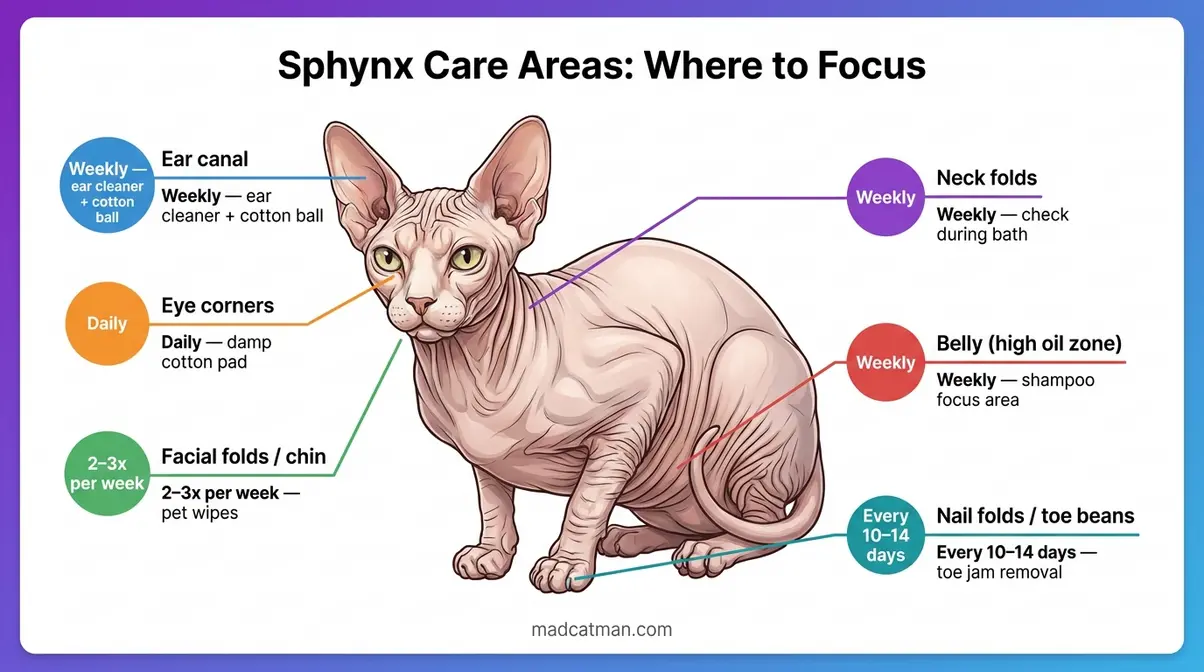
Step 4 — Apply a small amount of cat shampoo. Work it gently into the skin using circular motions. Pay extra attention to skin folds, the neck, and the belly — these are the highest oil-accumulation areas. You may see brownish water — that’s the sebaceous oil releasing. This is normal and exactly what you’re cleaning.
Step 5 — Rinse completely. Incomplete rinsing is one of the most common bathing mistakes. Shampoo residue left on the skin causes irritation and rebound oil production. Rinse until the water runs completely clear.
Step 6 — Wash the face last. Use a damp washcloth with no shampoo to gently wipe around the eyes, nose, and chin. A separate clean cloth for each eye prevents cross-contamination.
Step 7 — Wrap in a warm towel immediately. Sphynx cats lose body heat very quickly when wet. Have a pre-warmed towel ready — a few seconds in the dryer on low heat works well. Pat dry rather than rubbing.
Step 8 — Keep them warm post-bath. A Sphynx in a cool room after a bath will shiver. Move to the warmest room in the house, offer a heated blanket or cat bed, and stay nearby. This is when the velcro cat behavior really shows up — they want body warmth.
- Troubleshooting Common Bathing Mistakes:
- Cat panics in water: Try a shallower basin, slower entry, and more verbal reassurance. Never restrain forcefully — this creates lasting bath aversion.
- Skin still looks greasy after bathing: You may need a slightly stronger cat shampoo or a second lather pass. Consult your vet if persistent.
- Redness or irritation after bathing: Switch shampoos immediately. Fragrance and sulfates are common culprits in cat skin reactions.
- Brown residue returns within 2 days: This is normal for high-oil-producing Sphynx. Some cats need twice-weekly bathing — your vet can advise.
Ear Cleaning and Wax Buildup
Sphynx ears produce significantly more wax than coated cats — because there’s no ear hair to trap debris, wax accumulates visibly and quickly. Most Sphynx need ear cleaning weekly, at the same time as bathing.
- How to clean Sphynx ears:
- Apply a few drops of veterinary ear cleaner to the ear canal.
- Gently massage the base of the ear for 20–30 seconds — you’ll hear a slight squelching sound.
- Let your cat shake their head (this loosens debris).
- Wipe the outer ear and visible canal with a cotton ball. Never insert a cotton swab into the ear canal — this pushes wax deeper and risks injury.
- Repeat for the other ear with a fresh cotton ball.
Normal Sphynx ear wax is dark brown and waxy — it looks alarming but is usually harmless. If you notice black, crumbly debris, a foul odor, or your cat scratching their ears constantly, these are signs of ear mites or infection. See your vet promptly.
Nail Trimming and Toe Jam Removal
Sphynx cats are famous in owner communities for their “toe beans” — and equally infamous for the dark, waxy buildup that collects between those toe beans. This is called “toe jam” by most owners, and it’s simply sebaceous oil mixed with debris accumulating in the nail folds. It’s harmless if cleaned regularly but can cause irritation if left to build up.
- Nail and toe care routine (every 1–2 weeks):
- Wrap your Sphynx in a towel burrito-style to keep them calm.
- Gently press each toe bean to extend the nail.
- Clip just the clear tip of the nail — avoid the pink “quick” (the blood vessel inside the nail). Cutting the quick causes pain and bleeding.
- Use a damp cotton swab or soft cloth to clean between each toe, removing any dark waxy buildup.
- If toe jam is hardened, soften with a drop of warm water before wiping.
Trim nails every 10–14 days. Sphynx nails grow quickly, and long nails combined with their climbing habits mean scratched furniture — and occasionally scratched owners.
Eye Care and Facial Fold Cleaning
Sphynx cats don’t have eyelashes, which means eye discharge (sometimes called “eye boogers” by owners) accumulates more noticeably than in other breeds. Daily or every-other-day eye wiping is ideal.
Use a soft, damp cotton pad to gently wipe from the inner corner of the eye outward. Use a separate pad for each eye. Normal discharge is light brown or clear. Yellow or green discharge, squinting, or swollen eyelids indicate infection — contact your vet.
The facial folds and chin area also accumulate oil. Wipe these areas with a fragrance-free baby wipe or pet wipe 2–3 times per week. Pay attention to any skin splotches or blackheads developing along the chin — feline acne is common in Sphynx cats and usually responds well to gentle cleansing.
Can You Use Dawn Dish Soap on a Sphynx?
Dawn dish soap is not recommended for routine Sphynx bathing. This is one of the most searched questions in Sphynx owner communities, and the answer matters for your cat’s skin health.
Here’s the veterinary position: Dawn’s original blue formula is occasionally used in emergency situations — heavy grease contamination, severe flea infestations in very young kittens — because it’s an effective degreaser. However, that degreasing power is precisely the problem for routine use. Dawn strips the natural oils from cat skin more aggressively than cat-formulated shampoos, leading to dry, flaky, irritated skin (Catster, vet-reviewed, 2026). The ASPCA recommends pet-specific shampoo over dish soap for routine bathing.
For Sphynx cats specifically, stripping skin oils too aggressively can trigger rebound oil production — the skin compensates for dryness by producing even more oil, creating a cycle that makes grooming harder, not easier.
If you must use Dawn in an emergency: Use only original blue Dawn (not Powerwash, Platinum, or scented versions — these contain additives that are harmful to cats). Dilute it significantly, rinse completely, and switch to a cat-safe shampoo as soon as possible.
For routine Sphynx bathing: When choosing the right cat shampoo, use a fragrance-free, hypoallergenic formula. Your vet can recommend a specific product for your cat’s skin type.
Sphynx Cat Health and Key Risks {#health}
Sphynx cats are a robust breed in many ways, but they carry a specific set of genetic and structural health risks that every owner needs to understand. Proactive monitoring — not reactive treatment — is what extends their lives. This section covers the three most important health areas: heart disease, dental and skin conditions, and your ongoing vet schedule.
HCM: The Most Serious Health Risk
Hypertrophic Cardiomyopathy (HCM) — a condition where the heart muscle thickens over time, reducing the heart’s ability to pump blood effectively — is the most serious genetic health risk in Sphynx cats. It is the leading cause of cardiac death in cats generally, and Sphynx cats are genetically predisposed to it at higher rates than most breeds.
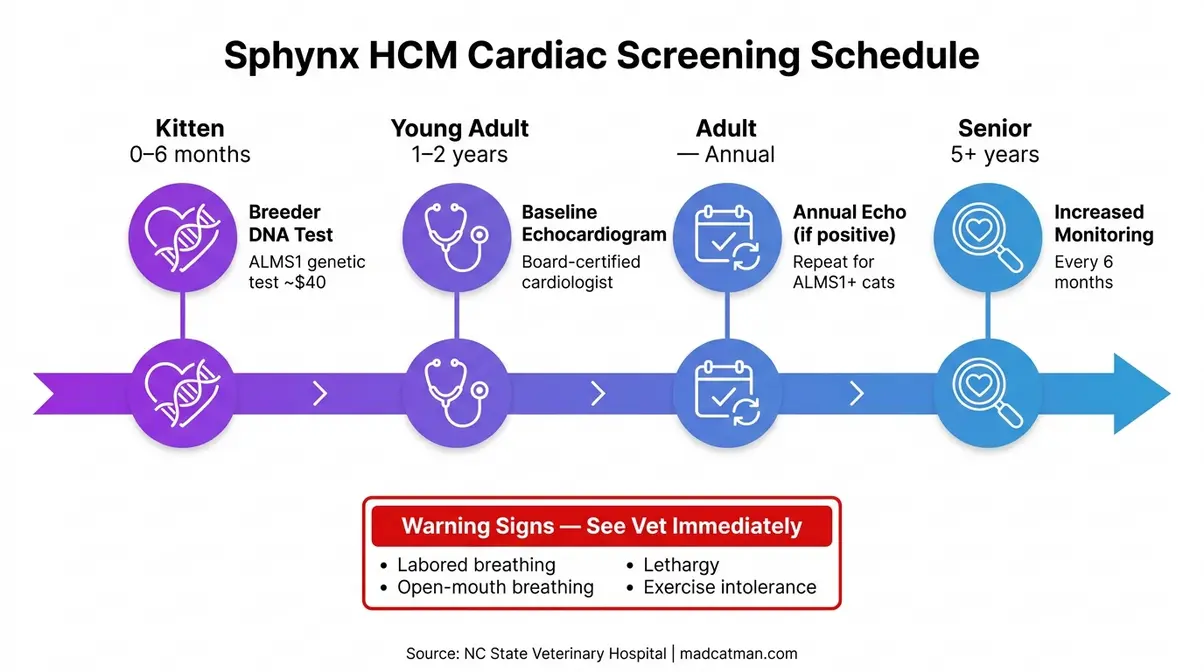
NC State University’s Veterinary Cardiac Genetics Lab has identified a mutation in the ALMS1 gene associated with HCM in Sphynx cats. Critically, the mutation explains approximately 60% of affected Sphynx cats — meaning a negative genetic test does not rule out HCM from other causes (NC State Veterinary Hospital, 2026). This is why genetic testing alone is never enough.
NC State’s screening recommendation for genetically positive cats: Annual echocardiographic evaluation (a heart ultrasound) by a veterinarian, with discussion of treatment options if hypertrophy develops (NC State Veterinary Hospital, 2026). Many veterinary cardiologists extend this to all breeding Sphynx cats, regardless of genetic test result, due to the incomplete coverage of the known mutation.
Your HCM action plan as a Sphynx owner:
- Ask your breeder whether the kitten’s parents have been DNA-tested and echo-screened. Reputable breeders test annually.
- Schedule a baseline echocardiogram with your vet or a board-certified veterinary cardiologist by the time your cat is 1–2 years old.
- Repeat annually for cats that test positive for the ALMS1 mutation.
- Watch for warning signs: labored breathing, open-mouth breathing, lethargy, or exercise intolerance. These require immediate veterinary attention — do not wait for a scheduled appointment.
NC State’s Sphynx HCM genetic test costs approximately $40 per cat ($25 per kitten in a litter) and requires only a cheek swab or small blood sample. It’s a low-cost, high-value first step.
Dental Disease and Skin Conditions
Dental disease is the second most common health issue in Sphynx cats, and it’s frequently overlooked because it develops silently. Sphynx cats are prone to periodontal (gum) disease due to their jaw structure. Without regular brushing, tartar accumulates quickly, leading to gingivitis and tooth loss. Brushing your Sphynx’s teeth 2–3 times per week with a pet-safe enzymatic toothpaste significantly reduces this risk. Annual professional dental cleanings under anesthesia are typically recommended by vets for this breed.
Skin conditions to monitor actively include:
- Feline acne: Dark blackheads on the chin and lower lip — treat with gentle cleansing. Persistent cases may need veterinary-prescribed topical treatment.
- Urticaria pigmentosa: A rare but Sphynx-specific skin condition causing raised, itchy bumps. It looks alarming but is usually manageable with veterinary guidance.
- Bacterial or fungal skin infections: More common in Sphynx than coated cats because skin oils create a warm, moist microenvironment. Signs include redness, odor, and crusting. Any persistent skin change warrants a vet visit.
Common concerns reported by Sphynx owners include confusion between normal skin variation (slight mottling, skin tone changes with temperature) and actual skin problems. When in doubt, photograph the area and send it to your vet — most clinics now offer telehealth consultations for exactly this kind of question.
Your Sphynx Vet Care Schedule
Proactive veterinary care is non-negotiable for this breed. Following a comprehensive cat veterinary checklist ensures you don’t miss critical screenings. Here’s a practical schedule:
| Life Stage | Frequency | What’s Included |
|---|---|---|
| Kitten (0–1 year) | Every 3–4 months | Vaccines, parasite prevention, baseline bloodwork, first HCM discussion |
| Young adult (1–3 years) | Annually | Wellness exam, dental check, baseline echocardiogram |
| Adult (3–7 years) | Annually | Full wellness exam, dental cleaning (if needed), echo repeat |
| Senior (7+ years) | Every 6 months | Bloodwork, cardiac monitoring, thyroid check, full physical |
Pet insurance is strongly recommended for Sphynx cats. Echocardiograms alone can cost $300–$600 per visit depending on your location. Annual ownership costs including cardiac screening and specialist visits commonly reach $500–$1,500+ per year (Pawlicy, 2026; CityBear, 2026). Insurance significantly reduces the financial barrier to proactive care.
Feeding, Warmth, and Social Needs {#diet-environment}
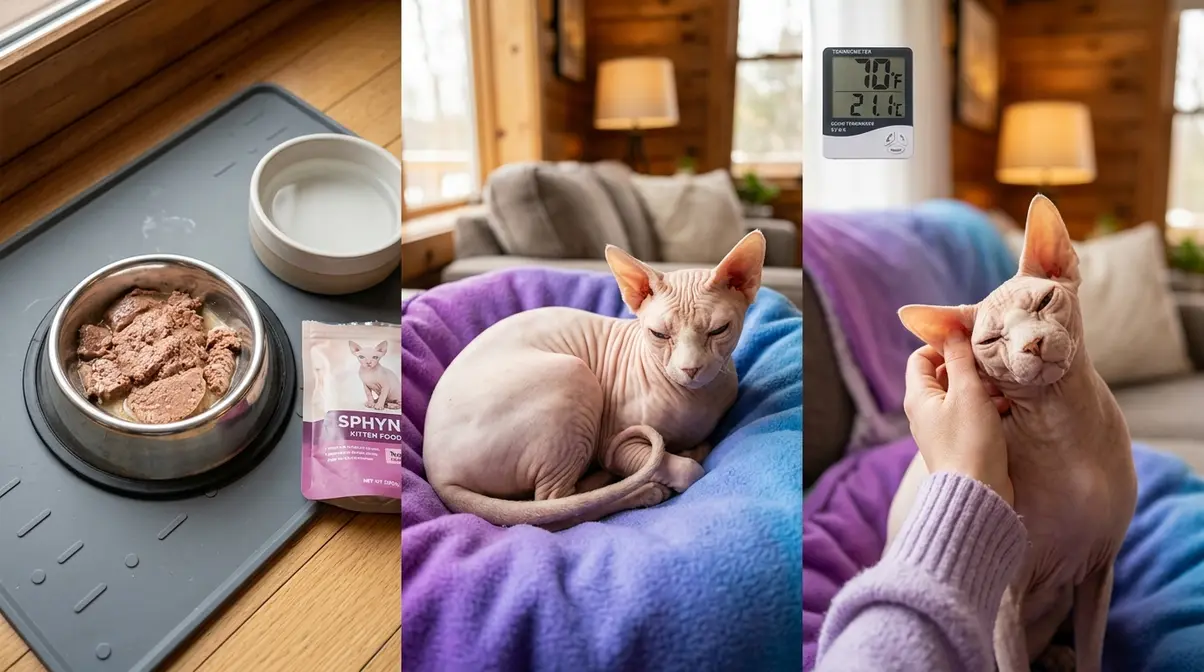
A Sphynx cat’s daily wellbeing depends on three things beyond grooming: the right nutrition, adequate warmth, and enough social connection. Get these right, and you have a thriving, affectionate companion. Underestimate any one of them, and you’ll see the consequences quickly.
How Much to Feed a Sphynx Cat
Sphynx cats have a higher metabolic rate than most coated breeds because they use more energy to regulate body temperature without an insulating coat. Royal Canin‘s breed nutrition guidance states that Sphynx cats “have a higher body temperature and burn calories faster than other felines,” requiring a diet rich in both fat and protein to meet their energy demands (Royal Canin, 2026). Owner communities consistently report that Sphynx cats need 15–30% more food by volume than similarly sized coated cats, which is an important factor in any cat feeding guide and calorie needs assessment.
That said, “more calories” doesn’t mean “more food without limits.” Overfeeding a Sphynx is as problematic as underfeeding — obesity adds strain to an already cardiac-vulnerable heart.
Practical feeding guidelines:
- Feed a high-quality, high-protein wet food as the primary diet. Wet food supports hydration and is closer to a cat’s natural prey-based nutritional profile.
- Follow the feeding guidelines on your chosen food as a starting point, then adjust based on your cat’s body condition score — you should be able to feel ribs without pressing hard, but not see them.
- Divide daily food into 2–3 meals rather than free-feeding, which reduces obesity risk.
- Consult Cornell University’s Feline Health Center guidelines for portion-size frameworks based on your cat’s weight and activity level (Cornell University College of Veterinary Medicine, 2026).
Kittens under 12 months need kitten-formula food with higher caloric density. After 12 months, transition gradually to adult formulas.
What Never to Feed Your Sphynx Cat
Some foods are genuinely dangerous for cats — not just “not ideal,” but capable of causing serious illness or death. The AVMA discourages feeding cats any raw or undercooked animal-source protein because of bacterial contamination risks including Salmonella, E. coli, Listeria monocytogenes, and Campylobacter (AVMA Policy, 2022). Nearly 25% of raw food samples tested positive for harmful bacteria in studies reviewed by VCA Animal Hospitals — a significant risk for both your cat and your household.
Never feed your Sphynx:
- Raw or undercooked meat of any kind — The AVMA’s position is clear: the bacterial contamination risk is not worth it (AVMA, 2022). This is the one food category most worth avoiding absolutely.
- Onions, garlic, and chives — These cause oxidative damage to red blood cells, leading to hemolytic anemia.
- Grapes and raisins — Linked to acute kidney failure in cats.
- Chocolate and caffeine — Contain theobromine and caffeine, both toxic to cats.
- Xylitol (artificial sweetener found in some peanut butters and gums) — Causes dangerous blood sugar drops.
- Alcohol — Even small amounts cause severe toxicity.
- Tuna in large quantities — Occasional tuna is fine, but tuna-only diets cause mercury accumulation and thiamine deficiency.
The one meat to never feed a cat — according to AVMA guidance and supported by CDC and FDA — is raw meat of any species. This isn’t a minor precaution; it’s a firm veterinary consensus position.
Keeping Your Sphynx Warm Indoors
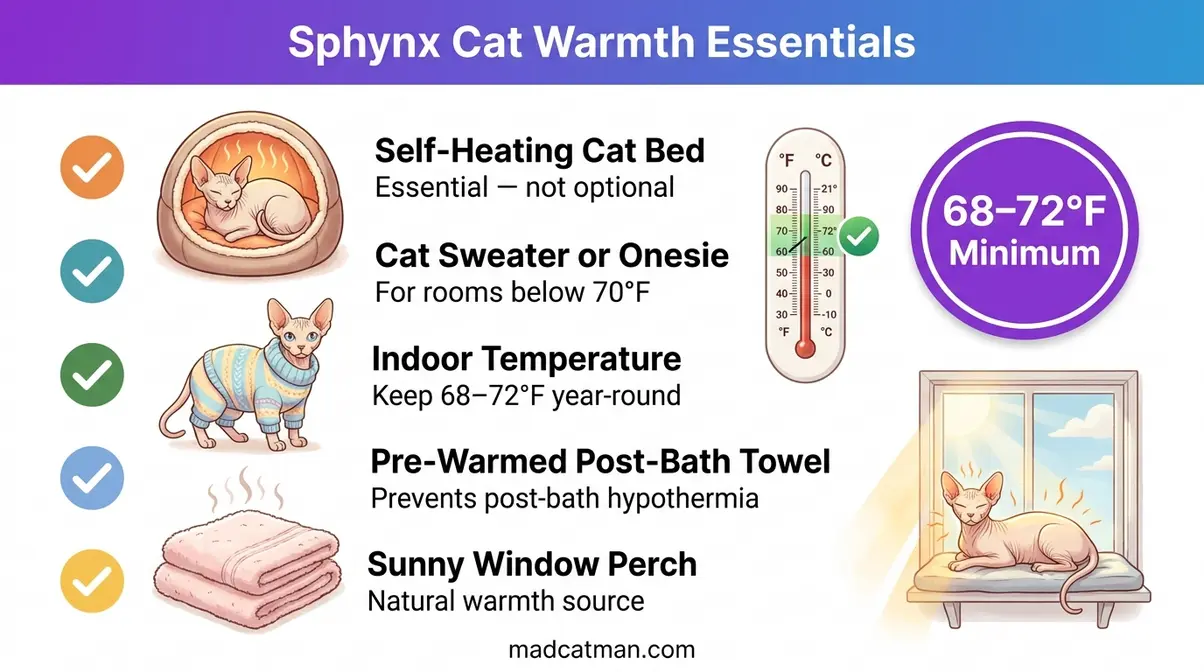
Without a coat, a Sphynx cat’s body temperature drops noticeably in environments below 70°F (21°C). They cannot thermoregulate as effectively as coated breeds, which is why warmth isn’t a comfort preference for them — it’s a physiological need.
Practical warmth strategies:
- Keep your home at a minimum of 68–72°F (20–22°C) year-round.
- Provide a self-heating cat bed or a bed with a low-wattage heating pad designed for pets. Sphynx cats will seek these out instinctively.
- Cat sweaters and onesies are not just adorable — they’re functional for Sphynx cats in cooler rooms or during winter. Measure carefully and choose soft, non-restrictive fabrics.
- Never leave a Sphynx in a car, garage, or unheated room in cool weather. Their core temperature drops faster than you might expect.
- During bathing, pre-warm their towel and their recovery space. Post-bath hypothermia is a real risk if you skip this step.
Meeting the Social Needs of a Velcro Cat
Sphynx cats are genuinely one of the most socially demanding domestic cat breeds. The term “velcro cats” exists for good reason — they attach themselves to their people with an intensity that surprises most first-time owners. This is part of their charm, but it also means they suffer in isolation.
A Sphynx left alone for 8+ hours daily without enrichment will develop anxiety behaviors: excessive vocalization, destructive scratching, over-grooming, and sometimes litter box avoidance. This isn’t behavioral defiance — it’s stress.
Meeting Sphynx social needs:
- If you work long hours, strongly consider adopting two Sphynx cats together. They bond well with each other and provide mutual company.
- Provide puzzle feeders, interactive toys, and climbing structures to occupy them during your absence.
- Schedule intentional play sessions of 15–20 minutes twice daily — this satisfies their hunting instincts and social need simultaneously.
- Cat TV (bird feeder videos, aquarium footage) genuinely entertains Sphynx cats when left alone.
- Return their affection — these cats respond to being talked to, held, and included in household routines.
The Sphynx 3-3-3 Adaptation Rule applies here too: in the first three months, your cat is building trust and learning your routine. Consistent daily interaction during this period pays dividends in a calmer, more settled adult cat.
Essential Sphynx Cat Supplies {#supplies}
Having the right supplies before your Sphynx comes home removes one major source of early-ownership stress. While there are many essential cat supplies checklists available, this one covers what you actually need for a hairless breed.
Grooming Supplies
| Supply | What to Look For | Why You Need It |
|---|---|---|
| Cat shampoo | Fragrance-free, hypoallergenic, pH-balanced for cats | Weekly bathing — skin health depends on the right formula |
| Soft washcloths | Cotton, unscented | Body washing and facial cleaning |
| Veterinary ear cleaner | Vet-recommended brand | Weekly ear wax removal |
| Cotton balls | Standard | Ear cleaning application |
| Pet nail clippers | Guillotine or scissor style | Every 10–14 days |
| Pet wipes | Fragrance-free, alcohol-free | Between-bath skin fold cleaning |
| Non-slip bath mat | Rubber, fits sink | Prevents panic during baths |
Feeding and Nutrition Supplies
| Supply | What to Look For | Why You Need It |
|---|---|---|
| Stainless steel or ceramic bowls | Avoid plastic (causes chin acne) | Daily feeding — plastic harbors bacteria |
| High-quality wet food | High protein, named meat first ingredient | Primary calorie source |
| Puzzle feeder | Food-dispensing type | Mental stimulation, slows fast eaters |
| Fresh water fountain | Moving water encourages drinking | Hydration is critical for kidney health |
Comfort and Environmental Supplies
| Supply | What to Look For | Why You Need It |
|---|---|---|
| Self-heating cat bed | Reflective interior or low-wattage heating | Core warmth need — not optional |
| Cat sweaters/onesies | Soft, non-restrictive, easy to put on | Cold rooms, post-bath warming |
| Cat tree/climbing structure | Sturdy, wide platforms | Exercise and territory |
| Interactive wand toys | Feather or ribbon type | Daily play sessions |
| Covered litter box | Large, with hood | Sphynx are fastidious about litter cleanliness |
Health and Vet Prep Supplies
| Supply | What to Look For | Why You Need It |
|---|---|---|
| Pet carrier | Hard-sided, airline-approved | Vet visits, emergencies |
| Pet first aid kit | Includes gauze, antiseptic, thermometer | Minor injuries at home |
| Pet insurance policy | Covers hereditary conditions (HCM) | Financial protection for breed-specific care |
| Enzymatic toothpaste | Poultry or malt flavor | 2–3x weekly dental brushing |
| Digital rectal thermometer | Pet-specific | Monitoring fever at home |
Pet insurance is worth emphasizing here: policies that cover hereditary conditions are particularly important for Sphynx cats given the HCM risk. Compare policies before your kitten’s first vet visit — most insurers won’t cover pre-existing conditions once they’re documented.
When Sphynx Ownership Gets Hard
Every experienced Sphynx owner has a story about the moment the reality of care hit harder than expected. Honest guidance means acknowledging those moments, not glossing over them.
Common Pitfalls New Owners Run Into
Inconsistent bathing schedules. The most common mistake is bathing every two to three weeks instead of weekly because it “seems like enough.” Within days of a missed bath, oil buildup is visible on furniture and skin. Commit to weekly bathing from day one — it’s harder to re-establish the routine after a gap than to maintain it.
Using the wrong products. Dawn dish soap, human shampoo, or baby shampoo — all commonly tried, all problematic for Sphynx skin. Human shampoos have a different pH than cat-safe formulas and strip skin oils aggressively. Stick to cat-specific, fragrance-free options.
Ignoring early HCM signs. Labored breathing or open-mouth breathing in a cat that isn’t overheated or stressed is a cardiac emergency. Many owners initially attribute it to a hairball or anxiety. If in doubt, call your vet immediately.
Underestimating the cold sensitivity. A Sphynx shivering in a 65°F room is not being dramatic. They genuinely cannot self-regulate adequately. This catches owners off guard, especially in winter or in air-conditioned offices.
When to Choose Alternatives
Sphynx ownership is genuinely not the right fit for every household. Consider a different breed if:
- You travel frequently and cannot arrange reliable, knowledgeable cat care. A Sphynx with a house-sitter who doesn’t know the grooming routine will suffer.
- You or a household member has significant cat allergies. The hypoallergenic myth is exactly that — a myth.
- Your household is consistently below 68°F. Keeping a Sphynx warm in a cold home requires active effort and ongoing expense.
A Devon Rex or Cornish Rex offers a similar extroverted, affectionate personality with a short (but present) coat that significantly reduces grooming demands.
When to Seek Expert Help
- Consult a veterinarian promptly — not at the next scheduled visit — if you observe:
- Any breathing difficulty or open-mouth breathing
- Sudden weight loss or refusal to eat for more than 24 hours
- Skin that is hot to the touch, oozing, or has a foul odor
- Ear scratching combined with dark, crumbly debris (possible ear mites)
- Any lump, bump, or skin change that persists more than a week
Frequently Asked Questions {#faq}
Is it easy to take care of a Sphynx cat?
Sphynx cats are not easy to care for compared to most domestic breeds — they require weekly bathing, regular ear cleaning, nail trimming, eye care, and proactive cardiac monitoring. The care routine is manageable and becomes second nature within a few months, but it demands consistency. Across Sphynx owner communities, the consensus is that the first 1–3 months are the steepest part of the learning curve. After that, most owners describe the routine as “just part of life.” The Sphynx 3-3-3 Adaptation Rule helps set realistic expectations: 3 days of stress, 3 weeks to establish routines, 3 months to feel genuinely confident.
What is the 3-3-3 rule for cats?
The 3-3-3 rule for cats describes a common adjustment timeline: 3 days of fear and hiding, 3 weeks to learn the routine, and 3 months to feel fully at home. The Sphynx 3-3-3 Adaptation Rule adapts this framework specifically for hairless cats, where the “3 weeks” phase centers on establishing the grooming routine — bathing, ear cleaning, and nail care. For Sphynx cats, the three-month mark is when most owners report feeling confident in the full care protocol, not just comfortable with the cat’s personality. The rule is a reassurance tool: the adjustment period is predictable, and it ends.
What not to do with a Sphynx cat?
Never skip weekly baths, leave your Sphynx in a cold environment, or feed raw or undercooked meat. Beyond those three, the key prohibitions are: don’t use human shampoo or Dawn dish soap for routine bathing (both strip skin oils and cause irritation), don’t leave them alone for long periods without enrichment (they develop anxiety), and don’t assume a negative HCM genetic test means your cat is cardiac-risk-free. Approximately 40% of HCM-affected Sphynx cats do not carry the known ALMS1 mutation (NC State Veterinary Hospital, 2026), so annual echocardiograms remain important regardless of test result.
Do Sphynx cats get dirty easily?
Yes — Sphynx cats get dirty faster than almost any other domestic breed. Without fur to absorb sebaceous oils, those oils accumulate directly on the skin surface within days of bathing. The oil transfers to everything they touch — furniture, bedding, clothing — and darkens over time as it mixes with environmental dust. This is why weekly bathing isn’t optional. Between baths, fragrance-free pet wipes help manage skin folds, facial areas, and toe bean buildup. Most Sphynx owners also notice their bedding needs washing more frequently than with coated cats.
What are the downsides of Sphynx cats?
The main downsides of Sphynx cats are their high grooming demands, significant vet costs, temperature sensitivity, and intense social needs. Weekly bathing takes 30–60 minutes per session. Annual ownership costs commonly reach $500–$1,500+ once you include cardiac screening (CityBear, 2026; Pawlicy, 2026). They cannot tolerate cold environments and require heated beds and sometimes clothing. They suffer from separation anxiety when left alone for long stretches. A 2024 peer-reviewed UK study found a breed-average life expectancy of approximately 6.7 years — notably lower than the domestic cat average (Finka et al., 2024) — largely due to HCM prevalence.
What is “I love you” in cat language?
The slow blink is widely recognized among feline behavior researchers as a cat’s primary signal of trust and affection. When your Sphynx makes eye contact and slowly closes their eyes halfway, they are communicating comfort and safety. You can return the signal by slowly blinking back — many cats respond by blinking again, completing what owners call a “love blink exchange.” For Sphynx cats specifically, head-butting (bunting), kneading, and following you from room to room are additional affection signals. These velcro behaviors are the breed’s natural expression of bonding.
What Meat to Never Feed a Cat?
Raw meat of any species is the one food category veterinary organizations most firmly advise against feeding cats. The AVMA discourages feeding cats any raw or undercooked animal-source protein because of contamination risks from Salmonella, E. coli, Listeria, and Campylobacter (AVMA Policy, 2022). Studies reviewed by VCA Animal Hospitals found that nearly 25% of raw food samples tested positive for harmful bacteria. This applies to raw chicken, raw beef, raw fish, and raw organ meats. Cooked, unseasoned chicken or fish is generally safe as an occasional treat — the risk is specifically in the raw state.
Can I Wash a Sphynx with Dawn?
Dawn dish soap is not recommended for routine Sphynx bathing — use a cat-specific, fragrance-free, hypoallergenic shampoo instead. Original blue Dawn can be used in genuine emergencies (heavy grease contamination, severe flea infestation) because it is an effective degreaser. However, that same degreasing strength strips natural skin oils and can cause dryness, flaking, and rebound oil overproduction when used regularly (Catster, vet-reviewed, 2026). Never use Dawn Powerwash, Dawn Platinum, or any scented Dawn variant — these contain additional chemicals that are harmful to cats. For routine weekly Sphynx baths, always use a shampoo formulated for cats.
Conclusion
For new Sphynx owners, the care commitment is real — but it’s also completely learnable. This sphynx cat care guide has covered the full picture: weekly bathing protocols, ear and nail care, the evidence-based HCM screening timeline from NC State’s Cardiac Genetics Lab, safe feeding guidelines backed by AVMA and Cornell, and the warmth and social requirements that make Sphynx cats thrive. The common thread is consistency — a Sphynx on a regular care schedule is a healthy, happy, deeply affectionate companion.
The Sphynx 3-3-3 Adaptation Rule is worth keeping in your back pocket throughout the first three months: 3 days of adjustment, 3 weeks to build the grooming routine, 3 months to feel genuinely confident. Every experienced Sphynx owner was once a nervous beginner — the routine that feels overwhelming in week one becomes automatic by month three. That’s not a promise; it’s a pattern confirmed across every Sphynx owner community.
Your next step: before your Sphynx comes home, gather your kitten and cat essential supplies, identify a vet experienced with hairless breeds, and ask your breeder for the parents’ HCM genetic test results. Those three actions set the foundation for everything else. Your cat can’t tell you what they need — but this guide can.

Dave King
Cat owner and writer at Mad Cat Man.