American Shorthair Cat: Complete Breed Guide (Personality & Care)

Most cats at your local shelter carry the label “domestic shorthair” — but the American Shorthair cat is something entirely different. This pedigreed breed lives up to 20 years (VCA Animal Hospitals), is recognized in more than 80 colors and patterns (TICA), and carries a documented personality and health profile that makes it consistently one of North America’s most popular registered breeds (Cat Fanciers’ Association). Without knowing the difference, you might pay $1,500 for a kitten you could have adopted for $100 — or bring home a cat expecting a gentle, predictable companion and be surprised when random genetics deliver something else entirely.
This guide explains exactly what makes the American Shorthair cat breed unique, whether it fits your home and lifestyle, and how to find one responsibly — from a reputable breeder or a rescue near you.
Breed information in this guide is drawn from CFA breed standards, TICA registration data, and peer-reviewed veterinary research.
The American Shorthair is a pedigreed breed that lives 15–20 years — far longer than many cats — and is recognized in more than 80 colors and patterns (TICA). This is “The Predictability Premium”: you pay more upfront for a cat whose temperament, size, and health risks are documented and consistent.
- Personality: Gentle, affectionate, and adaptable — good pets for families and other animals
- Lifespan: 15–20 years (one of the longest-lived domestic breeds)
- Cost: $500–$1,500 from a breeder; under $200 to adopt from a rescue
- Grooming: Low-maintenance — weekly brushing is usually enough
- Key Risk: Prone to obesity and hypertrophic cardiomyopathy (HCM) — manageable with diet and vet care
What Is an American Shorthair Cat?
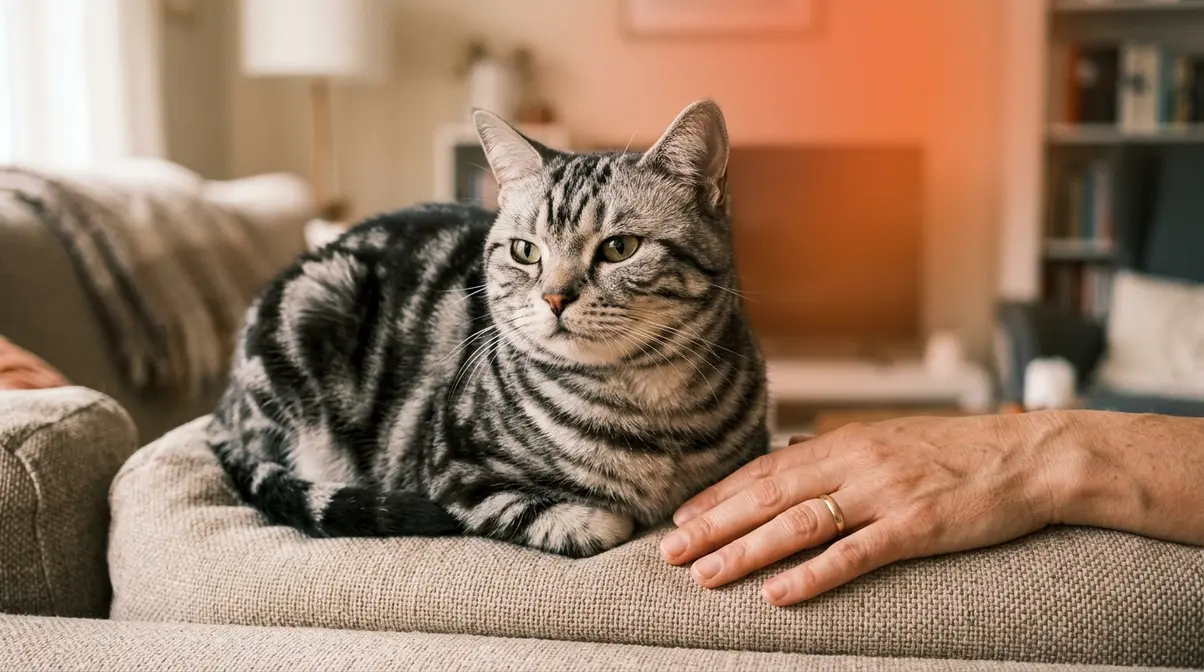
The American Shorthair is a pedigreed domestic cat breed — meaning it has a documented ancestry and meets a written standard — recognized by the Cat Fanciers’ Association (CFA), North America’s largest cat registry. Unlike a Domestic Shorthair, an unpedigreed mixed-breed cat often called the “mutt” of the cat world, the American Shorthair’s traits are consistent and predictable across generations. That consistency is the entire point: when you choose a pedigreed breed, you know what you’re getting before the kitten arrives.
The American Shorthair is one of North America’s oldest recognized cat breeds, with CFA registration dating to 1906, and consistently ranks among the top 10 most popular pedigreed breeds. (CFA)
History: Working Cat to Family Pet
The American Shorthair’s origin traces back to the 1600s, when European settlers brought working cats aboard ships sailing to North America. These were not random strays — they were selected animals, valued for their ability to control rats and protect cargo. A genetic evaluation published in PubMed confirms that the American Shorthair clusters genetically with Western European cat populations, directly supporting this colonial origin story (2008).
Over generations, these cats adapted to the North American climate. They developed the dense, hard-textured coat and powerfully muscular body that define the breed today. Think of the American Shorthair as the cat equivalent of a registered dog breed — it has a documented ancestry going back centuries, not just a single generation.
The CFA officially recognized the breed in 1906 under the name “Domestic Shorthair.” In 1966, the name changed to “American Shorthair” specifically to separate it from the random mixed-breed cats that looked similar. That rename is the source of most beginner confusion: the names sound alike, but the breeds are fundamentally different in predictability and documentation.
That documented history is exactly what the CFA breed standard is designed to preserve.
Breed Standard: What the CFA Requires
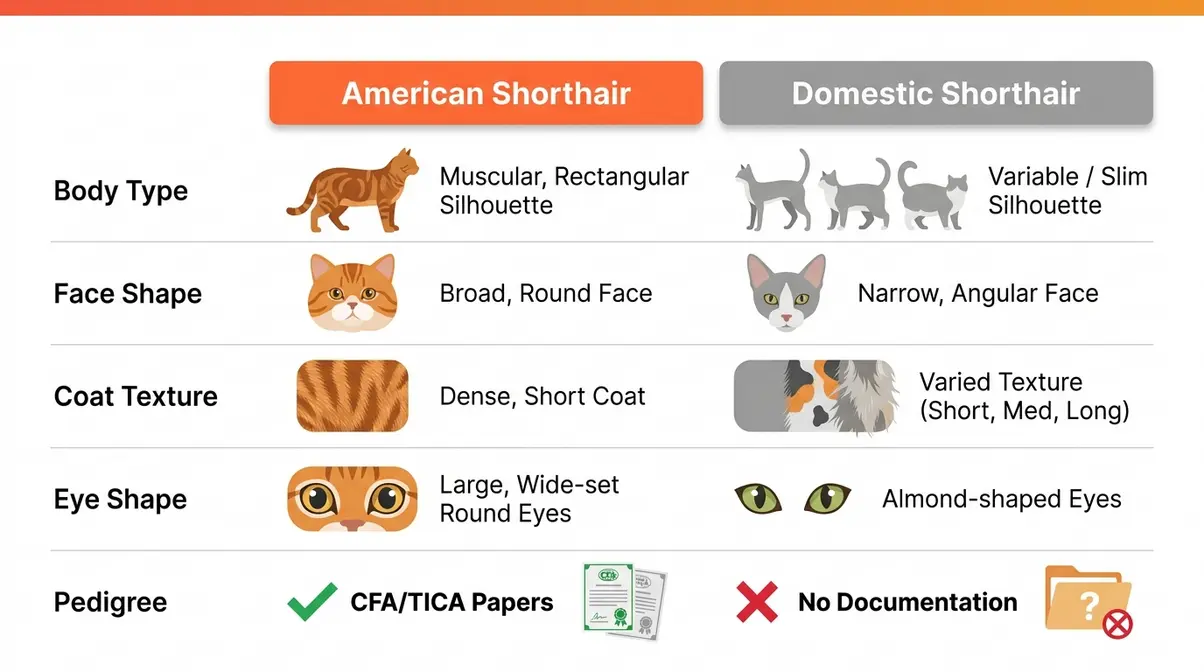
The CFA’s official breed standard describes an American Shorthair as medium to large, muscular, and well-balanced — think stocky, not slim. Males typically weigh 11–15 lbs; females weigh 8–12 lbs (VCA Animal Hospitals). The face is distinctly round, with full cheeks and large, wide-set eyes. That rounded face is one of the clearest visual clues separating this breed from many other cats.
The coat is short, thick, and hard-textured — not silky or plush. It’s designed for outdoor utility, which explains its density. Eye color varies by coat color: silver tabbies often have green eyes, while white cats may have blue, gold, or odd-colored eyes.
Identifying an American Shorthair
This is one of the most searched questions about the breed — and no simple answer exists without a pedigree document. However, five physical identifiers can help you make an educated guess:
- Body type: Solidly muscular and rectangular, with substantial bone structure — not lean or slender like a Siamese
- Face shape: Broadly round with full cheeks and a gentle, open expression — not wedge-shaped or angular
- Coat texture: Short, dense, and slightly coarse to the touch — not soft, silky, or fluffy
- Eye shape: Large and wide-set, with a slightly rounded outer corner
- Pedigree documentation: The only definitive proof — registration papers from the CFA or TICA (The International Cat Association, the world’s largest genetic cat registry)
Without papers, a cat matching all five criteria is likely descended from American Shorthair stock — but cannot technically be called a pedigreed American Shorthair. This distinction matters if you’re paying breeder prices.
American Shorthair Personality
American Shorthairs earn their reputation as good pets through a genuinely balanced temperament. They are affectionate without being clingy, playful without being destructive, and adaptable enough to suit families, singles, and seniors alike. Owner reports across breed communities consistently describe these cats as even-tempered and easy to live with — a trait that stems directly from generations of selective breeding for stable character.
Families and Other Pets
According to the Cat Fanciers’ Association, American Shorthairs consistently rank among the top registered breeds in North America — and their family-friendly personality is a key reason why. These cats adapt well to households with children, provided interactions are respectful. They tolerate the unpredictable energy of young kids better than more sensitive breeds, and they typically coexist comfortably with dogs and other cats when properly introduced.
They are not lap cats in the demanding sense. American Shorthairs enjoy being near their people but generally don’t insist on constant contact. This independence makes them a practical choice for working adults who can’t be home all day. For families, that translates to a cat who greets you warmly at the door without staging a protest when you leave.
Affection and Vocalization
The short answers: yes, on their own terms — and no, they are not particularly vocal. American Shorthairs enjoy physical affection and will often settle beside you on the couch, but they tend to initiate contact rather than demand it. Behavioral research on domestic cat temperament (NCBI) suggests that cats from selectively bred lines show more consistent social behavior than random-bred cats — which aligns with what American Shorthair owners regularly report.
“The American Shorthair cat is a medium-sized cat that’s gentle, loving, and sweet. They are happy and energetic cats, although they’re not super athletic.”
As for vocalization: these cats do not meow a lot compared to breeds like the Siamese or Bengal. They communicate with soft chirps and occasional quiet meows, but they are not known for loud or persistent calling. If you want a quieter household, this breed suits that preference well.
Temperament Pros and Cons
Every breed has trade-offs. Here’s an honest look at both sides:
- +Consistently gentle and adaptable — suitable for most household types
- +Low vocalization — not a noisy breed
- +Tolerates children and other pets well
- +Independent enough to handle time alone without destructive behavior
- +Playful but not hyperactive
- −Not a deeply cuddly lap cat — some owners expecting a velcro cat may find them too independent
- −Can become sedentary with age, which increases obesity risk
- −Their easygoing nature means health problems (like early HCM) can go unnoticed without regular vet checkups
- −Requires mental stimulation — boredom can lead to overeating
Colors and Patterns: Visual Guide
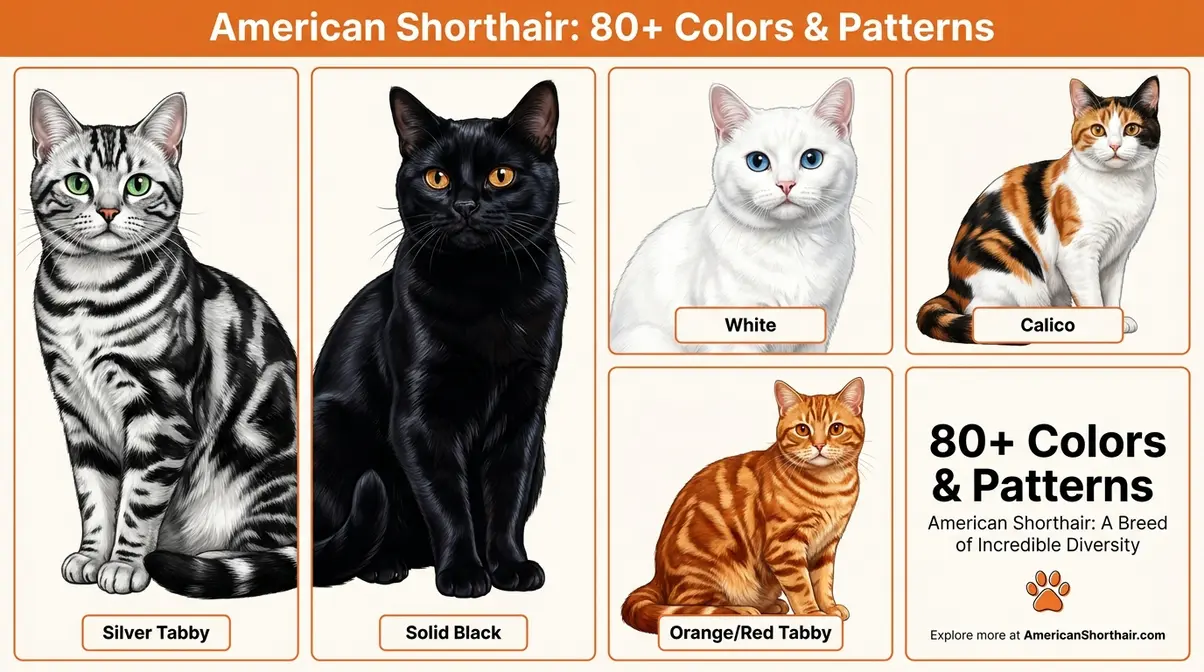
The American Shorthair comes in more than 80 recognized colors and patterns (TICA), making it one of the most visually diverse pedigreed breeds. Colors range from the iconic silver tabby to solid black, white, cream, and complex multi-color patterns. Understanding the main categories helps you search for a specific look — and helps breeders match kittens to buyers.
Silver and Classic Tabby Patterns
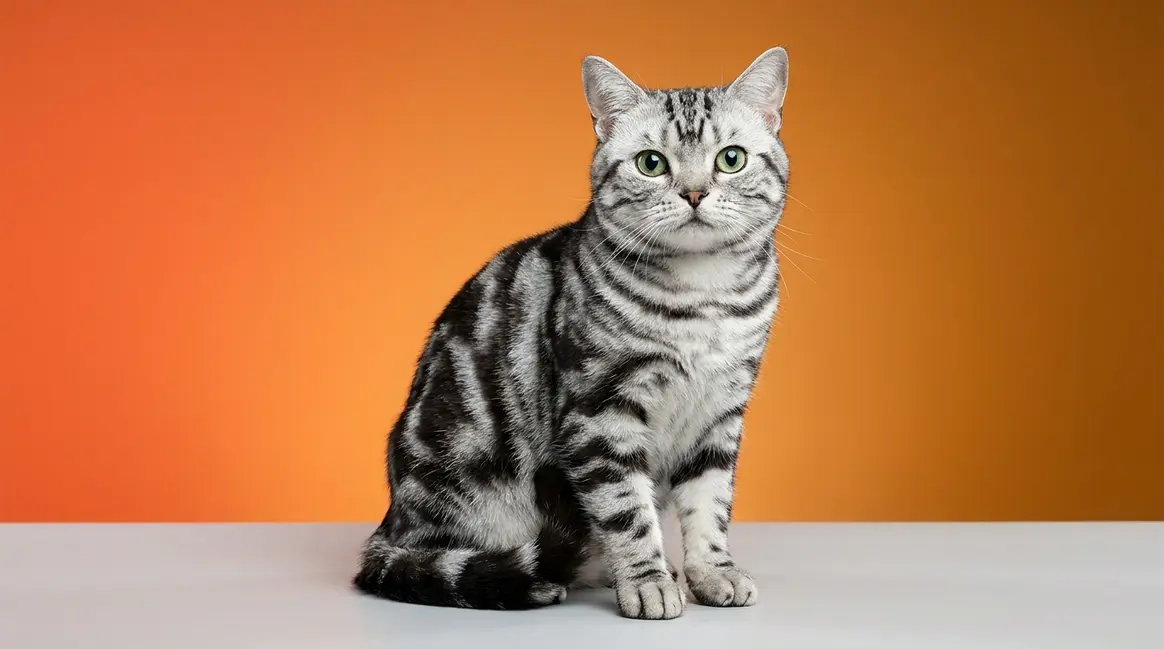
The silver tabby is the American Shorthair’s most iconic look — dense black markings on a bright silver-white ground, with the classic swirling “bulls-eye” pattern on the sides. This pattern is so strongly associated with the breed that many people picture it automatically when they hear “American Shorthair.” Tabby, it’s worth noting, is a coat pattern, not a breed — the “M” marking on the forehead and striped or swirled body markings appear across many cat breeds and mixed-breed cats alike.
Classic tabby (swirled), mackerel tabby (striped), and patched tabby are all accepted. The silver classic tabby has won more CFA Best-in-Show titles than any other American Shorthair color, cementing its place as the breed’s signature look.
Black, White, and Bicolor
Solid black American Shorthairs are sleek and striking — their dense, hard coat gives the black coloring a glossy, almost reflective quality. Solid white cats are also accepted, though white cats in any breed carry a slightly elevated risk of congenital deafness, particularly those with blue eyes. Bicolor patterns — white combined with another solid color — are popular and widely available from breeders.
These solid and bicolor cats often have golden or copper eyes, which contrast beautifully with darker coats. If you’re searching specifically for a black American Shorthair, reputable breeders regularly produce them, and they appear occasionally in breed-specific rescues as well.
Calico and Orange Variations
Calico (white with patches of orange and black) and tortoiseshell (a mosaic of orange and black without white) American Shorthairs exist, though they are almost exclusively female — the genetics that produce these patterns are linked to the X chromosome. Male calicos and tortoiseshells are rare and typically sterile.
Orange (red) American Shorthairs, often called “orange tabbies” by casual observers, are more common in males. The CFA accepts red tabby and red solid colorings. These cats tend to have warm copper or gold eyes and the same sturdy, muscular build as any other American Shorthair — the color is purely cosmetic.
Rare Colors and Eye Color
Some American Shorthair colors are genuinely uncommon, including chinchilla silver (a subtle shading rather than full tabby markings), smoke varieties (solid-colored with a white undercoat), and shaded golden. These rare patterns often command higher prices from breeders because they are harder to produce consistently.
Eye color in American Shorthairs follows coat color closely. Silver and blue-based coats typically produce green or blue-green eyes. Golden and brown coats lean toward copper or gold. White cats may have blue, gold, or odd eyes (one of each color). Eye color alone cannot confirm a cat is an American Shorthair, but it’s one piece of the identification puzzle.
Health, Lifespan, and Care
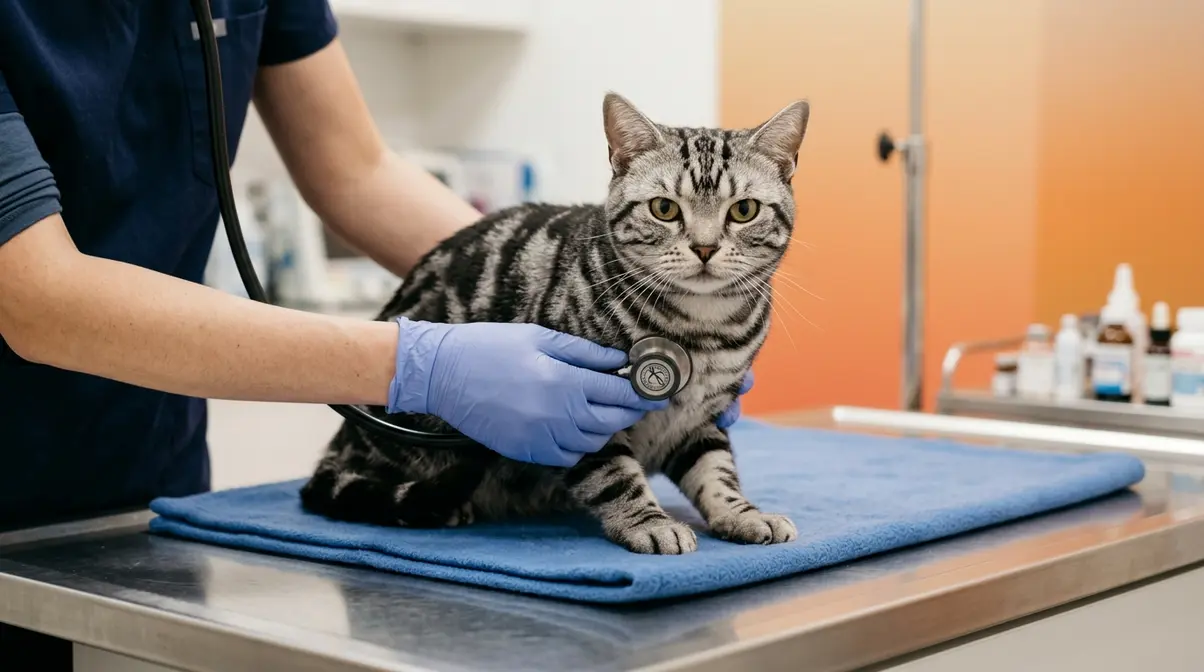
American Shorthairs are generally a robust, healthy breed — one of the benefits of their long working-cat history. However, like all pedigreed cats, they carry specific health predispositions worth knowing before you commit to ownership. The good news: both primary risks are manageable with proactive veterinary care and a sensible diet.
Lifespan and Size
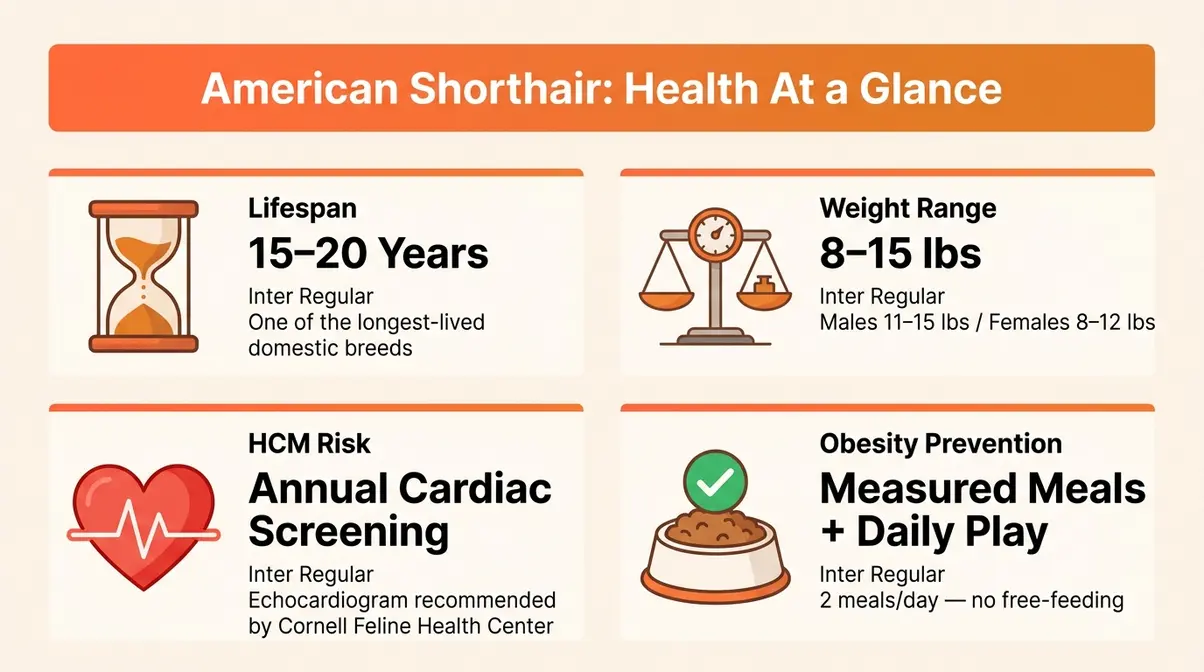
The American Shorthair lifespan ranges from 15 to 20 years (VCA Animal Hospitals) — notably long for a domestic cat, and one of the strongest arguments for the breed. A 15–20 year commitment is significant; understanding that upfront helps you budget for lifetime care realistically.
Size falls in the medium-to-large range. Males typically reach 11–15 lbs at full maturity (around 3–4 years of age — this breed matures slowly). Females are smaller at 8–12 lbs. Their muscular build can make them look heavier than they are, which is why regular weigh-ins at vet visits matter.
Common Health Issues: HCM and Obesity
Two health conditions deserve your attention before you bring an American Shorthair home:
Hypertrophic cardiomyopathy (HCM) — a heart condition in which the heart muscle thickens, reducing the heart’s ability to pump blood efficiently — is the most common heart disease in cats overall, and American Shorthairs have a documented predisposition to it. The Cornell Feline Health Center recommends regular cardiac screening (echocardiograms) for at-risk breeds. Ask your breeder whether their breeding cats are tested for HCM annually, as responsible breeders screen for this condition.
Obesity is the second primary risk. According to the Merck Veterinary Manual, obesity affects an estimated 25–40% of domestic cats and significantly shortens lifespan by contributing to diabetes, joint disease, and heart stress. American Shorthairs are prone to weight gain because their calm, adaptable temperament can tip into sedentary behavior — especially in indoor-only homes. Measured meals (not free-feeding) and daily interactive play are the primary prevention tools. If your cat is already overweight, transitioning to a cat weight loss food can help safely manage their diet.
Grooming, Diet, and Exercise Needs
The American Shorthair’s short, dense coat is genuinely low-maintenance. Weekly brushing with a rubber grooming mitt or soft slicker brush removes loose hair and reduces shedding. For a deeper dive into maintaining their coat, follow a stress-free grooming guide. During seasonal coat changes (spring and fall), brushing twice a week prevents excess hair on furniture. Bathing is rarely necessary — these cats groom themselves effectively.
For diet, feed a high-protein, portion-controlled food appropriate for your cat’s life stage. Free-feeding (leaving food out all day) is the fastest route to obesity in this breed. Most adult American Shorthairs do well on two measured meals per day.
Exercise needs are moderate. Daily interactive play sessions of 10–15 minutes — with wand toys, puzzle feeders, or laser pointers — keep weight in check and provide mental stimulation. These cats enjoy play but won’t demand it the way a Bengal or Abyssinian would.
Breed Comparisons
Understanding what separates the American Shorthair from lookalike cats is the most practical skill a prospective buyer can develop. The comparison that matters most — American Shorthair vs. Domestic Shorthair — is also the one that no competitor guide adequately addresses.
Vs. Domestic Shorthair
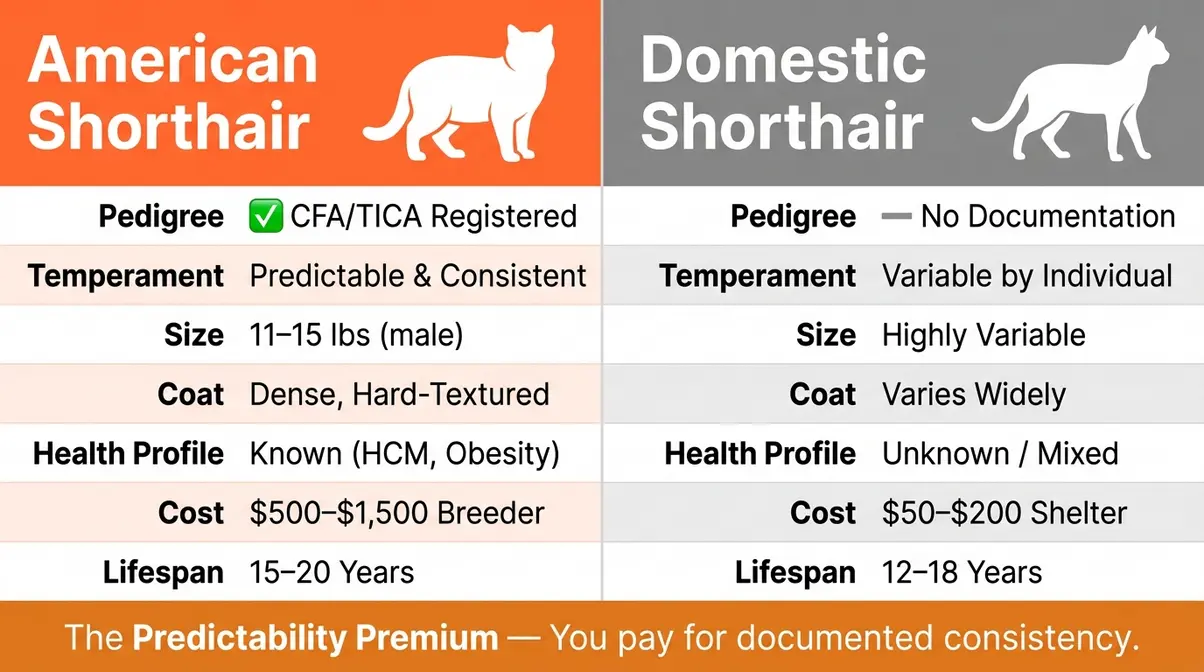
The Domestic Shorthair is not a breed — it’s a catch-all term for any short-haired, mixed-ancestry cat without pedigree documentation. This is a crucial distinction. Here’s how the two compare:
| Feature | American Shorthair | Domestic Shorthair |
|---|---|---|
| Pedigree | Documented ancestry; CFA/TICA registered | No documented ancestry |
| Temperament | Predictable — consistent across the breed | Variable — depends on individual genetics |
| Size | Medium-large; males 11–15 lbs | Highly variable; any size possible |
| Coat | Short, dense, hard-textured | Short, but texture varies widely |
| Health Profile | Known predispositions (HCM, obesity) | Unknown — depends on mixed ancestry |
| Cost | $500–$1,500 from a reputable breeder | $50–$200 adoption fee at a shelter |
| Lifespan | 15–20 years (documented average) | 12–18 years (wide range) |
This is The Predictability Premium in action. You pay more for an American Shorthair because you are purchasing documented consistency — a known temperament, a known health risk profile, and a known adult size. Whether that premium is worth it depends entirely on what you value.
American Shorthair vs. Bombay Cat
The Bombay cat is a striking solid-black, muscular breed developed by crossing American Shorthairs with Burmese cats in the 1950s. At a glance, a black American Shorthair and a Bombay can look similar — but the differences are meaningful. Bombays are more intensely social and demanding of attention, with a sleeker, more patent-leather coat and distinctly copper-colored eyes. American Shorthairs are more independent and come in far more color variations.
If you want a constant companion who follows you from room to room, the Bombay may suit you better. If you prefer a cat who is affectionate but self-sufficient, the American Shorthair is the stronger choice. Both are healthy, family-friendly breeds — the decision comes down to how much attention you want to provide daily.
Price: Buying from a Breeder
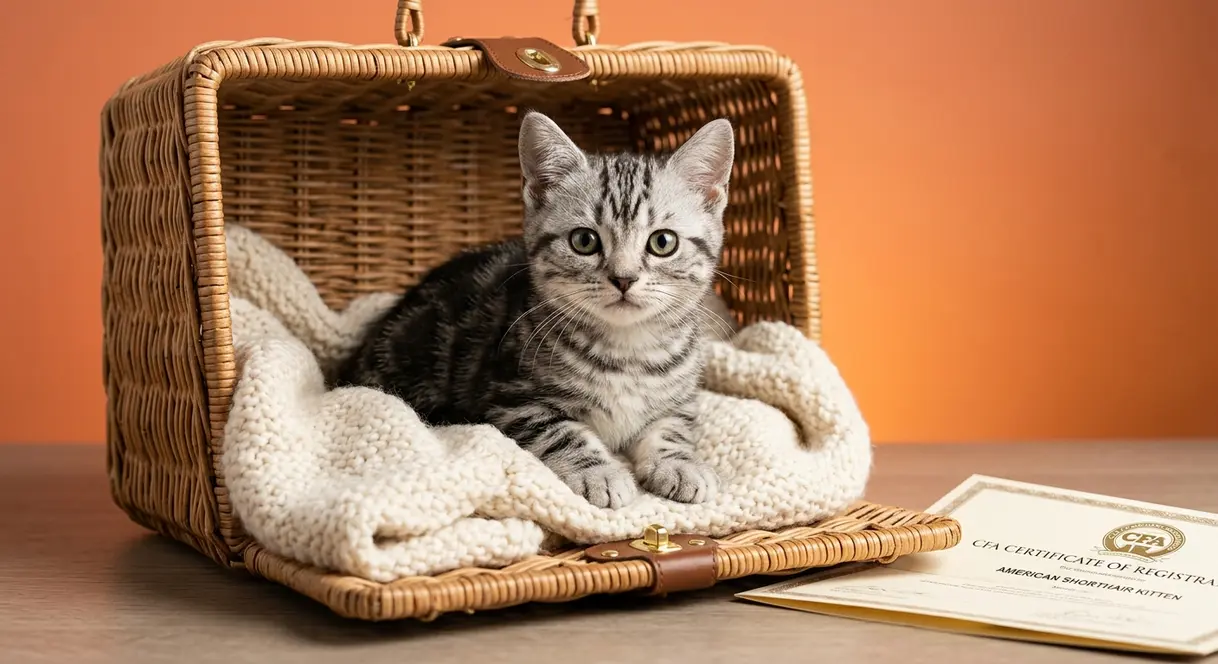
Cost is one of the most searched — and least answered — questions about this breed. Here’s the honest breakdown.
Kitten Cost Breakdown
Purchasing from a reputable breeder typically costs $500–$1,500 for a pet-quality kitten. Show-quality kittens from champion bloodlines can reach $2,500 or more. Prices vary by region, breeder reputation, coat color (rare colors cost more), and whether the kitten comes already spayed/neutered and vaccinated.
But the purchase price is only the beginning. Here’s an itemized lifetime cost estimate to help you plan realistically:
| Expense | One-Time / Annual | Estimated Cost |
|---|---|---|
| Kitten purchase (breeder) | One-time | $500–$1,500 |
| Initial vet visit + vaccines | One-time | $150–$300 |
| Spay/neuter (if not included) | One-time | $200–$500 |
| Annual vet care (wellness) | Annual × 15–20 yrs | $300–$600/yr |
| HCM cardiac screening | Annual × 10+ yrs | $200–$400/yr |
| Food (high-quality dry/wet) | Annual × 15–20 yrs | $400–$800/yr |
| Litter | Annual × 15–20 yrs | $150–$300/yr |
| Grooming supplies | Annual | $50–$100/yr |
| Pet insurance | Annual × 15–20 yrs | $300–$600/yr |
| Toys, bedding, carrier | Periodic | $200–$500 total |
| Estimated Lifetime Total | 15–20 years | $15,000–$25,000 |
This range aligns with industry estimates for medium-to-large breed cats with known health predispositions. The largest variables are veterinary costs (especially if HCM develops) and whether you carry pet insurance.
Finding a Reputable Breeder
The CFA’s breeder directory is the most reliable starting point for finding a reputable American Shorthair cat breeder. TICA’s breeder search is a strong secondary resource. When contacting a breeder, look for these markers of legitimacy:
- Health testing documentation — breeding cats should be tested annually for HCM via echocardiogram
- CFA or TICA registration — kittens should come with registration papers, not just a verbal promise
- Contract and health guarantee — reputable breeders provide a written health guarantee (typically 1–2 years for genetic conditions)
- Kitten socialization — kittens raised underfoot in a home environment, not in isolated cages
- Willingness to answer questions — a good breeder asks as many questions of you as you ask of them
Avoid breeders who cannot provide health test results for their adults, who sell kittens under 12 weeks of age, or who have multiple litters always available. These are red flags for a kitten mill operation.
Rescue and Shelter Adoption
Adoption is a legitimate and often overlooked path to owning an American Shorthair. While pedigreed cats are less common in general shelters than mixed-breed cats, breed-specific rescues do exist. Organizations like Petfinder allow you to filter by breed and location, and occasionally list American Shorthairs surrendered by owners who can no longer care for them.
When searching for a rescue, it is helpful to look for dedicated purebred cat rescue networks in your state. These organizations often foster cats in home environments, which provides a clearer picture of their temperament before adoption. Adoption fees typically run $50–$200 and usually include spay/neuter, initial vaccinations, and a microchip — making the upfront cost significantly lower than a breeder purchase. The trade-off: you may have less certainty about the cat’s full health history or early socialization, and kittens are rare in rescue.
Most adoptable American Shorthairs are adults, which some prospective owners actually prefer — adult cats show you exactly the personality and size you’re getting. Older cats also tend to have settled temperaments, making them ideal for quieter households. If cost is a significant factor, adoption is the right path. If predictable temperament from kittenhood and documented health history are your priorities, a reputable breeder is worth the investment. Both are valid choices — they simply serve different needs. For more comprehensive details on the breed’s background, you can review our complete American Shorthair breed profile.
Limitations and Pitfalls
Common Pitfalls for Owners
Underestimating the lifespan commitment. A 15–20 year commitment is not abstract — it means this cat will likely outlive your current apartment lease, your current relationship status, and possibly your children’s time at home. Many surrendered cats end up in rescue because owners didn’t fully internalize this timeline. Before purchasing, ask yourself honestly whether your life circumstances can accommodate a 20-year companion.
Free-feeding and sedentary lifestyle. The American Shorthair’s calm temperament makes it easy to overlook weight gain until it becomes a serious problem. Obesity in this breed is not cosmetic — it directly increases HCM severity, diabetes risk, and joint stress. Measured meals and daily play are non-negotiable, not optional extras.
Skipping cardiac screening. Because HCM can develop silently, many owners don’t discover it until a cat is already symptomatic. Annual echocardiograms (recommended by the Cornell Feline Health Center for at-risk breeds) catch the condition early, when management options are most effective. Budget for this from day one.
When to Choose Alternatives
If budget is the primary constraint: A Domestic Shorthair from a shelter delivers a loving, healthy companion for a fraction of the cost. The trade-off is less predictability in temperament and adult size — but many owners find that trade-off entirely acceptable.
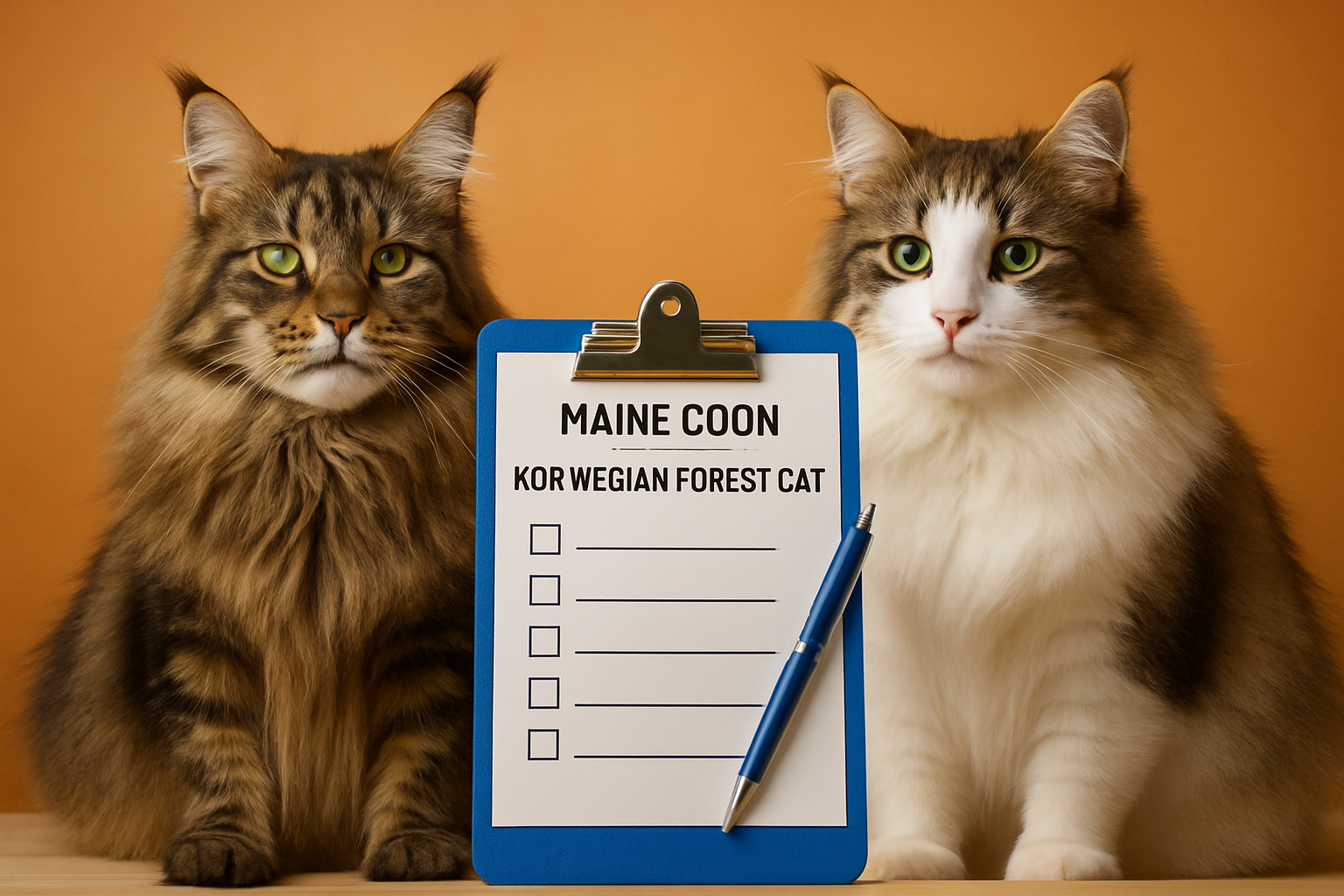
If you want an intensely affectionate lap cat: Consider the Ragdoll or Maine Coon. American Shorthairs are affectionate, but they are not velcro cats. If your primary goal is a cat who demands to be held, these breeds are better suited to that need.
Frequently Asked Questions
How to identify this breed?
The only definitive way to confirm an American Shorthair is pedigree documentation — registration papers from the CFA or TICA. Without papers, you can look for five physical clues: a broadly round face with full cheeks, a medium-to-large muscular body, a short dense coat with a slightly coarse texture, wide-set large eyes, and a rectangular, solid build. A cat matching all five criteria may be descended from American Shorthair stock. However, without documentation, it is technically a Domestic Shorthair — regardless of how it looks. DNA testing services like Basepaws can provide partial breed ancestry information if you want more certainty.
Are they good pets?
American Shorthairs are widely considered excellent pets, particularly for families, first-time owners, and multi-pet households. The Cat Fanciers’ Association consistently ranks them among the most popular registered breeds in North America. They are gentle, adaptable, and tolerant of children and other animals. Their moderate independence makes them well-suited for working adults. Owner reports across breed communities describe them as easy to live with, low-drama, and reliably even-tempered — characteristics that stem directly from generations of selective breeding for stable character.
Are they expensive?
Yes — relative to adopting a mixed-breed cat, American Shorthairs are expensive. Breeder prices typically range from $500–$1,500 for a pet-quality kitten, with show-quality cats reaching $2,500 or more. Adoption from a rescue costs $50–$200. However, the full picture includes lifetime costs: veterinary care, food, HCM screening, and supplies add up to an estimated $15,000–$25,000 over 15–20 years. Pet insurance ($300–$600/year) is strongly recommended given the breed’s HCM predisposition. The purchase price is a small fraction of the total investment.
Do they like to cuddle?
American Shorthairs are affectionate but not intensely cuddly. They enjoy being near their people and will often settle beside you on the sofa or follow you from room to room. However, they tend to initiate contact on their own terms rather than demanding to be held. Behavioral research suggests selectively bred cats show more consistent social behavior than random-bred cats (NCBI). If you want a cat who actively seeks lap time and physical closeness throughout the day, a Ragdoll or Burmese may be a better match. For owners who prefer a companionable but independent cat, the American Shorthair is ideal.
What are the main cons?
The primary downsides are health costs, independence, and sedentary tendencies. American Shorthairs carry a documented predisposition to hypertrophic cardiomyopathy (HCM), which requires annual cardiac screening. They tend toward weight gain with age, especially in indoor-only environments — obesity significantly shortens lifespan. Their independent nature, while a strength for busy owners, can disappoint those who want a deeply affectionate lap cat. Finally, the 15–20 year lifespan, while a positive, represents a substantial long-term commitment that some owners underestimate at the point of purchase.
How rare is this breed?
The American Shorthair is not rare — it is one of the most popular registered breeds in North America. The CFA consistently places it among its top 10 registered breeds. However, finding a reputable breeder with available kittens may require a waiting list of several months, particularly for specific colors like chinchilla silver or rare pattern variations. In shelters, true pedigreed American Shorthairs are uncommon — most short-haired cats in rescues are Domestic Shorthairs. Breed-specific rescues occasionally have adults available, but kittens from rescue are rare.
Do they meow a lot?
No — American Shorthairs are a relatively quiet breed. They communicate with soft chirps, trills, and occasional quiet meows, but they are not known for persistent or loud vocalization. This contrasts sharply with highly vocal breeds like the Siamese, Oriental Shorthair, or Bengal. Owners who prefer a quieter household consistently cite low vocalization as one of the breed’s most appreciated traits. Increased vocalization — particularly sudden changes in a previously quiet cat — can signal pain or illness and warrants a veterinary visit.
Is This Breed Right for You?
The American Shorthair cat delivers something genuinely valuable: a documented, predictable companion with a 15–20 year lifespan, a gentle temperament suited to most households, and a health profile you can plan around. According to the CFA, it remains one of the most consistently popular registered breeds in North America — and the reasons are straightforward. This breed works for families, singles, seniors, and multi-pet homes precisely because its character is stable and its needs are manageable.
The Predictability Premium is the central trade-off this guide was built to explain. You pay $500–$1,500 for a breeder kitten not because pedigreed cats are inherently superior to shelter cats, but because you are purchasing documented consistency. Knowing your cat’s likely adult size, temperament range, and health risk profile before it arrives home has real, practical value — especially for first-time owners making a two-decade commitment.
Start your search at the CFA’s breeder directory or TICA’s registry for a verified breeder, or check Petfinder if adoption fits your situation better. Either way, you now know exactly what you’re getting — and that knowledge is the whole point.

Dave King
Cat owner and writer at Mad Cat Man.