New Cat Shopping Checklist: Every Essential for 2026
Master the essentials of Cat Shopping Checklists: 7 Printable, Vet-Approved Lists for New Owners, Budget Shoppers & Multi-Cat Homes packed with data-…

“Hello I am thinking about getting a cat once I get a job and I would like to know what are some things I need to get before adopting and good cheaper …”
— Real question from a first-time cat owner online
That question comes up constantly — and it deserves a real, honest answer. Getting a cat is one of the most rewarding things you can do. But walking into a pet store without a plan can feel chaotic, expensive, and confusing.
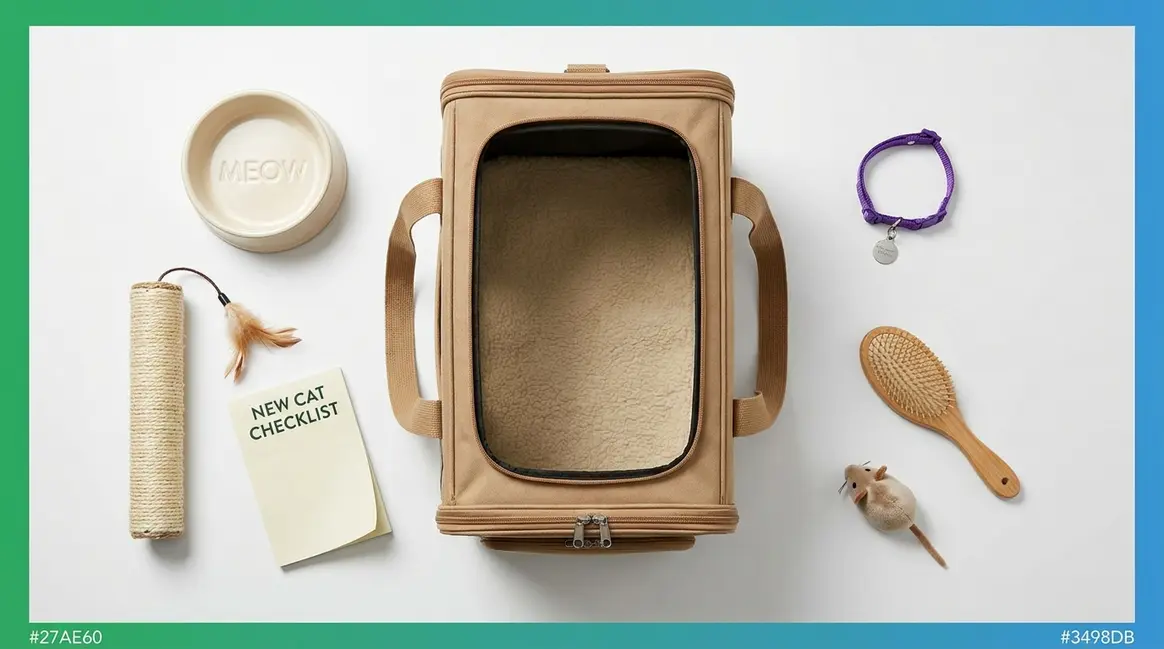
Most checklists tell you what to buy. Almost none tell you what it will cost — or which items you can skip when money is tight. This guide is your complete cat shopping checklist new owner resource, organised into five categories, with transparent budget guidance at three price points so you can shop with confidence rather than guesswork. You’ll cover essential setup, feeding, grooming, enrichment, and health prep — everything your new feline friend needs before they set one paw inside your home.
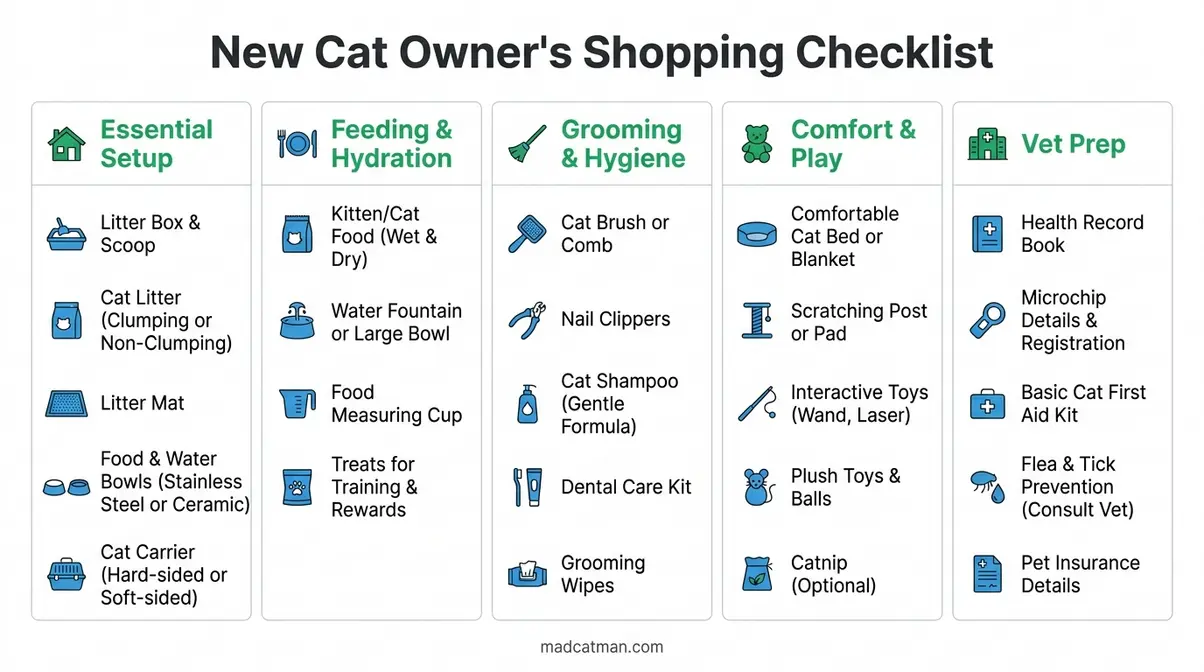
A comprehensive cat shopping checklist new owner guide includes 5 core supply categories before bringing your cat home — and first-year costs average around $1,149 according to the ASPCA pet care costs page (ASPCA, 2024).
- Essential Setup: Carrier, litter box, litter, scratching post, and a breakaway collar are non-negotiable first-day purchases
- Feeding: Use wide, shallow bowls to prevent whisker fatigue; seriously consider a water fountain for long-term hydration
- Budget: The 3-Tier Cat Budget framework puts initial supplies between $80–$700 depending on quality — most new owners land in the $200–$350 range
- Health: Book your first vet visit before your cat arrives — not after — it’s the single most overlooked step
- Enrichment: Toys and a cat bed cost little but make a huge difference in your cat’s first week at home
Why Trust This Checklist
This checklist was built using Tier 1 veterinary sources — not retailer product pages. Every recommendation is grounded in guidance from the Cornell Feline Health Center, Ohio State University Indoor Pet Initiative, UC Davis School of Veterinary Medicine, Tufts University Clinical Nutrition Service, the American Veterinary Medical Association (AVMA), and the ASPCA. No single retailer partnership influenced these selections. Throughout this guide, you’ll also see The 3-Tier Cat Budget — a simple Low/Medium/High cost breakdown for every category — so you always know what you’re spending before you reach the checkout.
According to ASPCA pet care costs, the first year of cat ownership costs an average of $1,149, covering initial supplies and basic medical care (ASPCA, 2024). That figure surprised many new owners across cat-owner communities — which is exactly why this checklist includes honest cost data upfront, rather than burying it in fine print.
How We Put This Checklist Together
Recommendations in this new cat checklist were drawn from published veterinary guidance at Cornell, Ohio State, UC Davis, Tufts, the AVMA, and the ASPCA. Items were selected based on animal welfare standards and widely agreed-upon best practices across humane societies and cat welfare organisations — not commercial partnerships. Every category includes a Low, Medium, and High budget option so you can plan realistically without feeling pressured into overspending. You can also grab a printable new cat owner checklist to take to the shops with you.
Before You Shop: A Quick Note
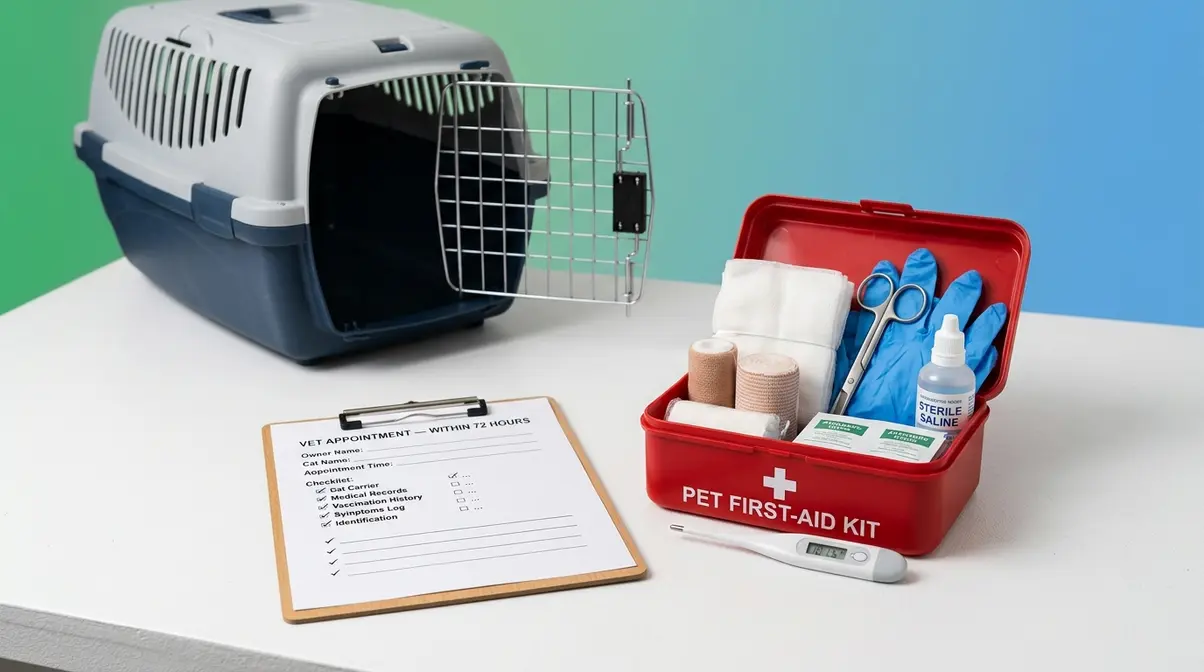
Before you add a single item to your basket, sort these three things first:
- Know whether you’re getting a kitten or an adult cat. Several items differ — kittens need age-appropriate food, low-sided litter boxes (easier to climb in and out of), and gentler grooming tools than adult cats.
- Decide on a “safe room.” This is a quiet, enclosed space — a spare bedroom or even a bathroom — where your cat will spend their first 24–72 hours settling in. Knowing this room in advance tells you exactly where to set up the litter box, food bowls, and bed on day one.
- Book a vet appointment now, not later. This is the single most overlooked step for first time getting a cat. Ideally, schedule the visit for within 48–72 hours of bringing your cat home.
With those three things sorted, you’re ready to shop. Let’s start with the numbers.
First-Year Cost Breakdown — The 3-Tier Cat Budget
The ASPCA pet care costs page estimates the average first-year cost of owning a cat at $1,149 — covering both one-time purchases like a carrier and litter box, and ongoing expenses like food, litter, and vet visits (ASPCA, 2024). That number can feel intimidating at first glance. But your initial shopping trip typically runs $80–$700 depending on the quality tier you choose. The 3-Tier Cat Budget is the framework this guide uses to make that range concrete and navigable.
The 3-Tier Cat Budget Explained
The 3-Tier Cat Budget is a simple Low/Medium/High breakdown for every essential cat supply category. Here’s what each tier means in plain terms:
- 🟢 Low: Budget-friendly basics that do the job. Fine for most situations, especially when you’re just starting out.
- 🟡 Medium: The sweet spot most owners choose. Better durability, more features, and worth the extra spend.
- 🔴 High: Premium picks for owners who want the best — or who have specific needs (allergies, multi-cat households, travel).
Use the table below as your at-a-glance reference. You’ll see each category covered in depth in the sections that follow.
| Category | 🟢 Low Budget | 🟡 Medium Budget | 🔴 High Budget |
|---|---|---|---|
| Cat Carrier | $15–25 (soft-sided, basic) | $30–50 (hard-sided, airline-approved) | $60–100+ (luxury, airline-approved) |
| Litter Box | $10–20 (basic open tray) | $25–40 (hooded box) | $50–200+ (self-cleaning automatic) |
| Cat Litter (monthly) | $10–15 (clumping clay) | $15–25 (low-dust or natural) | $25–40 (crystal or premium) |
| Food & Water Bowls | $5–10 (basic plastic — not ideal) | $15–25 (stainless steel or ceramic) | $30–50 (elevated, wide, anti-whisker-fatigue) |
| Scratching Post | $10–20 (basic sisal post) | $25–45 (tall sisal/cat tree combo) | $60–150+ (multi-level cat tree) |
| Cat Food (monthly) | $20–30 (dry food, standard brand) | $30–60 (wet + dry mix, quality brand) | $60–100+ (grain-free or vet-recommended) |
| Cat Bed | $10–20 (basic fleece bed) | $25–40 (donut or enclosed bed) | $50–100+ (heated or orthopaedic) |
| Grooming Kit | $10–20 (basic brush + nail clippers) | $25–40 (slicker brush, clippers, comb) | $50–80 (professional-grade set) |
| First-Aid Basics | $10–20 (basic kit) | $20–35 (complete kit) | $35–60 (vet-recommended full kit) |
| Initial Total (one-time) | ~$80–150 | ~$200–350 | ~$400–700+ |
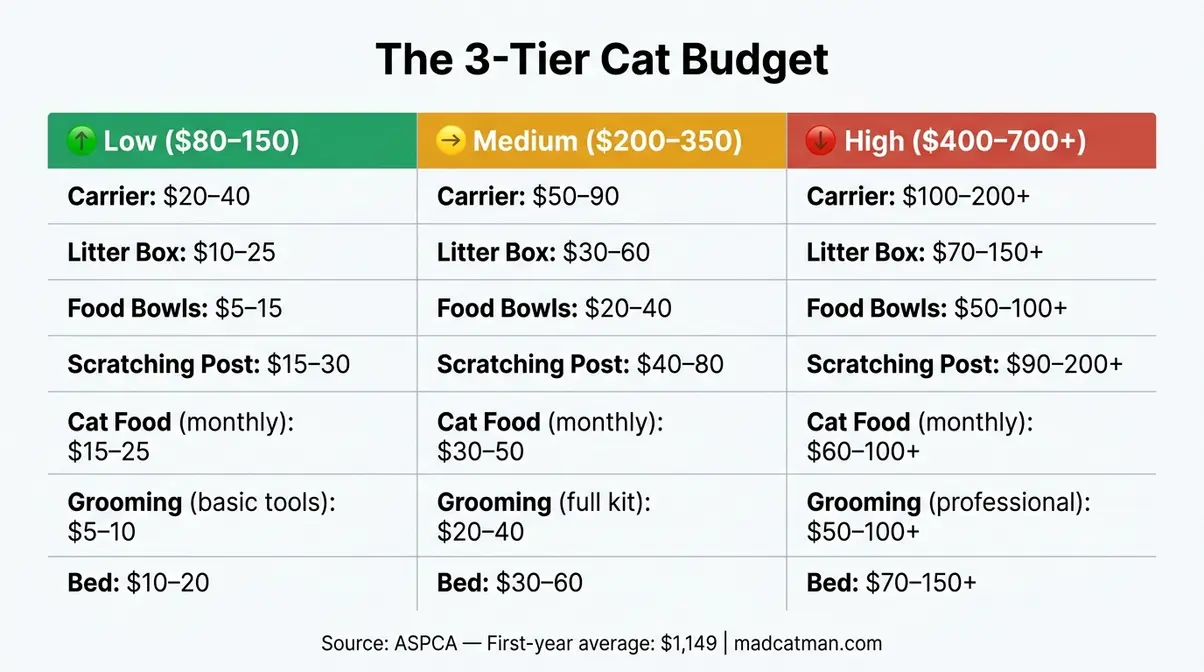
These figures are estimates based on typical retail prices as of mid-2026. Ongoing costs — food, litter, routine vet care — add approximately $500–$1,000 per year. The ASPCA’s $1,149 first-year average reflects all of these combined, not just the initial shopping trip (ASPCA, 2024).
Want a one-page version to take to the shops? Download our printable cat shopping checklist →
Now let’s break down each category in detail — starting with the items your cat needs on day one.
1. Essential Cat Supplies & Safety
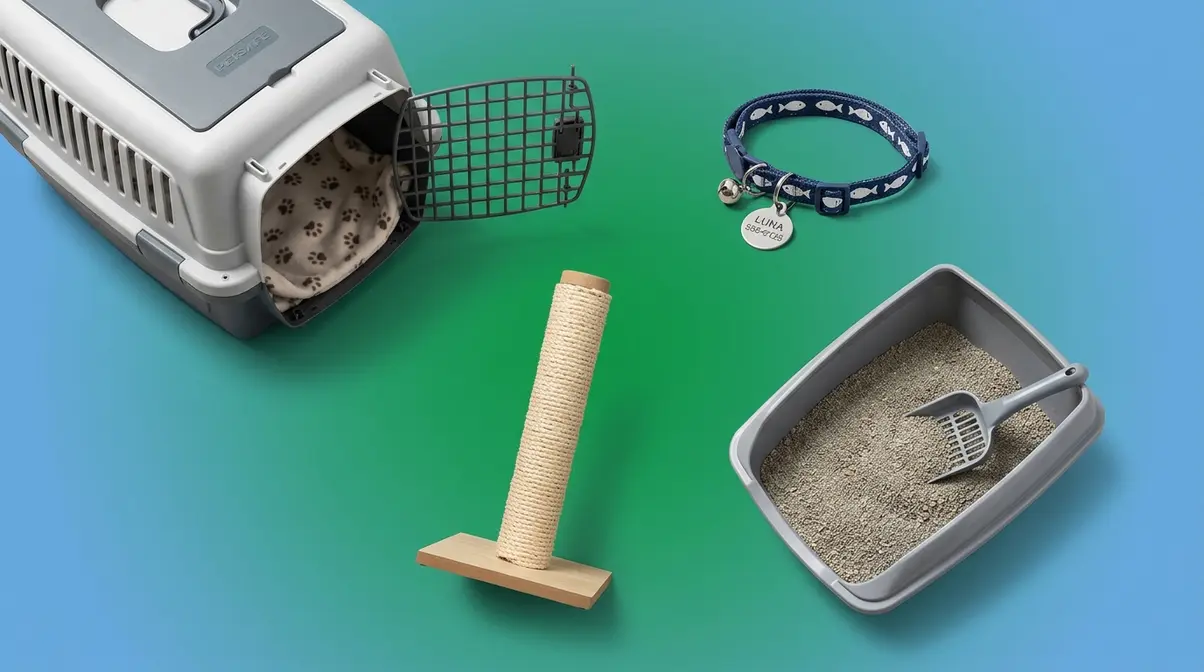
The moment you bring your cat through the front door, the clock starts. Your new feline friend is already processing unfamiliar sights, sounds, and smells — and the supplies you’ve set up in advance are what make that transition calm rather than chaotic. When putting together your cat shopping checklist new owner essentials, the carrier is the very first item you need. This section covers the core items that aren’t optional: each one serves a specific safety or welfare function. Refer back to The 3-Tier Cat Budget table above for cost context on each item.
Cat Carrier
A cat carrier is the hard or soft-sided travel container used to transport your cat safely. It’s the very first item you need — because you can’t bring your cat home without one. You’ll also use it for every vet visit for the rest of your cat’s life, so it’s worth choosing carefully.
Why this matters: Cats feel secure in enclosed, den-like spaces. A carrier that’s too large causes anxiety; one that’s too flimsy can break open in transit. For kittens, a smaller soft-sided carrier works fine. For adult cats, a hard-sided carrier with a top-loading door is often easier to use at the vet.
- What to look for:
- Secure latches that can’t pop open accidentally
- Adequate ventilation on multiple sides
- A removable top (makes vet visits much less stressful)
- Easy-to-clean interior (accidents happen)
Budget guidance (from The 3-Tier Cat Budget): A basic soft-sided carrier ($15–25) does the job for occasional trips. If you plan to travel by air or want longer-term durability, invest in a hard-sided, airline-approved model ($30–50). Premium carriers ($60–100+) add features like backpack straps or extra padding.
Buying tip: Place the carrier in your home a week before your cat arrives with a familiar-smelling blanket inside. This helps your cat see it as a safe space rather than a threat.
Litter Box & Cat Litter
A litter box is the container cats use as their bathroom — and setting it up correctly from day one prevents the single biggest frustration new cat owners face: litter box avoidance.
Why this matters: Cats are naturally fastidious. If the litter box is too small, too dirty, too enclosed, or in the wrong location, many cats will simply refuse to use it. The general rule is one litter box per cat, plus one extra. For a single cat, two boxes in different locations is ideal.
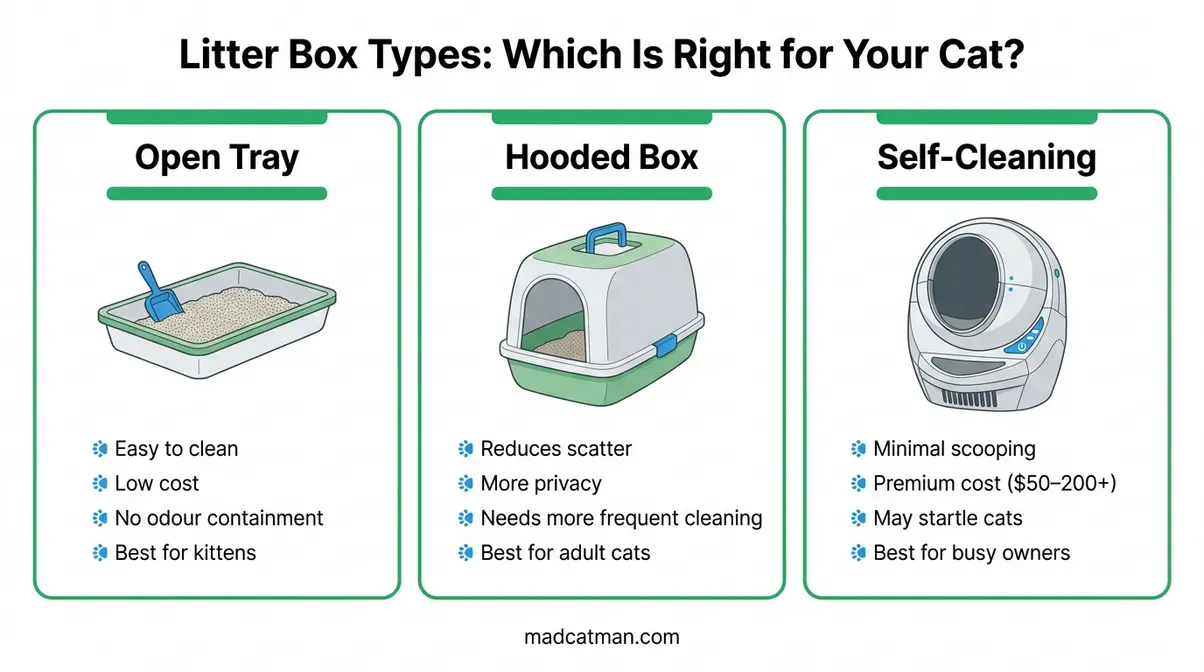
Litter box types at a glance:
| Type | Pros | Cons | Best For |
|---|---|---|---|
| Open tray | Easy to clean, low-cost, well-ventilated | No odour containment, litter scatter | Kittens, cats who dislike enclosures |
| Hooded box | Reduces odour and scatter | Some cats feel trapped; needs more cleaning | Adult cats who prefer privacy |
| Self-cleaning automatic | Minimal scooping, very clean | Expensive ($50–200+), can malfunction, may startle cats | Busy owners, multi-cat homes |
Cat litter types: Clumping clay litter ($10–15/month) is the most widely used and easiest to scoop. Low-dust or natural litters ($15–25/month) suit cats or owners with respiratory sensitivities. Crystal litter ($25–40/month) absorbs odour exceptionally well but requires full replacement rather than daily scooping.
What to know for kittens: Choose a low-sided open tray so young kittens can climb in and out without difficulty. Avoid fine, dusty litters for kittens under 12 weeks, as they may accidentally ingest it.
Placement tip: Put the litter box in your cat’s safe room initially. Keep it away from food and water bowls — cats instinctively avoid eliminating near their food source.
Scratching Posts & Cat Trees
A scratching post is a vertical surface covered in sisal (a rough, natural fibre) or carpet that cats scratch to maintain their claws, mark territory, and stretch their muscles. It is not a luxury — it’s a behavioural necessity.
Why this matters: According to the Cornell Feline Health Center, providing scratching posts and vertical spaces is essential to prevent stress-related destructive behaviours in indoor cats. Without an appropriate outlet, cats will scratch furniture — not out of spite, but because the drive to scratch is hardwired. Across professional cat-owner communities, the consistent advice is: buy the scratching post before the sofa protectors.
- What to look for:
- Tall enough: The post should be at least as tall as your cat fully stretched (typically 28–36 inches for an adult cat). Short posts are often ignored.
- Stable base: A wobbly post that topples when used will be abandoned immediately.
- Sisal fabric (not carpet): Cats prefer sisal texture; carpet-covered posts can confuse cats about what is and isn’t okay to scratch.
Cat trees (multi-level climbing structures with built-in scratching posts, perches, and sometimes enclosed dens) serve as both a scratching outlet and an environmental enrichment tool. For a new cat, a basic tall sisal post ($25–45) is sufficient to start. You can cat-proof your home room by room once your cat is settled.
Budget guidance: A basic sisal post costs $10–20. A tall sisal post or small cat tree combo runs $25–45 and is worth the upgrade for most owners. Multi-level cat trees ($60–150+) are excellent for active cats or multi-cat households.
Collar with ID Tag (Breakaway Only)
A breakaway collar is a safety collar designed to release under pressure so a cat cannot become trapped or strangled if the collar catches on a branch, fence, or piece of furniture. For indoor cats, a collar with an ID tag is still strongly recommended — because indoor cats do sometimes escape, and a visible ID tag dramatically increases the chance of a safe return.
Why this matters: Standard elasticated or fixed collars can catch on objects and injure — or kill — a cat that panics and struggles. A breakaway collar releases instantly when force is applied, then resets for normal wear. This is a life-or-death distinction, not a marketing claim.
- What your ID tag should include:
- Your cat’s name
- Your phone number
- “Microchipped” (if applicable — and your cat should be microchipped)
Budget guidance: A basic breakaway collar with an ID tag costs $8–15 in total. This is one category where the Low tier is entirely adequate — the safety mechanism is the same regardless of price.
Important note for kittens: Check collar fit regularly. Kittens grow fast. You should be able to fit two fingers comfortably between the collar and your kitten’s neck. Recheck every few weeks.
2. Feeding & Hydration – Bowls, Food & Water
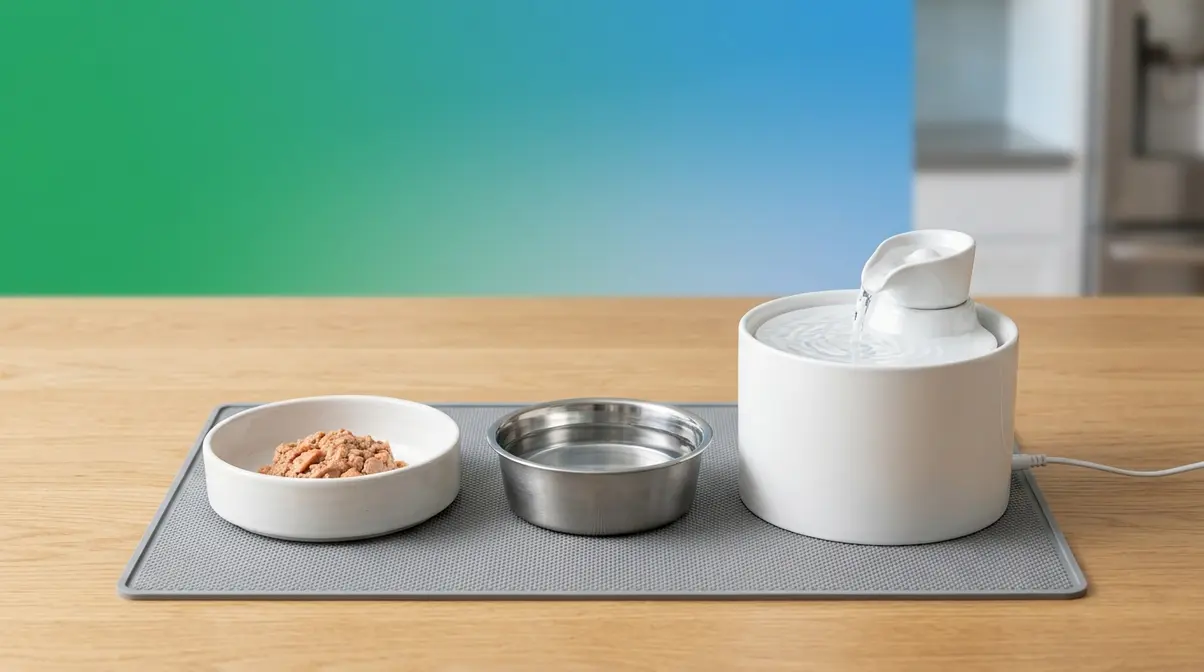
Getting feeding right from the start makes a measurable difference to your cat’s long-term health. Choosing the right feeding setup is just as critical as the food itself. Across professional cat-owner communities and veterinary guidance, the consistent advice is: the type of bowl matters as much as what goes in it, and water intake is chronically underestimated by new owners. The 3-Tier Cat Budget table shows feeding supplies ranging from $5 to $50+ — here’s how to spend wisely.
Food Bowls & Whisker Fatigue
A food bowl seems straightforward — but the wrong shape can actually cause your cat to stop eating, or eat less than they need. The culprit is a condition called whisker fatigue (sometimes called whisker stress) — discomfort caused when a cat’s highly sensitive facial whiskers repeatedly brush against the sides of a deep or narrow bowl while eating.
Why this matters: The Ohio State University Indoor Pet Initiative has documented whisker fatigue as a genuine source of mealtime stress in cats. Signs include pawing food out of the bowl to eat it off the floor, approaching the bowl and then walking away, or eating only from the centre of the dish. Across veterinary nutrition communities, the recommended solution is consistent: use a wide, shallow bowl or a flat plate.
- What to look for:
- Wide and shallow: The bowl should be wide enough that whiskers don’t touch the sides
- Material: Stainless steel or ceramic are preferred over plastic. Plastic bowls develop micro-scratches over time that harbour bacteria, and some cats develop chin acne from plastic contact.
- Stability: A non-slip base prevents the bowl sliding across the floor during enthusiastic eating
Budget guidance: Basic plastic bowls ($5–10) are functional but not ideal for long-term use. Stainless steel or ceramic bowls ($15–25) are the better investment. Elevated, wide anti-whisker-fatigue bowls ($30–50) are the premium option and particularly useful for older cats or those with mobility issues.
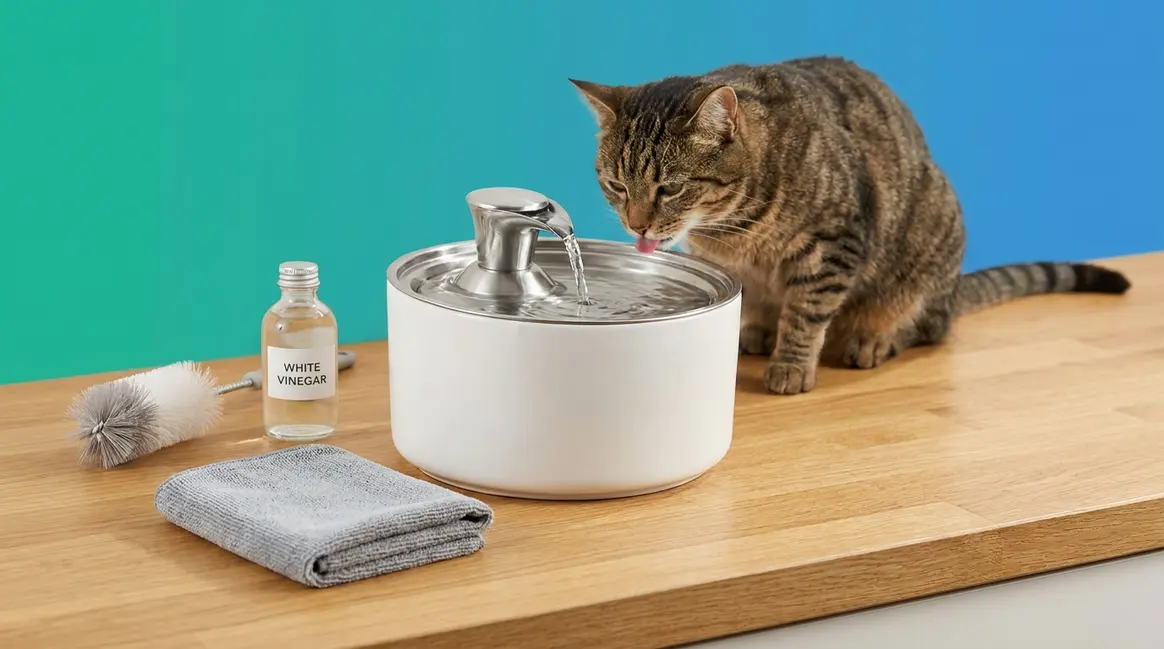
Water Bowl vs. Cat Water Fountain
Cats evolved as desert animals and have a naturally low thirst drive — they’re biologically adapted to get most of their hydration from food, not from drinking. This creates a real risk of chronic mild dehydration in cats fed primarily dry food. Proper hydration prevents disease — cats fed primarily dry food require moving water sources to maintain kidney health.
Why this matters: Insufficient water intake is linked to urinary tract problems and kidney disease — two of the most common health issues in domestic cats. Encouraging your cat to drink more water is one of the most impactful things you can do for their long-term health.
Water bowl vs. fountain — which should you choose?
| Option | Pros | Cons | Best For |
|---|---|---|---|
| Standard water bowl | Simple, cheap, easy to clean | Stagnant water; many cats prefer moving water | Cats who drink well regardless |
| Cat water fountain | Moving water encourages drinking; filters keep water fresh | Requires regular cleaning and filter replacement | Cats who ignore still water; cats prone to UTIs |
Many cats are instinctively attracted to moving water — which is why you’ll often find yours trying to drink from the tap. Implementing cat hydration hacks early on is crucial. A cat water fountain like the one in our Petlibro PLWF002 water fountain review ($25–60) mimics this and is one of the most commonly recommended upgrades by veterinary professionals for cats on dry-food-heavy diets.
Practical tip: Wherever you place the water bowl or fountain, keep it well away from the litter box and food bowl. Cats prefer their water source to be separate from both.
Wet Food vs. Dry Food – What’s Right for Your Cat?
This is one of the most common questions new cat owners ask — and the answer is nuanced. Both wet and dry food have a place in a healthy cat’s diet, but veterinary nutrition guidance leans toward wet food as the more beneficial primary option for most cats.
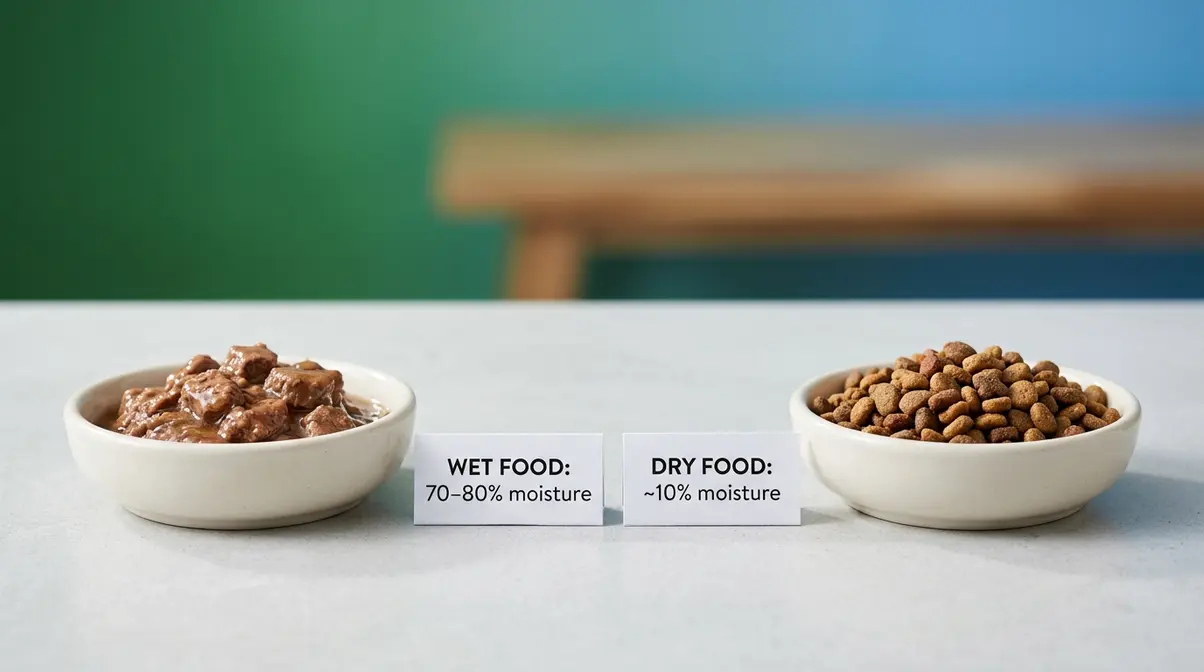
Why this matters: The Tufts University Clinical Nutrition Service notes that wet food provides significantly more moisture than dry food — typically 70–80% water content versus 10% in dry kibble. For cats with low natural thirst drives, this moisture content directly supports kidney function and urinary tract health.
A practical comparison:
| Food Type | Moisture Content | Cost (monthly) | Key Benefit | Key Drawback |
|---|---|---|---|---|
| Dry food only | ~10% | $20–30 | Convenient, long shelf life | Low hydration, may contribute to urinary issues |
| Wet food only | ~70–80% | $40–80+ | High hydration, palatable | More expensive, shorter shelf life once opened |
| Mixed (wet + dry) | Varies | $30–60 | Balance of hydration and convenience | Requires more planning |
For kittens: Choose food specifically labelled for kittens (or “all life stages”). Kittens have different nutritional needs — higher protein and calorie requirements — than adult cats. Adult cat food does not meet these needs.
Practical guidance: A mix of high-quality wet food (at least once daily) and dry food is the approach most commonly recommended by veterinary nutrition professionals for adult cats. Consult your veterinarian for personalised health and dietary advice tailored to your specific cat’s age, weight, and health history.
3. Grooming & Hygiene – Keeping Your Cat (and Home) Clean
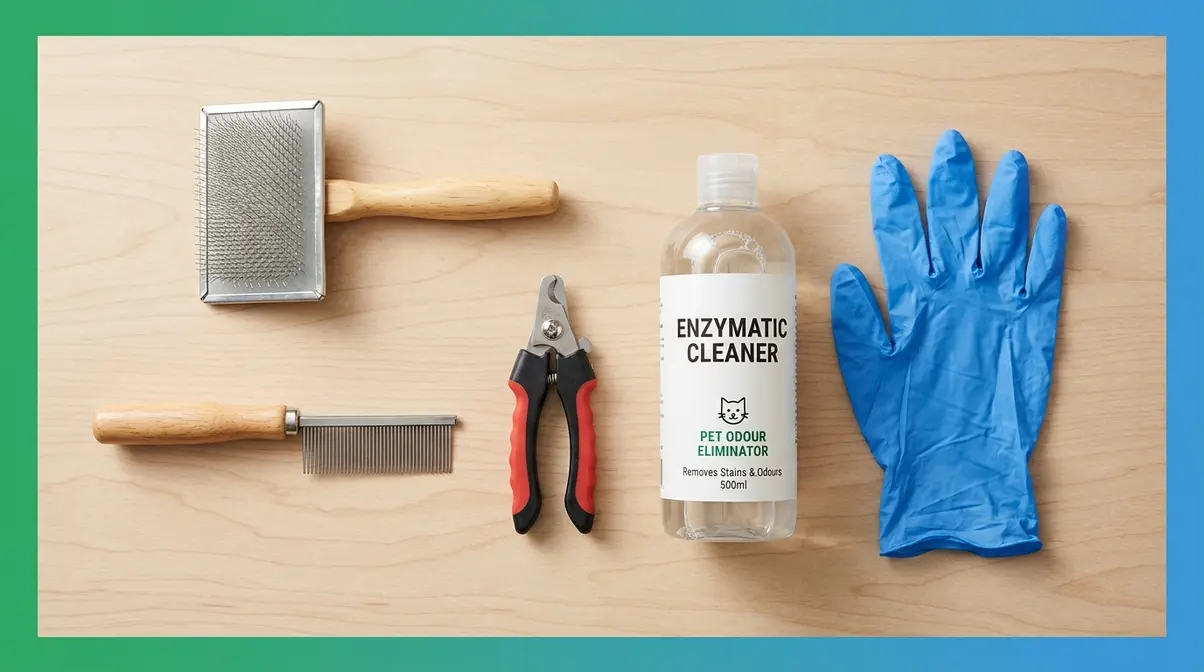
Most cats are remarkably self-sufficient groomers. But that doesn’t mean they don’t need your help. Proactive grooming saves you money on vet bills and furniture replacement. Regular brushing reduces shedding and hairballs, nail trimming protects your furniture and your skin, and having the right cleaner on hand for accidents prevents permanent staining and lingering odour. No cat shopping checklist new owner plan is complete without grooming basics. These grooming and hygiene supplies are low-cost but high-impact additions to your setup.
Cat Brush & Comb
A cat brush (also called a grooming brush or slicker brush) is used to remove loose fur, distribute natural skin oils, and check for skin issues or parasites. Regular brushing also reduces the amount of hair your cat swallows during self-grooming — which directly reduces hairball frequency.
Why this matters: Long-haired cats (like Persians or Maine Coons) need daily brushing to prevent painful matting. Short-haired cats benefit from weekly brushing, especially during seasonal shedding. Starting grooming early — even with a kitten — helps your cat become comfortable with the process. For a deeper dive, check out our how to groom a cat tutorial.
- What to look for:
- Short-haired cats: A rubber grooming mitt or fine-toothed comb works well
- Long-haired cats: A slicker brush (fine wire bristles on a flat pad) plus a wide-toothed comb for detangling
- All cats: A deshedding tool (like a Furminator-style comb) during heavy shedding seasons
Budget guidance: A basic brush and nail clippers combo ($10–20) covers the essentials. A slicker brush with a separate comb and nail clippers ($25–40) is the medium-tier sweet spot for most cat owners.
Cat Nail Clippers
Cat nail clippers are small, scissor-style or guillotine-style tools designed specifically for trimming a cat’s claws. Regular nail trimming — approximately every 2–4 weeks — prevents claws from becoming overgrown, reduces furniture damage, and makes accidental scratches less painful.
Why this matters: Overgrown claws can curl and grow into a cat’s paw pad, causing significant pain and requiring veterinary intervention. Regular trimming is far easier and cheaper than treating an ingrown claw.
- How to trim safely:
- Hold your cat calmly in your lap or on a stable surface
- Gently press the paw pad to extend the claw
- Identify the pink “quick” — the blood vessel inside the nail — and cut only the clear tip, well clear of the quick
- Reward immediately with a treat after each paw
Practical tip: If you’re nervous about clipping, ask your vet or a veterinary nurse to demonstrate at your first appointment. It takes about two attempts before it feels routine. If you need step-by-step help, our cat nail clipping guide covers the exact technique.
Budget guidance: Basic cat nail clippers cost $5–10 and work perfectly well. Ergonomic models with safety guards ($15–25) are easier to use for beginners.
Stain & Odour Cleaner – Why Enzymatic Matters
When your cat has an accident outside the litter box — and at some point, they will — the cleaner you use matters enormously. An ordinary household cleaner will remove the visible stain but leave behind the odour-causing proteins that cats can still smell. This can cause them to return to the same spot repeatedly. Enzymatic cleaners are non-negotiable — standard household sprays leave behind proteins that encourage repeat accidents.
Why this matters: The UC Davis School of Veterinary Medicine recommends using an enzymatic cleaner (a specialised formula that uses enzymes to break down the proteins in cat urine and faeces at a molecular level) to fully eliminate odour and discourage repeat soiling. Standard multi-purpose cleaners, bleach, and ammonia-based products do not achieve this — and ammonia can actually attract cats back to the spot, since cat urine contains ammonia.
- What to look for:
- Labelled specifically as an “enzymatic” or “enzyme-based” pet cleaner
- Safe for use on carpets, upholstery, and hard floors
- Fragrance-free or lightly scented (strong fragrances can deter cats from using the litter box if used nearby)
How to use it: Blot (don’t scrub) the fresh stain first to absorb as much liquid as possible. Apply the enzymatic cleaner generously, allow it to soak for the time specified on the label (usually 5–10 minutes), then blot again and let air dry. Avoid steam cleaning cat urine — heat can permanently set the proteins into fabric.
Budget guidance: A good enzymatic cleaner costs $10–20 for a standard bottle. This is one category where buying a reputable brand (rather than the cheapest option) makes a genuine difference in effectiveness.
4. Comfort, Play & Enrichment – A Happy Cat at Home
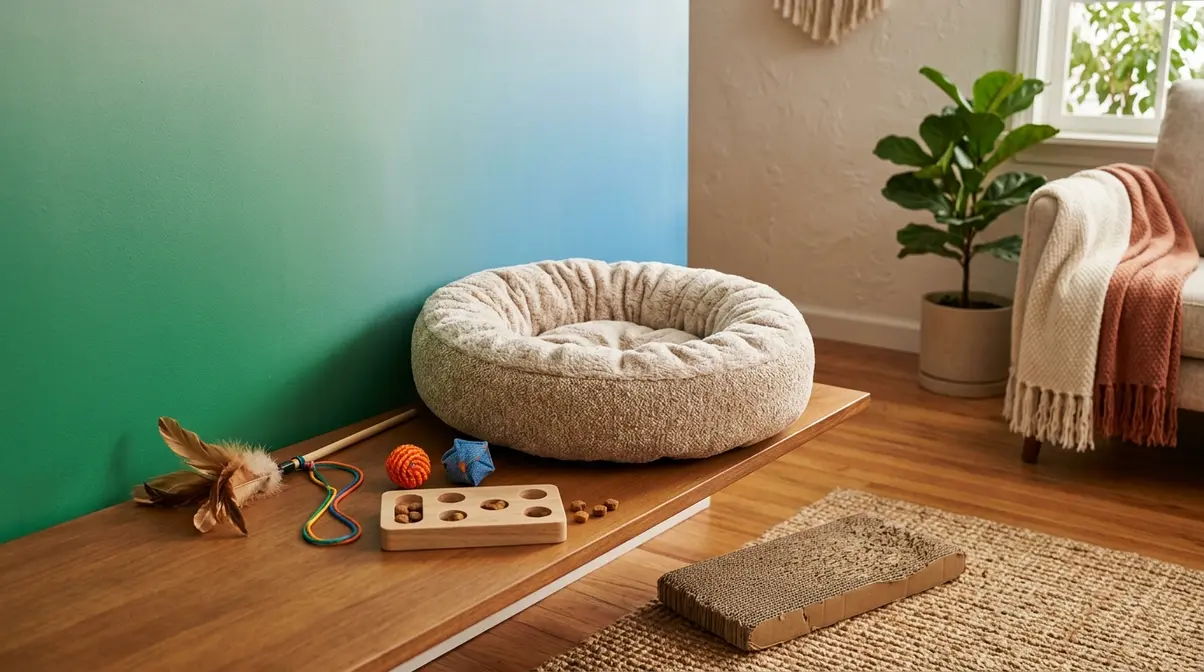
A cat whose physical and mental needs are met is a calmer, healthier, and more affectionate companion. This section of your kitten supplies list covers the items that make your home feel like home to your cat — not just a place they tolerate. These items are relatively affordable, and the difference they make in your cat’s first week is significant.
Cat Bed
A cat bed gives your cat a designated resting spot that smells like them — which is deeply reassuring during the disorienting first days in a new home. You might wonder: do cats actually use cat beds? Many do, especially if the bed is placed in a quiet, slightly elevated spot away from foot traffic.
Why this matters: Cats sleep 12–16 hours a day. Providing a comfortable, secure resting spot reduces anxiety and gives your cat a space to retreat when they feel overwhelmed. This is especially important during the first week in a new home.
- Types of cat beds:
- Flat/fleece beds: Simple, washable, inexpensive. Good starting point.
- Donut or bolster beds: Raised edges give cats a sense of security and something to rest their chin on. Widely preferred.
- Cave/enclosed beds: Ideal for anxious cats who prefer to hide while sleeping.
- Heated beds: Beneficial for older cats, cats with arthritis, or cats in cold climates.
Practical tip: Place the bed in your cat’s safe room initially, near (but not directly next to) the litter box. Put a piece of your worn clothing inside — your scent helps your cat feel safe.
Budget guidance: A basic fleece bed costs $10–20. A donut or enclosed bed ($25–40) is the most popular medium-tier choice. Heated or orthopaedic beds ($50–100+) are worth considering for senior cats or cats with joint issues.
How long does it take for a new cat to adjust?
It typically takes a new cat 2 to 4 weeks to fully adjust to a new home. Providing a dedicated cat bed and rotating toys can significantly reduce this transition time by giving them a sense of ownership over their space.
Toys – Interactive and Independent
Cats need both interactive toys (played with together, like a wand or feather teaser) and independent toys (items they can bat, chase, and hunt alone). Both types serve different purposes — and both are essential for a cat’s mental health, especially in the first weeks when they’re adjusting to a new environment.
Why this matters: Play is how cats express natural hunting behaviours — stalking, chasing, pouncing, and catching. Without appropriate outlets, boredom and frustration can manifest as destructive behaviour, aggression, or anxiety. Across professional cat-owner communities, the consistent advice is to rotate toys regularly to maintain novelty. You can also explore our indoor cat enrichment activities for more ideas.
- Recommended starter toy kit:
- 1 wand/feather teaser (interactive play, 10–15 minutes twice daily is ideal)
- 2–3 small independent toys (crinkle balls, foam mice, or small stuffed toys)
- 1 puzzle feeder or treat ball (mental stimulation through food)
- 1 laser pointer (use sparingly — always end sessions with a physical toy the cat can “catch” to avoid frustration)
What to avoid: Toys with small parts that can be swallowed, thin strings or ribbons left unsupervised, and toys with button batteries.
Budget guidance: A starter toy kit costs $10–20 at the Low tier. A higher-quality selection with a wand toy, puzzle feeder, and assorted independents runs $20–40. Rotating a small selection of toys is more effective — and cheaper — than buying many at once.
Scratching Pad
A scratching pad is a flat or angled surface — usually made of corrugated cardboard — that cats scratch horizontally. It’s different from a vertical scratching post: some cats strongly prefer one orientation over the other, and many enjoy both.
Why this matters: Offering both a vertical post and a horizontal pad gives your cat options and significantly increases the likelihood that they’ll use designated scratching surfaces rather than your sofa or carpet. Corrugated cardboard pads are also extremely inexpensive — making this one of the easiest wins on the entire checklist.
- What to look for:
- Large enough for your cat to fully stretch out while scratching
- Replaceable insert (most cardboard pads have replaceable cores)
- Catnip-infused options are available and can help attract reluctant scratchers
Budget guidance: Basic cardboard scratching pads cost $5–15. Many cats prefer them over far more expensive alternatives. If you’re looking for larger options, see our roundup of the best cat scratching posts. This is one area where the Low tier performs just as well as the High tier.
5. Health & Veterinary Prep – Before You Need It
Veterinary preparation is the category most new cat owners delay — and the one they most wish they hadn’t. Establishing veterinary care before an emergency occurs is the hallmark of responsible pet ownership. Getting your health essentials organised before your cat arrives means you’re not scrambling in a stressful moment. This section covers what to do before your first vet visit and what to have on hand at home.
Preparing for Your First Vet Visit
Your cat’s first vet visit should happen within 48–72 hours of coming home — not weeks later. Early veterinary intervention saves lives — scheduling a visit within 72 hours catches common shelter illnesses immediately. This initial appointment establishes a health baseline, checks for any conditions that weren’t detected at adoption, confirms vaccination status, and gives you a chance to ask every question you’ve been saving up.
Why this matters: Many conditions — parasites, upper respiratory infections, dental issues — are common in newly adopted cats and are far easier to treat when caught early. A vet visit also lets you discuss microchipping, spaying or neutering (if not already done), and the right food for your cat’s specific age and weight.
- What to bring to your first vet visit:
- Your cat in their carrier (with a familiar-smelling blanket inside)
- Any health records from the shelter or breeder (vaccination history, known medical history)
- A list of questions — write them down in advance so you don’t forget
- A fresh faecal sample if possible (your vet can check for intestinal parasites)
What to expect: The vet will weigh your cat, examine their teeth, ears, eyes, and coat, listen to their heart and lungs, and discuss a vaccination and parasite prevention schedule. Our cat veterinary checklist explains the standard vaccine timeline. Budget approximately $50–100 for a routine new-patient exam, depending on your location. This is also the perfect time to ask if is pet insurance worth it for indoor cats in your specific situation.
Internal resource: For a detailed room-by-room safety checklist and microchipping guidance, see our full guide on how to cat-proof your home room by room.
Building a Basic Cat First-Aid Kit
A cat first-aid kit is a collection of basic medical supplies kept at home for minor injuries or emergencies — to stabilise your cat while you arrange emergency veterinary care. It is not a substitute for veterinary treatment, but it can make a significant difference in the critical minutes before you reach a vet.
Why this matters: The American Veterinary Medical Association (AVMA) recommends that all pet owners maintain a basic first-aid kit at home. Across professional cat-owner communities, the consistent advice is to assemble this kit before you need it — not during an emergency.
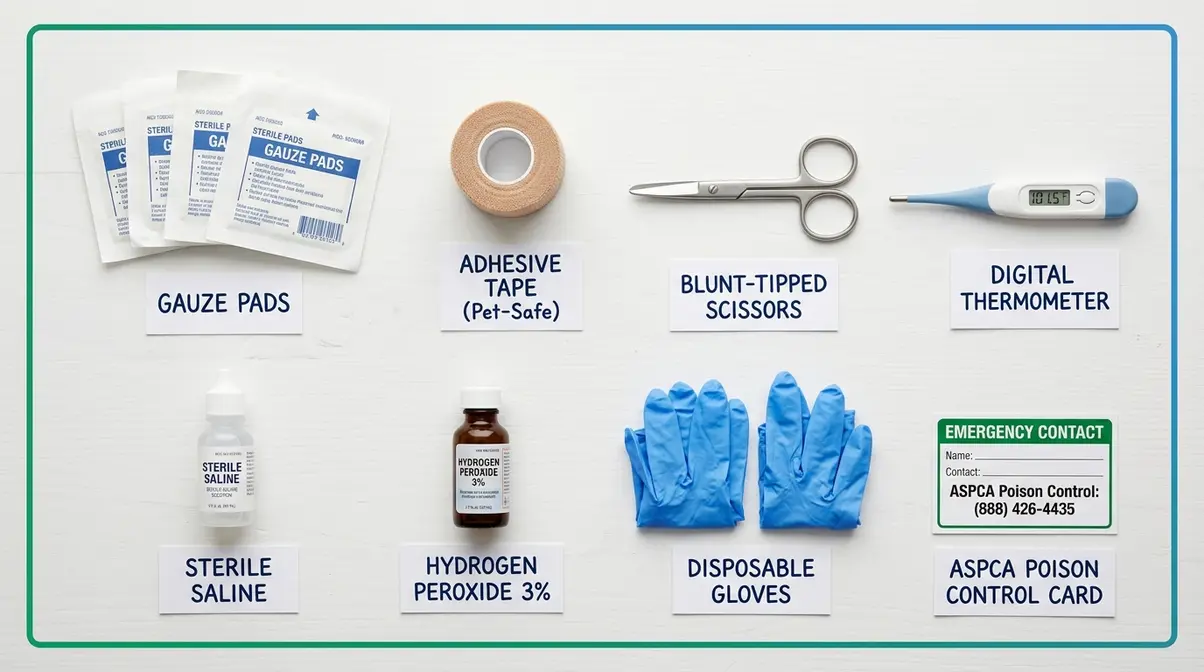
Basic cat first-aid kit contents (AVMA-informed):
| Item | Purpose |
|---|---|
| Gauze pads and roll | Wound covering and bandaging |
| Adhesive tape (pet-safe) | Securing bandages |
| Blunt-tipped scissors | Cutting bandages and matted fur |
| Digital rectal thermometer | Checking for fever (normal cat temp: 100.5–102.5°F / 38–39.2°C) |
| Sterile saline solution | Flushing wounds or eyes |
| Hydrogen peroxide 3% | Inducing vomiting only under vet instruction |
| Disposable gloves | Protecting yourself and preventing contamination |
| Your vet’s phone number + emergency vet number | Immediate reference |
| ASPCA Animal Poison Control number: (888) 426-4435 | Toxin emergencies |
Budget guidance: A basic first-aid kit costs $10–20 to assemble from a pharmacy. Pre-assembled pet first-aid kits ($20–35) are convenient and include most essentials. Vet-recommended full kits ($35–60) add more specialised items.
Important: Always call your vet or an emergency veterinary clinic before administering any first aid. Some interventions (like inducing vomiting) can cause harm if done incorrectly or in the wrong situation.
Common Mistakes New Cat Owners Make
Even with the best intentions and a complete cat supplies checklist, new owners tend to make the same handful of mistakes. Knowing them in advance saves you money, frustration, and sometimes a vet bill.
The 5 Most Common Shopping Mistakes
- Buying a litter box that’s too small. The general rule is that a litter box should be 1.5 times the length of your cat from nose to tail base. Many owners buy “standard” boxes that adult cats find cramped — leading to litter box avoidance.
- Choosing the wrong collar. Standard elasticated or fixed collars are not safe for cats. Only buy a breakaway collar (see the Essential Setup section). This is non-negotiable.
- Skipping the scratching post and buying a furniture protector instead. Furniture protectors treat the symptom, not the cause. A scratching post addresses the underlying need — and costs less than a sofa repair.
- Buying premium food before knowing what your cat will eat. Start with a mid-range food your cat’s previous caregiver was using, then transition gradually over 7–10 days if you want to change brands. Abrupt food changes cause digestive upset.
- Overbuying toys at once. Cats are more engaged by novelty than by volume. Buy a small starter kit and rotate items — your cat will be more interested in a toy that “reappears” after a week away than in ten toys left out permanently.
When a Basic Checklist Isn’t Enough
A standard cat shopping checklist covers the essentials — but some situations require more specialist guidance:
- Multi-pet households: Introducing a new cat to existing pets (cats or dogs) requires a structured, gradual introduction process. The Best Friends Animal Society new cat checklist includes detailed guidance on multi-pet introductions.
- Cats with known health conditions: If your adopted cat came with a diagnosed health condition (diabetes, hyperthyroidism, kidney disease), your shopping list and dietary choices need to be guided by your vet from day one.
- Kittens under 8 weeks: Very young kittens have specialised feeding, warmth, and socialisation needs that go beyond a standard checklist. Consult a veterinarian or a rescue specialist immediately.
- Senior cats (10+ years): Older cats may need orthopaedic beds, lower-sided litter boxes, and specific dietary support. Your vet can guide you.
Consult your veterinarian for personalised health and dietary advice specific to your cat’s age, breed, and health status.
Frequently Asked Questions
How much does it cost to set up for a new cat?
Initial setup costs for a new cat typically range from $80 to $700, depending on the quality tier you choose. The ASPCA estimates the average first-year cost of cat ownership at $1,149, which includes both one-time purchases and ongoing expenses like food, litter, and routine vet care (ASPCA, 2024). Most first-time owners using a Medium-tier approach spend $200–$350 on initial supplies. The 3-Tier Cat Budget framework in this guide breaks down exactly where that money goes, category by category.
What do I absolutely need before bringing a cat home?
The non-negotiable items are a cat carrier, litter box, cat litter, food and water bowls, age-appropriate cat food, a scratching post, and a breakaway collar with an ID tag. These seven items cover your cat’s immediate safety, feeding, hygiene, and behavioural needs from the first hour. A cat bed and a small selection of toys are also strongly recommended for the first week. Everything else — premium fountains, cat trees, grooming kits — can be added once your cat is settled. Book a vet appointment before your cat arrives, not after.
Should I get wet food or dry food for my new cat?
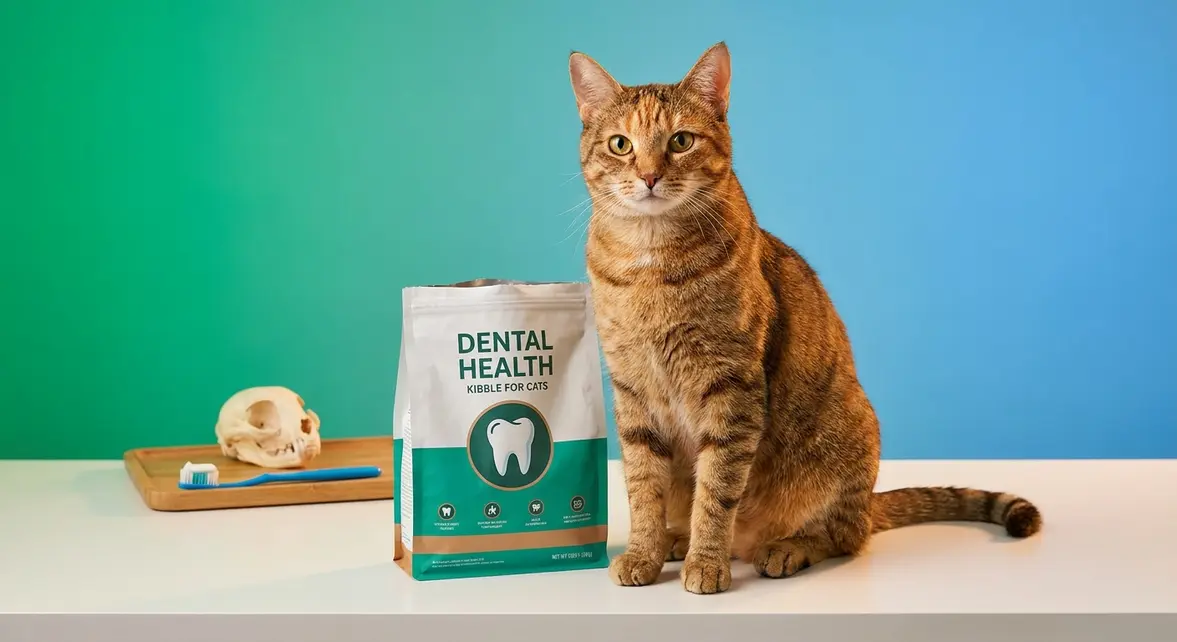
A combination of wet and dry food is what most veterinary nutrition professionals recommend for adult cats. Wet food (70–80% moisture) supports kidney function and urinary tract health — particularly important because cats have a naturally low thirst drive (Tufts University Clinical Nutrition Service). Dry food is convenient and helps maintain dental health. For kittens, choose food specifically labelled for kittens or “all life stages.” Consult your veterinarian for personalised dietary advice based on your cat’s age, weight, and health history.
Do I really need a cat water fountain?
A cat water fountain is not strictly essential, but it’s one of the most impactful upgrades for cats on a dry-food-heavy diet. Many cats are instinctively attracted to moving water and will drink significantly more from a fountain than from a still bowl — which directly reduces the risk of urinary tract problems and kidney disease. Standard water bowls ($5–15) work fine for cats who drink well. A fountain ($25–60) is worth considering if your cat seems to ignore their water bowl or if you’ve chosen primarily dry food as their diet.
What’s the difference between a scratching post and a scratching pad?
A scratching post is a vertical surface (usually sisal-covered) cats scratch while standing upright; a scratching pad is a flat or angled horizontal surface, typically made of corrugated cardboard. Many cats prefer one orientation over the other — some exclusively scratch vertically, others horizontally, and many enjoy both. The Cornell Feline Health Center notes that providing appropriate scratching surfaces is essential for indoor cats to express natural behaviour and prevent stress. For best results, offer both a tall vertical post and a flat cardboard pad and observe which your cat gravitates toward.
Your Cat Is Worth the Preparation
Getting a complete cat shopping checklist sorted before your new feline friend arrives isn’t just about ticking boxes — it’s about setting up a home where your cat feels safe, fed, and enriched from the very first day. The ASPCA estimates first-year ownership costs at around $1,149 (ASPCA, 2024), but with the 3-Tier Cat Budget framework in this guide, you can plan that spending confidently rather than guessing at the checkout. Most new owners find the Medium tier ($200–$350 for initial one-time supplies) hits the sweet spot between quality and cost.
The 3-Tier Cat Budget exists because budget anxiety is one of the most common reasons people hesitate to adopt — and it shouldn’t be. Whether you’re working with $80 or $500, every tier in this guide gives your cat what they genuinely need. The non-negotiables are clear, the nice-to-haves are labelled, and the costs are honest.
Your next step: pick up the printable cat shopping checklist version of this guide, work through each category, and book that vet appointment. Your cat doesn’t need a perfect home — they need a prepared one. Using a cat shopping checklist new owner guide ensures you don’t miss any essentials. Consult your veterinarian for personalised health and dietary advice before your cat arrives, and you’ll be well ahead of the curve.

Dave King
Cat owner and writer at Mad Cat Man.