
Table of Contents
This blog post may contain affiliate links. As an Amazon Associate I earn from qualifying purchases.
⚠️ Medical Disclaimer: This article is for informational purposes only and does not constitute veterinary medical advice. If your cat has ingested a snake plant, contact your veterinarian, the ASPCA Animal Poison Control Center at (888) 426-4435, or the Pet Poison Helpline at (855) 764-7661 immediately.
Reviewed By: — Reviewed May 2026
Yes, snake plants are toxic to cats. They contain compounds called saponins (natural chemicals that irritate the digestive system), which cause vomiting, diarrhea, and stomach upset when ingested. The good news: toxicity is typically mild to moderate, not life-threatening. If your cat has nibbled on any part of a snake plant, contact your vet immediately.
It’s 11pm. Your cat was just caught chewing a snake plant leaf. You typed “are snake plants toxic to cats” into Google — and now you’re reading vague articles that say “yes, call your vet” without telling you how bad it actually is, what symptoms to watch for, or what to do in the next 10 minutes. That’s a problem. Every minute spent reading unhelpful advice is a minute your cat isn’t getting the right care. If you’re wondering, are snake plants toxic to cats, you’re not alone.
This guide from madcatman.com gives you a direct answer, a clear symptom guide organized by severity, and a 5-step emergency response protocol you can act on right now. We also cover tested cat-deterrent strategies, toxicity to dogs and other pets, and the best cat-safe alternatives for plant lovers who refuse to give up their greenery. Understanding the hidden dangers of toxic plants for cats is the first step in responsible pet ownership.
- Before You Begin:
- Estimated Time: 5 minutes to assess and respond
- Tools Needed: Your veterinarian’s phone number, ASPCA Poison Control number (888-426-4435), a safe room to isolate your cat, and a camera (to photograph the plant).
Key Takeaways: Are Snake Plants Toxic to Cats?
If you are asking, are snake plants toxic to cats, the answer is yes — they contain saponins that cause digestive irritation, but toxicity is mild to moderate, rarely life-threatening.
- Toxic compound: Saponins irritate the mouth, stomach, and intestines when ingested
- Primary symptoms: Vomiting, diarrhea, drooling, lethargy, and loss of appetite
- Emergency action: Call ASPCA Poison Control (888) 426-4435 or your vet immediately
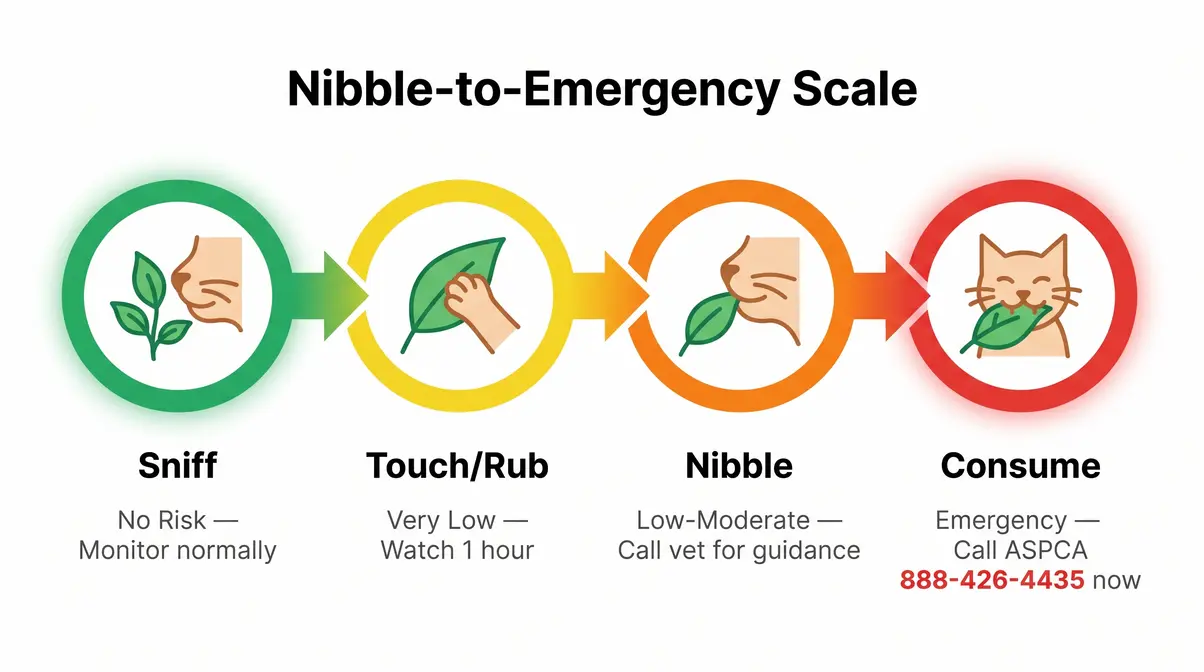
- The Nibble-to-Emergency Scale: Sniffing = no risk; nibbling = mild symptoms; consuming = call the vet now
- Safer option: Spider plants, Boston ferns, and African violets are non-toxic ASPCA-verified alternatives
Step 1: Why Snake Plants Are Toxic
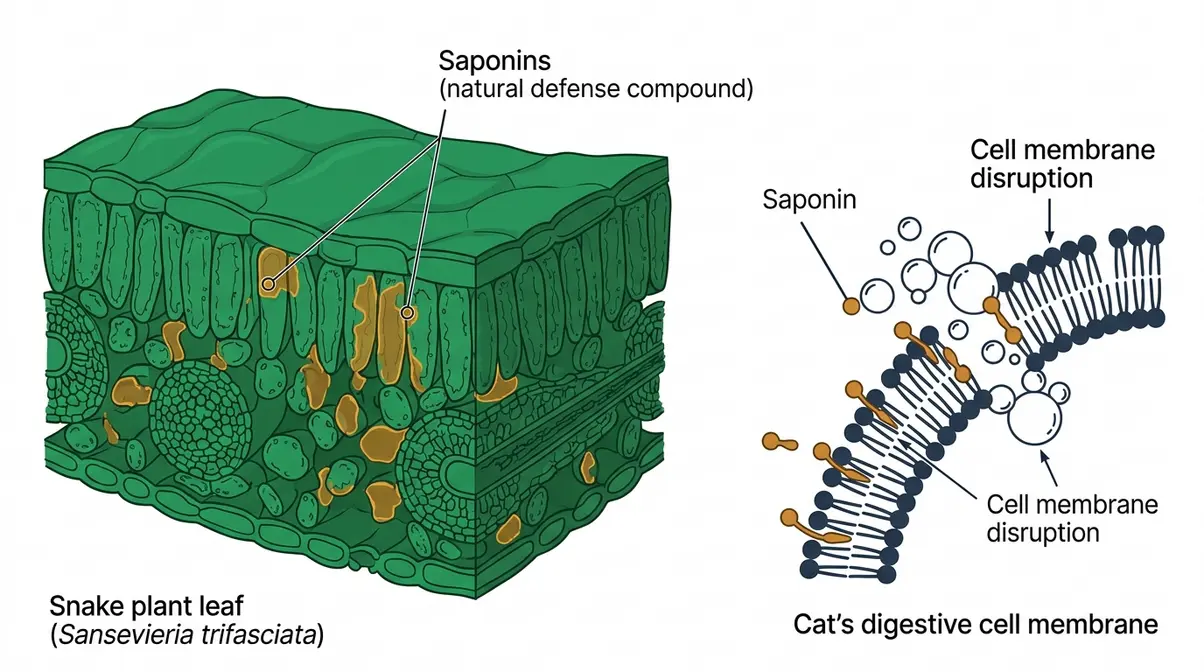
Snake plants are toxic to cats because of saponins — natural chemical compounds found throughout the plant that irritate the digestive system on contact. According to the ASPCA Poison Control database, clinical signs of ingestion include nausea, vomiting, and diarrhea. Learning about the toxicity of common houseplants like Dracaena can help you prepare. The good news is that toxicity is classified as mild to moderate — not typically life-threatening — but that doesn’t mean you should wait and see. Any ingestion warrants a call to your vet.
What Makes Snake Plants Toxic?
The snake plant — also known as Sansevieria trifasciata, Dracaena trifasciata (reclassified in 2017), or mother-in-law’s tongue — is a popular low-maintenance houseplant found in millions of homes. Every part of it contains saponins (pronounced SAP-oh-nins), natural soap-like chemicals that the plant produces as a built-in defense against insects and fungi.
When a cat ingests saponins, the compounds interfere with the lipid structure of cell membranes, altering their permeability and disrupting normal cell function. Think of it like a natural soap stripping the protective lining of the mouth, stomach, and intestines. According to NIH research on saponin toxicity (2026), ingestion causes local irritation, salivation, vomiting, diarrhea, loss of appetite, depression, weakness, and in some cases ataxia (loss of coordination). In very large doses, saponins can affect red blood cells through a process called hemolysis (the breakdown of red blood cells) — but this outcome is rare and typically requires significant ingestion.
Why does this matter for your cat? Even a small nibble delivers enough saponins to irritate the mouth and stomach lining. The bitter taste often stops cats from consuming large amounts, which is why most cases resolve within 24 hours.
“Although toxic, the snake plant tends to only cause stomach upset and gastro symptoms if ingested, and has a bitter taste, so cats typically won’t consume large quantities — but any ingestion should be treated as a reason to contact your veterinarian.”
To help you assess your cat’s specific situation, we’ve developed The Nibble-to-Emergency Scale — a simple framework that matches your cat’s exact behavior to the right level of response. You’ll find the full scale in Step 2.
How Toxic Are Snake Plants to Cats, Really?
Snake plants carry a mild-to-moderate toxicity rating — significantly less dangerous than lilies (which can cause fatal kidney failure from a single petal) but still serious enough to require action. The Pet Poison Helpline confirms that snake plant ingestion typically causes gastrointestinal signs including drooling, vomiting, and diarrhea, with most cats recovering within one to two days with supportive care.
Toxin concentration varies by plant part:
| Plant Part | Saponin Level | Risk to Cats |
|---|---|---|
| Leaves | Highest | Primary concern — most accessible |
| Stems | Moderate | Less commonly chewed |
| Roots | Moderate | Rarely accessed |
| Soil | Negligible | Not a significant source |
Sniffing the plant carries zero risk. Rubbing against it carries minimal risk. Ingestion — even a small amount — is what triggers symptoms. This distinction matters because many cat owners panic unnecessarily after their cat simply sniffs a snake plant, while others underestimate the risk of an actual nibble.
Are All Snake Plant Varieties Equally Toxic?
All common snake plant varieties contain saponins and are considered toxic to cats. This includes Sansevieria trifasciata ‘Laurentii’ (the yellow-edged variety), Sansevieria cylindrica (cylindrical snake plant), and Sansevieria moonshine. The reclassification from Sansevieria to Dracaena in 2017 was a botanical taxonomy change only — it did not change the plant’s toxicity profile. If you’ve seen this plant sold under either name, the safety concern is identical. Always check the ASPCA’s full toxic plant database when researching any houseplant.
Now that you understand what makes snake plants toxic and how concentrated the risk actually is, the next step is recognizing whether your cat has ingested enough to develop symptoms. Step 2 walks you through the exact signs to watch for, organized by severity using The Nibble-to-Emergency Scale.
Step 2: Recognize Poisoning Symptoms
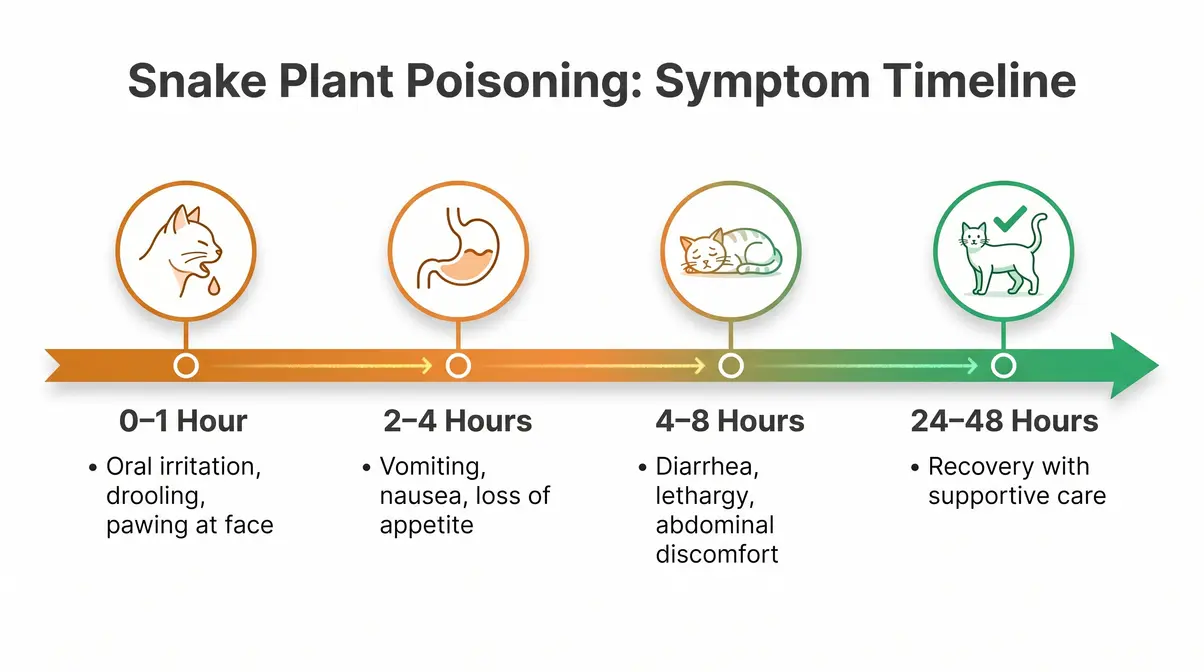
Recognizing symptoms quickly is the most important thing you can do after a suspected snake plant ingestion. Most cats show their first signs within two to four hours of eating part of the plant. Knowing what to look for — and how serious each symptom is — helps you make a calm, informed decision rather than either panicking unnecessarily or waiting too long to act.
Common Symptoms of Snake Plant Poisoning in Cats
According to the ASPCA Poison Control database and NIH research on saponin toxicity (2026), the most common clinical signs of snake plant ingestion in cats include:
- Nausea and vomiting — often the first symptom, appearing within 2-4 hours
- Diarrhea — may follow vomiting; typically mild and short-lived
- Excessive drooling — caused by oral irritation from saponin contact
- Loss of appetite — your cat may refuse food for 12-24 hours
- Lethargy — general tiredness and reduced activity
- Abdominal discomfort — your cat may crouch, guard their belly, or seem restless
In rare cases involving large ingestion amounts, more serious signs can appear: weakness, loss of coordination (ataxia), or in extreme cases, signs of red blood cell disruption. These severe outcomes are uncommon with typical household nibbling — the bitter taste of the plant naturally limits how much most cats consume.
Veterinary consensus indicates that most cats experiencing snake plant poisoning show only mild gastrointestinal (stomach and intestinal) symptoms and recover fully within 24-48 hours with supportive care. However, kittens, elderly cats, and cats with pre-existing health conditions may experience more severe reactions. Always consult your veterinarian regardless of symptom severity.
The Nibble-to-Emergency Scale: How Symptoms Progress
The Nibble-to-Emergency Scale gives you a practical way to match what your cat did to the response it requires. Use this as your first assessment tool — not a replacement for veterinary advice.
| Behavior | Expected Symptoms | Urgency Level | Your Action |
|---|---|---|---|
| Sniffed the plant | None | ✅ No risk | Monitor normally |
| Rubbed against it | Possible mild skin irritation | ✅ Very low | Watch for 1 hour |
| Nibbled a small piece | Drooling, mild nausea, 1-2 vomiting episodes | ⚠️ Low-Moderate | Call vet for guidance |
| Chewed a leaf | Vomiting, diarrhea, lethargy, 4-8 hours duration | ⚠️ Moderate | Call vet now |
| Consumed a large amount | Persistent vomiting, severe lethargy, loss of coordination | 🚨 Emergency | Call ASPCA (888) 426-4435 immediately |
“Snake plant toxicity in cats is rarely life-threatening, but the window between nibble and symptom onset is just two to four hours — acting quickly gives your vet the best options.”
Step 3: 5-Step Emergency Protocol
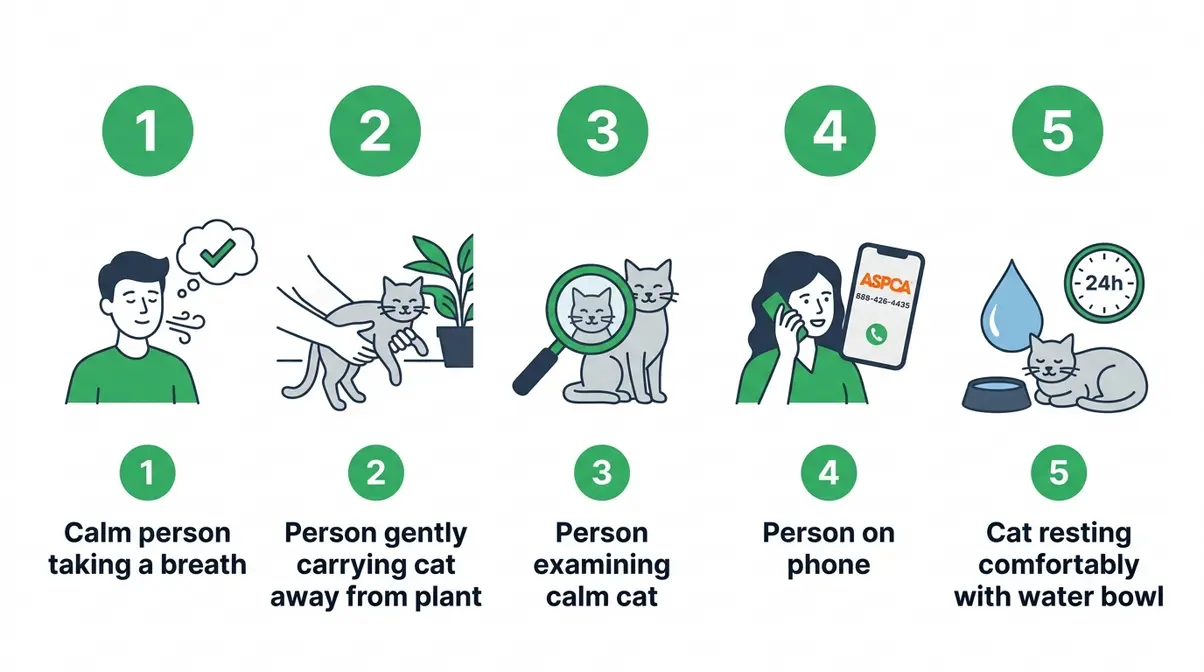
If you believe your cat has ingested any part of a snake plant, follow these five steps in order. Do not wait for symptoms to appear before taking action. Contact your vet or ASPCA Poison Control (888) 426-4435 as soon as possible — early guidance always produces better outcomes than reactive treatment.
⚠️ Emergency Contacts: ASPCA Animal Poison Control: (888) 426-4435 | Pet Poison Helpline: (855) 764-7661 | Your local veterinarian
Step 3a: Stay Calm and Assess the Situation
Take a slow breath. Panicking leads to poor decisions. Your cat’s prognosis for snake plant ingestion is good — veterinary consensus indicates that the vast majority of cats recover fully within 24-48 hours. Your first job is to gather information quickly and calmly so you can give it to your vet.
Ask yourself three questions right now: How much did my cat eat? (A small nibble vs. a significant portion of a leaf.) When did it happen? (10 minutes ago vs. 2 hours ago.) Is my cat showing symptoms yet? Write these answers down — your vet will ask for exactly this information.
Step 3b: Remove Your Cat from the Plant
Gently move your cat away from the plant and into a safe, comfortable room. Do this calmly — no chasing, no raised voices. Close the door to the room containing the plant so your cat cannot return to it.
Next, secure the plant. Place it in a room your cat cannot access, or on a high shelf out of reach. Do not throw the plant away yet — your vet may want to know the exact species. Take a photo of the plant and the area where your cat was chewing, including any torn leaves or disturbed soil.
Step 3c: Check for Immediate Symptoms
Gently examine your cat without causing stress. Look for these specific signs:
- Check the mouth — is there excessive drooling or pawing at the face? (Signs of oral irritation)
- Watch your cat’s posture — are they crouching or guarding their belly? (Sign of abdominal discomfort)
- Observe their movement — are they walking normally or seeming unsteady? (Ataxia is a red flag)
- Note their energy level — alert and active, or unusually quiet and withdrawn?
Do not induce vomiting at home. Unlike dogs, cats can have adverse reactions to home vomiting induction methods. This is a step for your veterinarian to guide, not something to attempt without professional instruction.
Step 3d: Call the Poison Hotline or Your Vet
Call one of these numbers immediately — even if your cat shows no symptoms yet. Early guidance from a professional is always the right move.
- ASPCA Animal Poison Control: (888) 426-4435 (24/7, consultation fee may apply)
- Pet Poison Helpline: (855) 764-7661 (24/7)
- Your regular veterinarian or nearest emergency animal clinic
Tell them: the plant name (snake plant / Dracaena trifasciata), the estimated amount ingested, the time of ingestion, your cat’s weight and age, and any symptoms you’ve observed. They will advise you whether to come in immediately or monitor at home. According to the ASPCA’s toxicology guidance, most mild ingestions can be managed with supportive care, but professional assessment is always recommended. Familiarizing yourself with emergency steps for plant poisoning and keeping an emergency and prevention checklist handy can save precious time.
Step 3e: Monitor Your Cat During Recovery
If your vet advises home monitoring, set a timer to check on your cat every 30-60 minutes for the first four hours. Keep a simple log:
- Time of each check
- Any vomiting or diarrhea episodes (note frequency and appearance)
- Energy level (alert / quiet / lethargic)
- Appetite (interested in food / refusing food)
- Any new symptoms
Offer fresh water to help prevent dehydration, especially if your cat has vomited. Do not offer food for two to four hours after vomiting — let the stomach settle first. Most cats eating a small amount of snake plant recover fully within 24-48 hours. Return to your vet immediately if symptoms worsen, your cat cannot keep water down, or they become significantly lethargic.
Step 4: Prevent Cat Access to Plants
Prevention is always better than an emergency call at midnight. Many cat owners successfully keep snake plants and cats in the same home by using a combination of placement strategies and deterrent methods. The key is making the plant physically inaccessible or unappealing — not relying on your cat’s self-restraint.
Why Do Cats Love Snake Plants?
Cats are attracted to snake plants primarily because of their long, narrow leaves — a shape that mimics the movement of prey and triggers natural hunting instincts. Some cats are also drawn to the texture of the leaves for chewing, which satisfies a natural oral behavior. Additionally, bored or under-stimulated cats seek environmental enrichment, and houseplants are a convenient target. Providing cat grass (wheatgrass or oat grass) as a dedicated chewing outlet can significantly reduce your cat’s interest in other plants.
Physical Placement Strategies That Actually Work
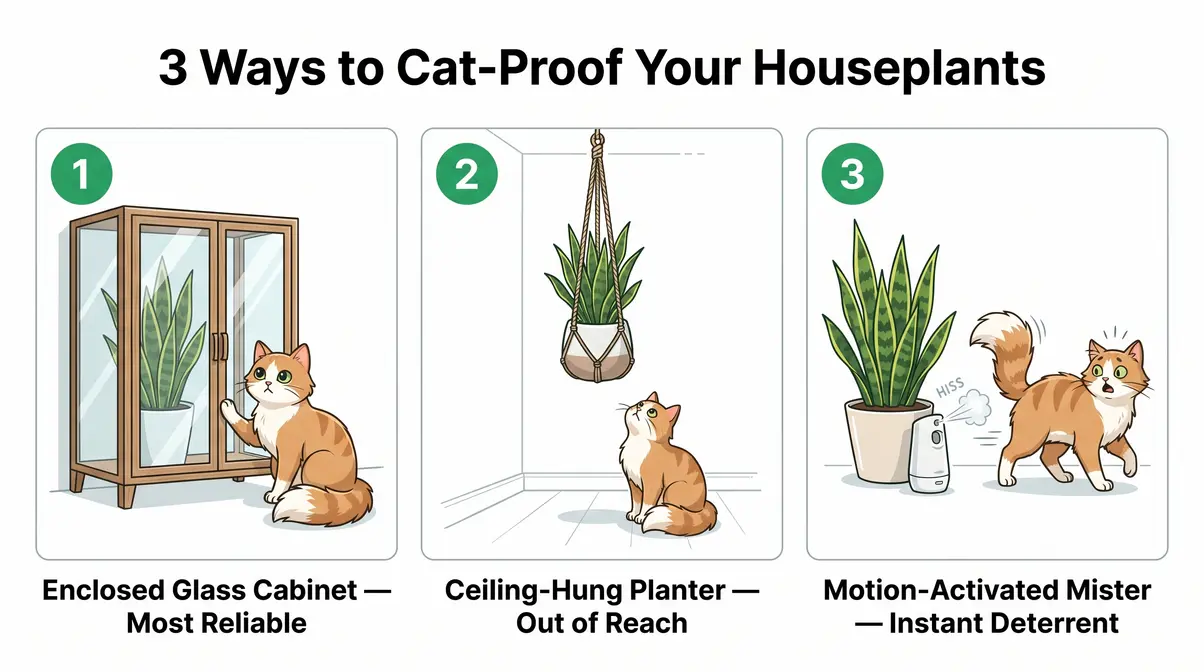
Height is your most reliable defense. Cats are excellent jumpers, so “high” means genuinely out of reach — not just on a standard shelf. These placements work best:
- Enclosed glass cabinets or terrariums: The most reliable option. A glass-fronted cabinet keeps the plant visible and decorative while making access physically impossible.
- Hanging planters: Mount securely from the ceiling at a height your cat cannot reach by jumping from nearby furniture. Audit the room for launchpads — cats will use bookshelves, wardrobes, and window ledges as stepping stones.
- Dedicated plant rooms: If you have a room your cat doesn’t access (a home office, bathroom, or spare room), this is the simplest solution. Close the door. Done.
- Tall, narrow plant stands: These work only if there’s no nearby furniture your cat can use to reach the plant. Combine with a deterrent spray for best results.
Veterinary behaviorists note that cats are most likely to investigate plants when bored or seeking environmental enrichment. Providing cat grass (wheatgrass or oat grass, both non-toxic per ASPCA) as an alternative chewing outlet reduces curiosity toward houseplants significantly.
Deterrent Methods: Making the Plant Unappealing
Physical barriers work best, but deterrent methods add a useful second layer of protection. Our review of cat behavior resources identified four approaches with consistent support from veterinary and cat behavior experts:
- Motion-activated misters: Devices like the PetSafe SSSCAT spray a harmless puff of air when your cat approaches. Veterinary behaviorists consider this one of the most effective deterrents because it provides immediate, consistent feedback without requiring you to be present.
- Gravel or rock mulch on soil: Cats dislike the texture of stones under their paws. Covering the soil surface with decorative pebbles discourages digging and reduces interest in the plant overall.
- Double-sided tape on pot rims: Cats strongly dislike sticky surfaces on their paws. Applying double-sided tape around the rim of the pot creates an aversion response that many cats remember long-term.
- Commercial cat-deterrent sprays (plant-safe formulas): Products containing bitter apple or plant-safe repellent compounds can be applied to the plant’s outer leaves. Reapply weekly for consistent effect. Important: Avoid citrus-based sprays — while cats dislike citrus scents, concentrated citrus oils can be toxic to cats themselves.
According to the Arkansas Extension, using physical deterrents like pine cones or gravel can be highly effective. Implementing these methods is a crucial part of cat-proofing your home.
Step 5: Risks for Dogs and Humans
Snake plants aren’t a threat to cats alone. If you share your home with multiple pets or young children, understanding the full risk picture helps you make the right decision about where — or whether — to keep this plant.
Can My Dog Be in the Same Room as a Snake Plant?
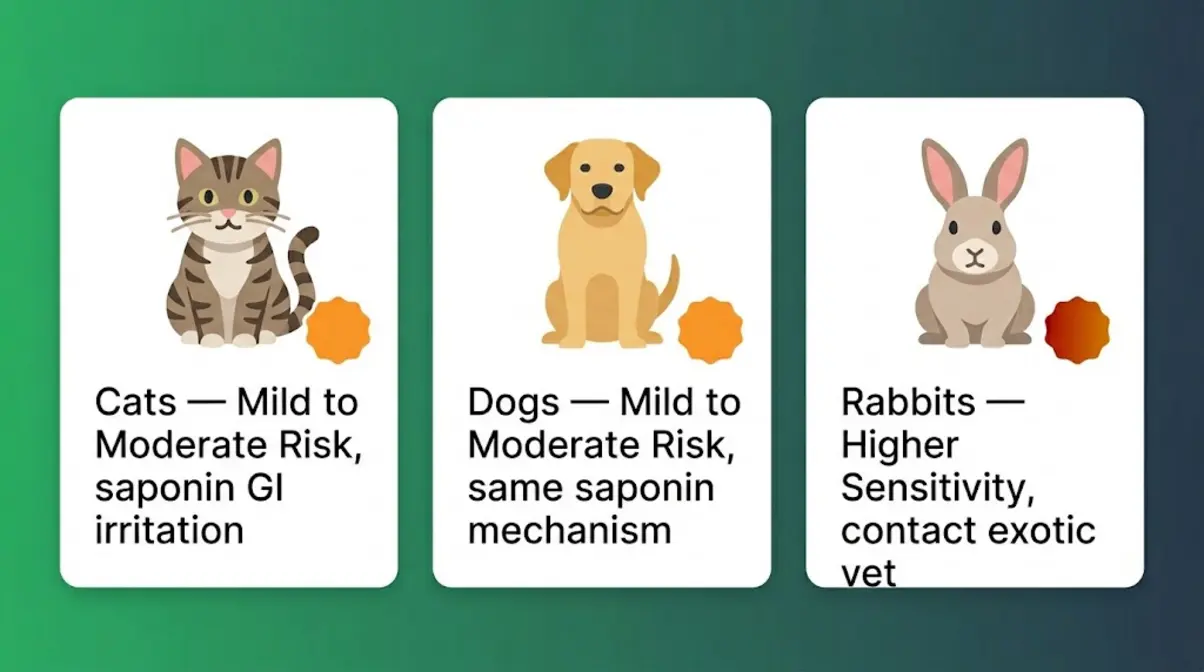
Yes, a dog can be in the same room as a snake plant, provided the plant is out of reach. Snake plants carry the same mild-to-moderate saponin toxicity for dogs as for cats — the ASPCA lists identical clinical signs (nausea, vomiting, diarrhea) for both species. Dogs are generally less likely than cats to chew on houseplants, but puppies are an exception. Apply the same placement and deterrent strategies you’d use for cats. If your dog ingests any part of the plant, call your vet or ASPCA Poison Control (888) 426-4435) immediately.
Are Snake Plants Toxic to Dogs?
Yes, snake plants are also toxic to dogs, and the mechanism is identical: saponins causing gastrointestinal irritation. According to the ASPCA’s plant toxicity database, dogs experience the same primary clinical signs as cats — nausea, vomiting, and diarrhea. Dogs are generally less likely to nibble on houseplants than cats, but it does happen, particularly with puppies.
The good news: severity in dogs is also classified as mild to moderate. Most dogs recover within 24-48 hours with supportive care. However, a dog’s larger body weight means they’d need to ingest a significantly larger amount to experience the same intensity of symptoms as a cat. The same emergency protocol applies: remove the dog from the plant, note the amount ingested, and call your vet or ASPCA Poison Control (888) 426-4435).
“Snake plants carry the same mild-to-moderate toxicity risk for dogs as for cats — the saponin mechanism is identical, though dogs’ larger body mass often means milder symptoms from equivalent ingestion amounts.”
Are Snake Plants Toxic to Humans, Children, and Rabbits?
For humans: Snake plants can cause mild skin irritation on contact and oral irritation if ingested. Adults are very unlikely to eat a snake plant, but young children who mouth objects could experience drooling and stomach upset. The plant is not classified as severely toxic to humans, but keep it out of reach of toddlers as a precaution.
For rabbits: Rabbits are highly sensitive to saponins. Veterinary sources recommend keeping snake plants completely out of reach of pet rabbits, as their digestive systems are more vulnerable to the toxic compound than cats or dogs. If your rabbit has ingested any snake plant material, contact your exotic animal vet immediately.
For other small pets (guinea pigs, hamsters, birds): The same caution applies. When in doubt, keep any plant classified as toxic to cats in a room that small pets cannot access.
Step 6: Choose Cat-Safe Houseplant Alternatives
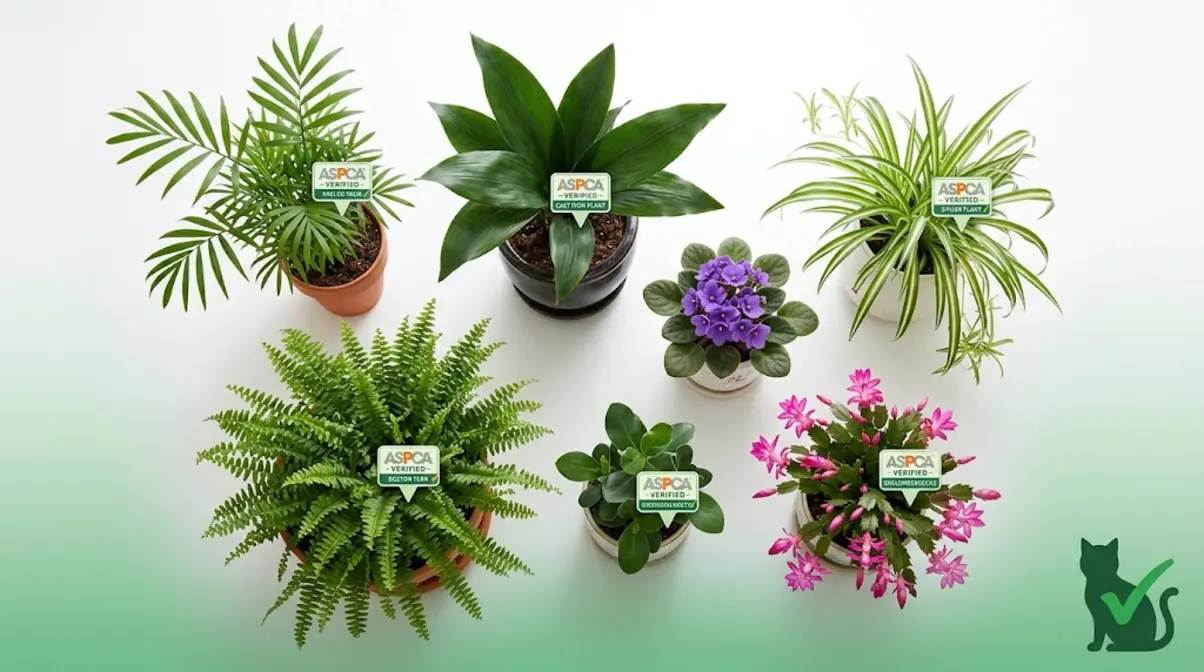
You don’t have to choose between plants and your cat. Dozens of beautiful, low-maintenance houseplants are completely non-toxic to cats — verified by the ASPCA’s toxicology database. If you decide the risk of keeping a snake plant isn’t worth it, these alternatives let you maintain a green home without the worry.
Cat-Safe Plants That Look Like Snake Plants
These ASPCA-verified non-toxic plants offer similar aesthetics or care requirements to the snake plant:
| Plant | Why It’s Similar | Light Needs | ASPCA Status |
|---|---|---|---|
| Parlor Palm (Chamaedorea elegans) | Dramatic, architectural look | Low-Medium | ✅ Non-toxic |
| Cast Iron Plant (Aspidistra elatior) | Equally low-maintenance | Low | ✅ Non-toxic |
| African Violet (Saintpaulia spp.) | Easy care, compact | Medium indirect | ✅ Non-toxic |
| Spider Plant (Chlorophytum comosum) | Structural leaves, very hardy | Low-Medium | ✅ Non-toxic |
| Boston Fern (Nephrolepis exaltata) | Lush, full appearance | Medium indirect | ✅ Non-toxic |
| Christmas Cactus (Schlumbergera spp.) | Dramatic blooms, easy care | Medium | ✅ Non-toxic |
The Parlor Palm and Cast Iron Plant are the closest matches to the snake plant’s bold, structural look. Both tolerate low light and infrequent watering — making them genuinely low-maintenance swaps. Always verify any new plant against the ASPCA’s full non-toxic plant list before bringing it home. For more ideas, explore our comprehensive cat-safe plants guide or look into safe houseplant swaps.
Common Toxic Houseplants to Remove from Your Home Now
Snake plants are mild compared to some common houseplants. If you’re doing a full home audit, these plants are significantly more dangerous and should be removed if you have cats:
- True lilies and daylilies (Lilium spp., Hemerocallis spp.): The most dangerous plants for cats. Even licking pollen or drinking vase water can cause fatal kidney failure within 24-72 hours. According to UC Davis School of Veterinary Medicine, lilies are lethally toxic — a cat can suffer fatal kidney failure just from biting into a single leaf.
- Sago Palm (Cycas revoluta): Causes liver failure. All parts are toxic, with seeds being most dangerous.
- Pothos (Epipremnum aureum): Causes oral irritation and GI upset — commonly kept as a trailing plant but toxic to cats.
- Aloe Vera: Classified as toxic to cats by the ASPCA, causing vomiting, lethargy, and diarrhea.
- Peace Lily (Spathiphyllum): Despite the name, causes oral irritation, drooling, and difficulty swallowing.
“True lilies are in a completely different danger category from snake plants — while snake plant ingestion typically resolves within 48 hours, a single lily leaf can trigger fatal kidney failure in a cat within 24 hours.”
Limitations: Co-Existing Safely
Common Pitfalls to Avoid
Pitfall 1: Assuming placement alone is sufficient. Many cat owners place a snake plant on a windowsill and assume their cat won’t reach it. Cats are exceptional climbers and jumpers. A plant is only safe if it’s in an enclosed space or truly inaccessible — not just “high up.” Audit the room for jumping routes before declaring it cat-proof.
Pitfall 2: Waiting for symptoms before calling the vet. Symptoms from snake plant ingestion can take two to four hours to appear. By the time your cat is visibly ill, the toxin has already been absorbed. Call your vet or ASPCA Poison Control as soon as you suspect ingestion — don’t wait for vomiting to begin.
Pitfall 3: Assuming one cat’s indifference means all cats are safe. Many cat owners report that their cats have “never touched” their snake plant for years. This is common — some cats show no interest whatsoever. However, curiosity can increase with boredom, changes in household routine, or the arrival of a new kitten. Don’t rely on a past track record as permanent safety.
When to Choose Alternatives
If you have a kitten under 12 months: Young cats are more curious, more likely to chew on plants, and more vulnerable to toxins due to lower body weight. According to Cornell University College of Veterinary Medicine, kittens are naturally more inquisitive and prone to destructive behavior, making them more vulnerable to toxins. For kittens, replacing the snake plant with a non-toxic alternative is the safer choice.
If your cat shows obsessive plant interest: Some cats are persistent plant chewers regardless of deterrent methods. If your cat has already nibbled on the snake plant once, the probability of a repeat incident is high. In this case, the Parlor Palm or Cast Iron Plant are genuinely safer swaps.
If you have multiple pets at different risk levels: A household with both a cat and a rabbit, for example, may find it simpler to remove the snake plant entirely rather than managing multi-species deterrent strategies.
When to Seek Expert Help
Contact a veterinarian immediately — not just ASPCA Poison Control — if your cat shows any of the following: persistent vomiting lasting more than four hours, blood in vomit or stool, significant loss of coordination, collapse, or difficulty breathing. These symptoms suggest either a large ingestion or an underlying sensitivity that requires in-person clinical assessment. If your cat has existing kidney or liver conditions, snake plant ingestion should always prompt an immediate vet visit rather than home monitoring.
Frequently Asked Questions
Can I keep a snake plant if I have a cat?
Yes, you can keep a snake plant with a cat — but only with reliable physical barriers in place. The safest approach combines an enclosed glass cabinet or ceiling-hung planter with a secondary deterrent method like a motion-activated mister. Many cat owners successfully co-exist with snake plants using these strategies. However, if your cat is a persistent plant chewer or you have a kitten, replacing the plant with a non-toxic alternative like a Parlor Palm eliminates the risk entirely.
What will happen if a cat eats a snake plant?
Your cat will most likely experience mild gastrointestinal symptoms — vomiting, diarrhea, drooling, and temporary loss of appetite. According to the ASPCA, clinical signs include nausea, vomiting, and diarrhea. These symptoms typically appear within two to four hours of ingestion and resolve within 24-48 hours with supportive care. In rare cases involving large amounts consumed, more serious effects are possible. Always call your vet or ASPCA Poison Control (888) 426-4435) immediately after any suspected ingestion — don’t wait for symptoms to appear.
Do cats leave snake plants alone?
Many cats do leave snake plants alone — the plant’s bitter taste from its saponin content is a natural deterrent for some cats. Pet owners commonly report that their cats have ignored their snake plants for years. However, this varies significantly by individual cat. Kittens, curious cats, and bored cats are more likely to investigate and nibble. Never assume your cat will remain disinterested indefinitely — boredom, routine changes, or a new kitten in the home can all reignite curiosity.
What is the most toxic plant to cats?
True lilies are the most dangerous houseplants for cats — far more toxic than snake plants. According to UC Davis School of Veterinary Medicine, even a single bite of a lily leaf or petal can cause fatal kidney failure within 24-72 hours. This includes Asiatic lilies, Easter lilies, tiger lilies, and daylilies. By comparison, snake plant toxicity is classified as mild to moderate, with full recovery expected in most cases. If you have lilies anywhere in your home, remove them immediately.
Conclusion
For cat owners worried about their snake plant, if you are wondering are snake plants toxic to cats, the core answer is clear: snake plants are toxic to cats, but the toxicity is mild to moderate — not the life-threatening emergency that true lily ingestion represents. According to the ASPCA and NIH research on saponin toxicity (2026), most cats experiencing snake plant poisoning recover fully within 24-48 hours with appropriate supportive care. The best approach combines physical barriers, deterrent strategies, and knowing when to call ASPCA Poison Control at (888) 426-4435.
The Nibble-to-Emergency Scale gives you the tool you need to assess your cat’s specific situation without either panicking unnecessarily or dismissing a genuine risk. Sniffing carries no danger. A small nibble warrants a vet call. Significant consumption means act immediately. That framework — matching behavior to response — is what turns an anxious midnight Google search into a calm, informed decision.
madcatman.com recommends starting with one physical barrier (an enclosed cabinet or ceiling-hung planter) and adding one deterrent method (motion-activated mister or gravel mulch) this week. If you’re not confident you can keep the plant fully inaccessible, the Parlor Palm and Cast Iron Plant are beautiful, genuinely low-maintenance alternatives that let you keep your home green without the worry. We highly recommend checking out our complete guides on cat-safe alternatives to ensure your home remains a safe haven for your feline friends. Your cat’s safety is always worth the swap.