
⚠️ Medical Disclaimer: This article is for educational purposes only and does not constitute veterinary medical advice. If you suspect your cat has been exposed to a toxic substance, contact your veterinarian or the ASPCA Animal Poison Control Center at (888) 426-4435 immediately. Do not wait for symptoms to appear.
Understanding what is toxic to cats is urgent — cats process substances differently from every other common pet, making ordinary household items potentially fatal. Only 27% of cat owners knew lilies were toxic before their cat was exposed (PubMed, 2026).
- Deadliest threats: True lilies (kidney failure), acetaminophen (Tylenol), and permethrin (dog flea treatments) — any of these can kill a cat within hours
- The Toxin Threshold Map: Most toxins operate on a dose-response curve — even “mildly toxic” items become dangerous with repeated exposure or large quantities
- Emergency rule: Never induce vomiting unless specifically directed by a vet — it can worsen caustic chemical injuries
- Safe alternatives exist: Spider plants, Boston ferns, and orchids are ASPCA-verified safe houseplants that won’t harm your cat
What Is Cat Poisoning? {#what-is-cat-poisoning}
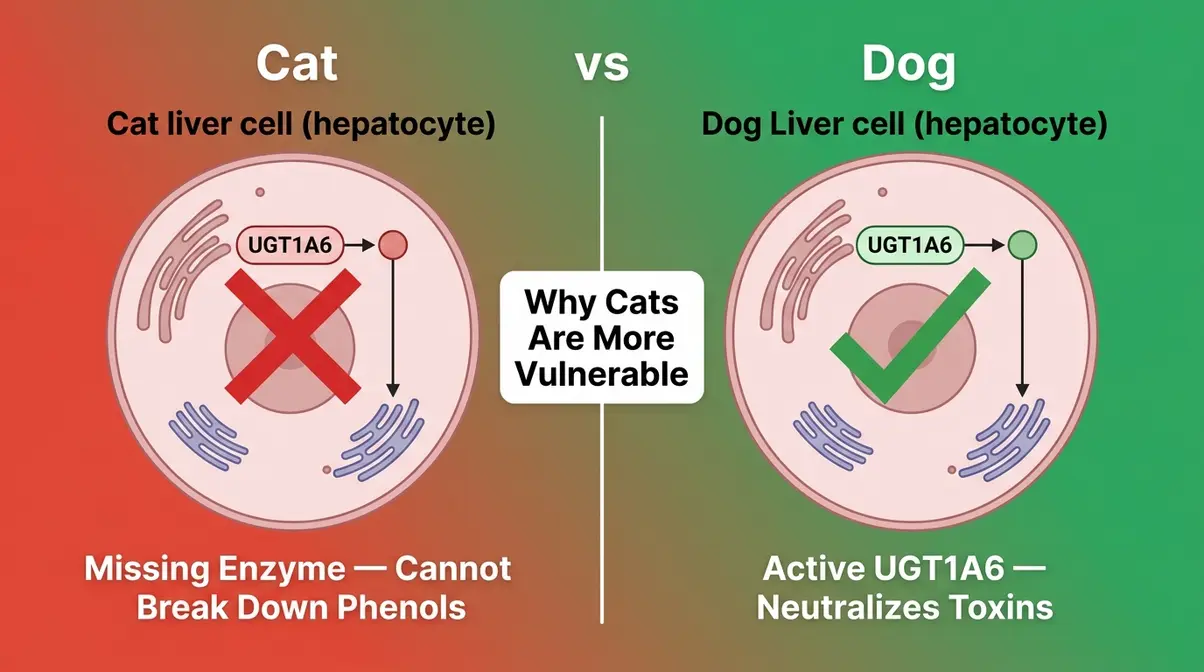
Understanding what is toxic to cats begins with one critical fact: cats process substances differently from every other common household pet. They lack a key liver enzyme — glucuronyl transferase (UGT1A6) — that breaks down many compounds found in everyday foods, plants, and cleaning products. This biological quirk turns ordinary household items into serious hazards for your feline companion.
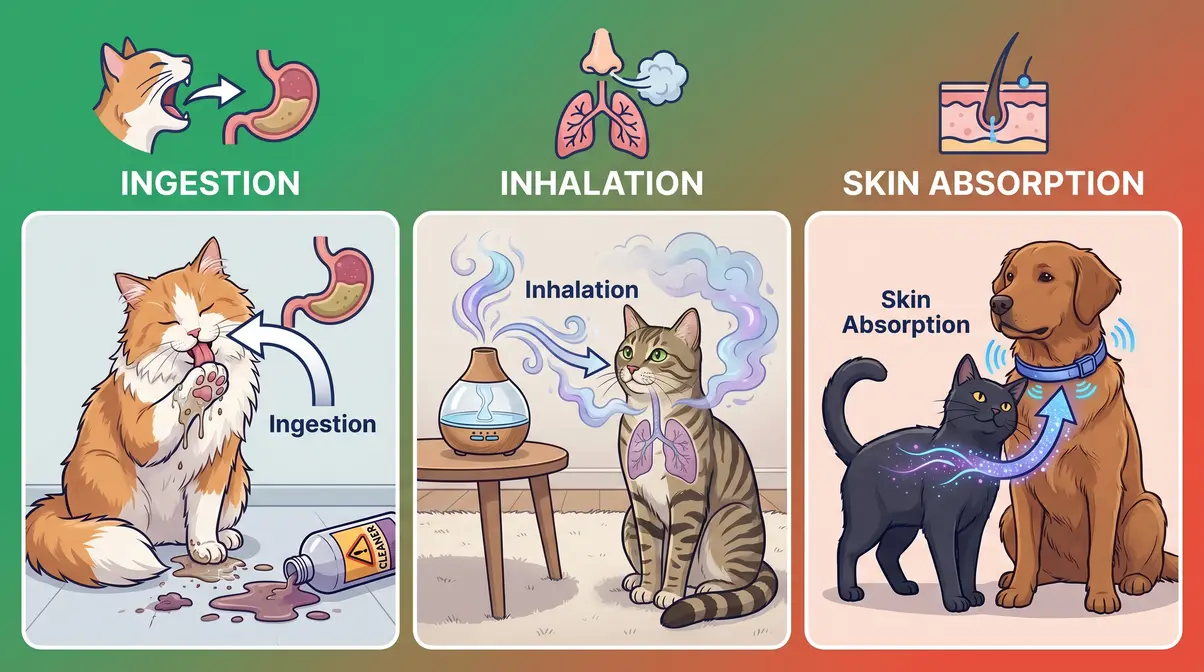
Cat poisoning occurs when a toxic substance enters your cat’s body through ingestion, inhalation, or skin absorption, overwhelming their system’s ability to process or eliminate it. The ASPCA Animal Poison Control Center — the leading authority on pet toxicology — responded to more than 451,000 calls about animal poison exposures recently, a nearly 4% increase from previous years (ASPCA, 2026).
How Cats Are Exposed to Toxins
Cats encounter household hazards through three main routes, and beginners are often surprised by how indirect exposure can still be dangerous.
Ingestion is the most common route. Cats are meticulous groomers — whatever lands on their paws or coat ends up in their mouth. If you mop your floor with a pine-based cleaner and your cat walks through it, they will ingest the residue when they groom their paws. This is why floor products and surface sprays are just as risky as items a cat directly eats.
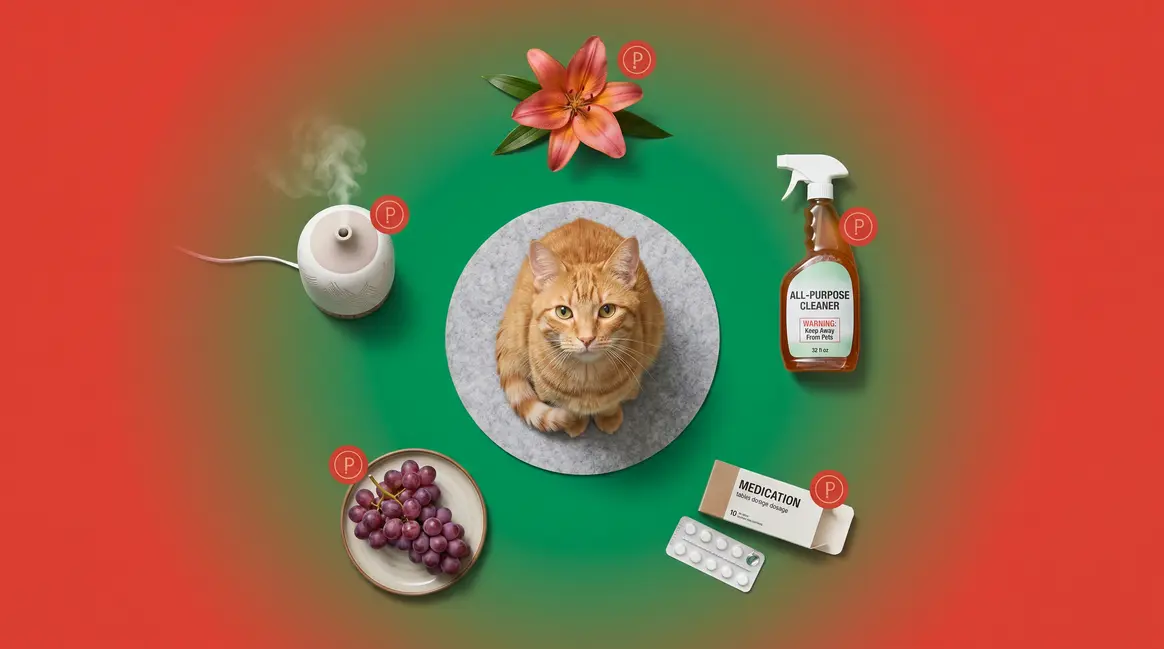
Inhalation is the underestimated route. Diffused essential oils, aerosol sprays, and scented plug-ins release airborne compounds that cats breathe in and absorb through their respiratory tract. Texas A&M veterinary guidance confirms that essential oil diffusers can cause respiratory irritation and systemic toxicity in cats through inhalation alone (Texas A&M College of Veterinary Medicine, 2026).
Skin absorption is the hidden route. Permethrin-based dog flea products, cleaning residues on surfaces, and topically applied medications can all be absorbed through a cat’s skin. A cat that rubs against a recently treated dog can absorb enough permethrin to experience a life-threatening reaction.
Knowing these three routes is the first step. The next question is: why are cats so much more sensitive than other pets?
Why Cats Are More Vulnerable Than Dogs
Cats cannot perform glucuronidation — the liver process that neutralizes many toxic compounds — as efficiently as dogs or humans. Their UGT1A6 gene is actually a non-functional pseudogene, meaning the enzyme it would produce is simply absent (Animal Genetics, 2026). This is not a size difference. It is a fundamental difference in liver chemistry.
A clinical review of toxic household foods confirmed that cats’ limited glucuronidation capacity makes them uniquely susceptible to compounds that dogs and humans tolerate safely (PubMed Central, 2026). A dog can metabolize a small amount of ibuprofen. A cat cannot. This is why paracetamol/acetaminophen (Tylenol) — which would merely upset a human stomach — is fatal to cats at doses as small as 10 mg per kilogram of body weight (Merck Veterinary Manual, 2026). It explains why tea tree oil is dangerous. It explains why phenol-based cleaners like Pine-Sol and Lysol pose extreme risk.
The Toxin Threshold Map is a framework for understanding this vulnerability. Most toxins operate on a dose-response curve — meaning toxicity is rarely all-or-nothing. But because cats have a dramatically lower processing threshold than other pets, even small repeated exposures accumulate dangerously. A single lick of onion gravy might cause mild irritation. Weekly licks over a month can trigger hemolytic anemia. This is why “silent killers” — chronic low-dose exposures — are so dangerous for cats specifically.
Cats lack the UGT1A6 glucuronidation enzyme that metabolizes phenols and many medications, making substances safe for humans or dogs potentially fatal for felines (VCA Animal Hospitals).
Understanding this vulnerability makes the symptom list more urgent — because by the time a cat shows signs of poisoning, significant internal damage may already have occurred.
Recognizing the Signs of Cat Poisoning
Cats are stoic animals. They instinctively hide discomfort, which means mild poisoning signs are often dismissed until the situation becomes critical. Across veterinary communities, the consistent guidance is: if anything seems off, act immediately.
A retrospective study on feline poisonings found that ingested toxic plants accounted for 12.0% of feline poisonings, with Lilium species comprising 3.6% of cases (PubMed Central, 2026). Knowing what to look for across all common cat poisons can save your cat’s life.
| Severity | Symptoms | Action Required |
|---|---|---|
| Mild / Early | Drooling, vomiting, diarrhea, lethargy, loss of appetite | Call your vet — do not wait to see if it worsens |
| Moderate | Dilated pupils, tremors, difficulty breathing, pale or yellow gums, hiding behavior | Emergency vet visit — transport immediately |
| Severe / Life-Threatening | Seizures, collapse, loss of consciousness, blood in urine, inability to walk | Emergency vet NOW — call (888) 426-4435 en route |
If your cat is drooling more than usual after chewing on a plant, do not wait to see if it gets worse — call your vet or ASPCA Poison Control at (888) 426-4435 immediately. Blood in the urine is a classic warning sign of lily poisoning and acute kidney failure. Now that you know how to recognize poisoning, let’s identify the specific threats — starting with what’s already in your kitchen.
Toxic Human Foods for Cats {#toxic-human-foods}
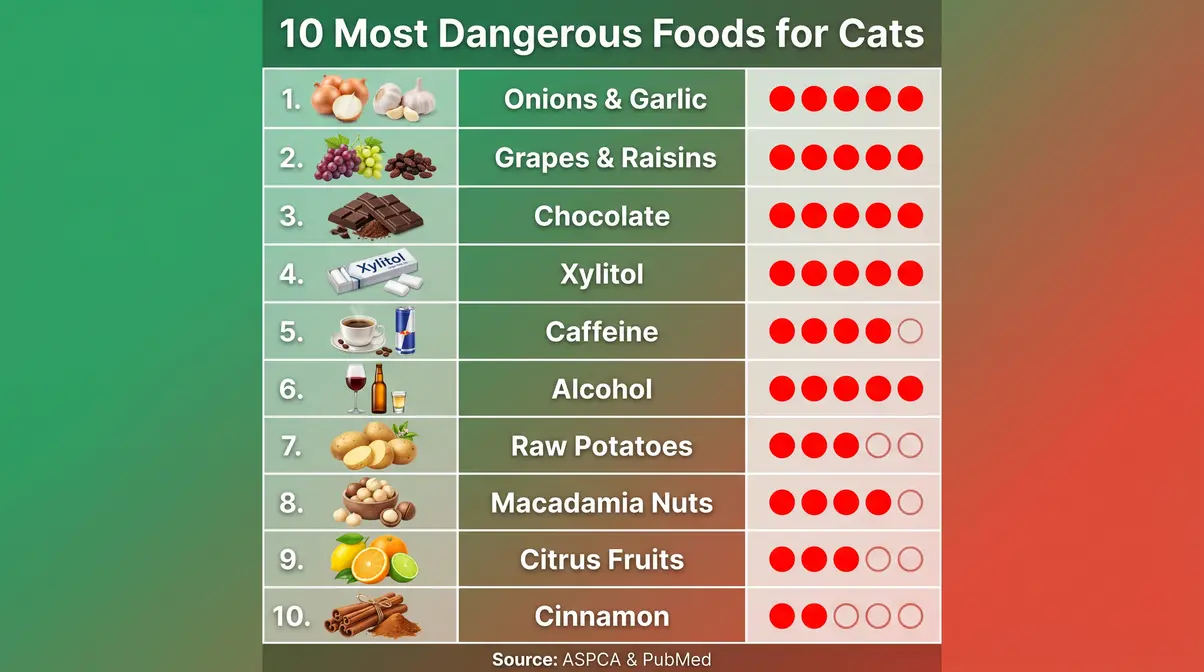
Toxic human foods for cats include many items found in every kitchen — and the danger is rarely obvious. Onions, garlic, chocolate, grapes, and xylitol-sweetened products can all cause severe organ damage or death in cats. A clinical review of toxic household foods confirmed these as among the most commonly implicated food toxins in feline cases (PubMed Central, 2026).
Onions, Garlic, and Alliums
Foods that are toxic to cats from the allium family include onions, garlic, leeks, chives, shallots, and scallions. All are dangerous — and the powdered or dried versions are more dangerous than fresh, because they are concentrated.
- Here is the full allium danger list:
- Onions (all types — white, red, yellow, green)
- Garlic (approximately 5x more toxic per gram than onions)
- Garlic powder and onion powder (most concentrated — check baby food labels)
- Leeks, chives, shallots, and scallions
The mechanism is specific: alliums contain thiosulfate, a compound that oxidizes hemoglobin inside red blood cells. This creates structures called Heinz bodies, which cause the cells to rupture — a condition called hemolytic anemia (the breakdown of red blood cells). Cats cannot excrete thiosulfate efficiently, making them far more vulnerable than dogs. Think of thiosulfate as a chemical that punches holes in your cat’s red blood cells.
What makes this especially dangerous is the delay. Symptoms appear 1–5 days after ingestion: lethargy, pale gums, rapid breathing, and eventual collapse. Owners often don’t connect the symptom to the food. A veterinary analysis of onion toxicity confirmed that onions and garlic cause severe hemolytic anemia in cats requiring veterinary therapy, with garlic approximately 5x more toxic per gram than onions (PubMed Central, 2026).
Onions, garlic, leeks, and chives contain thiosulfate compounds that destroy red blood cells in cats, causing potentially fatal hemolytic anemia even in small repeated doses (PubMed Central, 2026).
Applied to The Toxin Threshold Map: a bowl of onion soup, a garlic bread crust, or even why milk is also problematic for cats — these small, repeated exposures accumulate. Garlic supplements marketed for “immune support” in cats are equally dangerous. Some well-meaning owners give these supplements without realizing the risk.
Alliums cause slow-building damage. Chocolate and artificial sweeteners are faster — and often found in foods owners assume are safe treats.
Chocolate, Caffeine, and Xylitol
Is xylitol toxic to cats? Yes — and so is chocolate and caffeine. These three substances can cause rapid, serious harm.
Chocolate contains theobromine, a methylxanthine stimulant that cats metabolize even more slowly than dogs. Dark chocolate and baking chocolate contain the highest concentrations. Even small amounts cause vomiting, diarrhea, rapid heart rate, and seizures. While cats are less likely than dogs to eat chocolate voluntarily (they lack sweet taste receptors), any confirmed ingestion is an emergency.
Caffeine acts through a similar mechanism to theobromine. Coffee grounds left on counters, tea bags, energy drinks, and some medications all pose a risk. Symptoms include restlessness, rapid breathing, and muscle tremors.
Xylitol is the hidden danger. This artificial sweetener appears in sugar-free gum, toothpaste, some peanut butters, baked goods, mouthwash, and even certain vitamins. In cats, xylitol causes hypoglycemia (dangerously low blood sugar) and potentially severe liver damage. Colorado State University’s xylitol warning confirms that xylitol is commonly hidden in peanut butter, toothpaste, and baked goods — products many owners don’t suspect as hazardous (Colorado State University).
If your cat licks a sugar-free peanut butter spoon or chews on a piece of gum, treat it as an emergency and call (888) 426-4435 immediately.
Fruits seem harmless — but several popular ones can cause serious kidney damage in cats.
Grapes, Raisins, and Fruit Dangers
Are grapes toxic to cats? Absolutely — and what makes them especially alarming is that the toxic mechanism is entirely unknown. There is no established safe dose. Even a single grape has been linked to kidney failure in cats. Raisins are concentrated grapes and therefore more dangerous per gram.
A clinical review of toxic household foods confirmed that grapes and raisins are nephrotoxins (kidney-damaging substances) in cats with no established safe dose — the toxic mechanism remains unknown (PubMed Central, 2026).
- Fruit dangers to be aware of:
- Grapes and raisins — any amount, any variety, any form (fresh, dried, juice, extract)
- Citrus fruits (oranges, lemons, limes, grapefruit) — essential oils and psoralens in the skin and seeds cause GI upset and central nervous system depression. Is citrus toxic to cats? The skin and seeds are the main concern; small amounts of flesh are less dangerous but still inadvisable.
- Apple, cherry, and peach seeds/pits — contain cyanogenic compounds (substances that release cyanide). The flesh is generally low-risk in tiny amounts, but always remove seeds.
A single raisin fallen from a baking project could be enough to trigger kidney failure — vacuum raisins and grapes immediately if spilled. You can also learn more about the toxicity of cherries for cats in a dedicated guide.
Beyond the obvious danger foods, your kitchen holds several less-known hazards worth checking.
Other Risky Kitchen Items
Is cinnamon toxic to cats? Yes — though it is rarely immediately life-threatening in tiny amounts, repeated exposure causes real problems. Cinnamon contains cinnamaldehyde, which is irritating to cats’ mouths, skin, and respiratory systems. Inhaling cinnamon powder can cause lung irritation and coughing. Essential oil-based cinnamon (in diffusers or concentrated extracts) carries a higher risk than the kitchen spice.
Other surprising kitchen hazards include:
Milk and dairy — most adult cats are lactose intolerant. After kittenhood, cats lose the lactase enzyme needed to digest milk sugars. Milk causes GI upset: vomiting, diarrhea, and bloating. Not toxic in the traditional sense, but consistently harmful.
Raw potatoes and green potato skin — are potatoes toxic to cats? Raw and green-tinged potatoes contain solanine, a glycoalkaloid that causes GI symptoms and neurological effects. Cooked plain potatoes are generally considered low-risk in small amounts.
Alcohol — any amount of ethanol is dangerous to cats. Beer, wine, liquor, and even unbaked bread dough (which produces ethanol as yeast ferments) can cause vomiting, disorientation, dangerous drops in blood sugar, and respiratory failure. Cats are significantly smaller than humans, and their livers cannot process ethanol at all efficiently.
Most toxic thing a cat can eat?
Onions, garlic, and allium-family vegetables cause the most consistent food-related poisoning in cats, but true lilies are the most dangerous thing a cat can ingest overall. Even a tiny bite of lily leaf or petal can trigger fatal kidney failure. Among foods specifically, grapes and raisins are especially alarming because there is no established safe dose and the toxic mechanism is unknown — a single raisin has caused kidney failure. Acetaminophen found in human pain medications is also extremely toxic if accidentally ingested (VCA Animal Hospitals).
Now for the reassuring part — not everything in your kitchen is off-limits.
Foods That Are Safe to Share
Not all human food is dangerous. Several common foods are genuinely safe for cats in small amounts:
- Plain cooked chicken, turkey, or fish — no seasoning, no onion or garlic. These are excellent protein sources and generally safe in small amounts.
- Strawberries — are strawberries toxic to cats? No. They are non-toxic, though cats gain little nutritional value from them as obligate carnivores. Tiny pieces as an occasional treat are fine.
- Blueberries — are blueberries toxic to cats? No. Non-toxic and occasionally offered as a treat in tiny amounts.
- Cooked plain rice or oatmeal — sometimes recommended by vets to settle an upset stomach. Safe in small amounts.
- Cooked plain eggs — a good protein source when fully cooked (raw eggs carry Salmonella risk).
The critical word throughout is “plain.” The danger with many “safe” foods is the seasonings, sauces, and preparation — not the food itself. Your kitchen is one risk zone. Your living room and garden may present an even bigger one.
Poisonous Plants & Flowers {#poisonous-plants}
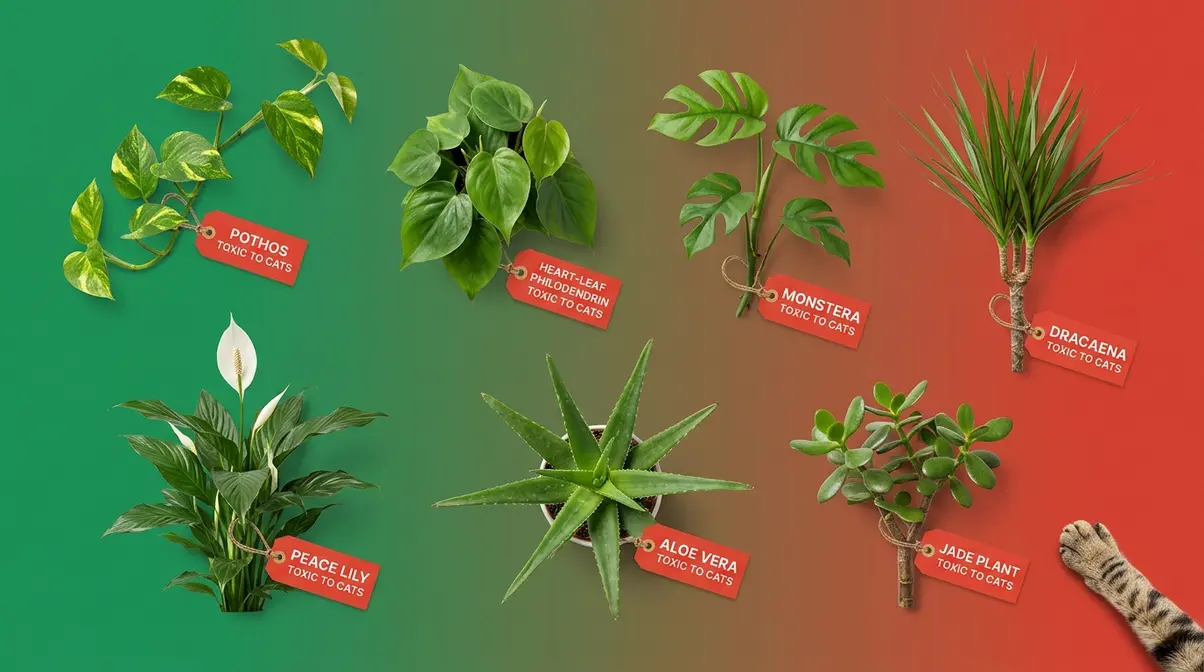
Poisonous plants and flowers are among the most common causes of cat toxicity — and many of the most dangerous are also the most popular for home décor. What flowers are toxic to cats? Lilies, tulips, hyacinths, and hydrangeas are all high-risk. Among houseplants, pothos and philodendron are the most frequently implicated in poisoning cases (PubMed Central, 2026).
Toxic plants accounted for 12% of all feline poisoning cases in a retrospective study, with pothos, philodendron, and lilies among the most commonly implicated houseplants (PubMed Central, 2026).
If you’re unsure about any plant not listed here, search the ASPCA’s online toxic and non-toxic plant database — it covers thousands of species.
High-Risk Houseplants
Is pothos toxic to cats? Yes — and it is one of the most commonly kept houseplants. Pothos (Epipremnum aureum) belongs to a group of plants containing calcium oxalate crystals — microscopic needle-like structures that cause immediate oral burning, drooling, and vomiting when a cat chews a leaf. The same mechanism applies to philodendron (Philodendron spp.), monstera (Monstera deliciosa), dracaena (Dracaena spp.), and peace lily (Spathiphyllum).
An important clarification: the peace lily is not a true lily. It belongs to the Araceae family and causes different symptoms than true lilies (primarily oral irritation and GI upset, rather than kidney failure). However, it is still toxic and should be kept away from cats.
Applied to The Toxin Threshold Map: calcium oxalate plants often cause immediate oral pain that limits how much a cat eats. This provides a natural “brake.” But repeated nibbling — even in small amounts — still accumulates harm over time.
A retrospective study on feline poisonings found ingested toxic plants accounted for 12.0% of feline poisonings (PubMed Central, 2026). You can also learn more about the dangers of snake plants for cats in a dedicated owner-experience article.
| Plant | Toxic Compound | Severity (1–5) | Key Symptoms |
|---|---|---|---|
| Pothos | Calcium oxalate crystals | 3 | Drooling, oral pain, vomiting |
| Philodendron | Calcium oxalate crystals | 3 | Drooling, swelling, vomiting |
| Monstera | Calcium oxalate crystals | 3 | Oral irritation, drooling |
| Dracaena | Saponins | 3 | Vomiting, dilated pupils, lethargy |
| Snake Plant | Saponins | 2 | Nausea, vomiting, diarrhea |
| ZZ Plant | Calcium oxalate crystals | 2 | Oral irritation, GI upset |
| Jade Plant | Unknown mechanism | 3 | Vomiting, depression, loss of coordination |
| Aloe Vera | Anthraquinones (in latex layer) | 3 | Vomiting, diarrhea, lethargy |
| Peace Lily | Calcium oxalate crystals | 3 | Drooling, oral pain, vomiting |
Note on aloe vera: The clear gel is safe for humans, but the yellow latex layer beneath the skin contains anthraquinones that are toxic to cats. Even “pure” aloe products may contain this component.
Houseplants are a year-round risk. But cut flowers from florists or grocery stores introduce a seasonal danger — and some of the deadliest plants arrive in Valentine’s Day and spring bouquets.
Dangerous Flowers & Bouquets
What flowers are toxic to cats? The list is longer than most owners realize, and many of these appear in everyday floral arrangements without any warning label.
Tulips and hyacinths are both common spring flowers with hidden danger. Tulips contain tulipalin A and B — compounds concentrated primarily in the bulb. Hyacinths contain alkaloids in similar distribution. Florist bouquets often include these without labeling. Symptoms: intense drooling, vomiting, diarrhea, and lethargy. The bulbs are most toxic, but all plant parts carry risk.
Peonies — are peonies toxic to cats? Yes. Peonies contain paeonol, a phenol compound found in the bark, roots, and flowers. Because cats cannot efficiently process phenols (due to the UGT1A6 deficiency discussed earlier), paeonol causes vomiting and diarrhea. All parts of the plant are toxic, not just the flower petals. Severity is moderate.
Hydrangeas contain cyanogenic glycosides — compounds that convert to hydrogen cyanide in the digestive system. This makes them high-severity, causing vomiting, lethargy, and depression. Even small amounts from a bouquet can cause problems.
Carnations and chrysanthemums both cause GI upset and skin irritation. Are carnations toxic to cats? Yes — not life-threatening in small amounts, but enough to cause vomiting and discomfort. Chrysanthemums contain pyrethrins (natural insecticides), which are the same class of compound as permethrin.
Daffodils — the bulbs contain lycorine, an alkaloid causing severe vomiting, diarrhea, abdominal pain, and in large amounts, cardiac arrhythmia (irregular heartbeat). All parts are toxic. Daffodils are high-severity.
Are daisies toxic to cats? Most daisies (including Chrysanthemum species) cause GI upset and mild skin irritation — not life-threatening but worth avoiding.
Is rosemary toxic to cats? Rosemary is generally considered low-toxicity, though large amounts can cause GI upset. It is not on the ASPCA’s most-dangerous list. Are Christmas trees toxic to cats? The needles of most Christmas trees (fir, pine, spruce) can cause GI irritation and puncture the mouth or intestinal lining. The water in Christmas tree stands often contains preservatives, fertilizers, and bacteria — all harmful if ingested.
The good news: safe, beautiful alternatives exist.
Safe Plant Alternatives
You don’t have to choose between a beautiful home and a safe one. These ASPCA-verified non-toxic plants work well as alternatives:
- Spider plant (Chlorophytum comosum) — one of the most popular and completely cat-safe
- Boston fern (Nephrolepis exaltata) — lush, non-toxic, thrives indoors
- Orchids (Phalaenopsis spp.) — elegant and non-toxic to cats
- African violet (Saintpaulia) — compact, colorful, and cat-safe
- Money tree (Pachira aquatica) — important clarification: the safe “money tree” is Pachira aquatica, NOT Crassula ovata (jade plant), which is toxic. Always verify the scientific name.
- Calathea / prayer plants — non-toxic and visually striking
Verify any plant on the ASPCA non-toxic plant list before bringing it home. For safe bouquet ideas, see the “Creating a Cat-Safe Home” section below.
The Deadly Truth About Lilies {#lilies-and-cats}
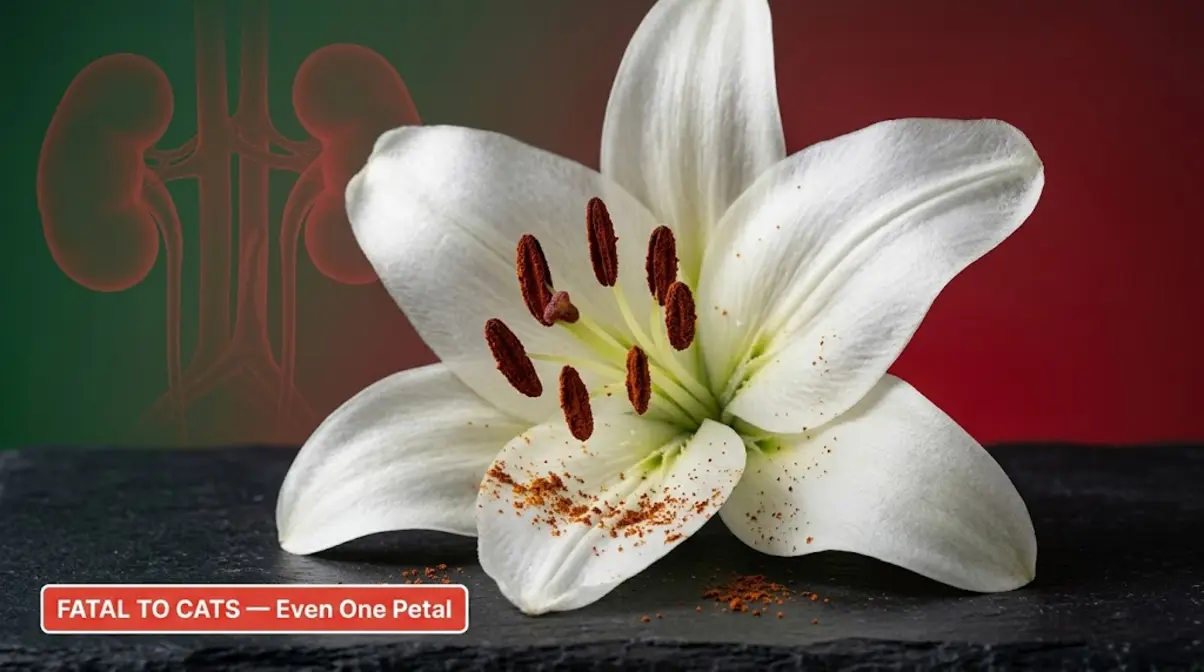
No toxin in this guide demands more urgency than lilies. True lilies are among the most lethal substances a cat can encounter — and they are routinely sold in grocery store bouquets with no warning. Acute kidney failure can develop within 24–72 hours of ingestion, and without aggressive veterinary treatment, the outcome is often fatal (PetMD, 2026).
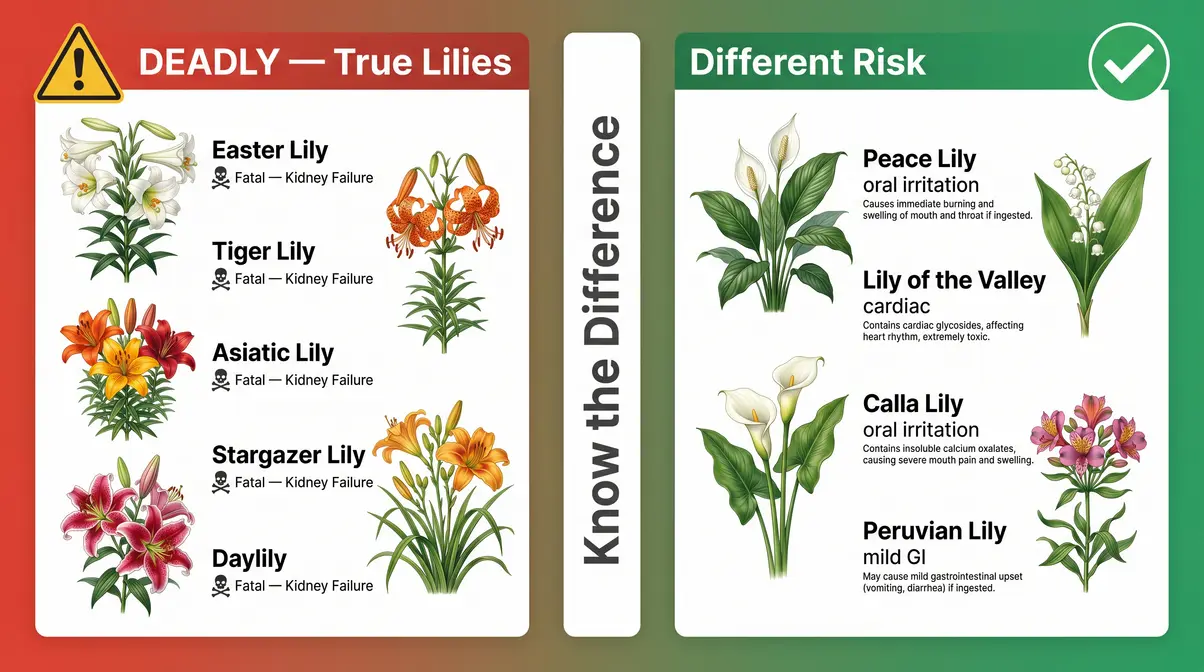
Which Lilies Are Fatal?
The word “lily” covers many different plants — and the distinction matters enormously. True lilies from the genus Lilium and daylilies from the genus Hemerocallis are nephrotoxic (kidney-damaging) and potentially fatal to cats. Other plants called “lily” carry different — though still serious — risks.
- Highly toxic (true lilies and daylilies):
- Easter lily (Lilium longiflorum) — commonly sold at Easter, extremely dangerous
- Tiger lily (Lilium tigrinum)
- Asiatic lily (Lilium spp.)
- Stargazer lily (Lilium orientalis)
- Japanese show lily (Lilium speciosum)
- Daylilies (Hemerocallis spp.) — often in garden beds and bouquets
- Toxic but different mechanism (not true lilies):
- Peace lily (Spathiphyllum) — causes oral irritation, not kidney failure
- Lily of the valley (Convallaria majalis) — causes cardiac arrhythmia, not kidney failure
- Calla lily (Zantedeschia) — causes oral irritation from calcium oxalate crystals
- Relatively lower risk (still worth avoiding):
- Peruvian lily (Alstroemeria) — mild GI upset only
The key rule: if you don’t know whether a lily is a Lilium or Hemerocallis species, treat it as potentially fatal. When in doubt, keep it out.
Why Every Part of a Lily Is Dangerous
What makes true lilies uniquely terrifying is that every part of the plant is toxic — and the dose required to cause fatal kidney failure is astonishingly small. Your cat does not need to eat a leaf or a petal. Even these minimal exposures have caused fatal outcomes:
- Licking pollen from their coat after brushing against a lily
- Chewing on a single petal or leaf fragment
- Drinking water from a vase containing lilies
The toxic compound in true lilies has not been fully identified — which is part of what makes them so dangerous. What is known is that the mechanism specifically targets feline kidney tubular cells, causing acute tubular necrosis (death of kidney filtration cells). Kidney damage begins developing within hours of ingestion. Without IV fluid therapy started within 18 hours, the prognosis becomes significantly worse (MedVet, 2026).
- Timeline of lily poisoning:
- 0–2 hours: Vomiting, drooling, lethargy
- 2–6 hours: Apparent improvement (deceptive — kidney damage is progressing)
- 24–72 hours: Kidney failure develops — increased thirst, decreased urination, complete loss of urination, collapse
The period of apparent improvement is one of the most dangerous aspects of lily poisoning. Owners sometimes believe their cat has recovered. They have not. Treatment must begin before kidney failure develops — not after.
What to Do If Your Cat Touches a Lily
If your cat has had any contact with a true lily — even suspected contact — act immediately. Do not wait for symptoms.
- Remove your cat from the area and prevent any further contact with the plant.
- Do not induce vomiting at home — this must be done by a vet using safe medications. Hydrogen peroxide, which some sources mention, is dangerous and should never be used (VCA Animal Hospitals).
- Call your vet or ASPCA Poison Control at (888) 426-4435 immediately, even if your cat appears completely normal.
- Bring the plant or a photo of it to the vet so they can confirm the species.
- Expect hospitalization — standard treatment includes IV fluid therapy for 48–72 hours to protect kidney function, activated charcoal (administered by the vet), and blood work monitoring.
Cats that receive early treatment before kidney damage sets in often recover completely. Every hour of delay significantly worsens the prognosis. This is a true emergency — treat it as one.
Chemicals, Cleaners & Meds {#household-chemicals}
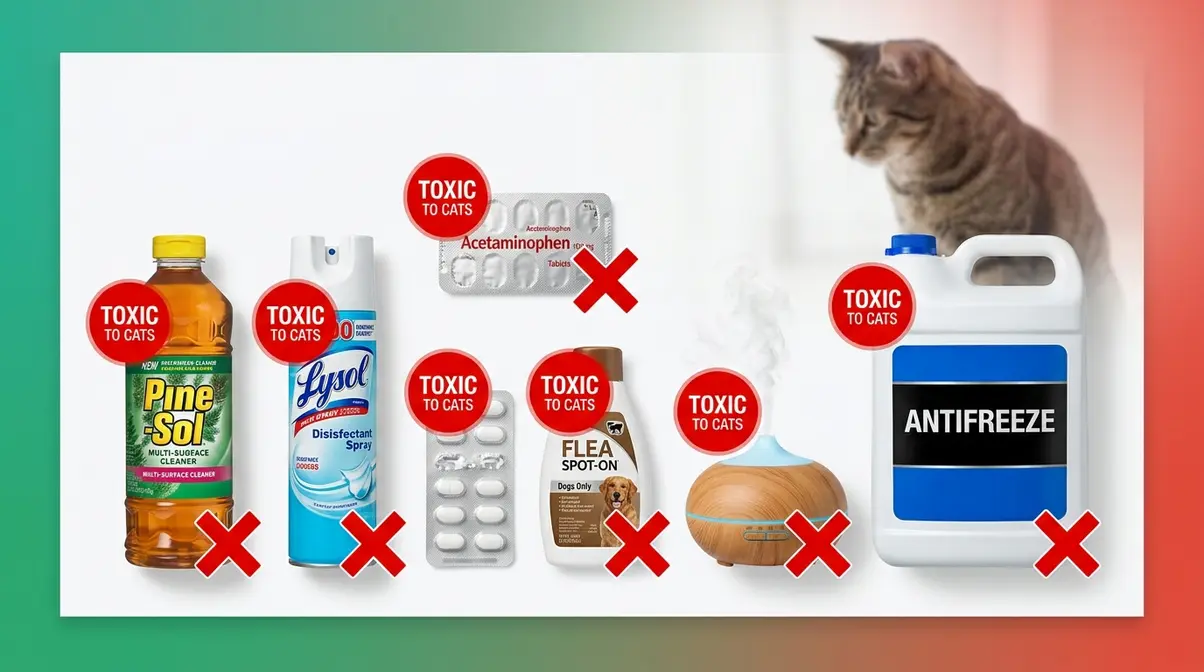
When asking what is toxic to cats, many owners overlook the products they use to clean their homes. One cat owner put it perfectly:
“I was made aware today that Lillys and rose-hip geranium oil is toxic to cats. Are there any other household items, additives, food etc that I should be aware of…”
This is the question every new cat owner eventually asks — and the answer is more extensive than most expect. Your bathroom cabinet, cleaning supplies, and even your dog’s flea treatment may all contain substances that are hidden dangers in your home for cats.
Cleaning Products and Disinfectants
Many popular household cleaners contain phenols — the same class of compound that cats cannot metabolize due to their UGT1A6 enzyme deficiency. Products containing phenol include Pine-Sol, many Lysol formulations, and some multipurpose sprays. Cats absorb phenols through their paws when they walk on treated surfaces and through grooming.
Bleach (sodium hypochlorite) causes oral burns, drooling, vomiting, and respiratory irritation. Even diluted bleach used for mopping is risky because residues remain on floors after drying.
Quaternary ammonium compounds (quats) — found in many disinfecting wipes and sprays marketed as “pet-safe” — can cause chemical burns to a cat’s mouth and respiratory irritation. The label “pet-safe” is not universally reliable and often refers to dogs, not cats.
Toilet bowl cleaners, drain cleaners, and oven cleaners are caustic (corrosive) substances. If a cat walks through a spill or sniffs a recently cleaned toilet bowl, they can inhale fumes or absorb the chemical on their paws. This is one situation where you must NEVER induce vomiting — caustic substances cause additional burns on the way back up.
According to VCA Animal Hospitals’ household hazards guide, common household cleaners including bleach, detergents, and disinfectants are among the most frequent causes of feline chemical exposure (VCA Animal Hospitals).
Practical rule: After using any cleaning product, rinse the surface with plain water and allow it to dry completely before allowing your cat access. Store all cleaning products in closed cabinets.
Essential Oils and Diffusers
Essential oil diffusers have become one of the most underestimated silent killers for cats in modern homes. Unlike a toxic plant that a cat must physically chew, diffusers release airborne compounds continuously — and the exposure accumulates over hours and days without obvious warning signs.
Is peppermint toxic to cats? Yes. The Merck Veterinary Manual confirms that essential oils can be toxic to cats when inhaled or applied topically, with cats and birds at particular risk for essential oil toxicosis (Merck Veterinary Manual, 2026). VCA Animal Hospitals specifically lists peppermint, tea tree (melaleuca), cinnamon, citrus, pennyroyal, pine, sweet birch, wintergreen, and ylang ylang as poisonous to cats (VCA Animal Hospitals).
The mechanism connects back to The Toxin Threshold Map: active (ultrasonic) diffusers release microdroplets that settle on a cat’s fur. When the cat grooms, they ingest the oil. A brief, well-ventilated exposure may cause only mild irritation. But a diffuser running for hours in a closed room can cause respiratory distress, drooling, vomiting, tremors, and liver damage over time.
The ASPCA notes that even 7–8 drops of concentrated tea tree oil can be dangerous to pets (ASPCA, 2026).
- Signs of essential oil toxicity in cats:
- Watery eyes and runny nose
- Drooling or foaming at the mouth
- Difficulty breathing or wheezing
- Vomiting or lethargy after diffuser use
- Tremors or unsteady walking (in severe cases)
If you use essential oil diffusers, ensure your cat can always leave the room, use them only in well-ventilated spaces, and choose diffuser-free alternatives (unscented candles, houseplants) when possible.
Medications — Human and Pet Drugs
What is the #1 killer of cats? Among medications, acetaminophen (paracetamol, sold as Tylenol) is consistently cited as one of the most acutely lethal substances a cat can ingest. There is effectively no safe dose. Clinical signs have been reported at just 10 mg per kilogram of body weight — for a typical 4.5 kg cat, that is less than half a regular-strength tablet (Merck Veterinary Manual, 2026; PubMed Central, 2026).
The mechanism is devastating: acetaminophen is converted to a toxic metabolite (NAPQI) that oxidizes the cat’s red blood cells, causing methemoglobinemia (the inability of blood to carry oxygen), Heinz body formation, and hemolytic anemia. Liver damage follows, sometimes delayed by up to a week. Signs appear within 1–4 hours: rapid or labored breathing, lethargy, brown or blue-tinted gums, facial and paw swelling, and vomiting (VCA Animal Hospitals).
Other highly dangerous medications include:
- NSAIDs (ibuprofen, naproxen, aspirin) — cause GI ulcers and acute kidney failure in cats. Even one ibuprofen tablet can be fatal.
- Antidepressants (SSRIs, SNRIs) — cause serotonin syndrome: tremors, seizures, hyperthermia
- ADHD medications (amphetamines) — dangerous stimulant effects, seizures
- Sleep aids and benzodiazepines — extreme sedation, respiratory depression
- Topical pain creams (containing lidocaine, benzocaine, or diclofenac) — absorbed through skin and mucous membranes
Critical rule: Never give your cat any human medication without explicit veterinary instruction. Store all medications — including supplements and vitamins — in closed, latched cabinets that cats cannot access.
Pesticides & Outdoor Hazards
Permethrin is one of the most important outdoor hazards for indoor cats. It is the active ingredient in many dog-only flea and tick spot-on treatments. Cats that rub against a recently treated dog, sleep on the same bedding, or groom themselves after contact with a treated surface can absorb enough permethrin to experience life-threatening toxicity.
A clinical study of feline permethrin poisonings found that permethrin is described as the main toxicological cause of feline deaths reported to the UK’s Veterinary Poisons Information Service (PubMed Central, 2026). Signs appear within 1–12 hours: drooling, muscle tremors, incoordination, seizures, and potentially death if untreated. Toxicity can last up to three days (PetMD, 2026).
Antifreeze (ethylene glycol) is highly toxic and unfortunately sweet-tasting. Cats may lick puddles from driveways or leaking vehicle reservoirs. As little as 1.5 mL per kilogram of body weight can cause fatal kidney failure. Symptoms begin within 30 minutes: vomiting, disorientation, and apparent drunkenness. Kidney failure follows within 24–72 hours.
Rodenticides (rat and mouse poisons) are designed to be palatable — which means cats may eat them directly, or eat a rodent that has ingested them. Anticoagulant rodenticides (the most common type) prevent blood clotting, causing internal bleeding. Symptoms may not appear for several days.
Garden pesticides and herbicides — many contain organophosphates or carbamates, which inhibit the nervous system. Cats can absorb these through their paws after walking on treated lawns. Always keep cats indoors for at least 24–48 hours after any lawn treatment, and check product labels for pet safety.
What is a silent killer for cats?
Essential oil diffusers are one of the most underestimated silent killers for cats. Unlike an obvious toxin a cat must eat, diffusers release airborne compounds continuously — microdroplets that settle on a cat’s fur and are ingested during grooming over hours or days. The Merck Veterinary Manual confirms cats are at particular risk for essential oil toxicosis through inhalation alone (Merck Veterinary Manual, 2026). Permethrin from dog flea products is another silent killer — a cat that simply rubs against a recently treated dog can absorb a potentially lethal dose. Chronic phenol exposure from floor cleaners absorbed through paws during grooming is a third category most owners never consider.
Cat Poisoning Emergency Steps {#emergency-response}
A cat poisoning emergency is one of the most frightening moments a pet owner can face. The decisions you make in the first 15–30 minutes matter enormously. This section gives you a clear, step-by-step protocol — including what to do AND what never to do.
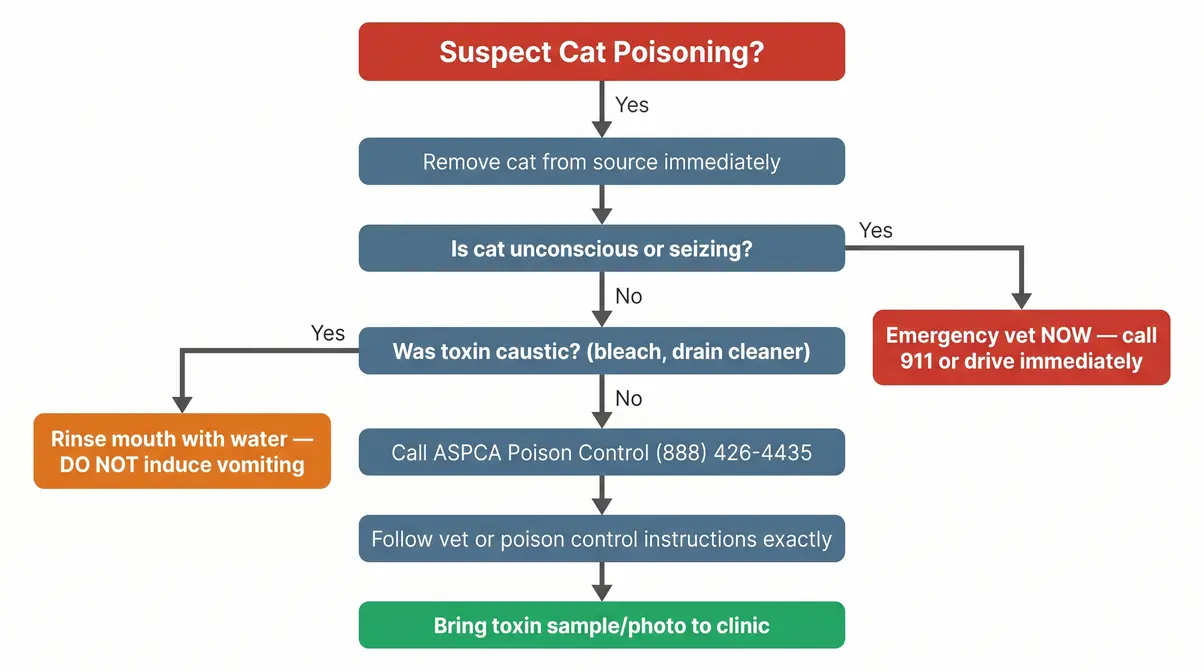
Step-by-Step Emergency Response
You’ll need: The ASPCA Poison Control number (888) 426-4435, your vet’s after-hours number, and if possible, a sample or photo of the suspected toxin.
Estimated time to complete these steps: under 5 minutes.
- Stay calm and remove your cat from the source. Move your cat away from the plant, food, chemical, or substance — prevent any additional exposure.
- Do not attempt home treatment. Do not induce vomiting, give milk, give water, or administer any home remedy unless specifically instructed by a vet or poison control. Many well-intentioned actions cause additional harm.
- Call your vet or ASPCA Poison Control at (888) 426-4435 immediately. Have this information ready:
- Your cat’s approximate weight and age
- The substance they were exposed to (name, ingredient list if available)
- How much you estimate they ingested or were exposed to
- When the exposure occurred
- Any symptoms you have observed
- Follow the professional’s instructions exactly. They may direct you to bring your cat in immediately, monitor specific symptoms, or in rare cases, induce vomiting (only under professional guidance).
- If directed to the emergency vet, bring the toxin source. Bring the plant, packaging, or a photo. This helps the vet identify the exact substance and choose the right treatment.
- Transport your cat safely. Use a carrier if possible. Keep them warm and as calm as possible. Monitor breathing during transport.
- At the clinic, report everything. Even if you’re not certain the cat ingested something, tell the vet what you found and when. Incomplete history delays treatment.
Toxin-Specific Emergency Matrix:
| Toxin Class | First Action | NEVER Do This | Vet Treatment |
|---|---|---|---|
| True lily | Call vet immediately — even if no symptoms | Wait to see if symptoms develop | IV fluids 48–72 hrs, kidney monitoring |
| Acetaminophen | Emergency vet NOW | Give any home remedy | N-acetylcysteine antidote, oxygen therapy |
| Permethrin | Wash cat with mild dish soap + lukewarm water | Use alcohol or solvents | Tremor control, IV fluids, supportive care |
| Caustic cleaners (bleach, drain cleaner) | Rinse mouth with water; call vet | Induce vomiting — causes additional burns | Supportive care, pain management |
| Onions/garlic | Call vet — symptoms may be delayed 1–5 days | Dismiss exposure because cat “seems fine” | IV fluids, blood transfusion if severe |
| Antifreeze | Emergency vet within 1 hour | Wait for symptoms | Antidote (fomepizole or ethanol IV) |
| Essential oils (topical) | Wash with dish soap; move to fresh air | Apply more oil or use alcohol | Supportive care, liver monitoring |
| Rodenticide | Call vet; keep the packaging | Wait for bleeding symptoms (may take days) | Vitamin K therapy, monitoring |
| Grapes/raisins | Call vet immediately | Assume “just one” is safe | Kidney monitoring, IV fluids |
| Medications (human) | Emergency vet NOW | Give any food or water without vet guidance | Depends on medication — call first |
What NEVER to Do
These contraindications are critical. Well-meaning actions can cause additional injury or death.
NEVER induce vomiting unless specifically directed by your vet. This is the most important rule. Hydrogen peroxide — sometimes mentioned in older online sources — is dangerous and should never be given to cats. More critically, inducing vomiting when a cat has swallowed a caustic chemical (bleach, drain cleaner, oven cleaner) causes the substance to burn the esophagus a second time on the way back up (VCA Animal Hospitals).
NEVER give milk, oil, or “coat the stomach.” These are folk remedies with no veterinary basis and can delay proper treatment.
NEVER give salt to induce vomiting. Salt toxicity is a genuine risk in cats, and this method does not reliably work.
NEVER wait to see if symptoms develop — especially with true lilies, antifreeze, or acetaminophen. The window for effective treatment is narrow. By the time symptoms appear, significant organ damage may have already occurred.
NEVER assume “just a little” is safe. The Toxin Threshold Map applies here: there is no established safe dose for grapes, raisins, or true lilies. Even tiny exposures warrant a call to poison control.
NEVER search for home remedies instead of calling a professional. Every minute spent searching online is a minute of treatment delay. Call first; research later.
Emergency Contacts and Resources
Keep these contacts accessible — save them in your phone now, before an emergency occurs.
| Resource | Contact | Hours |
|---|---|---|
| ASPCA Animal Poison Control Center | (888) 426-4435 | 24/7/365 |
| Pet Poison Helpline | (855) 764-7661 | 24/7/365 |
| Your regular vet | Save your vet’s number | Office hours |
| Nearest emergency vet clinic | Find and save now | 24/7 |
| ASPCA Toxic Plant Database | aspca.org/pet-care/aspca-poison-control | Online |
Note: A consultation fee may apply for ASPCA Poison Control calls. This fee is worth paying — the guidance you receive could save your cat’s life.
Creating a Cat-Safe Home {#cat-safe-home}
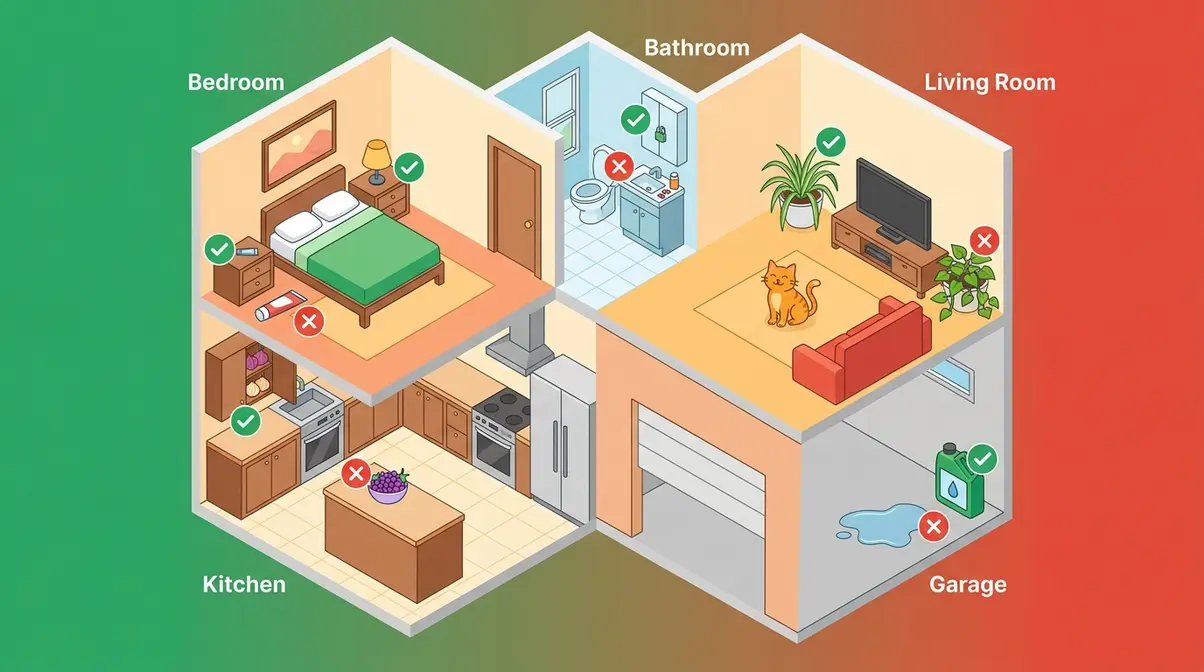
Taking a systematic approach to pet safety prevents the majority of accidental toxic exposures in the home (ASPCA, 2026). The goal is not a sterile, plant-free, scent-free home. It is a thoughtful home where hazards are identified and managed. At madcatman.com, our team evaluated the most common household danger zones against ASPCA and VCA guidelines to build this practical room-by-room audit.
Room-by-Room Safety Audit
Work through each room in your home using this checklist. Most changes take under 30 minutes and cost nothing.
- Kitchen:
- Store onions, garlic, and alliums in closed cabinets or the refrigerator
- Never leave grapes, raisins, or xylitol-containing products on counters
- Secure trash cans with lids (cats can access discarded food)
- Use only cat-safe cleaning products on floors and surfaces; rinse after use
- Living Room / Common Areas:
- Replace toxic houseplants (pothos, philodendron, snake plant) with safe alternatives (spider plant, Boston fern, orchids)
- Place any remaining houseplants on high shelves or in rooms cats cannot access
- Secure electrical cords — cats may chew them
- If using essential oil diffusers, ensure the room has open ventilation and your cat can leave freely
- Bathroom:
- Store ALL medications (human and pet) in latched cabinets
- Never leave pills on counters — cats may bat them off and eat them
- Keep toilet lids closed if you use toilet bowl cleaning tablets
- Store cleaning products on high shelves or in locked cabinets
- Bedroom:
- Keep ADHD medications, antidepressants, and sleep aids in closed containers
- Topical pain creams, hormone creams, and medicated patches should be stored securely; never apply to skin and then allow your cat to lick the area
- Garage / Outdoor Areas:
- Store antifreeze in sealed containers and clean up any spills immediately
- Keep cats indoors for 48 hours after lawn or garden pesticide treatment
- Never use permethrin-based dog flea products if you share a home with cats
- Secure rodenticide bait stations so cats cannot access them
- Garden:
- Remove or fence off true lilies, daffodils, tulips, and hyacinths
- Check all new plants against the ASPCA database before planting
Safe Flowers for Cat-Friendly Bouquets
You can still enjoy fresh flowers. These options are ASPCA-verified non-toxic for cats:
| Safe Flower | Notes |
|---|---|
| Roses | Thorns can scratch — remove before arranging |
| Snapdragons | Fully non-toxic, colorful alternative to toxic bouquet flowers |
| Orchids (Phalaenopsis) | Non-toxic; long-lasting cut flower |
| Sunflowers | Non-toxic; avoid the leaves in large amounts |
| Gerbera daisies | Non-toxic; a safe substitute for chrysanthemums |
| Lisianthus | Non-toxic; elegant substitute for lilies |
| Freesia | Non-toxic; fragrant and colorful |
| Statice | Non-toxic; popular filler flower |
When ordering or purchasing bouquets, specifically request “no lilies, no tulips, no hyacinths, no daffodils.” Many florists will accommodate this request. You can also explore safe plant choices for cats with community-tested recommendations.
When to Seek Expert Help {#limitations}
Delaying veterinary care because a cat appears normal is the most dangerous mistake an owner can make after a toxic exposure (PetMD, 2026).
Common Pitfalls
Pitfall 1: Assuming “a little bit” is safe. The Toxin Threshold Map shows that dose-response curves vary dramatically by toxin. For grapes, raisins, and true lilies, there is no established safe dose. Owners who wait after a small exposure — believing the amount was too small to matter — frequently arrive at the vet after the treatment window has closed.
Pitfall 2: Relying on the internet instead of calling poison control. Online information is a starting point, not a substitute for professional triage. The ASPCA Poison Control Center at (888) 426-4435 has toxicologists available 24/7 who can assess your specific situation, your cat’s weight, the exact substance, and the quantity — none of which a general article can do.
Pitfall 3: Treating cat toxicology like dog toxicology. Products labeled “for dogs and cats” are not always safe for cats. Many flea and tick products, supplements, and medications are tested primarily in dogs. Always verify with your vet before giving your cat any product not specifically formulated and dosed for felines.
Pitfall 4: Dismissing delayed symptoms. Onion toxicity takes 1–5 days to manifest. Lily kidney failure develops over 24–72 hours. Anticoagulant rodenticide poisoning may not show bleeding signs for 3–5 days. A cat that seems fine after exposure to these substances may not be fine.
Pitfall 5: Using home remedies. Salt, milk, hydrogen peroxide, and olive oil are not veterinary treatments. They delay proper care and can cause additional harm.
When to Choose Alternatives
This guide covers the most common toxins, but veterinary toxicology is a specialized field. Seek immediate professional help — not additional online research — in these situations:
- Your cat has ingested any amount of a true lily, acetaminophen, antifreeze, or permethrin-based dog flea product
- Your cat is showing neurological signs (seizures, tremors, loss of coordination)
- Your cat has lost consciousness or is struggling to breathe
- You are unsure what your cat ingested, but they are showing any poisoning symptoms
When to Seek Expert Help
Consult a veterinarian — not this guide — as your primary resource when:
- Your cat requires a diagnosis, not just information
- You are managing a cat with chronic exposure to household chemicals and want a toxicology screen
- You are planning to introduce new plants, cleaning products, or pest control methods to your home
- Your cat is pregnant, nursing, elderly, or has pre-existing kidney or liver disease — these cats have even lower toxin tolerance
This guide was compiled by the team at madcatman.com in consultation with veterinary sources from Cornell, VCA, and the ASPCA. It is designed for education, not emergency triage. For emergencies, call (888) 426-4435.
Frequently Asked Questions {#faq}
Most toxic substance to cats?
True lilies (Lilium species) and acetaminophen (Tylenol) are consistently identified as the most acutely dangerous substances for cats. Even a small amount of lily — a single petal, a lick of pollen — can cause fatal kidney failure within 24–72 hours without treatment. Acetaminophen causes methemoglobinemia (inability of blood to carry oxygen) at doses as low as 10 mg/kg — less than half a regular-strength tablet for a typical adult cat (Merck Veterinary Manual, 2026). Permethrin from dog flea products is also among the most common causes of feline death reported to veterinary poison control services (PubMed Central, 2026).
What is the #1 killer of cats?
Among toxins specifically, acetaminophen (Tylenol) is one of the most acutely fatal substances cats can ingest, with no safe dose established. Permethrin is described as the main toxicological cause of feline deaths reported to the UK’s Veterinary Poisons Information Service (PubMed Central, 2026). For overall cat mortality, chronic kidney disease is the leading natural cause of death in older cats — and many of the toxins in this guide (lilies, antifreeze, grapes, NSAIDs) specifically damage the kidneys, accelerating this process. The consistent veterinary message is that human medications left accessible to cats represent one of the highest-risk household dangers (ASPCA, 2026).
What smell do cats absolutely hate?
Cats have an extremely sensitive sense of smell and strongly dislike citrus scents (orange, lemon, lime, grapefruit), menthol and peppermint, eucalyptus, lavender, and vinegar. However, there is an important safety caveat: several of these smells come from substances that are also toxic to cats. Peppermint and eucalyptus essential oils, for example, are on VCA’s confirmed toxic list for cats (VCA Animal Hospitals). Using these as natural “cat deterrents” — placing citrus peels near plants you want to protect — is generally safe in small amounts and may be effective. However, concentrated essential oils or diffused versions of these scents should be avoided entirely, as the aversion does not protect against the toxicity.
Are indoor cats safe from poisoning?
No, indoor cats are not entirely safe from poisoning. While they avoid outdoor hazards like antifreeze and toxic garden plants, they face significant indoor risks. Common household items like lilies, essential oil diffusers, human medications, and certain cleaning products pose severe threats. Maintaining a cat-safe home requires vigilance even for strictly indoor felines.
How long until poisoning signs appear?
The timeline for poisoning symptoms varies drastically depending on the toxin. Some substances, like calcium oxalate plants, cause immediate oral irritation and drooling. Others, like lilies or acetaminophen, may not show severe clinical signs for 12 to 72 hours. This delayed reaction is why you should never wait for symptoms to appear before contacting a veterinarian.
A Final Word on Cat Safety
For cat owners navigating the overwhelming task of making their home safe, the most important takeaway is this: when considering what is toxic to cats, remember that understanding these risks is not about creating a sterile, joyless environment. It is about knowing where the real dangers lie and making targeted changes.
The evidence is clear. Cats’ unique UGT1A6 enzyme deficiency makes them genuinely more vulnerable than dogs or humans to a specific class of compounds — phenols, certain medications, and plant toxins that other species process without difficulty. Recently, the ASPCA Poison Control Center handled more than 451,000 poison exposure calls for pets — a number that reflects how many of these hazards are already present in ordinary homes (ASPCA, 2026). The Toxin Threshold Map — the principle that toxicity accumulates over repeated exposures, not just single large doses — explains why “silent killers” like diffused essential oils and floor cleaners deserve as much attention as the obvious dangers.
The practical steps are straightforward: replace the three or four most dangerous plants, secure your medications, check your flea products, and save (888) 426-4435 in your phone today. Most cat poisoning cases are preventable — and for those that aren’t, early response is what saves lives.
If you suspect your cat has been exposed to any toxic substance, do not search for home remedies. Call your vet or the ASPCA Animal Poison Control Center at (888) 426-4435 immediately. The team at madcatman.com has compiled this guide as an educational starting point — your veterinarian is always your first and most important resource for your cat’s health.

Dave King
Cat owner and writer at Mad Cat Man.