
Table of Contents
- Veterinarian-Informed Cat Advice: The 15 Essentials at a Glance
- Microchipping, ID (Identification) Tags, and Safe Exits: Do Not Lose Your Cat
- Room-by-Room Safety Checklist
- Budget Gear Picks: What to Buy, What to Skip
- Behavior Smarts: Training, Enrichment, and Scratch-Saving Tactics
- Health, Prevention, and a Simple Home Maintenance Timeline
- How Mad Cat Man Makes This Easier
- Conclusion
This blog post may contain affiliate links. As an Amazon Associate I earn from qualifying purchases.
15 Veterinarian-Informed Cat Advice Tips to Cat-Proof Your Home: Microchipping, Room-by-Room Safety Checklist & Budget Gear Picks
If you have ever watched your cat leap onto a shelf that looked perfectly safe until it wobbled like jelly, you know home safety is not just about being neat, it is about being intentional. This friendly, practical guide delivers veterinarian-informed cat care advice that keeps your cat safer without turning your place into a fortress. We will cover microchipping and identification basics, a room-by-room hazard sweep, and smart, budget-friendly gear that I have tested with my own jump-happy tabby. Along the way, I will share what veterinarians commonly recommend and how the Mad Cat Man team organizes advice so you can quickly find what you need. Ready to worry less and enjoy your cat more?
Veterinarian-Informed Cat Advice: The 15 Essentials at a Glance
Let us set the stage with a quick list you can screenshot and start using today. Think of this as your bird’s-eye view before we dive deeper into each area and the room-by-room checklist.
- Microchip and register your details, then keep them updated after moves or number changes.
- Add a breakaway collar with an engraved ID (identification) tag for instant contact.
- Install sturdy window screens and secure balcony netting or safety mesh.
- Tidy and cover electrical cords, and hide chargers when not in use.
- Use latching trash cans and seal pantry staples like kibble and treats.
- Fit child-proof cabinet locks for cleaning supplies and medications.
- Anchor bookcases and TV (television) stands with anti-tip straps.
- Remove toxic plants, especially lilies, and swap in cat-safe greenery.
- Close washer and dryer doors; always check before running a cycle.
- Set up enough litter boxes, well-lit and easy to reach, and keep them clean.
- Store chemicals and human foods that are dangerous to cats far out of reach.
- Train counter alternatives, and use stove knob covers if your cat is curious.
- Use a microchip cat flap or secure entry routine to prevent door-dashing.
- Provide vertical spaces, scratching posts, and puzzle feeders for daily enrichment.
- Prepare a cat go-bag, including a carrier, medical records, and a basic first aid kit.
Microchipping, ID (Identification) Tags, and Safe Exits: Do Not Lose Your Cat
When a cat slips out, speed and clarity are everything. Microchipping uses a tiny RFID (radio-frequency identification) device injected under the skin, and studies from shelters and veterinary hospitals report that microchipped cats are more likely to be reunited with their families than non-chipped cats. The key is registration; a microchip without current contact details is just a number. After your veterinary appointment, register the chip with a national database and add at least two contacts. Then, whenever you move or change numbers, update records the same day you switch utilities. It takes minutes and can save weeks of searching.
Watch This Helpful Video
To help you better understand vet approved cat advice, we’ve included this informative video from Veterinary Secrets. It provides valuable insights and visual demonstrations that complement the written content.
Pair the microchip with a breakaway collar and an engraved ID (identification) tag for instant visibility. I have had a neighbor return a curious foster within an hour simply because the tag included my street and a mobile number. For exterior doors, teach a “wait” cue at a doormat and reward stillness every time a door opens. If your lifestyle benefits from an outdoor enclosure or supervised garden time, a microchip-activated cat flap can help ensure only your cat enters. Likewise, test all window screens twice a year, especially spring and fall, when emergency clinics see spikes in “high-rise syndrome” injuries after falls through loose screens.
| Option | How It Works | Pros | Limitations | Typical Cost (USD (United States dollars)) |
|---|---|---|---|---|
| Microchip (RFID (radio-frequency identification)) | Permanent ID under skin, scanned by vets and shelters | Lifelong, cannot fall off, industry standard for recovery | Needs registration and up-to-date contact details | 30 to 75 one-time |
| Collar ID (identification) Tag | Engraved tag on breakaway collar | Instant contact for neighbors and finders | Collar can be lost; ensure breakaway design for safety | 5 to 20 |
| GPS (global positioning system) Tracker | Real-time location via mobile network or Bluetooth | Track walks and escapes, peace of mind | Battery, subscription fees, bulkier for small cats | 40 to 200 plus optional monthly plan |
Room-by-Room Safety Checklist
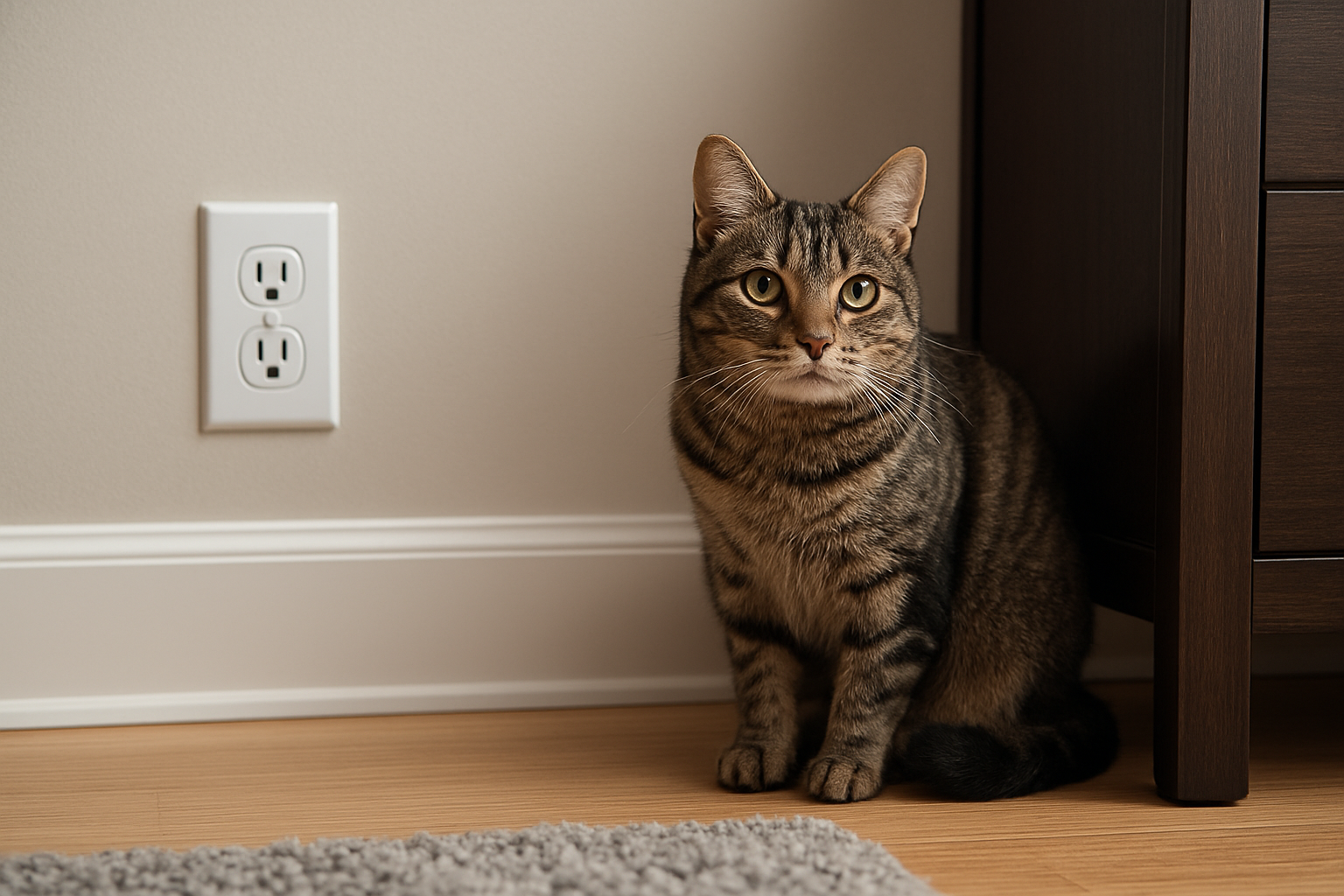
Cat-proofing is easiest when you do it like a home inspection. Walk into each space at cat height and ask, “What can I climb, chew, lick, tip, squeeze into, or knock off?” Kitchens hide the obvious dangers: hot stovetops, dangling cords, and trash full of tempting smells; bathrooms feature floss, hair ties, and medicines; living rooms have blind cords and top-heavy plants. Emergency veterinarians frequently cite lilies as a leading indoor poison for cats, and it bears repeating that all parts of true lilies can be deadly, even the pollen. A single chewed leaf can cause kidney failure, so identify and remove risky plants now, not later.
Meanwhile, micro-hazards hide in plain sight. Detergent pods dissolve quickly in saliva, so keep them in locking containers high on shelving. Socks, threads, and rubber bands can become foreign bodies that require surgery, which is as stressful as it sounds. And do not underestimate windows. Tilt-and-turn windows can be deceptively open, and cats can squeeze through gaps you thought impossible. Secure windows with screens and limit stops, and add balcony netting if you have any height exposure. Finish with a carrier check, because a carrier you can reach in 10 seconds can cut emergency stress in half.
| Room | Common Hazard | Quick Fix | Why It Matters |
|---|---|---|---|
| Kitchen | Stovetop heat, open trash, stringy foods | Stove knob covers, latching trash can, cover hot plates | Burns and gastrointestinal obstructions are common emergencies |
| Living Room | Blind cords, unstable bookcases, toxic plants | Tie up cords, anchor furniture, remove lilies | Prevents strangulation, crush injuries, and poisoning |
| Bathroom | Medications, floss, cleaners | Lock cabinets, keep toilet lid closed, store cleaners high | Reduces ingestion and chemical exposure |
| Bedroom | Nightstand pills, hair ties, small jewelry | Use lidded trays, daily sweep, close drawers | Prevents choking and foreign body surgery |
| Home Office | Charging cables, plastic packaging | Cord sleeves, cable boxes, recycle packaging promptly | Stops electrocution and intestinal blockages |
| Laundry | Detergent pods, open washer/dryer | Locking container, door magnets to keep machines closed | Prevents chemical burns and entrapment |
| Balcony/Patio | Falls, plant ingestion | Netting, supervised time, safe-plant list | Reduces “high-rise syndrome” injuries and poisoning |
| Garage/Storage | Antifreeze (ethylene glycol), rodenticides | Lock chemicals, use pet-safe pest control | Antifreeze is highly palatable and extremely toxic |
- Weekly five-minute sweep: pick up strings, bands, and small plastic bits.
- Monthly plant audit: verify every plant on a cat-safe list.
- Seasonal screen test: gently push on each screen corner to ensure it is secure.
Budget Gear Picks: What to Buy, What to Skip
Great cat-proofing does not have to drain your wallet. In fact, many of the highest-impact changes cost less than a takeout dinner. Think priorities: prevent falls, stop poisonings, and tame the tangle of cords and cables. For falls, window screen clips and balcony netting are game changers. For poisons, look at latches for cleaners and a small safe or high bin for medications. For cords, a twenty-dollar bundle of cord covers and a cable management box works wonders. And here is a pro tip from the Mad Cat Man reviewers: buy a pack of felt pads and stick them under wobble-prone objects so your cat’s landings do not send things flying.
Note: Mad Cat Man does not sell products directly; we test and recommend items and include affiliate links to retailers where readers can purchase products.
Want to be extra thrifty? Use repurposed gear, but be picky. A secondhand carrier is fine if it is structurally sound with no sharp edges; a used litter box is less ideal due to odors locked into plastic. Skip cheap collars that are not breakaway, and avoid any aromatherapy oils or strong essential-oil diffusers around cats, as some can irritate airways or be toxic. At Mad Cat Man, we test gear across price tiers and publish clear buying guides, from litter mats to water fountains, with pros and cons in plain language and organized categories to make browsing easy. Here is a price snapshot you can use as a baseline while you shop.
| Category | Budget Pick (USD (United States dollars)) | Mid-Range (USD (United States dollars)) | Splurge (USD (United States dollars)) | What to Look For |
|---|---|---|---|---|
| Window Screen Locks | 8 to 20 | 20 to 35 | 40 to 70 | Metal hardware, easy install, firm clamp that resists push-out |
| Balcony Safety Netting | 20 to 45 | 50 to 90 | 100 to 180 | UV (ultraviolet) resistance, tight weave, sturdy anchors |
| Cabinet Latches | 6 to 15 | 15 to 25 | 30 to 45 | Tool-free or screw-in, adults can open easily, cat cannot |
| Cord Protectors | 10 to 20 | 20 to 35 | 40 to 60 | Thick PVC (polyvinyl chloride) or braided sleeves, chew-resistant |
| Furniture Anti-Tip Straps | 10 to 18 | 20 to 30 | 35 to 70 | Metal brackets, wall anchors included, high load rating |
| Breakaway Collar | 6 to 12 | 12 to 20 | 25 to 40 | Reliable safety clip, reflective band, quiet bell optional |
| Puzzle Feeder | 10 to 18 | 20 to 35 | 40 to 70 | Stable base, adjustable difficulty, easy to wash |
| Water Fountain | 25 to 45 | 50 to 90 | 100 to 160 | Dishwasher-safe parts, quiet pump, filter availability |
| Soft-Sided Carrier | 30 to 60 | 70 to 120 | 130 to 220 | Rigid frame, top and front entry, seatbelt loops |
Behavior Smarts: Training, Enrichment, and Scratch-Saving Tactics
Most “naughty” cat behavior is just natural cat behavior without a good outlet. Scratching keeps claws healthy and marks territory, so offer a tall post with a sturdy base and a horizontal cardboard scratcher. Place them where your cat already scratches rather than where you want them to scratch. To protect furniture, use double-sided training strips for two weeks and stand by with rewards. As soon as your cat hits the right post, praise and treat like you mean it. For counter-surfers, give a hefty cat tree near the action and reward perching there during meal prep. It is much easier to reinforce an alternative than fight a habit built on curiosity and food smells.
Training door manners is both safety and sanity. Put a mat by the door, and pay generously whenever your cat stays on it as you jiggle the handle. Three seconds becomes five, then ten. If your cat bolts, do a quiet reset, not a chase, which turns it into a game you will always lose. Daily play matters, too. A pair of ten-minute wand-toy sessions can turn a midnight parkour session into a nap. Many veterinary teams report that boredom links to destructive behaviors, weight gain, and stress-related issues. Rotate toys weekly, feed some meals via puzzle feeders, and create a “foraging box” with crumpled paper and treats. Behavior change is rarely magic; it is structure, repetition, and the right reinforcers.
Health, Prevention, and a Simple Home Maintenance Timeline

Safety is not only locks and latches. It is also the quiet routine items that prevent bigger issues. Parasite prevention, weight checks, dental care, and clean water make a huge difference over a cat’s long life. Many veterinarians recommend monthly flea prevention, regular worming based on regional risk, and vaccines appropriate to lifestyle, while senior cats benefit from more frequent checkups and blood work. Keep a simple note on your fridge or a calendar reminder on your phone. And if you ever needed a reason to scoop daily, here it is: subtle changes in clumps, color, or odor often hint at urinary or digestive issues before anything else seems “off.”
Home maintenance plays a role, too. Vacuuming reduces dust and allergens trapped in fur, regular filter changes on HVAC (heating, ventilation, and air conditioning) systems keep air quality steady, and washing bowls and fountains weekly keeps biofilm at bay. Test smoke and CO (carbon monoxide) detectors twice a year, and restock your first aid kit after any use. At Mad Cat Man, we publish preventive care checklists in our Health and Safety categories, plus veterinarian-informed guides on deworming, microchipping, and dental care so you can quickly find what is relevant to your cat’s age and lifestyle. Use this timeline as a practical starting point, then adjust with your veterinarian’s input.
| Task | Indoor-Only Cats | Outdoor/Leash Cats | Notes |
|---|---|---|---|
| Flea/Tick Prevention | Monthly or as advised | Monthly, year-round | Choose vet-recommended, never double-dose |
| Worming | Every 3 months or per risk | Every 1 to 3 months | Rotate products when recommended by your vet |
| Vaccines | Per vet schedule | Per vet schedule | Lifestyle-based; keep records in carrier |
| Dental Care | Daily brushing or dental diet; annual check | Same as indoor | Early tartar control reduces costly procedures |
| Weight Check | Monthly at home | Monthly at home | 30 to 40 percent of cats are overweight by estimates |
| Litter Box Service | Scoop daily, wash monthly | Scoop daily, wash monthly | 1 box per cat plus one extra, roomy and open |
| Water Fountain Clean | Weekly plus filter changes | Weekly plus filter changes | Biofilm forms fast; dishwash safe parts help |
| Plant Audit | Monthly | Monthly | Remove lilies; confirm every plant is cat-safe |
| Screen and Latch Check | Seasonally | Seasonally | Push-test screens, tighten furniture anchors |
How Mad Cat Man Makes This Easier
Overwhelmed by choices? That is common, especially for first-time pet parents who want to do everything right without spending a fortune. Mad Cat Man is run by experienced cat owners and product reviewers who test gear across budgets and write in plain language, then tuck each guide neatly into organized categories for easy browsing. Need a scratcher that actually saves your sofa, a comparison of Maine Coon furniture heights, or a safety check on humidifiers and plants? You will find product reviews and buying recommendations, behavior and training tips, health and preventive care guides, breed comparisons, and step-by-step how-tos in a structure that makes sense when you are short on time. When you are not sure what to buy, how to train, or which advice to trust, start with an article that is expert-backed and experience-based, then move confidently from there.
Here is a quick way to use our content like a pro: open two tabs, one for the room you are tackling and one for the relevant category. For kitchen and bathroom fixes, the Safety category has hazard checklists and plant guides; for enrichment and furniture, the Gear category splits by use-case and budget; for behavior issues like door-dashing or night zoomies, the Behavior category maps step-by-step training with troubleshooting tips. Our Health category covers worming, microchipping, and dental care with clear timelines you can print. And if you are researching breed quirks, such as Maine Coon space needs or senior-cat joint support, our Breed Guides connect temperament with practical setup advice. We built it this way so you can browse with purpose, not guesswork.
Bringing it all together: microchip and tag, secure exits, remove poisons, anchor heavy furniture, tame cords, and add daily enrichment. That is the heart of a safe, happy cat home.
Conclusion
Cat-proof once, breathe easier every day, and spend your energy on cuddles, not emergencies.
Imagine the next 12 months with fewer vet visits for preventable mishaps, more play, and a calmer routine that simply works because your home is designed for a cat’s instincts.
Which room will you start with today, and what one change from this veterinarian-informed cat advice list will make the biggest difference for your cat?
Additional Resources
Explore these authoritative resources to dive deeper into vet approved cat advice.
Master Cat-Proofing with Mad Cat Man
Explore organized categories that help cat owners and researchers make confident gear, behavior, and health choices with expert, experience-based guides and checklists.