
Table of Contents
- Belladonna Plant Poison: Symptoms, Timeline, and Toxic Parts
- Recognize the Plant: A Quick Identification Guide You Will Actually Use
- The Cat Owner’s 7-Step Emergency and Prevention Checklist
- What Veterinarians Do: Diagnosis, Treatment, and Recovery
- Make Your Space Cat-Safe: Safer Plants, Tools, and Habits
- Frequently Asked Questions About Belladonna and Cats
- Why Trust Mad Cat Man With Plant Safety?
- Your First Two Hours: Fast Do’s and Don’ts
- Final Thoughts Before You Go
This blog post may contain affiliate links. As an Amazon Associate I earn from qualifying purchases.
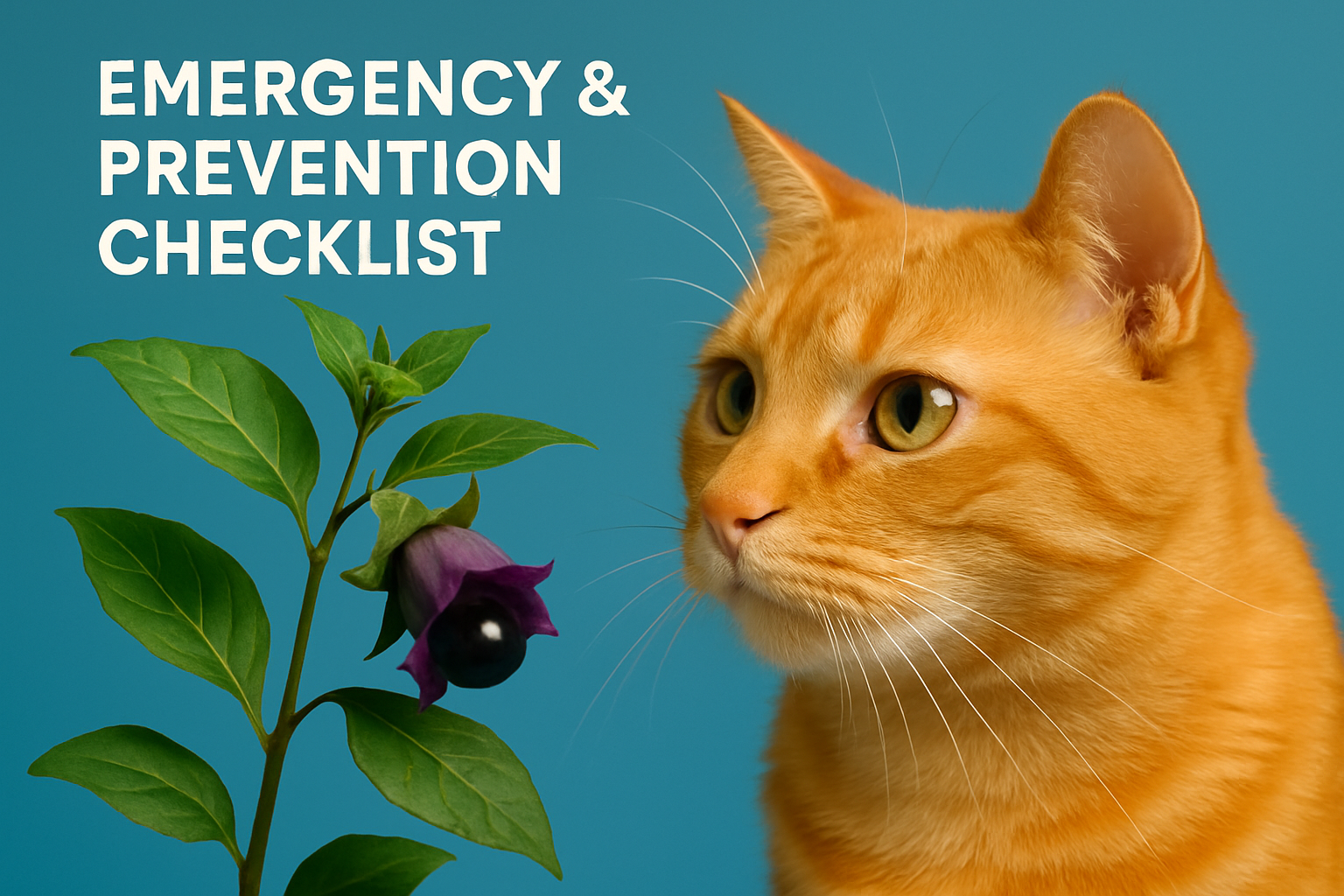
Belladonna Plant Poison: The Cat Owner’s 7-Step Emergency & Prevention Checklist
If you are here because you are worried about belladonna plant poison, take a breath. You are in the right place, and speed plus clear steps really matter. Deadly nightshade, also known as Atropa belladonna, can look like a harmless hedgerow beauty, yet it carries alkaloids that are highly toxic to cats. In the next few minutes, you will learn what to do right now, what to watch for, and how to set up your home and garden so this never blindsides you again.
A quick story to set the stage. My neighbor’s tabby, Pip, once mouthed a cluster of suspicious black berries on a country walk. We did not panic, we phoned the veterinarian, bagged a sample, and followed instructions step by step. Pip was treated quickly, monitored overnight, and came home purring. That calm, methodical plan became the backbone of the 7-step checklist below, refined with input from veterinarians and the real-world tips we share daily at Mad Cat Man.
Belladonna Plant Poison: Symptoms, Timeline, and Toxic Parts
Atropa belladonna contains tropane alkaloids, including atropine, scopolamine, and hyoscyamine. In cats, these cause an anticholinergic toxidrome, which sounds technical yet reveals itself in familiar ways. You might see sudden dilated pupils that barely constrict with light, dry mouth with drooling that looks foamy, a racing or irregular heartbeat, agitation or restlessness, vomiting, wobbliness, and in severe cases disorientation, collapse, or seizures. Because cats are small, even mild exposures can be significant, and timing is crucial from the very first sign.
| Time After Exposure | Common Signs | Action To Take |
|---|---|---|
| 15 to 60 minutes | Drooling or dry mouth, lip licking, vomiting, dilated pupils, restlessness | Remove remaining plant from reach, call a veterinarian, gather plant sample |
| 1 to 3 hours | Rapid heartbeat, agitation, wobbly gait, confusion, possible diarrhea or constipation | Prepare for clinic visit, keep a symptom log, follow veterinary directions |
| 3 to 12 hours | Potential worsening of neurologic signs, dehydration risk, temperature changes | Hospital monitoring often recommended, intravenous fluids may be used |
| 12 to 24 hours | Stabilization with care, gradual normalization of pupils and behavior | Continue monitoring and hydration as directed by the veterinarian |
Every part of the belladonna plant is toxic to cats, including leaves, stems, flowers, and especially the ripe black berries and thick roots. Fresh and dried material can be dangerous, and even plant-infused teas or homemade tinctures pose a risk. Plants consistently rank among the top household toxins reported to veterinary poison services each year, with a notable percentage of calls linked to outdoor ornamentals. That is the sobering news. The reassuring part is that fast action and supportive treatment often lead to full recovery in cats that get help early.
- Risk hotspots include hedgerows, woodland edges, and untended garden corners.
- Do not trust the old rule that animals avoid what is harmful. Curious cats test with their mouths.
- Assume dried or wilted plant parts remain hazardous, especially to kittens.
- Never rely on home remedies. Call a veterinarian immediately if exposure is possible.
Recognize the Plant: A Quick Identification Guide You Will Actually Use
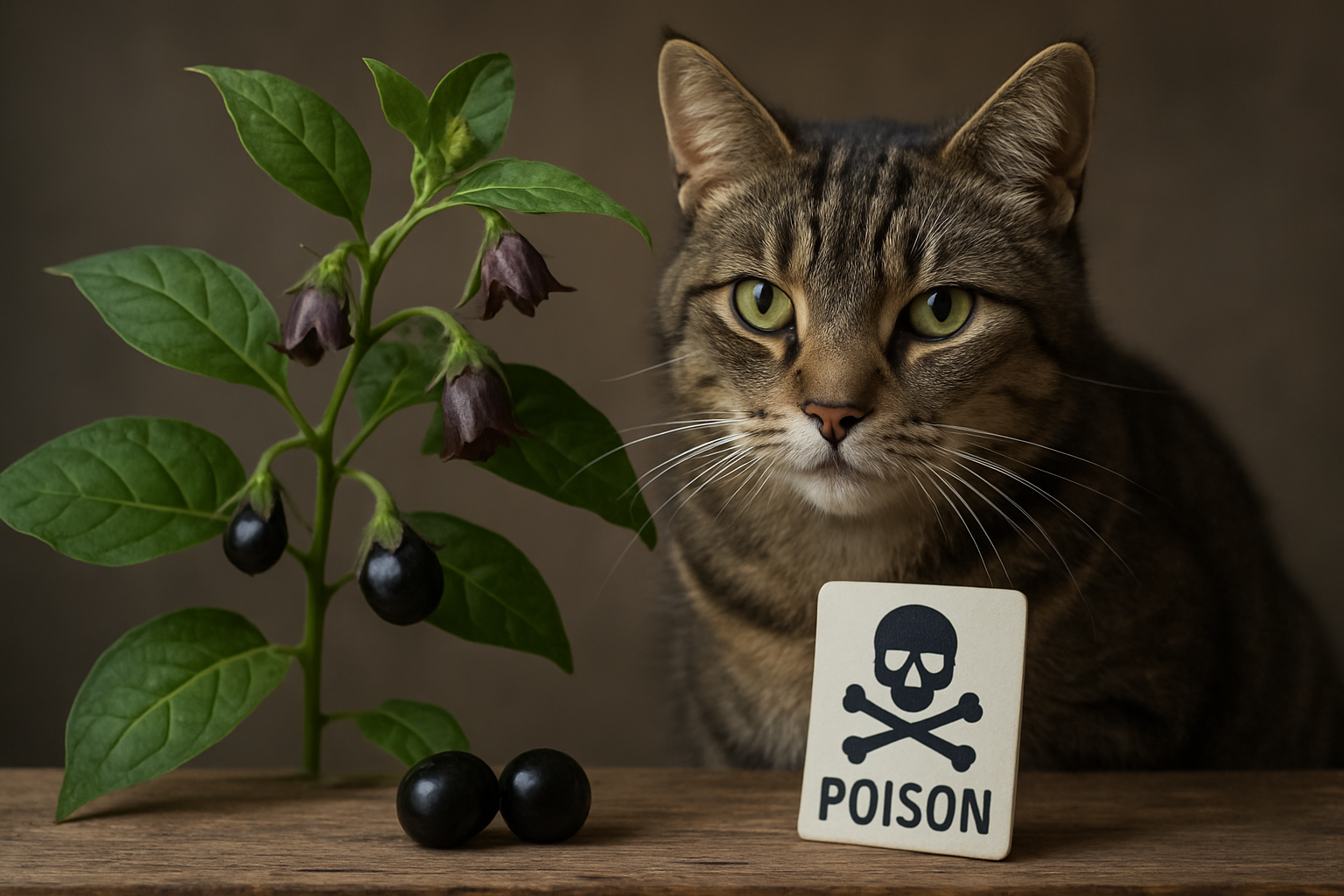
Could you spot deadly nightshade on a walk or in a weedy patch of your garden? The plant grows as a bushy perennial with matte green leaves, drooping bell-shaped flowers that are purple to brownish, and glossy black berries that look like tiny cherries set in a green star-shaped calyx. Belladonna is often confused with other nightshades or with pokeweed and elderberry. A few pattern cues can help you decide quickly whether to remove your cat and snap a sample photo for your veterinarian.
Watch This Helpful Video
To help you better understand belladonna plant poison, we’ve included this informative video from Patrick Kelly. It provides valuable insights and visual demonstrations that complement the written content.
| Feature | Atropa belladonna | Typical Lookalikes | Key Difference |
|---|---|---|---|
| Flowers | Bell-shaped, purple to brown, drooping | Bittersweet nightshade has purple flowers with yellow centers | Shape and color are distinct, belladonna flowers look like small bells |
| Berries | Glossy black, round, each with a green star-like calyx | Pokeweed berries form on clustered racemes, elderberries are small in umbels | Belladonna berries appear singly, not in large clusters |
| Leaves | Ovate, soft, somewhat large, arranged alternately | Many shrubs have serrated leaves, belladonna leaves are usually smooth-edged | Look at the edges and size, belladonna leaves are broad and smooth |
| Habitat | Edges of woods, hedgerows, sometimes in gardens | Lookalikes overlap but often prefer wetter ditches or climbing supports | Location is a clue, not proof, always verify more than one feature |
When in doubt, move your cat away, take clear photos of leaves, flowers, and berries, then ask your veterinarian for guidance. Plant identification apps can help, yet they can also be wrong, so treat them as a starting point only. Local extension services and native plant groups can confirm identity from photos. If you confirm belladonna on your property, removal with protective gloves and safe disposal is wise. Keep cats indoors during removal and bag plant parts securely to avoid accidental access.
- Memory trick: a drooping bell flower and a single glossy black berry wearing a green star hat.
- Shiny black cherry look is suspicious if the plant is bushy and low to medium height.
- If you are not sure, assume toxic until proven otherwise and call your veterinarian.
The Cat Owner’s 7-Step Emergency and Prevention Checklist
This is the simple framework I wish every cat parent knew by heart. Print it, save it in your phone, or stick it on the fridge. The aim is to reduce panic, gather the right information fast, and give your veterinarian everything needed to help your cat as quickly as possible. If your cat is symptomatic or you know ingestion occurred, go to your veterinarian now and read the rest on the way if safe to do so.
-
Move your cat to safety and remove access.
Gently pick up your cat and place them in a quiet room. Using gloves if possible, remove any plant bits from the mouth with a damp cloth. Do not use salt, hydrogen peroxide, milk, or activated charcoal unless a veterinarian instructs you to do so. Wipe whiskers and paws so they do not self-groom more plant residue. -
Call a veterinarian immediately.
Share your cat’s weight, age, symptoms, time since exposure, and any medications. If your regular clinic is closed, contact an emergency clinic that operates around the clock, meaning 24 hours a day, 7 days a week. You can also contact a veterinary poison service for step-by-step guidance while you travel to care. Fees may apply. -
Gather a sample and take photos.
Place a few leaves or berries in a bag or take clear, close photos of the plant. If your cat vomits, save a small sample in a sealed bag in case your veterinarian wants to test it. Note the time of each event. -
Do not induce vomiting unless told to do so by a veterinarian.
Inducing vomiting without instruction can cause aspiration pneumonia or worsen dehydration. Avoid home antidotes and essential oils. Keep fresh water nearby, but do not force fluids. -
Start a brief symptom log.
Write down the time, behavior changes, appetite, pupil size, coordination, and heart or breathing rate if you can count calmly for 15 to 30 seconds and multiply. Bring that log to the clinic. Small details really help. -
Prepare for transport.
Use a secure carrier, add a light towel over the top to reduce stress, and bring the plant sample and your symptom notes. If you are alone, do not delay transport for more photos or cleanup. Your veterinarian can handle the rest. -
Prevent the next scare.
Once your cat is safe, remove toxic plants, add cat-safe greens like wheatgrass, and use deterrents around garden borders. Consider raised planters or plant cages. Teach a gentle leave cue, and enrich with play so plants are less tempting.
| Resource | Contact | Availability | What They Provide |
|---|---|---|---|
| Your primary veterinarian | Saved in your phone | Clinic hours vary | Immediate guidance, clinic treatment, follow-up |
| Nearest emergency veterinary hospital | Map before you need it | Often 24 hours a day, 7 days a week | Urgent decontamination, monitoring, advanced care |
| ASPCA Animal Poison Control Center | 1-888-426-4435 | 24 hours a day, 7 days a week | Poison triage, tailored advice, coordination with veterinarians |
| Pet Poison Helpline | 1-855-764-7661 | 24 hours a day, 7 days a week | Poison triage, risk assessment, treatment protocols for clinics |
At Mad Cat Man, we organize essential safety steps like this into printable checklists and clear guides, so you are never scrambling for answers. You will find behavior tips to teach a reliable leave cue, shopping checklists for carriers and deterrents across budgets, and safety-focused articles that make plant choices simple. Our goal is the same as yours, a happy cat and a calm home with fewer emergencies.
What Veterinarians Do: Diagnosis, Treatment, and Recovery
At the clinic, your veterinarian will start with a history, a physical exam, and often monitoring of heart rhythm and temperature. If ingestion was recent, they may perform careful decontamination, sometimes using medications to protect the stomach or to control vomiting, and activated charcoal only when appropriate and safe. Intravenous fluids support circulation and kidney function, sedatives can calm agitation, and medications help with heart rhythm or seizures if present. In severe anticholinergic cases, veterinarians may consider specific agents that help counteract those effects, used only under close supervision.
| Treatment | Purpose | Notes |
|---|---|---|
| Careful decontamination | Reduce further absorption of toxins | Only when risk is lower than the benefit and under veterinary direction |
| Intravenous fluids | Maintain hydration and organ perfusion | Supports kidneys and helps stabilize blood pressure |
| Antiemetics and gastroprotectants | Control vomiting and protect stomach lining | Improve comfort and reduce complications |
| Cardiac and neurologic monitoring | Watch for dangerous rhythm or seizure activity | Guides medication choice and dosing |
| Targeted antidotal therapy | Counter severe anticholinergic effects in select cases | Used by veterinarians with strict monitoring when indicated |
Many cats stabilize within the first day with prompt veterinary attention, then rest quietly at home. Expect sleepy behavior for a short period, thirst changes, and appetite fluctuations as the body resets. Your take-home plan may include specific feeding times, litter box monitoring, and a short follow-up call. If at any point you see worsening confusion, repeated vomiting, or unusual weakness, return to the clinic immediately. Early rechecks save lives and reduce costs, and your veterinarian would rather see a false alarm than a late deterioration.
Make Your Space Cat-Safe: Safer Plants, Tools, and Habits
Plant safety is not about banishing green from your life. It is about making smart swaps and using simple tools so your cat has no reason to experiment with risky leaves and berries. I like to think of it as a home and garden upgrade, one that makes your place look great and dramatically lowers the chance of emergency trips. Mad Cat Man publishes product reviews and buying recommendations across different budgets, plus how-to tutorials and shopping checklists that make these changes painless to implement.
| Swap This Risk | For This Cat-Friendly Option | Why It Helps | Care Notes |
|---|---|---|---|
| Belladonna or other toxic nightshades | Spider plant, Chlorophytum comosum | Non-toxic to cats and easy to grow | Occasional nibbling is common, offer cat grass to divert chewing |
| Toxic ornamental shrubs with berries | Areca palm, Dypsis lutescens | Tropical vibe without toxic berries | Bright light, consistent moisture |
| Unknown hedgerow plants | Boston fern, Nephrolepis exaltata | Lush, safe fronds for visual interest | Likes humidity, gentle misting is useful |
| Tempting garden beds | Cat grass planter, wheatgrass or oat grass | Approved chewing outlet that reduces curiosity | Reseed every few weeks for fresh growth |
- Place risky plants behind barriers or outside cat zones. Raised planters and hanging baskets help.
- Use motion-activated pet-safe deterrents at garden borders if your cat roams supervised outdoors.
- Add vertical cat furniture and daily play to reduce boredom chewing. Ten minutes, twice a day, works wonders.
- Choose a cool-mist humidifier with an enclosed tank and no essential oil tray. Many essential oils are unsafe for cats, so avoid diffusing them entirely.
Need help choosing the right planter barriers, deterrents, or safe plants for your budget and space? Mad Cat Man curates safety and product-suitability guides with expert-backed tips, so you can buy with confidence. Our content is organized into clear categories, from behavior and training to breed guides like our Maine Coon articles, so you can find what you need in seconds rather than doom-scrolling for hours.
Frequently Asked Questions About Belladonna and Cats
How much belladonna can harm a cat? There is no safe amount. Because body weight is low, even small bites can cause symptoms. Assume toxic and call a veterinarian right away. Trying to calculate a safe dose wastes precious time.
Will my cat always vomit after eating a toxic plant? Not always. Some cats show neurologic signs, pupil changes, or rapid heartbeat before any stomach upset. That is why a symptom log and quick veterinary contact are so important.
Does cooking, drying, or steeping the plant make it safe? No. The alkaloids are still active. Teas, tinctures, or dried herbs prepared from deadly nightshade remain dangerous for cats and should never be in a cat household.
What other plants act like deadly nightshade? Jimsonweed and angel’s trumpet contain related alkaloids and can trigger similar anticholinergic signs. The safest policy is to identify all plants on your property and remove any confirmed toxic species from cat areas.
What if my veterinarian is closed? Seek an emergency clinic that operates around the clock, meaning 24 hours a day, 7 days a week, and call a veterinary poison service for interim guidance while you travel. Bring a plant sample and your notes.
Are there long-term effects? With fast treatment, most cats recover completely. Complications can occur if vomiting leads to aspiration or if dehydration is severe. Your veterinarian will guide rechecks to make sure recovery stays on track.
Why Trust Mad Cat Man With Plant Safety?
Mad Cat Man is run by experienced cat owners, product reviewers, and animal enthusiasts who live this every day. We publish vet-approved guides, step-by-step how-tos, breed comparisons, behavior tips, and safety and product-suitability content that make complex topics simple. Whether you are a first-time pet parent staring at a fussy eater, a long-time cat person setting up a new garden, or a careful shopper comparing carriers, we help you make confident choices. Readers tell us our organized categories and practical checklists cut through noise and reduce those what-do-I-do-now moments that raise your heart rate at 2 a.m.
Our promise is straightforward. We test, we ask experts, we translate jargon, and we show you exactly what to buy and what to do. That is how we help cat owners who feel overwhelmed choose the right supplies, understand behavior, and find trustworthy health and safety information quickly. And when a scary topic like deadly nightshade pops up, you will have a clear plan and a map of safer alternatives ready to go.
Medical disclaimer: This article is for educational purposes and does not replace veterinary diagnosis or treatment. If you suspect poisoning, contact a veterinarian or a veterinary poison service immediately.
Your First Two Hours: Fast Do’s and Don’ts
- Do move your cat to a calm room with dim light, then call a veterinarian.
- Do bag a plant sample and note the time and any symptoms you observe.
- Do keep your cat cool and quiet. Stress can worsen heart rate spikes.
- Do not induce vomiting, give milk, or try human medicines. Wait for veterinary direction.
- Do not assume your cat will be fine if they seem “normal” after a nibble. Signs can be delayed.
- Do prepare for transport early, even while awaiting a callback, so you can leave fast if advised.
Two practical extras I always keep on hand for plant emergencies: a sealable bag for samples, plus a simple notebook or notes app template with fields for time, behavior, appetite, pupils, and any vocalizations. These tiny tools can save minutes and give your veterinarian exactly what they need to triage and treat efficiently.
Quick recap you can screenshot: Separate cat, call a veterinarian, collect sample and photos, do not induce vomiting, track symptoms, transport early, plan prevention. Follow that sequence and you are doing right by your feline friend.
Final Thoughts Before You Go
A clear plan turns a scary moment into a manageable checklist you can follow under pressure.
Imagine your next year with safe plants, smart barriers, and a cat that no longer treats the garden like a buffet. With a little prep and the right guidance, peace of mind becomes the default.
What is one change you will make today so belladonna plant poison is never more than a passing worry?
Additional Resources
Explore these authoritative resources to dive deeper into belladonna plant poison.
Mad Cat Man Guides for Plant Safety and Confident Cat Care
Get clear, experience-based safety guides and trusted product picks that help cat parents make confident, stress-free decisions.