
Table of Contents
- Is dracena toxic to cats? The science, the spelling, and the species
- 9 warning signs your cat may have chewed Dracaena
- Vet-approved first aid for Dracaena exposure: do this now
- Safer houseplant swaps that still look lush
- Prevention playbook: train the plant-curious cat
- What your veterinarian may do and how recovery usually looks
- Where Mad Cat Man fits in your plant-safe cat life
- Final thoughts
This blog post may contain affiliate links. As an Amazon Associate I earn from qualifying purchases.
Dracena Toxic to Cats: 9 Warning Signs, First Aid Tips & Safer Houseplant Swaps
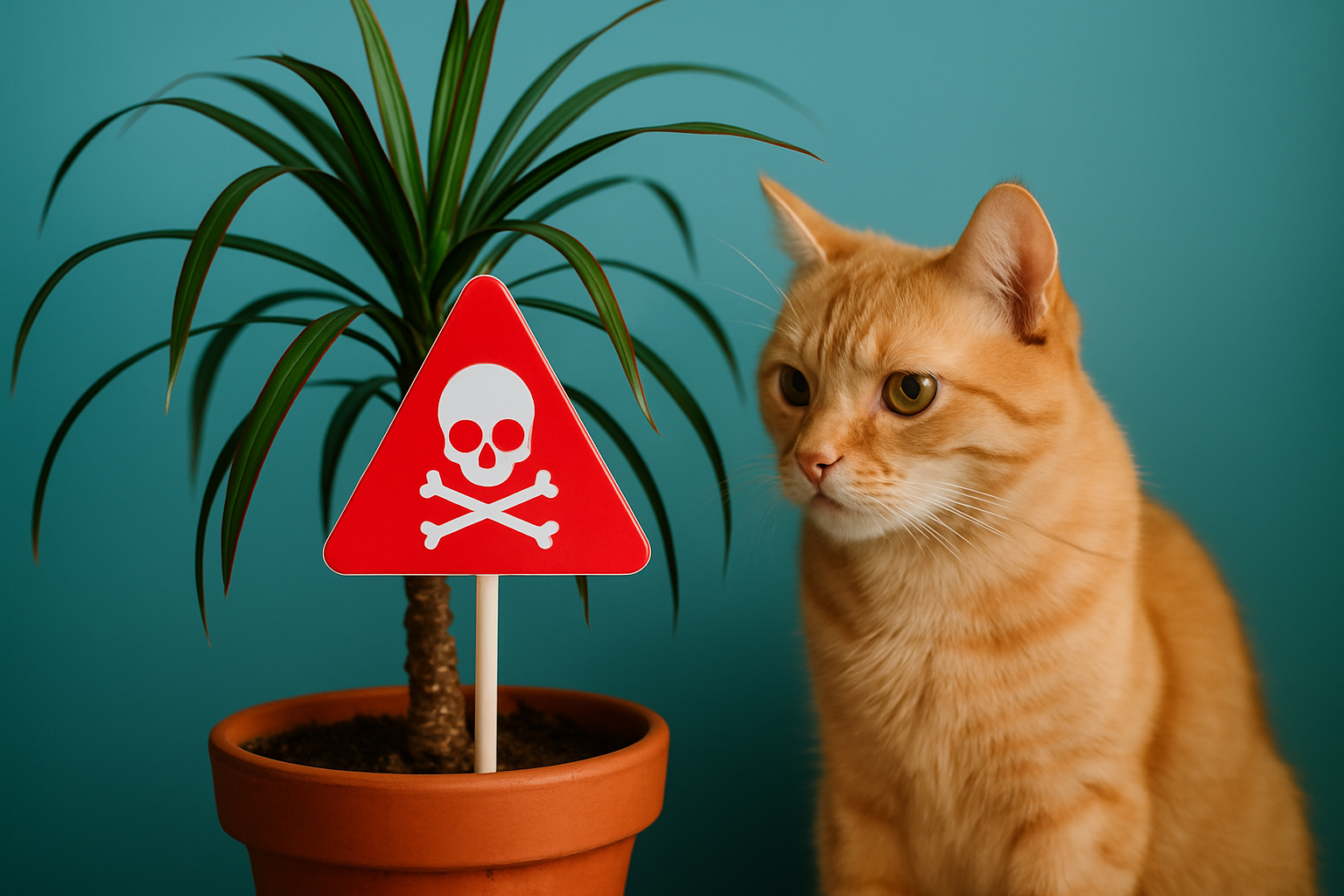
If you are Googling dracena toxic to cats, you are already doing the right thing for your whiskered roommate. Short answer first so you can act quickly if needed. Most Dracaena species (often misspelled “dracena”) are toxic to cats because they contain naturally occurring saponins that irritate the gastrointestinal (GI) tract and sometimes the nervous system. A few years back my tabby, Clover, nibbled a Dracaena marginata while I was on a video call, and the sudden drooling had me phoning our veterinarian (vet) within minutes, which likely saved us a much longer, scarier night.
Before we dive into symptoms and first aid, a quick mindset check helps. Cats explore the world with their mouths, and many are magnetically drawn to ribbon-like leaves that sway like toys. That does not make you a bad pet parent, it makes your cat a normal cat. The good news is that Dracaena toxicity is usually mild to moderate when addressed early, and with smart prevention and some cat-safe plant swaps, you can keep your home green and your cat safe without living in a sterile, plantless world.
Is dracena toxic to cats? The science, the spelling, and the species
Let us be clear on terms because search engines and plant tags can be confusing. The plant genus is spelled Dracaena, but many people search for “dracena” which still points to the same group of popular houseplants such as dragon tree, corn plant, and lucky bamboo. Dracaena species contain steroidal saponins, bitter compounds that can foam when mixed with water, and in cats they commonly trigger vomiting, drooling, and tummy pain, and in some cases wobbliness or dilated pupils. According to toxic plant lists from the American Society for the Prevention of Cruelty to Animals (ASPCA), Dracaena is considered toxic to cats, while most exposures resolve with supportive care if addressed promptly.
Severity depends on the species, how much was chewed, and your cat’s size and sensitivity. Kittens, seniors, and cats with underlying conditions are more susceptible, and chewing on leaves often results in a higher dose than a single lick. Lucky bamboo is not actually bamboo at all, it is Dracaena sanderiana, and it carries the same saponin risk as its cousins despite the friendly name. For perspective, plant-related calls are a regular category for animal poison hotlines, and Dracaena features often because it is a common, affordable, and highly decorative indoor plant that invites a chomp. The table below summarizes what cat parents most frequently have at home.
| Dracaena Species | Common Name | Toxic Part | Typical Reaction in Cats | Relative Risk | Notes |
|---|---|---|---|---|---|
| Dracaena marginata | Dragon Tree | Leaves, stems | Vomiting, drooling, anorexia, dilated pupils | Moderate | Thin, ribbon leaves are enticing; common in offices and homes |
| Dracaena fragrans | Corn Plant, Mass Cane | Leaves, cane | Vomiting, lethargy, poor appetite | Moderate | Large, cane-like stalks; often floor-standing so easy access for cats |
| Dracaena sanderiana | Lucky Bamboo | Leaves, stems | GI upset, drooling, sometimes incoordination | Moderate | Sold in water or gravel; looks harmless but is still a Dracaena |
| Dracaena reflexa | Song of India | Leaves | Vomiting, depression, dilated pupils | Moderate | Variegated leaves can draw cats’ attention |
No matter the species, treat Dracaena ingestion as a genuine but manageable situation. Your priorities are to stop access, rinse the mouth, and call your veterinarian (vet) or the Pet Poison Helpline (PPH) for case-specific guidance. The faster you act, the less likely your cat will experience prolonged discomfort or dehydration, and the less likely you will need an emergency room (ER) visit after hours. Next up, the exact signs to watch for so you can decide whether to monitor at home or seek immediate care.
9 warning signs your cat may have chewed Dracaena
Cats do not always confess, so you will be reading the body language and the litter box like a detective. Start with the plant itself and look for torn leaves or fresh bite marks, then scan your cat for the following red flags that tend to appear within 15 minutes to 3 hours after chewing. Not every cat shows every sign, and some are subtle at first, so a quiet, cozy cat who hides after nibbling the fern-shaped plant on your shelf deserves a closer look. Keep a notepad handy and jot what you see with approximate times because that timeline helps your veterinarian (vet) decide on treatment.
Watch This Helpful Video
To help you better understand dracena toxic to cats, we’ve included this informative video from AnimalWised. It provides valuable insights and visual demonstrations that complement the written content.
- Vomiting or retching, especially with foamy fluid that may have green flecks from leaf material.
- Excessive drooling or lip-smacking, sometimes pawing at the mouth as if something tastes bitter.
- Loss of appetite or refusing favorite treats despite usually being food motivated.
- Depression or unusual quietness, often coupled with hiding in a dark spot away from people.
- Wobbly gait or mild incoordination, particularly after larger ingestions or in sensitive cats.
- Dilated pupils that persist in normal light, giving a wide-eyed appearance.
- Abdominal discomfort, which can look like hunching, restlessness, or sensitivity when touched.
- Soft stool or diarrhea, occasionally with a plant-like smell from poorly digested leaves.
- Increased thirst from fluid loss or mild dehydration if vomiting has been frequent.
Some cats bounce back quickly while others seem “off” for a day. As a rule of thumb, persistent vomiting, inability to keep water down, severe lethargy, or any breathing change are urgent and deserve a same-day call to your veterinarian (vet) or a direct visit to an emergency room (ER). If you have a kitten, a senior, or a cat with existing kidney, liver, or heart disease, consider a lower threshold for professional care because their buffers are smaller. When in doubt, call the Pet Poison Helpline (PPH), as they can talk you through your next steps while you are still monitoring at home.
Vet-approved first aid for Dracaena exposure: do this now
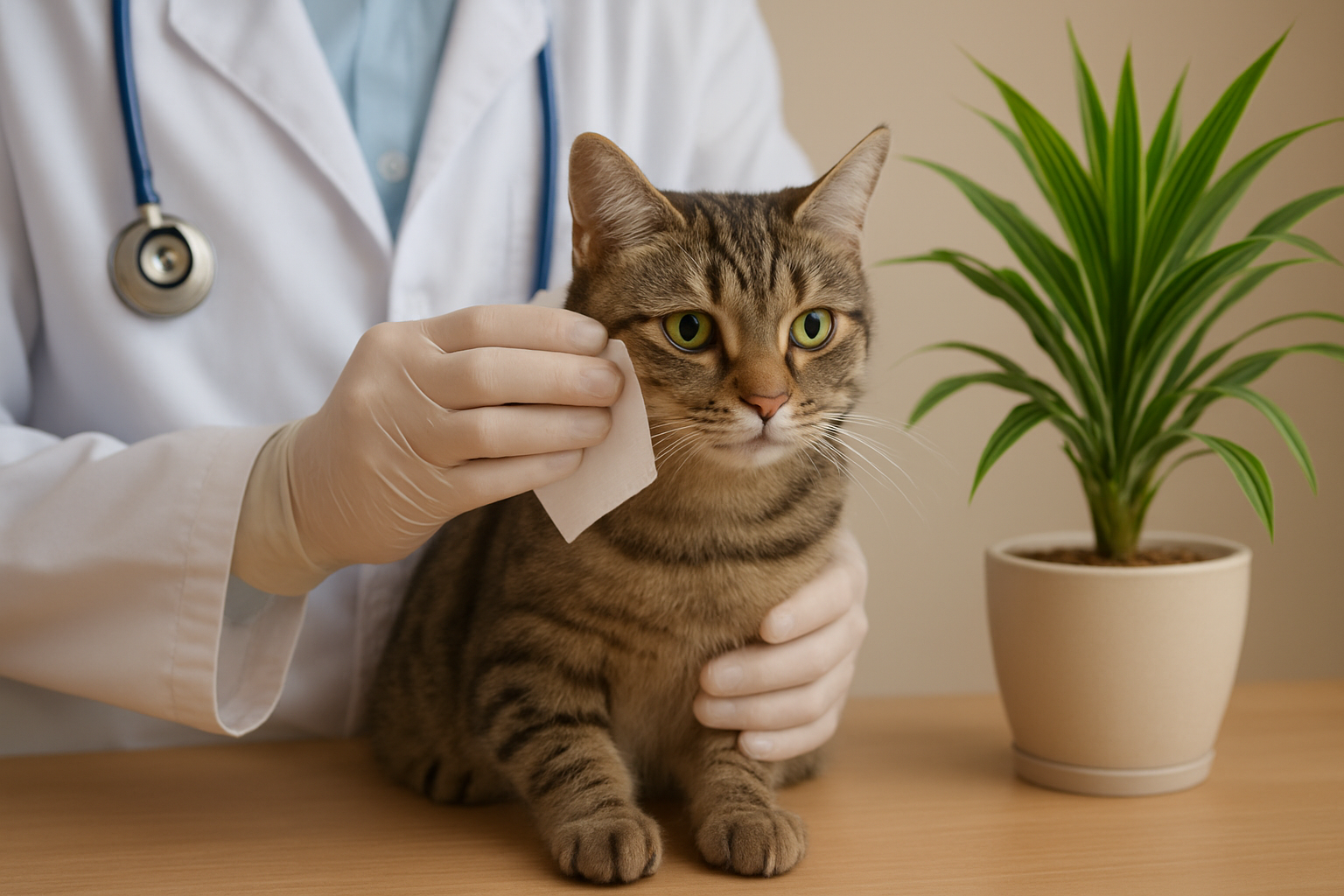
This is the practical, step-by-step plan I wish every plant-loving cat owner had pinned to the fridge. The golden rule is simple. Remove access, rinse the mouth, monitor, and get personalized advice from a veterinarian (vet) or the Pet Poison Helpline (PPH). Avoid well-meant internet hacks like inducing vomiting with hydrogen peroxide, which is not recommended for cats and can cause additional irritation or even ulcers.
- Stop the snack. Move the plant out of reach immediately and sweep or vacuum fallen leaves so your cat cannot go back for seconds.
- Rinse the mouth. Offer a small dish of fresh water, then gently wipe your cat’s gums and tongue with a damp cloth to remove bitter sap. Do not force water into the mouth.
- Offer a snack. A tiny portion of their usual food or a cat-safe treat can help bind irritants in the stomach, but do not push food if they feel nauseous.
- Call for guidance. Phone your veterinarian (vet) or the Pet Poison Helpline (PPH) with the plant name, how much might be missing, your cat’s weight, and symptoms so far.
- Save a sample. Place a leaf piece or a photo of the plant in a bag so the clinic can confirm identification if needed.
- Monitor closely. Note vomiting frequency, energy, appetite, and litter habits for the next 6 to 24 hours in case the clinic asks for an update.
- Avoid risky DIY. Do not give human medicines, milk, oils, or activated charcoal unless a veterinary professional explicitly instructs you to do so.
- Prepare for a visit if needed. If vomiting persists, your cat becomes very lethargic, or you spot blood, head to your clinic or an emergency room (ER).
| What You See | What It Means | Action to Take Now |
|---|---|---|
| Single vomit, otherwise normal | Mild GI irritation | Rinse mouth, offer water, call your veterinarian (vet) to report and monitor at home |
| Repeated vomiting or cannot keep water down | Moderate irritation and dehydration risk | Same-day exam recommended, consider emergency room (ER) if after hours |
| Severe lethargy, collapse, or breathing change | Potential serious reaction | Immediate emergency room (ER) visit |
Most cats improve within 12 to 24 hours with supportive care, especially when you intervene early. If your veterinarian (vet) advises a visit, they may give an anti-nausea shot, fluids under the skin, and a soothing stomach medication, and then send you home with instructions tailored to your cat. Keep your cat indoors, limit activity, and keep notes, because a clear timeline is gold for follow-up calls. And while you are waiting, you can already plan a safer plant setup, which we will cover next.
Safer houseplant swaps that still look lush
You do not have to choose between a leafy home and a healthy cat. Plenty of non-toxic plants offer the same sculptural look as Dracaena without the saponin risk. Favorites like parlor palm and spider plant give you height and movement, while peperomia and pilea bring that modern, tabletop charm. If you want a dracaena-like silhouette, try ponytail palm which is actually not a true palm, but its fountain of leaves scratches that same design itch with far less worry.
| Cat-Safe Plant | Look-Alike Appeal | Light & Water Needs | Why It Works for Cat Homes |
|---|---|---|---|
| Parlor Palm (Chamaedorea elegans) | Upright, airy fronds like a mini indoor palm grove | Medium light, evenly moist then dry slightly | Non-toxic, soft fronds unlikely to splinter, good floor plant |
| Spider Plant (Chlorophytum comosum) | Arching, ribbon leaves with variegation | Bright indirect light, moderate water | Non-toxic, fun for cats to bat at, hang high to reduce nibbling |
| Ponytail Palm (Beaucarnea recurvata) | Fountain of narrow leaves, sculptural base | Bright light, infrequent water | Non-toxic, dramatic look similar to Dracaena marginata |
| Boston Fern (Nephrolepis exaltata) | Lush, feathery foliage | Medium light, high humidity, consistent moisture | Non-toxic, great hanger to keep above paw level |
| Peperomia spp. | Compact, modern leaves in many shapes | Bright indirect, let top inch dry | Non-toxic, excellent shelf or desk plant with many cultivars |
| Haworthia spp. | Spiky-succulent aesthetic | Bright light, sparse water | Non-toxic, tough and tidy for sunny sills |
If your cat is a committed leaf-nibbler, pair safe plants with a dedicated “legal” salad bar. A fresh tray of cat grass or wheatgrass satisfies the natural urge to graze and can drastically reduce interest in your décor plants. At Mad Cat Man, our team’s product reviews and buying recommendations compare widely available grass kits, planters with protective grills, and clever elevated stands so you can pick solutions that match your space and budget. You will also find step-by-step how-tos and shopping checklists in our Safety and Home categories that make building a cat-safe plant corner refreshingly easy.
Prevention playbook: train the plant-curious cat
Prevention is not just about hiding plants, it is about making the cat environment so satisfying that leaves become boring. Think like a behaviorist and channel your cat’s need to climb, stalk, bat, and chew into approved outlets, then make risky plants less accessible and less rewarding. This two-lane approach is how we coach new pet parents in our Behavior and Training Tips category, and it works just as well for senior cats who have perfected the art of countertop mountaineering. Here is the simple plan we recommend to readers at Mad Cat Man, based on years of living with both jungle vibes and furry roommates.
- Give vertical options. Add window perches, cat trees, or sturdy bookshelves so your cat can survey the room without needing plant stands.
- Offer daily play. Schedule two short wand-toy sessions so your cat satisfies that swishy-leaf hunting drive with a toy, not your pothos.
- Set up a graze station. Keep a fresh tray of cat grass near the sunny spot where your cat hangs out, and praise them when they choose it.
- Place plants smartly. Group plants on high shelves, in macramé hangers, or inside wire cloches that still look stylish but block mouth access.
- Use mild deterrents. Many cats avoid citrus-scented cotton pads placed on soil, motion-activated air bursts, or sticky mats around stands.
- Teach “leave it.” Use clicker training for short, positive sessions; reward glances away from plants and reinforce calm on a nearby perch.
Shopping helps this plan come alive, and that is where Mad Cat Man shines for overwhelmed first-time caretakers. We publish product reviews and buying recommendations across toys, climbing furniture, planters with integrated guards, and grooming supplies to reduce hair ingestion that can blend with leaf chewing. Our content is organized into clear categories, from editorial health guides on dental care and worming to breed-specific comparisons such as our Maine Coon series, so you can find answers fast and act with confidence. When your home is set up for feline fun, Dracaena becomes less of a temptation and more of a décor choice you can consciously avoid.
What your veterinarian may do and how recovery usually looks
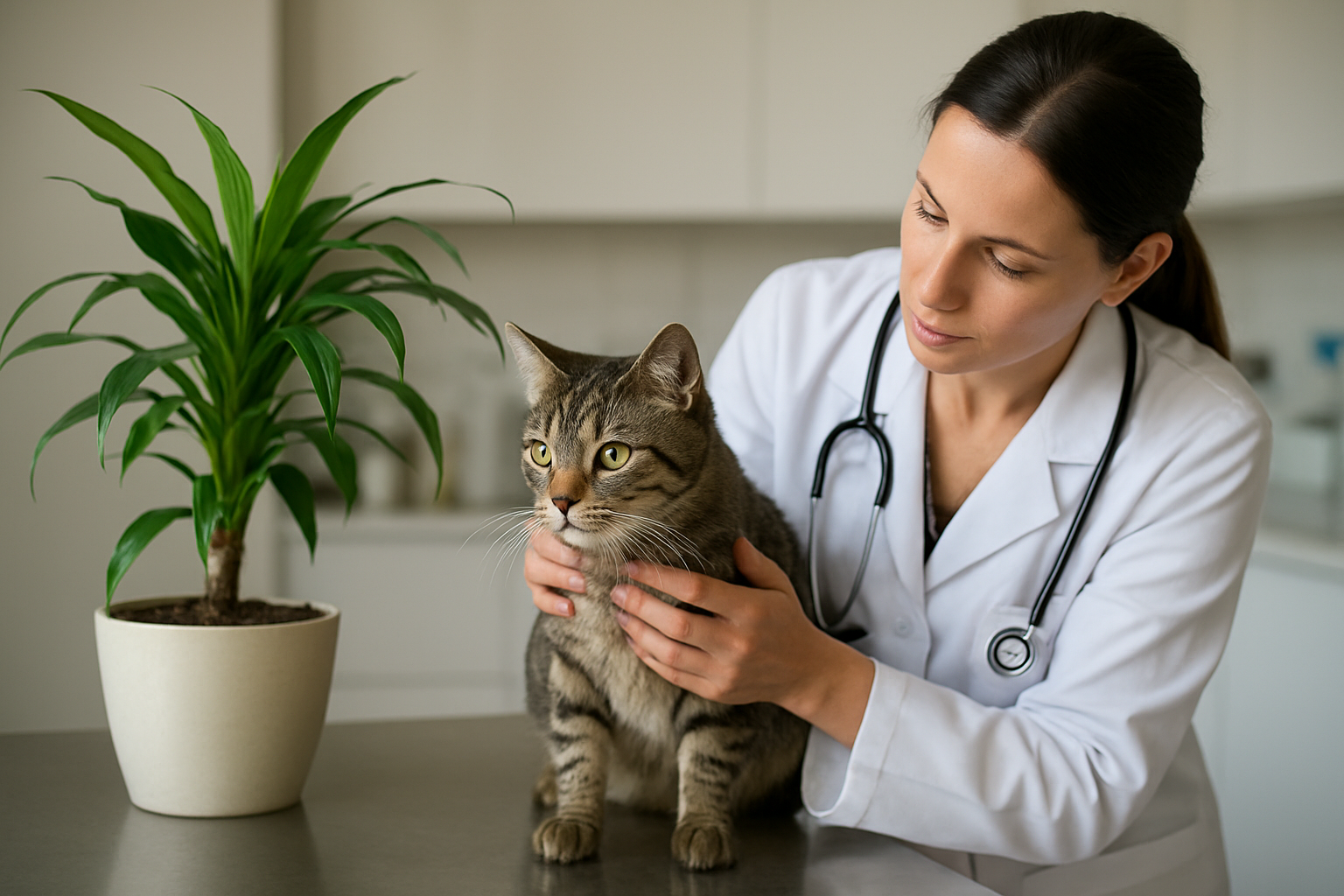
If you head to the clinic, expect pragmatic, comfort-focused care rather than dramatic procedures. Your veterinarian (vet) will check hydration, heart rate, gum color, and belly tenderness, and may recommend an anti-nausea medication and subcutaneous fluids to replace losses, which often turns a drooly, miserable kitty into a purring bread loaf within an hour. For larger ingestions or persistent signs, they may consider activated charcoal, bloodwork to check electrolytes, and in-clinic intravenous (IV) fluids until vomiting settles. Imaging such as radiographs (X-rays) is rarely needed unless the history is unclear or your cat may have eaten additional non-plant items like string.
| Common Clinic Step | Purpose | What You Do After |
|---|---|---|
| Antiemetic injection | Stops nausea and vomiting | Offer small sips of water, then bland food per vet instructions |
| Subcutaneous or intravenous (IV) fluids | Rehydrates and supports circulation | Monitor energy, litter box, and appetite at home |
| Gastroprotectants | Sooth irritated stomach lining | Give at scheduled times, prevent sudden diet changes |
| Observation period | Ensures symptoms trend in the right direction | Keep your cat rested, limit access to plants and rich treats |
Most cats bounce back within 24 to 48 hours and have an excellent prognosis, especially when ingestion was noticed early and care was started promptly. Costs vary widely by region and whether emergency room (ER) care is required, but catching things early usually means a brief visit and home care rather than hospitalization. If symptoms worsen after initial improvement, or if new signs appear such as bloody vomit or severe diarrhea, call your veterinarian (vet) back the same day for updated guidance. Finally, once your cat is stable, retire the Dracaena and try one of the cat-safe swaps above so you are not white-knuckling your next houseplant refresh.
Where Mad Cat Man fits in your plant-safe cat life
Mad Cat Man exists to make decisions like this easier by giving you trustworthy, practical, experience-based guidance in one place. Our team of seasoned cat owners and product researchers rigorously test and compare cat essentials, from food, toys, and furniture to grooming and safety gear, so you can buy once and buy right. We publish editorial health guides on preventive care such as microchipping and dental hygiene, friendly behavior and training advice that actually works in real homes, and step-by-step shopping checklists that remove guesswork. Whether you are raising a first kitten or juggling multiple breeds including big personalities like a Maine Coon, you will find organized categories and real-world tips that turn overwhelm into confident, calm cat care.
When readers ask whether Dracaena belongs in a cat household, our answer is simple. Choose safer plants, train your cat, and stock your home with products that make the safe choice the easy choice. We continuously update our safety and product-suitability content, including humidifiers, plants, and household gadgets, to reflect new research and hands-on testing. That way your next leafy addition looks great, your cat stays healthy, and your evenings are spent playing and relaxing rather than googling symptoms at midnight.
Friendly reminder: This article is educational and does not replace individualized veterinary care. If you suspect poisoning of any kind, contact your veterinarian (vet) or the Pet Poison Helpline (PPH) immediately.
Final thoughts
Dracaena can upset a cat’s system fast, but with quick first aid, smart prevention, and safer plant swaps, you can keep both the greenery and the purrs. In the next 12 months, imagine a home that is greener than ever yet totally cat-safe, where you spend less time worrying and more time playing. What small change will you make today so “dracena toxic to cats” becomes a solved problem in your home, not a late-night search?
Additional Resources
Explore these authoritative resources to dive deeper into dracena toxic to cats.
Make Safer Plant Choices with Mad Cat Man
Discover dracena toxic to cats guidance plus product reviews and buying recommendations to help every cat owner choose confidently across budgets.
Explore Picks