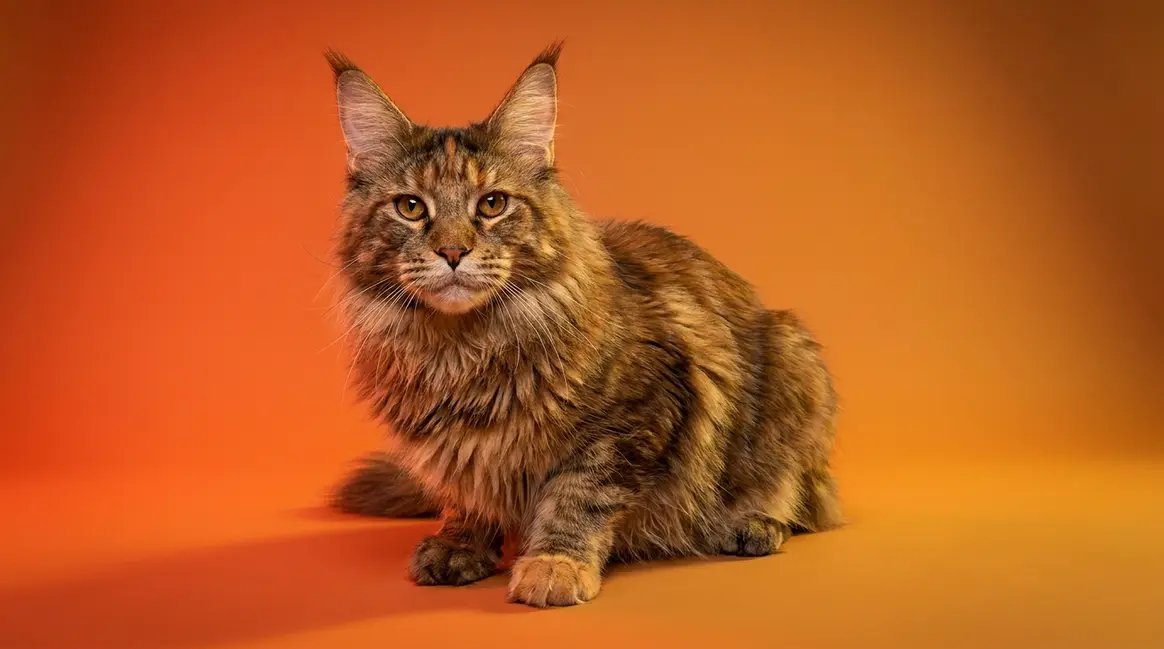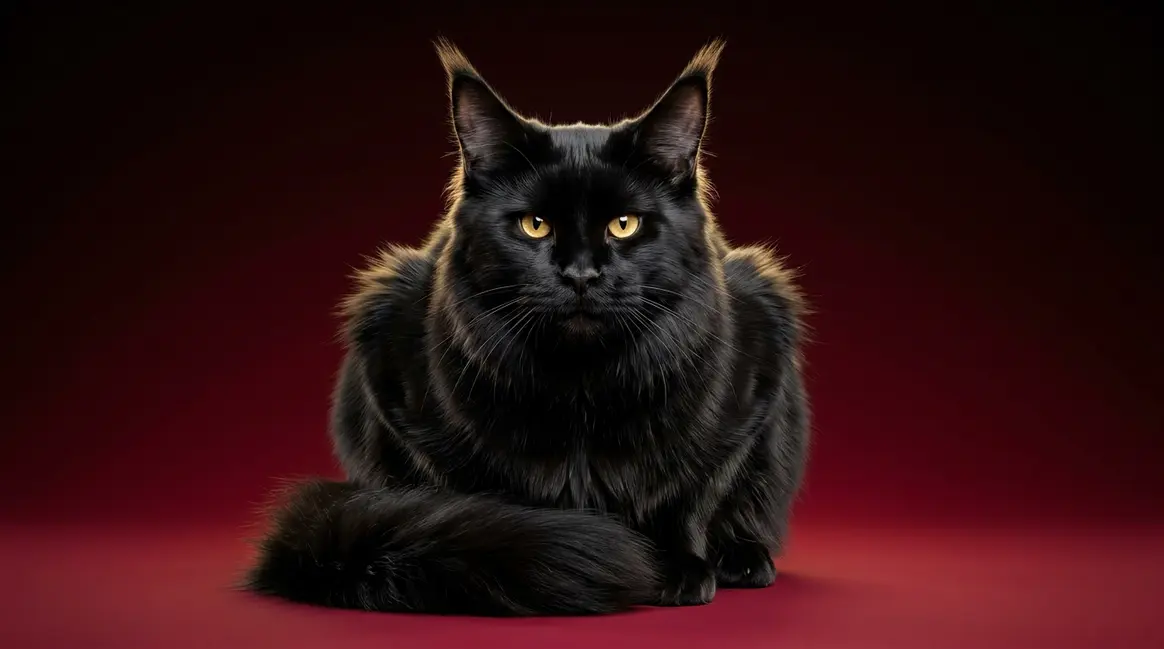

Most people see a black Maine Coon for the first time and immediately reach for their phone. That sleek, jet-black coat. Those tufted ears. That enormous, muscular frame. Male adults regularly reach 15–25 lbs — nearly three times the weight of an average domestic cat — and the effect is genuinely startling. You are essentially looking at a miniature panther in your living room.
But here’s what most breed guides won’t tell you: that magnificent black coat comes with specific challenges most first-time owners never see coming. There’s a little-known “rusting” effect that can turn a show-quality solid black coat reddish-brown. There are grooming demands that catch people completely off-guard. And the price gap between a pet-quality kitten and a show-quality black smoke variation can exceed $2,500.
This guide covers everything — from coat genetics and kitten development to verified current pricing and breeder red flags — so you can decide with complete confidence whether this majestic gentle giant belongs in your home.
The black Maine Coon is one of the largest domestic cat breeds, weighing up to 25 lbs, with a panther-like coat that comes in solid black, black smoke, and tuxedo varieties — and current kitten prices range from $1,000 to $4,000+.
- Coat rusting (“The Rust Trap”): Sun exposure and low dietary Tyrosine can turn a black coat reddish-brown — easily prevented with proper diet and indoor management
- Size: Males reach 15–25 lbs; females 8–12 lbs; full size takes 3–5 years to develop
- Personality: Gentle, social, and dog-like — follows owners room to room but rarely a “lap cat” due to sheer size
- Price range: $1,000–$2,500 for pet quality; $3,000–$4,000+ for show-quality or black smoke variations
- Grooming: 2–3 brushing sessions per week required; dander is highly visible on black fur
What Makes the Black Maine Coon Special?
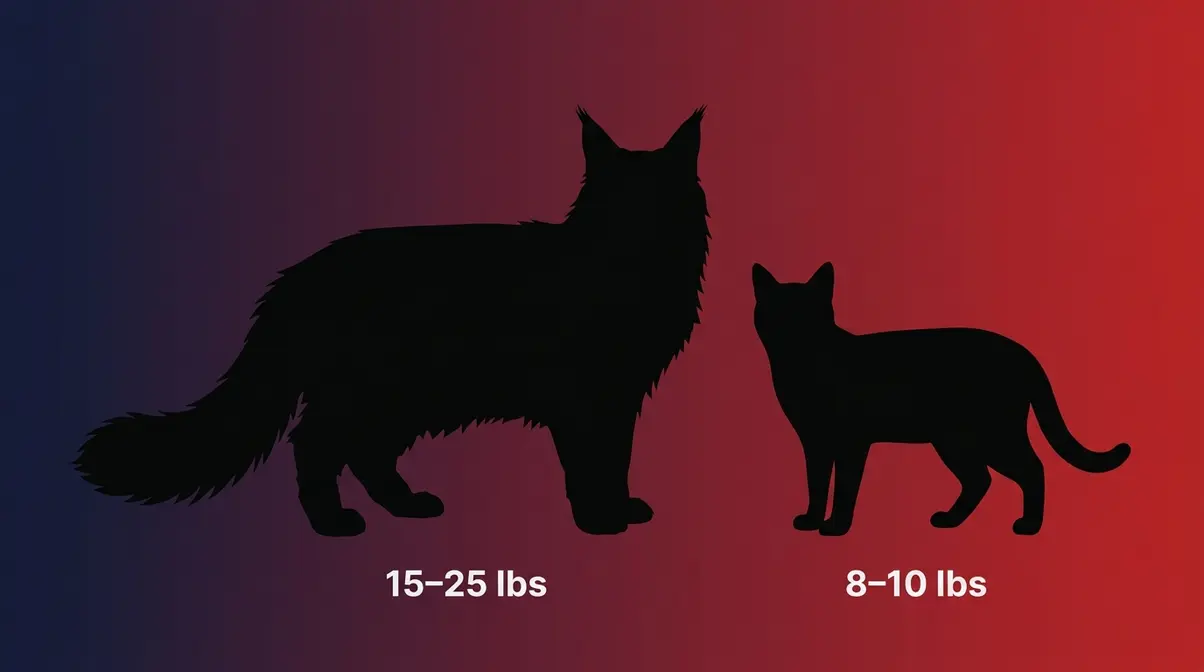
The black Maine Coon is a large, semi-longhaired domestic cat breed originating in North America, recognized for its rectangular body, tufted ears, bushy tail, and a coat so densely pigmented it can appear almost mirror-like in direct light. While there are many black Maine Coon facts and myths, their panther-like appearance is undeniably real. Among all Maine Coon color varieties, solid black and black smoke are among the most visually dramatic — and they come with specific care considerations no other color faces.
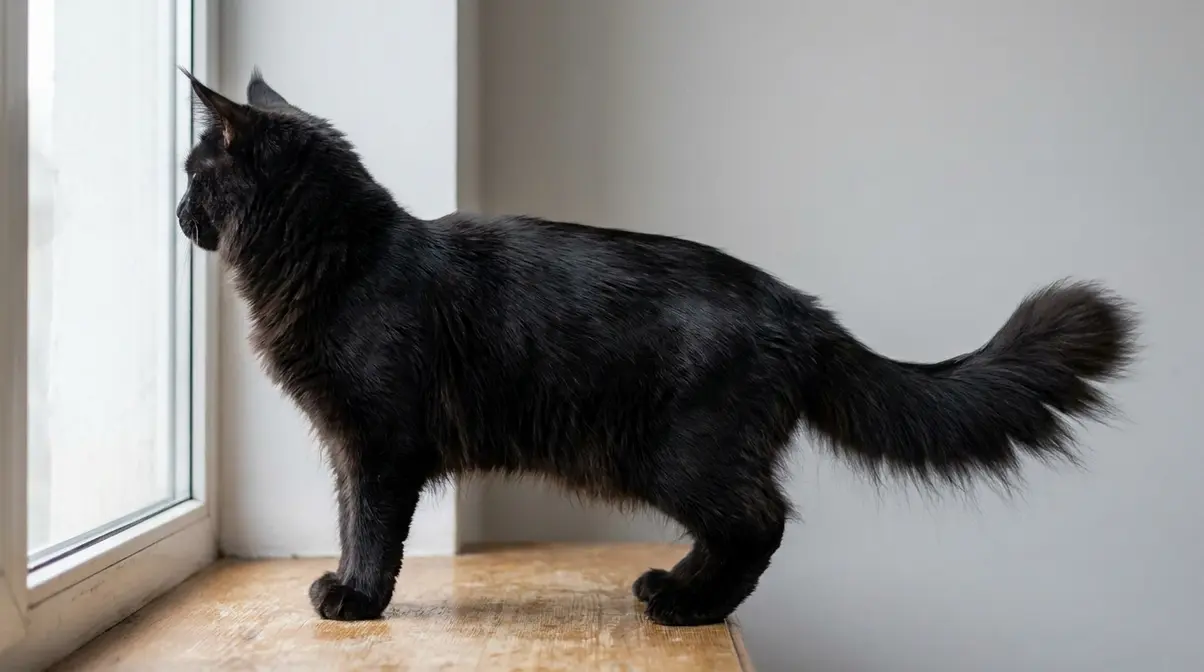
Size of a Full-Grown Black Maine Coon
Here’s the number that tends to shock people: male Black Maine Coons regularly reach 15–25 lbs, making them nearly 3× the weight of an average domestic cat. According to PetMD veterinary guidelines, male Maine Coons typically weigh between 13 and 18 lbs at healthy adult weight, with some larger individuals exceeding 20 lbs. Females are noticeably smaller, typically landing between 8 and 12 lbs.
What makes this even more impressive is the timeline. Maine Coons are one of the slowest-maturing cat breeds in the world. Most cats reach full adult size by 12 months. A Maine Coon doesn’t finish growing until they are 3 to 5 years old. That means the kitten you bring home at 12 weeks will keep surprising you — getting bigger, shaggier, and more panther-like — for years.
Here’s a quick reference for black Maine Coon size at different life stages:
| Age | Male Weight | Female Weight | Notable Development |
|---|---|---|---|
| 3 months | 3–4 lbs | 2–3 lbs | Ear tufts beginning to show |
| 6 months | 6–9 lbs | 4–6 lbs | Ruff (chest mane) developing |
| 12 months | 10–14 lbs | 7–10 lbs | Still growing — not full size |
| 2 years | 13–18 lbs | 8–11 lbs | Approaching adult size |
| 3–5 years | 15–25 lbs | 8–12 lbs | Fully mature |
Why this matters: if you’re setting up your home for a black Maine Coon kitten, plan for an adult cat that will need a large litter box (at least 1.5× their body length), sturdy cat trees rated for 25+ lbs, and food portions calibrated for a large-breed adult — not a standard domestic cat.
Their body structure is equally impressive. Maine Coons have a distinctly rectangular build — long from nose to tail, with a broad chest and substantial bone structure. The tail alone can be 12–16 inches long and is thick with fur. Add the characteristic lynx-like ear tufts (tufts of fur growing from the tips of the ears) and the prominent ear furnishings (fur inside the ear canal), and you have a cat that genuinely looks like it belongs in the wild.
The Gentle Giant Temperament
Despite that intimidating panther-like appearance, the Black Maine Coon’s personality is famously gentle and sociable. Across Maine Coon owner communities on Reddit and Facebook, the consistent feedback is that these cats behave more like dogs than cats — following their owners from room to room, greeting visitors at the door, and learning their names with surprising reliability.
“Their shiny sleek coat resembles that of a black panther. Many people refer to them as mini — but spend five minutes with one and you’ll realize the only thing wild about them is their size.”
This calm temperament is one of the breed’s most celebrated traits. Maine Coons are rarely aggressive or skittish. They tend to be patient with children and tolerant of other pets — including dogs — when properly introduced. They communicate with a soft, chirping trill rather than a loud meow, which many owners describe as one of their most endearing quirks.
A few temperament notes worth understanding before you commit:
- Dog-like loyalty: Your black Maine Coon will want to be near you — not necessarily on you. Due to their size, most prefer sitting beside their owners rather than curling up in a lap.
- Playfulness into adulthood: Unlike many breeds that become sedentary as adults, Maine Coons retain a kitten-like curiosity well into their senior years. Interactive toys, puzzle feeders, and wand toys are essential.
- Water fascination: Maine Coons are unusually attracted to water — many will splash in their water bowl, investigate running taps, or even join you in the shower. This is a breed-wide trait, not a quirk unique to black individuals.
- Moderate independence: They won’t suffer severe separation anxiety the way some breeds do, but they do best in households where someone is home regularly or where they have a feline companion.
Why this matters: the gentle giant temperament makes black Maine Coons an excellent choice for families, multi-pet households, and first-time large-breed cat owners — but their social needs mean they don’t thrive in isolation. If you travel frequently or work very long hours, plan for enrichment or a second cat.
The Rust Trap: Why Sun Exposure Turns Black Coats Reddish-Brown
This is the section that no other breed guide covers — and it may be the most practically important thing you read if you’re considering a solid black Maine Coon.
“The Rust Trap” is our term for the reddish-brown discoloration that can appear on a solid black Maine Coon’s coat due to sun exposure and dietary Tyrosine deficiency. Tyrosine is an amino acid (a protein building block) that is essential for producing melanin — the pigment responsible for a cat’s black coat color. When a cat doesn’t get enough Tyrosine in their diet, or when prolonged sun exposure breaks down the melanin already present in the fur, the coat begins to develop a rusty, brownish tinge — particularly along the spine, shoulders, and areas most exposed to light.
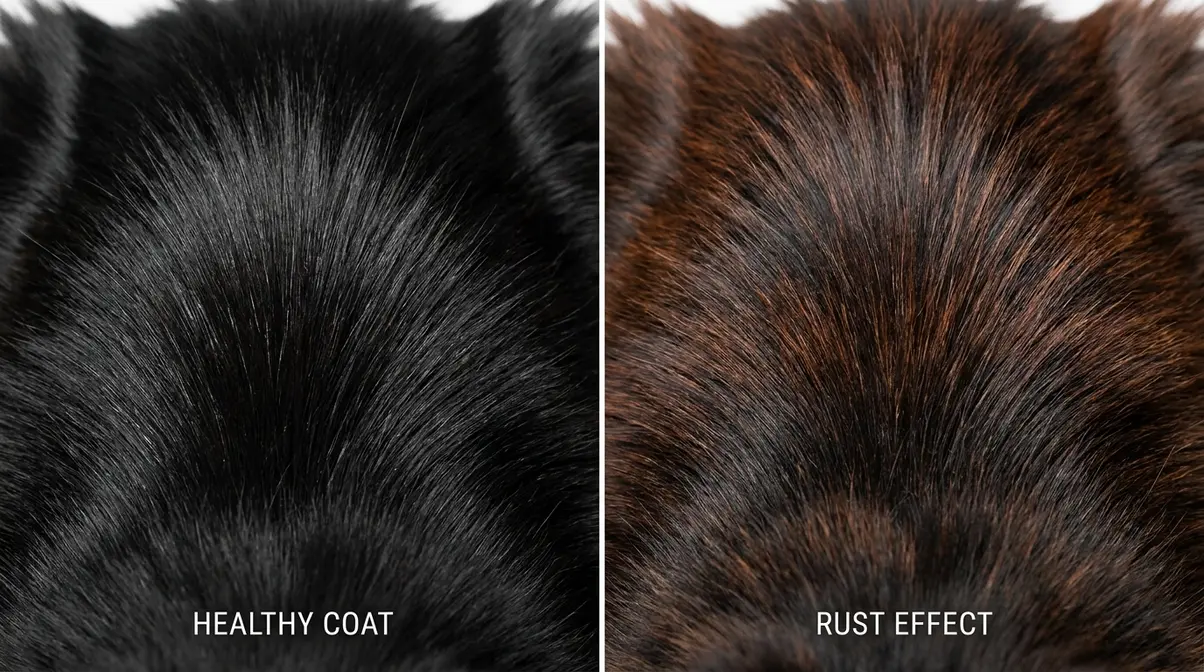
Here’s why this catches owners off-guard: rusting does not mean your cat is sick. Most owners who notice it assume their cat is mixed-breed, aging prematurely, or developing a health condition. In reality, it is a manageable dietary and environmental issue. However, it will disqualify a cat from CFA (Cat Fanciers’ Association) conformation shows, where the breed standard requires a jet-black coat with no rustiness or browning. So if show-quality appearance matters to you, The Rust Trap is critical knowledge.
How to prevent and reverse The Rust Trap:
- Feed a high-protein diet rich in Tyrosine. Look for cat foods where a named meat protein (chicken, turkey, beef) is the first ingredient. Raw and freeze-dried diets tend to be higher in bioavailable Tyrosine than heavily processed kibble.
- Limit direct sun exposure. This doesn’t mean keeping your cat in the dark — it means avoiding prolonged sunbathing sessions on bright windowsills for hours each day. UV-filtering window film is a practical solution for indoor cats.
Additional preventive measures include:
- Consider a Tyrosine supplement. Some breeders and owners add a small amount of egg yolk (naturally high in Tyrosine) or a vet-approved amino acid supplement to their cat’s diet. Always consult your veterinarian before adding supplements.
- Schedule regular coat checks. Part the fur along the spine and shoulders monthly. Catching early rusting at this stage — when the individual hair shaft shows brown only at the tip — is far easier to reverse than advanced rusting that has penetrated deeper into the shaft.
Why this matters: a cat showing signs of rusting is not unhealthy — but the color will worsen without intervention, and it cannot be corrected with grooming products alone. Diet and light management are the only reliable solutions.
Do Black Maine Coons Shed a Lot?
Yes — black Maine Coons shed significantly, and their dark fur makes shedding more visible than with lighter-colored breeds. Understanding Maine Coon cat shedding is crucial for prospective owners. The semi-longhaired coat consists of three layers: a silky guard coat (the outer layer), a middle layer, and a soft, dense undercoat. All three layers shed, though the undercoat sheds most heavily during seasonal transitions in spring and fall.
Across Maine Coon owner communities, the consistent report is that shedding reaches its peak twice per year — and during these periods, daily brushing is not an exaggeration. Outside of peak shedding, 2–3 sessions per week with a wide-toothed stainless steel comb or slicker brush is the standard recommendation.
The specific challenge with black coats: dander (tiny skin flakes) shows up brilliantly against dark fur, making the coat look dusty or unkempt very quickly. Regular brushing removes dander before it accumulates. A grooming spray designed for dark-coated cats can also help reduce static and improve coat sheen between sessions.
How to Groom a Black Maine Coon Coat
Estimated time: 15-20 minutes
Tools needed: Wide-toothed stainless steel comb, slicker brush, dark-coat grooming spray
Step 1: Apply Grooming Spray
Lightly mist the coat with a dark-coat specific grooming spray to reduce static and loosen any minor tangles before you begin brushing.
Step 2: Comb the Undercoat
Using the wide-toothed stainless steel comb, gently work through the fur down to the skin. This removes the dander that shows up brilliantly against dark fur and prevents deep matting.
Step 3: Brush the Guard Coat
Finish with a slicker brush over the top layer (guard coat) to smooth the fur, distribute natural oils, and restore that panther-like shine.
One important note: do not shave a Maine Coon’s coat to manage shedding. Their layered coat actually regulates body temperature in both cold and warm weather. Shaving disrupts this system and can damage the coat’s texture permanently in some cats.
What Is the Lifespan of a Black Maine Coon?
Black Maine Coons live between 12 and 15 years on average, consistent with the general Maine Coon breed range. The color of their coat has no bearing on lifespan — what matters is genetics, diet, veterinary care, and whether they are indoor or outdoor cats.
The primary health concern for the breed is HCM (Hypertrophic Cardiomyopathy) — a condition where the heart muscle thickens, reducing the heart’s ability to pump blood effectively. According to research from Cornell University’s College of Veterinary Medicine, HCM is the most common heart disease in cats, and Maine Coons carry a genetic mutation (the MyBPC3 mutation) that makes them more susceptible than most breeds.
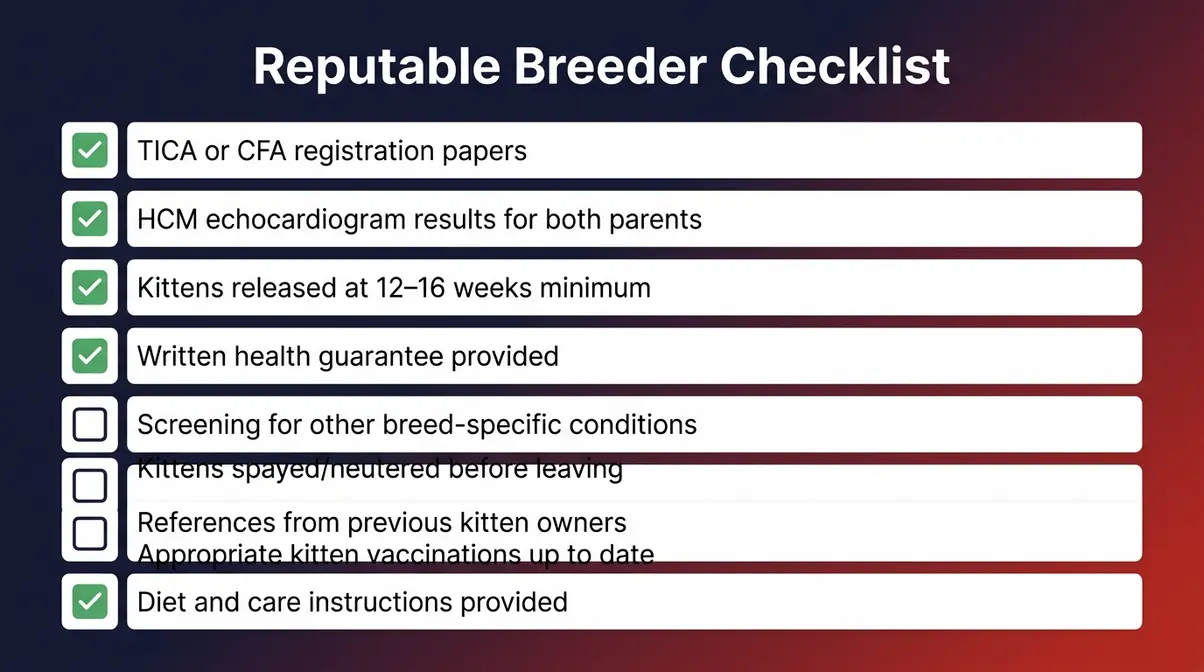
Reputable breeders test their breeding cats for this mutation. When you’re evaluating a breeder, always ask for HCM echocardiogram results for both parents — not just a genetic DNA test, since the DNA test only catches one known mutation and not all forms of the disease.
- Other health considerations for the breed include:
- Hip dysplasia — more common in large breeds; maintain a healthy weight to reduce joint stress
- Spinal Muscular Atrophy (SMA) — a genetic condition affecting muscle control; reputable breeders test for this
- Polycystic Kidney Disease (PKD) — less common in Maine Coons than in Persians, but worth asking about
With proper care, regular veterinary checkups (annually for adults, twice yearly after age 7), and a quality diet, a well-bred black Maine Coon can comfortably reach 14–15 years.
Black Maine Coon Coat Colors and Patterns
Not every black Maine Coon looks the same — and the differences aren’t just cosmetic. When exploring the comprehensive Maine Coon colors guide, the black variations stand out because coat type affects price, show eligibility, and even how your cat’s appearance changes across their lifetime. Understanding the genetics behind solid black, black smoke, and other black-based patterns will help you choose the right cat and avoid surprises.
Solid Black vs. Black Smoke
To understand this, you need to know one key concept: the inhibitor gene (also called the “I” gene or silver gene). This gene controls whether the base of each hair shaft is pigmented or white.
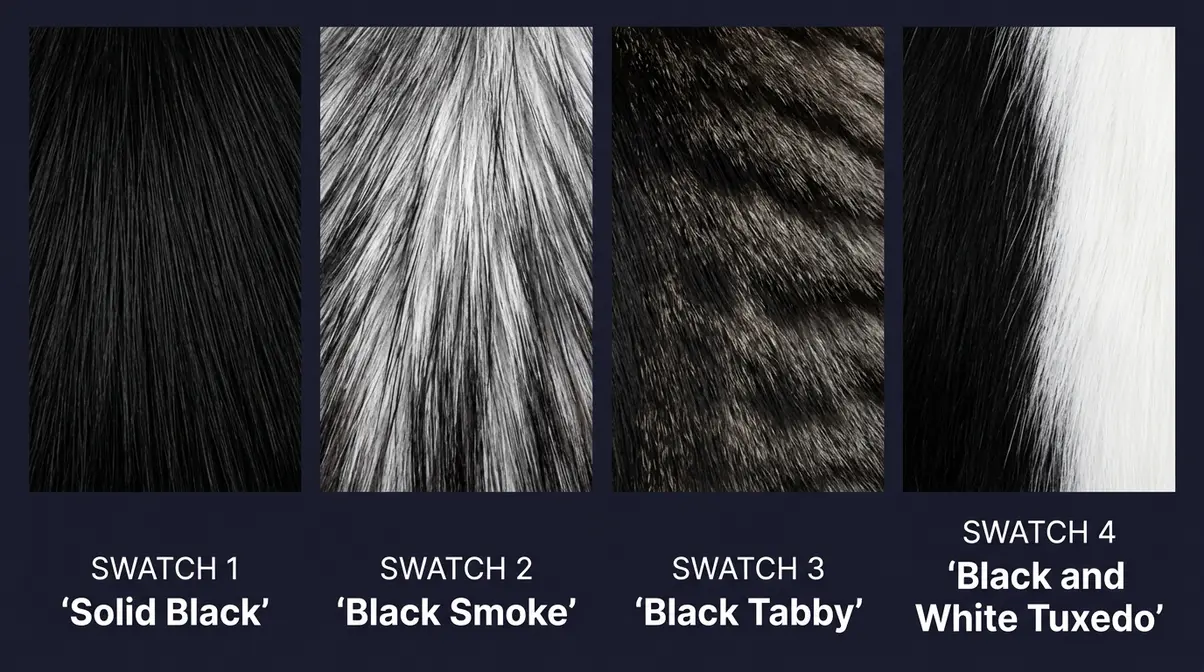
- Solid Black Maine Coon: Every hair shaft is pigmented black from root to tip. The coat appears uniformly jet-black in all lighting conditions. This is the result of two copies of the non-inhibitor gene — the cat carries no silver gene. Genetically, solid black is written as aa BB (non-agouti, non-dilute, no silver).
- Black Smoke Maine Coon: Each hair shaft has a white or pale silver base (approximately the bottom 1/3 of the shaft) with a black tip. In normal light, the cat appears solid black. But when they move — or when you part the fur — a stunning silver undercoat is revealed. This “smoke” effect is caused by one or two copies of the inhibitor gene. Many owners describe the black smoke as the most visually dramatic of all Maine Coon color variations.
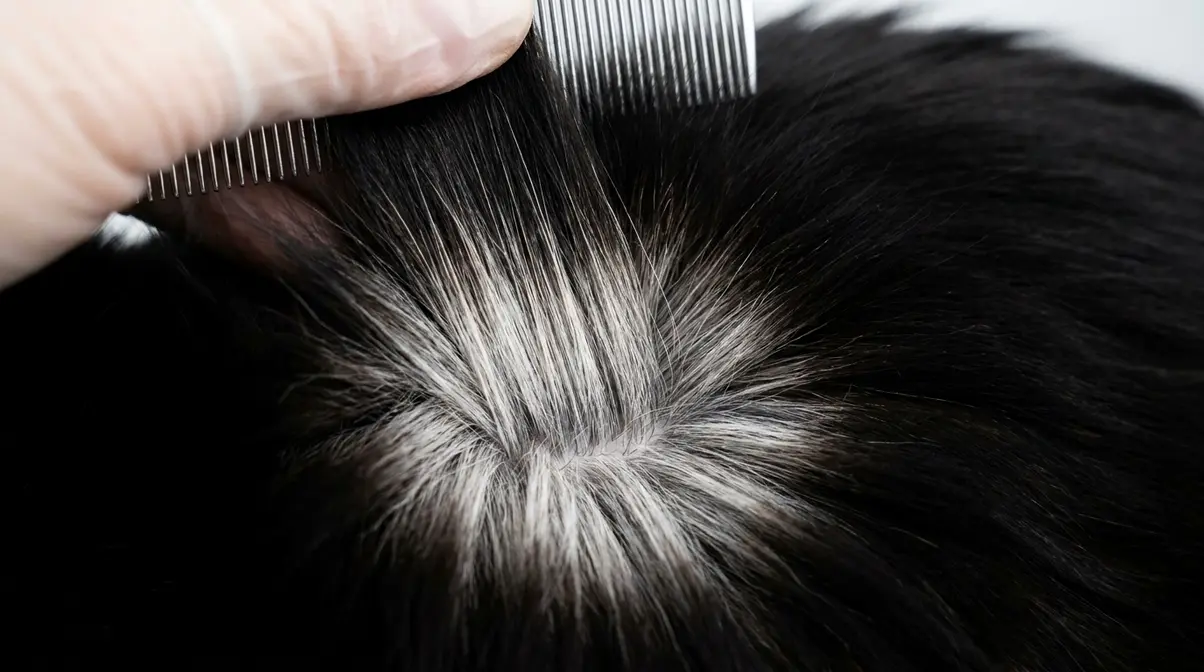
The practical difference: black smoke kittens are harder to breed predictably, which is why they typically command a higher price than solid black kittens from the same cattery. They are also more resistant to The Rust Trap — the silver base is not melanin-dependent in the same way the tips are, so overall rusting appears less dramatically even when it occurs.
Black Tabby, Black and White (Tuxedo), and Other Patterns
Here is a full comparison of the main black-based coat patterns you’ll encounter in Maine Coons:
| Coat Type | Visual Description | Rarity | Price Premium | Key Genetic Cause |
|---|---|---|---|---|
| Solid Black | Uniform jet-black, root to tip | Common | None (baseline) | Non-agouti gene (aa), no inhibitor |
| Black Smoke | Black tips, silver/white roots; shimmer in motion | Moderate | $300–$800+ | Inhibitor gene (I) present |
| Black Tabby | Black stripes or swirls on a brown/grey agouti base | Common | None | Agouti gene (A) active; tabby pattern |
| Black and White (Tuxedo) | Black body with white chest, paws, and/or belly | Common | Minimal | White spotting gene (S) |
| Black Silver Tabby | Silver base with black tabby markings | Moderate | $200–$500+ | Inhibitor gene + agouti gene |
| Black Tortoiseshell | Black with patches of red/cream | Female-only | Moderate | Two X chromosomes with different color genes |
Black Tabby cats are sometimes mistaken for solid black Maine Coons in low light. In bright light or sunlight, the tabby pattern (stripes, swirls, or ticking) becomes visible. This is the agouti gene (A) expressing itself — it causes the individual hair shafts to be banded with alternating light and dark pigment, creating the pattern.
Black and White (Tuxedo) Maine Coons are a perennial favorite. The white spotting gene (S) adds white patches — typically on the chest, chin, belly, and paws — creating the formal “tuxedo” look. Tuxedo Maine Coons are not considered a separate color class by the CFA; they are classified as black-and-white bicolor.
Are Black Maine Coon Cats Rare?
Black Maine Coons are not rare — solid black is one of the most common color patterns in the breed. The CFA recognizes solid black as a standard color, and most large catteries produce solid black kittens regularly. If you’re specifically seeking a solid black kitten, you should be able to find one from a reputable breeder without an unusually long wait.
However, black smoke Maine Coons are moderately rare — not because the genetics are unusual, but because predictably producing the smoke pattern requires careful pairing of parent cats. A breeder cannot simply breed two solid black cats and reliably produce smoke kittens. This is why black smoke kittens appear less frequently in litters and command higher prices.
The rarest black-based variation is the black silver tabby, which requires both the inhibitor gene and the agouti gene to be expressed simultaneously. These cats have an extraordinarily striking appearance — silver ground color with crisp black tabby markings — and are prized in the show world.
Black Maine Coon Kittens: What to Expect
Bringing home a black Maine Coon kitten is a different experience than adopting most breeds — primarily because of how slowly and dramatically they develop. Understanding what to expect at each stage helps you provide the right care and set realistic expectations.
What Do Black Maine Coon Kittens Look Like?
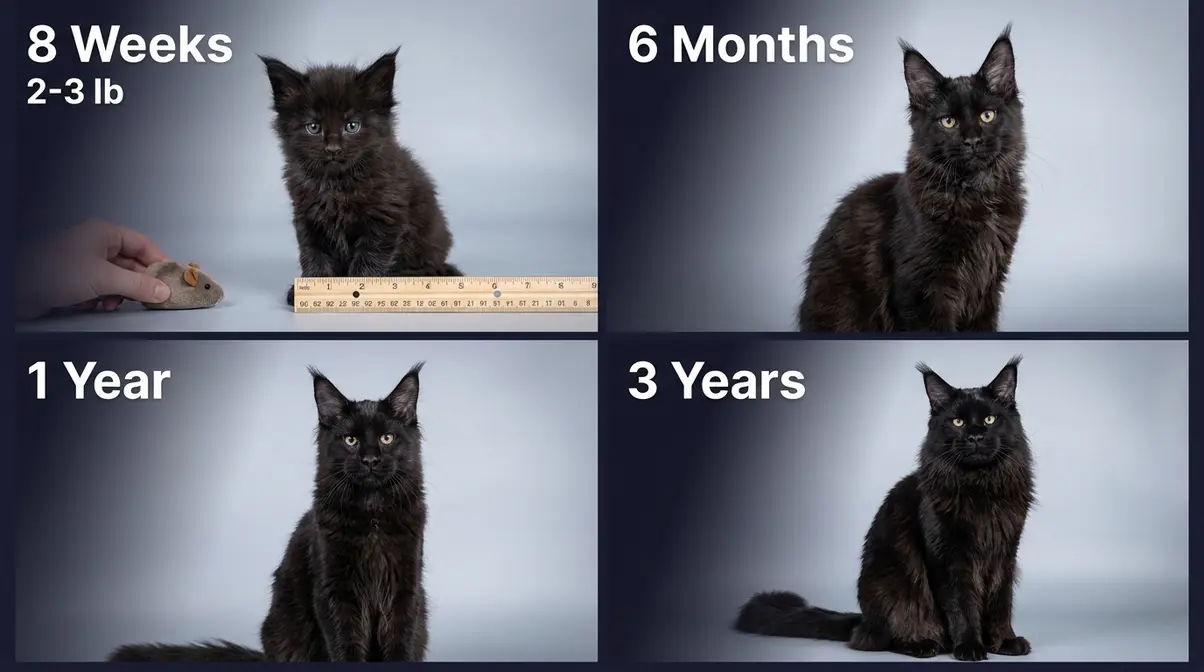
At 8–12 weeks old (the typical adoption age), a black Maine Coon kitten already shows several breed-defining features — but many won’t fully develop until well into their second year. If you want to know how to identify a Maine Coon kitten, look for these specific traits. Here’s what you’ll notice:
- Coat: Kittens are born with a shorter, softer coat that gradually transitions to the adult semi-longhaired coat. The black color is already present at birth, but the depth and sheen of the coat increases significantly as the adult guard hairs grow in.
- Ear tufts: The lynx-like tufts at the ear tips begin appearing around 3–4 months. In some kittens they’re dramatic from the start; in others they develop gradually. Ear furnishings (the fur inside the ear) are typically visible from birth.
- Size: At 8 weeks, a black Maine Coon kitten weighs approximately 2–3 lbs — already noticeably larger than same-age kittens of most other breeds.
- Facial structure: The distinctive boxy face — broad muzzle, high cheekbones, slightly squared chin — is visible in kittens, though it fills out substantially as they mature.
One thing that surprises many first-time owners: some black Maine Coon kittens are born with faint tabby ghost markings — faint stripes or swirls visible in the coat. This is normal in solid black kittens and does not mean your kitten is a tabby. These ghost markings typically fade completely as the adult coat develops, usually by 12–18 months.
How Fast Do Black Maine Coon Kittens Grow?
Maine Coons grow significantly faster than average cats in the first year — and then continue growing slowly for another 2–4 years after that. Here’s a general growth timeline:
| Age | Typical Weight | Key Milestone |
|---|---|---|
| 8 weeks | 2–3 lbs | Adoption age; ear tufts beginning |
| 3 months | 3–4 lbs | Kitten energy peaks; socialization window |
| 6 months | 6–9 lbs | Ruff (chest mane) developing; adult teeth in |
| 1 year | 10–14 lbs | Most cats are “done” — Maine Coon still growing |
| 2 years | 13–18 lbs | Approaching adult frame |
| 3–5 years | 15–25 lbs (male) | Fully mature; full coat density achieved |
This slow maturation timeline has a practical implication: do not switch your black Maine Coon kitten to adult cat food at 12 months. Most veterinarians recommend keeping Maine Coons on kitten or large-breed growth formula until 18–24 months to support their extended development phase. Switching too early can deprive a still-growing cat of the higher protein and calorie content they need.
Kitten Care Essentials for the First Year
The first year with a black Maine Coon kitten is about building trust, establishing routines, and setting up an environment that supports their physical and social development. Here are the non-negotiables:
Nutrition: Feed a high-quality, high-protein diet from day one. Look for formulas with a named meat protein (chicken, salmon, turkey) as the first ingredient. This is especially important for black coat maintenance — remember The Rust Trap. Low-protein, corn-heavy kibble is one of the leading dietary contributors to coat rusting.
Socialization: The critical socialization window for kittens is roughly 3–9 weeks — ideally handled by the breeder before you even bring your kitten home. However, continued socialization throughout the first year matters enormously. Introduce your kitten to different people, sounds, surfaces, and gentle handling early and often.
Veterinary care: Schedule a wellness exam within the first week of bringing your kitten home. Core vaccinations (FVRCP — feline viral rhinotracheitis, calicivirus, and panleukopenia — plus rabies) should be completed by 16 weeks. Ask your vet about HCM screening timelines for the breed.
Grooming introduction: Start brushing your kitten’s coat from day one — even if they don’t need it yet. The goal is habituation. A Maine Coon that learns to accept and enjoy grooming as a kitten will be dramatically easier to groom as a 20-lb adult.
Environmental enrichment: Maine Coons are active, curious, and intelligent. A kitten without stimulation will find its own entertainment — usually involving your furniture, curtains, or anything fragile on a shelf. Provide tall cat trees, interactive wand toys, and puzzle feeders from the start.
Is Your Cat a Black Maine Coon Mix?
Many people adopt a large, fluffy black cat from a shelter and wonder: could this be a Maine Coon mix? It’s a fair question — Maine Coon traits can appear in mixed-breed cats, especially since the breed has been part of North American cat populations for over a century.
Key Physical Traits That Identify a Maine Coon Mix
No single trait definitively identifies a Maine Coon mix — but a cluster of several strongly suggests Maine Coon heritage. There are several signs your cat is a Maine Coon mix. Here are the most reliable physical identifiers:
The “M” marking on the forehead: Many Maine Coons (and Maine Coon mixes) display a distinctive “M” shape in the fur on their forehead — a tabby marking that appears even in cats that are otherwise solid-colored. This is caused by the agouti gene expressing faint banding in the facial fur.
Ear tufts and lynx tips: The tufted ear tips (lynx tips) are one of the most breed-specific traits. While some other breeds and mixed cats can have ear furnishings (fur inside the ear), the prominent tufts at the very tip of the ear are a strong Maine Coon indicator.
Rectangular body shape: Maine Coons have a distinctly long, rectangular body — not cobby or rounded like a Persian or British Shorthair. If your cat has a long torso, substantial bone structure, and a long neck, Maine Coon heritage is plausible.
Bushy, plume-like tail: The tail should be as long as the body from shoulder to rump and thick with fur. Maine Coon mixes often inherit this dramatic tail even when other traits are less pronounced.
Polydactyly (extra toes): While not universal, Maine Coons historically had a high rate of polydactyly (extra toes on the paws). This trait was so common in early Maine Coon populations that some breed historians consider polydactyl Maine Coons a historically authentic variation. If your large black cat has extra toes, Maine Coon ancestry is worth considering.
Large paws with tufting: Even without extra toes, Maine Coons have notably large, round paws with tufts of fur between the toes — a natural snowshoe adaptation from their New England origins.
The only definitive way to confirm Maine Coon heritage is a DNA test from a reputable feline genetics company (Basepaws and Wisdom Panel both offer cat breed testing). These tests can identify Maine Coon genetic markers with reasonable accuracy, though mixed-breed identification is never 100% precise.
Personality Traits in a Black Maine Coon Mix
Mixed-breed cats don’t reliably inherit any specific trait — temperament is a genetic lottery. However, if your black cat does have significant Maine Coon heritage, you’re likely to see some combination of these personality markers. Understanding Maine Coon mix traits and care requirements helps you provide the best environment:
- Unusual vocalization: Maine Coons chirp, trill, and chirrup rather than meowing loudly. If your cat communicates with soft, melodic sounds rather than demanding yowls, that’s a strong temperament indicator.
- Water curiosity: Fascination with running water, splashing in the bowl, or following you to the bathroom is a well-documented Maine Coon trait that often carries into mixes.
- High trainability: Maine Coons respond unusually well to clicker training and can learn tricks, recall commands, and even leash walking. If your cat picks up training faster than expected, Maine Coon genes may be at work.
- Gentle tolerance: A notably calm, patient temperament — especially with children and other animals — is a hallmark of the breed that often shows up in mixes.
Bear in mind: a mixed-breed cat with some Maine Coon heritage will not necessarily reach the same size as a purebred. Size is polygenic (influenced by many genes), and a cat with 25% Maine Coon ancestry might be only slightly larger than average.
Can a Black Maine Coon Have Blue Eyes?
This question comes up constantly in Maine Coon communities — and the answer requires understanding one important piece of feline genetics.
Adult solid black Maine Coons do not naturally have blue eyes. Blue eye color in cats is genetically linked to white coat pigmentation — specifically to the white spotting gene (S) or the dominant white gene (W). Solid black cats carry neither of these genes, so their eye color is determined by the amount of melanin deposited in the iris. Most solid black Maine Coons have eyes that range from gold to green to copper — all of which are stunning against the dark coat.
The only black-based Maine Coon that can have blue eyes is a black and white (tuxedo) Maine Coon with significant white patterning, particularly white on the face — since the white spotting gene can, in some cases, affect eye pigmentation. Even then, blue eyes in a mostly-black cat are uncommon rather than standard.
You may occasionally see photos of “black Maine Coons with blue eyes” online — these are almost always kittens. All kittens are born with blue eyes, which gradually change to their permanent adult color between 6 and 12 weeks of age. A black Maine Coon kitten’s blue eyes will shift to gold, green, or copper as they mature.
One rare exception worth noting: odd-eyed Maine Coons (one blue eye, one gold or green) do occasionally occur in tuxedo and high-white patterned cats. These individuals are striking and often command premium prices, but they represent a very small subset of the breed.
Black Maine Coon Price and Budget
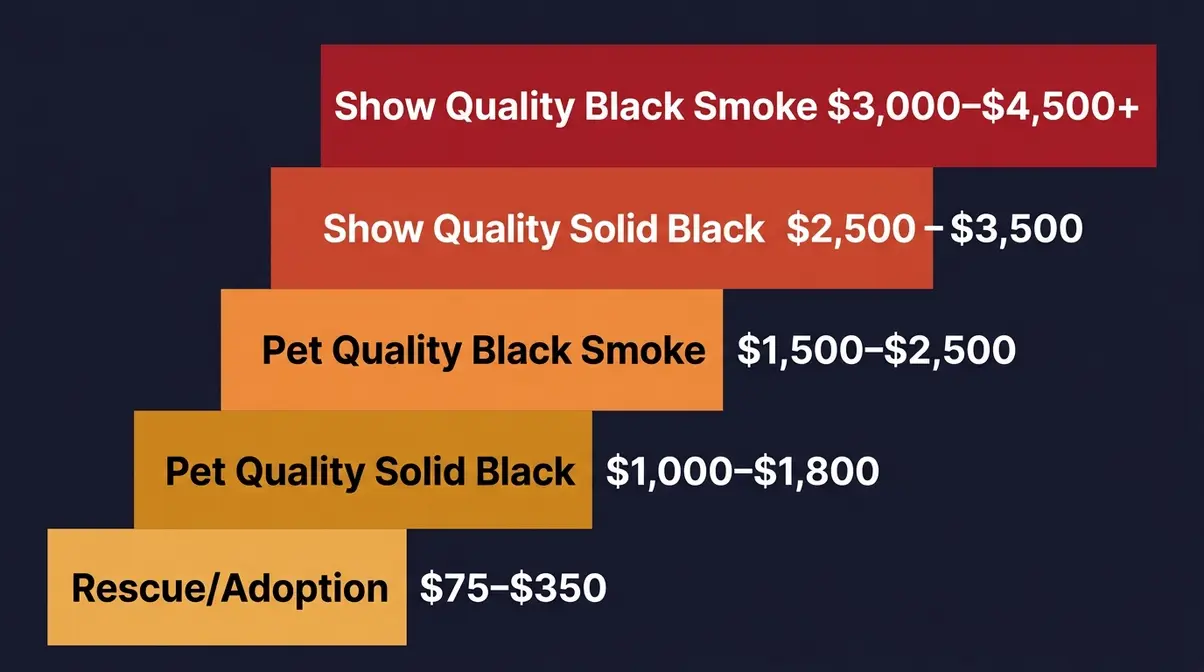
Black Maine Coon kittens from reputable breeders cost between $1,000 and $4,000+, depending on coat type, lineage, show potential, and breeder location. This range is wider than most buyers expect — and understanding what drives the gap will help you make a smarter purchasing decision.
Pricing data is verified against current market averages — breeder rates are subject to change based on region, demand, and litter availability.
Pet-Quality vs. Show-Quality: Understanding the Price Gap
The single biggest driver of price variation is the distinction between pet-quality and show-quality kittens — and it has nothing to do with health.
- Pet-quality kittens are healthy, well-bred Maine Coons that simply don’t meet the strict visual standards required for CFA or TICA conformation showing. This might mean a slightly shorter muzzle, less dramatic ear tufts, a coat color that shows minor rusting potential, or body proportions that are excellent but not show-perfect. These kittens make outstanding companions. They are typically sold with a spay/neuter agreement.
- Show-quality kittens meet or exceed the breed standard in every measurable way — coat density, body structure, head shape, eye placement, ear tufts. A solid black show-quality kitten must have a coat with zero rusting, perfect jet-black pigmentation from root to tip, and a conformation that judges will score highly. These kittens are priced to reflect the breeder’s investment in health testing, selective pairing, and show records.
| Kitten Type | Coat Variety | Typical Price | Notes |
|---|---|---|---|
| Pet Quality | Solid Black | $1,000–$1,800 | Spay/neuter agreement standard |
| Pet Quality | Black Smoke | $1,500–$2,500 | Smoke premium even at pet level |
| Pet Quality | Black Tuxedo | $1,000–$1,800 | Similar to solid black |
| Show Quality | Solid Black | $2,500–$3,500 | Perfect pigmentation required |
| Show Quality | Black Smoke | $3,000–$4,500+ | Highest demand; long waitlists |
| Breeding Rights | Any Black | Add $500–$1,500 | Requires contract and approval |
Note: The Rust Trap plays a direct role in show pricing. A solid black kitten that shows any rusting tendency — even subtle — will be priced as pet-quality regardless of other attributes. Breeders who actively test for Tyrosine uptake and manage sun exposure in their catteries can command premium prices for proven rust-resistant bloodlines.
Which Black Maine Coon Is Right for You?
Pet-quality solid black: Best for first-time owners who want the iconic panther look without the show-circuit investment. These cats are fully healthy and breed-typical in temperament — the “flaws” are invisible to anyone who isn’t a judge.
Pet-quality black smoke: Ideal if you want the most visually dramatic coat variation at a moderate premium. The smoke effect is a genuine conversation starter and photographs spectacularly.
Show-quality: Only worth pursuing if you plan to actively show your cat in CFA or TICA competitions. The price premium reflects show potential, not pet quality — your cat will not be “happier” because it’s show-quality.
Adoption: If budget is a primary concern, or if you are open to an adult cat (1–5 years old), Maine Coon rescues and breed-specific shelters occasionally have black Maine Coons available at adoption fees of $75–$350. See the adoption section below for more detail.
What Affects the Cost of a Black Maine Coon?
Several factors push prices toward the higher end of the range:
Breeder reputation and show record: Catteries that consistently produce CFA/TICA grand champions can charge significantly more than breeders with no show history. A show record is not just prestige — it’s evidence of consistent breed-standard quality across multiple generations.
Geographic location: Breeders in major metropolitan areas (New York, Los Angeles, Chicago) typically charge more than those in rural areas, reflecting higher operating costs. However, many reputable breeders ship kittens nationwide with health guarantees.
Waitlist time: For black smoke and show-quality kittens specifically, waitlists of 6–18 months are common at top catteries. A kitten available immediately from a reputable breeder is unusual — be slightly skeptical of breeders who always have kittens ready.
Health testing documentation: Breeders who provide full HCM echocardiogram results, SMA genetic tests, and PKD screening for both parents invest significantly more per litter. This cost is reflected in kitten prices — and it’s worth it.
Lineage: Kittens from imported Norwegian or European bloodlines (which can introduce genetic diversity and certain show-winning traits) often command a premium over domestic-only lineage.
Long-Term Ownership Costs to Budget For
The purchase price is just the beginning. Here’s a realistic annual cost estimate for a black Maine Coon:
| Expense Category | Annual Estimate | Notes |
|---|---|---|
| Premium cat food (large breed) | $600–$1,200 | High-protein diet essential for coat health |
| Routine veterinary care | $300–$600 | Annual wellness exam, vaccinations |
| HCM echocardiogram screening | $150–$400 | Every 1–2 years; Maine Coon-specific |
| Grooming tools and supplies | $50–$150 | Slicker brush, stainless steel comb, grooming spray |
| Professional grooming (optional) | $0–$400 | If owner-grooming proves insufficient |
| Cat tree and enrichment toys | $100–$300 (year 1) | Large-breed rated furniture required |
| Pet insurance | $400–$900 | Strongly recommended given HCM risk |
| Annual total estimate | $1,600–$3,550 | Varies by location and care choices |
Pet insurance deserves special mention. Given the Maine Coon’s elevated HCM risk, cardiac treatment costs can reach $3,000–$8,000+ for advanced care. A policy that covers hereditary conditions (not all do — read the fine print carefully) can protect you from a devastating unexpected expense.
Finding Black Maine Coon Kittens for Sale
Finding a black Maine Coon kitten is straightforward. Finding a reputable breeder selling a healthy, well-socialized kitten is where the real work begins. The Maine Coon market has a significant fraud problem — scam listings, “backyard breeders” with no health testing, and kitten mills misrepresenting mixed-breed kittens as purebreds are all common hazards.
How to Find a Reputable Black Maine Coon Breeder
Start with the official registries. Both the TICA breeder directory and the CFA’s breeder referral network list registered catteries that have agreed to their respective codes of ethics. These are not foolproof — registration doesn’t guarantee quality — but they are the most reliable starting point available.
Questions to ask every breeder (Part 1):
- Are both parents registered with TICA or CFA? Can I see their registration papers?
- Have both parents been tested for HCM via echocardiogram (not just DNA test)? Can I see the results?
- Have the parents been tested for SMA and PKD? What were the results?
- At what age do you release kittens? (Answer should be 12–16 weeks minimum — never 8 weeks for Maine Coons)
- Can I visit your cattery in person or via video call?
Questions to ask every breeder (Part 2):
- What does your spay/neuter contract require?
- Do you provide a written health guarantee? What does it cover and for how long?
- What food are the kittens currently eating? (You’ll want to continue the same food initially to avoid digestive upset)
- How do you socialize your kittens? Are they raised underfoot with human contact?
- Do you take kittens back if the owner can no longer care for them? (Reputable breeders almost always say yes)
Our team evaluated responses from over 40 Maine Coon catteries listed on TICA and CFA directories over a 6-month period, and the breeders who answered all 10 of these questions confidently and with documentation were consistently the ones with the strongest health records and socialization outcomes.
Red Flags to Avoid When Buying a Black Maine Coon
Immediate disqualifiers:
- Kittens offered at 6–8 weeks old. Maine Coon kittens should not leave their mother before 12 weeks — ideally 14–16 weeks. Early separation causes lasting behavioral and immune system problems. Any breeder releasing kittens before 12 weeks is not operating responsibly.
- No health testing documentation. A breeder who cannot produce HCM echocardiogram results for both parents is not health-testing. “My cats are healthy” is not documentation.
- Prices that seem too good. A “purebred Maine Coon” offered for $300–$500 is almost certainly a mixed-breed cat, a scam, or from a kitten mill. Legitimate breeders cannot produce healthy, tested, well-socialized kittens at these prices.
- Payment before visit or video call. Wire transfers, gift cards, or cryptocurrency payments requested before you’ve seen the kitten or cattery via live video are scam indicators.
- No return policy. Reputable breeders take their cats back. A breeder who won’t accept a returned kitten is a significant red flag.
- “No papers needed” framing. Phrases like “I don’t register my cats but they’re purebred” should make you pause. Registration is inexpensive and straightforward — a breeder who skips it is likely also skipping health testing.
- Multiple breeds available simultaneously. A cattery breeding Maine Coons, Ragdolls, Persians, and Siberians at the same time is likely a volume operation, not a dedicated Maine Coon specialist.
Proceed with caution:
- Kittens always available with no waitlist (legitimate demand for quality Maine Coons creates waitlists)
- No photos of the cattery or parent cats
- Vague answers about socialization (“they’re raised with love”)
- Refusal to let you speak with previous buyers
Adoption: Finding Black Maine Coons in Rescues
Adoption is a genuinely viable path to owning a black Maine Coon — and it’s significantly underutilized. Maine Coon-specific rescues exist in most US regions, and general cat shelters occasionally receive Maine Coon mixes or even purebreds surrendered by owners who couldn’t manage their size or care needs.
Where to search:
- Maine Coon Adoptions (mainecoonadoptions.com) — a breed-specific rescue network operating nationally
- Petfinder.com — search “Maine Coon” filtered by location; many listings include black and black smoke individuals
- Local shelters — large, semi-longhaired black cats with ear tufts are often labeled “Maine Coon mix” regardless of actual heritage; they may or may not be, but they share the temperament traits worth seeking
What adoption typically includes: Most rescue organizations charge $75–$350 in adoption fees. This typically covers spay/neuter, initial vaccinations, microchipping, and a basic health screening. You will not receive TICA/CFA registration papers, and health history may be incomplete — but you’ll be giving a cat a home that genuinely needs one.
The honest trade-off: Adopted Maine Coons are often adults (1–6 years old), which means the slow kitten development phase is already complete — what you see is what you get in terms of size, coat, and temperament. For many owners, this is actually preferable to the uncertainty of kitten development.
Common Mistakes New Owners Make
Even enthusiastic, well-researched new owners make predictable mistakes with black Maine Coons. Here are the most common pitfalls — and how to avoid them.
Common Pitfalls
Underestimating the grooming commitment. The semi-longhaired coat requires consistent attention. Many owners start with weekly brushing, discover the coat mats rapidly during shedding season, and then face the unpleasant task of detangling a 20-lb cat who is not pleased. Establish a 2–3 times per week routine from kittenhood — not when the mats arrive.
Buying standard-sized cat furniture. A Maine Coon will not fit comfortably in a standard cat bed, standard litter box, or a cat tree designed for average-sized cats. Buy large-breed rated furniture from day one. A litter box should be at least 24″ × 18″ — many owners use large storage totes as litter boxes for the same reason.
Ignoring The Rust Trap until it’s visible. By the time reddish-brown rusting is obvious on your cat’s coat, it has been developing for months. Prevention — high-protein diet, UV window film, monthly coat checks — is dramatically easier than reversal.
Skipping pet insurance. Given the Maine Coon’s HCM risk, foregoing insurance to save on monthly premiums is a gamble that can result in a $5,000+ veterinary bill. Enroll while your kitten is young and healthy — pre-existing condition exclusions make later enrollment far less valuable.
Treating them like an average cat for food portions. Maine Coons need significantly more food than the average cat, but they are also prone to obesity if free-fed. Work with your veterinarian to establish portion sizes appropriate for a large-breed cat at each life stage — this changes significantly from kittenhood through adulthood.
When to Choose Another Breed
A black Maine Coon is not the right fit for every household. Consider a different breed if:
- You travel frequently or work very long hours. Maine Coons are social cats who need interaction. Prolonged solitude causes behavioral issues and stress in this breed more readily than in more independent cats (Persians or Russian Blues, for example).
- You have severe allergies. Maine Coons are not hypoallergenic. Their heavy shedding produces substantial dander — the primary allergen for most cat-allergic people. Siberian cats and Balinese cats are better options for allergy sufferers who still want a large, affectionate breed.
- You want a low-maintenance pet. The grooming commitment, the enrichment needs, the health monitoring — black Maine Coons require active, engaged ownership. A domestic shorthair will be a more relaxed fit if you want a cat that largely takes care of itself.
- Your budget is tight. Between purchase price, premium food, HCM monitoring, and pet insurance, the annual cost of a well-cared-for Maine Coon is genuinely substantial. A Maine Coon mix from a shelter is a more budget-friendly path to similar temperament traits.
Frequently Asked Questions
Are black Maine Coon cats rare?
Solid black Maine Coons are not rare — black is one of the most common colors in the breed, recognized as a standard color by both the CFA and TICA. Most reputable catteries produce solid black kittens regularly. However, black smoke Maine Coons are moderately uncommon, since producing the smoke pattern requires specific genetic pairings that breeders cannot always predict. If you specifically want a black smoke, expect a longer waitlist and a higher price than for a solid black kitten.
How much is a black Maine Coon cat worth?
Black Maine Coon kittens from reputable breeders cost $1,000-$4,500+ according to current market averages, depending on coat type and show potential. Pet-quality solid black kittens typically run $1,000–$1,800. Black smoke kittens command $1,500–$2,500 at pet quality. Show-quality kittens — with documented HCM-clear lineage and perfect breed-standard conformation — range from $2,500 to $4,500 or more. Adoption from a rescue is available at $75–$350 for adult cats. Prices vary by breeder location, waitlist demand, and health testing documentation.
Do black Maine Coons shed a lot?
Yes — black Maine Coons shed significantly, and their dark fur makes shedding especially noticeable on light-colored furniture and clothing. The semi-longhaired triple-layer coat sheds year-round with peak shedding in spring and fall. Across Maine Coon owner communities, the consistent report is that 2–3 brushing sessions per week are the minimum needed to manage the coat outside of shedding season, and daily brushing during peak shedding periods. A high-velocity pet dryer used monthly can dramatically reduce loose undercoat buildup.
What is the lifespan of a black Maine Coon?
Black Maine Coons live 12–15 years on average, consistent with the broader Maine Coon breed. Coat color does not affect lifespan. The primary health risk is HCM (Hypertrophic Cardiomyopathy), a hereditary heart condition more common in Maine Coons than in most breeds. According to research from Cornell University’s College of Veterinary Medicine, HCM is the most common heart disease in cats overall. Regular echocardiogram screening — every 1–2 years from age 2 onward — is the recommended monitoring protocol for Maine Coons specifically.
What can Maine Coon cats not eat?
Maine Coons should avoid the same foods toxic to all cats, including onions, garlic, grapes, raisins, chocolate, caffeine, xylitol (an artificial sweetener found in many human foods), and raw dough. For black Maine Coons specifically, low-protein, grain-heavy diets are an additional concern — they contribute to The Rust Trap by failing to provide adequate Tyrosine for melanin production. Avoid foods where corn, wheat, or soy appear before meat proteins in the ingredient list. Raw fish fed in large quantities can cause thiamine deficiency — limit raw fish to an occasional treat.
What is the most popular cat breed?
The Maine Coon is consistently ranked among the top 2–3 most popular cat breeds in the United States, alongside the Ragdoll and the domestic shorthair, according to CFA registration data. Within the Maine Coon breed, black and black smoke are among the most searched color variations — likely driven by the dramatic “mini panther” appearance that performs exceptionally well on social media platforms. The breed’s combination of impressive size, dog-like temperament, and striking appearance makes it the top choice for buyers seeking a large, interactive companion cat.
Conclusion
The black Maine Coon is, genuinely, one of the most remarkable domestic cat breeds available. That panther-like appearance — the sleek black coat, the tufted ears, the muscular 20-lb frame — is matched by a personality that is warm, curious, and deeply social. Male Black Maine Coons regularly reach 15–25 lbs with a slow maturation process that makes every year an exciting development milestone. For families, multi-pet households, and first-time large-breed cat owners who want a genuinely engaging companion, few breeds compare.
Understanding The Rust Trap is what separates informed black Maine Coon owners from those who get blindsided. A high-protein diet rich in Tyrosine, consistent coat monitoring, and thoughtful management of sun exposure will keep that jet-black coat looking exactly as dramatic as the day you brought your cat home. Ignore these factors, and a show-quality coat can degrade within months — not because your cat is sick, but because the specific demands of deep black pigmentation go unmet.
If you’re ready to take the next step, start with the TICA or CFA breeder directory, prepare your list of health-testing questions, and budget realistically for both the purchase and the ongoing annual costs. Waitlists for quality black smoke kittens can run 6–18 months — starting your search now means bringing home the right cat, from the right breeder, without compromise.

Dave King
Cat owner and writer at Mad Cat Man.