
Table of Contents
This blog post may contain affiliate links. As an Amazon Associate I earn from qualifying purchases.
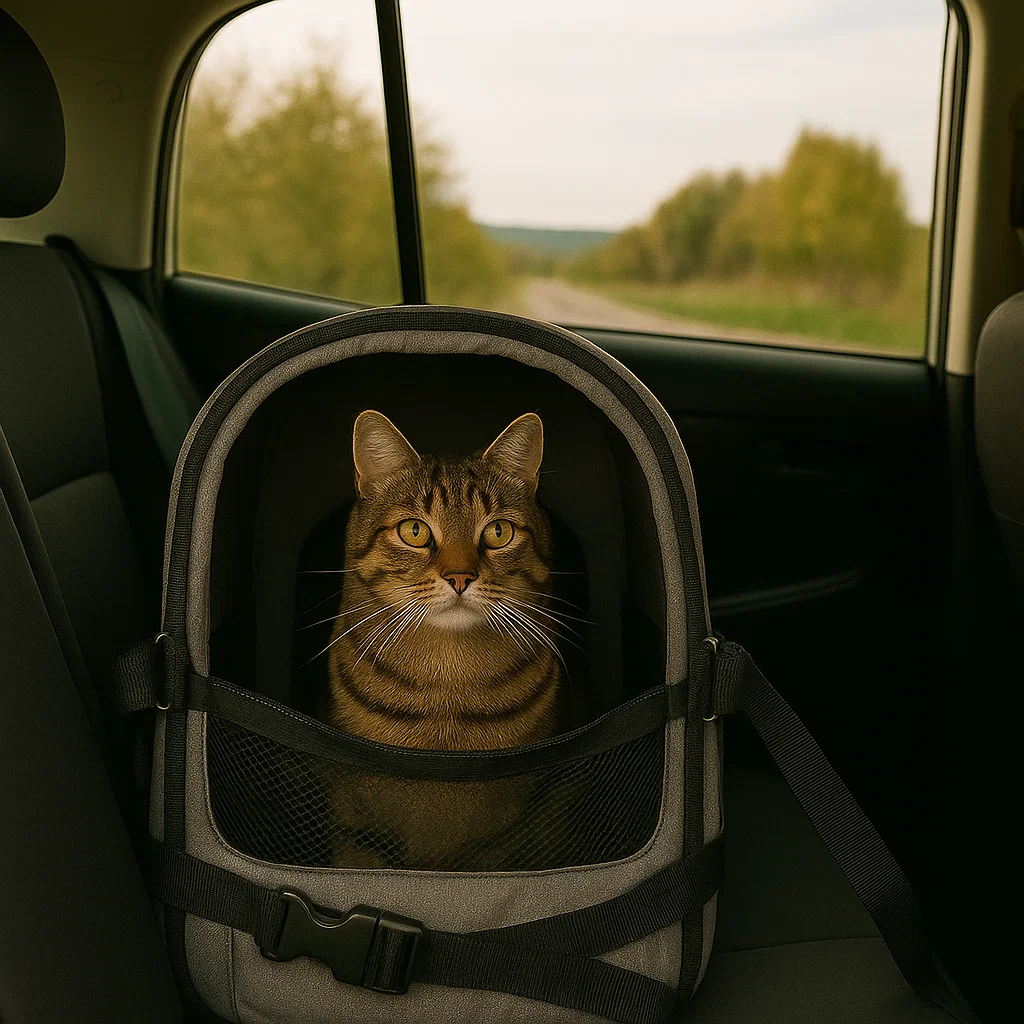
My cats taught me something remarkable – they can be wonderful travel companions despite their reputation as homebodies. I remember how nervous I was during our first car journey together, but now my feline friends actually look forward to our adventures on the road.
I take my cats on regular car trips, from quick vet visits to long holiday journeys. The secret lies in proper preparation and safety measures. I always secure my cats properly during travel – it’s non-negotiable in my book. Whether you’re planning a short drive to the vet or gearing up for a cross-country adventure, I’ll share my tried-and-tested tips to make car travel enjoyable for your cat.
Essential Equipment for Travelling with a Cat in a Car Safely
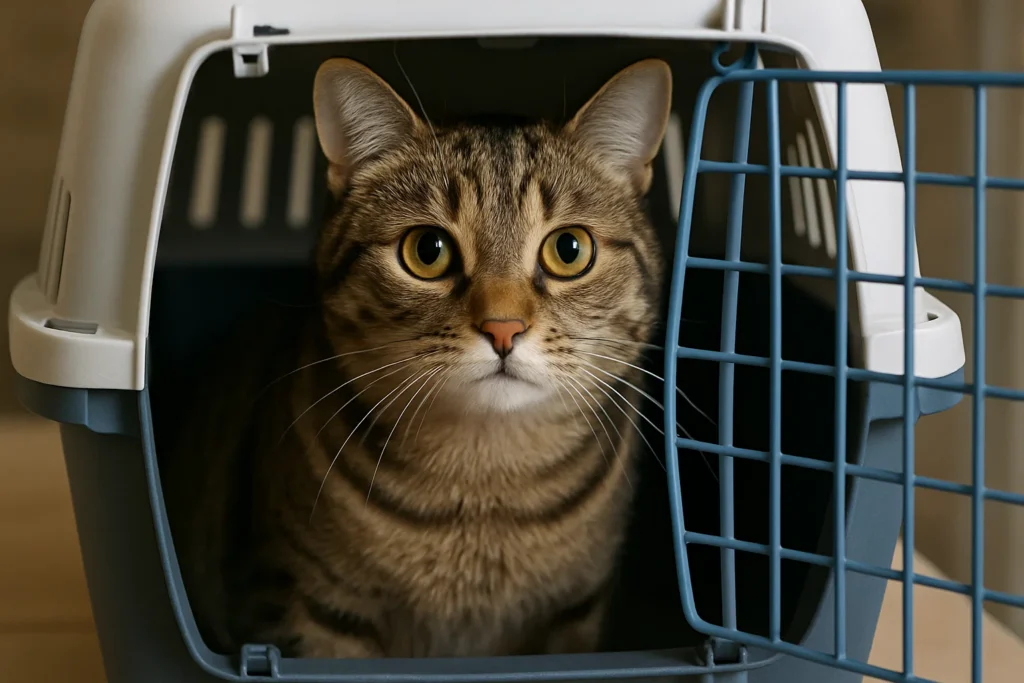
I’ve learned that choosing the right travel gear makes all the difference between a stressful journey and a pleasant adventure. My years of travelling with cats taught me that proper equipment not only keeps them safe but also helps them feel more relaxed during car rides. The American Veterinary Medical Association recommends carriers or harnesses that ensure proper restraint and ventilation for your pet.
Choosing the Right Cat Carrier
I always tell fellow cat owners that a properly sized carrier is absolutely crucial. Your cat should have enough space to stand up, turn around, and lie down comfortably. From my experience, an 18-20 inch carrier works perfectly for most average-sized cats. You can read more about ideal carrier sizing in my guide on litter training kittens, which also covers introducing confined spaces positively.
| Feature | Specification |
|---|---|
| Size | 18-20 inches long for average cats |
| Ventilation | Multiple mesh panels |
| Access Points | Top and front entry |
| Security | Zipper locks or sturdy latches |
| Material | Hard plastic or ballistic nylon |
Safety Harnesses and Restraints
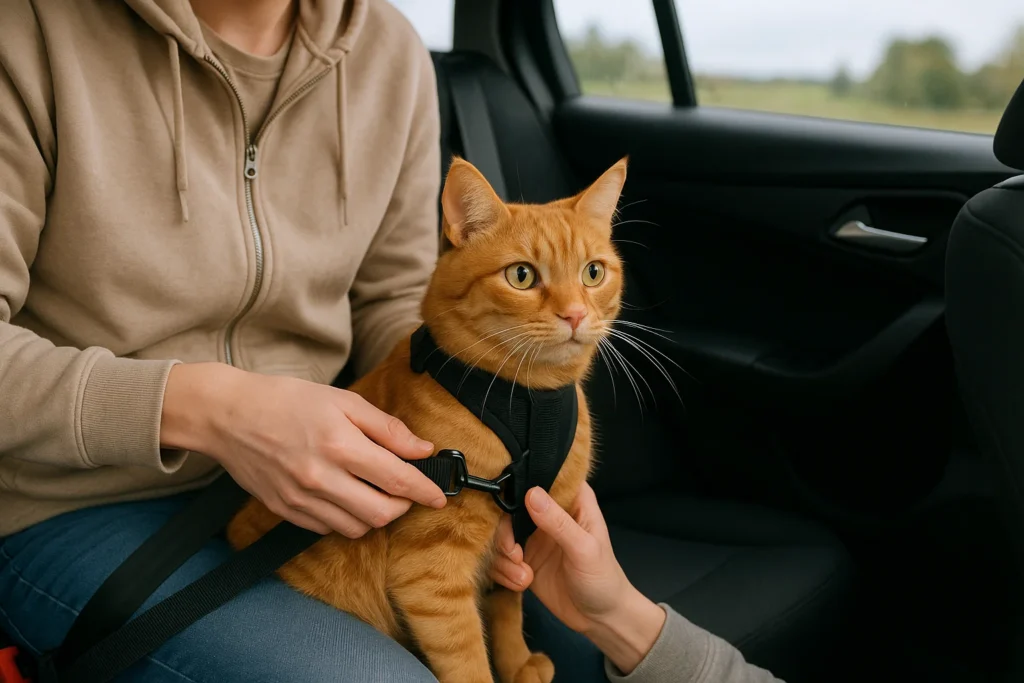
While I prefer carriers for most journeys, I’ve discovered that some cats do better with harnesses. My nervous Persian actually calmed down significantly when I switched to a harness system. A good car harness should have a padded chest piece, adjustable straps, and a safety tether that connects to the seat belt. The RSPCA notes that secure harnessing reduces anxiety and prevents escape-related injuries during travel.
Comfort Items and Supplies
I never leave home without items that make my cats feel secure. My essential travel kit includes:
- A spill-proof water bowl
- Their favourite blanket from home
- Calming pheromone spray like Feliway Classic
I’ve found these small comforts make all the difference. For more on keeping cats relaxed, check my article What Is Toxic to Cats? to ensure your travel gear stays safe and free from harmful materials.
Preparing Your Cat for Car Journeys
My secret to successful cat travel didn’t happen overnight. I spent months helping my cats feel comfortable in the car. The PetMD feline travel guide recommends gradual desensitisation and positive reinforcement – both of which worked wonders for me.
Getting Your Cat Used to the Carrier
I learned that my cats needed to see their carrier as part of their everyday world. Rather than tucking it away, I keep it right in the living room with toys and treats inside. Over time, my cats began associating the carrier with safety, not stress.
| Do’s | Don’ts |
|---|---|
| Leave carrier out permanently | Force cat into carrier |
| Use familiar bedding | Rush the process |
| Add treats regularly | Move carrier location often |
| Keep door open initially | Use only for vet trips |
Short Practise Trips
Once my cats got used to the carrier, we took short car trips. I started with the engine off, then on, then around the block. The International Cat Care foundation advises this step-by-step exposure to help cats adjust at their own pace.
Positive Reinforcement Techniques
Treats and praise transformed travel for my cats. Rewarding calm behaviour in the car helped them build positive associations. You can find more behaviour-shaping advice in my post Understanding Cat Body Language.
Setting Up Your Car for Cat Travel
Creating a Safe Travel Space
I always place my cats’ carrier in the back seat, away from airbags. I secure it with the seatbelt and ensure airflow from nearby vents. The VCA Animal Hospitals experts recommend never putting carriers in front seats due to airbag impact risks.
Temperature Control Tips
Cars can heat up fast – by as much as 20°F in 10 minutes. I use reflective window shades and portable fans to maintain comfort. The ASPCA stresses never leaving pets in parked cars, even with windows cracked.
Securing Equipment and Supplies
I keep all essentials in reach: first aid kit, wipes, bottled water, and health documents. My vet once advised keeping a copy of vaccination records in the car – it’s proven invaluable during emergencies. You can learn more about preventative care in my blog on How Often Cats Need Worming.
Managing Food and Bathroom Breaks
Feeding Schedule Adjustments
I learned to avoid feeding my cats right before travel. Withholding food 4–5 hours before departure helps prevent sickness. The Hill’s Pet Nutrition team explains that smaller, spaced meals reduce nausea in cats prone to motion sickness.
Portable Litter Box Solutions
For long journeys, I carry a portable litter tray lined with disposable liners. I recommend the Necoichi Portable Cat Litter Box – waterproof, foldable, and easy to clean. It’s saved me on countless long drives.
Planning Rest Stops
I schedule 15-minute stops every two hours. This gives my cats time to rehydrate and use their travel litter box. During summer trips, I keep my car temperature between 18–22°C. The Cats Protection organisation recommends frequent breaks for cats on extended journeys.
Handling Common Travel Challenges
Motion Sickness Prevention
Motion sickness can happen even to the most seasoned cat traveller. The PetMD guide on car sickness identifies drooling, vomiting, and excessive meowing as early warning signs. I find that facing the carrier forward and avoiding heavy meals before travel helps greatly.
Stress Management Strategies
Each of my cats handles stress differently. My Persian loves the ThunderShirt; my Bengal prefers pheromone sprays. The AVMA also recommends familiar scents and soothing background sounds during trips. I’ve written more about easing feline anxiety in Why Cats Purr: The Science Behind the Sound.
Emergency Situation Guidelines
I always travel with a bright red emergency kit containing vaccination records, vet contact numbers, water, and a pet first aid guide. I also store an emergency vet locator app on my phone – a tip I got from a travelling vet friend. The VCA First Aid Guide offers a solid reference for on-the-go pet emergencies.
Final Thoughts – Travelling with a Cat in a Car

After years of travelling with my three cats, I can confidently say car journeys don’t have to be stressful. My once-nervous Persian now settles happily into her carrier, and my Bengal gets excited when he sees his harness. Safety, patience, and consistency have made all the difference.
Proper carriers, secure setups, and gradual exposure transformed our experiences. Every cat progresses differently, but with time and positive reinforcement, your feline companion can learn to love the journey as much as the destination. Start small, stay calm, and celebrate every milestone along the way – it’s absolutely worth it.
FAQs
How long can a cat safely travel in a car?
Most cats can handle up to 8 hours with scheduled breaks every 2–3 hours for hydration and litter use (RSPCA).
What’s the safest way to secure a cat in a car?
Use a crash-tested carrier secured with a seatbelt in the back seat. Avoid the front seat due to airbags (AVMA).
How should I manage feeding during long journeys?
Withhold food 4–5 hours before departure, then offer small snacks and water during breaks (PetMD).
What if my cat gets stressed during car travel?
Use calming pheromone sprays and maintain familiar scents. In severe cases, consult your vet for mild sedatives (Hill’s Pet Advice).
How can I prevent motion sickness?
Position carriers forward-facing, limit feeding before travel, and use vet-prescribed anti-nausea meds like Cerenia (VCA).