
You shuffle out of the bedroom, coffee in hand — and there it is again. A small feathered body on the mat. Or worse, something still half-alive and fluttering under the sofa. You love your cat. You also feel terrible about this.
“He does not eat them, however he does bring them into the house to show us! Every morning and we never know what we are going to walk out of the bedroom to.”
That quote comes from a real cat owner, and it captures exactly what so many people feel: confused, guilty, and completely at a loss. The good news is that figuring out how to stop cats killing birds does not require locking your cat indoors forever. A 2021 University of Exeter study of 355 cats showed that targeted changes to diet, play, and gear can reduce bird kills by up to 36% without confining your cat at all. This guide draws on that research — and peer-reviewed data from Global Ecology and Conservation — to give you seven practical steps you can start today.
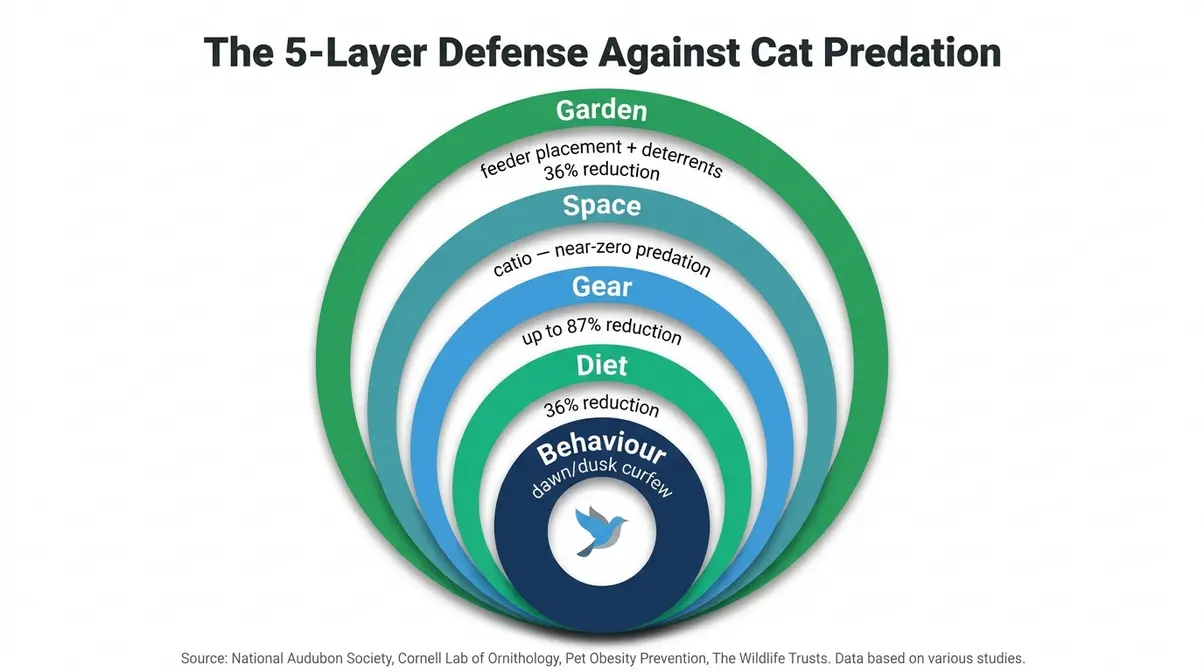
Learning how to stop cats killing birds is achievable through the 5-Layer Defense: a combination of Behaviour, Diet, Gear, Space, and Garden strategies that together can reduce predation to near zero.
- Layer 1 – Behaviour: Restrict outdoor access during dawn, dusk, and fledgling season (April–July).
- Layer 2 – Diet: Switching to a high-protein, grain-free food reduced kills by 36% in the Exeter study (University of Exeter, 2021).
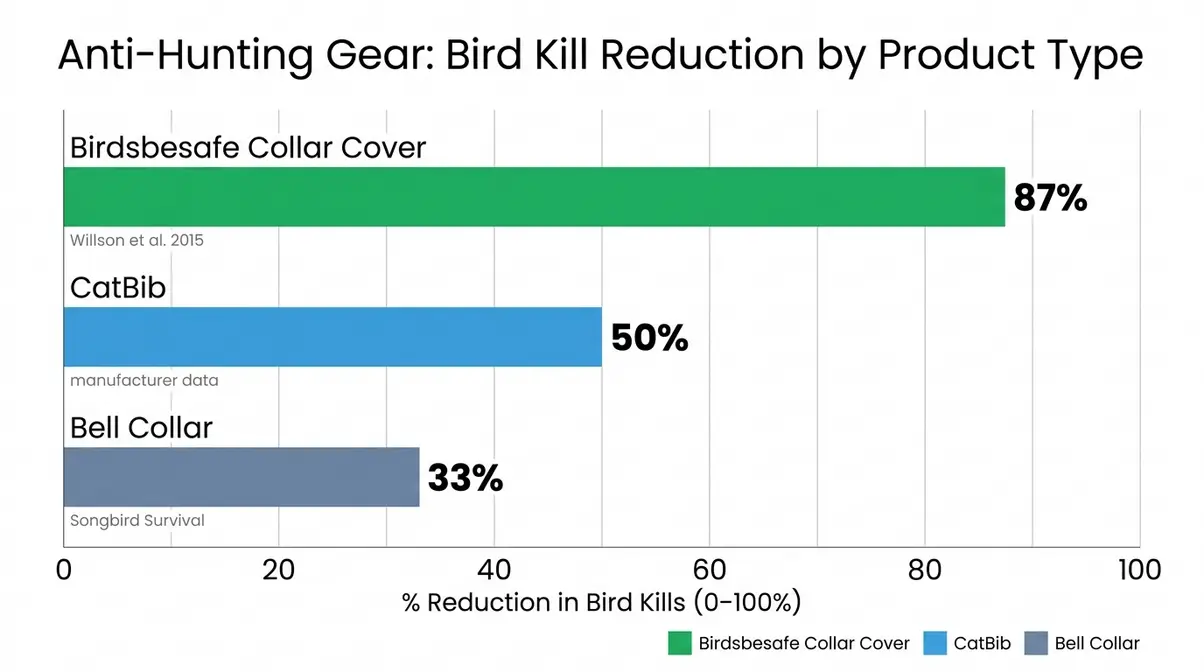
- Layer 3 – Gear: A Birdsbesafe collar cover can reduce bird kills by up to 87% (Willson et al., Global Ecology and Conservation, 2015).
- Layer 4 – Space: A catio (outdoor cat enclosure) gives your cat fresh air and stimulation without access to wildlife.
- Layer 5 – Garden: Smart feeder placement and cat-deterrent surfaces protect birds even when your cat is outside.
Why Your Cat Hunts Birds
Understanding the “why” makes every step below easier to trust and apply. This section is short — but it changes how you see the whole problem.
Why did my cat start killing birds?
If you are wondering why your cat has suddenly started killing birds, the answer lies in their hardwired instincts. Hunting is hardwired into your cat’s brain, regardless of how full their food bowl is. Domestic cats (Felis catus) evolved from African wildcats whose survival depended entirely on catching prey. That neural wiring has not changed in thousands of years of domestication. The hunting drive and hunger are controlled by separate brain circuits — which is precisely why a well-fed cat will still stalk and kill birds without any intention of eating them (Cornell Feline Health Center, 2023).
This is not bad behaviour. It is not spite. Your cat is simply doing what their nervous system tells them to do. Research suggests the sequence of hunting — the stalk, pounce, and catch — releases feel-good neurochemicals that reward the cat independently of food. That is why “he does not eat them” is so common. The kill itself is the reward.
Sudden increases in hunting often coincide with spring (April–July), when fledgling birds are on the ground and easy to catch. A change of territory, a new outdoor space, or reduced stimulation indoors can also trigger a spike in prowling cats.
The Scale of the Problem
Free-roaming domestic and feral cats kill an estimated 1.3 to 4 billion birds in the United States alone each year, making them the single largest human-related cause of bird death (Loss et al., Nature Communications, 2013). In the UK, domestic cats account for roughly 55 million bird deaths annually (Mammal Society, 2019).
That scale can feel overwhelming — but your individual cat’s impact is real and reducible. This is where The 5-Layer Defense comes in. Rather than relying on one method (like a bell collar) that cats quickly learn to work around, The 5-Layer Defense stacks five complementary strategies: Behaviour, Diet, Gear, Space, and Garden. Each layer reduces predation independently; combined, they compound each other’s effectiveness. The sections below walk you through each layer as a numbered step.
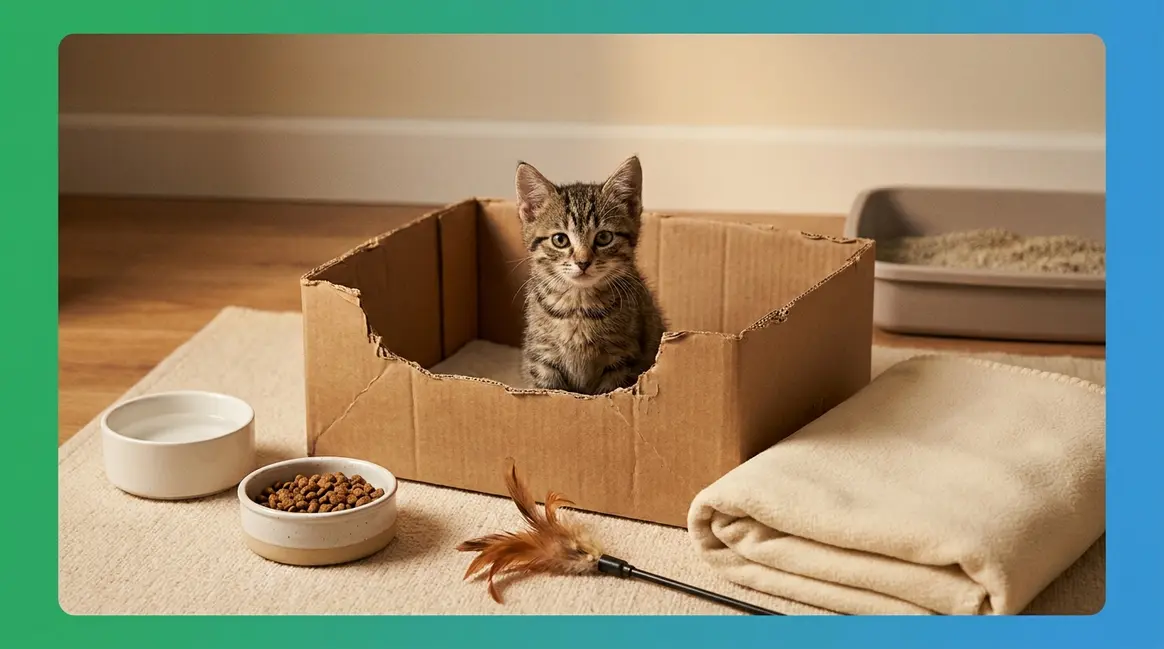
- Estimated Time: 1-2 weeks (transition and setup)
- Tools/Materials Needed:
- Quick-release breakaway collar
- Birdsbesafe cover or CatBib
- Feather wand toy
- High-protein, grain-free cat food
- Catio materials (optional)
Step 1: Restrict Outdoor Access
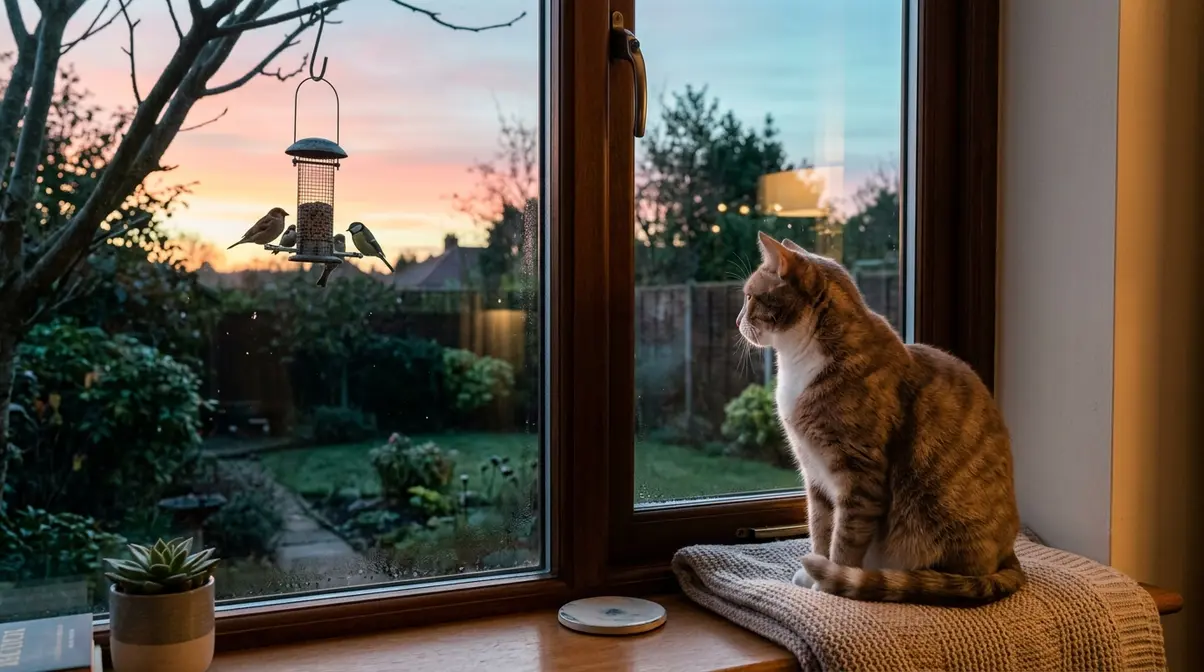
The single fastest win in preventing cats from killing birds is timing. You do not need to confine your cat permanently — you need to confine them strategically.
Dawn, Dusk, and Fledgling Season
Birds are most vulnerable at two daily windows: dawn (30 minutes after sunrise) and dusk (30 minutes before sunset). These are peak feeding and foraging times, when birds are active, distracted, and close to the ground. Keeping your cat indoors during these windows alone can dramatically cut their hunting opportunities.
The second critical window is fledgling season: roughly April through July in the UK and Northern US. Young birds that have left the nest but cannot yet fly well spend days on the ground — they are easy targets for prowling cats. Songbird Survival recommends treating this entire period as a soft curfew season, with indoor time extended through early morning.
- Practical curfew schedule:
- Bring your cat in at least 30 minutes before sunset each day.
- Do not let them out until at least one hour after sunrise.
- From April through July, extend the morning delay to two hours.
- Use an automatic cat flap with a timer to enforce the schedule without manual effort.
✓ Step 1 Checkpoint: Your cat is kept indoors during dawn, dusk, and all of April–July mornings.
Transitioning to Indoors
If your cat currently has unrestricted outdoor access, a sudden lockdown will cause stress — for both of you. A gradual transition works far better.
- Week 1: Begin the dawn/dusk curfew only. Let your cat adjust to shorter outdoor windows.
- Week 2: Add a midday indoor enrichment session — puzzle feeders, a window perch, or a bird-watching video on a tablet. This redirects the hunting urge indoors.
- Week 3: Introduce a timed cat flap so access becomes automatic and consistent (cats adapt quickly to predictable routines).
- Week 4: Extend indoor time by 30-minute increments until you reach your target schedule.
- Ongoing: Ensure at least two 10-minute interactive play sessions per day (see Step 2) — indoor cats need more structured stimulation than outdoor cats.
A gradual approach like this respects your cat’s need for territory while systematically reducing their time in peak hunting zones.
Step 2: Implement a Daily 10-Minute Play Routine
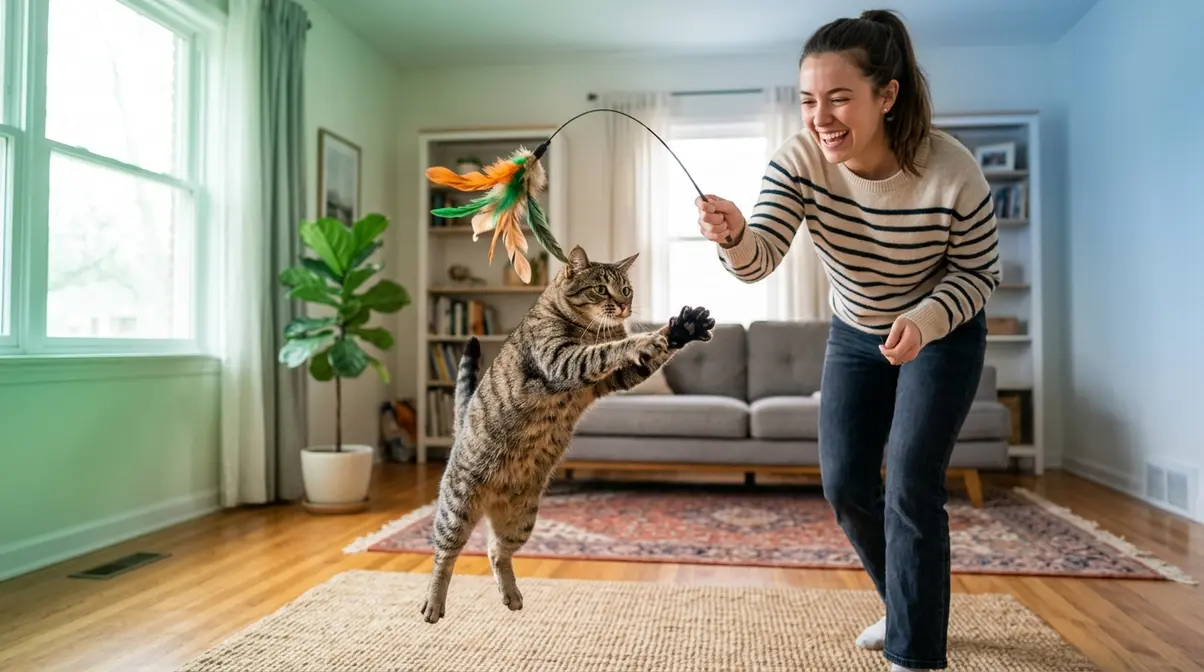
This is one of the most underrated tools to learn how to stop cats killing birds — and it is backed by hard data. The 2021 University of Exeter study found that just five to ten minutes of daily object play (using a wand toy that mimics prey movement) reduced the number of animals cats brought home by 25% (Cecchetti et al., Current Biology, 2021). That is a significant reduction from something that costs you ten minutes a day.
The 10-Minute Wand Play Protocol
The goal is to simulate a complete hunt: stalk, chase, pounce, catch. This satisfies the neural hunting circuit so your cat feels less compelled to seek out real prey.
Follow this sequence:
- Choose a feather wand or a toy that mimics bird movement — erratic, fluttery, and unpredictable. Laser pointers alone are not recommended as they provide no physical catch at the end, which can leave cats frustrated.
- Move the toy like a bird: drag it low along the floor, then flutter it upward, then let it “hide” behind a cushion. Vary the speed.
- Let your cat catch it regularly — every 60 to 90 seconds of chase, allow a successful pounce. This is critical. A hunt with no capture is unsatisfying and does not discharge the drive.
- End each session with a small food treat or meal. Research from the Exeter study suggests finishing play with food mimics the natural post-hunt eat cycle, further reducing the urge to go outside and find real prey.
- Run two sessions daily: once in the morning before outdoor access, and once in the evening before the dusk curfew.
✓ Step 2 Checkpoint: Your cat completes two 10-minute wand play sessions per day, ending each with a small food reward.
Choosing the Right Hunting Toys
Not all toys engage the hunting drive equally. Here is what to look for:
| Toy Type | Why It Works | Best For |
|---|---|---|
| Feather wand / Da Bird | Mimics bird flutter and movement | Daily play sessions |
| Motorised flutter toy | Moves unpredictably without constant human input | Solo play when you are busy |
| Puzzle feeder / snuffle mat | Engages the “seek” circuit through food foraging | Supplementary enrichment |
| Crinkle ball / foil ball | Satisfies batting and chasing | Short bursts between sessions |
Rotate toys every few days. Cats habituate quickly to the same toy, and a habituated cat is a bored cat — and a bored cat goes outside looking for something more interesting.
Step 3: Switch to a High-Protein, Meat-Rich Diet

Diet is perhaps the most surprising lever for reducing cat predation on birds — and the most underused. The same University of Exeter study found that switching cats to a grain-free, high-protein food (without any change to portion size) reduced the number of animals they brought home by 36% (Cecchetti et al., Current Biology, 2021). That is the single largest reduction of any individual method tested.
How Protein Reduces the Urge to Hunt
The mechanism is nutritional. Many standard cat foods use grain-based fillers — corn, wheat, rice — as cheap protein substitutes. These carbohydrates do not satisfy a cat’s biological need for amino acids derived from animal protein. Your cat may eat a full bowl of food and still feel nutritionally incomplete, which research suggests triggers the hunting drive as a compensatory behaviour.
When cats receive adequate animal protein, the nutritional signal that says “I need to find prey” is quieted. Veterinary nutritionists at Cornell University confirm that cats are obligate carnivores — they cannot synthesise essential amino acids like taurine and arginine from plant sources and must obtain them from meat (Cornell Feline Health Center, 2023). A diet that meets this biological need at the bowl reduces the biological pressure to meet it in the garden.
What to Look for on the Food Label
Switching to a better food does not have to be expensive. Here is how to read a label:
- First ingredient must be a named meat: “Chicken,” “Salmon,” or “Turkey” — not “Meat and animal derivatives” (a vague filler term).
- Crude protein should be ≥30% on a dry matter basis for dry food, or ≥8% as fed for wet food.
- Grains should not appear in the first five ingredients. Corn, wheat, barley, and rice are the most common fillers to avoid.
- Look for “grain-free” or “high-meat” labelling as a starting filter, then verify the ingredient list.
- Transition gradually: Mix 25% new food with 75% old food for three days, then 50/50 for three days, then 75/25 — this prevents digestive upset.
✓ Step 3 Checkpoint: Your cat’s food lists a named meat as the first ingredient and contains no grain in the top five ingredients.
Step 4: Fit Your Cat with Anti-Hunting Gear
Anti-hunting gear is the Gear layer of The 5-Layer Defense. The right product can dramatically cut bird kills — but the type of gear matters enormously, and all collars must be quick-release or breakaway to prevent your cat getting snagged and injured.
Birdsbesafe Collar Cover
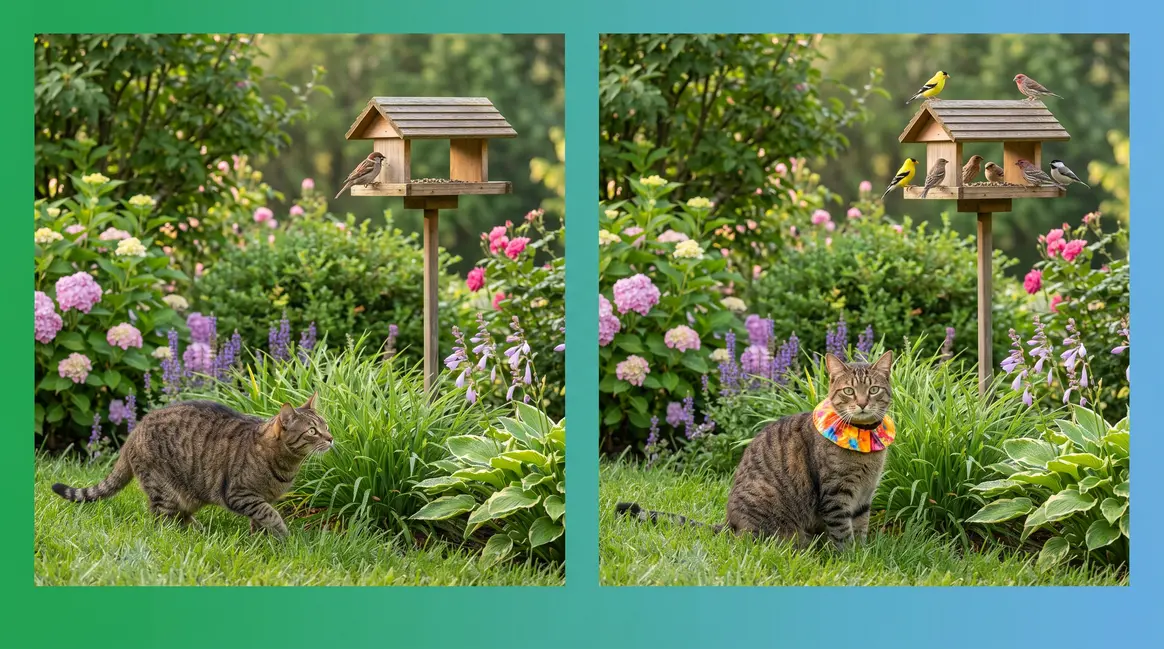
The Birdsbesafe collar cover is a brightly coloured fabric ruff that attaches to your cat’s existing quick-release breakaway collar. Birds can see the warning colours from a distance; cats, which have limited colour vision compared to birds, are largely unaffected by wearing it.
A peer-reviewed study published in Global Ecology and Conservation found that Birdsbesafe collar covers reduced bird kills by up to 87% across tested cats, with the strongest results for songbirds and robins (Willson et al., 2015). The mechanism is simple: birds have tetrachromatic vision (they see ultraviolet light), making the bright collar highly visible as a warning signal. A cat wearing a Birdsbesafe cover approaches a bird and the bird simply flies away earlier.
- How to fit it:
- Purchase a quick-release or breakaway collar separately (this is non-negotiable for safety — a standard buckle collar can trap a cat on a branch or fence).
- Thread the Birdsbesafe cover onto the collar before fitting.
- Check the fit: you should be able to slide two fingers under the collar. Too tight risks injury; too loose and your cat will remove it.
- Replace the cover every few months as fading reduces its visibility to birds.
The CatBib Physical Barrier
The CatBib is a small neoprene bib that hangs from a quick-release breakaway collar and rests against the cat’s chest. It does not prevent the cat from running or climbing — it disrupts the final lunge, the split-second movement where a cat extends their paws to catch prey. Manufacturer-cited data and independent user testing suggest reductions of around 50% for bird kills, with stronger results for ground-feeding birds.
The CatBib works on a different principle from Birdsbesafe: it is a physical barrier rather than a visual signal. This makes it useful in low-light conditions where colour warning is less effective. Some cats initially resist wearing it, but most adapt within a few days.
Best for: Cats that hunt at dawn or dusk when light is low, or cats that primarily target ground-feeding birds.
Bell Collars – Easy but Limited
Bell collars are the most widely used anti-hunting device — and the most overestimated. Research indicates bells can reduce bird kills by approximately 33%, but cats quickly learn to move in a way that silences the bell (Songbird Survival, cited in RSPB guidance). A young, agile cat will learn bell-muffling within weeks.
That said, bells are better than nothing, and they are cheap and widely available. If you use one, always ensure the collar has a quick-release or breakaway safety mechanism — this is essential. A cat that catches a bell collar on a branch without a breakaway clasp can strangle.
✓ Step 4 Checkpoint: Your cat wears a Birdsbesafe cover or CatBib on a quick-release breakaway collar. Bells are used only in addition to, not instead of, a primary deterrent.
Step 5: Build or Buy a Catio
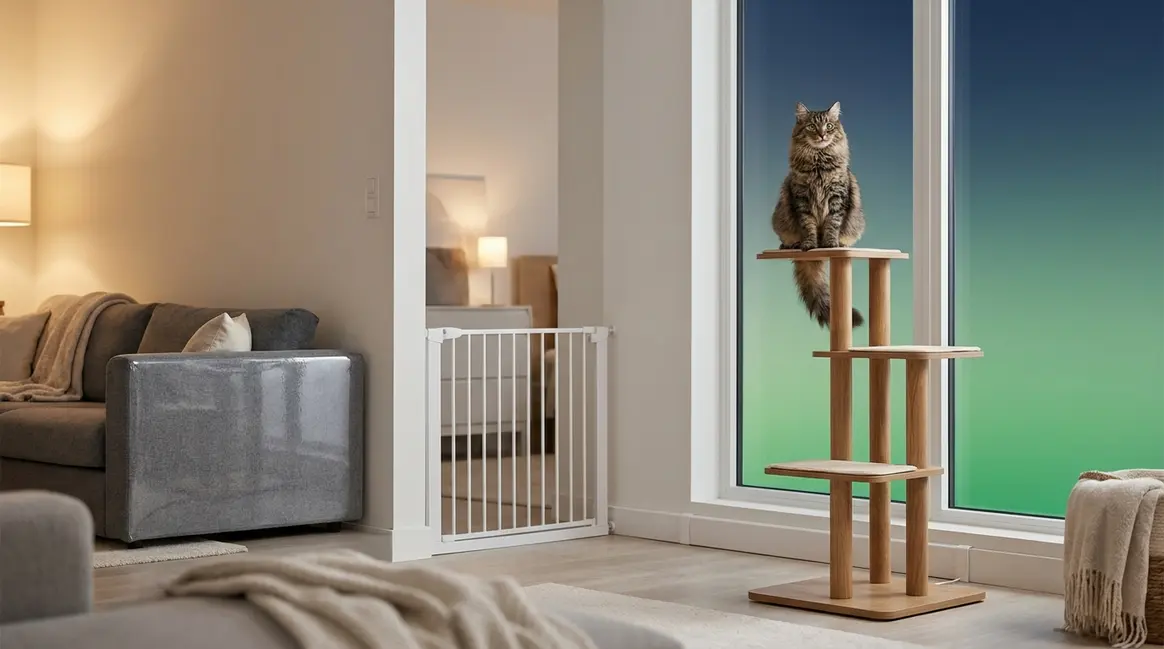
A catio (an outdoor cat enclosure — the word combines “cat” and “patio”) is the Space layer of The 5-Layer Defense. It gives your cat fresh air, sunlight, and sensory stimulation — the smells, sounds, and sights of the outdoors — while physically preventing access to wildlife.
What Is a Catio and Why It Works
A catio is an enclosed outdoor structure attached to a window, door, or wall of your home. It can range from a small window box to a large walk-in garden enclosure. The key feature is a fully enclosed mesh or wire design that cats cannot escape through. Inside, you add shelves, perches, and plants (cat-safe ones like catnip or valerian) to keep the environment stimulating.
Catios work because they address a real need. Outdoor cats are not hunting purely out of boredom — they also crave outdoor sensory input. A catio satisfies that craving without the predation risk. Cat owners who have installed catios consistently report that their cats spend hours contentedly watching birds from inside the enclosure, with no opportunity to catch them.

Three Catio Options for Any Budget
| Option | Description | Approximate Cost | Best For |
|---|---|---|---|
| Window Box Catio | Small mesh box mounted outside a window; cat exits through the window | £50–£150 | Flat or terraced house; limited garden space |
| Tunnel System | Mesh tunnels running along a fence or wall to a small enclosure | £150–£400 | Cats that want to roam; gardens with perimeter fencing |
| Walk-In Garden Enclosure | Freestanding or attached large enclosure with plants, shelves, and a door | £400–£1,500+ | Multiple cats; owners who want to spend time with their cat outdoors |
DIY builds using timber frames and galvanised mesh (19mm hex wire or welded mesh) can halve the cost of a walk-in enclosure. Numerous free plans are available from catio-specific websites and owner communities.
✓ Step 5 Checkpoint: Your cat has access to a fully enclosed outdoor space (catio or enclosed garden run) that prevents contact with wildlife.
Step 6: Make Your Garden Safer for Birds
Even with all the above in place, your garden’s layout can either invite disaster or protect visiting birds. This is the Garden layer of The 5-Layer Defense — and it is especially important if neighbour cats also use your garden.
Smart Bird Feeder and Bath Placement
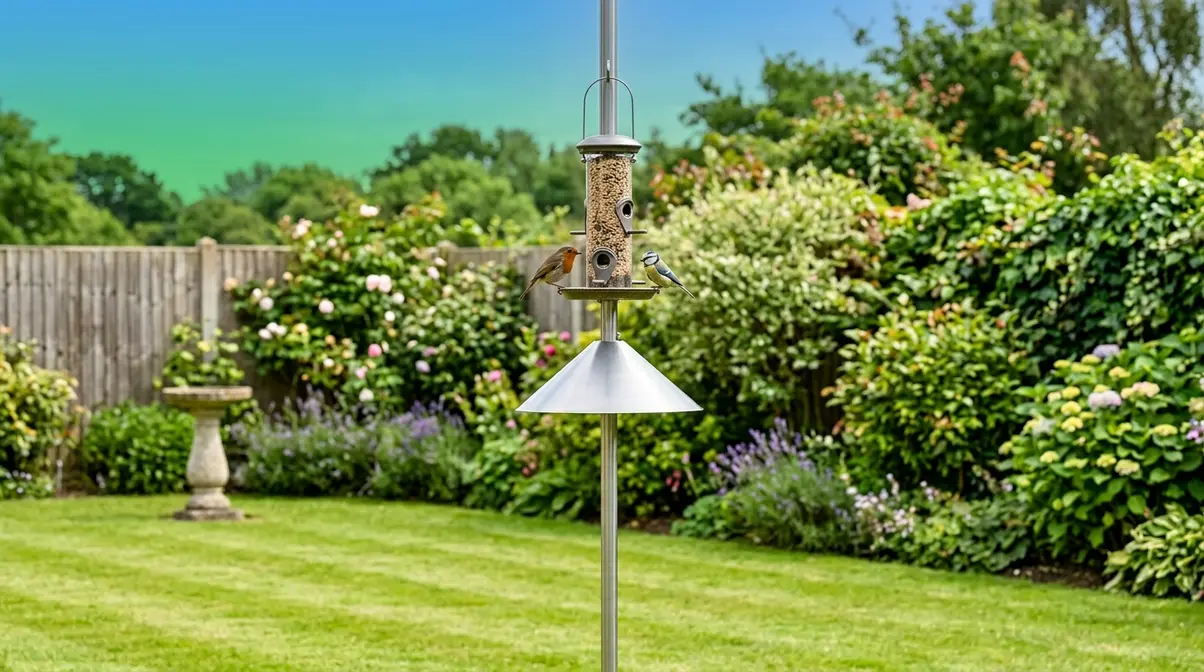
The most common mistake garden bird enthusiasts make is placing feeders and baths at ground level or close to dense shrubs. These give cats ideal cover to stalk from. The RSPB recommends placing bird feeders and baths on smooth-pole mounts at least 1.5 to 2 metres from any fence, wall, or dense planting that a cat could use as a launch point. Smooth metal poles prevent cats from climbing; a cone-shaped baffle below the feeder makes it even harder.
- Feeder placement checklist:
- Mount feeders on a smooth metal pole, minimum 1.5m from cover.
- Fit a cone or dome baffle 30–40cm below the feeder.
- Place birdbaths on pedestal mounts, not on the ground.
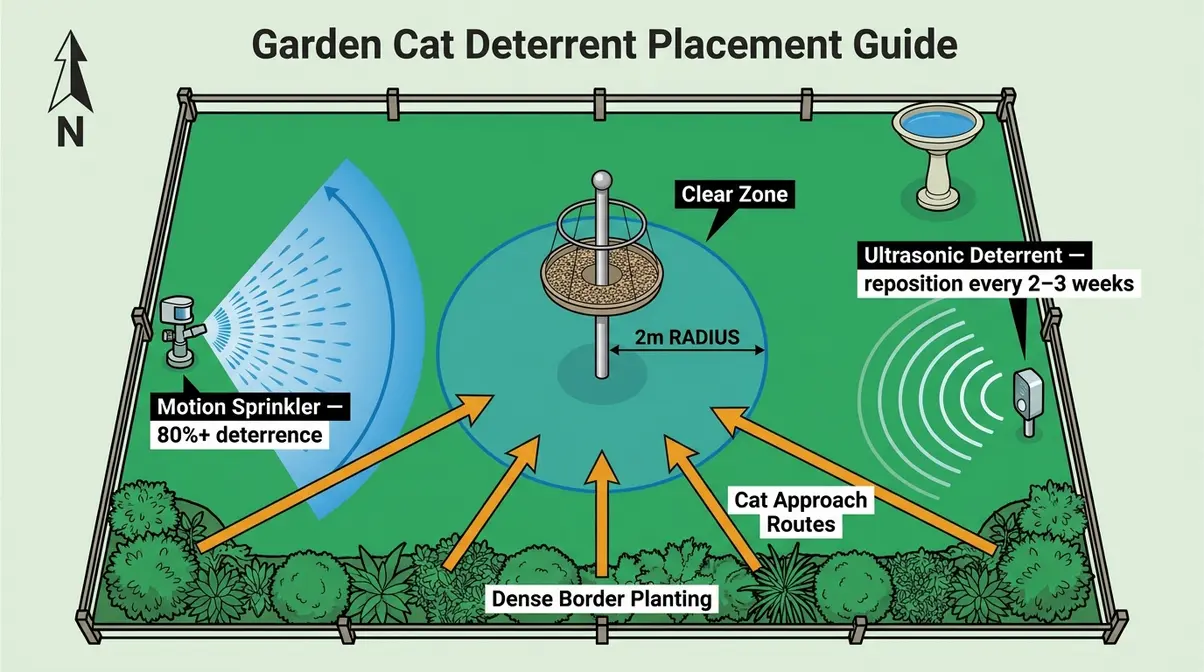
- Clear a 2-metre radius around feeding stations — no dense ground-level planting.
- Remove fallen seed from the ground daily, as ground-feeding birds are the most vulnerable.
For more detailed guidance on keeping cats out of your outdoor spaces entirely, see our guide on keep neighbours’ cats out of your garden.
How to repel cats but not birds?
If you are wondering how to repel cats but not birds, the answer lies in specific plants and surfaces. Certain plants and ground textures are unpleasant for cats and can discourage them from stalking through bird-feeding areas without bothering the birds.
- Cat-deterrent plants (safe for birds):
- Coleus canina (Scaredy Cat plant): Emits a scent cats find strongly unpleasant; birds ignore it.
- Lavender and rosemary: Mildly off-putting to cats; attractive to pollinators.
- Holly and hawthorn: Dense, prickly hedging that cats avoid as ground-level cover.
- Surfaces that deter cats:
- Pebble mulch or decorative gravel around feeder bases — cats dislike the unstable footing.
- Plastic carpet runner placed spike-side up (available from DIY stores) around planting beds.
- Pine cone mulch in borders — uncomfortable on paws.
✓ Step 6 Checkpoint: Bird feeders and baths are mounted on smooth poles, at least 1.5m from cover, with baffles fitted.
Step 7: Deter Feral Cats
Your own cat may be well-managed — but your garden can still be a hunting ground for other cats in the neighbourhood. This step focuses on keeping all cats away from your bird-friendly spaces.
Motion-Activated Deterrents That Work
Motion-activated water sprinklers (such as the Contech ScareCrow or similar models) are among the most consistently effective cat deterrents for gardens. They detect movement via infrared sensor and release a short burst of water. Cats strongly dislike being sprayed and will quickly avoid the zone. Studies on their effectiveness suggest deterrence rates of over 80% when positioned correctly (University of Florida IFAS Extension, 2022).
Ultrasonic deterrents are widely sold but less reliable. Their effectiveness varies significantly by cat, frequency range, and garden size. Some cats habituate to them quickly; others avoid the zone reliably. If you use one, choose a model with multiple frequency settings and reposition it every few weeks to prevent habituation.
Scent Barriers and Physical Exclusion
Scent deterrents use smells that cats find aversive. Lion dung pellets (sold by garden centres as “Silent Roar”) are a traditional option; commercial sprays containing citrus oil or methyl nonyl ketone (a synthetic cat repellent) can be effective when reapplied after rain. Apply along fence lines and around feeder bases.
Physical exclusion is the most reliable long-term solution for determined cats. Options include:
- Roller bars on fence tops (e.g., Oscillot): Spinning plastic rollers prevent cats from getting purchase on the fence top. These are humane and highly effective.
- Overhang mesh on fence tops: An inward-angled mesh apron prevents cats from climbing over.
- Prickle strips: Plastic spike strips along fence tops — uncomfortable but not harmful.
✓ Step 7 Checkpoint: At least one active deterrent (sprinkler or ultrasonic) and one physical barrier (roller or overhang) are in place along fence lines near bird feeding areas.
Limitations to Consider
The 5-Layer Defense is effective for the vast majority of domestic cat owners. However, honest guidance means acknowledging where it falls short.
Common Mistakes That Undermine Progress
Relying on a single method is the most common error. A bell collar alone, or diet alone, produces modest results. The University of Exeter study found that diet and play combined outperformed either method separately — this is the core principle of The 5-Layer Defense (Cecchetti et al., Current Biology, 2021). Stack the layers.
Fitting a non-breakaway collar is a safety risk that cannot be overstated. Standard buckle collars can catch on branches, fences, or even the cat’s own jaw if they scratch at it. Every collar — for any purpose — must have a quick-release or breakaway clasp. This applies to bell collars, Birdsbesafe covers, and CatBibs alike.
Inconsistent curfews undermine the timing strategy. If your cat gets outside at dawn three mornings a week, those three mornings can account for the majority of kills. Consistency matters more than strictness.
When a Different Approach Works Better
Some cats are extreme hunters — bringing home five or more birds per week regardless of enrichment and dietary changes. For these cats, full-time indoor living with a catio for outdoor access is the most reliable solution. It is not the right fit for every owner or every cat, but it is worth considering if other methods have not produced results after six to eight weeks of consistent application.
If your cat targets a specific species that is locally threatened or rare, contact your local wildlife trust or conservation organisation for tailored advice.
When to Consult a Vet or Behaviourist
If your cat’s hunting behaviour has increased suddenly, this can sometimes signal an underlying health issue — hyperthyroidism, anxiety, or cognitive changes in older cats can all increase predatory behaviour. A sudden spike in hunting is worth a veterinary check-up.
For cats with deeply ingrained hunting habits that do not respond to the steps above, a certified animal behaviourist (look for members of the Association of Pet Behaviour Counsellors, APBC) can design a personalised programme. This is not an admission of failure — it is using the right specialist for a persistent problem.
Frequently Asked Questions
How to stop cats killing birds?
The most effective approach combines three methods simultaneously: a high-protein diet, daily 10-minute play sessions with a wand toy, and a Birdsbesafe collar cover fitted on a quick-release breakaway collar. A 2021 University of Exeter study of 355 cats found that diet change alone reduced kills by 36%, and play alone by 25% — stacking both produced greater reductions. Restricting outdoor access during dawn and dusk windows further reduces opportunity. No single method is as effective as combining at least three.
Stop a cat from attacking a bird?
In the moment, a sharp noise or clap will interrupt the stalk-and-kill sequence — cats are startled by sudden sounds. However, interrupting individual attacks does not change the underlying drive. To prevent attacks from happening, fit your cat with a Birdsbesafe collar cover (which warns birds visually) or a CatBib (which disrupts the final lunge). Both must be attached to a quick-release breakaway collar. Long-term prevention requires the layered approach described in this guide.
Do bells on cat collars work?
Bell collars offer modest protection — roughly a 33% reduction in bird kills — but cats adapt to them quickly. Research shows that agile cats learn to move in ways that prevent the bell from sounding, typically within a few weeks. Bells are better than nothing and are a useful supplement, but should not be used as a standalone solution. A Birdsbesafe collar cover is significantly more effective for birds specifically. Whatever collar you use, it must have a quick-release or breakaway safety clasp.
Can you stop a cat hunting entirely?
Complete elimination is unlikely — but near-zero predation is achievable. Hunting is a deeply wired instinct, and no method removes it entirely. However, the University of Exeter study demonstrated that combining diet, play, and gear interventions can reduce kills by over 50% in many cats. Cats kept in a well-enriched indoor environment with catio access and daily play routines can go weeks or months without making a kill. The goal is not perfection — it is meaningful, sustained reduction.
Do certain cat breeds hunt more?
While all cats have hunting instincts, some breeds are more active. Breeds like Bengals, Savannahs, and Abyssinians often have higher prey drives. However, a cat’s individual personality and environment play a bigger role than breed alone.
Should I punish my cat for hunting?
No, you should never punish a cat for hunting. Hunting is a natural instinct, and punishment will only cause fear and anxiety, damaging your bond. Instead, focus on preventative measures like the 5-Layer Defense.
Your Action Plan Starts Today
For cat owners waking up to “gifts” on the doorstep, the 5-Layer Defense offers a realistic, science-backed path forward that does not require choosing between your cat’s freedom and the safety of local birds. If you are wondering how to stop cats killing birds, a 2021 University of Exeter study confirmed that diet and play changes alone reduce kills by up to 36% — and that is before adding gear, timing, and garden design.
The 5-Layer Defense works because it addresses the problem from five angles simultaneously: it quiets the nutritional drive to hunt, satisfies the behavioural urge through play, warns birds visually through gear, limits physical access through space management, and redesigns the garden environment. No single layer is a silver bullet. Together, they are.
Start with the two quickest wins: book in a 10-minute play session tonight, and check the ingredient label on your cat’s food tomorrow. Those two steps cost nothing and can begin reducing bird kills this week. If your cat continues hunting despite consistent effort over six to eight weeks, speak with your vet or a certified animal behaviourist — persistent hunting that resists all interventions occasionally signals an underlying health issue worth investigating.

Dave King
Cat owner and writer at Mad Cat Man.