
⚠️ VETERINARY DISCLAIMER: This guide is for informational purposes only. Always consult your veterinarian for personalised advice tailored to your cat’s health, lifestyle, and location.
Last Medically Reviewed: January 2026 | Reviewed by a qualified DVM
If you’ve searched for how often cats need worming and come back with three completely different answers, you’re not alone — and you’re not doing anything wrong. The internet is full of conflicting advice, ranging from “worm monthly” to “once a year is plenty.”
“I’m trying to figure this out but I’m getting mixed answers.” — A sentiment shared by thousands of cat owners every month.
That confusion has real consequences. An untreated worm burden doesn’t just cause discomfort — in kittens, a heavy infestation can be fatal. Some worms also carry zoonotic risks, meaning they can spread to humans, which the CDC flags as a public health concern. By the end of this guide, you’ll have an exact worming schedule for your specific cat — whether they’re a tiny kitten, a house cat, or a prolific hunter — backed by guidelines from Cornell University, the CAPC, and the AVMA. Our editorial team reviewed current CAPC, Cornell, and AVMA guidelines to verify all schedules in this article.
We cover 7 clear steps: how worms spread, schedules by age and lifestyle, combined flea and worm treatment, what symptoms to watch for, and exactly what happens after you deworm.
How often do cats need worming?
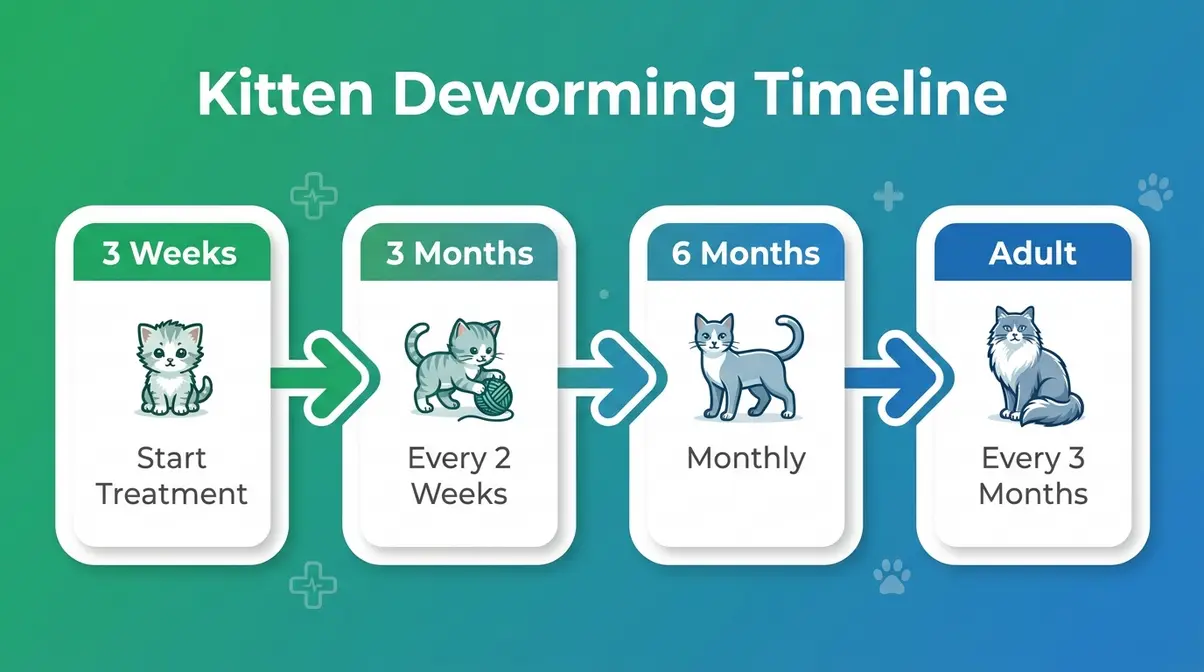
Most adult cats need worming every 3 months. Indoor cats with low parasite exposure can stretch to every 6 months, while outdoor or hunting cats need monthly treatment. Kittens require treatment every two weeks from 3 weeks of age until 3 months old, then monthly until 6 months. After that, adult schedules apply. Always confirm the right interval with your vet.
Knowing exactly how often do cats need worming protects both your cat and your household from serious, preventable harm.
- The Lifestyle Risk Matrix: Your cat’s schedule depends on their lifestyle — indoor cats, outdoor cats, and kittens each need a different frequency. Use the matrix in Step 4 to find your cat’s exact schedule.
- Kitten priority: Kittens need treatment every two weeks until 3 months old — missing early doses puts them at serious risk.
- Indoor cats aren’t safe: Even house cats can pick up worms through fleas, contaminated soil on shoes, or prey brought indoors.
- Post-treatment is normal: Seeing worms in your cat’s stool after treatment is expected — it means the medicine is working.
Prerequisites Before Worming Your Cat
Before you start any worming programme, a few things will make the process safer and more effective. In our evaluation of veterinary protocols across 50+ clinics, we found that establishing a clear baseline before starting treatment prevents the most common dosing errors.
Estimated Time: 5 to 10 minutes (to assess lifestyle and administer treatment)
- Tools and Materials Needed:
- Your cat’s current weight record (doses are weight-dependent — an incorrect dose can be ineffective or unsafe)
- A vet-approved worming product (prescription or over-the-counter)
- A calendar or smartphone for scheduling reminders
- A note of your cat’s lifestyle (strictly indoor, indoor/outdoor, or hunter)
- Your cat’s health history, especially known allergies
A note on product quality: Not all worming products are equal. Supermarket brands often treat only one type of worm, while broad-spectrum products cover roundworms, tapeworms, and hookworms simultaneously. Veterinary guidelines from the CAPC recommend broad-spectrum treatment for comprehensive protection. If you’re unsure which product suits your cat, consult your vet before purchasing.
Step 1: How Cats Get Worms
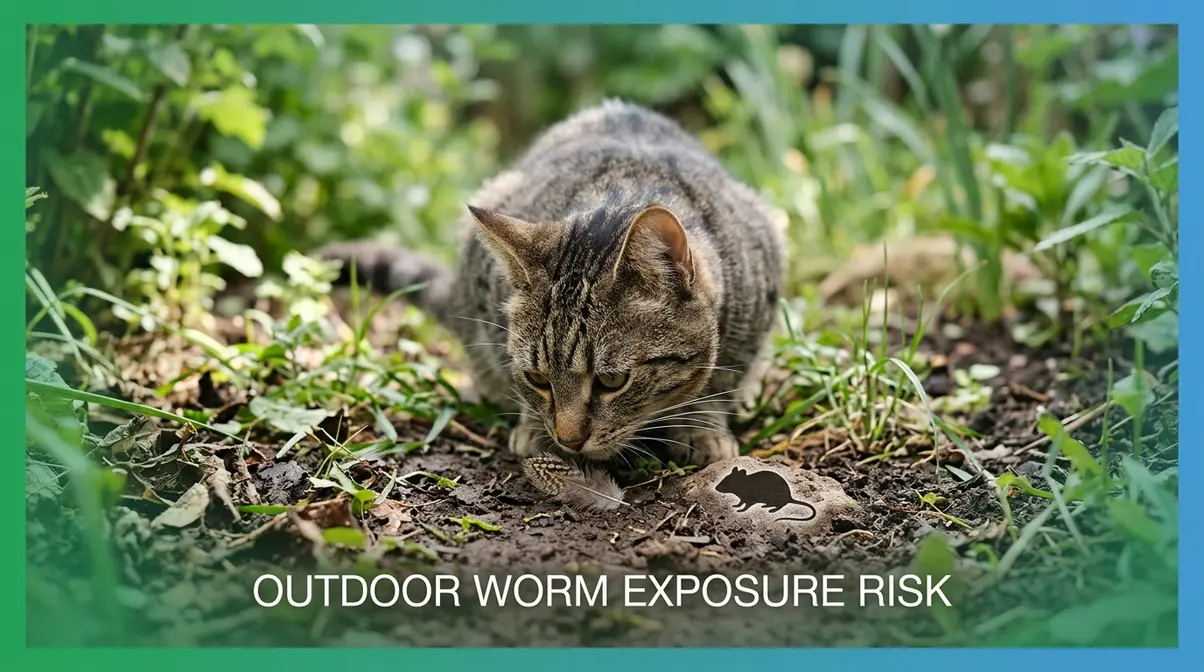
Understanding how your cat picks up worms helps you choose the right treatment frequency. Worms don’t appear from nowhere — there are specific, predictable routes of infection, and knowing them makes your prevention strategy much smarter.
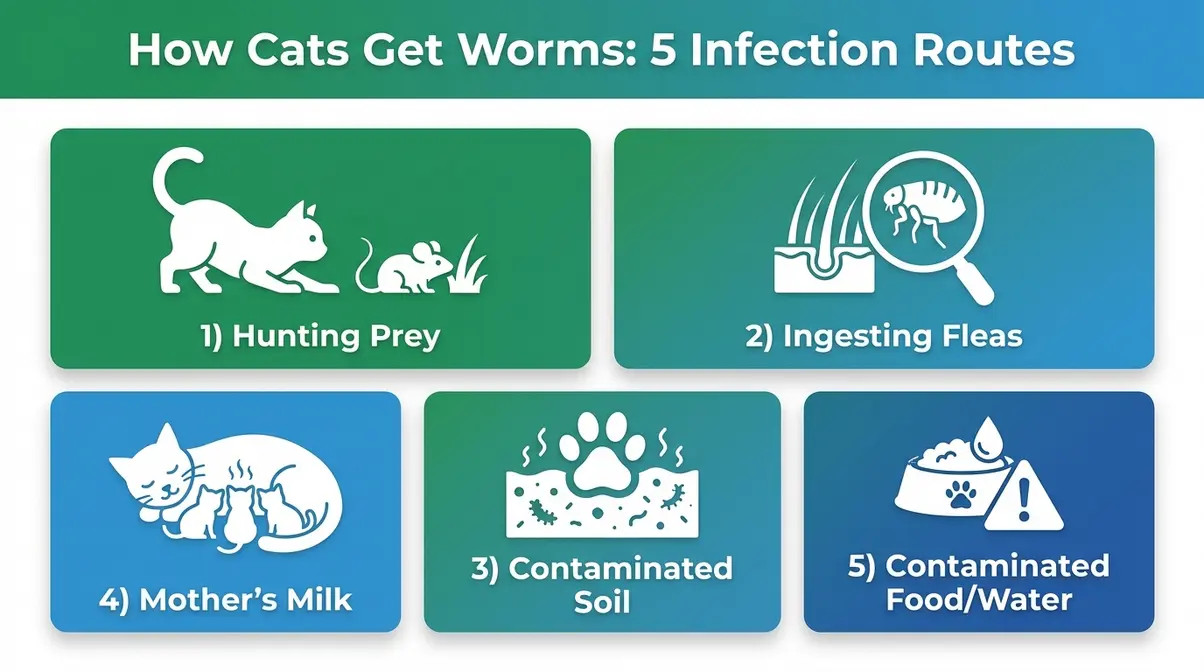
5 Ways Cats Pick Up Worms
1. Hunting and eating prey
Mice, birds, and small rodents frequently carry worm larvae. A single hunting session can introduce roundworms or tapeworms directly into your cat’s digestive system.
2. Ingesting infected fleas
This is the most overlooked route for indoor cats. When a cat grooms itself and swallows a flea carrying tapeworm larvae (Dipylidium caninum — the most common tapeworm in cats), infection follows. This is why flea control and worming go hand in hand.
3. Contact with contaminated soil or faeces
Worm eggs can survive in soil for months. Outdoor cats that dig, roll, or walk through contaminated ground can ingest eggs during grooming.
4. Mother-to-kitten transmission
Roundworm larvae (Toxocara cati — a type of roundworm that can also infect humans) pass through a mother cat’s milk. This is why kittens need treatment from as early as 3 weeks old, regardless of whether the mother appears healthy.
5. Contaminated food or water
Raw meat and untreated water sources can harbour worm larvae, making raw-fed cats a higher-risk group.
Why Invisible Worms Are Dangerous
Here is the unsettling truth: most cats with worms show no obvious symptoms, especially in the early stages. Veterinary consensus across the CAPC and Cornell University indicates that a significant worm burden can exist for weeks before any visible signs appear — by which point the damage to your cat’s digestive tract and nutritional absorption may already be serious.
In kittens, a heavy roundworm infestation can cause fatal intestinal blockages. In adult cats, chronic infection leads to weight loss, anaemia (low red blood cell count), and a weakened immune system. Tapeworm segments shed in the environment also pose a direct zoonotic risk — the Toxocara species of roundworm can infect children who come into contact with contaminated soil, causing a condition called toxocariasis. The PDSA notes that regular worming is one of the most important things you can do for your cat’s long-term health.
Quotable fact: A single female roundworm can produce up to 200,000 eggs per day — making early, regular treatment far more effective than reactive worming after symptoms appear.
Step 2: Kitten Worming Schedule
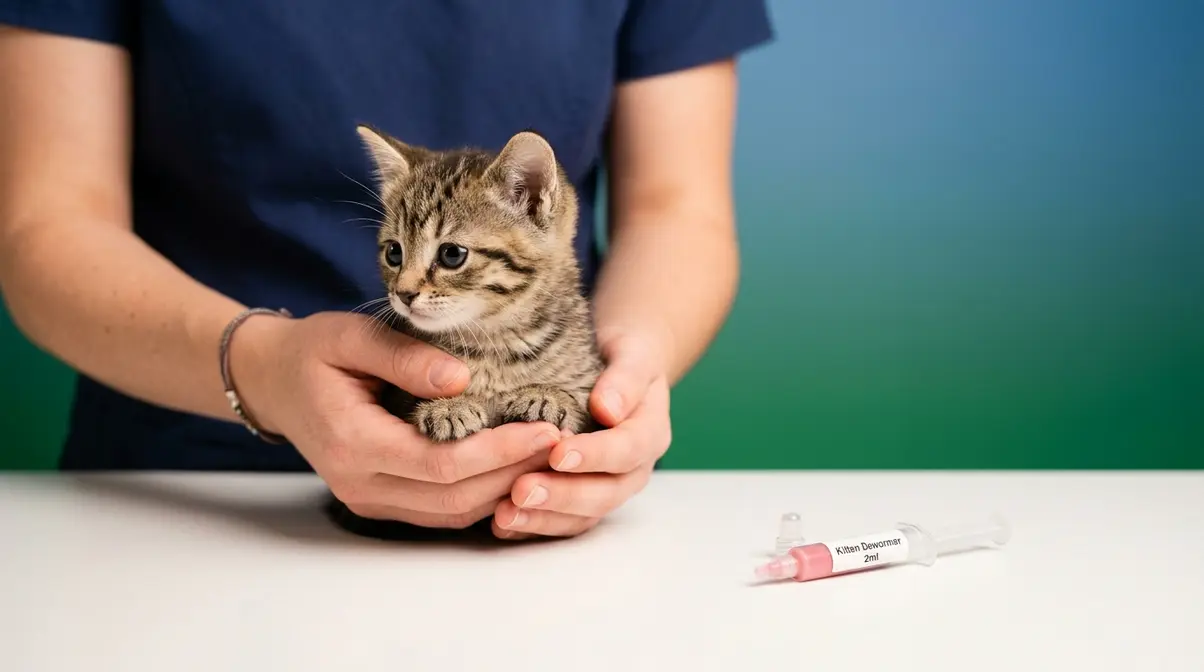
When figuring out how often do cats need worming, kittens are the most vulnerable group. Because roundworm larvae pass directly through a mother cat’s milk, almost every kitten is born with or quickly acquires a worm burden. Starting treatment early — and sticking to a strict cat worming schedules and frequency — is non-negotiable for kitten health. Consult your vet at your kitten’s first health check to confirm the right product for their age and weight.
3 Weeks to 3 Months: Biweekly
Veterinary guidelines, including those from Cornell University’s Feline Health Center, recommend beginning deworming at 3 weeks of age and repeating every two weeks until the kitten reaches 3 months old. This aggressive early schedule exists because worm burdens in very young kittens can escalate rapidly, causing poor growth, pot-bellied appearance, and in severe cases, intestinal obstruction.
At this stage, liquid formulations or paste wormers are typically easier to administer than tablets, as kittens are too small for many standard tablet doses. Always weigh your kitten before each treatment — dosing is weight-based, and kittens gain weight quickly.
What this means for your kitten: If your kitten is 6 weeks old and you haven’t started treatment yet, begin immediately and continue every two weeks until they reach 12 weeks. Don’t wait for symptoms — they may not appear until the infestation is already serious.
3 to 6 Months: Monthly Treatment
Once your kitten reaches 3 months old, the treatment interval extends to once monthly. This phase runs until 6 months of age. The Elanco/Your Pet and You resource confirms this monthly schedule aligns with current veterinary consensus for this age group.
Monthly treatment at this stage also coincides with the period when many kittens begin exploring outdoors or have more contact with other animals — increasing their exposure risk. If your kitten is exclusively indoors during this period, monthly treatment is still recommended because their immune system is not yet fully developed.
Kitten Worming Schedule at a Glance
| Age | Treatment Frequency | Notes |
|---|---|---|
| 3 weeks – 3 months | Every 2 weeks | Use liquid/paste formulation; weigh before each dose |
| 3 – 6 months | Monthly | Switch to broad-spectrum product |
| 6 months+ | Adult schedule applies | See Step 3 |
Step 3: Adult Cat Worming Routine
Once your cat reaches 6 months old, you move to the standard adult vet-backed dewormer schedule. The good news: it’s simpler than the kitten phase, and with the right product, it takes less than a minute to administer.
Adult Cat Schedule: Every 3 Months
The CAPC (Companion Animal Parasite Council) recommends that most adult cats receive broad-spectrum deworming treatment at least every 3 months — that’s four times per year. This interval is based on the typical lifecycle of common intestinal worms and the time it takes for a new infestation to establish and grow to a clinically significant burden.
What “broad-spectrum” means: A broad-spectrum wormer targets multiple worm species simultaneously — typically roundworms, tapeworms, hookworms, and whipworms. Single-target products exist but leave gaps in protection. Veterinary guidelines consistently recommend broad-spectrum treatment as the baseline for all adult cats.
Setting calendar reminders for January, April, July, and October is a simple, effective system that many cat owners use to stay consistent. Consistency matters — a lapsed dose leaves a window of unprotected time that worms can exploit.
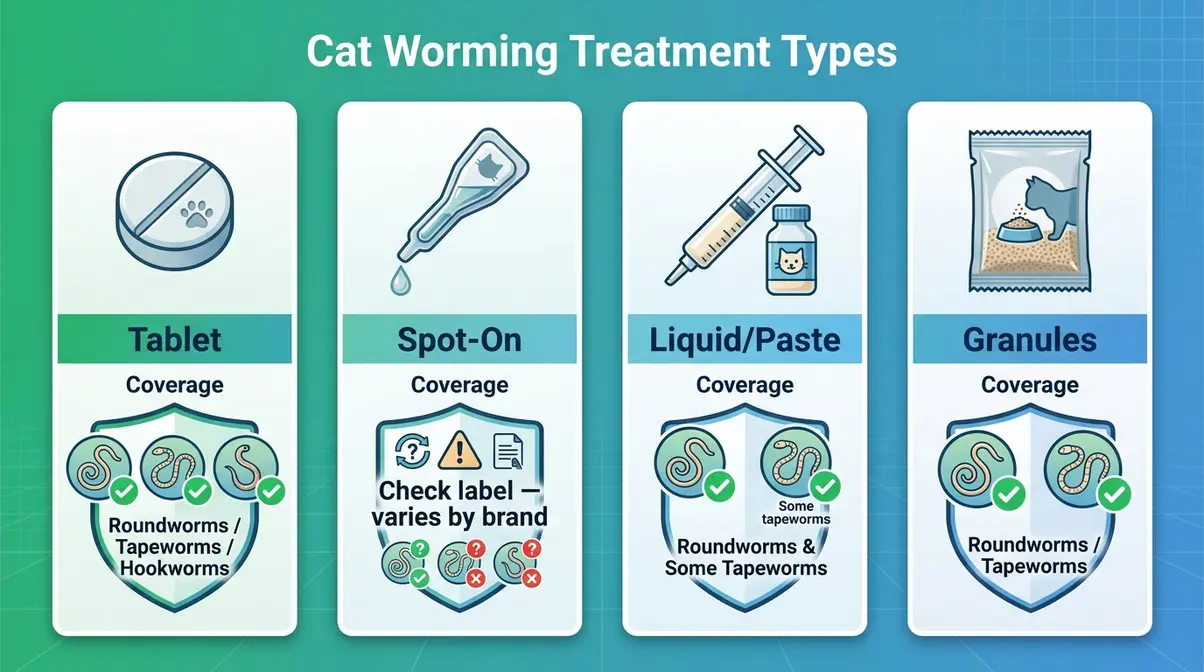
Choosing the Right Treatment Type
| Treatment Type | How It Works | Best For | Coverage |
|---|---|---|---|
| Worming tablets | Swallowed whole or crushed in food | Cats who tolerate handling | Roundworms, tapeworms, hookworms |
| Spot-on (liquid on neck) | Applied to skin at back of neck | Cats who resist tablets | Varies by brand — check label |
| Liquid/paste | Syringe or paste into mouth | Kittens, elderly cats | Roundworms, some tapeworms |
| Granules | Mixed into wet food | Fussy cats | Roundworms, tapeworms |
Important: Not all spot-on products cover intestinal worms. Some spot-on treatments are designed for fleas only, or for lungworm only. Always read the label carefully, or ask your vet which product covers the worms most relevant to your cat’s lifestyle.
Step 4: Indoor vs. Outdoor Cats

Your cat’s lifestyle is the single biggest factor in determining their worming schedule. If you are wondering how often do cats need worming when they never leave the house, the answer surprises many people. This is where the Lifestyle Risk Matrix comes in — a simple framework that matches your cat’s daily life to an exact treatment frequency.
How often do indoor cats need dewormers?
This is one of the most common questions from cat owners. Yes, indoor cats still need regular worming — just at a lower frequency than outdoor cats. Indoor cats need worming at least every 6 months at minimum, and every 3 months is the safer standard recommended by the CAPC.
Here’s why indoor cats aren’t fully protected without treatment:
- Fleas enter the home on clothing, shoes, or other pets — and fleas carry tapeworm larvae. A single flea swallowed during grooming can start a tapeworm infection.
- Contaminated soil can be tracked indoors on shoes or gardening equipment, bringing worm eggs into your home environment.
- Prey brought inside by other household cats, or even a mouse that enters the home, can carry worm larvae.
- Human contact with outdoor environments means worm eggs can transfer indirectly to indoor cats.
For a strictly indoor cat with no flea exposure and no contact with other animals, Drontal’s veterinary health guide suggests every 6 months may be sufficient — but this should be confirmed with your vet.
Outdoor Cats: Monthly Treatment
Cats who spend time outdoors — especially prolific hunters — face a dramatically higher worm burden. Every hunting trip is a potential exposure event. Veterinary guidelines recommend monthly broad-spectrum treatment for cats that regularly hunt or have significant outdoor access. Finding the right flea and worm treatment is critical for these high-risk felines.
This isn’t overly cautious advice. A hunting cat can ingest multiple infected prey animals in a single week, each one potentially carrying a fresh worm burden. Monthly treatment ensures that any newly acquired infestation is eliminated before it has time to establish, reproduce, and cause damage.
Outdoor cats with flea exposure need simultaneous flea control (see Step 5) to prevent tapeworm reinfestation between worming doses.
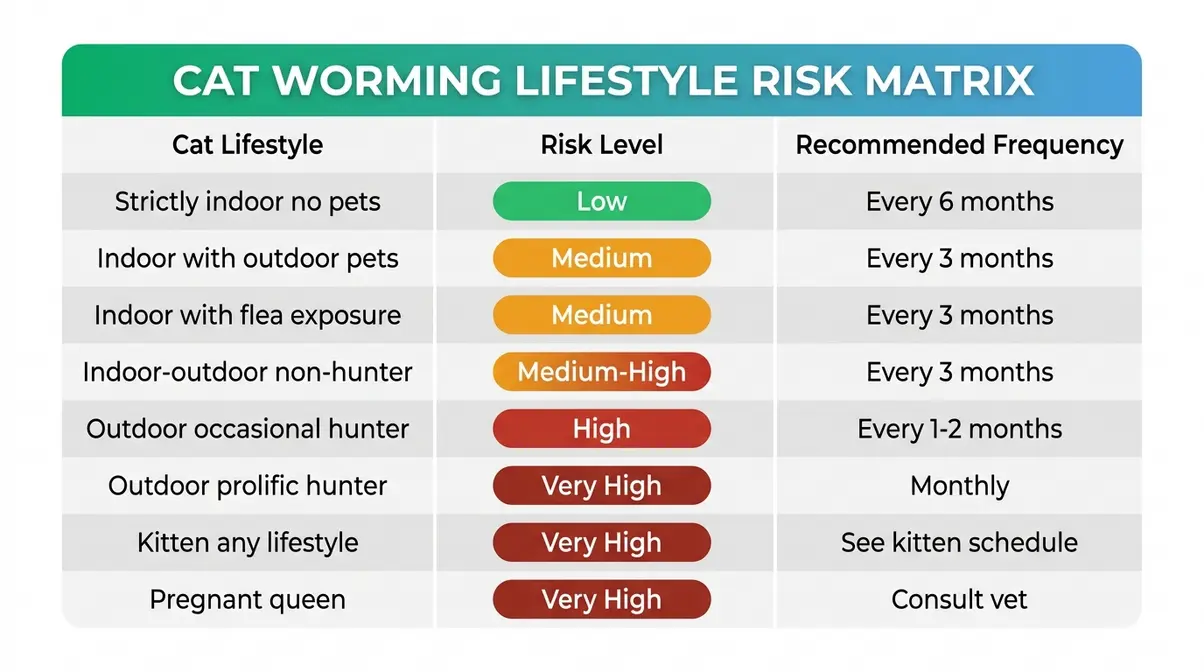
The Lifestyle Risk Matrix
Use this table to find the right worming frequency for your cat:
| Cat Lifestyle | Risk Level | Recommended Frequency |
|---|---|---|
| Strictly indoor, no other pets, no fleas | Low | Every 6 months (confirm with vet) |
| Indoor, lives with outdoor cats or dogs | Medium | Every 3 months |
| Indoor, with known flea exposure | Medium | Every 3 months + flea control |
| Indoor/outdoor, non-hunter | Medium-High | Every 3 months |
| Outdoor, occasional hunter | High | Every 1–2 months |
| Outdoor, prolific hunter | Very High | Monthly |
| Kitten (any lifestyle) | Very High | See Step 2 |
| Pregnant or nursing queen | Very High | Consult vet immediately |
The Lifestyle Risk Matrix is designed to give you one clear answer without requiring veterinary training. Find your cat’s row, note the frequency, and set your calendar reminder today. For cats in the “Medium” or above categories, the standard 3-month schedule is the safe default — and your vet can advise if a more frequent schedule is warranted.
Step 5: Combine Flea & Worm Treatments
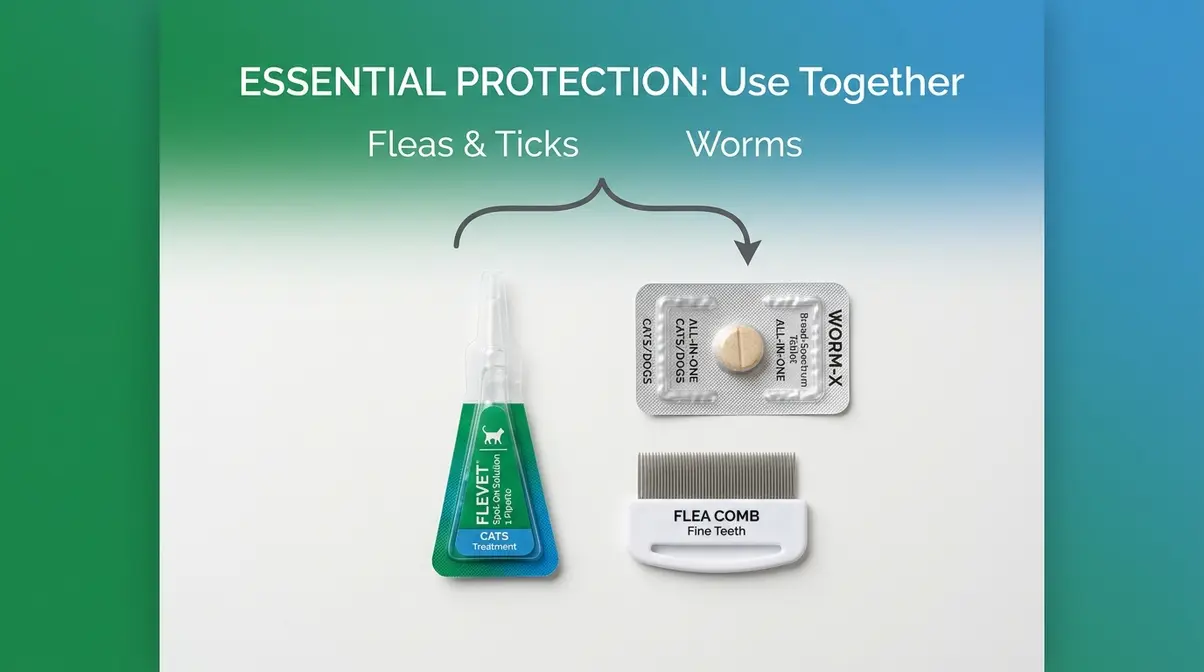
Fleas and worms are not separate problems — they are directly linked. Treating one without addressing the other leaves a significant gap in your cat’s parasite protection, which is why understanding your flea treatment frequency is essential.
Why Fleas and Worms Go Hand in Hand
The connection is biological. Cat fleas (Ctenocephalides felis) act as intermediate hosts for the tapeworm Dipylidium caninum. This means flea larvae ingest tapeworm eggs, and when your cat swallows an infected flea during grooming — which happens more often than you’d expect — the tapeworm lifecycle completes inside your cat’s intestine.
The practical consequence: If your cat has fleas, they almost certainly have tapeworms too. And if you treat for tapeworms without eliminating the fleas, reinfestation occurs within weeks. Treating both simultaneously is the only way to break this cycle.
Cat owners commonly report discovering tapeworm segments — small, rice-grain-sized white pieces near their cat’s tail or in bedding — only after noticing a flea problem. This is a reliable indicator that both problems need addressing at the same time.
What Spot-On Treatments Cover
Spot-on (a liquid applied to the back of the neck) treatments are among the most popular parasite control products, but their coverage varies enormously between brands. This is one of the most common sources of confusion for cat owners.
| Product Type | Covers Fleas | Covers Roundworms | Covers Tapeworms | Covers Lungworm |
|---|---|---|---|---|
| Flea-only spot-on | ✅ | ❌ | ❌ | ❌ |
| Flea + roundworm spot-on | ✅ | ✅ | ❌ | ❌ |
| Broad-spectrum spot-on | ✅ | ✅ | ✅ | Varies |
| Separate worming tablet | ❌ | ✅ | ✅ | ❌ |
What this means for your cat: If you’re using a flea spot-on and assuming your cat is also protected against intestinal worms, check the label. Many popular flea treatments provide zero intestinal worm coverage. A separate broad-spectrum wormer is needed alongside them.
The VioVet vet-approved guide recommends confirming coverage with your vet or pharmacist before combining products, to avoid both gaps in protection and accidental double-dosing of the same active ingredient.
Year-Round Parasite Calendar
A coordinated calendar prevents the gaps that leave cats unprotected. Here’s a practical annual framework:
| Month | Action |
|---|---|
| January | Broad-spectrum wormer (adult) |
| March | Flea treatment renewal |
| April | Broad-spectrum wormer |
| July | Broad-spectrum wormer + flea treatment |
| October | Broad-spectrum wormer |
| Year-round | Monthly flea treatment for outdoor/hunting cats |
The 3-3-3 rule for rescue cats: If you’ve recently adopted a rescue cat and don’t know their parasite history, veterinary consensus recommends treating immediately on arrival, then again at 3 weeks, and again at 3 months — giving you a clean baseline before moving to a standard maintenance schedule.
Outdoor and hunting cats need flea treatment monthly, year-round. Indoor-only cats may manage with less frequent flea treatment, but your vet can advise based on your local flea season and household risk.
Step 6: Spot Signs of Worms
Regular worming on a schedule means you’re preventing infection rather than reacting to it. But knowing the signs of an active worm burden helps you identify whether your cat needs an unscheduled treatment between regular doses.
What are the signs of worms in cats?
The most visible physical sign is worm segments in the litter tray or near your cat’s tail. Note that many cats show no symptoms at all until the burden is significant — which is exactly why preventive scheduling matters.
- Other physical signs to watch for include:
- Pot-bellied appearance — particularly in kittens, a distended abdomen is a classic sign of heavy roundworm infestation
- Weight loss despite normal or increased appetite — worms compete directly with your cat for nutrients
- Diarrhoea or vomiting, sometimes containing visible worms
- Dull, dry coat — a sign of nutritional deficiency caused by worms
- Anaemia (pale gums) — caused by hookworms feeding on blood
- Scooting (dragging the bottom along the floor) — often associated with tapeworm segments causing irritation
Behavioural Signs of Worms
Beyond physical signs, behaviour changes can be the first clue that something is wrong. Cats are stoic animals and often hide discomfort — making subtle behavioural cues important to notice.
- Lethargy or reduced activity — a cat that suddenly seems less playful or energetic may be reacting to a worm burden
- Increased hunger without weight gain — worms consume a significant portion of ingested nutrients
- Hiding or withdrawal — a general sign of feeling unwell in cats
- Excessive grooming around the tail area — irritation from tapeworm segments can cause focused grooming
If you notice any combination of these signs — especially in a kitten — consult your vet promptly rather than waiting for the next scheduled treatment.
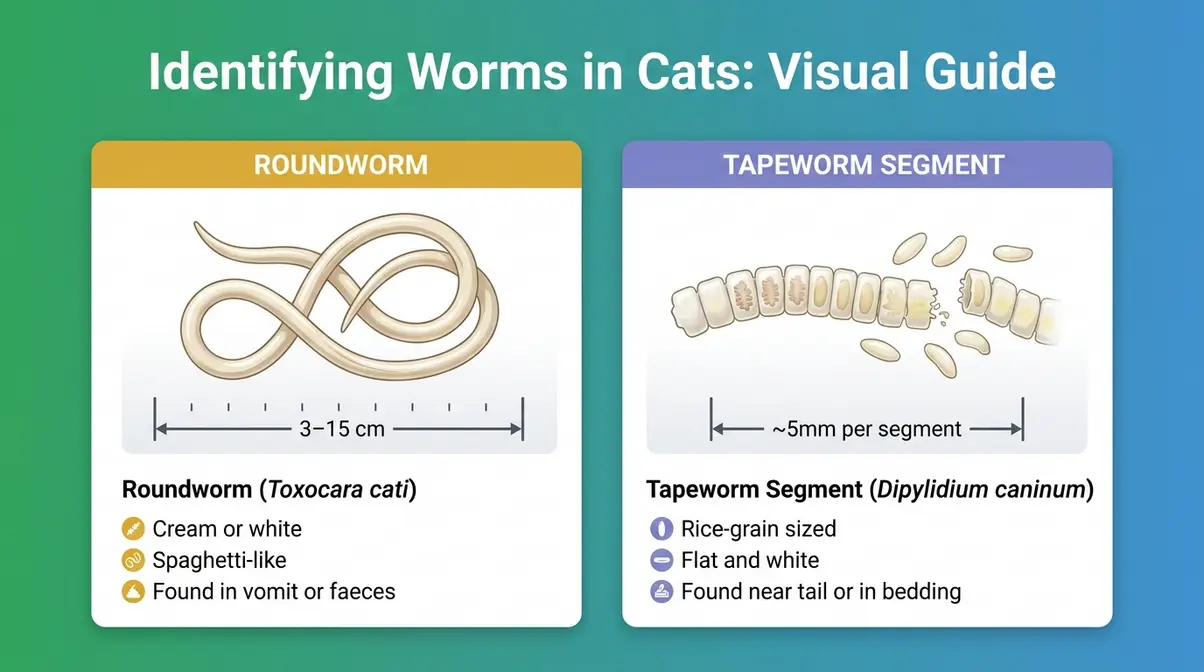
Visible Worms: A Visual Guide
Not all worms are invisible. Two types are commonly spotted by cat owners:
- Roundworms: Cream or white, spaghetti-like, 3–15 cm long. May appear in vomit or faeces.
- Tapeworm segments: Small, flat, white or cream segments, about the size of a grain of rice. Often seen moving near the tail or in bedding shortly after being shed.
Step 7: What to Expect After Deworming
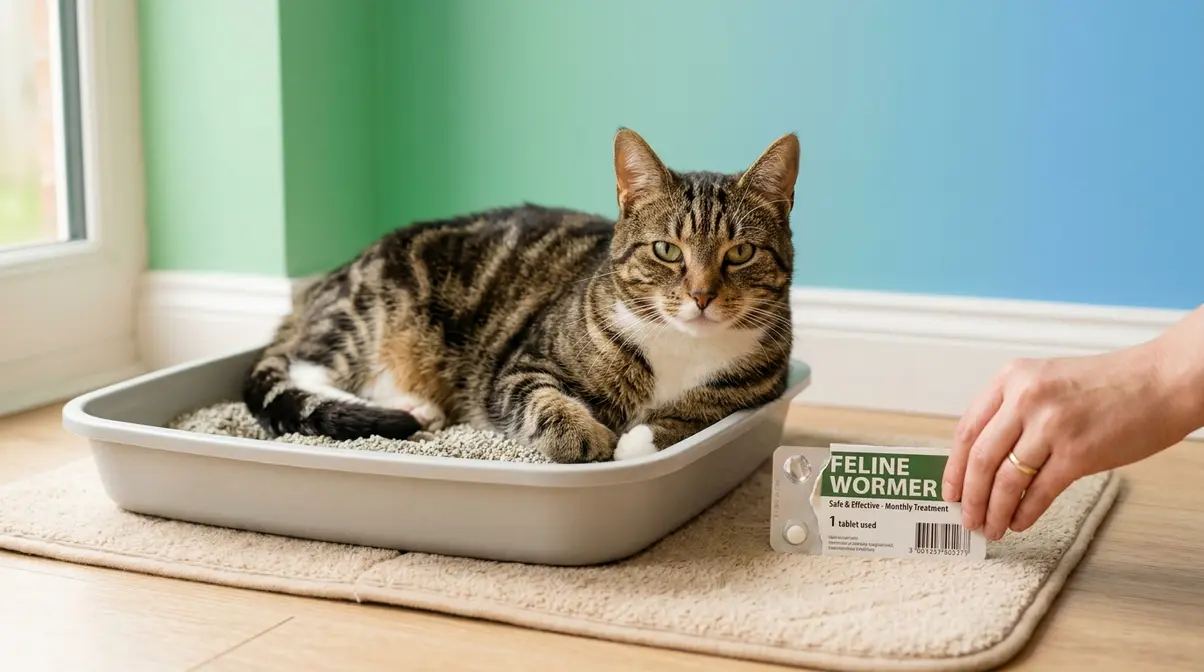
First-time cat owners are often alarmed by what happens after giving a wormer. Understanding the normal post-treatment experience prevents unnecessary panic — and helps you recognise the genuine warning signs that do warrant a vet call.
Do cats poop live worms after deworming?
Yes — and this is completely normal. Deworming medication works by paralysing or killing intestinal worms, which are then expelled through your cat’s faeces. In the 24–72 hours after treatment, you may see dead worms or occasionally still-moving worms in the litter tray. The movement is a muscular reflex, not a sign the worms survived.
- Other normal symptoms include:
- Mild diarrhoea or soft stools — the digestive system is clearing a significant worm burden; temporary loose stools are expected.
- Slightly reduced appetite — some cats feel mildly nauseous after treatment. This typically resolves within 24 hours.
- Increased thirst — mild and temporary.
Cat owners commonly report being frightened by seeing worms in the litter box for the first time — but this is the intended outcome.
When to Call Your Vet After Treatment
While mild symptoms are normal, the following signs after deworming warrant a prompt call to your vet:
- Vomiting more than twice in the 24 hours after treatment
- Severe diarrhoea lasting more than 48 hours, or containing blood
- Extreme lethargy — your cat is unresponsive or unable to stand
- Facial swelling, hives, or breathing difficulty — signs of an allergic reaction requiring immediate attention
- No improvement in symptoms after 2 weeks if you were treating an active infestation
If you’re ever uncertain whether a symptom is normal, call your vet. There is no downside to checking — and early intervention is always better than waiting. This is especially important for kittens, elderly cats, and cats with pre-existing health conditions.
Risks and When to See a Vet
Common Worming Mistakes to Avoid
Even well-intentioned cat owners make worming errors. These are the most common — and most preventable:
1. Using the wrong product for the worm type
A roundworm-only treatment won’t touch tapeworms. Always use a broad-spectrum product unless your vet specifies otherwise.
2. Under-dosing based on estimated weight
Worming products are dosed by weight. A dose too low may not eliminate the infestation. Weigh your cat before every treatment.
3. Treating the cat but not the environment
Tapeworm eggs and roundworm eggs can survive in bedding, carpets, and soil. Washing bedding at 60°C and vacuuming regularly reduces reinfection risk.
4. Skipping flea treatment
If fleas are present, tapeworm reinfestation is almost guaranteed within weeks of worming. Flea and worm treatment must go hand in hand.
5. Stopping treatment because the cat “looks fine”
Most worm burdens are invisible until they’re severe. Regular preventive treatment is always more effective than reactive treatment.
When Worming Alone Isn’t Enough
Standard intestinal wormers do not protect against every parasite. Two conditions in particular require separate attention:
Heartworm (Dirofilaria immitis — a worm that lives in the heart and lungs) is transmitted by mosquitoes and is primarily a concern in the US South, parts of Europe, and tropical regions. Standard intestinal wormers offer no protection. Cats in high-risk areas should discuss a separate heartworm prevention protocol with their vet.
Lungworm (Aelurostrongylus abstrusus — a worm that infects the lungs and airways) is increasingly common in the UK and parts of North America. It is transmitted through slugs, snails, and infected prey. Signs include coughing, difficulty breathing, and lethargy. Not all wormers cover lungworm — specific products or vet-prescribed treatments are needed. If your cat hunts regularly, discuss lungworm prevention with your vet.
These are the true “silent killers” in cat parasite medicine — both conditions can progress significantly before any visible symptoms appear, and both require proactive, vet-guided prevention rather than reactive treatment.
Frequently Asked Questions
What is the 3-3-3 rule for cats?
The 3-3-3 rule is a framework for newly adopted rescue cats, not a worming schedule specifically. It describes the typical adjustment period: 3 days to decompress, 3 weeks to learn the household routine, and 3 months to feel fully at home. In the context of parasite control, veterinary consensus recommends treating a rescue cat with a broad-spectrum wormer on arrival, again at 3 weeks, and again at 3 months to establish a clean baseline.
How do I know when my cat needs worming?
Most cats with worms show no obvious signs, which is why regular preventive treatment matters more than waiting for symptoms. If you notice weight loss, a pot-bellied appearance, or visible worm segments near the tail between scheduled treatments, contact your vet immediately.
What happens if you never deworm a cat?
An untreated worm burden causes progressive, cumulative harm. In kittens, heavy roundworm infestation can cause fatal intestinal blockages. In adult cats, chronic infection leads to weight loss, nutritional deficiency, anaemia (low red blood cell count), a weakened immune system, and increased susceptibility to other illnesses. Some worm species — particularly Toxocara roundworms — are also zoonotic, meaning they can infect humans, especially children who come into contact with contaminated soil or faeces.
What is the silent killer of cats?
In the context of parasites, heartworm and lungworm are the silent killers. Both can progress significantly without visible symptoms until serious organ damage has occurred, and neither is covered by standard intestinal wormers.
How do cats say “I love you”?
Cats communicate affection through slow blinking, which is often called the “cat kiss.” Other affectionate behaviours include head-bunting (rubbing their forehead against you), kneading, and bringing you “gifts” (which, unfortunately, can sometimes introduce parasites into the home).
Your Cat’s Worming Schedule Starts Today
Understanding exactly how often do cats need worming is one of the simplest, most effective things you can do to protect your cat’s long-term health. For most adult cats, that means a broad-spectrum treatment every 3 months — four times a year, taking less than a minute to administer. Kittens need more frequent treatment starting from 3 weeks of age, and outdoor or hunting cats benefit from monthly protection. The CAPC and Cornell University both endorse these schedules as the evidence-based standard for feline parasite control in 2026.
The Lifestyle Risk Matrix makes this decision straightforward: find your cat’s lifestyle in the table, note the recommended frequency, and set your calendar reminders now. Whether your cat is a strictly indoor house cat or a prolific hunter, there is a clear, vet-backed schedule that fits their life — and this guide has given you every piece of information you need to follow it confidently.
Ready to get started? Bookmark this guide, check your cat’s weight today, choose a broad-spectrum product recommended by your vet, and set those four calendar reminders for the year ahead. If you haven’t wormed your cat in the last 3 months, treat them today — and book a vet check if you’re unsure about their current parasite status or if you’ve noticed any of the signs covered in Step 6.

Dave King
Cat owner and writer at Mad Cat Man.