How to Keep Cats Hydrated: 15 Vet-Approved Tips (2026)
⚠️ Medical Disclaimer: This article is for informational purposes only and is not a substitute for professional veterinary advice. Always consult your veterinarian for your cat’s specific health concerns.
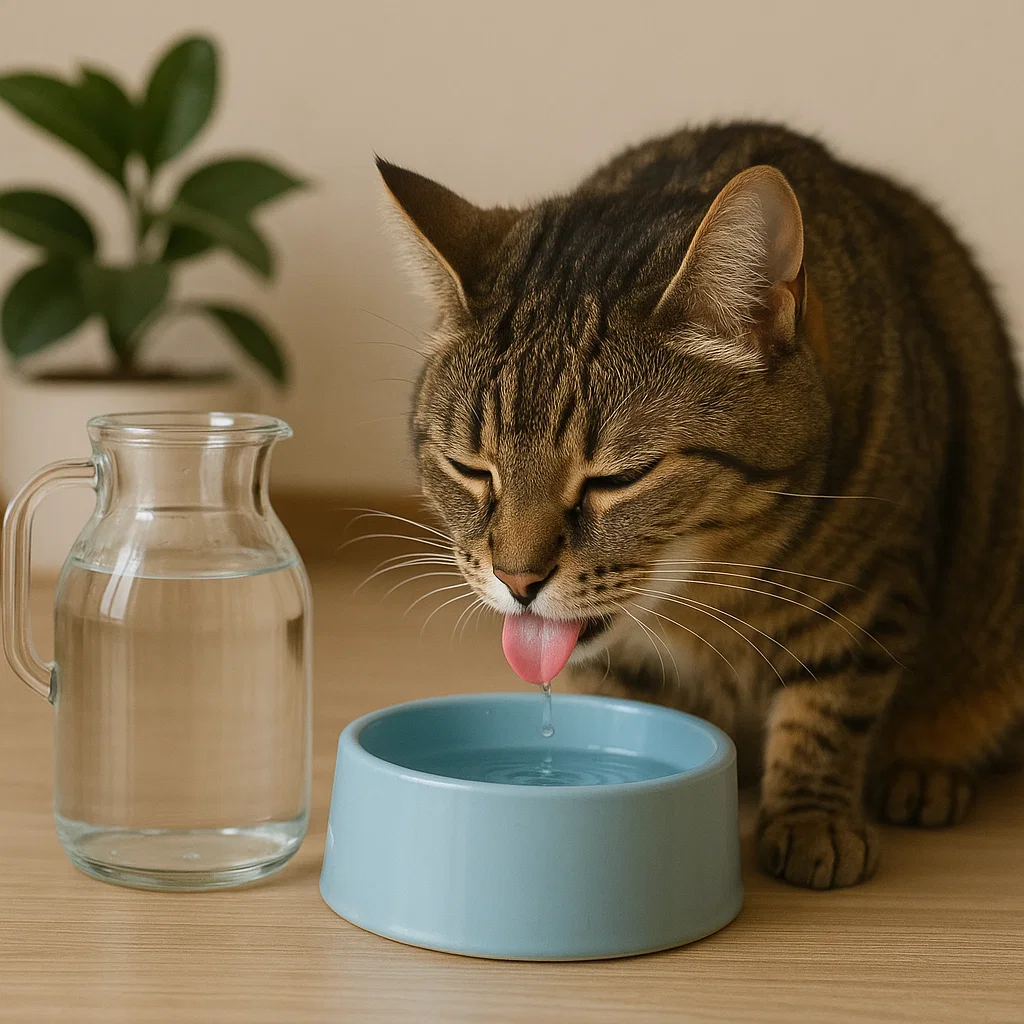
🩺 Medically Reviewed by: | Last reviewed:
“Most cats are chronically dehydrated and their owners have no idea 🤍”
That quote hits hard — and it’s biologically accurate. Cats evolved as desert hunters who got 70–80% of their moisture from prey, not from standing water. Their thirst drive is simply weaker than ours by design, which means your cat can be quietly water-deficient even if a full bowl sits two feet away.
The stakes are real. Chronic dehydration is a primary driver of Chronic Kidney Disease (CKD), the leading cause of death in senior cats, according to the Cornell Feline Health Center. Cats who are picky when it comes to drinking water aren’t being difficult — they’re following ancient instincts in a modern home that wasn’t built for them.
In this guide, you’ll learn exactly how to keep cats hydrated using 15 vet-approved strategies — from the right bowl placement to The Moisture Math that explains why what your cat eats matters more than what they drink. You’ll also learn how to spot dehydration early, handle a sick cat safely, and avoid the five most common hydration mistakes owners make.
Most cats consume far less water than they need daily — wet food (70–80% moisture) is the single most effective fix, while a cat water fountain can significantly increase voluntary water intake compared to still bowls.
- Switch to wet food: It delivers 7–8x more moisture than dry kibble per serving
- Apply The Moisture Math: Wet food = 70–80% water; dry food = only 10% — that gap matters
- Add a water fountain: Moving water activates a cat’s natural instinct to drink from flowing sources
- Place bowls strategically: Keep water away from food and litter boxes — cats avoid drinking near their toilet
- Sick cats need a vet: Home methods ease mild dehydration; severe cases require professional care immediately
Why Your Cat Has a Low Thirst Drive (and Why It’s Dangerous)

Cats are not small dogs. Understanding why your cat is a low-thirst animal — not a careless one — is the foundation for everything in this guide. Vet-reviewed guidance consistently confirms that most hydration problems trace back to two root causes: biology and diet. Fix those, and the rest becomes manageable.
The Desert Ancestor Connection
Your domestic cat is a direct descendant of Felis silvestris lybica, a small wild cat native to the arid deserts of North Africa and the Middle East. For thousands of years, that ancestor never needed to seek out water — prey animals like mice and birds are roughly 65–75% water by weight, delivering hydration automatically with every meal (VCA Animal Hospitals, 2023).
That evolutionary wiring is still running in your cat today. Their kidneys evolved to produce highly concentrated urine, extracting maximum hydration from food rather than relying on drinking. The result: a naturally low thirst drive. Your cat isn’t ignoring the water bowl out of stubbornness. Their body simply doesn’t send a strong “drink now” signal the way yours does.
This becomes a problem the moment you switch that cat to dry kibble — a food source with roughly 10% moisture — and expect them to compensate by drinking more water from a bowl. Most cats never fully make up that deficit.

The Moisture Math: Wet Food vs. Dry Food
The Moisture Math is a simple framework for understanding the hydration gap hiding in your cat’s food bowl. Here’s what the numbers look like side by side:
| Food Type | Moisture Content | Daily Water from Food (4 oz serving) |
|---|---|---|
| Raw/prey diet | ~70–75% | ~85–90 ml |
| Wet canned food | ~70–80% | ~80–90 ml |
| Dry kibble | ~8–10% | ~10–12 ml |
The gap is not small. A 10-pound cat needs roughly 200–250 ml of water per day (Cornell Feline Health Center, 2024). A cat eating wet food gets most of that from their meals. A cat eating dry kibble gets almost none — and must drink the rest from a bowl their instincts tell them to distrust.
Over months and years, that chronic low-level dehydration concentrates urine, strains the kidneys, and creates the conditions for Chronic Kidney Disease (CKD). According to research published by the International Renal Interest Society (IRIS), CKD affects an estimated 30–40% of cats over the age of 10. Vet-reviewed guidance from Tufts University’s Cummings School of Veterinary Medicine confirms that increasing dietary moisture is one of the most impactful preventive steps an owner can take — well before clinical signs appear.
The Moisture Math, in plain terms: Switching from dry to wet food isn’t just a food preference choice. It’s a kidney health decision.

15 Proven Ways to Keep Your Cat Hydrated Every Day

Here’s what vet-reviewed guidance recommends for keeping cats hydrated at home. These aren’t generic suggestions — each tip below includes the why behind it, because understanding the reason helps you apply it correctly for your cat.
- Quick overview — the core strategies:
- Switch to wet food or add water to dry kibble
- Use a wide, shallow, whisker-friendly bowl
- Place multiple water stations around your home
- Try a recirculating cat water fountain
- Add low-sodium bone broth or tuna water to boost interest
- Keep water fresh — change it daily, minimum
Optimize Your Cat’s Water Stations (Tips 1–4)

Tip 1: Place water bowls away from food and litter boxes. Cats are hardwired to avoid drinking near where they eat or eliminate — an instinct that prevents contamination of water sources in the wild (VCA Animal Hospitals, 2023). Move your cat’s water bowl to a separate room or at least 3–4 feet from their food dish. Many owners report a noticeable uptick in drinking after this one change alone.
Tip 2: Switch to a wide, shallow bowl to prevent whisker fatigue. Whisker fatigue (when a cat’s sensitive facial whiskers become overstimulated by contact with the sides of a deep, narrow bowl) is a real and documented source of drinking aversion. Research from Ohio State University’s Indoor Cat Initiative confirms that cats show a strong preference for wide, shallow dishes that allow them to drink without their whiskers touching the bowl’s edges. A simple saucer or wide ceramic dish can remove this barrier entirely.
Tip 3: Offer multiple water stations throughout your home. User consensus across cat owner communities — and guidance from the American Association of Feline Practitioners (AAFP) — consistently supports having one water source per cat, plus one extra, placed in different locations. A cat who ignores the kitchen bowl may happily drink from one in the bedroom or hallway. More access points means more opportunities to drink.
Tip 4: Keep water fresh — and change it daily. Cats have a highly sensitive sense of smell and will often refuse water that has been sitting for more than 24 hours, even if it looks clean to you. Rinse the bowl thoroughly with hot water (no soap residue) and refill with fresh, filtered water every day. If your tap water has a strong chlorine smell, filtered or lightly chilled water is often better accepted.
Switch to Wet Food — and Do the Moisture Math (Tips 5–7)
Tip 5: Transition your dry-food cat to wet food gradually. Cold turkey rarely works. Vet-reviewed guidance from PetMD recommends a 7–10 day transition: start by mixing 25% wet food with 75% dry, then shift to 50/50 by day four, and 75% wet by day seven. This gives your cat’s digestive system time to adjust and reduces the chance of food refusal. Warm the wet food slightly (to just below body temperature) to increase its aroma and palatability.
Tip 6: Add warm water directly to dry kibble. If your cat resists wet food entirely, adding 2–4 tablespoons of warm water to their dry kibble is a practical bridge. It won’t match the moisture content of canned food, but it meaningfully increases intake over straight dry feeding. According to guidance from the Cornell Feline Health Center (2024), even modest increases in dietary water consumption reduce urinary tract stress — one of the earliest precursors to CKD.
Tip 7: Use wet food toppers to increase moisture without a full switch. A tablespoon of high-moisture wet food, pâté, or a commercial “topper” mixed into dry kibble adds moisture while keeping the texture your cat prefers. This is especially useful for cats who are picky when it comes to drinking water and resistant to full food transitions. Look for toppers with no added salt, onion, or garlic — all toxic to cats.
Use a Cat Water Fountain (Tips 8–10)

Tip 8: Invest in a recirculating cat water fountain. Moving water is more appealing to cats than still water — it signals freshness and safety, the same way a running stream signals cleaner water than a stagnant puddle. Research cited by the Cornell Feline Health Center confirms that cats offered a recirculating fountain drink measurably more water than those offered a standard bowl. A quality fountain with a carbon filter runs $25–$60 and is one of the most cost-effective long-term hydration investments you can make.
Tip 9: Place the fountain in a low-traffic, quiet area. A fountain that startles your cat with noise or vibration defeats its own purpose. Position it away from appliances, HVAC vents, and high-foot-traffic zones. Cats are more likely to approach and use a water source they associate with calm, safe spaces. User consensus across cat owner forums consistently identifies placement as the most overlooked variable in fountain adoption.
Tip 10: Clean the fountain weekly — and replace filters monthly. Biofilm (a thin, slippery bacterial layer) forms on fountain surfaces within days if not cleaned. A dirty fountain can deter drinking as effectively as no fountain at all. Disassemble and scrub the bowl and pump housing every 5–7 days with a soft brush and mild dish soap, rinse thoroughly, and replace the carbon filter every 3–4 weeks per manufacturer guidance.

Add Flavor and Interest to Their Water (Tips 11–15)
Tip 11: Add a small splash of low-sodium tuna water. The liquid from a can of tuna packed in water (not oil, not brine) is a powerful hydration motivator for cats with a low thirst drive. Add one to two teaspoons to your cat’s water bowl — enough to scent the water without making it a meal. Vet-reviewed guidance cautions against using tuna brine or oil-packed varieties, which are too high in sodium and fat.
Tip 12: Offer unsalted, pet-safe bone broth. Low-sodium bone broth — either commercial pet-formulated or homemade from plain chicken or beef bones — is an excellent hydration supplement. Research from veterinary nutrition teams confirms that broth-flavored water increases voluntary intake in cats who otherwise ignore their bowl. Always verify the broth contains no onion, garlic, leeks, or chives, as these are toxic to cats even in small amounts.
Tip 13: Try tuna water ice cubes in summer. Freeze a mixture of water and a teaspoon of tuna liquid in an ice cube tray. Drop one into your cat’s water bowl on warm days. The novelty often triggers curiosity-driven drinking, and the slow melt keeps the water cooler and more appealing for longer. Many owners report this is the single tip that finally got their stubborn non-drinker interested in their bowl.
Tip 14: Experiment with different water temperatures. Some cats strongly prefer slightly chilled water; others prefer room temperature. Cats who ignore tap water at room temperature will sometimes drink enthusiastically from a bowl with a few ice cubes. Vet-reviewed guidance from VCA Hospitals notes there is no clinical concern with offering cold water to healthy cats — it’s simply a preference variable worth testing.
Tip 15: Offer a second water source outdoors (for indoor-outdoor cats). Cats who spend time outside often find and drink from garden puddles, birdbaths, or outdoor bowls — which can be contaminated with algae, pesticides, or parasites. Providing a clean, fresh outdoor water station redirects this behavior safely. Place it in a shaded area where the water stays cooler longer, and refresh it daily.
How to Spot Dehydration and Hydrate a Sick Cat Safely

Knowing how to keep cats hydrated day-to-day is essential — but recognizing when dehydration has already taken hold is equally critical. Vet-reviewed guidance from Cornell’s Feline Health Center identifies early detection as the single biggest factor in preventing a mild hydration deficit from becoming a medical emergency.
5 Signs Your Cat Is Dehydrated (Including the Skin Tent Test)
Watch for these warning signs, especially during hot weather or after illness:
- Sunken or dull eyes — Healthy cat eyes appear bright and moist. Sunken, glassy, or sticky-looking eyes suggest moderate to significant dehydration.
- Dry or tacky gums — Run a clean finger along your cat’s gum line. Healthy gums feel slick and moist. Tacky, sticky, or pale gums signal dehydration and warrant immediate veterinary attention.
- Lethargy and reduced appetite — A dehydrated cat will often seem unusually quiet, reluctant to move, and disinterested in food.
- Reduced urination — Fewer litter box visits, or very dark, strongly scented urine, can indicate the kidneys are concentrating urine due to insufficient water intake.
- The Skin Tent Test (Turgor Test): Gently pinch a small fold of skin at the back of your cat’s neck, then release it. In a well-hydrated cat, the skin snaps back immediately. If it returns slowly — taking one to two seconds — your cat is likely dehydrated. If it stays tented (doesn’t return at all), treat this as an emergency (PetMD, 2023).
Capillary Refill Time (CRT) Check: Press your finger firmly on your cat’s gum for one second, then release. The white spot should return to pink within two seconds. A refill time longer than two seconds indicates poor circulation or severe dehydration — call your vet immediately (VCA Animal Hospitals, 2023).
Safe Home Hydration Methods for a Sick or Recovering Cat
If your cat is mildly dehydrated — the Skin Tent Test shows slow (not tented) return and your cat is still alert and responsive — you can support rehydration at home while monitoring closely. Vet-reviewed guidance from PetMD recommends the following approaches:
- Offer small, frequent amounts of fresh water rather than a full bowl, which can overwhelm a nauseous or ill cat.
- Warm wet food to just below body temperature to increase its aroma and encourage eating, which delivers moisture alongside nutrition.
- Use a syringe (no needle) to gently drip small amounts of water into the side of your cat’s mouth — not down the throat, which risks aspiration. Offer 1–2 ml at a time, every few minutes.
- Try an electrolyte solution formulated for cats or diluted unflavored Pedialyte (consult your vet on dilution ratio before use). Never use human sports drinks, which contain xylitol — toxic to cats.
When to Stop Home Remedies and Call the Vet
Home methods are appropriate only for mild, early-stage dehydration. According to Cornell’s Feline Health Center, you should contact your veterinarian immediately if:
- The Skin Tent stays tented (doesn’t return within 2–3 seconds)
- Gums are pale, white, blue, or gray
- Your cat has not urinated in more than 24 hours
- Your cat has been vomiting or has had diarrhea for more than 12 hours
- Your cat is unresponsive, limp, or unable to stand
Severe dehydration requires intravenous (IV) or subcutaneous (SQ) fluids administered by a veterinarian — a process that cannot be safely replicated at home. Do not delay. Dehydration progresses rapidly in cats, and organ damage can occur within hours of severe fluid loss.
Keeping Your Cat Hydrated in Hot Weather

Summer heat amplifies every hydration challenge. Cats are not natural heat-seekers — they’re desert animals who survived by staying cool and conserving water, not by drinking more. That means your cat is unlikely to seek out extra water on a hot day, even when they need it most.
Summer Hydration Tips: Cool Water Tricks and Shade Stations
Vet-reviewed guidance from the American Veterinary Medical Association (AVMA) confirms that cats in warm environments need measurably more water to maintain normal kidney and circulatory function. These targeted strategies help bridge that gap:
Keep water cool with ice cubes. The AVMA recommends adding ice cubes to water bowls in warm weather to maintain a cooler temperature for longer. Many cats are attracted to the sound and movement of ice in water and will drink more as a result. Tuna-water ice cubes (see Tip 13) double as a flavor incentive.
Increase the number of water stations in summer. Add one or two extra bowls in cool, shaded areas of your home — near a north-facing window, in a tiled bathroom, or in a shaded outdoor spot. Cats rest in cool zones during hot days, so water nearby means they’re more likely to drink.
Watch for overheating signs alongside dehydration. Panting (unusual in cats), drooling, red or pale gums, and stumbling are signs of heat stress that go beyond simple dehydration. These require immediate veterinary attention. Provide access to cool, shaded areas at all times during summer months, and never leave a cat in a parked car or unventilated room.
Refresh water more frequently in heat. Water left in a warm room heats quickly and becomes less appealing. In summer, change your cat’s water at least twice daily — morning and evening — and rinse the bowl each time to prevent bacterial growth.
Hydration Mistakes to Avoid (And How to Fix Them)

Even well-intentioned owners make hydration errors that quietly work against their cat’s health. Vet-reviewed guidance from VCA Animal Hospitals and PetMD identifies these as the most common — and most fixable — mistakes.
5 Common Cat Hydration Mistakes
Mistake 1: Placing water next to food. As covered in Tip 1, cats instinctively avoid drinking where they eat. This is the most universal and most easily fixed hydration mistake. Move the bowl — today.
Mistake 2: Relying entirely on dry food. Owners who feed exclusively dry kibble and assume their cat will compensate by drinking more water are working against The Moisture Math. Research cited by Tufts University’s veterinary nutrition team confirms that most cats on dry-only diets remain chronically under-hydrated regardless of bowl access. At minimum, add wet food toppers or water to kibble.
Mistake 3: Leaving stale water sitting for days. Cats smell water differently than we do. What looks like a clean, full bowl to you may smell stale, dusty, or chemically treated (chlorine) to your cat. Change water daily — it costs nothing and makes a measurable difference.
Mistake 4: Using a deep, narrow bowl. Whisker fatigue is a real deterrent. Swap deep bowls for wide, shallow ones. If you’re unsure whether this applies to your cat, watch whether they paw at the water before drinking or prefer to drink from the tap — both are classic whisker fatigue signals.
Mistake 5: Ignoring early dehydration signs. Signs commonly reported by cat owners — dull eyes, tacky gums, reduced litter box visits — are easy to dismiss as “just being quiet today.” Vet-reviewed guidance consistently shows that catching dehydration at the mild stage makes home management possible. Waiting until symptoms are obvious often means a vet visit is unavoidable.
When Home Remedies Aren’t Enough
Home hydration strategies are effective for prevention and mild cases. They are not a substitute for veterinary care when your cat is seriously unwell. If your cat has not drunk water in more than 24 hours, is vomiting repeatedly, or shows any of the emergency signs listed in the dehydration section above, call your vet or an emergency animal hospital immediately.
Chronic dehydration that has already progressed to early CKD requires a veterinary diagnosis, prescription kidney-support diets, and in many cases subcutaneous fluid therapy administered at home under veterinary supervision. The Moisture Math works as prevention — once kidney disease is established, the management plan changes significantly. Always consult your veterinarian for your cat’s specific health concerns.
Frequently Asked Questions
What can I give my cat to stay hydrated?
The most effective options are wet food, a recirculating water fountain, and flavored water additions like low-sodium tuna water or pet-safe bone broth. Wet canned food (70–80% moisture) is the single highest-impact change most owners can make. Water fountains increase voluntary intake by making water more appealing through movement. For cats who resist plain water, a teaspoon of tuna liquid or unsalted broth in the bowl often bridges the gap. Always ensure any additives are free of onion, garlic, and salt.
How do you hydrate your cat when they won’t drink?
Start with wet food — it delivers moisture without requiring your cat to drink at all. Add warm water to dry kibble as a secondary step. Try a cat water fountain, since moving water is more instinctively appealing than still water to most cats. If your cat is actively refusing water due to illness, use a needleless syringe to gently drip 1–2 ml of water into the side of their mouth every few minutes. For cats who have not drunk in 24+ hours, contact your veterinarian.
How long can a cat survive without water?
A cat can typically survive 3–4 days without water, but organ damage begins well before that point. After 24–48 hours without adequate fluid intake, kidney stress and urinary tract complications become clinically significant. Cats who are already ill, elderly, or in hot environments deteriorate faster. This is why dehydration should never be treated as a “wait and see” situation — if your cat hasn’t drunk water in 24 hours and shows any symptoms, call your vet the same day (VCA Animal Hospitals, 2023).
What is the silent killer of cats?
Chronic Kidney Disease (CKD) is widely considered the silent killer of cats — it affects an estimated 30–40% of cats over age 10 (International Renal Interest Society) and progresses with few visible symptoms until significant kidney function has already been lost. The connection to hydration is direct: years of low water intake concentrate urine and stress kidney tissue over time. Increasing dietary moisture through wet food and consistent water access is one of the most evidence-backed preventive measures available to cat owners.
What is the 3-3-3 rule for cats?
The 3-3-3 rule is a behavioral adjustment guideline for newly adopted cats, not a hydration rule. It suggests that cats need approximately 3 days to decompress after adoption, 3 weeks to learn household routines, and 3 months to feel fully settled and comfortable. It’s worth knowing in the context of hydration because a newly adopted cat under stress is more likely to skip drinking — so during those first 3 days especially, offering wet food and multiple water stations in quiet locations can prevent dehydration during the adjustment period.
Keeping Your Cat Hydrated: The Moisture Math in Action
Most of the work involved in keeping cats hydrated comes down to a single insight from The Moisture Math: your cat’s food bowl is also their water bowl — it just doesn’t look like one. Wet food at 70–80% moisture does more hydration work than any number of strategically placed water bowls, and understanding that changes how you approach the whole problem.
According to Cornell’s Feline Health Center, the combination of high-moisture diet and accessible, clean, moving water represents the gold standard for feline hydration — and it’s achievable in any home, at any budget. The 15 tips in this guide give you a graduated toolkit: start with the easiest changes (move the water bowl, try a wider dish), then layer in higher-impact strategies (wet food transition, fountain investment) over the coming weeks.
The Moisture Math makes the invisible visible. A cat who appears fine on dry kibble may be running a quiet hydration deficit that compounds, year over year, into kidney disease. That outcome is largely preventable — and the prevention starts with what goes in the bowl today.
Pick one tip from this guide and implement it this week. Check your cat’s Skin Tent Test to get a baseline. Then, if you’re ready to go further, explore our guide to wet food transition strategies for picky cats or our breakdown of the best cat water fountains tested and reviewed. Your cat’s kidneys will thank you — even if your cat never does.