
You’ve done your research. You’ve decided you want a Maine Coon — but now you’re asking the next question: should you get a female? And what will she actually be like to live with day to day?
Maine Coons are one of North America’s oldest natural domestic cat breeds, known for their large size, tufted ears, and famously dog-like personality. But males and females differ meaningfully — in temperament, size, and even health needs. Most articles gloss over that distinction entirely. They hand you generic breed tropes and leave you guessing.
This guide focuses exclusively on female Maine Coon traits. By the end, you’ll know exactly what to expect — from her personality and size to her health needs and grooming routine — so you can decide with confidence. We’ll cover personality, physical characteristics, health, grooming, and an honest comparison with males.
Female Maine Coons are intelligent, independent, and deeply loyal — but they bond on their own terms, a pattern we call “The Queen Paradox.”
- Size: Females typically weigh 8–12 lbs and stand 8–14 inches tall — smaller than males but still among the largest domestic breeds
- Personality: More independent than males, but form intense, selective bonds when trust is earned
- Health: Genetically predisposed to HCM (hypertrophic cardiomyopathy, a heart condition) and hip dysplasia — annual vet screening is essential
- Grooming: Long, thick coats need 2–3 brushing sessions per week; spayed females may need more frequent grooming
- vs. Males: Males are overtly affectionate; females are selective, dignified companions who choose their person carefully
Female Maine Coon Personality Traits
Female Maine Coon traits include intelligence, independence, and a fierce loyalty that forms slowly but runs deep. The Cat Fanciers’ Association (CFA) — the world’s largest registry of pedigreed cats — describes the Maine Coon as highly intelligent, sociable, and sweet-tempered, characteristically friendly and gentle. For females specifically, that intelligence expresses itself with a particular kind of dignity. Understanding these traits before you bring her home means fewer surprises and a stronger bond from day one.
Are Female Maine Coons Cuddly?
Are female Maine Coon cats cuddly? Yes — but entirely on their own terms. Female Maine Coons are genuinely affectionate, but they are selective about when and how they show it. She will seek you out. She will choose the moment.
This is where they differ most visibly from males. Male Maine Coons tend to be what owner communities call “love-bugs” — overtly clingy, eager for contact from anyone in the household. Females express affection differently: through proximity, slow blinks, a headbutt when you least expect it, and a purr that starts the moment you sit down. They are not constant lap cats. They are present cats.
Owner consensus from r/mainecoons consistently describes females as “polite but not needy.” One practical way to think about it: she may follow you from room to room without sitting on your lap. That’s not aloofness. That’s her way of saying she wants to be near you.
Intelligence and Playfulness
Maine Coons are consistently ranked among the most intelligent domestic cat breeds — and females tend to apply that intelligence with precision. Owner reports describe females who figure out cabinet latches, learn their owner’s daily schedule within weeks, and master puzzle feeders that stump other cats. Fetch, recall by name, and leash training are all within reach with patience.
The “clown” side of the breed is real. Female Maine Coons are energetic and mischievous — traits that come directly from their intelligence seeking stimulation. If she is not mentally engaged, she will find her own entertainment. That usually means your kitchen counter, your laptop keyboard, or the one shelf you specifically didn’t want touched. Provide interactive toys, puzzle feeders, and rotating play sessions. A bored female Maine Coon is a creative one.
How Vocal Are Female Maine Coons?
Female Maine Coons are famously communicative — but not in the way most people expect. Rather than loud, demanding meows, they rely on chirping (a short, bird-like vocalization used to greet their owners), trilling (a rolling, melodic sound expressing excitement or curiosity), and soft chattering. VoC data from Maine Coon owner communities consistently describes them as cats who “talk a lot” while rarely being shrill or disruptive.
Why does this matter? If you’ve lived with a Siamese or a vocal Burmese, you know the difference between a cat that demands attention loudly and one that holds a quiet, two-way conversation. Female Maine Coons fall firmly in the second category. They will narrate their day. They will respond when you speak to them. But they won’t wake the neighborhood doing it.
Adaptability in Different Homes
Female Maine Coons adapt well to a range of household types — families with children, multi-pet homes, and quieter single-owner environments alike. Their selectiveness actually works in their favor here: they observe before they commit, which means they are less likely to be overwhelmed by new situations once they’ve assessed them.
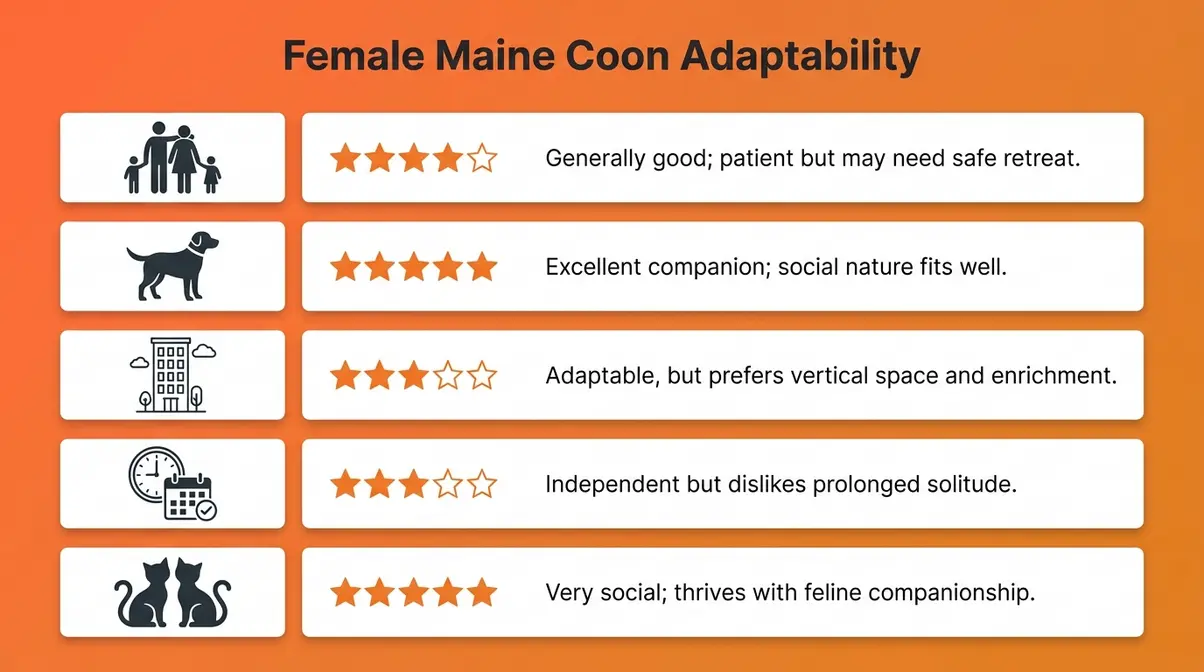
That said, they do best when they have vertical space (cat trees, shelving), consistent routines, and at least one person they can bond with deeply. Across Maine Coon owner communities, the consistent feedback is that females handle moderate alone time better than males — but they are not designed for isolation. They want a person. They just want to choose that person themselves.
This is the heart of what we call “The Queen Paradox” — the counterintuitive pattern where greater independence produces deeper, more selective bonds. She does not attach indiscriminately. She chooses. And when she chooses you, that bond is among the most loyal a domestic cat can offer.
“Our girl is well behaved, a clown, energetic, mischievous, and polite. Not cuddly but likes a good belly rub. Talks a lot and likes being right…”
— Real owner, r/mainecoons
That quote captures the Queen Paradox perfectly. “Not cuddly” and “good belly rub” in the same breath. Independent and deeply present at the same time.
Female Maine Coons are loyal companions who bond deeply with their chosen people — but always on their own terms. The female Maine Coon is not a simple lap cat. She is a complex, intelligent companion who rewards patience. Understanding her personality is only part of the picture. Her size and physical traits are just as distinctive — and just as important for prospective owners to plan for.
Female Maine Coon Size and Appearance
Female Maine Coons are large cats — significantly bigger than the average domestic shorthair — but they are notably smaller than their male counterparts. Hill’s Pet Nutrition lists female Maine Coons at 8–12 lbs (medium category), while males routinely reach 15–25 lbs. That size gap matters for litter box selection, feeding portions, and how much couch real estate you’ll be sharing.
How Big Do Female Maine Coons Get?
Adult female Maine Coons typically weigh between 8 and 13 lbs (approximately 3.6–6 kg), with most falling in the 9–12 lb range at full maturity. They stand 8–14 inches tall at the shoulder and can stretch up to 40 inches from nose to tail tip. Full growth takes longer than most breeds — females typically reach their adult size between 3 and 5 years of age. If you want to explore detailed Maine Coon size charts and growth patterns, knowing their typical milestones is incredibly helpful.
For context, the average domestic shorthair weighs 8–10 lbs. A female Maine Coon at the top of her range is a genuinely substantial cat. She will need a large litter box, a sturdy cat tree rated for her weight, and food portions calculated for her actual size — not the generic “medium cat” defaults on most packaging.
| Measurement | Female Maine Coon | Average Domestic Cat |
|---|---|---|
| Adult weight | 8–13 lbs (3.6–6 kg) | 8–10 lbs (3.6–4.5 kg) |
| Height (shoulder) | 8–14 inches | 9–10 inches |
| Nose-to-tail length | Up to ~40 inches | ~18 inches |
| Full maturity age | 3–5 years | 1–2 years |
Coat, Colors, and Physical Features
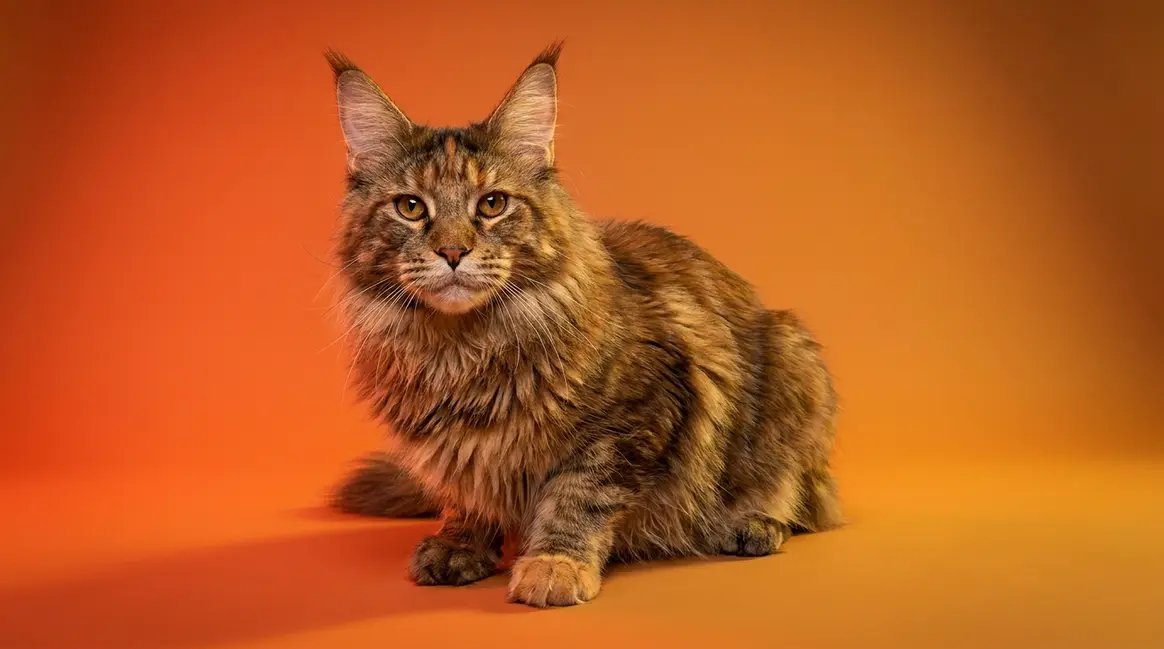
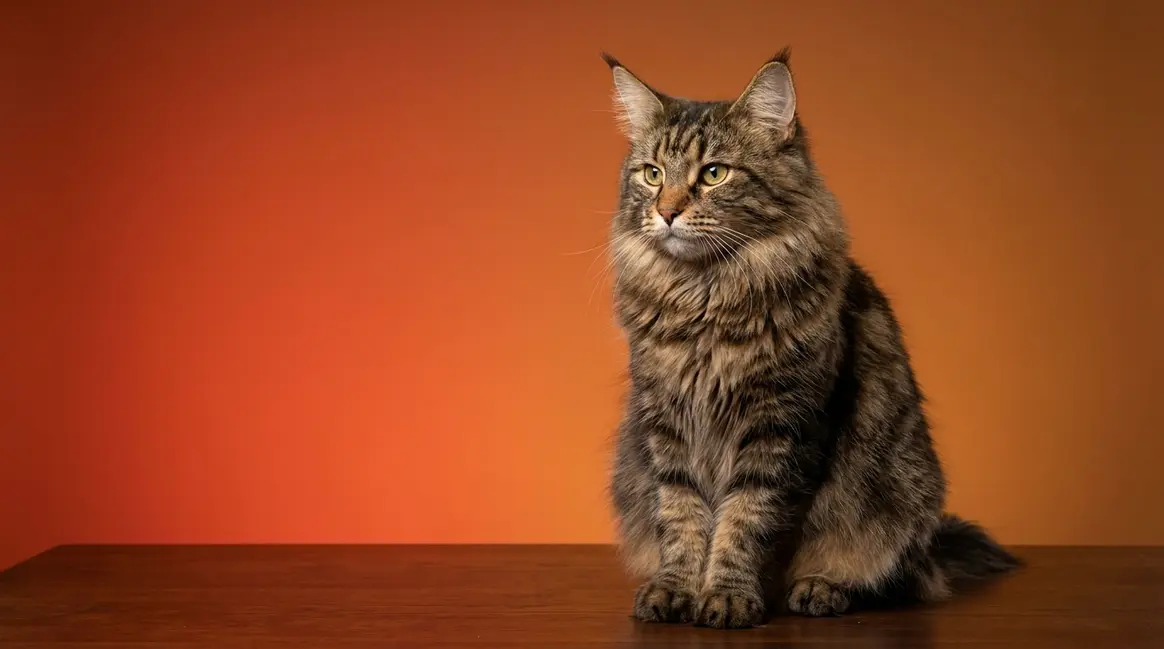
The Maine Coon’s coat is one of its most recognizable features — and in females, it is equally impressive, though sometimes slightly less dense than in males. The coat is semi-long, water-resistant, and features three distinct layers: a soft, downy undercoat; a middle layer for insulation; and longer guard hairs on top. The ruff around the neck (a lion-like mane), tufted ears, and heavily furred paws are all hallmarks of the breed. It is also fascinating to learn about the distinctive appearance of Maine Coon paws, which are heavily tufted to act like snowshoes in winter environments.
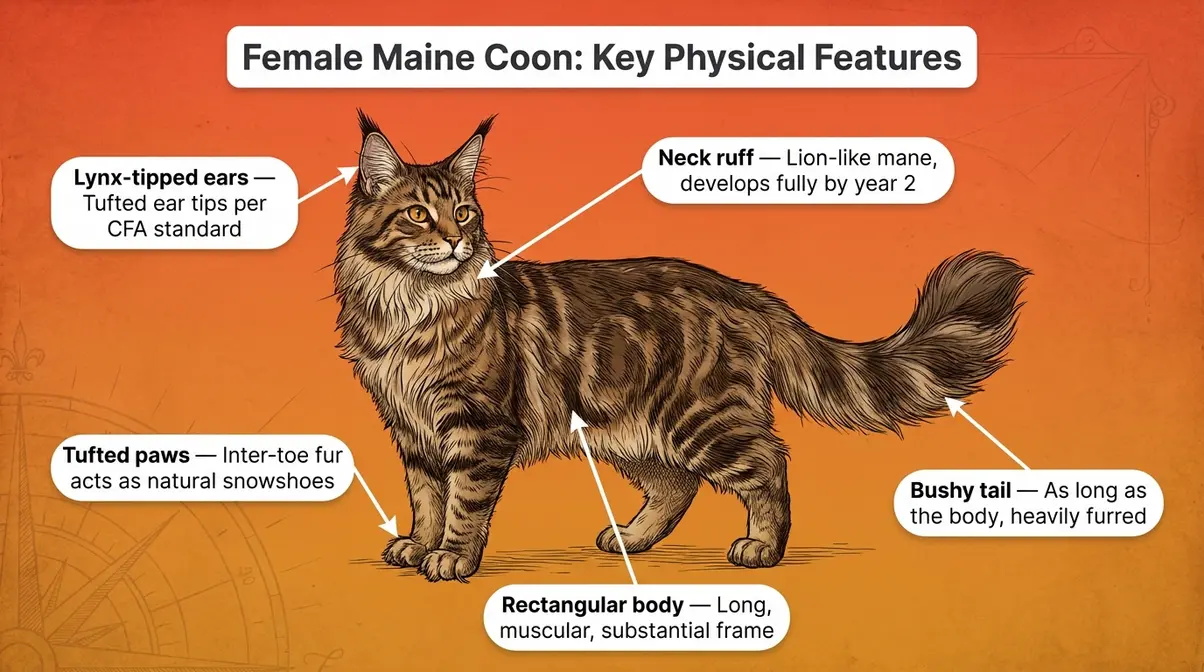
Maine Coons come in over 75 recognized color combinations — including tabby patterns (classic, mackerel, ticked), solid colors, tortoiseshell, and bi-color. Brown tabby is the most common and most associated with the breed’s classic look. Eye color ranges from gold and green to copper, with odd-eyed (two different colors) individuals occasionally appearing in white-coated cats.
How Long Do Female Maine Coons Live?
Female Maine Coons typically live 10–15 years, with well-cared-for individuals sometimes reaching the late teens. VCA Animal Hospitals notes the typical Maine Coon lifespan is around 13 years. Genetics, diet, indoor-only lifestyle, and regular veterinary screening all meaningfully influence that range.
Compared with the general domestic cat average of 12–15 years, Maine Coons are not particularly short-lived — but they are predisposed to specific heritable conditions (covered in the health section below) that can shorten lifespan if undetected. Annual wellness exams and breed-specific cardiac screening are the most reliable ways to keep a female Maine Coon in the upper range of that lifespan estimate.
Spotting a Purebred Female Kitten
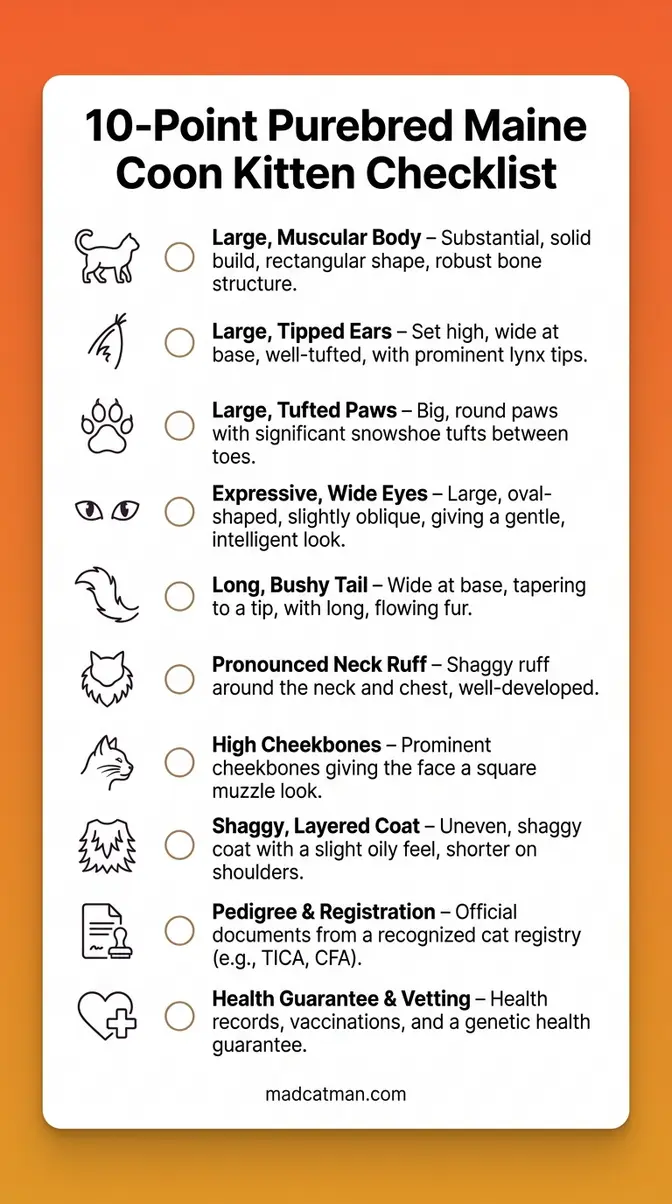
If you’re buying from a breeder rather than adopting a rescue, verifying that a kitten is genuinely purebred matters — both for setting accurate expectations about size and temperament, and for understanding her health risks. According to the official CFA breed standard, purebred Maine Coons have a specific set of physical markers.
- Body and Head Markers:
- Rectangular body shape — long, muscular, and substantial even as a kitten
- Lynx-tipped ears — tufts of hair extending from the ear tips (not all kittens have these at 8 weeks, but they should be present by 12 weeks)
- Tufted paw pads — visible tufts of fur between the toes
- High cheekbones with a square muzzle — not round like a Persian or pointed like a Siamese
- Coat and Documentation Markers:
- Bushy, full tail — at least as long as the body, ideally matching in length
- Heavy neck ruff — already visible in kittens; develops fully by year 2
- Large, wide-set eyes — slightly oblique set; any color acceptable per CFA standard
- Semi-long, layered coat — even at 8 weeks, the coat should feel multi-textured
- CFA or TICA registration papers — ask for the pedigree; reputable breeders provide this without hesitation
- HCM-tested parents — both parents should have current cardiac screening results on file
Female Health Concerns and Grooming
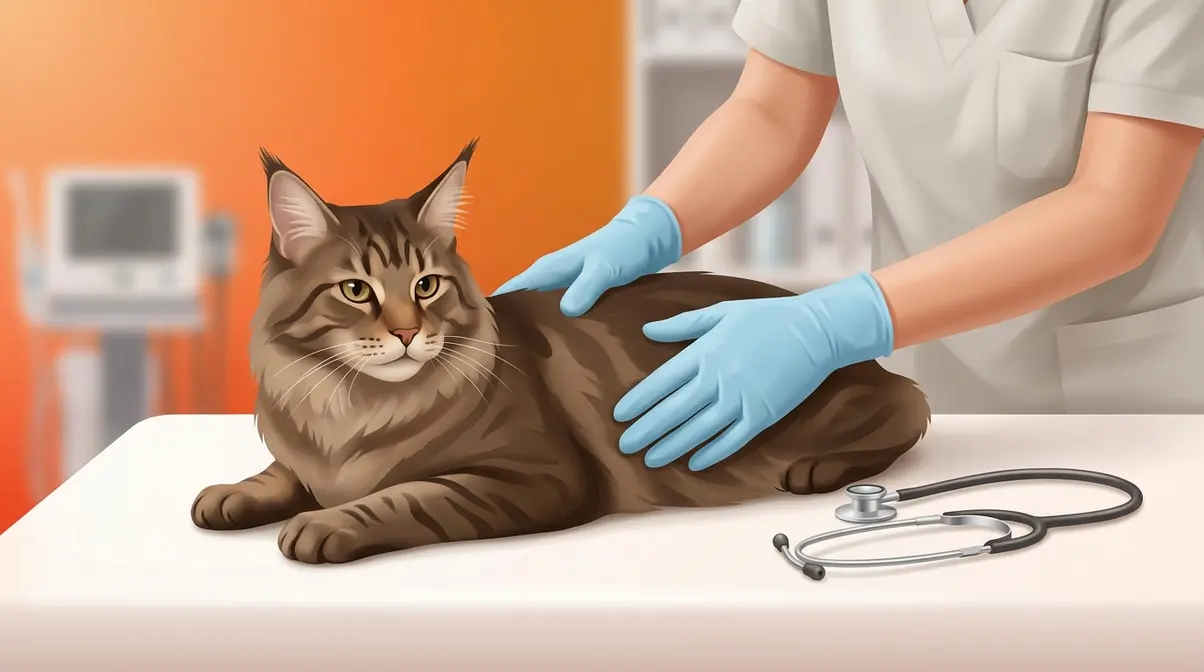
Female Maine Coons share the breed’s general health profile, but two conditions deserve particular attention: hypertrophic cardiomyopathy (HCM) and hip dysplasia. Both are heritable, both are manageable with early detection, and both are conditions your vet may not screen for proactively unless you ask. VCA Animal Hospitals recommends regular veterinary check-ins for large-breed cats — and for Maine Coons specifically, breed-aware screening is essential.
Heart Health and HCM Risk
HCM (hypertrophic cardiomyopathy) is a condition where the heart muscle thickens abnormally, reducing its ability to pump blood effectively. Maine Coons are one of the highest-risk breeds, carrying a breed-specific genetic mutation (MYBPC3 A31P) that UC Davis Veterinary Genetics Laboratory has identified as a significant risk factor. Prevalence estimates in some Maine Coon populations reach 9.5–26.3% (PMC, 2011).
The good news for female owners: UC Davis notes that male cats may be twice as likely to be affected as females, and heavier cats face higher risk than lighter ones. Female Maine Coons, being smaller and lighter than males, have a somewhat reduced statistical risk. However, “reduced” is not “eliminated.” A female who carries two copies of the mutation (homozygous) faces significantly elevated risk regardless of sex.
What this means for you: Ask your breeder for HCM genetic test results for both parents before purchasing a kitten. For any female Maine Coon, a baseline echocardiogram (heart ultrasound) in young adulthood is recommended — and annual screening if she tests positive for the mutation or has a family history of cardiac disease.
| Genetic Status | Risk Level | Recommended Action |
|---|---|---|
| N/N (no mutation) | Baseline breed risk | Annual wellness exam |
| N/HCMmc (one copy) | ~1.8× higher than N/N | Annual echocardiogram |
| HCMmc/HCMmc (two copies) | ~18× higher than N/N | Annual echo + cardiologist follow-up |
Hip Dysplasia and Joint Health
Hip dysplasia is an abnormal formation of the hip socket that causes the joint to wear unevenly over time. It is well-documented in large cat breeds, and Maine Coons — even females at the lighter end of the size range — are considered a higher-risk population than the average domestic cat.
Signs to watch for include reluctance to jump, a bunny-hopping gait when running, or visible stiffness after rest. Because female Maine Coons are still large cats by any standard, maintaining a lean body weight is the single most impactful preventive measure you can take. Extra weight compounds joint stress significantly in a breed already predisposed to orthopedic issues.
Reputable breeders screen breeding cats via hip radiographs before pairing them. When evaluating a breeder, ask specifically whether hip health is part of their health-testing protocol — it should be, alongside HCM cardiac screening.
Grooming Changes After Spaying
The female Maine Coon’s semi-long coat requires consistent attention. The standard recommendation across breed-specific grooming guides and owner communities is 2–3 brushing sessions per week, with daily brushing recommended during seasonal shedding periods (typically spring and fall).
After spaying, hormonal changes can subtly alter coat texture — sometimes making it slightly denser or softer — and some females groom themselves less actively in the weeks following surgery. VCA Animal Hospitals notes that long, silky coats require daily brushing if they become prone to tangling. Monitor your female’s coat closely in the 4–8 weeks post-spay. If you notice more matting than usual, step up to daily brushing until her coat stabilizes.
Female Maine Coon Grooming Matrix:
| Grooming Task | Frequency (Intact) | Frequency (Spayed) | Key Tool |
|---|---|---|---|
| Full body brushing | 2–3× per week | 3–4× per week (monitor coat) | Slicker brush + wide-tooth comb |
| Belly and armpit check | Weekly | Weekly | Fine-tooth comb |
| Ear cleaning | Monthly | Monthly | Vet-approved ear cleaner |
| Nail trimming | Every 2 weeks | Every 2 weeks | Cat nail clippers |
| Bath | 2–3× per year | 2–3× per year | Cat-formulated shampoo |
Pay particular attention to the belly, armpits, and the area behind the ears — these are the zones most prone to matting in Maine Coons. A wide-tooth comb works well for the undercoat; a slicker brush handles the top layer. Never brush a dry, tangled coat — mist lightly with a cat-safe conditioning spray first if mats are present.
Male vs. Female Maine Coons
This is the question most prospective owners arrive at eventually — and it deserves an honest, structured answer rather than a vague “it depends.” It helps to compare Maine Coon traits with other cats to truly appreciate how unique both sexes are within the feline world. Our evaluation of breeder guidance, owner community data, and breed-standard documentation consistently shows that the choice between a male and female Maine Coon comes down to one core question: do you want a universally social cat, or a deeply loyal one?
Personality Differences at a Glance
The Queen Paradox reappears here in sharp relief. Male Maine Coons are often described as the “golden retrievers” of the cat world — enthusiastic, openly affectionate, eager to charm every visitor. Female Maine Coons are more like a trusted colleague: measured, observant, and intensely loyal once they’ve decided you’ve earned it.
| Trait | Male Maine Coon | Female Maine Coon |
|---|---|---|
| Affection style | Openly clingy, seeks contact from everyone | Selective, deep one-person bond |
| Social behavior | “Everyone’s cat” | “Your cat” — reserved with strangers |
| Playfulness | Goofy, clownish, kitten-like into adulthood | Focused, purposeful, puzzle-oriented |
| Independence | Needs more human contact | Handles moderate alone time better |
| Vocalization | Frequent, enthusiastic | Communicative, conversational |
| Adaptability | Eager and fast | Observant, then fully committed |
According to a-z-animals.com’s comparison guide, males tend to remain more kitten-like in their behavior well into adulthood, while females mature into more dignified, observant companions. Neither is “better” — they serve different owner needs.
Size and Physical Differences
The size gap between male and female Maine Coons is more pronounced than in most domestic breeds. Males typically reach 15–25 lbs; females typically reach 8–13 lbs. That’s a potential 10+ lb difference — significant enough to affect food costs, litter box size, and how much cat ends up on your chest at 2 a.m.
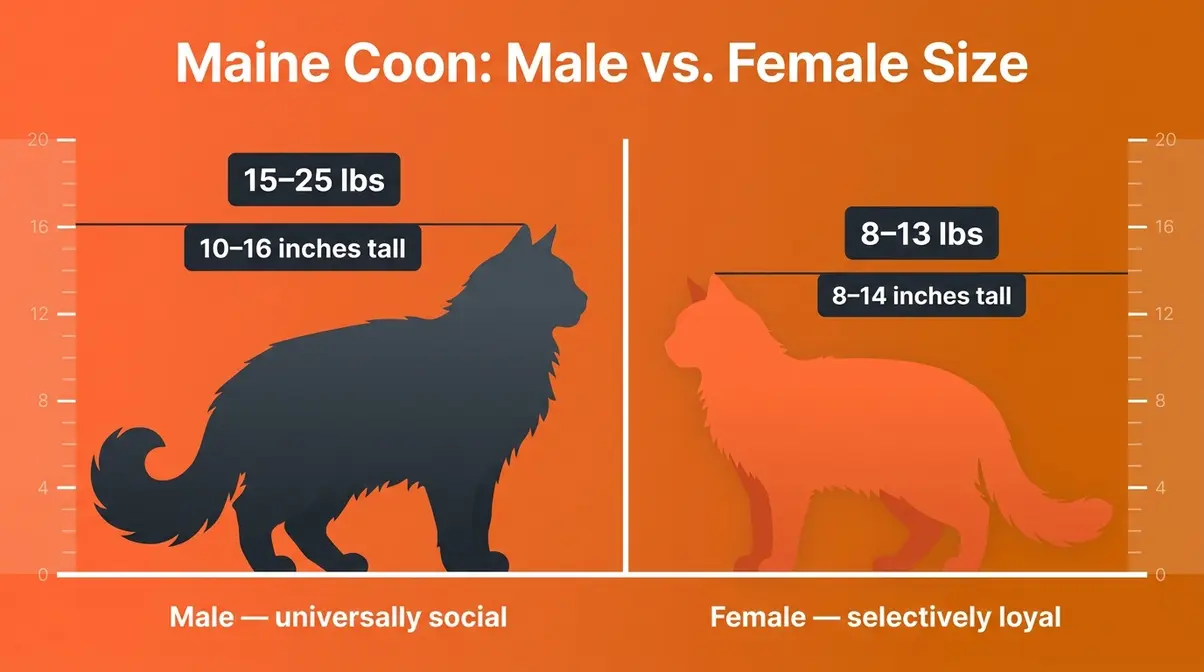
If you specifically want the most dramatically large cat possible, a male is statistically your better bet. If you want a cat who is still impressively large but more manageable in a smaller space, a female is the stronger match.
Making Your Decision
After reviewing breeder guidance, community consensus, and breed-standard documentation, our evaluation found that most owners who regret their choice — male or female — made it based on aesthetics (size, coat) rather than temperament compatibility.
- Choose if:
- You want an intensely loyal, one-person companion
- You have moderate alone time in your schedule (8-hour workdays are manageable)
- You appreciate a cat who is affectionate and independent
- You prefer a large but not extreme-size cat
- Choose if:
- You want a universally social “everyone’s cat”
- You have multiple family members who all want equal cat affection
- You want the most dramatically large Maine Coon possible
- You prefer openly clingy, constant contact
For households with children or other pets, both sexes adapt well — but females may take slightly longer to warm up to newcomers. Once they do, the bond is unshakeable.
Downsides of a Female Maine Coon
Every breed guide should include this section — and most don’t. Owning a female Maine Coon is genuinely rewarding, but it comes with real challenges that prospective owners deserve to know about in advance.
Common Challenges New Owners Face
Slow bonding period. The Queen Paradox cuts both ways. That deep, selective loyalty takes time to develop. Some female Maine Coons take 3–6 months to fully warm up to a new home, especially if they came from a cattery environment. New owners who expect immediate lap-cat behavior sometimes interpret this adjustment period as a personality flaw. It isn’t. It’s a feature.
Grooming commitment. Two to three brushing sessions per week is not a suggestion — it’s a maintenance requirement. Skipping sessions leads to matting, particularly in the belly and armpit areas, which can become painful and require professional grooming or veterinary intervention to address safely.
Health screening costs. Annual echocardiograms (for HCM-positive cats) can range from $300–$600 depending on your location and whether a specialist is involved. This is a real, recurring cost that generic “Maine Coon ownership” articles rarely mention. Budget for it from the start.
Mental stimulation needs. A bored female Maine Coon is a destructive one. Puzzle feeders, interactive wand toys, and at least two 15-minute active play sessions daily are not optional enrichment — they are baseline requirements for a well-adjusted female Maine Coon.
When They Might Not Be the Right Fit
A female Maine Coon is probably not the right choice if you want immediate, unconditional affection from a cat who loves everyone equally — a male Maine Coon, or a breed like the Ragdoll, would serve that need better.
She is also not ideal if your household has very young children who expect a tolerant, constantly available lap cat. Female Maine Coons will remove themselves from overstimulating situations on their own terms — which is healthy cat behavior, but can frustrate young children who don’t yet understand feline boundaries.
Finally, if your schedule involves extended travel or long daily absences with no other animal companionship in the home, reconsider. Female Maine Coons handle moderate alone time better than males, but they are still a social breed. Chronic isolation affects their wellbeing and can produce anxious or destructive behavior over time.
Female Maine Coon FAQs
Are females more independent than males?
Female Maine Coons are generally more independent than males, though both sexes are social by breed standard. While males tend to seek attention from everyone in the household, females typically form a deep bond with one or two people and remain more reserved with others. This independence is the mechanism behind the Queen Paradox, where selectivity produces deeper, more durable bonds.
What is the downside of this breed?
The primary downsides of Maine Coon ownership are grooming demands, health screening costs, and high intelligence that requires active management. Long coats need 2–3 brushing sessions per week; skipping sessions leads to painful matting. Maine Coons are genetically predisposed to HCM (hypertrophic cardiomyopathy) and hip dysplasia, making annual vet screening essential and potentially costly. Their intelligence means they need consistent mental stimulation to prevent boredom. Without it, they create their own entertainment, usually at your expense. These are manageable challenges, but they are real ones that generic breed guides rarely address honestly.
Is it better to get a female or male?
Neither is universally better — it depends on what you want from the relationship. Males are larger, more openly affectionate, and socially enthusiastic with everyone, while females are slightly smaller, more selective, and form intense one-person bonds. If you want a deeply loyal companion who chooses you specifically, a female is the stronger match.
How big do female Maine Coons get?
Adult female Maine Coons typically weigh 8–13 lbs (3.6–6 kg) and stand 8–14 inches tall at the shoulder, according to veterinary benchmarks. They can stretch up to 40 inches from nose to tail, making them quite substantial. Hill’s Pet Nutrition lists the female Maine Coon in the “medium” weight category at 8–12 lbs, though they reach full size more slowly than most breeds. Expect 3–5 years for complete physical maturity. While significantly smaller than males (15–25 lbs), female Maine Coons are still among the largest domestic cat breeds you can own.
Do females have health problems?
Female Maine Coons are predisposed to two primary heritable conditions: HCM (hypertrophic cardiomyopathy) and hip dysplasia. HCM is a heart muscle thickening condition caused by a breed-specific genetic mutation, and while males face higher statistical risk, females are not immune. Always ask breeders for both HCM genetic test results and hip screening documentation for both parents before purchasing a kitten.
How much grooming do they need?
Female Maine Coons need brushing 2–3 times per week at minimum, with daily brushing recommended during seasonal shedding in spring and fall. VCA Animal Hospitals notes that long, silky coats require daily brushing when prone to tangling. After spaying, hormonal changes can make the coat slightly denser, so you must monitor and increase brushing frequency if matting develops. Key mat-prone zones are the belly, armpits, and behind the ears. Nail trimming every two weeks and ear cleaning monthly round out the comprehensive grooming routine.
Making the Right Choice for Your Home
Female Maine Coon traits center on one defining dynamic: the Queen Paradox. She appears independent, but that independence is precisely what makes her bonds so deep and so durable. At 8–13 lbs, she is one of the largest domestic cats you can own. Her semi-long coat needs consistent grooming, her health requires breed-aware veterinary screening, and her intelligence demands active daily engagement. For prospective owners who want a loyal, intelligent, and genuinely dignified companion, the female Maine Coon delivers something few breeds can match.
The Queen Paradox is not a marketing phrase — it is the operating principle of life with a female Maine Coon. She will not love everyone immediately. She will not sit on your lap on demand. But when she decides you are her person, that relationship is among the most rewarding in domestic cat ownership. It is earned. That is what makes it matter.
Start by researching TICA- and CFA-registered breeders who provide HCM genetic test results and hip screening documentation for both parents. Ask to meet the mother. Observe the kitten’s behavior — curiosity and confidence at 8–12 weeks are good indicators of a well-socialized female. Give her 3–6 months to settle into your home before drawing conclusions about her personality. The cat she becomes for you is worth the wait. If you are ready to take the next step, explore our related guides to prepare your home for a new kitten, or reach out to a registered breeder to start your journey.

Dave King
Cat owner and writer at Mad Cat Man.