Cat Aggression Towards Owner: Vet-Verified 5-Step Fix
Unlock actionable ideas for Cat Aggression Treatment: 10 Real-Owner Case Studies with Step-by-Step Plans That Worked to help you plan with confidence…

Medical Disclaimer: This article is for informational purposes only and is not a substitute for professional veterinary advice, diagnosis, or treatment. If your cat is showing sudden, severe, or escalating aggression, consult a licensed veterinarian before attempting any behavior modification. Reviewed by , July 2026.
Your sweet, affectionate cat has become someone you’re afraid of. One minute they’re purring in your lap; the next, they’ve launched a full-on attack at your legs for no apparent reason. You’re not imagining it — and you’re absolutely not alone. Reading through real owner case studies of cat aggression can help you realize you aren’t alone in this struggle.
“I am at my wits end. I am in tears as I write this. My 5-year-old male cat has gone from sweet to Dr. Jekyll to Mr. Hyde — full-on attacks, completely unprovoked. I’ve tried everything.”
— Cat owner forum post, reflecting a frustration shared by thousands
Cat aggression towards owner is one of the most distressing behavioral problems veterinary professionals encounter. According to the Cornell Feline Health Center, aggression is the second most common behavioral complaint from cat owners — and in the vast majority of cases, there is a specific, identifiable cause that can be addressed. This guide walks you through The Aggression Ladder Protocol: a structured, step-by-step framework that takes you from panic to clarity, helping you identify exactly what’s triggering your cat and what to do about it tonight.
Cat aggression towards owner almost always has a specific, treatable cause — it is rarely “random” or permanent.
- Rule out pain first: Sudden aggression in a previously gentle cat is a medical emergency until proven otherwise — schedule a vet visit before anything else.
- The Aggression Ladder Protocol maps your cat’s warning signals to specific responses, so you stop guessing and start acting.
- Redirected aggression (when your cat attacks you after being frightened by something else) accounts for a large share of “unprovoked” attacks — identifying the real trigger is the fix.
- Long-term behavior modification — structured play, environmental enrichment, and positive reinforcement — resolves most cases within 4–8 weeks when applied consistently.
Before You Start: What You’ll Need
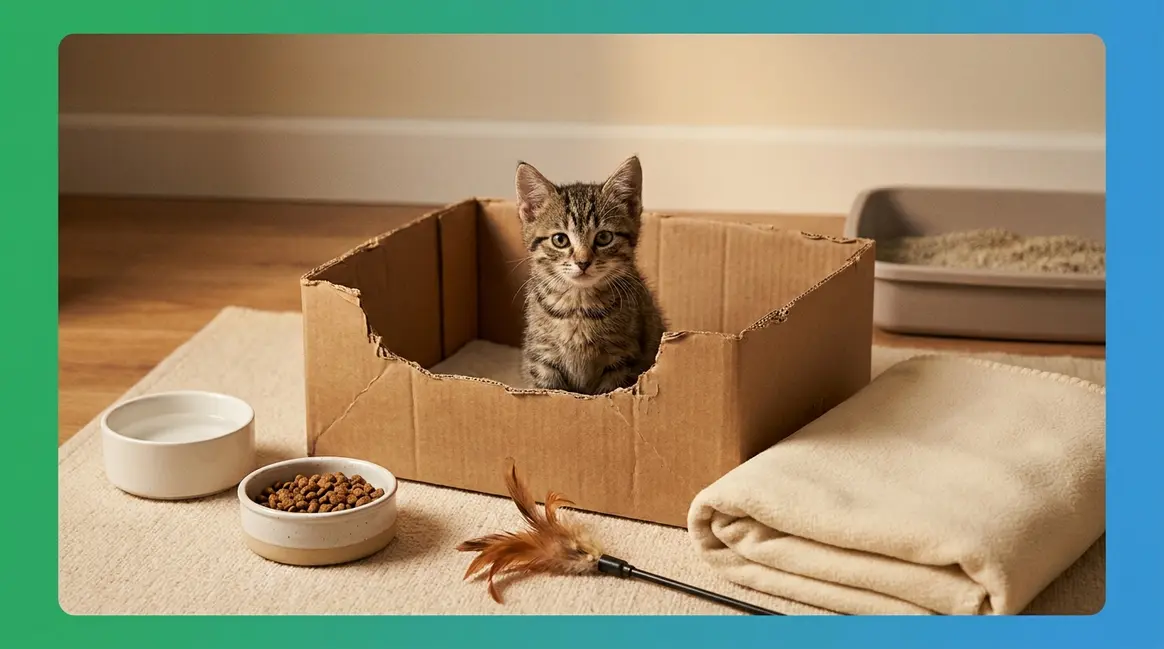
Before attempting any de-escalation or behavior modification, gather these tools and set realistic expectations. Rushing into training without preparation is one of the most common reasons these efforts fail.
- You will need:
- A veterinary appointment scheduled (mandatory before Step 4)
- A thick pair of gardening gloves or bite-proof gloves for handling during active episodes
- An interactive wand toy (feather, ribbon, or crinkle toy — NOT your hand)
- A clean spray bottle or a large blanket for safely interrupting fights
- A notebook or phone notes app to log triggers, timing, and patterns
- Patience: most behavior modification plans take 4–8 weeks to show consistent results
Time estimate: Step 1 (vet visit) takes 1–3 days to arrange. Steps 3–4 can begin immediately. Full resolution typically requires 4–8 weeks of consistent effort.
Step 1: Rule Out Medical Causes First
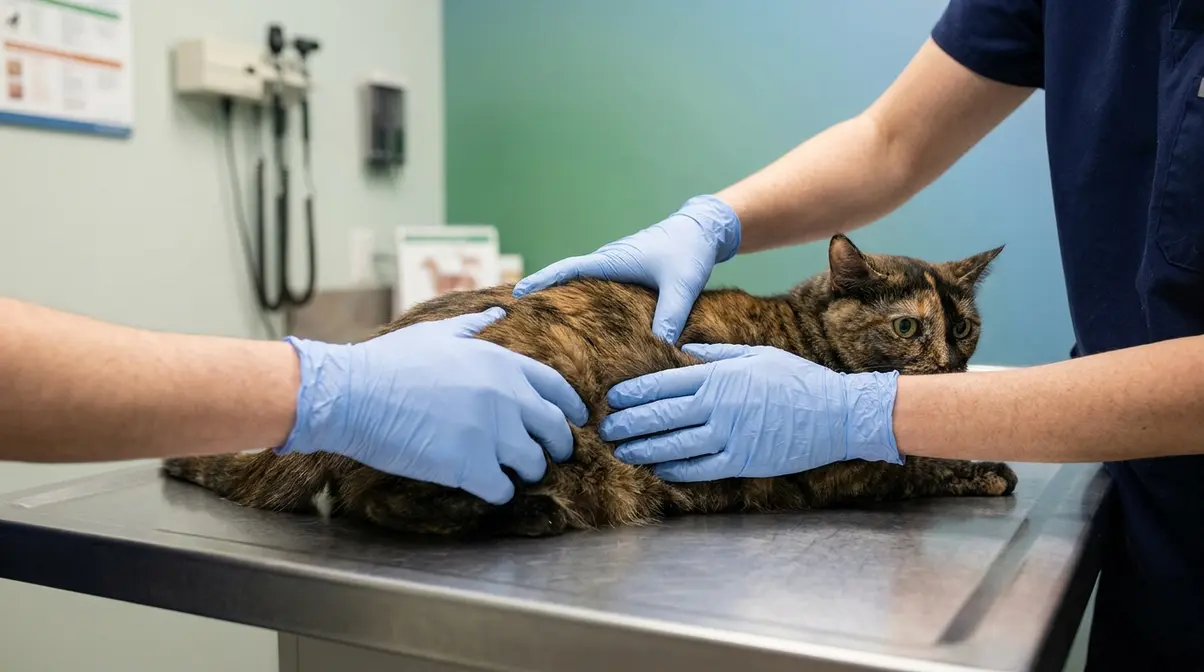
The single most important step when your cat’s aggression appears suddenly is a veterinary examination. Pain is one of the leading medical causes of owner-directed aggression in cats, and cats are biologically wired to hide discomfort — meaning your cat may be in significant pain without you realizing it (Cornell Feline Health Center, 2026).
The Most Common Medical Triggers Behind Sudden Cat Aggression
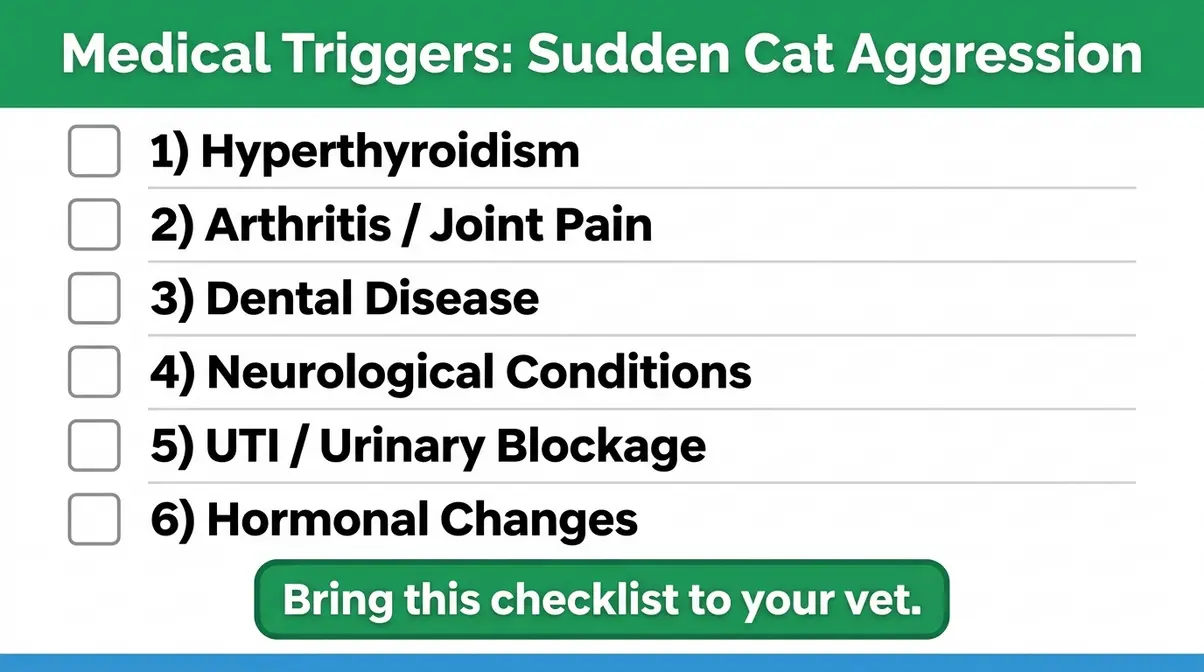
Sudden personality change — from gentle to aggressive — is a red flag that something physical may be wrong. According to Today’s Veterinary Practice, the most common medical differentials for owner-directed feline aggression include:
- Hyperthyroidism (overactive thyroid gland): Causes irritability, restlessness, and unpredictable behavior, particularly in cats over 10 years old. Affects roughly 10% of cats over age 10 (Today’s Veterinary Practice, 2026).
- Arthritis or musculoskeletal pain: A cat that attacks when you touch certain areas — the lower back, hips, or tail base — is almost certainly experiencing pain in that region. Research published in the Journal of Feline Medicine and Surgery (2026) found that over 90% of cats over 12 years old showed radiographic evidence of arthritis, yet fewer than half displayed obvious limping.
- Dental disease: Oral pain is one of the most underdiagnosed causes of irritability in cats. A cat that suddenly becomes head-shy or bites when touched near the face may have a cracked tooth or periodontal disease.
- Neurological conditions: Seizure disorders, brain tumors, or cognitive dysfunction syndrome (similar to dementia in humans) can trigger sudden, disoriented aggression with no apparent warning.
- Urinary tract infections or blockages: Especially in male cats, these cause severe discomfort and can manifest as sudden, explosive aggression.
Environmental and Social Stress Triggers
Not all triggers are physical. Veterinary consensus indicates that environmental disruption is a major driver of stress-related aggression in cats. Common social and environmental stressors include:
- A new pet or baby introduced to the home
- Moving to a new house or significant furniture rearrangement
- Changes in your schedule (new job, remote work ending)
- Loud construction, fireworks, or thunderstorms
- A neighborhood cat visible through a window (a frequent trigger for redirected aggression)
- Loss of a bonded companion — human or animal
Cats are creatures of routine. According to the ASPCA’s feline behavior resources, even minor changes to a cat’s perceived territory can trigger a prolonged stress response lasting days to weeks.
How to Read Your Cat’s Pre-Attack Warning Signs
Most cats do not attack without warning — but their warning signals are subtle and easy to miss. The Aggression Ladder Protocol is built on one core insight: every cat telegraphs its emotional state before it strikes. Learning to read these signals gives you a window to de-escalate before an attack happens.
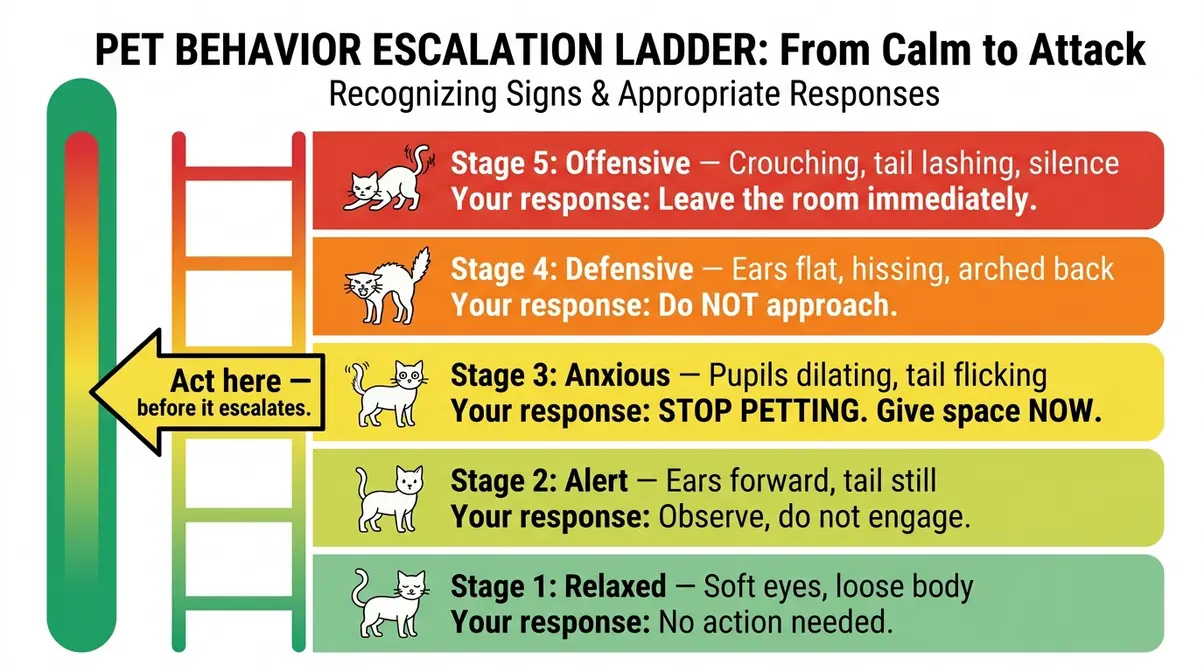
Stage 1 — Relaxed: Soft, half-closed eyes; loose, relaxed body; tail still or gently curled. Your cat is comfortable. No action needed.
Stage 2 — Alert: Ears rotated forward; pupils slightly dilated; tail held low and still. Something has caught your cat’s attention. Observe without engaging.
Stage 3 — Anxious (act here): Pupils fully dilated; tail flicking rapidly at the tip; skin may ripple along the back. This is your earliest reliable warning. Stop petting. Give your cat space immediately.
Stage 4 — Defensive: Ears flattened sideways (“airplane ears”); hissing or growling; back arched; body turned sideways. Your cat feels cornered. Do NOT approach, reach toward, or make eye contact.
Stage 5 — Offensive/Attack Imminent: Low, crouching posture; direct, unblinking stare; tail lashing violently; vocalization stops (silence before the strike). Leave the room immediately.
Checkpoint: Does Your Cat Need a Vet?
Answer these questions honestly. If you answer yes to any one of them, schedule a veterinary appointment before proceeding to behavior modification.
- Did the aggression start suddenly (within days or weeks) with no obvious behavioral trigger?
- Is your cat over 8 years old?
- Does your cat attack when you touch a specific area of their body?
- Has your cat’s eating, drinking, or litter box behavior changed alongside the aggression?
- Does your cat seem disoriented, glassy-eyed, or “not themselves” during aggressive episodes?
For a comprehensive overview of how pain drives behavioral change in cats, the Cornell Feline Health Center offers detailed, vet-reviewed guidance on feline pain assessment.
Step 2: Identify the Aggression Type
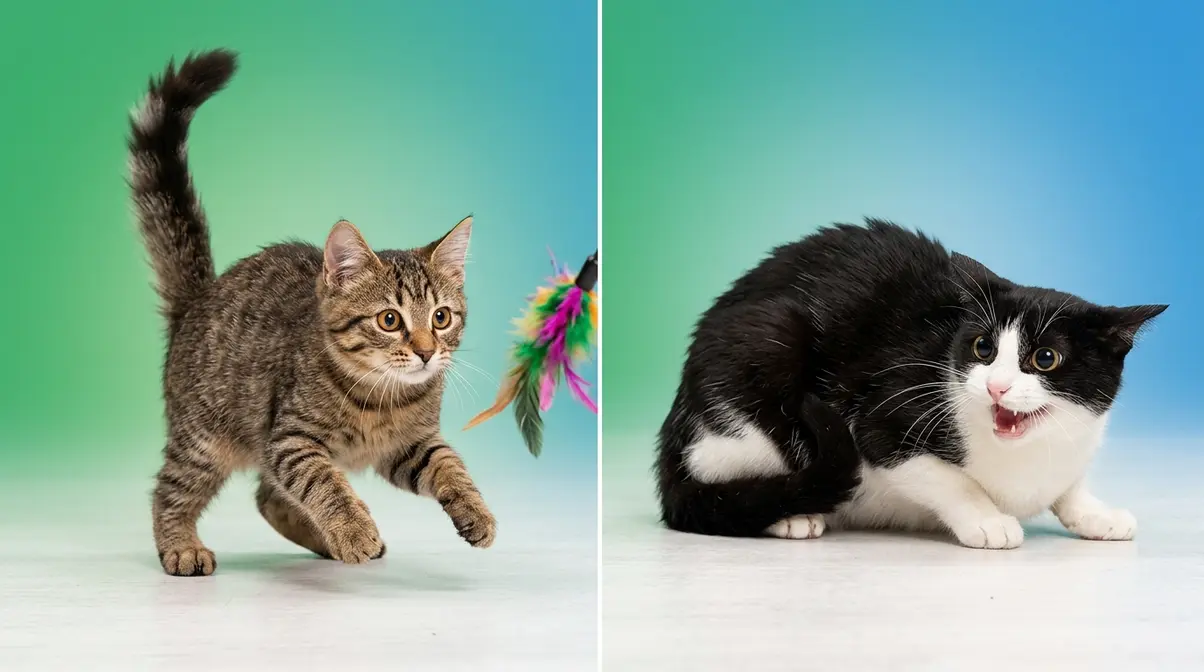
Once medical causes are ruled out, identifying the specific type of aggression your cat displays is the key to choosing the right response. The wrong approach — such as using punishment for fear-based aggression — can make the problem dramatically worse (ASPCA Feline Behavior, 2026).
Play Aggression: When Playtime Becomes a Problem
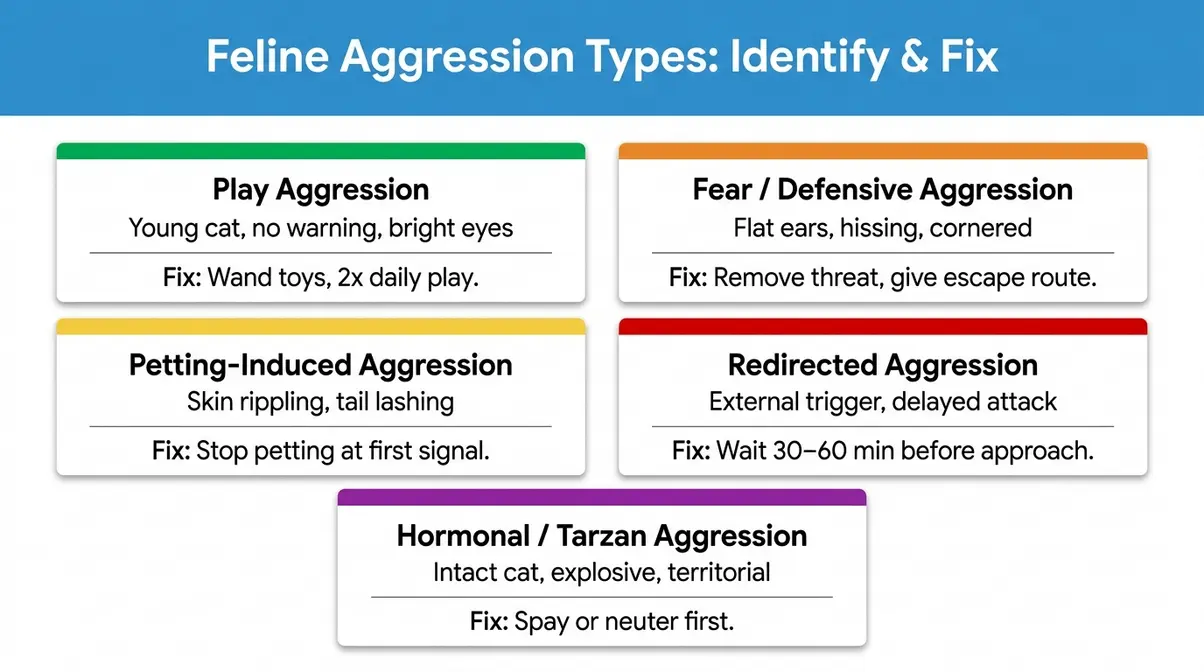
Play aggression is the most common type of cat aggression towards owner, particularly in young cats under 2 years old and in single-cat households. It happens when a cat’s natural predatory instincts are directed at you because there are no appropriate outlets.
- How to recognize it:
- Attacks happen during or immediately after play
- Your cat stalks, pounces, and grabs — but typically releases quickly
- No hissing, growling, or defensive posturing beforehand
- Your cat looks bright-eyed and energetic, not fearful
The fix: Redirect predatory energy toward toys — specifically wand toys that keep your hands and feet away from the “prey zone.” According to the ASPCA, cats need a minimum of two 10–15 minute active play sessions per day to adequately discharge predatory drive.
Fear, Defensive, and Petting-Induced Aggression
Fear aggression occurs when a cat feels trapped or threatened and cannot escape. The body language is unmistakable: ears flat, body low, hissing, and wide pupils. If you need help decoding cat growls and squeaks, pay close attention to the pitch and body posture. These cats attack because they believe it’s the only way to create distance.
Petting-induced aggression (sometimes called “overstimulation aggression”) is extremely common and widely misunderstood. Your cat is enjoying the petting — until suddenly they’re not. Repeated stroking overstimulates nerve endings, particularly along the back and tail base, and your cat’s threshold is reached before you notice the warning signs.
- Body language signals for petting-induced aggression (watch for these):
- Skin rippling or twitching along the back
- Tail beginning to lash or thump
- Ears rotating backward
- Head turning toward your hand
When you see any of these signals, stop petting immediately and let your cat move away on their own terms.
Redirected Aggression: The Invisible Trigger
Redirected aggression occurs when your cat becomes highly aroused by something they cannot reach — a cat outside the window, a bird, a loud noise — and then attacks the nearest living thing, which is often you. This type of aggression accounts for a significant proportion of serious owner-directed attacks and is frequently mistaken for “unprovoked” behavior.
A PMC/NCBI study on owner-directed feline aggression highlights redirected aggression as one of the most clinically significant and misdiagnosed forms of feline behavioral disturbance, precisely because the trigger and the attack are separated in time — sometimes by 30 minutes or more.
Critical rule: If your cat is highly aroused (staring out the window, chirping at birds, tail lashing), do NOT approach them for at least 30–60 minutes. Give them time to fully calm down before any interaction.
Tarzan Syndrome and Hormonal Aggression in Intact Cats
Tarzan syndrome is the informal term used by veterinary behaviorists to describe the intensely territorial, hyper-aggressive behavior seen in intact (unneutered) male cats. Named for the fictional character’s wild, uncontrollable dominance, Tarzan syndrome manifests as:
- Sudden, explosive aggression with minimal warning
- Urine spraying throughout the home
- Attempts to escape outdoors to find mates
- Aggression directed at both people and other cats
According to the American Association of Feline Practitioners, neutering resolves hormonally driven aggression in the majority of intact male cats, with behavior improvements typically observed within 4–8 weeks of surgery. Intact female cats in heat can also display heightened irritability and aggression.
If your cat is intact and showing aggression, spaying or neutering is the single highest-impact intervention available.
Feline Aggression Types at a Glance
Step 3: De-escalate Active Aggression

When your cat is in a full attack state, your only goal is to create safe distance without escalating the situation further. If you are wondering how to stop cat aggression towards humans in the heat of the moment, your primary focus must be safety. Do not attempt to reason with, comfort, or discipline an actively aggressive cat — none of these responses work, and all of them can make the attack worse (ASPCA, 2026).
How to Safely Disengage Without Getting Hurt
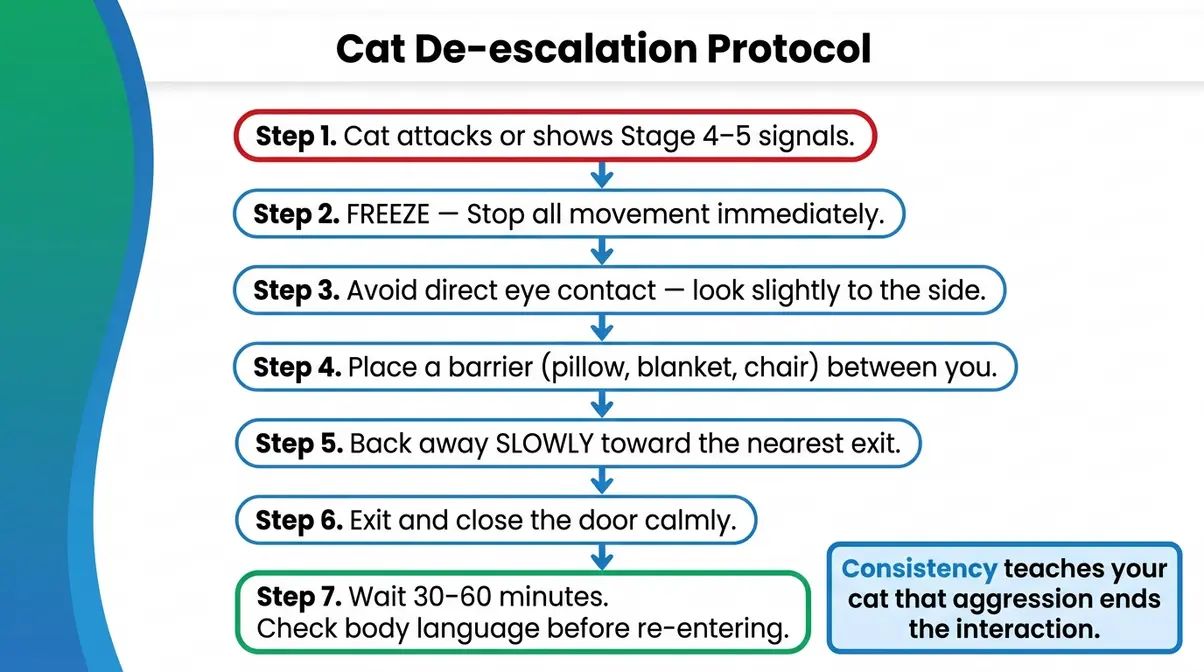
Follow these steps in order during an active aggressive episode:
- Freeze. Stop all movement immediately. Sudden movement triggers the predatory chase response.
- Avoid direct eye contact. In cat language, a direct stare is a threat. Look slightly to the side.
- Use a barrier. Place a large pillow, a folded blanket, or a chair between you and your cat. This gives them something to focus on that isn’t you.
- Back away slowly. Move sideways or backward toward a door — never turn and run. Running activates the chase instinct.
- Exit the room. Close the door calmly behind you. Give your cat a minimum of 30–60 minutes to fully decompress before re-entering.
- Do not re-enter while they are still aroused. Watch for the Stage 1–2 body language signals described in Step 1 before approaching again.
Speak “Cat Language”: What to Do in the Moment
Cats communicate primarily through body language, and you can use that language to signal non-threat during a tense interaction.
Slow blink: When your cat is at Stage 2–3 on the Aggression Ladder, make eye contact briefly, then perform a slow, deliberate blink — eyes fully closing and reopening over 2–3 seconds. Research from the University of Sussex (Humphrey et al., 2026) found that slow blinking by owners significantly increased the likelihood of cats approaching and affiliating with them. It signals: “I am not a threat.”
Turn sideways: Facing a cat head-on communicates challenge. Turning your body 45–90 degrees reduces perceived threat.
Crouch low: Standing at full human height is intimidating to a small animal. Lowering yourself to their level (without leaning toward them) reduces the perceived threat.
Avoid high-pitched sounds: Yelling, squealing, or hissing back escalates the situation. Speak in a low, calm, monotone voice if you must speak at all.
What NOT to Do During an Aggressive Episode
These responses feel instinctive but reliably make aggression worse:
- Do NOT use physical punishment. Hitting, spraying with water, or shaking a can of coins does not teach your cat what to do instead — it teaches them to fear you, which increases fear-based aggression over time.
- Do NOT pick up an aggressive cat. This traps them, removes their escape route, and almost always results in a bite or scratch.
- Do NOT stare them down. Direct eye contact at close range is a feline threat display.
- Do NOT comfort or soothe them with petting. An aroused cat cannot process affection — this often triggers an attack.
- Do NOT punish them after the fact. Cats have no capacity to connect after-the-fact punishment with a previous behavior. You will only damage trust.
Step 4: Apply Long-Term Modifications
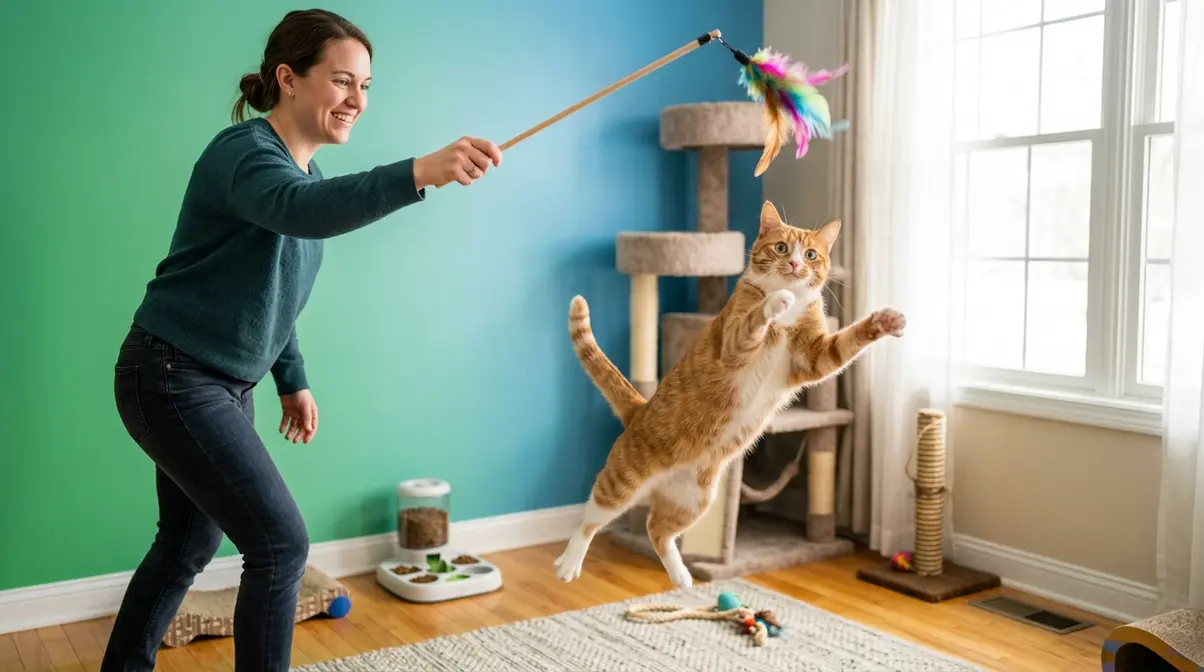
Stopping individual attacks is crisis management. Ending the pattern of aggression requires changing the conditions that cause it. Veterinary consensus indicates that a combination of structured play, environmental enrichment, and positive reinforcement resolves most cases of non-medical owner-directed aggression within 4–8 weeks (Today’s Veterinary Practice, 2026).
Build a Structured Daily Play Routine
Predatory energy that has no outlet becomes frustration, and frustration becomes aggression. A structured play routine gives your cat a legitimate, satisfying channel for their instincts.
- The recommended protocol:
- Twice daily, 10–15 minutes each session — morning and evening, aligned with your cat’s natural crepuscular (dawn/dusk) activity peaks
- Use wand toys exclusively — keep hands and feet out of the prey zone at all times
- Follow the hunt sequence: slow stalking movements → quick bursts → “kill” (let them catch and bite the toy) → brief rest
- End each session with a small food reward — this completes the hunt-eat-groom-sleep cycle and produces a calm, satisfied cat
Never use your hands or feet as play objects, even “just once.” This single habit is responsible for a significant proportion of play aggression cases seen by veterinary behaviorists.
Enrich Your Cat’s Environment to Reduce Stress
An under-stimulated cat is a stressed cat, and a stressed cat is an aggressive cat. Environmental enrichment addresses the root cause of stress-driven aggression.
- High-impact enrichment additions:
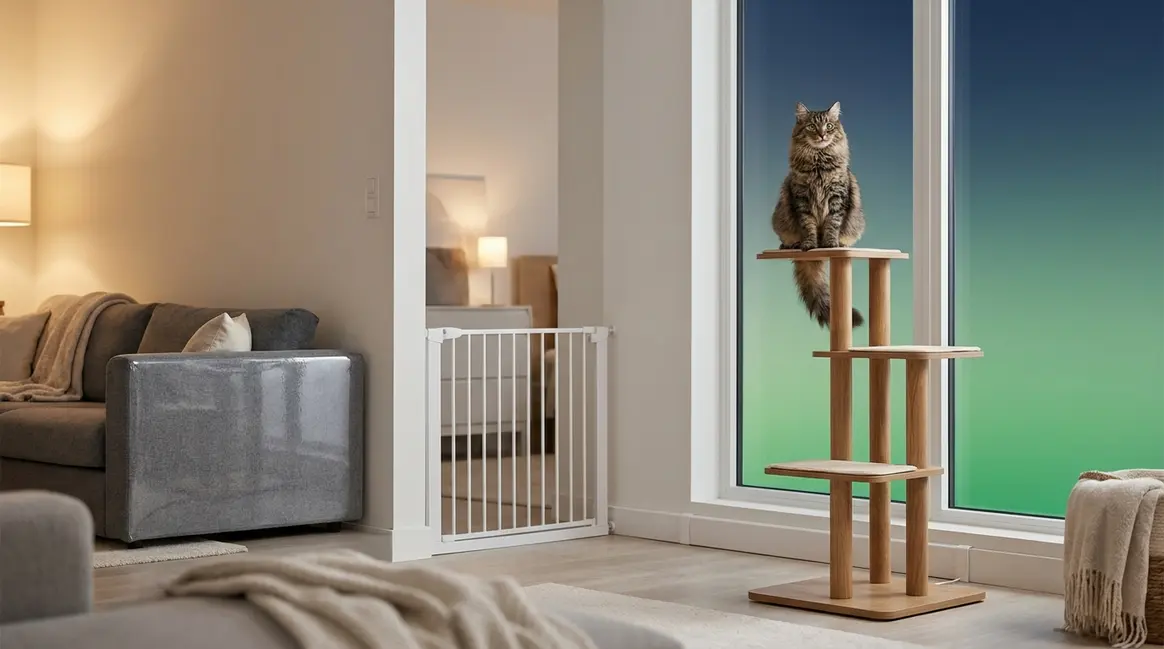
- Vertical space: Cat trees, wall shelves, or window perches. Cats feel safer when they can observe from height.
- Window access: A bird feeder positioned outside a window provides hours of mental stimulation — just ensure your cat cannot see outdoor cats (a common redirected aggression trigger).
- Puzzle feeders: Replace one or two meals per day with a food puzzle. This engages predatory cognition and reduces frustration.
- Hiding spots: At least one covered, private retreat per cat in the household — a space they can access but other pets and people cannot.
- Consistent routine: Feed, play, and interact at the same times each day. Predictability reduces baseline anxiety.
The Ohio State University Indoor Pet Initiative documents that environmental enrichment significantly reduces stress-related behaviors in indoor cats, including aggression, over-grooming, and inappropriate elimination.
Use Positive Reinforcement to Rebuild Trust
If your cat has attacked you repeatedly, they may now associate your approach with conflict — and you may be unconsciously tensing up around them, which they detect and respond to. Positive reinforcement breaks this cycle. For a broader approach, explore our cat behavior and training tips for step-by-step fixes.
- How to implement it:
- Identify a high-value treat your cat loves (small piece of chicken, freeze-dried treat)
- Begin each day by tossing a treat toward your cat without approaching — no strings attached
- Gradually reduce the toss distance over days and weeks as your cat relaxes
- Only pet when your cat initiates contact — let them come to you
- Keep all interactions short and positive; end before your cat shows any Stage 2–3 signals
- Never ask your cat to “earn” affection through compliance — this creates resentment
This approach is grounded in classical counter-conditioning (replacing a negative association with a positive one), a technique well-supported by veterinary behavioral science (ASPCA, 2026).
Male vs. Female Cat Aggression: Key Differences
Understanding whether your cat’s sex plays a role helps you calibrate your approach.
| Factor | Intact Male | Neutered Male | Intact Female | Spayed Female |
|---|---|---|---|---|
| Primary aggression driver | Hormonal/territorial | Learned behavior or fear | Hormonal (in heat) or maternal | Fear, pain, or stress |
| Typical intensity | High — explosive, sudden | Moderate | Moderate — cyclical | Low to moderate |
| Most effective fix | Neutering (first priority) | Behavior modification | Spaying (first priority) | Identify and remove trigger |
| Age of peak aggression | 1–3 years | Any age | During heat cycles | Any age |
Neutered males and spayed females show similar aggression profiles — both respond well to the behavior modification steps in this guide. Intact animals of either sex should be spayed or neutered before behavioral intervention, as hormonal arousal significantly reduces the effectiveness of training.
Step 5: Resolve Aggression Between Your Cats
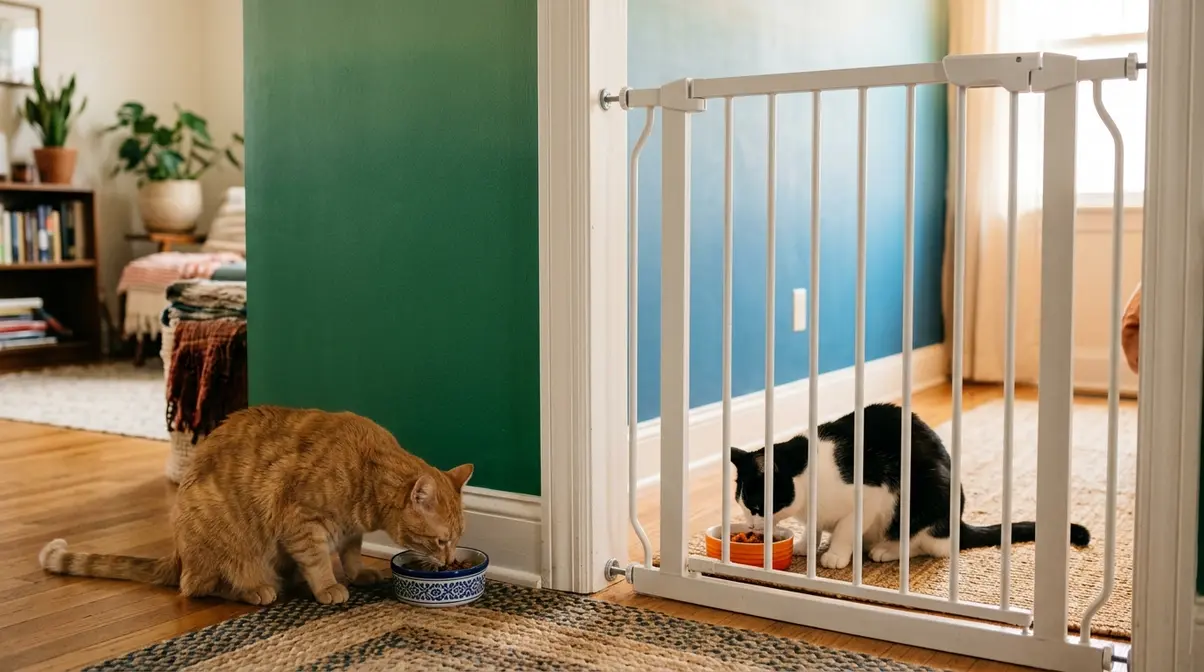
Inter-cat aggression — when your cats are suddenly fighting each other — is a separate but related problem that can spill over into aggression toward you. Understanding why it starts is the first step toward stopping it.
Why Your Cats Are Suddenly Fighting
Cats that previously coexisted peacefully can begin fighting due to several well-documented triggers:
- Social maturity: Cats reach social maturity between 2–4 years of age. A previously submissive cat may begin challenging the household hierarchy as they mature.
- Illness in one cat: A sick cat smells different. Healthy housemates may react with fear or aggression toward the scent change.
- Redirected aggression: One cat becomes aroused by an outside stimulus and attacks the nearest housemate.
- Resource competition: Too few litter boxes, feeding stations, or resting spots creates chronic tension.
- Reintroduction after separation: A cat returning from the vet smells like the clinic — their housemates may not recognize them and react with hostility.
How to Safely Separate and Reintroduce Fighting Cats
If your cats are in an active fight, never reach between them with bare hands. Use a large blanket, a piece of cardboard, or a spray bottle of water to interrupt — then separate them into different rooms immediately.
The structured reintroduction protocol is based on Animal Humane Society guidance:
- Separate completely. Each cat gets their own room with food, water, litter, and a bed. Keep them separated until all signs of arousal are gone — this may take 24–72 hours after a serious fight.
- Scent swap. Exchange bedding between the two rooms so each cat can investigate the other’s scent without visual contact. Do this for 3–5 days.
- Feed on opposite sides of a closed door. Place food bowls on either side of the door — close enough that they can smell each other while eating something positive. Gradually move the bowls closer to the door over several days.
- Visual introduction through a barrier. Use a baby gate or cracked door to allow brief visual contact while maintaining physical separation. Watch for relaxed body language before proceeding.
- Supervised short sessions. Allow 5–10 minute supervised interactions in a neutral space. Separate immediately at the first sign of tension.
- Gradually increase time together. Over 2–4 weeks, extend the duration of supervised sessions as both cats show relaxed body language.
This process takes patience. Rushing it is the most common reason reintroductions fail.
The “One Plus One” Resource Rule for Multi-Cat Homes
Resource competition is one of the most overlooked drivers of inter-cat aggression. The veterinary standard recommendation is simple: provide one resource station per cat, plus one extra. Resource competition is fierce, and you might wonder, can cats share a litter box?
| Resource | Formula | Example (2 cats) |
|---|---|---|
| Litter boxes | Cats + 1 | 3 litter boxes |
| Feeding stations | Cats + 1 | 3 feeding spots (separate rooms) |
| Water bowls | Cats + 1 | 3 water stations |
| Resting/sleeping spots | Cats + 1 | 3 distinct sleeping areas |
| Cat trees/perches | Cats + 1 | 3 vertical spaces |
Placing resources in separate rooms or on different levels removes the ability for one cat to “guard” all resources simultaneously — a common bullying behavior in multi-cat households.
Is It Play or a Real Fight? How to Tell the Difference
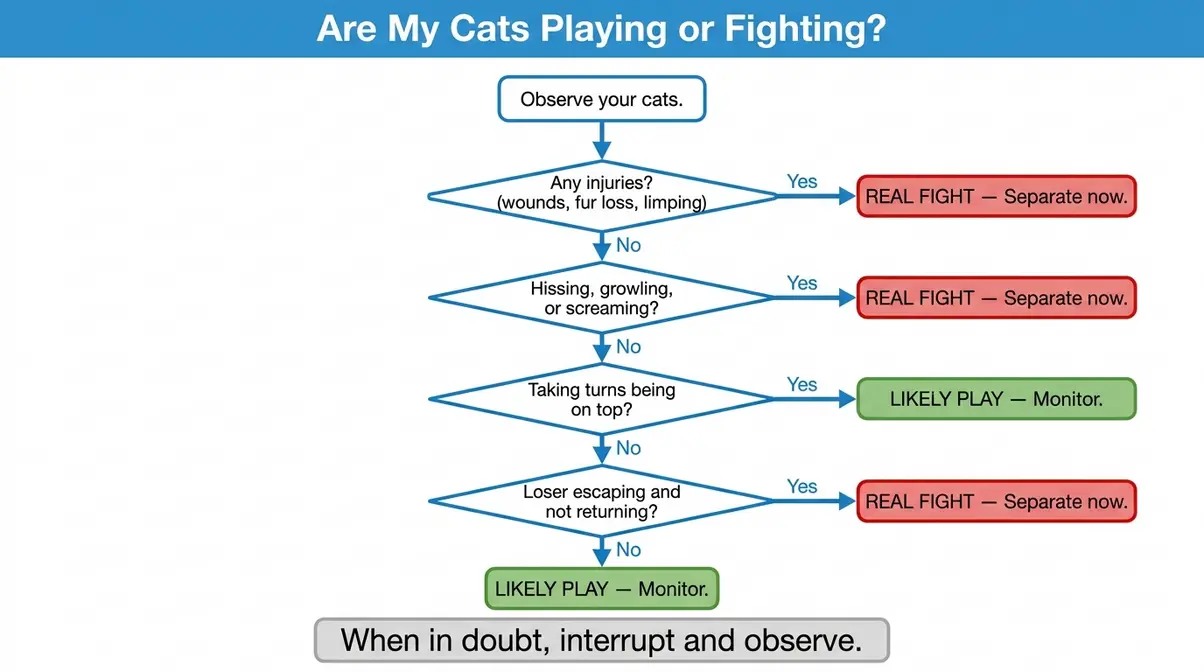
Play signals: Taking turns being “on top,” returning to play after a brief pause, no vocalizations (or only chirping), relaxed body language between bouts.
Fight signals: One cat consistently trying to escape and not returning, screaming or yowling, puffed tails and arched backs, any injuries afterward.
When Home Strategies Aren’t Enough
Signs You Need a Veterinary Behaviorist
Home-based strategies work for the majority of cases — but some situations require specialist intervention. The American College of Veterinary Behaviorists (ACVB) recommends seeking professional help when:
- Aggression has caused injury requiring medical treatment (human or animal)
- The aggression is escalating despite 4–8 weeks of consistent behavior modification
- Your cat shows aggression that appears disoriented, seizure-like, or with no discernible trigger
- Multiple cats in the household are involved in serious, injury-causing fights
- You are afraid to be in the same room as your cat
A board-certified veterinary behaviorist (Diplomate, ACVB) can prescribe anti-anxiety medications alongside behavior modification — a combination that research suggests is significantly more effective than behavior modification alone for severe cases (PMC/NCBI, 2026). Your primary veterinarian can provide a referral, or you can search the ACVB member directory via Today’s Veterinary Practice for a specialist near you.
When Rehoming May Be the Right Choice
This is the question nobody wants to ask — but it deserves an honest answer. Rehoming is a legitimate, compassionate choice in specific circumstances:
- Safety of vulnerable household members: If there are young children, elderly adults, or immunocompromised individuals in the home, and the cat’s aggression poses a genuine safety risk that has not responded to treatment, rehoming may be the most responsible decision.
- Severe inter-cat aggression: Some cats are genuinely incompatible. Forcing two cats to coexist in chronic fear and conflict is not humane for either animal.
- Untreatable medical aggression: In rare cases, neurological conditions cannot be managed, and the cat’s quality of life and the household’s safety cannot both be maintained.
If you reach this decision, it is not a failure. Cat owners in professional forums consistently report that rehoming a truly incompatible cat — to a quiet, single-pet home — often results in a transformation: the cat thrives in the right environment. As for whether cats miss their owners when rehomed: research suggests cats form genuine attachments to specific people, and there may be an adjustment period (the 3-3-3 rule, discussed in the FAQ below, applies here). A reputable rescue organization can help match your cat to the right home.
Frequently Asked Questions
What should I do when my cat is aggressive towards me?
When your cat shows aggression toward you, stop all movement immediately and avoid direct eye contact. Place a barrier — a pillow, blanket, or chair — between you and your cat, then back away slowly toward the nearest exit. Leave the room calmly and give your cat 30–60 minutes to decompress. Do not attempt to comfort, discipline, or pick up an actively aggressive cat. After the episode passes, log the time, location, and any possible triggers — this pattern data is invaluable for identifying the root cause.
What is Tarzan syndrome in cats?
Tarzan syndrome is the informal veterinary term for the explosive, territorial aggression displayed by intact (unneutered) male cats driven by sex hormones. These cats show sudden, high-intensity aggression toward people and other animals, combined with urine spraying and attempts to escape outdoors. The behavior is named for its wild, uncontrollable quality. According to the American Association of Feline Practitioners, neutering resolves hormonally driven aggression in most intact male cats, with noticeable behavioral improvement typically within 4–8 weeks of surgery. If your intact male cat is showing Tarzan syndrome, neutering is the first and most critical intervention.
What is the 3-3-3 rule for cats?
The 3-3-3 rule, supported by animal welfare organizations like Petfinder, describes the adjustment timeline most cats need when moving to a new home: 3 days to decompress, 3 weeks to learn the routine, and 3 months to feel truly at home. During the first 3 days, a newly rehomed cat may hide, refuse food, or show defensive aggression — this is normal fear, not a permanent personality trait. Forcing interaction during this window can trigger lasting fear-based aggression. The rule is a reminder to give newly adopted cats patience and space, particularly if they came from a stressful previous environment.
What is a red flag behavior in cats?
Sudden, unexplained aggression in a previously calm cat is the most important red flag behavior — it almost always signals an underlying medical problem. Other red flags include: aggression that appears disoriented or trance-like (possible seizure activity), attacks triggered specifically by touch in one body area (likely pain), and aggression accompanied by changes in eating, drinking, or litter box habits. The Cornell Feline Health Center advises that any sudden behavioral change in a cat warrants a veterinary examination within 48–72 hours.
Why do cats suddenly become aggressive?
Cats most commonly become suddenly aggressive due to undetected pain, a startling environmental change, or redirected aggression from an external trigger. The behavior feels “unprovoked” because the real cause — a sore joint, a cat outside the window, a new smell — is invisible to the owner. Less commonly, sudden aggression signals a neurological event or hormonal surge in intact cats. Because the causes range from treatable medical conditions to learned behavioral patterns, a veterinary examination is always the correct first step before attempting behavior modification.
How do you say “no” in cat language?
In cat language, you communicate “no” by withdrawing attention and removing yourself from the situation — not through punishment. When your cat bites or scratches during play, let out a brief, sharp sound (“Ow!”), immediately go limp (stop all movement — movement is rewarding), and then disengage entirely by leaving the room for 30–60 seconds. This mimics how cats communicate with each other: the “victim” disengages, and play stops. Consistency is everything — every person in the household must respond the same way, every time. Physical punishment teaches fear, not boundaries.
Do cats miss their owners when rehomed?
Research suggests cats do form genuine social attachments to specific people, and rehomed cats typically show a measurable adjustment period. A study from the University of Lincoln (Vitale Shreve et al., 2026)31086-3) found that cats display attachment behaviors consistent with secure and insecure attachment styles — similar to dogs and human infants. Most rehomed cats adjust to a new home within 3–12 weeks, following the 3-3-3 timeline. Cats rehomed to quieter, lower-stress environments often show marked behavioral improvement — suggesting that “missing” the owner may be outweighed by relief from the stressors that caused the aggression in the first place.
The Path Forward: From Panic to Partnership
Cat aggression towards owner is one of the most distressing experiences in pet ownership — but it is also one of the most treatable. The Aggression Ladder Protocol gives you a clear map: start with a veterinary examination to rule out pain, identify the specific type of aggression driving the behavior, de-escalate safely in the moment, and apply consistent long-term modifications that address the root cause. Research consistently shows that most cases of non-medical feline aggression resolve significantly within 4–8 weeks when owners apply these steps with patience and consistency (Cornell Feline Health Center; ASPCA, 2026).
The Aggression Ladder Protocol works because it replaces panic with a system. Instead of reacting to each attack as a fresh crisis, you’re working from a framework — reading the warning signals, matching the correct response, and systematically removing the triggers. That shift from reactive to proactive is where the real change happens.
Your next step: schedule that veterinary appointment this week. Bring the medical checklist from Step 1. Rule out pain. Then start the structured play routine in Step 4 tonight — two 15-minute wand toy sessions costs nothing and starts rebuilding the positive association your cat needs to feel safe with you again. Most cats come back. Yours very likely will too.

Dave King
Cat owner and writer at Mad Cat Man.