
Table of Contents
- Cat Behavior and Training Tips: The 10-Item Quick List
- Training That Works: How Cats Learn and What Motivates Them
- Step-by-Step Fixes for Scratching
- Litter Box Mastery: Science-Backed Setup and Troubleshooting
- Aggression, Anxiety, and Overarousal: Calm, Safe, Proven Methods
- Smart Shopping for Happier Cats: What to Buy and Why
- Conclusion
This blog post may contain affiliate links. As an Amazon Associate I earn from qualifying purchases.
10 Science-Backed Cat Behavior and Training Tips: Step-by-Step Fixes for Scratching, Litter & Aggression
You brought home a tiny tiger, not a perfectly behaved plush toy, and that is exactly why this is fun. With a few science-backed cat behavior and training tips, you can channel wild instincts into polite household habits without losing your sofa, your sleep, or your sanity. When my rescue tabby, Miso, shredded a brand new chair and boycotted the litter box on week one, I learned fast that punishment raised stress and that smart routines, right gear, and clear reinforcement turned chaos into calm. The steps below are practical, gentle, and rooted in how cats actually learn, so you and your whiskered roommate can start winning together today.
Cat Behavior and Training Tips: The 10-Item Quick List
Start here for the bird’s-eye view, then dive into the step-by-step sections for scratching, litter, and aggression. These ten moves work because they align with feline biology, reward the behaviors you want, and remove payoffs for the ones you do not want. Think short sessions, tiny wins, and predictable routines, because consistency makes new habits stick while keeping stress low. Ready to see what changes first in your home, your sofa, or your cat’s confidence?
- Reward timing within one second: mark good behavior fast with a clicker or a cheerful word, then treat to lock in learning.
- Shape tiny steps: break big goals into easy increments, like nose-to-target, head turn, one paw, then two paws, then sit.
- Play, then feed: run a daily hunt-play-eat-sleep routine to drain energy and reduce nuisance behaviors.
- Manage the environment: add vertical space, window perches, puzzle feeders, and close off problem zones to prevent rehearsing bad habits.
- Scratching fix: offer tall, stable sisal posts and flat scratchers in key spots, then praise and treat every healthy scratch.
- Litter basics: one box per cat plus one, unscented clumping litter, big open boxes, and daily cleaning to prevent aversion.
- Litter troubleshooting: rule out UTI (urinary tract infection), test substrates, and move boxes to quiet, easily accessed areas.
- Aggression plan: identify the type, separate safely, and use desensitization plus counterconditioning at low intensity.
- Handling skills: teach chin, paw, and tail touches for grooming and vet visits using treat-by-treat consent-based training.
- Calm support: use pheromone diffusers, predictable routines, and a safe room for decompression during big life changes.
Training That Works: How Cats Learn and What Motivates Them
Here is the secret the best trainers borrow from behavioral science: cats repeat what pays, and they drop what does not. Reward-based training uses operant conditioning to reinforce wanted behaviors with immediate, meaningful payoffs like a high-value tiny treat, a feather wand burst, or a door opening. Timing is everything, because a reward delivered within a second tells your cat exactly which micro-behavior earned the prize, and a consistent marker sound or word acts like a camera shutter that captures the instant to remember. Keep sessions short and upbeat, three to five minutes a couple of times a day, and end with a quick win so your cat looks forward to the next round.
Watch This Helpful Video
To help you better understand cat behavior and training tips, we’ve included this informative video from Jackson Galaxy. It provides valuable insights and visual demonstrations that complement the written content.
Clicker or marker training is your superpower because it lets you “shape” complex behaviors one easy notch at a time. For example, to teach “go to mat,” you might reward a glance at the mat, then a step, then two paws, then full body on, then a sit and stay for one calm second. Studies on animal learning show that small, frequent reinforcements create faster progress and better retention than rare, big jackpots, and cats are no exception when the reward suits their preferences. Use smelly, soft treats, a dab of meat puree, or toss a toy for play-motivated kitties, and you will see attention snap into place like magic.
- Reward ideas: freeze-dried meat crumbs, lickable puree, a three-second feather chase, a quick door open to the favorite room.
- Training tools: clicker or marker word, target stick, treat pouch, a non-slip mat, and a simple log to track wins and plateaus.
- Session structure: warm-up easy behavior, shape a new step, sprinkle two quick wins, then end before your cat wanders.
Step-by-Step Fixes for Scratching
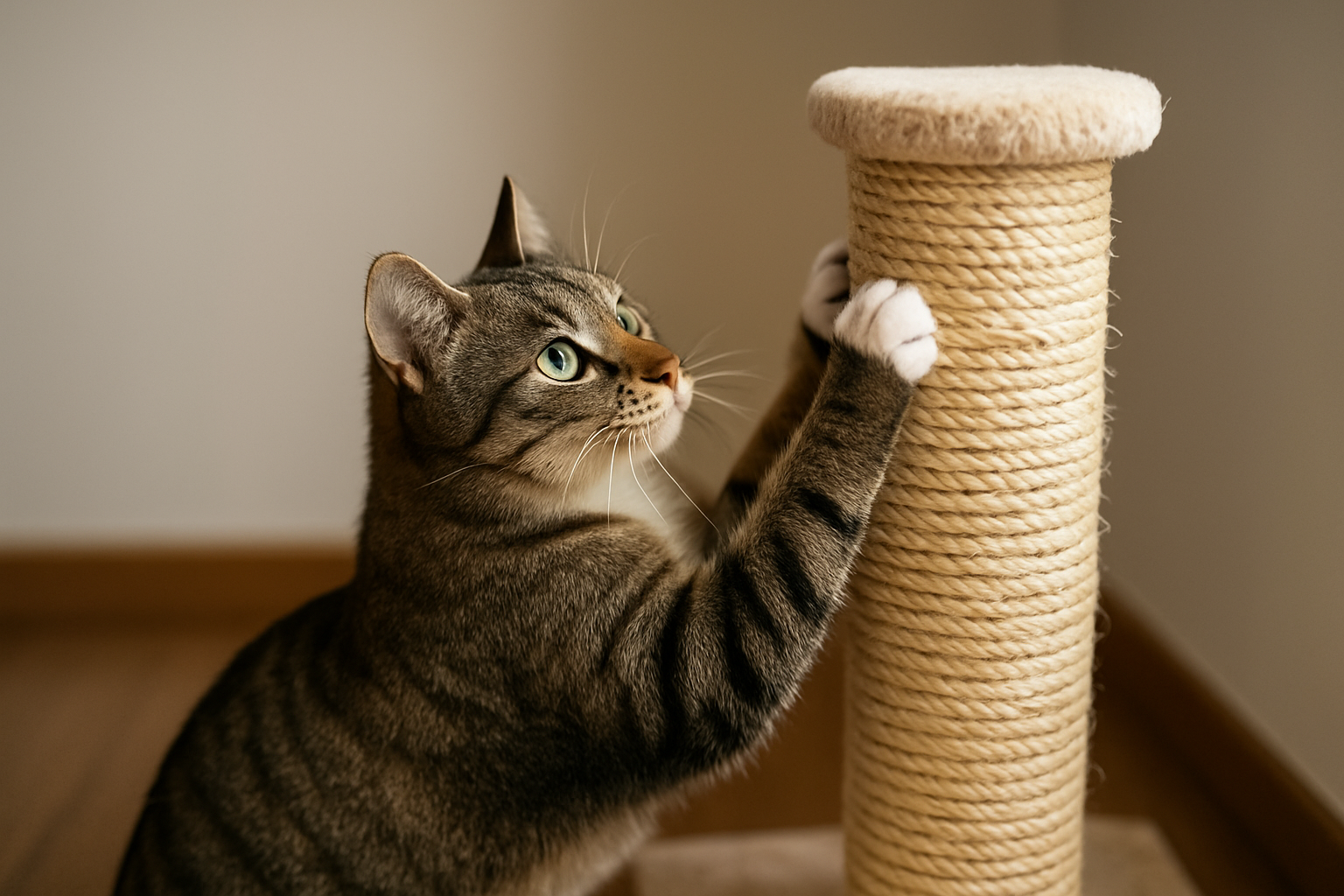
Cats scratch to stretch muscles, shed nail sheaths, mark territory with scent, and say “this is mine,” which means you cannot erase scratching, you can only steer it. The goal is to provide irresistible legal targets and make off-limits surfaces dull, wobbly, and unrewarding so your cat’s natural choice shifts without a fight. Research and shelter data show that unwanted scratching drops when households add multiple sturdy posts in high-traffic cat zones, especially near sleeping spots because many cats scratch right after waking. If you reward every correct scratch for a week, you create a habit loop that feels good for your cat and saves your furniture without scolding.
- Pick the right post: as tall as your cat can stretch, stable base, and real sisal rope or sisal fabric for vertical posts; add a cardboard floor scratcher for variety.
- Place smart: put posts by favorite nap areas, doorways, and the couch corner your cat loves, not in a lonely hallway no one uses.
- Prime the target: rub with catnip or silver vine, play a feather toy leading up the post, then reward any contact with praise and treats.
- Make wrong surfaces boring: apply double-sided tape or a temporary breathable cover, and pull furniture a few inches from the wall to reduce anchor points.
- Reward, reward, reward: every correct scratch earns a fast treat for the first week, then fade to a few surprise wins each day to keep the habit alive.
- Maintain nails: gentle trims every two to four weeks reduce snagging, and teaching paw handling with treats makes trims a non-event.
| Type | Best For | Key Features | Price Range | Notes |
|---|---|---|---|---|
| Tall sisal post | Vertical stretchers and larger breeds like Maine Coon cats | 30 inches or taller, heavy base, sisal fabric or tightly wound rope | Moderate to high | Place by couch corners and doorways for territorial marking |
| Cardboard floor scratcher | Horizontal scratchers and senior cats | Wide, low profile, replaceable inserts | Low | Great near beds for post-nap scratches |
| Incline board | Cats who like an angle | Firm angle, non-slip feet | Low to moderate | Use as a bridge between flat and tall posts |
My own cat, Miso, ignored three gorgeous posts until I moved one right to the sofa arm he loved and sprinkled a pinch of silver vine on top, then I paid him with a tiny treat for every scratch for four days. Suddenly the armrest was dull, the post was party central, and the habit held even after I removed the tape from the couch. Data from shelter behavior programs notes that tactical placement and immediate reinforcement slash destructive scratching, which tracks exactly with this kind of real-world result. If you want help choosing posts, Mad Cat Man’s product reviews break down stability, height, and materials so you can pick the best fit for compact apartments or big-bodied breeds.
Litter Box Mastery: Science-Backed Setup and Troubleshooting
Elimination outside the box is one of the top reasons cats are surrendered according to many shelter reports, which is heartbreaking because setup tweaks solve most cases. Start by ruling out medical issues like UTI (urinary tract infection), constipation, or pain, because no training plan can override discomfort, then match the box to your cat’s preferences. Most cats prefer unscented, clumping litter at a depth of two to three inches in a large, uncovered box with at least one doorway that does not feel like a trap. In multi-cat homes, the magic formula is one box per cat plus one, spread out so a confident cat cannot patrol all the bathrooms at once.
- Size matters: choose a box at least one and a half times your cat’s body length from nose to base of tail for easy turning.
- Keep it clean: scoop daily, refresh weekly, and scrub with mild soap monthly to remove odor residues that can trigger avoidance.
- Place wisely: quiet, always open, away from loud appliances; avoid tight corners where a nervous cat feels cornered.
- Test substrate: if there is trouble, offer a two-box buffet with different textures side by side and see which fills up.
- Avoid covers and liners at first: many cats dislike trapped odors and slippery footing, especially in warmer months.
- Use enzyme cleaners: thoroughly neutralize accidents outside the box so scent does not draw your cat back to the same spot.
| Variable | Best Practice | Why It Works |
|---|---|---|
| Number of boxes | One per cat plus one | Prevents competition and provides choice to reduce stress |
| Box size | At least 1.5 times body length | Allows natural turning and digging without hitting sides |
| Litter type | Unscented clumping clay or a familiar texture | Most cats avoid heavy perfumes and unfamiliar granules |
| Depth | Two to three inches | Deep enough for digging, shallow enough for easy movement |
| Location | Quiet, accessible, separated in multi-cat homes | Reduces ambush risk and supports privacy |
When I helped a friend’s senior cat who began peeing on bathmats, a vet visit caught a mild UTI (urinary tract infection), and a switch to a larger, low-entry uncovered box plus daily scooping ended accidents in a week. Studies and veterinary guidelines agree that medical pain, dirty boxes, small boxes, and stressful placement drive most problems, so fix those first before layering in training. If your cat has long fur, consider more frequent trims around the back end to reduce cling and discomfort, and always choose gentle, fragrance-free cleaners. For more detailed checklists, Mad Cat Man groups litter guides, odor control tips, and product comparisons so you can find answers fast without wading through conflicting advice.
Aggression, Anxiety, and Overarousal: Calm, Safe, Proven Methods
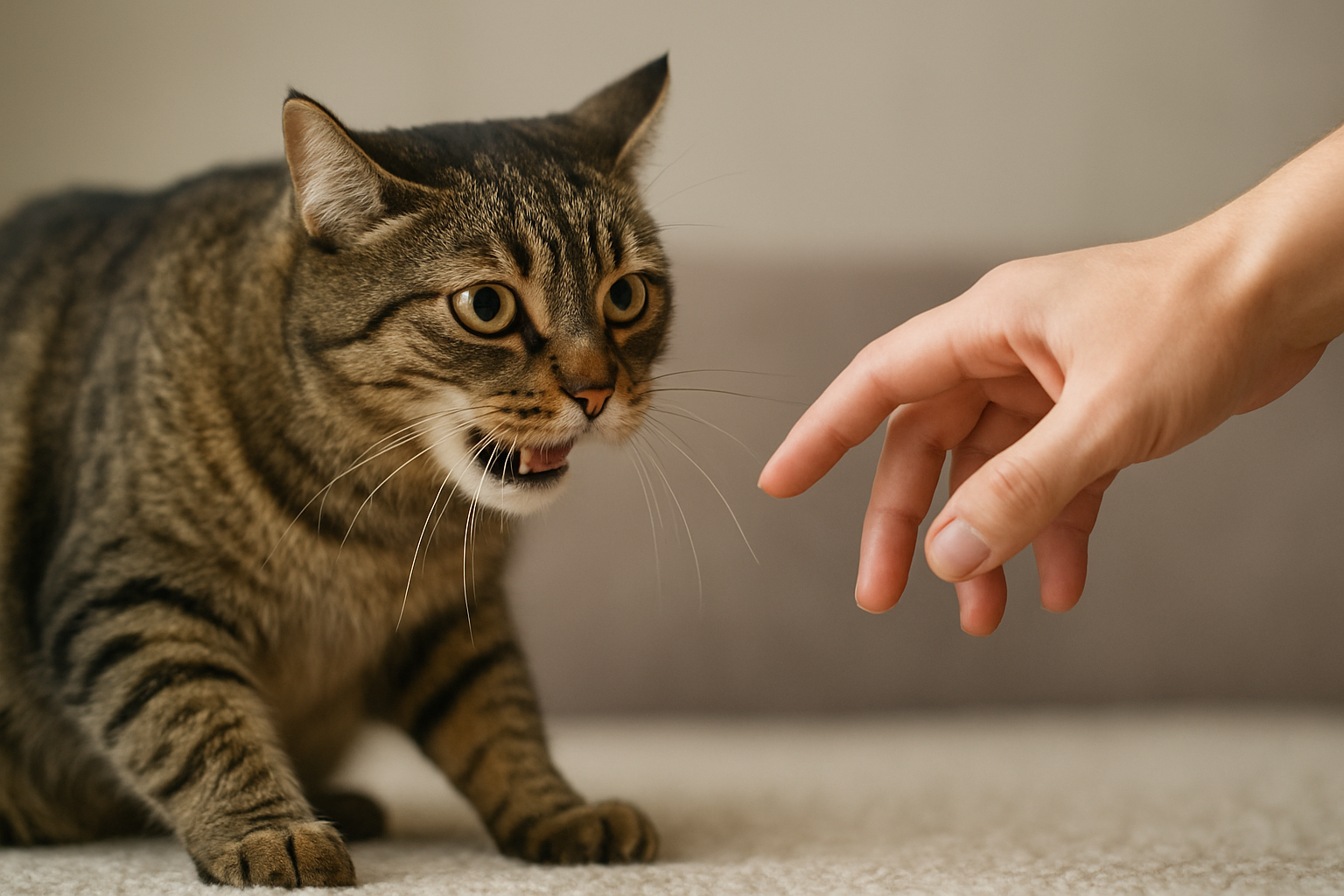
Aggression is not a personality flaw, it is a signal, and the fix begins by identifying the type and keeping everyone safe while stress drops. Common patterns include fear aggression toward visitors, redirected aggression after seeing another cat outside the window, rough play biting that escalates at night, and petting-induced swats when arousal spikes. First separate animals, create a quiet safe room, and keep a predictable schedule while you plan controlled exposures that stay well below your cat’s reaction threshold. Then pair the trigger at a very low level with irresistible rewards so your cat’s emotional response flips from “oh no” to “this might be good.”
- Safety first: never break up fights with your hands; use a thick blanket barrier or a door, and give everyone time to decompress.
- Identify the trigger: watch tail, ears, pupils, and body angle; write down when and what happened to spot patterns.
- Vet check: pain, dental disease, or hyperthyroid issues can lower tolerance and increase irritability, so rule those out early.
- Desensitization and counterconditioning: show the trigger at a distance or volume that does not cause a reaction, feed high-value treats, then slowly reduce distance across days or weeks.
- Replace the behavior: schedule interactive play at predictable times and teach “go to mat” for a calm alternative to rough play.
- Support the environment: add hiding spots, vertical shelves, and pheromone diffusers; frost windows that face neighborhood cats if redirected aggression is the issue.
| Type | Common Triggers | Signs | Training Approach |
|---|---|---|---|
| Fear | Strangers, loud noises, unfamiliar rooms | Crouching, tucked tail, hissing, swatting if cornered | Slow desensitization, high-value pairing, safe retreat spaces |
| Redirected | Seeing a rival cat outside, sudden startling events | Sudden attack on nearby person or pet after arousal | Block outside view, indoor enrichment, gradual reintroductions |
| Play | Under-stimulation, erratic hands and feet movements | Ankle pouncing, bunny kicks, gentle to hard bites | Multiple short play sessions, wand toy engagement, teach mat settle |
| Petting induced | Long or rough petting sessions | Twitching tail, flattened ears, sudden swat | Shorter sessions, slow blink, stop before threshold, reward calm |
My favorite tiny fix is the slow blink, which signals calm across species and often softens tense moments when paired with stillness and space. In homes with multiple cats, add feeding stations in separate zones, several litter boxes, and tall perches so individuals can pass without conflict, because crowding sparks many spats. If biting or severe aggression continues, ask your veterinarian for a referral to a certified veterinary behaviorist who can layer in medical support while you train. Mad Cat Man’s behavior hub organizes reintroduction protocols, safe room checklists, and real-world diaries so you can follow a tested plan step by steady step.
Smart Shopping for Happier Cats: What to Buy and Why
Good gear does not replace training, but it makes training easier by meeting your cat’s needs before problems start, which is why we test and review products across budgets. Start with sturdy vertical posts and a horizontal scratcher, then add an interactive wand, a puzzle feeder, and at least one roomy litter box for each level of your home. If you share space with a large breed like a Maine Coon cat, choose extra-tall trees and wide platforms with reinforced bases so climbing and lounging feel secure. Mad Cat Man’s product reviews and buying recommendations compare dimensions, materials, stability, and durability so you can spend once and smile every day you see your cat use the gear.
| Category | Budget-Friendly Must-Haves | Premium Upgrades | Why It Helps |
|---|---|---|---|
| Scratching furniture | Tall cardboard incline, basic sisal post, anti-slip base | Sisal fabric towers, heavy base, replaceable panels | Redirects claws and satisfies full-body stretch urges |
| Litter boxes | Large open plastic box, unscented clumping litter | Extra-large low-entry box, high sides for kickers | Comfort reduces aversion and accidents |
| Toys | Feather wand, crinkle balls, kicker toy | Motorized chasers, scheduled feeders with puzzle integration | Daily play lowers stress and curbs rough play |
| Furniture | Window perch with secure anchors | Floor-to-ceiling climbers, wall shelves | Vertical space reduces territorial friction |
| Grooming supplies | Soft brush, nail trimmers, enzyme cleaner | Deshedding tools, quiet clippers | Comfortable handling prevents mats and damage |
Beyond behavior, your cat’s health and safety amplify training success, so build a preventive care routine for worming, microchipping, and dental care, and check your home for hazards like unsafe plants or risky humidifiers near outlets. Mad Cat Man publishes vet-approved or expert-backed health guides, safety explainers, and step-by-step checklists in well-organized categories, which means answers are easy to find whether you are a first-time pet parent or a seasoned cat enthusiast. We also maintain breed guides, including deep dives into Maine Coon cat quirks, so you can tailor enrichment to your cat’s body type and energy level. When you combine great gear, simple training, and consistent routines, you get what you really want, a peaceful home and a cat who trusts you.
Quick case study to tie it together. I had a reader with midnight ankle ambushes, a shredded stair carpet, and a young cat bored out of his mind. We scheduled two five-minute play bursts in the evening, swapped the tiny wobbly post for a tall sisal tower by the stairs, fed a small meal after play, and reinforced every legal scratch for a week. The ambushes vanished, stairs looked new, and the cat slept through the night, which is exactly what you can expect when you match training to instinct.
Conclusion

You just learned a clear, humane way to stop scratching, fix litter issues, and soften aggression by aligning daily life with how cats learn.
In the next 12 months, imagine a home where your cat chooses the post, trots to the box, and greets guests with a curious slow blink because training feels like play.
Which small habit will you start tonight so these cat behavior and training tips turn into your everyday wins?
Additional Resources
Explore these authoritative resources to dive deeper into cat behavior and training tips.
Master Cat Behavior And Training With Mad Cat Man
Explore cat behavior and training tips plus expert reviews to help confident choices on food, toys, furniture, and grooming supplies across every budget.
Pros
- Reduces appetite and cravings.
- Helps preserve lean muscle mass.
- Increases calorie burn (thermic effect).
- Supports long-term calorie control.
Cons
- Not suitable for some kidney conditions.
- High protein foods can cost more.
- Excess intake still leads to fat gain.
- Requires planning for fibre and hydration.