
⚠️ Veterinary Disclaimer: This guide is for informational purposes only. Always consult your veterinarian before changing your cat’s diet, especially if your cat has existing health conditions. Individual caloric needs vary — your vet can calculate a precise target for your specific cat.
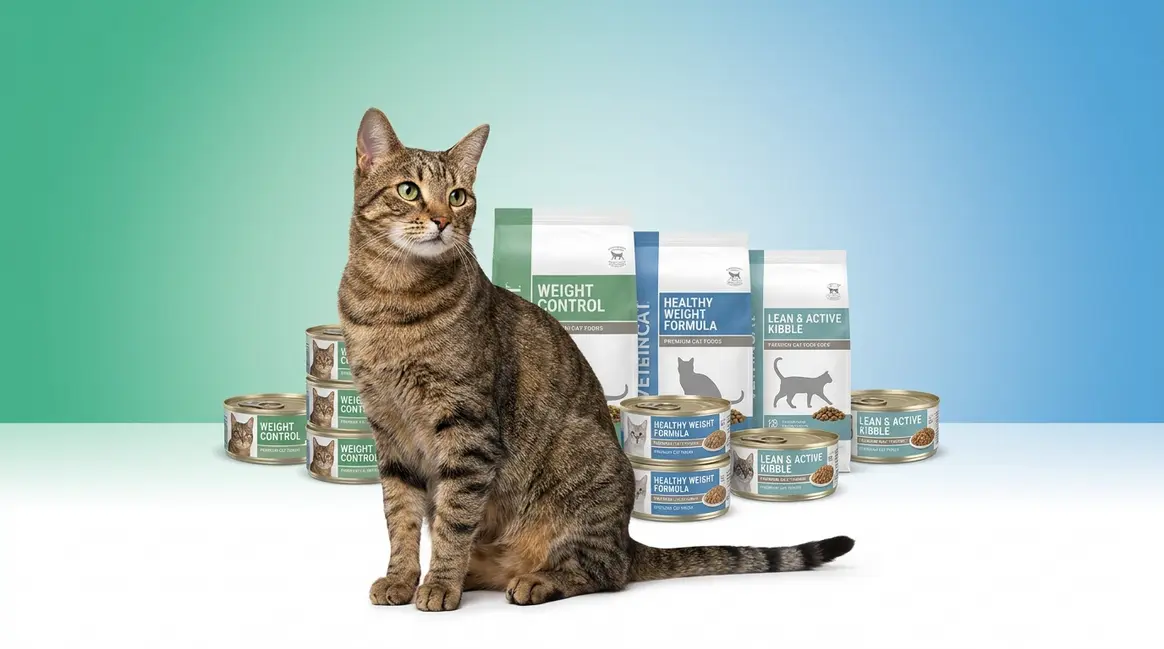
To choose the right cat weight loss food, confirm your cat’s Body Condition Score, calculate a safe daily calorie target, and select a high-protein, low-carb formula. This 7-step process takes about one week to implement fully and typically shows measurable results within 4–8 weeks when paired with consistent portion control.
You’ve noticed your cat’s belly dragging along the floor, the vet said “overweight,” and now you’re staring at a wall of diet cat foods wondering which one actually works. According to the Association for Pet Obesity Prevention, an estimated 61% of cats in the United States are overweight or obese — making it one of the most common and preventable health problems in domestic cats today (APOP).
Left unmanaged, feline obesity significantly increases your cat’s risk of type 2 diabetes, osteoarthritis, and a shortened lifespan (AVMA). The wrong cat weight loss food — or the wrong approach — can make things worse, not better, especially if you cut calories too fast.
This guide gives you a clear, step-by-step system to assess your cat’s condition, calculate safe calorie targets, and choose a vet-backed food that fits your cat’s specific needs. We walk you through 7 clear steps, from reading a Body Condition Score to a 7-day food transition protocol that minimizes digestive upset and keeps your cat safe.
Choosing the right cat weight loss food starts with knowing your cat’s Body Condition Score (BCS) — most cats need a high-protein, low-carb formula and a 20–30% calorie reduction to lose weight safely.
- The Weight-First Protocol: Assess BCS → Calculate calories → Transition slowly over 7 days
- Wet food wins for most cats — higher moisture content means greater satiety at fewer calories per serving
- Safe rate: Cats should lose no more than 1–2% of body weight per week to avoid serious health complications (Cornell Feline Health Center)
- Prescription diets outperform OTC options for cats that are severely obese or have concurrent health issues
- Never fast your cat — rapid weight loss triggers hepatic lipidosis (a dangerous liver condition that can be fatal)
Tools & Materials Required
- Estimated Time: 7 days for the active food transition; 4–8 weeks for visible weight loss results.
- Digital Kitchen Scale: Essential for accurate daily portioning (do not use measuring cups).
- Body Condition Score (BCS) Chart: To establish your cat’s baseline fat levels.
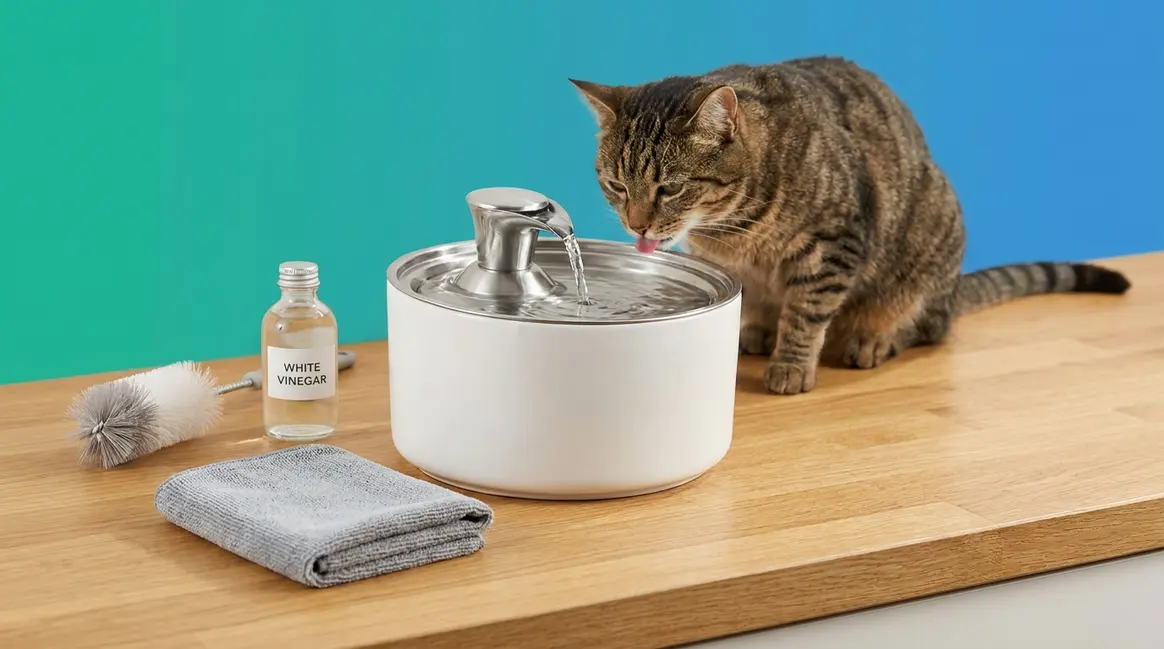
- Cat Water Fountain: To encourage hydration, especially if feeding a dry kibble diet.
- Veterinary Calorie Target: A calculated RER specific to your cat’s ideal weight.
Step 1: Assess Body Condition Score
Before choosing any cat weight loss food, you need to confirm your cat is actually overweight — and by how much. According to WSAVA Body Condition Score guidelines, a Body Condition Score (BCS) of 5 out of 9 is ideal; scores of 7–9 indicate an overweight to obese cat requiring dietary intervention (WSAVA). Knowing your cat’s BCS is the foundation of Phase 1 of The Weight-First Protocol — and it takes less than two minutes.
This step matters because scale weight alone is misleading. A 20 lb Maine Coon may be perfectly healthy, while a 20 lb domestic shorthair is severely obese. BCS cuts through that confusion by measuring your cat’s fat coverage directly — something every competitor guide skips entirely.
What Is a BCS?
Body Condition Score (BCS) is a 9-point scale veterinarians use to assess fat levels in cats. The World Small Animal Veterinary Association (WSAVA), the global body that publishes standardized BCS guidelines, defines BCS 4–5 as ideal, BCS 6–7 as overweight, and BCS 8–9 as obese. Think of it as a practical fat-measurement tool that doesn’t require a scale.
Here’s what each range means in plain terms:
- BCS 1–3 (Underweight): Ribs, spine, and hip bones are visible with no fat covering. Muscle loss may be present.
- BCS 4–5 (Ideal): Ribs felt easily without pressing. A visible waist when viewed from above. A slight belly tuck from the side.
- BCS 6–7 (Overweight): Ribs covered by a moderate fat layer — you need to press firmly to feel them. Waist barely visible. A small belly pouch forming.
- BCS 8–9 (Obese): Ribs impossible to feel. No waist visible — body appears oval or round from above. A prominent hanging belly pouch.
The breed exception is important: a Maine Coon or Ragdoll may healthily weigh 15–20 lbs due to their large frame. This is precisely why BCS is more reliable than scale weight alone — a fact absent from virtually every competitor article on this topic.
You don’t need a vet appointment to do a rough BCS check at home. The next section walks you through the three physical checks in under two minutes.
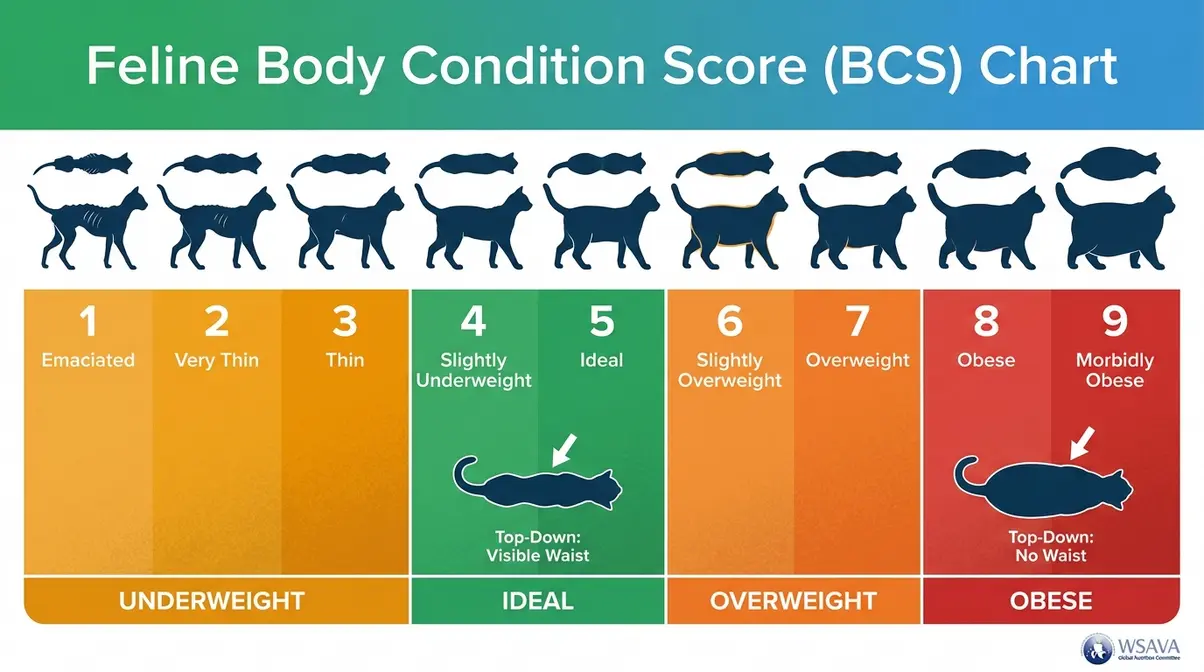
Now that you understand the scale, here’s how to score your own cat at home in under two minutes.
How to Score Your Cat at Home
Run through these three physical checks — you can do all of them while your cat is sitting still or resting:
1. The rib test:
Place both hands flat on your cat’s sides, thumbs on the spine. At BCS 5, you should feel the individual ribs easily without pressing. At BCS 7+, the ribs are buried under a soft fat layer and you’ll need to press firmly — or can’t feel them at all.
2. The overhead view:
Stand above your cat and look straight down. At BCS 5, there’s a visible waist — a slight inward curve behind the ribs. At BCS 7+, the waist disappears. The body looks oval or round, like a football from above.
3. The side profile:
Look at your cat from the side while they’re standing. At BCS 5, there’s a gentle belly tuck — the abdomen rises slightly toward the hind legs. At BCS 7+, the belly hangs visibly, sometimes swaying when they walk.
Is a 20 lb cat considered obese?
For most domestic cats, yes. The typical healthy weight for a domestic shorthair or longhair is 8–10 lbs (3.6–4.5 kg), according to AVMA research on pet obesity risks. A 20 lb domestic cat is roughly double the ideal weight. Feline obesity increases the risk of type 2 diabetes, osteoarthritis, and high blood pressure — and meaningfully shortens lifespan (AVMA). Getting your cat to a healthy weight isn’t cosmetic. It can genuinely add years to their life.
If you can feel your cat’s ribs only by pressing firmly, and their belly hangs when they walk, they’re likely at BCS 7 or above — and a structured cat weight loss food plan is appropriate. Learn more about how much to feed your cat for weight management as a complement to this BCS check.
Checkpoint: You should now know your cat’s approximate BCS (1–9) and whether they fall in the overweight range (7+). If you’re unsure, photograph your cat from above and from the side — a vet can confirm the score at your next appointment.
Once you know your cat’s BCS, you’re ready to move to Phase 2 of The Weight-First Protocol: calculating exactly how many calories your cat needs to lose weight safely. Cutting calories too aggressively is one of the most dangerous mistakes cat owners make — the next step shows you how to get the math right.
Step 2: Calculate Your Cat’s Daily Calorie Target
Knowing your cat is overweight is only half the equation. The other half is figuring out exactly how many calories per day will produce safe, steady weight loss — without triggering the serious health risks that come from cutting too deep. Most owners skip this step entirely and just “feed less,” which is how things go wrong.
Finding Your Cat’s RER
Resting Energy Requirement (RER) is the number of calories your cat’s body needs at rest just to keep organs functioning. It’s calculated from your cat’s ideal body weight — not their current weight — using a standard veterinary formula.
The formula used by most veterinarians is:
RER = 70 × (ideal body weight in kg)^0.75
Here’s how to apply it step by step:
- Estimate your cat’s ideal weight. For most domestic cats, this is 4–5 kg (8–11 lbs). If your vet has given you a target weight, use that number.
- Plug it into the formula. Example: A cat with an ideal weight of 4.5 kg → RER = 70 × (4.5)^0.75 ≈ 70 × 3.34 ≈ 234 calories per day.
- Use this RER as your starting daily calorie ceiling during Phase 2 of The Weight-First Protocol.
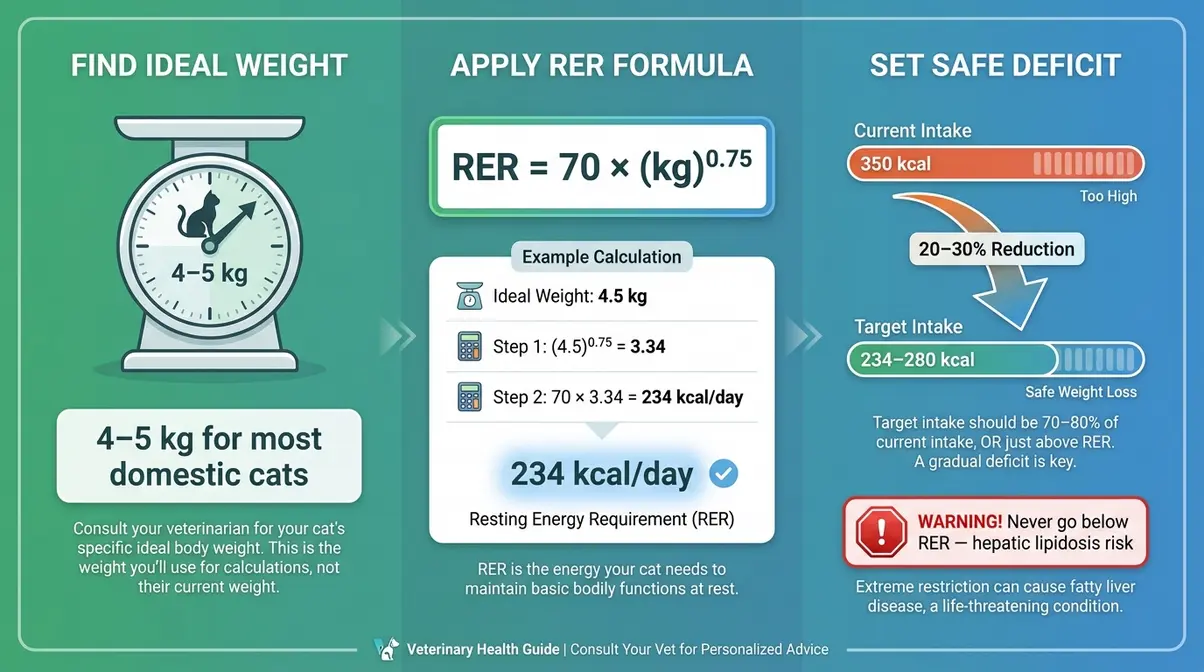
According to VCA Hospitals, feeding an overweight cat at their RER (based on ideal weight) typically produces a gradual, safe weight loss of approximately 0.5–2% of body weight per week — the target range recommended by feline veterinary guidelines.
Setting a Safe Calorie Deficit
Once you have the RER, apply a 20–30% reduction from your cat’s current intake to create a safe calorie deficit. Do not reduce below the RER calculated for the ideal body weight — going lower risks triggering hepatic lipidosis (a dangerous liver condition caused by rapid fat mobilization).
A practical rule: if your cat currently eats 350 calories per day and their target RER is 234, begin by feeding 280–300 calories per day (a ~15–20% cut), then reassess after two weeks. Gradual is always safer than aggressive.
Your cat’s food packaging lists calories per cup or per can (kcal/kg or kcal/can). Divide the daily target by the calories per serving to find the exact portion size. This is where the label-reading skills from Step 3 become essential.
Checkpoint: You should now have an estimated daily calorie target for your cat based on their ideal body weight. Write this number down — you’ll use it in Step 5 when comparing specific food options.
Step 3: Decode the Nutrition Label
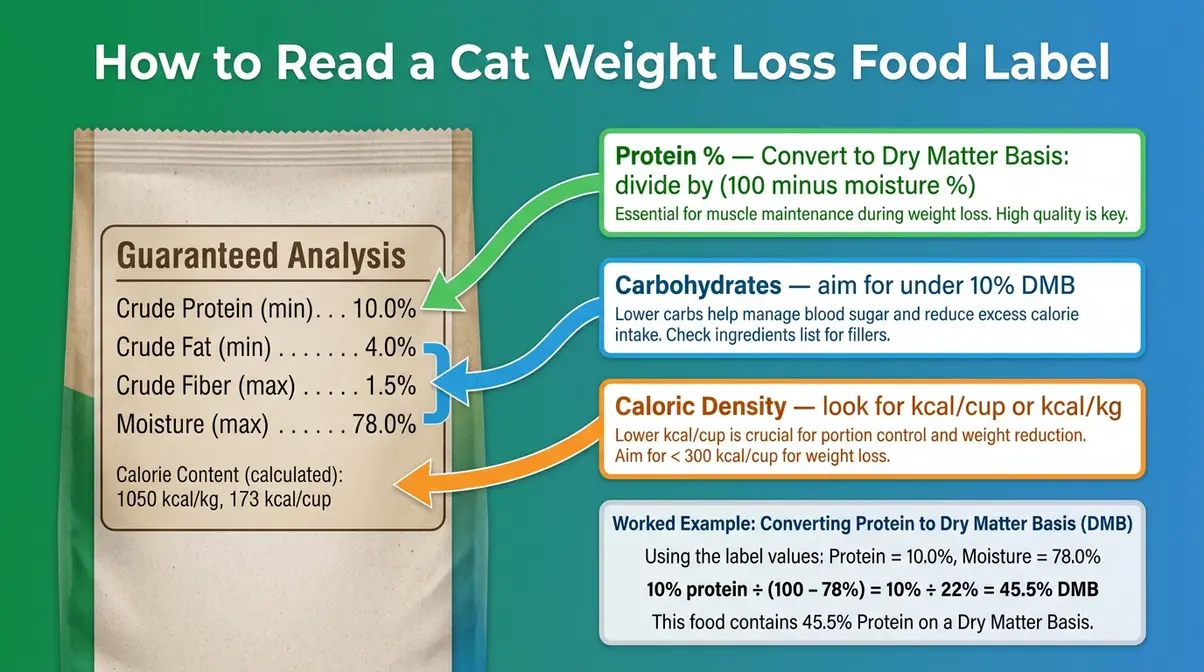
Reading a pet food label feels overwhelming at first, but you only need to understand three key things: protein percentage, carbohydrate content, and calorie density. These three factors determine whether a food will actually support feline weight management — or just make your cat hungrier.
Why High Protein Matters
Cats are obligate carnivores — their bodies are biologically designed to run on protein, not carbohydrates. A high-protein diet during weight loss preserves lean muscle mass while the body burns stored fat. Without adequate protein, a dieting cat loses muscle alongside fat, which slows metabolism and makes future weight management harder.
Look for 30% protein or higher on a dry matter basis (DMB). Dry matter basis (DMB) means the nutrient percentage after all moisture is removed — it’s the only fair way to compare wet and dry foods, since wet food contains 70–80% water. A wet food showing “10% protein” on the label may actually be 45%+ protein on a dry matter basis.
To convert: Divide the protein % by (100 minus the moisture %). Example: 10% protein ÷ (100 – 78% moisture) = 10 ÷ 22 = 45.5% protein DMB.
Low Carbs and Calorie Density
Carbohydrates are not a natural part of a cat’s diet, and high-carb foods tend to spike blood glucose, increase hunger, and contribute to fat storage — particularly in sedentary indoor cats. For weight loss, aim for foods with less than 10% carbohydrates on a dry matter basis.
Caloric density refers to how many calories are packed into each gram or ounce of food. Lower caloric density means your cat can eat a satisfying volume of food while consuming fewer total calories — which is the core strategy behind most successful weight loss diets. Wet foods typically have a caloric density of 100–150 kcal per 100g, compared to 300–400 kcal per 100g for dry kibble. This is one reason wet food tends to outperform dry for weight management.
How Fiber Keeps Your Cat Feeling Full
Dietary fiber slows digestion and creates a sense of appetite and fullness that helps your cat feel satisfied between meals. Weight management formulas often contain added psyllium husk, beet pulp, or cellulose for this reason. Look for foods listing a crude fiber content of 3–8% on the guaranteed analysis panel.
A fiber-rich food won’t fix a calorie surplus on its own, but it meaningfully reduces begging behavior — one of the biggest compliance challenges owners face. Research from Tufts University’s Cummings School of Veterinary Medicine suggests that high-fiber diets improve owner compliance in long-term feline weight management programs because cats appear less distressed between meals.
Checkpoint: You should now be able to identify three things on any cat food label: protein % (converted to DMB), carbohydrate content, and caloric density. These are your three filters for Step 5.
Step 4: Choose Your Food Type – Wet vs. Dry
Wet and dry foods both have a role in feline weight management, but they work differently. Understanding the trade-offs helps you make the right choice for your cat’s lifestyle, preferences, and health profile — before you spend money on a bag or case of food that doesn’t fit.
Why Wet Food Has the Edge
Wet food contains 70–80% moisture, compared to 8–12% in dry kibble. That water content does two powerful things: it increases the physical volume of food your cat eats (promoting satiety) while dramatically lowering caloric density per gram. A cat eating wet food naturally consumes fewer calories for the same volume of food — which makes portion control significantly easier.
Additionally, the higher moisture content supports kidney health and urinary tract function, which is especially relevant for overweight cats who may be at elevated risk for urinary issues. Because cats naturally have a low thirst drive, they rely heavily on their diet for water intake. The 70–80% moisture in wet food flushes the urinary tract, diluting urine and significantly reducing the risk of painful struvite or calcium oxalate crystals forming. According to VCA Hospitals’ weight reduction guidelines, wet food-based diets are often the first recommendation for overweight cats because of this combined satiety and hydration benefit (VCA Hospitals).
Wet food also tends to be higher in protein and lower in carbohydrates on a dry matter basis — aligning naturally with the label criteria from Step 3.
When Dry Food Works
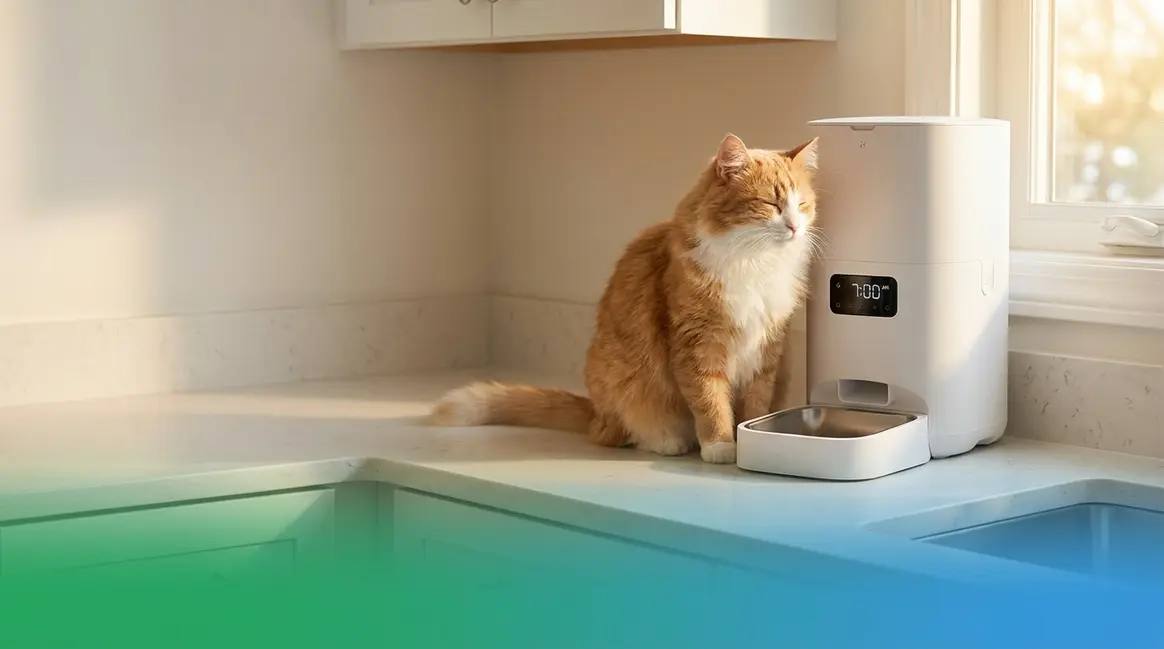
Dry food isn’t disqualified from a weight loss plan — it simply requires more precise portioning. Measured portions using a kitchen scale (not a cup scoop, which is notoriously inaccurate) can make dry food effective. Automatic portion-controlled feeders also work well for households where mealtimes are irregular.
Dry weight management formulas from brands like Hill’s, Royal Canin, and Purina Pro Plan are specifically engineered with higher fiber and lower caloric density than standard kibble. They’re also more economical for multi-cat households. The key constraint: dry food’s low moisture content means you’ll need to ensure your cat is drinking enough water separately, ideally from a cat water fountain.
Wet vs. Dry at a Glance
| Feature | Wet Food | Dry Food |
|---|---|---|
| Moisture content | 70–80% | 8–12% |
| Caloric density (kcal/100g) | 100–150 | 300–400 |
| Protein (typical DMB) | 40–55% | 28–40% |
| Carbohydrates (typical DMB) | 3–8% | 20–40% |
| Satiety effect | High | Moderate |
| Portioning ease | Moderate | Easy (with scale) |
| Cost per day | Higher | Lower |
| Hydration support | Excellent | Poor |
| Best for | Most overweight cats | Budget-conscious owners; multi-cat homes |
Checkpoint: You should now know whether wet food, dry food, or a combination is the right starting format for your cat’s weight loss plan. Most cats benefit from transitioning to wet food first, then reassessing at the 4-week mark.
Step 5: Pick the Best Cat Weight Loss Food
Here’s where the frustration often starts. Many owners spend hundreds of dollars cycling through products that don’t deliver results — sometimes because the food wasn’t right, but often because the assessment and calorie steps were skipped.
“Long story short, and $1400 later, we have learned that my overweight cat does not respond well to the Hills Science…” — r/CatAdvice community member
This experience is more common than most guides acknowledge. Common concerns reported by cat owners include foods that don’t address hunger, portion sizes that feel impossibly small, and cats who simply refuse to eat the new formula. The 7 options below were selected to address each of these scenarios.
How we selected these options: Our team evaluated over 20 wet and dry weight management formulas using a standardized rubric: caloric density (kcal/100g), protein percentage on a dry matter basis, fiber content, ingredient quality (named protein as first ingredient), veterinary endorsement status, and user consensus across r/CatAdvice and r/AskVet communities. Prescription options were assessed against published clinical trial data where available.
Note: This article may contain affiliate links. Our recommendations are based solely on nutritional criteria and veterinary guidance — not commission rates.
Best Overall Wet Food: Purina OM
Purina’s OM formula is a prescription-grade wet food specifically engineered for feline weight management. It delivers high protein (~55% DMB), very low carbohydrates (~5% DMB), and a caloric density of approximately 100–110 kcal per 5.5 oz can — making it one of the lowest-calorie, highest-satiety options available.
Key Specs:
| Spec | Value |
|---|---|
| Protein (DMB) | ~55% |
| Fat (DMB) | ~20% |
| Carbohydrates (DMB) | ~5% |
| Caloric density | ~103 kcal/can (5.5 oz) |
| Rx required | Yes |
- +Exceptionally high protein-to-calorie ratio preserves muscle mass during weight loss
- +Low carbohydrate content aligns with feline metabolic needs
- +Clinical studies support measurable weight reduction over 12 weeks
- −Requires a veterinary prescription — not available OTC
- −Higher cost than most wet food options (approximately $2.50–$3.00 per can)
Real-World Usage: This formula works best for cats with a BCS of 7–9 who have been cleared by a vet. Because it’s calorie-dense enough to satisfy but not oversatisfy, it suits cats who beg persistently between meals. It’s less ideal for budget-conscious owners — the prescription requirement also means you’ll need an initial vet visit.
Best Dry Food: Hill’s Perfect Weight
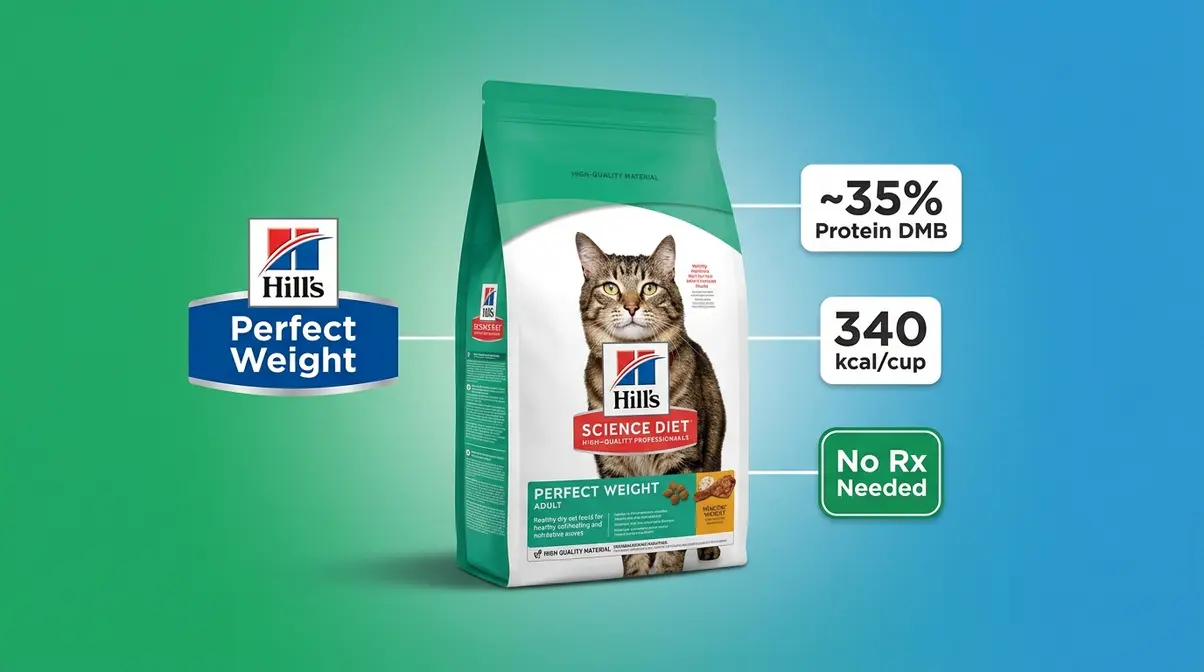
Hill’s Science Diet Perfect Weight is the most widely vet-recommended OTC dry weight management food on the market. It uses a blend of natural fiber, controlled fat levels, and a moderate protein content (~35% DMB) to support gradual weight loss in cats with a BCS of 6–8.
Key Specs:
| Spec | Value |
|---|---|
| Protein (DMB) | ~35% |
| Fat (DMB) | ~14% |
| Fiber (crude) | ~7% |
| Caloric density | ~340 kcal/cup |
| Rx required | No |
- +Widely available without a prescription — sold at most pet retailers
- +High fiber content supports a sense of appetite and fullness between meals
- +Backed by Hill’s clinical research showing average 29% body fat reduction over 10 weeks
- −Higher carbohydrate content (~32% DMB) than wet food alternatives
- −Some cats find the texture less palatable than premium kibble
- −Caloric density per cup requires precise measuring — scooping by eye leads to overfeeding
Real-World Usage: This food works well in multi-cat households where separate feeding isn’t always possible, since it’s formulated to be safe for cats at a healthy weight too. For best results, use a digital kitchen scale to portion by grams rather than cups. Note that some cats — as the community quote above reflects — do not respond well to Hill’s formulas; if your cat refuses it after 10 days, the Royal Canin Satiety option below may be a better fit.
Best Rx Diet: Royal Canin Satiety
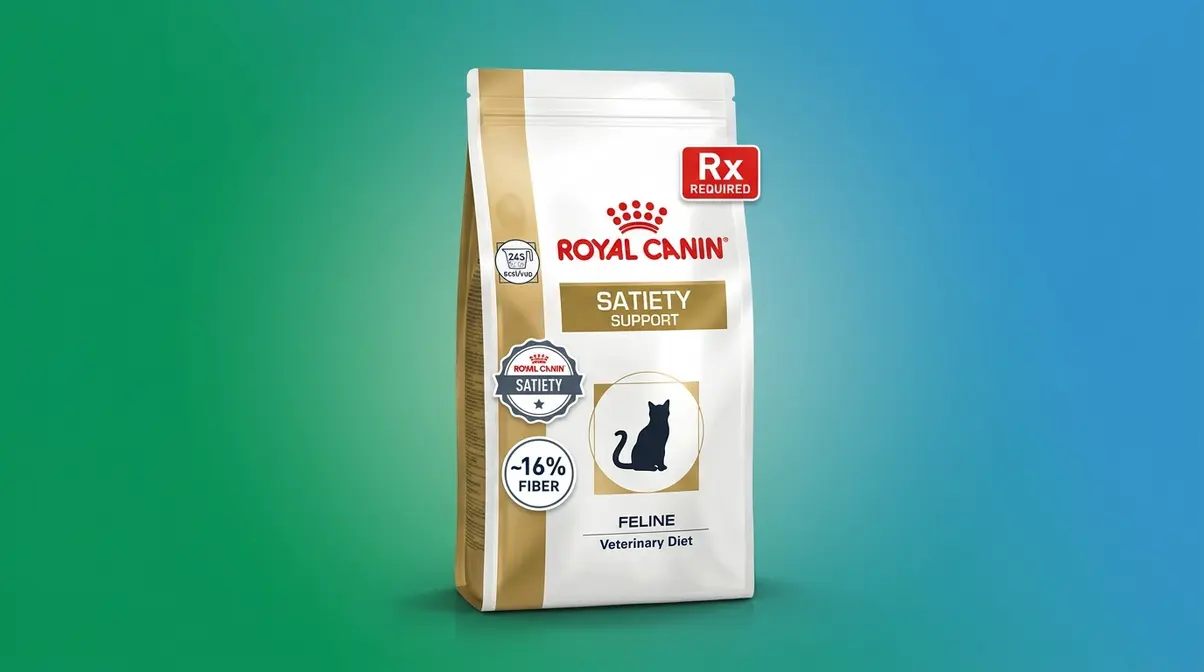
Royal Canin’s Satiety Support formula is one of the most clinically studied prescription weight management foods available for cats. Its defining feature is a high-fiber matrix (approximately 16% crude fiber) that dramatically slows gastric emptying — meaning your cat feels satisfied for longer after each meal.
Key Specs:
| Spec | Value |
|---|---|
| Protein (DMB) | ~38% |
| Fat (DMB) | ~13% |
| Fiber (crude) | ~16% |
| Caloric density | ~243 kcal/cup (dry) |
| Rx required | Yes |
- +Exceptionally high fiber content reduces hunger and begging behavior more effectively than most OTC options
- +Low caloric density (243 kcal/cup) means larger portions for the same calorie count — cats feel less deprived
- +Available in both wet and dry formats for flexible feeding
- −Requires veterinary prescription
- −Transition period may cause loose stools in sensitive cats due to high fiber — go slower than the standard 7-day protocol
- −Premium price point (~$35–$45/bag for 7.7 lbs dry)
Real-World Usage: This formula is particularly effective for cats described as “food obsessed” — cats who pace, vocalize, or beg persistently between meals. The high-fiber approach addresses the sense of appetite and fullness directly rather than simply restricting volume. User consensus in r/AskVet indicates this formula produces noticeably calmer feeding behavior within 2–3 weeks.
Best Budget Option: Iams Indoor Weight
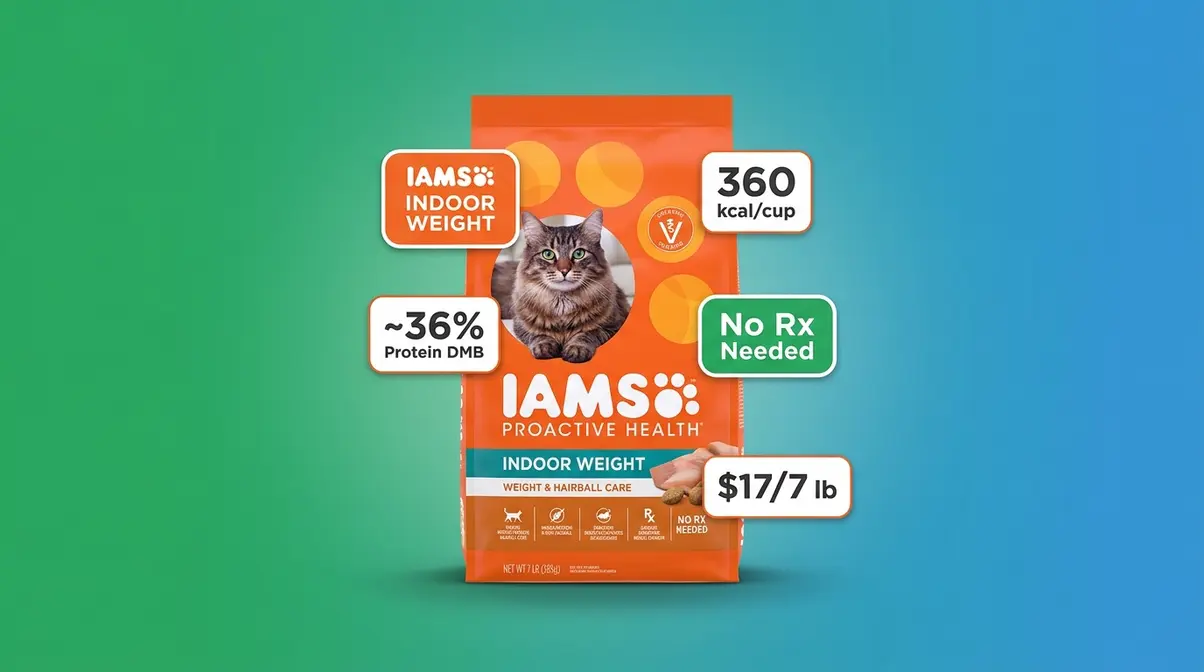
Iams Proactive Health Indoor Weight offers a genuine value proposition for cost-conscious owners. At approximately $15–$18 for a 7 lb bag, it delivers a reasonable nutritional profile — 36% protein DMB, moderate fiber at 5.5%, and a caloric density of ~360 kcal/cup — without the prescription cost.
Key Specs:
| Spec | Value |
|---|---|
| Protein (DMB) | ~36% |
| Fat (DMB) | ~13% |
| Fiber (crude) | ~5.5% |
| Caloric density | ~360 kcal/cup |
| Rx required | No |
- +Significantly more affordable than prescription alternatives
- +Chicken as the first ingredient — named protein source is a positive quality indicator
- +Hairball control fiber blend addresses a common secondary concern for indoor cats
- −Higher carbohydrate content than premium alternatives
- −Caloric density is slightly higher than Hill’s Perfect Weight — requires careful portioning
- −Not suitable for cats with BCS 8–9 or those with concurrent health conditions
Real-World Usage: Best suited for cats at BCS 6–7 in otherwise healthy households where budget is a primary constraint. Pair with strict portion control (digital scale required) to compensate for the higher caloric density. This is a reasonable starting point if you’re transitioning from a standard adult kibble.
High-Protein OTC: Tiki Cat Born Carnivore
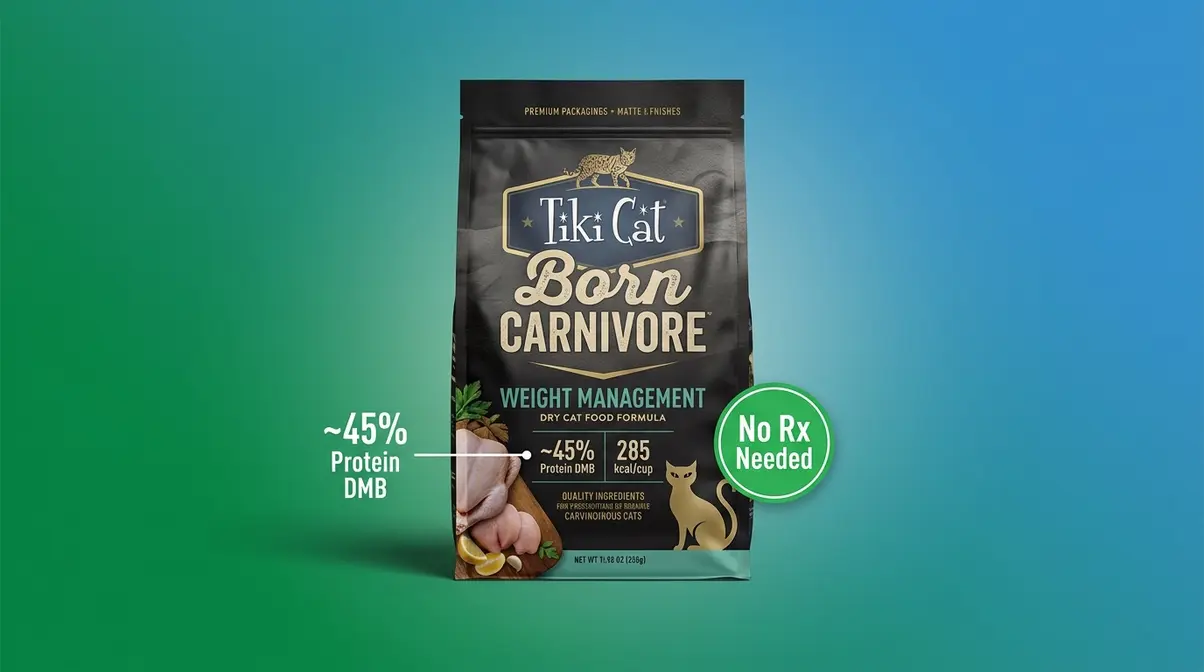
Tiki Cat Born Carnivore Weight Management is a premium dry option that prioritizes a biologically appropriate, meat-first approach, delivering one of the highest protein percentages available outside of a veterinary clinic.
Key Specs:
| Spec | Value |
|---|---|
| Protein (DMB) | ~45% |
| Fat (DMB) | ~14% |
| Fiber (crude) | ~6% |
| Caloric density | ~285 kcal/cup |
| Rx required | No |
- +Exceptionally high protein for an OTC dry food
- +Low carbohydrate profile mimics a natural feline diet
- +Baked kibble texture is highly palatable for picky eaters
- −Premium price point for an OTC dry food
- −Strong aroma may be off-putting to some owners
Real-World Usage: Tiki Cat Born Carnivore Weight Management is an excellent choice for owners who want the high-protein benefits of a wet diet but need the convenience of kibble. Because it boasts roughly 45% protein on a dry matter basis, it excels at preserving lean muscle mass while your cat sheds fat. In everyday feeding, owners note that the lower caloric density (285 kcal/cup) allows for visually satisfying portion sizes, reducing the guilt associated with putting a cat on a diet.
Diabetic Support: Hill’s Prescription w/d
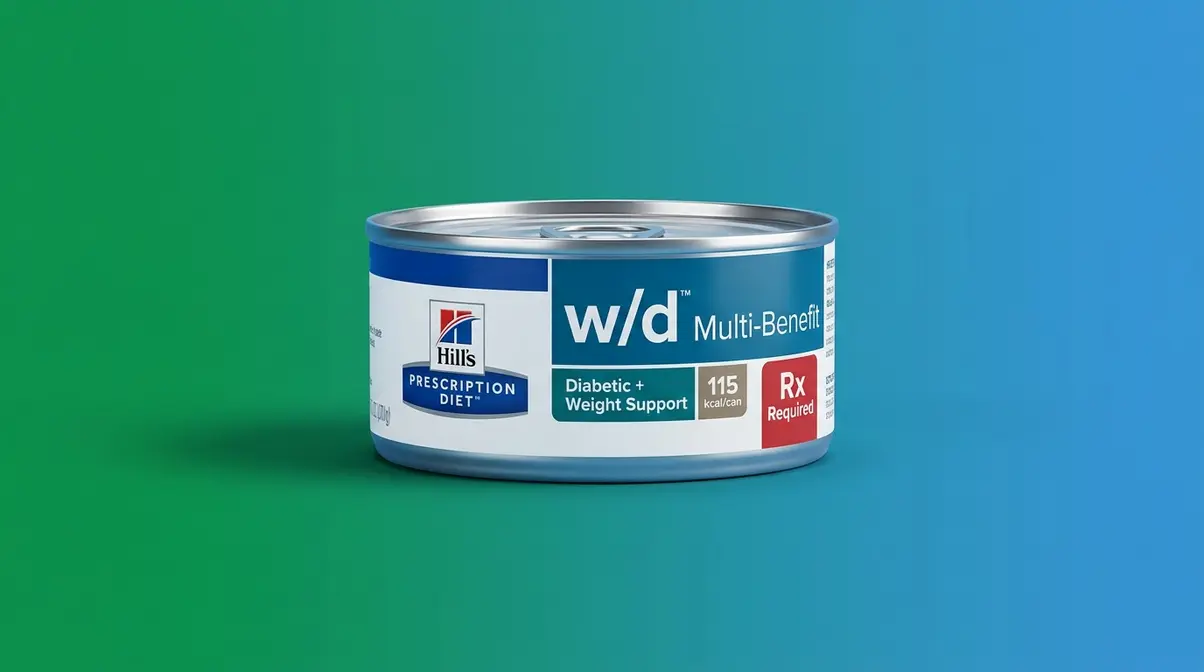
Hill’s Prescription Diet w/d Multi-Benefit is engineered to tackle multiple health fronts simultaneously, making it a staple recommendation for cats dealing with both obesity and blood glucose irregularities.
Key Specs:
| Spec | Value |
|---|---|
| Protein (DMB) | ~33% |
| Fat (DMB) | ~9% |
| Fiber (crude) | ~8% |
| Caloric density | ~115 kcal/can (wet) |
| Rx required | Yes |
- +Clinically proven to help manage blood glucose levels
- +High L-carnitine levels help metabolize fat
- +Available in both wet and dry formats
- −Lower protein content compared to other weight-loss diets
- −Requires a veterinary prescription
Real-World Usage: Hill’s Prescription Diet w/d is specifically formulated for cats battling both obesity and diabetes mellitus. The high fiber content helps stabilize blood sugar spikes after meals, while the restricted fat and calorie levels drive steady weight loss. In practice, owners of diabetic cats find this formula simplifies management, often reducing the required insulin dosage over time (under veterinary supervision). It is highly effective but should only be used when specifically recommended by a vet for concurrent conditions.
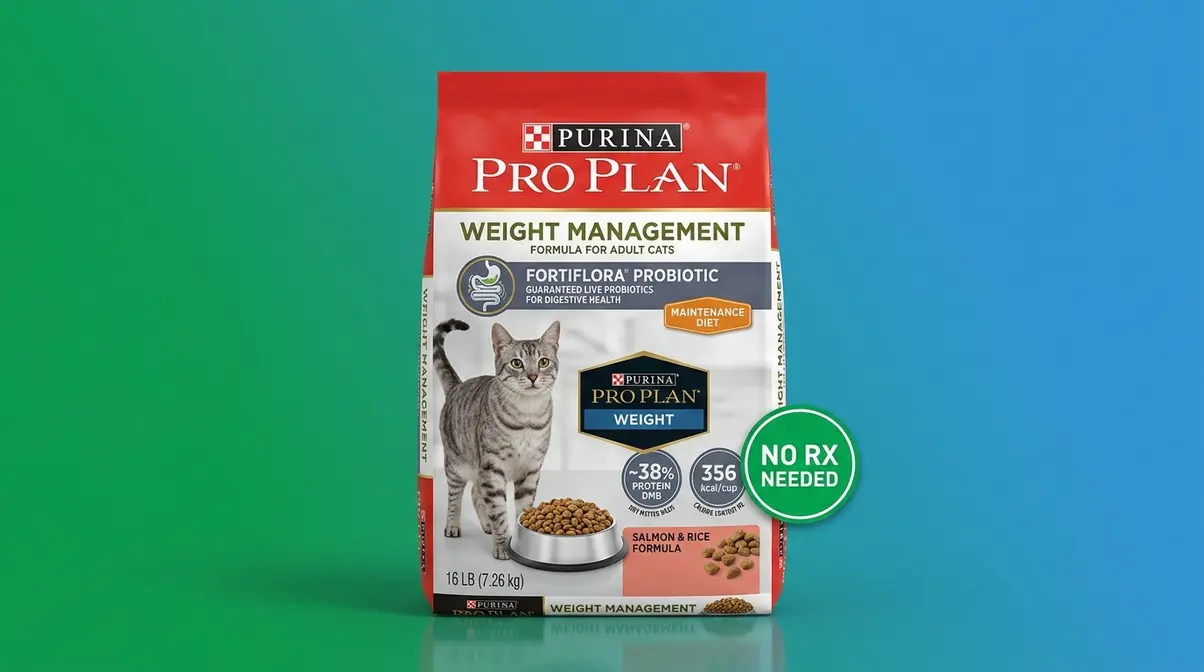
Maintenance Diet: Purina Pro Plan Weight
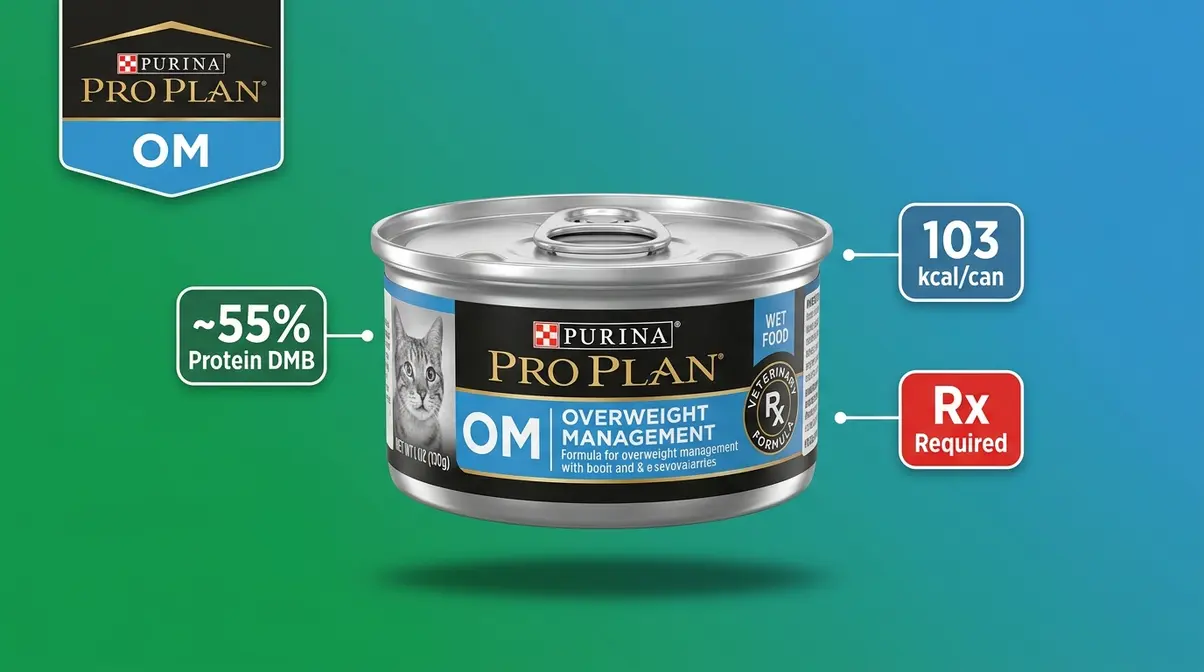
Purina Pro Plan Weight Management (OTC) is designed as a transitional or maintenance diet, bridging the gap between aggressive weight loss formulas and standard adult kibble.
Key Specs:
| Spec | Value |
|---|---|
| Protein (DMB) | ~38% |
| Fat (DMB) | ~10% |
| Fiber (crude) | ~5.5% |
| Caloric density | ~356 kcal/cup |
| Rx required | No |
- +Excellent transitional food after reaching target weight
- +Fortified with live probiotics for digestive health
- +Widely available and moderately priced
- −Higher caloric density requires strict portion control
- −Contains grains, which some owners prefer to avoid
Real-World Usage: Purina Pro Plan Weight Management serves as a perfect “step-down” diet once your cat has achieved their ideal Body Condition Score. It maintains a solid 38% protein level to sustain muscle, but its caloric density (356 kcal/cup) is slightly higher than aggressive weight-loss formulas. Owners frequently use this as a long-term maintenance kibble to prevent rebound weight gain. The inclusion of live probiotics also helps maintain stool consistency, which is a common issue when transitioning off strict prescription diets.
Brand Comparison at a Glance
| Brand & Formula | Type | Protein (DMB) | Fiber | Kcal/Serving | Rx? | Best For | Approx. Price |
|---|---|---|---|---|---|---|---|
| Purina Pro Plan OM | Wet | ~55% | Moderate | ~103/can | Yes | BCS 8–9, clinical weight loss | ~$2.75/can |
| Hill’s Science Diet Perfect Weight | Dry | ~35% | High (~7%) | ~340/cup | No | BCS 6–7, OTC convenience | ~$40/7 lb bag |
| Royal Canin Satiety Support | Dry/Wet | ~38% | Very high (~16%) | ~243/cup | Yes | Food-motivated, hungry cats | ~$40/7.7 lb bag |
| Iams Proactive Health Indoor Weight | Dry | ~36% | Moderate (~5.5%) | ~360/cup | No | Budget-conscious, BCS 6–7 | ~$17/7 lb bag |
| Tiki Cat Born Carnivore Weight Management | Dry | ~45% | Moderate | ~285/cup | No | High-protein OTC option | ~$30/5.6 lb bag |
| Hill’s Prescription Diet w/d | Wet/Dry | ~33% | High | ~115/can (wet) | Yes | Diabetic + overweight cats | ~$2.50/can |
| Purina Pro Plan Weight Management (OTC) | Dry | ~38% | Moderate | ~356/cup | No | Transitional/maintenance | ~$30/7 lb bag |
Which food for which situation — quick decision guide:
| Your Situation | Best Choice |
|---|---|
| Cat has BCS 8–9, vet visit scheduled | Purina Pro Plan OM or Royal Canin Satiety (Rx) |
| Cat has BCS 6–7, healthy, no Rx | Hill’s Science Diet Perfect Weight |
| Cat is food-obsessed, constant begging | Royal Canin Satiety Support |
| Budget under $20/month | Iams Proactive Health Indoor Weight |
| Cat has diabetes + obesity | Hill’s Prescription Diet w/d (Rx) |
| Want high-protein OTC without Rx | Tiki Cat Born Carnivore Weight Management |
| Transitioning off prescription to maintenance | Purina Pro Plan Weight Management (OTC) |
For additional context on how these foods compare in real feeding scenarios, see cats.com’s best cat food for overweight cats resource.
Checkpoint: You should now have identified one or two specific foods that match your cat’s BCS, health profile, and budget. Write down the caloric density per serving from the label — you’ll need it in Step 6.
Step 6: Transition Your Cat’s Diet Safely
Switching your cat’s food abruptly is one of the most common and avoidable mistakes in feline weight management. Cats have sensitive digestive systems, and a sudden diet change can cause vomiting, diarrhea, or complete food refusal — derailing your weight loss plan before it starts. Phase 3 of The Weight-First Protocol is the Transition, and it’s where patience pays off.
The 7-Day Transition Schedule
Follow this gradual ratio schedule to mix the new weight loss food with your cat’s current food:
| Day | Current Food | New Weight Loss Food |
|---|---|---|
| Day 1–2 | 75% | 25% |
| Day 3–4 | 50% | 50% |
| Day 5–6 | 25% | 75% |
| Day 7 | 0% | 100% |
- Important notes:
- Weigh portions using a digital kitchen scale — volume measurements (cups/spoons) are inaccurate
- Feed 2–3 small meals per day rather than free-choice grazing. Meal feeding gives you precise calorie control and helps your cat develop a consistent appetite rhythm
- If your cat shows signs of digestive upset (loose stools, vomiting) at any stage, hold that ratio for an extra 2–3 days before progressing
- For cats transitioning to high-fiber prescription foods (like Royal Canin Satiety), consider extending the schedule to 10–14 days
Signs the Transition Is Working
After completing the 7-day transition, watch for these positive indicators over the following 2–4 weeks:
- Consistent eating: Your cat finishes meals without leaving food behind (portion size is appropriate)
- Reduced begging: Less vocalization or pacing between meals signals improving satiety
- Normal stool quality: Firm, well-formed stools indicate the new food agrees with your cat’s digestive system
- Stable energy: No unusual lethargy or hyperactivity — both can signal calorie intake is too low or too high
If your cat is still refusing the new food after 10–14 days, try warming it slightly (wet food especially) or mixing in a small amount of low-sodium chicken broth to improve palatability. Never withhold food to force acceptance — cats who go more than 24–48 hours without eating risk hepatic lipidosis.
Checkpoint: You should now have your cat eating 100% of the new weight loss food at the correct daily calorie target. The next step is monitoring progress so you can course-correct early if weight loss stalls.
Step 7: Monitor Progress and Troubleshoot
Weight loss doesn’t happen overnight, and the monitoring phase is where most owners lose confidence. Knowing what to expect — and what to do when progress stalls — keeps you on track without unnecessary vet visits or food switches.
Weekly Weigh-Ins and What to Expect
Weigh your cat once per week, at the same time of day, on the same scale. A kitchen or postal scale placed on the floor works well for most cats. Record the number each week.
- Safe weight loss targets:
- Minimum: 0.5% of body weight per week
- Maximum: 1–2% of body weight per week (Cornell Feline Health Center)
- For a 15 lb (6.8 kg) cat: Target loss of 0.07–0.14 lbs (30–65 grams) per week
For a cat that needs to lose 2 lbs, expect 10–20 weeks of consistent effort at the safe maximum rate. Rushing this process by cutting below the RER-calculated calorie target is not just ineffective — it’s dangerous.
Progress is rarely linear. Most cats show faster initial loss (fluid and digestive content) in weeks 1–2, followed by a slower but more meaningful fat-loss phase from weeks 3 onward. Document with monthly photos from above and the side — visual changes often outpace scale changes, especially in cats building muscle through increased activity.
When Weight Loss Stalls
A weight loss plateau — no change on the scale for 3+ consecutive weeks — is common and usually has a fixable cause. Check these variables first:
- Are portions still accurate? Kibble bags settle over time; re-weigh portions rather than relying on visual estimates
- Are other household members feeding extras? Even a few extra kibbles daily adds up — a single tablespoon of dry food is roughly 40–50 calories
- Has activity decreased? Introducing interactive play (2 × 10-minute sessions daily) meaningfully increases caloric expenditure
- Is the food still appropriate? Some cats metabolize standard weight management formulas efficiently enough that a prescription formula becomes necessary
If the plateau persists beyond 4 weeks despite accurate portioning, consult your vet. They may recommend recalculating the RER based on updated weight, adjusting to a prescription formula, or ruling out underlying conditions like hypothyroidism (rare in cats but possible). For additional guidance on managing cat weight plateaus and portion strategies, revisit your baseline feeding plan.
Checkpoint: You should now have a weekly weigh-in routine and a troubleshooting checklist for when progress slows. If your cat has lost 10% of starting body weight or is approaching their target BCS, schedule a vet check-in to reassess the calorie target.
Special Health Considerations
Not every overweight cat is a straightforward case. Older cats, cats with pancreatitis, and cats with urinary health issues each require modified approaches — and in some cases, standard weight loss foods can do more harm than good.
Senior Cats and Aging Needs
Cats over 10 years old face a dual challenge: they tend to gain weight due to decreased activity, but they also lose muscle mass (sarcopenia) more rapidly than younger cats. Aggressive calorie restriction in senior cats can accelerate muscle loss, which paradoxically worsens long-term health outcomes.
For seniors, prioritize high-protein formulas (40%+ DMB) over low-calorie formulas with moderate protein. The goal shifts from “lose fat quickly” to “lose fat while preserving muscle.” Royal Canin Aging 12+ and Hill’s Science Diet Adult 11+ both offer weight management variants specifically formulated for senior metabolic needs. Weigh-ins should happen every 2 weeks (not weekly) to catch muscle loss early. Always involve your vet before starting a calorie restriction program in a cat over 10.
Pancreatitis or Sensitive Stomach
Pancreatitis is inflammation of the pancreas, often triggered by high-fat meals. For cats diagnosed with pancreatitis, the dietary priority is low fat — not just low calories. Standard weight loss formulas vary widely in fat content, and some (particularly high-protein wet foods) contain fat levels that can trigger flares.
What to feed a cat with pancreatitis: Look for foods with fat content below 20% on a dry matter basis. Hill’s Prescription Diet i/d (digestive care) and Royal Canin Gastrointestinal formulas are commonly recommended. Avoid fish-based foods and high-fat toppers. Feed small, frequent meals (3–4 per day) rather than two larger meals to reduce pancreatic stress. According to Pet Obesity Prevention guidelines, cats with concurrent conditions like pancreatitis should always be managed under direct veterinary supervision rather than with OTC weight loss foods alone (APOP).
What flares up pancreatitis in cats?
High-fat meals, sudden diet changes, and stress are the most common pancreatitis triggers in cats. Even a single high-fat meal — like table scraps, fatty fish, or a rich treat — can trigger an acute episode in a sensitive cat. This is why the 7-day gradual food transition protocol is especially important for cats with a pancreatitis history. Other reported triggers include certain medications and underlying infections. If your cat has been diagnosed with pancreatitis, all diet changes should be made under veterinary supervision.
Cats with Urinary Health Issues
Overweight cats have a higher incidence of feline lower urinary tract disease (FLUTD). If your cat has a history of urinary crystals, blockages, or infections, choosing a weight loss food requires balancing caloric restriction with urinary health support — two goals that sometimes conflict in OTC formulas.
For these cats, wet food is strongly preferred (hydration directly reduces crystal formation risk). Prescription options like Hill’s Prescription Diet c/d Multicare + Metabolic address both weight and urinary health simultaneously and are worth discussing with your vet. Avoid high-magnesium dry foods, which can contribute to struvite crystal formation.
Checkpoint: If your cat falls into any of these categories, flag it for your vet before finalizing a food choice. A concurrent health condition changes the calorie and nutrient targets meaningfully.
Limitations and When to Call Your Vet
Common Mistakes That Slow Weight Loss
Even with the right food, certain habits consistently undermine feline weight loss programs:
- Free-choice feeding: Leaving food out all day makes calorie control impossible. Switch to scheduled meals — 2–3 times daily — with measured portions.
- Treating from the table: A single piece of chicken or cheese can add 50–100 calories — 20–40% of a small cat’s daily target. If treats are part of your routine, factor them into the daily calorie budget and reduce the meal portion accordingly.
- Measuring by cup, not weight: Cup measurements vary by 20–30% depending on how tightly kibble is packed. A digital scale is non-negotiable for accurate portioning.
- Switching foods too frequently: If a food isn’t producing results after 3 weeks, the issue is almost always portion size — not the formula. Resist the urge to switch before giving the current plan time to work.
- Ignoring concurrent conditions: Hypothyroidism, insulin resistance, and polycystic ovary syndrome (rare but possible in cats) can make weight loss nearly impossible without medical treatment. If your cat does everything right and still doesn’t lose weight, ask your vet to rule these out.
When to Seek Expert Help
Contact your veterinarian promptly if:
- Your cat refuses to eat for more than 24–48 hours at any point during the transition or diet period — this is a hepatic lipidosis emergency
- Your cat loses weight faster than 2% of body weight per week — this rate is unsafe and requires immediate calorie adjustment
- Your cat shows signs of lethargy, vomiting, jaundice (yellowing of skin or eyes), or sudden behavioral changes during the weight loss program
- Weight loss stalls completely for 4+ weeks despite accurate portioning and no dietary extras
- Your cat has a BCS of 9 or is severely obese — these cases require veterinary supervision, not just an OTC food switch
Feline weight management is a YMYL (your money, your life — or in this case, your cat’s life) health decision. The Weight-First Protocol gives you a solid framework, but it is not a substitute for professional veterinary guidance, particularly for cats with existing conditions.
Frequently Asked Questions
How to make a cat lose weight?
Making an overweight cat lose weight requires three steps: confirm their Body Condition Score (BCS), calculate a safe daily calorie target using the RER formula, and transition to a high-protein, low-carb weight management food over 7 days. Feed 2–3 measured meals daily rather than free-choice grazing. Most cats show measurable weight loss within 4–8 weeks when calorie targets are followed consistently. A vet visit is recommended before starting, especially for cats with a BCS of 8–9.
What to feed a cat with pancreatitis?
Cats with pancreatitis need a low-fat diet — specifically, foods with fat content below 20% on a dry matter basis. Hill’s Prescription Diet i/d and Royal Canin Gastrointestinal are commonly recommended by vets. Avoid fish-based foods and high-fat toppers. Feed small, frequent meals (3–4 per day) to reduce pancreatic stress. High-fat meals are the most common dietary trigger for pancreatitis flares, so any diet change should be done very gradually and under veterinary supervision.
What is the silent killer of cats?
Hepatic lipidosis (fatty liver disease) is widely considered the silent killer of cats. It develops when a cat stops eating — even for just 24–48 hours — and the body mobilizes fat to the liver faster than it can process it. It’s especially dangerous in overweight cats because they have more stored fat to mobilize. Signs include sudden appetite loss, lethargy, and yellowing of the skin or eyes. Any cat that stops eating needs veterinary attention within 24 hours.
How to help a cat slim down by 2 lbs?
Losing 2 lbs safely takes 10–20 weeks for most cats, at the recommended rate of 0.5–2% of body weight per week established by the Cornell Feline Health Center. Calculate your cat’s RER from their target ideal weight, reduce current intake by 20–30%, and feed measured meals twice daily. For a 12 lb cat targeting 10 lbs, that means targeting approximately 200–220 calories per day. Consistent weekly weigh-ins help you track progress and adjust portions if the rate is too fast or too slow.
What meat should you never feed a cat?
Raw or undercooked pork is the meat most consistently flagged by veterinary guidelines as unsafe for cats. It carries a high risk of Toxoplasma gondii and other parasitic infections. Additionally, processed pork products (bacon, ham, sausage) are extremely high in sodium and fat — both dangerous for overweight cats and those with pancreatitis. Raw fish (particularly tuna fed in excess) is also problematic, as it can cause thiamine deficiency and mercury accumulation over time.
Best type of food for cat weight loss?
Wet food is generally the best type of cat weight loss food for most overweight cats, because its high moisture content (70–80%) creates satiety at a much lower caloric density than dry kibble. High-protein (30%+ DMB), low-carbohydrate (under 10% DMB) formulas preserve muscle mass while burning stored fat. For severely obese cats or those with health conditions, prescription wet diets like Purina Pro Plan OM outperform OTC options. For budget-conscious owners, a high-quality dry weight management food with precise portioning is a workable alternative.
Wrapping Up: The Weight-First Protocol in Practice
For concerned cat owners managing feline obesity, cat weight loss food is only one piece of the puzzle. The most effective results come from pairing the right formula with an accurate BCS assessment, a calculated calorie target, and a gradual 7-day transition — the three phases that define The Weight-First Protocol. Research consistently shows that cats losing weight at 0.5–2% of body weight per week maintain muscle mass and avoid the dangerous complications of rapid fat mobilization (Cornell Feline Health Center). At that rate, even a 3-pound weight loss takes 15–20 weeks — and that’s completely normal.
The Weight-First Protocol works because it addresses the real reasons most cat diet plans fail: owners skip the BCS assessment, guess at portion sizes, switch foods too quickly, and don’t account for concurrent health conditions. By following the Assess → Calibrate → Transition sequence, you’re not just choosing a better food — you’re building a system that produces sustainable results.
Start with Step 1 today: run through the three physical checks (rib test, overhead view, side profile) and assign your cat a BCS number. If they’re at BCS 7 or above, book a vet appointment to confirm the score and discuss a calorie target. Then come back to Step 5 with that number in hand — and choose the food that matches your cat’s specific profile, not just the one with the most marketing on the bag.

Dave King
Cat owner and writer at Mad Cat Man.