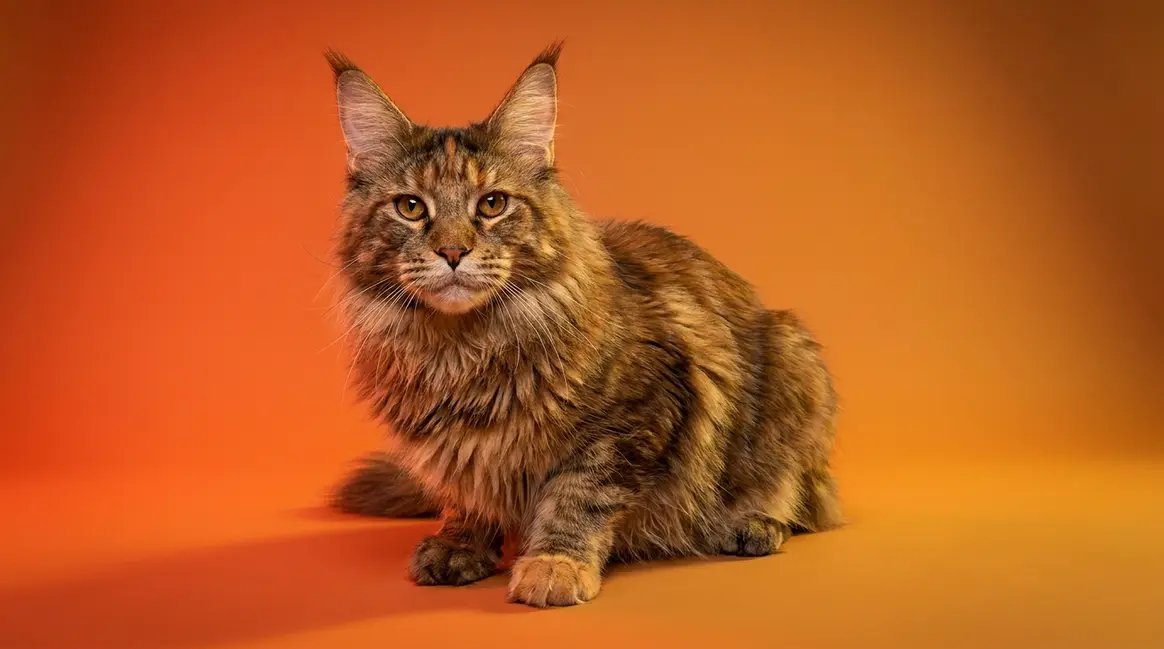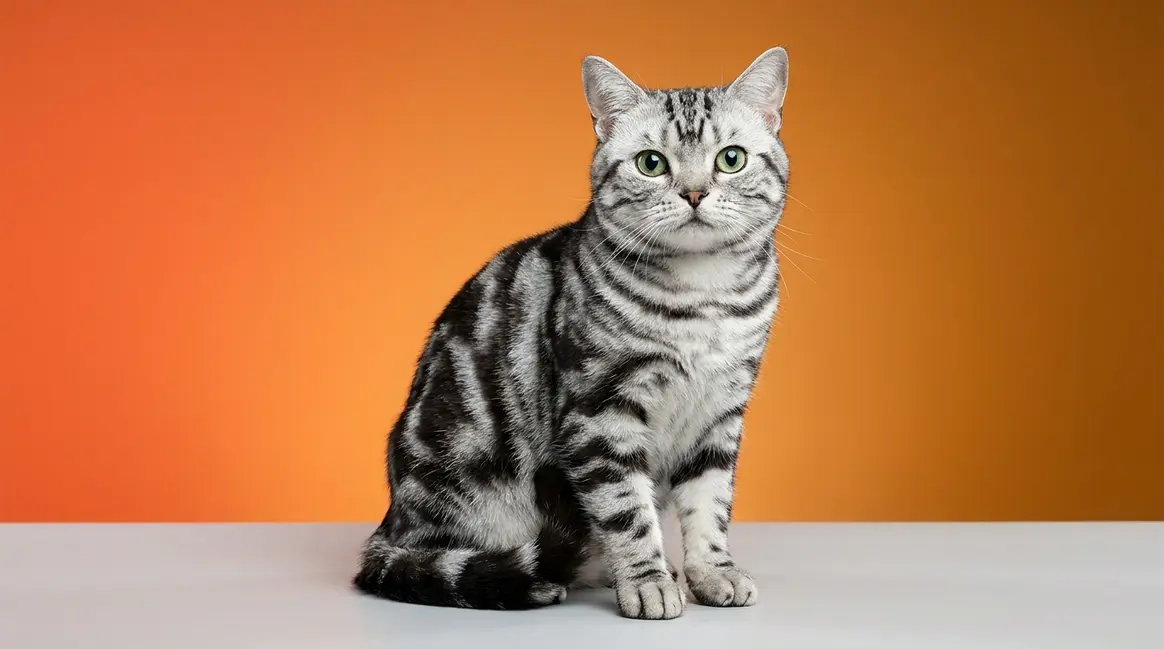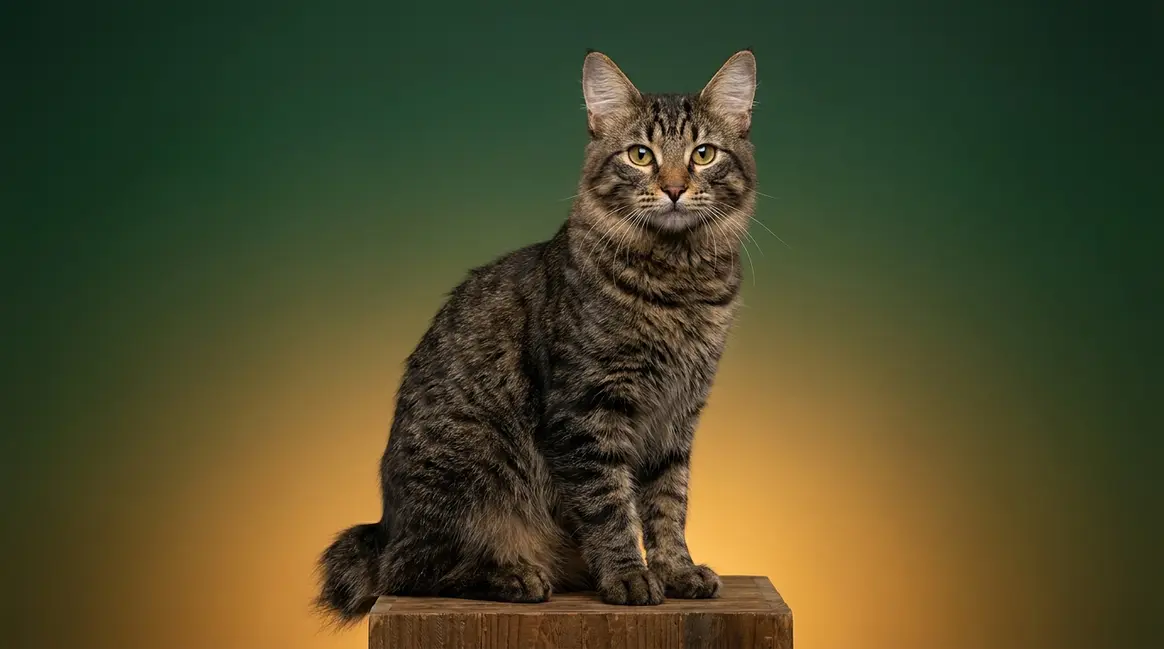

Every article about the American Bobtail calls them “dog-like” — then stops there. But if you’re trying to decide whether this breed fits your home, your kids, or your apartment, “dog-like” tells you almost nothing.
Most breed guides are written for search engines, not for people. They repeat the same five adjectives without ever showing you what living with one of these cats actually looks like day-to-day. You deserve more than a glossy list of vague compliments.
In this guide, you’ll learn exactly what the American Bobtail cat personality means in practice — from specific daily behaviors and male vs. female differences to whether they thrive in your type of home. We’ll cover their core traits, breed characteristics, home suitability, step-by-step leash training, and every question prospective owners consistently ask.
The American Bobtail cat personality combines wild-cat looks with a deeply gentle, family-oriented temperament — what we call “The Wild-Gentle Paradox.”
- Dog-like behaviors are real: American Bobtails fetch toys, learn their names, walk on leashes, and greet you at the door the way a dog would.
- Highly adaptable: They thrive in apartments and houses alike, alongside children and other pets.
- Male vs. female differences exist: Males tend to be more openly affectionate; females are more selectively loyal and self-directed.
- Not a common breed: Recognized by both TICA (The International Cat Association) and the CFA (Cat Fanciers’ Association), but far less available than Siamese or Persians.
- Interest is growing: Search volume for this breed’s personality has increased 24% year-over-year — more people are discovering them every month.
American Bobtail Personality: Beyond “Dog-Like”
The American Bobtail cat personality is defined by a rare combination of wild-cat confidence and domestic warmth. According to CFA’s American Bobtail breed profile, these cats are so expressive that they actually wag their short tail to show pleasure — a behavior almost universally associated with dogs, not cats. This makes them one of the most interactive and emotionally expressive breeds you can bring home.
The American Bobtail is one of the few domestic cat breeds documented by the CFA to wag its tail as a pleasure response — a behavior almost universally associated with dogs.
This is the heart of what we call “The Wild-Gentle Paradox.” The American Bobtail’s rugged, bobcat-inspired exterior — the tufted ears, the broad chest, the untamed, exotic look — is genuinely misleading. Beneath that wild appearance lives one of the gentlest, most family-oriented cats in any breed registry. The temperament you see today is the result of decades of selecting for sociability. The American Bobtail developed naturally from domestic cats with bobbed tails; breeders then prioritized personality alongside appearance, producing a cat that reads like a wild animal but acts like a devoted companion.
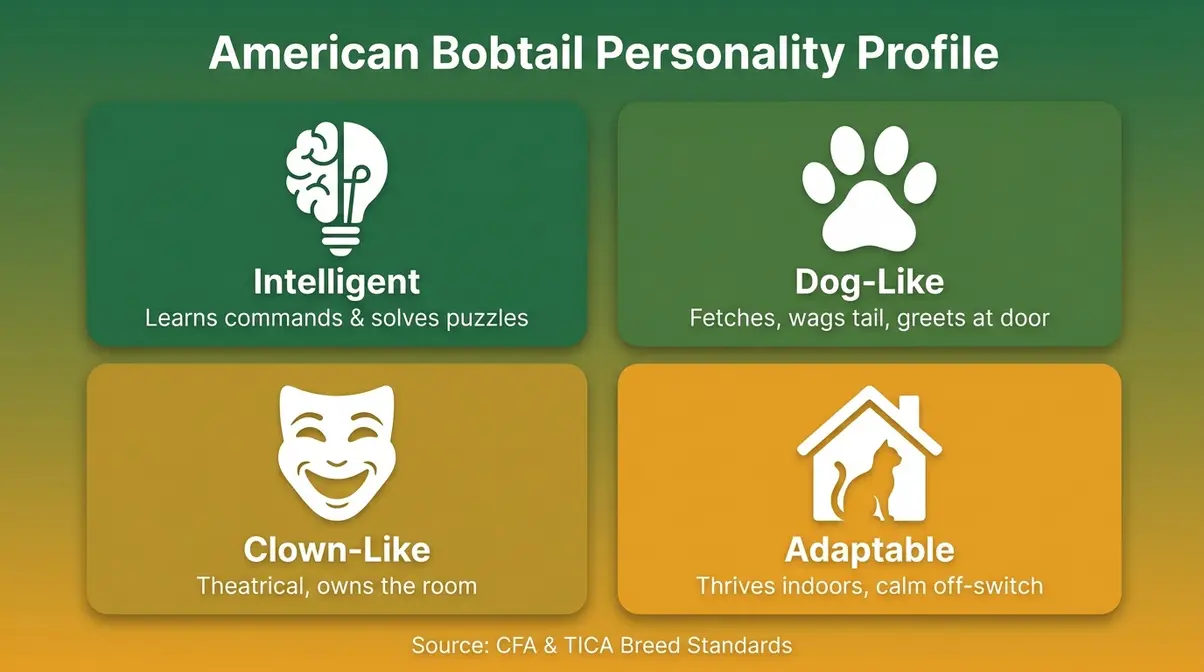
Key Personality Traits at a Glance
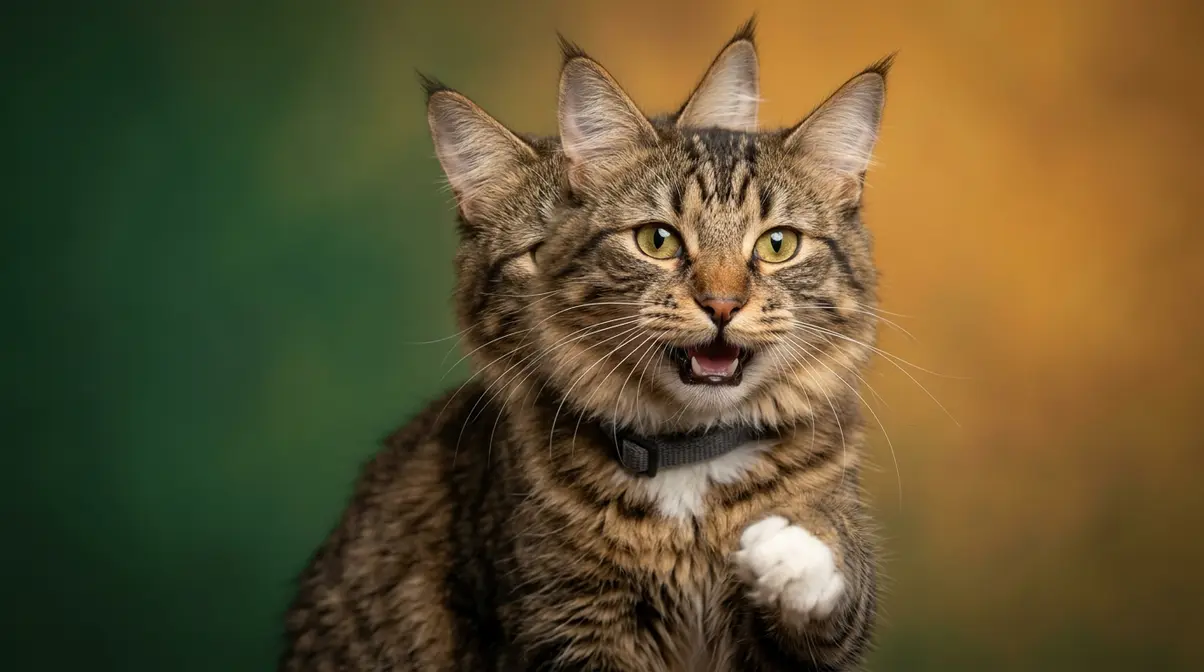
The traits described in this section are drawn from CFA and TICA (The International Cat Association) breed standards — two of the most authoritative registries in the world — and reflect consistent patterns reported across American Bobtail owner communities. No single trait exists in isolation; together, they form a remarkably cohesive personality type.
Intelligent means more than “curious.” American Bobtails can learn their name, come when called, and pick up basic commands like “sit” or “paw” — a level of trainability genuinely rare among domestic cats. If you leave a puzzle feeder on the floor, expect it to be solved within minutes. Their problem-solving ability is one of the first things new owners notice, and it means they need mental stimulation, not just physical exercise.
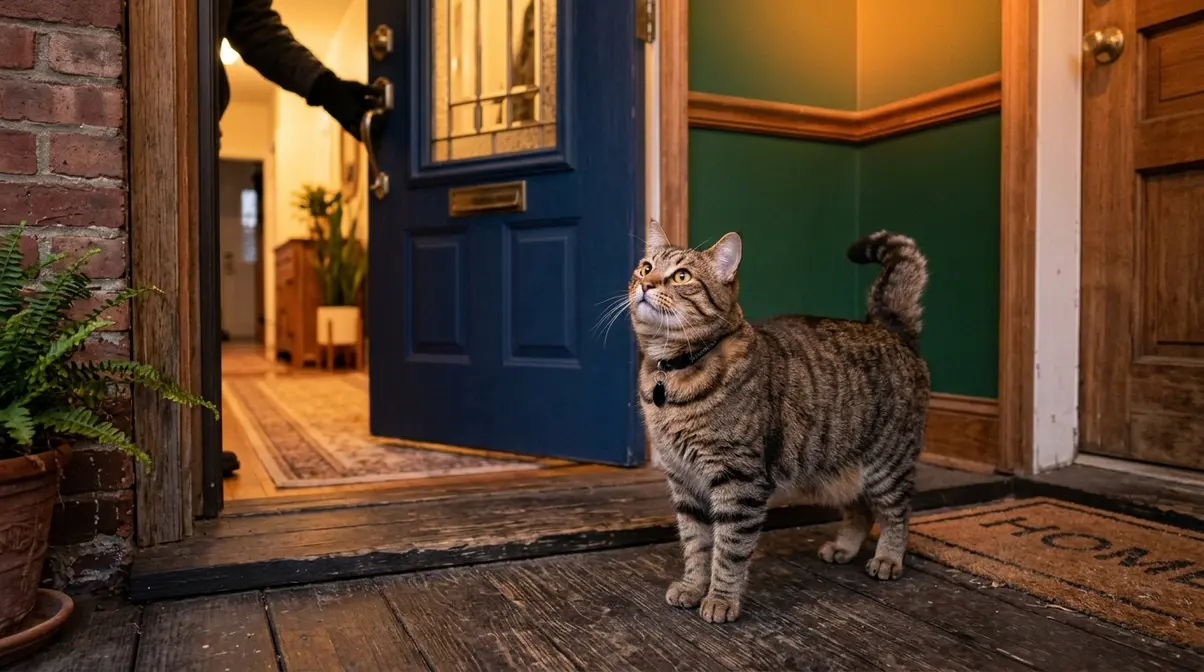
Dog-like is the label everyone uses, but here’s what it actually looks like: they fetch thrown toys and bring them back, greet you at the door when you arrive home, follow family members from room to room throughout the day, and wag their short bobtail when they’re happy. As noted in CFA’s American Bobtail breed profile, the CFA specifically highlights this tail-wagging behavior as a signature trait of the breed — a pleasure response that sets them apart from nearly every other domestic cat.
Clown-like is the term TICA uses, and it fits perfectly. These cats are theatrical. They will “perform” to get a reaction from you — hiding a favorite toy behind the couch and then dramatically “presenting” it to you like a gift, or flopping onto their back mid-walk to demand attention. One American Bobtail owner put it best:
“They take over the house and are not intimidated.”
That quote captures the clown-like quality exactly. This is not a shy, retiring cat. They own the room.
Adaptable and mellow is the fourth trait, and it’s the one that surprises people most. Despite their playfulness and energy, American Bobtails are not hyperactive. They have an “off switch.” After a vigorous play session, they’ll happily curl up beside you for hours. This balance — energetic when you want to play, calm when you need quiet — is precisely what makes them excellent apartment cats and family companions.
Male vs. Female Behavioral Differences
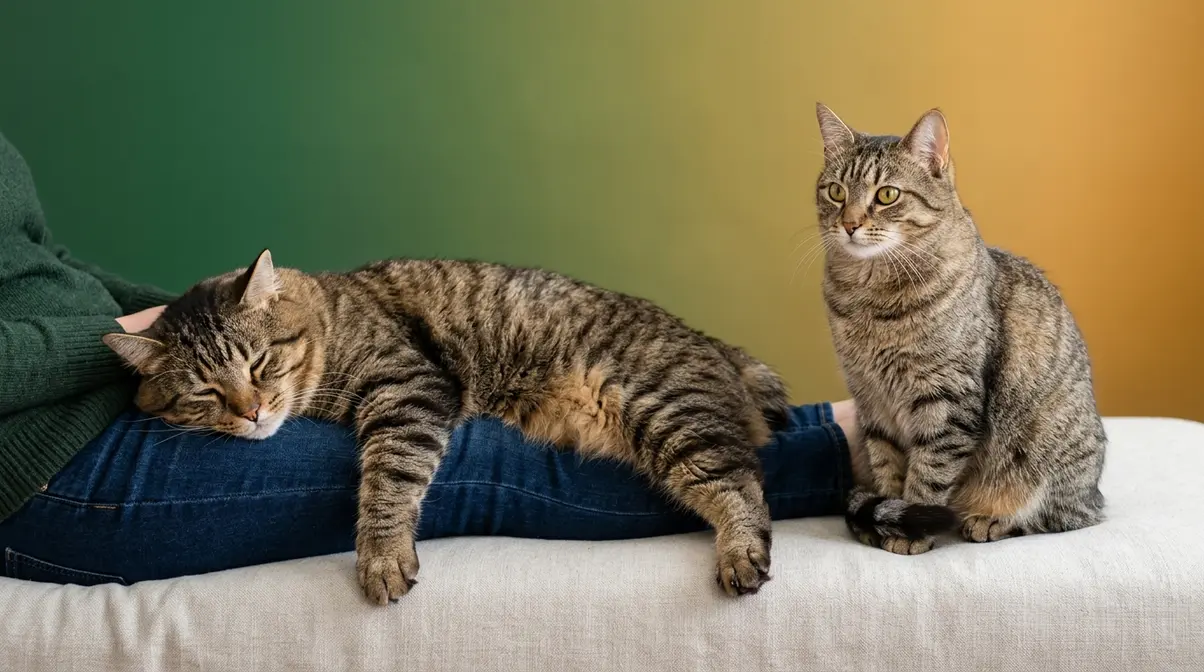
All American Bobtails share the core traits above. However, sex-linked behavioral tendencies are worth understanding before you choose a kitten — especially if you have a specific lifestyle in mind.
Male American Bobtails tend to be more openly affectionate. They are more likely to seek constant attention, follow you from room to room, and position themselves on your lap the moment you sit down. Owners frequently describe intact or neutered males as “lap cats” — physically larger (typically 10–16 lbs) and emotionally demonstrative. Males are also often more vocal, initiating conversations with chirps and trills throughout the day.
Female American Bobtails tend to be more selectively affectionate. They form deep, loyal bonds — but on their own schedule. Females are often described as the “queen of the house”: self-assured, observant, and deliberate. They’ll choose when they want attention rather than demanding it constantly. They are typically smaller (7–11 lbs) and slightly more independent in their daily movements.
Neither temperament is better — they suit different households. A family with young children who want a constantly interactive cat may lean toward a male. A single owner who appreciates a cat with a strong personality and independent streak often bonds deeply with a female.
| Trait | Male American Bobtail | Female American Bobtail |
|---|---|---|
| Affection Style | Openly affectionate, constant | Selective, deeply loyal |
| Lap Cat Tendency | High — seeks contact frequently | Moderate — on their own terms |
| Vocalization | More vocal, initiates “chats” | Quieter, communicates deliberately |
| Independence Level | Lower — follows you everywhere | Higher — self-directed schedule |
| Typical Weight | 10–16 lbs | 7–11 lbs |
| Best For | Families, children, social homes | Singles, quieter households |
| Activity Level | Slightly higher energy | Slightly more measured |
5 Unique American Bobtail Behaviors
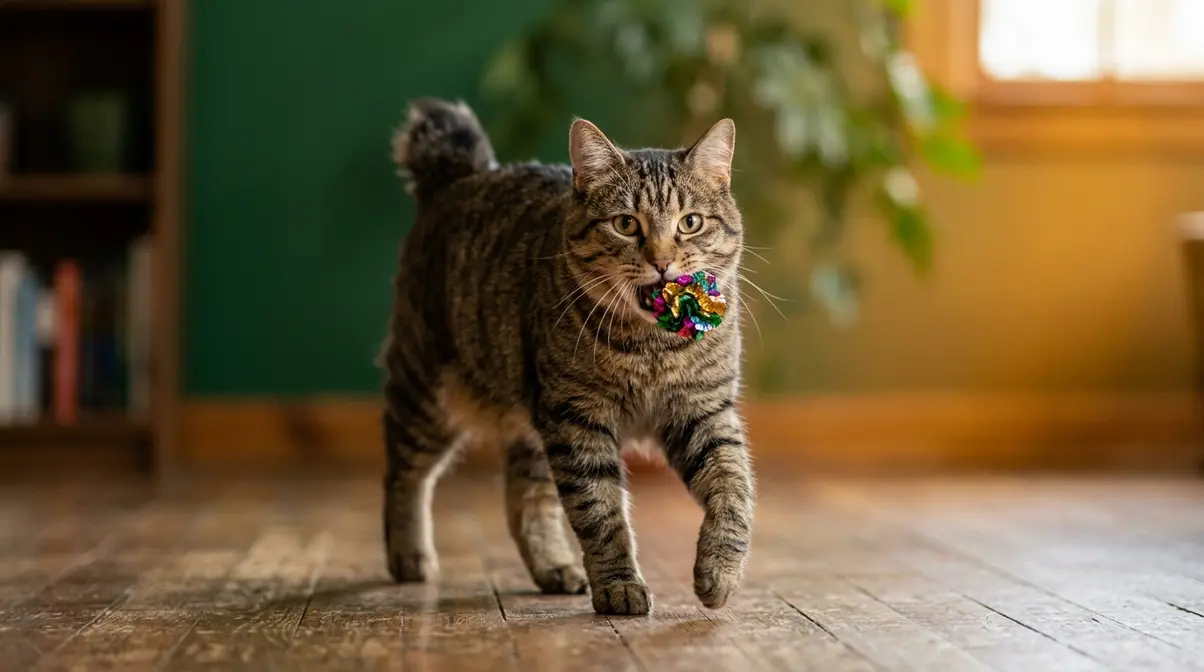
Across American Bobtail owner communities, these five behaviors come up consistently — and none of them are common in other domestic cat breeds.
- Fetching. Throw a crinkle ball or small toy, and many American Bobtails will retrieve it and drop it at your feet, expecting another throw. This is not trained behavior — it emerges naturally and often surprises first-time owners who have never seen a cat play this way.
- Leash walking. American Bobtails accept harness and leash training with far less resistance than most breeds. Their adaptable, mellow personality makes them willing participants rather than reluctant subjects. (See the full leash training guide in the next section.)
- Tail wagging. As documented in CFA’s American Bobtail breed profile, this breed wags its short bobtail to express pleasure — the same way a dog communicates happiness. Watch for the tail when you arrive home or begin a play session.
- Learning commands. “Sit,” “paw,” “come” — American Bobtails respond to verbal cues with consistent repetition and positive reinforcement. Their intelligence makes them genuinely trainable, which is uncommon in the domestic cat world.
- Greeting at the door. Most cats are indifferent to your comings and goings. American Bobtails wait. They will meet you at the door, chirp a greeting, and often escort you through the house — a behavior their owners describe as one of the most endearing qualities of the breed.
Are American Bobtails cuddly?
American Bobtails are genuinely cuddly cats, though the degree varies by individual and sex. Males tend to seek out lap time and physical contact more persistently. Females are cuddly on their own terms — deeply affectionate with their chosen person but less likely to demand constant contact. According to owner community reports, most American Bobtails will sleep beside or on their owner and actively seek out petting sessions daily. Their mellow, adaptable temperament makes them comfortable with prolonged physical closeness in a way that more independent breeds are not.
Breed Characteristics, History & Rarity
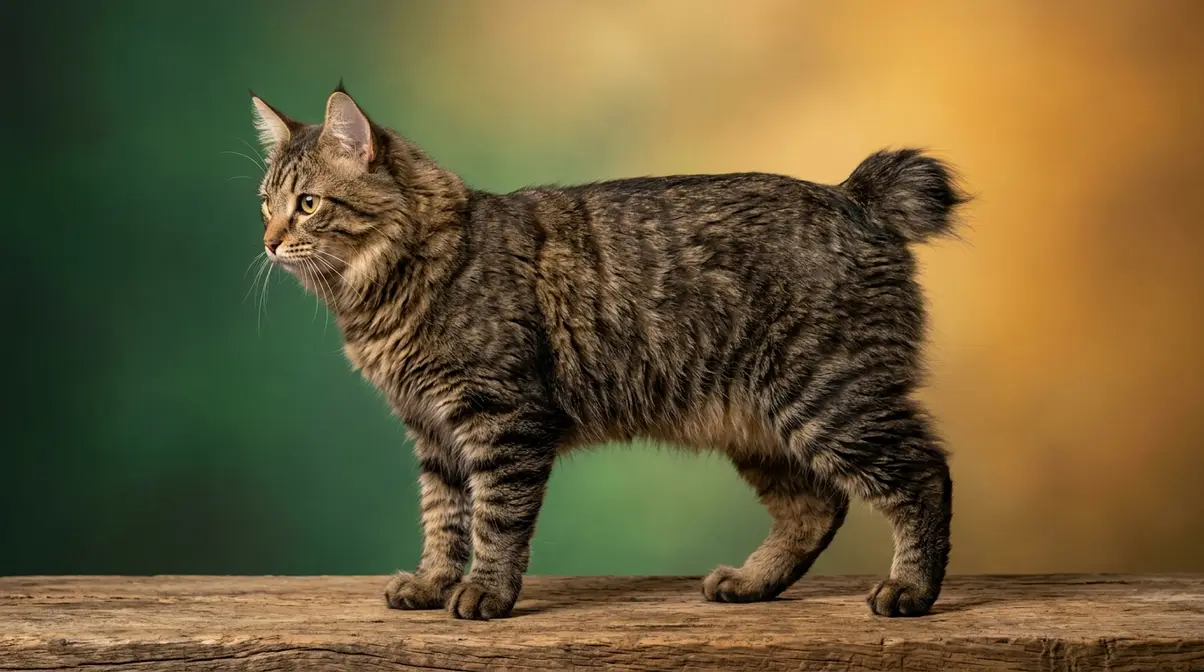
Understanding the American Bobtail cat personality becomes even richer when you know what shaped it. The physical traits and history of this breed are directly connected to the temperament that makes them so distinctive.
American Bobtail Physical Appearance
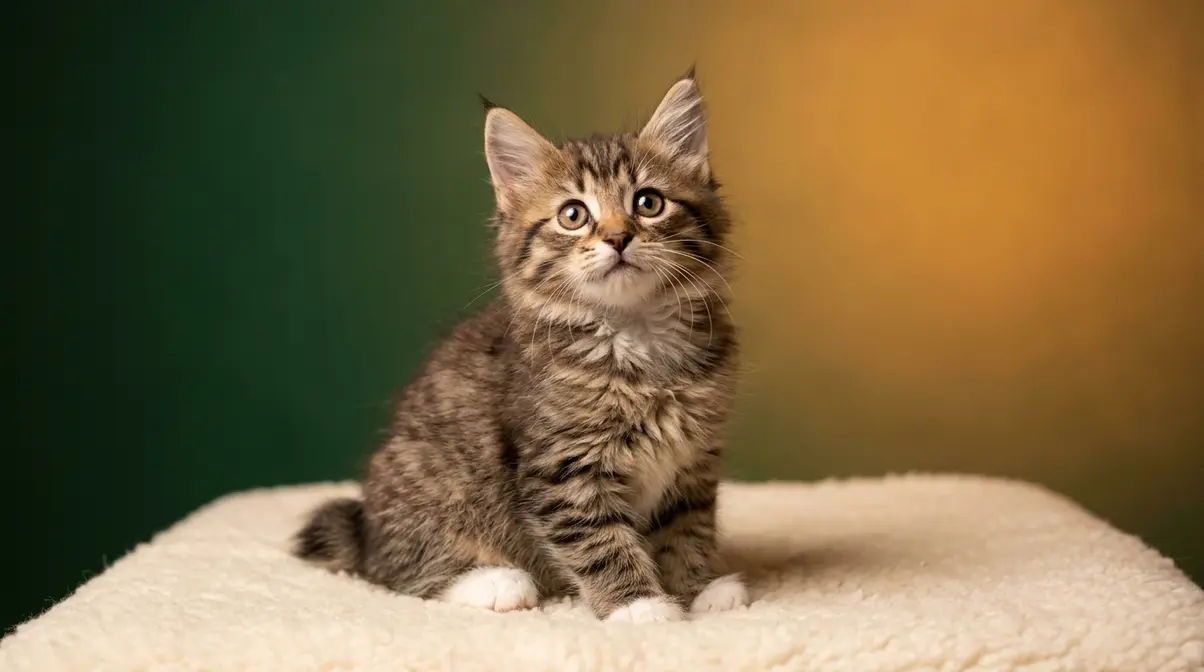
The American Bobtail’s appearance is its most immediately striking feature. According to VCA Animal Hospitals, despite their wild appearance, American Bobtails are fully domestic cats — but they carry the look of a small wild bobcat with remarkable conviction.
They have a surprisingly heavy, muscular build that takes two to three years to fully mature. Their hind legs are noticeably longer than their front legs, giving them a distinctive rolling gait reminiscent of wild bobcats.
Key physical features include:
- The tail: The defining characteristic. The bobtail is the result of a natural genetic mutation — a dominant gene that shortens the tail to roughly one-third of a typical cat’s length. Tails vary from a short stub to a half-length tail, and each one is unique.
- The build: Medium-to-large, with a broad chest, muscular hindquarters, and slightly longer back legs that give them a natural “stalking” posture.
- The face: A broad, modified wedge head with almond-shaped eyes and slightly tufted ears — features that contribute to the wild, alert expression.
- The coat: Both short and long-haired varieties exist. The coat is dense and weather-resistant, adding to the rugged, outdoorsy impression. Tabby patterns are especially popular because they enhance the wild appearance.
This untamed, exotic look is precisely what creates “The Wild-Gentle Paradox” — the visual cues say “wild predator,” but the personality says “devoted family companion.”
How rare are American Bobtail cats?
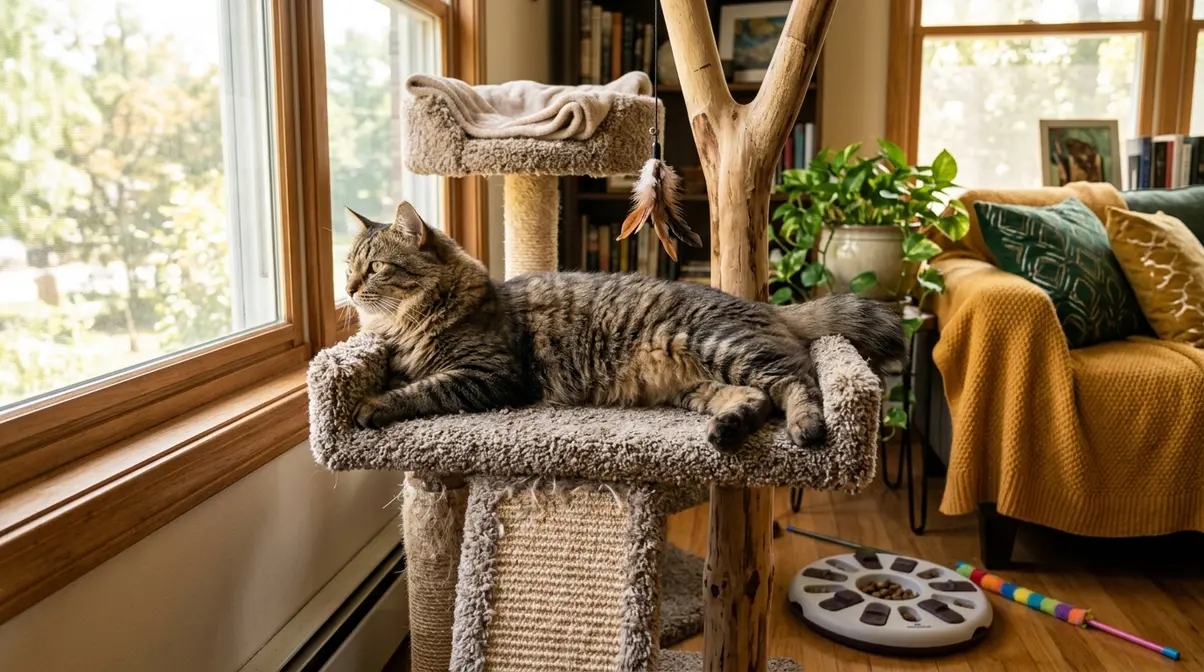
American Bobtails are a rare domestic cat breed, recognized by both TICA and the CFA but produced in far smaller numbers than mainstream breeds like the Maine Coon, Ragdoll, or Siamese. The breed’s history began in the 1960s when a feral domestic cat with a short tail was found in Arizona by John and Brenda Sanders. This foundational cat, named Yodie, was crossed with non-pedigreed domestic cats, establishing the dominant bobtail mutation.
Finding a reputable breeder typically involves a waitlist of 6–12 months. Kitten prices range from approximately $600 to $1,200 USD (according to TICA’s American Bobtail breeder directory).
The rarity stems from a few factors. The breed’s gene pool is deliberately kept diverse to maintain health and temperament. Responsible breeders prioritize quality over volume, meaning fewer litters per year. And the bobtail gene itself, while dominant, produces a range of tail lengths — breeders carefully select for the ideal tail to meet TICA and CFA breed standards.
What does this mean for you practically? Start your search early. Use TICA’s official breeder directory to find verified breeders. Avoid pet stores and unverified online listings — the breed’s rarity makes it a target for irresponsible breeding operations that prioritize profit over health.
Living with an American Bobtail
This is where “The Wild-Gentle Paradox” becomes most practical. An American Bobtail that looks like it belongs in the wilderness is actually one of the most home-friendly, people-oriented cats you can choose.
Are Bobtails good indoor cats?
American Bobtails are excellent indoor cats when provided with adequate enrichment. The Ohio State University Indoor Pet Initiative recommends indoor living for all domestic cats, and the American Bobtail’s adaptable, mellow personality means they adjust to indoor environments without the restlessness seen in more high-energy breeds. They do not pace, vocalize excessively, or show signs of frustration from indoor living, provided they receive adequate enrichment.
“Adequate enrichment” for this breed means interactive play sessions (at least 15–20 minutes twice daily), puzzle feeders to challenge their intelligence, and vertical space (cat trees, shelves, or window perches) where they can observe their territory. Their dog-like tendency to follow family members around means they are rarely bored when people are home. The challenge arises during long workdays; consider a second cat or scheduled enrichment toys if you work extended hours.
Compatibility with Kids and Pets
The American Bobtail’s adaptable and confident personality makes them one of the better breed choices for busy, multi-species households. American Bobtail owners consistently report smooth introductions with dogs — particularly when the dog is cat-socialized and the introduction is done gradually. Their confidence means they are not easily intimidated, which prevents the fearful aggression that can develop in more timid breeds.
With children, the key trait is their patience and playfulness. They engage willingly with interactive play, tolerate gentle handling better than many breeds, and their clown-like personality keeps kids entertained. Supervise interactions with very young children (under age 4), as you would with any cat — but American Bobtails rarely initiate conflict.
With other cats, the introduction timeline matters more than breed compatibility. A slow, scent-based introduction over 7–10 days produces far better results than a direct face-to-face meeting. American Bobtails are not territorial aggressors, but they are confident — they will hold their ground if challenged.
Step-by-Step Leash Training Guide
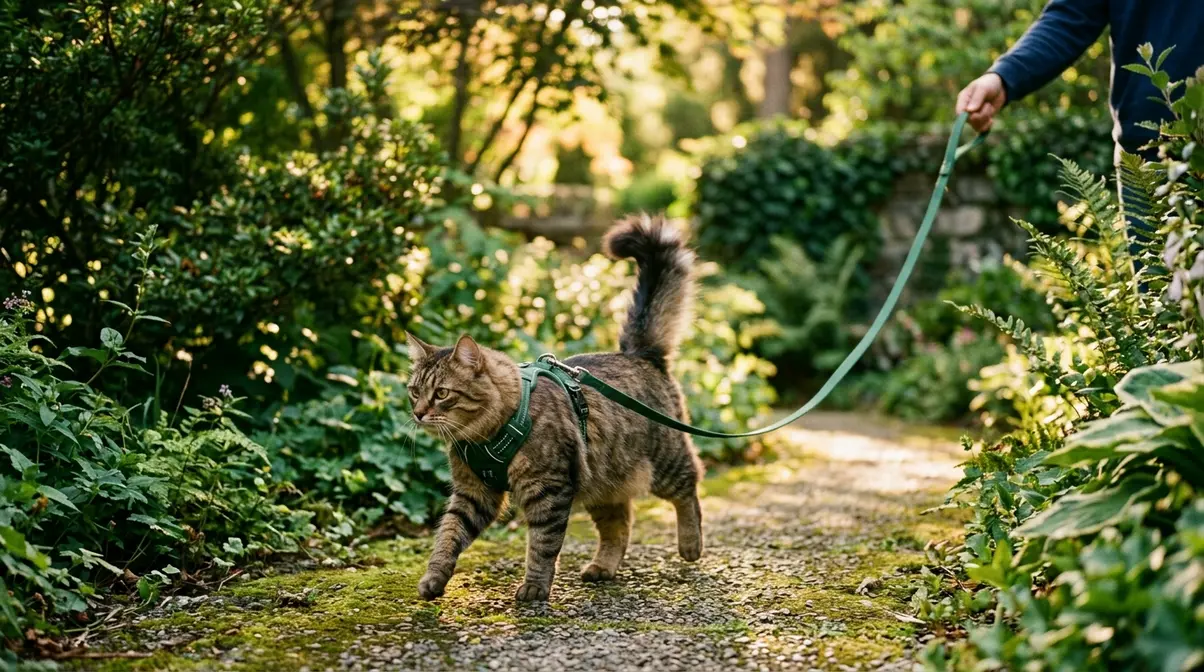
Leash training is one of the most searched questions about this breed — and one of the most rewarding activities you can do together. The American Bobtail’s adaptable personality and intelligence make them among the best candidates for harness training of any domestic cat breed. This guide reflects editorial guidance based on standard feline harness training methodology.
What you’ll need: An H-style or vest harness (not a collar — collars are unsafe for leash walking), a lightweight 4–6 foot leash, high-value treats (small pieces of cooked chicken or freeze-dried meat), and patience. Allow 2–4 weeks for the full process.
Step 1: Introduce the harness without wearing it (Days 1–3)
Place the harness near your cat’s food bowl or sleeping area. Let them sniff and investigate it on their own terms. Reward any positive interaction (sniffing, touching) with a treat. The goal is simple: the harness should smell familiar and carry no negative associations before it ever touches their body.
Step 2: Drape the harness over your cat without fastening it (Days 4–5)
Gently lay the harness across your cat’s back while they eat or receive treats. Do not fasten it yet. Keep sessions under 2 minutes. If your cat shows stress (flattened ears, attempting to flee), go back to Step 1 for another day.
Step 3: Fasten the harness indoors for short sessions (Days 6–10)
Buckle the harness loosely and let your cat wear it for 5–10 minutes while you play with them or offer treats. Check the fit: you should be able to slip two fingers under any strap comfortably. Gradually increase wearing time to 20–30 minutes over several days.
Step 4: Attach the leash indoors (Days 11–14)
Clip the leash to the harness and let your cat drag it around the house under supervision. This familiarizes them with the weight and sensation before you hold the other end. Reward calm movement with treats.
Step 5: Hold the leash and follow your cat indoors (Days 15–17)
Pick up the leash and follow your cat’s lead around the house. Do not pull or redirect — your job is to follow them. This builds the association that a leash means freedom to explore, not restriction.
Step 6: Move to a quiet outdoor space (Days 18–21)
Choose a low-traffic area — a backyard, quiet hallway, or building entrance. Let your cat set the pace entirely. Bring high-value treats and keep the first outdoor session to 5–10 minutes. Watch for stress signals (crouching, frozen posture, tail tucked) and return inside immediately if they appear.
Step 7: Gradually extend outdoor time and distance
Over the following weeks, increase session length and explore new environments at your cat’s pace. American Bobtails typically progress faster than most breeds due to their adaptable temperament — many owners report comfortable leash walking within 4–6 weeks of starting the process.
Challenges of Owning an American Bobtail
No breed guide is complete without an honest look at the challenges. The American Bobtail is an exceptional companion — but they are not the right fit for every household.
Managing Common Behavioral Quirks
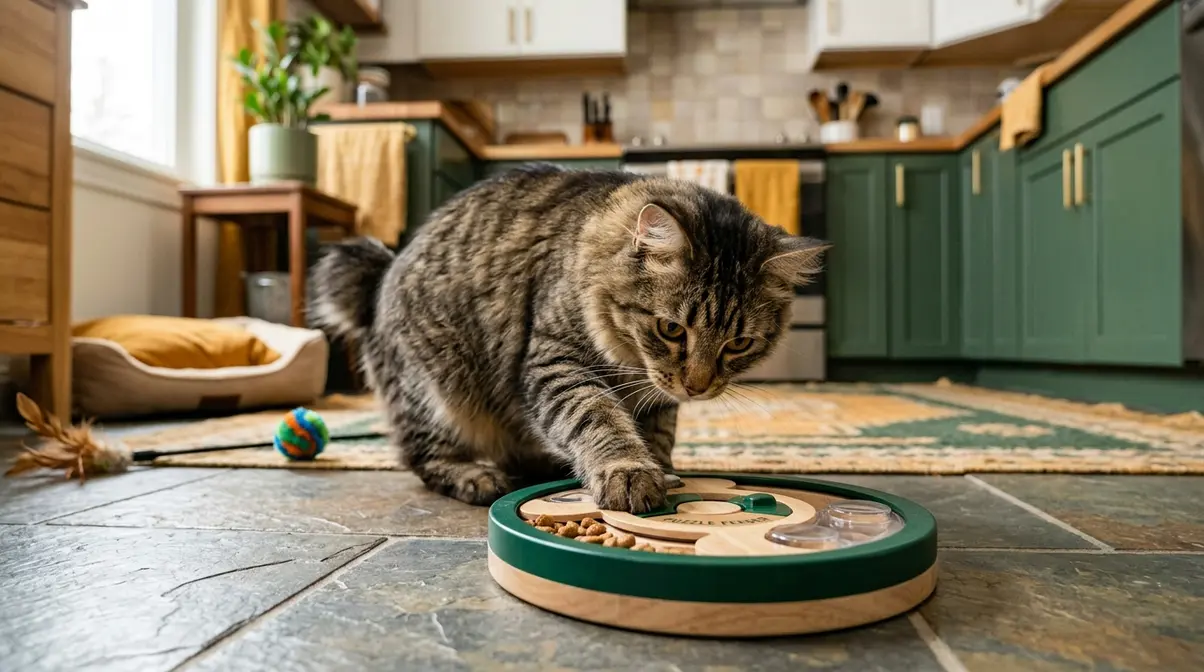
They demand engagement. The same intelligence and dog-like personality that makes American Bobtails charming also means they get bored — and a bored American Bobtail will find their own entertainment. This might mean opening cabinets, knocking objects off shelves, or vocalizing persistently. The solution is proactive enrichment: rotate puzzle toys weekly, schedule two daily interactive play sessions, and provide at least one tall cat tree for climbing and observation.
They are vocal on their own schedule. American Bobtails have wide vocabularies — chirps, trills, chatters, and occasional yowls — and they use them. This is endearing to most owners but can be disruptive in apartments with thin walls or for people who work night shifts and need quiet during the day. Establishing a predictable routine (feeding, play, sleep times) significantly reduces attention-seeking vocalization.
They bond deeply, which means they can experience separation anxiety. Their talkative, people-oriented nature means extended periods alone can be stressful. If your schedule involves 8–10 hour workdays with no other pets in the home, consider whether a more independent breed might be a better fit — or plan to provide a feline companion.
Is This Breed Right for Your Home?
The honest answer is no — and knowing that upfront saves everyone time.
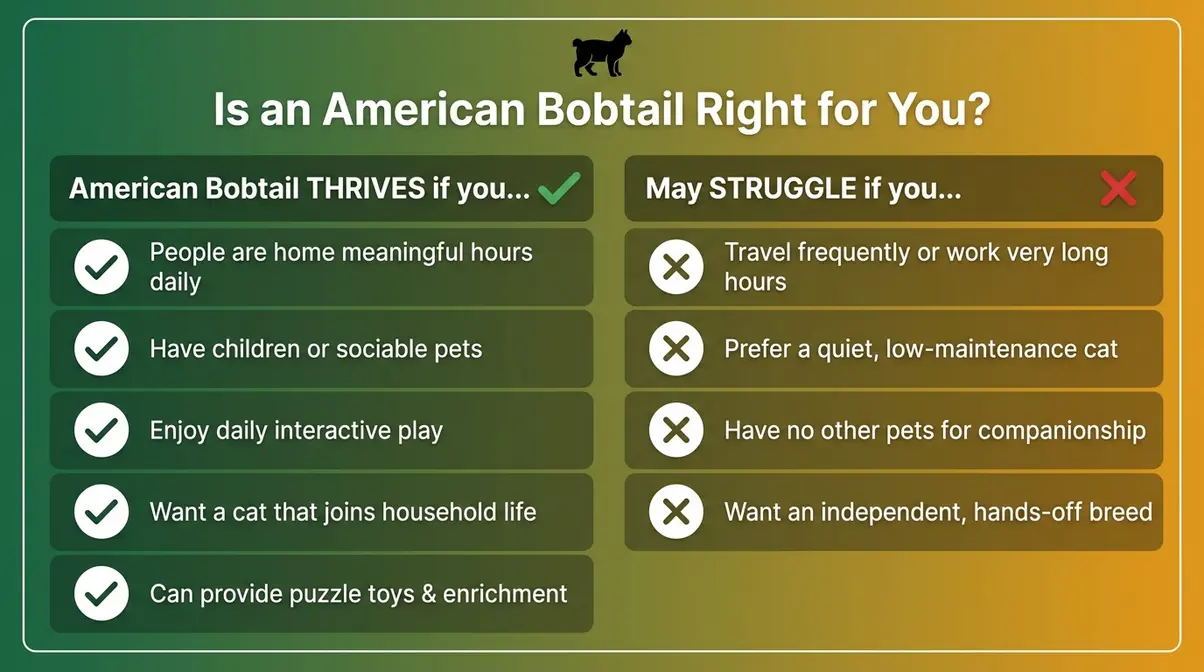
The American Bobtail thrives in homes where: people are home for meaningful portions of the day, there are children or other sociable pets, interactive play is a daily priority, and the owner genuinely enjoys a cat that participates in household life rather than observing from a distance.
The American Bobtail may struggle in homes where: the owner travels frequently or works very long hours without other animals present, the household is extremely quiet and calm (their clown-like personality can feel disruptive to some), or the owner prefers a low-maintenance, independent cat.
If you’re looking for a lower-maintenance alternative with similar intelligence, the Scottish Fold or the Abyssinian may be worth researching. If you want a similarly dog-like personality with broader availability, the Maine Coon is an excellent comparison breed.
American Bobtail FAQs
What is the most clingy cat breed?
The Siamese is widely considered the most clingy domestic cat breed, followed closely by the Burmese and Ragdoll. The American Bobtail falls into a middle category — affectionate and people-oriented without being anxious or overly demanding. Males lean clingier than females. Unlike the Siamese, American Bobtails have an “off switch” and are content to settle independently after social time. If you want deep attachment without separation anxiety, the American Bobtail’s balance of affection and adaptability is a strong fit.
What is the most misbehaved cat breed?
No breed is inherently “misbehaved,” but breeds with high intelligence and energy — like the Bengal, Siamese, and Abyssinian — are most frequently cited for destructive or disruptive behavior when under-stimulated. The American Bobtail’s intelligence means they can develop similar habits if bored, but their mellow temperament keeps this manageable. Consistent enrichment (interactive toys, puzzle feeders, daily play sessions) prevents the vast majority of behavioral problems in this breed. If you are dealing with destructive habits, exploring cat behavior and training tips can help redirect their energy. Behavioral issues in any cat are almost always a response to unmet needs, not personality defects.
Which Meat Should You Never Feed a Cat?
Raw pork is the meat most commonly flagged as high-risk for cats, due to the potential for parasites including Trichinella spiralis. The American Veterinary Medical Association (AVMA) advises against feeding cats any raw or undercooked meat due to risks of bacterial contamination (Salmonella, Listeria) and parasitic infection. Cooked, plain chicken, turkey, or beef in small amounts are safe as occasional treats. Always consult your veterinarian before making dietary changes, and rely on complete, commercially prepared cat food as the dietary foundation.
Saying “I Love You” in Cat Language
The slow blink is the primary way cats communicate affection and trust — and research published in Scientific Reports (Humphrey et al., 2020) confirmed that cats respond positively to slow blinking from both their owners and unfamiliar humans. To tell your American Bobtail “I love you”: make soft eye contact, then slowly close and open your eyes. If they slow-blink back, the message landed. American Bobtails, with their wide vocabularies and expressive communication style, also respond to soft vocalizations — a quiet trill or chirp directed at them often prompts a vocal response in return.
Differences From Other Bobtail Cats
The American Bobtail is distinct from the Japanese Bobtail and the Manx in both genetics and temperament. The American Bobtail’s short tail results from a dominant natural mutation unrelated to the Manx gene (which causes spinal issues when inherited in double copies). The American Bobtail was developed in North America from naturally occurring bobtailed cats selected for personality as much as appearance. The result is a breed with a documented dog-like temperament — including tail wagging, leash walking, and command learning — that neither the Japanese Bobtail nor the Manx consistently displays.
The Wild-Gentle Paradox: A Final Word
The American Bobtail is genuinely one of the most misrepresented breeds in popular cat content. Every guide calls them “dog-like” and moves on — but that label, without the specifics, undersells what this cat actually offers. They fetch. They walk on leashes. They wag their tails. They learn commands. They greet you at the door. According to both the CFA and VCA Animal Hospitals, these behaviors are documented, consistent characteristics of the breed — not occasional quirks. Search interest in the American Bobtail cat personality has grown 24% year-over-year, and it’s easy to see why once you understand what the breed actually delivers.
The Wild-Gentle Paradox is the most honest summary of this breed: the exterior says wild, the personality says devoted. That contradiction is precisely what makes them so compelling to the right owner.
If your household has room for an engaged, intelligent, people-oriented companion — one that participates in your daily life rather than merely tolerating it — the American Bobtail deserves serious consideration. Start with TICA’s breeder directory, prepare for a waitlist, and begin the harness introduction process the week your kitten arrives home. The earlier you start, the faster they’ll be walking beside you.

Dave King
Cat owner and writer at Mad Cat Man.