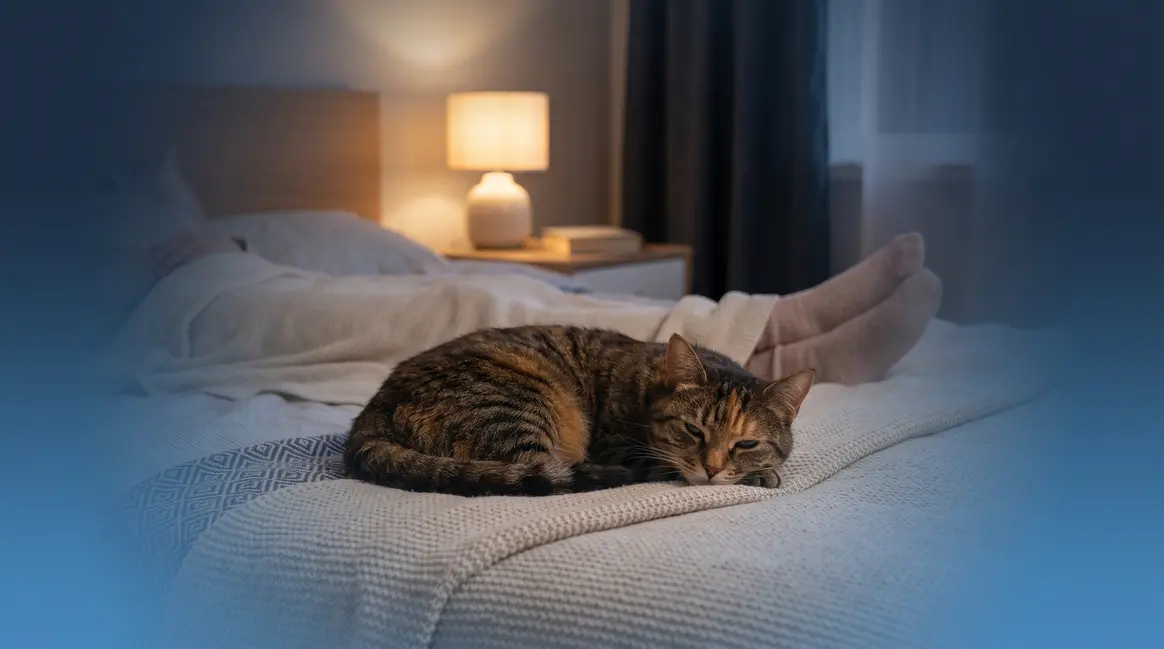

“Why has my cat started sleeping by my feet when he usually sleeps by my head or chest, what does it mean, is it a worry?”
If you’ve ever wondered the same thing, you’re not alone — and the answer is actually pretty fascinating. Most cat owners assume it’s random. But your cat’s choice of your feet over your chest, your head, or an empty spot on the bed is anything but accidental.
By the end of this guide, you’ll know exactly why your cat does this — and why it’s one of the sweetest things they can do. We’ll cover the science, the instincts, the affection signals, and when (if ever) you should actually be concerned about the behavior we call why does my cat sleep at my feet.
Cats sleep at your feet because of a perfect combination of warmth, safety instinct, and affection — what we call The Foot-of-Bed Formula. A cat’s normal body temperature reaches up to 102.5°F, making your body heat genuinely valuable to them.
- Warmth: Your feet radiate steady heat without the risk of overheating under blankets
- Safety: The foot of the bed gives cats a clear view of the room and a quick escape route
- Territory: Your cat’s paw scent glands quietly “claim” you as theirs while they sleep
- Trust: Choosing to sleep near you at all is a major sign of feline affection
Why Does My Cat Sleep at My Feet? The Real Science
So why does my cat sleep at my feet — and why that exact spot, night after night? Feline behaviorists explain that it comes down to a combination of survival instinct, thermal biology, and quiet affection working together. These aren’t separate, unrelated quirks. Together, they form The Foot-of-Bed Formula — the perfect convergence of factors that makes the foot of your bed the single most appealing sleep spot your cat can find. Understanding each piece helps you see this habit not as random behavior, but as a small act of trust your cat repeats every single night.
“A cat’s normal body temperature ranges from 100.5 to 102.5°F — higher than a human’s 98.6°F — making your body heat a genuinely valuable resource they seek out at night.” (VCA Animal Hospitals)
Cats are also polyphasic sleepers, meaning they cycle through multiple short sleep episodes rather than one long stretch. Because they wake frequently, they need a spot that feels consistently safe and warm — and your feet deliver both, every time.
Your Cat Feels Safe at Your Feet
If you’ve ever asked why does my cat sleep at my feet at night specifically, the answer starts with thousands of years of survival wiring. The foot of the bed gives your cat an unobstructed view of the entire room — including the bedroom door. This is a hard-wired instinct from wild ancestors who needed to monitor their surroundings for predators while resting. Your cat isn’t just being cute; they’re doing what wild cats have done for millennia: choosing a resting spot with a strategic vantage point.
According to Ohio State’s Indoor Pet Initiative, cats instinctively seek resting areas with a clear sightline to monitor their environment — a behavior that persists even in the most pampered house cat.
There’s also a practical comfort angle. Recent research published in PMC found that pain-free adults shift sleeping positions approximately 12 to 20 times per night. Your feet and lower legs move far less dramatically than your arms, torso, and head during those shifts. By sleeping at your feet, your cat reduces the risk of being accidentally disturbed or rolled onto — while still staying close to you. That’s not distrust; it’s feline logic at its finest.
The short video below explains this survival instinct in under 60 seconds.
But safety is only half the story — the other reason your cat picks your feet is surprisingly scientific, and it comes down to your body heat.
Your Body Heat Is Irresistible to Cats
Here’s the thermal science that no other guide bothers to explain. A cat’s normal body temperature runs between 100.5 and 102.5°F (VCA Animal Hospitals) — notably higher than the average human’s 98.6°F. Because cats run warmer, they also lose heat faster, especially overnight. They’re constantly seeking external warmth to conserve their own energy.
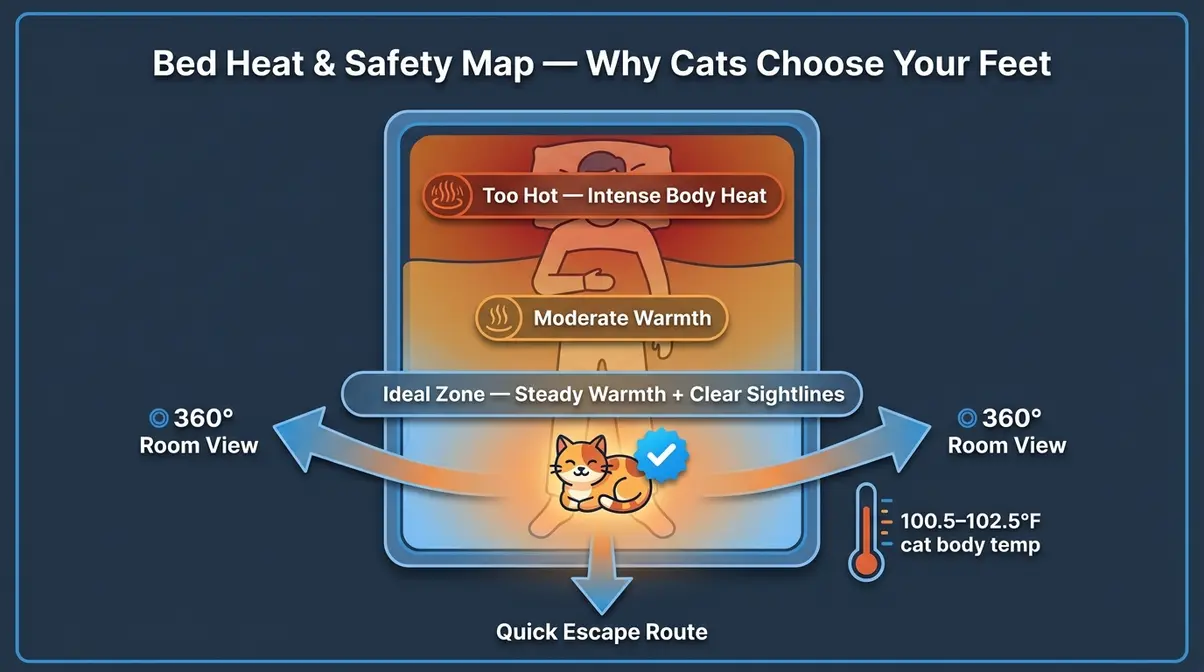
Your body radiates heat even while you sleep. The foot of the bed is thermally ideal: warm enough from your body heat, but not so hot that your cat gets overheated under heavy blankets (the way they might if they slept directly on your chest or stomach). Think of it like the warm edge of a fireplace — close enough to feel the glow, far enough to stay comfortable.
This process is called thermoregulation (the way your cat manages their own body temperature). For cats, it’s an active, ongoing need — not just a preference. Choosing your feet is your cat’s smart, self-regulating solution to staying warm without overheating.
The infographic below shows exactly why the foot of the bed hits this sweet spot.
Your Cat Is Quietly Claiming You
There’s a third pillar of The Foot-of-Bed Formula that most people never notice: your cat is also marking you while they sleep. Cats have scent glands — tiny organs embedded in their paw pads that release invisible chemical signals called pheromones (chemical messages that communicate identity and ownership). According to the Cat Care Center of Baton Rouge, these interdigital glands activate when your cat kneads or rests their paws against a surface, quietly depositing their unique scent signature.
When your cat rests their paws against your feet or ankles, they’re not just warming up — they’re saying, in the most feline way possible, “this person is mine.” It’s a gentle, affectionate form of territorial behavior. Far from being possessive in a negative sense, it’s actually a sign of deep bonding. Your cat considers you part of their safe territory, and they want the world (or at least any other cats) to know it.
For more on the fascinating reasons your cat sleeps at your feet, including how this territorial behavior connects to broader bonding signals, the science goes even deeper.
What It Means When Your Cat Sleeps Somewhere Else
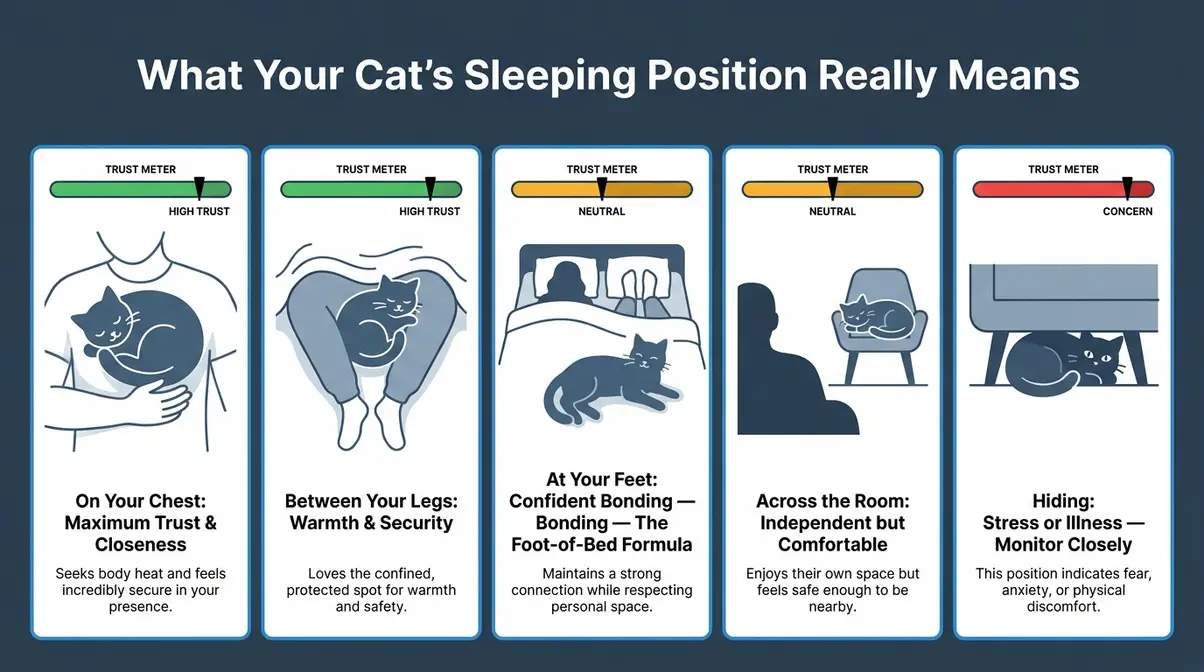
Understanding why cats sleep at your feet becomes even richer when you compare it to other sleep positions. Each spot your cat chooses communicates something slightly different — and knowing the difference can tell you a lot about where you stand in your cat’s world.
Sleeping on Your Chest or Head
When a cat sleeps on your chest or near your head, feline behaviorists explain that they’re typically seeking maximum closeness and warmth. Your chest and face are the warmest parts of your body, and your heartbeat and breath create a rhythmic, soothing environment. According to PetMD’s breakdown of cat sleeping positions, cats who sleep this close are usually expressing a very high level of trust and attachment.
However, this position also comes with trade-offs — for the cat. Your head moves more during sleep, your breath can feel intrusive, and the heat near your face can become too intense. As cats grow more confident in a home, some actually shift downward toward the feet over time. This isn’t rejection. It’s your cat becoming comfortable enough to sleep soundly without needing to be right next to your face for reassurance.
Sleeping Between Legs or on Stomach
A cat sleeping between your knees or on your stomach is often seeking a combination of warmth and a sense of being “enclosed” — the slight pressure of your legs on either side mimics the cozy feeling of being nestled in a den. Cat owners in veterinary forums consistently report that this position is especially common in cats who were separated from their litter early or who have anxious temperaments.
This position is also part of the shifting pattern many owners notice. A cat might start on your chest as a kitten, migrate to your stomach as they grow, and eventually settle at your feet as a confident adult. Each shift reflects a maturing comfort level, not a cooling of affection. The Foot-of-Bed Formula, in this sense, is often the destination — the position a cat arrives at when they truly feel at home.
Other Ways Your Cat Says “I Love You”
Cats are famously subtle communicators, but once you know what to look for, their affection is everywhere. Feline behaviorists at UC Davis note that cats express love through a rich vocabulary of body language and physical gestures — most of which owners miss entirely.
The Slow Blink and Gentle Touch
The slow blink is perhaps the most well-known feline love language. When your cat holds eye contact and slowly closes their eyes, they’re signaling complete trust — essentially saying, “I’m comfortable enough around you to lower my guard.” You can return the message: make soft eye contact and slowly blink back. Many cats will respond in kind, and you’ll have had a genuine conversation without a single word.
Gentle head-butting (called bunting) is another clear signal. According to Catster’s guide to cat behavior, when a cat presses their forehead against you, they’re depositing facial pheromones — the same chemical language as the paw scent glands — to mark you as safe and beloved. It’s one of the most intimate gestures in a cat’s repertoire.
Rubbing, Kneading, and Purring
When your cat rubs against your legs, they’re doing the same thing they do when they sleep at your feet: claiming you as part of their world. This behavior — sometimes called “bunting” when done with the face, or “marking” when done with the body — is a consistent sign of affection and ownership in the most positive sense.
Kneading (the rhythmic pushing motion cats make with their paws) is a comfort behavior that begins in kittenhood, when kittens knead their mother to stimulate milk. Adult cats knead when they feel deeply safe and content. If your cat kneads your feet or legs before settling in to sleep, they’re essentially telling you that you make them feel as safe as their mother once did.
Purring rounds out the trilogy. While cats do sometimes purr when stressed or in pain, a slow, deep purr accompanied by relaxed body language and half-closed eyes is a reliable signal of contentment and trust.
Other Quirky Cat Behaviors and What They Mean
Sleeping at your feet is just one entry in a long dictionary of feline quirks. Cat owners in online communities consistently report puzzlement over behaviors like nibbling fingers (a gentle form of play-grooming that signals affection, not aggression), staring while you sleep (your cat is monitoring you, their most important environmental anchor), and chirping at birds through the window (a predatory frustration response that’s entirely normal).
These behaviors share a common thread: they’re all rooted in instinct, communication, and attachment. If your cat is doing something that seems strange but isn’t causing harm, it’s almost always a form of connection rather than a problem requiring step-by-step fixes. For a deeper look at the full range of feline quirks — including why your cat might nibble your fingers or stare at you in the dark — explore our complete guide to cat sleeping positions and what they mean.
Where Not to Touch a Cat
Most cats dislike being touched on the belly, base of the tail, and lower legs. These are areas where cats feel most physically vulnerable, and unexpected contact there can trigger a defensive swipe even from an affectionate cat. Feline behaviorists recommend focusing touch on the head, cheeks, and chin — areas cats use for bunting and scent-marking, which they associate with positive social contact. Always let your cat initiate or lean into touch rather than reaching toward them, and watch for tail flicks or skin twitching as “I’m done” signals.
When to Worry: Signs of a Potential Problem
The overwhelming majority of the time, a cat sleeping at your feet is a completely healthy, affectionate behavior. However, a DVM reviewing a sudden change in sleeping position — especially if accompanied by other symptoms — would note that it can occasionally signal an underlying health issue worth investigating.
Signs That Warrant a Vet Visit
A position change alone is rarely a red flag. However, if your cat suddenly shifts their sleep location and you notice any of the following, schedule a veterinary appointment:
- Lethargy or unusual stillness — sleeping far more than normal, or seeming reluctant to move
- Loss of appetite — skipping meals alongside the position change
- Hiding behavior — retreating under beds or into closets rather than sleeping near you
- Visible discomfort — limping, flinching when touched, or avoiding pressure on certain areas
- Changes in grooming — a coat that looks unkempt, or excessive licking of one spot
According to Mills Marietta Animal Hospital, cats instinctively hide signs of illness, so behavioral shifts can be among the earliest visible clues that something is wrong. If you notice two or more of these signs together, trust your instinct and call your vet. Early detection makes a significant difference in outcomes for most feline health conditions.
When a Position Change Is Normal
Most of the time, a cat switching from sleeping at your head to sleeping at your feet — or vice versa — is simply a reflection of changing comfort preferences, temperature fluctuations in your home, or a maturing sense of confidence. Cats are polyphasic sleepers who cycle through multiple rest periods each night, and their preferred spot can shift with the seasons, your schedule, or even changes in bedding.
A cat who used to sleep on your chest and now sleeps at your feet hasn’t fallen out of love with you. According to cat behaviorists, this is often a sign of growing comfort — your cat no longer needs the maximum closeness of your face to feel secure. The Foot-of-Bed Formula, in this sense, is a graduation, not a retreat. As long as your cat still seeks you out, eats normally, and engages with daily life, a position shift is nothing to worry about.
Frequently Asked Questions
What does it mean when cats like to sleep at your feet?
Cats sleeping at your feet signals trust, warmth-seeking, and territorial bonding. The foot of the bed offers a strategic vantage point to monitor the room, steady body heat without the intensity of blankets, and an opportunity to deposit scent from paw glands. According to VCA Animal Hospitals, a cat’s normal body temperature runs 100.5–102.5°F, making your warmth a genuine biological need. If your cat consistently chooses your feet, consider it a compliment. They’ve evaluated the entire room and identified you as their safest, warmest anchor.
How do you tell if a cat has chosen you?
A cat who has chosen you will seek you out repeatedly, sleep near you, and initiate physical contact. HowStuffWorks’ guide on cats sleeping at your feet notes that cats who slow-blink at you, rub against your legs, or follow you between rooms are displaying consistent bonding signals. Sleeping at your feet night after night is one of the clearest signs of this deep trust.
Why did my cat shift from sleeping at my head to my feet?
This shift is almost always a sign of growing confidence, not reduced affection. Kittens and newly adopted cats often sleep as close to your face as possible because they need maximum reassurance. As they mature and feel more secure in their environment, they migrate toward the feet — a position that offers comfort and safety without requiring constant proximity. Cat owners in veterinary forums consistently describe this as a natural progression. Unless the change comes with lethargy or appetite loss, there’s no cause for concern.
How do you say “I love you” in cat language?
The slow blink is the clearest way to say “I love you” in feline. Make soft, relaxed eye contact with your cat and slowly close your eyes, then open them. Many cats will return the gesture. You can also mimic bunting by gently pressing your forehead toward them, or simply sit quietly in the same room — for cats, choosing to be near someone is itself a profound expression of trust. Responding calmly when your cat kneads or rubs against you reinforces the bond further.
What is the spiritual meaning of a cat sleeping at your feet?
Some owners and spiritual traditions believe that a cat sleeping at your feet carries protective energy — that cats, long associated with intuition and guardianship in many cultures, position themselves at your feet to watch over you while you sleep. Others interpret it as a sign of spiritual alignment or being “chosen” by an animal with heightened sensitivity. These interpretations are personal and cultural rather than scientific, but they reflect something real: the feeling that your cat’s presence at your feet is meaningful, deliberate, and comforting.
The Full Picture: Your Cat Chose You
Your cat sleeping at your feet isn’t a random habit or a quirky accident. It’s the result of The Foot-of-Bed Formula — the precise convergence of warmth, strategic safety, and scent-based bonding that makes your feet the ideal sleep spot in your cat’s world. A body temperature of up to 102.5°F (VCA Animal Hospitals) drives them toward your heat. Thousands of years of survival instinct draw them to the vantage point your feet provide. And their paw scent glands seal the deal by quietly marking you as theirs.
Every night your cat curls up at your feet, they’re making a deliberate choice. They’ve evaluated the whole bed — and the whole house — and decided that your feet offer the perfect combination of warmth, safety, and belonging. That’s not a small thing in a creature wired for self-preservation.
So the next time you feel that familiar weight settle at the end of your mattress, slow-blink down at them. They chose you — and now you know exactly why.

Dave King
Cat owner and writer at Mad Cat Man.