
Table of Contents
- Is Dracena Toxic to Cats? The Straight Answer
- 9 Warning Signs Your Cat May Have Nibbled a Dracaena
- First Aid Guidance: Do This, Not That
- Safer Houseplant Swaps Your Cat Can Live With
- Prevention Playbook: Make Plants Boring and Your Cat’s World Enriching
- Smart Shopping: What to Buy Instead of Dracena
- FAQs and Quick Myths, Busted
This blog post may contain affiliate links. As an Amazon Associate I earn from qualifying purchases.
Dracena Toxic to Cats: 9 Warning Signs, First Aid Guidance & Safer Houseplant Swaps
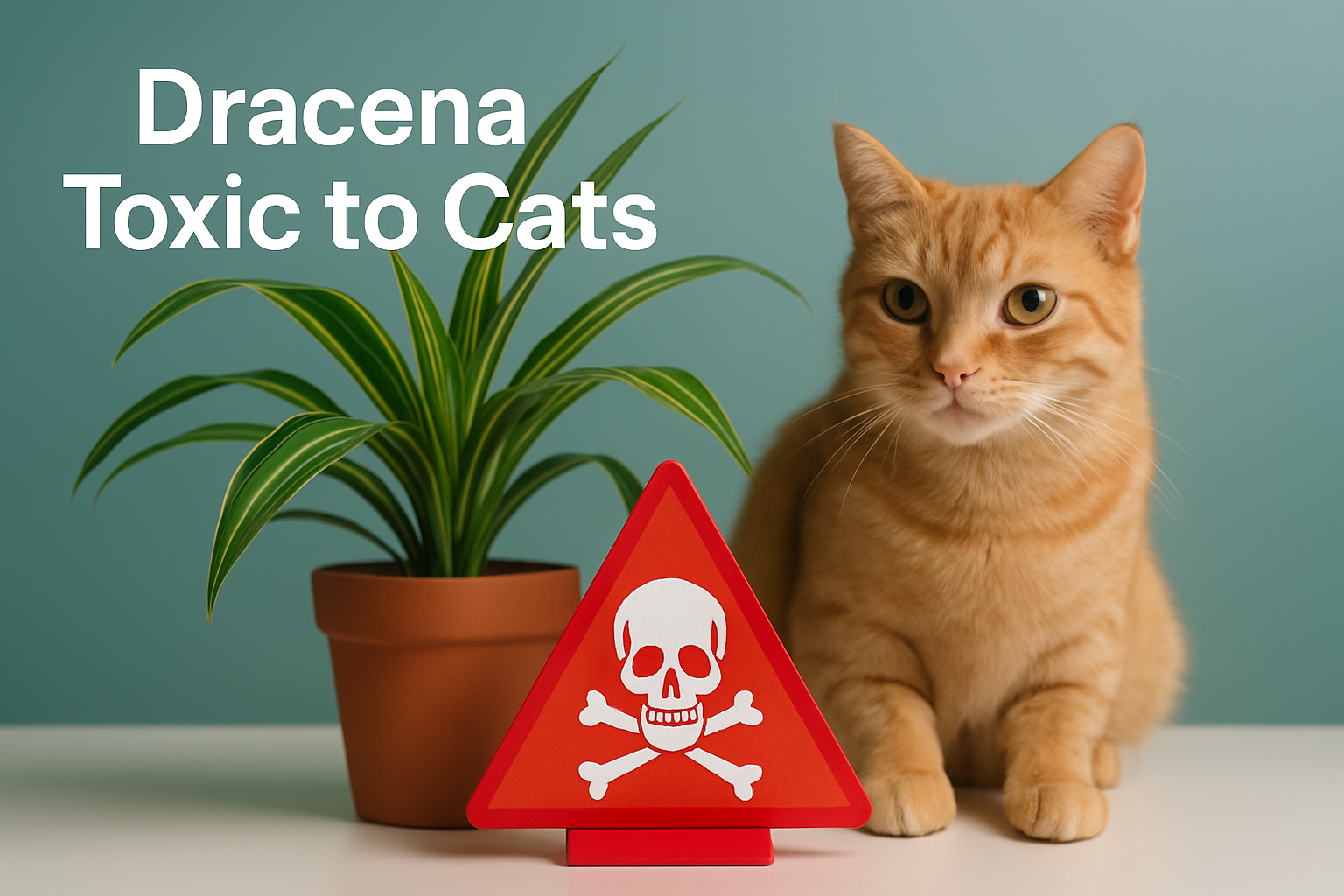
Two hours after I set a new dragon tree on my bookshelf, my tabby, Poppy, was already taste-testing the ribbon-like leaves. If you have ever wondered “is dracena toxic to cats?” you are not alone. Short answer: dracaena (often spelled dracena) contains bitter soap-like compounds called saponins that commonly cause drooling, vomiting, and tummy upset in cats, though serious complications are uncommon with small nibbles. In this friendly, practical guide, you will learn the 9 warning signs to watch for, general first-aid steps that can help, and safer houseplant swaps that still look gorgeous in your home.
Here is the bigger picture that calms nerves fast. The ASPCA (American Society for the Prevention of Cruelty to Animals) Animal Poison Control Center reports hundreds of thousands of pet poison calls each year, and houseplants consistently rank among the top categories. Most dracaena exposures are mild to moderate and respond well to prompt home measures and timely veterinary guidance. Still, knowing what is normal, what is not, and how to prevent repeat adventures will save you stress and maybe your rug. Let us get you set up with clear, practical steps that work in real homes with real, curious cats.
Is Dracena Toxic to Cats? The Straight Answer
Yes. Dracaena species contain saponins, natural chemicals that irritate the mouth and digestive tract when chewed. Cats tend to show drooling, foamy saliva, lip-smacking, and then nausea or vomiting. The leaves are usually the culprit because they are easier to reach and have an appealing, springy texture. While dracaena is not among the most dangerous plants for cats, it absolutely is not cat-safe, so plan as if a nibble will happen and set your home up to avoid it.
You will also see dracaena sold under several names, which can be confusing when you are standing in a garden center aisle. Corn plant, dragon tree, and lucky bamboo are all part of this same conversation. Lucky bamboo is not a true bamboo at all; it is Dracaena sanderiana and carries the same caution. If you have a plant tag handy, match it against the list below. When in doubt, treat anything labeled dracaena as a no-bite zone for feline housemates.
| Common name | Botanical name | Also sold as | Toxicity notes for cats |
|---|---|---|---|
| Corn Plant | Dracaena fragrans | Mass Cane | Moderate gastrointestinal irritation from saponins; dilated pupils are common in cats. |
| Dragon Tree | Dracaena marginata | Madagascar Dragon Tree | Moderate gastrointestinal signs; long, narrow leaves are tempting to chew. |
| Janet Craig | Dracaena deremensis | Warneckii (related cultivar) | Moderate; similar signs as other dracaena varieties. |
| Lucky Bamboo | Dracaena sanderiana | Curly Bamboo | Moderate; same saponins despite the bamboo name. |
| Ti Plant | Cordyline fruticosa | Often mislabeled as Dracaena | Contains similar compounds; treat as toxic to cats. |
As a cat parent, your practical takeaway is simple. Keep dracaena out of paw’s reach, learn the early signs of exposure, and consider cat-safe alternatives if your feline is a serial leaf nibbler. The rest of this guide gives you the clear, step-by-step roadmap.
9 Warning Signs Your Cat May Have Nibbled a Dracaena
Because cats are meticulous groomers, you may not catch them in the act. These are the telltale clues that make you go check the plant corner right away. If you see several at once, call your veterinarian for guidance.
Watch This Helpful Video
To help you better understand dracena toxic to cats, we’ve included this informative video from Veterinary Secrets. It provides valuable insights and visual demonstrations that complement the written content.
- Drooling or foamy saliva that starts suddenly after exploring the plant area.
- Lip-smacking, pawing at the mouth, or head shaking as if something tastes bitter.
- Vomiting, sometimes with small leaf fragments present.
- Soft stool or diarrhea a few hours after chewing.
- Reduced appetite, sniffing and walking away from the bowl.
- Lethargy or hiding more than usual.
- Dilated pupils, especially noticeable in normal indoor light.
- Unsteady walking or mild wobbliness if nausea is significant.
- Signs of belly discomfort like tense abdomen or sensitivity when picked up.
In many cases, signs begin within minutes to a couple of hours and fade over 12 to 24 hours with supportive care. However, kittens, senior cats, and cats with underlying conditions can feel worse from the same dose. If vomiting is persistent, if you see blood, or if your cat seems distressed, seek veterinary care quickly. It is always better to make the call early.
First Aid Guidance: Do This, Not That
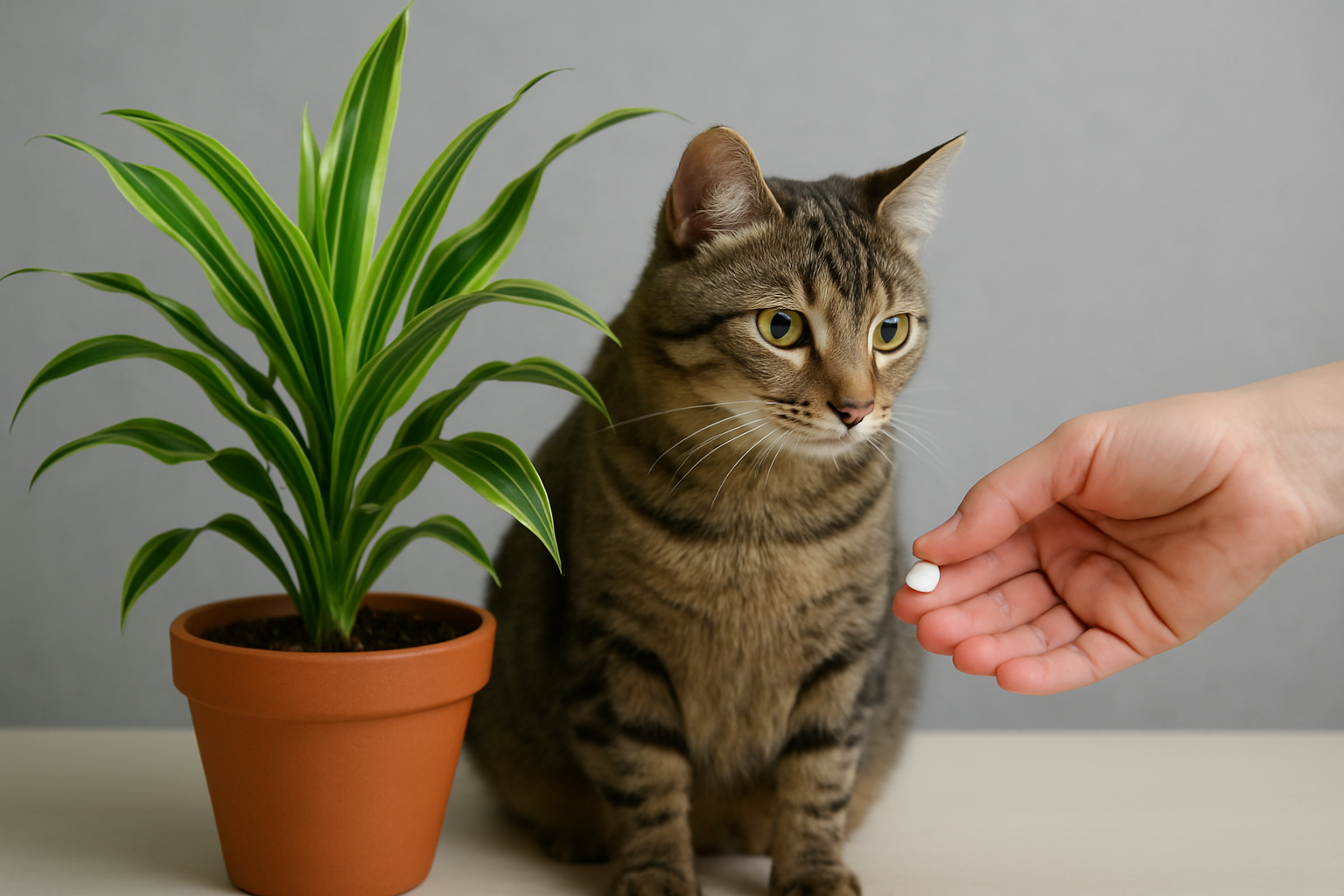
Think of first aid as a calm reset that protects your cat while you line up professional advice. These steps are widely recommended by veterinarians for mild plant exposures that involve gastrointestinal irritation rather than caustic burns. If at any point your gut says the situation is beyond mild, trust it and head to the clinic.
- Step 1: Remove access. Take the plant out of the room and pick up fallen leaves so the sampling session cannot continue.
- Step 2: Rinse and wipe. Offer a small sip of water, then gently wipe the lips, gums, and tongue with a damp cloth to remove sap residue. Do not force water.
- Step 3: Offer comfort. Provide fresh water and a calm, warm place to rest. Skip food for 2 to 3 hours if vomiting occurred, then reintroduce a small bland meal if your veterinarian agrees.
- Step 4: Call an expert. Contact your veterinarian, the ASPCA (American Society for the Prevention of Cruelty to Animals) Animal Poison Control Center at 888-426-4435, or Pet Poison Helpline at 855-764-7661 for case-specific advice. Fees may apply.
- Step 5: Monitor and document. Note the time, estimated amount eaten, and your cat’s weight if known. Keep a leaf sample or a photo of the plant tag for reference.
Just as important are the things you should not do. Do not induce vomiting unless explicitly instructed by a veterinarian. Do not give milk, oil, salt, or over-the-counter human medicines. Do not use hydrogen peroxide, activated charcoal, or any home remedy without veterinary approval. Well-meaning but untested fixes can make things worse.
| Situation | What you should do | Urgency |
|---|---|---|
| Single lick or nibble, mild drooling only | Wipe mouth, offer water, remove plant, observe for 6 to 12 hours | Low, home monitoring reasonable |
| Vomiting 1 to 2 times, otherwise alert | Call your veterinarian or a poison helpline, withhold food briefly, reintroduce bland diet if advised | Moderate, same-day phone guidance |
| Repeated vomiting, lethargy, or diarrhea | Veterinary visit for anti-nausea medication, fluids, and examination | Higher, in-person care recommended |
| Known large ingestion or underlying illness | Go to the clinic promptly even if signs are mild | High, err on the side of caution |
What might treatment look like at the clinic? Your veterinarian may give anti-nausea medication, anti-acid medication, and subcutaneous or intravenous fluids to ease dehydration. Most cats bounce back quickly. The best long-term fix is preventing access and swapping risky plants for ones that do not cause trouble when your cat eventually takes a curious bite.
Safer Houseplant Swaps Your Cat Can Live With
You can absolutely have a lush indoor jungle without the stress. These cat-friendly plants give you texture, color, and height without the saponin hangover. I keep a mix of palms and ferns at home because they tolerate lower light and my cats lose interest fast. Place them where you can enjoy them and your cat cannot convert them into salad.
| Plant | Why it is safer | Care notes | Cat appeal |
|---|---|---|---|
| Parlor Palm (Chamaedorea elegans) | Non-toxic to cats | Low to medium light, moderate watering | Feathery fronds are less chewy than dracaena leaves |
| Areca Palm (Dypsis lutescens) | Non-toxic to cats | Bright, indirect light; consistent moisture | Airy texture, cats tend to bat fronds rather than chew |
| Ponytail Palm (Beaucarnea recurvata) | Non-toxic to cats | Bright light, infrequent watering | Tough, strap-like leaves reduce shredding |
| Boston Fern (Nephrolepis exaltata) | Non-toxic to cats | Bright, indirect light; high humidity | Frilly, but generally not tasty |
| Calathea and Maranta (Prayer Plants) | Non-toxic to cats | Medium light, consistently moist soil | Bold patterns entertain humans more than cats |
| Peperomia varieties | Non-toxic to cats | Medium light, allow soil to dry slightly | Small leaves reduce the urge to chew |
| Spider Plant (Chlorophytum comosum) | Non-toxic to cats | Bright, indirect light; easy care | Can tempt nibbling, but effects are usually mild |
| Cat Grass blends (wheat, oat, barley) | Safe and intentionally edible | Grow under a window, trim weekly | Redirects chewing from houseplants |
A quick reality check helps, too. Some popular lookalikes are not safe substitutes. Pothos and philodendron contain calcium oxalate crystals that can cause oral pain and swelling. Yucca shares similar saponins to dracaena. If you are ever uncertain, search the plant’s botanical name against a trusted pet toxicity list, or ask your veterinarian before you buy.
| Plant | Why it is risky | Cat-safe alternative |
|---|---|---|
| Pothos (Epipremnum aureum) | Calcium oxalate crystals irritate mouth and throat | Heartleaf peperomia for a similar trailing vibe |
| Philodendron varieties | Calcium oxalate crystals cause painful oral irritation | Hoya for thick, glossy trailing leaves |
| Yucca cane | Saponins cause gastrointestinal upset, like dracaena | Parlor palm for a tall, architectural look |
Prevention Playbook: Make Plants Boring and Your Cat’s World Enriching
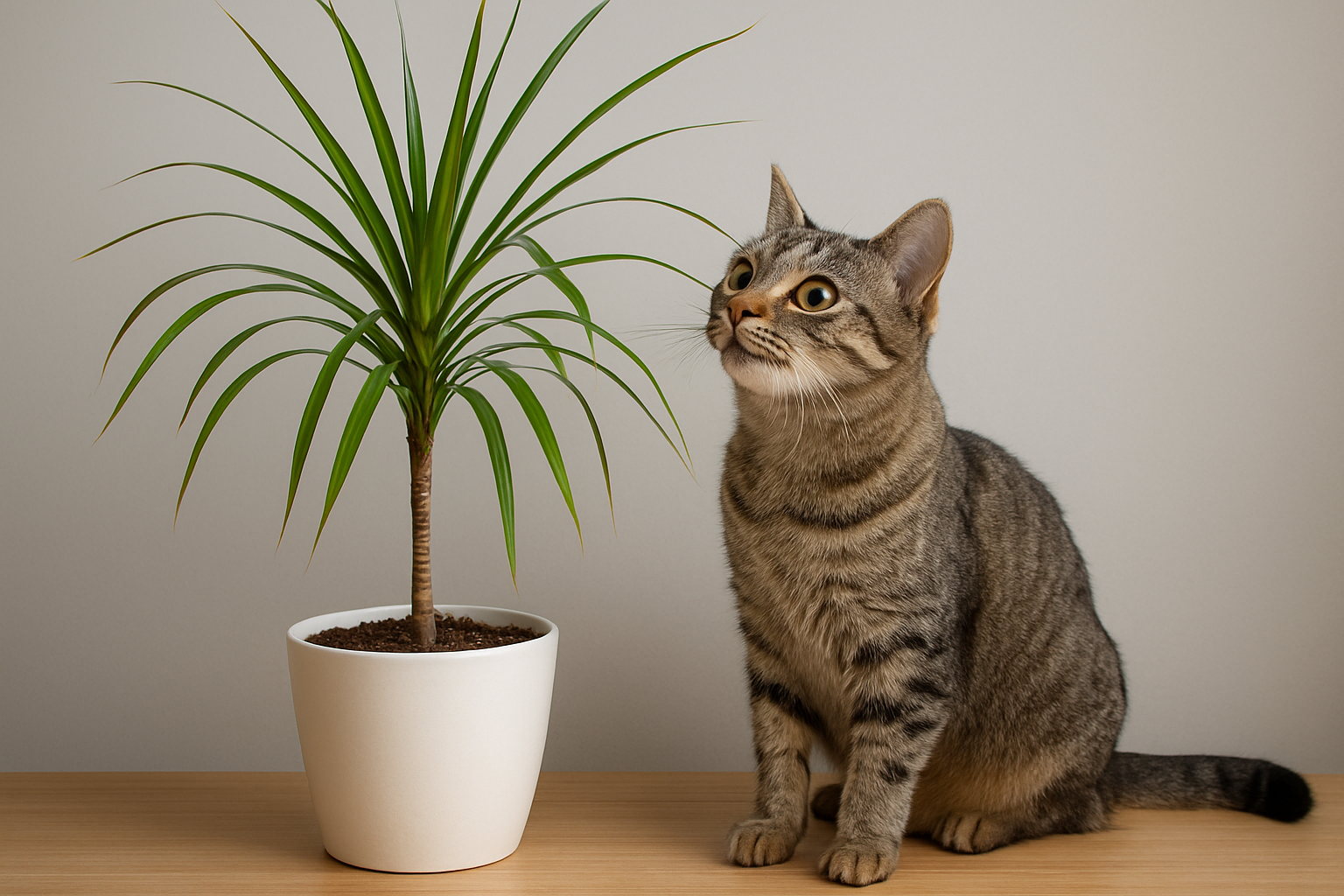
Most cats do not eat plants for nutrition. They chew out of curiosity, boredom, or to get your attention. So the winning strategy is twofold: make risky leaves hard to reach and make your cat’s daily routine more interesting than a plant corner. This is exactly where a few small home tweaks deliver huge peace of mind.
- Place plants smartly. Use high shelves, closed plant cabinets with glass doors, or hanging planters over areas your cat cannot access. Avoid wobbly stands that invite climbing.
- Cover the soil. Decorative stones or mesh discs keep paws out of pots and reduce digging.
- Use safe, scent-based deterrents. Citrus-scented, pet-safe sprays and motion-activated air puff devices can discourage plant visits without scaring your cat.
- Train with kindness. Reward “leave it” and redirect to a toy or cat grass when your cat approaches a plant. Consistency beats scolding.
- Enrich the day. Offer a window perch, daily play sessions, puzzle feeders, and a rotating toy box. A mentally tired cat ignores leaves.
- Provide a legal salad. Keep fresh cat grass and catnip pots available so chewing has a safe outlet.
At Mad Cat Man, we field-test gear that makes prevention painless, from stable window hammocks to planters with built-in guards. Our behavior and training tips lean on positive reinforcement, and our shopping checklists keep you from guessing. When you combine a safer plant list with a boredom-busting routine, your cat quickly decides leaves are not worth the effort.
Smart Shopping: What to Buy Instead of Dracena
When you are ready to swap plants or upgrade your setup, a tiny bit of pre-planning keeps both your space and your cat happy. Below is a quick-buy checklist you can save to your phone. It is based on what has actually worked in our homes and those of Mad Cat Man readers who share their wins and fails with us.
| Category | What to look for | Budget guide | Why it helps |
|---|---|---|---|
| Cat-Safe Houseplants | Botanical names on tags, verified non-toxic lists, easy-care species | Budget to mid-range | Reduces risk at the source while keeping your decor lush |
| Cat Grass Kits | Sturdy ceramic planters, drain holes, quick-sprout seeds | Low to budget | Redirects chewing urges to a safe, fresh option |
| Hanging Planters | Secure ceiling anchors, adjustable hang length, drip trays | Budget to premium | Moves tempting foliage out of reach without sacrificing light |
| Enclosed Plant Cabinets | Lockable doors, ventilation, tempered glass | Mid-range to premium | Displays plants beautifully and blocks access |
| Pet-Safe Deterrent Sprays | Citrus or bitter apple scent, non-staining, plant-safe formula | Low | Gently discourages nibbling without punishment |
| Window Perches | Wide platforms, machine-washable covers, strong mounts | Budget to mid-range | Offers a better viewpoint so plants become background scenery |
| Interactive Toys | Durable materials, varied textures, auto-timers for solo play | Low to premium | Burns mental and physical energy that would otherwise fuel mischief |
| Puzzle Feeders | Adjustable difficulty, dishwasher-safe parts | Low to mid-range | Slows meals and provides brain work that competes with plant curiosity |
If you are outfitting your first pet-friendly home, start with one safe plant, one cat grass pot, a window perch, and a daily 10-minute play routine. Add gear as you learn your cat’s patterns. Mad Cat Man organizes product reviews and buying recommendations by category and budget, so you can compare options side by side. Many readers message us later to say that the combination of smart placement, enrichment, and safer plants completely ended the nibbling saga.
Our categories are easy to browse, from safety topics like plants and humidifiers to grooming, furniture, and food. If you are researching breed traits, we also publish breed guides and comparisons that help you plan around real-life energy levels and space needs. Whether you are a first-time pet parent or a seasoned cat enthusiast, our goal is the same: fewer worries, happier cats, and a calm, cat-smart home.
Friendly disclaimer: This article is educational and does not replace individualized advice from your veterinarian. If your cat has ingested a plant and is showing concerning signs, contact your veterinarian, the ASPCA (American Society for the Prevention of Cruelty to Animals) Animal Poison Control Center, or Pet Poison Helpline for immediate, case-specific guidance.
FAQs and Quick Myths, Busted
Let us tackle a few common questions we hear from readers and in our inbox.
- Is one bite always an emergency? One small nibble often causes mild signs, but kittens, seniors, and cats with health conditions deserve a same-day call to the clinic.
- Does milk help? No. Milk, oil, and home brews can worsen vomiting. Offer water only unless your veterinarian advises otherwise.
- Are all palms safe? No. Stick with known safe options like parlor and areca palms. When in doubt, verify the botanical name before buying.
- My cat loves spider plants. Is that okay? Spider plants are considered non-toxic, but overindulging can upset the stomach. Offer cat grass so your spider plant stays decorative.
- Is lucky bamboo safe because it grows in water? No. Lucky bamboo is a dracaena and carries the same caution even when grown hydroponically.
These quick checks, combined with the warning signs and first aid in this guide, will help you respond calmly and confidently. And if you prefer a printable version, our checklists in Mad Cat Man articles are designed to be easy to save and share.
Recap: Dracaena plants are pretty but pose a real risk of drooling, vomiting, and an upset tummy for curious cats, so plan for prevention and safer swaps. Imagine your windowsill filled with cat-safe greenery, your cat snoozing on a sunny perch, and your plant shelves finally staying pristine. The next time a plant catches your eye at the shop, will you scan for the botanical name, remember the safer list, and sidestep dracena toxic to cats without a second thought?

Additional Resources
Explore these authoritative resources to dive deeper into dracena toxic to cats.
Choose Safer Houseplants with Mad Cat Man
Discover experience-based product reviews and buying recommendations to help every cat owner pick safe plants, smart gear, and confident solutions for dracena toxic to cats.
Affiliate disclosure: Mad Cat Man links to third-party products and participates in affiliate programs (including the Amazon Associates program). We may earn a commission if you purchase through links, at no extra cost to you. Our recommendations are editorially independent.
At Mad Cat Man, we field-test gear that makes prevention painless, from stable window hammocks to planters with built-in guards. Our behavior and training tips lean on positive reinforcement, and our shopping checklists keep you from guessing. When you combine a safer plant list with a boredom-busting routine, your cat quickly decides leaves are not worth the effort.
We combine evidence-based health information, behavior tips you can actually use, and product reviews written by people who live with cats and test gear in normal homes. You will always know what to do next and what to buy with confidence.
Pros
- Reduces appetite and cravings.
- Helps preserve lean muscle mass.
- Increases calorie burn (thermic effect).
- Supports long-term calorie control.
Cons
- Not suitable for some kidney conditions.
- High protein foods can cost more.
- Excess intake still leads to fat gain.
- Requires planning for fibre and hydration.