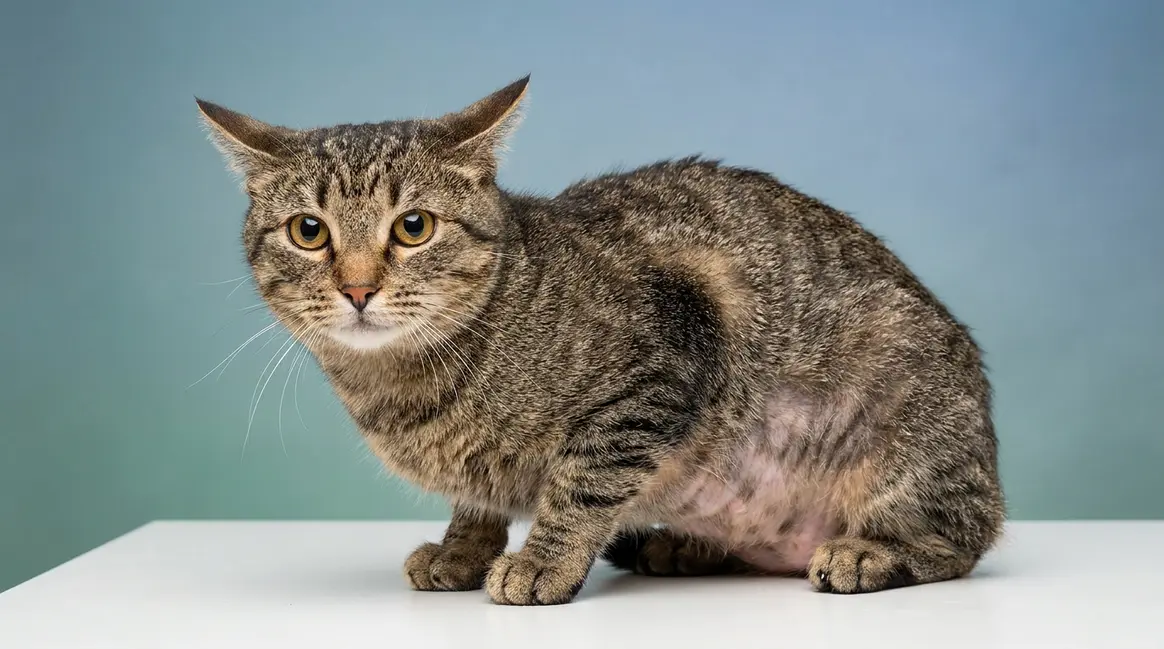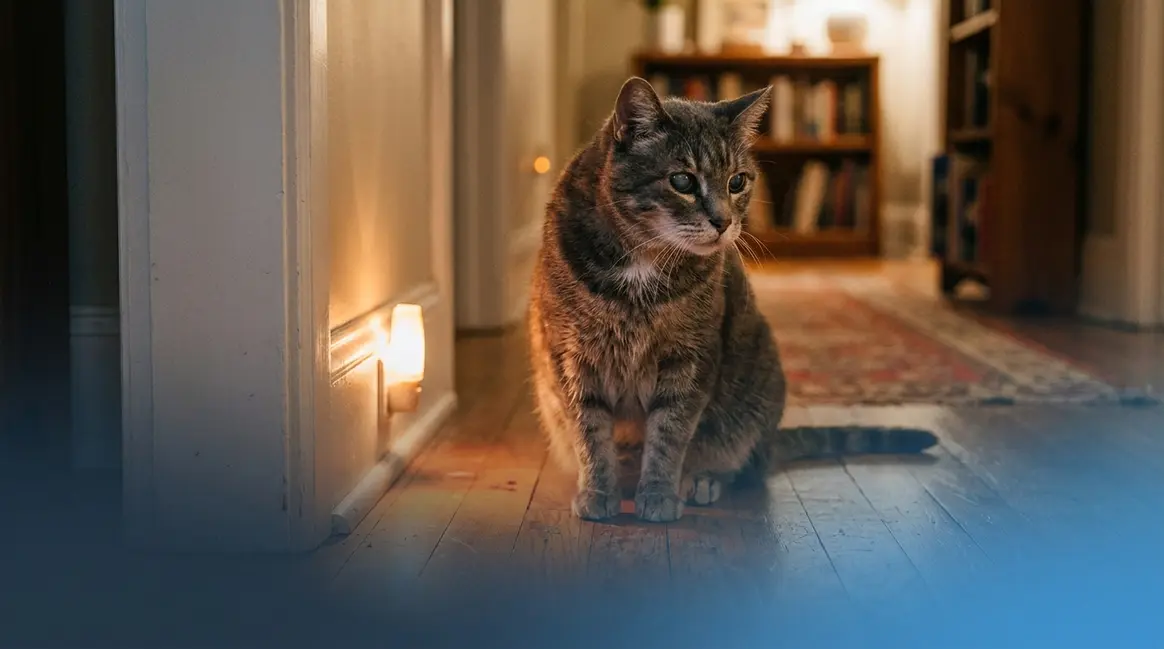
Cat Behaviour Tips: 5-Step Guide to a Calmer Cat
Master the essentials of 10 Science-Backed Cat Behavior and Training Tips: Step-by-Step Fixes for Scratching, Litter & Aggression with step-by-step tips…

To improve your cat’s behaviour, start by learning to read their body language — this unlocks every other behaviour fix. This guide covers five key steps: decoding communication signals, solving litter box problems, enriching their environment, correcting unwanted behaviours, and building genuine trust. Apply these steps in order and you’ll have a complete, vet-aligned system for understanding your cat.
Your sofa is in shreds. The litter box is being ignored. And your cat — the one you love — just hissed at you for the third time this week. You’ve searched for cat behaviour tips and found a dozen contradictory answers, none of which explain why your cat is doing this. That frustration is completely valid.
Here’s the truth: your cat isn’t being difficult. They’re communicating. When cats lack a sense of control over their environment, problem behaviours follow — not out of spite, but out of stress. The scratching, the avoidance, the aggression — these are signals, not defiance.
By the end of this guide, you’ll know exactly how to read your cat’s signals, prevent the most common problems, and build a relationship based on trust — using methods approved by veterinary behaviourists. We’ll cover five steps: decoding body language, fixing the litter box setup, enriching the environment, correcting problem behaviours, and building lasting trust.
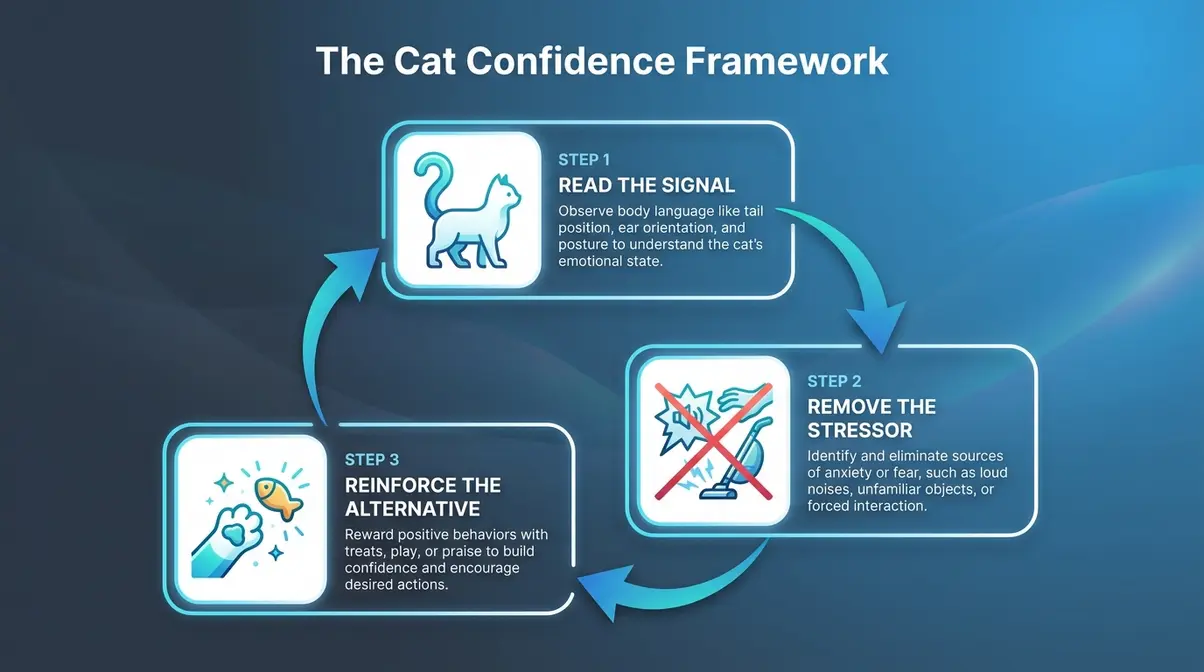
Understanding cat behaviour tips starts with one insight: most problem behaviours are communication, not defiance — and every one can be addressed using The Cat Confidence Framework (Read the Signal → Remove the Stressor → Reinforce the Alternative).
- Body language first: A tail held high signals confidence; a tucked tail signals fear or pain
- Litter box rule: One box per cat, plus one extra — kept scrupulously clean
- Enrichment prevents problems: A bored cat is a destructive cat — daily play reduces issues
- Positive reinforcement works: Reward what you want to see; never punish what you don’t
- Trust takes time: Consent-based interactions build stronger bonds than forced affection
Prerequisites: What You’ll Need Before You Start
Before diving into the steps, a quick orientation. Behaviour changes in cats take days to weeks — not hours. Managing your expectations now will save you enormous frustration later.
Mindset shift first. Cats are not dogs. They do not respond to scolding, raised voices, or physical correction — these methods increase stress and make behaviour worse. Your tools here are patience, observation, and consistency.
What to have on hand: A quiet spot to watch your cat undisturbed, a small supply of high-value treats (small pieces of cooked chicken or commercial cat treats work well), and ideally a notebook to log patterns — when does the problem behaviour happen, what preceded it, how long does it last?
When to see a vet first. If your cat’s behaviour changed suddenly — within days or a week — rule out a medical cause before attempting any behaviour modification. Pain, urinary tract infections, and hyperthyroidism can all trigger abrupt behaviour changes that look behavioural but aren’t.
Step 1 — Decode Your Cat’s Body Language
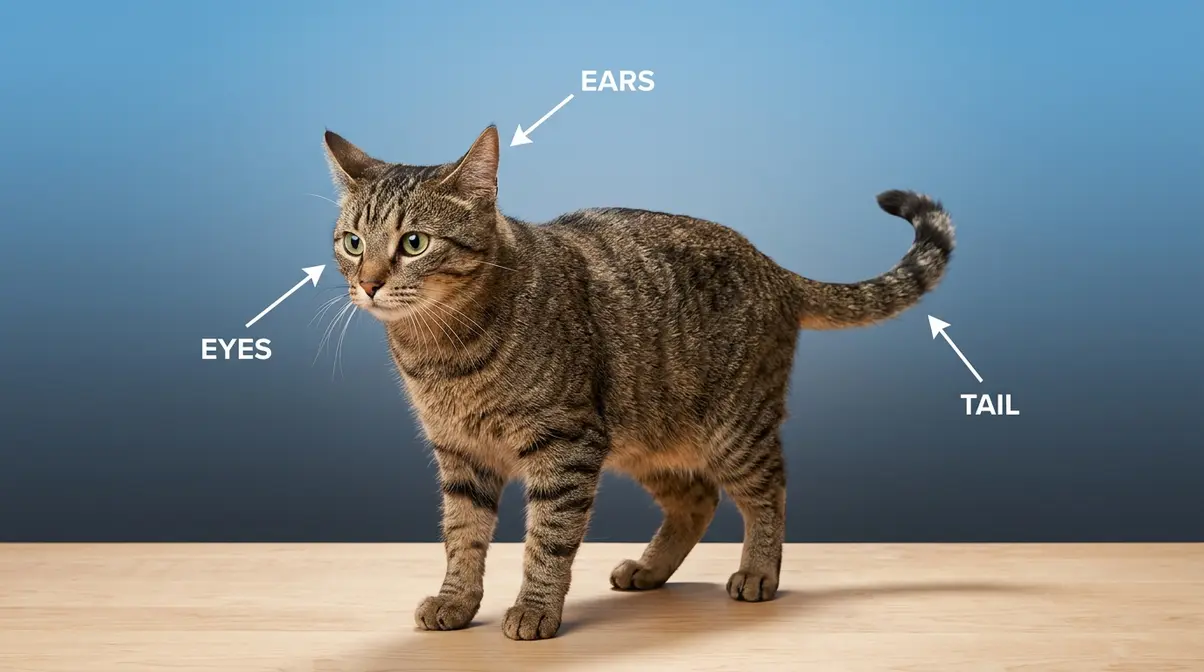
Cat body language is your cat’s primary communication system — and learning to read it is the single most important cat behaviour tip any owner can master. When owners misread signals, small tensions escalate into scratching, biting, or withdrawal. Research from 2026 found that roughly one in four adults fails to recognise clearly negative feline behaviours like flattened ears or hissing as signs of discomfort (Frontiers in Ethology, 2026) — meaning most problems start with a missed message. This section gives you a practical, visual system to stop missing those messages.
The Cat Confidence Framework is the overarching structure for everything in this guide. It is a three-step approach — Read the Signal, Remove the Stressor, Reinforce the Alternative — that turns confusing cat behaviour into solvable problems. Body language is always Step 1. You cannot remove a stressor you haven’t identified, and you cannot identify it without first reading the signal your cat is sending.
Reading Tail Signals
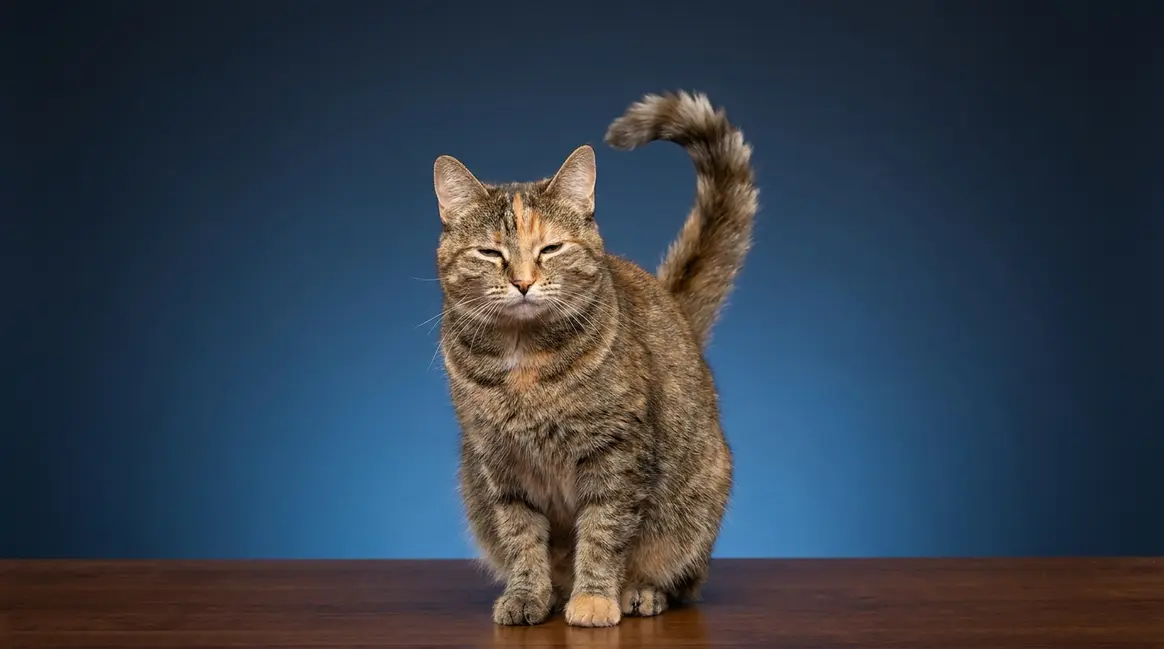
Your cat’s tail is the most visible, real-time emotional indicator you have. Behaviourists and cat welfare organisations consistently report that owners who learn to read specific tail signals dramatically reduce accidental mishandling — the kind that leads to bites and scratches. According to the Virginia Tech College of Veterinary Medicine, a Tier 1 veterinary authority, “a cat’s tail held high is one of the clearest signs of confidence and contentment in feline body language.”
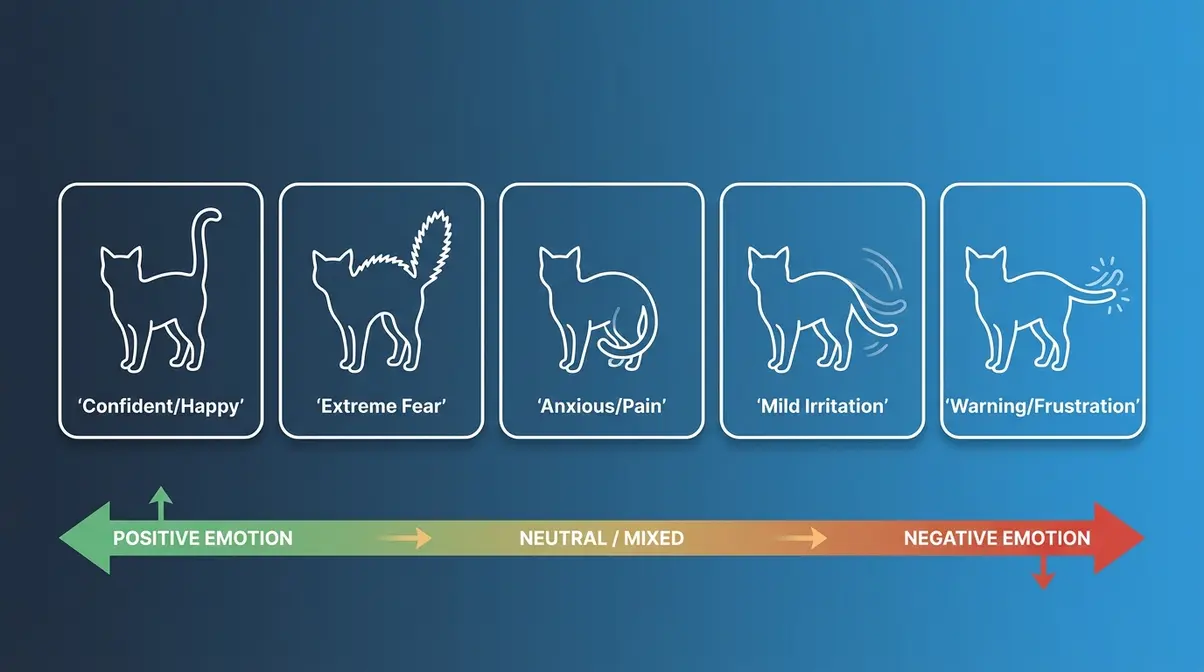
As the diagram above shows, your cat’s tail tells a story in real time. Here are the five positions every owner needs to know:
- Tail held high — Confidence, happiness, and a greeting. This cat is comfortable and open to interaction. Approach safely.
- Tail puffed up (the “bottle-brush” tail) — Extreme fear or agitation. The cat is trying to look bigger. Back away immediately and give them space.
- Tail low or tucked between the legs — Anxiety, submission, or pain. Something is wrong. Do not force interaction.
- Tail slowly swishing side to side — Mild irritation or focused attention (common during play). Watch for escalation.
- Tail twitching quickly at the tip — Growing frustration. This is a warning signal. A swipe or bite may follow if you continue.
One important nuance: breed differences exist. Persian cats, for example, naturally carry their tails lower than most breeds — context always matters. Tail position alone is also rarely the full picture.
Whiskers as a secondary cue. Most competitor guides miss this entirely. Whiskers pointing forward and relaxed = curious, content, and open. Whiskers flattened against the face = frightened or defensive. Check both together. If your cat approaches with a tail held high and whiskers relaxed and forward, that’s a genuine invitation for interaction. If their tail is low and their whiskers are pinned flat, respect that signal and give them space.
Ohio State University’s body language guide from the Ohio State University Indoor Pet Initiative, a leading resource for indoor cat welfare, confirms that a tail held close to the body, curled forward, or twitching while standing can indicate tension or unease.
Transition: Tail signals give you a starting point — but to truly understand your cat’s emotional state, you need to read the whole picture. Ears, eyes, and posture complete that picture in ways a tail alone cannot.
Ears, Eyes, and Posture

Reading a single signal in isolation is a common mistake. The real skill — and the competitive differentiator absent from most advice online — is multi-signal synthesis: reading tail + ears + eyes + posture simultaneously to arrive at one accurate emotional read.
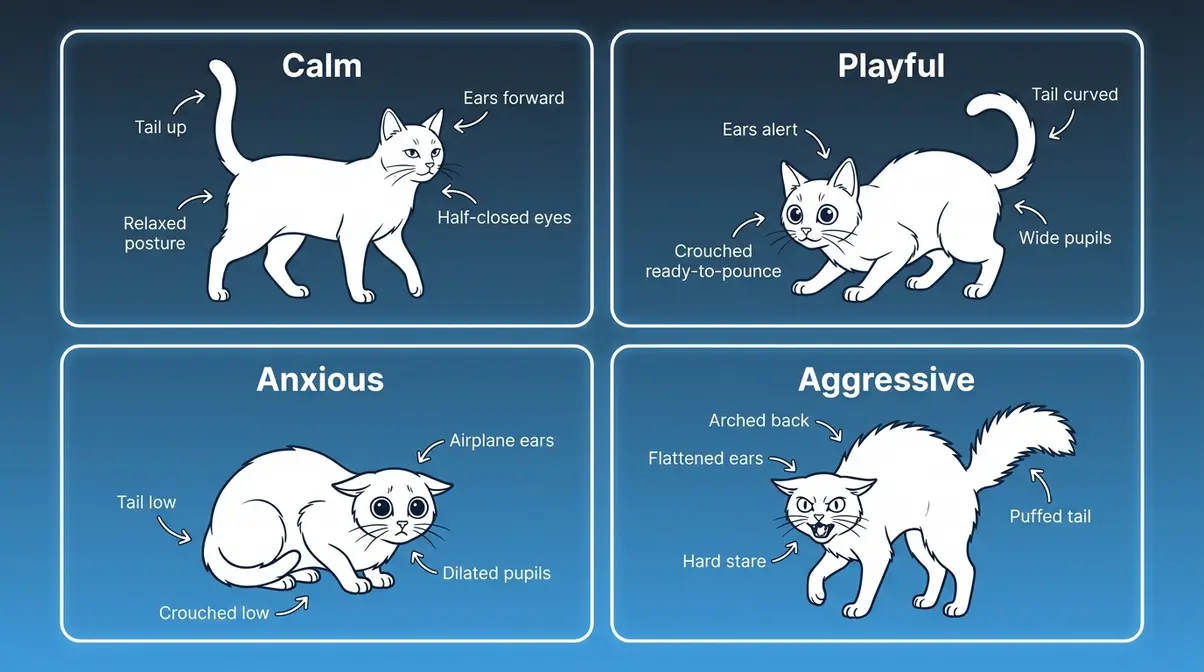
- Ears rotate independently and move fast, making them one of the most expressive parts of a cat’s body:
- Ears forward and upright = alert, curious, or content
- Ears rotated sideways (“airplane ears”) = mild irritation or anxiety — a warning that stress is building
- Ears flattened back against the head = fear, aggression, or extreme pain — stop all interaction immediately
- Eyes tell you about arousal and trust:
- Slow blink = relaxed trust. A cat who slow-blinks at you is saying they feel safe. Slow-blink back — it strengthens the bond.
- Dilated pupils (pupils that are wide and large, like big black circles) = high arousal, which could be excitement during play OR fear. Context is everything here.
- Constricted pupils (very narrow slits) in bright light = normal. In dim light = high arousal or aggression.
- Hard, direct stare = a challenge or threat. Look away slowly to de-escalate.
- Posture and overall body tension complete the picture:
- Relaxed, loose body with weight evenly distributed = comfortable
- Body crouched low to the ground = fear or submission
- Arched back with fur raised along the spine = extreme fear or aggression
- Exposed belly — this one catches many owners off guard. An exposed belly is NOT always an invitation to stroke. For some cats it is a sign of complete relaxation; for others it is a defensive position giving access to all four claws. Watch the accompanying signals. Relaxed eyes and loose body? Probably safe. Tense posture and wide pupils? Definitely not.
A 2026 study found that 42% of people would attempt to pet a cat showing negative signals, misreading the posture as an invitation (Frontiers in Ethology, 2026). Learning multi-signal reading directly prevents these mishandled moments.
Transition: Once you can read body and posture signals, the final layer of your cat’s communication system is sound. Vocalizations add crucial context — especially when visual signals are subtle or absent.
Cat Vocalizations Explained
Cats use over 600 distinct facial and vocal signals in their social interactions (Animal Medical Center of New York, 2026). For beginner owners, three vocalizations cause the most confusion: meowing, purring, and hissing.
- Meowing is interesting because adult cats rarely meow at each other — they developed it almost exclusively to communicate with humans. Different meows carry different meanings:
- Short, high-pitched chirp = greeting or request (often means “feed me” or “pay attention to me”)
- Drawn-out, insistent meow = demand — your cat has learned this gets results
- Low-pitched, repetitive meow = complaint or discomfort
- Silent meow (mouth opens, no sound) = a very gentle, trusting greeting — often seen in cats who feel completely safe
Purring is widely misread. Most owners assume purring always signals happiness. It does — often. But cats also purr when they are in pain, anxious, or unwell. Research suggests cats use purring as a self-soothing mechanism in stressful situations, much like a child sucking their thumb. A cat purring while also showing flattened ears, a tucked tail, or a tense body may be signalling distress, not contentment. Always read purring in context with the rest of the body.
Hissing and growling are unambiguous. These are “back off” signals, and they should always be respected. A cat who has to hiss has already tried subtler signals — flattened ears, twitching tail, tense posture — and felt ignored. Hissing is not aggression; it is a last-resort communication before self-defence. If your cat hisses, stop what you are doing and give them space immediately.
For a comprehensive overview of common feline behaviour patterns, the ASPCA’s cat behaviour resource provides vet-reviewed guidance on vocal and physical communication signals.
Step 2 — Get the Litter Box Setup Right
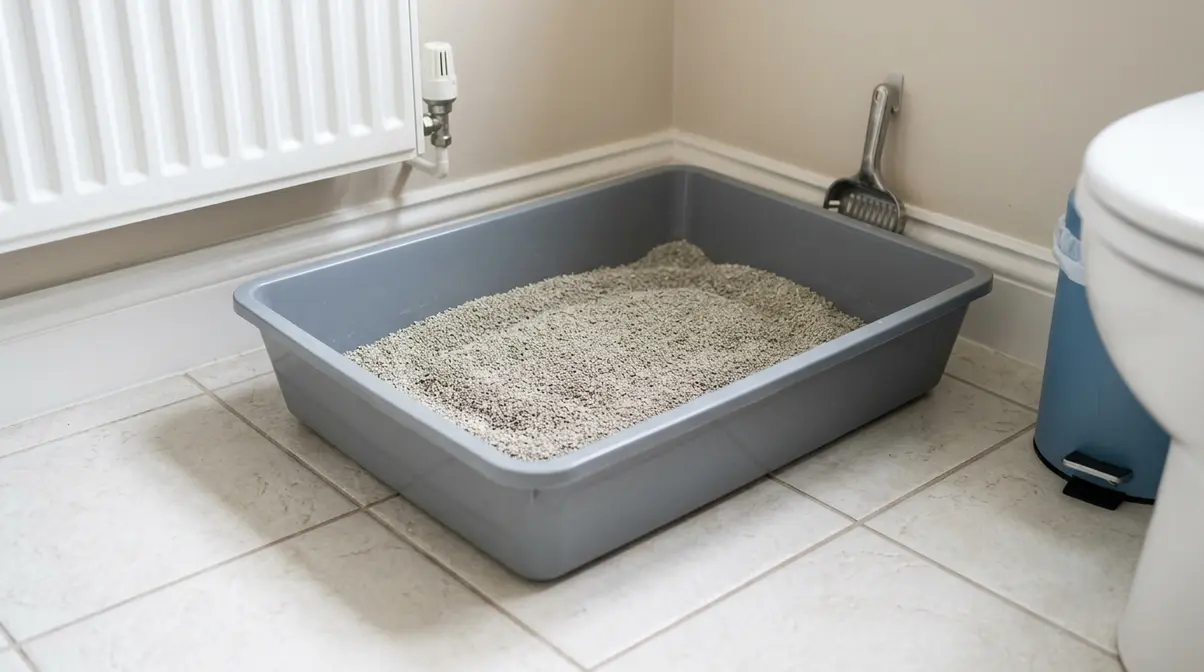
Litter box problems are the most common reason cats are surrendered to shelters — and the most preventable. One of the most crucial cat behaviour tips is maintaining an optimal litter box environment. According to the ASPCA, at least 10% of all cats develop elimination problems at some point in their lives. The good news: the vast majority of litter box issues have a straightforward fix once you know what to look for. This section gives you the exact setup checklist and a step-by-step troubleshooting protocol.
The Ideal Litter Box Setup
Most litter box problems are caused by the setup itself, not the cat. A 2026 peer-reviewed study found that cats prefer litter boxes measuring at least 50 cm in length and clumping clay litter — and that a comfortable litter environment directly reduces house-soiling (PMC, 2026). Here is the evidence-based setup checklist:
| Setup Factor | Recommended Standard | Common Mistake |
|---|---|---|
| Number of boxes | One per cat, plus one extra | Not enough boxes in multi-cat homes |
| Box size | At least 50 cm long (bigger is better) | Standard commercial boxes are often too small |
| Litter type | Unscented clumping clay | Heavily scented litters deter many cats |
| Litter depth | 5–8 cm | Too shallow = cats can’t dig properly |
| Location | Quiet, low-traffic area with easy escape routes | Next to noisy appliances, in high-traffic hallways |
| Covered vs open | Open is generally preferred | Covered boxes trap odour and restrict the cat’s view |
| Cleaning frequency | Scoop daily; full change weekly | Dirty boxes are the single most common cause of avoidance |
Place litter boxes away from food and water stations. Cats have a strong instinct to keep elimination areas separate from feeding areas — combining them causes many owners unnecessary confusion.
Why uncovered boxes? The American Veterinary Society of Animal Behavior (AVSAB) notes that covered litter boxes restrict a cat’s field of vision, making them feel vulnerable to ambush — especially important in multi-cat households where one cat may guard the box. An open box lets your cat see their surroundings and exit quickly if needed.
Why Is My Cat Avoiding the Box?
Follow this protocol in order. Do not skip to Step 3 without completing Step 1.
Step 1 — Rule out a medical cause first.
If litter box avoidance started suddenly, or if you notice blood in the urine, straining, crying in the box, or very frequent small trips, contact your vet before doing anything else. Urinary tract infections, feline lower urinary tract disease (FLUTD — a painful inflammation of the bladder and urethra), bladder stones, kidney disease, and arthritis can all cause a cat to avoid the box (VCA Animal Hospitals). These are medical emergencies, not behaviour problems.
⚠️ Veterinary Disclaimer: Sudden litter box avoidance, blood in urine, or straining to urinate may indicate a serious medical condition. Consult your veterinarian immediately before attempting any behaviour modification.
Step 2 — Audit the current setup.
Run through the checklist above. Is the box large enough? Is it clean? Is it in a quiet location? Is there one box per cat plus one extra? Fix any gaps before moving to Step 3.
Step 3 — Add a new box in a preferred location.
Place a fresh, clean box in the area where your cat has been eliminating outside the box. Cats often choose a spot because the current box setup doesn’t meet their needs — they’re showing you where they want the box to be.
Step 4 — Experiment with litter type.
If your cat is consistently going near the box but not in it, they may dislike the substrate (the surface material). Offer two boxes side by side with different litter types and observe which they prefer.
Step 5 — Reduce stress triggers.
Environmental changes — a new pet, building work, visitors, rearranged furniture — can trigger box avoidance in sensitive cats. Identify recent changes and, where possible, restore predictability.
Step 6 — Clean soiled areas thoroughly.
Use an enzymatic cleaner (a cleaning product that breaks down the biological compounds in cat urine, eliminating the scent that attracts cats back to the same spot). Standard household cleaners do not neutralise cat urine odour effectively.
Signs of Health Problems
Some signs look behavioural but are actually medical. Watch for these red flags and consult your vet if you see them:
- Crying, vocalising, or appearing distressed in or near the litter box
- Frequent trips to the box with little or no output (a potential urinary blockage — a veterinary emergency in male cats)
- Visible blood in urine or faeces
- Sudden changes in elimination habits with no environmental trigger
- Excessive grooming of the genital area
- Lethargy, loss of appetite, or vomiting alongside any litter box change
Behaviourists and veterinary professionals consistently report that owners who address medical causes first resolve litter box issues far faster than those who jump straight to behaviour modification. When in doubt, vet first.
Step 3 — Enrich Your Cat’s Environment
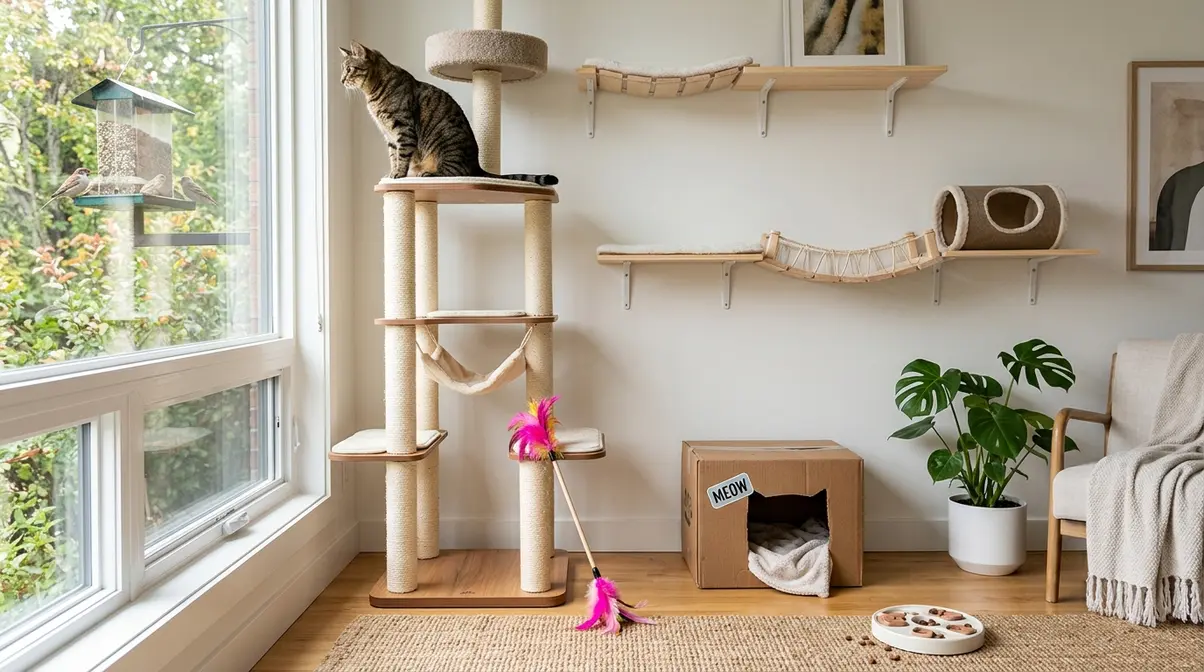
Environmental enrichment means providing your indoor cat with the physical spaces, mental challenges, and sensory experiences they need to express natural behaviours — hunting, climbing, hiding, scratching, and exploring. To effectively Provide Environmental Enrichment, you must give your indoor cat outlets for their natural instincts. The AAFP (American Association of Feline Practitioners) identifies enrichment as one of the five pillars of a healthy feline environment, and their 2026 guidelines confirm that meeting these needs directly reduces stress-related behaviour problems (AAFP, 2026).
“Cats thrive when given choices and they have a sense of control over their own lives.”
This is the core principle behind The Cat Confidence Framework. When a cat can choose where to rest, when to interact, and how to move through their space, anxiety drops — and so do problem behaviours.
Catification Essentials
Catification (the process of modifying your home to meet a cat’s environmental needs, a term coined by cat behaviourist Jackson Galaxy) starts with two fundamentals: vertical space and safe zones.
Vertical space matters because cats are instinctively drawn to height. Elevated positions give them a clear view of their territory, a sense of security, and an escape route from perceived threats — including other pets or small children. Add at least one of these to every room your cat uses:
- Cat trees or floor-to-ceiling cat towers — the taller the better
- Wall-mounted cat shelves — create a dedicated “cat highway” along one wall
- Cleared shelf space — a bookshelf top works perfectly if it’s safe and accessible
- Window perches — natural enrichment through watching birds and activity outside
Safe zones are equally important. Every cat needs at least one private retreat — a space where they cannot be followed or disturbed. This could be a covered cat bed in a quiet room, a cardboard box with a cut-out entrance, or a space under a bed with a soft mat. The key is that the cat controls access — never block or force a cat out of their safe zone.
Scent enrichment is often overlooked. Cats experience the world primarily through smell. Rotating small amounts of dried catnip, silver vine (an alternative to catnip that works on cats who don’t respond to catnip), or even a bag of herbs like valerian can provide significant mental stimulation at almost no cost.
Play and Mental Stimulation
Indoor cats do not hunt — and that unmet predatory drive is the root cause of a surprising number of behaviour problems, from destructive scratching to aggression. Veterinary behaviour guidance based on the AAFP/ISFM Environmental Needs Guidelines recommends at least two to three short interactive play sessions per day (roughly 5–10 minutes each) per indoor cat, using prey-mimicking toys.
What works in practice:
- Wand toys (a rod with a feather, ribbon, or toy attached) let you mimic the movement of prey — erratic, unpredictable, occasionally “hiding.” This is the most effective type of interactive play.
- Puzzle feeders (toys that require the cat to work for their food) engage the hunting instinct at mealtimes. Start with easy puzzles and increase difficulty gradually.
- Rotating toys — leave three toys out at a time, swap them every two to three days. Novelty sustains interest.
- Solo toys — crinkle balls, toy mice, and track toys provide stimulation between your play sessions.
The most important rule: Let your cat “catch” the prey at the end of every session. Always end play with a successful capture — drag the toy slowly, let them pounce and grab it, then reward with a small treat. A cat who never catches prey during play becomes frustrated, and that frustration spills into other behaviours.
- Mental stimulation beyond play includes:
- Hiding small portions of food around the house to encourage foraging
- Providing a bird feeder outside a window (free enrichment)
- Training simple behaviours using positive reinforcement (covered in the next section)
Positive Reinforcement Training
Positive reinforcement (rewarding good behaviour so your cat is motivated to repeat it) is not just a training technique — it is the foundation of the entire Cat Confidence Framework. Research consistently shows that punishment-based approaches increase stress and aggression in cats, while reward-based methods build cooperation and trust (Cozzi et al., Animals, 2026).
The basics of getting started:
- Identify a high-value reward. Small, soft treats your cat goes wild for work best. The treat should be tiny — no bigger than a pea.
- Mark the behaviour the instant it happens. Either say “yes!” in a bright, consistent tone or use a clicker (a small device that makes a click sound) to mark the exact moment the cat does what you want.
- Deliver the treat within two seconds of the mark. Timing is everything — a late reward teaches the wrong lesson.
- Keep sessions short. Three to five minutes, two to three times a day. Cats have short attention spans for formal training and lose interest if sessions drag on.
- End on success. Always finish with a behaviour the cat does easily, so the session ends positively.
What to teach first: “Sit” and “come when called” are the two most practical starter behaviours. Both take most cats fewer than five sessions to learn. More importantly, the training process itself — the cat choosing to engage with you for a reward — builds exactly the kind of voluntary, trust-based relationship that prevents most problem behaviours from developing.
Step 4 — Correct Common Problem Behaviors
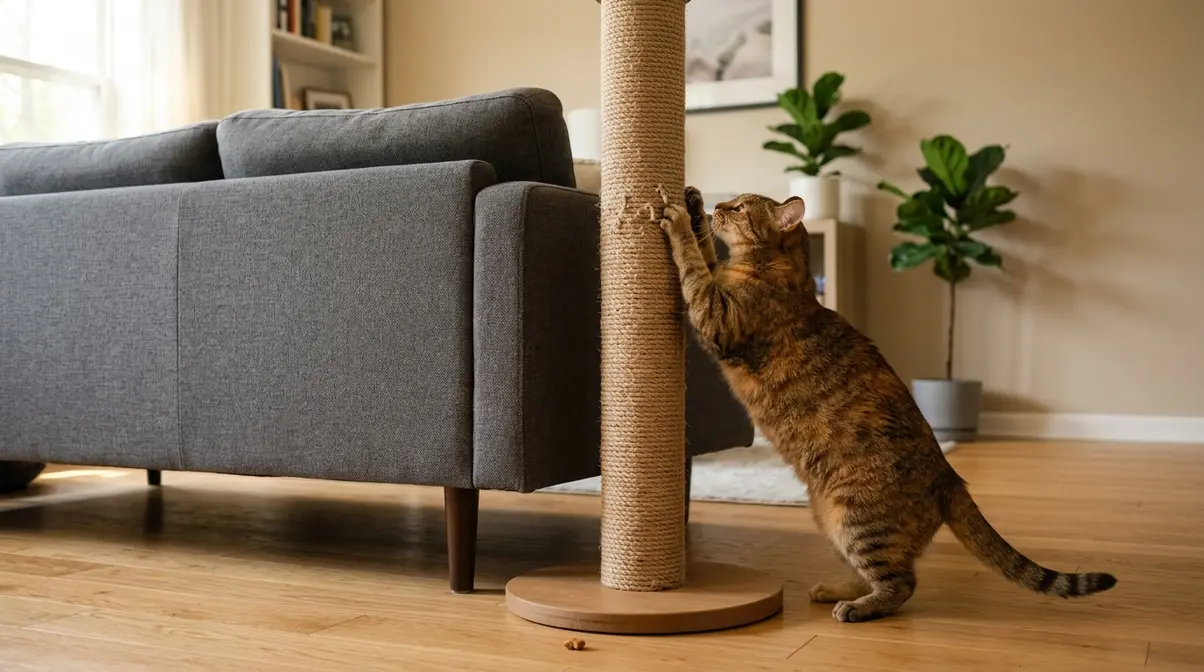
This is where The Cat Confidence Framework moves from reading signals to removing stressors and reinforcing alternatives. The three most common problem behaviours owners search for solutions to are furniture scratching, aggression between cats, and aggression towards people. Each has a clear, evidence-based protocol. For a deeper dive into specific corrections, check out our step-by-step fixes for common cat behavior problems.
How to Redirect Scratching
Scratching is not destructive behaviour — it is essential, normal behaviour. Cats scratch to maintain healthy claws, exercise their front leg and spine muscles, and mark their territory through both visual marks and scent glands in their paws (International Cat Care, 2026). The problem is not that your cat scratches. The problem is where they scratch.
A 2026 peer-reviewed study found that owners who used positive reinforcement to reward appropriate scratching reported significantly less unwanted scratching — while owners who used punishment reported more (Cozzi et al., Animals, 2026). Punishment doesn’t stop scratching; it just makes your cat anxious, which often increases scratching.
The Scratching Redirect Protocol:
- Provide at least two scratching posts in different locations — one near where they currently scratch furniture, one near where they sleep (cats often scratch after waking up).
- Match the surface and orientation. Observe whether your cat prefers vertical scratching (tall posts) or horizontal scratching (flat pads). Offer both initially. Material matters too — sisal rope and cardboard are the most popular substrates.
- Make the post irresistible. Rub a little catnip into the surface, hang a toy from the top, and play wand toy games around the base so your cat’s claws naturally contact the post.
- Reward every single use. The moment your cat uses the post, mark it with “yes!” and deliver a treat. Do this consistently for two to three weeks.
- Make furniture less appealing. Cover the scratched area with double-sided tape, a plastic sheet, or a furniture protector. Cats dislike the texture. Once they have a new scratching habit, you can remove the deterrent.
- Never force their paws onto the post. This creates a negative association and can damage trust.
Additional options: Soft nail caps (small plastic covers glued over the claws — temporary, humane, and vet-applied) can protect furniture during the transition period. Deterrent sprays (commercial sprays with scents cats dislike, applied to furniture) can also help discourage scratching on specific surfaces without harming the cat.
For more detail on managing destructive scratching humanely, the ASPCA’s guide to destructive scratching provides vet-reviewed protocols consistent with the approach above.
How to Introduce Cats Safely
Inter-cat tension is one of the leading sources of stress in multi-cat households — and one of the most underdiagnosed. The 2026 AAFP intercat tension guidelines confirm that competition for key resources (food, water, litter boxes, resting spots, play areas) is the primary driver of conflict between cats sharing a home (AAFP, 2026).
For introducing a new cat to a resident cat, follow the slow-introduction protocol. Rushing this process is the single most common mistake owners make — and it can create a lasting hostile relationship that takes months to repair.
The Safe Introduction Protocol:
- Separate completely first. Keep the new cat in a single room with their own food, water, litter box, and bedding. Do not allow face-to-face contact for at least one week.
- Scent swap. On day two, swap bedding between the two cats so each can smell the other without any physical threat. Feed both cats near the closed door so they associate the other cat’s scent with something positive (food).
- Visual introduction (barrier stage). After five to seven days, crack the door slightly or use a baby gate so the cats can see each other without direct access. Watch their body language carefully. Hissing and growling at this stage is normal — don’t intervene unless it escalates.
- Supervised face-to-face time. Allow short, supervised sessions in a neutral space with plenty of escape routes and elevated surfaces. Keep sessions under ten minutes initially.
- Reward calm behaviour. Any moment both cats are in the same room without tension, deliver treats to both simultaneously. You are building a positive association between the presence of the other cat and good things happening.
- Increase time gradually. Only move to the next stage when the current stage is consistently calm. Rushing creates setbacks.
For established inter-cat aggression, the ASPCA’s common cat behaviour resource recommends a full resource audit: ensure every cat has their own food station, water bowl, litter box, and resting area — separated enough that no cat can guard all of them simultaneously. Add vertical space so subordinate cats can escape without confrontation.
Transition: Inter-cat aggression is about competition and territory. Aggression towards people has a different root — and a different solution.
Addressing Human Aggression
Aggression towards people almost always has one of three causes: fear, overstimulation, or redirected aggression (when a cat is aroused by something they can’t reach — like a cat outside the window — and lashes out at the nearest person instead). To properly Address Aggression towards people, you must first identify its root trigger.
The most important rule first: Never punish a cat for aggression. Punishment increases fear, which increases aggression. It also erodes trust, which is the very thing you need to resolve the problem.
- For fear-based aggression:
- Identify the trigger. What precedes the aggression? Being picked up? Strangers approaching? Loud noises?
- Stop doing the trigger behaviour entirely for two weeks. Give the cat a complete reset.
- Reintroduce slowly using the consent test approach covered in Step 5.
- For overstimulation aggression (the cat who purrs and then suddenly bites or swipes during petting):
- Learn your cat’s individual threshold. Most cats show warning signals — tail twitching, skin rippling, ear rotation — before they bite. These are your cue to stop.
- Keep petting sessions short. End before the warning signals appear, not after.
- Focus petting on the head and cheeks (areas most cats enjoy) rather than the belly or base of the tail (areas many cats find overstimulating).
Cooperative care training is a powerful technique borrowed from veterinary practice. It teaches cats to voluntarily participate in handling — rather than enduring it. Start by teaching your cat to accept brief touches on different body parts in exchange for treats. Build duration gradually, always stopping before the cat shows discomfort. This approach is used by veterinary behaviourists to prepare cats for examination and is equally effective for reducing handling-related aggression at home.
For additional support with aggression management, cats.org.uk’s behaviour resources from Cats Protection provide practical, welfare-focused guidance for owners managing these situations.
Step 5 — Build Trust and Strengthen Your Bond
Everything in this guide has been building to this. The Cat Confidence Framework works because it is built on trust — a cat who trusts you will communicate more clearly, tolerate handling more readily, and recover from stress more quickly. Trust is not built through affection alone; it is built through respect for your cat’s signals and choices.
Approaching a Fearful Cat
An unconfident cat (one who is consistently fearful, hides frequently, or startles easily) needs a specific approach. The instinct to comfort — to pick up, cuddle, and reassure — is counterproductive with a frightened cat. Forced contact increases fear. Instead, use these principles:
- The low-and-slow approach:
- Lower yourself to the cat’s level — sit or lie on the floor rather than looming over them.
- Turn slightly sideways rather than facing them directly. A direct face-on posture reads as a threat in cat body language.
- Avoid direct eye contact. Look in their general direction but let your gaze soften and drift away.
- Offer your hand, palm down with a loose fist, at the cat’s nose level. Let them sniff. Do not reach forward — let them come to you.
- If they sniff and pull away, that’s fine. Repeat this daily without any expectation. Consistency builds safety.
- What not to do:
- Do not chase, corner, or grab a fearful cat
- Do not stare directly at them
- Do not use loud voices or sudden movements near them
- Do not force them out of hiding spots
Behaviourists report that most shy cats show measurable improvement in confidence within two to four weeks of consistent, low-pressure interaction — provided they are never forced into contact they haven’t chosen.
The Consent Test
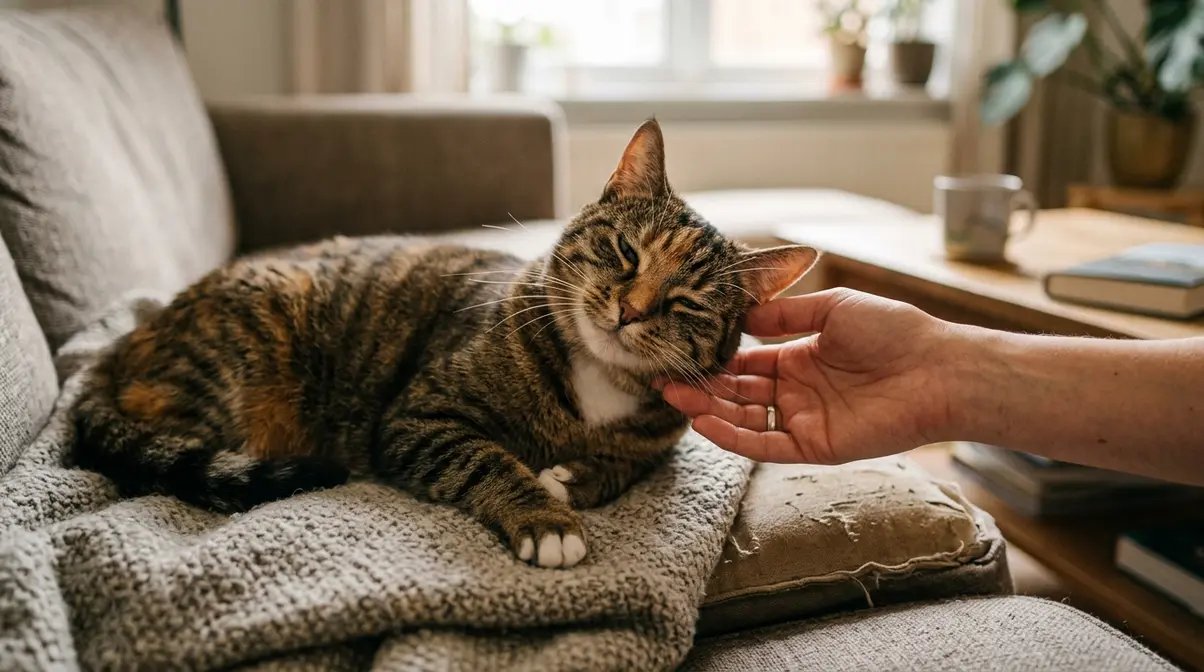
The consent test is a simple, powerful technique used by certified feline behaviourists to check whether a cat wants continued interaction. Here is how to perform it:
- Pet your cat for three to five seconds on an area they enjoy (typically the head, behind the ears, or the cheeks — where cats have scent glands and often enjoy rubbing, a behaviour called cheek rubbing that deposits their own comforting scent).
- Stop completely. Remove your hand and wait.
- Observe what your cat does next. This is the consent test.
- Reading the result:
- Cat moves toward you, head-butts your hand, or rubs against you = Green light. They are asking for more. Continue.
- Cat stays still and neutral = Amber. They are tolerating it, not enjoying it. Proceed with caution or stop.
- Cat moves away, turns their head away, licks their lips, shakes their head, or shows any of the warning signals from Step 1 = Red light. Stop immediately. They’ve had enough.
This technique transforms petting from something you do to your cat into something you do with them. Over time, cats who are given this choice consistently become far more affectionate — because they have learned that they can say no, and you will listen.
How Cats Show Affection
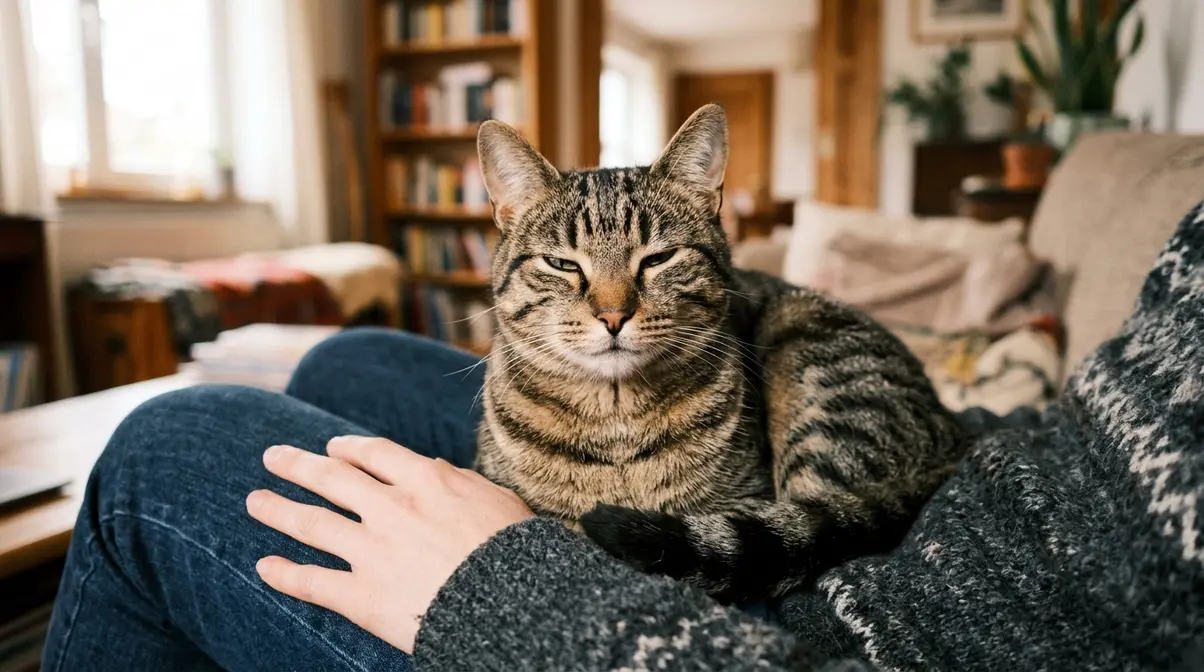
Understanding how your cat expresses love changes everything. Cats show affection differently from dogs — and owners who miss these signals often feel their cat doesn’t like them, when the opposite is true.
Signs your cat genuinely trusts and likes you:
- Slow blinking at you — the feline equivalent of a warm smile. Return it.
- Head bunting (bumping their head against you) — depositing their scent on you, claiming you as part of their social group
- Cheek rubbing — same principle as head bunting; a deeply affectionate behaviour
- Bringing you “gifts” (yes, even prey) — this is a cat teaching you to hunt. It is a high compliment.
- Kneading (making biscuits) — a comfort behaviour from kittenhood; a cat who kneads on you feels completely safe
- Sitting near you (not necessarily on you) — many cats show affection through proximity, not contact
- Showing you their belly — in a relaxed cat with loose body language, this is a significant trust signal (though not necessarily an invitation to touch it)
- Chirping or trilling when they see you — a greeting sound reserved for trusted individuals
For a deeper exploration of feline affection signals, PetMD’s cat body language resource provides additional detail on how cats communicate positive emotions.
When Behaviour Becomes a Vet Issue
The Cat Confidence Framework covers the vast majority of common cat behaviour challenges. But there are situations where behaviour tips are not enough — and knowing when to escalate is as important as knowing the tips themselves.
Mistakes That Worsen Behaviour
Behaviourists and cat welfare organisations consistently report these as the most counterproductive owner responses to problem behaviour:
1. Using punishment. Spraying water, shouting, clapping near the cat, or any physical correction increases stress and fear. Research confirms that positive punishment is associated with more unwanted behaviour, not less (Cozzi et al., Animals, 2026). Replace punishment with redirection and reward.
2. Forcing affection. Picking up a cat who is trying to move away, holding them in place, or restraining them for cuddles erodes trust and can trigger fear-based aggression. Use the consent test instead.
3. Inconsistency. Allowing furniture scratching sometimes and discouraging it other times confuses the cat. Pick a rule and apply it every single time.
4. Ignoring the medical possibility. Owners who attempt behaviour modification for weeks before discovering the problem was a urinary tract infection or arthritis lose valuable time and put their cat through unnecessary stress. Always rule out medical causes for sudden behaviour changes.
5. Introducing cats too fast. The single most common cause of lasting inter-cat aggression is a rushed introduction. If the first meeting went badly, it is worth restarting the slow-introduction protocol from scratch.
6. Anthropomorphising (attributing human motivations to cat behaviour). Your cat is not scratching the sofa “to spite you.” They are not avoiding the litter box “out of laziness.” Assuming human motivations leads to ineffective responses. Always ask: what is this behaviour communicating about this cat’s needs?
When to Call a Professional
⚠️ Important: If your cat’s behaviour changes suddenly or severely, consult a veterinarian before attempting any behaviour modification. Many behaviour problems have medical roots that must be addressed first.
- Call your vet if:
- Any behaviour change occurred suddenly (within days)
- Your cat is showing signs of pain — vocalising when touched, reluctance to jump, changes in posture or gait
- There is blood in urine or faeces
- Your cat has stopped eating or drinking
- Elimination outside the litter box began without any environmental trigger
- Aggression has escalated to the point of causing injury
- Seek a certified cat behaviourist if:
- Behaviour problems persist for more than four to six weeks despite following the steps in this guide
- Aggression is severe, unpredictable, or escalating
- Your cat appears chronically anxious (hiding constantly, not eating in the presence of others, excessive grooming causing hair loss)
- You are considering rehoming your cat due to behaviour issues
A certified cat behaviourist (look for credentials from the IAABC — International Association of Animal Behavior Consultants, or the CCBC — Certified Cat Behaviour Consultant qualification) can conduct a full behavioural assessment and create a tailored modification plan. Veterinary behaviourists (vets with a specialist qualification in behaviour) are the appropriate referral for cases involving medication alongside behaviour modification.
For guidance on recognising when professional help is needed, Merck Veterinary Manual’s overview of cat social behaviour provides a clinically grounded reference.
Frequently Asked Questions
How do I stop my cat from scratching furniture?
Redirect scratching to appropriate posts rather than trying to stop it entirely. Scratching is a normal, necessary behaviour — cats use it to maintain claws, stretch muscles, and mark territory. Provide at least two posts in different locations, matching the surface type your cat prefers (vertical sisal or horizontal cardboard). Reward every use with a treat. Research shows that owners who use positive reinforcement report significantly less furniture damage than those who use punishment (Cozzi et al., Animals, 2026). Cover problem furniture with double-sided tape during the transition — most cats switch habits within two to three weeks.
Why is my cat suddenly avoiding the litter box?
Sudden litter box avoidance is most often a medical issue and requires a vet check before any behaviour modification. The ASPCA reports that at least 10% of cats develop elimination problems at some point. Common medical causes include urinary tract infections, FLUTD (feline lower urinary tract disease), bladder stones, and arthritis. If no medical cause is found, audit the setup: ensure one box per cat plus one extra, scoop daily, use unscented clumping litter, and place boxes in quiet, low-traffic locations with easy escape routes. A 2026 study confirmed cats prefer boxes at least 50 cm long (PMC, 2026).
How do I introduce two cats safely?
The key to a successful cat introduction is patience — the process should take a minimum of two weeks, not two days. Start with complete separation, then scent swapping (exchanging bedding), then visual contact through a barrier, then brief supervised face-to-face sessions in a neutral space. Feed both cats near the dividing door so they associate each other’s scent with positive experiences. The 2026 AAFP intercat tension guidelines confirm that competition for resources is the primary driver of inter-cat conflict — ensure every cat has their own food station, water bowl, litter box, and resting area throughout the process (AAFP, 2026).
Why does my cat purr when in pain?
Cats purr as a self-soothing mechanism, not just as a sign of happiness — so purring during pain or stress is genuinely common. Veterinary research suggests the vibration frequency of purring (between 25 and 150 Hz) may have a mild self-calming and even tissue-healing effect. A cat purring while also showing flattened ears, a tucked tail, tense posture, or reluctance to be touched may be signalling distress. Always read purring alongside the rest of the body language. If your cat is purring but also showing signs of discomfort, contact your vet.
How do I build trust with a shy or fearful cat?
Building trust with a fearful cat requires consistent, low-pressure presence rather than forced affection. Sit near them daily at their level, avoid direct eye contact, and let them approach you on their own terms. Offer your hand at nose level without reaching toward them. Use the consent test during any petting — stop after three to five seconds and wait to see if they ask for more. Behaviourists report that most shy cats show measurable improvement within two to four weeks of this approach, provided they are never cornered or forced into contact.
Putting It All Together: Your Next Steps
Most cat behaviour problems share a common thread: a cat who feels they have lost control over their environment, their interactions, or their resources. The Cat Confidence Framework exists to address exactly that — by teaching owners to first read the signal, then remove the stressor, then reinforce the alternative.
Start with Step 1. Even if your primary concern is scratching or litter box avoidance, spend one week simply observing your cat’s body language without intervening. You’ll notice patterns you’ve been missing. Those patterns tell you where the stress is coming from — and that’s where the fix lives.
The framework works because it follows your cat’s own logic. Cats are not random. Every behaviour has a cause, and every cause has a solution. You now have the system to find both.
Pick the step most relevant to your situation today and begin there. Spend two weeks applying it consistently before evaluating results. Applying these cat behaviour tips consistently will help you build a stronger bond with your pet. If you are not seeing improvement after four to six weeks, or if behaviour is severe, consult a certified feline behaviourist — the investment is almost always worth it. Your cat is trying to communicate with you. This guide gives you the language to listen back.

Dave King
Cat owner and writer at Mad Cat Man.