

Table of Contents
- Why Cats Turn Aggressive: A Fast, Friendly Primer
- Cat Aggression: What Actually Works
- 10 Real-Owner Case Studies: Step-by-Step Plans That Worked
- Tools, Toys, and Setups That Help Calm and Redirect
- Troubleshooting, Safety, and When to Get Professional Help
- Quick References and Step-by-Step Checklists
- How Mad Cat Man Helps You Move Faster (and Calmer)
This blog post may contain affiliate links. As an Amazon Associate I earn from qualifying purchases.
If your cat has started swatting, hissing, or biting, you are not alone. Cat aggression can feel intimidating, especially when you are juggling advice from friends, forums, and product listings. The good news is that most aggressive behavior is both understandable and fixable with a clear plan. When my own shy rescue, Nori, began ambushing ankles after we moved apartments, I felt defeated. Then structure, patience, and a few smart tools changed everything. In the next sections, you will see exactly how other cat owners turned messy moments into calm routines, plus the step-by-step frameworks they used so you can copy what works.
Why Cats Turn Aggressive: A Fast, Friendly Primer
Before we jump into real stories, it helps to know what is driving the behavior. Aggression is usually a response to stress, fear, pain, or conflict, not a cat being “bad.” Surveys from shelter intake reports and behavior clinics consistently rank aggression among the top reasons for relinquishment, often in the top three. That is heartbreaking, because with early intervention most cases improve within weeks. Think of your cat’s reaction like a smoke alarm. The alarm is not the problem, it is the sign something needs attention. So our job is to find the “smoke” and gently switch off the “alarm.”
Common types include fear-based aggression, redirected aggression (triggered by something the cat cannot reach), play aggression in young cats, petting-induced overstimulation, resource guarding, territorial spats between housemates, and pain-induced aggression. You can often spot early warning signs if you know where to look. Ask yourself: do the ears flatten, pupils widen, whiskers move forward, tail thrash, or does your cat freeze before the storm hits? Catching those cues lets you step in early, which dramatically reduces the chance of bites or escalations. And yes, it is absolutely possible to turn this around without punishment or force.
- Early stress signals: tail swishing, skin rippling, slow head turns, lip licking, yawning, and avoiding eye contact.
- Escalation signs: ears back, “airplane” ears, dilated pupils, crouched body, growling, hissing.
- High risk: fixed stare, piloerection (raised fur), stalking approach, charging, and repeated bites.
Cat Aggression: What Actually Works
The most effective plans follow a simple sequence: rule out pain, create safety, reduce triggers, teach new behaviors, and reinforce calm. First, schedule a thorough exam with your veterinarian. Hidden pain from dental disease, arthritis, urinary issues, or skin problems can turn friendly cats prickly. Clinical reports often note medical contributors that improve after veterinary care. Once your cat is cleared medically, build a calmer environment. That means predictable routines, adequate vertical space, two or more litter boxes per cat plus one, strategic feeding, and quiet zones away from household traffic.
Watch This Helpful Video
To help you better understand cat aggression treatment, we’ve included this informative video from Jackson Galaxy. It provides valuable insights and visual demonstrations that complement the written content.
Next comes behavior work. You will use desensitization (slow exposure to triggers at a low intensity) and counterconditioning (pairing triggers with high-value rewards) to rewire the emotional response. Add species-appropriate play to drain energy and self-directed hunting instincts, then reward calm postures generously. Gentle management tools can accelerate progress, like pheromone diffusers, door gates, or feeding puzzles. In multi-cat homes, structured reintroductions with scent swapping are often the turning point. Medication may help in moderate to severe cases, but always under the guidance of a veterinarian behavior professional. The table below summarizes common approaches and when to use them.
| Approach | Best For | How To Apply | Evidence and Notes |
|---|---|---|---|
| Medical Rule-Out | Sudden behavior changes, senior cats, pain signs | Full exam, dental check, pain scoring, labs as advised | Frequently reveals pain contributors; improvements can be rapid after treatment |
| Environment Reset | Territorial or resource conflicts, stressy homes | Add vertical space, separate resources, quiet retreats | Reduces daily friction; recommended baseline in all plans |
| Play Therapy | Play aggression, evening zoomies | Twice-daily wand play to a “catch,” then food | Channels predation sequence; lowers arousal before peak times |
| Desensitization and Counterconditioning | Fear-based, handling, or stranger triggers | Expose at low intensity and pair with treats and distance | Behavior gold standard; requires patience and tiny steps |
| Scent Swapping and Gradual Intro | Inter-cat tension, new cat arrivals | Separate, swap bedding, controlled door sessions, gate time | High success when owners follow a paced schedule |
| Pheromone Support | General household stress, multi-cat homes | Diffusers in common rooms; replace refills on schedule | Helpful adjunct; often boosts other interventions |
| Medication (veterinarian prescribed) | Severe, long-standing, or unsafe cases | Behavior plan plus medication under veterinarian supervision | Not a standalone fix; can lower arousal to enable training |
10 Real-Owner Case Studies: Step-by-Step Plans That Worked
Case 1: The Move That Sparked Fear Biting
After a cross-town move, Luna began biting ankles at night and hiding under the bed by day. New sounds, new smells, and rearranged furniture overwhelmed her. Instead of scolding, her owner created a “home base” room and slowed everything down. Within three weeks, bites stopped and greeting rituals returned.
- Created a single safe room with familiar bedding, litter, and water.
- Played two short wand sessions daily, followed by a small snack.
- Used a pheromone diffuser and soft white noise to mask hallway sounds.
- Opened access gradually, one room at a time, while rewarding calm sits.
- Paused expansion at the first sign of tail lashing, then tried again later.
Case 2: Redirected Rage After Seeing a Neighborhood Cat
After spotting an outdoor cat at the window, Milo spun and attacked his housemate and later nipped his owner. This is classic redirected aggression. The fix was to block the visual trigger and slowly re-pair the cats’ scents and sights in a controlled way.
- Frosted the bottom half of windows and added film to the patio door.
- Separated cats for 48 hours with complete resource sets for each.
- Swapped blankets and brushed both with the same grooming mitt.
- Fed on opposite sides of a cracked door, then a gate.
- Resumed short supervised sessions, ending before arousal climbed.
Case 3: Teen Kitten Play Attacks
Pickles, nine months old, launched at ankles and hands every evening. He was under-stimulated and had no outlet for predatory patterns. A daily play-and-feed routine and better toys redirected the energy to the right place.
- Scheduled two 10-minute prey-sequence play sessions, morning and night.
- Ended each session with a food reward to complete the “hunt.”
- Removed hands as toys; used long wand toys with string out of reach.
- Delivered small puzzle feeder meals across the evening peak window.
- Praised four paws on the floor with treats and calm attention.
Case 4: Petting-Induced Overstimulation
Maple liked attention, then suddenly swatted after five strokes down the back. Her owner learned to read “I am done” cues, switched to shorter, cat-led sessions, and rewarded disengagement instead of forcing more cuddles.
- Counted strokes; stopped at three while Maple was still relaxed.
- Shifted to chin and cheek rubs, avoided the lower back.
- Rewarded Maple for walking away with a toss of a treat.
- Used brief, frequent sessions to build positive associations.
- Logged cues to find her true tolerance window.
Case 5: Food Bowl Fights Between Housemates
At mealtimes, Tigger guarded the shared feeding area, leading to swats and chases. The fix was resource separation, predictable schedules, and removing competition. Stress fell within days, and both cats gained healthy weight.
- Fed in separate rooms with doors closed, then cracked.
- Added multiple water stations and a third litter box.
- Used micro-meals in shallow dishes to reduce urgency.
- Rewarded calm waiting spots with treats and praise.
- Kept bowls far from litter and busy walkways.
Case 6: Rocky New-Cat Introduction
Bringing home a confident young cat rattled the resident senior, who responded with hissing and cornering. The turning point was slowing the introduction to scent-first, sight-second, and direct contact last. Structured sessions, not hope, did the trick.
- Separated fully for one week; swapped bedding daily.
- Fed on opposite sides of a closed door, then a gate.
- Used a towel under each cat to “trade scents” during gate time.
- Ran very short, positive face-to-face sessions with toys.
- Ended sessions on a win, never after a spat.
Case 7: Pain-Induced Aggression From Dental Disease
Nora began snapping when chin-scratched and avoided the food bowl. A veterinary exam revealed dental pain. After treatment, her tolerance and social behavior improved dramatically. The lesson: rule out pain early, especially with sudden changes.
- Scheduled a complete exam and dental evaluation.
- Offered soft foods in wide, whisker-friendly bowls.
- Paused cheek and chin touches until healing.
- Resumed handling with treat pairings and slow, short sessions.
- Monitored for relapse and kept up regular checkups.
Case 8: Litter Box Guarding and Doorway Ambushes
Bean ambushed her housemate when he exited the litter box, trapping him in corners. Adding escape routes, extra boxes, and a simple zone map ended the ambush game. Peace returned within two weeks.
- Placed litter boxes in two separate, easily escaped locations.
- Added a small cat tree beside each exit as a vertical escape.
- Used doorstops to prevent hall doors from closing cats in.
- Played with Bean away from the box area at known trigger times.
- Reinforced calm pass-bys with tossed treats.
Case 9: Protective New Mom Cat
After giving birth, Saffron hissed and swatted at anyone near her nesting area. This protective behavior eased with respectful distance, controlled visits, and enriched surroundings. Gentle socialization returned once kittens were older.
- Moved the nest to a quiet room with a covered crate.
- Limited visitors and kept sessions short and calm.
- Delivered food, water, and litter service at predictable times.
- Tossed treats to mark the moment Saffron looked relaxed.
- Gradually lengthened visits when signs of stress decreased.
Case 10: Grooming and Nail Trim Battles
Every attempt to trim claws turned into a wrestling match. After switching to cooperative care, Olive learned to accept handling in micro-steps. No scruffing, no force, just patient training with tasty rewards.
- Touched paw briefly, then immediately fed a high-value treat.
- Held paw for one second, rewarded, then released.
- Introduced the clipper sight-only, then sound-only with treats.
- Clipped one nail per session, not all, to keep arousal low.
- Built up to a full trim across several calm sessions.
Tools, Toys, and Setups That Help Calm and Redirect
Products do not fix behavior alone, but the right setup can make your plan much easier. Think in categories: safety, enrichment, feeding, and territory. For example, a tall, sturdy cat tree near a window gives your cat an “approved” lookout instead of the back of your sofa. Food puzzles slow down mealtimes and deliver mini hunts throughout the evening. If your cat startles easily, soft lamps and predictable white noise can transform a hectic hallway into a peaceful corridor.
At Mad Cat Man, we review gear across budgets and explain how to use it in real homes. Our buying guides compare wand toys, trees, scratchers, litter solutions, and calming aids with clear pros and cons. We also pair product picks with how-to checklists, so you get both the why and the how. Because our content is organized into categories, you can jump straight to Behavior and Training, Health and Preventive Care, Breed Guides, or Safety topics like “Which plants are safe?” and “Should I use a humidifier?” The table below outlines staple items for aggression plans and what to look for.
| Category | Purpose | Budget-Friendly Option | Premium Features | What Matters Most |
|---|---|---|---|---|
| Wand Toys | Direct predatory play away from people | Feather teaser with long string | Interchangeable lures, sturdy handle | Length for distance; safe lure size |
| Food Puzzles | Lower arousal with slow, engaging meals | Simple rolling ball feeder | Adjustable difficulty, dishwasher safe | Easy to clean; does not frustrate your cat |
| Cat Trees and Shelves | Create vertical escape routes and territory | Stable 3-level tree | Wall-mounted shelves, heavy base | No wobble; space near exits |
| Gates and Pens | Safe separations during reintroductions | Tension gate with small mesh | Freestanding panels with doorway | Cat cannot squeeze through; stable |
| Pheromone Diffusers | Background calming support | Single-room diffuser | Multi-room kit with refills | Replace refills on schedule |
| Scratchers | Stress outlet and territory marking | Cardboard incline | Tall sisal post with base | Height and angle your cat prefers |
Troubleshooting, Safety, and When to Get Professional Help
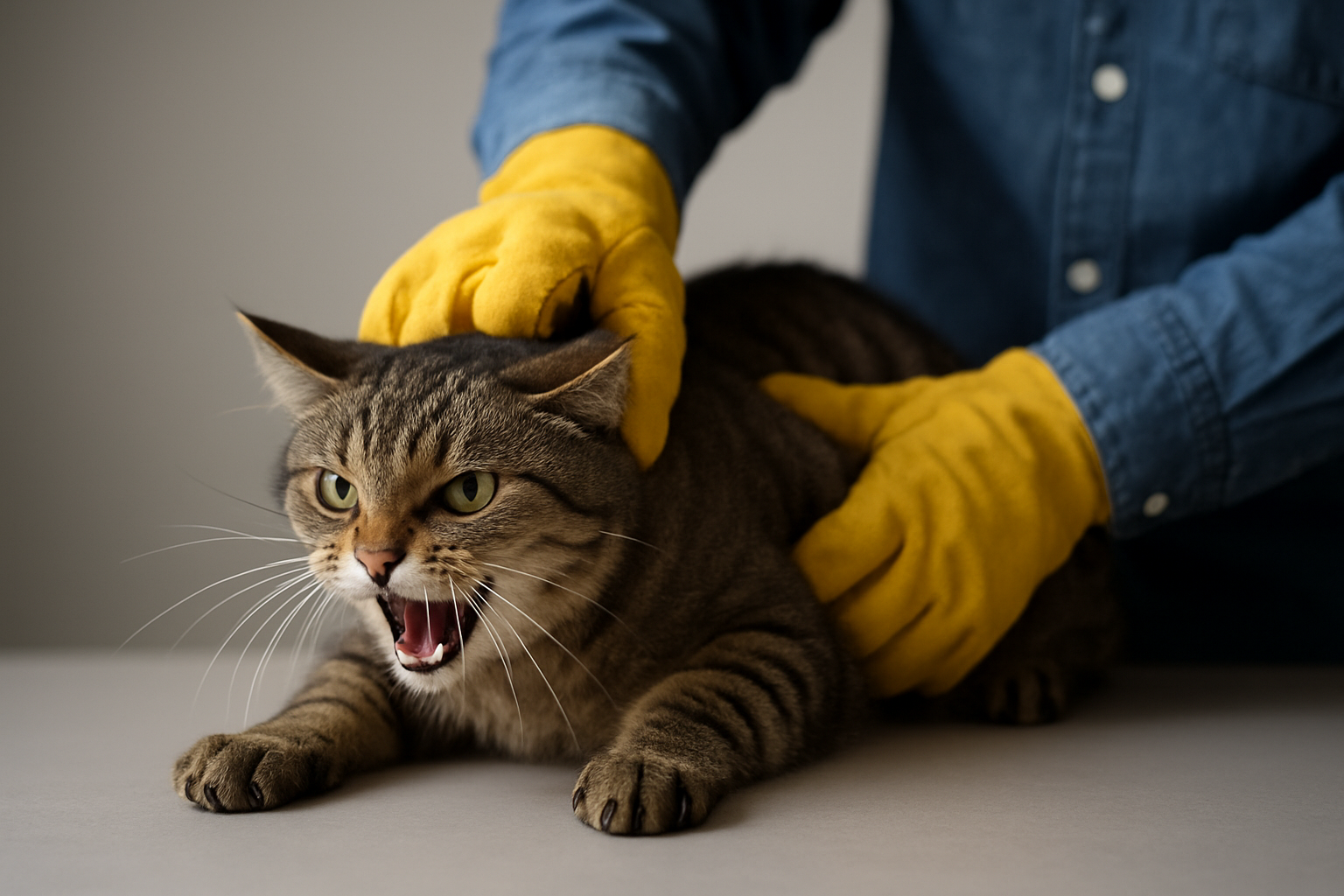
Safety first. If a cat makes hard contact more than once, draws blood, or you feel afraid in your home, press pause and create physical separation. Doors, gates, and crates used kindly are not failures—they are safety tools. Avoid physical punishment, yelling, or scruffing. Those escalate fear and can worsen aggression. Keep a soft barrier like a cushion or large towel nearby to create space without grabbing fur. If children are present, maintain strict supervision and give the cat controlled, quiet retreats.
Consider professional help if progress stalls for two weeks, episodes intensify, or triggers seem impossible to predict. A veterinarian can rule out pain and may refer you to a credentialed behavior professional. Medication is sometimes part of a comprehensive plan for severe or long-standing cases, but it only works well alongside environmental and training changes. In multi-cat homes, do not skip reintroductions. Owners often rush this step and watch tension linger for months. With a timed plan and consistent rewards for calm, the same cats often coexist peacefully again.
- Red flags: sudden aggression in a senior cat, weight loss, hiding, changes in bathroom habits, or difficulty chewing.
- Emergency care: facial swelling, eye injury, deep bites, or punctures require prompt veterinary attention.
- Household habits: stick to routines, end sessions before arousal peaks, and track triggers in a simple notebook.
Quick References and Step-by-Step Checklists
When emotions run high, a tiny plan you can do right now beats a perfect plan you never start. Print or scribble the checklists below on a sticky note. You can even sketch a quick “zone map” of your home with safe rooms, feeding stations, and litter sites. That way, everyone in the family acts consistently and your cat experiences predictable, low-stress patterns that build trust day by day.
| Trigger Type | Early Cues | Do Now | Avoid |
|---|---|---|---|
| Fear of new space or sounds | Hiding, tail tucked, refusal to eat | Create a home-base room; soft music; slow access | Forcing interaction; moving furniture daily |
| Redirected after window sighting | Fixated stare out window, chatter, tail lashing | Block view; separate cats; scent swap; gate sessions | Chasing; unplanned face-to-face reunions |
| Play aggression in adolescents | Pounce crouch, dilated pupils, ankle stalking | Wand play to a “catch,” then food; puzzle feeders | Hands as toys; roughhousing |
| Petting-induced overstimulation | Skin ripples, tail flick, head turn toward hand | Short, cat-led sessions; count strokes; reward disengage | Pinning cat down; insisting on “one more pat” |
| Resource guarding | Blocking bowls, chasing away from litter | Duplicate resources; feed separately; add exits | Feeding side by side too soon |
- 60-second single-cat reset:
- Toss a treat behind your cat to create space.
- Close the door to a quiet room with litter, water, and a bed.
- Dim lights and start soft white noise or a fan.
- Return later with a wand toy and end on a calm note.
- Mini reintroduction for two cats:
- Separate fully for 24 to 48 hours.
- Swap bedding and brush each cat with the same mitt.
- Feed on opposite sides of a closed door, then a gate.
- Run very short, positive sessions; end on success.
How Mad Cat Man Helps You Move Faster (and Calmer)
Choosing the right supplies and steps does not need to be overwhelming. At Mad Cat Man, we publish experience-based guides that combine product reviews and buying recommendations with behavior and training tips, veterinarian-informed health and preventive care, safety and product-suitability content, breed guides and comparisons, and step-by-step how-tos and shopping checklists. Our articles are organized into categories so you can jump straight to what you need: Behavior, Health, Products, Safety, or Breed Guides like our Maine Coon series. That way, whether you are a first-time pet parent or a seasoned cat enthusiast, you can make confident choices without the stress.
You will find calm routines, practical checklists, and honest recommendations across different budgets. We test toys for durability, compare litter setups for odor and tracking, and explain when to use diffusers, gates, or shelves. We also go beyond gear—showing you exactly how to set it up in your space with clear diagrams described in text. And because everything lives in organized categories for easy browsing, you will spend less time clicking in circles and more time enjoying a quieter, happier home.
You came here for answers, and now you have practical frameworks plus 10 real-owner playbooks. With patient steps and a little structure, most cats transform from chaotic to cuddly. Imagine your evenings twelve months from now: peaceful play, easy mealtimes, and a cat who trusts you to understand their language. What would you try first tonight to start your own cat aggression behavior plan?
Additional Resources
Explore these authoritative resources to dive deeper into cat aggression treatment.
Tackle Cat Aggression Faster with Mad Cat Man
Find step-by-step guides, product picks, and veterinarian-informed tips in organized categories to help all cat owners solve behavior, health, and safety decisions confidently.