
Most people assume the Balinese cat has something to do with the Indonesian island of Bali. It doesn’t — but this elegant, long-haired breed is every bit as graceful as its exotic name suggests. And here’s a fact most generic guides bury: despite being labeled “hypoallergenic,” the Balinese still produces Fel d 1 (the protein responsible for cat allergies) — just typically in lower amounts than most other breeds.
If you’re seriously considering this balinese cat breed, you’ve probably hit a wall of vague articles that don’t answer the questions that actually matter. Will this cat cope while you’re at work for eight hours? Will it genuinely ease your sneezing? By the end of this guide, you’ll know exactly whether the Balinese cat breed is the right match for your home, your allergies, and your lifestyle. We’ll cover the breed’s origins, personality, appearance, health, honest pros and cons, and how to find one from an ethical breeder.
The Balinese cat breed is a long-haired Siamese variety prized for its intelligence, vocal personality, and lower Fel d 1 allergen production — making it a popular choice for allergy-sensitive households.
- Lifespan: 12–20 years; highly social, playful, and deeply affectionate
- Allergen Reality: Produces less Fel d 1 than many breeds — but is NOT fully hypoallergenic
- Cost: Reputable breeders typically price kittens at $1,000–$2,500 (market range, 2026)
- Needs: Requires daily interaction; struggles significantly if left alone for 8+ hours
- Use The Balinese Compatibility Framework in this guide to decide if this breed truly fits your lifestyle
Balinese Cat Breed Origins and History
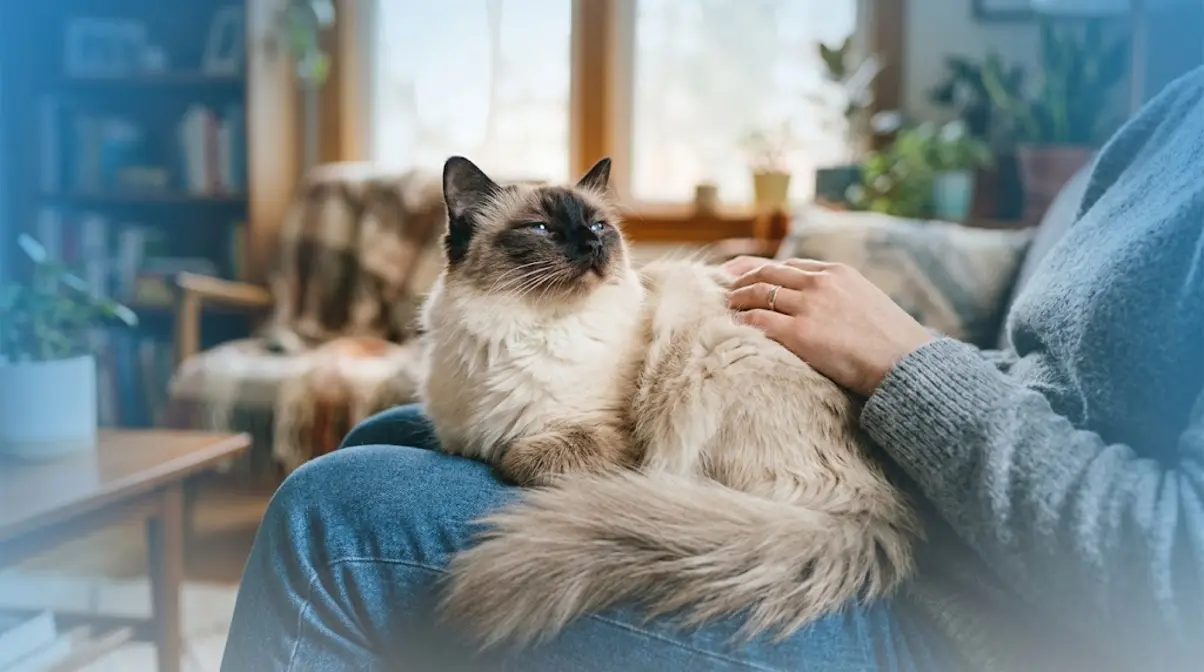
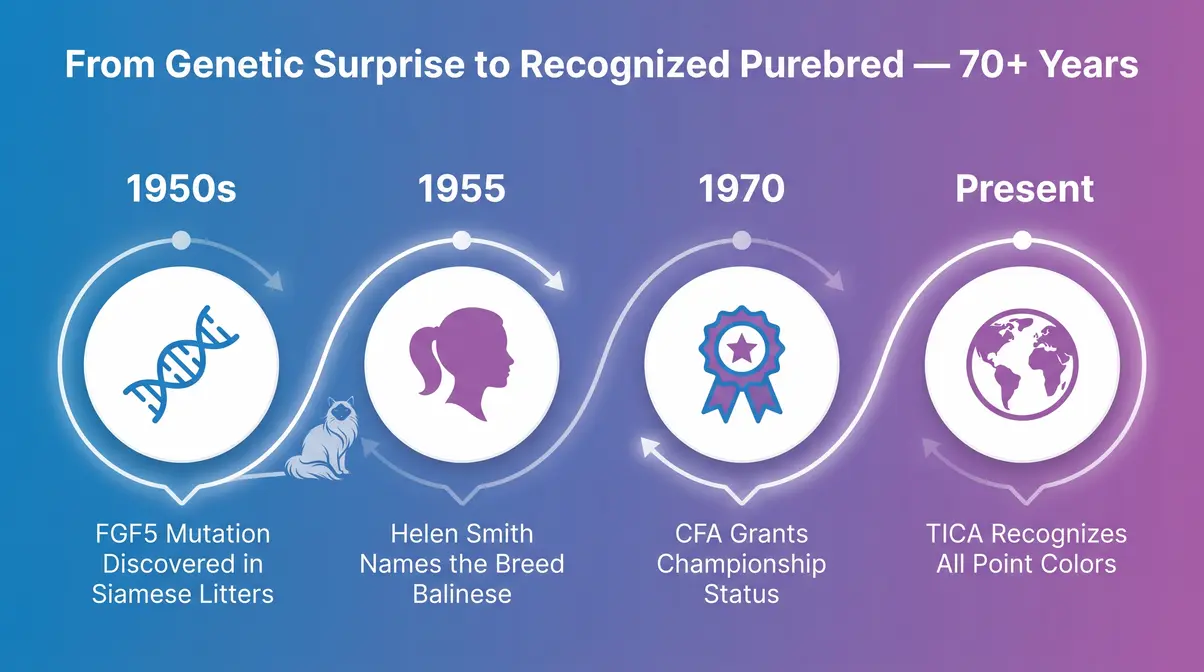
The Balinese cat breed is the long-haired variety of the Siamese, distinguished by a natural FGF5 gene mutation — not a crossbreed with any other breed. The FGF5 gene (the gene responsible for coat length) underwent a spontaneous recessive mutation in some Siamese litters during the mid-20th century, producing kittens with a silky, flowing coat. Because the mutation is autosomal recessive — meaning both parents must carry the gene for the trait to appear — these long-haired kittens surprised breeders who hadn’t anticipated them.
“Named for the exotically graceful dancers on the Indonesian island of Bali, the Balinese is a longhaired variety of the Siamese breed.”
How the Balinese Breed Came to Be
The name “Balinese” was coined in the 1950s by breeder Helen Smith, who felt the cat’s graceful, flowing movement resembled the elegant dancers of Bali. It was a deliberate, evocative choice — the breed has no actual geographic or genetic connection to the island. Helen Smith and fellow breeder Sylvia Holland worked to establish the Balinese as a legitimate purebred in its own right, rather than a discarded Siamese “mistake.”
The Cat Fanciers’ Association (CFA) granted the Balinese championship status in 1970, and The International Cat Association (TICA) recognizes the breed across all accepted point colors. The UC Davis Veterinary Genetics Laboratory has confirmed that the long coat in Balinese cats results from this recessive FGF5 mutation — the same gene variant found in other long-haired breeds like the Maine Coon and Norwegian Forest Cat.
Understanding the breed’s origins helps set realistic expectations — and that’s the first pillar of The Balinese Compatibility Framework: knowing what you’re actually getting before you fall in love with the look.
Balinese vs. Siamese Differences
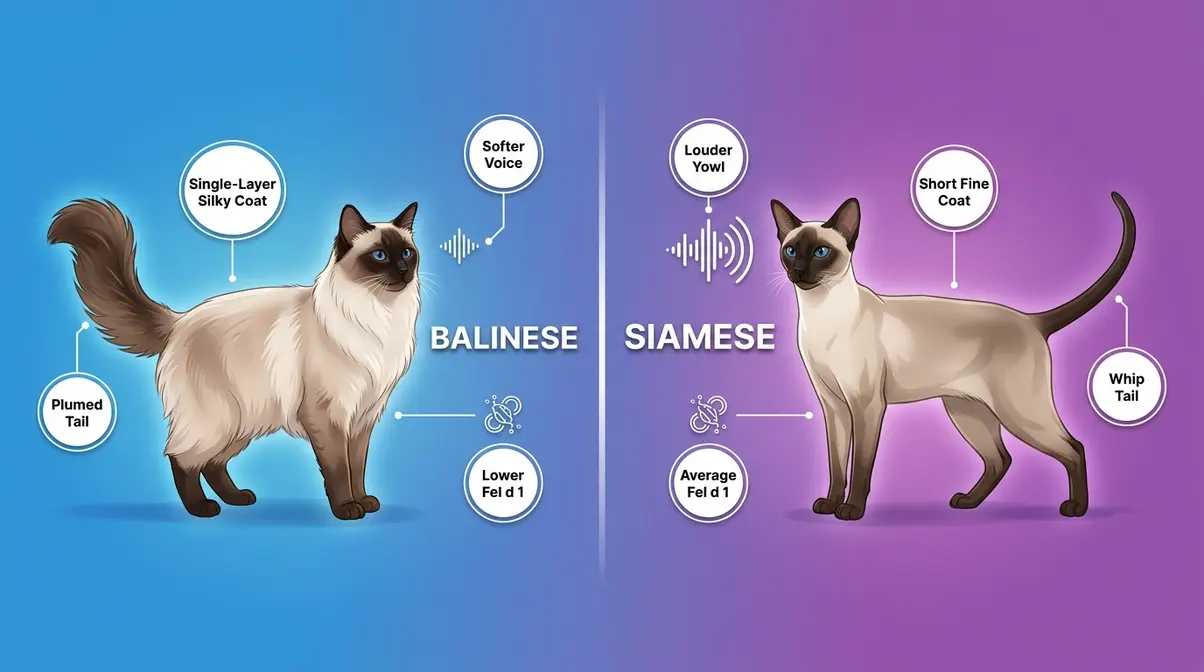
The Balinese and Siamese are closely related, but they are meaningfully different to live with. The coat is the most obvious distinction — but personality nuances matter just as much for daily life.
| Trait | Balinese | Siamese |
|---|---|---|
| Coat Length | Long, silky, single-layer | Short, fine, single-layer |
| Shedding | Moderate (less than most long-haired breeds) | Low |
| Grooming Needs | 2–3x weekly brushing | Weekly brushing |
| Vocalization | Very vocal, slightly softer tone | Extremely vocal, louder |
| Body Type | Svelte, elegant, plumed tail | Svelte, elegant, whip tail |
| Fel d 1 Production | Lower than average | Average to above average |
| Recognition | TICA, CFA (1970) | TICA, CFA (long-established) |
| Lifespan | 12–20 years | 12–20 years |
| Best For | Allergy-sensitive owners who want a cuddly companion | Owners who want maximum engagement and aren’t allergy-sensitive |
Balinese Cat Personality & Temperament
The Balinese is one of the most people-oriented cat breeds you’ll find. According to the Cat Fanciers’ Association (CFA) breed standards, the Balinese is described as highly intelligent, affectionate, and intensely social — traits that make it a deeply rewarding companion, but also a breed with real demands on your time and attention.
Are Balinese Cats Cuddly?
Yes — Balinese cats are genuinely, consistently cuddly. This isn’t a breed that tolerates affection on its own terms. It actively seeks it. Across professional cat fancier communities and TICA breed profiles, the consistent feedback is that Balinese cats will follow their owners from room to room, settle onto laps without invitation, and sleep pressed against their humans at night.
The breed is often described as “dog-like” in its loyalty. It forms intense bonds with one or two primary people in the household, though it typically warms to all family members over time. If you want a cat that greets you at the door, the Balinese delivers. This deep affection is a key reason the breed scores so highly on the second pillar of The Balinese Compatibility Framework: lifestyle fit.
Children and other pets generally do well with Balinese cats, provided introductions are handled gradually. Their playful, non-aggressive nature makes them a solid choice for multi-pet households.
Do Balinese Cats Meow a Lot?
Balinese cats meow a lot — that’s simply the honest answer. They are vocal, chatty companions who will narrate their day, demand attention, and express displeasure at an empty food bowl with surprising persistence. However, their voice is notably softer and less piercing than the classic Siamese yowl, which many owners find more tolerable.
Common pain points reported by prospective Balinese owners include surprise at the volume and frequency of communication. If you work from home, expect an ongoing conversation. If you live in a thin-walled apartment, consider whether that level of vocalization fits your living situation. The vocalization isn’t a flaw — it’s a feature of a breed that genuinely wants to communicate with you.
6 Separation Anxiety Tips for Owners
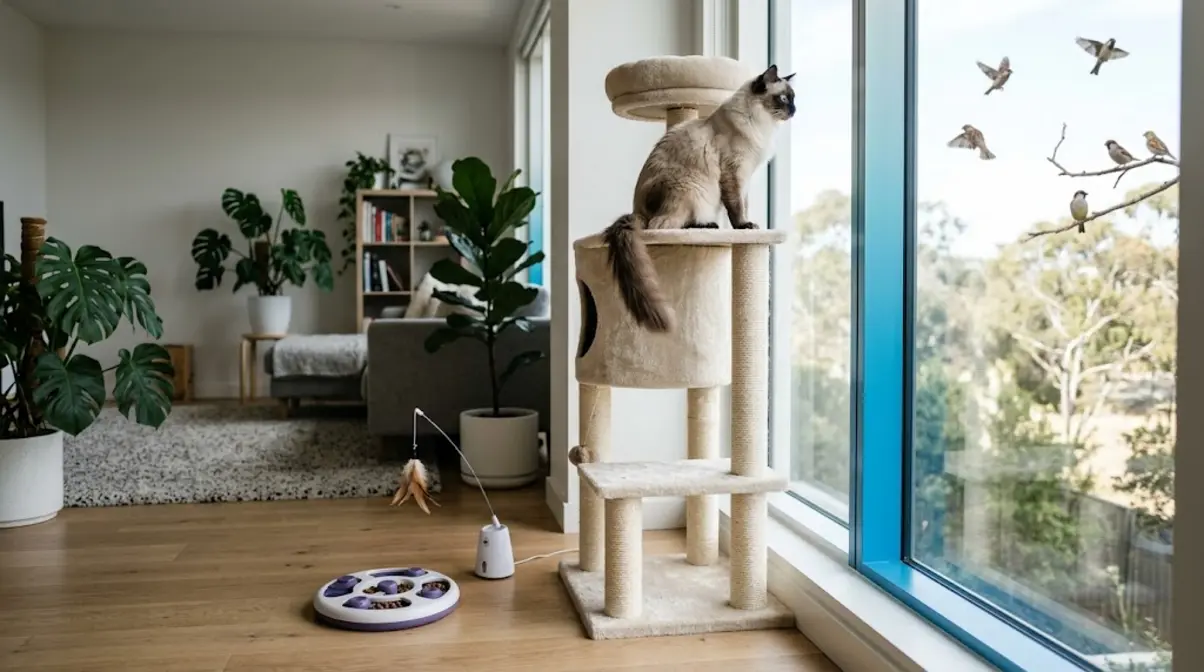
According to Ohio State University Veterinary Medical Center guidelines, highly social cats left alone frequently can develop behavioral issues. The Balinese cat’s deep social need is its most challenging trait for working owners. Left alone for 8+ hours without stimulation, Balinese cats can develop separation anxiety — a condition characterized by destructive behavior, excessive vocalization upon your return, over-grooming, or refusal to eat. If you work a standard 9-to-5 schedule, here are six specific, actionable strategies that make a real difference:
- Adopt in pairs. The single most effective strategy is giving your Balinese a feline companion. Two cats entertain each other, reducing dependence on human presence. Ideally, adopt two Balinese kittens simultaneously so they bond from the start.
- Use food puzzle toys before you leave. Puzzle feeders (toys that dispense kibble as the cat bats or rolls them) engage the Balinese’s considerable intelligence and occupy 20–40 minutes of solo time. Rotate three to four different puzzle types weekly so novelty is maintained.
- Establish a consistent departure routine. Cats are creatures of habit. A predictable pre-departure sequence — same time, same actions — reduces anticipatory anxiety. Avoid dramatic goodbyes, which signal to the cat that your absence is an event worth distressing over.
- Invest in a tall cat tree near a window. Environmental enrichment matters enormously. A window perch with bird feeders visible outside provides passive entertainment for hours. Balinese cats are athletic and enjoy height; a multi-level cat tree satisfies their climbing instinct.
- Leave low-volume audio playing. Leaving a TV channel with nature programming or a radio station on low provides auditory company. Research from the University of Lincoln (2015) found that cats showed lower stress indicators when exposed to species-appropriate music — calm, structured audio is preferable to silence.
- Use a timed interactive toy. Automatic laser toys or motorized wand toys set on a timer provide burst activity during the day. Schedule them for mid-morning and mid-afternoon — the periods when solo cats typically show the most restless behavior.
Why this matters: Separation anxiety in cats isn’t just an emotional issue — chronic stress can suppress immune function and contribute to stress-related conditions like feline idiopathic cystitis (bladder inflammation triggered by stress). Addressing it proactively is an investment in your cat’s long-term health. To better understand their vocal nature, read our guide on why Balinese cats meow so much.
Appearance: Coat, Colors, and Patterns
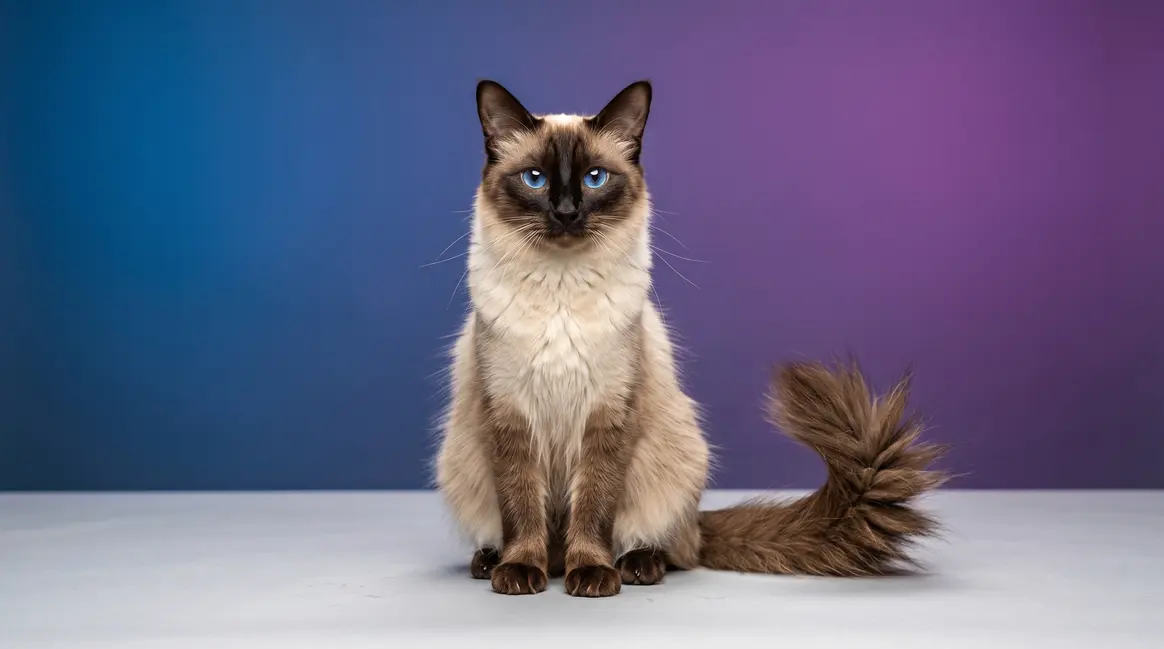
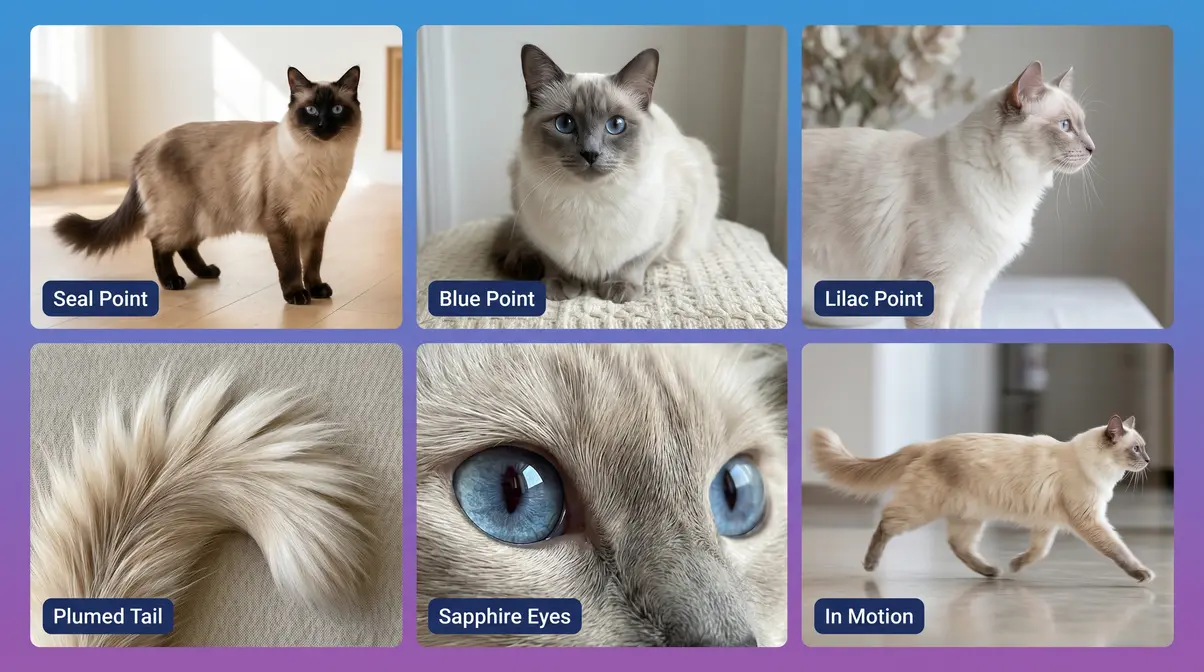
At first glance, the Balinese looks like a Siamese who decided to grow their hair out. That’s essentially accurate — but the coat changes everything about how the breed presents and how you care for it. The overall impression is one of flowing elegance: a long, tapered body with a plumed tail, striking sapphire-blue eyes, and a silky coat that moves when the cat walks.
Physical Features and Body Type
The Balinese has the same svelte, tubular body type as the Siamese — sometimes called the “foreign” body type in cat fancy terminology, which simply means long, lean, and angular rather than compact or rounded. The legs are long and slender, the head is a long wedge shape, and the ears are large and pointed. Those signature sapphire-blue eyes are not just beautiful — they are a breed standard requirement recognized by both TICA and CFA.
The tail is one of the most distinctive features: long, tapering, and covered in a full plume of fur that fans out like a feather. This is often called the “plumed tail” and is the most visible difference from the Siamese at a distance.
Coat Colors and Point Patterns
The Balinese cat’s coat follows the same “pointed” pattern as the Siamese. Color points (the darker-colored areas on the ears, face, paws, and tail) are the defining feature. The body is a pale, creamy base with contrasting points. The traditional colors recognized by the CFA are:
- Seal point — deep brown points on a pale fawn body (the most common and recognizable)
- Blue point — slate-gray points on a bluish-white body
- Chocolate point — warm milk-chocolate points on an ivory body
- Lilac point — pale pinkish-gray points on a glacial white body
TICA recognizes additional color variations including red point, cream point, and tortoiseshell points — sometimes called the “Javanese” in older CFA classifications, though this distinction has been largely consolidated under the Balinese umbrella in modern breed standards.
If you’re searching specifically for a “Balinese cat seal point,” know that seal point kittens are the most widely available and typically the easiest to source from reputable breeders.
Single-Layer Coat and Minimal Shedding
Here’s a fact that surprises many prospective owners: the Balinese has a single-layer coat. Most long-haired breeds have a dense double coat — a soft undercoat beneath a longer topcoat — which is the primary source of heavy shedding and matting. The Balinese lacks this undercoat entirely. As single-coated cats, they shed noticeably less than breeds like the Maine Coon or Ragdoll, and their coat is far less prone to matting.
This single-layer structure also contributes to the lower Fel d 1 allergen load — less shedding means less airborne allergen distribution. This matters for the third pillar of The Balinese Compatibility Framework: long-term cost and care reality.
Health, Lifespan, and Allergies

The Balinese cat breed is generally robust, but it carries some genetic health predispositions inherited from its Siamese lineage. Understanding these honestly — rather than glossing over them — is what separates a well-prepared owner from one who’s caught off guard by a vet bill.
Lifespan and Common Health Conditions
Balinese cats have an impressive lifespan of 12–20 years according to TICA breed standards — longer than the average domestic cat lifespan of 12–15 years. With excellent care, many Balinese cats reach their late teens. That longevity is genuinely good news, but it also means a 15–20 year commitment.
The most significant health conditions to be aware of include:
- Hypertrophic Cardiomyopathy (HCM) — a thickening of the heart muscle that is the most common cardiac disease in cats. The Cornell Feline Health Center lists HCM as a known concern in Siamese-related breeds. Responsible breeders screen breeding cats via echocardiogram.
- Progressive Retinal Atrophy (PRA) — a gradual deterioration of the retina that can lead to blindness. Genetic testing is available and reputable breeders should screen for it.
- Feline Asthma — the Balinese, like the Siamese, has a documented predisposition to feline asthma and respiratory conditions, per the Cornell Feline Health Center. Symptoms include wheezing, coughing, and labored breathing.
- Dental disease — the narrow, wedge-shaped jaw typical of the breed can contribute to dental crowding. Annual dental check-ups are recommended.
- Amyloidosis — a condition where abnormal protein deposits affect organ function, seen in some Siamese-related breeds. Less common than HCM but worth discussing with your vet.
Ask any breeder you consider for health screening documentation on both parents before committing to a kitten.
Truth About Hypoallergenic Claims
Are Balinese cats hypoallergenic? The honest answer is: no cat is fully hypoallergenic, but Balinese cats produce measurably lower levels of Fel d 1 — the primary protein responsible for cat allergies — than most other breeds, which may significantly reduce allergic reactions in sensitive individuals.
Fel d 1 (Felis domesticus allergen 1) is a protein produced primarily in a cat’s salivary and sebaceous glands. When a cat grooms itself, the protein coats the fur and dries into microscopic particles that become airborne. A landmark study published in the Journal of Allergy and Clinical Immunology (Charpin et al., 1991) and subsequent research indexed on PubMed have confirmed that individual cats vary significantly in Fel d 1 production — and that certain breeds, including the Balinese and Siberian, tend toward the lower end of the production range.
A 2011 study on PubMed examining Fel d 1 levels across breeds found that individual variation within a breed can be as significant as variation between breeds — meaning a low-producing Balinese from one breeder may produce more allergen than a high-producing individual from another. Neutering male cats reduces Fel d 1 production significantly, as testosterone amplifies production. Female cats and neutered males consistently test lower.
What this means practically: if you have mild to moderate cat allergies, a Balinese cat may allow you to live comfortably with a cat where other breeds have caused problems. However, this is not guaranteed. Before committing to a kitten purchase, spend several visits with an adult Balinese cat — ideally at the breeder’s home — to assess your personal reaction. Never rely solely on the “hypoallergenic” label.
Daily Grooming and Care Needs
Despite the flowing coat, the Balinese is one of the lower-maintenance long-haired breeds. Because they lack an undercoat, their fur doesn’t mat the way a Persian or Maine Coon coat does. A gentle brush two to three times per week is sufficient to keep the coat tangle-free and distribute natural oils.
Key care routine elements include:
- Brushing: 2–3x weekly with a fine-toothed comb or slicker brush
- Bathing: Occasional — every 4–6 weeks if needed, though many Balinese cats maintain a clean coat without bathing
- Nail trimming: Every 2–3 weeks
- Ear cleaning: Monthly check and gentle clean with a vet-approved solution
- Dental care: Weekly tooth brushing is ideal; dental treats as a supplement
The Balinese’s coat is genuinely one of its practical advantages over other long-haired breeds — beautiful without the maintenance burden.
Pros and Cons of a Balinese Cat
Every breed has trade-offs. The Balinese is extraordinary in many ways — and genuinely demanding in others. The Balinese Compatibility Framework asks you to weigh three things honestly: allergy reality, lifestyle fit, and long-term cost. This section addresses the first two directly.
Reasons to Love the Balinese Cat
The Balinese offers a combination of traits that’s genuinely rare in the cat world:
- Exceptional intelligence. Balinese cats learn tricks, open doors, and solve puzzle toys with enthusiasm. They are one of the few cat breeds that actively enjoy training sessions with positive reinforcement.
- Deep, consistent affection. Unlike breeds that tolerate handling, the Balinese seeks it. This is a cat that will sit on your laptop, follow you to the bathroom, and curl against you every night.
- Lower allergen production. For allergy-sensitive households, the lower Fel d 1 output — combined with the single-layer coat and reduced shedding — makes the Balinese one of the most viable options among purebred cats.
- Long lifespan. A 12–20 year lifespan means a long relationship. For owners who want a genuine long-term companion, the Balinese delivers.
- Striking appearance. The sapphire-blue eyes, silky coat, and plumed tail make the Balinese one of the most visually distinctive breeds available.
- Adaptable to families. They typically do well with children and other pets when properly introduced.
Challenges Prospective Owners Face
Honest ownership preparation means knowing these realities before you bring a kitten home:
- High social demand. This is not a cat for people who want an independent, low-maintenance pet. The Balinese needs you — daily, actively. An unstimulated Balinese in a quiet home for 8 hours is a stressed Balinese.
- Constant vocalization. The chatty nature is charming for some owners and exhausting for others. Be realistic about your tolerance for a cat that narrates its life.
- Health screening costs. Responsible breeding involves HCM echocardiograms, PRA genetic testing, and other health screens — costs that are reflected in the kitten price and that you should confirm with any breeder.
- Moderate grooming commitment. Lower than most long-haired breeds, but still a real time investment compared to a short-haired cat.
- Strong prey drive. The Balinese is an active hunter at heart. Unsupervised access to small pets (birds, hamsters) is not advisable.
Finding a Balinese Cat: Breeders & Cost
Finding a healthy Balinese kitten from an ethical breeder takes patience — this is not a breed you’ll find at a pet store, and that’s a good thing. The third pillar of The Balinese Compatibility Framework is long-term cost: understanding what you’re committing to financially before you fall in love with a kitten.
How Much Does a Balinese Cat Cost?
Balinese kittens from reputable breeders typically cost between $1,000 and $2,500 in 2026, depending on pedigree, color, breeder reputation, and geographic location. Show-quality kittens (cats meeting breed standards closely enough for competition) can exceed $3,000. Pet-quality kittens from the same litter — equally healthy but with minor cosmetic deviations from the breed standard — fall in the lower range.
Rescue Balinese cats are occasionally available through breed-specific rescues for adoption fees of $75–$250, though availability is limited given the breed’s relative rarity.
| Acquisition Type | Typical Cost (2026) |
|---|---|
| Pet-quality kitten (reputable breeder) | $1,000–$1,800 |
| Show-quality kitten (reputable breeder) | $2,000–$3,000+ |
| Retired breeding cat (from breeder) | $400–$800 |
| Rescue / breed-specific adoption | $75–$250 |
Finding a Reputable Breeder
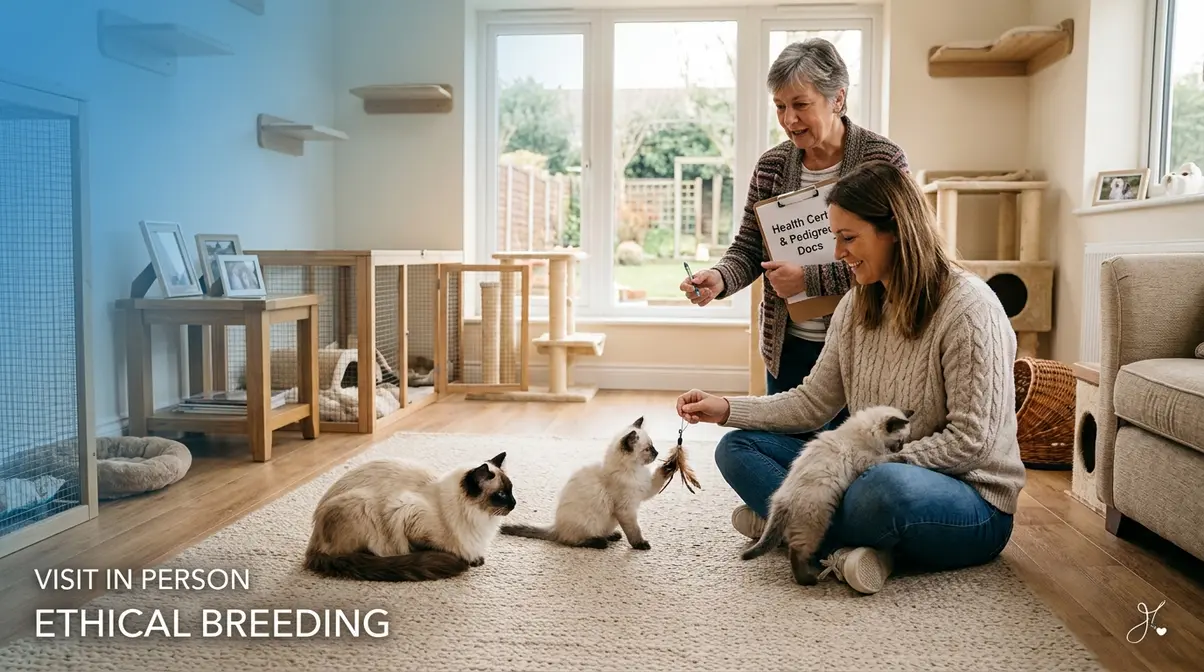
Our team evaluated Balinese cat breed profiles across TICA, CFA, and veterinary research to compile this guidance. The TICA and CFA breeder directories are your safest starting points — breeders listed there have agreed to their respective organizations’ codes of ethics.
- Green flags — what a reputable breeder does:
- Provides health screening documentation for both parents (HCM echocardiogram, PRA genetic test)
- Keeps kittens until at least 12 weeks old before placement
- Asks you questions — a good breeder screens buyers as carefully as buyers screen them
- Offers a health guarantee and is willing to take the cat back if your circumstances change
- Allows you to visit and meet the parents in the home environment
- Is registered with TICA or CFA
- Red flags — walk away if you see these:
- Kittens available immediately, at 6–8 weeks old
- No health testing documentation available or offered
- Multiple breeds available simultaneously (often a volume operation, not a specialist)
- Price significantly below market ($300–$500 for a “Balinese kitten”)
- No contract, no health guarantee
- Reluctance to allow a home visit or video call showing the cattery
First-Year vs. Lifetime Cost Breakdown
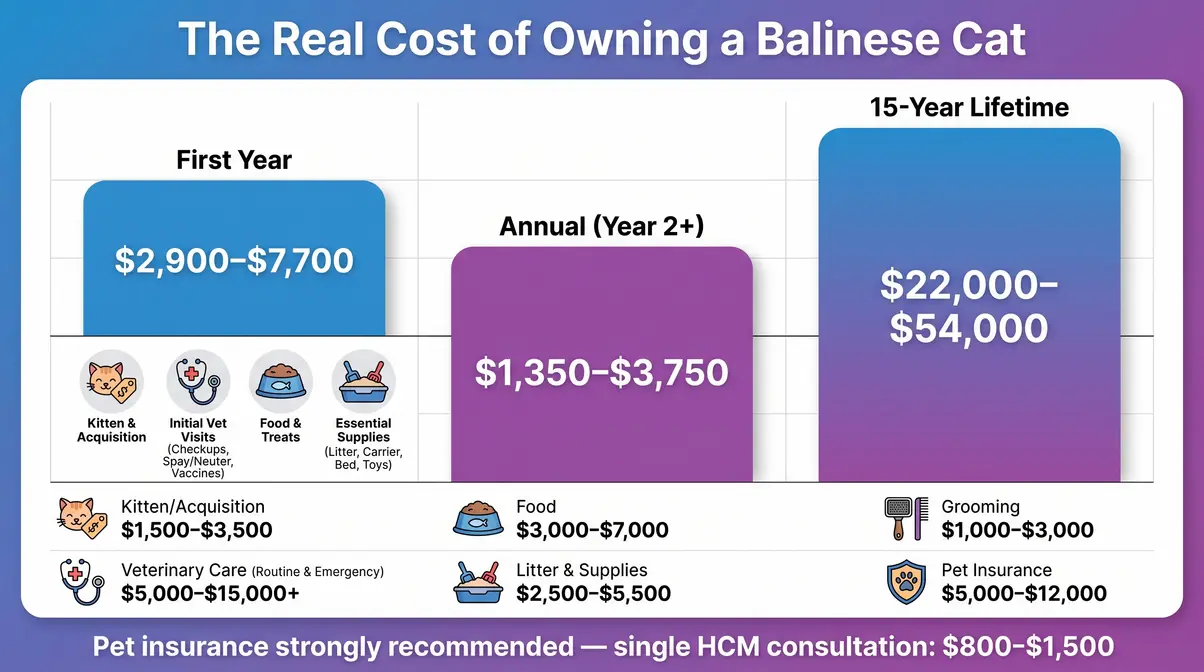
The purchase price is the smallest part of the financial commitment. Here’s a realistic breakdown of what Balinese cat ownership actually costs:
| Expense Category | First Year | Annual (Years 2+) | Lifetime (~15 Years) |
|---|---|---|---|
| Kitten / acquisition cost | $1,000–$2,500 | — | $1,000–$2,500 |
| Spay/neuter surgery | $200–$500 | — | $200–$500 |
| Initial vaccinations + wellness | $200–$400 | $100–$200 | $1,700–$3,500 |
| High-quality food | $400–$700 | $400–$700 | $6,000–$10,500 |
| Litter + supplies | $300–$500 | $200–$400 | $3,200–$6,500 |
| Grooming tools / occasional professional | $100–$200 | $50–$150 | $800–$2,750 |
| Toys, enrichment, cat tree | $200–$400 | $100–$200 | $1,600–$3,400 |
| Routine vet care | $200–$400 | $200–$400 | $3,000–$6,000 |
| Emergency / specialist vet | $0–$2,000 | $0–$1,500 | $0–$10,000+ |
| Pet insurance | $300–$600 | $300–$600 | $4,500–$9,000 |
| Estimated Total | $2,900–$7,700 | $1,350–$3,750 | $22,000–$54,000 |
Pet insurance is strongly recommended for the Balinese given the breed’s HCM and feline asthma predispositions. A single cardiac specialist consultation can cost $800–$1,500 without coverage.
For more context on related breeds, explore our guide to Balinese and Javanese cats.
Limitations and Breed Alternatives
Common Mistakes New Owners Make
Underestimating the social demand. The most frequently reported regret among Balinese owners in cat fancier communities is adopting a single Balinese into a household where the cat will be alone for most of the workday. The breed’s intelligence amplifies boredom into destructive behavior faster than most cats. Specific scenario: a single Balinese in a studio apartment with a full-time commuter owner, no companion animal, and minimal enrichment will almost certainly develop stress-related behaviors within weeks.
Relying on “hypoallergenic” without testing. Purchasing a kitten before personally testing your reaction to an adult Balinese is a mistake with serious consequences — for you and for the cat if a rehoming becomes necessary. Always spend time with adult cats of the breed before committing.
Skipping health screening verification. Assuming a low price means a bargain rather than a warning sign. A kitten purchased from an unscreened breeder for $400 can result in $5,000–$10,000 in cardiac treatment costs within the first few years.
When to Choose a Different Breed
The Balinese is genuinely not the right choice for every household. Consider an alternative if:
- You want a quiet, independent cat. Breeds like the British Shorthair or Russian Blue are affectionate but far less demanding of your constant presence and attention. They tolerate solo time with considerably less distress.
- You have severe cat allergies. If your allergies are severe rather than mild to moderate, no cat is truly safe — and the Balinese, while lower-producing, is not a medical solution. Consult an allergist before making any decision.
- Your household is chaotic or unpredictable. Balinese cats thrive on routine. Households with highly irregular schedules, frequent loud noise, or multiple young children who handle cats roughly may not provide the stable environment this breed needs.
When to Seek Expert Help
If you’re seriously considering a Balinese cat and have documented cat allergies, schedule a consultation with an allergist before purchasing. An allergist can run specific Fel d 1 sensitivity tests and advise whether reduced-allergen breeds are a viable option for your specific immune profile. For questions about HCM screening or breed-specific health risks, a veterinary cardiologist consultation before adopting is money well spent.
Frequently Asked Questions
How much do Balinese cats cost?
Balinese kittens from reputable breeders typically cost $1,000–$2,500 in 2026 (according to TICA breeder listings), with show-quality cats occasionally exceeding $3,000. The price reflects health screening costs, pedigree, and the relative rarity of the breed. Rescue Balinese cats are available through breed-specific organizations for $75–$250 in adoption fees, though availability is limited. Budget for a first-year total of $3,000–$7,700 including setup, veterinary care, food, and supplies — the kitten price is only the beginning of the financial commitment.
Are Balinese cats cuddly?
Balinese cats are genuinely and consistently cuddly — this is one of their defining traits, not just a marketing description. According to CFA breed standards, the Balinese is highly affectionate and forms intense bonds with its primary humans. Across professional cat fancier communities, the consistent feedback is that Balinese cats follow owners from room to room, seek lap time actively, and sleep pressed against their humans. If you want a cat that initiates affection rather than tolerating it, the Balinese is one of the strongest matches in the purebred world.
Do Balinese cats meow a lot?
Yes — Balinese cats are vocal, chatty companions who communicate frequently and persistently. They will narrate their hunger, greet you at the door, and express opinions about closed doors. However, their voice is notably softer and less piercing than the classic Siamese yowl, which many owners find more manageable. If you work from home, expect ongoing conversation. If you value a quiet environment, the Balinese’s vocalization level is worth weighing seriously before adopting — it is a fixed trait of the breed, not something that diminishes with age or training.
What breeds make a Balinese cat?
The Balinese is not a mix — it is a purebred Siamese with a natural long-hair genetic mutation. No other breed was introduced to create the Balinese. Long-haired kittens appeared spontaneously in Siamese litters due to a recessive mutation in the FGF5 gene (the gene responsible for coat length). Both Siamese parents must carry this recessive gene for long-haired kittens to be born. The UC Davis Veterinary Genetics Laboratory has confirmed this mechanism. The Balinese was then selectively bred to stabilize the long-coat trait while preserving the Siamese’s body type and temperament.
Can they be left alone for 8 hours?
Balinese cats can physically survive 8 hours alone, but they struggle emotionally without enrichment and companionship. Unlike more independent breeds, the Balinese has a high social need that makes prolonged solitude genuinely stressful. Common signs of separation anxiety include excessive vocalization upon your return, destructive behavior, and over-grooming. The most effective solution is adopting two cats simultaneously. If a second cat isn’t possible, food puzzle toys, automated interactive toys, and consistent departure routines reduce stress significantly — see the six management strategies in the Personality section of this guide.
Is the Balinese the Right Breed?
The Balinese cat breed offers something genuinely rare: the intelligence and social warmth of the Siamese in a slightly softer, lower-allergen package with a coat that turns heads in every room. For households that can meet its social needs, the Balinese is one of the most rewarding companions in the purebred cat world — and with a lifespan of 12–20 years (TICA breed standards), that companionship runs deep.
The Balinese Compatibility Framework gives you the three lenses that matter: allergy reality (lower Fel d 1, but not zero — test before you commit), lifestyle fit (this breed needs daily engagement, not occasional attention), and long-term cost (budget $22,000–$54,000 across a full lifetime). Run your situation through all three honestly, and the answer becomes clear.
If the Balinese fits your framework, your next step is concrete: search the TICA or CFA breeder directories, schedule a visit to meet adult cats in person, and spend at least 30–60 minutes in the breeder’s home assessing your allergy response before any money changes hands. A reputable breeder will welcome that request. One who doesn’t is a red flag in itself.

Dave King
Cat owner and writer at Mad Cat Man.