
Up to 40% of the original Maine Coon population in New England was born with extra toes (Basepaws, 2023). If you just spotted a photo of a Maine Coon with enormous, mitten-like paws and thought “wait — is something wrong with that cat?” you are not alone. That reaction is completely normal. And the answer, thankfully, is a resounding no.
Without understanding what those extra toe beans really are, you might miss the specific care steps that keep them healthy — especially the hidden dewclaw that can silently grow into the paw pad. This guide covers everything: the genetics behind polydactyl Maine Coon paws, their fascinating history, how they compare to standard paws, a step-by-step nail trimming routine, and how to find a healthy polydactyl kitten from a reputable breeder. By the end, you will feel reassured, informed, and genuinely delighted by those extra beans.
Polydactyl Maine Coon paws — those famous “extra toe beans” — are caused by a harmless dominant gene and historically gave these cats a snowshoe-like advantage in New England winters. The Snowshoe Advantage explains why these paws are a celebrated feature, not a flaw.
- Genetics: Polydactyly is an autosomal dominant trait — just one parent needs to carry the gene for kittens to be born with extra toes
- History: Up to 40% of original Maine Coons had this trait (Basepaws, 2023) — it is deeply native to the breed
- Health: The condition is harmless, but extra claws need more frequent trimming to prevent painful ingrowth
- Recognition: TICA officially recognizes the Maine Coon Polydactyl as a separate show division; the CFA does not
- Care: The hidden dewclaw is the #1 grooming challenge — this guide shows you exactly where to find it and how to trim it safely
What Is a Polydactyl Maine Coon? Genetics, History, and Appearance
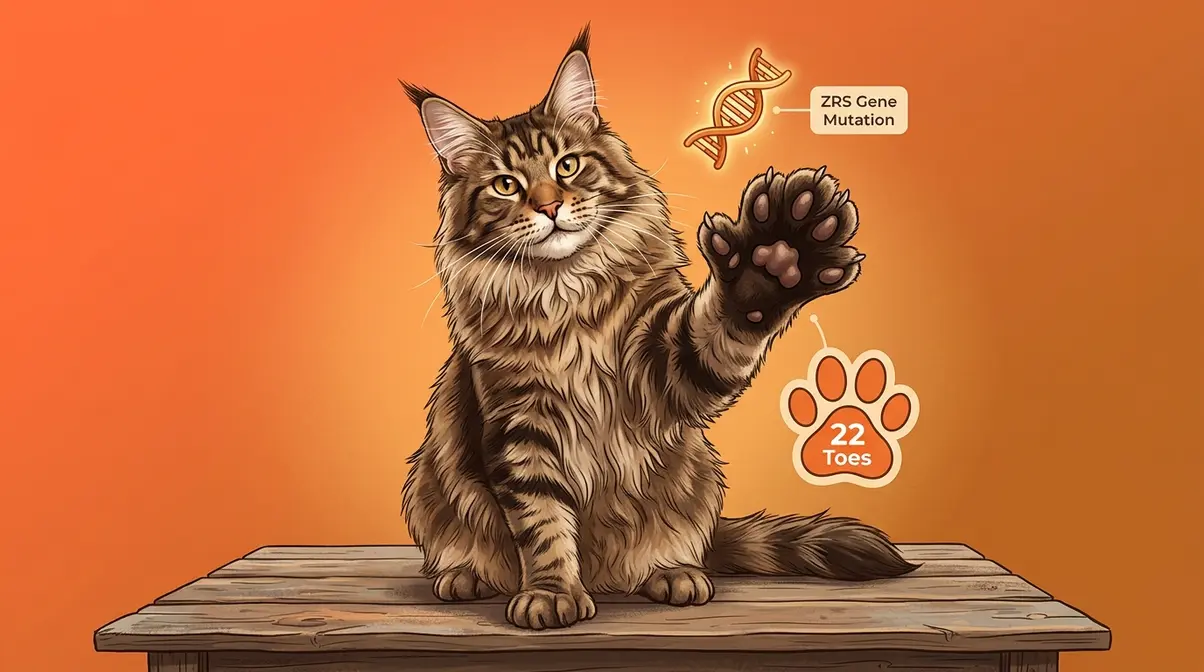
Polydactyly (from the Greek for “many fingers”) is the condition of being born with extra toes — and it is one of the most iconic and beloved traits in the entire Maine Coon breed. Up to 40% of the original, unregistered Maine Coon population in New England carried this trait (Basepaws, 2023). Far from a defect, those extra toe beans are a window into the breed’s remarkable working-cat history, and understanding where they come from will completely change how you see them.
The Genetic Secret Behind Extra Toes
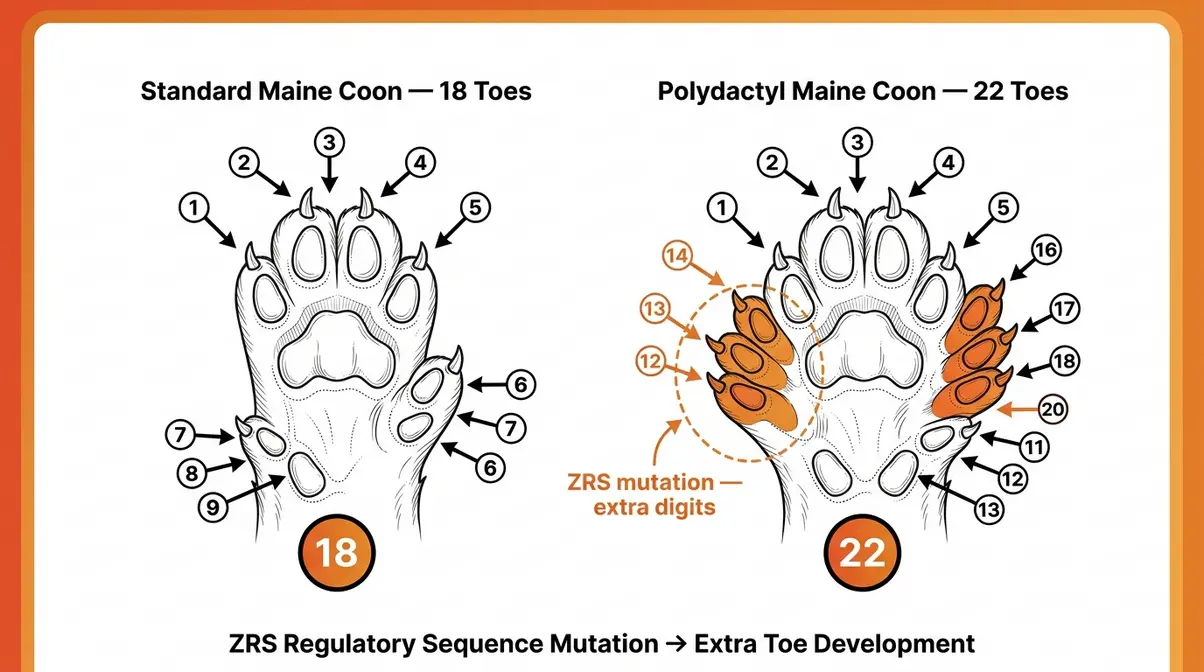
Polydactyly in cats is caused by a point mutation in a specific stretch of DNA called the Zone of Polarizing Activity Regulatory Sequence — or ZRS for short. The ZRS is essentially a molecular on/off switch that controls how many toes develop on a limb. When this switch is altered by a tiny genetic change, it triggers the Sonic Hedgehog gene (SHH), a key regulator of limb development, to produce one or more extra toes (PMC/NCBI, 2024).
That might sound alarming — but here is the crucial detail. The mutation is so localized that it affects only paw development, nothing else. As research published in PMC confirms, feline polydactyly is caused by a point mutation in the ZRS regulatory sequence of the Sonic Hedgehog gene — a change so targeted it leaves every other system in the cat’s body completely untouched.
The trait is autosomal dominant, which means your Maine Coon only needs to inherit the polydactyl gene from one parent to be born with extra toes. Think of it like brown eyes being dominant over blue in humans — one copy of the gene is enough. If one parent carries the gene, statistically about 50% of kittens in a litter will be polydactyl. What this means for your cat: those extra toes were not a random accident. They were inherited from a proud line of working cats who needed every advantage the New England winters could throw at them.
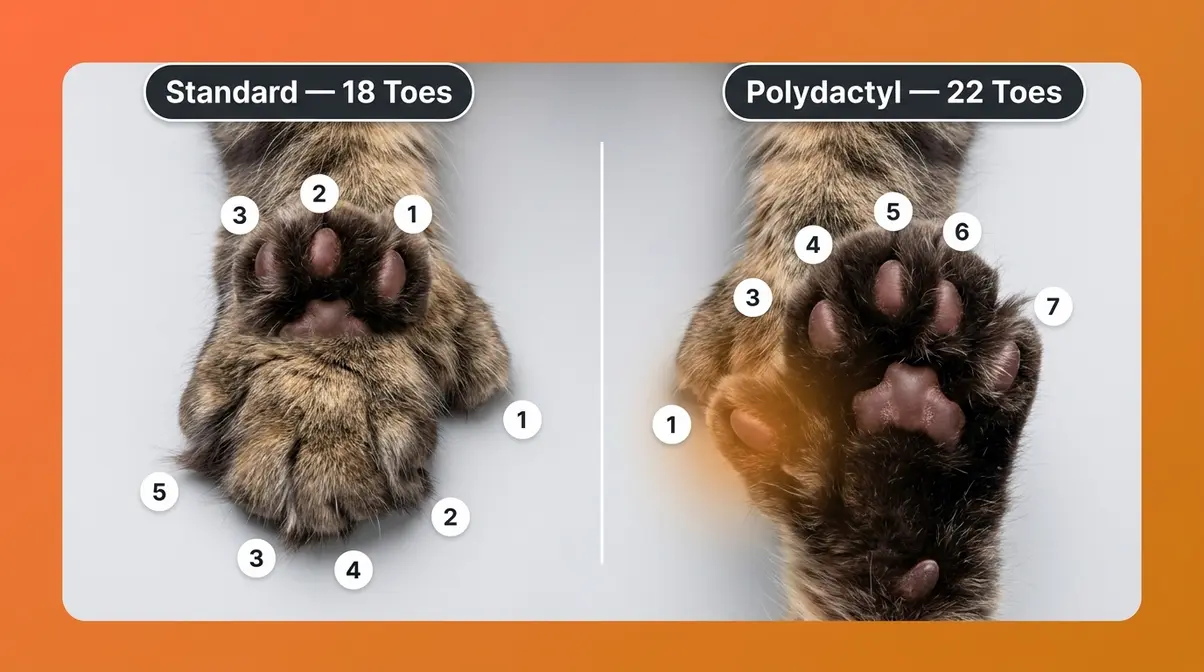
Standard cats have 18 toes total — five on each front paw and four on each back paw. Polydactyl Maine Coons can have anywhere from 19 up to 28 toes, though 20–22 is the most common range seen in the breed.
A Brief History: From New England Ships to Show Rings
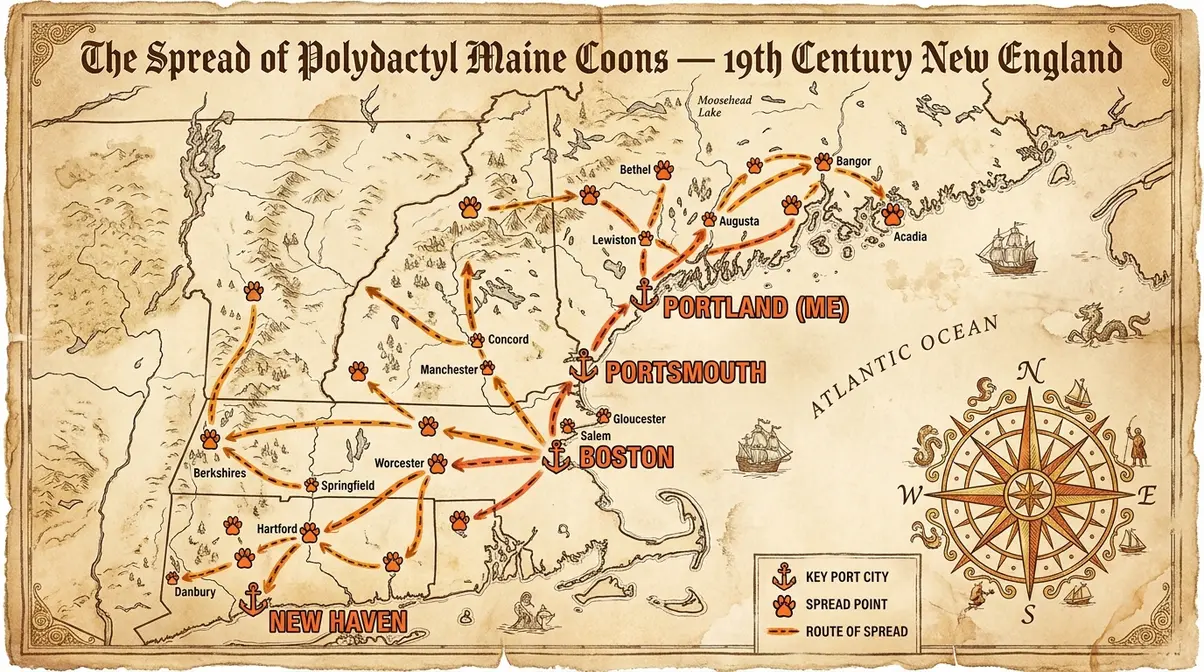
The story of poly paws begins at sea. Maine Coons were prized as working ship cats in the 1800s — they hunted rodents in the holds of vessels sailing in and out of New England ports. Sailors considered polydactyl cats exceptionally lucky, and with good reason: those extra toes provided better grip on wet, rolling decks.
On land, the advantage continued. The broader, wider paw acted like a natural snowshoe across the heavy drifts of a New England winter — spreading body weight over a larger surface area and improving traction on ice and soft snow. As the community of breeders and owners who have studied these cats consistently notes:
“The big paws of the poly Maine coons increase the surface area of the foot, and this is argued to facilitate movement on snow and help climb and hunt more effectively.”
This is The Snowshoe Advantage — the principle that polydactyl paws are an evolutionary asset, not a genetic defect. The trait became so common in the coastal Maine Coon population that up to 40% of cats carried it. By the mid-20th century, however, cat fancy organizations began standardizing breeds around the 18-toe norm, and polydactyl Maine Coons were quietly sidelined from show rings for decades. Their comeback — and TICA’s eventual recognition of the Maine Coon Polydactyl as a legitimate show division — is a story of breeders fighting to preserve a piece of the breed’s authentic history.
Mitten Paws, Thumb Paws, and Patty Feet: Toe Types Explained
Not all poly paws look the same. The extra toes can appear in three distinct configurations, and knowing which type your cat has helps you care for them properly.
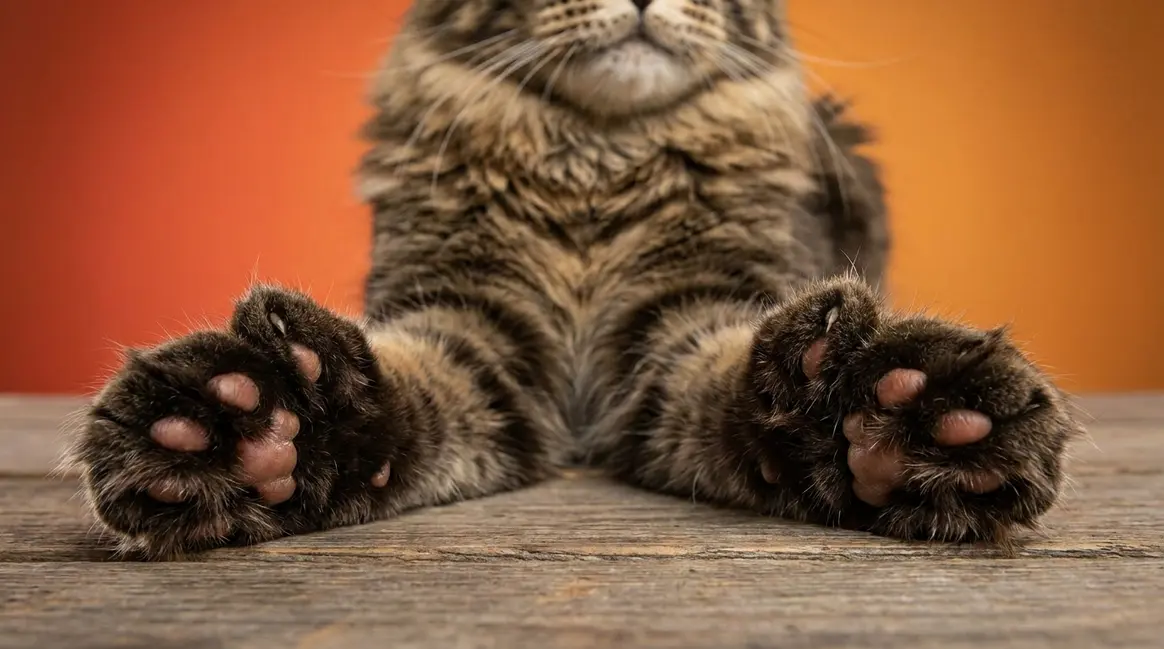
Mitten Paws are the most dramatic and the most famous. The extra toe grows on the inner side of the paw, creating a wide, thumb-like protrusion that gives the foot a mitten silhouette. This is the configuration most people picture when they think of polydactyl Maine Coon paws — wide, flat, and almost hand-like.
Thumb Paws are similar to mitten paws but the extra digit is more defined and opposable-looking. Some polydactyl cats can actually use this “thumb” to grip objects, which owners find endlessly entertaining (and occasionally inconvenient when it comes to door handles).
Patty Feet feature extra toes that are more evenly distributed across the paw, creating a broader, rounder shape rather than a distinct thumb protrusion. The paw looks wide and padded — like a snowshoe — which is exactly the functional advantage it provided.
| Paw Type | Extra Toe Position | Appearance | Common Nickname |
|---|---|---|---|
| Mitten Paw | Inner side | Wide, mitten silhouette | “Mittens,” “thumbs” |
| Thumb Paw | Inner side, defined | Opposable-looking digit | “Thumbs,” “hands” |
| Patty Foot | Distributed evenly | Wide, round, snowshoe-like | “Patty feet,” “big beans” |
Regardless of type, all well-tufted toes on a polydactyl Maine Coon carry the same care requirements — each extra claw needs regular attention. More on that in H2 3.
Polydactyl vs. Standard Maine Coon: Side-by-Side Comparison
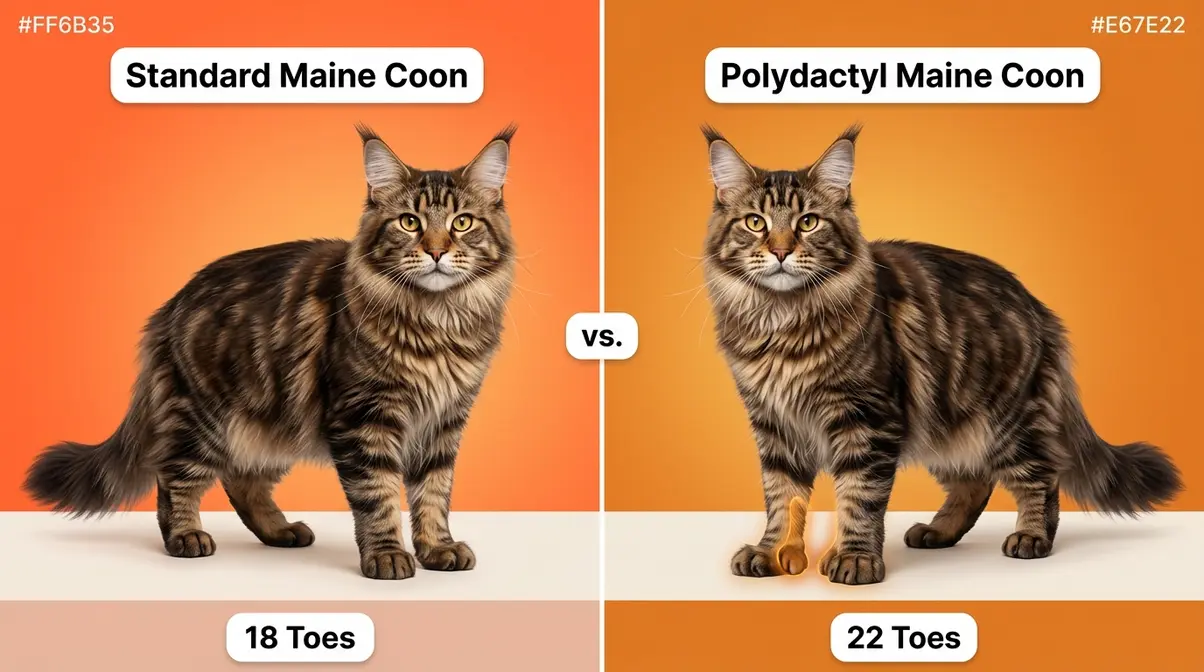
A polydactyl Maine Coon is still entirely, unmistakably a Maine Coon. The extra toes are the only structural difference. Everything else — the shaggy semi-longhair coat, the tufted ears, the dog-like personality — is identical. That said, there are a few important distinctions worth knowing before you decide which type is right for you.
Physical Differences: Size, Paws, and Build
The most obvious difference is the paw size. Polydactyl Maine Coon paws are noticeably wider and often longer than standard paws, which are already large by cat standards. When a polydactyl Maine Coon sits and spreads those toes, the effect is genuinely striking — like watching a cat unfurl a hand.
Body size, head shape, coat type, and overall build are identical between polydactyl and standard Maine Coons. Both can reach the same impressive dimensions: males typically weigh 13–18 lbs and females 8–12 lbs, with some males exceeding 20 lbs. The breed reaches full physical maturity at around 3–5 years — later than most other breeds.
The one physical myth worth addressing: some people assume polydactyl Maine Coons are somehow “bigger” or “sturdier” than standard ones. Veterinary consensus and breeder observation confirm this is not the case. The extra toes do not affect bone density, muscle mass, or overall body size. What you are seeing is simply more paw spread — not more cat.
Show Standards: What TICA and CFA Say in 2026
This is where polydactyl and standard Maine Coons officially part ways. The two major cat registries take very different positions on poly paws.
The International Cat Association (TICA) officially recognizes the Maine Coon Polydactyl as a separate registration division within the Maine Coon breed. According to TICA’s official breed standard, polydactyl Maine Coons compete in their own championship class and are judged against the same conformation standards as standard Maine Coons — with the addition of specific criteria for the extra toes. TICA requires that the extra toes be well-formed and that the paw structure be sound, with no malformation that would impair movement.
The Cat Fanciers’ Association (CFA), by contrast, does not recognize polydactyly as an acceptable trait for show competition. CFA breed standards list extra toes as a disqualifying fault — a position that reflects the organization’s historical preference for the 18-toe norm rather than any health concern.
| Registry | Polydactyl Recognized? | Show Eligible? | Notes |
|---|---|---|---|
| TICA | ✅ Yes | ✅ Yes (own division) | Separate championship class; conformation judged same as standard |
| CFA | ❌ No | ❌ Disqualifying fault | Historical preference for 18-toe standard; not a health ruling |
| GCCF (UK) | ❌ No | ❌ Not permitted | Similar to CFA position |
| WCF | ❌ No | ❌ Not permitted | Follows CFA precedent |
What this means for you: If you want to show your Maine Coon, TICA is the registry to work with for polydactyl cats. If you are buying a pet and have no interest in showing, the registry difference is irrelevant to your cat’s health or happiness.
Temperament: Do Extra Toes Change Anything?
Absolutely not — and this is one of the most persistent myths worth putting to rest. The gene that causes polydactyly affects toe formation only. It has zero influence on brain chemistry, nervous system development, or behavior.
Polydactyl Maine Coons share the same famously dog-like temperament as standard Maine Coons: highly social, playful well into adulthood, gentle with children and other pets, and unusually willing to follow their humans from room to room. Breeders and owners consistently report that poly Maine Coons are, if anything, slightly more dexterous — some individuals use their wider paws to pick up toys, open latches, or “hold” objects in a way that standard cats cannot easily replicate.
The personality you are getting is 100% Maine Coon. The extra toes are just a bonus.
Health, Care, and Nail Trimming for Polydactyl Paws
Polydactyl Maine Coon paws are healthy — but they do require more attentive grooming than standard paws. The extra claws grow at the same rate as regular claws, and one of them (the dewclaw equivalent) sits in a position where it cannot self-wear. Left untrimmed, it can curl and grow directly into the paw pad. This section gives you everything you need to prevent that.
Is Polydactyly a Health Problem? Busting the Myths
Polydactyly in Maine Coons is not a health problem. The condition is classified as a benign anatomical variant — meaning it is a physical difference, not a disease or disorder. The Cornell Feline Health Center and veterinary consensus broadly confirm that cats born with extra toes live full, normal, pain-free lives with no increased risk of joint problems, mobility issues, or systemic illness attributable to the extra digits themselves.
One myth in particular deserves direct attention: polydactyly is not linked to autism, cognitive impairment, or neurological conditions in cats. This misconception appears to arise from confusion with human genetic syndromes where polydactyly occurs alongside other conditions. In cats — and specifically in Maine Coons — the ZRS mutation that causes extra toes is isolated entirely to limb development. Research published in PMC (2024) confirms the mutation does not affect brain development, organ function, or lifespan.
There is one important distinction to know: feline radial hypoplasia (FRH), sometimes called “twisty cat” syndrome, can superficially resemble polydactyly but is a serious structural condition causing malformed, shortened foreleg bones. True polydactyly produces well-formed, functional extra toes. FRH produces twisted, non-functional limbs. A reputable breeder will never breed for FRH — if you see a cat with bent, contorted front legs, that is not polydactyly.
The Snowshoe Advantage reframes the entire conversation: these paws evolved because they worked. They are not a mistake the body made — they are a feature the breed developed over generations of selection in harsh working conditions.
The Hidden Danger: How Dewclaws Can Grow Into the Paw Pad
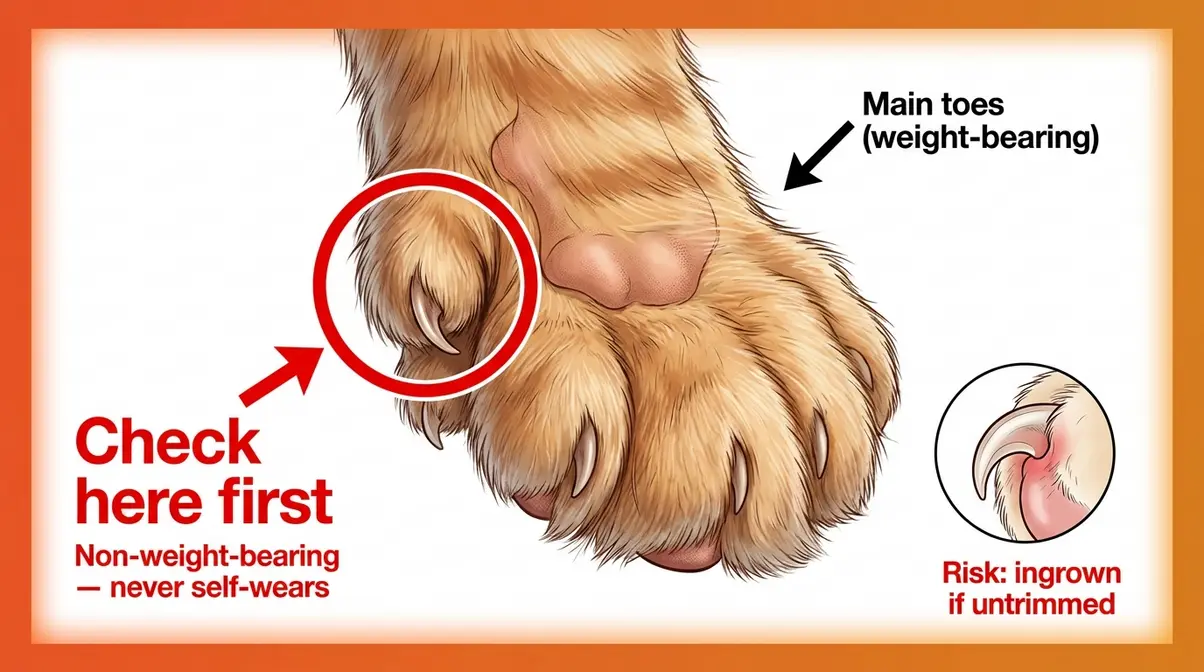
Here is the one genuine care concern with polydactyl Maine Coon paws: the inner dewclaw equivalent. On a standard cat, dewclaws (the small, higher-set claws on the inner front leg) are present but usually do not touch the ground, so they wear down more slowly. On a polydactyl cat, the extra inner toe — particularly on the front paws — sits in a similar position and is completely non-weight-bearing.
Because it never contacts the ground, it never self-wears. If left untrimmed, it will grow in a curve — and eventually that curve will complete a full circle and puncture the soft paw pad tissue. This is painful, can become infected, and requires a veterinary visit to resolve. The good news: it is 100% preventable with regular trimming.
Where to find it: Run your finger along the inner edge of your cat’s front paw, above the main toe cluster. Feel for a small, slightly higher-set toe that does not touch the floor when the cat stands. That is the one to watch. On some polydactyl cats, there may be a second inner extra toe — check both sides carefully.
Step-by-Step: How to Trim Polydactyl Claws Safely (5 Steps)
Based on veterinary consensus from sources including VCA Animal Hospitals, trimming a polydactyl cat’s nails follows the same principles as standard nail care — with two additions: you need to locate and trim every extra claw, and you need to check for the hidden inner dewclaw described above.
Before You Start — What You Need:
- Sharp cat nail clippers (scissor-style or guillotine — not human nail clippers, which crush rather than cut)
- Styptic powder or cornstarch (in case you nick the quick)
- A bright light source or small flashlight
- A soft towel or blanket to wrap your cat (“the purrito method” works well for anxious cats)
- Treats for before, during, and after
- A second person to hold the cat is helpful for beginners
Allow 15–20 minutes the first few times. Once you and your cat are comfortable, it typically takes 5–8 minutes.
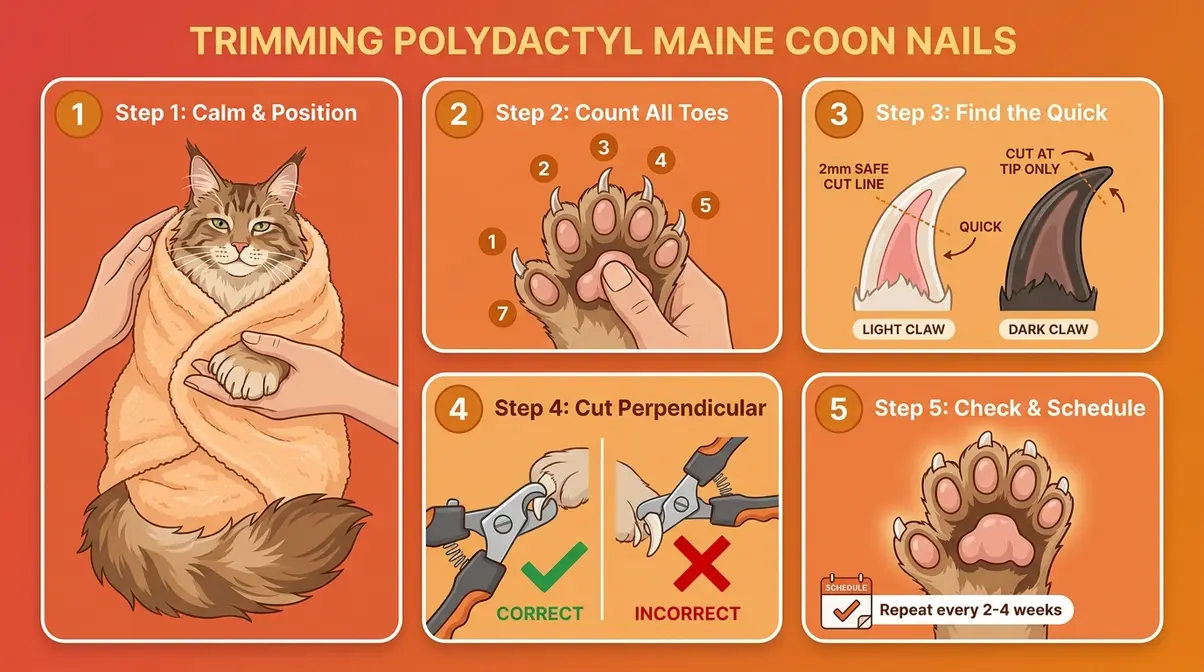
Step 1: Get Your Cat Calm and Positioned
Choose a quiet time — not right after play and not when your cat is hungry. Sit in a comfortable chair with your cat on your lap or on a table at elbow height. If your cat is wriggly, wrap them loosely in a towel with one paw exposed at a time. Let them sniff the clippers before you begin. Offer a treat. The goal is a relaxed cat, not a restrained one.
Step 2: Locate ALL the Toes — Count Them
Before cutting anything, gently press each paw pad to extend the claws and count every toe. Polydactyl Maine Coons can have asymmetrical toe counts — more on one paw than the other — so do not assume. On each front paw, specifically check the inner edge for the non-weight-bearing dewclaw equivalent. On back paws, extra toes are less common but still possible. Mark mentally (or with a small dot of washable marker on your hand) how many claws each paw has.
Step 3: Identify the Quick on Each Claw
Hold the paw up to your light source. On light-colored claws, you will see a pink triangle of tissue inside the claw — this is the quick (the living blood vessel and nerve). Your cut must stay 2mm in front of the quick. On dark claws, the quick is not visible; cut only the sharp, hooked tip — about 1–2mm of the pointed end. The inner dewclaw equivalent often has a longer quick than the main claws because it grows faster — be conservative on this one.
Step 4: Make the Cut — One Claw at a Time
Hold the claw steady between your thumb and forefinger. Position the clipper blades perpendicular to the claw (not at an angle — angled cuts can split the nail). Squeeze firmly and quickly — hesitant squeezing causes crushing. Work through every claw on that paw before moving to the next, including the inner dewclaw. If your cat protests, take a break, offer a treat, and resume.
Step 5: Reward, Check, and Schedule the Next Trim
After all paws are done, offer treats and praise. Run your finger over each paw pad to confirm no sharp tips remain. Check the inner dewclaw one more time — press the pad to extend it fully and confirm it is not curling toward the pad. Schedule the next trim in 2–3 weeks (polydactyl Maine Coons generally need trimming more frequently than standard cats because the extra claws do not self-wear).
⚠️ Common Mistakes to Avoid
- Skipping the inner dewclaw — It is easy to miss because it sits above the main toe cluster. Always count before cutting.
- Using dull clippers — Dull blades crush the nail instead of cutting cleanly, causing cracking and pain. Replace clippers every 6–12 months.
- Cutting too short on dark claws — When in doubt, take less. A slightly long claw is far better than a bleeding quick.
- Rushing a stressed cat — If your cat is growling or thrashing, stop. Forcing the experience creates lasting negative associations. Do one paw per session if needed.
- Forgetting the back paws — Some owners focus only on the front paws. Trim all four.
Rarity, Value, and Finding a Polydactyl Maine Coon
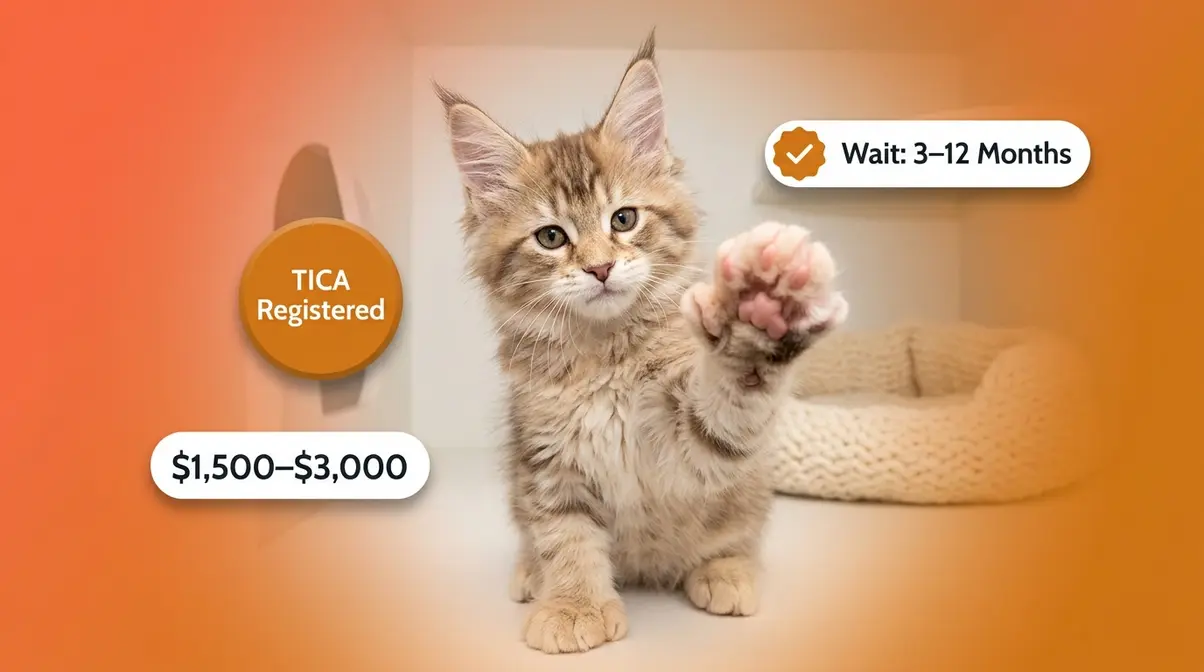
If you have decided you want one of these magnificent mitten-pawed cats, here is what you need to know about how common they are, what they cost, and how to find a healthy kitten from a trustworthy source.
How Rare Is a Polydactyl Maine Coon?
Polydactyl Maine Coons are rarer than standard Maine Coons — but not as rare as many people assume. The trait occurs naturally in the breed, and dedicated breeders have preserved and expanded polydactyl lines since TICA’s recognition of the Maine Coon Polydactyl as a show division.
Estimates from the broader polydactyl cat population suggest that roughly 1 in 20 cats in the general domestic cat population carries some form of polydactyly — but within the Maine Coon breed specifically, the historical prevalence was far higher. That 40% figure cited earlier (Basepaws, 2023) reflected the unregistered, working-cat population of 19th-century New England. Today’s registered breeding population is smaller and more carefully managed, so true polydactyl Maine Coons from health-tested, pedigree lines are genuinely harder to find than standard Maine Coons.
According to mcpolydactyl.com, dedicated polydactyl Maine Coon breeders are a relatively small community compared to the broader Maine Coon breeding world — which means wait lists are common and availability varies significantly by region. Expect to wait 3–12 months for a kitten from a reputable breeder.
How Much Does a Polydactyl Maine Coon Cost?
Polydactyl Maine Coon kittens from health-tested, TICA-registered breeders typically range from $1,500 to $3,000+ USD (as of Q2 2026, based on current breeder listings). Show-quality kittens from championship lines can exceed $3,500. Pet-quality kittens from reputable breeders generally fall in the $1,500–$2,200 range.
| Kitten Type | Typical Price Range (2026) | Notes |
|---|---|---|
| Pet quality, reputable breeder | $1,500–$2,200 | Health tested parents, TICA registered |
| Show quality, championship lines | $2,500–$3,500+ | Competition-ready conformation |
| Rescue/rehome | $50–$300 | Rare; health history may be incomplete |
| Backyard breeder / no health tests | $400–$900 | Avoid — high risk of genetic health issues |
These prices are higher than standard Maine Coon kittens (which typically run $1,000–$2,000 for pet quality) because polydactyl bloodlines require specific pairing — not every Maine Coon carries the gene — and responsible breeders invest in genetic testing to confirm parentage and screen for conditions like hypertrophic cardiomyopathy (HCM).
Note: Prices vary by location, breeder reputation, coat color, and whether the kitten is intended for show or pet homes. Always verify current pricing directly with breeders, as the market shifts.
How to Find a Reputable Breeder
Finding a trustworthy polydactyl Maine Coon breeder takes more effort than a quick Google search — but the due diligence is worth it.
Start with TICA’s official breeder directory. The TICA breed page for the Maine Coon Polydactyl lists registered breeders who meet the association’s standards. TICA registration does not guarantee quality on its own, but it is a necessary starting point.
Ask these questions before committing:
- Do both parents have current HCM (hypertrophic cardiomyopathy) screening results from a board-certified cardiologist?
- Have the parents been tested for SMA (spinal muscular atrophy) and PKD (polycystic kidney disease)?
- Can I see the TICA registration paperwork for the parents?
- Can I visit the cattery (in person or via live video call)?
- What is your socialization protocol for kittens before they go home?
Red flags to walk away from:
- No health testing mentioned
- Kittens available immediately with no wait list
- Prices significantly below $1,000 for a “purebred TICA registered” kitten
- No photos of the cattery environment
- Pressure to pay a deposit before answering health questions
Breeders and owners consistently report that the polydactyl Maine Coon community is small and tight-knit — reputable breeders know each other and will often refer you to a colleague if they do not have kittens available.
How to Identify a Purebred Maine Coon
Whether you already have a large, shaggy cat and are wondering “is this a Maine Coon?” or you are trying to verify a kitten’s background before purchasing, knowing the key physical identifiers helps — though only a pedigree certificate truly confirms purebred status.
Key Physical Traits of a Purebred Maine Coon
Maine Coons have a distinctive combination of features that, taken together, are hard to mistake. No single feature is conclusive — but the full picture is unmistakable.
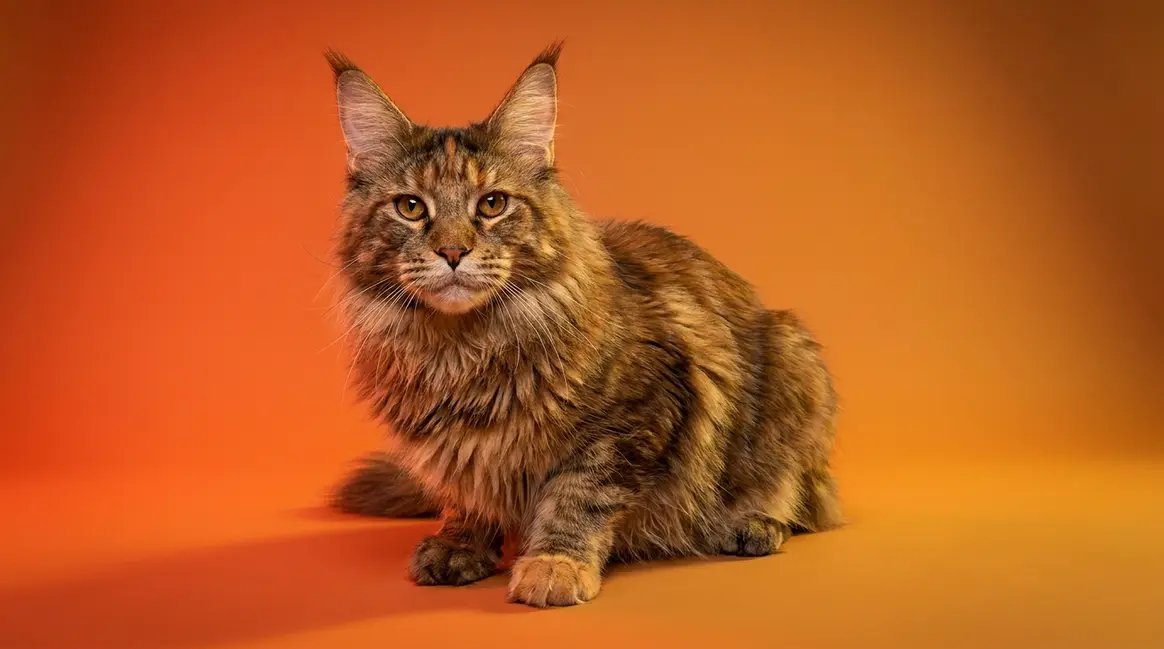
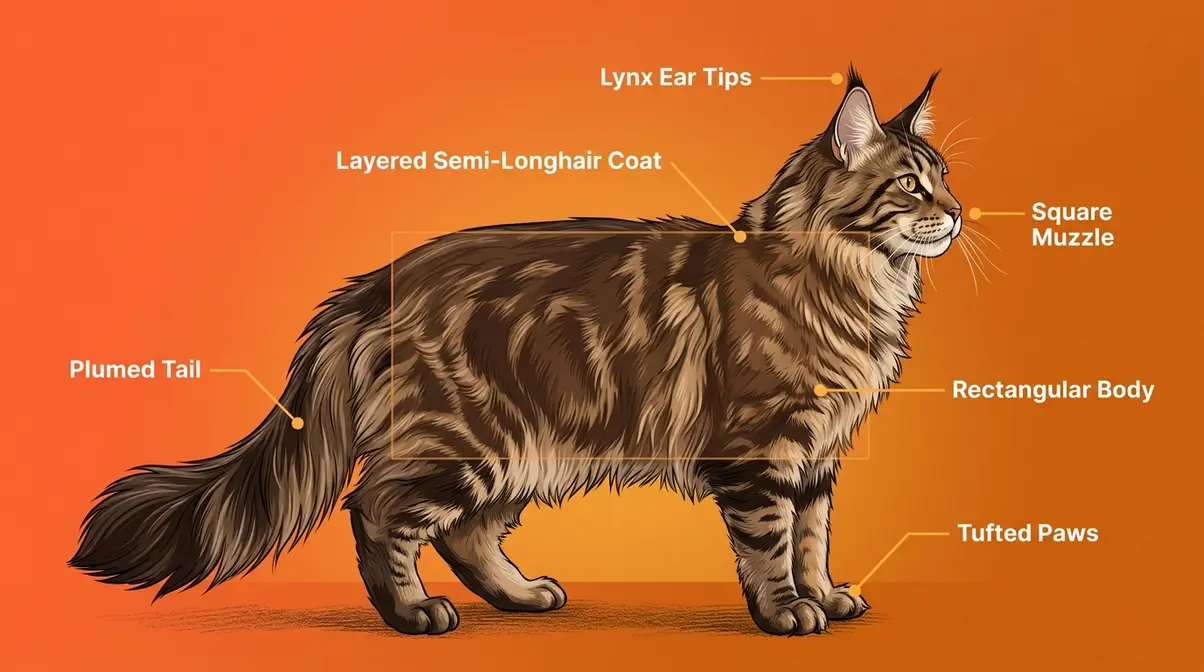
Body and Size: Maine Coons are one of the largest domestic cat breeds. Males typically reach 13–18 lbs; some exceed 20 lbs. The body is long and rectangular — not compact or rounded. They feel surprisingly heavy and solid when lifted.
Head Shape: The head is medium-wide with high cheekbones and a squared-off muzzle. Viewed from the side, there is a slight concave curve at the nose bridge. The chin is firm and square. This muzzle shape is one of the most reliable visual identifiers.
Ears: Large, wide-set ears with a distinctive tuft of fur growing from the tips (called “lynx tips”) and tufts of fur growing from inside the ear canal (called “ear furnishings”). Both are breed hallmarks.
Coat: Semi-longhair with a heavy, shaggy outer coat and a dense undercoat. The coat is shorter on the shoulders and longer on the belly, flanks, and tail — it has a layered, uneven look rather than the uniform fluffiness of a Persian. There is typically a pronounced ruff (mane) around the neck.
Tail: The tail is long, wide at the base, and heavily furred — described as “bushy” or “plume-like.” It should reach at least to the cat’s shoulders when laid alongside the body.
Paws: Large, round, and heavily tufted between the toes — those tufts of fur between the toe beans are a key identifier even on standard-pawed Maine Coons.
| Feature | Maine Coon | Typical Domestic Longhair |
|---|---|---|
| Body shape | Long, rectangular, muscular | Variable, often rounder |
| Muzzle | Square, prominent | Tapered or rounded |
| Ear tips | Lynx tufts (distinctive) | Plain or slightly tufted |
| Coat pattern | Layered, uneven length | More uniform |
| Tail | Heavily plumed, very long | Moderate length and volume |
| Maturity age | 3–5 years | 1–2 years |
Breeds Commonly Mistaken for Maine Coons
Several large, semi-longhair breeds get confused with Maine Coons regularly — especially in rescue situations where paperwork is unavailable.
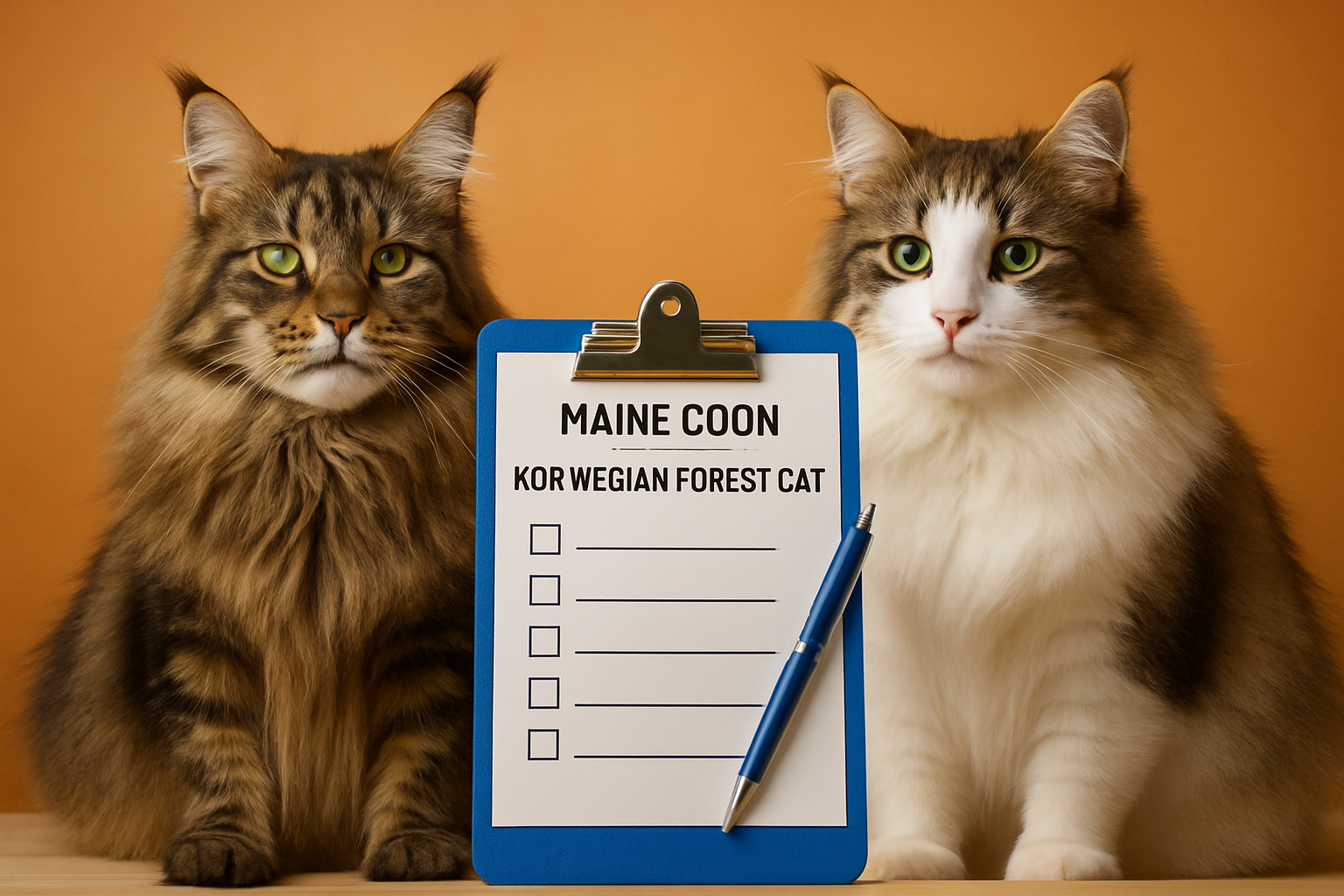
Norwegian Forest Cat (“Wegie”): The most common mix-up. Norwegian Forest Cats have a similar large, semi-longhair appearance, but their heads are more triangular (versus the Maine Coon’s squared muzzle), their coat has a distinctly flat, water-resistant texture, and they tend to be slightly less “dog-like” in personality. The forehead profile is flat in the Wegie; the Maine Coon has that characteristic slight concave curve.
Siberian Cat: Another large semi-longhair with a thick coat and tufted ears. Siberians tend to be rounder in the face with a more domed forehead. They are also notably hypoallergenic (lower Fel d 1 protein production) — a useful distinguishing factor for allergy sufferers.
Ragdoll: Ragdolls are often confused with Maine Coons because of their large size and semi-longhair coat. However, Ragdolls have a distinctly pointed color pattern (darker face, ears, legs, tail), blue eyes, and a much more docile, floppy temperament. They lack the prominent lynx ear tufts of the Maine Coon.
Turkish Angora: Smaller and more fine-boned than a Maine Coon, with a silkier, single-layer coat and a more wedge-shaped head. The resemblance is mostly limited to coat length.
If you genuinely need to know whether your cat is a purebred Maine Coon, a feline DNA test from a company like Basepaws or Wisdom Panel can confirm breed ancestry with high accuracy.
Limitations and When to Consult Your Vet
Polydactyl Maine Coons are wonderful cats — but every responsible owner should know the limits of what home care can address and when professional veterinary input is needed.
When Polydactyly Becomes a Concern
Most polydactyl Maine Coons live their entire lives without any paw-related health issues. However, there are specific scenarios where a veterinary visit is warranted:
Ingrown dewclaw: If you discover a claw that has already curved into or toward the paw pad, do not attempt to remove it yourself. A veterinarian can clip the claw safely, clean the wound, and prescribe antibiotics if infection has set in. This is the most common paw-related vet visit for polydactyl cats.
Limping or favoring one paw: Any sudden change in how your cat walks or bears weight on a paw — especially after play or a fall — should be evaluated by a vet. Extra toes do not inherently increase fracture risk, but they can get caught on carpet loops or furniture and sustain injury.
Suspected feline radial hypoplasia (FRH): If your cat’s front legs appear shortened, twisted, or the cat walks on its “wrists” rather than its paws, seek immediate veterinary evaluation. FRH is a serious structural condition that can be mistaken for polydactyly but requires very different management.
Persistent swelling, redness, or discharge around any toe: These are signs of infection and need prompt veterinary attention.
When a Standard Maine Coon Might Be a Better Fit
Polydactyl Maine Coons are not the right choice for every situation — and acknowledging that is part of responsible ownership guidance.
If you have very limited time for grooming, a standard-pawed Maine Coon (or a shorter-coated breed entirely) may be more manageable. The extra claws genuinely do require more frequent trimming, and if that routine slips, the health risk is real. If you plan to show your cat through the CFA rather than TICA, a polydactyl Maine Coon will be disqualified. And if you are adopting from a rescue and the cat’s history is unknown, confirm with a vet that the extra toes are true polydactyly and not a sign of FRH before bringing the cat home.
Frequently Asked Questions About Polydactyl Maine Coon Paws
Is it normal for Maine Coons to have 6 toes?
Yes — extra toes are completely normal for Maine Coons with the polydactyl gene. Six toes on one or more paws is one of the most common configurations in polydactyl Maine Coons, and it is a recognized, healthy trait within the breed. The condition is caused by an autosomal dominant gene mutation affecting the ZRS regulatory sequence — a change that influences only paw development. Up to 40% of the original unregistered Maine Coon population in New England carried this trait (Basepaws, 2023), making it historically native to the breed rather than an anomaly. If your Maine Coon has six toes, the only action required is a slightly more attentive nail trimming routine.
How rare is a polydactyl Maine Coon?
Polydactyl Maine Coons are rarer than standard Maine Coons but not extremely uncommon within the breed. Historically, up to 40% of New England’s Maine Coon population carried the trait. Today, dedicated polydactyl lines are maintained by a smaller community of TICA-registered breeders, making wait lists of 3–12 months typical. In the general domestic cat population, roughly 1 in 20 cats may carry some form of polydactyly — but pedigree polydactyl Maine Coons from health-tested lines are genuinely harder to source than standard pedigree Maine Coons. Expect limited regional availability and plan ahead.
Can Maine Coon cats be polydactyl?
Absolutely — polydactyly is a naturally occurring and historically significant trait in the Maine Coon breed. The Maine Coon Polydactyl is officially recognized by The International Cat Association (TICA) as a distinct show division. The trait is caused by a dominant gene, meaning only one parent needs to carry it for kittens to be born with extra toes. It is not a disqualifying defect — it is an authentic expression of the breed’s working-cat heritage. The CFA does not recognize the trait for show purposes, but that is a registry policy, not a health ruling.
Is polydactyly linked to autism?
No — polydactyly in cats is not linked to autism, cognitive impairment, or any neurological condition. This misconception stems from confusion with certain human genetic syndromes where polydactyly co-occurs with other conditions. In Maine Coons, the genetic mutation responsible for extra toes is a localized point mutation in the ZRS regulatory sequence of the Sonic Hedgehog gene (PMC/NCBI, 2024). Research confirms this mutation affects only limb development — not brain chemistry, organ function, or behavior. Polydactyl Maine Coons are neurologically identical to standard Maine Coons. Their temperament, intelligence, and social behavior are entirely unaffected.
How do you tell if a Maine Coon is purebred?
The most reliable way to confirm a purebred Maine Coon is a pedigree certificate from TICA or CFA, or a feline DNA test from a company like Basepaws. Visually, look for the combination of a squared, prominent muzzle; large wide-set ears with lynx tip tufts; a long rectangular body; a heavily plumed tail; a layered semi-longhair coat; and large, heavily tufted paws. No single feature is definitive — it is the full combination that distinguishes a Maine Coon from similar breeds like the Norwegian Forest Cat or Siberian. DNA testing is the only truly conclusive method for cats without paperwork.
How much is a polydactyl Maine Coon cat worth?
Polydactyl Maine Coon kittens from reputable, health-tested, TICA-registered breeders typically cost $1,500–$3,000+ USD (as of Q2 2026). Pet-quality kittens generally fall in the $1,500–$2,200 range; show-quality kittens from championship lines can exceed $3,500. These prices are higher than standard Maine Coon kittens because polydactyl bloodlines require specific gene-carrying pairings and responsible breeders invest in HCM cardiac screening, SMA testing, and PKD screening. Significantly lower prices (under $900 for a claimed “TICA registered” kitten) are a red flag for backyard breeding operations that skip health testing.
What’s the rarest Maine Coon color?
The rarest Maine Coon colors are typically solid lilac (lavender) and solid chocolate, as both require two copies of recessive dilution and brown modifier genes that are uncommon in the Maine Coon gene pool. Other rare patterns include the chinchilla silver, smoke tortoiseshell, and certain ticked tabby patterns. The most common Maine Coon colors are brown tabby, silver tabby, and black — these dominate the registered breeding population. Color rarity does not affect temperament, health, or the presence or absence of polydactyly, which is governed by an entirely separate gene.
What cat is most often mistaken for a Maine Coon?
The Norwegian Forest Cat (“Wegie”) is most frequently mistaken for a Maine Coon, particularly in rescue situations. Both breeds are large, semi-longhaired, and have tufted ears. The key differences: Maine Coons have a squared, prominent muzzle (Norwegian Forest Cats have a more triangular, straight-profile head), a slight concave curve at the nose bridge, and a more “dog-like” social personality. Siberian cats and Ragdolls are also commonly confused with Maine Coons. If you are unsure, a feline DNA test from Basepaws or Wisdom Panel will provide definitive breed ancestry results.
Wrapping Up: Celebrate Those Extra Toe Beans
Those enormous, mitten-like poly paws are not a mistake — they are the result of a precise, localized genetic variation that shaped one of America’s most beloved cat breeds across centuries of working life in the harshest New England conditions. The Snowshoe Advantage is real: broader paws meant better traction on ice, better grip on wet ship decks, and better hunting performance in deep snow. The cats who thrived were the ones with the biggest, best-equipped paws.
What this means for you today is straightforward. A polydactyl Maine Coon paws guide is only complete when it connects the history to the practice: those extra toe beans are worth celebrating and worth caring for properly. The genetics are harmless. The history is fascinating. The only practical difference from a standard Maine Coon is a nail trimming routine that takes an extra five minutes every two to three weeks — and one hidden dewclaw to find and check each time.
If you are ready to bring one of these cats home, start with TICA’s breeder directory, ask every health testing question on the list above, and expect to wait for the right kitten. It is worth it. When your poly Maine Coon finally spreads those well-tufted toes across your lap and looks up at you with that signature Maine Coon confidence, you will understand exactly why sailors once considered them the luckiest cats on the ocean.

Dave King
Cat owner and writer at Mad Cat Man.