
“Walking isn’t what I do. I hold the leash as my cat sniffs things, marks his turf… it is like walking a toddler!”
— Cat owner, leash-training community
Sound familiar? If you’ve ever watched adventure cats exploring the world on social media and wondered whether your own indoor cat might enjoy it, you’re not alone. Many indoor cats spend their days staring out of windows, missing the mental stimulation they genuinely need. Boredom in indoor cats can lead to destructive scratching, stress, and anxious behaviour — but there’s a safe, practical fix.
Can you walk a cat on a lead? Yes — and this guide will show you exactly how. By the end, you’ll know whether your cat is a good candidate for leash-walking and have a step-by-step plan to get started safely. We’ll begin with an honest assessment of your cat’s personality, cover the essential gear, then walk through four training phases — from harness introduction to your first outdoor sniffari.
Quick Answer: Yes, you can walk a cat on a lead — but it works best for confident, curious cats. You’ll need a cat-specific harness (never a collar), a 4–6 week training period, and plenty of patience. First outdoor sessions should last just 5–10 minutes. The key is letting your cat lead the way.
If you are wondering, “can you walk a cat on a lead?” the answer is yes — but personality matters more than breed. Research from Texas A&M’s School of Veterinary Medicine confirms that harness training provides essential exercise and enrichment for indoor cats.
- Not all cats are candidates: Use the Feline Boldness Assessment below to check your cat’s readiness before you start.
- Never use a collar: A cat-specific harness (H-style or vest-style) is essential for safety and escape prevention.
- Start indoors: Allow 4–6 weeks of indoor acclimation before attempting any outdoor session.
- First walks are short: Aim for 5–10 minutes outdoors — your cat sets the pace, not you.
Is Leash-Walking Right for Your Cat?
Leash-walking a cat is absolutely possible — but whether you should depends entirely on your individual cat’s personality. Texas A&M veterinary advice on feline exercise confirms that harness training provides essential exercise and enrichment (mental and physical stimulation that prevents boredom) for indoor cats. Indoor cats that miss outdoor stimulation are significantly more likely to develop boredom-related behaviour issues, from destructive scratching to stress-related over-grooming.
If you’ve searched online for guidance, you’ve probably found conflicting answers. Some sources say go for it; others urge caution. The truth, as with most things involving cats, is more nuanced — and it starts with an honest look at your specific cat’s temperament. You can also explore our full guide on leash walking for a deeper dive into the decision.
The Pros and Cons at a Glance
Leash-walking offers genuine benefits for the right cat. Here’s an honest overview before you commit:
- Pros of leash-walking your cat:
- Mental enrichment: Outdoor smells, sounds, and sights stimulate the brain in ways that indoor life simply cannot replicate. This matters because bored cats often redirect that frustration onto furniture — or you.
- Physical exercise: A sniffari (a cat-led exploration walk) gets your cat moving in ways that indoor play rarely achieves. Regular movement supports healthy weight and joint function.
- Strengthened bond: Shared outdoor time builds trust. You become your cat’s safe base, which deepens your relationship in a meaningful way.
- Safer than free-roaming: A harness and lead allows controlled outdoor access without the traffic, predator, or disease risks of letting a cat roam freely.
- Cons and risks to consider:
- Not suited to all temperaments: A nervous or anxious cat may find the outdoors genuinely frightening rather than enriching. Forcing the experience causes stress, not joy.
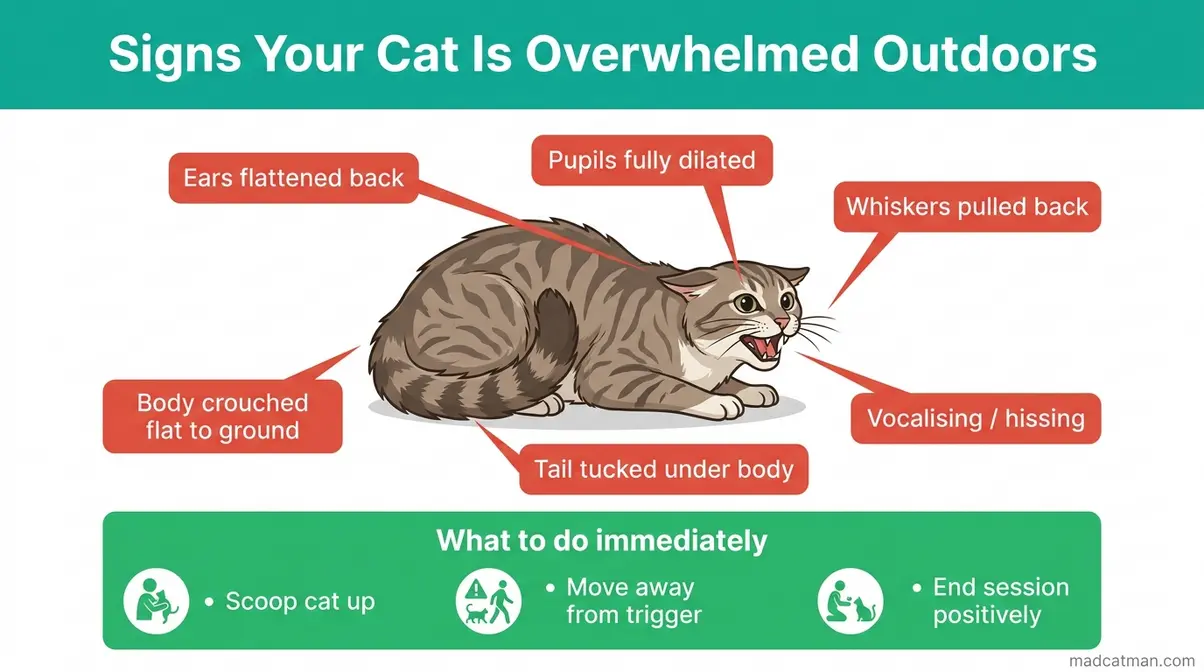
- Sensory overload is real: Sudden noises, dogs, or traffic can overwhelm a cat quickly. Signs include tail tucking, crouching flat to the ground, and vocalising.
- Disease and parasite exposure: Outdoor environments carry risks — fleas, ticks, and infectious diseases your indoor cat hasn’t been vaccinated against.
- Escape risk: No harness is 100% escape-proof. A panicked cat can sometimes wriggle free, which is why fit and training matter so much.
The pros outweigh the cons for the right cat — which is exactly why the Feline Boldness Assessment below is essential before you buy a single piece of kit.
The Feline Boldness Assessment: Is Your Cat a Good Candidate?
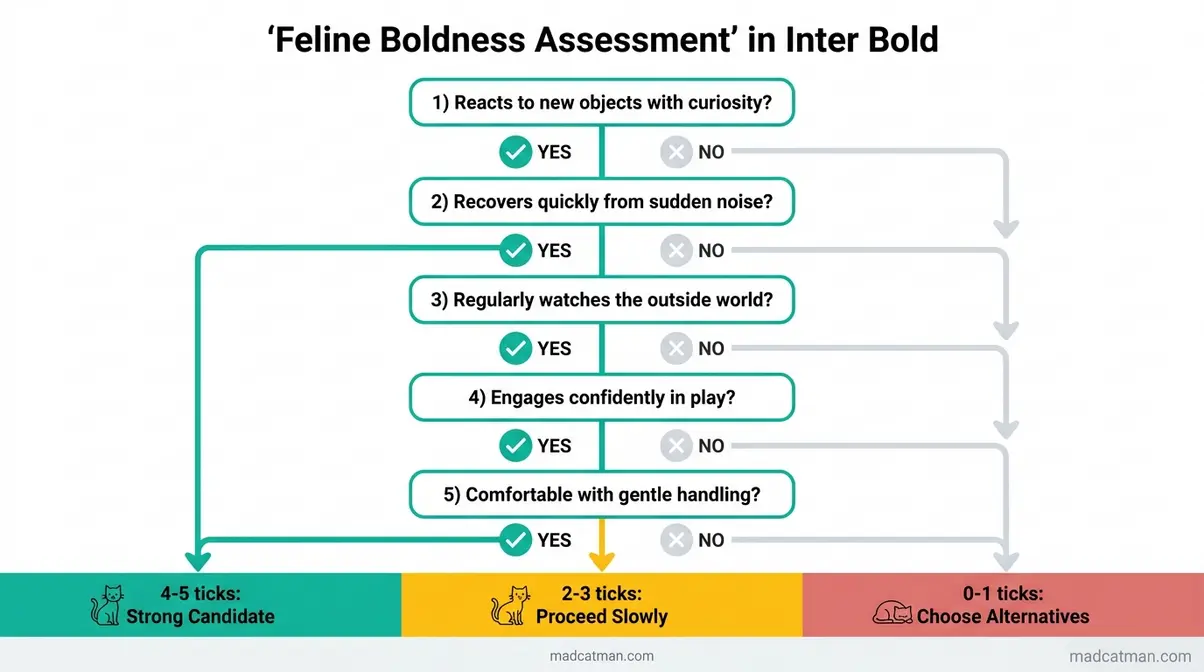
Whether your cat can be walked on a lead comes down to one thing: personality. The Feline Boldness Assessment is a simple 5-point checklist based on the personality traits that cat behaviourists — including Jackson Galaxy, the cat behaviourist and host of Animal Planet’s My Cat From Hell — agree make a cat a strong leash-walking candidate.
Score your cat honestly against each criterion:
- Reacts to new objects with curiosity, not immediate hiding — does your cat approach a new bag or cardboard box to sniff it, rather than bolting under the bed?
- Recovers quickly from a sudden noise — does your cat settle within 1–2 minutes after a loud sound, rather than staying spooked for hours?
- Regularly watches the outside world — does your cat sit at the window watching birds, traffic, or movement with interest?
- Engages confidently in play — does your cat chase toys actively rather than hiding from them?
- Is comfortable with gentle handling — does your cat tolerate being picked up and gently restrained without extreme distress?
- Scoring guide:
- 4–5 ticks: Strong candidate — proceed with confidence.
- 2–3 ticks: Proceed slowly with extra patience and shorter training phases.
- 0–1 ticks: Leash-walking is likely too stressful for this cat. See the Limitations section for alternatives.
This is not about breed — it’s about individual personality. A bold Moggy can outscore a nervous Bengal every time.
The UK vs. US Divide: What Vets Actually Say
Here’s something most guides won’t tell you: UK and US veterinary communities have genuinely different views on cat walking — and both are grounded in real cultural context.
In the UK, most pet cats have traditional outdoor access — garden roaming is considered normal and even essential for welfare by charities like Cats Protection, a UK animal welfare charity. Walking on a lead is seen as an additional option for cats that can’t roam freely, not a default enrichment strategy.
In the US, the picture is different. Over 90% of American pet cats are kept exclusively indoors (Pets4Homes, 2026), which means enrichment needs are far greater. US-based veterinarians and behaviourists — including those at Texas A&M School of Veterinary Medicine — more actively advocate for leash-walking as a structured enrichment tool for these fully indoor cats.
The honest conclusion? If your UK cat already has daily garden access, leash-walking is optional enrichment. If your cat is fully indoors — whether in the UK or US — it becomes a genuinely valuable tool. The key is always your individual cat’s temperament, not your postcode.
What You’ll Need Before You Start

Estimated Time: 4-6 weeks
Before your cat takes a single step outside, you need the right equipment and a safety checklist ticked off. Skipping this step is the most common reason harness training fails — or becomes dangerous.
What is the best harness for a cat?
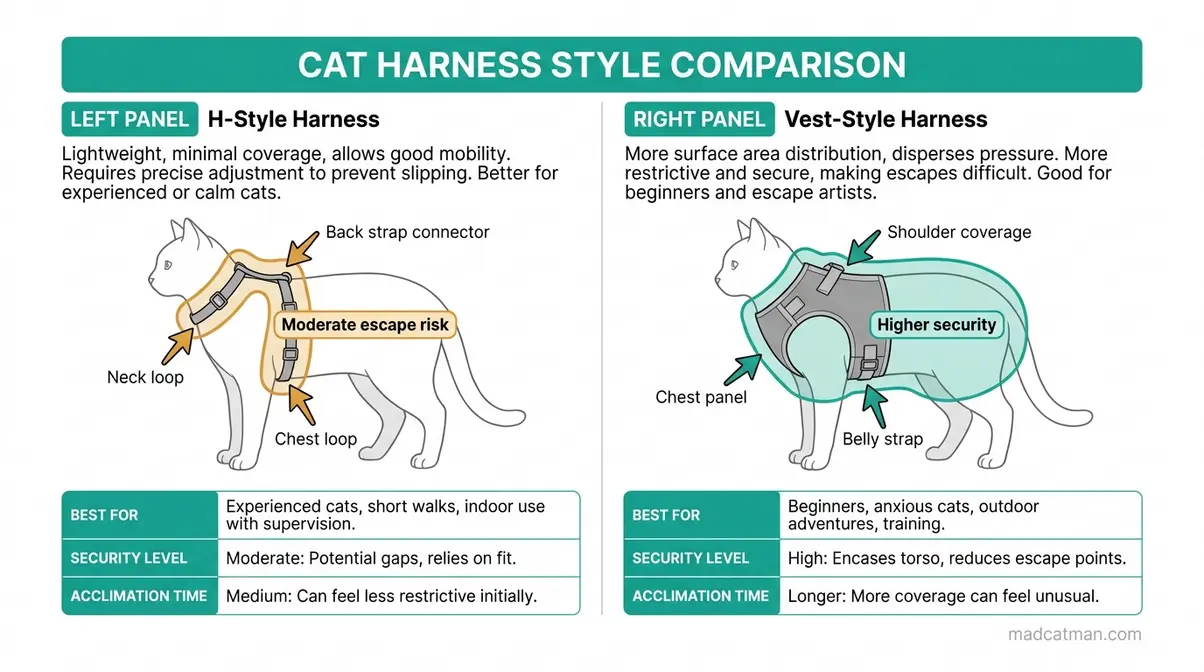
A well-fitted vest-style harness is the safest option for most cats. Two harness designs dominate the market in 2026, and choosing the right one for your cat matters more than most guides admit.
| Harness Type | How It Works | Best For | Security Level |
|---|---|---|---|
| H-Style | Two loops (neck + chest) connected by a back strap | Calm, easy-going cats; beginners | Moderate |
| Vest-Style | Full-body fabric panel, distributes pressure across chest | Active cats; escape artists | High |
H-style harnesses (also called figure-8 harnesses) are lightweight and easy to put on. They’re a solid starting point for calm, easy-going cats. The downside: a determined cat can sometimes back out of them, as the thin straps offer fewer contact points (Catster, 2026).
Vest-style harnesses distribute pressure evenly across your cat’s chest and shoulders — reducing escape risk and the chance of injury if your cat suddenly pulls. Vets consistently recommend vest-style for cats with higher energy or escape-artist tendencies (KittyCatGO, 2026). The trade-off is that they can feel bulkier at first, so they require a slightly longer acclimation period.
Fit rule for both types: You should be able to slide two fingers comfortably between the harness and your cat’s body. Too loose and it’s an escape risk; too tight and it’s uncomfortable.
Lead length: Use a lightweight, non-retractable lead of 1.2–1.8 metres (4–6 feet). Retractable leads give you too little control in an unexpected situation.
Pre-Walk Safety Checklist
Run through this checklist before your cat’s first outdoor session. It’s not optional — it’s the difference between a safe enriching experience and a vet trip.
- ✅ Vaccinations up to date: Outdoor environments expose your cat to diseases they haven’t encountered indoors. Check with your vet that core vaccines (including cat flu and feline leukaemia for UK cats; rabies and FVRCP for US cats) are current before any outdoor exposure. The SF SPCA’s leash-training guidance specifically recommends ensuring full vaccination coverage first.
- ✅ Flea and tick prevention applied: A single outdoor session is enough to pick up unwanted passengers. Apply vet-recommended parasite prevention at least 48 hours before the first outing.
- ✅ Microchipped and registered: If the worst happens and your cat escapes, a microchip is their ticket home.
- ✅ Harness fit double-checked: Two-finger rule applies. Check every time before you go out — harnesses can loosen between sessions.
- ✅ Collar removed: Never attach a lead to a collar. Always use the harness only.
Why You Must Never Use a Collar
This point deserves its own section because it’s the most dangerous mistake beginners make. Attaching a lead to a standard collar — even a breakaway one — puts direct pressure on your cat’s trachea (windpipe) if they pull, panic, or get snagged. The Animal Medical Center notes that tugging on a collar puts severe stress on the windpipe and can provoke choking or injury (AMCNY, 2011). A vest or H-style harness distributes that pressure across the chest and shoulders instead — where it causes no harm. The rule is simple: harness only, every time, no exceptions.
Step 1: Introduce the Harness Indoors
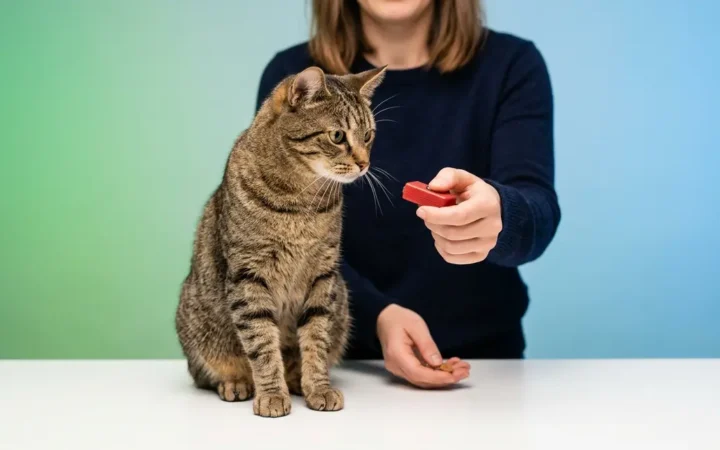
When figuring out how can you walk a cat on a lead, the first step isn’t putting the harness on — it’s making the harness completely unremarkable. This phase uses positive reinforcement (rewarding desired behaviour with treats or praise to make it more likely to happen again) and desensitisation (gradually reducing your cat’s reaction to something by repeated, low-stress exposure).
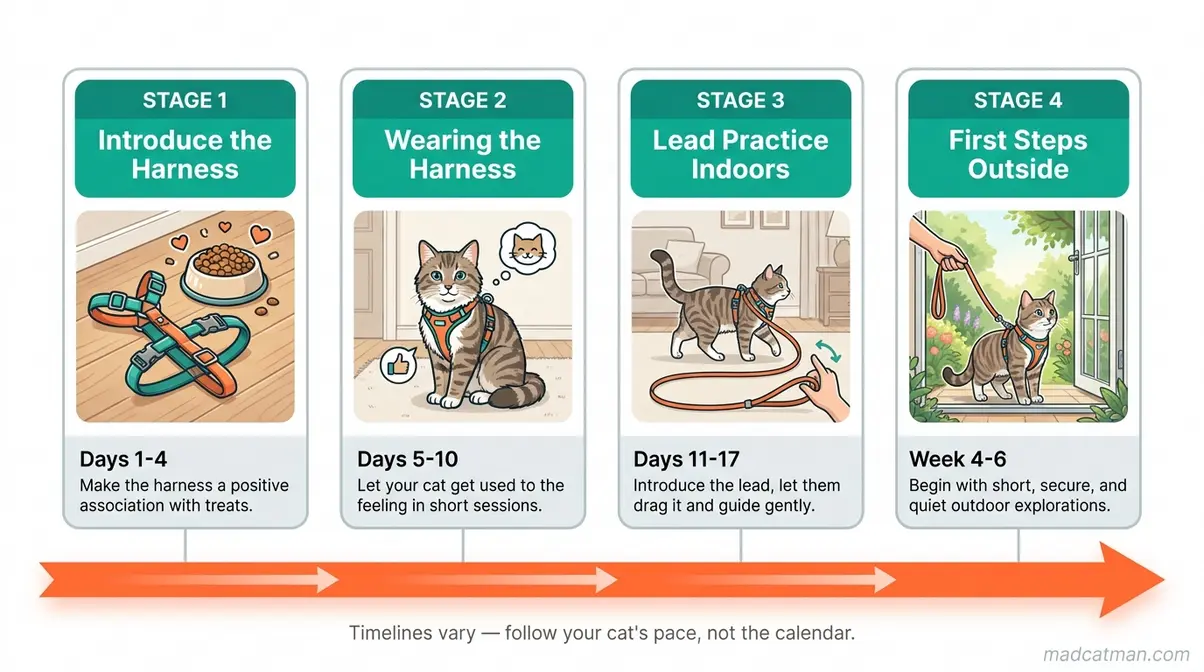
Day 1–2: Place the Harness Near Their Food Bowl
Simply leave the harness on the floor near your cat’s feeding area. Don’t try to put it on. Don’t draw attention to it. Let your cat discover it at their own pace — sniffing it, stepping over it, or ignoring it entirely. This step works because cats associate the feeding area with safety and positive feelings. By the time you try to put the harness on, it already smells familiar and non-threatening. Reward any curious interaction with a small treat. That’s it. Resist the urge to move faster.
Checkpoint: By the end of Day 2, your cat should be able to walk past the harness without flinching or avoiding it.
Day 3–4: Drape It Over Their Body
Now gently drape the harness loosely over your cat’s back — don’t fasten it yet. Do this during a calm moment, ideally when your cat is already relaxed. Follow immediately with a high-value treat and keep the session to 30–60 seconds. If your cat shakes it off or walks away, let them. Try again at the next meal. The goal is for wearing the harness to become associated with good things happening, not with something to fight against.
Checkpoint: By the end of Day 4, your cat should tolerate the harness resting on their body without immediately removing it.
Step 2: Wearing the Harness Comfortably
Patience here pays dividends later. Rushing this stage is the most common reason owners end up fighting the harness for weeks.
Day 5–7: Do Up the Harness for the First Time
Fasten the harness — loosely at first, then adjusted to the two-finger fit — and let your cat wear it for 5 minutes while you offer treats and gentle praise. Many cats will freeze momentarily or walk strangely (what owners lovingly call the “harness flop”). This is completely normal. It’s not distress — it’s just unfamiliarity. Keep the sessions short and positive. Gradually extend wearing time to 15–20 minutes over the three days.
Checkpoint: By the end of Day 7, your cat should walk normally while wearing the fastened harness.
Day 8–10: Walk Around the House in the Harness
Let your cat wander the house freely while wearing the harness — no lead attached yet. This builds body awareness and confidence. Follow your cat casually, offering treats for calm movement. If your cat sits down and refuses to move, don’t pull or coax — simply wait, then offer a treat when they take a step. Common experiences reported by leash-training owners include a day or two of dramatic floor-hugging followed by a sudden “oh, this is fine” moment. Trust the process.
Checkpoint: By the end of Day 10, your cat should move naturally around the home in the harness with no signs of distress.
Step 3: Attach the Lead and Practice Indoors
Clipping On the Lead for the First Time
Clip the lead onto the harness and let it trail along the floor — don’t hold it yet. Let your cat drag it around the house for a few minutes so they get used to the weight and sound of it. Pick up the lead only when your cat is moving calmly. Hold it loosely with zero tension. The lead should have slack at all times — think of it as a safety connection, not a steering mechanism.
The Loose-Lead Indoor Walk
Now practise following your cat around the house while holding the loose lead. Your job is to go where your cat goes — not the other way around. This is the core philosophy of the cat-led approach: you are the mini Sherpa, not the navigator. Practice turning and moving with your cat rather than redirecting them. If your cat sits down, you sit down. If they want to sniff the skirting board for three minutes, that’s the walk. Getting comfortable with this mindset indoors makes the outdoor experience far less frustrating.
Checkpoint: By the end of Step 3, you should be able to follow your cat around a room on a loose lead for at least 10 minutes without pulling or resistance.
Step 4: Take Your First Steps Outside
This is the step everyone’s been waiting for — and the one where patience matters most. According to PetMD’s guidance on leash-training cats, the first outdoor sessions should be short, calm, and entirely on your cat’s terms.
Choosing the Right Spot for Your First Outdoor Session
Pick somewhere quiet — a private garden, a low-traffic path, or a sheltered courtyard. Avoid busy streets, dog-walking areas, or anywhere with unpredictable noise for the first two weeks. The ideal first session lasts 5–10 minutes (SF SPCA leash-training guidance, 2026). That’s not a misprint. A 5-minute outing that ends on a positive note is worth far more than a 30-minute session that overwhelms your cat and sets back weeks of training.
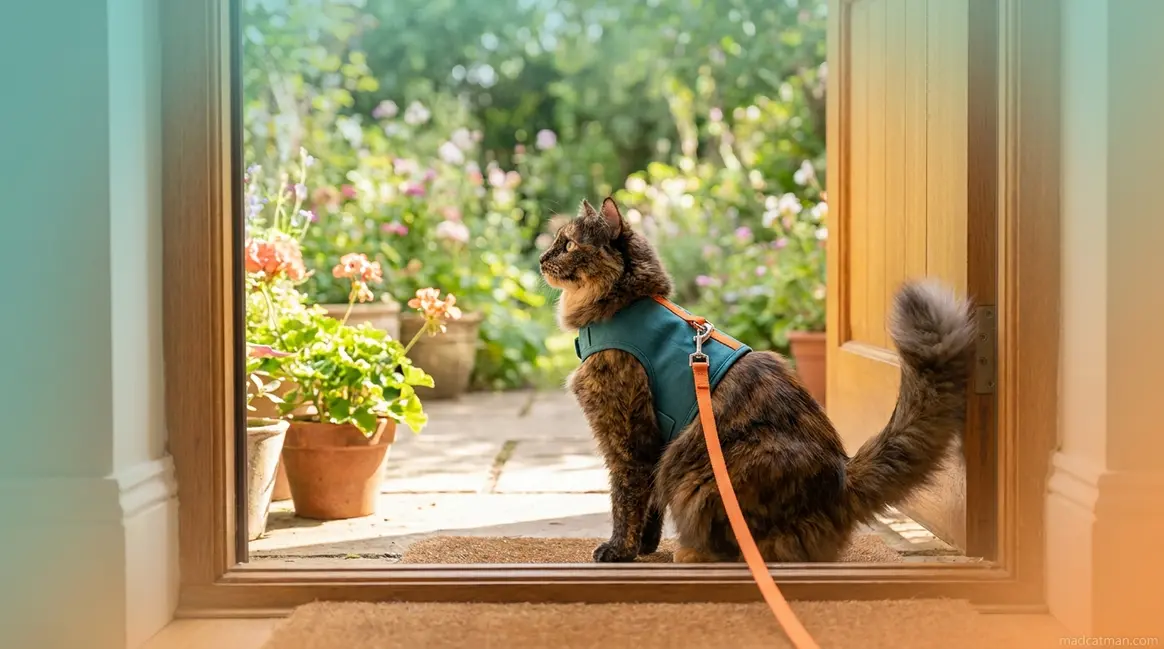
Step outside through your door and stop. Let your cat process the new environment at the threshold before moving further. If they crouch low, wait. If they step forward with their tail up, follow them. Let your cat decide when the session is over by watching their body language — a cat that crouches flat, tucks their tail, or tries to bolt back inside is telling you the session is done.
Checkpoint: After your first 3–4 outdoor sessions, your cat should be stepping outside willingly rather than needing to be coaxed.
How long should a cat walk be?
Start with 5-10 minutes for the first several outdoor sessions. This is not a typo — short, positive sessions build confidence far more effectively than long ones that risk overwhelming your cat. As your cat’s confidence grows over 2-4 weeks, sessions can extend to 15-20 minutes. There is no benefit to pushing beyond 20 minutes for most cats; the enrichment value of a focused sniffari comes from the quality of sensory engagement, not the duration. Macungieanimalhospital.com’s guidance on outdoor cat risks supports this gradual approach.
Let Your Cat Lead: The Sniffari Approach
Here’s the mindset shift that makes everything click: you are not walking your cat. You are accompanying your cat on a sniffari — a self-directed sensory exploration that has nothing to do with covering distance. Your cat will stop, sniff, sit, watch a leaf, mark a fence post, and then suddenly decide to go back inside. That’s a successful walk.
Jackson Galaxy describes this beautifully: the goal is enrichment, not exercise in the human sense. A cat that spends 8 minutes sniffing one square metre of garden has had a genuinely stimulating experience. As your cat’s confidence grows over weeks, sessions can extend to 15–20 minutes — but always follow their lead, never yours. This is what distinguishes a door-dasher who’s constantly want to be outside from a cat who’s been gradually, safely introduced to the outdoors.
Checkpoint: After 2–3 weeks of regular short sessions, your cat should exit the house with curiosity rather than hesitation.
Troubleshooting: When Things Don’t Go to Plan
Even with the best preparation, real-world cat walking rarely goes to script. When people ask, “can you walk a cat on a lead?” they rarely anticipate the bumps along the way. Here are the three most common problems — and honest fixes for each. For more comprehensive solutions to feline behavioral issues, check out our behavior and training tips.
My Cat Freezes and Won’t Move
This is the most common experience beginners report. Your cat steps outside, plants all four paws, and refuses to budge. This is not stubbornness — it’s your cat processing a massive amount of new sensory information all at once. The fix is simple: don’t pull. Crouch down to their level, speak quietly, and wait. Offer a treat if they take a single step. If they still don’t move after 2–3 minutes, carry them back inside and end the session positively. Try again tomorrow. Across cat owner communities, the consistent agreement is that freezing is a normal early-stage response that resolves within 3–5 sessions for most cats — as long as you don’t force the pace.
My Cat Fights the Harness
If your cat is actively fighting the harness — rolling, trying to bite it off, or running away when they see it — it usually means one of two things: the acclimation phase was too short, or the harness doesn’t fit correctly. Go back to Step 1 and restart the desensitisation process. Check the fit — a harness that’s slightly too tight can feel restrictive and cause panic. Try switching harness styles; some cats tolerate vest-style better than H-style and vice versa. Use a higher-value treat during harness time (cooked chicken instead of dry biscuits, for example). Most cats that initially fight the harness come around within an extra week of patient re-introduction. Rushing is always the problem — never the cat.
My Cat Gets Spooked Outside
A sudden dog bark, a passing car, or even a plastic bag blowing past can send a cat into a panic response. Watch for the early warning signs: ears flattening, tail tucking, body crouching low to the ground, or vocalising. Act immediately. Scoop your cat up, hold them against your chest (a secure, familiar sensation), and move away from the trigger.
Don’t wait to see if they calm down — a panicked cat can generate enough force to slip even a well-fitted harness. Once you’re clear of the trigger, give them a moment to settle before deciding whether to continue or head home. Over time, controlled exposure to low-level outdoor sounds — ideally while your cat is still indoors near an open window — builds resilience gradually.
Limitations & When Not to Walk Your Cat
Leash-walking isn’t right for every cat, and honest guidance means saying so clearly. You are always responsible for assessing your own cat’s suitability and safety — this guide provides general information, not a substitute for veterinary advice specific to your cat.
Common Pitfalls
- Skipping the Feline Boldness Assessment: Starting harness training with a cat that scored 0–1 on the assessment typically leads to weeks of stress for the cat and frustration for the owner. The assessment exists precisely to prevent this.
- Rushing the indoor phases: The 4–6 week timeline is not arbitrary. Cats that are taken outside before they’re fully comfortable in the harness indoors are far more likely to panic, freeze, or escape.
- Using a retractable lead: These give you almost no control in an emergency. A standard 1.2–1.8 metre lead is always safer.
- Treating outdoor sessions like dog walks: Expecting to cover distance or follow a route is a recipe for disappointment. The cat leads; you follow.
When to Choose Alternatives
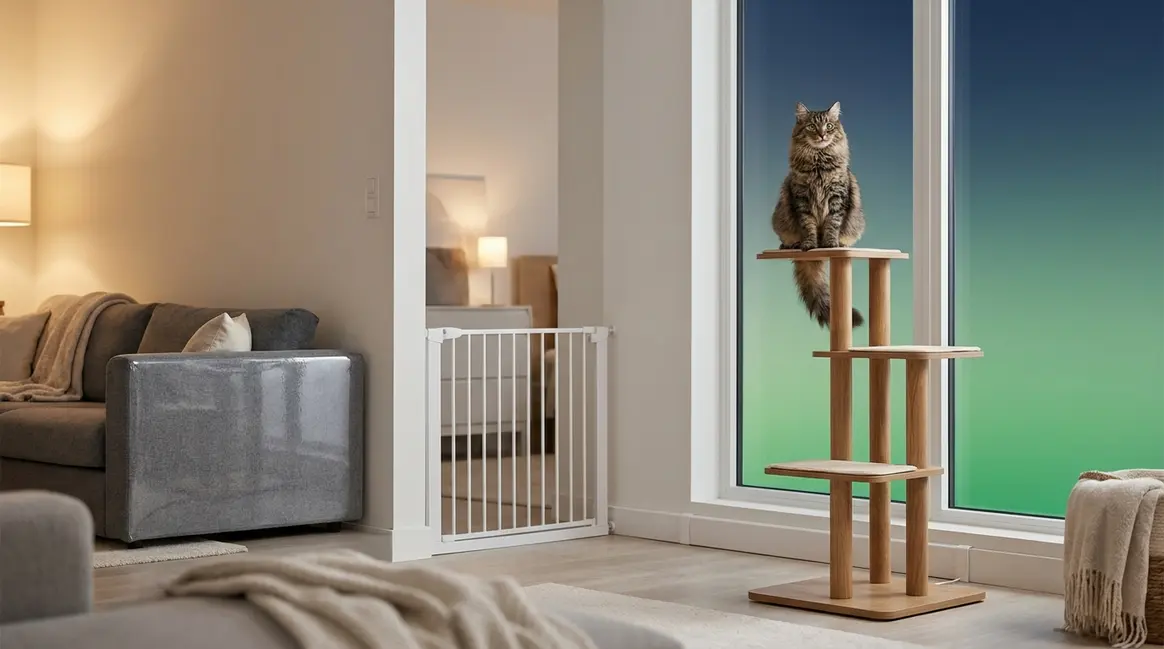
- Anxious or fearful cats (Boldness score 0–1): These cats are not bad candidates because of anything you’ve done wrong — some cats are simply wired for indoor life. Excellent alternatives include enriched indoor environments (window perches, puzzle feeders, cat TV), secure garden enclosures (catios), or supervised time in a quiet enclosed garden without a harness.
- Cats with health conditions: Respiratory issues, heart conditions, or mobility problems may make harness use uncomfortable or unsafe. Always consult your vet before starting harness training if your cat has any ongoing health condition.
- Very elderly cats: Senior cats may find the sensory experience of outdoors overwhelming. A catio or window perch often provides equivalent enrichment with zero stress.
When to Seek Expert Help
If your cat shows extreme distress responses — sustained vocalising, eliminating outside the litter box after walks, or hiding for hours after a session — stop the training and speak to your vet or a certified cat behaviourist. These responses suggest the experience is genuinely stressful rather than just unfamiliar. A professional can assess whether modified training, pheromone support, or an alternative enrichment approach is more appropriate for your individual cat.
Frequently Asked Questions
Is it cruel to walk a cat on a lead?
Leash-walking is not inherently cruel — but it can be stressful for the wrong cat. For confident, curious cats, the enrichment benefits are significant: outdoor stimulation reduces boredom-related behaviour problems that affect many indoor cats. The key is using the Feline Boldness Assessment to determine suitability first and following a gradual, cat-led training process. A cat that shows signs of sustained distress during training should not be pushed further (Jackson Galaxy, jacksongalaxy.com).
How long does it take to leash-train a cat?
Most cats need 4–6 weeks of gradual indoor training before they’re ready for their first outdoor session. The timeline varies by individual temperament — a bold, curious cat may be ready sooner, while a more cautious cat may need 8 weeks or more. Rushing the process is the most common reason harness training fails. Each stage should only progress when your cat shows calm, relaxed behaviour at the current stage.
Do I need to vaccinate my cat before taking them outside?
Yes — ensure your cat’s vaccinations are fully up to date before any outdoor exposure. In the UK, this includes protection against cat flu and feline leukaemia; in the US, core vaccines include rabies and FVRCP. Outdoor environments carry disease and parasite risks that indoor cats haven’t been exposed to. The SF SPCA’s leash-training guidance specifically recommends confirming vaccination coverage with your vet before beginning outdoor sessions (SF SPCA, sfspca.org). Flea and tick prevention should also be applied before the first outing.
Can any breed of cat be leash-trained?
Yes, any breed of cat can be leash-trained, provided they have the right temperament. Success depends entirely on individual personality rather than breed genetics. A confident mixed-breed rescue cat will often take to a harness much faster than a nervous purebred Bengal.
What should I do if my cat slips out of their harness?
If your cat slips out of their harness, stay calm and avoid chasing them. Crouching down and speaking softly is more likely to encourage them to come to you. This is why ensuring your cat is microchipped and practicing extensively indoors is critical before your first outdoor session.
Walking Your Cat on a Lead: What to Do Next
If you have been asking yourself, “can you walk a cat on a lead?”, we hope this guide has shown you that it is entirely possible. For the right cat, leash-walking is one of the most rewarding enrichment tools available to indoor cat owners. It transforms a door-dasher who’s constantly wanting to be outside into a confident little adventure cat — one who gets supervised, safe access to the smells, sounds, and textures of the outdoor world. Research from Texas A&M School of Veterinary Medicine supports harness training as a genuine contributor to feline mental health and physical wellbeing. The key is always starting with personality, not enthusiasm.
The Feline Boldness Assessment is your starting point. It cuts through the guesswork and gives you an objective, criteria-based answer before you spend a penny on gear or a minute on training. Cats that score 4–5 are ready to start today. Cats that score 0–1 deserve an equally enriched life — just through different means, like a catio or a puzzle feeder.
Your next step is simple: score your cat on the five Boldness Assessment criteria right now. If they score 2 or above, order a vest-style harness, bookmark this guide, and begin Day 1 of the indoor introduction this week. Your cat’s first sniffari is closer than you think — and it starts with a harness on the kitchen floor.

Dave King
Cat owner and writer at Mad Cat Man.