
Medical Disclaimer: This article is for informational purposes only and does not constitute veterinary medical advice. Always consult a licensed veterinarian before administering any home remedy to your cat, especially if symptoms are severe or persistent. If your cat shows signs of distress, lethargy, or has been retching for more than 48 hours without relief, seek emergency veterinary care immediately.
Medically Reviewed by: —
Quick Answer: To help your cat pass a hairball at home, lubricate the digestive tract using one of 7 vet-approved methods — including brushing, olive oil, pumpkin puree, or commercial hairball gel. The process involves 3 key safety checks before you start, and most approaches provide noticeable relief within 24 to 48 hours.
It’s 2am. You hear that unmistakable sound — a low, rhythmic gagging followed by retching — and you rush in to find your cat hunched over, straining. You feel completely helpless, unsure whether to wait it out or panic.
Most cat owners know that feeling. The confusion is real: some cat hairball remedies at home genuinely help your cat pass fur safely, while others can mask a dangerous blockage or make the situation worse. Without reliable, vet-backed information, it’s nearly impossible to know the right move.
This guide gives you exactly that. You’ll discover 7 vet-approved cat hairball remedies at home — with safe dosages, step-by-step instructions, and a clear framework for knowing when to call your vet instead. We cover what hairballs actually are, a three-step safety check before any treatment, all 7 remedies in detail, long-term prevention strategies, and the emergency warning signs you should never ignore.
Recommended Products
| # | Image | Product | Best For | Buy |
|---|---|---|---|---|
| 1 |  |
Dual Texture Hairball Treats | Daily treat supplement | Buy on Amazon |
| 2 | No products found. | Tomlyn Laxatone Tuna Gel | Fast gel relief | No products found. |
| 3 | |
Hairball Remedy Treat Supplement | Indoor cat digestion | Buy on Amazon |
| 4 |  |
PUAINTA Hairball Capsules | No mineral oil option | Buy on Amazon |
| 5 | |
Crunchy Creamy Hairball Treats | Fiber & coat support | Buy on Amazon |
| 6 |  |
Vetoquinol Laxatone Maple Gel | Everyday lubricant use | Buy on Amazon |
| 7 |  |
500-Count Hairball Treat Pack | Long-term treat supply | Buy on Amazon |
| 8 |  |
Hartz Hairball Salmon Paste | Budget-friendly paste | Buy on Amazon |
| 9 | No products found. | Tomlyn Laxatone for Kittens | Kitten-safe gel | No products found. |
| 10 |  |
Nutri-Vet Hairball Paw Gel | Natural oil paw gel | Buy on Amazon |
Cat hairball remedies at home work by lubricating the digestive tract — not by dissolving hair — so fur passes naturally through the stool instead of being vomited up.
- The 3-Gate Protocol: Always confirm it’s a hairball, check it’s safe to treat at home, then choose your remedy
- Fastest relief: Commercial hairball gels (Laxatone) or ½ tsp olive oil added to food
- Best long-term fix: Regular brushing — reduces ingested fur by up to 50% (Journal of Feline Medicine and Surgery, 2016)
- Red flag: If your cat retches repeatedly with no result, stop home treatment and call your vet immediately
What Are Cat Hairballs? (Causes & Symptoms)
Picture this: it’s 2am, you hear that awful retching sound, and you’re standing in the dark wondering — is this normal? A trichobezoar (the medical term for a hairball — pronounced “try-ko-BEE-zor”) is a compact mass of swallowed fur that accumulates in a cat’s stomach. Understanding what’s happening inside your cat is the essential first step before reaching for any remedy.
According to the American Animal Hospital Association, producing more than one or two hairballs per month is considered abnormal and may indicate an underlying gastrointestinal motility issue (AAHA, 2026). That single guideline is something most worried cat owners have never heard — and it changes how you approach the problem entirely.
This is where The 3-Gate Protocol — a three-step safety framework developed for this guide — becomes essential. Before reaching for any remedy, every cat owner should pass through three safety gates: (1) Is it really a hairball? (2) Is home treatment appropriate? (3) Which remedy best fits your cat? The sections below walk you through each gate in detail. For a deeper look at cat hairball causes and warning signs, that resource covers the biology in even more depth.
How Hairballs Form in Cats
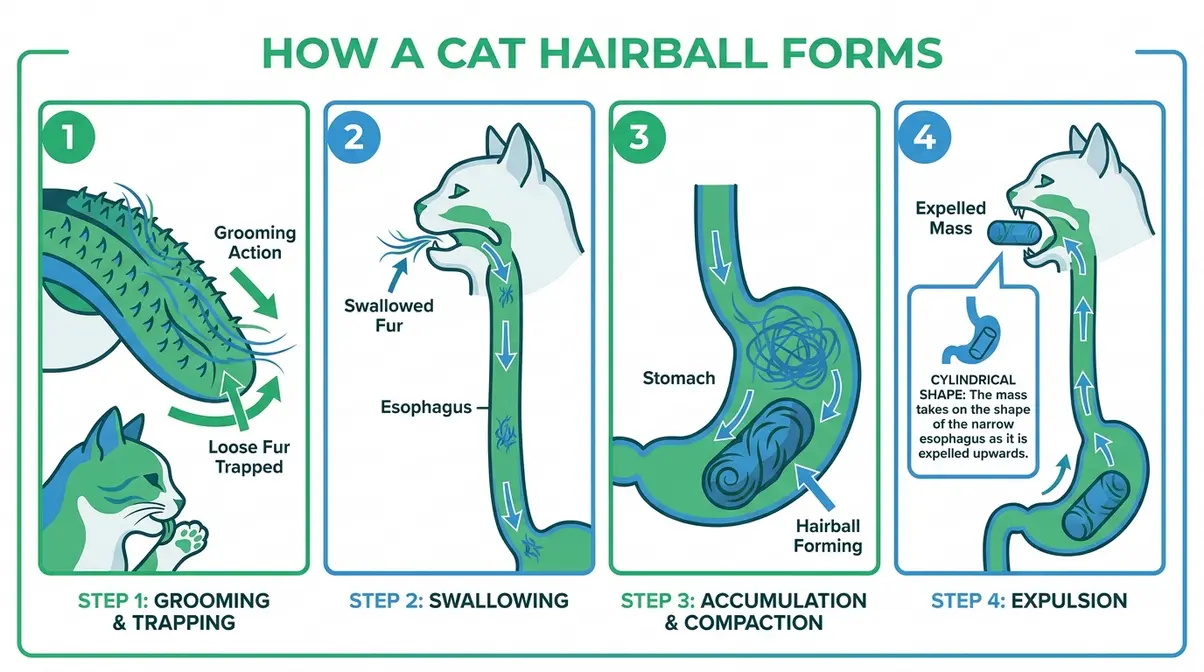
Cats are meticulous groomers. Every time your cat licks its coat, the tiny backward-facing barbs on its tongue (called papillae) trap loose fur — and that fur gets swallowed. Most of it passes harmlessly through the digestive tract and exits in the stool. However, when excess fur accumulates in the stomach faster than it can pass through, it compacts into a mass. When the stomach finally expels it, that mass travels up through the narrow esophagus — which is why a hairball is cylindrical and tube-shaped, not round like a ball.
Some cats are simply more prone to coughing up a hairball than others. Long-haired breeds like Maine Coons and Persians swallow more fur per grooming session. Cats that over-groom due to stress, anxiety, or skin conditions are also higher risk. Seasonal shedding peaks in spring and fall naturally increase ingestion. The American Animal Hospital Association notes that producing more than one or two hairballs per month may indicate an underlying gastrointestinal motility issue — or even inflammatory bowel disease (IBD) — and warrants a vet conversation rather than more home remedies alone (AAHA, 2026). If your cat is a long-haired breed or you’ve noticed increased shedding, Remedy 1 (brushing) becomes especially important.
What dissolves cat hairballs?
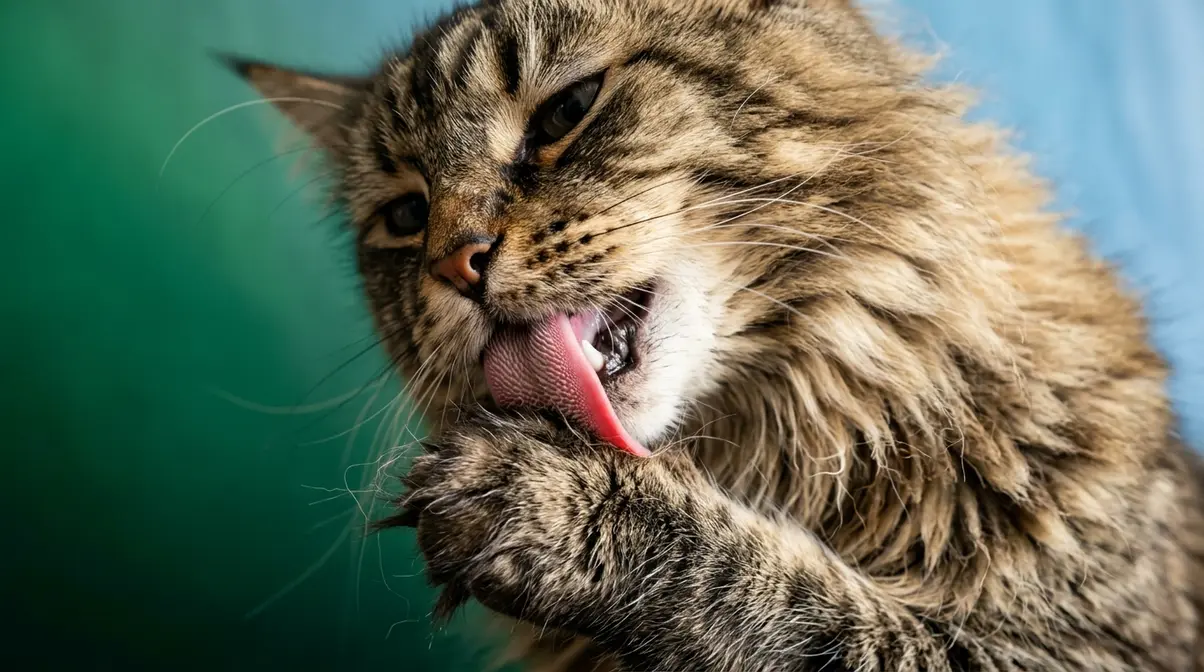
Nothing truly “dissolves” a cat hairball — hair cannot be chemically broken down in the digestive tract. What the best home remedies actually do is lubricate the digestive tract so the fur mass passes through in the stool rather than being vomited up. Soluble fiber from pumpkin puree adds bulk that sweeps fur along the intestine. Commercial hairball gels use petroleum-based lubricants to coat the gut and ease transit. According to VCA Hospitals, the goal of any hairball remedy is improved gut motility, not dissolution of the hair itself (VCA, 2026).
Normal Symptoms vs. Warning Signs
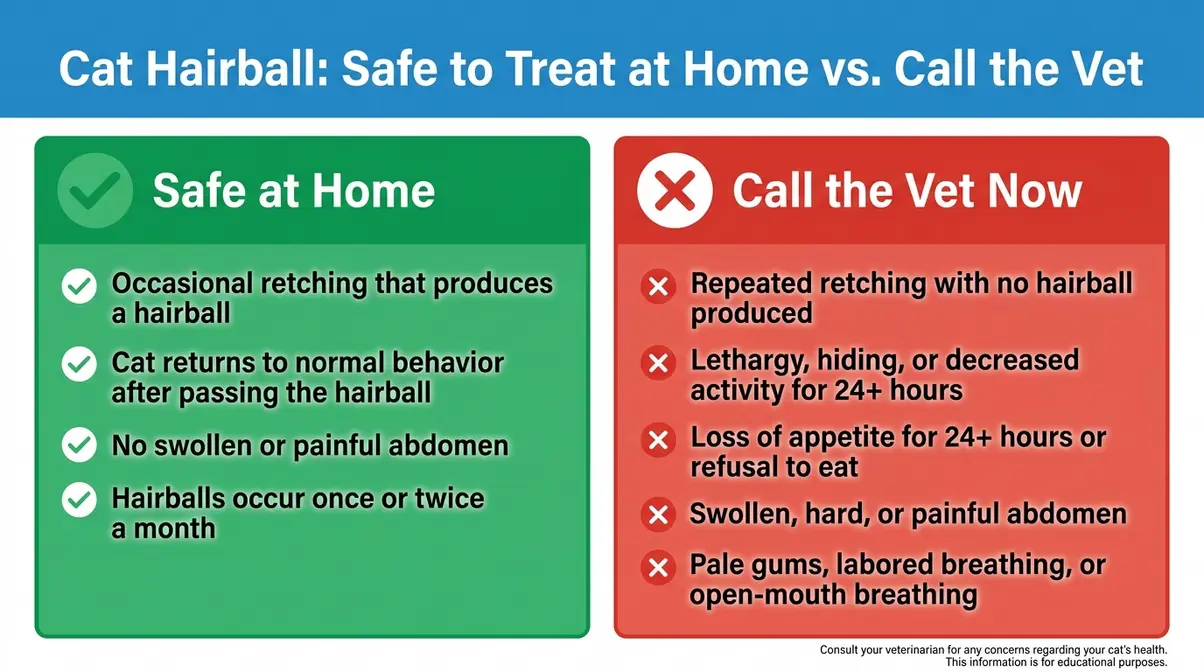
Not every retching episode is the same. Knowing which column your cat falls into is the most important thing you can do right now.
- Safe to Treat at Home:
- Occasional retching that produces a hairball within a few minutes
- Brief gagging or hacking sound (1-2 episodes)
- Cat returns to normal eating, drinking, and playing afterward
- No swollen or tender abdomen
- Hairballs occur once or twice a month or less
- Call Your Vet Immediately:
- Repeated retching or gagging with no hairball produced after multiple attempts
- Lethargy or unusual hiding lasting more than 24 hours
- Loss of appetite for more than 24 hours
- Swollen, hard, or painful-looking abdomen
- Constipation or diarrhea accompanying the retching
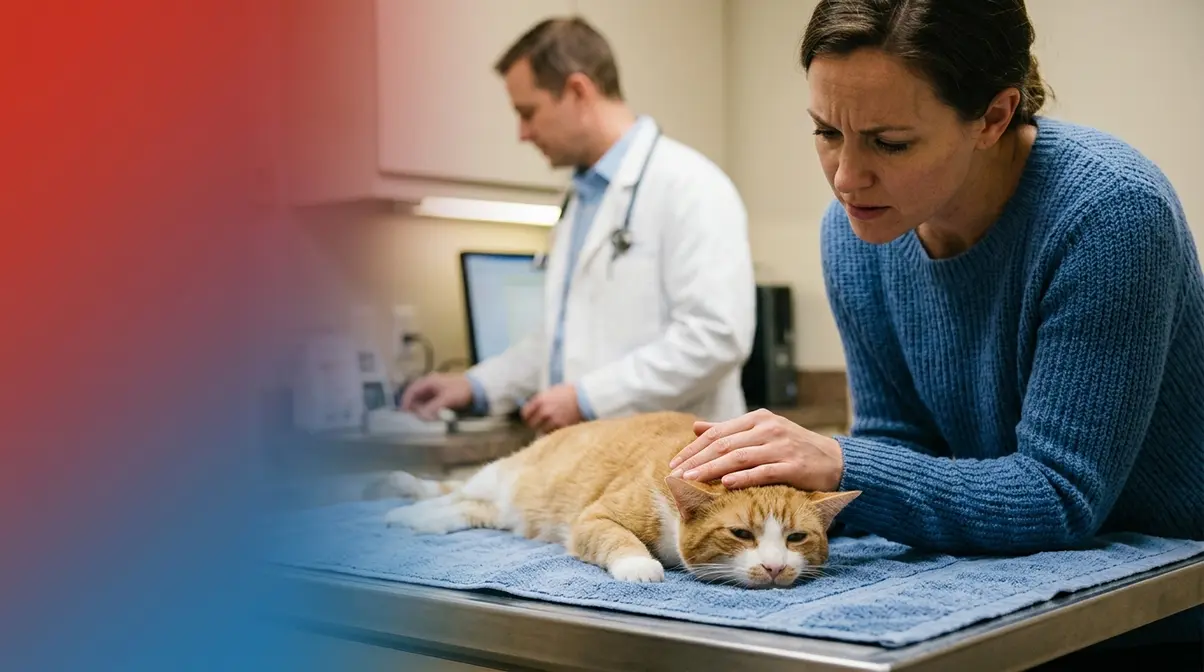
- Any sign of life-threatening blockage — pale gums, labored breathing, or crying out in pain
The frequency rule matters too. Even if hairballs pass normally, more than two per month is a signal to discuss with your vet — it may indicate a deeper gastrointestinal issue rather than a simple grooming problem.
With a clear picture of what’s normal and what’s an emergency, you’re ready for Gate 2 of the 3-Gate Protocol: deciding whether home treatment is the right call for your cat right now.
Is It Safe to Treat at Home? 3-Gate Protocol
Not every hairball needs a vet. But some do.
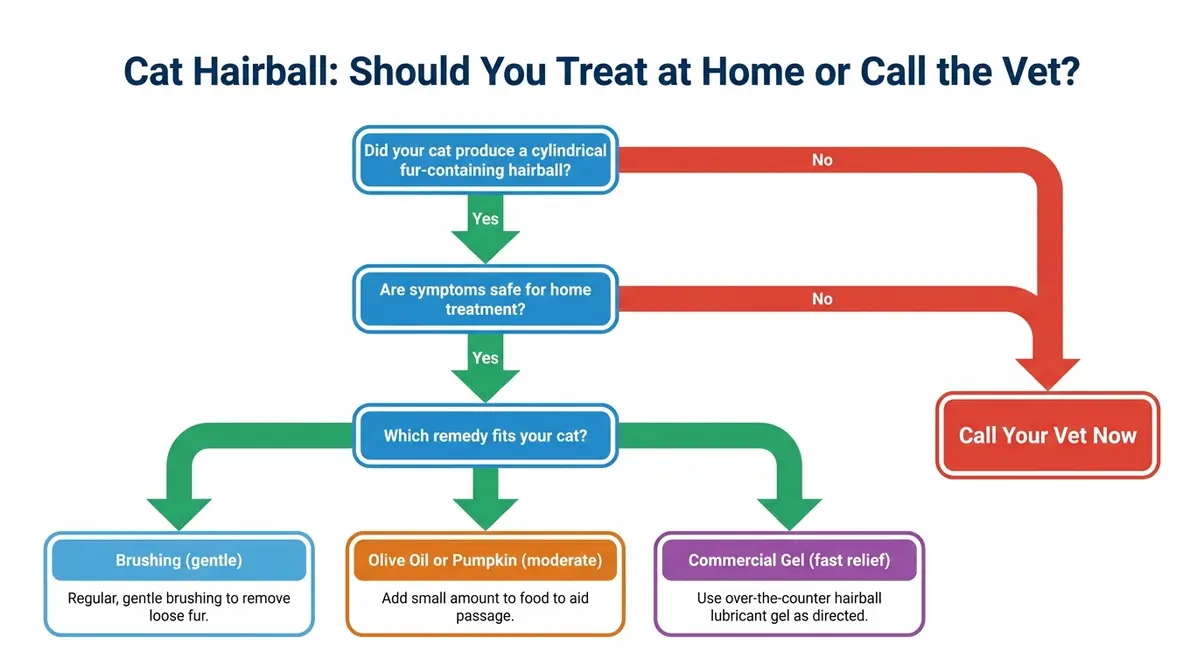
The 3-Gate Protocol is a three-step safety framework designed to help cat owners confirm the symptom, assess safety, and match the remedy before administering any home treatment — preventing misdiagnosis and unsafe self-treatment. Before trying any cat hairball remedies at home, walk through each gate below.
According to UC Davis Veterinary Medicine, increasing dietary fiber and utilizing vet-approved feline lubricants can significantly improve a cat’s ability to safely pass ingested hair through the digestive tract — but only when the underlying situation is appropriate for home care (UC Davis, 2026).
Gate 1: Is it really a hairball?
Ask yourself: Did your cat produce a cylindrical, fur-containing mass? Or is your cat retching without producing anything? Cats with asthma, respiratory infections, or a swallowed foreign object can mimic hairball symptoms. If no hairball appeared and retching continues, skip home treatment and call your vet.
Gate 2: Are symptoms safe for home treatment?
Review the “Safe vs. Emergency” checklist from the section above. If your cat shows any emergency symptoms — no appetite for 24+ hours, lethargy, swollen abdomen, or continuous unproductive retching — do not attempt home remedies. Go to the vet.
Gate 3: Which remedy fits your cat?
Consider your cat’s age, breed, and tolerance. Kittens and senior cats need gentler approaches (commercial gel or brushing) before natural oils. Cats with sensitive stomachs may not tolerate olive oil. The 7 remedies below are ordered from gentlest to most targeted — start with Remedy 1 unless you have a specific reason to do otherwise.
7 Cat Hairball Remedies at Home
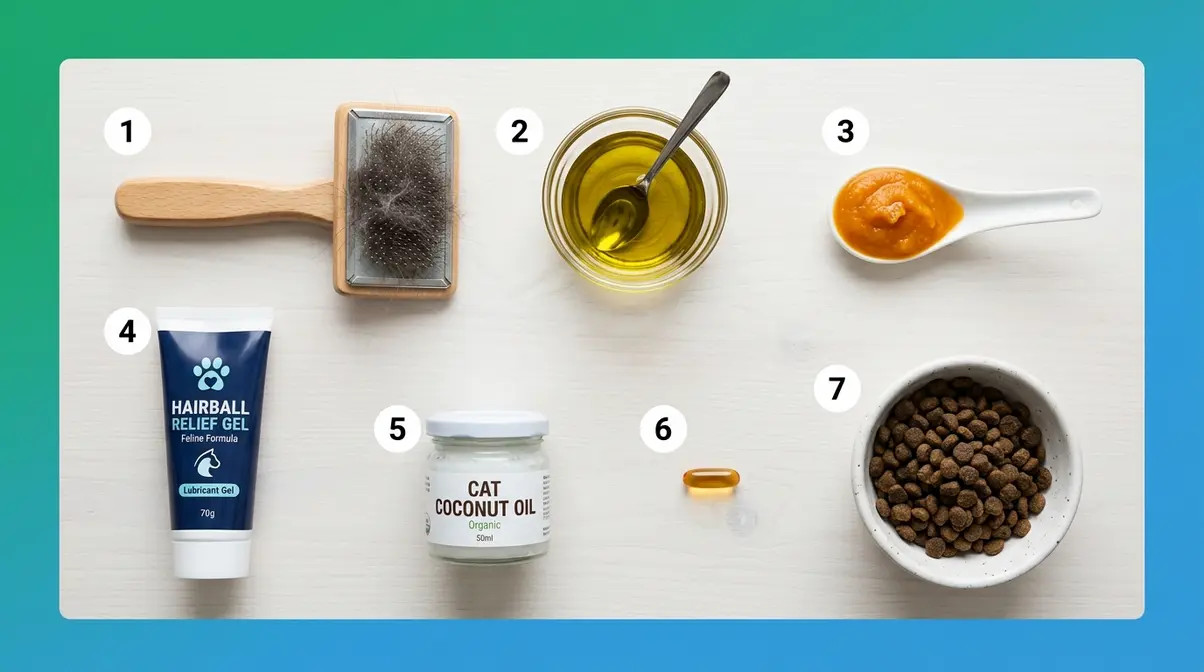
These 7 remedies were selected based on veterinary guidelines from Cornell University’s Feline Health Center, UC Davis School of Veterinary Medicine, and the American Animal Hospital Association. For a broader overview of options, you can also explore other proven home remedies for cat hairballs. Each remedy has a documented mechanism, a safe dosage reference, and step-by-step instructions. Always consult your veterinarian before starting any new treatment, especially for kittens, senior cats, or cats with known health conditions.
How can I help my cat pass a hairball?
The most effective way to help your cat pass a hairball is to lubricate the digestive tract using a vet-approved method. Options include ¼ to ½ teaspoon of olive oil mixed into food, 1 teaspoon of plain pumpkin puree, or a commercial hairball gel like Laxatone applied directly or placed on the paw. Most cats show results within 24-48 hours when using commercial lubricants. Regular brushing (3-4 times per week) reduces the amount of fur ingested in the first place, making it the most effective preventive approach available. Always consult your veterinarian if symptoms persist beyond 48 hours.
Remedy 1: Regular Brushing & Grooming
Why it works: Brushing removes loose fur before your cat swallows it during self-grooming. Less fur ingested means less accumulation in the stomach. Research published in the Journal of Feline Medicine and Surgery (2016) found that regular brushing can reduce ingested fur by up to 50% — making this the single most effective long-term strategy available.
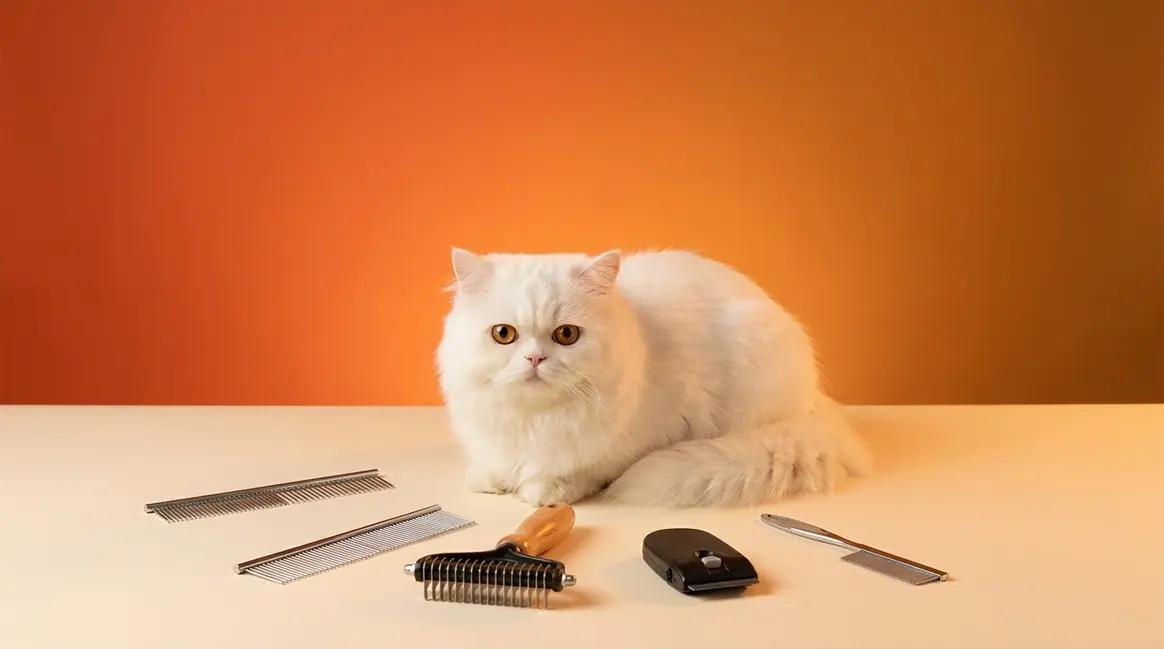
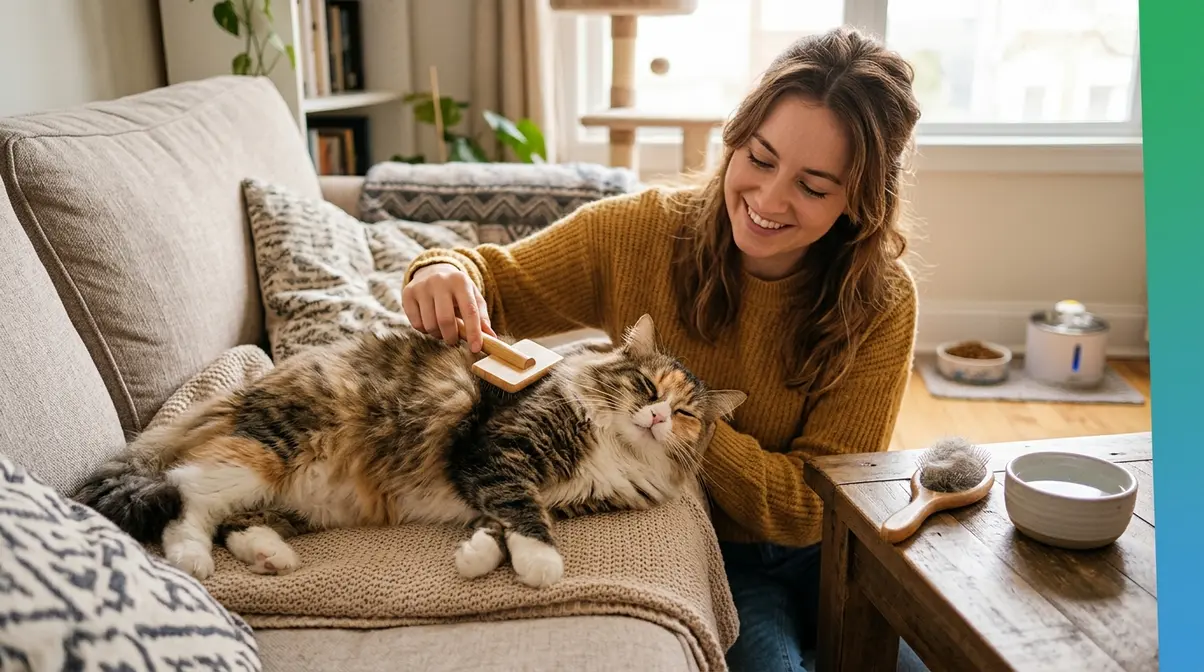
What you need: A slicker brush or deshedding tool suited to your cat’s coat length. Tools like the Furminator or a standard slicker brush work well for most breeds.
- Steps:
- Choose a calm time — after a meal or play session when your cat is relaxed.
- Start with gentle strokes along the back and sides, moving in the direction of fur growth.
- Gradually work toward the belly, tail, and behind the ears — areas cats are sensitive about.
- Brush for 5–10 minutes, 3–4 times per week for short-haired cats; daily for long-haired breeds like Persians or Maine Coons.
- Dispose of collected fur immediately so your cat can’t re-ingest it.
Safe frequency: Daily for long-haired breeds; every other day for short-haired cats.
Consult your veterinarian if your cat resists brushing due to skin sensitivity, which could indicate an underlying dermatological issue.
Remedy 2: Olive Oil (Safe Dosage)
Why it works: Olive oil acts as a mild lubricant in the digestive tract, coating ingested fur so it passes through the intestines in stool rather than being vomited up. According to VCA Hospitals, small amounts of food-grade oils can support intestinal motility in cats when used correctly (VCA, 2026).
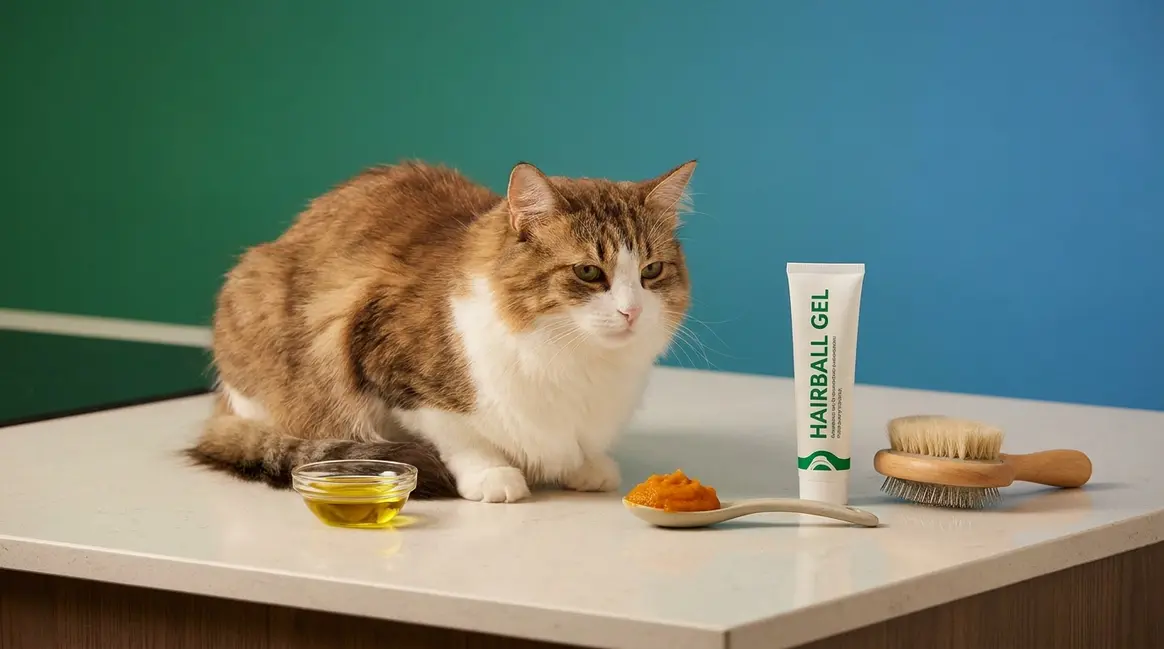
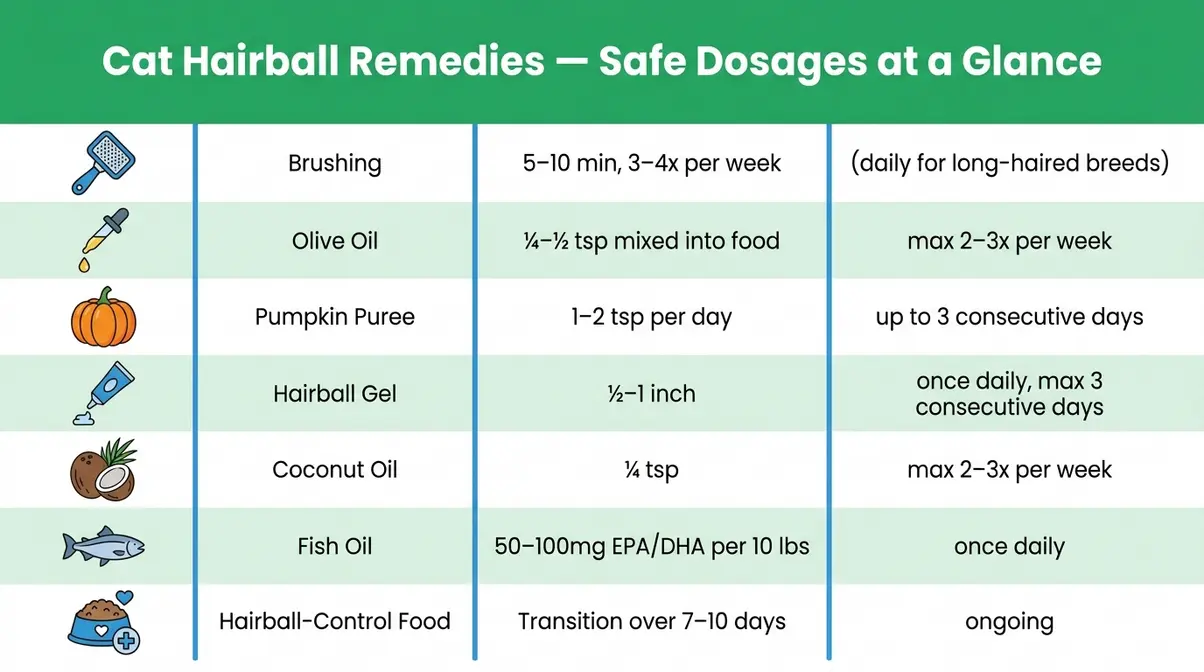
Safe dosage: ¼ to ½ teaspoon mixed into food, no more than 2–3 times per week. Do NOT exceed this amount — too much olive oil can cause diarrhea, nutrient malabsorption, and, over time, weight gain.
- Steps:
- Measure exactly ¼ to ½ teaspoon of plain, food-grade olive oil (not flavored or infused).
- Mix it directly into your cat’s wet food — this is the easiest administration method.
- Offer the food as normal and observe whether your cat eats it willingly.
- If your cat refuses the food, try placing a tiny drop on their paw — cats instinctively lick it off, which delivers the oil without force.
- Monitor stool over the next 24–48 hours for signs that fur is passing through.
Important risk warning: The Ohio State University College of Veterinary Medicine cautions that repeated daily use of any oil-based lubricant can interfere with fat-soluble vitamin absorption (vitamins A, D, E, and K). Use olive oil as an occasional remedy, not a daily supplement. Consult your veterinarian before use, especially for cats with pancreatitis or weight issues.
Remedy 3: Pumpkin Puree for Fiber
Why it works: Plain canned pumpkin is rich in soluble fiber, which adds bulk to the stool and helps move ingested fur through the intestinal tract. Fiber doesn’t dissolve hair — instead, it acts like a broom, sweeping it along toward elimination. This is one of the gentlest options and is generally well-tolerated even by cats with sensitive stomachs.
Safe dosage: 1 to 2 teaspoons of plain, canned pumpkin puree added to food, once daily for up to 3 days. Always use 100% pure pumpkin — NOT pumpkin pie filling, which contains sugar, spices, and xylitol that are toxic to cats.
- Steps:
- Open a can of plain pumpkin puree and verify the ingredient list shows only “pumpkin” — nothing else.
- Measure 1 teaspoon for small cats (under 8 lbs) or 2 teaspoons for larger cats.
- Stir thoroughly into wet food until well combined.
- Offer the meal as normal. Most cats accept the mild flavor without issue.
- Continue once daily for up to 3 consecutive days, then pause and assess.
Consult your veterinarian if your cat has diabetes or kidney disease, as fiber adjustments can affect blood sugar and digestive function in those conditions.
Remedy 4: Commercial Hairball Gel
Why it works: Products like Tomlyn Laxatone and Vetoquinol Laxatone Maple Gel are mild petroleum-based laxatives — meaning they use a gel that coats the gut and helps ingested fur slide through the digestive tract rather than forming a compacted mass. These are among the fastest-acting options available without a prescription, typically producing results within 24–48 hours.
Safe dosage: For standard adult cats, ½ to 1 inch of gel (approximately ¼ teaspoon) administered once daily for up to 3 days. Follow the specific product label, as concentrations vary between brands.
- Steps:
- Squeeze ½ to 1 inch of gel onto your fingertip or a clean spoon.
- Offer it directly to your cat — many cats enjoy the tuna or maple flavor and will lick it willingly.
- If your cat refuses, gently place the gel on the back of one front paw. Your cat will lick it off instinctively.
- Alternatively, mix into wet food for cats that resist direct application.
- Do not use for more than 3 consecutive days without a vet’s guidance.
Consult your veterinarian before using petroleum-based gels in cats with known gastrointestinal conditions, or if your cat is pregnant or nursing. According to VCA Hospitals, commercial hairball gels are among the most reliably effective short-term solutions for routine hairball relief (VCA, 2026).
Remedy 5: Coconut Oil
Why it works: Coconut oil contains medium-chain triglycerides (MCTs — a type of fatty acid) that may help lubricate the digestive tract and support gut motility. It is generally considered safe for cats in very small amounts, though the evidence base is less robust than for commercial gels or olive oil.
Safe dosage: ¼ teaspoon mixed into food, no more than 2–3 times per week. Use organic, unrefined, food-grade coconut oil only.
- Steps:
- Measure exactly ¼ teaspoon of solid or liquefied coconut oil.
- Stir into wet food until fully incorporated.
- Alternatively, place a small amount on your finger and allow your cat to lick it off.
- Monitor your cat’s stool and digestion over the following 24–48 hours.
- Discontinue if you notice loose stools, vomiting, or any change in behavior.
Important note: Some cats are sensitive to the high fat content of coconut oil. Cats with pancreatitis, obesity, or hyperlipidemia (elevated blood fat levels) should avoid this remedy entirely. Always consult your veterinarian first, particularly for cats with metabolic conditions.
Remedy 6: Fish Oil Supplements
Why it works: Omega-3 fatty acids found in fish oil support a healthy skin and coat, reducing excessive shedding at the source. Less shedding means less loose fur available to be ingested during grooming. According to UC Davis Veterinary Medicine, vet-approved feline lubricants and supplements that support coat health are among the most evidence-backed long-term approaches to reducing hairball frequency (UC Davis, 2026).
Safe dosage: 50–100mg of EPA/DHA (the active omega-3 compounds) per 10 lbs of body weight, once daily. Use products formulated specifically for cats — human fish oil capsules often contain dosages far too high for feline use.
- Steps:
- Select a fish oil supplement specifically labeled for cats, or ask your vet for a brand recommendation.
- Confirm the EPA/DHA content on the label and calculate the correct dose for your cat’s weight.
- Pierce a small capsule and squeeze the appropriate amount onto wet food, or use a liquid formulation with a dropper.
- Mix thoroughly into the food and offer as normal.
- Use daily as a preventive supplement — results build over 3–6 weeks as coat health improves.
Consult your veterinarian before starting fish oil if your cat takes any blood-thinning medications, as omega-3s can interact with certain drugs.
Remedy 7: Hairball-Control Cat Food
Why it works: Hairball-control formulas use elevated dietary fiber (typically from cellulose, psyllium husk, or beet pulp) to improve gut transit time — meaning ingested fur moves through the digestive tract more quickly before it can accumulate. Research from Tufts University’s Cummings School of Veterinary Medicine supports dietary fiber as a sustainable, low-risk approach to reducing hairball formation in cats with recurring issues (Tufts, 2026).
- How to use:
- Select a food labeled “hairball control” or “hairball formula” — verify that fiber is listed among the first five ingredients.
- Transition gradually over 7–10 days: mix 25% new food with 75% old food for days 1–3, then 50/50 for days 4–6, then 75% new food for days 7–9, then fully switch.
- Maintain the diet consistently — this remedy works over weeks and months, not hours.
- Monitor stool consistency during the transition. Some cats experience temporary loose stools as fiber increases.
- Review with your vet at the next annual wellness exam to confirm the diet remains appropriate.
Consult your veterinarian before switching foods for cats with kidney disease, urinary issues, or other conditions where specific nutritional targets must be maintained.
- Common Mistakes to Avoid:
- Using too much oil: More is not better. Excess olive or coconut oil causes diarrhea and nutrient malabsorption — stick to the measured doses above.
- Using pumpkin pie filling: It contains xylitol and spices that are toxic to cats. Always use 100% plain pumpkin puree.
- Using petroleum-based gels too long: More than 3 consecutive days without vet guidance can interfere with vitamin absorption.
- Ignoring the Gate 2 check: Home remedies are only safe when the underlying situation is appropriate. If your cat is in distress, no home remedy is the right first step.
How to Prevent Cat Hairballs Long-Term
The 7 remedies above address hairballs after they form. Prevention works upstream — reducing the amount of fur your cat swallows in the first place, and improving digestive efficiency so what is swallowed passes through without trouble. Applying The 3-Gate Protocol consistently means Gate 1 becomes less necessary over time, because fewer hairballs form.
Build a Daily Grooming Routine
Grooming is the single highest-leverage prevention tool available. Research published in the Journal of Feline Medicine and Surgery (2016) found that regular brushing reduces ingested fur by up to 50%, directly cutting the raw material that forms hairballs. For long-haired breeds, daily brushing is non-negotiable. For short-haired cats, 3–4 sessions per week delivers meaningful results. If your cat hates the brush, check out our complete stress-free cat grooming guide for tips on making it a positive experience.
- Build the habit in three steps:
- Set a consistent time — after your cat’s morning meal works well, as cats are often relaxed and receptive.
- Use a deshedding tool appropriate for your cat’s coat length. Short-haired cats do well with a rubber grooming mitt; long-haired cats benefit from a wide-tooth metal comb followed by a slicker brush.
- Make it a positive experience — follow each session with a small treat or play session so your cat associates grooming with reward.
Professional grooming every 6–8 weeks is worth considering for long-haired breeds during peak shedding seasons (spring and fall). According to Cornell Feline Health Center, consistent grooming is one of the most evidence-supported hairball prevention strategies available (Cornell, 2026).
Dietary Adjustments for Hairballs
Diet plays a direct role in how efficiently ingested fur moves through the digestive tract. Three dietary adjustments make a meaningful difference:
1. Switch to a high-fiber hairball-control formula. As covered in Remedy 7, these foods improve gut transit time over weeks of consistent use. Tufts University’s Cummings School of Veterinary Medicine identifies dietary fiber as one of the most sustainable approaches to reducing hairball formation in cats prone to recurring issues (Tufts, 2026).
2. Add a small fiber supplement. If your cat is attached to a current food and a full switch isn’t feasible, adding ½ teaspoon of plain pumpkin puree to meals 2–3 times per week provides a gentle fiber boost without disrupting the overall diet.
3. Limit high-fat treats. Excess dietary fat can slow gut motility — the speed at which food and fur move through the intestines. Keeping treats to 10% or less of total caloric intake supports healthy digestive speed.
Hydration & Environmental Enrichment
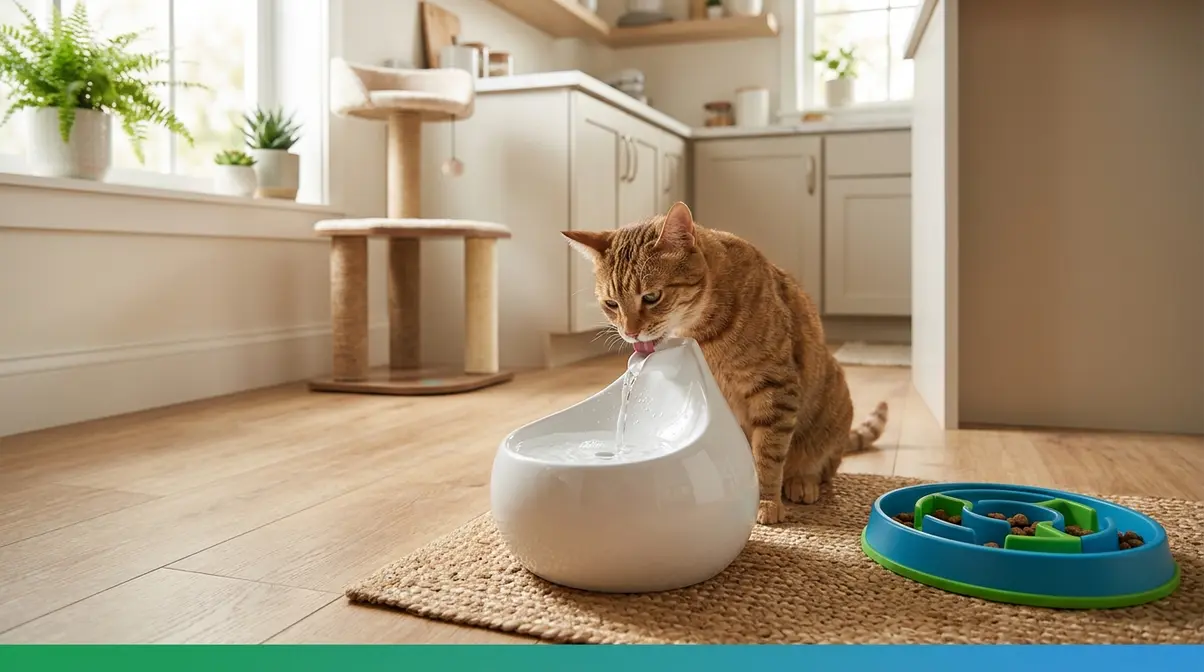
Two underappreciated factors in hairball prevention are hydration and stress management — and most cat owners haven’t heard either one discussed.
Hydration: Well-hydrated cats have better gut motility. Dry kibble contributes to mild chronic dehydration in many cats, which slows digestive transit. Switching to wet food (or adding a water fountain to encourage drinking) meaningfully supports the body’s ability to move fur through the system naturally.
Stress and over-grooming: Cats that over-groom due to boredom, anxiety, or environmental stress swallow significantly more fur than cats with adequate enrichment. Common stress triggers include a new pet, a move, or a change in household routine. Providing daily interactive play (two 10-minute sessions), cat trees, puzzle feeders, and consistent routines can reduce compulsive grooming behavior — and therefore reduce hairball frequency at the source. According to PetMD, environmental enrichment is an evidence-supported component of comprehensive hairball management (PetMD, 2026).
Warning Signs: When to Call the Vet
Home remedies work well for routine hairballs. They are not appropriate — and can be dangerous — when the underlying problem is a blockage rather than a simple accumulation of fur. Knowing the difference could save your cat’s life.
Emergency Veterinary Symptoms
Stop home treatment immediately and contact your veterinarian or an emergency animal hospital if your cat shows any of the following:
- Repeated unproductive retching — gagging repeatedly over several hours with no hairball produced
- Complete loss of appetite for more than 24 hours
- Lethargy or hiding — your cat is unusually still, unresponsive to play, or hiding for more than 24 hours
- Swollen, hard, or painful abdomen — you can see or feel distension when you gently touch the belly
- Constipation lasting more than 48 hours — no bowel movements despite eating
- Pale or white gums — a sign of circulatory distress requiring immediate emergency care
- Labored or open-mouth breathing — especially important to distinguish from asthma
According to Texas A&M University College of Veterinary Medicine, intestinal obstruction in cats carries a significantly elevated risk of mortality when treatment is delayed beyond 24–48 hours of symptom onset (Texas A&M, 2026). Time matters.
What if my cat can’t cough it up?
If your cat retches repeatedly without producing a hairball, this is a warning sign that requires veterinary attention. Unproductive retching over several hours suggests the hairball may be lodged in the stomach or intestine rather than in the esophagus where it can be expelled. This can develop into a life-threatening blockage requiring surgical intervention. Do not attempt home remedies if your cat has been retching without result for more than a few hours, shows lethargy, has lost interest in food, or has a swollen abdomen. According to Texas A&M University College of Veterinary Medicine, delayed treatment of intestinal obstruction significantly increases mortality risk in cats (Texas A&M, 2026).
When a Hairball Causes a Blockage
Most hairballs pass on their own or respond to home remedies. But when a hairball becomes impacted — lodged in the stomach or intestine and unable to move in either direction — it becomes a medical emergency.
“These symptoms could indicate a life-threatening blockage and the hairball may need to be surgically removed to save your cat’s life.”
A complete gastrointestinal obstruction (blockage of the intestine) prevents food, water, and normal gut function from continuing. Toxins accumulate rapidly. Without intervention, the intestinal wall can rupture — a condition called perforation that is almost always fatal without immediate surgery. According to the Cornell Feline Health Center, cats with chronic hairball issues — more than two per month — should be evaluated for underlying conditions including inflammatory bowel disease (IBD) and intestinal lymphoma, both of which can mimic or worsen hairball formation (Cornell, 2026).
The takeaway is straightforward: if Gate 2 of the 3-Gate Protocol returns a “No” — if your cat shows any of the emergency symptoms above — home remedies are not the answer. Your vet is.
Frequently Asked Questions
What is the best hairball remedy?
The best remedy depends on your cat’s situation and tolerance. For fast, reliable relief, commercial hairball gels (like Tomlyn Laxatone) are the most consistently effective short-term option — they work within 24-48 hours and are formulated specifically for cats according to veterinary guidelines. For long-term prevention, regular brushing combined with a high-fiber hairball-control diet addresses the problem at its source. A ¼ to ½ teaspoon of olive oil mixed into food is a widely used natural alternative. These 7 remedies were evaluated against veterinary guidelines from Cornell and UC Davis — there is no single “best” option, but brushing plus diet changes deliver the most sustainable results.
Can I give my cat olive oil?
Yes, small amounts of olive oil are generally safe for cats when used correctly. The recommended dose is ¼ to ½ teaspoon mixed into food, no more than 2-3 times per week, as supported by feline dietary experts. Olive oil works by lightly lubricating the digestive tract, helping ingested fur pass through in stool. However, daily use is not recommended — the Ohio State University College of Veterinary Medicine notes that repeated use of oil-based lubricants can interfere with fat-soluble vitamin absorption (vitamins A, D, E, and K). Never exceed the recommended dose, and always consult your veterinarian before use if your cat has pancreatitis or weight issues.
How to get rid of hairballs fast?
The fastest home remedy for cat hairballs is a commercial hairball gel — products like Tomlyn Laxatone or Vetoquinol Laxatone typically produce results within 24–48 hours. Apply ½ to 1 inch of gel directly on your cat’s paw so they lick it off, or mix it into wet food. A ½ teaspoon of olive oil added to a meal is a close second for speed. These are short-term solutions — for cats with recurring hairballs (more than 1-2 per month), PetMD recommends a long-term approach combining regular brushing, a high-fiber diet, and adequate hydration (PetMD, 2026).
Keeping Your Cat Safe and Confident
Cat hairballs are one of the most common concerns among cat owners, and for good reason — the retching sound alone is alarming. The good news is that most routine hairballs respond well to the 7 vet-approved cat hairball remedies at home covered in this guide, from regular brushing (which reduces ingested fur by up to 50%, per the Journal of Feline Medicine and Surgery, 2016) to commercial hairball gels that provide relief within 24–48 hours. The key is knowing which situation calls for home care and which calls for a vet — and that’s exactly what The 3-Gate Protocol is designed to help you decide.
The 3-Gate Protocol — confirm it’s a hairball, verify home treatment is safe, then match the right remedy to your cat — removes the guesswork from a stressful moment. When you work through each gate before reaching for a remedy, you’re not just treating a symptom. You’re making an informed, safety-first decision that protects your cat’s long-term health.
Start with Remedy 1 (brushing) this week if you haven’t already — it’s free, zero-risk, and the most effective long-term prevention available. If your cat is experiencing active discomfort right now, a commercial hairball gel or ½ teaspoon of olive oil mixed into food can provide relief within 24 hours. And if anything in the Warning Signs section describes what you’re seeing, skip the remedies entirely and call your vet today. A 10-minute phone call could make all the difference.

Dave King
Cat owner and writer at Mad Cat Man.