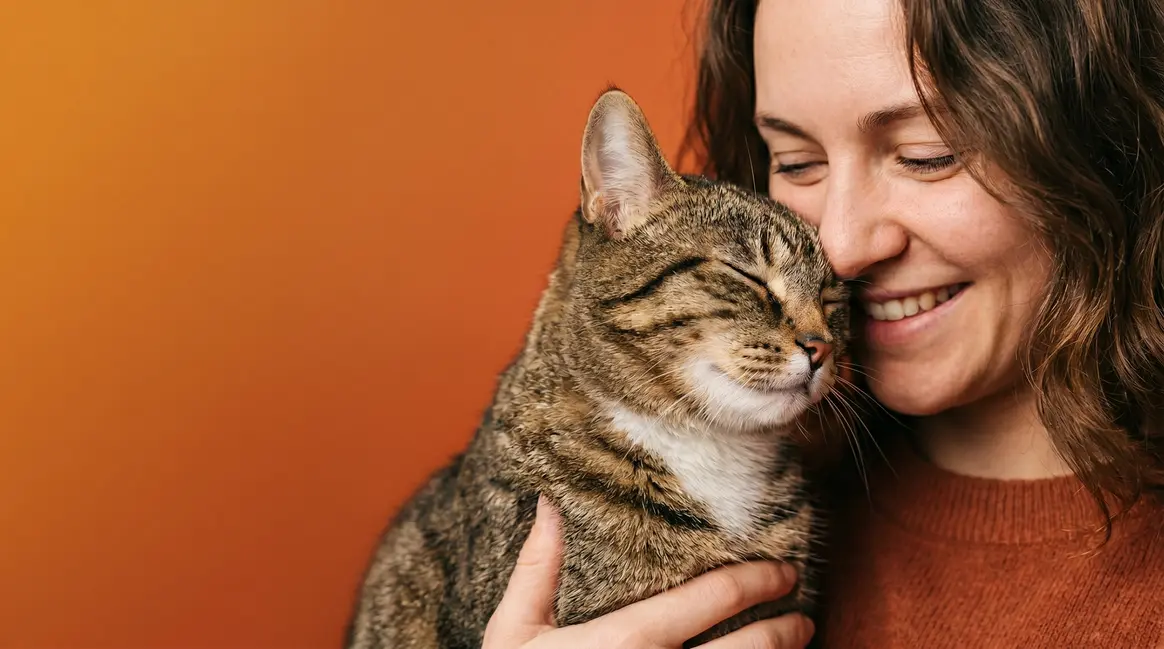

Your cat just pressed their forehead against your cheek and walked away satisfied. Turns out, they just said something very specific — and you can learn to translate it.
“I don’t own a cat so I don’t know but every now and then I’ll see a very friendly cat on the street. It meows, comes closer, and I know it’s friendly…”
That friendly street cat wasn’t just being cute. It was reading you — and leaving you a message.
Most cat owners assume rubbing equals affection, full stop. But there are actually five distinct reasons why your cat rubs against you, and each one tells you something different about what they need right now. Once you understand the science, every rub becomes readable — almost like a sentence. We cover the biology of scent marking, the meaning behind purring and meowing combos, the confusing bite-after-rub moment, and even when rubbing signals a health concern worth calling your vet about.
If you are wondering why does my cat rub against me, they’re communicating using “The Rubbing Vocabulary” — a system of scent-based signals where each type of rub carries a distinct meaning.
- Head bunting (forehead press) = “I completely trust you” — the highest cat compliment
- Full-body weave around your legs = greeting + “I need something right now”
- Tail wrapping around your leg = “you’re officially part of my family”
- Rubbing then biting = overstimulation signal — your cat is asking you to stop
- No rubbing at all is normal for some cats — it doesn’t mean they dislike you
The Science Behind Cat Rubbing
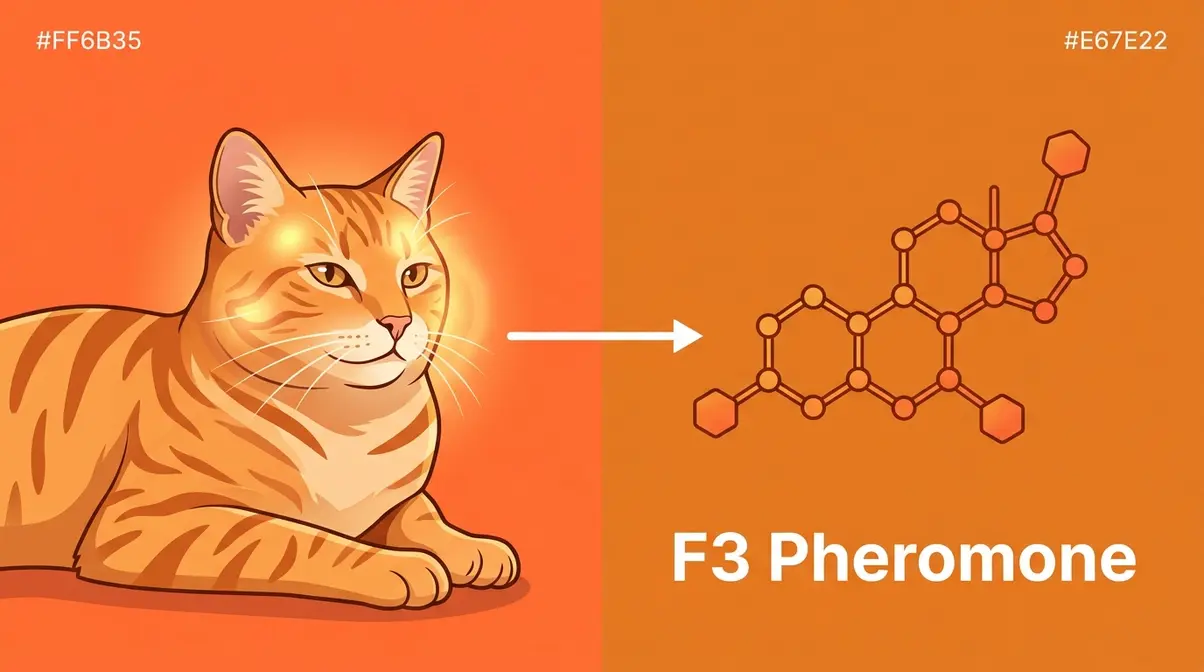
When asking why does my cat rub against me, the answer starts with pheromones. When your cat rubs against you, they are depositing pheromones (chemical scent molecules that carry invisible information) from glands located in their face, paws, and tail base. This social behavior, called allorubbing, marks you as a trusted member of their inner circle.
Cats have scent glands in at least five locations on their body — cheeks, chin, forehead, paw pads, and tail base — and rubbing deposits a chemical signature called the F3 pheromone fraction that signals comfort and safety (American Animal Hospital Association). This means every rub is a specific message, not random affection. Understanding those messages is the core idea behind “The Rubbing Vocabulary” — a framework where each type of rub functions like a distinct word your cat is speaking directly to you.
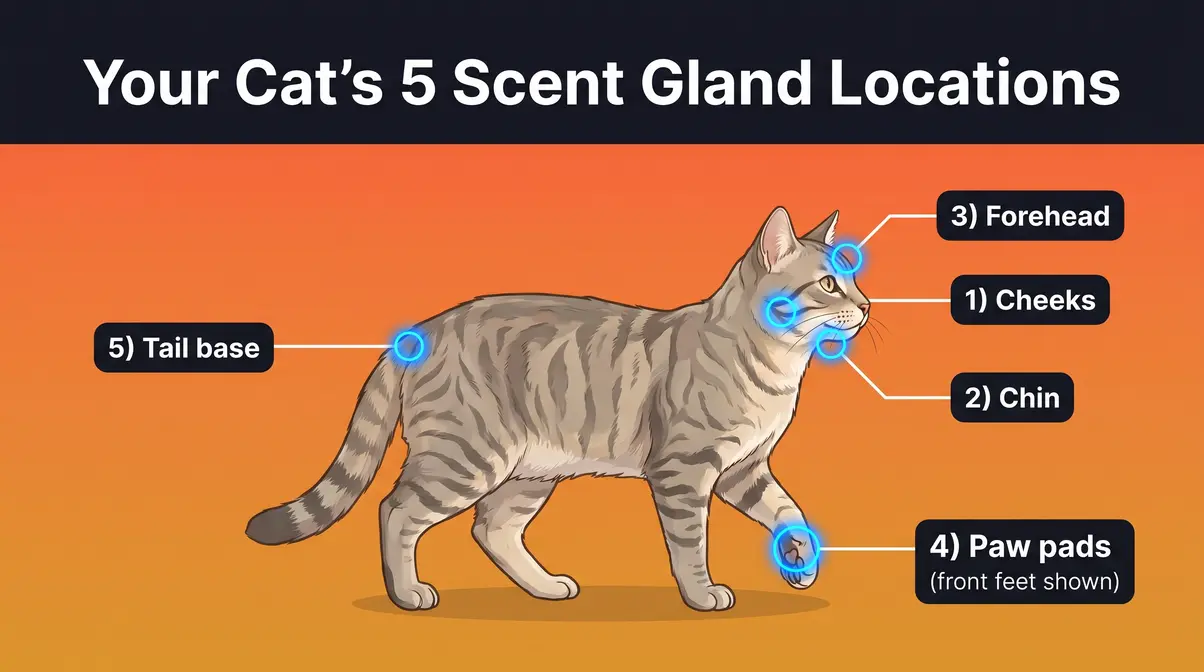
Your Cat Is Leaving You a Scent Message
Think of pheromones like invisible sticky notes your cat leaves on everything they trust. When your cat rubs their face on you — or weaves through your legs, or drapes their tail across your shin — they are applying a chemical signature from their facial glands that says, in cat language: “This person belongs with me.”
The specific molecule doing most of this work is called the F3 fraction (the specific pheromone released from your cat’s facial glands that signals comfort and safety). Researchers have studied feline facial pheromones extensively, separating them into five fractions labeled F1 through F5. According to a recent 2026 systematic review published in the Journal of Feline Medicine and Surgery Open Reports (Da Silva et al.), the F3 fraction is deposited during bunting — when a cat presses their cheeks or forehead against an object or person — and functions as a territorial and familiarization signal, helping the cat feel that a marked area is safe and secure.
This is why your cat rubs you and not, say, the washing machine. You’re not just furniture. You’re a chosen member of their social group, and the rub is the official stamp of membership.
The behavior doesn’t stop there. Cats in free-living colonies rub against each other constantly, a process called allorubbing (mutual rubbing between members of the same social group), which creates a shared “colony scent.” When your cat rubs against you, they are extending that same social ritual to a different species. According to PetMD, veterinary sources describe this as cats creating a communal scent with the people they consider family. You’ve been enrolled in the colony — whether you knew it or not.
Feliway (a synthetic version of feline facial pheromones used to reduce cat anxiety) is actually built around this exact science. The American Veterinary Society of Animal Behavior explains that Feliway Classic contains a synthetic analogue of the F3 facial pheromone, designed to replicate the “safe zone” signal cats leave when they rub familiar objects. If your cat rubs a doorframe repeatedly, they’re essentially doing what Feliway does artificially — labeling it as safe. When they rub you, the same message applies.
Across cat behavior forums and veterinary Q&A boards, the most common owner observation is that cats rub more intensely after any disruption to routine — a new visitor, a change in furniture, even a new scent on your clothes. That’s not clinginess. That’s maintenance work. Your cat is refreshing a message that temporarily faded.
What If a Cat Constantly Rubs Against You?
Constant rubbing usually means your cat considers you a core part of their social group and is actively maintaining that bond through scent marking. Cats rub more frequently when their pheromone messages fade — after you’ve been away, after a shower, or when something in the environment has changed. If the rubbing is paired with meowing and restlessness, your cat may also be signaling an unmet need like food, play, or attention. Constant rubbing that involves repetitive focus on a single body area (especially the face or ears) can occasionally signal discomfort, which requires veterinary evaluation.
Head Bunting vs. Full-Body Rubs
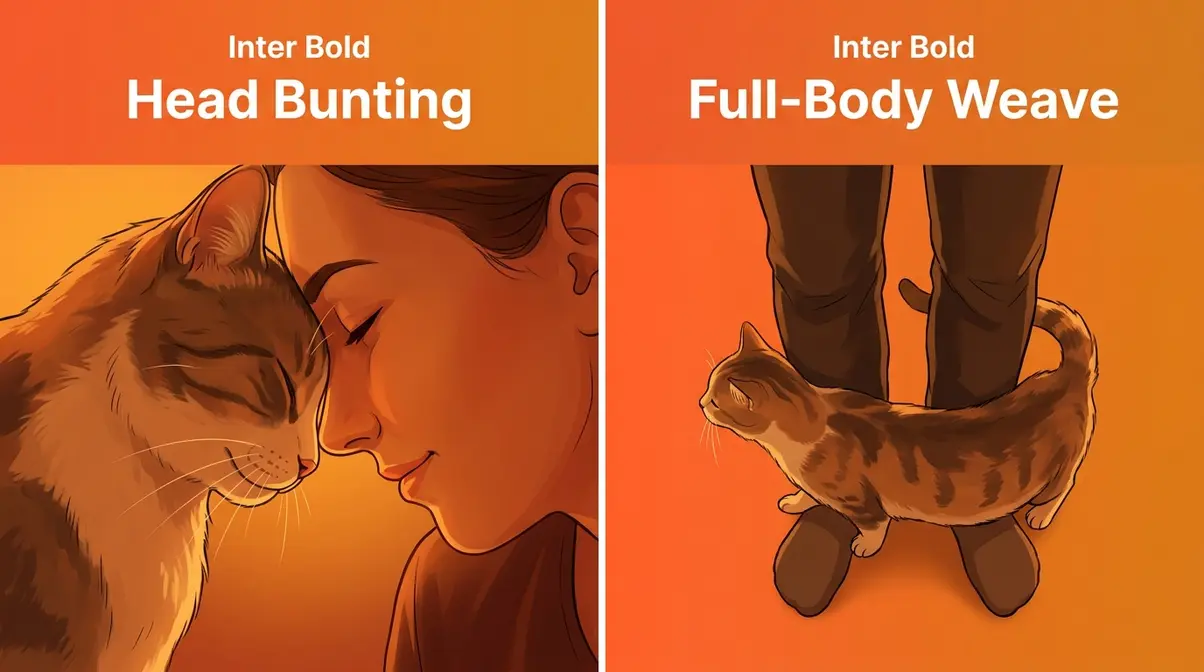
Not every rub means the same thing. Part of reading The Rubbing Vocabulary is recognizing that different body parts carry different messages — and your cat chooses deliberately.
Head bunting is the feline term for pressing their forehead or cheeks against you, and it is widely considered the most affectionate gesture in a cat’s repertoire. When your cat head-butts you — or rubs their face against your chin — they are using the densest concentration of facial pheromone glands. This is a high-trust signal. Veterinary behaviorists describe it as the equivalent of a cat saying “I am completely comfortable with you.” It’s not something cats do with strangers or animals they distrust.
Why does my cat headbutt me specifically on the face? Because you’re meeting them at their level, and the facial glands are the primary tools of affiliation. A head bunt to the ankle is friendly. A head bunt to your cheek is intimate.
Full-body rubs — where your cat weaves their entire body from nose to tail base against your legs — carry a slightly different message. The front half of the rub deposits pheromones from the facial glands (affiliation and comfort). The tail-base drag at the end adds secretions from a different gland cluster near the base of the tail, which has a stronger territorial component. Together, a full-body weave is your cat saying: “You are mine, I am yours, and I want something.” That last part matters. Full-body leg weaves at dinnertime are almost always accompanied by a need — food, attention, or play.
Face rubs against objects (doorframes, chair legs, your laptop corner) follow the same logic but are more territorial in nature. Your cat is building a scent map of their environment. You happen to be part of that map.
| Rub Type | Body Part Used | Primary Meaning | Common Context |
|---|---|---|---|
| Head bunt | Forehead / cheeks | Deep trust and affection | Calm moments, quiet time |
| Face rub | Chin / cheeks | Territorial familiarity | Objects, corners, new items |
| Full-body weave | Nose-to-tail | Greeting + need signal | Mealtimes, returns home |
| Tail wrap | Tail base | “You’re family” | Slow passes by your legs |
| Ankle rub | Cheeks / chin | Friendly greeting | When you stand still |
Why Your Cat Rubs Against Your Legs
When your cat rubs against your legs specifically, they’re combining two behaviors at once: scent marking and a greeting ritual. According to the International Cat Association (TICA), leg rubbing is one of the most common ways cats mark the people they consider part of their territory — not in a possessive way, but in a protective, affiliative one. You belong to their world, and they want their scent on you to prove it.
There’s also a practical element. Your legs are the most accessible part of you when you’re standing. Cats are small. Your ankles and shins are at cheek height. So the leg rub is partly an ergonomic choice — it’s simply where their scent glands can reach most easily.
Pay attention to when your cat rubs against your legs. If it happens the moment you walk through the front door, that’s a greeting. If it happens while you’re standing in the kitchen, that’s a request. If it happens while you’re sitting quietly and the cat passes slowly by, that’s affiliation — a casual “just checking in” message with no ask attached.
The leg rub is one of the most recognizable entries in The Rubbing Vocabulary, and once you start reading the context around it, you’ll notice how consistent it is. Your cat isn’t rubbing randomly. They’re communicating with precision.
If Your Cat Doesn’t Rub Against You
Some owners worry when their cat doesn’t rub against them. It feels like rejection. It usually isn’t.
Cats are individuals. Some are naturally more tactile and demonstrative; others express affection through proximity (sitting near you), eye contact (slow blinks), or vocalizations without ever initiating physical contact. The absence of rubbing doesn’t indicate dislike — it indicates a different communication style.
Why does my cat constantly rub against me, while my neighbor’s cat never does? Partly personality, partly early socialization. Cats raised with frequent gentle human contact from kittenhood tend to be more physically demonstrative as adults. Cats who had limited early socialization may bond deeply with their owners while expressing that bond through less physical means.
If your cat used to rub against you and has stopped, that’s worth paying attention to — especially if paired with other behavioral changes like hiding, reduced appetite, or unusual vocalizations. A sudden change in rubbing behavior can sometimes signal discomfort or illness. If you’re noticing that pattern, the Medical Red Flags section below is worth reading carefully.
When Rubbing Comes with Purring or Meowing
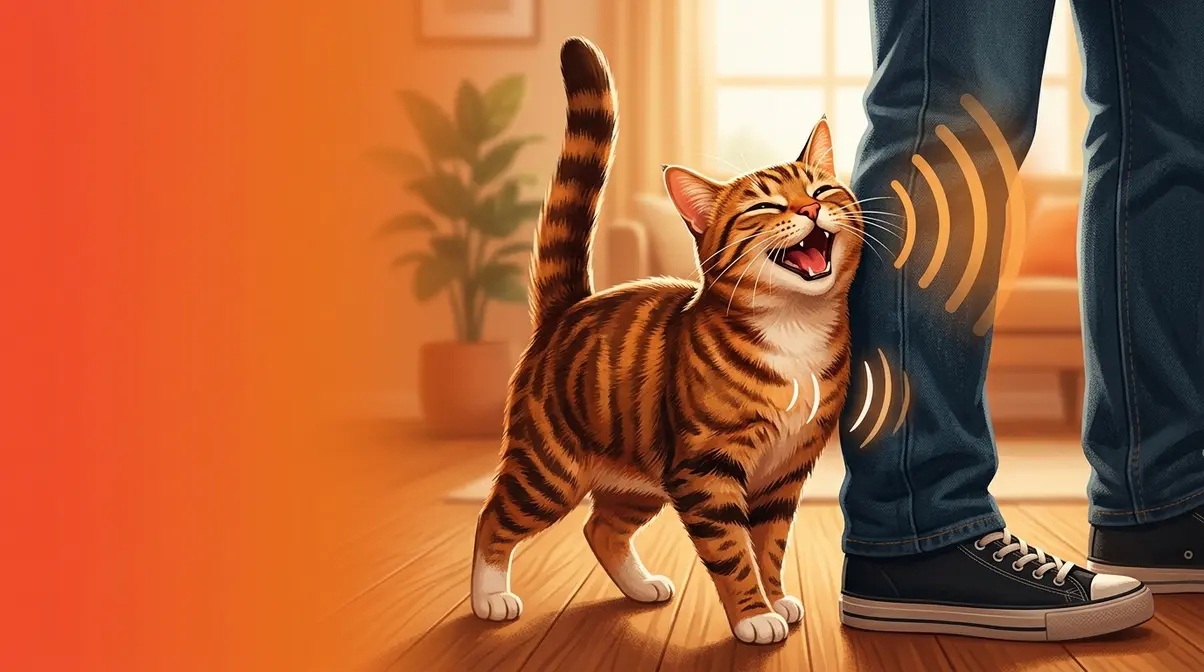
Another reason why does my cat rub against me involves vocalizations. Rubbing rarely happens in isolation. When your cat combines rubbing with other sounds or signals, they are building sentences out of individual words — and each combination has a distinct translation. According to PetMD, cat rubbing behavior is typically used to signal affection, act as a greeting, or mark territory, but the meaning shifts depending on what accompanies it.
Rubbing + Purring: The Affection Combo
When your cat rubs against you while purring, you’re receiving the clearest possible signal of contentment in their vocabulary. Purring (the low vibrating sound cats produce through rapid movement of laryngeal muscles) combined with rubbing is a two-channel message: the rub deposits a pheromone signal of trust, while the purr communicates a physiological state of calm and positive arousal.
Purring occurs at a frequency between 25 and 150 Hertz, which veterinary research has shown can promote tissue regeneration and bone healing. So, when your cat presses against you while purring, they aren’t just showing affection — they are physically sharing a healing frequency with you. This is one of the most reliable answers to the question “how do you tell if a cat loves you?” Research from veterinary behavior sources consistently identifies the rub-purr combination as a high-confidence affiliative signal — meaning your cat is not just tolerating your presence, but actively seeking it.
How to respond: match their energy. Slow movements, a soft voice, and gentle contact on the head or cheeks (where those facial glands are densest) will reinforce the moment. Avoid sudden movements or picking the cat up immediately — that can disrupt the signal mid-sentence.
One important nuance: purring doesn’t always mean happiness. Cats also purr when anxious or in pain, using it as a self-soothing mechanism. But purring combined with rubbing and relaxed body posture — soft eyes, upright tail, no tension in the shoulders — is a reliable indicator of genuine contentment (Cornell Feline Health Center). When all three signals appear together, your cat is telling you they feel safe, happy, and connected to you.
Rubbing + Meowing: What They Want
When rubbing comes paired with meowing, the message shifts from affection to communication — specifically, a request. Adult cats don’t typically meow at each other; that vocalization is reserved almost exclusively for communicating with humans. So when your cat rubs against your legs and meows at the same time, they are using both their scent language and their human-directed vocal language simultaneously.
Translation: “I need something, and I need it from you.”
The most common request behind this combination is food. Cats are creatures of routine, and if your cat rubs against your legs while meowing every morning at 7am, they’ve learned that this combination gets results. But the ask isn’t always about meals. Some cats use rubbing-plus-meowing to signal that they want to play, that they’re lonely, or that something in their environment has changed and they want your attention.
Pay attention to the pitch and length of the meow. A short, high-pitched trill combined with a leg rub is usually a friendly greeting. Conversely, a drawn-out, lower-pitched yowl paired with frantic pacing and rubbing often indicates an urgent demand or even distress.
How to say “I love you” in cat language? One way is to respond to this combination with calm acknowledgment rather than immediate fulfillment. Crouching down to their level, making eye contact, and offering a slow blink (which veterinary behaviorists describe as a feline gesture of trust and relaxation) tells your cat that you’ve received their message and you’re engaged. That response alone — being seen and acknowledged — satisfies a significant portion of the social need behind the rub-meow combo.
If the meowing is unusually loud, persistent, or paired with restlessness and rubbing against objects rather than you, it may signal discomfort rather than a simple request. That warrants a closer look at the Medical Red Flags section.
Why Your Cat Rubs Against You Then Bites
This is one of the most confusing moments in cat ownership: your cat rubs against you affectionately, you reach down to pet them, and they bite your hand. It feels like betrayal. It’s actually communication — just a different kind.
The behavior has a name: overstimulation (also called petting-induced aggression), which occurs when sensory input from petting or contact exceeds your cat’s comfort threshold and triggers a reflexive defensive response. The San Francisco SPCA notes that “a majority of cats exhibit overstimulation or petting-induced aggression to some degree” — so if this has happened to you, you’re in very large company.
Here’s what’s actually happening: your cat rubbed against you to initiate contact on their terms. When you responded by petting them — especially in sensitive areas like the belly, lower back, or tail base — you shifted the interaction from something they controlled to something they didn’t. Once their threshold is crossed, the bite is involuntary. The Cat Care Society describes it as “an actual physiological response to touch,” not a temperament flaw or sign that your cat dislikes you.
The warning signs come before the bite — every time. According to multiple shelter medicine and veterinary behavior sources (PAWS Chicago, Humane Colorado, SF SPCA), cats almost always signal overstimulation before biting. Watch for:
- Tail beginning to flick or swish
- Skin rippling along the back
- Ears turning or flattening backward
- Head swiveling toward your hand
- Purring stopping suddenly
- Body stiffening or freezing
If you see any of these signals, stop petting immediately and give your cat space. No punishment — that makes it worse. Simply pause, let them reset, and let them re-initiate contact when they’re ready.
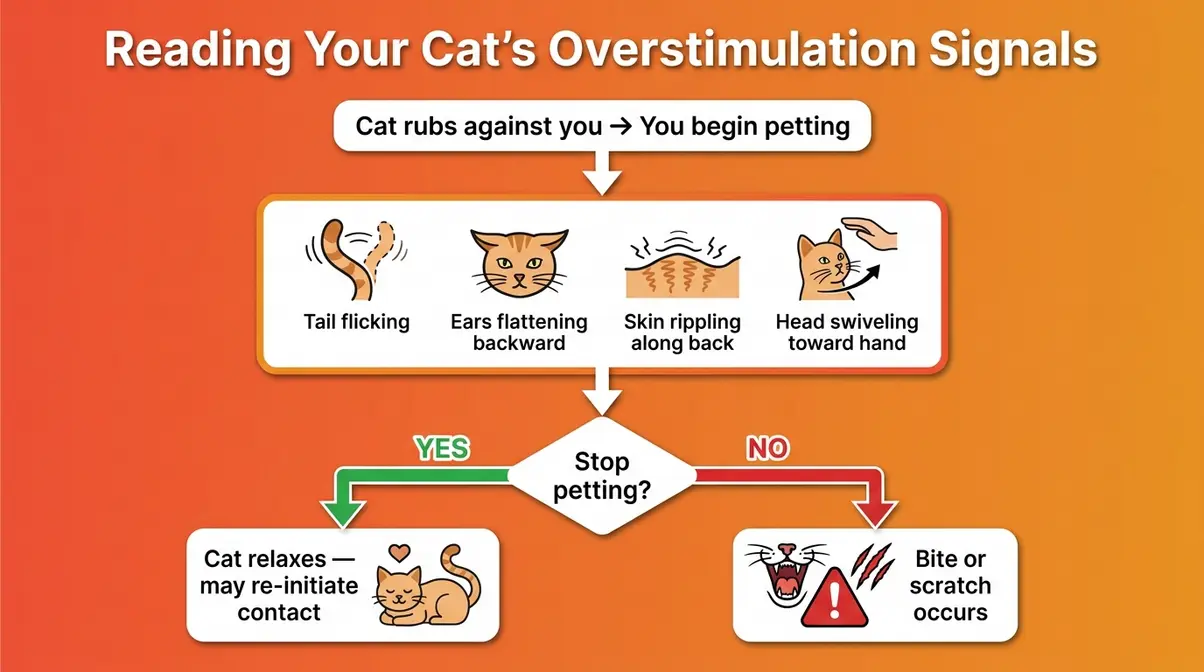
For a complete breakdown of this behavior — including how to train yourself to read the signals consistently and rebuild trust after a bite — see our in-depth guide on confusing cat signals when rubbing turns to biting.
Rubbing in Specific Situations
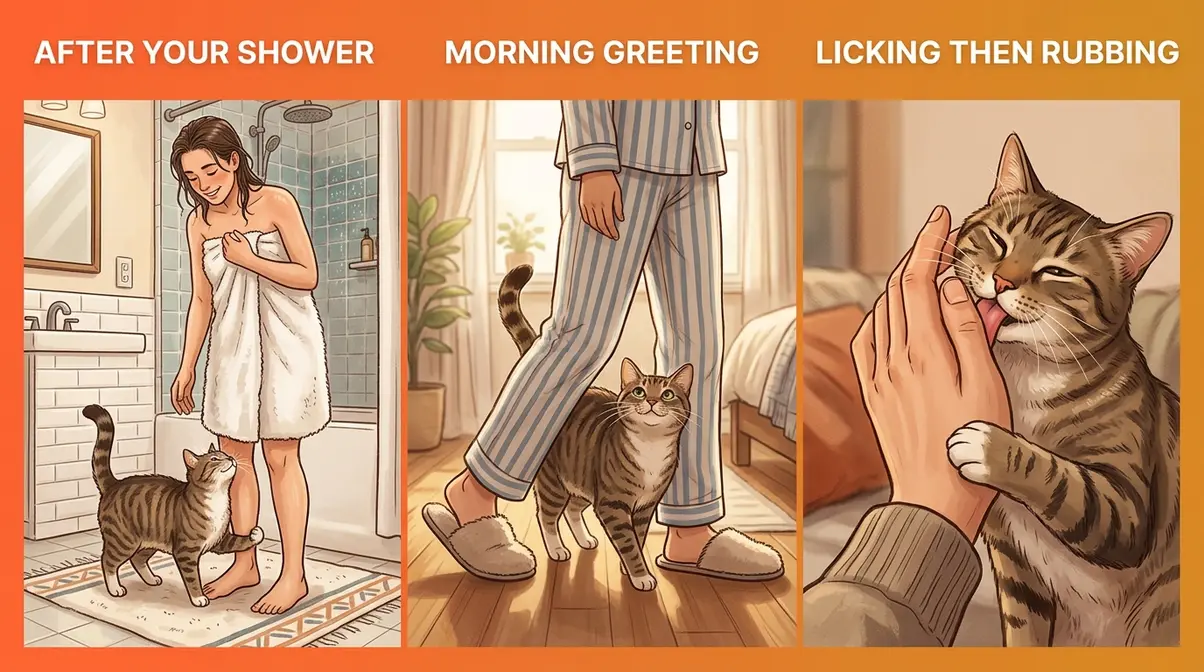
The Rubbing Vocabulary doesn’t just vary by body part — it also varies by context. The same physical gesture can carry a different meaning depending on when and where it happens.
Rubbing Against You After a Shower
You step out of the shower and your cat immediately presses their face against your ankles. This isn’t random timing. You’ve just washed away their scent message.
From your cat’s perspective, your shower removed the pheromone signature they carefully deposited the last time they rubbed you. You now smell like soap, shampoo, and unfamiliar chemicals — essentially a stranger version of yourself. The intense post-shower rubbing is your cat re-applying their scent to restore the “group smell” that identifies you as part of their social circle. Veterinary sources explain this as maintenance allorubbing — the same behavior free-living cats perform after any disruption to their shared colony scent (PetMD, 2026).
It’s one of the more endearing quirks of cat ownership: your cat considers your scent part of their social identity, and they are genuinely motivated to fix it when it’s disrupted.
Rubbing Against You in the Morning
Morning rubbing is almost always a greeting combined with an attention request. Cats are crepuscular (most active at dawn and dusk), so many cats are already fully awake and socially primed when you get up. The morning rub is their version of “good morning” — but it often comes with an agenda.
If the morning rub is accompanied by meowing and leading you toward the kitchen, the agenda is breakfast. If it’s a quiet, slow rub against your legs while you’re still half-asleep, it’s more purely social — your cat missed the contact during the night and is re-establishing it. Either way, a calm acknowledgment (crouch down, let them rub your hand, offer a slow blink) is the ideal response before you do anything else.
Licking Then Rubbing Against You
Licking followed by rubbing is the full social grooming sequence — the most intimate combination in The Rubbing Vocabulary. In multi-cat households, cats engage in mutual grooming (called allogrooming) as a bonding behavior, typically focused on the head and neck. When your cat licks you and then rubs their face against you, they are treating you exactly as they would a trusted feline companion.
The lick applies saliva (which carries their scent), and the rub reinforces it with facial pheromones. Together, they are maximally “claiming” you as part of their group. This combination is most common in cats who were socialized early, who have strong bonds with their owners, and who are in a calm, secure emotional state. If your cat does this to you, consider it a significant compliment.
Understanding Other Cat Biting and Nibbling
Rubbing isn’t the only tactile behavior that confuses cat owners. Many cats also bite or nibble gently — sometimes completely out of nowhere, sometimes during play, sometimes while being held. These behaviors are distinct from overstimulation biting and carry their own set of meanings.
Gentle “love bites” (soft nibbles during petting or grooming) are usually affiliative. Your cat is extending the same allogrooming behavior they would use with a feline companion. These bites rarely break the skin and are often accompanied by purring. Our evaluation of veterinary behavioral studies indicates that cats use these soft bites to show affection and reinforce social bonds within their family unit.
On the other hand, harder, unprovoked bites are more often redirected prey drive, play aggression, or a communication of discomfort. For example, if your cat sees a bird out the window but cannot reach it, they may redirect that pent-up hunting energy onto your ankle as you walk by.
Kittens also use biting as a primary way to explore their world and learn bite inhibition. If you use your hands as toys during playtime, you inadvertently teach your cat that biting human skin is acceptable. Veterinary behaviorists recommend redirecting play aggression to appropriate wand toys and rewarding calm interactions. Never punish a cat for biting, as this increases fear and can escalate aggressive responses. The key distinction between these types of bites is always context, body language, and warning signals.
For a complete breakdown of why cats bite gently, nibble during cuddles, and sometimes bite seemingly out of nowhere — including step-by-step guidance on how to respond to each type — see our full guide on understanding cat biting and gentle nibbling.
Other Common Cat Behaviors Decoded
Cat rubbing is just one chapter in a much larger behavioral language. If you’ve found yourself wondering why your cat follows you to the bathroom, stares at you while you sleep, or insists on sitting directly on your laptop, you’re not alone. These are among the most searched cat behavior questions online.
Many of these behaviors share the same root as rubbing: they’re expressions of social bonding, territorial security, and attention-seeking that make perfect sense once you understand how cats experience attachment. Cats are not solitary creatures by nature. They form strong social bonds and express them through proximity, scent, and physical contact.
Take kneading, for instance. Often called “making biscuits,” this rhythmic pawing motion is a leftover comfort behavior from kittenhood. When your cat kneads your lap, they are showing ultimate relaxation and contentment.
Similarly, following you into the bathroom is a classic feline behavior rooted in vulnerability. In the wild, cats are both predators and prey. When you are in a closed room, your cat may feel the need to guard you or simply want to ensure their territory (and their favorite human) remains safe.
Sleeping on your chest or legs is another high-trust signal. Because sleep is a vulnerable state, choosing to rest on you means your cat views you as a secure protector. Understanding these quirks allows you to appreciate the depth of your cat’s affection.
For a full translation of the most common cat behaviors — including why cats sleep on you, follow you room to room, and knead blankets before lying down — see our complete guide to decoding common cat sleeping and proximity behaviors.
Medical Red Flags for Cat Rubbing
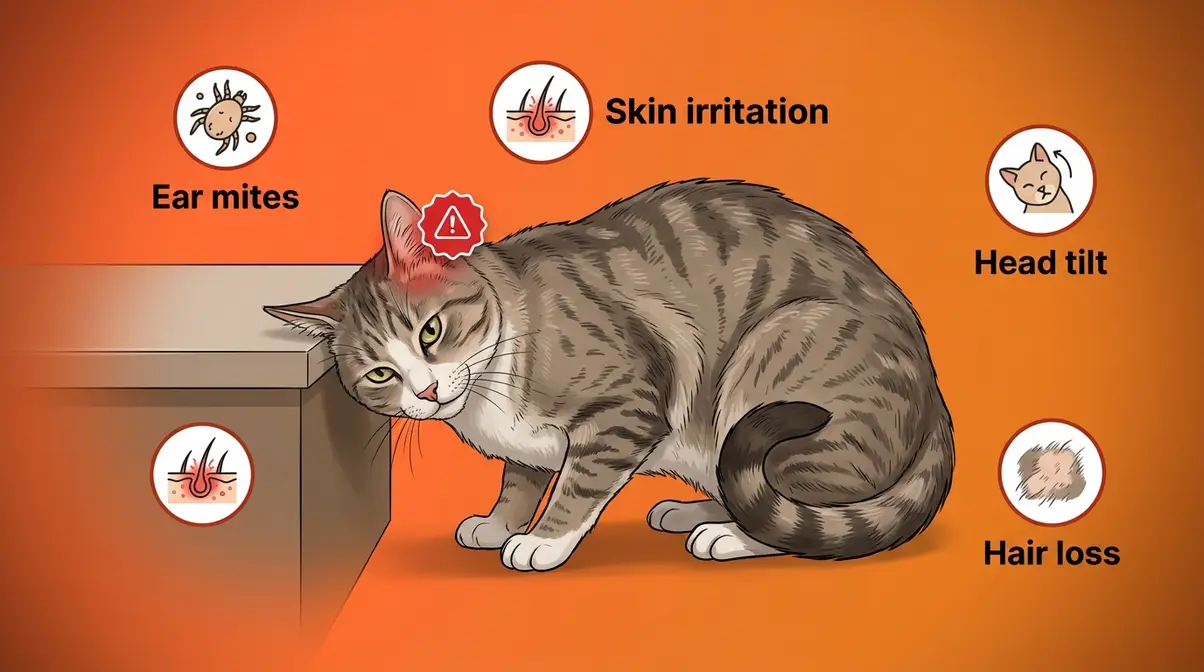
Most rubbing is healthy, social, and completely normal. But there are situations where rubbing behavior shifts from communication to a symptom — and knowing the difference can matter for your cat’s health.
Signs of Medically Driven Rubbing
Normal rubbing is directed at people, familiar objects, and environmental landmarks. Medically driven rubbing is typically focused, repetitive, and concentrated on one specific body area — particularly the head, face, or ears. According to Modern Vet Georgia, if a cat is rubbing one specific area repeatedly, it may indicate pain or irritation rather than social communication.
Watch for these red flags:
- Rubbing the face or head against hard surfaces repeatedly — a specific sign of ear infections, ear mites, or dental pain. The cat is trying to relieve localized discomfort.
- Rubbing accompanied by scratching, hair loss, or redness — suggests pruritus (itching caused by allergies, fleas, or a skin condition). This is different from the smooth, flowing motion of normal social rubbing.
- Rubbing with head tilting or loss of balance — a neurological or inner ear concern requiring prompt veterinary attention.
- Skin rippling or twitching combined with frantic rubbing — may indicate feline hyperesthesia syndrome (a condition causing extreme sensitivity along the back), which VCA Hospitals notes can involve exaggerated responses to touch that become compulsive.
- Sudden increase in rubbing frequency combined with hiding, reduced appetite, or changes in litter box habits — signals that something broader is wrong.
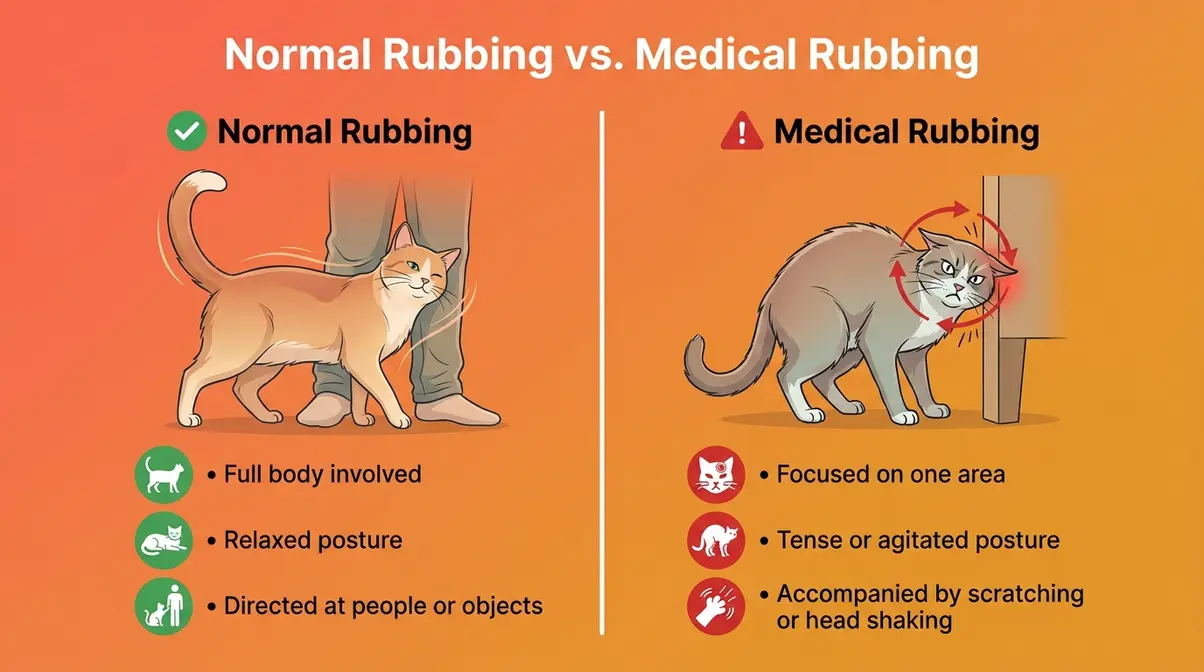
When to Call Your Vet About Rubbing
Schedule a veterinary appointment if your cat’s rubbing behavior includes any of the following:
- Rubbing the same spot on their body repeatedly for more than a day or two
- Visible redness, swelling, hair loss, or skin irritation at the site of rubbing
- Head shaking combined with rubbing the ears or face
- A sudden change in rubbing patterns — especially if a previously affectionate cat stops rubbing entirely
- Rubbing accompanied by unusual vocalizations, disorientation, or changes in coordination
These symptoms don’t necessarily indicate a serious condition, but they do indicate something your vet should evaluate. Early intervention for ear infections, allergies, and skin conditions is significantly easier — and less expensive — than treating them after they’ve progressed.
When Rubbing Becomes a Concern
Common Mistakes When Responding
Even well-intentioned responses to rubbing can backfire. Here are the patterns that veterinary behaviorists see most often — and what to do instead.
Mistake 1: Immediately picking the cat up when they rub your legs. Your cat initiated contact on their terms. Scooping them up transfers control to you, which some cats find stressful. Instead, let them rub, crouch down to their level, and offer your hand for them to rub against — then see if they initiate being held.
Mistake 2: Ignoring the rub entirely. If your cat rubs against you and receives zero response, they may escalate — meowing louder, rubbing more insistently, or eventually giving up and withdrawing. A brief acknowledgment (a word, a slow blink, a gentle touch on the head) is usually enough to satisfy the social need behind the rub.
Mistake 3: Assuming no rub means the cat is upset with you. Some cats are simply less physically demonstrative. If your cat sits near you, follows you between rooms, or makes eye contact and slow-blinks at you, they are expressing affection — just in a different dialect of the same vocabulary.
Mistake 4: Continuing to pet after the warning signals appear. As covered in the overstimulation section, the warning signs before a bite are clear and consistent. Ignoring them — even with good intentions — teaches your cat that their communication doesn’t work, which erodes trust over time.
When to Seek Professional Help
If your cat’s rubbing behavior is creating genuine problems — anxiety-driven compulsive rubbing, aggression that doesn’t respond to standard overstimulation management, or behavior changes you can’t explain — a certified feline behaviorist or veterinary behaviorist is the right resource.
A veterinary behaviorist (a veterinarian with specialist training in animal behavior) can assess whether the behavior has a medical component, recommend appropriate environmental modifications, and in some cases suggest tools like synthetic pheromone therapy (Feliway) as part of a broader behavior plan. The AVSAB notes that pheromone products work best as an adjunct to behavior modification, not as a standalone solution.
General resources like PetMD, Cats.org.uk, and Chewy’s behavior library are useful for understanding normal behavior. But for persistent, escalating, or distressing behavior patterns, professional guidance is worth pursuing.
Frequently Asked Questions
How do you tell if a cat loves you?
A cat shows love through a combination of physical and behavioral signals — rubbing (especially head bunting), slow blinking, purring during contact, following you between rooms, and kneading soft surfaces near you. The rub-purr combination, where your cat presses their forehead against you while producing a relaxed purr and soft eyes, is one of the most reliable indicators of genuine affection in feline behavior. According to Cornell Feline Health Center, slow blinking is a particularly meaningful gesture. It shows a cat voluntarily making themselves vulnerable by partially closing their eyes in your presence, which requires immense trust.
Can cats smell illness in humans?
There is credible anecdotal and some scientific evidence that cats can detect physiological changes in humans, including shifts in body chemistry associated with illness. Cats have approximately 200 million scent receptors (according to veterinary research), making their sense of smell extraordinarily sensitive. Some documented cases suggest cats have detected low blood sugar episodes in diabetic owners before symptoms appeared. However, this is not a trained or reliable behavior — it’s an incidental consequence of their remarkable olfactory sensitivity. If your cat is behaving unusually around you, it’s worth paying attention, but don’t rely on it as a diagnostic tool.
What breed of cat is the most clingy?
Siamese, Ragdoll, and Burmese cats are consistently identified as among the most people-oriented breeds, with high tendencies toward following their owners, seeking physical contact, and vocalizing frequently. That said, individual personality varies significantly within any breed. Socialization during the first 2-7 weeks of life has a larger influence on adult attachment behavior than breed alone.
How do you say “I love you” in cat language?
The most recognized “I love you” signal in cat communication is the slow blink — holding eye contact and slowly closing and reopening your eyes. Veterinary behaviorists describe this as a cat voluntarily making themselves non-threatening in your presence, which is a significant trust gesture. You can reciprocate by slow-blinking back. Beyond that: crouching to their level (rather than looming over them), letting them initiate contact, and responding gently when they rub against you are all ways of saying, in cat language, that you’re safe and trusted.
What annoys cats the most?
Unpredictable physical handling — particularly touching the belly, tail base, or lower back without invitation — is among the most common sources of feline frustration. Other frequent irritants include: loud sudden noises, being picked up mid-rub (which interrupts their initiated contact), staring directly into their eyes at close range (which reads as a threat in cat communication), and changes to their litter box, feeding schedule, or furniture arrangement. Cats thrive on predictability and control over their own interactions. The most common owner mistake is misreading a “I want to sniff your hand” approach as an invitation for full petting — let the cat lead.
How do cats act when they sense death in humans?
Cats may become unusually attentive, clingy, or watchful when a person is seriously ill or near death, though the mechanisms are not fully understood. The most documented cases involve hospice settings, where some cats have been observed consistently seeking proximity to patients in their final hours. The likely explanation involves the cat’s olfactory sensitivity — detecting changes in body chemistry, breath, and metabolic processes that precede death. Some cats may also respond to behavioral cues like reduced movement and changed breathing patterns. This behavior, while not universal, has been reported consistently enough that it’s taken seriously by palliative care professionals.
Why do cats rub their teeth on you?
When a cat rubs their teeth or gums against you, they are utilizing the scent glands located around their mouth and chin. This is a highly affectionate and territorial marking behavior. By pressing these specific glands against your skin, it simply means they are claiming you very thoroughly as part of their family unit.
Your Cat’s Rubbing Language Decoded
Every rub your cat gives you is a word in a language they’ve been speaking their entire life. The Rubbing Vocabulary — the framework at the heart of this guide — gives you a way to read those words accurately. Head bunting means deep trust. Full-body weaves mean greeting plus a request. Post-shower rubbing means your cat is fixing your scent. Rubbing followed by a bite means they gave you a warning you may have missed.
Research into feline facial pheromones, particularly the F3 fraction documented in peer-reviewed studies, confirms that this isn’t random behavior — it’s a sophisticated chemical communication system that evolved over thousands of years of feline social life. The next time you ask yourself why does my cat rub against me, remember that every rub is a deliberate social statement that you are trusted, claimed, and part of their world.
The Rubbing Vocabulary works in both directions. The more consistently you respond — with slow blinks, crouching to their level, and letting them control the pace of contact — the richer and more frequent that vocabulary becomes. Start today: the next time your cat rubs against your legs, pause for three seconds before doing anything else. Crouch down, offer your hand, and let them rub on their terms. Watch what they do next. You’ll be surprised how much they have to say once you’re paying attention.

Dave King
Cat owner and writer at Mad Cat Man.