
Table of Contents
- Cat Spider Plant Safety: What Every Owner Should Know
- Why Cats Nibble Spider Plants: Instinct, Texture, and Boredom
- The Ultimate Owner’s Checklist
- 10 Tested Fixes That Actually Work
- Smart Products and Setups: What To Buy, When, and Why
- When Nibbling Signals Something More: Health and Behavior Flags
- How Mad Cat Man Makes Safer, Simpler Choices Easy
- Final Thoughts to Carry Into Your Week
This blog post may contain affiliate links. As an Amazon Associate I earn from qualifying purchases.
Cat Spider Plant: The Ultimate Owner’s Checklist (Why Cats Nibble, Safety Tips & 10 Tested Fixes)
If you typed cat spider plant into your search bar after finding fresh bite marks on those stripy leaves, you are in the right place. I remember placing my first spider plant on a sunny sill and turning my back for five minutes. My cat treated it like a salad bar. Sound familiar? In this practical guide we will cover why cats nibble, what is actually safe, and the exact fixes that stop the snacking without turning your living room into a fortress.
We will also keep things real. Spider plants are widely listed as non toxic to cats by the ASPCA [American Society for the Prevention of Cruelty to Animals], yet overeating any plant can lead to mild tummy upset. The goal here is balance. You can keep your plant and your curious feline, and you do not need to give up greenery or your peace of mind. Let’s walk through the safety facts, a clear owner’s checklist, and ten tested solutions you can use today.
Cat Spider Plant Safety: What Every Owner Should Know
First, the big question: is the spider plant dangerous? According to the ASPCA [American Society for the Prevention of Cruelty to Animals], Chlorophytum comosum, also known as the spider plant, is non toxic to cats. That means it is not expected to cause poisoning if nibbled. However, non toxic does not mean consequence free. Large mouthfuls of fibrous leaves can irritate a sensitive stomach, and some cats may vomit or have soft stools after a chewing spree.
Think of a spider plant like unsalted popcorn for a toddler. It will not poison them, but a whole bowl before dinner is not ideal. The mild grassy taste and springy texture seem to invite play and little tasting sessions. A few nibbles happen in many homes, and most cats are perfectly fine. Still, if you notice repeated overeating, aim to manage access and satisfy the chewing urge with safer options like cat grass.
| Question | Short Answer | What You Should Do |
|---|---|---|
| Toxic to cats? | No, listed as non toxic by the ASPCA [American Society for the Prevention of Cruelty to Animals] | Do not panic if you catch a nibble. Monitor for mild stomach upset. |
| Common symptoms after over eating | Occasional vomiting, soft stools, drooling, temporary reduced appetite | Offer water, pause food for a few hours, reintroduce bland food if needed. |
| When to call a veterinarian | Repeated vomiting, lethargy, blood in stool, signs of abdominal pain | Call your veterinarian for guidance, especially for kittens or seniors. |
| Better alternatives | Cat grass, wheatgrass, oat grass | Rotate fresh trays to satisfy the urge to chew safely. |
One more note on rumors you might see online. Some posts suggest spider plants contain compounds that make cats feel a little woozy, which might explain the fascination. Evidence in formal research is limited. Rather than chasing maybes, focus on what is solid: provide safe chewing outlets, limit unsupervised access, and watch your cat’s individual reaction. That simple approach works in most homes and keeps both plant and pet happy.
Why Cats Nibble Spider Plants: Instinct, Texture, and Boredom
Why the obsession with those ribbon leaves? For many cats, chewing plants is part play, part grooming, part instinct. In the wild, small amounts of grass can help move hair through the digestive tract. Indoor cats sometimes recreate that behavior with the closest grassy stand in the room, which is often your beloved spider plant. Curiosity and boredom also play a big role, especially for high energy breeds and kittens who are testing the world with their mouths.
Watch This Helpful Video
To help you better understand cat spider plant, we’ve included this informative video from Visible Work 2.1. It provides valuable insights and visual demonstrations that complement the written content.
Texture matters too. Spider plant leaves bend and spring back like a cat toy. If you have ever watched a leaf bounce after a swipe, you can see why it is irresistible. The variegated stripes might even offer a visual target that triggers chase behavior. Add a gentle rustle when the leaves brush together and you have a multi sensory invitation your cat can hardly refuse.
There is also the attention factor. If nibbling the plant reliably gets a reaction from you, some cats will repeat it when they want engagement. I learned this the hard way. The moment I yelled “hey,” my cat perked up and went right back for another chomp. Shifting to calm redirection, plus better enrichment, dramatically reduced the plant raids. Replace the thrill with something equally rewarding, and you make the plant less exciting by comparison.
The Ultimate Owner’s Checklist

Before we jump into fixes, run through this quick checklist to make sure the basics are covered. A few small changes prevent most cat and plant conflicts. You can print this and keep it on your fridge, or use it as a weekend to do list. Tidy up environments and routines first, then layer in behavior tools if needed.
- Place spider plants out of easy reach using shelves, hanging planters, or tall plant stands.
- Offer a fresh tray of cat grass near your cat’s favorite lounging spot to redirect chewing.
- Schedule two short interactive play sessions daily with a wand toy to burn off energy.
- Feed a satisfying, species appropriate diet and use slow feeders to extend mealtime.
- Provide vertical space like a cat tree near windows so the plant is not the most exciting perch.
- Rotate toys weekly to keep novelty high and boredom low.
- Use a safe deterrent on leaves if needed, and test on a single leaf first.
- Cover soil with decorative rocks or a mesh circle to prevent digging and dirt snacking.
- Keep plant care products pet safe and avoid leaf shine sprays that might attract licking.
- Check for signs of stress like excessive grooming or nighttime zoomies, and adjust enrichment.
| Behavior | Likely Meaning | What Helps Most |
|---|---|---|
| Occasional bites during play, no other symptoms | Exploration and boredom | More play, cat grass, move plant higher |
| Daily over eating, frequent vomiting afterward | Habit plus stomach irritation | Limit access, replace with grass, consider a deterrent |
| Chewing many non food items | Possible pica [abnormal appetite] or stress | Veterinarian evaluation and stress reduction plan |
| Digging in soil, not chewing leaves | Seeking texture or minerals, or scented soil | Soil cover, offer a dig box with safe substrate |
If you share your home with a large, athletic breed like a Maine Coon, plan for extra height and sturdiness. Big cats love a vantage point, and a wobbly stand is an irresistible challenge. For timid cats, soft introductions to new items work best. Place the cat grass tray in a safe, quiet corner first. Small personality adjustments like these make the whole plan stick.
10 Tested Fixes That Actually Work
Here are ten practical fixes that readers of Mad Cat Man and our own team have used and refined. No single tactic is magic. The best results come from combining two or three that fit your home and your cat’s personality. Start with access control, add an outlet for chewing, then layer in enrichment and gentle deterrents.
- Hang the plant at true cat proof height. Use a ceiling hook and hang the pot so leaves sit at least 6 inches above your tallest cat’s reach when standing. This placement keeps the bounce factor but removes the bite access.
- Offer fresh cat grass weekly. A dedicated chewable option outcompetes the spider plant. Place it where your cat already relaxes. Swap in fresh trays every 7 to 10 days so the texture stays enticing.
- Play hard before prime nibble times. Two 10 minute wand sessions before you leave and before bed burn off hunting energy. Think stalk, chase, pounce, then feed a small snack to complete the sequence.
- Use a safe taste deterrent sparingly. Citrus peels around the pot or a pet safe bitter leaf spray can discourage bites. Always test on a single leaf and reapply lightly, since heavy residue can attract dust.
- Cover the soil. A circle of metal mesh cut to fit inside the pot or a layer of smooth decorative stones keeps paws out of dirt, which can be as interesting as the leaves.
- Upgrade the window perch. Place a cat tree or shelf near the same window where the plant used to live. If the view is the real prize, give the seat to your cat and relocate the plant.
- Use mild airflow to reduce bounce. A small fan on low can reduce the leaf movement that triggers play. Aim it so the plant sways less without chilling your room.
- Rotate the plant location. If your cat fixates on one spot, move the plant to a different room temporarily. Breaking the pattern for a few weeks often resets the habit.
- Train a leave it cue. Reward your cat for looking away from the plant when you say the cue. Start at a distance, pay well with treats, and make success easy before moving closer.
- Enrich the rest of the day. Food puzzles, scent trails with a pinch of catnip, and solo toys reduce boredom. Keep a small rotation box and swap items every Sunday to refresh interest.
Pick two or three from the list that feel realistic this week. My go to combination is a hanging planter, fresh cat grass, and a nightly play session. That trio solves the problem in most homes without resorting to scolding, which rarely sticks. Quiet consistency beats dramatic corrections every time.
Smart Products and Setups: What To Buy, When, and Why
When you are choosing tools, match the product to the behavior you see. If your cat digs soil, a mesh insert and a dig box are the answer. If your cat chases bouncing leaves, height and airflow help more than sprays. Mad Cat Man regularly tests gear across budgets and publishes product recommendations, buying guides, and step by step tutorials so you can make clear, confident choices without getting lost in marketing claims.
| Goal | Best Tool | Budget Option | Why It Works |
|---|---|---|---|
| Stop leaf chewing | Ceiling hung planter | Tall wall shelf with secure brackets | Removes bite level access while preserving light and airflow. |
| Provide safe chewing | Cat grass grow kit | DIY tray with oat or wheat seeds | Satisfies natural grass eating behavior with soft, digestible blades. |
| Reduce soil play | Metal mesh soil cover | Layer of smooth river rocks | Blocks paws and prevents the fun of digging in loose soil. |
| Cut boredom | Food puzzle feeder | Egg carton puzzle with kibble | Engages hunting brain and stretches mealtime satisfaction. |
| Calm the bounce | Low speed desk fan | Strategic relocation away from air vents | Reduces leaf motion that triggers play and pounce. |
You might wonder which plants are safe to keep around cats in general. Safety varies, and the simplest rule is to cross check any new plant with a trusted database such as the ASPCA [American Society for the Prevention of Cruelty to Animals] listings. For quick reference, here is a short snapshot of common houseplants often considered by cat owners. Always verify specific cultivars before you buy.
| Plant | Status for Cats | Notes |
|---|---|---|
| Spider plant (Chlorophytum comosum) | Non toxic | Still manage access to prevent stomach upset from overeating. |
| Parlor palm (Chamaedorea elegans) | Non toxic | Great for low light, gentle fronds that may invite batting. |
| Pothos (Epipremnum aureum) | Caution | Insoluble oxalates can irritate; avoid or keep completely out of reach. |
| Peace lily (Spathiphyllum) | Caution | Irritating if chewed; choose safer alternatives for curious cats. |
As you compare options, remember that setup matters as much as the product. A budget shelf installed securely at the right height is better than an expensive planter your cat can still reach. Mad Cat Man’s how to checklists and product reviews call out these details so you can avoid common rookie mistakes and spend wisely.
When Nibbling Signals Something More: Health and Behavior Flags
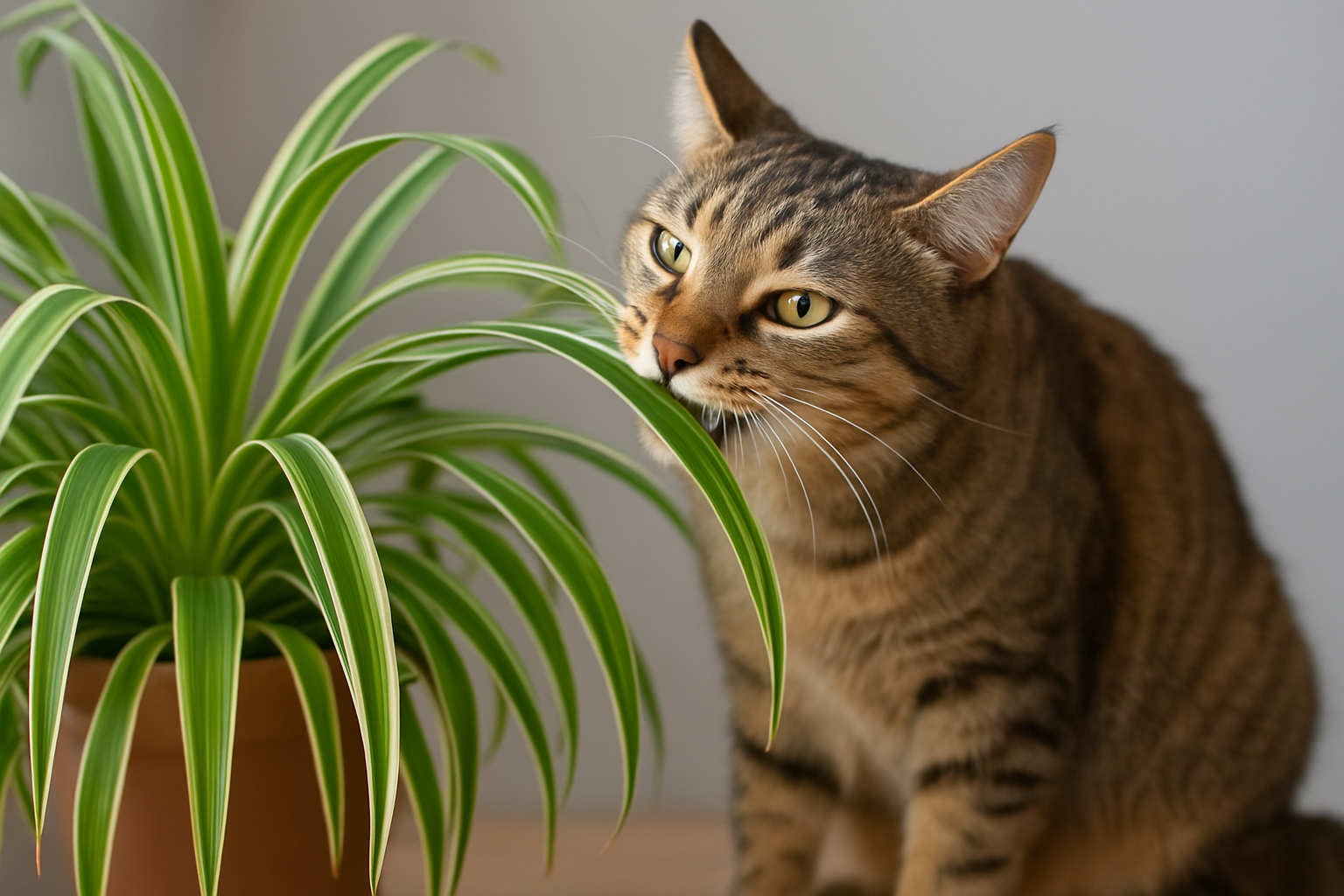
Most spider plant encounters are harmless and easy to manage. Still, plant chewing can sometimes be a clue that your cat is bored, anxious, or dealing with tummy trouble. If you notice a pattern of eating many non food items, that may suggest pica [abnormal appetite], which deserves a conversation with a veterinarian. Kittens, seniors, and cats with a history of stomach sensitivities benefit from a little extra caution and quicker follow up.
Call your veterinarian promptly if you see any of the following after a chewing episode: repeated vomiting, blood in stool, severe diarrhea, painful belly, or an unwillingness to eat or drink for more than half a day. These are not typical for spider plant nibbling and may point to a different issue. Bring notes about timing, how much was eaten, and any products used on the plant. Clear details help your veterinarian give precise advice.
| Detail | Why It Helps | Example |
|---|---|---|
| How much was eaten | Estimates severity and stomach load | Three long leaves, chewed to mid leaf |
| Symptoms and timing | Distinguishes mild upset from emergency | Single vomit 30 minutes later, then normal play |
| Plant care products | Some fertilizers can irritate stomachs | No fertilizer past 2 weeks, no leaf spray |
| Cat’s age and health | Young and older cats may need quicker care | Healthy 2 year old, up to date on checkups |
If you are unsure, it is always fine to call and ask for guidance. Many clinics will advise simple home care for minor tummy upset. Offer fresh water, consider a brief food pause, then restart with a small bland meal if recommended. The calm, methodical approach keeps everyone less stressed while you protect your cat’s comfort.
How Mad Cat Man Makes Safer, Simpler Choices Easy
New or uncertain cat owners tell us the same story all the time. You want your home to be lush and cat friendly, but searching through conflicting advice about plants, toys, and training is exhausting. Mad Cat Man exists to cut the noise for you. Our team of experienced cat owners and product reviewers builds clear, experience based articles that combine safety, behavior insight, and honest gear recommendations you can trust.
Here is what you can expect from us. Our product reviews and buying guides compare options across different budgets, highlighting what matters for real cat households. Behavior and training tips translate what your cat is communicating into simple steps you can try today. Health and preventive care guides cover the nuts and bolts like worming, microchipping, and dental care in a friendly, vet approved format that respects your time and your wallet.
We also organize content by category so you can find answers fast: safety and product suitability topics like plants and humidifiers, breed guides including popular comparisons for Maine Coons, how to tutorials and shopping checklists that walk you through setups step by step. The goal is one place you can bookmark and actually use, whether you are choosing your first litter setup or upgrading to a smarter cat tree that finally survives a jumping session. With the right plan, you can keep your spider plant thriving and your cat content.
Before we wrap, here is a quick, practical recap of the core plan many readers use: place the spider plant out of reach, provide cat grass as a safe outlet, play daily to use up hunting energy, and add a taste deterrent if needed. Add soil protection if digging is the issue and adjust the room layout so your cat has an even better perch than the plant’s spot. When you approach the problem like this, the plant becomes background scenery, not a chew toy.
Finally, for those curious about why simple changes work so well, it comes down to cat centered design. You are not forcing your cat to ignore a temptation forever. You are replacing it with better options that meet the same needs: chewing, climbing, hunting, viewing. That is why the results last, and why your cat stops looking at your spider plant like a salad bowl with stripes.
Everything above is designed to be doable without special gear or long training sessions. Pick what fits your routine, experiment for a week, then tweak. Your home will feel calmer, your plant will look fresher, and your cat will have a richer day from morning zoomies to bedtime biscuits. And if you want a little extra hand holding, Mad Cat Man is here with step by step guides, product recommendations, and safety checklists that speak your language.
Keep the core truth in mind. A spider plant is a safe member of a cat home when you set the stage wisely. Cats are not being naughty when they nibble, they are being cats. Meet them halfway with smart setup and playful routines, and those dramatic leaf trims will be a story you laugh about, not a daily drama.
Your living room jungle and your feline can absolutely coexist. You just need a plan that is simple, consistent, and kind. That is the heart of this guide and the heart of the help we publish at Mad Cat Man, built by people who have been there and cleaned up that little pile of leaf bits under the window.
Ready to make today the day the plant survives the afternoon nap wake up? Start with one fix from the list, set a reminder to play tonight, and put a fresh cat grass tray where your cat already hangs out. Most homes see progress within a week, sometimes within a day. And if you need product picks or an extra checklist, we have you covered.
Now, take a breath and glance at your spider plant. You have tools, timing, and a better understanding of your cat. That combination is what makes change stick. The sooner you begin, the sooner those stripy leaves can grow unmolested while your cat happily chomps the grass you actually want them to eat.
Let’s land this with a quick picture. Plant hung, grass offered, a playful wind down before bed, and a calm morning with zero leaf confetti on the floor. That is a normal, comfortable outcome you can create with a few small, steady steps starting today.
Quick PSA from a fellow plant parent: if you ever add new greenery, cross check it first with the ASPCA [American Society for the Prevention of Cruelty to Animals] database. One two minute search prevents a lot of worry later and keeps your cat safely curious and your home soothingly green.
With these tips, your home becomes a little sanctuary where your cat, your decor, and your spider plant can thrive side by side. And yes, the phrase cat spider plant can be a sign of harmony, not a cry for help.
Final Thoughts to Carry Into Your Week
You now have a simple, proven plan to protect your plant, satisfy your cat, and lower your stress in one go.
Imagine your next twelve months with a calm routine, thriving greenery, and confident choices backed by clear, expert guidance. What will you try first to make your own cat spider plant success story happen this week?
Additional Resources
Explore these authoritative resources to dive deeper into cat spider plant.
Make Safer Plant Choices with Mad Cat Man
Explore expert-backed safety guides on plants and humidifiers to help every cat lover make confident, budget-smart decisions for a peaceful, pet-friendly home.