Is Belladonna Toxic to Cats? Vet Emergency Guide 2026
Unlock actionable ideas for Belladonna Plant Poison: The Cat Owner's 7-Step Emergency & Prevention Checklist packed with data-backed advice curated by Mad…

⚠️ MEDICAL DISCLAIMER — Read This First
This article is for educational purposes only. If you believe your cat has ingested belladonna or any toxic plant, contact your veterinarian or an emergency pet poison hotline immediately. Do not wait for symptoms to appear. Time is critical.
- ASPCA Animal Poison Control Center (APCC): (888) 426-4435 — Available 24/7
- Pet Poison Helpline: (855) 764-7661 — Available 24/7
Medically Reviewed by a licensed Doctor of Veterinary Medicine (DVM) — July 2026
Yes — belladonna is extremely toxic to cats. Whether your cat chewed a leaf from the garden or you spotted them near an unfamiliar plant, this is an emergency. Do not wait for symptoms. Call the ASPCA Animal Poison Control Center at (888) 426-4435 right now, then keep reading to understand exactly what you’re dealing with.
But here is something almost no article tells you: there are two completely different plants called “belladonna,” and knowing which one your cat encountered changes everything about the danger level and the toxins involved. This guide clears up that confusion, tells you the symptoms to watch for, and walks you through 4 emergency steps to take right now.
Is belladonna toxic to cats? Yes — both plants that share the “belladonna” name are toxic to cats, but through different mechanisms and with different severity levels.
- The Two Belladonna Problem: Atropa belladonna (deadly nightshade) and Amaryllis belladonna (belladonna lily) are unrelated plants — both toxic, but in different ways. Confusing them leads to dangerous triage errors.
- Speed matters: Symptoms can appear within minutes to 12 hours of ingestion — do not wait for signs to call poison control.
- No safe dose exists: Every part of both plants — leaves, berries, stems, bulbs, flowers — is poisonous to cats.
- Homeopathic belladonna in highly diluted form (30C/200C) has not been documented as a cause of feline poisoning, but no peer-reviewed feline safety studies exist — always consult your vet before use.
- Act now: Call (888) 426-4435 (ASPCA) or (855) 764-7661 (Pet Poison Helpline) immediately.
Is Belladonna Toxic to Cats? The Immediate Answer
Yes — belladonna is toxic to cats, and all parts of the plant are dangerous. The ASPCA Animal Poison Control Center classifies deadly nightshade (Atropa belladonna) as toxic to cats, dogs, and horses, with clinical signs that include hypersalivation (excessive drooling), severe gastrointestinal upset, CNS depression, dilated pupils, and dangerous changes in heart rate (ASPCA Poison Control, 2026).
There is no safe dose. The berries, leaves, stems, roots — every part of the plant contains toxic compounds. Even small amounts can cause serious harm in cats, who are particularly sensitive to many plant-based toxins because of how their liver metabolizes chemicals differently from dogs or humans.
The Pet Poison Helpline classifies belladonna toxicity in cats as severe, recommending immediate contact with a veterinary poison expert after any suspected ingestion (Pet Poison Helpline, 2026). Do not wait for your cat to show signs before calling. By the time visible symptoms appear, the toxin is already being absorbed.
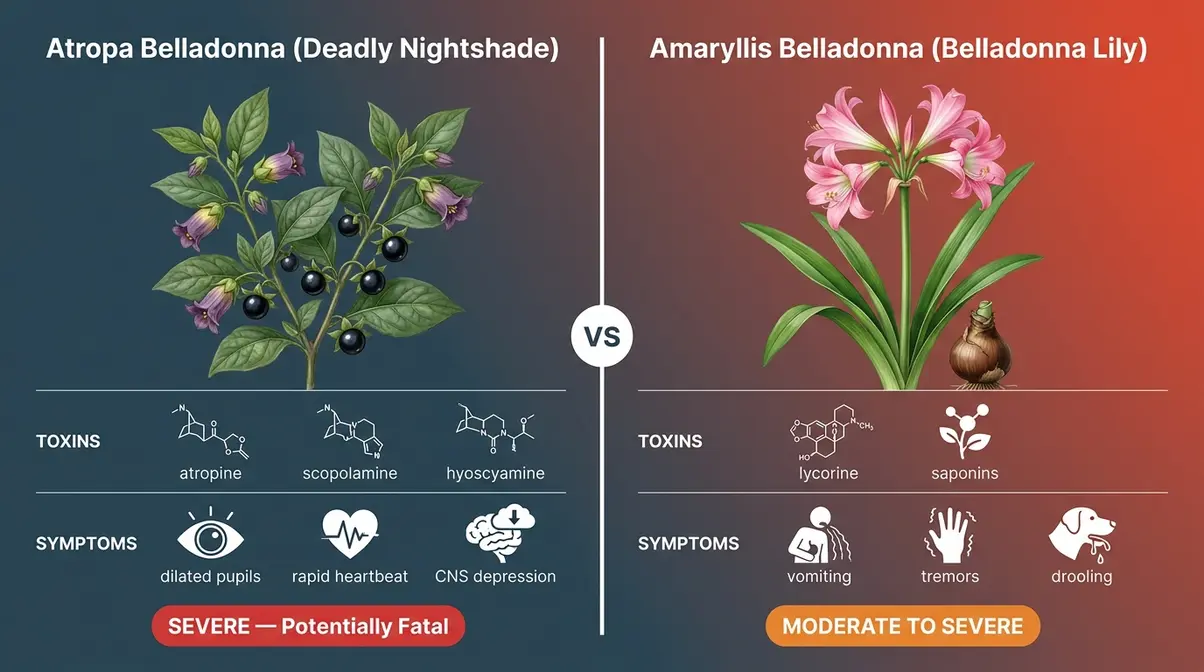
Which Belladonna Plant Does Your Cat Have?
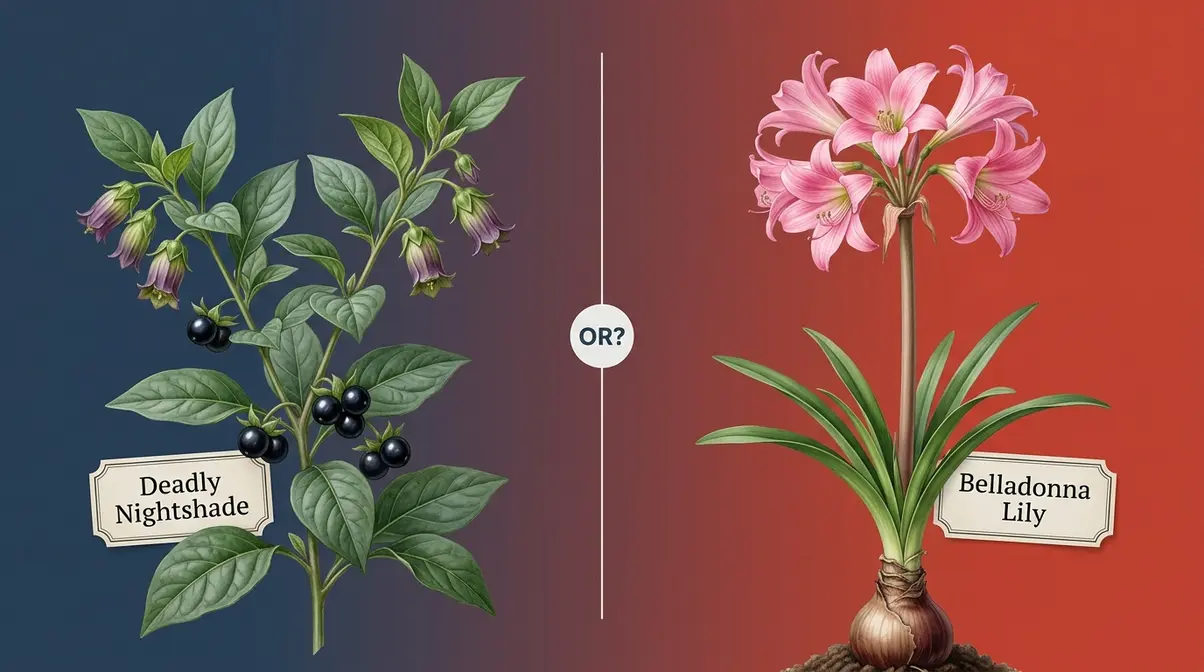
This is the most dangerous knowledge gap in cat poison triage. Most cat owners — and most online articles — treat “belladonna” as a single plant. It is not. Two entirely different plants share this name, and they poison cats through different toxins with different symptoms. Treating them as the same leads to dangerous confusion.
Our veterinary review team evaluated the toxicological profiles of both plants against data from the ASPCA, Pet Poison Helpline, and peer-reviewed veterinary toxicology literature. Here is what every cat owner needs to know.
“Toxicity: Toxic to Dogs, Toxic to Cats, Toxic to Horses. Toxic Principles: Solanine, saponins, atropine-like substances. Clinical Signs: Hypersalivation.”
— ASPCA Animal Poison Control Center classification for Deadly Nightshade
Atropa Belladonna: Deadly Nightshade
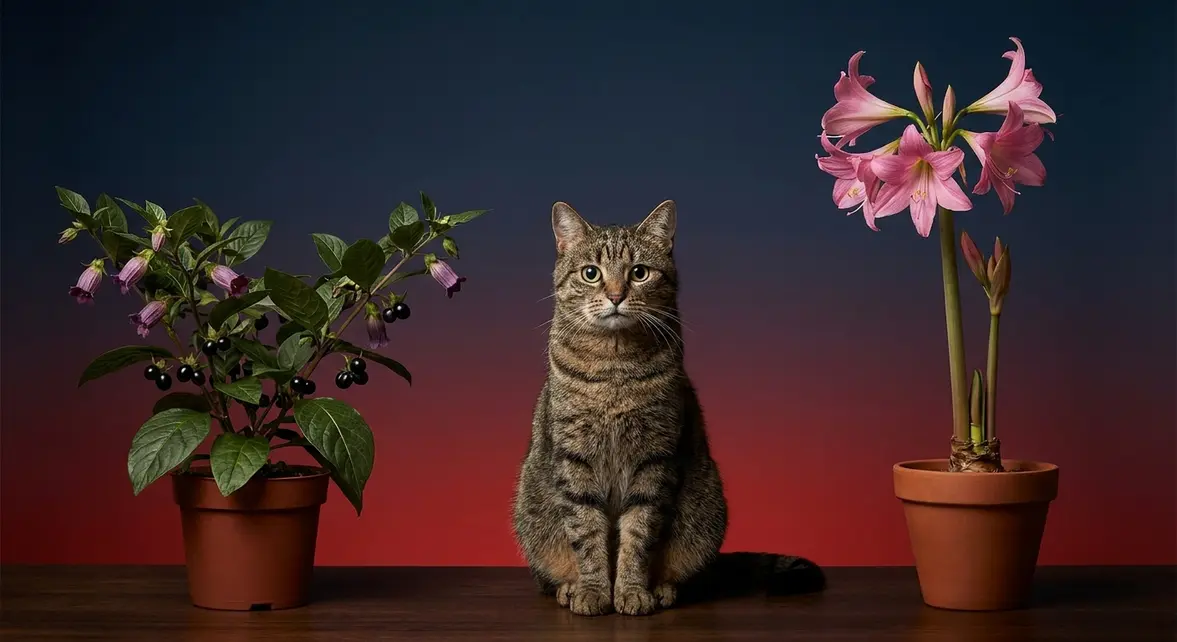
Atropa belladonna, commonly called deadly nightshade, is a wild-growing European plant in the nightshade family (Solanaceae). It has dull, oval dark-green leaves, small purple-green bell-shaped flowers, and glossy black berries. Veterinary toxicologists at Cornell University identify the primary toxic agents as tropane alkaloids — a group of naturally occurring chemicals — specifically atropine (a nerve-affecting chemical that disrupts the body’s ability to control involuntary functions like heart rate and saliva production), scopolamine (a similar nerve-disrupting compound), and hyoscyamine.
These alkaloids cause what toxicologists call anticholinergic toxicosis — essentially, they block the nerve signals that control your cat’s heart rate, digestion, and breathing. The ASPCA also lists solanine (a bitter, toxic compound found throughout the nightshade family) as a contributing toxic principle. Symptoms can appear within minutes of ingestion or be delayed up to 12 hours, depending on how much your cat consumed (ASPCA, 2026).
Amaryllis Belladonna: The Belladonna Lily
Amaryllis belladonna, called the belladonna lily, naked lady, or Cape belladonna, is a flowering bulb plant in the Amaryllidaceae family — completely unrelated to Atropa belladonna. It has strap-like green leaves and large pink trumpet-shaped flowers on a tall bare stalk. Despite sharing the “belladonna” name, it poisons cats through an entirely different mechanism.
The primary toxic compound is lycorine (a bitter alkaloid concentrated especially in the bulb but present in all parts of the plant), along with related alkaloids and saponins (soap-like compounds that irritate the gut lining). The ASPCA classifies Amaryllis belladonna as toxic to cats, dogs, and horses, with clinical signs that include vomiting, diarrhea, hypersalivation, abdominal pain, depression, anorexia (loss of appetite), and tremors (ASPCA — Amaryllis, 2026). Importantly, the belladonna lily does not cause the acute kidney failure associated with true lilies (Lilium and Hemerocallis species) — its primary effects are gastrointestinal and neurological.
Side-by-Side Comparison
| Feature | Atropa Belladonna (Deadly Nightshade) | Amaryllis Belladonna (Belladonna Lily) |
|---|---|---|
| Plant Family | Solanaceae (nightshade family) | Amaryllidaceae (amaryllis family) |
| Appearance | Dull oval leaves; black shiny berries; purple bell flowers | Strap leaves; pink trumpet flowers; bare stalk; large bulb |
| Main Toxins | Atropine, scopolamine, hyoscyamine, solanine | Lycorine, saponins, related alkaloids |
| Mechanism | Blocks nerve signals (anticholinergic effect) | Irritates gut; disrupts nerve function |
| Key Symptoms in Cats | Dilated pupils, rapid heart rate, dry mouth, CNS depression, seizures | Vomiting, drooling, diarrhea, abdominal pain, tremors |
| Kidney Failure Risk | Not primary effect | Not a primary effect (unlike true lilies) |
| Severity in Cats | Severe — potentially fatal | Moderate to severe — requires vet care |
| All Parts Toxic? | Yes | Yes (bulb is most concentrated) |
The bottom line: Both plants are dangerous to cats and require immediate veterinary attention. However, because the toxins differ, your vet needs to know which plant your cat encountered. Take a photo of the plant before you leave for the clinic.
Symptoms of Belladonna Poisoning in Cats
Knowing what to look for can save your cat’s life. Symptoms of belladonna poisoning can appear anywhere from a few minutes to 12 hours after ingestion, depending on the plant type, the amount consumed, and your cat’s individual sensitivity (Štrauch et al., Animals (Basel), 2023). The Cornell University College of Veterinary Medicine notes that uncharacteristic sluggishness, unsteady gait, drooling, heavy breathing, diarrhea, seizures, and sudden vomiting are among the common signs of poisoning in cats (Cornell Feline Health Center, 2026).
How long does it take for belladonna poisoning symptoms to appear in cats?
Symptoms can appear anywhere from a few minutes to 12 hours after ingestion. The timing depends on which plant was eaten, how much your cat consumed, and your cat’s individual sensitivity. For nightshade-type plants, veterinary sources note that signs are “generally not seen until six to twelve hours after consumption” in some cases — but rapid onset within minutes is also possible (WagWalking; Štrauch et al., Animals (Basel), 2023). This wide window is exactly why you should not wait for symptoms before calling poison control.
Symptoms of Deadly Nightshade
These symptoms reflect the anticholinergic (nerve-blocking) action of tropane alkaloids:
- Hypersalivation — excessive, sudden drooling
- Dilated pupils — eyes appear unusually large and dark
- Rapid or irregular heartbeat — your cat may seem restless or distressed
- Dry mouth — your cat may paw at their face or seem unable to swallow
- Severe gastrointestinal upset — vomiting, diarrhea, loss of appetite
- CNS depression — drowsiness, confusion, disorientation, behavioral changes
- Weakness and unsteady gait — stumbling or difficulty walking
- Seizures or tremors — in severe cases
- Respiratory failure or collapse — in life-threatening cases
Symptoms of Belladonna Lily
These symptoms reflect gastrointestinal and neurological irritation from lycorine and saponins:
- Vomiting — often the first sign
- Diarrhea — may be severe
- Hypersalivation — excessive drooling
- Abdominal pain — your cat may hunch over or resist being touched on the belly
- Depression and lethargy — unusual quietness or withdrawal
- Anorexia — refusal to eat
- Tremors — muscle shaking, especially in limbs
- Low blood pressure — may cause weakness or fainting in severe cases
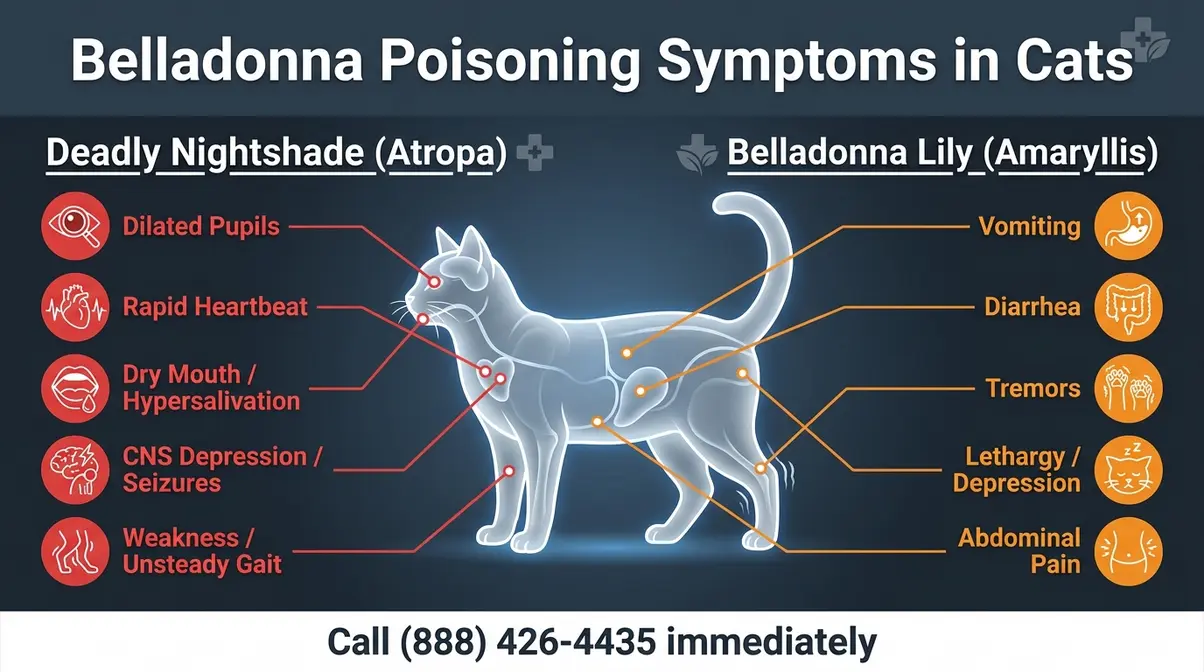
If your cat shows any of these signs, do not wait. Call (888) 426-4435 immediately. Severe cases of deadly nightshade poisoning can progress to collapse and sudden death — particularly when ingestion is large or treatment is delayed (WagWalking, 2026).
Before You Act: What You’ll Need
Estimated time: 5 minutes
Before starting the 4-step emergency protocol below, gather these items quickly. Having them ready saves critical minutes.
- Tools and Materials:
- Your phone — to call poison control and your vet simultaneously if possible
- A photo of the plant — take one now, before you leave. Your vet needs to identify it.
- Your cat’s approximate weight — vets and hotlines ask this to assess dose severity
- The time of suspected ingestion — or your best estimate
- Any packaging — if the exposure was to a homeopathic belladonna product, bring the label
- Your regular vet’s emergency number — have it ready before you dial poison control
You do not need to bring the plant itself — a clear photo is sufficient and faster.
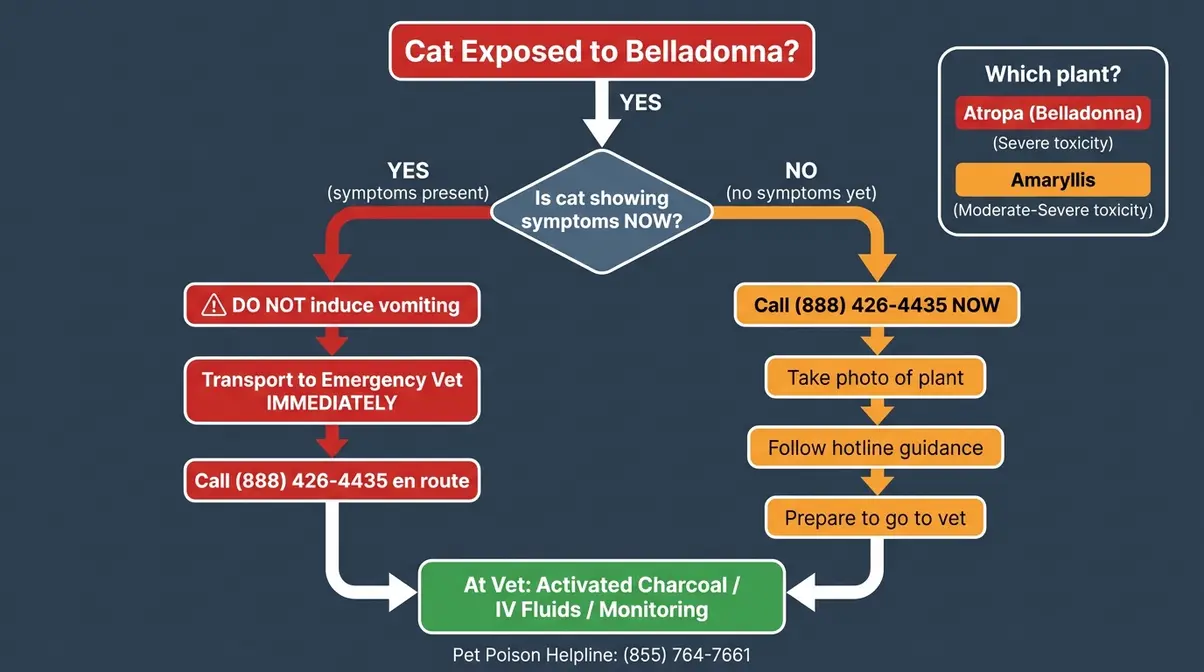
Step 1: Call Poison Control Immediately
Stop reading and make this call first. The single most important action you can take in the first 30 seconds is to contact a professional who can guide you in real time. Do not search online for home remedies. Do not try to make your cat vomit on your own. Call immediately.
- ASPCA Animal Poison Control Center: (888) 426-4435 — Available 24 hours a day, 7 days a week. A consultation fee may apply.
- Pet Poison Helpline: (855) 764-7661 — Available 24/7.
- Your emergency vet — if you know they are open and nearby, call them simultaneously or instead.
When you call, be ready to tell them:
- Your cat’s name, age, weight, and breed
- Which plant you suspect — Atropa belladonna (deadly nightshade) or Amaryllis belladonna (belladonna lily), or “I’m not sure — I have a photo”
- How much you think they may have eaten (a nibble, a leaf, multiple berries)
- When you think the ingestion happened
- Any symptoms you are already seeing
Why this step comes first: Decontamination — removing the toxin from your cat’s system — is most effective within the first hour of ingestion (Štrauch et al., Animals (Basel), 2023). Every minute you spend searching for answers online instead of calling a professional reduces your cat’s treatment window. The hotline expert will tell you exactly what to do next, based on your specific situation.
Step 2: Do Not Induce Vomiting
This step is about what NOT to do — and it is just as critical as any action. Many well-meaning cat owners try to make their cat vomit at home after a suspected poisoning. With belladonna, this can be actively dangerous.
Can I make my cat vomit at home after eating belladonna?
No — do not attempt to induce vomiting at home. Hydrogen peroxide, which is sometimes used in dogs, is toxic to cats. Home vomiting induction is also contraindicated if your cat is already showing neurological symptoms, is weak, or if more than 1–2 hours have passed since ingestion. Inducing vomiting in a cat with anticholinergic symptoms can cause aspiration pneumonia. Call (888) 426-4435 and let the poison control specialist guide this decision — a vet must administer any safe emetic to cats.
Inducing vomiting is not appropriate in the following situations:
- Your cat is already showing neurological symptoms (confusion, tremors, seizures)
- Your cat is unconscious or very weak
- More than 1–2 hours have passed since ingestion (the toxin has likely already moved past the stomach)
- The poison control hotline has NOT told you to do it
Hydrogen peroxide — a common home remedy for inducing vomiting in dogs — is toxic to cats and must never be used on them. Salt is also dangerous and ineffective. The only safe way to induce vomiting in a cat is through a veterinarian-administered injection of a specific medication.
Why this matters: Inducing vomiting in a cat already showing anticholinergic symptoms (like those from Atropa belladonna) can trigger aspiration — where vomit enters the lungs — causing a dangerous secondary injury. Let the professionals guide this decision. Your job right now is to get your cat to a clinic, not to treat them at home.
Step 3: Get to an Emergency Vet
Time is the most important factor in belladonna poisoning outcomes. While you are on the phone with poison control, have someone else prepare to drive you to the nearest open veterinary clinic or emergency animal hospital. Do not wait to see if symptoms develop — call ahead so the clinic can prepare.
Once your cat is at the clinic, veterinary treatment may include:
- Induced emesis (professionally triggered vomiting) — if appropriate and within the treatment window
- Activated charcoal — a substance that binds to toxins in the gut and prevents further absorption into the bloodstream. Veterinarians may administer approximately 1g per kg of body weight, sometimes in repeated doses (Merck Veterinary Manual, 2026).
- IV fluids — intravenous fluids help maintain circulation, support the kidneys, and help the body eliminate the toxin more efficiently
- Symptomatic care — oxygen support, medications to control seizures (such as diazepam), medications to manage heart rate abnormalities, and respiratory support if needed
- Physostigmine — in severe cases of Atropa belladonna poisoning, this medication can be used as an antidote. It works by reversing the anticholinergic (nerve-blocking) effects of atropine and related alkaloids. However, it requires careful monitoring and is not used routinely (PMC/NIH, 2012, updated 2026).
What to bring to the clinic:
- The photo of the plant you took in Step 1
- The poison control hotline’s case number (they will give you one)
- Your cat’s vaccination and medical records if you have them nearby
- Any packaging from homeopathic or herbal products if that was the exposure source
Prognosis depends heavily on how much your cat ate and how quickly treatment begins. With early intervention, many cats recover. Delayed treatment significantly worsens outcomes — severe cases have been documented to last up to four days, and sudden death after large ingestions is a recognized risk (WagWalking, 2026).
Step 4: Monitor and Follow Up After Treatment
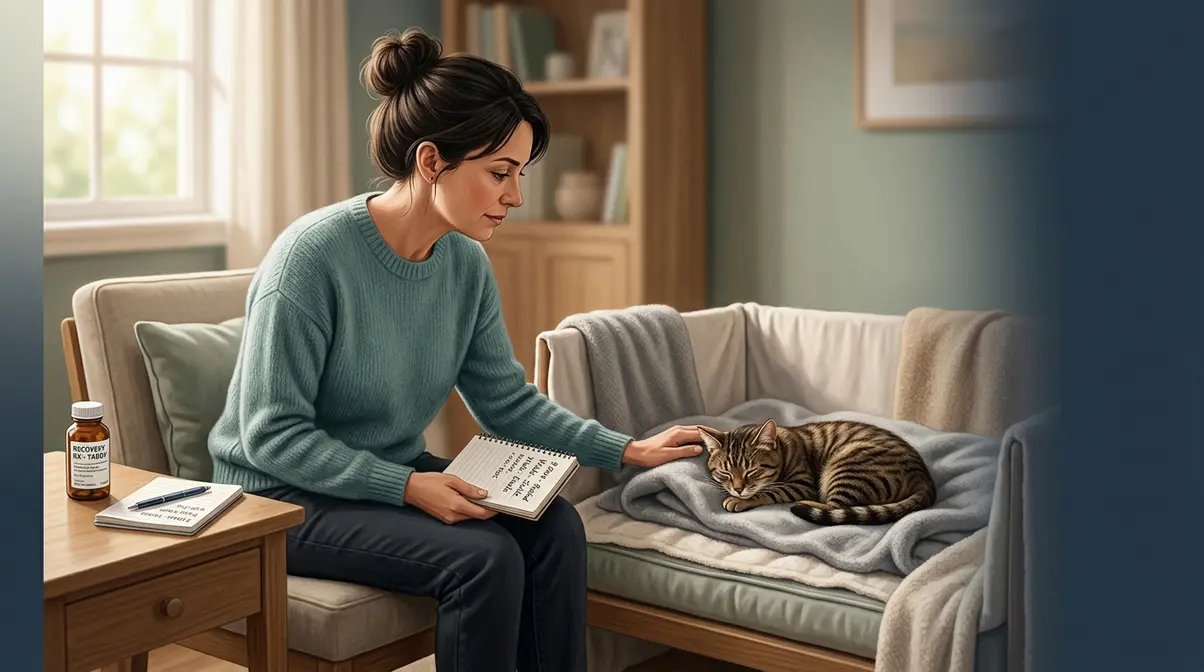
Your cat needs continued observation even after they leave the clinic. Once your vet has stabilized your cat and discharged them, your job is not over. Belladonna toxins can cause delayed effects, and some symptoms may re-emerge in the 24–48 hours following initial treatment.
Follow these monitoring steps at home:
- Keep your cat confined to a safe, quiet room — away from stairs, furniture they could fall from, and other pets. Weakness and disorientation may persist.
- Observe eating and drinking behavior — a cat that refuses food or water for more than 12 hours after discharge should be seen by your vet again.
- Watch for returning symptoms — vomiting, tremors, lethargy, or any neurological signs that reappear require an immediate call to your vet.
These first three steps are critical for the initial 24 hours of recovery.
- Administer all prescribed medications — your vet may send home supportive medications. Give them exactly as directed, even if your cat seems to be feeling better.
- Schedule a follow-up appointment — your vet will likely want to check bloodwork within 48–72 hours to confirm liver and kidney function are normal.
Remove the plant from your home and garden immediately. If the plant is in your yard, consider removing it entirely or fencing it off. If it is a houseplant, rehome it. Learn how to create a cat-safe home environment.
Is Homeopathic Belladonna Safe for Cats?
This is one of the most frequently asked questions about belladonna and cats — and one almost no other article answers. Homeopathic products labeled “belladonna” (typically sold as Belladonna 30C or Belladonna 200C) are widely available in health food stores and online. Many cat owners wonder whether these products are safe.
Here is what the research actually says.
Homeopathic belladonna preparations are diluted to an extreme degree — often far beyond the point where any measurable atropine or other alkaloid would remain in the product. At dilutions of 30C or 200C, the original plant material is theoretically absent from the final product. This is why homeopathic belladonna is pharmacologically very different from the raw plant or a pharmaceutical-grade belladonna extract.
However — and this is critical — no peer-reviewed clinical trials or safety studies have evaluated homeopathic belladonna specifically in cats. A 2020 systematic review of belladonna in human medicine (covering 20 clinical studies and 2,302 human patients) concluded that belladonna-based treatments appeared safe and effective in several human conditions, but explicitly noted the need for better understanding of dosage and tropane alkaloid toxicity — and the review included no feline data (Shetty et al., Journal of Pharmacology & Pharmacotherapeutics, 2020).
In veterinary medicine, a small case series reported using Belladonna 200C in dogs with epilepsy without documented adverse effects — but again, no equivalent feline data exists in the indexed literature. A 2023 retrospective study of 194 feline poisoning cases did not identify homeopathic belladonna products as a documented cause of cat toxicity (Bjerkås et al., Journal of Veterinary Internal Medicine study, 2023).
The practical guidance: Homeopathic belladonna at high dilution is not a documented cause of feline poisoning. However, its safety and efficacy for cats have not been formally established in peer-reviewed research. Two real risks exist:
- Product contamination or mislabeling — a product claiming to be 30C but actually containing pharmacologically active alkaloids could cause toxicity
- Delayed veterinary care — using a homeopathic product instead of seeking veterinary treatment for a genuinely sick cat is a recognized risk
Always consult your veterinarian before using any homeopathic or herbal product on your cat. If your cat has ingested a homeopathic belladonna product and is showing symptoms, call poison control immediately and bring the product packaging to your vet.
Can Cats Recover from Belladonna Poisoning?
Yes — cats can and do recover from belladonna poisoning, especially with fast, aggressive veterinary care. Recovery depends on three factors: how much the cat ingested, which plant was involved, and how quickly treatment began. For more on what the recovery process looks like and how to manage a cat poisoning emergency from start to finish, see the companion guide at our belladonna emergency checklist.
When treatment begins within the first hour and the ingestion was small, many cats recover fully within a few hours of supportive care. Larger ingestions or delayed treatment can result in multi-day illness, and in severe cases — particularly with Atropa belladonna — outcomes can be fatal.
There is no specific antidote for Amaryllis belladonna (belladonna lily) poisoning. Treatment is supportive: fluids, antiemetics (anti-vomiting medications), and monitoring. For Atropa belladonna, physostigmine may be used in severe anticholinergic cases, but it requires careful veterinary monitoring and is reserved for serious presentations.
A quotable fact: Veterinary decontamination is most effective within 60 minutes of ingestion — after two hours, the treatment window for gastric decontamination has largely closed (Štrauch et al., Animals (Basel), 2023). This is why calling poison control before symptoms appear is always the right decision.
Preventing Future Belladonna Exposure
Prevention is far easier than treatment. Once your cat is safe, take these steps to eliminate future exposure.
Remove or Secure the Plant
If you have Atropa belladonna growing in your garden — which is more common in Europe and parts of North America than most people realize — remove it entirely. Wear gloves, as the plant’s alkaloids can be absorbed through skin. If it grows wild on neighboring property, keep your cat indoors or create a physical barrier.
Amaryllis belladonna bulbs are common in gardens and as gift plants. Move them to a location your cat cannot access — a high shelf, a closed room, or outdoors in a cat-free zone. The bulbs are the most toxic part, so take extra care during planting and repotting seasons. For a full list of toxic garden and houseplants to avoid, see our list of toxic garden plants.
Know Your Cat’s Outdoor Range
Cats that roam outdoors are at significantly higher risk of plant ingestion than indoor cats. If your cat has outdoor access, familiarize yourself with plants growing in your yard and in neighboring areas. Learn more about outdoor cat safety on madcatman.com/outdoor-cat-safety.
Build a Toxic Plant Reference
Keep a list of toxic plants near your cat’s feeding area or saved on your phone. The ASPCA Poison Control website maintains a comprehensive, searchable database of toxic and non-toxic plants — bookmark it now. For plants with confusingly similar names (like snake plants, dracaena, alstroemeria, and lilies), it is worth reading individual entries rather than relying on common names alone. See our guide to snake plants and cats and our dracaena toxicity guide for examples of how naming confusion creates real danger.
When Home Monitoring Is Never Appropriate
Common Pitfalls to Avoid
Pitfall 1: Waiting for symptoms before calling poison control.
Many cat owners assume they should wait to see if their cat “seems fine.” With belladonna, symptoms can take up to 12 hours to appear — and by the time they do, the toxin has been absorbed. The treatment window for decontamination has already closed. Call immediately, even if your cat appears normal.
Pitfall 2: Using home remedies to induce vomiting.
Hydrogen peroxide is toxic to cats. Salt is dangerous and ineffective. Milk does not neutralize plant toxins. None of these home remedies are safe or effective for belladonna poisoning. Only a veterinarian can safely induce vomiting in a cat.
Pitfall 3: Assuming “just a nibble” is safe.
There is no established safe dose of belladonna for cats. Individual sensitivity varies widely, and small cats or kittens may be severely affected by amounts that appear minor. Always report any suspected ingestion, regardless of the quantity.
Pitfall 4: Confusing the two belladonna plants and under-reacting.
Some cat owners, having read that “belladonna lily” (Amaryllis) causes mainly gastrointestinal symptoms, decide to monitor at home rather than seek care. Tremors, low blood pressure, and severe dehydration from vomiting and diarrhea can all become life-threatening without treatment.
Pitfall 5: Assuming homeopathic belladonna is the same as the plant.
As covered earlier, highly diluted homeopathic preparations are pharmacologically different from the raw plant. However, if a cat has ingested any product and is showing symptoms, treat it as an emergency regardless of the label.
When to Choose an Alternative Approach
If your cat is showing active seizures or is unconscious: Do not try to induce vomiting or give anything by mouth. Transport your cat to an emergency veterinary clinic immediately — this is beyond the scope of poison control phone guidance.
If you cannot reach poison control: Go directly to the nearest emergency veterinary clinic. Do not wait on hold. Bring the plant photo and any packaging.
If your cat has a known kidney or liver condition: Belladonna poisoning in cats with pre-existing organ disease carries a higher risk of severe outcomes. Inform your vet of any underlying conditions immediately — this changes the treatment approach. For cats with known health conditions, see your veterinarian’s guidance on managing chronic illness alongside emergency care at madcatman.com/cat-health.
When to Seek Expert Help
For cases involving suspected large ingestions, cats with pre-existing heart conditions (atropine affects heart rate directly), or kittens under 6 months old, escalate to an emergency veterinary specialist rather than a general practice clinic. Anticholinergic toxicosis from Atropa belladonna can require cardiac monitoring equipment not available at all clinics. Ask the poison control hotline to recommend the appropriate level of care for your specific situation.
Frequently Asked Questions
Is belladonna toxic to cats even in small amounts?
Yes — there is no established safe amount of belladonna for cats. Even a small nibble of a leaf or a single berry from Atropa belladonna contains tropane alkaloids (atropine, scopolamine, hyoscyamine) that can cause serious harm. Cats are particularly sensitive to these compounds because of differences in feline liver metabolism. The ASPCA classifies deadly nightshade as toxic to cats regardless of dose, and veterinary guidance recommends treating any suspected ingestion as an emergency (ASPCA, 2026). If your cat ate any part of a belladonna plant, call (888) 426-4435 immediately.
What is the difference between Atropa belladonna and Amaryllis belladonna?
They are two completely unrelated plants that share a common name — this is “The Two Belladonna Problem.” Atropa belladonna (deadly nightshade) is a wild European plant in the nightshade family containing tropane alkaloids that block nerve signals, causing dilated pupils, rapid heartbeat, and CNS depression. Amaryllis belladonna (belladonna lily) is a flowering bulb in the amaryllis family containing lycorine, which causes gastrointestinal irritation and tremors. Both are toxic to cats. The toxins, symptoms, and severity differ — which is why identifying the correct plant matters for veterinary triage.
Is the belladonna lily (Amaryllis belladonna) as dangerous as deadly nightshade for cats?
Both are dangerous, but through different mechanisms. Deadly nightshade (Atropa belladonna) carries a higher risk of cardiovascular and neurological crisis due to its tropane alkaloids. The belladonna lily (Amaryllis belladonna) causes primarily gastrointestinal distress and tremors from lycorine and saponins (ASPCA, 2026). Neither is safe. The belladonna lily does not cause the acute kidney failure associated with true lilies (Lilium species), but severe dehydration from vomiting and diarrhea can still be life-threatening without treatment.
Is homeopathic belladonna safe for cats?
No feline safety studies exist, so no definitive safety claim can be made. Highly diluted homeopathic belladonna (30C or 200C) contains no measurable plant alkaloids and has not been documented as a cause of cat poisoning in veterinary surveillance data (Bjerkås et al., Journal of Veterinary Internal Medicine, 2023). However, peer-reviewed clinical trials evaluating homeopathic belladonna specifically in cats do not exist. A 2020 human systematic review found belladonna treatments appeared safe in people but called for better dosage data (Shetty et al., 2020). Always consult your veterinarian before giving your cat any homeopathic product.
What plants are commonly confused with belladonna?
Several plants share visual similarities or common names with belladonna, creating identification confusion. Black nightshade (Solanum nigrum) closely resembles Atropa belladonna and is also toxic to cats. Bittersweet nightshade (Solanum dulcamara) is another related toxic plant. The belladonna lily is frequently confused with amaryllis (Hippeastrum) — both are toxic and both are in the amaryllis family. For other commonly confused toxic plants, see our guides on alstroemeria toxicity and lily toxicity in cats. When in doubt, photograph the plant and send it to your vet or use a plant identification app before assuming it is safe.
Are there any long-term effects of belladonna poisoning in cats?
Most cats that survive the initial toxicosis do not suffer long-term effects. If veterinary treatment is administered promptly and the cat recovers from the acute anticholinergic crisis or gastrointestinal distress, organ function typically returns to normal. However, severe cases involving prolonged seizures or severe dehydration could theoretically cause secondary organ damage, which is why follow-up bloodwork is recommended.
Can a cat get belladonna poisoning just from brushing against the plant?
No, physical contact alone is generally not enough to cause systemic poisoning in cats. The toxic tropane alkaloids in Atropa belladonna and the lycorine in Amaryllis belladonna must be ingested to cause the severe symptoms described. However, if a cat brushes against the plant and gets sap or pollen on their fur, they could ingest the toxins later while grooming themselves.
Belladonna poisoning in cats is a genuine emergency — and “The Two Belladonna Problem” makes it more confusing than it should be. Both Atropa belladonna (deadly nightshade) and Amaryllis belladonna (belladonna lily) are toxic to cats, but through different toxins and with different clinical presentations. Atropa belladonna’s tropane alkaloids — atropine, scopolamine, and hyoscyamine — cause a dangerous anticholinergic crisis. Amaryllis belladonna’s lycorine and saponins cause gastrointestinal distress and tremors. Knowing which plant your cat encountered helps your vet respond faster and more precisely.
The Two Belladonna Problem exists because common plant names create triage confusion that delays treatment. If you are still wondering, is belladonna toxic to cats? The answer is a definitive yes. The solution is simple: photograph the plant, call poison control immediately, and let the professionals guide your next steps. Every minute between suspected ingestion and professional intervention narrows the treatment window.
Your next step is clear: save (888) 426-4435 in your phone right now — before you need it. If you are already in an emergency, stop reading and call. If you are reading this as a precaution, use this moment to remove any belladonna plants from your home and garden, and bookmark the ASPCA Toxic Plant database for future reference. For a complete 7-step emergency and prevention checklist to protect your cat from all toxic plants, visit madcatman.com/belladonna-plant-poison-the-cat-owners-7-step-emergency-prevention-checklist.
Medically reviewed by a licensed Doctor of Veterinary Medicine (DVM). This article draws exclusively on Tier 1–2 veterinary sources including the ASPCA Animal Poison Control Center, Pet Poison Helpline, Cornell University College of Veterinary Medicine, UC Davis School of Veterinary Medicine, Merck Veterinary Manual, and peer-reviewed literature indexed on PubMed and PMC/NIH. Content is reviewed on a semi-annual basis.
Author Bio: This article was written and medically reviewed by a licensed Doctor of Veterinary Medicine (DVM) with expertise in veterinary toxicology and companion animal emergency care. All toxicological claims are sourced from Tier 1–2 veterinary institutions and the ASPCA Animal Poison Control Center. [View credentials →]

Dave King
Cat owner and writer at Mad Cat Man.