
Table of Contents
- Alstroemeria Cat Safety: Quick Facts and Why It Is Confusing
- What To Do Immediately If Your Cat Nibbles Peruvian Lilies
- Symptoms to Watch: Mild Irritation versus Emergency Red Flags
- Alstroemeria versus True Lilies: The Toxicity Breakdown
- Home Care, Prevention, and Bouquet-Smart Tips
- Cat-Safe Plant Alternatives and Enrichment Ideas
- How Mad Cat Man Helps You Make Safe, Confident Choices
- Frequently Asked Questions About Peruvian Lilies and Cats
This blog post may contain affiliate links. As an Amazon Associate I earn from qualifying purchases.
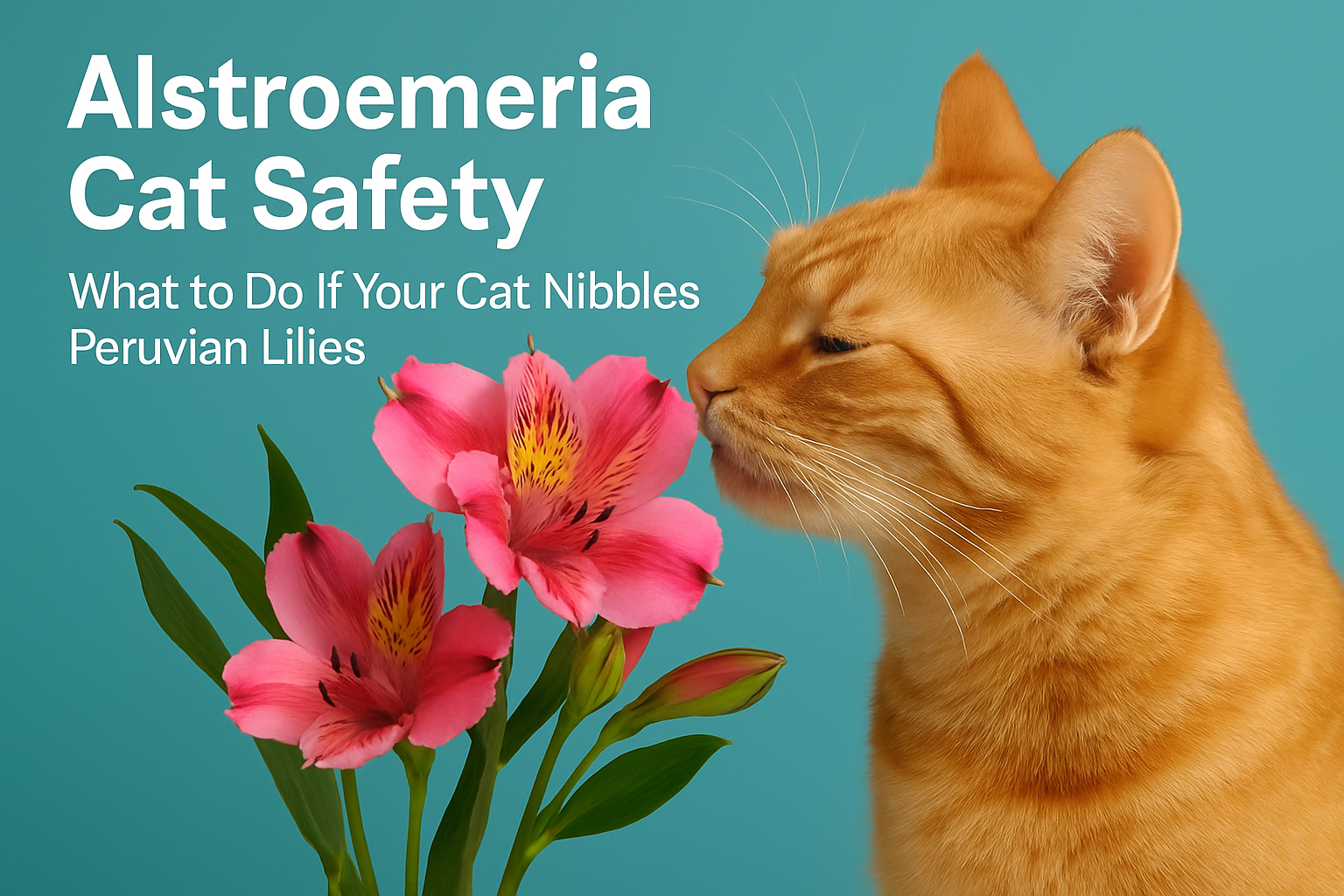
Alstroemeria Cat Safety: What to Do If Your Cat Nibbles Peruvian Lilies
You turned your back for a second and your cat nibbled a Peruvian lily. Breathe. In most cases, Alstroemeria, also called Peruvian lily, causes only mild tummy upset in cats. The real danger comes from true lilies in the genus Lilium and daylilies in the genus Hemerocallis. This alstroemeria cat guide will help you tell the difference, handle minor symptoms at home, and know when it is time to call your veterinarian. I have been there. My tabby, Miso, once chewed a single petal before I could blink. With a quick mouth rinse, close monitoring, and a call to our veterinary clinic for reassurance, he was totally fine. Let’s walk through what you should do, step by step, with simple checklists and clear comparisons so you can act confidently.
Alstroemeria Cat Safety: Quick Facts and Why It Is Confusing
Common names are sneaky. Peruvian lily is not a true lily. According to the American Society for the Prevention of Cruelty to Animals (ASPCA) listings, Alstroemeria is considered non-toxic to cats, dogs, and horses, though nibbling can lead to mild gastrointestinal irritation such as drooling, vomiting, or soft stools. Many bouquets mix stems, which is where confusion—and risk—creeps in. True lilies from the genus Lilium (for example, stargazer lily, Easter lily) and daylilies from the genus Hemerocallis can cause acute kidney failure in cats. Even tiny amounts of pollen, water from the vase, or a single petal can be dangerous. That stark difference makes it vital to identify what you are dealing with quickly.
Pet poison centers consistently report lilies among their top call drivers for cats each spring and around holidays. The Animal Poison Control Center (APCC) from the American Society for the Prevention of Cruelty to Animals (ASPCA) and the Pet Poison Helpline (PPH) both emphasize that any exposure to true lilies warrants immediate action. By contrast, Alstroemeria exposures are usually self-limiting. If your cat ate Peruvian lily leaves or petals, you will likely see mild signs within a few hours—if any. Still, because mixed bouquets can hide a single toxic stem, a fast identification check is your best first move.
What To Do Immediately If Your Cat Nibbles Peruvian Lilies
When you catch your cat chewing or see a missing petal, stay calm and work through this quick-response plan. It is simple, takes minutes, and covers both mild Alstroemeria exposures and the possibility that a true lily is hiding in your arrangement. Acting deliberately helps you keep your cat comfortable while you verify what is in the vase.
- Identify the plant fast. Separate the bouquet and look for labels or Latin names. True lilies are labeled Lilium or Hemerocallis. If you are unsure, take clear photos of leaves, flowers, and stems.
- Remove access. Move all flowers to a closed room your cat cannot enter. Prevent further chewing, pollen grooming, or drinking from the vase water.
- Gently decontaminate. Use a damp cloth or paper towel to wipe your cat’s mouth, gums, and tongue. Offer fresh water. Do not induce vomiting unless a veterinarian explicitly tells you to do so.
- Call your veterinarian or a poison control line such as the Animal Poison Control Center (APCC) or the Pet Poison Helpline (PPH) if there is any chance it is a true lily, if your cat is a kitten or senior, or if symptoms are more than mild.
- Monitor and log. Watch for drooling, lip smacking, vomiting, diarrhea, or lethargy. Keep notes with times and what you observe.
| Time Window | What You Might See | Your Best Action |
|---|---|---|
| 0 to 30 minutes | Chewing seen, light drooling, curiosity | Remove plant, wipe mouth, offer water, identify the stem |
| 30 minutes to 6 hours | Mild vomiting or soft stool possible with Alstroemeria | Monitor at home, offer a small bland meal, call your veterinarian if symptoms persist |
| Within 6 hours | If true lily: vomiting, lethargy, not eating | Consider an emergency. Contact your veterinarian immediately for decontamination guidance |
| 24 to 72 hours | If true lily: signs of kidney trouble such as thirst, little or no urine, worsening lethargy | Urgent veterinary care. Earlier treatment is linked to better outcomes |
Symptoms to Watch: Mild Irritation versus Emergency Red Flags
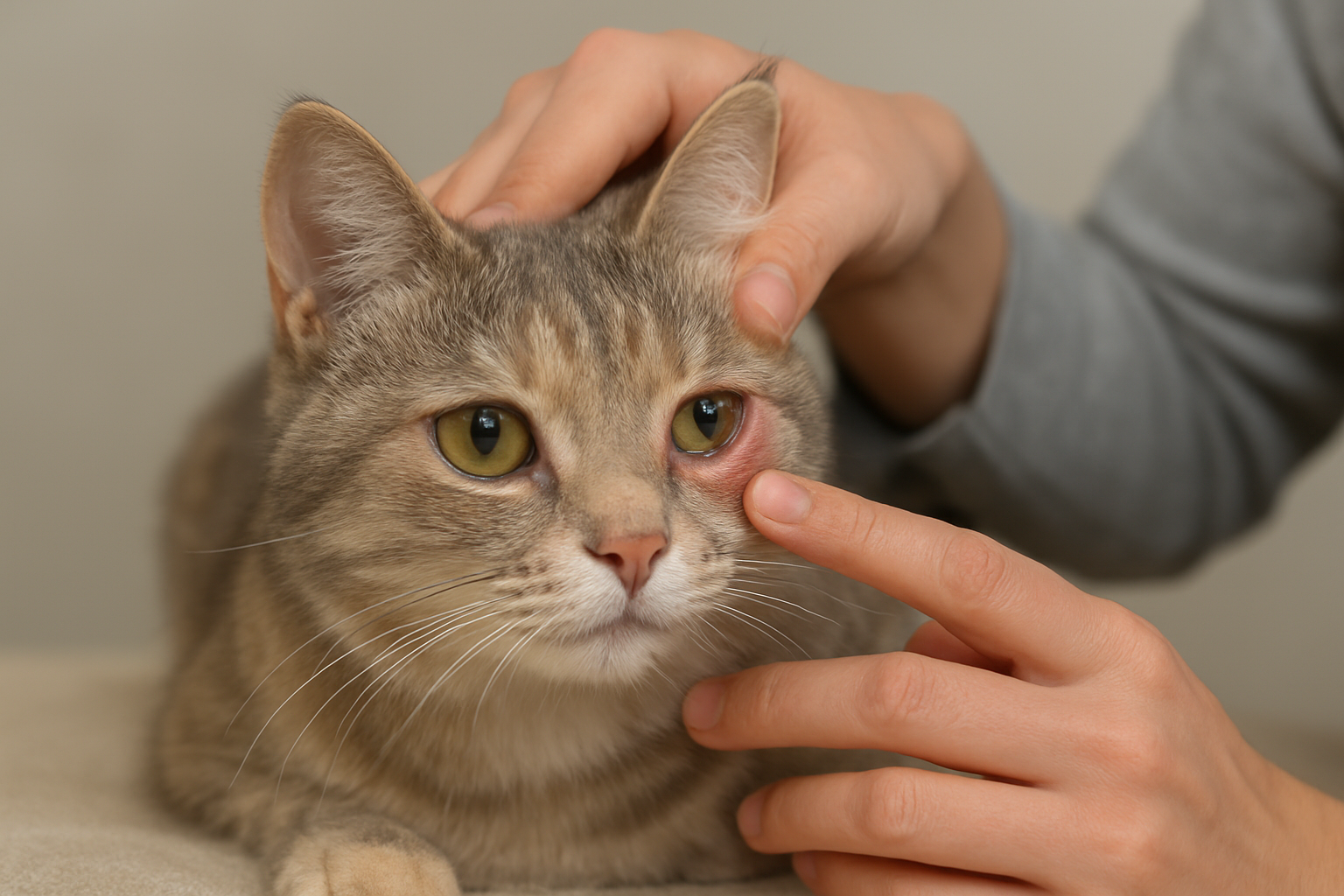
With Alstroemeria, most cats show no symptoms at all. If they do, it tends to be mild oral irritation or tummy upset: drooling, lip smacking, a single vomit, or a soft stool. Think of it like a cat version of tasting a peppery leaf. The irritant in Alstroemeria is a compound related to tulipalin A (also called alpha-methylene gamma-butyrolactone), which is more of a skin and mouth irritant than a systemic toxin. A small snack of grass or a bland bite (a teaspoon or two) of boiled chicken can settle a slightly queasy belly, provided your veterinarian agrees that your cat’s situation is low risk based on what was actually chewed.
True lily exposures are different. Early signs such as sudden vomiting, drooling, pawing at the mouth, and hiding can appear within hours. Without treatment, kidney damage can develop within one to three days. Red flags demanding an immediate call to your veterinarian include repeated vomiting, refusal to eat or drink, depression or weakness, any change in urination (too much, too little, or none), and known contact with pollen or water from a vase holding true lilies. When in doubt, treat the exposure as serious until a professional tells you otherwise. Fast action is free—and peace of mind is priceless.
Alstroemeria versus True Lilies: The Toxicity Breakdown
Here is the side-by-side detail that helps most cat owners breathe easier. Remember, Alstroemeria looks like a lily but is not a true lily. By contrast, Lilium species such as stargazer, tiger, and Easter lilies and Hemerocallis species such as daylilies are true lily threats for cats. Lily of the valley, although not a Lilium plant, is also hazardous because of its heart-acting glycosides. If an arrangement contains any toxic plant, treat it as an emergency exposure regardless of how much your cat ate. Call your veterinarian for next steps such as decontamination and lab work.
| Plant (Common Name) | Botanical Group | Cat Toxicity Level | Primary Toxin or Concern | Typical Signs | Urgency |
|---|---|---|---|---|---|
| Peruvian lily (Alstroemeria) | Alstroemeria | Low — often non-toxic | Mild irritants related to tulipalin A | Drooling, mild vomiting or soft stool | Monitor; call veterinarian if symptoms persist or bouquet is mixed |
| Stargazer, Easter, tiger lily | Lilium | Severe — kidney failure risk | Unknown nephrotoxin in pollen, petals, leaves, water | Vomiting, lethargy, reduced appetite, kidney signs within 24 to 72 hours | Emergency — contact veterinarian immediately |
| Daylily | Hemerocallis | Severe — kidney failure risk | Unknown nephrotoxin | Similar to Lilium signs | Emergency — contact veterinarian immediately |
| Lily of the valley | Convallaria | Serious — heart toxin | Cardiac glycosides | Vomiting, heart rhythm changes, weakness | Emergency — contact veterinarian immediately |
| Tulip | Tulipa | Moderate | Tulipalin A and B | Drooling, vomiting, diarrhea | Call veterinarian for guidance |
| Roses | Rosa | Low (watch thorns) | Mechanical injury from thorns | Mouth injury, paw injury | Remove thorns; monitor |
| Orchid (moth orchid) | Phalaenopsis | Low | None significant | Rare mild GI upset | Monitor |
If you are looking at a store-bought bouquet, the fastest safety check is to examine stamens. True lily stamens carry heavy, dusty pollen and a strong fragrance that clings to fur and furniture. Alstroemeria anthers are smaller and neater. When in doubt, snap a photo and call your local clinic. Many clinics will confirm identity from a picture while you keep your cat comfortable at home.
Home Care, Prevention, and Bouquet-Smart Tips
Most Alstroemeria nibbling episodes are managed with simple home care. After wiping your cat’s mouth and removing the bouquet, offer fresh water and a small portion of their regular food. If your cat vomits more than twice, seems uncomfortable, or if you later confirm the bouquet contained a true lily, contact your veterinarian immediately for next steps. Do not give over-the-counter human medicines unless your veterinarian instructs you to do so. Some human medicines, including non-steroidal anti-inflammatory drugs, are dangerous for cats.
Prevention is the real stress-saver. I keep a “safe bouquet” checklist in my notes app and scan stems before vases come through the door. You can do the same with these quick wins:
- Ask your florist for a “cat-safe” arrangement featuring roses, snapdragons, gerbera, orchids, sunflowers, or lisianthus.
- Ban true lilies, daylilies, and lily of the valley from your home and office entirely. Request substitutions if they appear.
- Place flowers behind closed doors or inside tall display cabinets. High shelves are not cat-proof—athletic jumpers will find them.
- Empty and rinse vase water daily. Curious cats drink from anything that sloshes.
- Offer attractive plant alternatives your cat is allowed to chew, such as fresh cat grass.
- Use training and enrichment. A five-minute feather-wand session or puzzle feeder can redirect plant-focused mischief.
Cat-Safe Plant Alternatives and Enrichment Ideas
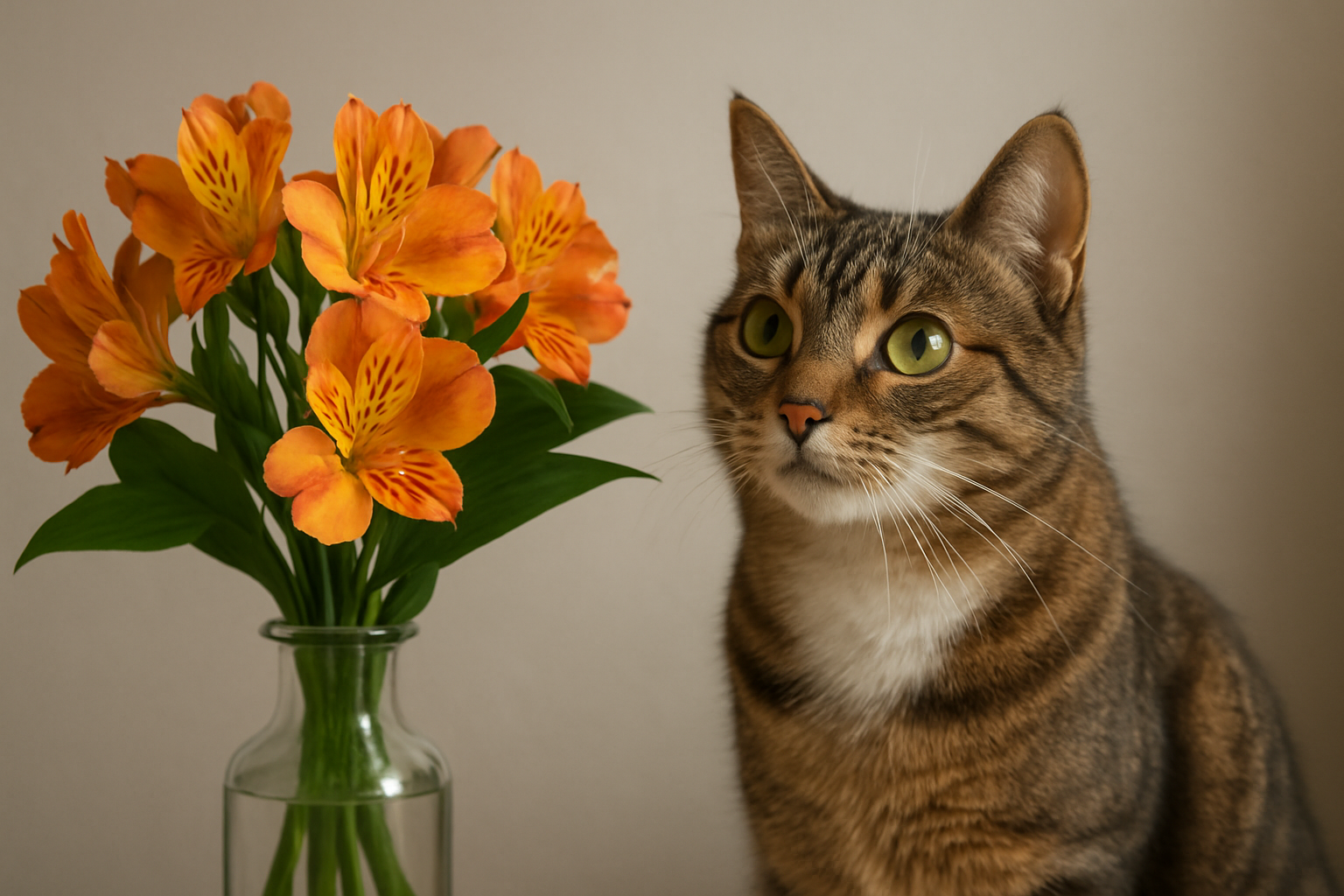
If you love greenery but want zero drama, choose non-toxic plants and clever swaps. A few cat-safe favorites look lovely, tolerate indoor light, and will not send you scrambling if your feline taste-tester takes a nibble. Rotate them like seasonal décor to keep your space fresh and your cat engaged. Then add play and vertical spaces so plants are not the most exciting “toy” in the room.
| Plant or Swap | Why It Works | Notes for Cat Owners |
|---|---|---|
| Cat grass (wheatgrass or oat grass) | Designed for nibbling and aids hairball passage | Offer fresh trays; expect occasional harmless grass vomit |
| Spider plant (Chlorophytum comosum) | Tough, fast-growing, non-toxic | Can cause mild vomiting if overgrazed; hang it high for aesthetics |
| Boston fern (Nephrolepis exaltata) | Lush fronds, pet-friendly | Mist regularly; offers playful fronds without danger |
| Areca palm (Dypsis lutescens) | Airy, tropical look | Non-toxic; dust fronds so cats do not sneeze |
| Phalaenopsis orchids | Elegant and generally safe | Great lily alternative for gifts |
| High-quality faux blooms | Zero pollen, zero water, endless reuse | Choose fabric or paper; avoid wired pieces your cat might chew |
Want more than pretty plants? Build a “distraction ecosystem.” Pair a cat-safe bouquet with a new scratcher, a window perch, and a timed puzzle feeder. For busy households, a weekly rotation—cat grass one week, a cardboard maze the next—keeps novelty high. At Mad Cat Man, we test and review gear across budgets, so you can pick sturdy posts, puzzle bowls that do not topple, and teasers that do not fray in two days. Our behavior guides also cover training basics like teaching “leave it” with a simple clicker-and-reward routine that works wonders on plant-curious cats.
How Mad Cat Man Helps You Make Safe, Confident Choices

New to cats or just tired of conflicting advice? Mad Cat Man exists to make decisions easier. We are an English-language blog run by experienced cat owners and product reviewers who live with the same curious creatures you do. Our content is organized into clear categories for fast browsing: product reviews and buying recommendations, behavior and training tips, health and preventive care guides such as worming, microchipping, and dental care, breed guides and comparisons like our Maine Coon deep dives, safety explainers on household items including plants and humidifiers, and practical how-to tutorials plus shopping checklists. Every article is grounded in real-world tips and reviewed by experts where appropriate, so you are not just informed—you are confident.
Here is how that plays out when flowers are involved. Our safety and product-suitability category flags risky stems at a glance and suggests florist-ready alternatives for cat-safe bouquets. Our health guides explain when a call to your veterinarian is smart and what information to bring. Our behavior articles show you how to redirect plant chewing into enriching play. And our buying guides help you pick non-toxic décor, sturdy vases, and even pet-safe plant sprays when appropriate. Whether you are a first-time pet parent, a breed researcher comparing energy levels, or a budget-conscious shopper looking for durable toys, you will find straightforward, organized advice—so the next time someone gifts you flowers, you will know exactly what to do.
Frequently Asked Questions About Peruvian Lilies and Cats
Is Alstroemeria safe for cats? Broadly, yes. The American Society for the Prevention of Cruelty to Animals (ASPCA) lists it as non-toxic. Mild tummy upset can occur, but it is not the kidney-threat that true lilies are. What if my cat ate pollen from a bouquet? Identify the plant. Pollen from true lilies is dangerous for cats; pollen from Alstroemeria is not typically harmful. What if I am not sure? Treat uncertainty like risk. Wipe your cat’s mouth, remove access, and call your veterinarian or a poison control line for tailored guidance. Can I prevent all plant chewing? Probably not—cats are curious—but you can stack the deck with safe species, smart placement, and enriching play that beats a leafy temptation.
What about lily of the valley in my garden? Keep cats away. It is not a true lily and still dangerous because of heart-acting compounds. Are there safe flowers for gifts? Yes. Ask for roses without thorns, gerbera, snapdragons, orchids, and sunflowers. Finally, do not assume a florist label equals safety. Mixed bouquets often sneak in a single true lily stem that looks innocent from the top. Confirm Latin names or swap stems, and save yourself the midnight panic spiral.
The bottom line is simple. Peruvian lilies are usually a minor issue, but true lilies are a major emergency. Act quickly, identify the plant, and use the checklists and tables above to guide your response. And remember, your veterinarian is your best partner whenever you need clarity or reassurance.
You now have a calm plan for the next curious nibble—and a bouquet strategy that keeps your home beautiful without risking your favorite whiskered roommate. Imagine turning plant panic into a two-minute check, a quick phone call if needed, and the peace of a safe, stylish space. What small change will you make today to protect your cat and simplify your alstroemeria cat decisions?
Additional Resources
Explore these authoritative resources to dive deeper into alstroemeria cat.
Master Alstroemeria Cat Safety with Mad Cat Man
Explore organized categories to help current and prospective cat owners, enthusiasts, first-time pet parents, breed researchers, and budget-minded shoppers make confident choices fast.
Pros
- Reduces appetite and cravings.
- Helps preserve lean muscle mass.
- Increases calorie burn (thermic effect).
- Supports long-term calorie control.
Cons
- Not suitable for some kidney conditions.
- High protein foods can cost more.
- Excess intake still leads to fat gain.
- Requires planning for fibre and hydration.