
If you’ve been researching the Abyssinian cat personality, you’ve probably read that they’re “affectionate but not lap cats” — and thought, what does that actually mean? These cats love you deeply. They just show it entirely on their own terms.
Most breed profiles describe Abyssinians as “active and affectionate” and stop right there. That tells you almost nothing about whether an Aby will shred your sofa at 2am or happily shadow you through your morning routine. There’s a real paradox at the heart of this breed, and understanding it makes everything else click into place.
By the end of this guide, you’ll know exactly what Abyssinian cat personality looks like day-to-day — the loyal quirks, the demanding moments, and whether this breed is genuinely right for your life. We’ll cover core traits, male vs. female differences, health essentials, honest pros and cons, and how to find a reputable breeder or rescue.
Abyssinian cats are intensely loyal, high-energy companions who show love through action — not cuddling. In a behavioral study of 5,700+ cats, Abyssinians ranked among the highest for playfulness and lowest for fearfulness (Scientific Reports, 2019). This is “The Active Affection Paradox” — the defining feature of the breed.
- Not a lap cat: Abyssinians follow you everywhere but prefer action to cuddling — this is The Active Affection Paradox
- Dog-like loyalty: They bond deeply with one or two people and can become anxious without enough attention
- High-maintenance minds: Without daily mental stimulation, boredom leads to destructive behavior
- Vocal but not loud: They communicate with soft chirps and trills, not constant meowing
- Health watch: Genetically prone to PK deficiency and PRA — DNA screening matters when choosing a breeder
What Is the Abyssinian Cat Personality, Really?
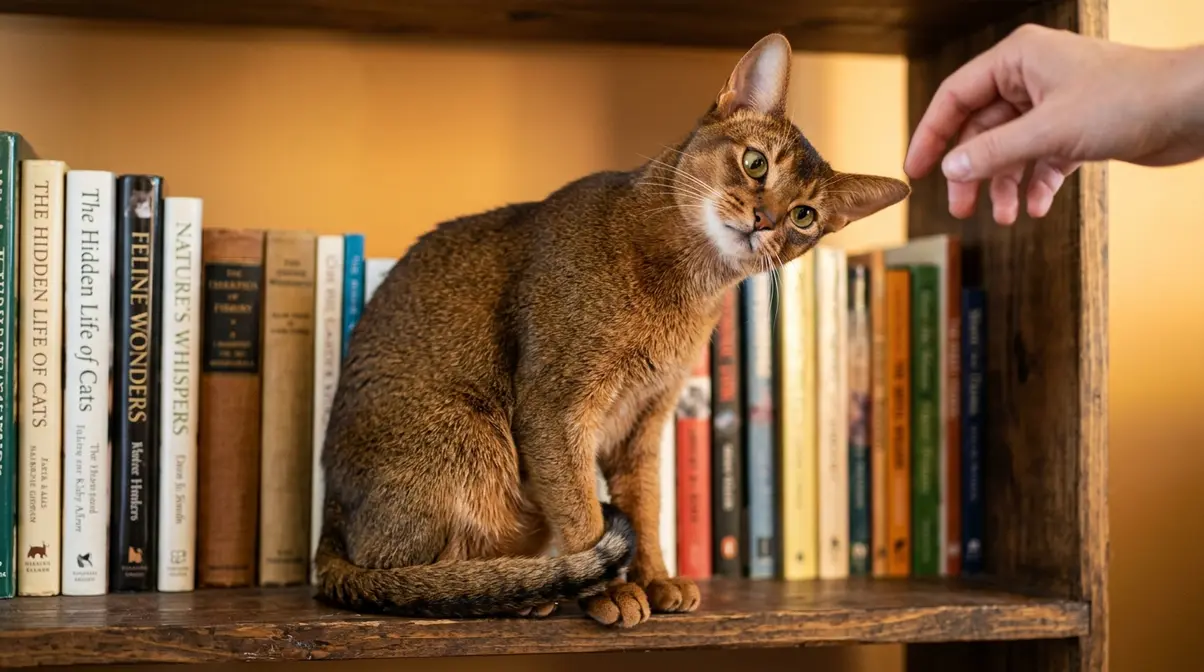
“I love how they’re goofy, social and friendly towards humans. They also seem to be quite high-maintenance…”
— Abyssinian owner, shared across community forums
The Abyssinian cat personality is defined by five qualities — intelligence, playfulness, curiosity, loyalty, and an energy level that genuinely rivals most dogs. In a comprehensive behavioral study on feline playfulness of over 5,700 cats across breeds, Abyssinians ranked among the highest for activity and playfulness while showing significantly lower fearfulness toward strangers (Scientific Reports, 2019). What this means for you: an Aby is not a cat you can leave alone for 10 hours and expect to find your sofa intact.
This guide synthesizes breed registry standards, veterinary behaviorist research, and community owner experiences to provide a complete picture of Abyssinian cat personality traits.
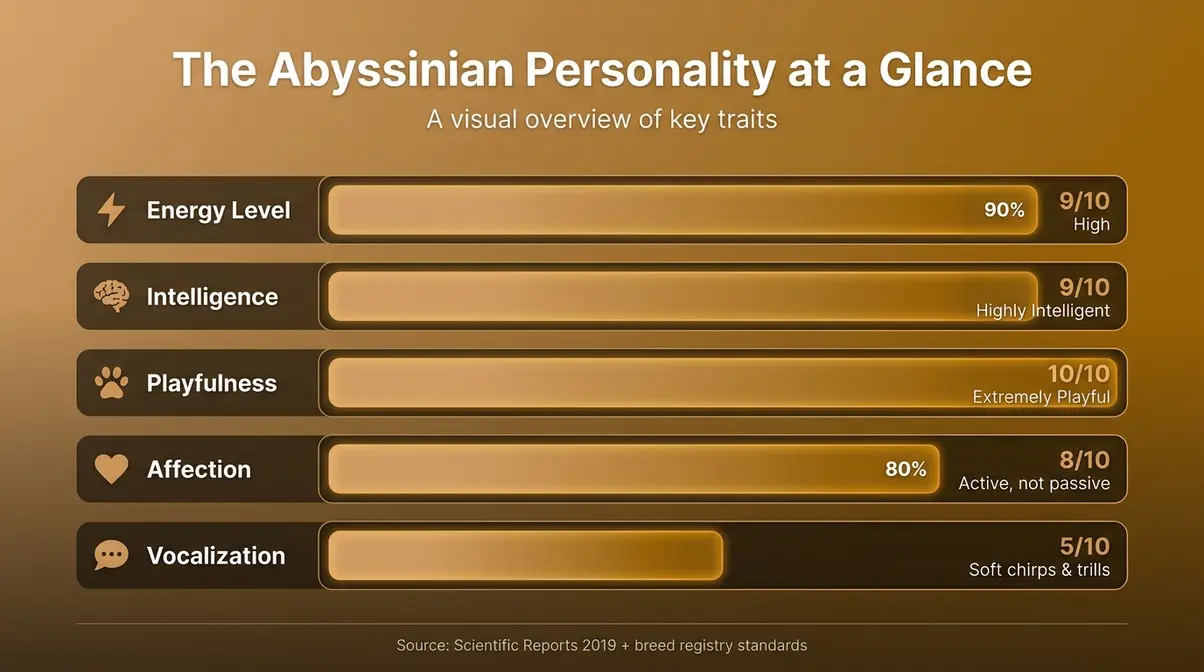
The 5 Core Traits That Define an Aby
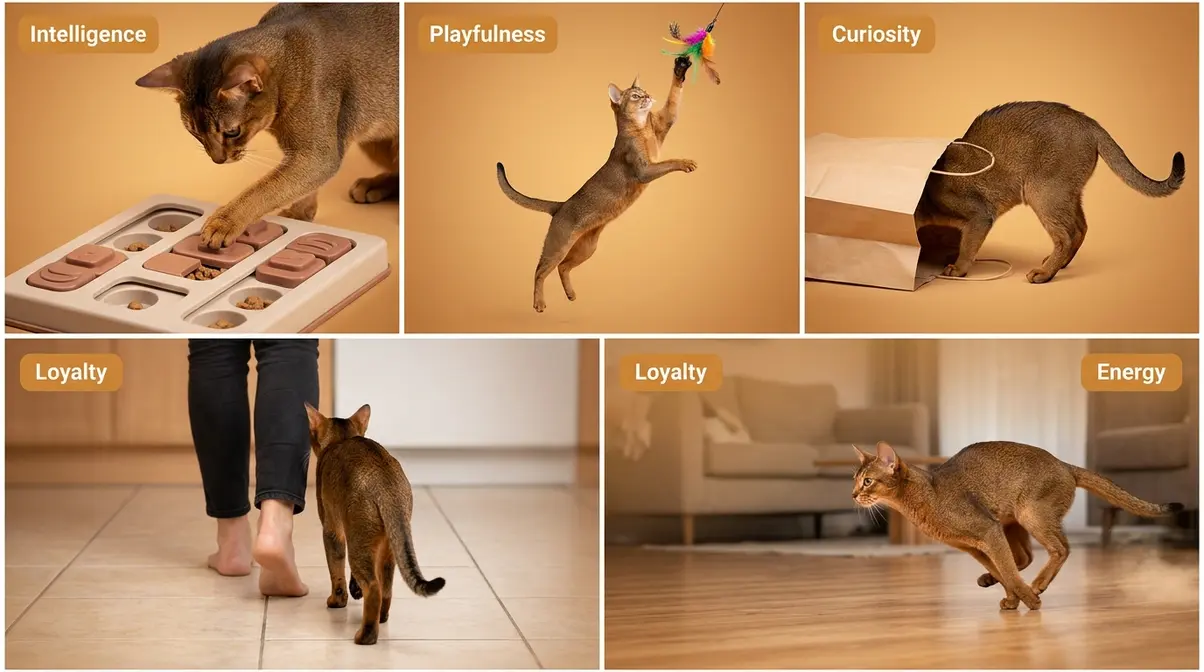
Intelligence is the first thing seasoned Aby owners mention. These cats are problem-solvers who open doors, defeat puzzle feeders, and observe you with an almost unnerving level of attention. Think of them as a border collie in a cat’s body. Why this matters for you: they need mental challenges, not just physical play. A simple toy mouse won’t hold their interest for long.
Playfulness is the second defining trait — and it lasts far longer than in most breeds. Unlike many cats that mellow out by age two or three, Abyssinians retain kitten-like energy well into their senior years. Owner consensus across Abyssinian communities indicates that Abys regularly initiate fetch games, chase laser pointers, and invent their own games using household objects.
Curiosity is practically a survival instinct for this breed. The International Cat Association (TICA), the world’s largest genetic cat registry, describes Abyssinians as “always wanting to know what you’re doing and why.” Every cabinet, bag, and visitor gets investigated. If something new enters your home, your Aby will find it within minutes.
Loyalty is where the Abyssinian surprises people most. They form powerful bonds with their primary humans — often selecting one or two people as their “person” — and will follow that person from room to room throughout the day. This dog-like devotion is endearing, but it also means they don’t do well with prolonged isolation.
Energy is the fifth trait and the one most likely to catch first-time owners off guard. The Cat Fanciers’ Association (CFA) describes Abyssinians as one of the most active domestic cat breeds. They’re not destructive by nature — they’re destructive by boredom. Provide enough stimulation and you have a joyful, acrobatic companion. Don’t, and your furniture pays the price.
Male vs. Female: Are There Real Personality Differences?
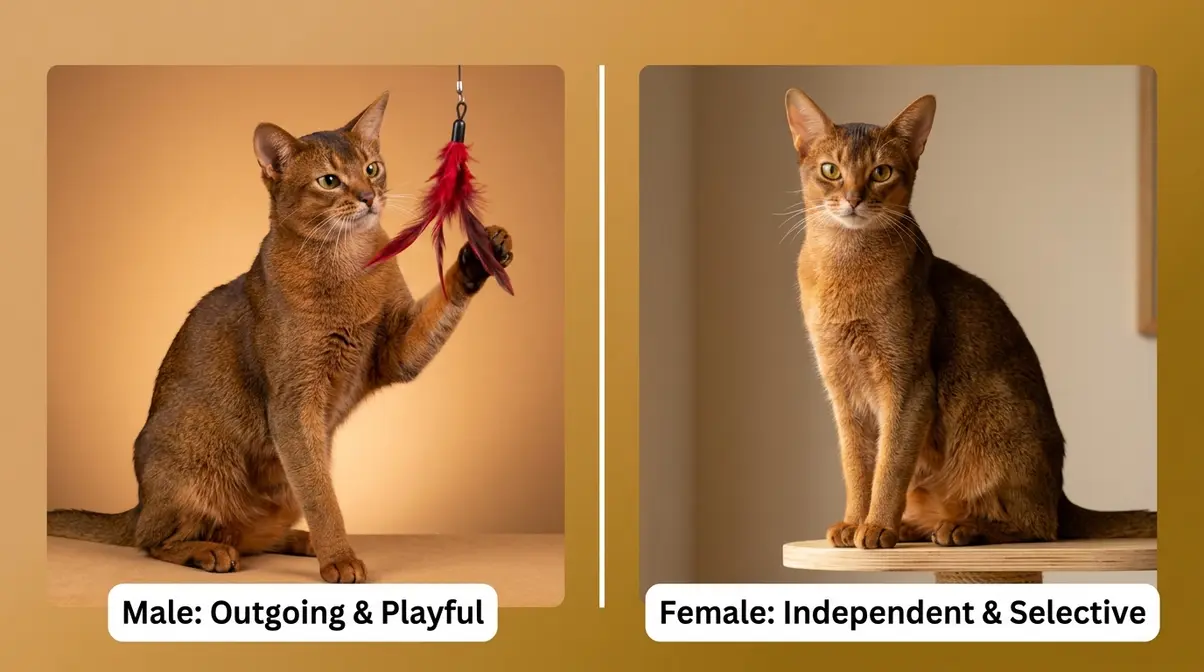
This is a question most breed guides skip entirely — which is a real disservice to anyone trying to choose. The honest answer is: yes, there are tendencies, though individual variation always plays a role.
Male Abyssinians tend to be more openly affectionate and outgoing. They’re often described as “clowns” — goofier, more physically demonstrative, and quicker to seek out interaction with strangers. Neutered males in particular are known for being relaxed, people-focused, and easy to socialize with children and other pets.
Female Abyssinians tend to be slightly more independent and selective about their affections. They’re every bit as intelligent and active, but they often choose when and how they engage rather than constantly initiating. Spayed females are typically calmer than intact females but retain that characteristic Aby alertness and curiosity.
For households with young children or other cats, many experienced Aby breeders lean toward recommending males for their more easygoing social style. For a single-person household where a more self-directed companion is preferred, a female Aby can be an exceptional match. Neither sex is “better” — they’re different expressions of the same high-energy, super-inquisitive breed.
How Abyssinians Show Affection (Hint: It’s Not Cuddling)
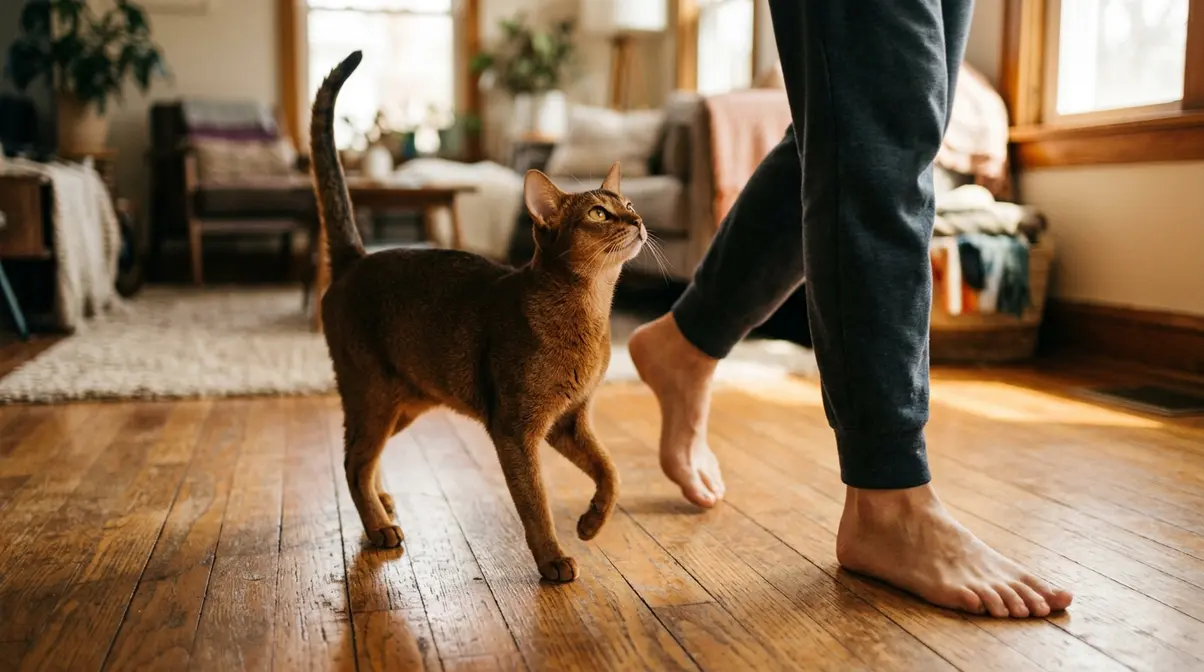
Here is where “The Active Affection Paradox” becomes essential to understand. Abyssinians are deeply loving cats. But their love is participatory, not passive — and if you’re expecting a lap cat, you will misread them completely.
An Aby shows love by:
- Following you room to room — they’re sometimes called “velcro cats” because they’re always nearby, even if they’re not touching you
- Supervising your activities — perching nearby while you cook, work, or shower (yes, they’ll watch you shower)
- Initiating play — bringing you toys, batting at your hands, or dropping objects at your feet like a retriever
- Head-butting and cheek-rubbing — brief but deliberate physical contact on their terms
- Soft vocalizations — chirps, trills, and quiet chattering when they want your attention
According to the VCA Animal Hospitals breed profile for Abyssinians, these cats thrive on interaction and become genuinely distressed when ignored. They don’t dislike affection — they dislike being held still when they’d rather be moving. It’s a need for control and freedom of movement, not a lack of feeling. Frame it that way and the paradox makes perfect sense.
What Happens When an Aby Gets Bored
Boredom in an Abyssinian is not subtle. Owner reports across communities consistently describe a recognizable pattern: it starts with restlessness, escalates to mischief, and can end in genuine destructive behavior if nothing changes.
Specific boredom behaviors include:
- Knocking objects off shelves — methodically, while maintaining eye contact with you
- Chewing cords or fabric — particularly in young Abyssinians under two years old
- Obsessive door-scratching — especially if they’re confined to one room
- Attention-demanding vocalizations — louder and more persistent than their usual soft chirps
- Redirected aggression — swatting at other pets or even humans when understimulated
The Cornell Feline Health Center notes that environmental enrichment — puzzle feeders, climbing structures, interactive play sessions of at least 15–20 minutes twice daily — is one of the most effective interventions for high-energy breeds prone to destructive behavior. For an Aby, that’s not optional enrichment. It’s basic care.
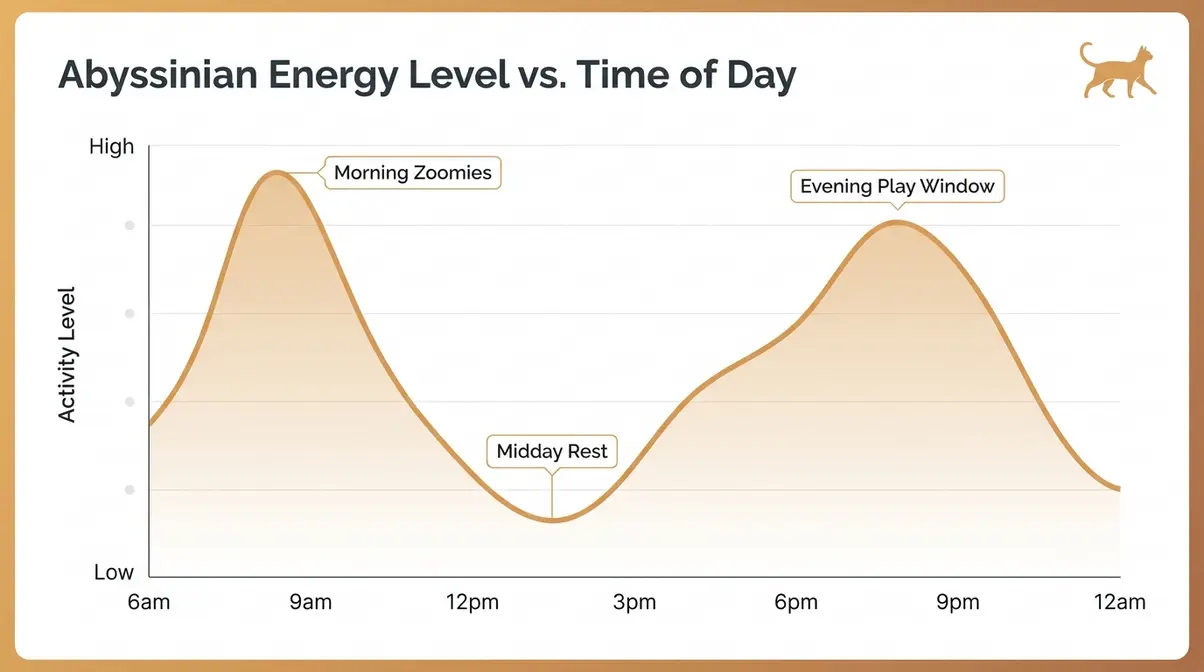
The Abyssinian at a Glance: History, Build, and Coat Colors
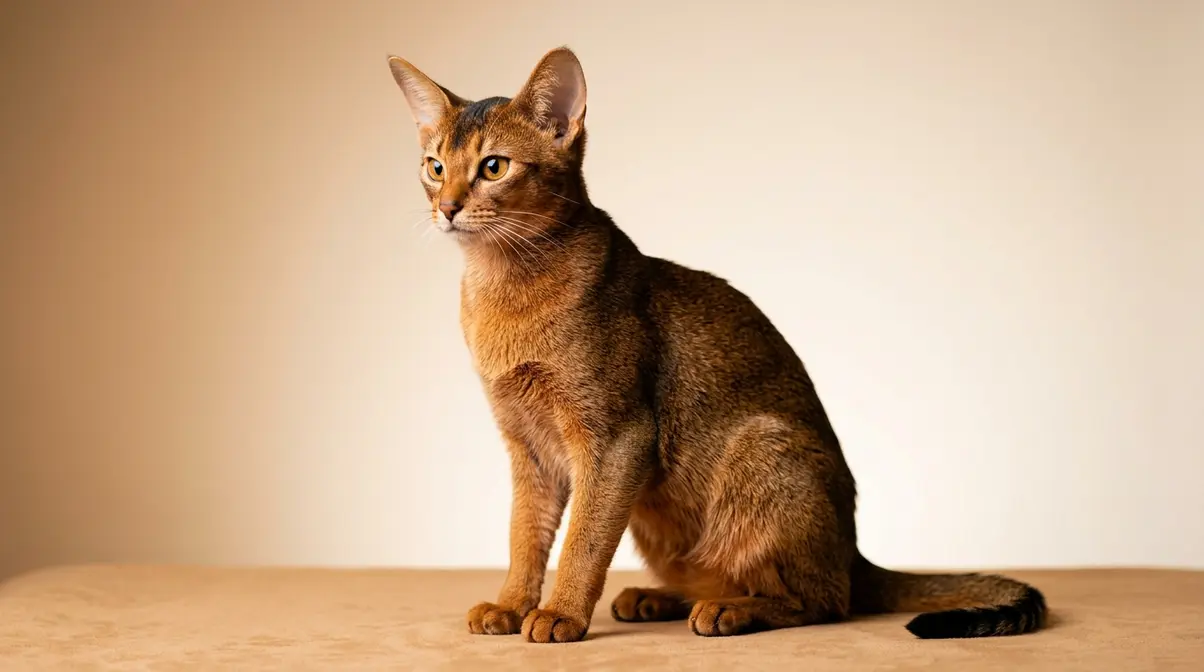
Understanding where the Abyssinian comes from helps explain why the breed is the way it is. This is not a breed that was developed for lap-sitting. Every physical and behavioral quality serves a purpose rooted in a long, active history.
A Brief History: Where Do Abyssinians Come From?
The exact origin of the Abyssinian is one of the more debated topics in cat fancy. The breed’s name suggests Ethiopia (formerly Abyssinia), and early records show cats resembling the breed appearing in British cat shows in the 1870s. However, genetic research published by UC Davis Veterinary Genetics Laboratory points to origins closer to the coastal regions of the Indian Ocean — possibly Southeast Asia or the Bay of Bengal — rather than Ethiopia directly.
What’s clear is that Abyssinians are one of the oldest recognized domestic cat breeds. The CFA formally recognized the breed in the early 20th century, and TICA now lists it among the most popular breeds worldwide. Their lithe, athletic build and ticked coat — where each individual hair carries multiple bands of color — are features that emerged from natural selection in warm, active environments, not selective breeding for docility.
Size, Build, and Those Stunning Coat Colors
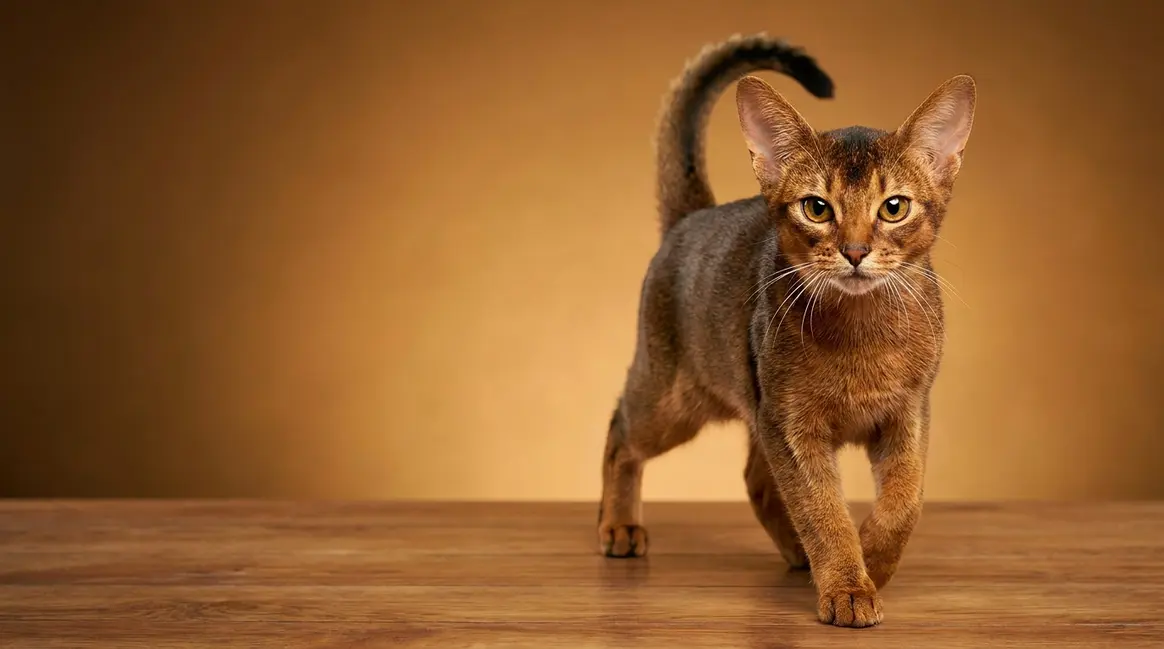
Abyssinians are medium-sized cats, typically weighing between 6 and 10 pounds (2.7–4.5 kg), with females on the lighter end. Their build is lean and muscular — deceptively powerful for their size. Long legs, a wedge-shaped head, large almond-shaped eyes, and those distinctive large ears give them an alert, almost wild appearance.
The coat is the breed’s visual signature. The “ticked” pattern — also called agouti (a genetic term for banded, multi-colored individual hairs) — gives the coat a warm, shimmering quality unlike any other domestic breed. Standard recognized colors include:
| Coat Color | Description |
|---|---|
| Ruddy (Usual) | Warm reddish-brown with black ticking; the most common |
| Sorrel (Red) | Coppery base with chocolate ticking |
| Blue | Warm beige with slate-blue ticking |
| Fawn | Warm pinkish-buff with cocoa ticking |
| Silver variants | Cream or white base with colored ticking (in some registries) |
According to Hill’s Pet Nutrition’s Abyssinian breed profile, the ruddy coloration remains the most recognized and commonly seen in shows and catteries worldwide.
Abyssinian Health, Lifespan, and Care Essentials
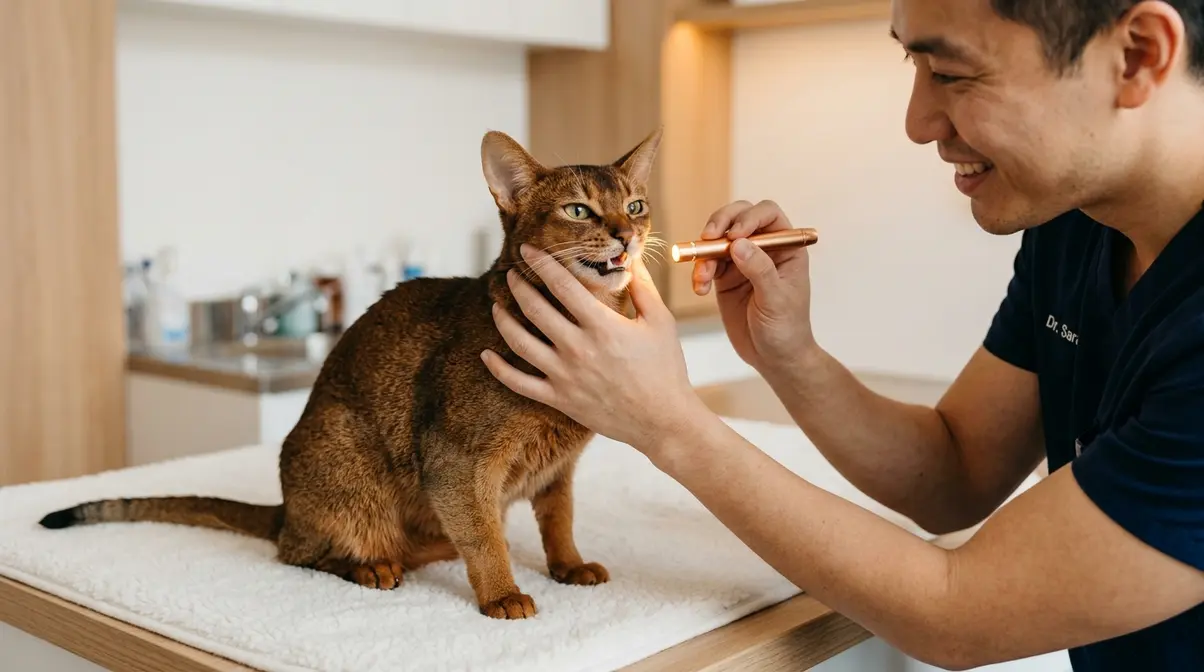
Abyssinians are generally a robust, athletic breed — but “generally healthy” doesn’t mean “no health concerns.” Two specific genetic conditions are important for any prospective owner to understand before choosing a breeder.
How Long Do Abyssinians Live?
Abyssinians have an average lifespan of 9 to 15 years, with many well-cared-for cats reaching into their mid-teens. The VCA Animal Hospitals notes that indoor-only Abyssinians with regular veterinary care and appropriate diet consistently reach the upper end of this range. Some individuals live to 17 or 18 years.
Longevity in this breed is closely tied to two factors: genetic health screening at the breeder level, and environmental enrichment throughout life. Abyssinians that are mentally stimulated and physically active tend to age more gracefully than those kept in low-stimulation environments. Think of it as the feline equivalent of keeping your mind sharp as you age.
Common Health Problems to Know About
Two genetic conditions deserve specific attention, and any reputable breeder should be screening for both:
Pyruvate Kinase (PK) Deficiency — a hereditary enzyme deficiency (meaning it’s passed down through genes) that affects red blood cell function and can lead to hemolytic anemia (destruction of red blood cells). Symptoms include lethargy, pale gums, and reduced appetite. DNA testing can identify carriers before breeding, and the UC Davis Veterinary Genetics Laboratory offers validated screening tests for this condition.
Progressive Retinal Atrophy (PRA) — a genetic condition that gradually causes blindness by degenerating the light-sensitive cells at the back of the eye. It progresses slowly, and many affected cats adapt well to vision loss, but it’s irreversible. DNA screening exists and responsible breeders test for it.
Beyond genetics, Abyssinians are also prone to:
- Periodontal disease — tartar buildup and gum disease, more common in this breed than average
- Hyperthyroidism — an overactive thyroid gland, more common in cats over 10 years old
- Renal amyloidosis — a rare but serious condition where abnormal protein deposits affect kidney function
Veterinary check-ups every 6–12 months and annual bloodwork after age 7 are strongly recommended by the Cornell Feline Health Center.
Diet and Dental Care: Two Things Aby Owners Often Overlook
Dental health is genuinely one of the most overlooked aspects of Abyssinian care. Because this breed is predisposed to periodontal disease, daily tooth brushing — or at minimum, dental treats and water additives — is not a luxury. It’s a practical health measure that can prevent costly veterinary procedures later.
For diet, Abyssinians do best on a high-protein diet that mirrors their natural nutritional needs as active, muscular cats. Wet food as a significant portion of their diet supports hydration (cats are naturally low-thirst animals) and urinary health. Free-feeding dry kibble is generally not recommended for this breed given their tendency to stay active and lean — portion-controlled meals twice daily are the standard recommendation from most feline nutritionists.
Is an Abyssinian Right for You? Honest Pros and Cons
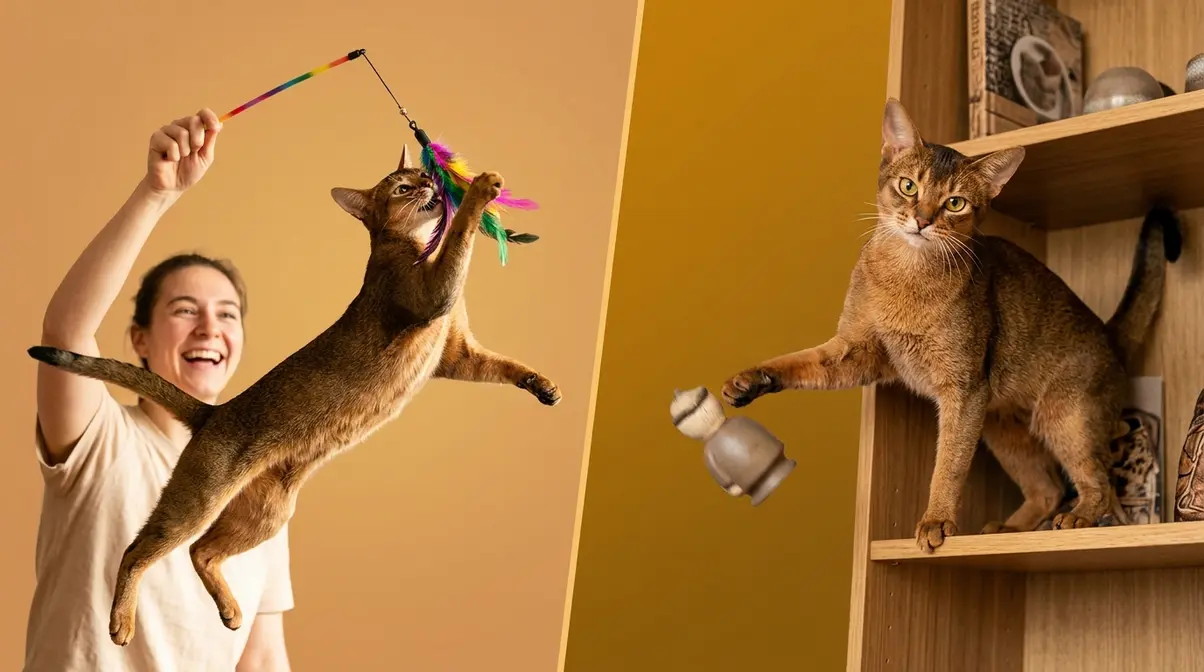
This is the question the whole guide has been building toward. The Abyssinian cat personality is extraordinary — but it’s genuinely not right for every household. Here’s an honest breakdown.
The Upsides: Why Aby Owners Adore Their Cats
They’re endlessly entertaining. Aby owners consistently describe their cats as “goofy,” acrobatic, and hilarious — the kind of cat that makes you laugh every single day. Their curiosity and intelligence mean there’s always something new they’re doing or figuring out.
They’re intensely loyal and playful in a way that feels genuinely dog-like. According to The Spruce Pets’ Abyssinian breed profile, many owners describe their Aby as a “shadow” who follows them everywhere and greets them at the door. If you’ve always wanted a cat with dog-like devotion, this is arguably the closest you’ll get.
They’re social and friendly toward guests. Unlike many cats that vanish when visitors arrive, Abyssinians tend to investigate newcomers with curiosity rather than fear — a direct reflection of that behavioral study finding showing low fearfulness toward strangers. This makes them excellent companions for active social households.
The Active Affection Paradox works in your favor once you understand it. Their love is active, engaged, and participatory. For people who want a companion rather than a decoration, this breed delivers fully.
The Challenges: What You Should Know Before Adopting
They demand attention — consistently. Abyssinians are not independent cats who are happy to entertain themselves. They need interactive play twice daily, environmental enrichment, and genuine human engagement. If your lifestyle involves long work hours or frequent travel, this breed will struggle.
They’re not great for calm, quiet households. If you want a serene, low-energy home companion, the Aby will disrupt that. They’re fast, acrobatic, and vocal enough to make their needs known. Households with very young infants or elderly residents who need quiet may find the energy level overwhelming.
Genetic health costs are real. DNA screening, reputable breeders, and potential future treatment for PK deficiency or PRA can make ownership more expensive than adopting a mixed-breed cat. Pet insurance is strongly recommended from the start.
They don’t do well alone. Many Aby owners find that getting a second cat — ideally another active breed — significantly improves their Aby’s wellbeing when the household is away during the day.
Finding Your Abyssinian: Cost, Breeders, and Rescue Options
Once you’ve decided an Aby is right for you, the next question is where to find one — and how much to budget.
What Does an Abyssinian Cat Cost?
Abyssinian kittens from reputable, health-tested breeders typically range from $1,200 to $2,500 in the United States (as of Q1 2026). Show-quality kittens from championship lines can exceed $3,000. This price reflects health testing, early socialization, vaccinations, and the breeder’s ongoing program investment — not just the kitten itself.
Adult Abyssinians placed by breeders (sometimes called “retired” show or breeding cats) are often available for $300–$600 and can make wonderful companions. Rescue organizations occasionally have Abyssinians available for standard adoption fees of $75–$200.
Avoid any kitten priced significantly below the $1,200 baseline from a private seller with no health documentation. The cost of treating an unscreened cat for PK deficiency or PRA will far exceed any initial savings.
Finding a Reputable Breeder (or Rescue)
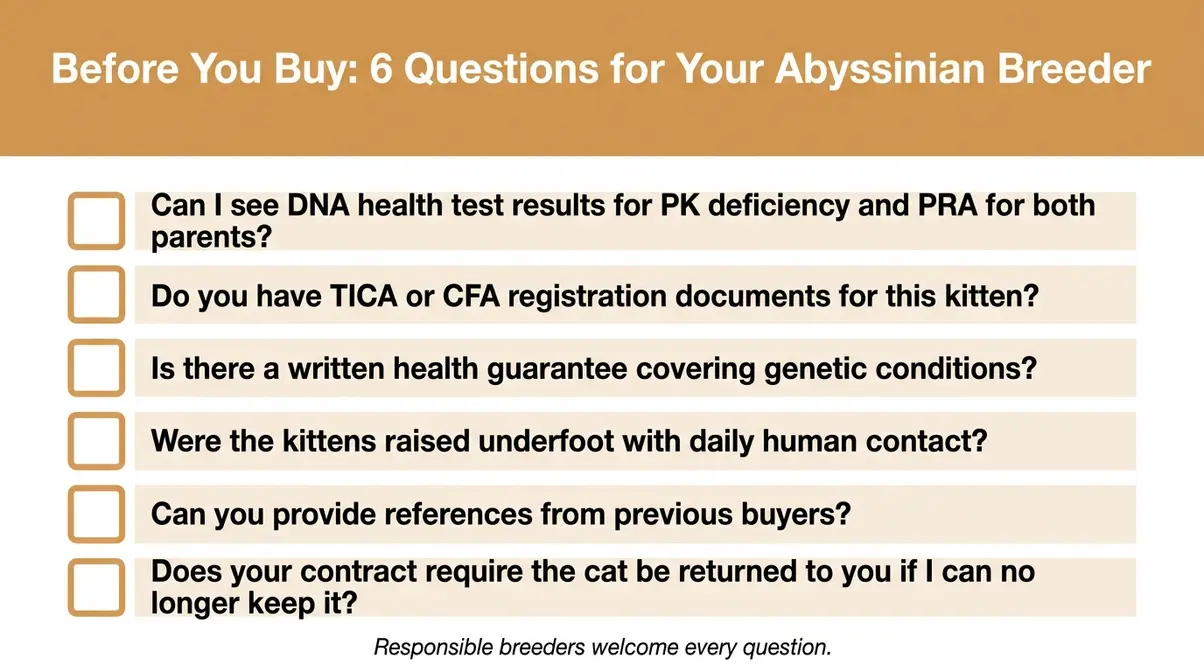
A reputable Abyssinian breeder will proactively offer the following — you should not have to ask:
- DNA health test results for both parents covering PK deficiency and PRA
- TICA or CFA registration documentation for the kitten
- Written health guarantee covering genetic conditions for a minimum of one year
- Evidence of early socialization — kittens raised underfoot with human contact from birth, not isolated in cages
- References from previous buyers — a confident breeder welcomes this
- A contract that requires the cat be returned to them if you can no longer keep it (this is a hallmark of ethical breeding)
To find breeders, start with the CFA Abyssinian Breed Council and TICA’s breeder registry. For rescue, search PetFinder or Adopt-a-Pet using “Abyssinian” as the breed filter, or contact the Abyssinian Rescue network directly. Breed-specific rescues exist in California, Texas, and most major metro areas.
When the Abyssinian Personality Becomes a Challenge
Every breed has scenarios where it’s genuinely not the right fit. Understanding these honestly is part of making a good decision.
When Boredom Turns Destructive
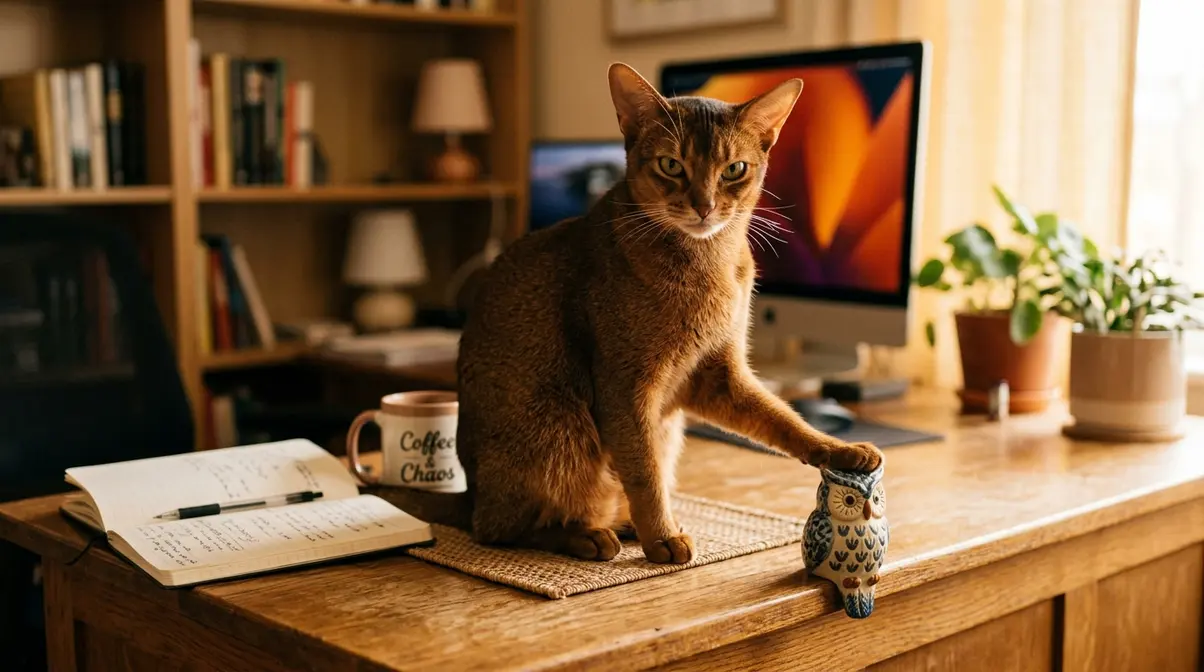
An under-stimulated Abyssinian is not a calm cat — it’s a frustrated one. Owner reports across multiple Abyssinian communities describe a consistent escalation: first restlessness, then targeted mischief (knocking things over, opening cabinets), then genuine property damage if nothing changes.
The most commonly reported destructive behaviors in bored Abyssinians include chewing electrical cords, shredding upholstery along seams, and obsessive scratching at doors or walls. These aren’t personality flaws — they’re intelligent animals using their energy somewhere, because it has to go somewhere.
The practical solution is structured enrichment: two 15–20 minute interactive play sessions daily, a tall cat tree or wall-mounted climbing system, puzzle feeders for at least one meal per day, and ideally a feline companion for company during work hours. This isn’t high-maintenance for the sake of it — it’s the baseline this breed needs to thrive.
When an Abyssinian Isn’t the Right Fit
Be honest with yourself about these scenarios before adopting:
- You work 9–10 hours daily with no one home — a single Aby left alone this long will develop behavioral problems. Consider getting two cats, or choosing a less socially demanding breed.
- You want a relaxed, lap-sitting companion — the Aby will love you, but it won’t give you that. If that’s your primary expectation, a Ragdoll or British Shorthair is a better match.
- You have very young children who want to hold and carry a cat — Abyssinians dislike being restrained. They’ll tolerate brief handling but will wriggle free, which can frustrate young children and occasionally result in scratches.
- You live in a very small apartment with no vertical space — Abyssinians need to climb and explore. A studio apartment with no cat trees or shelves is genuinely unsuitable for this breed’s wellbeing.
Common Pitfalls New Aby Owners Face
Underestimating the socialization need. Many first-time Aby owners assume “active” means “independent.” The opposite is true — active and needy often go hand in hand with this breed. Plan for genuine daily engagement, not just cohabitation.
Skipping dental care. Periodontal disease is preventable. Starting a tooth-brushing routine in kittenhood is far easier than introducing it to an adult cat. Spend two weeks acclimating your kitten to having their mouth handled before introducing a brush.
Choosing an unscreened kitten to save money. The genetic conditions this breed carries are expensive to manage. A $900 unscreened kitten that develops PK deficiency by age three will cost far more in the long run than a $1,800 health-tested one.
When to Seek Expert Help
If your Abyssinian is showing persistent destructive behavior, excessive vocalization, or signs of anxiety (over-grooming, hiding, aggression), consult a veterinary behaviorist — a specialist who combines veterinary medicine with behavioral science. This is especially important if environmental enrichment alone hasn’t resolved the issue within four to six weeks. Some Abyssinians with severe separation anxiety benefit from short-term behavioral medication alongside enrichment changes.
Frequently Asked Questions About Abyssinian Cat Personality
Do Abyssinian cats like being held?
Most Abyssinians tolerate being held briefly but actively dislike prolonged restraint. This isn’t a sign of unfriendliness — it reflects their need for movement and control over their environment. They’ll willingly sit beside you or drape across your shoulders on their own terms, but being picked up and held still goes against their core temperament. According to the VCA Animal Hospitals, Abyssinians are highly interactive but prefer to initiate physical contact themselves. If you want a cat that relaxes in your arms, a Ragdoll or Maine Coon is a better match.
Do Abyssinian cats talk a lot?
Abyssinians are vocal, but not in the loud, demanding way of Siamese or Bengals. They communicate with a distinctive soft repertoire — chirps, trills, and quiet chattering sounds rather than full meows. Owner consensus across Abyssinian communities indicates most Abys vocalize to get your attention, comment on your activities, or signal hunger — not constantly. Their vocalizations are purposeful and relatively quiet, which makes them a reasonable choice for apartment living, provided their activity needs are met.
What are the problems with Abyssinian cats?
The main challenges with Abyssinian cats are their high social needs, intense activity level, and genetic health risks. They require daily interactive play, don’t do well alone for long periods, and can become destructive when bored. On the health side, they’re genetically predisposed to Pyruvate Kinase (PK) deficiency and Progressive Retinal Atrophy (PRA) — both detectable through DNA testing. They’re also prone to periodontal disease. These aren’t dealbreakers, but they do require commitment, regular vet care, and choosing a health-screened kitten from a responsible breeder.
Are Abyssinian cats good for first-time owners?
Abyssinians can be wonderful for first-time owners — but only if those owners go in fully informed. They’re not low-maintenance cats. They need structured play, social engagement, environmental enrichment, and regular veterinary attention. First-time owners who research the breed thoroughly, commit to daily interaction, and understand The Active Affection Paradox — that love from an Aby looks like action, not cuddling — typically find them deeply rewarding. First-time owners expecting a calm, independent cat will likely find the experience overwhelming. Honest self-assessment before adopting is the key.
What annoys Abyssinian cats the most?
Abyssinians are most annoyed by boredom, confinement, and being ignored. Forcing them into a nap when they want to play, locking them in a single room for hours, or consistently failing to engage with them are the fastest routes to behavioral problems. They also dislike sudden loud noises and being held against their will. Interestingly, they’re less bothered by strangers than most cat breeds — that low fearfulness documented in the Scientific Reports (2019) study means guests and new environments don’t typically stress them. What stresses them is inactivity and social neglect.
How do Abyssinian cats show they love you?
Abyssinian cats show love through constant, engaged presence — following you, supervising your activities, initiating play, and seeking brief physical contact on their own terms. This is the essence of The Active Affection Paradox: their affection is participatory, not passive. Specific love signals include following you from room to room, slow blinking (a feline sign of trust and affection), head-butting your hand or leg, bringing you toys, and chirping softly when you enter a room. If your Aby greets you at the door every single day, that’s not just habit — that’s genuine attachment.
Your Next Step: Is an Aby Right for Your Life?
The Abyssinian cat personality is one of the most distinctive in the domestic cat world. They’re intensely loyal, endlessly curious, and genuinely entertaining — but they ask something real of you in return. Their love is participatory, not passive. That’s The Active Affection Paradox in a single sentence: you don’t just own an Aby, you partner with one.
If your lifestyle includes time for daily interactive play, the patience to let a cat love you on its own terms, and the willingness to invest in proper health screening, an Abyssinian will reward you with years of joyful, goofy, demanding, completely unforgettable companionship.
If you’re still weighing the decision, the most useful next step is honest: picture your daily schedule. Is there 30–40 minutes of genuine engagement built in? Is someone home for a meaningful portion of the day? Do you have vertical space for climbing? If the answers are yes, you’re likely a strong match for this breed.
Start your search through the CFA’s Abyssinian breed page to find health-tested breeders, or explore rescue networks for adult Abyssinians looking for their next chapter. Either way, go in knowing what you’re getting — a cat that will follow you everywhere, love you loudly in its own quiet way, and never, ever let you be bored.

Dave King
Cat owner and writer at Mad Cat Man.