Drontal for Kittens: Dosage, Safety & How-To Guide
Get proven strategies for 7 Vet-Approved Steps to Give Bayer Drontal Broad Spectrum Dewormer to Kittens Safely so you can make smarter decisions backed by…

⚕️ Reviewed by: A licensed Doctor of Veterinary Medicine | Board-certified small animal practitioner | Last Reviewed: May 2026
Drontal for kittens is safe when your kitten meets two requirements: at least 1 month old and at least 1.5 lbs in weight (FDA safety guidelines for Drontal in kittens, NADA 141-008, 2026). This 5-step guide walks you through confirming eligibility, calculating the correct dose, and administering the tablet — a process that takes about 10–15 minutes once you know the technique.
Most kitten owners assume any dewormer is safe for any kitten. But Drontal can only be given safely to kittens that are at least 1 month old AND weigh at least 1.5 lbs — and giving it to a kitten who doesn’t meet both requirements is one of the most common and preventable medication mistakes vets see (FDA safety guidelines for Drontal in kittens, NADA 141-008, 2026).
When your kitten has worms, every day without treatment feels urgent. But rushing to medicate before your kitten is ready can cause serious harm — and the clinical drug label that most websites copy isn’t written for pet owners who’ve never pilled a kitten before.
By the end of this guide, you’ll know exactly whether your kitten is ready for Drontal, how much to give, and how to get the tablet down without a struggle — so you can treat your kitten safely and confidently. We cover safety requirements, a weight-based dosage chart, a 5-step administration tutorial, and what to expect in the days after treatment.
Drontal for kittens is safe and effective when your kitten is at least 1 month old and weighs over 1.5 lbs — these two FDA-mandated minimums are non-negotiable.
- The 3-Check Rule: Confirm age, weight, and no contraindications before every dose
- Dosage: 1 tablet treats kittens from 2–16 lbs (US formulation)
- Frequency: Treat at 4, 6, 8, and 12 weeks; then every 3 months
- Prescription required in the US — your vet must authorize the medication
- After treatment: Worm expulsion in the litter box is normal and expected
Is Drontal Safe for Kittens?
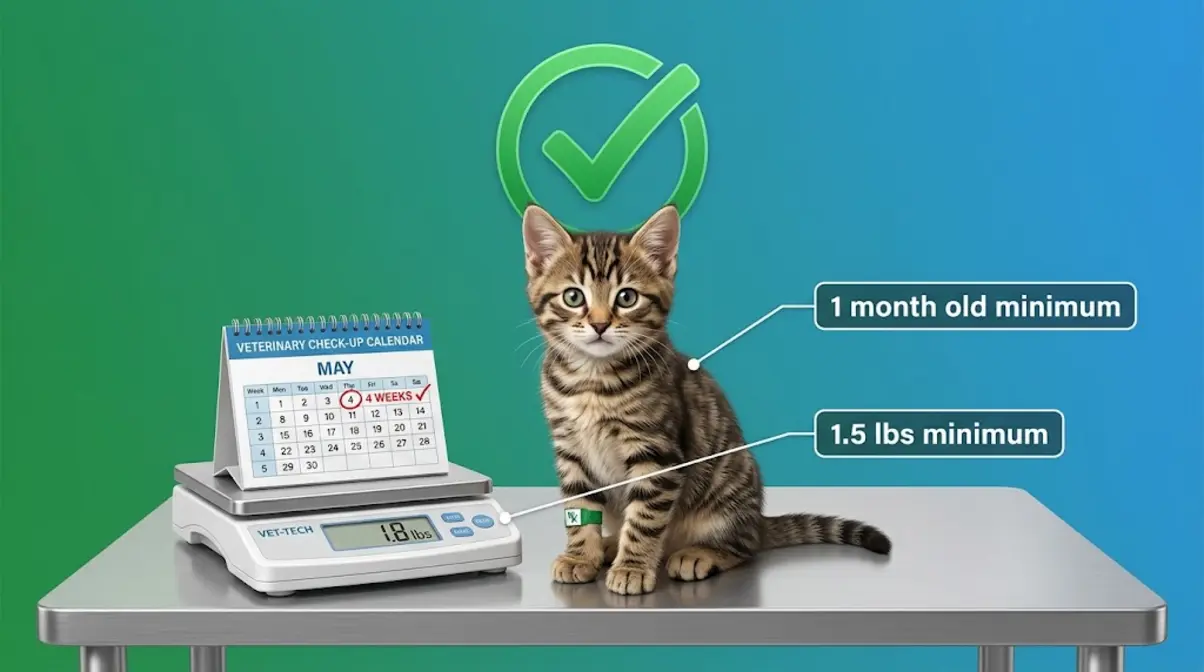
Drontal is safe for kittens when two FDA-mandated minimums are met: your kitten must be at least 1 month old and weigh at least 1.5 lbs. Clinical data shows the active ingredients — praziquantel (a drug that paralyzes and kills tapeworms) and pyrantel pamoate (which eliminates hookworms and roundworms) — are highly effective against targeted parasites at the proper dose (FDA safety guidelines for Drontal in kittens, NADA 141-008, 2026). Below these minimums, the drug’s concentration relative to body weight can cause serious adverse effects.
What Is Drontal and How Does It Work?
Drontal is a broad-spectrum dewormer (anthelmintic — meaning a drug that kills parasitic worms) manufactured by Elanco, formerly Bayer Animal Health. It contains two active ingredients that work together to eliminate three types of intestinal parasites.
Praziquantel (a drug that paralyzes and kills tapeworms) works by disrupting the tapeworm’s ability to protect itself from your kitten’s digestive enzymes. Think of it as a “stun gun” for tapeworms — it causes muscle spasms and paralysis, so the worm loses its grip on the intestinal wall and is expelled naturally. Pyrantel pamoate (which eliminates roundworms and hookworms) works by a similar paralysis mechanism, preventing these worms from holding on inside the gut.
The paralyzed worms are then passed out of the body through your kitten’s digestive system. This is why owners sometimes see dead worms in the litter box — that’s the medication working exactly as intended, not a cause for alarm. Drontal is approved under FDA safety guidelines for Drontal in kittens (NADA 141-008, 2026), which is the regulatory foundation that makes it a trustworthy, well-studied choice.
For a visual walkthrough of the full administration process, watch our step-by-step video above.
“Drontal is FDA-approved for kittens weighing at least 1.5 lbs and aged 1 month or older — administering it below these thresholds can cause serious adverse effects” (FDA NADA 141-008, 2026).
Now that you know what Drontal does, the most important question is whether your specific kitten is old enough and heavy enough to receive it safely.
Age and Weight Requirements
The two non-negotiable FDA minimums for Drontal use in kittens are:
Minimum age: 1 month old | Minimum weight: 1.5 lbs — BOTH must be met simultaneously.
Why does the weight minimum exist? Drontal tablets contain a fixed concentration of active ingredients: praziquantel 18.2 mg plus pyrantel base 72.6 mg per tablet. In kittens below 1.5 lbs, this fixed concentration is proportionally too high relative to body mass — meaning a tiny kitten receives what is effectively an overdose based on their size. This is not a conservative precaution; it is a pharmacological reality rooted in body mass-to-dose ratio calculations.
Contraindications (situations where Drontal must NOT be given) include: pregnant or nursing cats, and kittens with known hypersensitivity (allergic sensitivity) to praziquantel or pyrantel pamoate. Always consult your vet if any of these apply.
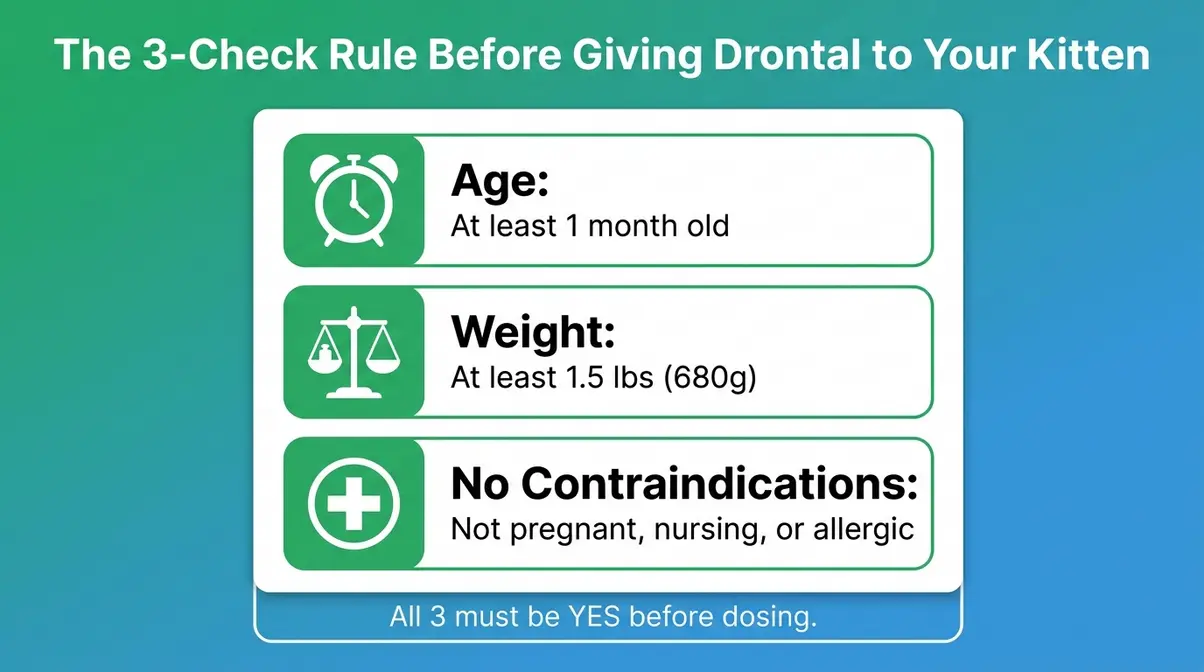
This is where The 3-Check Rule comes in. Before giving Drontal to any kitten, run through this quick checklist:
- ✅ Is your kitten at least 1 month old?
- ✅ Does your kitten weigh at least 1.5 lbs?
- ✅ Does your kitten have no known contraindications?
All three must be YES before you proceed. You can learn more about safe Drontal use for kittens and what to expect at each stage of treatment.
With the safety requirements clear, let’s look at exactly which worms Drontal eliminates — because knowing this helps you decide if it’s the right product for your kitten’s specific infestation.
Which Worms Does Drontal Treat?
Drontal targets three types of intestinal parasites (FDA safety guidelines for Drontal in kittens, NADA 141-008, 2026):
- Tapeworms — Dipylidium caninum (flea tapeworm) and Taenia taeniaeformis (rodent tapeworm)
- Hookworms — Ancylostoma tubaeforme (the most common hookworm in cats)
- Roundworms — Toxocara cati (extremely common in kittens, often passed from mother)
Importantly, Drontal does NOT treat fleas (which are the intermediate host that transmit tapeworms), lungworms, or heartworms. This is a critical distinction — if flea control isn’t addressed alongside Drontal treatment, tapeworm reinfection is virtually inevitable. The Merck Veterinary Manual on preventing tapeworm reinfection specifically flags strict flea control as mandatory after treatment (Merck Veterinary Manual, 2026).
For kittens with only roundworms — common in very young, indoor-only kittens — some vets may recommend pyrantel pamoate alone. Drontal is the preferred choice when tapeworms are suspected due to flea exposure. If your kitten has been around fleas at any point, tapeworms are likely, and Drontal is the right call. If your kitten is an indoor-only newborn with zero flea exposure, ask your vet whether a roundworm-only treatment is sufficient.
Which dewormer is best for kittens?
Drontal is widely considered the best broad-spectrum dewormer for kittens because it treats tapeworms, hookworms, and roundworms in a single tablet — covering the three most common intestinal parasites in young cats. For kittens under 1 month or 1.5 lbs, pyrantel pamoate-only products are sometimes used as a safer alternative for roundworm-only infestations. The right choice depends on your kitten’s age, weight, and parasite exposure history, so consulting your vet remains the most reliable path.
Now that you know what Drontal treats and whether your kitten qualifies, the next question every owner asks is: how much do I give? The answer depends entirely on your kitten’s weight.
Drontal Dosage Chart for Kittens
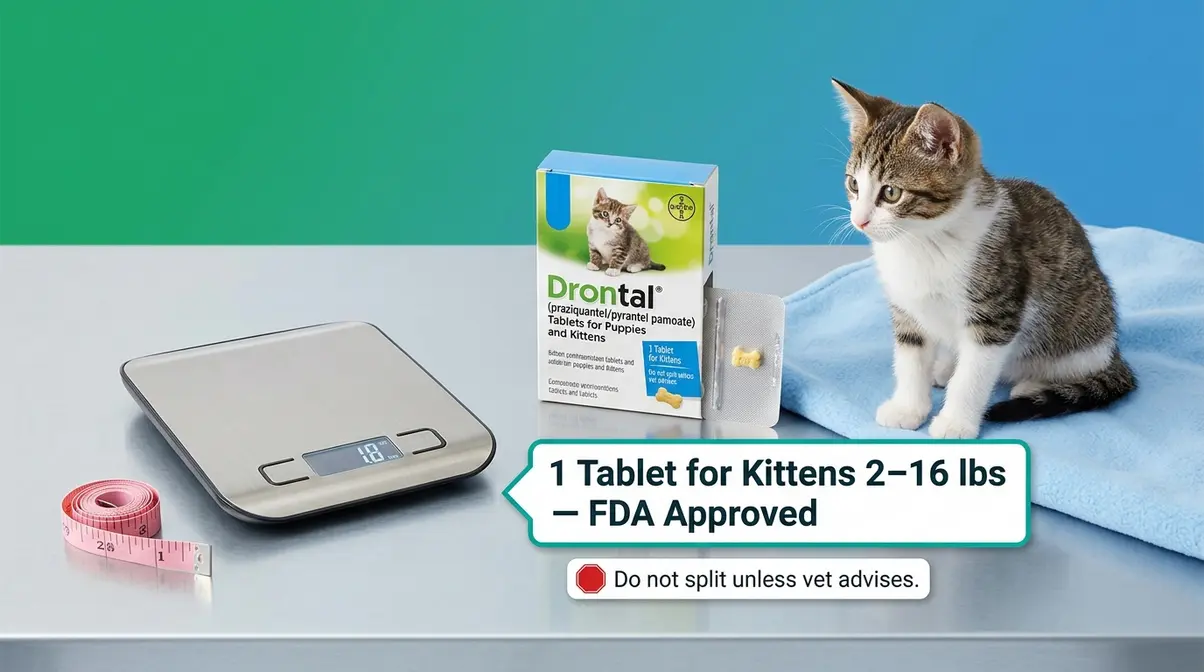
Drontal dosage for kittens is weight-based, and the US formulation has a straightforward rule: 1 tablet treats any cat or kitten weighing 2–16 lbs. This surprises many owners — a 2-lb kitten and a 10-lb cat receive the same single tablet. That’s intentional: the tablet’s active ingredient concentrations are calibrated to be safe and effective across this entire weight range. Do not split the tablet unless your vet specifically advises it.
Reading the Dosage Chart
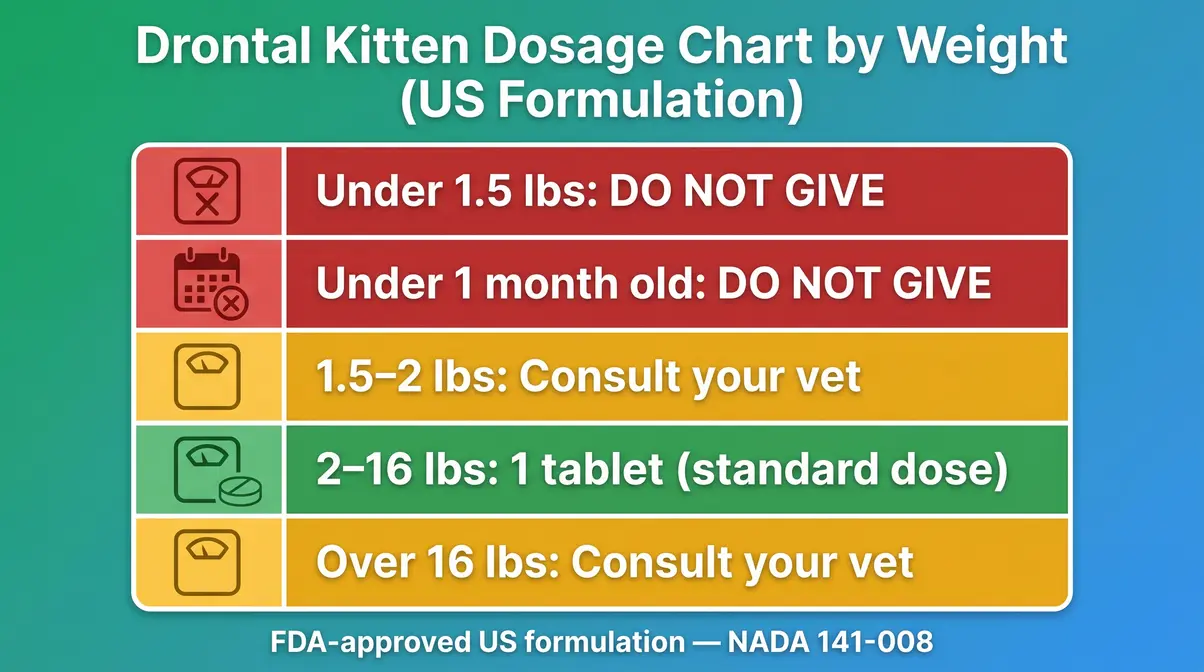
The table below reflects the FDA-approved Drontal dosage for cats and kittens (US formulation, NADA 141-008, 2026). Your kitten must meet both the age AND weight minimum before any dose is given — this is Step 2 of The 3-Check Rule.
| Kitten/Cat Weight | Number of Tablets | Notes |
|---|---|---|
| Under 1.5 lbs | Do NOT give | Below FDA-approved minimum weight |
| Under 1 month old | Do NOT give | Below FDA-approved minimum age |
| 1.5 – 2 lbs | Consult your vet | Edge weight — vet guidance recommended |
| 2 – 16 lbs | 1 tablet | Standard US dose — do not split |
| Over 16 lbs | Consult your vet | May require adjusted dosing |
Alt: Drontal for kittens dosage chart by weight — US formulation, 1 tablet for 2–16 lbs.
One important note: the US Drontal formulation (praziquantel 18.2 mg + pyrantel base 72.6 mg per tablet) differs from some international formulations. If you purchased Drontal outside the US, confirm the dosage with your vet or the product insert before administering.
The Kitten Treatment Schedule
The Companion Animal Parasite Council (CAPC) recommends deworming kittens on a schedule that begins early — as young as 2 weeks for roundworm prevention in high-risk litters — and continues through the first few months of life (CAPC Guidelines, 2026).
For Drontal specifically, the standard kitten treatment schedule recommended by veterinary sources, including the Cornell University feline health resources, is:
| Kitten Age | Drontal Treatment |
|---|---|
| 4 weeks (1 month) | First eligible dose — only if weight ≥ 1.5 lbs |
| 6 weeks | Second dose |
| 8 weeks | Third dose |
| 12 weeks | Fourth dose |
| Every 3 months thereafter | Ongoing maintenance |
If you are wondering how often do cats need worming, this standard schedule provides the best protection.
Missed dose: If you miss a scheduled dose, give it as soon as you remember — unless it’s almost time for the next dose. Do not double-dose. If you’re unsure, call your vet before administering.
The CAPC also notes that kittens are frequently reinfected between doses, which is why the multi-dose schedule matters. A single one-time dose is often not enough for kittens in environments with ongoing parasite exposure.
How Long Without Deworming?
Kittens should be dewormed starting at 4 weeks (1 month) of age — the earliest point Drontal is safe to use. Going without deworming treatment exposes kittens to significant health risks: roundworms can cause malnutrition, stunted growth, and intestinal blockages in young kittens, while hookworms can cause life-threatening anemia. The Companion Animal Parasite Council (CAPC, 2026) advises that delaying deworming beyond 8 weeks without treatment significantly increases the risk of serious parasitic disease in kittens.
Step 1: Confirm Minimum Requirements
Before you open the Drontal package, run The 3-Check Rule in full. This is not optional — it’s the safety foundation for every dose.
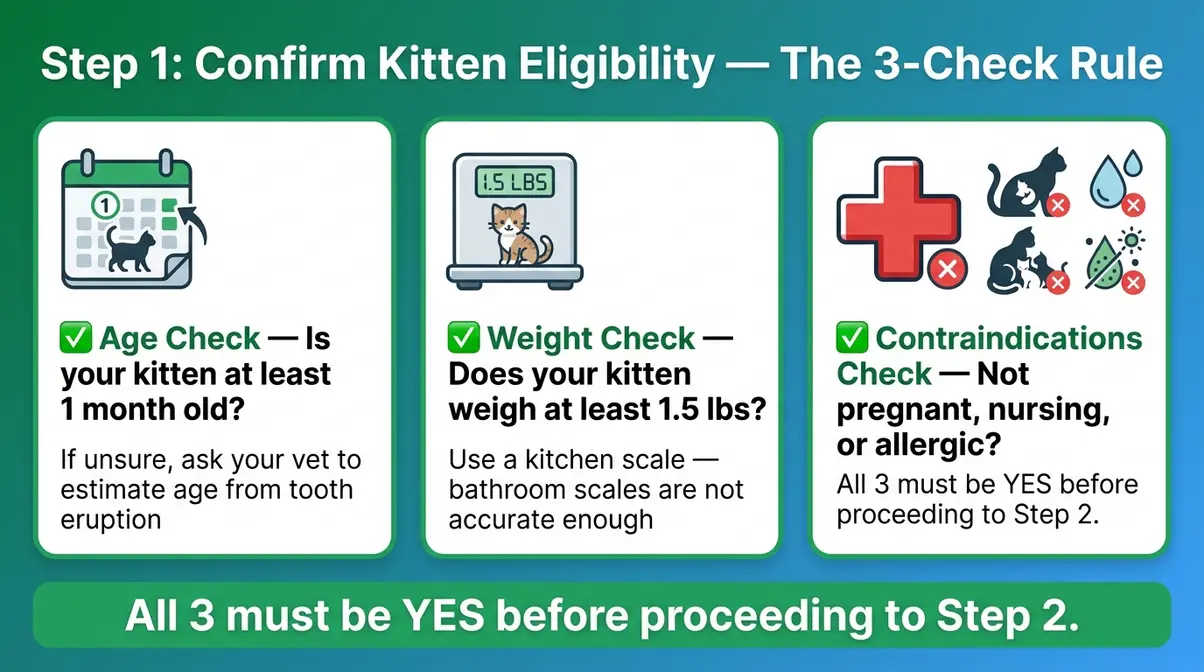
Check 1 — Age: Weigh your kitten’s age against the 1-month minimum. If you rescued a kitten and don’t know the exact birth date, a vet can estimate age from physical development markers like tooth eruption and eye color. When in doubt, wait — a few extra days won’t allow significant worm progression, but premature dosing can cause real harm.
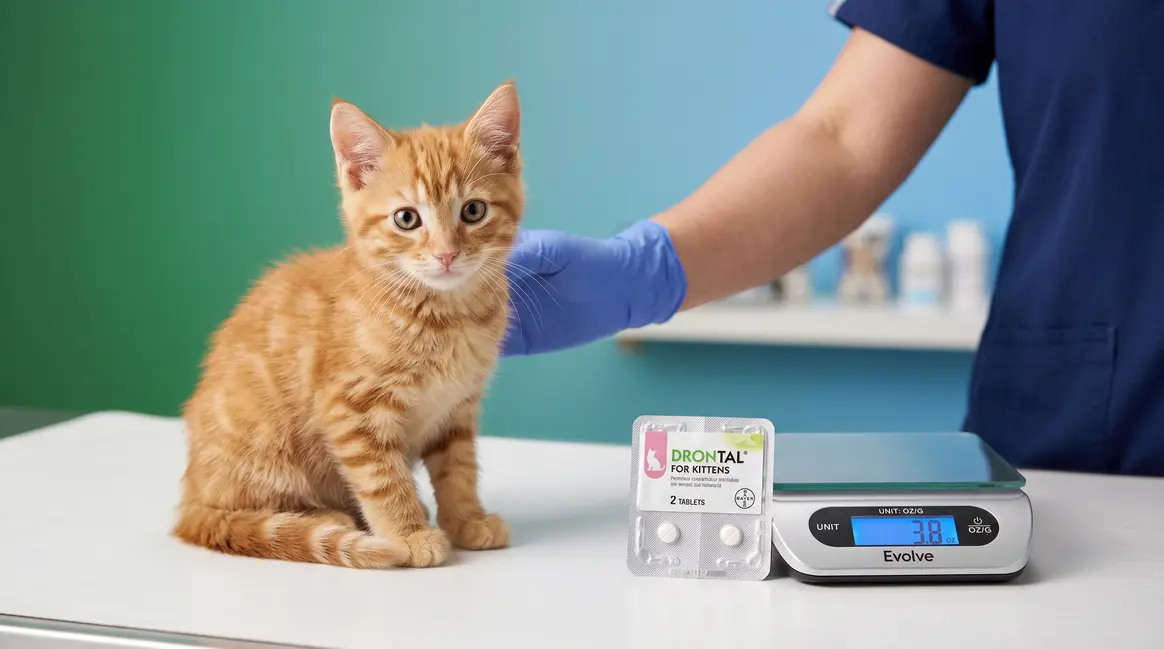
Check 2 — Weight: Use a kitchen scale or postal scale for accuracy. Hold your kitten and step on a human scale, then subtract your own weight, or place your kitten directly in a small container on a kitchen scale. Your kitten must register at least 1.5 lbs (approximately 680 grams). A bathroom scale is not accurate enough for a kitten this small.
Check 3 — Contraindications: Confirm your kitten is not pregnant or nursing, and has no known allergic reactions to deworming medications. If you’re unsure about any health condition, consult your vet before proceeding.
All three checks green? You’re cleared to move to Step 2.
Checkpoint: You should now have confirmed your kitten’s age (≥ 1 month), weight (≥ 1.5 lbs), and absence of contraindications. Do not proceed until all three are verified.
Step 2: Prepare the Drontal Dose
With The 3-Check Rule passed, it’s time to prepare the dose. Because the US Drontal formulation uses 1 tablet for kittens weighing 2–16 lbs, dose preparation is straightforward — but precision still matters.
What you’ll need: The Drontal tablet (prescription-dispensed by your vet), a small amount of soft food or a pill pocket treat (optional), a clean flat surface, and a towel for restraint in the next step. Estimated prep time: 2–3 minutes.
- Remove one Drontal tablet from the foil blister pack.
- Do not crush or split the tablet unless your vet has specifically instructed you to. The tablet is formulated as a whole unit.
- Decide on your delivery method: You can give the tablet directly (dry pill), wrap it in a small amount of soft food or a pill pocket treat, or use a pill gun (a small plastic device available at pet stores). For kittens, the soft food method often works well — push the tablet into a small ball of wet food.
- Have everything ready before you pick up your kitten — you want to minimize the time your kitten is being restrained.
If your kitten weighs between 1.5 and 2 lbs, do not attempt to give a partial tablet without explicit vet guidance on the exact split. In this edge-weight range, your vet may recommend a different dewormer formulation better suited to very small kittens.
Checkpoint: You should now have one Drontal tablet prepared, your delivery method chosen, and all supplies within arm’s reach before picking up your kitten.
Step 3: Restrain and Give the Tablet
This is the step most owners dread — and the one that most articles skip entirely. Getting a tablet into a reluctant kitten requires calm confidence, not force. Struggling with your kitten increases stress for both of you and raises the chance the pill gets spat out.
Safe Restraint Technique
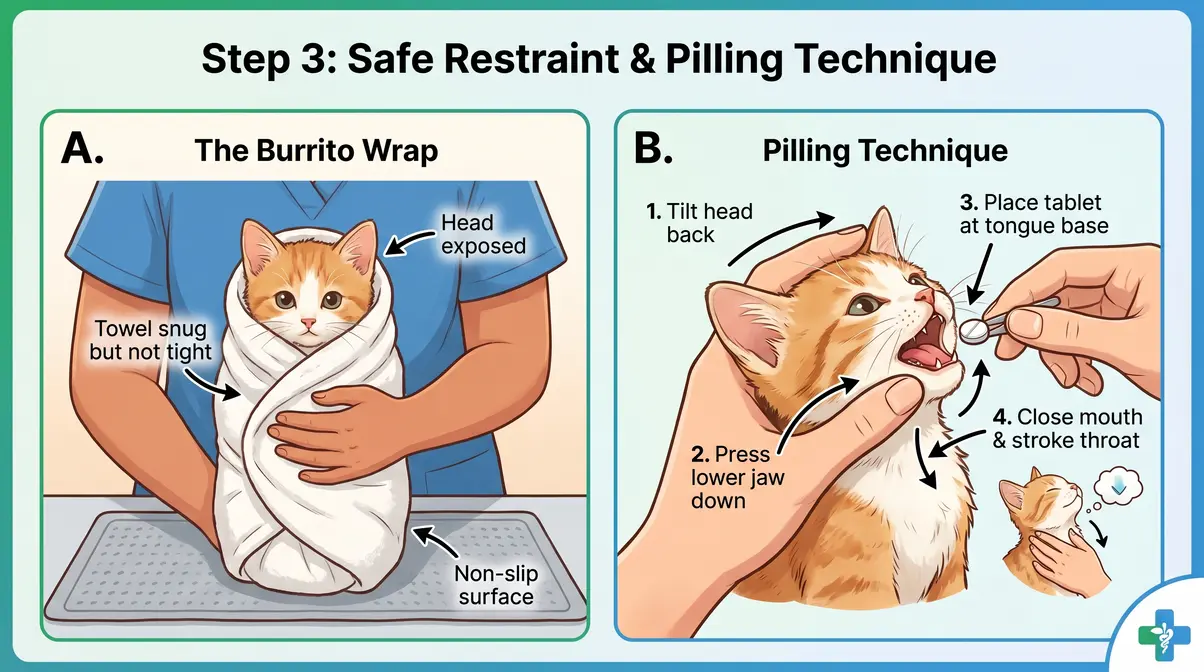
Wrap your kitten snugly in a towel, leaving only the head exposed — this is sometimes called the “burrito wrap.” The wrap prevents scratching and reduces your kitten’s ability to struggle, which actually calms many kittens down. Place your wrapped kitten on a stable, non-slip surface at a comfortable height (a counter or table works well).
Hold the wrapped kitten against your body with your non-dominant arm, using light but firm pressure. Your kitten should feel secure, not squeezed. If your kitten is very small or very young, having a second person help hold the kitten is strongly recommended by veterinary sources.
Pilling Technique
Once your kitten is restrained:
- Tilt the head gently back using your non-dominant hand, placing your thumb and forefinger on either side of the upper jaw (the cheekbones, not the throat).
- Open the mouth by gently pressing the lower jaw down with one finger of your dominant hand.
- Place the tablet as far back on the tongue as possible — aim for the base of the tongue, not the front. The further back the tablet lands, the harder it is for your kitten to spit it out.
- Close the mouth immediately and hold it gently closed.
- Stroke the throat gently downward or blow a soft puff of air toward the nose — this triggers the swallowing reflex.
If you’re using the soft food method, simply offer the food ball directly. Most kittens will eat it without drama. Monitor closely to confirm the whole piece was consumed and not just licked around.
Checkpoint: You should now have placed the tablet in your kitten’s mouth and seen or felt a swallowing motion. Do not release your kitten until you’re confident the tablet has gone down.
Step 4: Confirm Tablet Was Swallowed
This step is often overlooked, but it’s critical — kittens are remarkably skilled at “cheeking” a tablet (holding it in the side of the mouth without swallowing) and spitting it out the moment you let go.
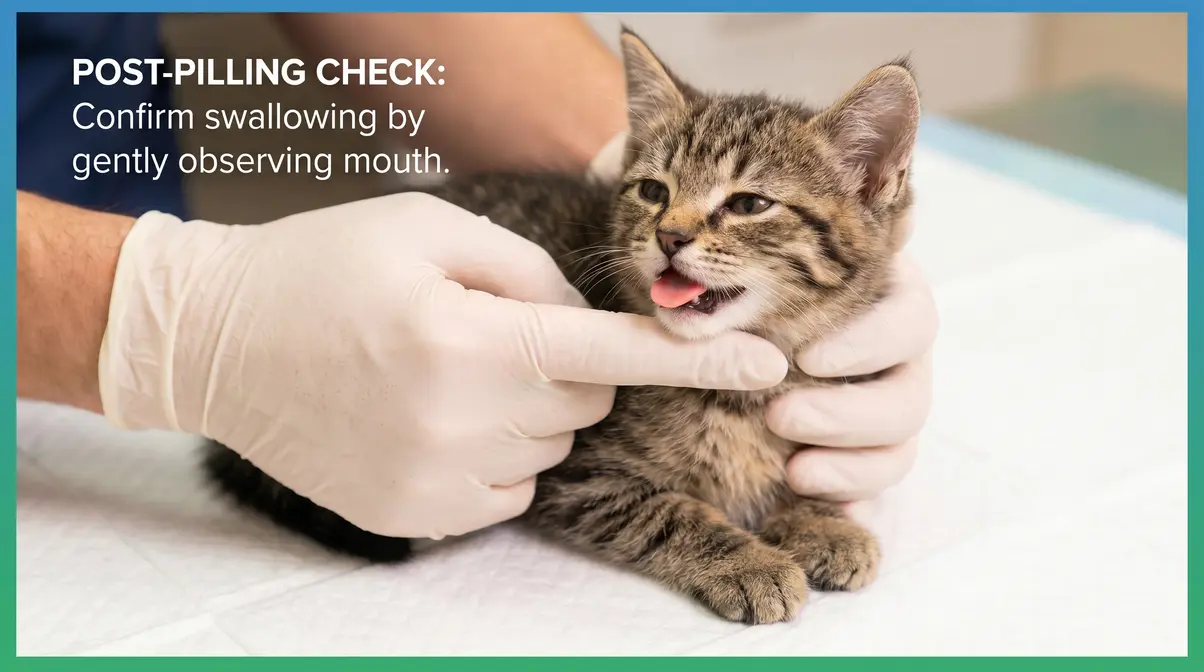
After releasing your kitten, watch for 30–60 seconds. Signs that the tablet was swallowed include: normal behavior resuming, licking the lips (a swallowing reflex response), and no tablet visible in the mouth or on the floor.
If your kitten spits the tablet out: Stay calm. Pick up the tablet, check that it’s still intact, and attempt administration again using the same technique. Offering a small lick of water or wet food immediately after pilling can help wash the tablet down. If your kitten successfully spits the tablet out three or more times, try a pill pocket treat or call your vet for guidance on alternative delivery methods.
If your kitten vomits within 1 hour of taking the tablet: Do not re-administer without consulting your vet. It is unclear how much of the active ingredient was absorbed, and doubling the dose without guidance is not safe. Document the time of administration and the time of vomiting, and contact your vet’s office.
Checkpoint: You should now be confident the tablet was fully swallowed. Your kitten is free to resume normal activity.
Step 5: Monitor Your Kitten After Treatment
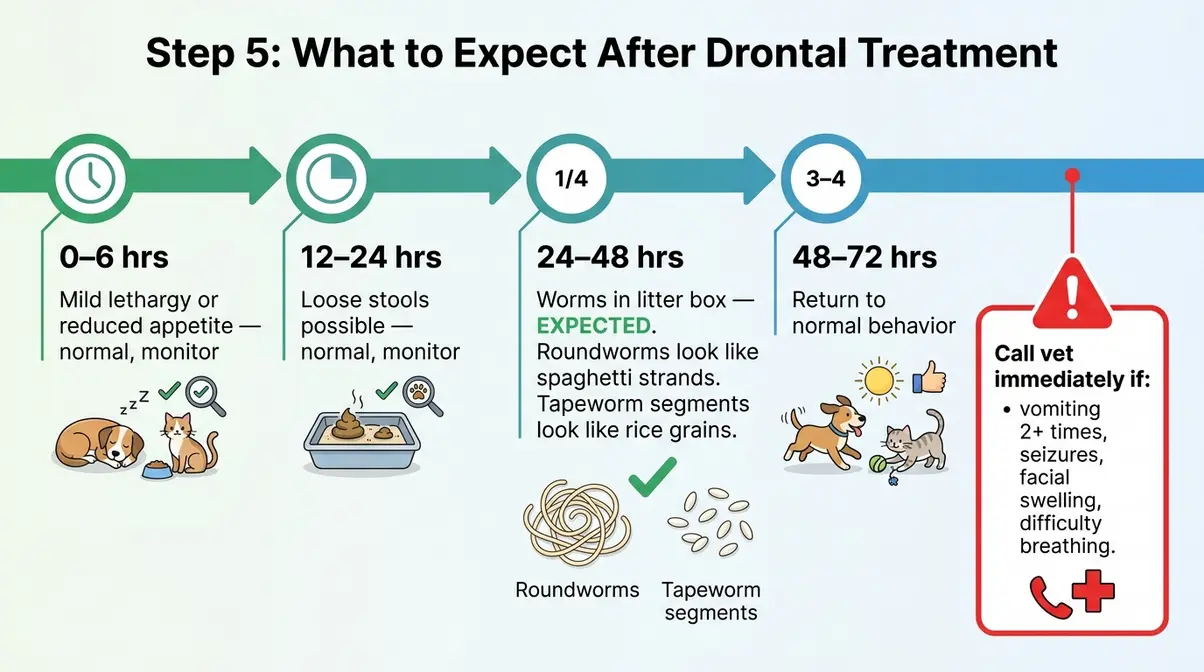
The treatment doesn’t end when the tablet goes down. The next 24–72 hours are when you’ll see the medication working — and when you need to know what’s normal versus what requires a vet call.
What to Expect in the First 72 Hours
Within 24–48 hours of treatment, you may notice dead or dying worms in your kitten’s litter box. Roundworms appear as spaghetti-like white or tan strands. Tapeworm segments look like small grains of rice or cucumber seeds — they may still be moving when first expelled. This is the dewormer working exactly as intended. Yes, cats do poop out tapeworms after being dewormed — that’s the point.
Mild side effects that are considered normal include: temporary loss of appetite, mild lethargy for up to 24 hours, and loose stools. These typically resolve on their own within a day. According to the FDA-approved prescribing information for Drontal (NADA 141-008, 2026), the medication is generally well-tolerated in healthy kittens meeting the minimum age and weight requirements.
Reinfection Risks After One Dose
“However, since Drontal kills mainly adult worms, pets can get reinfected by eggs or larvae. Thus, most veterinarians recommend…” following the multi-dose schedule and addressing the root cause of infestation — particularly flea control for tapeworm prevention.
This mirrors what many kitten owners discover after a first treatment: their kitten seems better, then worms reappear weeks later. This is not a treatment failure. Drontal kills adult worms but does not eliminate eggs or larvae already present in the environment. Kittens can be reinfected by eggs or larvae almost immediately after treatment if the source — fleas, contaminated soil, or an infected mother — isn’t addressed.
The Companion Animal Parasite Council (CAPC) recommends all wormers be used as part of a broader parasite control protocol, not as a standalone one-time dose (CAPC Guidelines, 2026). This means treating the environment, maintaining flea prevention, and following the full multi-dose schedule outlined in Step 2’s dosage table.
Checkpoint: You should now know what normal post-treatment litter box findings look like, what mild side effects are expected, and why follow-up doses are necessary to prevent reinfection.
How to Get Drontal for Kittens
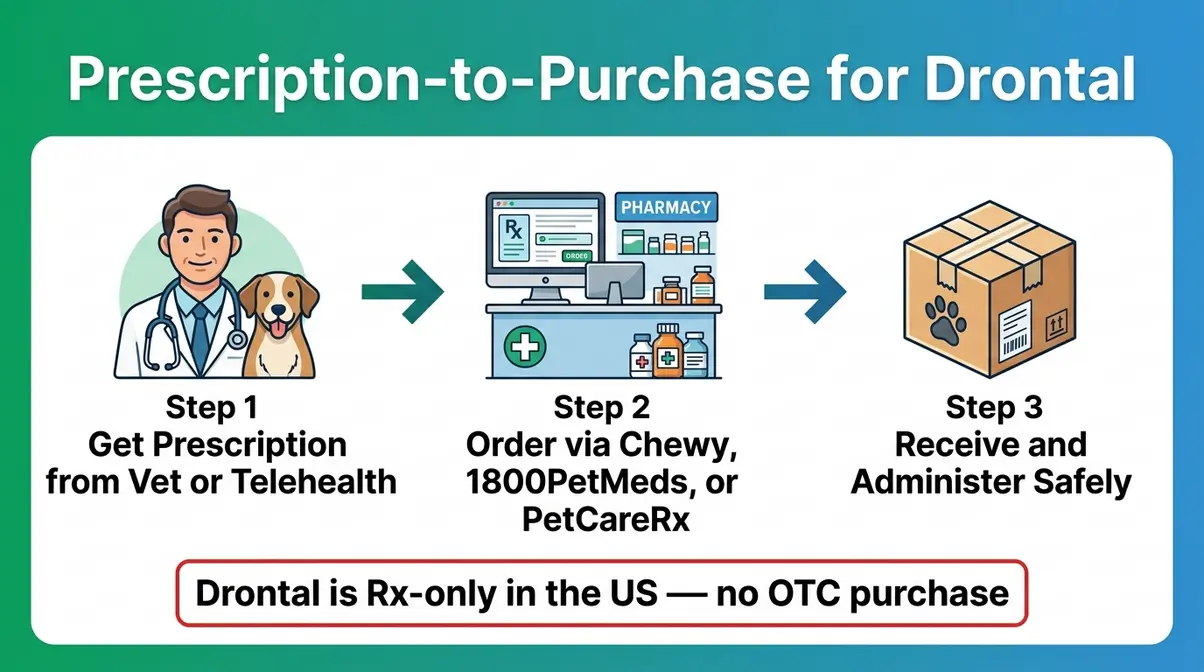
Getting Drontal for your kitten involves one step that surprises many new cat owners: in the United States, Drontal requires a veterinarian’s authorization. Understanding this upfront saves time and avoids frustration.
Do You Need a Prescription for Drontal?
Yes — in the United States, Drontal is a prescription-only (Rx) veterinary medication. You cannot legally purchase it over the counter at a pet store or online retailer without a valid veterinary prescription. This is different from some other countries where Drontal may be available without a vet prescription — the US regulatory classification is stricter.
This means you cannot get Drontal for cats without a vet prescription in the US without going through a licensed veterinarian. However, “prescription” doesn’t always mean an in-person visit — many veterinary telehealth services can issue a prescription after a virtual consultation, and many vets will issue a refill prescription if your kitten is already an established patient.
Retailers like Chewy, 1800PetMeds, and PetCareRx all carry Drontal but require a valid prescription on file before dispensing. This is a federal legal requirement, not a retailer policy.
Drontal vs. Drontal Plus
This is a common point of confusion. Here’s the clear distinction:
| Product | Active Ingredients | Approved For | Key Difference |
|---|---|---|---|
| Drontal (cats) | Praziquantel + Pyrantel pamoate | Cats and kittens | For cats only |
| Drontal Plus (dogs) | Praziquantel + Pyrantel pamoate + Febantel | Dogs only | Contains febantel — NOT for cats |
Drontal Plus is formulated for dogs and contains febantel, a third active ingredient that is NOT approved for use in cats or kittens. Giving Drontal Plus to your kitten instead of Drontal (cat formulation) is a serious medication error. Always verify the label reads “for cats and kittens” before purchasing or administering.
Where to Buy Drontal for Kittens
Once you have a prescription from your vet, Drontal is available through:
- Your veterinarian’s office — most convenient, prescription issued on-site
- Chewy Pharmacy — prescription required; ships to most US states
- 1800PetMeds — prescription required; competitive pricing
- PetCareRx — prescription required; subscription options available
Drontal is not typically sold at general pet retailers like PetSmart without a prescription process. Avoid purchasing Drontal from international online pharmacies or non-veterinary websites — product authenticity and correct formulation cannot be guaranteed.
Mistakes, Side Effects & Vet Calls
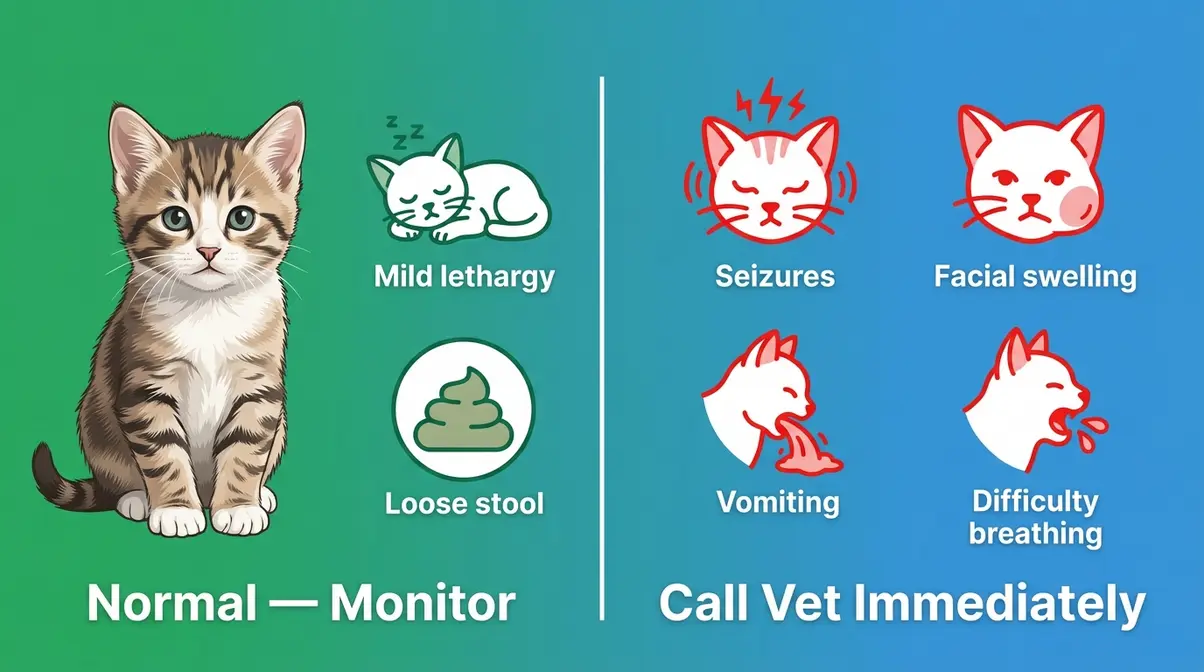
Even careful owners make mistakes when deworming for the first time. This section covers the most common errors, what side effects look like, and the warning signs that require immediate veterinary attention.
Common Administration Mistakes to Avoid
Mistake 1 — Skipping the weight check: The most common error. Owners assume a kitten “looks big enough” without actually weighing. A kitchen scale takes 30 seconds and removes all guesswork. Always weigh before every dose.
Mistake 2 — Using Drontal Plus instead of Drontal: As noted above, Drontal Plus contains febantel, which is not safe for cats. Double-check the product label every single time — packaging can look similar.
Mistake 3 — Giving a second dose after vomiting: If your kitten vomits within an hour of dosing, do not automatically re-administer. Contact your vet first to determine how much active ingredient was likely absorbed.
Mistake 4 — Treating without addressing fleas: Treating tapeworms without simultaneously treating for fleas is like bailing out a boat without plugging the hole. Reinfection is almost certain. Use a vet-approved flea prevention product alongside Drontal.
Mistake 5 — Assuming one dose resolves the infestation permanently: A single one-time dose kills adult worms present at the time of treatment. It does not protect against future infestation or eliminate eggs already in the environment.
Normal vs. Serious Side Effects
According to the FDA-approved prescribing information for Drontal (NADA 141-008, 2026), the following side effects may occur:
| Side Effect | Normal / Monitor | Seek Vet Care |
|---|---|---|
| Mild lethargy (< 24 hrs) | ✅ Normal | — |
| Reduced appetite (< 24 hrs) | ✅ Normal | — |
| Loose stools (< 24 hrs) | ✅ Normal | — |
| Worms in stool (24–72 hrs) | ✅ Normal — expected | — |
| Vomiting within 1 hour of dose | ⚠️ Monitor + call vet | If repeated |
| Severe lethargy (> 24 hrs) | — | ✅ Call vet |
| Seizures or muscle tremors | — | ✅ Emergency vet |
| Swelling of face or hives | — | ✅ Emergency vet |
| Difficulty breathing | — | ✅ Emergency vet immediately |
In low-light conditions or when a kitten is already weakened by illness, side effects may be more pronounced — this is one reason veterinary evaluation before treatment is so strongly recommended for kittens with any pre-existing health concerns.
When to Call Your Vet Immediately
Contact your veterinarian right away if your kitten shows any of the following after receiving Drontal:
- Vomiting more than once within 2 hours of dosing
- Seizures, muscle tremors, or loss of coordination
- Facial swelling, hives, or signs of allergic reaction
- Difficulty breathing or extreme distress
- Complete refusal to eat for more than 24 hours post-treatment
These signs may indicate a rare hypersensitivity (allergic) reaction or an underlying health condition that was not apparent before treatment. Veterinary sources, including the Cornell Feline Health Center, confirm that while serious adverse reactions to Drontal at recommended doses are uncommon, they are not impossible — particularly in kittens with undetected health vulnerabilities. Before an emergency happens, review a comprehensive cat veterinary checklist to understand when to seek immediate care.
Frequently Asked Questions
Can Drontal be given to kittens?
Yes, Drontal can be given to kittens, but only those meeting both FDA-approved minimums: at least 1 month of age and at least 1.5 lbs in body weight. Below either threshold, the medication’s active ingredient concentration is proportionally too high for the kitten’s body mass. Always confirm both criteria — the age minimum and the weight minimum — before administering any dose (FDA NADA 141-008, 2026).
How Often to Give Drontal?
Drontal should be given at 4, 6, 8, and 12 weeks of age, then every 3 months as ongoing maintenance. This schedule aligns with CAPC Guidelines (2026), which recommend deworming kittens multiple times in the first months of life because a single one-time dose only eliminates adult worms present at the time of treatment. Kittens can be reinfected by eggs or larvae between doses, making the full schedule essential rather than optional.
Drontal Without a Vet Prescription?
No — in the United States, Drontal requires a valid veterinary prescription. It is classified as a prescription-only (Rx) medication under US federal law. You cannot legally purchase it at PetSmart, Walmart, or online without vet authorization. However, some veterinary telehealth platforms can issue prescriptions after a virtual consultation, which makes the process more accessible without requiring an in-person clinic visit.
Do Cats Poop Out Tapeworms?
Yes — cats do poop out tapeworms after being dewormed, and this is entirely normal and expected. Drontal’s active ingredient praziquantel paralyzes tapeworms so they lose their grip on the intestinal wall and are expelled through the digestive system. You may see tapeworm segments in the litter box within 24–72 hours of treatment. These segments may look like small grains of rice or cucumber seeds. Seeing them is confirmation the medication is working, not a sign of a problem.
Deworming Without a Vet Visit?
In the US, you cannot legally obtain Drontal without a veterinary prescription, so a vet interaction is required. However, “going to the vet” doesn’t always mean a full in-person exam — many telehealth veterinary services can evaluate your kitten virtually and issue a prescription. For kittens with straightforward, confirmed worm infestations and no health concerns, this can be a convenient option. Attempting to use over-the-counter products without vet guidance is not recommended for kittens, as dosing errors are more likely and some OTC products are ineffective against all worm types.
Your Kitten’s Deworming Checklist
For anxious kitten owners, Drontal for kittens delivers reliable, FDA-approved protection against tapeworms, hookworms, and roundworms — but only when the foundational safety checks are completed first. According to the FDA-approved prescribing information (NADA 141-008, 2026), Drontal is generally well-tolerated in healthy kittens meeting the 1-month age and 1.5-lb weight minimums, making it one of the most trusted broad-spectrum dewormer options available with a veterinary prescription.
The 3-Check Rule exists because deworming a kitten isn’t just about picking the right product — it’s about confirming the right timing. Rushing past the age check, the weight check, or the contraindication screen is where preventable mistakes happen. Every dose you give your kitten in the coming months should begin with those same three questions: old enough, heavy enough, no contraindications.
Your next step is simple: weigh your kitten today, note their age, and contact your vet to discuss a Drontal prescription and confirm the right treatment schedule for your kitten’s specific situation. Most vets can walk you through the full protocol in a single short appointment — or via telehealth if your kitten is otherwise healthy. You now have everything you need to approach that conversation confidently, and to give your kitten the parasite-free start they deserve.

Dave King
Cat owner and writer at Mad Cat Man.