
Table of Contents
- Why Fountain Care Matters for Health, Behavior, and Your Sanity
- 10 Proven Water Fountain Maintenance for Cats Tips
- Smart Schedules, Filters, and Materials: What to Use and When
- Troubleshooting: Slime, Smells, Noise, and Cats That Just Will Not Sip
- Real-World Wins: Quick Case Notes from Mad Cat Man Readers
- Shopping Checklist and Budget-Savvy Advice for Better Fountain Care
- At-a-Glance Routine You Can Stick With
- Frequently Asked, Expert-Backed Answers
- Wrap-up and What Comes Next
This blog post may contain affiliate links. As an Amazon Associate I earn from qualifying purchases.
If you have a fountain and a fussy feline, you already know the secret to steady sipping is consistent water fountain maintenance for cats. My own tabby, Pippa, will ignore a fountain the moment it smells off, but when it hums quietly with crisp, flowing water, she drinks like a champion. The good news is that keeping a fountain fresh is less about elbow grease and more about a simple, repeatable routine. In this guide, we’ll cover smart schedules, quick cleaning hacks, and pro tips I’ve learned testing gear for Mad Cat Man, so you can spend less time scrubbing and more time watching those happy whiskers hydrate.
Why Fountain Care Matters for Health, Behavior, and Your Sanity
Cats are notorious under-drinkers, and that can set the stage for urinary crystals and Feline Lower Urinary Tract Disease (FLUTD) [Feline Lower Urinary Tract Disease]. Veterinary surveys suggest hydration helps reduce urinary tract flare-ups, and even a small bump in daily intake can make a noticeable difference in litter box comfort. Flowing water also tastes better to many cats because it keeps oxygen levels higher and dissipates chlorine odors, which matters for sensitive noses. Beyond the health perks, a well-maintained fountain simply gets used more, which is the habit you want on autopilot for long-term kidney support.
There is a less glamorous reason to be diligent too. Microbiologists note that biofilm, the slimy layer bacteria build to protect themselves, can colonize wet surfaces within 24 hours. Leave a fountain alone for a few days and you may see cloudiness, smell off odors, or hear the pump strain. That extra noise is your fountain whispering, please wash me. A quiet pump, clear flow, and no funky smell are the telltale signs your routine is working beautifully.
10 Proven Water Fountain Maintenance for Cats Tips
Before we dive into the checklist, here is a mindset shift that helped me: think of maintenance as a few tiny habits you sprinkle into your week, not a once-in-a-while deep clean. Small daily wins prevent big weekend chores. The tips below are arranged in the order most owners naturally do them, so you can memorize the rhythm fast and keep the water pristine with minimal fuss.
Watch This Helpful Video
To help you better understand water fountain maintenance for cats, we’ve included this informative video from Jackson Galaxy. It provides valuable insights and visual demonstrations that complement the written content.
- Top up and quick rinse daily. Remove hair, crumbs, and floating dust with a fine mesh scoop or clean spoon, then add fresh, cool water. Keep the level above the pump’s minimum line to avoid noise and premature wear.
- Do a full disassembly wash once or twice a week. Unplug, take apart the spout, bowl, and pump cover. Wash with hot water and a fragrance-free dish soap, then rinse thoroughly until no slick residue remains. Drying parts on a rack for 10 minutes helps water sheet off and discourages biofilm.
- Clean the pump and impeller every 2 weeks. Lift out the pump, remove the small impeller magnet, and gently scrub the cavity with a cotton swab. This clears slime and mineral grit that make pumps buzz. Re-seat the impeller flush before reassembly.
- Replace filters on a calendar, not vibes. Rinse foam pre-filters weekly and swap every 1 to 2 months. Change carbon filters every 2 to 4 weeks, sooner with multiple cats. Carbon improves taste and odor but does not remove dissolved minerals, so keep expectations realistic.
- Descale monthly in hard water areas. If you see chalky lines, soak mineral-crusted parts in a 1:1 mix of white vinegar and water for 10 minutes, then scrub with a nylon brush and rinse well. For ceramic or stainless steel, a citric acid solution works too. Avoid harsh abrasives that scratch plastic.
- Sanitize safely when needed. For occasional sanitizing, use unscented bleach [sodium hypochlorite] at food-safe dilution: about 1 teaspoon per gallon (approximately 3.8 liters) of water yields roughly 50 to 100 ppm [parts per million]. Let parts sit for 1 minute, then rinse until no smell remains. Never mix bleach with vinegar or ammonia. A 3 percent hydrogen peroxide [H2O2 (hydrogen peroxide)] soak is a milder alternative.
- Control slime at the source. Biofilm loves sugar and debris. Wash your cat’s food dishes separately, position the fountain away from splashing feeders, and consider a small silicone mat to catch crumbs. Weekly scrubs break the growth cycle before slime sets.
- Place the fountain for success. Cats prefer drinking stations away from litter and far from strong kitchen smells. Choose a quiet corner with minimal foot traffic, and keep the cord tidy so it does not spook cautious whiskers. Taller cats sometimes prefer a raised base to ease neck strain.
- Match the flow to your cat’s personality. Shy drinkers may prefer a gentle trickle; bold explorers often love a bubbling spout. Many fountains include a flow slider. If yours does not, try partial covers or angled spouts to soften splash.
- Track usage and trust the data. Mark the reservoir level at the same time daily, or weigh the fountain base to estimate intake. Sudden changes can flag a health issue. When in doubt, call your vet, especially if you see lethargy, vomiting, or signs of dehydration like tacky gums.
Smart Schedules, Filters, and Materials: What to Use and When
If you have ever wondered how often to clean with two cats versus one, or whether stainless steel beats ceramic, you are not alone. The sweet spot depends on your household’s headcount, water hardness, and the material your fountain is made from. Below are quick-reference tables that match real-world routines to common setups. Use them to set a baseline, then fine-tune based on your cat’s drinking habits, local mineral content, and the season. In summer or in heated homes, evaporation rises, so daily top-ups become even more important.
| Scenario | Daily | Weekly | Biweekly | Monthly | Notes |
|---|---|---|---|---|---|
| Single cat, soft water | Top up, skim debris | Full wash | Pump clean | Sanitize | Swap carbon filter every 3 to 4 weeks |
| Two cats, soft water | Top up, skim debris | Full wash, foam rinse | Pump clean, carbon swap | Sanitize | Consider a larger reservoir to reduce refills |
| Any cats, hard water | Top up, skim debris | Full wash, foam rinse | Pump clean | Descale + sanitize | Use a pitcher filter or reverse osmosis [RO (reverse osmosis)] water to reduce limescale |
| Senior cat or urinary history | Top up, skim debris | Full wash | Pump clean, carbon swap | Sanitize | Track intake; place a second fountain in a quiet area |
| Material | Pros | Watch-outs | Cleaning Notes |
|---|---|---|---|
| Stainless steel (304 grade) | Durable, resists odors, often dishwasher safe | Water spots show on hard water | Descale with vinegar or citric acid; dry to prevent spotting |
| Ceramic (lead-free, high-fired) | Stable weight, easy to scrub, stays cool | Can chip if dropped | Soft sponge only; check for hairline cracks regularly |
| Glass | Non-porous, no odor absorption | Heavier and breakable | Avoid rapid temperature changes that stress the glass |
| Plastic, BPA [bisphenol A]-free | Lightweight, budget friendly | Scratches can harbor biofilm | Use non-abrasive brushes; replace more often if scratched |
| Filter Type | Purpose | When to Replace | Pro Tip |
|---|---|---|---|
| Foam pre-filter | Stops hair and crumbs before they reach the pump | Rinse weekly; replace every 1 to 2 months | Rinse from the clean side out to push debris off |
| Activated carbon | Improves taste and reduces odors | Every 2 to 4 weeks | Rinse thoroughly to remove carbon dust before use |
| Ion exchange resin | Reduces hardness minerals | Every 2 to 4 weeks | Helps with limescale, but still descale monthly in hard water |
Troubleshooting: Slime, Smells, Noise, and Cats That Just Will Not Sip
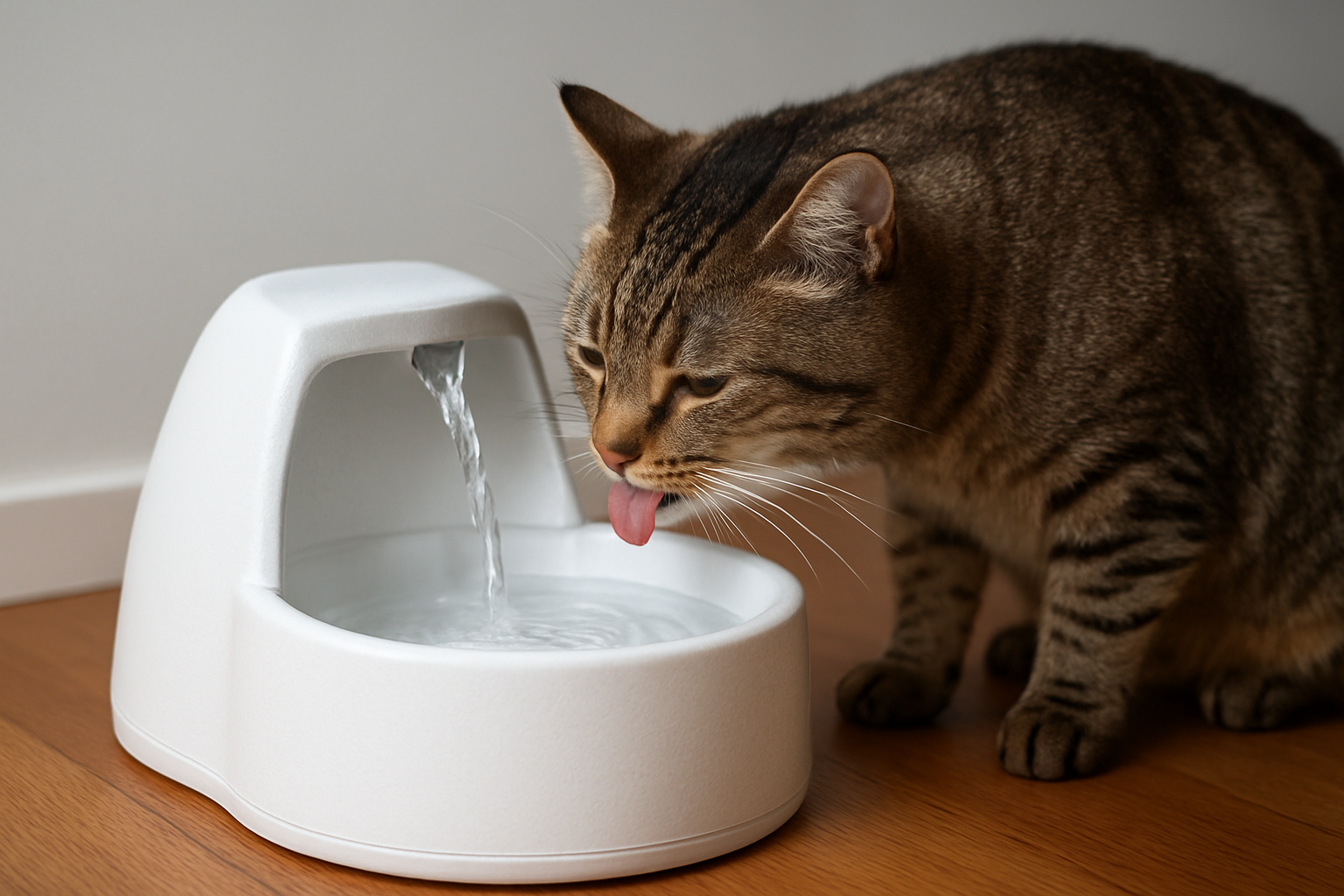
Even with a good routine, hiccups happen. If slime returns quickly, shorten your wash cycle for a week and double-check rinse quality, since soap residue feeds biofilm. If odors persist, verify your carbon filter is fresh and seated correctly, and sanitize once to reset the system. Pump noise often signals low water, a misaligned impeller, or grit in the cavity. Unplug, reset the impeller, and reassemble slowly, listening for a smooth hum that tells you the magnet is spinning freely.
- Algae bloom near a window? Move the fountain out of direct sun, and add a weekly descale if you see green highlights. Avoid aquaculture algaecides unless they are specifically pet-safe and approved for potable water systems.
- Cat ignores the fountain? Shift it away from food bowls to avoid whisker stress, try a gentler flow, and raise the base slightly with a stable stand. Some cats prefer cooler water; an ice cube at refill time can make it enticing.
- Residue after bleach sanitizing? That means more rinses are needed. Continue flushing with fresh water until you cannot smell chlorine. You can also neutralize after a bleach rinse with a final rinse of filtered water.
- Tempted to drop a coin in for “antibacterial” effects? Skip it. Coins can leach metals and coatings. Proper cleaning and fresh filters are safer and more predictable.
- Considering UV [ultraviolet] gadgets? UV can reduce microbes in flowing water, but it is not a substitute for manual cleaning. You still need to remove biofilm from surfaces.
Real-World Wins: Quick Case Notes from Mad Cat Man Readers
When we test fountains and routines for Mad Cat Man, the most satisfying part is hearing how tiny tweaks change daily life. Ella’s Maine Coon started drinking 20 percent more after she moved the fountain to a quiet hallway and switched to a gentle flow. Ben in a hard water region cut pump noise by half after adding a monthly 10-minute vinegar soak and wiping the impeller cavity with a cotton swab. And Priya, a first-time pet parent, overcame recurring slime by buying a small fountain brush kit and setting a Sunday reminder to swap carbon filters every third week.
These are not one-off miracles; they are examples of tidy systems beating willpower. The routine is the product. If you prefer step-by-step help, Mad Cat Man’s how-to tutorials, shopping checklists, and health guides are organized into clear categories, so you always know where to start. You will even find breed-focused insights, like why large-faced breeds appreciate higher spouts, and vet-approved notes on hydration goals for seniors and cats with Feline Lower Urinary Tract Disease [FLUTD (Feline Lower Urinary Tract Disease)]. That is the safety net new owners need when internet advice feels noisy.
Shopping Checklist and Budget-Savvy Advice for Better Fountain Care
Choosing the right fountain is half the battle, especially if you are juggling budget, materials, and filter availability. Start by deciding on capacity; aim for at least 1.5 to 2 liters if you have two cats or travel on weekends. Next, weigh cleaning ease over bells and whistles. Smooth surfaces with fewer nooks make scrubbing fast, and a pump you can open without tools is a huge win. Lastly, consider the total cost of ownership. Filters and replacement pumps are consumables, so availability and price matter as much as the initial tag.
- Look for dishwasher-safe parts for bowls and lids. Hand wash pumps only.
- Prefer stainless steel or lead-free high-fired ceramic for odor resistance and durability.
- Confirm filter availability for at least 12 months and price per change to avoid surprises.
- Choose a quiet, low-watt pump with a removable impeller, and keep spare foam pre-filters on hand.
- Consider an inline plug timer to pulse the fountain off during deep cleaning so you never forget to restart it.
- Use filtered tap water if your hardness exceeds 120 mg/L [milligrams per liter]; distilled water is fine occasionally but not ideal long term for daily drinking because it lacks trace minerals.
If you are feeling overwhelmed, Mad Cat Man’s product reviews span entry-level to premium options and are grouped by material, noise level, and filter type. Our behavior tips, safety guides on plants and humidifiers, and breed comparisons live in Organized categories for easy browsing, so you can cross-check a fountain choice with your cat’s quirks. All advice is practical and experience based, and many pieces are vet-reviewed so you can make confident calls without wading through marketing hype.
At-a-Glance Routine You Can Stick With
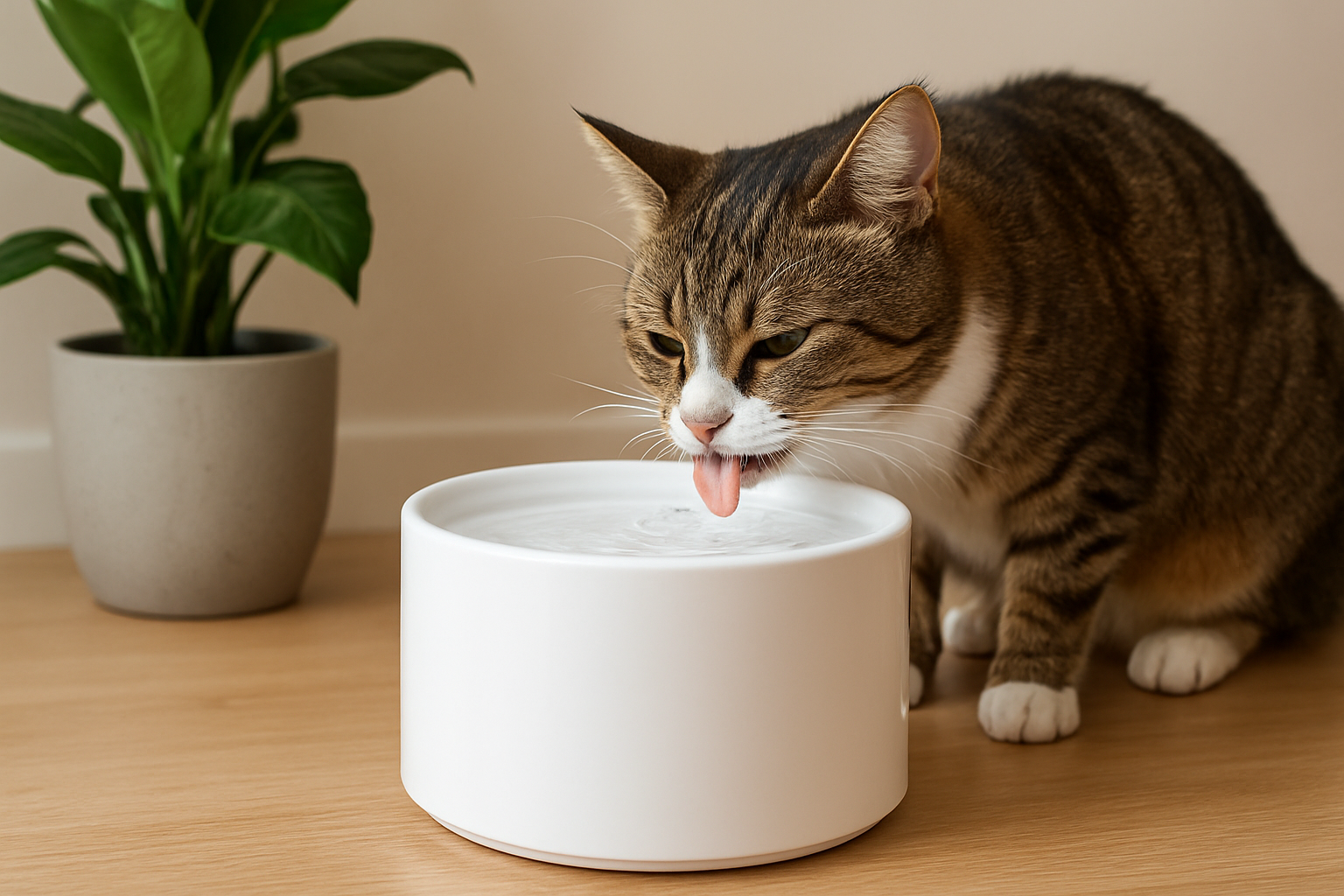
Here is a simple routine that fits in a busy week and keeps water tasting great. It is the same one I coach friends to try when they are new to fountains. Copy it into your notes app, put it on the fridge, or favorite it and set reminders. Consistency is your best maintenance tool, and the moment it feels effortless, you will notice your cat visiting the fountain more often without coaxing.
- Daily: Skim debris, top up water, wipe the rim with a clean paper towel.
- Weekly: Unplug, fully wash all parts, rinse filters, reassemble, and listen for a smooth pump hum.
- Every 2 weeks: Open and clean the pump and impeller cavity; replace carbon if water starts to smell or taste flat.
- Monthly: Descale, then sanitize with food-safe dilution if needed; inspect for scratches or chips and replace worn parts.
- Seasonally: Review intake patterns, add a second station if needed, and refresh your filter stash.
At Mad Cat Man, we know cat owners can feel overwhelmed by gear choices and mixed advice. That is why our guides connect the dots: clear how-tos, honest product recommendations, vet-backed health notes, breed-specific tips, and safety checks, all organized so you can find what you need fast. When you can browse by category and topic instead of guessing keywords, you replace doubt with small, confident actions your cat benefits from every single day.
Frequently Asked, Expert-Backed Answers
Is tap water okay? Most cats do well on municipal tap water that meets safety standards, but taste and odor vary by region. If your cat turns up a nose at chlorine, an activated carbon filter helps. How do you know if the fountain is truly clean? Trust the senses. Clear water with no film, a neutral smell, and a quiet pump are green lights. What about dental health? While fountains do not brush teeth, better hydration supports saliva flow and can help keep the mouth feeling comfortable between cleanings. Pair your routine with vet-advised dental care to round things out.
Finally, what if you are starting from scratch? Begin with the routine above and do not chase perfection. Cats respond to consistency, quiet operation, and fresh-tasting water. Within a week, most owners report fewer trips to refill bowls and more satisfied lap sessions. If you want a deeper dive, Mad Cat Man’s step-by-step tutorials, breed guides, and health checklists sit in neatly labeled categories so you can skim, save, and act without anxiety.
Wrap-up and What Comes Next
Fresh, moving water plus a steady routine equals a cat that actually drinks. Imagine the next 12 months with fewer vet visits for urinary flare-ups, a quieter pump that lasts longer, and a hydration habit that happens automatically in your home. Which small habit will you try first in your water fountain maintenance for cats routine?
Additional Resources
Explore these authoritative resources to dive deeper into water fountain maintenance for cats.
Master Water Fountain Maintenance for Cats with Mad Cat Man
Explore vet-backed guides, reviews, and how-tos in Organized categories for easy browsing that help cat owners and researchers make confident, low-stress decisions on fountains, health, breeds, and safety.