
Table of Contents
- What Is The Feline Hydration Ladder?
- Rung 1: Switch From Dry Kibble to Wet Food
- Rung 2: Add Water or Low-Sodium Broth to Food
- Rung 3: Upgrade Your Cat’s Water Bowl
- Rung 4: Try a Recirculating Water Fountain
- Rung 5: Optimize Bowl Placement Using Feline Psychology
- Rung 6: Set Up Multiple Water Stations Around Your Home
- Rung 7: Try Ice Cubes and Flavored Water
- Rung 8: Make a Vet-Approved Hydration Broth Topper
- Rung 9: Safe Syringe Watering for Sick or Recovering Cats
- Rung 10: Hydration Strategies for Cats With CKD
- Rung 11: Post-Surgical Hydration Protocols
- Rung 12: Subcutaneous Fluids at Home
- How to Tell If Your Cat Is Dehydrated: The Skin Tent Test
- Limitations, Common Pitfalls, and When to Call the Vet
- Frequently Asked Questions
- Helping Your Cat Drink More Water Starts With One Rung
This blog post may contain affiliate links. As an Amazon Associate I earn from qualifying purchases.
Important: This article is for informational purposes only and does not constitute veterinary medical advice. Always consult a licensed veterinarian before making changes to your cat’s diet, health care, or hydration management, especially if your cat has a pre-existing condition, has recently had surgery, or shows signs of illness.
Your cat is staring at a full water bowl — and walking right past it. You’ve refreshed the water twice today. You’ve tried moving the bowl. Nothing. If you’re searching for how to get your cat to drink more water, you’re not alone, and you’re not overreacting. Chronic dehydration is one of the most common and most preventable health problems in domestic cats, quietly contributing to urinary blockages, kidney disease, and digestive issues that can become expensive — and heartbreaking — very fast.
The good news: most cats can be nudged toward better hydration with the right combination of strategies. This guide presents The Feline Hydration Ladder — a 12-step, vet-backed framework that moves from the simplest dietary changes you can make today all the way to medical interventions that require your vet’s involvement. Work your way up the ladder at your cat’s pace, and you’ll know exactly what to try next.

- Cat fountain features 3 different water flow settings for picky drinkers and offers maximum oxygenation for fresher, better tasting cat water; the unique design filters water so that it always stays fresh
- Can hold up to 3L in the cat water bowl and takes up little floor space; dimensions are 9.0 x 8.3 x 7.7 inches
- Includes triple action softening cat water filter and small energy-efficient pump with power cord (if an extension cord is necessary, connection must be watertight and dust proof); made of BPA-free materials
- Ergonomic design matches the Catit Multi Feeder; combine the cat water fountain and cat feeder to create a cat feeding station for a complete dining experience
- If the cat water fountain pump is making excessive noise, be sure to check the water level as it is most likely low

- Large Water Capacity: 168 oz. water capacity is great for pets of all sizes or multiple pets
- Encourages Drinking: Falling stream entices pets to drink more water
- Filtered Water: Includes replaceable carbon water filter that refreshes the water
- Less Refills: Built-in reservoir increases capacity and extends time between refilling your fountain
- Adjustable Stream: The pumps adjustable flow allows you to customize the water flow for your pet

- Circulating drinking water is naturally appealing to your pet. New 96 oz. capacity reduces the number of times you need to refill each day.Our customer service department at tina@pioneerpet.com or by calling 866-317-6278 in the US or 262-376-0768 outside of the USReplacement filter: #3002 (3-pk) and #3014 (4-pk) Pioneer Pet Replacement Filters for Ceramic & Stainless Steel Fountains18/8 stainless steel – stainless steel bowls help protect pets from bacterial infection
- Replaceable charcoal filter for clean and pure, healthy water
- Dishwasher safe, high grade stainless steel construction allows for easy cleaning,60 oz capacity
- Move the spout to the center so that everything is aligned perfectly for smooth flow and lesser noise!
- Our customer service department at orders@pioneerpet.com or by calling 866-317-6278 in the US or 262-376-0768 outside of the US

- 【Food Grade 304 Stainless Steel】: Premium 18/8 stainless steel, BPA free, very safe to use. Premium materials and super polishing technology ensure the cat bowl will not be deformed whether your cat or puppy bites or plays. Similarly, 0.5mm thick,heavy weight, ensure the cat bowl has a longer life cycle.
- 【Non-slip Silicone Base】: Co-construction process, no degumming. Nonslip bottom design ensure that your pet food bowl will not tip over and move easily when your kitten or puppy is eating. Besides, the silicone base can protect your floors, and reduce undesirable noise.
- 【No Whisker Fatigue】: Wide & shallow design (5.98"width,1.22"depth) keeps your lovely cats kid away from anxiety and stress. Perfect depth that keep food from spilling out. What a joying life!
- 【Replacement Bowls for Raised Stand】: Match with many brands or homemade raised stands. Measure the hole's diameter before ordering. Capacity: 13oz,Holds up to 1.65 cups. Fit for dry food, wet food and water. Feeding Supplies for Small Dog Puppies Kitten.
- 【Easy to Clean】: Smooth surface offers extra convenience to wash, which prevents folliculitis on the chin of your beloved cats. Dishwasher safe, stackable that save the space in dishwasher.

- Morandi Colors Aesthetics: Different colors bring different spiritual pleasures, a good mood can help your cats eat better and grow better. We hope that these colorful cat bowls can bring a different atmosphere experience to cat's life.
- Safe & Healthy Material: Each cat food plate is made of premium ceramics fired at high temperatures and food safe glazes, sturdy and durable, cadmium and lead free, non-toxic and clean sanitation, be helpful for pet health.
- Versatile Ceramic Cat Bowl Set: Come in a set of 6, allows you to feed multiple cats at the same time. These cat dishes are perfect for serving dry food, wet food, kibble, soft food, raw food, canned food, water, cat milk and cat treats.
- Wide & Shallow: With a diameter of 5.6-inch and height of 1.4-inch, the shallow cat food dish allows your kitty to put whole face in the bowl and get the food easily, which prevents whisker fatigue and keeps it's face neat.
- Stackable and Pleasant Cleanup: Each cat plate is safe for microwave and dishwasher. The nearly non-stick glazed surface is also easy for hand washing. These cat food dishes stack well for easy storage and space saving.

- URINARY TRACT HEALTH: Royal Canin Urinary Care Cat Food Wet Formula delivers a precisely balanced nutritional formula to help maintain a healthy urine concentration by regulating mineral balance in healthy adult cats
- INSTINCTIVELY PREFERRED: An instinctively preferred nutritional profile that provides carefully selected nutrients for enhanced meal enjoyment
- ENCOURAGES HEALTHY HYDRATION: Royal Canin urinary cat food helps support a healthy urinary tract and encourages hydration in healthy adult cats
- COMPLETE & BALANCED: Delivers complete and balanced nutrition for adult cats in highly palatable thin slices in gravy
- MIXED FEEDING: Perfect complement to Royal Canin Urinary Care dry and wet cat food formulas

- Hill's Prescription Diet c/d Multicare Urinary Care with Chicken Dry Cat Food is specially formulated by Hill’s nutritionists and veterinarians to support a cat’s urinary health
- Clinically tested to lower the recurrence rate of most common urinary signs by 89%
- Dissolves struvite stones in as little as 7 days (Average 27 days) and promotes desirable urine pH levels
- Formulated to promote a urinary environment that reduces the risk of developing struvite and calcium oxalate crystals
- Recommended for lifelong feeding of adult cats
No products found.

- PROMOTE SLOWER HEALTHY FEEDING – Slow feeder bowl help reduce cat’s feeding from seconds to many minutes. Improve digestion and reduce bloat. Makes a small meal last longer. Perfect for cats and kittens.
- LICK MAT SERVE WET AND DRY FOOD TOGETHER – Serve wet, liquid and dry food together without making a mess. Separate foods using the pocket or bump sections to create treats serve meal or to create long-lasting snacks.
- DENTAL HEALTH - LickiMat textured surfaces promote pleasurable licking action, which generates saliva helping protect your pet’s teeth and gums. Scrapes food pieces and odor-causing pieces off your pet’s tongue, promoting healthier teeth, gums and fresher breath.
- PERFECT FOR FUSSY EATERS - Slow down eating without the struggle of navigating mazes and bumps. The low profile design is whisker-friendly to make feeding more enjoyable, even for fussy eaters.
- ENVIRONMENTALLY FRIENDLY AND SAFE: NO SILICONE. PLEASE SUPERVISE YOUR PET. THIS IS NOT A CHEW TOY. Please supervise your pet. If you have a known chewer, please order a LickiMat Tuff. It is very strong and 100% dishwasher safe. Licking, Lick Pad, Snuffle Mat.
Knowing how to get your cat to drink more water starts with the simplest fix — switching to wet food — and scales up through The Feline Hydration Ladder to medical support for cats with kidney disease or post-surgical needs.
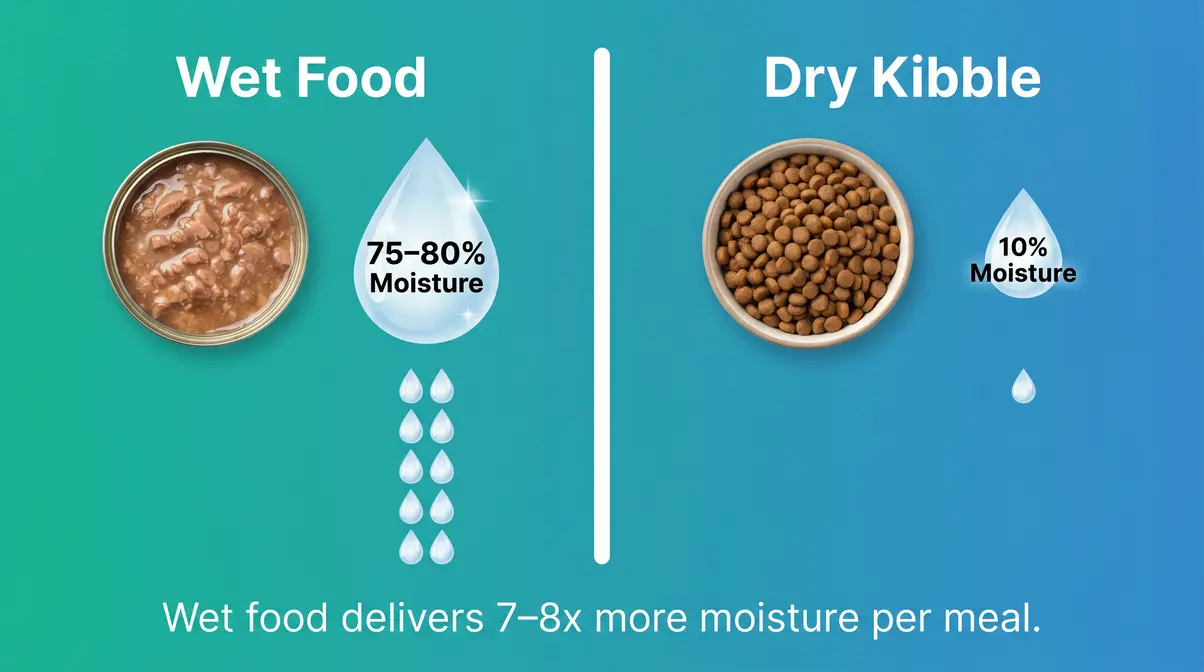
- Start here: Switching from dry kibble to wet food can increase your cat’s daily water intake by up to 70%, because wet food is roughly 75–80% moisture vs. 10% in dry kibble.
- Upgrade the bowl: Wide, shallow stainless steel or ceramic bowls reduce whisker fatigue (discomfort caused by a cat’s sensitive whiskers touching bowl edges) and encourage longer drinking sessions.
- Know the warning signs: If your cat’s skin doesn’t snap back within 1–2 seconds when gently pinched (the “skin tent” test), dehydration may already be moderate — call your vet that day.
- The Feline Hydration Ladder works: Begin at Rung 1 and move up only as needed. Most cats respond before reaching the medical rungs.
What Is The Feline Hydration Ladder?
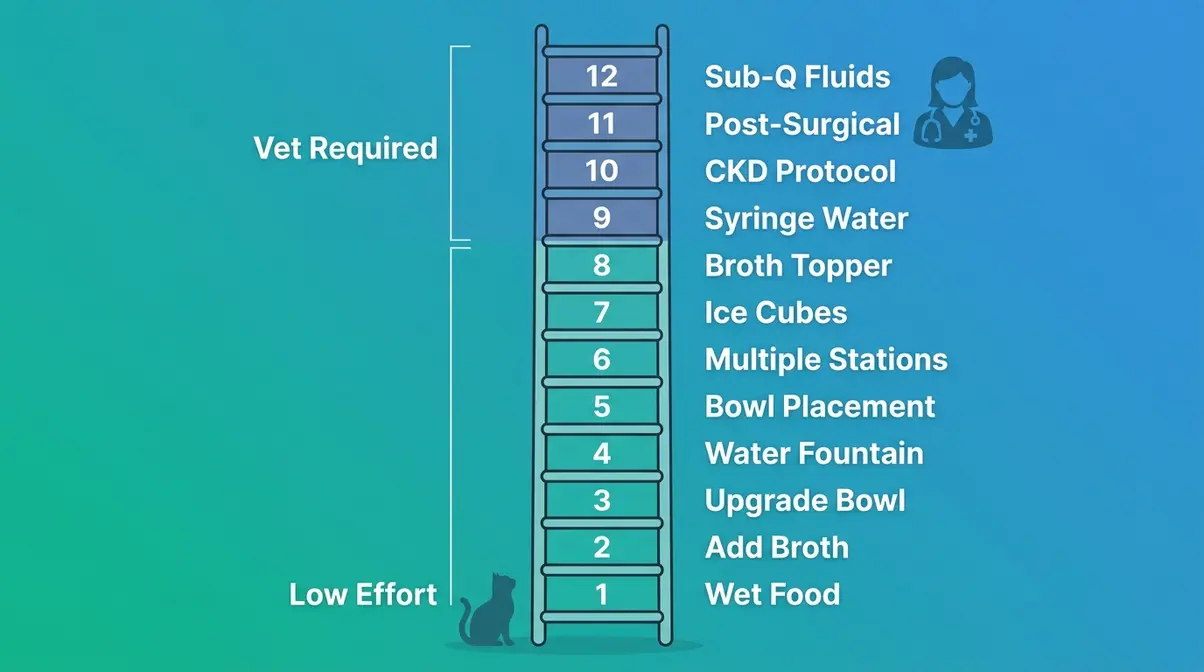
The Feline Hydration Ladder is a prioritized, 12-rung framework for increasing your cat’s water intake — organized from the least invasive dietary changes to the most medically complex interventions. Think of it like a step-by-step troubleshooting guide: start at the bottom, try each rung for 5–7 days, and move up only if your cat still isn’t drinking enough.
Most cats respond to the first three or four rungs. The higher rungs — subcutaneous fluids, prescription diets, and post-surgical hydration protocols — exist for cats with diagnosed conditions like Chronic Kidney Disease (CKD, a progressive loss of kidney function) or Feline Lower Urinary Tract Disease (FLUTD, a group of conditions affecting the bladder and urethra). Knowing the ladder exists means you never feel stuck, and you always know what comes next.
Here’s a quick overview before we walk through each rung in detail:
| Rung | Strategy | Effort Level | Vet Required? |
|---|---|---|---|
| 1 | Switch to wet food | Low | No |
| 2 | Add water or broth to food | Low | No |
| 3 | Upgrade the water bowl | Low | No |
| 4 | Try a water fountain | Low–Medium | No |
| 5 | Optimize bowl placement | Low | No |
| 6 | Offer multiple water stations | Low | No |
| 7 | Use ice cubes or flavored water | Low | No |
| 8 | Try a broth or electrolyte topper | Low–Medium | No |
| 9 | Syringe water (recovery/illness) | Medium | Recommended |
| 10 | Hydration support for CKD cats | High | Yes |
| 11 | Post-surgical hydration protocols | High | Yes |
| 12 | Subcutaneous (sub-Q) fluids at home | High | Yes — mandatory |
“Cats evolved as desert animals,” notes veterinary consensus across multiple feline medicine resources. “Their thirst drive is naturally low, which means the burden of hydration falls on us as owners — not on them.”
Rung 1: Switch From Dry Kibble to Wet Food
Switching to wet food is the single highest-impact change most cat owners can make today. Wet cat food contains approximately 75–80% moisture, while dry kibble contains only around 10% (VCA Animal Hospitals, 2024). A cat eating exclusively dry food must compensate by drinking significantly more water from a bowl — something cats’ instincts don’t naturally prioritize.
Think of dry kibble like eating crackers all day with no water nearby. Your body would need to drink constantly just to stay even. Cats face the same challenge, but their thirst drive is far weaker than ours. Switching even half of your cat’s daily meals to wet food can dramatically close this gap.
Action: Replace one dry-food meal per day with a quality wet food. After 5–7 days, monitor your cat’s water bowl consumption. Many owners report their cats drink noticeably less from the bowl — which is fine, because they’re getting moisture from food.
A gradual transition helps cats adjust. Mix a small amount of wet food into the dry kibble on Day 1, increasing the wet ratio by 25% every two days. Abrupt food changes can cause digestive upset in sensitive cats.
“Wet food is the most underutilized hydration tool available to cat owners — it doesn’t require any behavior change from the cat at all.” — Veterinary consensus, VCA Animal Hospitals
Rung 2: Add Water or Low-Sodium Broth to Food
If your cat refuses wet food entirely — some cats are committed kibble fans — adding water or low-sodium broth directly to their food is the next best step. This technique works equally well with wet food (creating a “soup”) or dry kibble (creating a moistened mash).
Action: Add 1–2 tablespoons of warm water or low-sodium, onion-free chicken broth to your cat’s existing food at mealtime. Warm liquid releases food aromas that many cats find irresistible, which can encourage them to lap up the liquid along with their meal.
A few important safety notes here. Onions and garlic are toxic to cats — always check broth labels carefully and choose broths specifically formulated for pets, or make your own by simmering plain chicken in water. Commercial bone broths marketed for pets are widely available and safe. Never use broths containing onion powder, garlic powder, or high sodium levels (above 100mg per serving).
Tuna juice (the liquid from canned tuna packed in water, not oil) is another popular option that many cats find highly appealing. Use it sparingly — no more than a teaspoon — as a flavoring agent, not a meal replacement. The goal is to make the food bowl more hydrating, not to change the cat’s diet entirely.
Rung 3: Upgrade Your Cat’s Water Bowl
The bowl itself matters more than most owners realize. Many cats avoid drinking because their bowl causes whisker fatigue — a term used in veterinary behavior circles to describe the discomfort and sensory overload cats experience when their sensitive facial whiskers repeatedly touch the sides of a narrow or deep bowl.
Whiskers are packed with nerve endings. A bowl that’s too small or too deep forces a cat to fold their whiskers back while drinking, which is uncomfortable enough to discourage the behavior entirely. Veterinary behaviorists consistently recommend wide, shallow bowls that allow a cat to drink without their whiskers touching the sides.
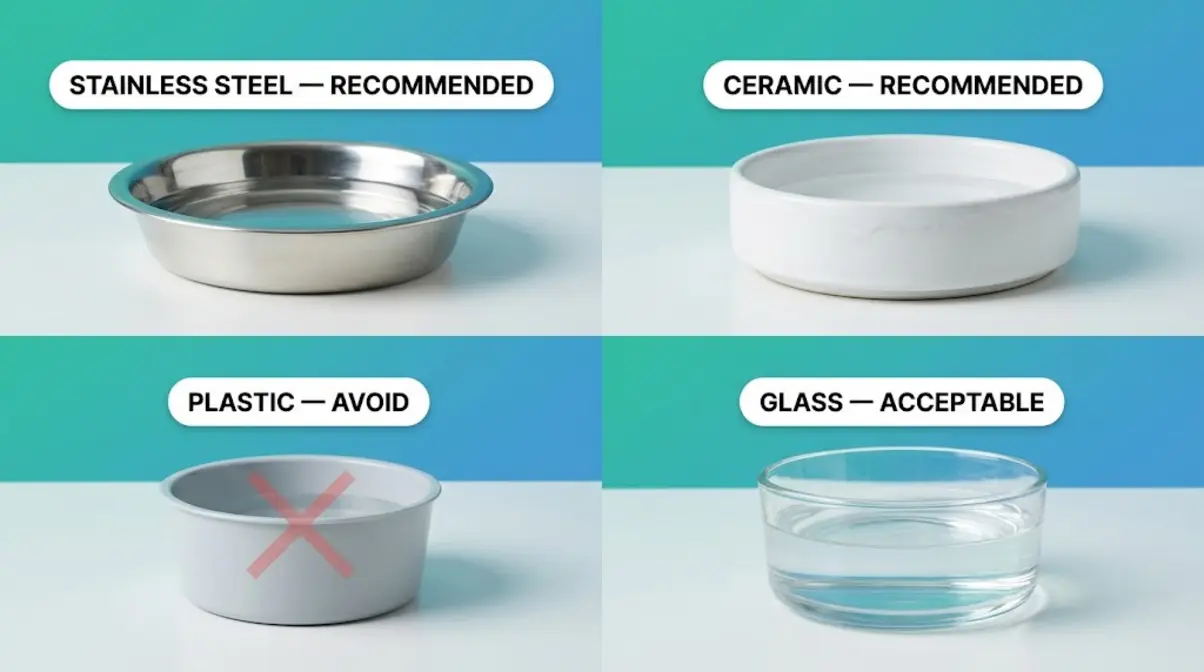
Action: Replace your cat’s current water bowl with a wide, shallow ceramic or stainless steel bowl — at least 5–6 inches in diameter and no more than 2 inches deep. Avoid plastic bowls, which can harbor bacteria in micro-scratches and may cause chin acne in some cats.
| Bowl Material | Pros | Cons |
|---|---|---|
| Stainless Steel | Durable, easy to clean, no bacterial harboring | Some cats avoid metallic taste |
| Ceramic | Heavy (won’t tip), neutral taste, wide options available | Can chip; inspect regularly |
| Plastic | Inexpensive, lightweight | Harbors bacteria; may cause chin acne |
| Glass | Neutral taste, easy to clean | Breakable |
Wash the bowl with soap and hot water daily. Cats can detect stale water and biofilm (a thin layer of bacteria) on bowl surfaces — a dirty bowl is one of the most common reasons cats refuse to drink.
Rung 4: Try a Recirculating Water Fountain
Many cats are instinctively drawn to moving water. In the wild, still water is more likely to be stagnant and contaminated — so cats evolved a preference for running sources. A recirculating water fountain taps directly into this instinct.
Research from veterinary nutrition communities suggests that cats offered a flowing water source drink measurably more per day than those offered a static bowl (iCatCare, 2024). Fountains also keep water oxygenated and cooler, which cats tend to prefer.
Action: Set up a cat water fountain in a quiet, low-traffic area of your home. Run it continuously for the first week so your cat can investigate on their own schedule. Most cats approach a new fountain within 24–72 hours; some take up to two weeks.
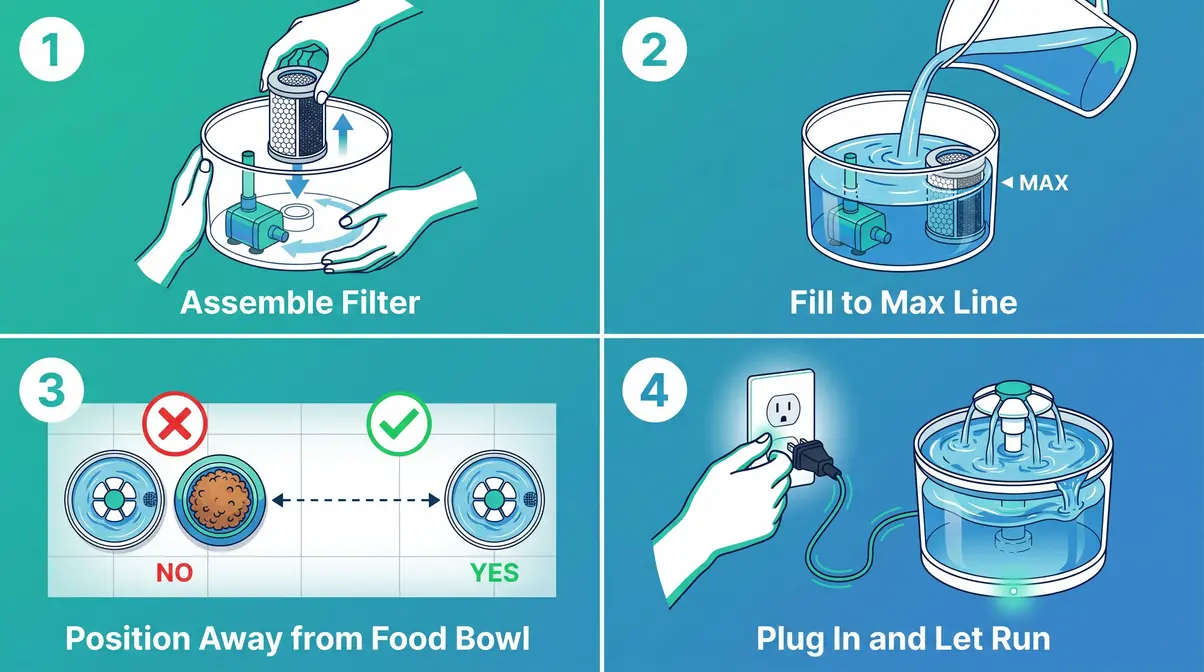
Choose a fountain with a replaceable carbon filter, which removes chlorine taste and odor that some cats find off-putting. Clean the fountain weekly — biofilm builds up in fountain components just as it does in static bowls. The Catit Flower Fountain and PetSafe Drinkwell Platinum are two widely recommended options in the cat owner community, though any BPA-free fountain with a replaceable filter will work well.
Rung 5: Optimize Bowl Placement Using Feline Psychology
Where you place the water bowl is as important as what the bowl looks like. Cats are territorial animals with strong associations between location and safety. Placing a water bowl next to the food bowl — something most owners do — actually works against your cat’s instincts.
In the wild, cats don’t eat and drink in the same location. Prey carcasses can contaminate nearby water sources. Many cats instinctively avoid water that sits too close to their food for this reason. Similarly, placing a water bowl near the litter box triggers avoidance — cats associate that area with waste, not safety.
Action: Move at least one water bowl to a separate room from the food bowl. Place it in a quiet area with good sightlines (cats prefer to drink where they can see approaching threats). Keep it well away from the litter box — at least 6–8 feet minimum.
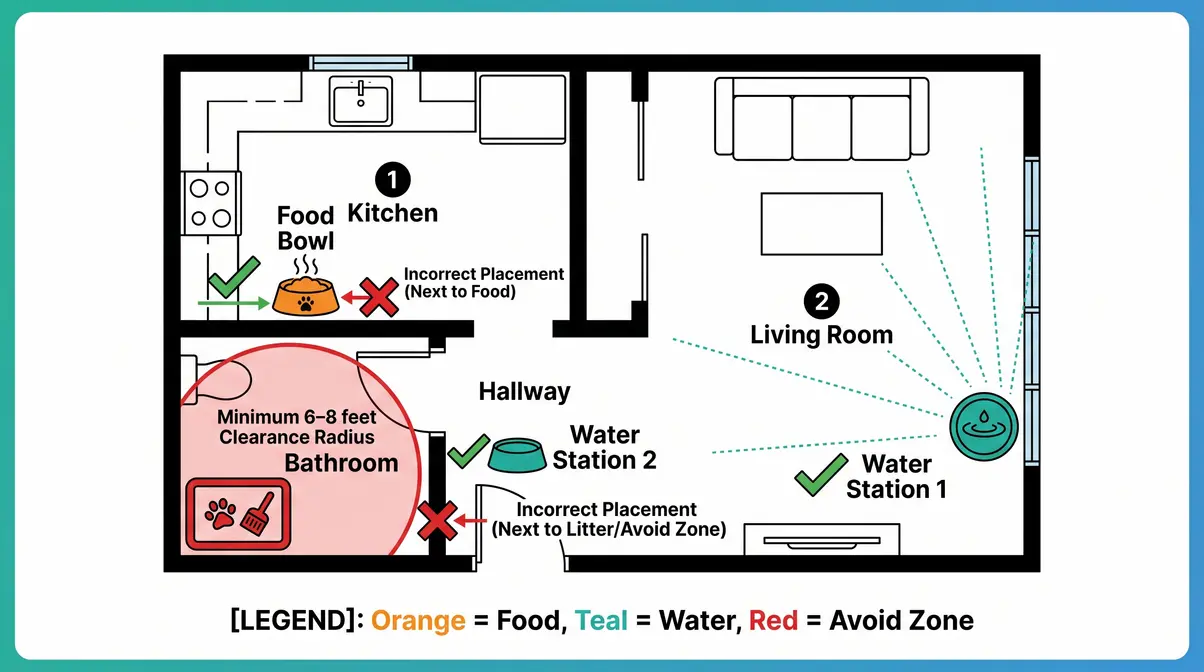
“Cats that drink from separate water stations — away from food and litter — show more consistent daily intake patterns.” — iCatCare Feline Behaviour Resources, 2024
Rung 6: Set Up Multiple Water Stations Around Your Home
One bowl in one location is rarely enough. Cats are creatures of convenience, and if the water bowl requires a trip to another room, many cats — especially older or arthritic cats — simply won’t bother. Offering multiple water stations removes that friction entirely.
Action: Place a minimum of two water bowls in different areas of your home. A good rule of thumb: one bowl per cat, plus one extra. In a multi-cat household, competition and social stress around a single water source can suppress drinking significantly — multiple stations eliminate this dynamic.
Consider placing a bowl on each floor of your home, near your cat’s favorite resting spots, and in any room where your cat spends significant time. Refill and wash each bowl daily. The goal is to make water the path of least resistance at all times.
Common pain points reported by cat owners include discovering that their cat was drinking from a glass of water on the nightstand, the bathroom faucet, or even the toilet. These behaviors signal that your cat is seeking water but finds the designated bowl inconvenient or unappealing. Multiple stations — and a fountain — typically resolve this.
Rung 7: Try Ice Cubes and Flavored Water
Some cats are fascinated by ice cubes and will bat at them, lick them, and lap up the cold meltwater. This works particularly well in warm weather or for cats who seem to prefer cold water. Other cats respond to subtle flavoring that makes water more interesting.
Action: Drop 1–2 plain ice cubes into your cat’s water bowl and observe the reaction. If your cat engages with the ice, this is a low-effort, no-cost strategy worth making a daily habit. For flavored water, add a small amount (half a teaspoon) of tuna juice or low-sodium chicken broth to the water bowl — enough to add scent and flavor without turning it into a meal.
Rotate flavors every few days to maintain novelty. Cats can become habituated to the same flavor quickly, so alternating between plain cold water, tuna-flavored water, and broth-flavored water keeps things interesting.
A note on catnip water: some cats respond positively to water infused with a small pinch of dried catnip. This is safe and can be worth trying for cats who are particularly catnip-responsive. Always use fresh, clean water as the base — never carry over flavored water from the previous day.
Rung 8: Make a Vet-Approved Hydration Broth Topper
A homemade hydration broth topper is one of the most effective intermediate-rung strategies on The Feline Hydration Ladder — and it costs almost nothing to make. The goal is a warm, aromatic liquid that cats want to lap up on its own or poured over their food.
Action: To make a safe cat hydration broth, follow these steps:
- Place 2–3 boneless, skinless chicken thighs (or plain white fish) in a pot.
- Cover with 4 cups of plain water. Add no salt, no onion, no garlic, no seasoning of any kind.
- Simmer on low heat for 45–60 minutes until the meat is fully cooked.
- Remove all meat and bones. Strain the liquid through a fine mesh strainer.
- Let cool completely, then refrigerate. Use within 3 days or freeze in ice cube trays for up to 4 weeks.
- Serve 2–4 tablespoons warm (not hot) over food or in a separate bowl.
This broth is roughly 99% water with trace proteins and fats — it’s a hydration vehicle, not a nutritional supplement. For cats who are resistant to all other strategies, this often breaks through because the aroma is highly compelling. Always consult your vet before using broth regularly for cats on prescription diets or with kidney conditions, as even trace proteins may need to be managed.
Rung 9: Safe Syringe Watering for Sick or Recovering Cats
“Desperately need to get my cat to consume more water after he has had an episode of urinary blockage.”
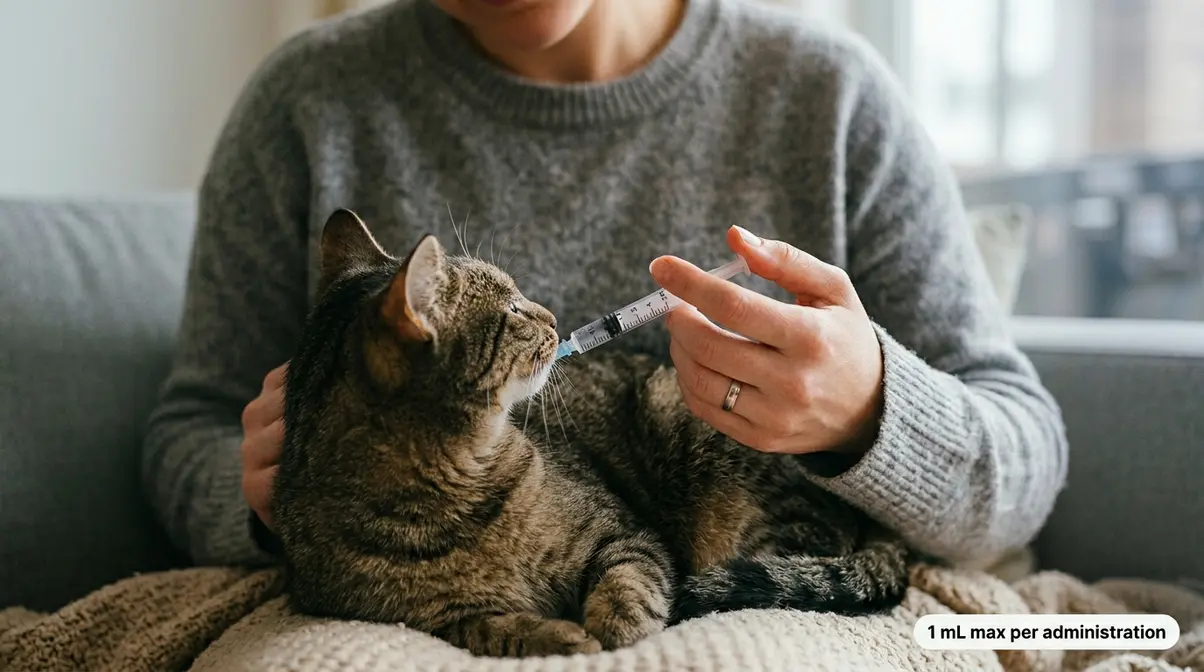
This rung is for cats recovering from illness, surgery, or a urinary blockage who are not drinking voluntarily. Syringe watering — delivering small amounts of water directly into the mouth using a needleless syringe — can be a critical bridge during recovery. However, it carries a serious risk if done incorrectly: aspiration (accidentally inhaling water into the lungs), which can cause aspiration pneumonia, a potentially fatal condition (Ohio State University Veterinary Medical Center, 2024).
Action — Safe Syringe Watering Protocol:
- Use a needleless oral syringe (1–3 mL capacity). Ask your vet for one — most clinics provide them.
- Draw up no more than 1 mL of room-temperature water per administration.
- Hold your cat gently but securely in your lap, facing away from you.
- Insert the syringe tip into the corner of the mouth (the gap between the cheek and the back teeth) — never aim toward the throat.
- Depress the plunger very slowly over 5–10 seconds. Allow the cat to swallow between each small release.
- Watch for signs of distress: coughing, gurgling sounds, pawing at the mouth. Stop immediately if any occur.
- Administer no more than 5–10 mL per session, with at least 20 minutes between sessions.
- Never force water into a cat that is unconscious, unresponsive, or actively vomiting.
Syringe watering should always be performed under veterinary guidance. Call your vet before starting this technique, especially post-surgery. “The aspiration risk is real and serious,” notes veterinary guidance from OSU’s Veterinary Medical Center. “When in doubt, bring the cat in for IV or subcutaneous fluids rather than attempting syringe feeding at home.”
Rung 10: Hydration Strategies for Cats With CKD
Chronic Kidney Disease (CKD) — a progressive, irreversible loss of kidney function — affects an estimated 30–40% of cats over 10 years old (International Society of Feline Medicine, 2023). It is one of the leading causes of death in senior cats, and inadequate water intake is both a symptom and an accelerant of the disease. For cats with CKD, hydration isn’t optional — it’s a core part of disease management.
CKD kidneys are less efficient at concentrating urine, which means CKD cats excrete far more water than healthy cats and must compensate by drinking significantly more. Many don’t, leading to a dangerous cycle of dehydration, toxin buildup, and accelerating kidney decline. “Maintaining adequate hydration in CKD cats can meaningfully slow disease progression and improve quality of life,” notes veterinary consensus across feline nephrology resources (iCatCare, 2024).
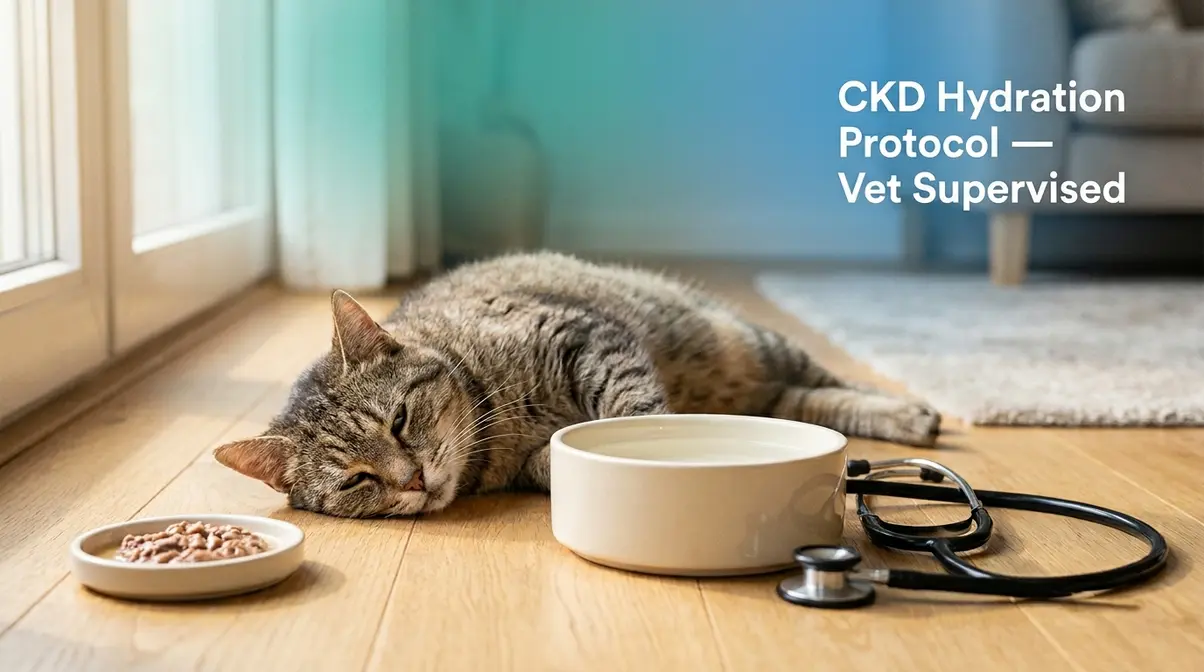
Action — CKD Hydration Protocol (under vet supervision):
- Transition fully to wet food or a prescription kidney diet (e.g., Hill’s k/d or Royal Canin Renal) — your vet will specify.
- Add 1–2 tablespoons of extra water to every wet food meal.
- Place water stations in every room your cat frequents — CKD cats often feel too tired to travel far.
- Monitor daily water intake by measuring what goes into the bowl and what remains after 24 hours.
- Weigh your cat weekly — weight loss in a CKD cat often signals worsening dehydration before other symptoms appear.
- Perform the skin tent test (described in the Limitations section) every 2–3 days.
- Attend all scheduled vet rechecks — CKD management requires blood and urine monitoring every 3–6 months.
This rung requires active veterinary partnership. CKD is a managed condition, not a DIY fix. Your vet may recommend subcutaneous (sub-Q) fluids at home — which brings us to Rung 12.
“For CKD cats, every milliliter of additional daily water intake matters. The difference between adequate and inadequate hydration can be measured in months of quality life.” — Veterinary consensus, ISFM Feline CKD Guidelines, 2023
Rung 11: Post-Surgical Hydration Protocols
Cats recovering from surgery — whether a routine spay/neuter or a more complex procedure — are particularly vulnerable to dehydration. Anesthesia suppresses the thirst drive. Post-operative pain and nausea make eating and drinking unappealing. And many cats in recovery hide, which means owners may not notice they haven’t been to the water bowl in 12+ hours.
Post-surgical dehydration can slow wound healing, increase infection risk, and, in cats who’ve had urinary surgery, increase the risk of re-blockage. Across veterinary post-operative care guidelines, the consistent guidance is to monitor hydration closely for the first 72 hours after any surgical procedure (VCA Animal Hospitals, 2024).
Action — Post-Surgical Hydration Checklist:
- Ask your vet at discharge: “What are the hydration benchmarks for the next 72 hours?”
- Offer water in a flat dish near your cat’s recovery space — no need to travel.
- Warm wet food to body temperature (around 100°F / 38°C) to make it more appealing when appetite is suppressed.
- Log water intake every 6 hours for the first 24 hours. If your cat hasn’t drunk at all in 8 hours, call your vet.
- Watch for vomiting — a cat who vomits after surgery may need IV fluids rather than oral hydration.
- Do not attempt syringe watering post-surgery without explicit vet instruction — aspiration risk is elevated in sedated or nauseated cats.
Always follow your vet’s specific post-operative instructions. This checklist is a general framework only, not a substitute for professional discharge guidance.
Rung 12: Subcutaneous Fluids at Home
Subcutaneous (sub-Q) fluid administration — injecting sterile saline solution under the skin at the scruff of the neck — is a medical technique that allows owners of chronically dehydrated cats (most often CKD patients) to provide significant hydration at home, typically 100–150 mL per session. The fluid absorbs gradually into the bloodstream over several hours, essentially functioning as a home IV drip.
This is the top rung of The Feline Hydration Ladder. It is effective, widely used in feline CKD management, and — once trained — manageable for most owners. However, it must only be performed after in-person training from your veterinarian. Incorrect technique can cause fluid accumulation in the wrong tissue, introduce infection, or — if the wrong fluid type or volume is used — create dangerous electrolyte imbalances (ISFM, 2023).
Action: If your vet recommends sub-Q fluids, ask for:
- A hands-on demonstration at the clinic before attempting at home.
- Written instructions specifying fluid type, volume, needle gauge, and frequency.
- A follow-up appointment within 1–2 weeks to assess technique and adjust volume.
- Clear guidance on signs that indicate the technique isn’t working or needs adjustment.
Sub-Q fluids are not appropriate for all cats. Cats with heart disease, certain types of CKD, or fluid-retention conditions may be harmed by additional fluids. Only your vet can determine if this is appropriate for your cat.
How to Tell If Your Cat Is Dehydrated: The Skin Tent Test
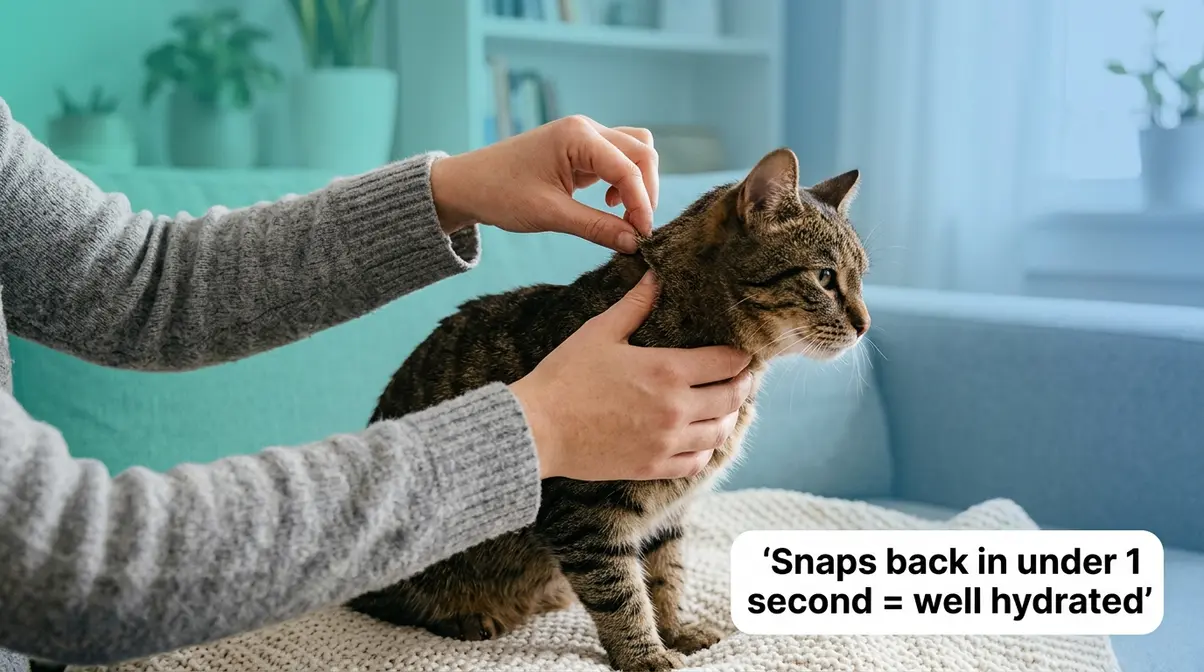
Before you can solve a hydration problem, you need to know how serious it is. The skin tent test (also called the skin turgor test) is a simple, vet-recommended assessment you can perform at home in under 30 seconds. Skin turgor refers to the skin’s elasticity and its ability to return to normal position after being gently stretched — a reliable indicator of hydration status.
How to Perform the Skin Tent Test:
- Gently grasp a small fold of skin at the scruff of the neck (the loose skin between the shoulder blades).
- Lift it gently upward about half an inch, then release.
- Watch what happens:
- Snaps back immediately (under 1 second): Well-hydrated. Continue with Rungs 1–8.
- Returns slowly (1–2 seconds): Mild dehydration. Move to Rungs 3–6 urgently. Monitor closely.
- Stays “tented” or returns very slowly (2+ seconds): Moderate-to-severe dehydration. Call your vet today.
- Perform this test every few days when managing hydration concerns, and at every vet visit.
Additional signs of dehydration to watch for include: sunken or dull eyes, dry or sticky gums, lethargy, decreased skin elasticity, and reduced or concentrated (dark yellow) urine output. Any combination of these signs alongside a positive skin tent test warrants a same-day vet call. Dehydration at moderate-to-severe levels is a medical emergency in cats (PetMD, 2024).
Quotable: “Moderate dehydration in cats — detectable by the skin tent test — can progress to kidney injury within 24–48 hours without intervention.” — PetMD Veterinary Review, 2024
Limitations, Common Pitfalls, and When to Call the Vet
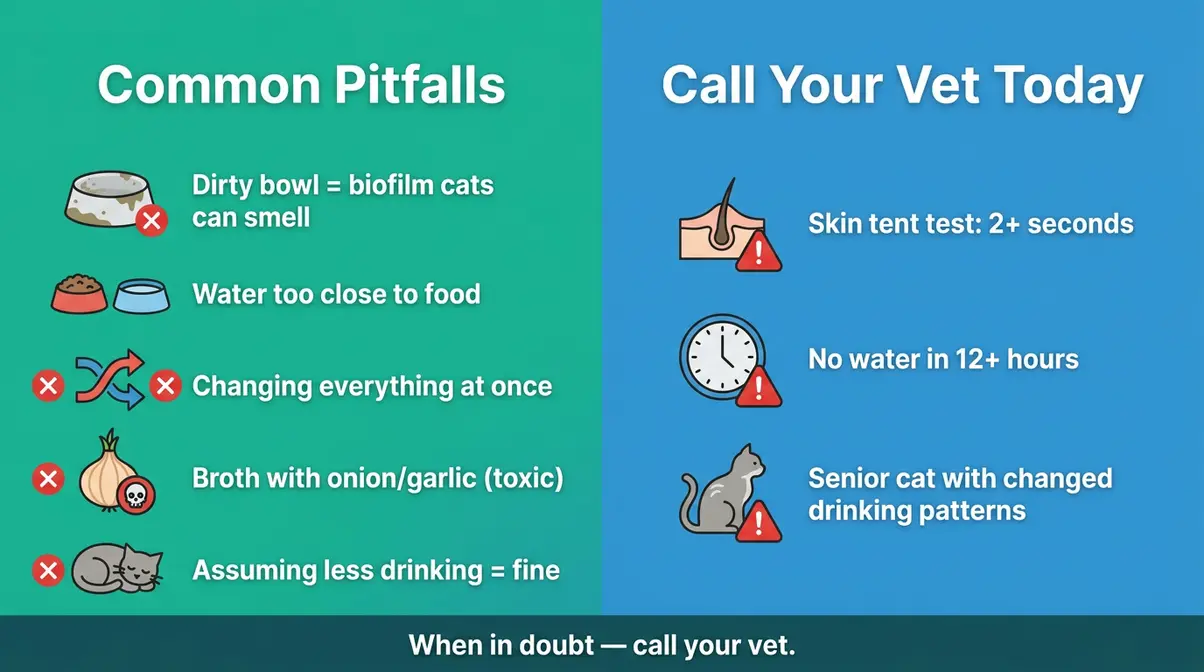
Common Pitfalls to Avoid
Even well-intentioned owners make these mistakes. Recognizing them early can save you weeks of frustration — and protect your cat’s health.
Pitfall 1: Changing everything at once. Introducing a new bowl, a fountain, and a food change simultaneously makes it impossible to know what’s working. Introduce one change every 5–7 days and track the results. Cats are creatures of habit, and sudden environmental changes can cause stress that suppresses drinking further.
Pitfall 2: Using a dirty bowl and calling the water “fresh.” Rinsing a bowl and refilling it is not the same as washing it. Cats can smell biofilm on bowl surfaces that humans cannot detect. Wash all bowls daily with soap and hot water. Dishwasher-safe stainless steel or ceramic bowls make this much easier.
Pitfall 3: Placing water too close to food or litter. As covered in Rung 5, this is one of the most common and most easily corrected mistakes. Repositioning the bowl is free and often produces results within 24 hours.
Pitfall 4: Assuming less drinking = less need. A cat who stops drinking may not be “managing fine” — they may be in pain, nauseous, or experiencing the early stages of kidney disease. Reduced water intake combined with any behavioral change (hiding, reduced appetite, lethargy) is a vet-visit trigger, not a wait-and-see situation.
Pitfall 5: Using flavored broths with onion or garlic. Both are toxic to cats at any dose. Even small amounts of onion powder or garlic powder can cause Heinz body anemia. Always read broth ingredient labels carefully.
When to Choose an Alternative Approach
The Feline Hydration Ladder is designed for generally healthy cats or cats with known, managed conditions. It is not the right approach in these scenarios:
- Your cat has stopped eating AND drinking for 24+ hours: This is an emergency. Skip the ladder entirely and go to your vet or emergency animal hospital now. Hepatic lipidosis (fatty liver disease) can develop in cats who stop eating for as little as 48 hours.
- Your cat is vomiting or has diarrhea alongside reduced drinking: Oral hydration strategies will not compensate for fluid losses from vomiting or diarrhea. Your cat likely needs IV fluids — a vet-only intervention.
- Your cat has been diagnosed with heart disease: Additional fluid intake — including wet food increases and broth toppers — should be approved by your vet first. Fluid overload is a risk in cardiac cats.
When to Seek Professional Help
- Call your vet today if:
- The skin tent test shows slow return (2+ seconds)
- Your cat hasn’t drunk any visible water in 12+ hours
- Your cat has had a previous urinary blockage and is straining to urinate
- You notice any combination of lethargy, hiding, reduced appetite, and reduced urination
- Your cat is over 10 years old and you’ve noticed any change in drinking patterns — either significantly more or significantly less
Significantly increased water intake in a senior cat can be an early sign of CKD, hyperthyroidism, or diabetes — all conditions that require diagnosis and management, not just more water bowls.
Frequently Asked Questions
How much water should a cat drink per day?
A healthy adult cat needs approximately 50–60 mL of water per kilogram of body weight per day, from all sources combined — food and water bowl included (VCA Animal Hospitals, 2024). A 4 kg (9 lb) cat therefore needs roughly 200–240 mL daily. Cats eating wet food get most of this from their meals, while dry-fed cats must drink significantly more from their bowl to compensate. Monitoring your cat’s bowl level over 24 hours is the most practical way to track intake at home. If your cat consistently falls short, begin at Rung 1 of The Feline Hydration Ladder.
Why won’t my cat drink water even when it’s fresh?
Cats often refuse water due to bowl type, placement, or proximity to food — not because they dislike water itself. Whisker fatigue from narrow bowls, the smell of plastic, water placed next to the litter box, or water sitting too close to the food bowl are the most common culprits (iCatCare, 2024). Try a wide, shallow ceramic or stainless steel bowl, moved to a separate room from food. A recirculating water fountain resolves avoidance in many cats by providing moving water, which cats instinctively trust more than still water. If your cat avoids all water sources for 12+ hours, consult your vet — pain or nausea may be the underlying cause.
Is it safe to give a cat water with a syringe?
Syringe watering is safe when done correctly, but carries an aspiration risk if rushed or done with too much volume. Aspiration — inhaling water into the lungs — can cause aspiration pneumonia, a serious and potentially fatal condition (Ohio State University Veterinary Medical Center, 2024). Use a 1–3 mL syringe, insert it at the corner of the mouth (never aimed at the throat), and depress no more than 1 mL at a time over 5–10 seconds. Never syringe-water an unconscious, vomiting, or unresponsive cat. Always consult your vet before beginning this technique, especially for post-surgical cats.
Can cats get enough water from wet food alone?
Many cats on an exclusively wet food diet meet their daily water needs without drinking from a bowl at all. Wet food at 75–80% moisture content delivers substantially more water per meal than dry kibble’s 10% (VCA Animal Hospitals, 2024). A 4 kg cat eating 200g of wet food per day receives roughly 150–160 mL of water from food alone — close to their full daily requirement. However, cats with CKD, FLUTD, or urinary blockage history often need additional water intake beyond what wet food provides. Your vet can calculate the right target for your specific cat’s health status.
What are the signs my cat is dangerously dehydrated?
Dangerous dehydration in cats shows as skin that stays “tented” after the pinch test, sunken eyes, dry or tacky gums, and extreme lethargy. The skin tent test — gently pinching and releasing the scruff skin — is your first-line assessment tool: skin that takes 2+ seconds to return indicates moderate-to-severe dehydration requiring same-day veterinary care (PetMD, 2024). Additional red flags include dark or concentrated urine, no urination in 12+ hours, and vomiting alongside reduced drinking. Moderate dehydration can progress to acute kidney injury within 24–48 hours in cats. Do not wait to see if things improve — call your vet.
Helping Your Cat Drink More Water Starts With One Rung
For cat owners worried about their cat’s hydration, The Feline Hydration Ladder offers a clear, prioritized path forward. The evidence is consistent: switching to wet food increases daily water intake more than any other single change. Upgrading the bowl and placement removes behavioral barriers. Fountains and multiple water stations make hydration effortless. And for cats with CKD or post-surgical needs, veterinary-guided interventions — from prescription diets to subcutaneous fluids — can meaningfully extend quality of life. Getting your cat to drink more water is one of the most impactful things you can do for their long-term health.
The Feline Hydration Ladder works because it respects both cat psychology and your capacity as an owner. You don’t need to implement all 12 rungs. Most cats respond to Rungs 1–4. The ladder simply ensures you always know what comes next — and that you never feel stuck when the obvious tricks haven’t worked.
Start today: pick up a wide, shallow stainless steel bowl, move it away from the food dish, and swap one dry-food meal for wet food. Give it a week. If your cat still isn’t drinking enough, move to the next rung. And if the skin tent test shows any sign of moderate dehydration, don’t climb the ladder — call your vet directly. Your cat is counting on you to be their hydration advocate, and now you have the framework to do it well.
For more on feline health and nutrition, explore our related guides on cat nutrition fundamentals and understanding kidney disease in cats.