Essential Supplies for New Kitten Checklist: Vet-Informed Picks
Unlock actionable ideas for Essential Supplies for New Kitten Checklist: Vet-Approved Picks, Budget & Luxury Gear for Your First 30 Days including common…

Essential Supplies for New Kitten Checklist: Vet-Informed Picks
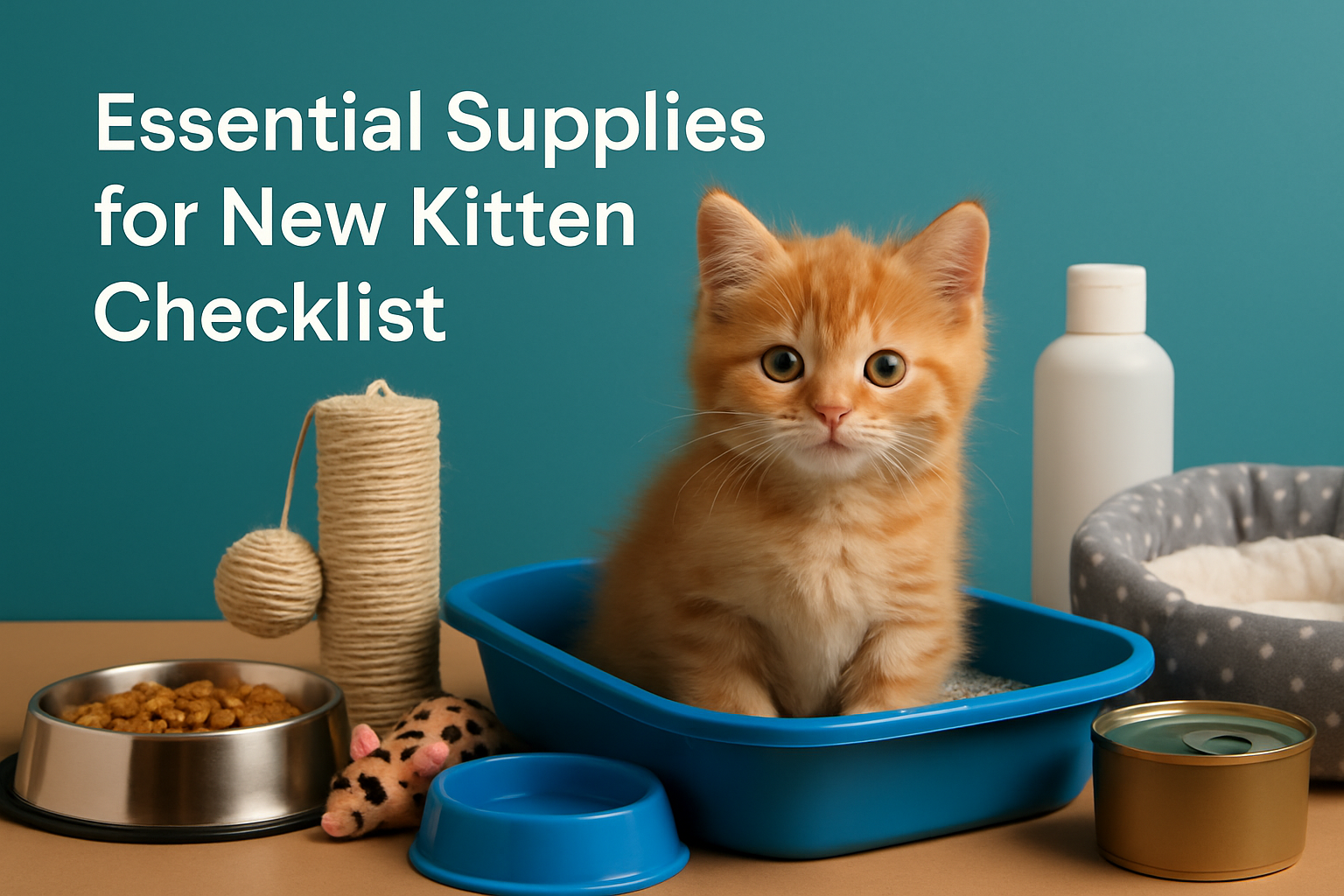
Bringing home a tiny tiger soon? This essential supplies for new kitten checklist is your friendly, vet-informed guide to a calm first month with your new fluff. Think of it like your starter kit and playbook in one: what to buy today, what to set up before pickup, and which upgrades genuinely matter. At Mad Cat Man, our team of experienced owners and product reviewers tested gear across budgets and lifestyles, then pressure-tested it with real kittens and real messes. The result is a clear, confidence-boosting plan, whether you are a first-time pet parent or you are adding a sidekick to your seasoned clowder.
I still remember my first foster kitten crawling into my hoodie pocket, purring like a tiny motor. It was adorable—until 2 a.m. zoomies and a litter box rebellion hit the same night. The fix was not fancy; it was the right basics in the right places. A low-sided litter tray, unscented litter, a tall scratching post, and a wand toy transformed chaos into cuddles within days. Below, you will find step-by-step checklists, practical timelines, and side-by-side comparisons to take the guesswork out of shopping. And if you want deeper dives, Mad Cat Man organizes product reviews, behavior tips, and health guides into easy-to-scan categories so you can move from overwhelmed to in control fast.
Essential Supplies for New Kitten Checklist: Your First 48 Hours
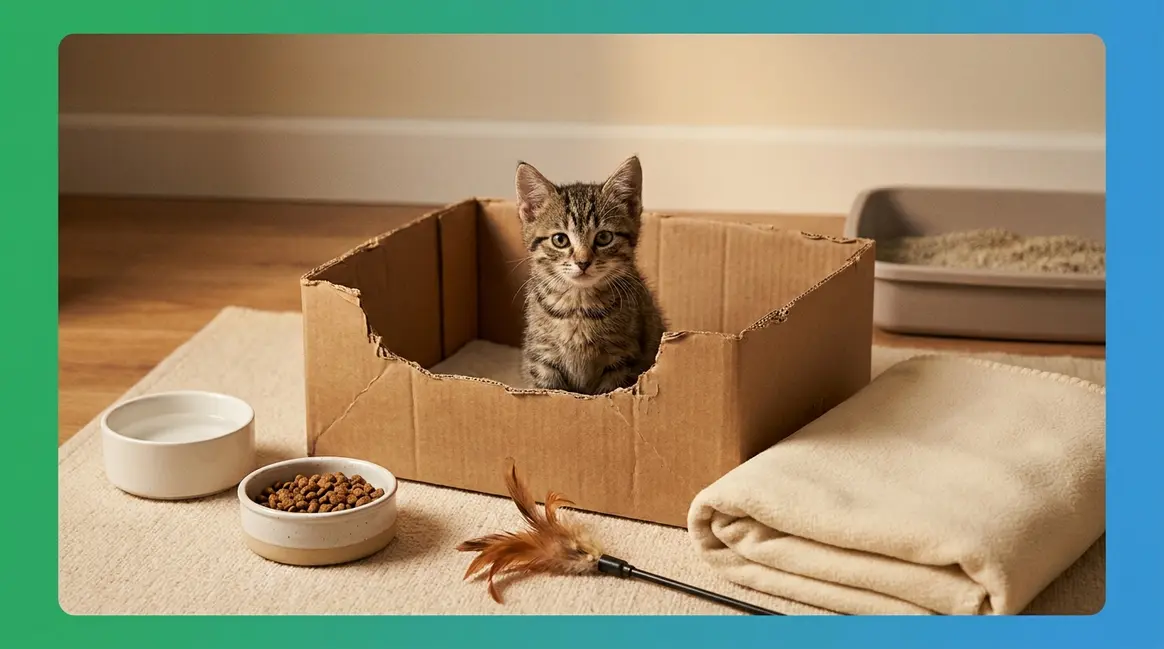
The first two days set the tone. Your goal is to reduce overwhelm, provide predictable resources, and let your kitten choose when to be brave. Start by creating a quiet “home base” room and stocking it with essentials. Most rescues agree that one calm room for the first 48 hours reduces stress, which lowers the odds of litter accidents and hiding. Set up separate stations for potty, food, water, sleep, and play, and keep pathways open. A hard-sided, top-opening carrier also doubles as a safe den. Add a simple routine—scoop after meals, two play sessions, and a quick health check—and you will be golden.
- Prepare a safe room: closeable door, hidey spot, and soft lighting.
- Litter area: low-sided box, unscented clumping or non-clumping litter, scoop, mat.
- Feeding station: kitten-formulated wet and dry food, shallow ceramic or stainless bowl, fresh water; consider a small fountain.
- Sleep and comfort: washable bed or fleece blanket, warm snuggle toy optional.
- Scratching options: one sturdy vertical post and one horizontal board.
- Toys: wand toy, small crinkle balls, a kicker plush for bunny kicks.
- Carrier: hard-sided, top opening, seat-belt loops for safe travel.
- Collar and ID (identification): breakaway collar with tag and your phone number.
- Cleanup: enzyme cleaner for accidents, paper towels, unscented baby wipes for paws.
- Safety: cord protectors, cabinet locks, window screens checked, plants verified cat-safe.
| Item | Priority | Budget Pick | Luxury Pick | Typical Cost | Vet-Informed Tip |
|---|---|---|---|---|---|
| Litter Box | Must-have | Open, low-sided plastic tray | High-sided anti-scatter or top-entry for later | $10–$40 | Start with low sides for tiny legs to prevent avoidance. |
| Litter | Must-have | Unscented clumping or paper pellet | Low-dust, ultra-fine clumping | $12–$30 | Unscented is accepted more often in studies and real homes. |
| Food Bowls | Must-have | Shallow stainless dish | Elevated ceramic set | $8–$35 | Shallow bowls help whisker comfort and reduce mess. |
| Carrier | Must-have | Hard-sided front/top door | Hard-sided with quick-release top | $25–$90 | Top access reduces stress at veterinary visits. |
| Scratching Post | Must-have | Medium sisal post | Tall, heavy base post or tree | $15–$120 | Sisal fabric outlasts rope and catches claws better. |
| Fountain | Nice-to-have | Small plastic fountain | Stainless, dishwasher-safe fountain | $20–$85 | Moving water may boost drinking and reduce urinary risk. |
Food, Bowls, and Feeding Routine: Fuel Tiny Tummies Right
Kittens grow at superhero speed, so calories and nutrients matter. Look for food labeled to meet AAFCO (Association of American Feed Control Officials) standards for growth or all life stages. Most kittens do best with a mix of wet and dry: wet food offers hydration and aroma that tempts picky eaters, while dry food helps with grazing and training. Stainless or ceramic bowls are easiest to clean and keep odors neutral. A simple rhythm works well: three to four small meals daily for the first months, plus free access to fresh water. If your kitten is nervous, hand-feeding a few bites builds trust fast.
Watch This Helpful Video
To help you better understand essential supplies for new kitten checklist, we’ve included this informative video from Jackson Galaxy. It provides valuable insights and visual demonstrations that complement the written content.
- Choose kitten-formulated food—real meat first, balanced minerals, no heavy perfumes.
- Set a feeding spot away from litter by at least a few steps to reduce stress.
- Offer small, frequent meals; adjust portions by body condition and energy.
- Rinse bowls after every meal and deep-wash daily to keep noses happy.
- Consider a water fountain if your kitten seems water-shy.
| Approach | Good For | Pros | Watch-outs | Buying Tip |
|---|---|---|---|---|
| Wet Food Only | Hydration, picky eaters | High moisture, aromatic, easy to portion | Costs more, refrigerate leftovers | Try multi-pack flavors before committing to cases. |
| Dry Food Only | Grazers, busy schedules | Convenient, less waste | Lower moisture, watch weight | Use puzzle feeders for enrichment and portion control. |
| Mixed Feeding | Most households | Balances hydration and convenience | Track total calories across both | Pair wet meals with measured dry snacks. |
Two bonus notes from the trenches: first, slow transitions beat upset tummies. Switch foods over five to seven days by mixing small amounts and increasing gradually. Second, bowls matter more than people think. Shallow designs reduce whisker stress, and elevated sets can help flat-faced breeds eat more comfortably. If you are raising a Maine Coon or another large-boned kitten, plan ahead for a bigger stand and heavier bowls—they outgrow tiny dishes fast. Mad Cat Man’s food and bowl reviews flag these breed-specific quirks and call out which picks actually survive daily use.
Litter, Boxes, and Odor Control: Set Up for Zero-Drama Potty Breaks
Litter success is mostly about access, texture, and cleanliness. Use the number-of-boxes rule: number of litter boxes equals number of cats plus one (n + 1). For baby kittens, start with a low-sided open tray so climbing in is effortless. Many shelters recommend unscented clumping clay or soft paper pellets because the texture feels familiar and less “weird” under tiny paws. Scoop at least twice daily and do a full refresh weekly; it is not glamorous, but it is the fastest way to keep noses—and roommates—happy. Studies suggest cats prefer unscented litters and quiet, low-traffic spots.
- Location: quiet corner away from food and water, clear path with no obstacles.
- Box style: low-sided to start; consider high-sided or top-entry later for scatter control.
- Litter type: unscented clumping for easy scooping; paper pellets for very young kittens.
- Cleaning: scoop after meals and play, deep clean weekly with mild dish soap.
- Accessories: litter mat, metal scoop, covered trash can with liner, enzyme cleaner.
| Litter Type | Pros | Best For | Avoid If | Budget Note |
|---|---|---|---|---|
| Unscented Clumping Clay | Easy scooping, widely accepted | General use and training | Dust sensitivity present | Bulk boxes save over time. |
| Paper Pellets | Low dust, gentle texture | Very young kittens | Odor control weaker | Pair with more frequent changes. |
| Wood Pellets | Natural scent, absorbent | Budget-friendly homes | Some cats dislike the texture | Test with a small bag first. |
| Silica Gel Crystals | Low tracking, strong odor control | Apartment living | Some cats dislike crunch | Rotate to maintain acceptance. |
If accidents happen, skip ammonia-based cleaners, which smell litter-like to cats. Use an enzymatic cleaner to break down odor at the source—your nose may not detect it, but theirs absolutely will. And one more pro move: place a small scratching board near the litter path. Many kittens scratch after eliminating, and giving them a legal target protects door frames. Mad Cat Man’s litter gear guides include side-by-side comparisons of scoops, mats, and odor solutions with real-world test notes, so you can save money and time.
Sleep, Scratching, and Play: Build a Kitten-Safe Home Base
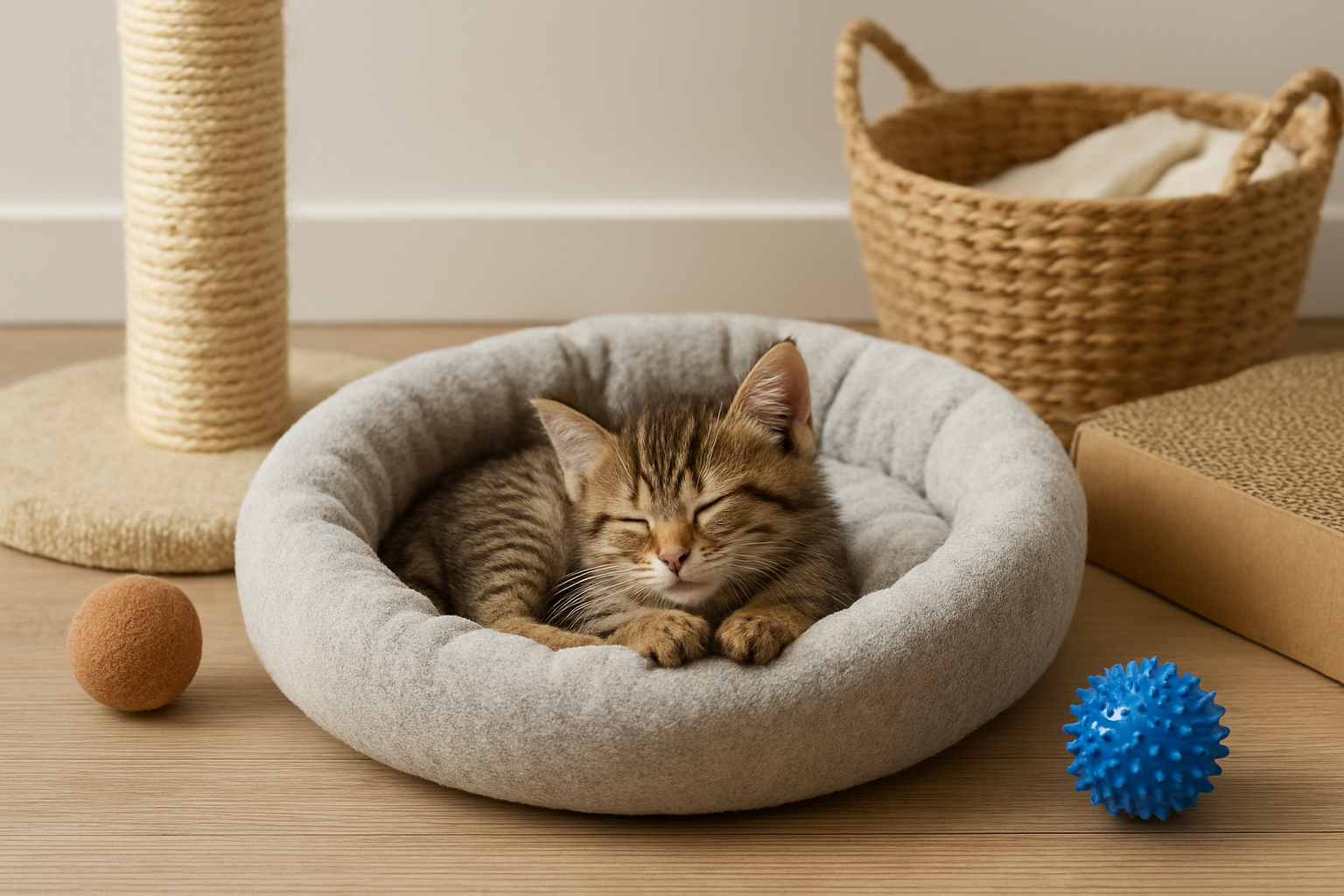
Sleep and play are two sides of the same coin. A predictable play–eat–groom–sleep cycle helps kittens settle and reduces 3 a.m. chaos. Provide at least one cozy bed in their “home base” room, plus a den-like carrier or cube for hiding. For scratching, think variety: vertical posts for full-body stretches and horizontal boards for texture change. Many behaviorists note that providing multiple scratching angles near social spots dramatically reduces furniture damage. Play should be short and frequent—two or three 10-minute wand sessions are perfect for tiny attention spans.
- Beds and dens: washable bed, blanket, and a hidey cube or open carrier.
- Scratching: one tall sisal fabric post, one horizontal cardboard or wood board.
- Toys: wand with feather or ribbon, crinkle balls, kicker plush, puzzle feeder for dry treats.
- Safety: store strings and wands out of reach between sessions to avoid accidental swallowing.
- Breed note: big-boned kittens like Maine Coons need heavier, taller trees to stay upright.
| Category | Purpose | Budget Pick | Luxury Pick | Safety Reminder |
|---|---|---|---|---|
| Wand Toy | Bonding, cardio, hunting practice | Basic wand with replaceable lure | Premium wand with quick-swap attachments | Put away between sessions; supervised only. |
| Kicker Plush | Stress relief, bunny kicks | Simple fabric tube | Catnip or silvervine refillable | Inspect seams to prevent stuffing ingestion. |
| Puzzle Feeder | Enrichment, slower eating | Ball with adjustable holes | Weighted wobble or maze dish | Start easy to prevent frustration. |
| Scratching Post | Claw care, territory marking | Medium sisal-wrapped post | Tall, heavy base with fabric wrap | Anchor near couch to redirect scratching. |
One small trick creates big calm: end the day with a wand-play session, followed by a wet food snack, a quick groom with a soft brush, then lights down. That sequence taps into natural instincts—hunt, eat, wash, sleep—and you will see the difference. If your kitten seems nippy, increase play frequency and add a kicker toy to redirect teeth and feet onto something appropriate. Mad Cat Man’s behavior tips section walks you through bite inhibition, gentle handling, and positive reinforcement that builds trust for life.
Grooming, Health, and Safety: Vet-Informed Basics for the First 30 Days
Healthy habits start on day one. Schedule your first veterinary appointment within the first week for a check-up, deworming plan, and vaccine timeline. Many clinics follow standard protocols: core vaccinations begin around eight to nine weeks, boosters every three to four weeks until about 16 weeks, and deworming at regular intervals. Microchipping raises the odds of getting lost cats home dramatically—AVMA (American Veterinary Medical Association) data show chipped cats are returned at far higher rates than those without. Start light grooming early: handle paws, ears, and mouth for a few seconds with treats, so future nail trims and dental care feel normal.
- Deworming: typically every two weeks until about 12 weeks, then monthly until six months—your vet will tailor this.
- Fleas and ticks: use only age-appropriate, vet-recommended preventives; avoid dog products.
- Vaccines: core series starts around eight to nine weeks; keep boosters on schedule.
- Microchip and ID (identification): microchip at the first visit; keep collar and tag on indoors.
- Dental: finger brush or gauze wrap, kitten-safe toothpaste; start with short, positive sessions.
- Safety sweeps: tie up cords, put away thread and hair ties, verify all plants are cat-safe.
| When | Task | Why It Matters | Recommended Gear | Mad Cat Man Tip |
|---|---|---|---|---|
| Days 1–2 | Settle in, observe appetite, litter use, energy | Baseline helps vets diagnose later | Notebook or phone notes, kitchen scale | Weigh weekly at the same time for consistency. |
| Days 3–7 | First vet visit, dewormer, discuss vaccines | Catch issues early, plan boosters | Carrier, records, treat pouch | Top-loading carriers reduce handling stress at clinics. |
| Days 8–14 | Booster vaccines, nail trim practice | Build handling tolerance safely | Kitten nail clippers, high-value treats | Clip one nail per day to keep sessions short and sweet. |
| Days 15–30 | Microchip, dental starter routine | Identification and preventive care | Microchip, finger brush, toothpaste | Reward with play after grooming to end on a high note. |
Pro tip: bring a familiar blanket in the carrier to your veterinary appointment and offer a tiny treat after each exam step. That simple pairing can turn clinic visits from spooky to tolerable. And keep a basic pet first-aid kit on hand: gauze pads, blunt-tip scissors, saline, and vet tape. If you are unsure about worming or flea products, hold off and ask your clinician—kittens are small, and dose precision matters. Mad Cat Man’s health guides unpack worming, microchipping, and dental care in plain language so you can make informed, calm choices.
Carrier, Travel, and Early Training: Confident, Curious Kittens
A carrier is not just for vet days; it is a portable safe room, scratch-free lap, and nap pod. Teach your kitten that the carrier predicts treats, play, and naps by keeping it open in their space with a cozy towel inside. Toss kibble into it randomly and feed a snack in the carrier daily. For handling, aim for a few seconds at a time of paw, ear, and mouth touches, then treat and release. Short, positive reps now make future nail trims and dental checks easy. If you plan to harness train, introduce a soft, lightweight harness for seconds at first and build slowly with rewards.
- Carrier setup: soft towel, familiar scent, a sprinkle of catnip or silvervine if your kitten enjoys it.
- Car rides: start with engine-off treats in the car, then one-minute drives, gradually increasing.
- Harness: very light, kitten-sized, adjusted snug but not tight; train indoors first.
- Noise desensitization: pair doorbells, vacuums, and clattering pans with treats from a distance.
| Item | Budget Pick | Luxury Pick | Why It Helps | Safety Note |
|---|---|---|---|---|
| Carrier | Hard shell, top-door | Hard shell, quick-release top | Easier loading, calmer exams | Secure door latches before lifting. |
| Harness | Soft mesh step-in | Lightweight escape-resistant | Builds confidence, safe exploration | Never tether unattended indoors or outdoors. |
| Treats | Simple soft bites | Single-protein freeze-dried | Fast reinforcement for training | Use tiny portions to avoid tummy upset. |
Many owners report that car sickness decreases when kittens ride facing forward with the carrier on the floor behind the passenger seat. Crack a window slightly for airflow and cover three sides of the carrier with a light towel to create a den-like feel. Little wins—a calm 90-second ride, a successful harness clip, a paw handling session—compound quickly. Mad Cat Man’s how-to tutorials break each step into tiny, doable reps with troubleshooting checklists you can pull up on your phone mid-session.
Budget vs Luxury: Smart Shopping Roadmap With Mad Cat Man Reviews
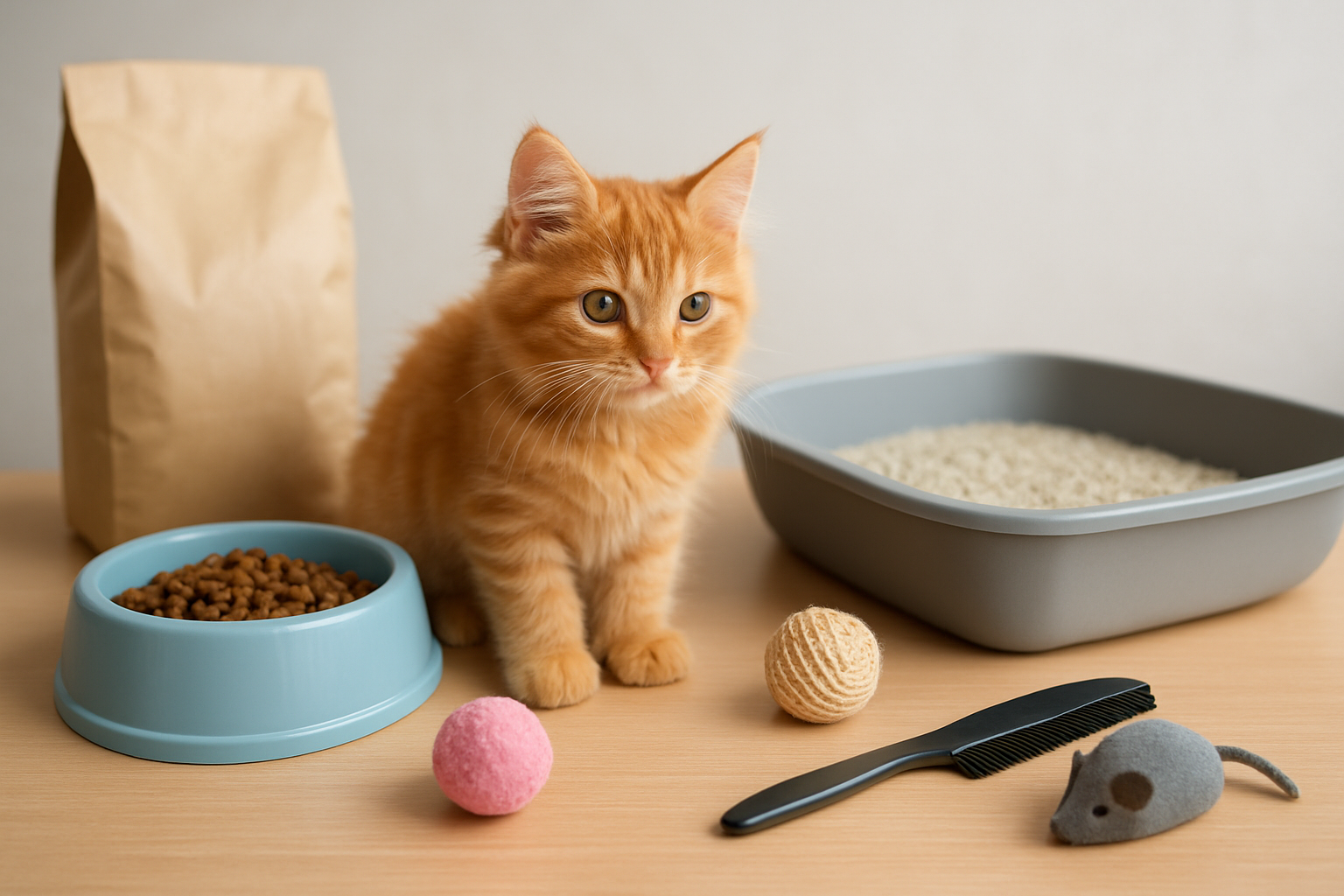
Good news: you do not need to spend a fortune to create a brilliant setup. Most kittens thrive on solid basics and your presence. That said, a few luxury upgrades can improve daily life—think a stable, tall scratching post that saves your sofa, or a stainless fountain that nudges more drinking. Below is a quick comparison to help you choose where to save, where to splurge, and when to upgrade. Data from shelters and behaviorists consistently suggest that smart placement and cleanliness beat fancy features, and your kitten will tell you what they love if you watch closely.
| Category | Budget Pick: What Works | Luxury Pick: Why Upgrade | When to Upgrade | Price Range |
|---|---|---|---|---|
| Litter Setup | Open low-sided tray, unscented litter | High-sided box, low-dust pro-grade litter | Persistent scatter, multi-cat homes | $25–$70 |
| Food and Bowls | Shallow stainless dish, mixed feeding | Elevated ceramic set, airtight storage | Flat-faced breeds, messy eaters | $15–$80 |
| Water | Fresh bowl refills | Stainless fountain, dishwasher-safe | Low drinkers, urinary-prone lines | $8–$85 |
| Scratching | Medium sisal post | Tall, heavy post or tree | Couch-targeting, large breeds | $15–$150 |
| Toys | Wand, balls, kicker | Attachment system, puzzle set | Boredom, solo hours | $10–$90 |
| Carrier | Hard shell, top door | Quick-release vet-friendly | Frequent travel or vet visits | $25–$120 |
- Save on: bowls, simple toys, open litter boxes, enzyme cleaner in bulk.
- Splurge on: a stable tall scratching post, a carrier you love to use, a fountain if hydration is a struggle.
- Stretch your budget: buy multi-packs, rotate toys to keep them “new,” and repurpose blankets as beds.
- Breed considerations: Maine Coons need heavy trees; Persians benefit from shallower bowls; sleek athletic breeds love taller posts.
Mad Cat Man exists to make these choices simple. We publish vet-informed guides, hands-on product reviews, and step-by-step checklists sorted into easy categories, so you can compare picks at a glance and skip the duds. Our safety content covers plants, humidifiers, and household gear from a cat’s point of view, and our breed guides help you tailor setups for specific needs. You get the clarity, we do the testing—and your kitten gets a cozy, confidence-building home.
Quick-Swipe Shopping List: 30-Day Essentials at a Glance

Ready to shop in minutes? Use this one-page overview to cross off the non-negotiables and pick a budget or luxury path where it makes sense. Keep receipts and packaging for the first week in case your kitten prefers a different texture or fit. Remember, your relationship is the real “luxury”—gear simply supports the bond you are building. If you get stuck, Mad Cat Man’s organized categories let you jump straight to food, toys, furniture, grooming, health, and safety picks that work in real homes.
| Category | Non-Negotiable | Budget Path | Luxury Path | Notes |
|---|---|---|---|---|
| Litter | 1–2 boxes, unscented litter, scoop, mat | Open tray, clay or paper | High-sided, low-dust clumping | Place away from food and high traffic. |
| Food | Kitten-formulated wet and/or dry | Mixed feeding, sample sizes | Premium protein variety pack | Transition over 5–7 days. |
| Bowls and Water | Shallow food bowl, fresh water daily | Stainless bowls | Elevated ceramics, stainless fountain | Wash bowls daily. |
| Sleep | Washable bed, blanket, hidey spot | Simple fleece bed | Memory-foam, washable cover | Bed in quiet corner of the room. |
| Scratching | Vertical post and horizontal board | Medium sisal post | Tall, heavy post or tree | Place near couch to redirect. |
| Toys | Wand, kicker, balls | Basic set | Attachment system, puzzle feeder | Rotate weekly to keep novelty. |
| Carrier | Hard-sided with top access | Standard shell | Quick-release vet-friendly | Leave open as a den at home. |
| Grooming | Nail clippers, soft brush, wipes | Simple tools | Ergonomic clippers, silicone brush | Handle paws daily for seconds. |
| Health | Vet visit, deworming, microchip | Local clinic plan | Wellness plan with reminders | Bring questions and records. |
| Safety | Enzyme cleaner, cord protectors | Basic set | Magnetic cabinet locks | Audit plants for toxicity. |
One final nudge: track what your kitten chooses. Do they sprint to the horizontal board and ignore the vertical post? Swap positions or upgrade that favorite category first. Do they lap up wet food but ignore dry? Switch to a wetter mixed plan. Behavior is feedback, and your setup is a living system that you will tweak as your kitten grows. Mad Cat Man’s product reviews and buying recommendations flag common pivots, so you do not waste money learning the hard way.
Why Trust Mad Cat Man With Your Kitten’s First Month
New or uncertain cat owners often tell us the same thing: “I am overwhelmed by choices and conflicting advice.” We hear you. Mad Cat Man is an English-language blog run by experienced cat owners and animal enthusiasts who test products, interview experts, and write guides that work in real homes. We publish product reviews, behavior and training tips, vet-informed health explainers on worming, microchipping, and dental care, safety and product-suitability breakdowns for households, breed-specific guides like our Maine Coon articles, and how-to shopping checklists. Everything is organized into categories so you can find answers fast and make confident decisions without scrolling forever.
Along the way, we include data points to anchor decisions. Microchipped cats are returned to owners far more often than those without, and dental disease affects a majority of adult cats—starting brushing early matters. Unscented litter is preferred by many cats, and tall, stable posts reduce furniture damage by satisfying natural scratch needs. We translate findings into simple actions that fit your life. From budget buys that outperform their price to splurge-worthy furniture you will keep for years, our guides are practical, experience-based, and designed to help you enjoy the best part of cat parenting: the bond.
Your first 30 days will fly by, and with a little planning, they will be filled with purrs, naps, and goofy zoomies—not frantic midnight shopping. Keep this page open during setup, and check off a few items each day. If anything feels confusing, jump into our categories, where each product and tip is explained with pros, cons, and real-world use cases. With this essential supplies for new kitten checklist, you are well on your way to a happy, confident companion.
Imagine a month from now: your kitten snoozes in the carrier den, the scratching post saves your couch, and litter duty takes two peaceful minutes. In the next 12 months, you will upgrade a few favorites, add puzzle feeders, and maybe even try harness adventures at your kitten’s pace. What tiny change will you make today that your future cat-loving self will thank you for tomorrow?
Additional Resources
Explore these authoritative resources to dive deeper into essential supplies for new kitten checklist.
Outfit Your Kitten Confidently with Mad Cat Man
Explore Mad Cat Man’s expert product reviews and buying recommendations for kitten food, toys, furniture, and grooming gear, helping every owner choose wisely and feel calm across any budget.
- +Reduces appetite and cravings.
- +Helps preserve lean muscle mass.
- +Increases calorie burn (thermic effect).
- +Supports long-term calorie control.
- −Not suitable for some kidney conditions.
- −High protein foods can cost more.
- −Excess intake still leads to fat gain.
- −Requires planning for fibre and hydration.
[END INSTRUCTIONS]

Dave King
Cat owner and writer at Mad Cat Man.