
⚠️ Medical Disclaimer: The information in this article is for educational purposes only and does not constitute veterinary medical advice. Always consult a licensed veterinarian for guidance tailored to your cat’s specific health history and lifestyle.
Medically Reviewed by a Licensed Veterinarian, DVM — January 2026
Most new cat owners don’t realize their kitten needs four to five vet visits in the first year alone — each one timed to a specific window of immune development that, if missed, can leave your cat unprotected against preventable diseases. According to UC Davis Veterinary Medicine, the timing of those early visits isn’t arbitrary; it’s calibrated around your kitten’s fading maternal immunity.
Without a clear cat vet schedule checklist, it’s easy to assume one or two shots covers everything. But booster timing matters — a gap of even a few weeks can mean a vaccine series has to restart from scratch.
By the end of this guide, you’ll know exactly when to schedule every vet visit, from your kitten’s very first appointment through their senior years, and what to expect at each one. This guide follows the Life-Stage Ladder framework: three distinct phases of feline care — kitten, adult, and senior — each with its own checklist, plus a practical section on preparing for every visit.
Your Cat’s Vet Schedule at a Glance
1. Kitten (0–1 year): 4–5 visits — FVRCP series, FeLV, Rabies, fecal analysis, spay/neuter
2. Adult (1–7 years): Once yearly — annual exam, vaccine boosters, parasite prevention
3. Senior (7+ years): Every 6 months — full wellness screening, blood work, urinalysis
4. All life stages: Download the free printable checklist below for your next appointment
Your cat needs a different vet schedule at every life stage — kittens require 4–5 visits in their first year, adults need one annual exam, and senior cats (7+) should see a vet every six months (AAFP Senior Care Guidelines, 2021).
- The Life-Stage Ladder structures feline care into three escalating phases: kitten, adult, and senior — each requiring more frequent visits and more comprehensive screening than the last
- Core vaccines (FVRCP and Rabies) are required for all cats, including indoor-only cats
- Senior cats need twice-yearly visits to catch kidney disease, diabetes, and arthritis early
- Spay or neuter by 5 months to prevent unwanted litters and reduce long-term health risks
1. Kitten Vet Schedule (Birth to 1 Year)
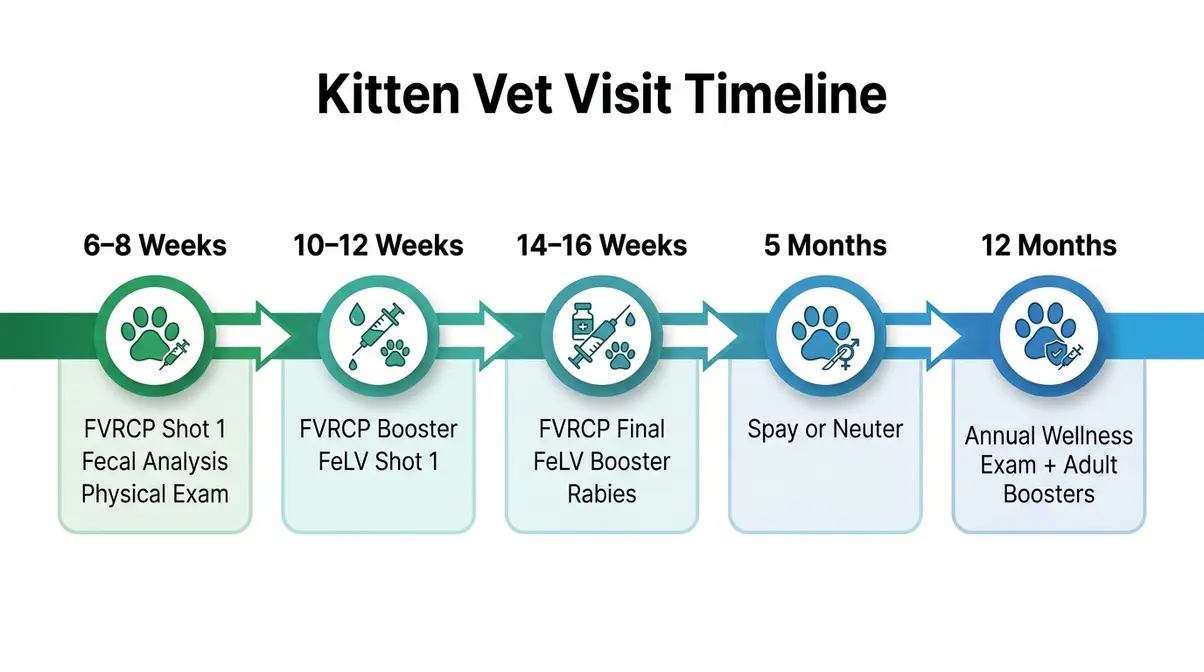
The kitten stage is the first rung of the Life-Stage Ladder — and the most time-sensitive phase of your cat’s entire life. According to UC Davis Veterinary Medicine, kittens need their first FVRCP vaccine between 6 and 8 weeks of age, followed by booster shots every 3 to 4 weeks until 16 to 20 weeks old (UC Davis Veterinary Medicine, 2024). Miss a booster window, and the series may need to restart — so timing matters as much as the vaccines themselves.
Why such a tight schedule? Think of it like a relay race. Your kitten is born with maternal antibodies — protective proteins passed through their mother’s milk — that gradually fade over the first few months of life. The booster series is timed specifically to fill the immunity gaps as that maternal protection wanes. Each shot hands off protection to the next before the previous one expires. No competitor resource explains this, but it’s the reason your vet insists on those follow-up appointments.
✓ Kitten Year-One Checklist:
- [ ] 6–8 weeks: First vet visit — FVRCP (shot 1), fecal analysis, physical exam
- [ ] 10–12 weeks: FVRCP booster (shot 2), FeLV vaccine (shot 1)
- [ ] 14–16 weeks: FVRCP booster (shot 3), FeLV booster (shot 2), Rabies vaccine
- [ ] By 5 months: Schedule spay or neuter procedure
- [ ] 12 months: Annual wellness exam + first adult boosters
Your Kitten’s First Vet Visit (Ages 6–8 Weeks)
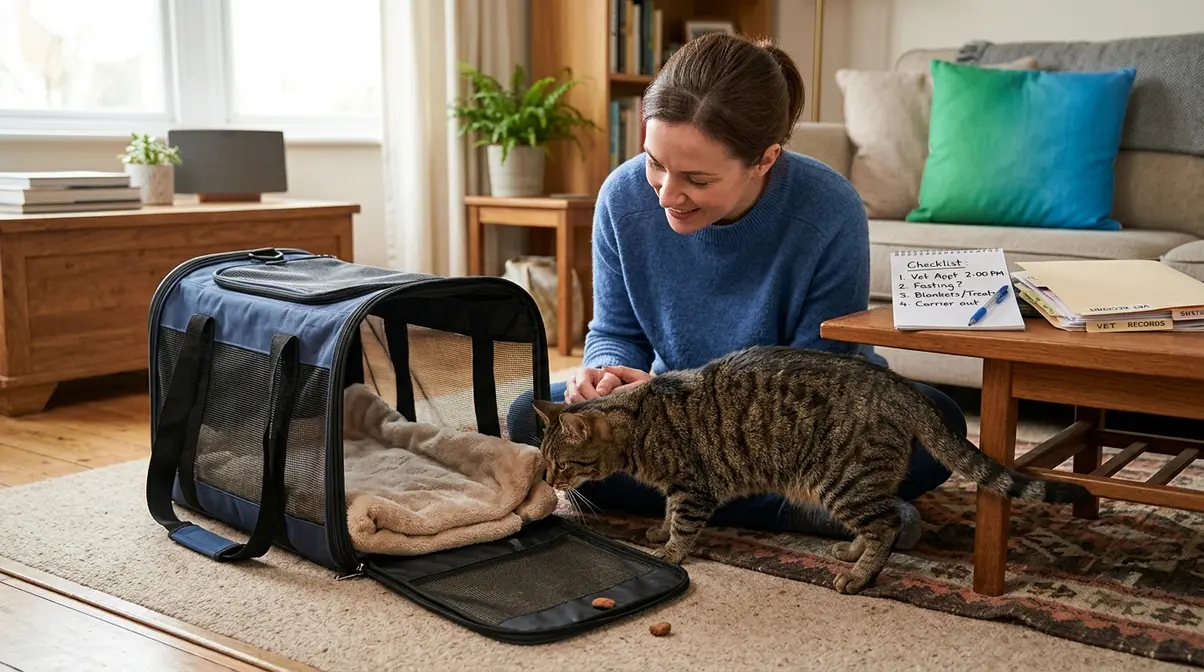
Your kitten’s first appointment is part health check, part relationship builder. The veterinarian will conduct a head-to-tail physical examination — checking the eyes for discharge, the ears for mites, the teeth and gums for proper development, the heart and lungs for murmurs or abnormal sounds, and the abdomen for any unusual lumps or tenderness. They’ll also record your kitten’s weight, which becomes a baseline for every future visit.
“First Visit (6 to 8 Weeks) · Vaccinations for chlamydia, calicivirus, rhinotracheitis, and panleukopenia · Review nutrition and grooming · Blood…”
If this sounds familiar, it’s because it mirrors exactly what new cat owners search for. That list is your roadmap for this appointment.
At this visit, your kitten will receive their first FVRCP shot. FVRCP stands for Feline Viral Rhinotracheitis, Calicivirus, and Panleukopenia — a combination vaccine that protects against three serious feline diseases:
- Feline panleukopenia (also called feline distemper): a life-threatening digestive and immune system disease
- Rhinotracheitis (caused by feline herpesvirus): a highly contagious upper respiratory virus
- Calicivirus: another respiratory and oral disease that causes mouth ulcers and limping in kittens
According to the Cornell Feline Health Center, FVRCP is classified as a core vaccine — meaning it’s recommended for every cat, regardless of lifestyle. Your vet will also collect a fecal analysis (a small stool sample) to screen for intestinal parasites like roundworms and giardia, which are extremely common in young kittens. Many kittens show no symptoms but carry parasites that can affect their growth and, in rare cases, transfer to humans.
Always consult your veterinarian for a schedule tailored to your cat’s specific health history. Some kittens from shelters may have already received their first FVRCP — bring any paperwork from the adoption organization so your vet can build on the existing record rather than restart.
The Booster Series: Visits at 10–12 and 14–16 Weeks
This is where the relay race analogy becomes critical. By 10 to 12 weeks, the maternal antibodies your kitten received through nursing have begun to fade significantly. A second FVRCP shot — the first true booster — steps in to take over before that protection drops too low.
- At the 10–12 week visit, your kitten receives:
- FVRCP booster (shot 2 of 3) — reinforces protection against all three core viruses
- FeLV vaccine (shot 1 of 2) — FeLV stands for Feline Leukemia Virus, a contagious retrovirus that suppresses the immune system and is a leading cause of illness and death in cats under five years old
The American Animal Hospital Association (AAHA) recommends the FeLV vaccine for all kittens in their 2020 Feline Vaccination Guidelines, noting that all cats face some risk of exposure regardless of lifestyle (AAHA Vaccination Guidelines, 2020). Your vet may choose to test for FeLV before vaccinating, especially if your kitten’s history is unknown.
- At the 14–16 week visit, your kitten receives:
- FVRCP booster (shot 3 of 3) — this final booster is given after 16 weeks because maternal antibodies are fully gone by this point, allowing the vaccine to generate full immune response
- FeLV booster (shot 2 of 2) — completes the two-dose primary series
- Rabies vaccine — required by law in most U.S. states and many countries; protects against the fatal neurological virus
“Kittens should receive their first FVRCP vaccine between 6 and 8 weeks of age, followed by booster shots every 3 to 4 weeks until they reach 16 to 20 weeks old” (UC Davis Veterinary Medicine, 2024). This three-shot schedule is not excessive — it’s the minimum needed to build lasting immunity as maternal protection fades in stages.
Final Kitten Milestones: Spay, Neuter, and Rabies (By 4–5 Months)
By four to five months, your kitten’s vaccine series is nearly complete — but one more major milestone remains. The American Animal Hospital Association recommends spaying or neutering by five months of age for most cats, before the first heat cycle in females and before sexually mature behaviors develop in males (AAHA, 2024).
- Why timing matters for spay/neuter:
- Female cats spayed before their first heat cycle have a significantly lower risk of mammary (breast) tumors
- Male cats neutered early are less likely to develop urine-marking habits and roaming behaviors
- Spaying eliminates the risk of pyometra (a life-threatening uterine infection) entirely
- Both procedures reduce the risk of certain reproductive cancers
This is also the appointment to discuss microchipping if you haven’t already. A microchip is a permanent form of identification about the size of a grain of rice, implanted under the skin between the shoulder blades. It takes seconds and costs very little — and it dramatically increases the chance of reunion if your cat ever gets lost.
After the spay or neuter procedure, schedule your kitten’s 12-month wellness exam to transition into adult care protocols. At that visit, your vet will begin the adult booster schedule and assess your cat’s overall development.
Download our free Kitten Vet Schedule Checklist PDF — a printable reference you can bring to every appointment.
Estimated Cost for Your Kitten’s First Year
One of the biggest anxieties for new cat owners is the financial side. Here’s a transparent breakdown of typical first-year veterinary costs in the United States as of 2026. Costs vary by region, clinic type, and whether you use a low-cost clinic or a full-service practice.
| Visit | Typical Services | Estimated Cost Range |
|---|---|---|
| 6–8 weeks | Physical exam, FVRCP (shot 1), fecal analysis | $75–$150 |
| 10–12 weeks | FVRCP booster, FeLV (shot 1) | $60–$120 |
| 14–16 weeks | FVRCP (final), FeLV booster, Rabies | $80–$150 |
| 4–5 months | Spay or neuter procedure | $200–$500 |
| 12 months | Annual wellness exam + adult boosters | $100–$200 |
| First-year total | $515–$1,120 |
Prices as of Q1 2026. Costs vary significantly by location, clinic, and individual cat health needs. Low-cost spay/neuter clinics and veterinary school clinics often offer services at reduced rates — ask your local humane society for referrals.
These estimates reflect typical ranges from veterinary care cost surveys. Many pet insurance plans cover a portion of wellness visits — worth considering before your kitten’s first appointment.
The kitten stage demands the most visits and the most vigilance. Once your cat turns one, the Life-Stage Ladder moves to a steadier, more predictable rhythm — but skipping annual care creates its own risks.
2. Adult Cat Annual Wellness Plan (Ages 1–7)
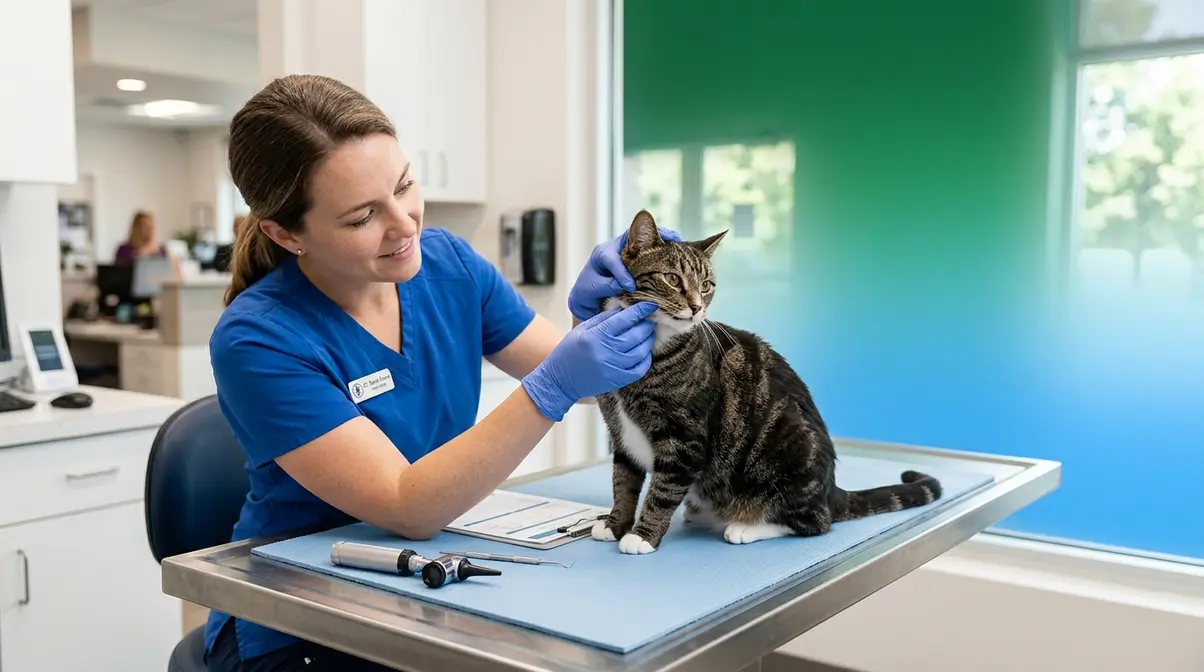
Adult cats between one and seven years old are generally at the peak of their health — but “generally healthy” doesn’t mean “needs no monitoring.” The American Association of Feline Practitioners (AAFP) recommends at least one wellness exam per year for adult cats, even those who appear completely healthy (AAFP, 2021). Many conditions — dental disease, early kidney changes, weight gain — develop silently and are only detectable during a hands-on examination.
The second rung of the Life-Stage Ladder is calmer than the kitten stage, but it sets the foundation for a healthy senior life. Consistent annual care during the adult years catches small problems before they become expensive emergencies.
✓ Adult Cat Annual Checklist:
- [ ] Once per year: Full physical exam, weight check, dental evaluation
- [ ] Every 1–3 years: FVRCP booster (per vet’s recommendation and titer testing)
- [ ] Annually or every 3 years: Rabies booster (per local law and vet guidance)
- [ ] Annually: FeLV booster (for cats with outdoor exposure or multi-cat households)
- [ ] Every 6–12 months: Fecal analysis for outdoor or hunting cats
- [ ] Annually: Heartworm and flea/tick prevention review
What Your Vet Checks at the Annual Exam
A thorough annual exam covers far more than a quick weight check. Your veterinarian will systematically assess every major body system — and this is where subtle early changes are most often caught. According to Tufts University Cummings School of Veterinary Medicine, dental disease affects an estimated 70% of cats by age three, yet most owners don’t notice signs until the disease is advanced.
What the annual exam typically includes:
- Full physical examination — eyes, ears, nose, throat, lymph nodes, coat and skin condition
- Dental evaluation — checking for tartar buildup, gum recession, tooth resorption, and signs of pain
- Weight and body condition scoring — obesity is a significant health risk in adult cats, linked to diabetes and joint disease
- Heart and lung auscultation — listening for murmurs or abnormal respiratory sounds
- Abdominal palpation — feeling the kidneys, liver, bladder, and intestines for abnormalities
- Fecal analysis — recommended annually for cats that hunt or go outdoors; every 1–2 years for strictly indoor cats
- Parasite prevention review — flea, tick, heartworm, and intestinal parasite prevention plan
For dental concerns specifically, our guide on cat gum health and when to see a vet covers what to look for between annual visits.
The annual exam is also your opportunity to ask questions — about your cat’s diet, behavior changes, litter box habits, or anything that’s felt “off.” Your vet can only act on what they know, so come prepared (see the pre-visit checklist in Section 4).
Vaccine Booster Schedule for Adult Cats
Adult cats don’t need the intensive booster series of kittenhood, but their immunity does require maintenance. Here’s how core vaccines (FVRCP and Rabies) work on an adult schedule:
- FVRCP booster: After the kitten series and a one-year booster at 12 months, most adult cats receive an FVRCP booster every one to three years, depending on your vet’s assessment and the vaccine product used. Some vets use titer testing — a blood test that measures existing antibody levels — to determine whether a booster is truly needed rather than administering it on a fixed schedule.
- Rabies booster: Frequency depends on the vaccine type (one-year vs. three-year formulation) and local legal requirements. Your vet will advise which applies in your area.
- FeLV booster: Recommended annually for cats with outdoor access or those living with FeLV-positive cats. Strictly indoor cats with no exposure risk may not need continued FeLV boosters after the initial series — discuss with your vet.
“The goal of vaccination is not to vaccinate as frequently as possible, but to vaccinate only as often as necessary to maintain protective immunity,” according to the World Small Animal Veterinary Association (WSAVA) Vaccination Guidelines (2022). This is an important reframe for owners who assume more shots equals more protection.
Always consult your veterinarian for a booster schedule tailored to your cat’s lifestyle, health history, and local disease risks.
Indoor vs. Outdoor: Different Needs, Different Risks
One of the most common questions new cat owners ask is: Do indoor cats really need vaccines? The short answer is yes — but their specific needs differ meaningfully from outdoor cats.
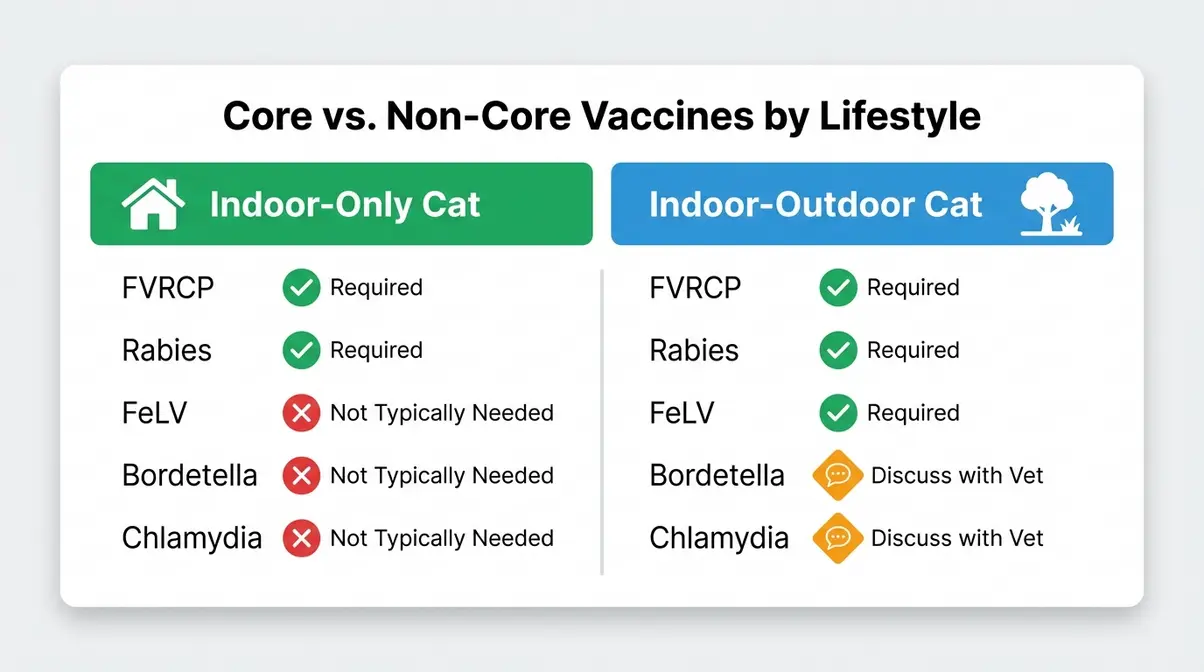
- Core vaccines (FVRCP and Rabies) are recommended for ALL cats by the AAHA and WSAVA — including cats that never step outside. Reasons include:
- Even indoor cats can escape or be exposed to other animals
- Rabies vaccination is legally required in most U.S. states regardless of indoor/outdoor status
- FVRCP diseases can be transmitted on clothing and shoes from outside
Non-core vaccines are recommended based on lifestyle and risk. The AAHA categorizes FeLV as a core vaccine for kittens but non-core for low-risk adult cats. For adult cats specifically:
| Vaccine | Indoor-Only Cat | Indoor-Outdoor Cat |
|---|---|---|
| FVRCP | ✅ Required | ✅ Required |
| Rabies | ✅ Required (legal) | ✅ Required (legal) |
| FeLV | 🔶 Discuss with vet | ✅ Strongly recommended |
| Bordetella | ❌ Not typically needed | 🔶 If boarding or shelters |
| Chlamydia | ❌ Not typically needed | 🔶 Multi-cat/shelter environments |
The distinction matters most when budgeting and planning. An indoor-only cat’s annual vaccine costs will typically be lower than an indoor-outdoor cat’s — but the core vaccines remain non-negotiable for both.
The adult years pass quickly. As your cat approaches seven, the Life-Stage Ladder steps up again — and this time, the increase in visit frequency isn’t optional.
3. Senior Cat Proactive Care (Ages 7+)
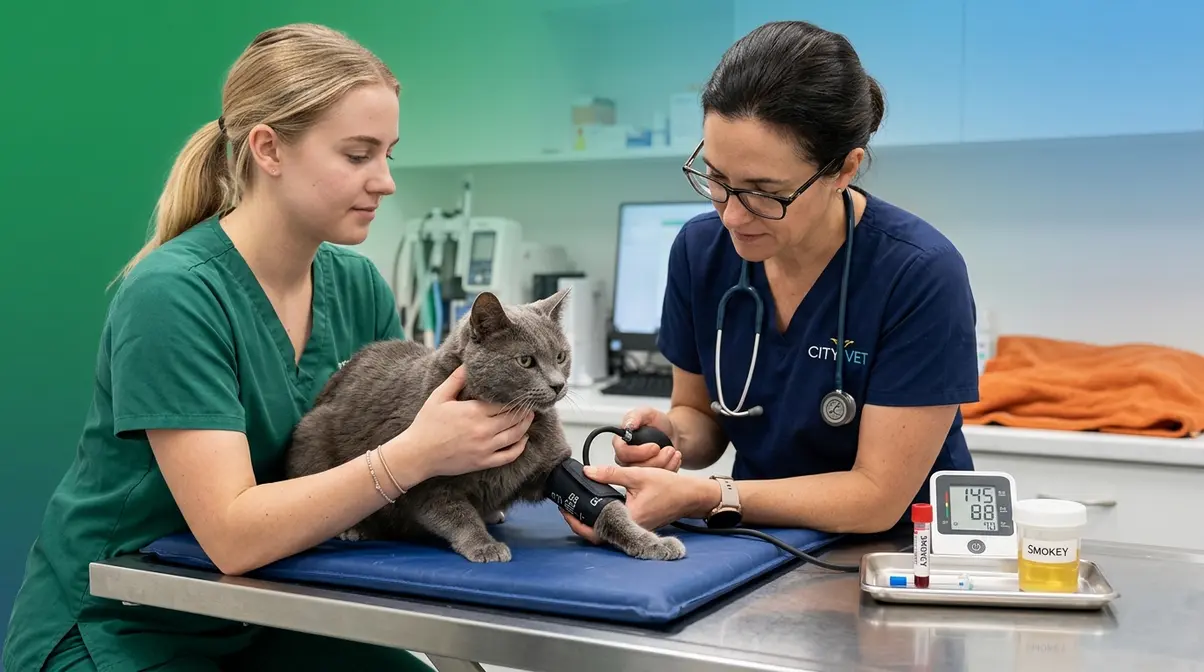
Cats are considered senior at age seven — though many look and act perfectly young at that age. The shift matters because age-related diseases like chronic kidney disease, hyperthyroidism, diabetes, and arthritis often develop silently during the early senior years. By the time symptoms become visible to owners, the disease may be significantly advanced.
The third rung of the Life-Stage Ladder is where proactive care pays its biggest dividends. Catching these conditions early — through regular screening — extends both quality and length of life.
✓ Senior Cat Bi-Annual Checklist:
- [ ] Every 6 months: Full physical exam, weight check, blood pressure measurement
- [ ] Every 6–12 months: Complete blood count (CBC) and chemistry panel
- [ ] Every 6–12 months: Urinalysis (urine analysis) to screen for kidney disease and diabetes
- [ ] Annually: Thyroid hormone (T4) test for hyperthyroidism
- [ ] As needed: Dental cleaning under anesthesia, joint mobility assessment
- [ ] Ongoing: Monitor at home for warning signs (see H3 below)
Why Senior Cats Need Vet Visits Every Six Months
The American Association of Feline Practitioners (AAFP) Senior Care Guidelines recommend twice-yearly wellness exams for cats age seven and older — not because senior cats are sicker, but because disease progression in cats is faster than in humans, and a six-month gap is enough time for a manageable condition to become a crisis.
Consider the math: one year in a senior cat’s life is roughly equivalent to four to five human years. An annual exam for a 10-year-old cat is like a human only seeing their doctor every four years during their 50s. That’s too long a gap when kidney function can decline measurably within months.
“Chronic kidney disease (CKD) affects an estimated 30 to 40 percent of cats over age 10,” according to the Cornell Feline Health Center. Early detection through blood and urine screening allows for dietary management and supportive care that can extend comfortable life by years — not months. Semi-annual visits double your vet’s chances of catching CKD at a treatable stage.
The cost of twice-yearly senior visits is often offset by avoiding emergency care. A senior wellness exam typically costs $150–$300 including basic bloodwork — significantly less than the $1,000+ cost of managing an acute kidney crisis.
What’s Included in a Senior Wellness Screening
A senior wellness screening goes well beyond the annual adult exam. Your veterinarian will typically recommend a comprehensive diagnostic panel that gives a detailed picture of your cat’s internal health — things no physical exam alone can detect.
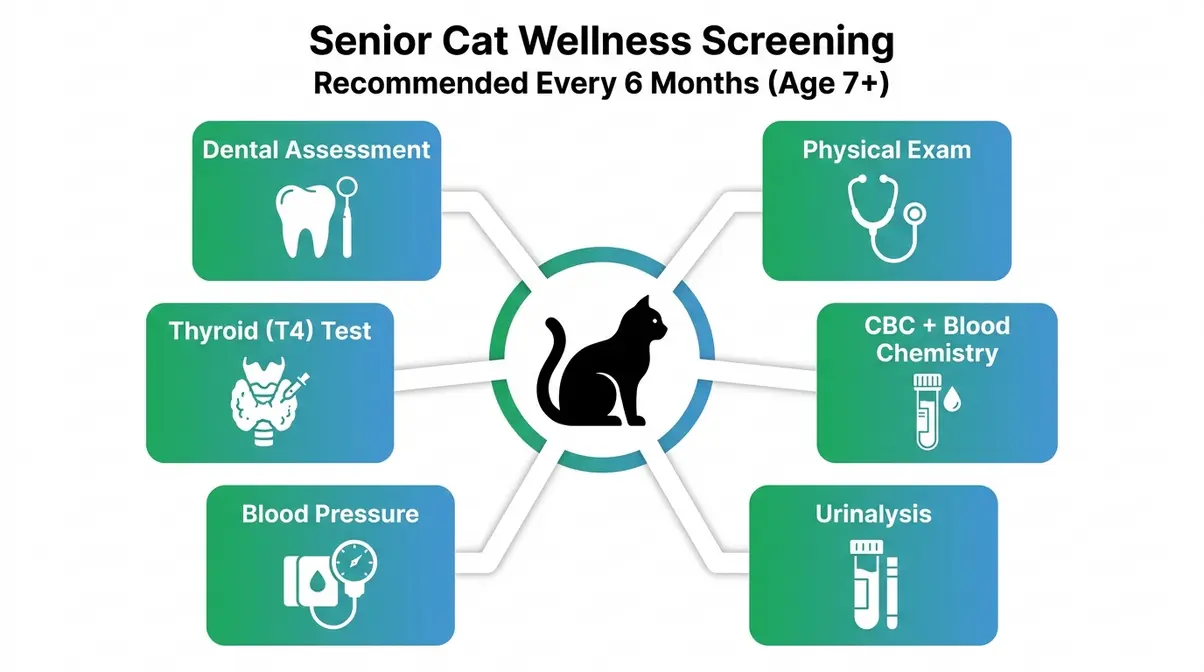
Key components of the senior wellness screening:
- Complete Blood Count (CBC): Measures red blood cells, white blood cells, and platelets. Anemia is common in senior cats and often the first sign of kidney disease or chronic illness.
- Blood Chemistry Panel: Evaluates kidney values (BUN and creatinine), liver enzymes, blood glucose (sugar), and electrolytes. Elevated kidney values confirm early chronic kidney disease before symptoms appear.
- Urinalysis (urine analysis): Assesses kidney concentrating ability, detects protein loss (an early CKD marker), checks for urinary tract infections, and screens for glucose (a diabetes indicator). This single test provides more information about kidney health than blood tests alone.
- Blood Pressure Measurement: Hypertension (high blood pressure) is extremely common in senior cats with kidney disease or hyperthyroidism and can cause sudden blindness if untreated. Blood pressure measurement is quick and painless — a small cuff placed on the leg or tail.
- Thyroid Hormone (T4) Test: Hyperthyroidism — overactivity of the thyroid gland — affects approximately 10% of cats over age 10 (Cornell Feline Health Center, 2023). It causes weight loss, increased appetite, and heart problems but responds well to treatment when caught early.
- Dental assessment: Senior cats are at significantly higher risk for tooth resorption and periodontal disease, both of which cause chronic pain that cats rarely show overtly.
Your vet may not run every test at every visit. They’ll recommend a screening plan based on your cat’s individual history and any prior findings. Always consult your veterinarian for a senior care plan tailored to your cat’s specific needs.
At-Home Warning Signs to Watch Between Visits
Even with twice-yearly vet visits, you’ll spend 364 days per year observing your senior cat at home. Knowing what to watch for allows you to call your vet between scheduled appointments when something is genuinely wrong.
Contact your vet promptly if you notice:
- Increased thirst or urination — a key early sign of chronic kidney disease or diabetes
- Unexplained weight loss — even if your cat is still eating well (common in hyperthyroidism)
- Changes in litter box habits — straining, blood in urine, or going outside the box
- Decreased grooming — often signals pain, arthritis, or illness
- Hiding more than usual — cats instinctively hide when unwell
- Sudden vision changes or disorientation — may indicate hypertension-related retinal damage
- Vomiting more than once or twice per week — not normal, even in senior cats
- Difficulty jumping or stiffness — common signs of arthritis (osteoarthritis affects an estimated 90% of cats over age 12, according to a Banfield Pet Hospital study)
These signs don’t always mean something serious — but they’re your signal to call, not wait for the next scheduled visit. Early intervention almost always leads to better outcomes.
4. Preparing for Every Vet Visit
Knowing when to go is only half the equation. How you prepare for each visit determines how useful it is — for your cat, for you, and for your veterinarian. A stressed cat is harder to examine accurately, and a poorly prepared owner misses the chance to get real answers.
✓ Pre-Visit Preparation Checklist:
- [ ] Practice carrier training at least 2 weeks before the appointment
- [ ] Write down any behavior or health changes you’ve noticed
- [ ] Bring previous vaccination records or adoption paperwork
- [ ] Collect a fresh fecal sample (if requested) — within 12 hours of the appointment
- [ ] Note current medications, supplements, and diet
- [ ] Prepare your questions in advance — bring a written list
Carrier Training and Reducing Travel Stress
For many cats, the carrier appears only on vet visit day — and their response is predictable: hiding, struggling, and stress that makes the entire experience harder. Research from the Ohio State University College of Veterinary Medicine shows that fear-free handling significantly improves exam quality and reduces physiological stress markers in cats. The solution is simple but requires advance planning.
To acclimate your cat to their carrier:
- Leave the carrier out permanently — not just on vet day. Place it in a room your cat uses regularly with a familiar blanket inside.
- Make it a positive space — drop treats or toys inside daily. Feed meals near or inside the carrier.
- Practice short trips — carry your cat around the house in the carrier before attempting a car ride.
- Use calming sprays — synthetic pheromone sprays (like Feliway) applied to the carrier 30 minutes before travel can reduce anxiety. Ask your vet about other options including short-term anti-anxiety medications for cats with severe travel stress.
- Cover the carrier during transport — a towel over the carrier reduces visual stimuli and lowers stress.
Start this process at least two weeks before any scheduled appointment. For new kitten owners, beginning carrier training on day one of bringing your kitten home is the simplest way to prevent a lifelong struggle.
Indoor vs. Outdoor Quick Reference Table
This table summarizes the key differences in vaccine and screening needs by lifestyle — a quick reference you can bring to your vet appointment.
| Care Item | Indoor-Only Cat | Indoor-Outdoor Cat |
|---|---|---|
| FVRCP (core) | ✅ Every 1–3 years | ✅ Every 1–3 years |
| Rabies (core) | ✅ Per local law | ✅ Per local law |
| FeLV vaccine | 🔶 Low-risk adults: discuss | ✅ Annually recommended |
| Fecal analysis | Every 1–2 years | Every 6–12 months |
| Flea/tick prevention | 🔶 Discuss with vet | ✅ Year-round recommended |
| Heartworm prevention | 🔶 Discuss with vet | ✅ Recommended |
| Bordetella | ❌ Not typically needed | 🔶 If boarding frequently |
Per WSAVA Vaccination Guidelines (2022) and AAHA Feline Vaccination Guidelines (2020). Consult your veterinarian for a plan specific to your cat’s risk level and local disease prevalence.
The WSAVA notes that even indoor cats face residual risks — from visitors, other pets, or accidental escapes — making core vaccine maintenance non-negotiable regardless of lifestyle (WSAVA, 2022).
What to Tell Your Vet: A Pre-Visit Checklist
Your vet can only work with the information you bring. Coming prepared with specific observations turns a routine visit into a genuinely productive health consultation. The most common concern reported by new cat owners is not knowing what information their vet actually needs — here’s exactly what to bring.
Information to have ready at every visit:
- Vaccination and medical history — bring any records from your breeder, shelter, or previous vet
- Current diet — food brand, type (wet/dry), and feeding schedule
- Behavior changes — any shifts in activity, appetite, litter box habits, grooming, or social behavior
- Current medications and supplements — including flea prevention, vitamins, and any over-the-counter products
- Questions prepared in writing — you will forget them the moment the vet enters the room; write them down in advance
- A fecal sample — if your vet has requested one, collect it within 12 hours of the appointment and store it in a sealed container in the refrigerator
For first-time visits with a new cat, also bring any adoption paperwork, prior vet records, and information about the cat’s history (stray, shelter, breeder, previous home). The more context your vet has, the more targeted their recommendations will be. Always consult your veterinarian if you’re unsure what to bring — a quick call to the clinic before your appointment can save time for everyone.
Common Mistakes and When to Seek Help
Common Pitfalls to Avoid
Even well-intentioned cat owners make preventable mistakes with their vet schedule. Knowing these in advance saves your cat from unnecessary risk.
1. Skipping the booster series because the kitten “seems fine.”
Maternal antibodies suppress the first vaccine’s effectiveness — that’s why multiple shots are needed. A kitten who received only one FVRCP shot may not be fully protected, even if they show no symptoms. The series must be completed on schedule.
2. Assuming indoor cats don’t need vaccines after kittenhood.
Core vaccines (FVRCP and Rabies) require maintenance boosters throughout life. Indoor cats still face exposure risks, and Rabies vaccination is legally required in most jurisdictions regardless of indoor status.
3. Waiting for visible symptoms before scheduling a senior cat’s exam.
Cats are expert at hiding illness — it’s an evolutionary survival trait. By the time a senior cat shows obvious symptoms of kidney disease or hyperthyroidism, the condition is often advanced. Twice-yearly screening catches these conditions before the hiding stops working.
4. Stopping flea prevention in winter.
Fleas survive indoors year-round in heated homes. Many veterinary associations recommend year-round parasite prevention, particularly for cats in multi-pet households.
5. Confusing the one-year booster with the ongoing adult schedule.
The 12-month kitten-to-adult transition visit is not the same as the adult annual exam. After that first adult booster, your vet will set a new interval (typically every 1–3 years for FVRCP) based on your cat’s specific circumstances.
When to Choose a Different Approach
This guide follows general recommendations from AAHA, AAFP, and UC Davis Veterinary Medicine — but individual cats have individual needs. A different schedule may be appropriate if:
- Your cat has a documented history of vaccine reactions — your vet may recommend titer testing instead of automatic boosters
- Your cat is immunocompromised — some vaccines are contraindicated for cats on immunosuppressive medications
- You live in an area with elevated local disease risk — your vet may recommend more frequent FeLV or other vaccines based on regional prevalence
- Your cat is in a multi-cat household or boarding frequently — more frequent screening and additional vaccines (like Bordetella) may be warranted
When to Seek Expert Help
Contact your veterinarian immediately — don’t wait for a scheduled appointment — if your cat shows any of the following:
- Difficulty breathing or open-mouth breathing
- Sudden collapse or extreme weakness
- Refusal to eat for more than 24 hours (48 hours for adult cats)
- Blood in urine, stool, or vomit
- Sudden blindness or extreme disorientation
- Severe pain response when touched
These symptoms require same-day or emergency veterinary care. For non-urgent concerns between scheduled visits, most veterinary practices now offer telehealth consultations — a quick call can clarify whether your observation warrants an immediate visit or can wait for the next scheduled appointment.
Frequently Asked Questions
How many vet visits does a kitten need in the first year?
Most kittens need four to five vet visits during their first year — timed to specific windows of immune development. The standard schedule includes visits at 6–8 weeks, 10–12 weeks, 14–16 weeks, around 4–5 months (for spay/neuter), and at 12 months for the first adult wellness exam. Each visit builds on the previous one; skipping a booster appointment can require restarting the vaccine series from scratch. According to UC Davis Veterinary Medicine, the booster interval of every 3 to 4 weeks is calibrated around the gradual fading of maternal antibodies.
How often do adult cats need to go to the vet?
Adult cats between ages 1 and 7 need at least one vet visit per year, even when they appear completely healthy. The American Association of Feline Practitioners (AAFP) recommends annual wellness exams as the minimum standard for this life stage. That annual visit covers a full physical exam, dental evaluation, weight check, parasite prevention review, and any vaccine boosters due. Cats with chronic conditions or those in high-risk environments (multi-cat households, outdoor access) may benefit from more frequent visits — discuss this with your veterinarian.
Do indoor cats really need vaccines?
Yes — all cats need core vaccines, including indoor-only cats. The AAHA and WSAVA classify FVRCP (the combination vaccine against rhinotracheitis, calicivirus, and panleukopenia) and Rabies as core vaccines required for every cat regardless of lifestyle. Even strictly indoor cats face exposure risks through open windows, accidental escapes, or contact with other animals. Rabies vaccination is also legally required in most U.S. states for all cats. Non-core vaccines like FeLV may be optional for low-risk indoor cats — consult your vet to assess your cat’s specific exposure level.
When should I spay or neuter my kitten?
The American Animal Hospital Association recommends spaying or neutering kittens by five months of age, before the first heat cycle in females and before sexually mature behaviors develop in males. Early spay/neuter significantly reduces the risk of mammary tumors in females, eliminates the risk of pyometra (a life-threatening uterine infection), and reduces roaming and marking behaviors in males. Some veterinarians recommend as early as four months for shelter cats. Consult your veterinarian for the ideal timing based on your kitten’s breed, size, and health status.
What blood tests do senior cats need?
Senior cats (age 7+) typically need a complete blood count (CBC), blood chemistry panel, urinalysis, thyroid hormone (T4) test, and blood pressure measurement at their wellness screenings. The CBC detects anemia and immune system changes; the chemistry panel evaluates kidney and liver function and blood glucose; the urinalysis assesses kidney concentrating ability and screens for diabetes and infection; the T4 test checks for hyperthyroidism, which affects approximately 10% of cats over age 10 (Cornell Feline Health Center, 2023). The AAFP recommends these screenings every six months for cats over age seven, since disease progression in senior cats can be rapid.
Your Cat’s Health Is a Lifelong Commitment
The Life-Stage Ladder framework makes feline veterinary care manageable: four to five targeted visits in the kitten year, one annual exam through adulthood, and twice-yearly screenings once your cat turns seven. Following this cat vet schedule checklist means you’re never guessing — every visit has a purpose, and every purpose maps to a specific health protection goal. According to the AAFP, cats that receive consistent preventive care live measurably longer, healthier lives than those seen only when ill.
The Life-Stage Ladder isn’t just a scheduling tool — it’s a mindset shift. Your cat’s needs escalate with age, and each phase requires a different kind of attention. The kitten phase demands precision timing. The adult phase rewards consistency. The senior phase rewards vigilance.
Start with your cat’s current life stage, print the appropriate checklist from this guide, and schedule the next appointment today. If you’re not sure where to find a veterinarian, your local humane society or the AAHA’s online vet locator can help you find a practice that meets high standards of care. The best time to start was at 6 to 8 weeks — the second-best time is right now.

Dave King
Cat owner and writer at Mad Cat Man.