
⚠️ Medical Disclaimer: The information in this article is for educational purposes only and is not a substitute for professional veterinary advice, diagnosis, or treatment. Always consult a licensed veterinarian (DVM) if you have concerns about your cat’s health.
Quick Answer: Cat teeth grinding, known medically as bruxism (BRUK-siz-um), is almost never normal. It nearly always signals pain — most commonly from dental disease, tooth resorption, or gastrointestinal discomfort. This 6-step guide helps you identify the sound, understand the cause, spot emergency red flags, and know exactly when to call your vet.
Your cat is eating normally, then you hear it — a grating, crunching sound that makes your stomach drop. You’re not imagining it, and your instinct to worry is correct.
Cat teeth grinding — medically called bruxism — is almost never a harmless quirk. According to Cornell University’s College of Veterinary Medicine, tooth resorption alone affects up to 75% of cats and causes significant oral pain that often goes undetected for months.
“This behavior shouldn’t be ignored as it’s usually an indicator that something is wrong.”
By following the 6 steps in this guide, you’ll learn exactly what the grinding sound means, what causes it, and when you need to act fast. We cover sound identification, the five main causes, contextual clues, behavioral signals, emergency red flags, and your action plan.
Cat teeth grinding (bruxism) is a medical symptom, not a behavior — it almost always signals underlying pain. Tooth resorption affects up to 75% of cats and is the leading dental cause (Cornell Feline Health Center).
- Bruxism is not normal: Any grinding sound warrants a vet consultation
- Top cause: Dental disease, including FORL (the “silent killer”), triggers most cases
- Eating context matters: Grinding specifically while eating points to oral or GI pain
- Use “The 5-Sign Urgency Protocol”: If your cat shows 1+ of 5 red flags, call the vet today
- Home remedies don’t work: Only treating the underlying cause stops the grinding
Prerequisites: What to Observe Before You Start
Before walking through the steps, gather these observations. Having them ready will help your vet make a faster, more accurate diagnosis.
- When does it happen? During eating? While resting? During sleep?
- What does the sound resemble? Grating? Clicking? Crunching?
- Are other symptoms present? Drooling, pawing at the mouth, weight loss, or vomiting?
- How long has it been happening? Days, weeks, or longer?
- Has anything changed recently? New food, a stressful event, or a recent illness?
Write these answers down before your vet appointment. The more specific you are, the clearer the picture becomes.
Step 1: Listen and Identify the Grinding Sound
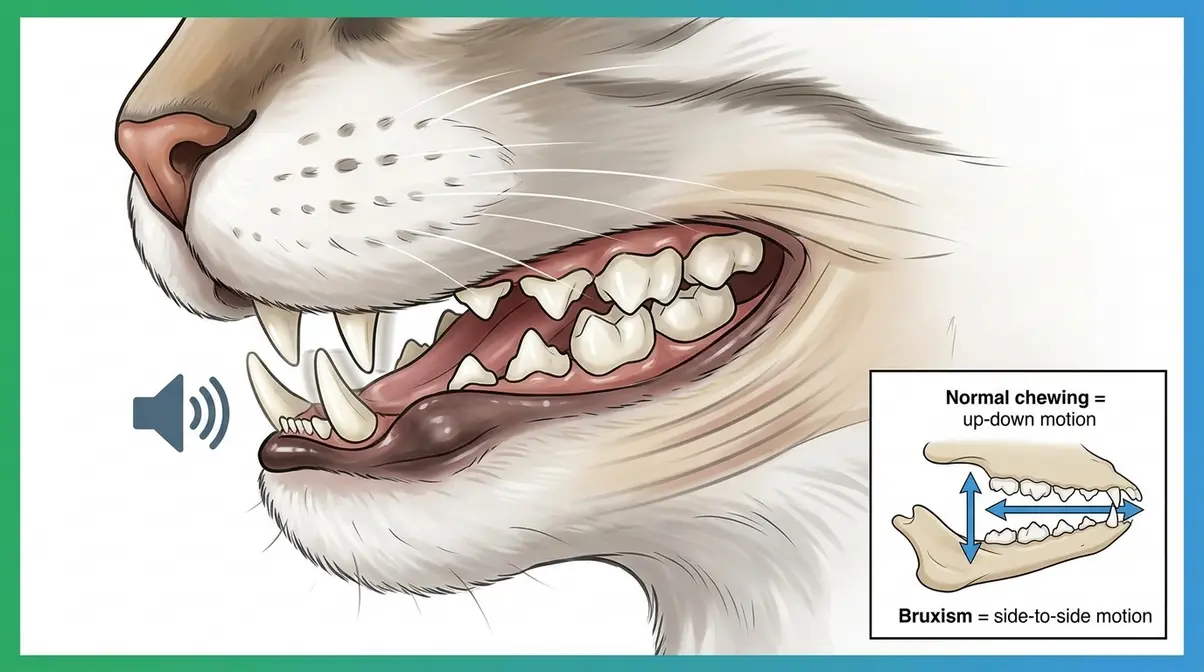
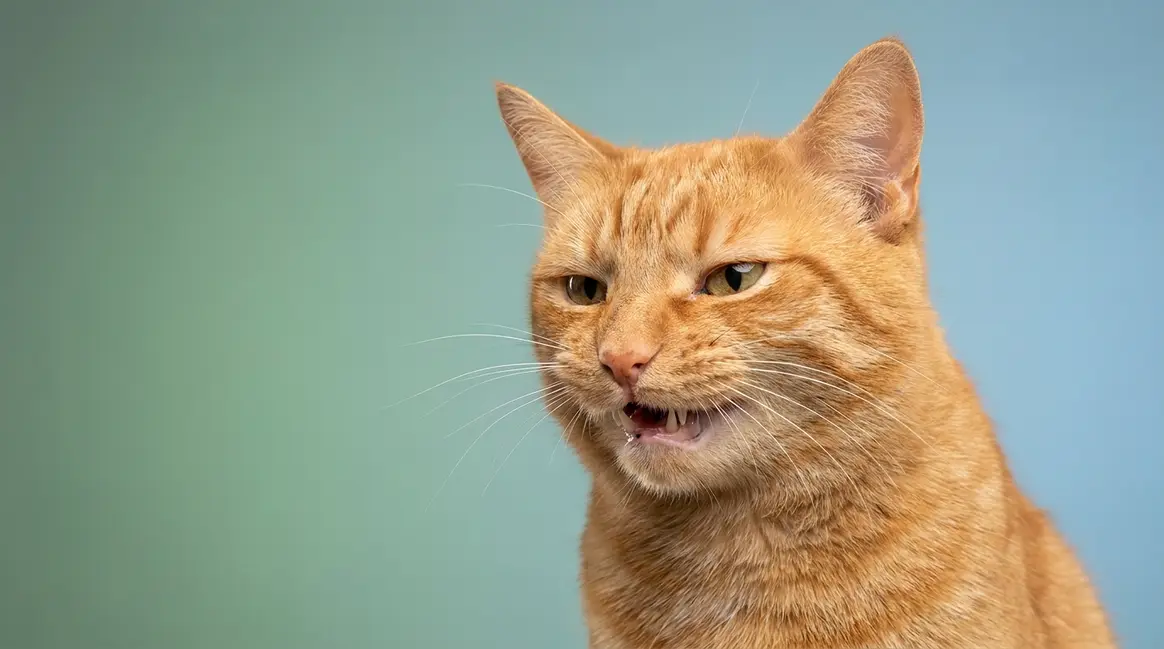
The sound of cat teeth grinding is distinct from normal eating noise. Bruxism, the medical term for teeth grinding in cats, produces a grating, clicking, or scraping sound — similar to two pieces of sandpaper rubbing together. It may be brief or repetitive, and it often stops when the cat stops moving its jaw. Recognizing this sound accurately is your first and most important step.
What Does Cat Teeth Grinding Actually Sound Like?
The primary cat teeth grinding sound is a dry, repetitive grating or clicking noise. Think of it as the sound of someone chewing gravel — irregular, faintly scraping, and distinctly different from the rhythmic crunch of a cat eating dry kibble.
The sound is produced when the upper and lower teeth move against each other laterally — that is, side to side — rather than in the normal up-and-down chewing motion. You may notice the jaw moving in an unusual direction if you watch closely.
Normal eating produces a consistent, food-driven crunch. Bruxism is irregular, scraping, and often quieter than owners expect. As UC Davis Veterinary Medicine notes, dental pain in cats often manifests through behavioral signs including abnormal crunching noises while eating and bruxism — making early sound recognition a critical first step.
If you put your ear near your cat’s head during a grinding episode, it may sound like a faint crunch or click — not the louder smacking of normal eating. This matters because many owners dismiss the sound as food-related and delay seeking care, allowing underlying dental disease to progress silently.
Bruxism vs. Normal Eating Noises: Key Differences
Three common cat mouth sounds are frequently confused with bruxism. Knowing the difference could save you an unnecessary emergency visit — or alert you to a real one.
Normal chewing sounds are rhythmic and consistent, directly tied to food texture. A cat eating dry kibble produces a crunching noise, but that sound comes from food breaking apart — not jaw-on-jaw contact. A quick test: switch to wet food briefly. If the crunching disappears, it was the food, not grinding.
Jaw chattering (feline chattering) is a rapid, staccato clicking sound cats make when watching prey — a bird through a window, for instance. This is an instinctual hunting behavior, not a pain response. It sounds faster and more rhythmic than bruxism, and it occurs only in specific hunting-trigger contexts.
Purring with dental pain is the most deceptive pattern. Some cats purr while experiencing pain as a self-soothing mechanism. Bruxism can occur simultaneously with purring, making the cat appear content while grinding — a combination that delays owner concern.
| Sound | Pattern | Associated with Pain? |
|---|---|---|
| Bruxism (teeth grinding) | Irregular grating/clicking, side-to-side jaw | Almost always |
| Normal chewing (dry food) | Rhythmic crunching, stops with food | No |
| Jaw chattering | Rapid staccato clicking, hunting behavior | No |
| Purring with grinding | Purring + grating sound simultaneously | Yes — pain-induced purring |
When the Crunching Sound Happens While Eating
If the grinding sound occurs specifically during meals, treat it as a strong indicator of oral pain. Chewing puts direct pressure on painful teeth, fractured roots, and inflamed gums — forcing the jaw to compensate with abnormal lateral movements that produce the grinding noise.
This is meaningfully different from the food-crunch of dry kibble. If you hear it on wet food — which should be nearly silent — it almost certainly indicates a dental problem. A cat grinding its teeth when eating wet food is one of the clearest signs of dental pain you can observe at home. Wet food requires no real crunch, so any grinding noise is jaw-on-jaw contact, not food breaking apart.
According to veterinary consensus documented by Vetster, teeth grinding while eating is among the most consistent behavioral indicators that a cat is experiencing oral discomfort requiring professional evaluation.
“Cat teeth grinding produces a grating or clicking sound distinct from normal chewing — owners who hear it consistently should treat it as a pain signal, not a quirk.”
Checkpoint: You can now identify whether the sound is bruxism, normal chewing, or jaw chattering — and whether eating makes it worse. Note your observation before moving to Step 2.
Step 2: Identify the Most Likely Cause
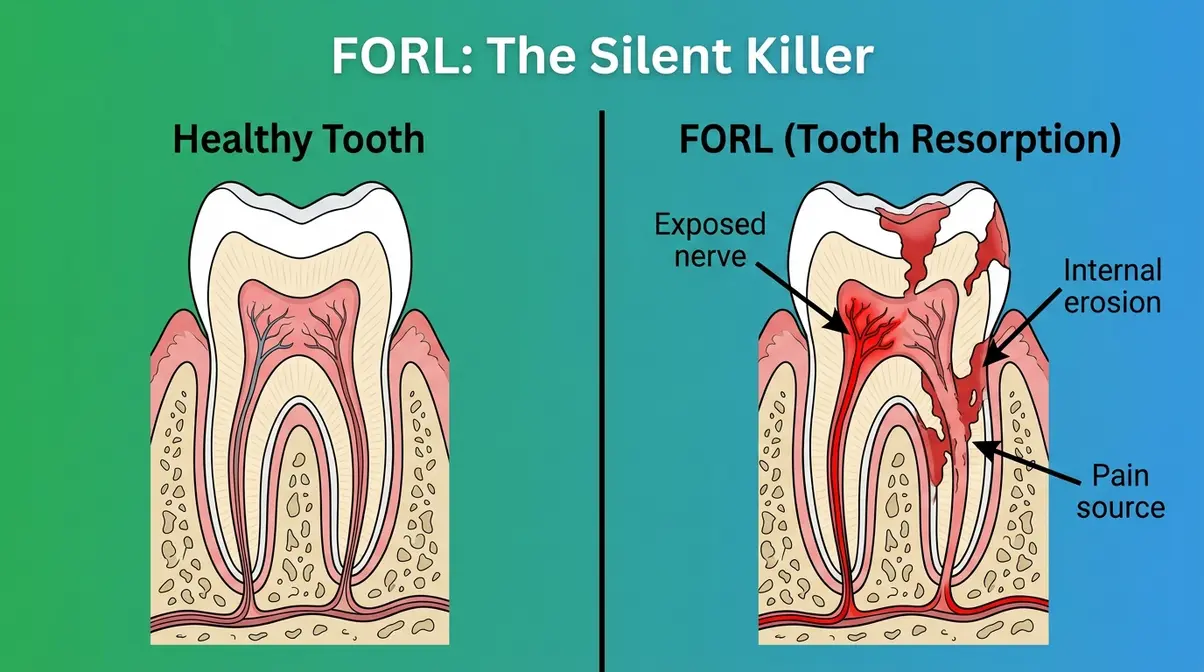
Cat teeth grinding is a symptom, not a diagnosis. Several distinct conditions can cause it, and identifying the most likely culprit guides both your urgency level and your vet conversation. The five main causes range from treatable dental disease to serious systemic illness — which is why this step matters.
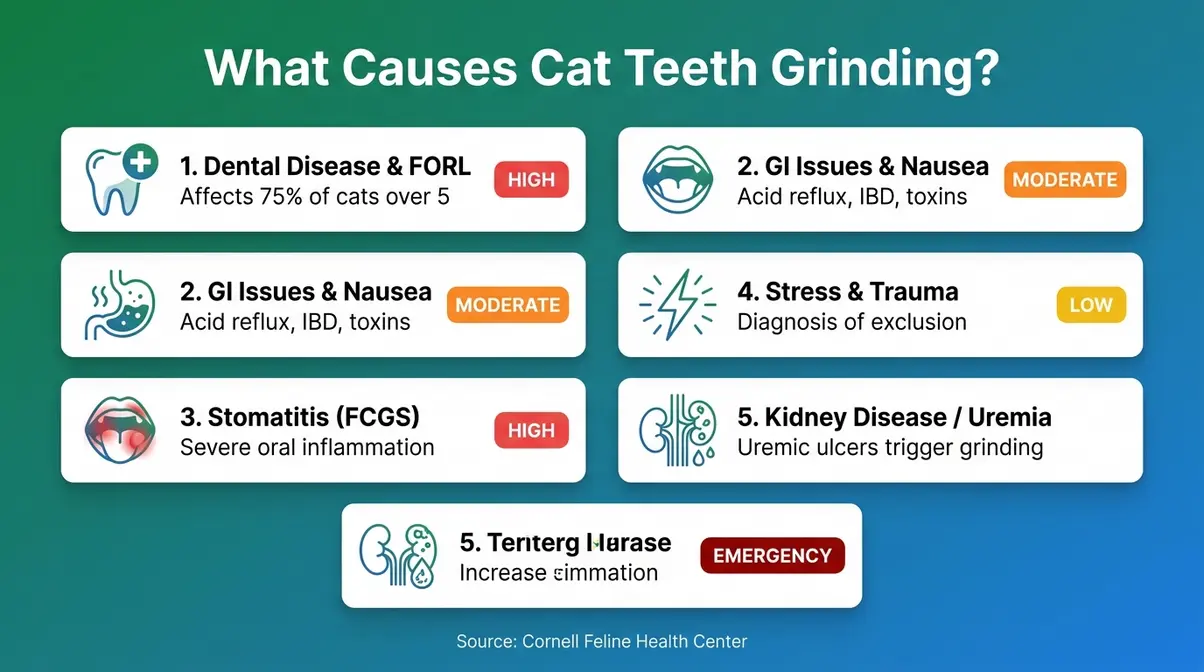
Dental Disease and FORL: The Most Common Culprits
Dental disease is the leading cause of bruxism in cats. Among dental conditions, one stands above the rest: FORL, or Feline Odontoclastic Resorptive Lesions — a painful condition where the tooth structure erodes from the inside out, like a cavity that destroys the tooth from within.
FORL affects up to 75% of cats over the age of five, according to Cornell University’s College of Veterinary Medicine. This makes it the single most important condition to rule out when your cat is grinding its teeth. What makes FORL particularly dangerous is that it often shows no visible signs until the erosion is severe — earning it the nickname “the silent killer” among veterinary dental specialists.
Why does FORL cause grinding? As the tooth structure breaks down, the nerve inside becomes exposed. Every time the cat closes its jaw — even gently — the pressure triggers pain, causing the involuntary lateral jaw movement that produces the grinding sound.
Beyond FORL, other dental causes include periodontal disease (infection of the gum tissue and tooth roots), broken or fractured teeth, and dental abscesses. Each of these creates pain that manifests as bruxism during or between meals.
As PetMD explains, dental disease in cats is chronically underdiagnosed because cats instinctively hide pain — making owner-observed symptoms like grinding one of the few early warning signals available.
In Step 5, you’ll apply “The 5-Sign Urgency Protocol” to determine whether any of these dental causes require emergency care.
GI Issues, Nausea, and Stomatitis
Not all cat teeth grinding originates in the mouth. Gastrointestinal (GI) discomfort — particularly nausea — can trigger bruxism in cats, just as it can in humans who grind or clench their teeth when feeling ill.
When a cat feels nauseous, the body activates stress responses that can include jaw tension and involuntary grinding movements. Conditions like acid reflux, inflammatory bowel disease (IBD), or ingestion of a toxic substance can all produce GI-related bruxism. Watch for concurrent symptoms: lip licking, excessive swallowing, vomiting, or a hunched posture while eating.
Feline chronic gingivostomatitis (FCGS) — also called stomatitis — is a separate but related condition. Stomatitis is a severe inflammatory condition affecting the gums and mouth lining, causing intense pain throughout the entire oral cavity. Unlike FORL, which targets individual teeth, stomatitis creates widespread inflammation. Cats with stomatitis often refuse food entirely, drool heavily, and grind their teeth even when not eating. It affects an estimated 0.7–12% of cats and is notoriously difficult to manage without veterinary intervention (Veterinary Evidence, 2019).
“This behavior shouldn’t be ignored as it’s usually an indicator that something is wrong.”
Both GI causes and stomatitis require professional diagnosis. Home observation alone cannot distinguish between them — your vet will need to perform a physical oral exam and potentially bloodwork.
Less Common Causes: Stress, Trauma, and Neurological Factors
While dental and GI causes account for the majority of bruxism cases, a smaller percentage stem from stress, physical trauma, or neurological issues.
Stress-related grinding can occur in cats experiencing significant environmental changes — a new pet, a move, a change in routine. Chronic stress activates the sympathetic nervous system, which can increase jaw muscle tension. However, stress-only bruxism is relatively uncommon in cats compared to dogs or humans, and it should always be a diagnosis of exclusion — meaning dental and medical causes must be ruled out first.
Physical trauma to the jaw, face, or mouth can cause abnormal jaw alignment (malocclusion) or temporomandibular joint (TMJ) dysfunction — the jaw joint equivalent of a dislocated shoulder. Cats who have experienced falls, fights, or accidents are at higher risk. A fractured jaw or dislocated TMJ will produce grinding sounds as the joint moves incorrectly.
Neurological causes are rare but real. Certain neurological conditions affecting the brainstem or trigeminal nerve — the nerve responsible for jaw movement — can produce involuntary grinding. If your cat shows other neurological signs (head tilt, loss of balance, facial asymmetry), this warrants urgent veterinary evaluation.
According to Cats.com, a thorough veterinary examination — including dental X-rays and neurological screening — is the only reliable way to identify the root cause of bruxism.
Step 3: Note When It Happens
Timing is one of the most useful diagnostic clues you can give your vet. When the grinding occurs — during eating, at rest, during sleep, or in specific emotional states — narrows the list of possible causes significantly. This step helps you observe and record that pattern.
Why Eating Makes Dental Pain Worse
Chewing is a mechanical stress test for the teeth and gums. When dental structures are compromised — whether by FORL, periodontal disease, or a fractured tooth — the pressure of chewing amplifies pain and triggers the compensatory jaw movements that produce grinding.
This is why cats with dental disease often grind only during or immediately after eating, then appear normal at rest. The pain is present constantly, but the grinding is triggered by the mechanical act of chewing. Some cats begin to eat more slowly, tilt their head to one side while chewing, or drop food from their mouth mid-meal — all behavioral signs of oral pain worth noting.
Veterinary consensus, as reflected in WellPets, confirms that meal-associated grinding is one of the strongest behavioral indicators of active dental disease in cats.
What Is Quidding? A Key Warning Sign
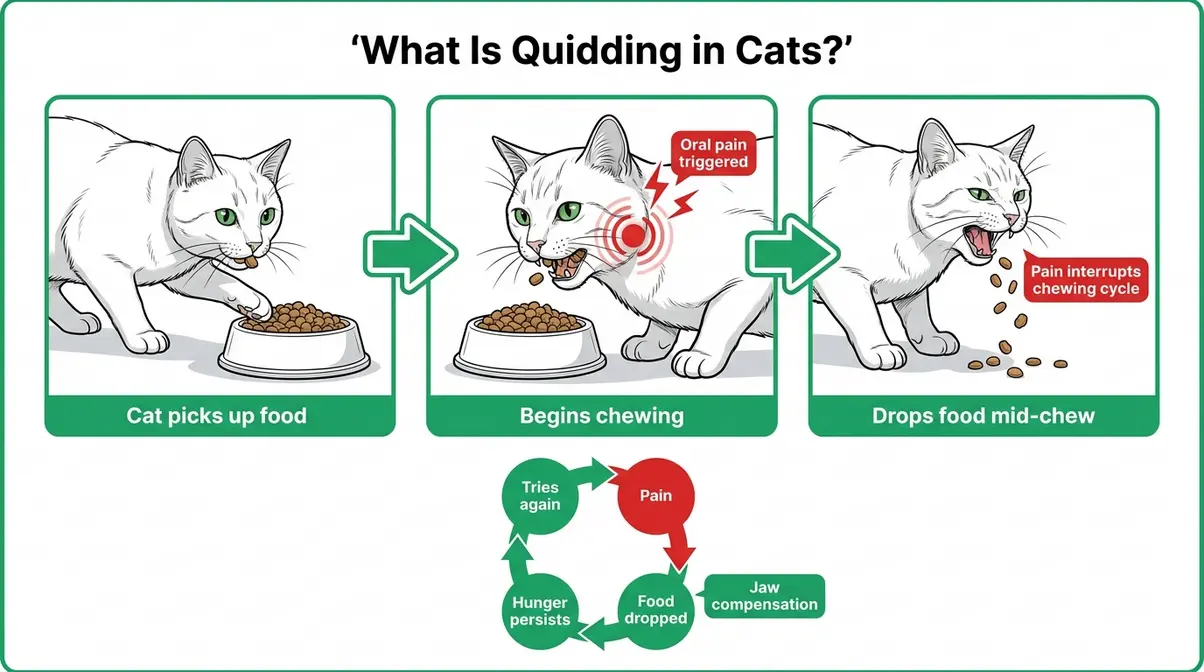
Quidding is a term borrowed from equine veterinary medicine that describes a specific eating behavior: the cat picks up food, begins to chew, then drops it from the mouth mid-chew. The food falls out — not because the cat doesn’t want it, but because chewing has become too painful to complete.
Quidding is a key warning sign of advanced oral pain. It often accompanies bruxism and is one of the clearest behavioral indicators that dental or oral disease has reached a point where the cat cannot eat comfortably. Cats who are quidding are typically in significant pain, even if they show no other obvious signs of distress.
If you observe your cat starting to eat, then dropping food repeatedly, combined with a grinding sound, contact your vet promptly. This combination suggests the pain is severe enough to interrupt a basic survival behavior.
Wet vs. Dry Food, and Why Age Matters
The type of food your cat eats provides a useful diagnostic filter. Dry food produces a crunching sound by nature — wet food does not. If your cat grinds its teeth on wet food, the sound has no food-based explanation. That grinding is jaw-on-jaw contact, which is almost always pain-related.
Age is another important variable. Older cats — particularly those over seven — face a significantly higher risk of FORL, periodontal disease, and kidney disease, all of which can cause bruxism. If your older cat recently started grinding its teeth while eating, do not wait to see if it resolves on its own. The likelihood of an underlying condition increases substantially with age.
Kittens and young cats can grind during teething, as adult teeth erupt and push through the gum tissue. This is typically temporary, mild, and self-resolving. However, if the grinding is intense, persistent, or accompanied by other symptoms, veterinary evaluation is still warranted.
Checkpoint: Note whether the grinding occurs during eating, at rest, or both — and whether it’s happening on wet food, dry food, or both. This information is critical for your vet.
Step 4: Observe Behavioral Clues
Beyond the sound itself and its timing, your cat’s behavior during and around grinding episodes provides valuable diagnostic information. Two behavioral patterns in particular tend to confuse owners: grinding that appears to occur during happiness, and grinding during sleep.
Grinding While Purring or Seeming Happy
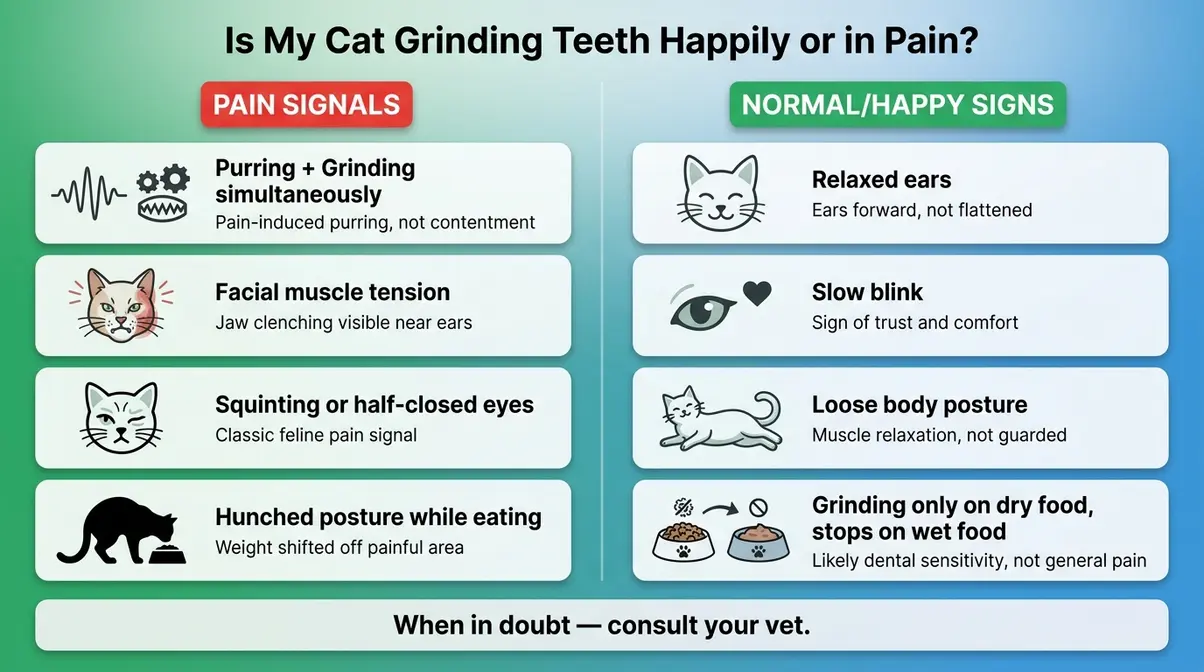
It may seem contradictory, but a cat can grind its teeth while purring or appearing outwardly content. This happens because cats use purring as a self-soothing mechanism — not just as an expression of happiness. A cat in pain may purr to calm itself, producing a simultaneous purring-and-grinding pattern that owners often misread as contentment.
This is one of the most important behavioral nuances in feline pain assessment. Unlike dogs, who typically show obvious pain signals, cats evolved to mask discomfort as a survival strategy. A cat that is purring, eating (however slowly), and grinding simultaneously may be in considerable pain — and is almost certainly not “fine.”
If you observe purring combined with grinding, especially during or after meals, treat it as a pain signal rather than a sign that the cat is simply enjoying its food. Veterinary consensus supports this interpretation: pain-induced purring is a well-documented feline response.
Grinding During Sleep and Stress-Related Grinding
Grinding that occurs during sleep is less common than meal-associated grinding but more concerning when it does appear. Sleep bruxism in cats can indicate that the pain or neurological stimulus is present even when the cat is not actively using its jaw — suggesting a more systemic or neurological cause rather than a purely mechanical dental trigger.
Stress-related grinding follows a different pattern: it tends to occur during specific anxiety-inducing situations rather than randomly. A cat that grinds its teeth during car rides, vet visits, or when a new pet enters the home may be exhibiting stress-related bruxism. However, as noted in Step 2, stress should be a diagnosis of exclusion. Always rule out dental and medical causes first, even if a stress trigger seems obvious.
According to Cats.com, any grinding that occurs outside of eating contexts — whether during sleep, rest, or apparent stress — warrants prompt veterinary evaluation to rule out systemic disease.
Checkpoint: Note whether the grinding happens during eating, during sleep, during specific stress triggers, or seemingly at random. Bring this behavioral log to your vet appointment.
Step 5: Check for Emergency Red Flags
Some causes of cat teeth grinding are manageable with a scheduled vet appointment. Others are medical emergencies. This step helps you make that distinction quickly and confidently using “The 5-Sign Urgency Protocol” — a structured checklist designed to identify when grinding has crossed from a concerning symptom into an emergency signal.
Systemic Diseases: Kidney Disease and Renal Failure
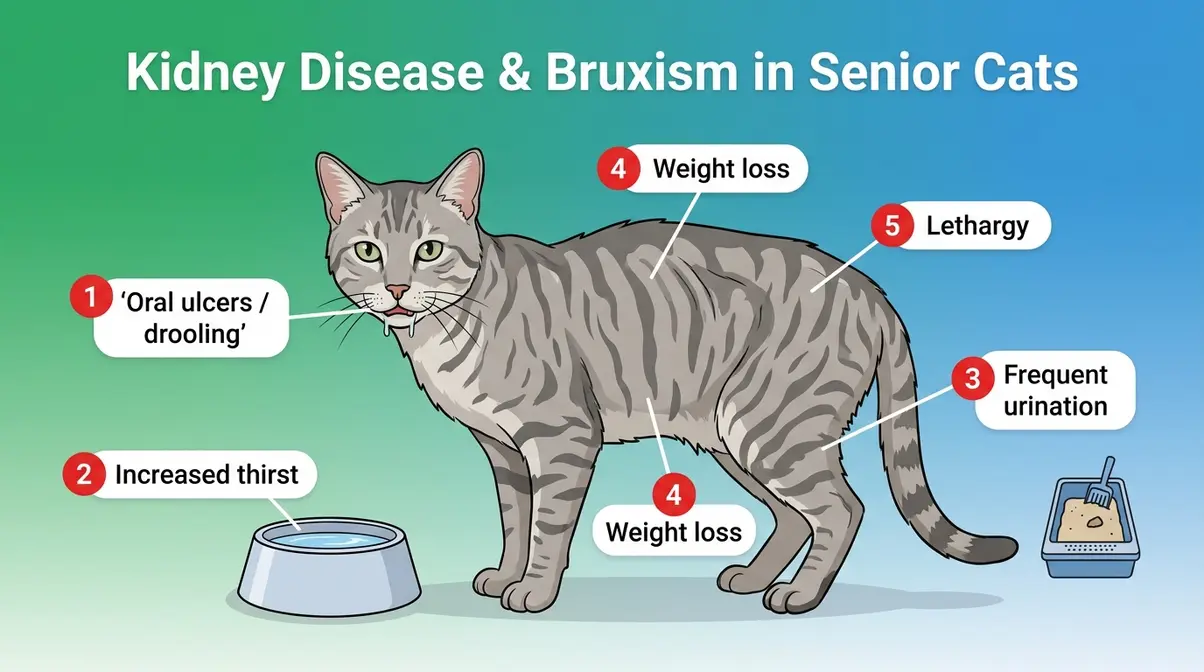
Kidney disease is among the most serious systemic causes of bruxism in cats. When the kidneys fail to filter waste products from the blood, a condition called uremia develops — a toxic buildup of urea and other waste compounds. One consequence of uremia is the formation of uremic ulcers (painful sores) in the mouth and on the tongue, which cause intense oral pain and trigger grinding.
Chronic kidney disease (CKD) affects approximately 1 in 3 cats over the age of 12, making it one of the most common serious conditions in senior cats (International Renal Interest Society, 2023). A cat grinding its teeth alongside increased thirst, frequent urination, weight loss, or vomiting may be showing the combined signs of advanced renal failure — a situation that requires emergency veterinary care, not a wait-and-see approach.
Cat grinding teeth renal failure combinations are particularly urgent because uremia progresses rapidly once symptoms become visible. If your senior cat has recently developed bruxism alongside any of the above symptoms, call your vet the same day.
The 5-Sign Urgency Protocol: When to Call the Vet Now
“The 5-Sign Urgency Protocol” is a structured decision tool for cat owners observing teeth grinding. If your cat shows one or more of the following signs alongside bruxism, do not wait for a scheduled appointment — call your vet or an emergency animal clinic immediately.
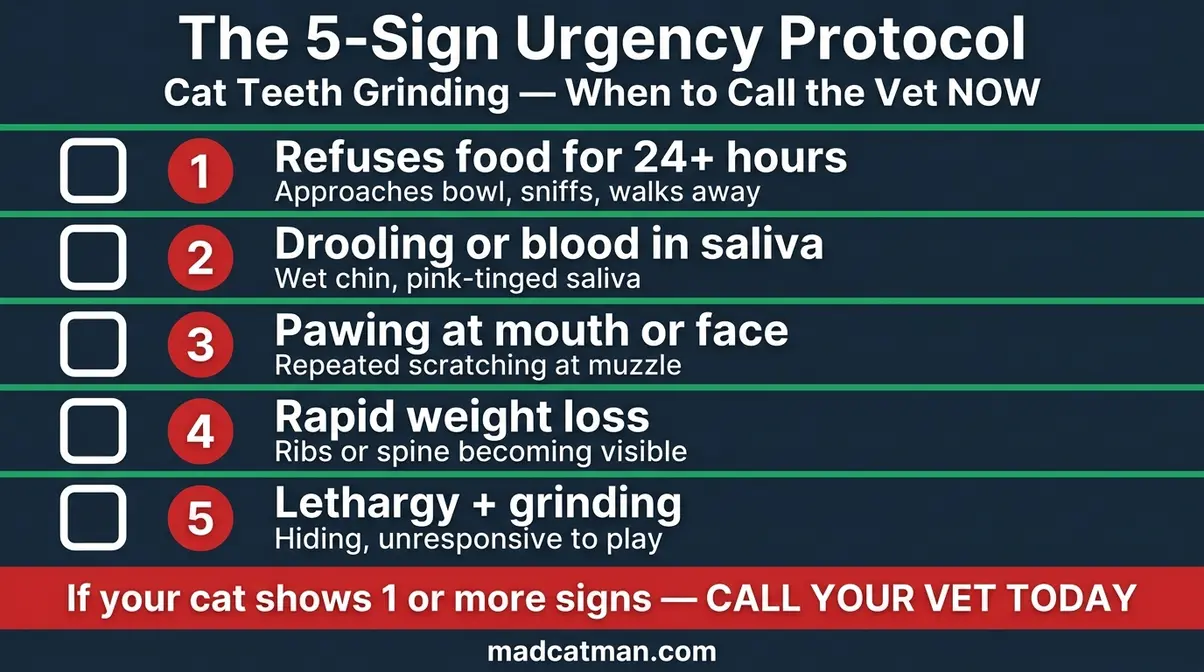
| Sign | What It Looks Like | Why It’s Urgent |
|---|---|---|
| 1. Refusal to eat for 24+ hours | Cat approaches food, sniffs, walks away | Pain is severe enough to override hunger |
| 2. Visible drooling or blood in saliva | Wet chin, pink-tinged saliva, wet fur on chest | Active oral lesion, ulcer, or severe inflammation |
| 3. Pawing at the mouth or face | Repeated scratching at muzzle, shaking head | Acute pain response — cat is trying to relieve discomfort |
| 4. Rapid weight loss | Ribs and spine becoming visible within days to weeks | Inability to eat normally; possible systemic disease |
| 5. Lethargy combined with grinding | Cat not moving normally, hiding, unresponsive to play | Systemic illness (kidney disease, toxin, infection) |
The 5-Sign Urgency Protocol is not a replacement for veterinary diagnosis. It is a triage tool. Even if your cat shows none of these five signs, grinding that persists for more than 48 hours still warrants a scheduled vet visit within the week.
Other Concurrent Symptoms That Escalate Urgency
Beyond the five core signs, several additional symptoms increase the urgency of any bruxism case. Note these carefully during your observation period:
- Vomiting or regurgitation alongside grinding may indicate GI disease, toxin ingestion, or renal failure
- Facial swelling around the jaw or cheeks suggests a dental abscess — a bacterial infection that can spread rapidly
- Squinting or eye discharge in combination with oral symptoms may indicate a systemic infection affecting multiple organ systems
- Sudden behavioral changes — hiding, aggression when touched near the face, loss of appetite — are pain-signaling behaviors in cats that typically mask discomfort
As Vetster documents, cats presenting with bruxism alongside two or more of these concurrent symptoms should be evaluated on an emergency basis rather than at a routine appointment.
Checkpoint: Run through The 5-Sign Urgency Protocol now. If your cat shows 1+ signs, stop reading and call your vet. If not, proceed to Step 6 for your scheduled action plan.
Step 6: Take Action — Your Next Steps
You’ve identified the sound, observed the timing, noted behavioral clues, and checked for emergency red flags. Now it’s time to act. Here’s your clear, prioritized action plan based on what you’ve observed.
If your cat triggered 1+ signs in The 5-Sign Urgency Protocol: Call your vet or an emergency animal clinic now. Do not wait. Bring your written observations from the Prerequisites section.
If your cat is grinding but shows no emergency signs: Schedule a vet appointment within 3–5 days. Do not wait weeks — dental disease progresses quickly. In the meantime:
- Switch to wet food only to reduce mechanical pressure on painful teeth
- Avoid hard treats or chew toys until after the vet visit
- Continue logging when grinding occurs, what food was involved, and any new symptoms
- Do not attempt to examine your cat’s mouth forcefully — this can cause injury and stress
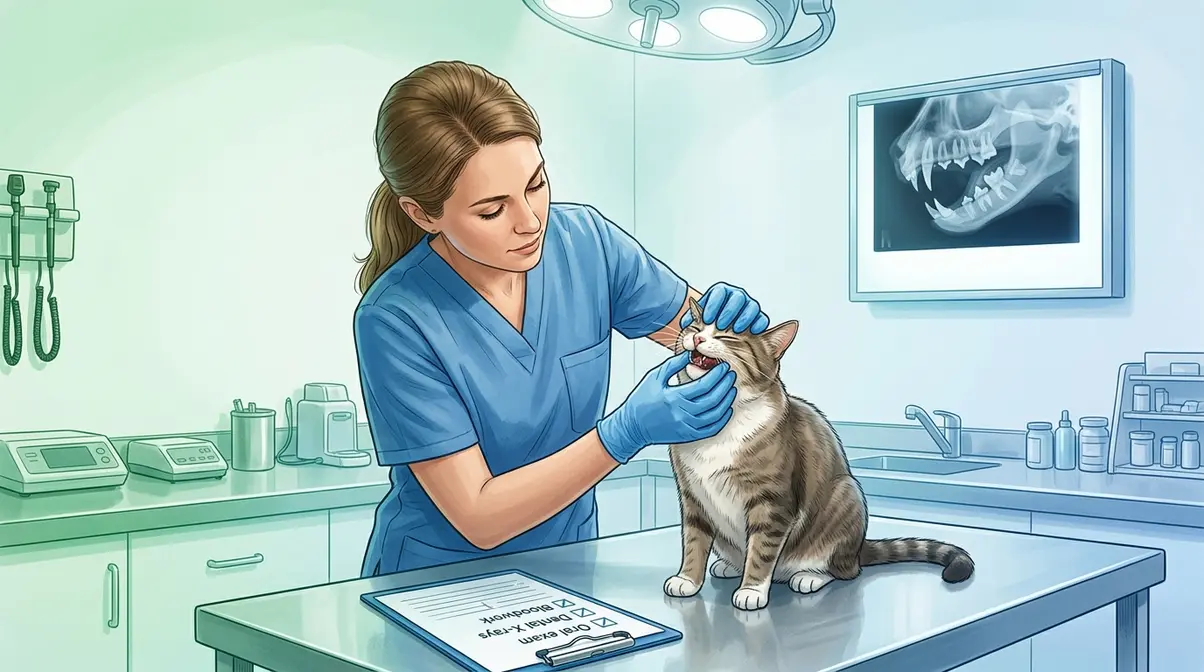
At the vet appointment, expect: A full oral examination (often under sedation for accurate assessment), dental X-rays (the only way to detect FORL and root-level disease), and possibly bloodwork to screen for kidney disease or systemic illness.
There are no effective home remedies for the underlying causes of bruxism. Pain relief without diagnosis can mask symptoms and delay treatment. Only identifying and treating the root cause stops the grinding.
Verify Your Results: What to Expect at the Vet
A thorough veterinary evaluation for cat teeth grinding typically includes several components. Understanding what to expect reduces anxiety and helps you advocate for your cat effectively.
Oral examination under sedation is the gold standard. Most dental pathology in cats — including FORL lesions and root-level periodontal disease — is invisible to the naked eye and requires sedation for a complete assessment. Do not be concerned if your vet recommends this.
Full-mouth dental X-rays are essential. Studies show that up to 60% of feline dental disease occurs below the gum line and is undetectable without radiographs (Journal of Veterinary Dentistry, 2022). X-rays are not optional for a complete dental workup.
Bloodwork screens for kidney disease, liver function, and systemic infection — all of which can cause or contribute to bruxism. For senior cats especially, bloodwork is a critical component of any bruxism workup.
Treatment will depend entirely on the diagnosis. FORL treatment typically involves tooth extraction (the affected tooth cannot be saved). Stomatitis may require multiple extractions or long-term immunosuppressive therapy. Kidney disease requires a specific management plan. Your vet will walk you through options after diagnosis.
Common Mistakes and Limitations
Common Mistakes Owners Make
Waiting too long is the most common and costly mistake. Because cats hide pain effectively, owners often assume “if the cat is still eating, it can’t be that bad.” In reality, cats continue eating even through significant oral pain — until they can’t. By the time a cat refuses food entirely, the condition has typically progressed considerably.
Assuming the crunching is food-related delays diagnosis, particularly when the cat eats dry kibble. Always test with wet food. If the grinding continues on wet food, it is not the kibble.
Attempting home dental care without a diagnosis — including brushing an already painful mouth or applying OTC dental gels — can worsen pain and cause the cat to associate mouth handling with distress, complicating future veterinary care.
Giving human pain medications (ibuprofen, acetaminophen, aspirin) is dangerous and potentially fatal in cats. Never medicate a grinding cat without veterinary guidance.
When Home Observation Isn’t Enough
Home observation has real limits. You can identify that grinding is occurring and gather useful contextual information — but you cannot diagnose FORL, periodontal disease, stomatitis, or kidney disease at home. These conditions require professional examination, imaging, and laboratory testing.
If grinding persists for more than 48 hours, regardless of whether emergency signs are present, schedule a veterinary appointment. The information you’ve gathered in this guide makes you a more informed, prepared advocate for your cat — but it is not a substitute for professional veterinary diagnosis and treatment.
Frequently Asked Questions
Is it normal for a cat to grind its teeth?
Cat teeth grinding is not normal and should never be dismissed as a harmless habit. Unlike some species, cats do not grind their teeth as a stress-release behavior without an underlying cause. Bruxism in cats almost always signals pain — most commonly from dental disease, gastrointestinal discomfort, or systemic illness. Even occasional grinding warrants a veterinary evaluation to rule out conditions like FORL, which affects up to 75% of cats over five and is often painless in its early stages (Cornell Feline Health Center). If you hear the sound more than once, consult your vet.
Why does my cat make a crunching sound with his mouth?
The crunching sound from your cat’s mouth is most likely bruxism — teeth grinding caused by oral pain. The upper and lower teeth move laterally against each other, producing a grating or clicking noise. This differs from the food-based crunch of dry kibble: if you hear it on wet food, which should produce no sound, it is almost certainly jaw-on-jaw contact. Common causes include FORL (tooth resorption), periodontal disease, a fractured tooth, or nausea from GI issues. A quick diagnostic test is switching to wet food — if the crunching continues, call your vet within the week.
What is quidding in cats?
Quidding is when a cat picks up food, begins to chew, then drops it mid-chew due to oral pain. The term comes from equine veterinary medicine and describes a specific pattern: the cat wants to eat but cannot complete the chewing motion without pain. It is one of the clearest behavioral signs of advanced dental disease and frequently accompanies bruxism. A cat that is quidding is typically experiencing significant pain. If you observe this behavior — especially combined with a grinding sound — contact your vet promptly rather than waiting for a scheduled appointment.
When should I worry about my cat’s teeth grinding?
Worry immediately if your cat shows any sign from The 5-Sign Urgency Protocol alongside grinding: refusing food for 24+ hours, visible drooling or blood in saliva, pawing at the mouth, rapid weight loss, or lethargy. These combinations signal conditions requiring same-day veterinary care. For grinding without emergency signs, schedule an appointment within 3–5 days — do not wait weeks, as dental disease progresses quickly. Any grinding that persists beyond 48 hours warrants professional evaluation, even if your cat seems otherwise comfortable. According to Vetster, persistent bruxism is consistently associated with treatable but progressive conditions that worsen without intervention.
How do I get my cat to stop grinding its teeth?
You cannot stop cat teeth grinding without treating the underlying cause — and that requires a veterinary diagnosis. There are no effective home remedies for bruxism. Switching to wet food may reduce mechanical pain during meals, but it does not address the root condition. Depending on the diagnosis, treatment may involve tooth extraction (for FORL), professional dental cleaning and antibiotics (for periodontal disease), dietary management (for GI causes), or a kidney disease management protocol. The grinding stops when the pain stops. The fastest path to relief for your cat is an accurate diagnosis and appropriate treatment from a licensed veterinarian.
Conclusion
Cat teeth grinding is one of the clearest pain signals your cat can give you — and one of the easiest to dismiss. Bruxism is almost never normal, and it rarely resolves on its own. Dental disease, including the widely underdiagnosed FORL, accounts for the majority of cases and affects up to 75% of cats over five. Recognizing the sound, identifying the context, and applying “The 5-Sign Urgency Protocol” gives you a structured path from confusion to clarity.
The 5-Sign Urgency Protocol exists for exactly this moment: when you’re unsure whether what you’re hearing is serious. If your cat shows even one of the five red flags — food refusal, drooling, pawing at the mouth, weight loss, or lethargy alongside grinding — that is your signal to call the vet today, not tomorrow.
Your next step is simple: schedule a veterinary appointment within 3–5 days if no emergency signs are present, or call your vet now if they are. Bring your written observations from the Prerequisites section. The earlier dental disease and systemic conditions are caught, the better the outcome — and the sooner your cat stops hurting.

Dave King
Cat owner and writer at Mad Cat Man.