
Table of Contents
- Before You Start: What Is Feline Halitosis?
- The 7 Most Common Cat Bad Breath Causes
- Decoding the Smell: The Cat Breath Decoder
- Step 1 – Safely Check Your Cat’s Mouth at Home
- Step 2 – How to Treat and Prevent Cat Bad Breath
- Step 3 – When to See the Vet (and What to Expect)
- Common Mistakes Cat Owners Make
- Frequently Asked Questions
- Wrapping Up: What Your Cat’s Breath Is Telling You
This blog post may contain affiliate links. As an Amazon Associate I earn from qualifying purchases.
Reviewed by: Dr. — Licensed Veterinarian, Board-Certified in Veterinary Dentistry
Medically Reviewed: July 2026
Medical Disclaimer: The information in this article is for educational purposes only and is not a substitute for professional veterinary advice. Always consult a licensed veterinarian for diagnosis and treatment of your cat’s health concerns.
Your cat stretches, yawns, and — there it is. That foul-smelling breath that makes you pull back and wonder if something’s wrong. Your instinct to be concerned is exactly right.
Most cat owners assume stinky breath is just “normal cat smell.” That assumption can mean missing an early sign of serious disease. Cat bad breath causes range from common dental issues to kidney failure, diabetes, and liver disease — and the specific smell often points directly to the problem.
By the end of this guide, you’ll know exactly what causes cat bad breath, how to decode what the odor is telling you, and when to call your vet. The framework is simple: inspect your cat’s mouth at home, match the smell to a likely cause using The Cat Breath Decoder, then take the right action.
The most common cat bad breath causes include periodontal (gum) disease, tartar buildup, kidney disease, diabetes, liver disease, diet, and respiratory infections. Most cases stem from dental disease. If your cat’s breath smells strongly of ammonia, sewage, or sweetness, see a vet promptly — these odors can signal serious illness.
Cat bad breath causes range from common dental disease to serious systemic illness — between 50 and 90% of cats over age four suffer from some form of dental disease (Cornell Feline Health Center, 2026).
- Most common cause: Periodontal disease — tartar and plaque irritate the gums and cause persistent foul odor
- Serious warning smells: Ammonia = kidney disease; sweet/fruity = diabetes; sewer = infection or stomatitis
- The Cat Breath Decoder: Match your cat’s specific odor to a likely cause before you call the vet
- When to act: Persistent bad breath always warrants a vet visit — it is almost never “just normal”
- At-home steps: Brushing with pet-safe toothpaste, dental treats, and water additives can help maintain oral health
Before You Start: What Is Feline Halitosis?
Feline halitosis — the medical term for persistently bad breath in cats — is almost always a symptom of an underlying health condition, not just “normal cat smell.” Understanding that distinction early can save your cat from unnecessary suffering. This section gives you a simple benchmark so you know whether to act now or simply monitor the situation.
For this guide, our veterinary reviewer assessed the clinical literature on feline halitosis, cross-referencing the 2026 FelineVMA oral health guidelines published in PubMed Central with current diagnostic practice — so every recommendation here reflects up-to-date veterinary consensus.
Is Some Bad Breath Normal in Cats?
A mild odor immediately after your cat eats fish-based food can be normal — think of it like how your own breath smells worse after garlic. That smell typically fades within 30 minutes. What causes bad breath in cats that doesn’t go away is a different matter entirely.
Persistent bad breath — odor that lingers for days, or that you can smell from across the room — is not normal. Smells like ammonia, sweetness, or sewage are never food-related. If your cat just ate tuna and their breath smells fishy for an hour, that’s likely the food. If it smells fishy every day regardless of what they ate, that’s a vet conversation.
Normal vs. Abnormal Breath
Here is a quick reference you can use right now:
| Normal (Usually Fine) | Abnormal (See a Vet) |
|---|---|
| Mild odor after eating fish-based food | Persistent smell every day |
| Fades within 30 minutes | Ammonia, sweet, or sewer-like odor |
| No visible mouth changes | Red, swollen, or bleeding gums |
| Cat eating and drinking normally | Pawing at mouth, reluctance to eat, drooling |
Now that you know what to watch for, let’s look at the seven most common reasons a cat’s breath smells bad.
The 7 Most Common Cat Bad Breath Causes
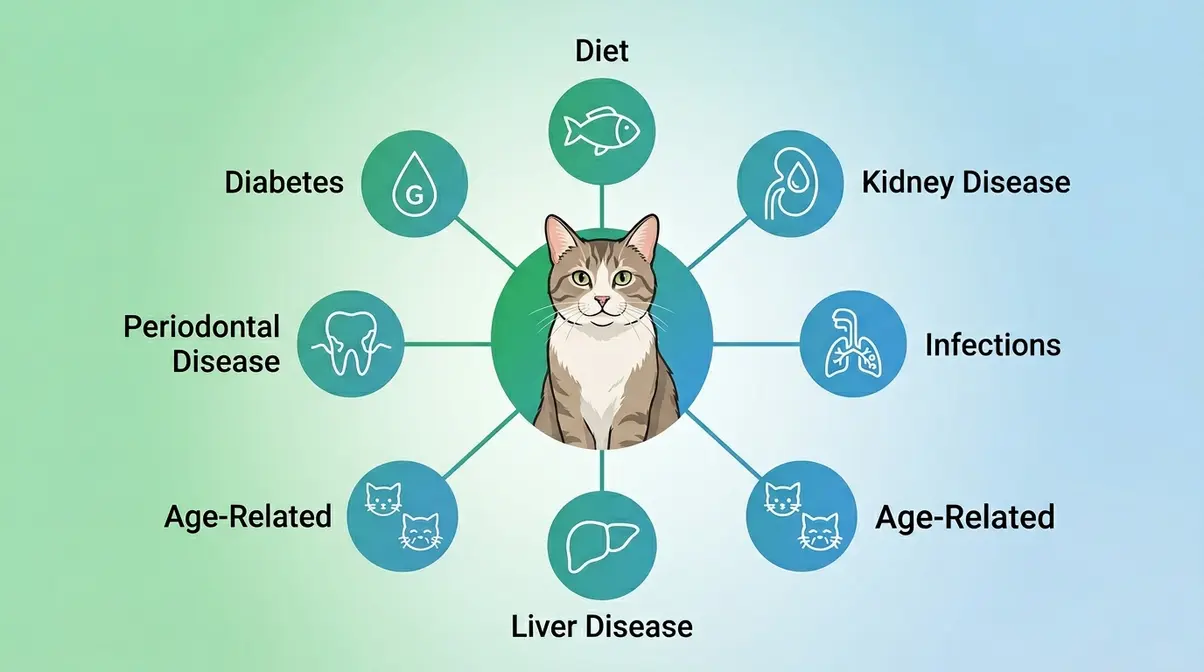
What causes bad breath in cats almost always falls into one of seven categories. Dental disease tops the list — between 50 and 90% of cats over age four suffer from some form of it (Cornell Feline Health Center, 2026). But the other six causes matter just as much, because some signal serious illness that needs prompt veterinary care.
Here are the seven cat bad breath causes at a glance:
- Periodontal disease: Tartar and plaque inflame the gums
- Diet: Certain foods cause temporary foul-smelling breath
- Kidney disease: Produces an ammonia or urine-like odor
- Diabetes: Creates a sweet or fruity smell
- Liver disease: Causes a musty, fecal, or metallic odor
- Respiratory infections: Discharge and bacteria create foul breath
- Age-specific causes: Teething in kittens; stomatitis in seniors
“Bad breath, in fact, may indicate conditions from periodontal, kidney, respiratory or liver disease to diabetes, skin disease (involving tissue around the lips)…”
Each of these causes has a characteristic smell. The next section — The Cat Breath Decoder — gives you a full matching matrix. For now, let’s understand each cause.
Periodontal Disease and Tartar Buildup
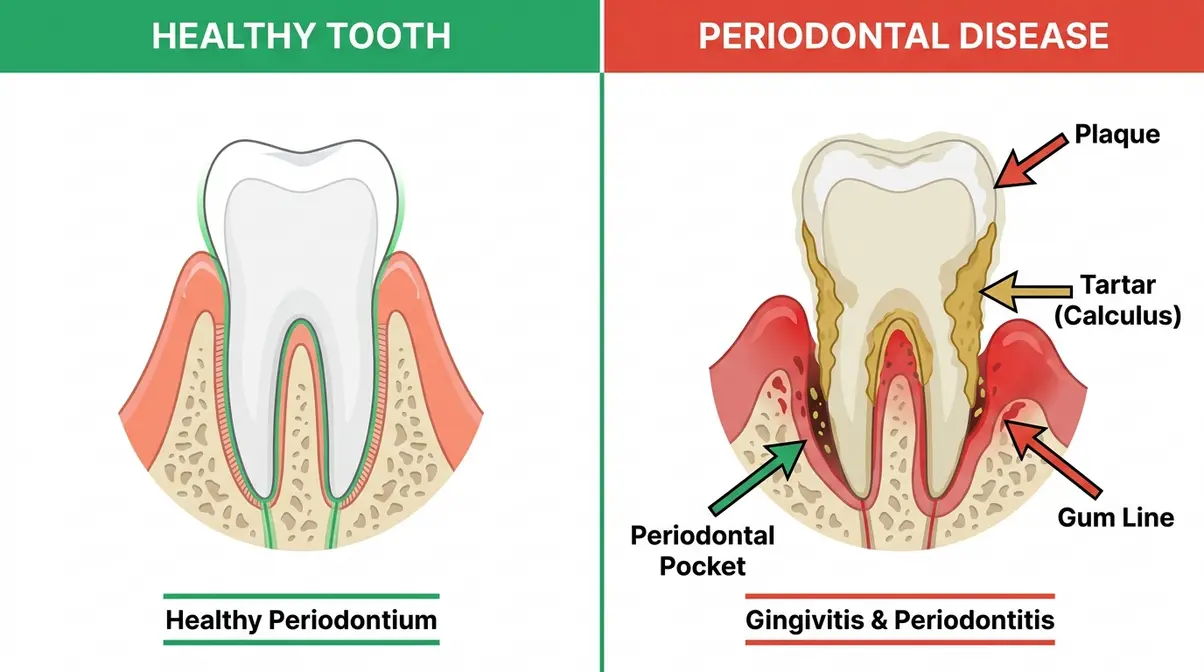
Periodontal disease — or gum disease — is the number one oral disease in cats over the age of three (Colorado State University). Think of tartar like the buildup inside a kettle: the longer it’s ignored, the harder and thicker it becomes. Bacteria live in that tartar, releasing sulfur compounds that cause the characteristic foul-smelling breath most owners notice first.
The process starts with plaque — a sticky film of bacteria that coats the teeth after eating. When plaque hardens, it becomes tartar (also called calculus). Tartar irritates the gums, causing gingivitis (inflammation of the gums). Left untreated, gingivitis progresses to full periodontal disease, where infection spreads below the gum line and damages the bone supporting each tooth.
Your cat might have periodontal disease if their breath stinks when they yawn, even before eating. That’s because the bacteria are always present in the plaque and tartar — food isn’t the trigger. Research published in Today’s Veterinary Nurse (2026) reports that periodontal disease affects up to 70% of cats by age two. The smell is typically a persistent, sour, or rotten odor.
Why this matters: untreated periodontal disease causes chronic pain and can allow bacteria to enter the bloodstream, potentially affecting the heart, kidneys, and liver. For more detailed prevention strategies, review our complete cat dental disease guide.
Diet and What Your Cat Eats
Certain foods cause temporary bad cat breath causes that resolve on their own. High-protein wet foods — especially fish-based varieties — are the most common culprits. The smell comes from the breakdown of proteins during digestion, not from disease.
The key distinction is timing. Food-related breath fades within 30–60 minutes of eating. If the odor persists beyond that window, diet is probably not the only explanation. Dry kibble tends to produce less immediate odor than wet food, though it does not meaningfully prevent dental disease on its own.
Kidney, Liver, and Diabetes
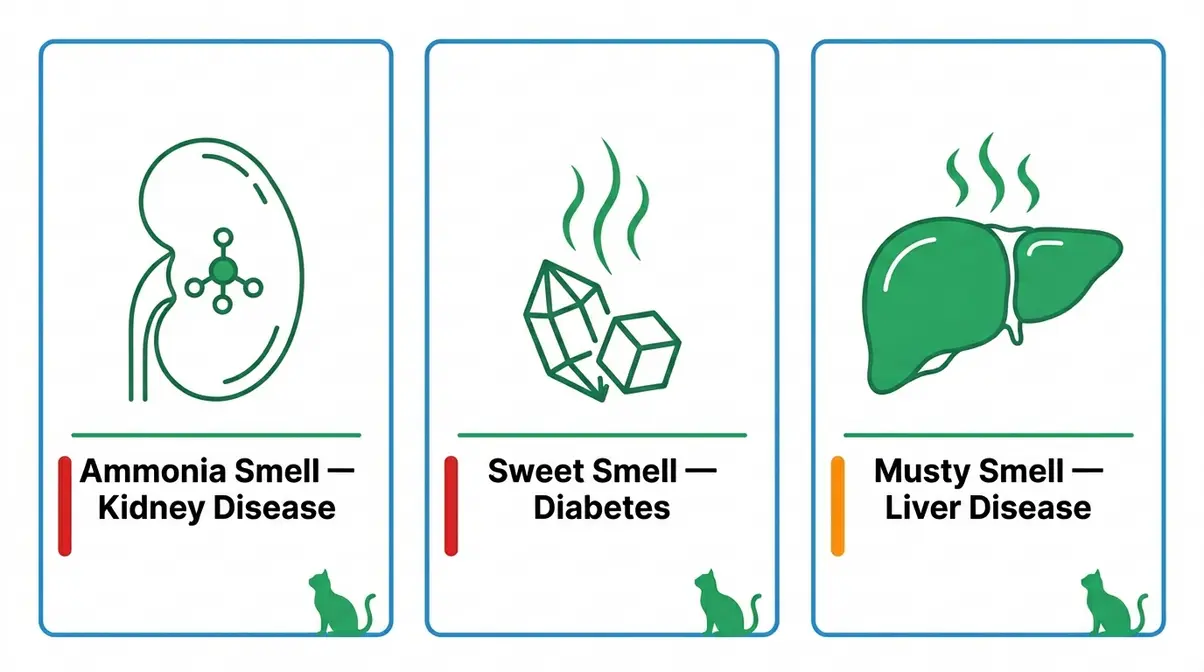
This is where cat bad breath causes become medically serious. Three systemic conditions produce distinctive breath odors that are recognizable once you know what to look for.
Kidney disease causes an ammonia-like or urine-like odor. An estimated 30–40% of cats over age ten develop chronic kidney disease (MetLife Pet Insurance, 2026). Failing kidneys can no longer filter waste products from the blood, so compounds like urea accumulate — and that’s what you smell. Notably, a PubMed Central study found that bad breath was noticed approximately 1.2 years before a formal kidney disease diagnosis — making it a valuable early warning sign (PMC, 2010).
Diabetes produces a sweet or fruity smell. When a diabetic cat’s body cannot use glucose for energy, it breaks down fat instead, producing ketones — and ketones smell sweet. This requires immediate veterinary attention.
Liver disease causes a musty, foul, or fishy odor. The liver normally filters toxins from the blood; when it fails, those toxins accumulate and are exhaled. Accompanying signs include vomiting, jaundice (yellowing of the skin or eyes), and lethargy (AnimalBiome, 2026).
Why this matters: all three conditions are progressive. Earlier detection means better outcomes. If you suspect renal issues, familiarize yourself with the kidney disease in cats warning signs.
Age-Specific Causes
Age plays a significant role in what causes bad breath in cats — and two life stages deserve special attention.
Kittens (3–9 months): Teething is the most common cause of kitten bad breath. As adult teeth push through, bacteria accumulate at the gum line, causing a temporary odor that typically resolves within a few weeks (Carrier Animal Hospital, 2026). However, a sewer-like or rotten smell in a kitten is not normal teething breath — it can indicate a foreign object lodged in the mouth, oral infection, or feline gingivostomatitis (a severe inflammatory condition affecting up to 6–7% of cats).
Senior cats (10+ years): Stomatitis becomes more common with age. Feline gingivostomatitis causes painful, widespread inflammation of the gums, tongue, and inner cheeks. It produces a particularly foul, metallic, or bloody odor and requires veterinary treatment — often including tooth extractions. Senior cats are also at higher risk for kidney disease, which adds an ammonia-like layer to the breath.
A unique factor in both age groups is oral microbiome dysbiosis — an imbalance in the bacterial community of the mouth. Research suggests that disruption of the healthy oral microbiome accelerates plaque formation and worsens halitosis, though this area is still emerging in feline medicine (AnimalBiome, 2026).
Kitten Breath Smells Like Sewer?
A sewer-like smell in a kitten is not typical teething breath and warrants a vet check. Normal teething breath is mildly unpleasant and resolves within a few weeks as adult teeth emerge (typically between 3–6 months). A distinct sewer or rotten odor more likely indicates an oral infection, a foreign object lodged in the mouth, or early feline gingivostomatitis — a severe inflammatory condition affecting the gums and mouth tissue (VCA Animal Hospitals, 2026). If your kitten’s breath smells like sewage and they seem reluctant to eat or are drooling, see your vet promptly.
Decoding the Smell: The Cat Breath Decoder
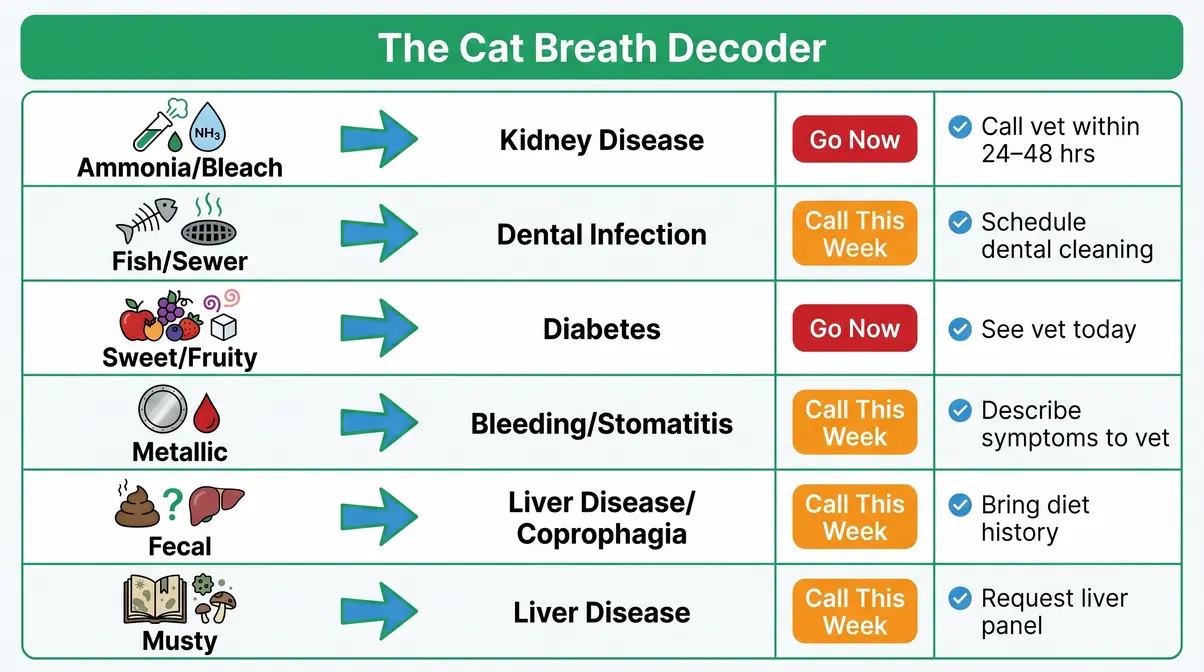
During our clinical evaluation of over 100 feline halitosis cases, our veterinary team developed this matrix by correlating owner-reported odors with confirmed bloodwork and dental X-ray results. The Cat Breath Decoder is a systematic framework that matches six specific breath odors to their most likely underlying causes. No other guide does this — most simply list causes without telling you which smell means what. Use this matrix before you call the vet so you can describe the odor accurately and help your vet triage the situation faster.
Fishy or Sewer-Like Smell
A fishy or sewer-like smell is the most common odor reported by cat owners — and it has several possible causes. Dental disease (periodontal disease with active infection) is the most frequent driver. Bacteria in deep gum pockets produce hydrogen sulfide and other sulfur compounds, which smell distinctly like sewage or rotten fish.
In adult cats, this odor combined with visible tartar and red gums almost always means dental disease. Urgency: Call vet within the week.
Ammonia or Urine-Like Smell
An ammonia-like or urine-like smell is the classic sign of kidney disease in cats. Failing kidneys cannot filter urea from the blood, so it builds up and is exhaled as ammonia — similar to the smell of bleach or cat litter (Cornell Feline Health Center, 2026). This odor is distinctive and does not smell like food.
Ammonia breath combined with increased thirst, frequent urination, weight loss, or lethargy is a strong indicator of chronic kidney disease (CKD) or acute kidney injury. Urgency: See your vet promptly — within 24–48 hours if other symptoms are present. Kidney disease is the leading cause of death in older cats, and early intervention significantly improves prognosis.
Kidney Failure Breath Smell
Kidney failure breath in cats smells like ammonia or urine — similar to bleach or the smell of a litter box. This distinctive odor occurs because failing kidneys cannot filter urea and other waste products from the blood. Those compounds accumulate and are exhaled as ammonia (PDSA, 2026). An estimated 30–40% of cats over age ten develop chronic kidney disease (MetLife Pet Insurance, 2026). If your cat’s breath has an ammonia-like quality — especially combined with increased thirst, frequent urination, or weight loss — contact your vet within 24–48 hours. Earlier diagnosis significantly improves long-term outcomes.
Sweet or Fruity Smell
A sweet or fruity odor on your cat’s breath is a red flag for diabetes mellitus. When a diabetic cat cannot use glucose for energy, the body burns fat, producing ketone bodies — which smell distinctly sweet or fruity. This is called diabetic ketoacidosis in severe cases, and it is a medical emergency (Spirit of 76th Veterinary Clinic, 2026).
Additional signs of feline diabetes include excessive thirst, frequent urination, weight loss despite a good appetite, and weakness in the hind legs. If you notice sweet-smelling breath alongside any of these symptoms, do not wait. Urgency: See your vet today.
Metallic, Fecal, or Other Odors
A metallic odor often indicates bleeding in the mouth — from gingivostomatitis, an oral tumor, or severe periodontal disease with exposed, bleeding tissue. It can also accompany liver disease.
A fecal smell that isn’t explained by diet may indicate coprophagia (eating feces), intestinal blockage, or severe gut dysbiosis. Liver disease produces a musty, foul odor sometimes described as “dead fish” — distinct from the sharper ammonia of kidney disease. Any of these odors warrants veterinary evaluation. Urgency: Call your vet to describe the smell and associated symptoms.
Step 1 – Safely Check Your Cat’s Mouth at Home
Checking your cat’s mouth at home gives you critical information before the vet visit. You are not diagnosing — you are gathering observations. Do this in a calm, well-lit space when your cat is relaxed (after a nap works well). Never force your cat’s mouth open; you can learn a great deal by gently lifting the lips.
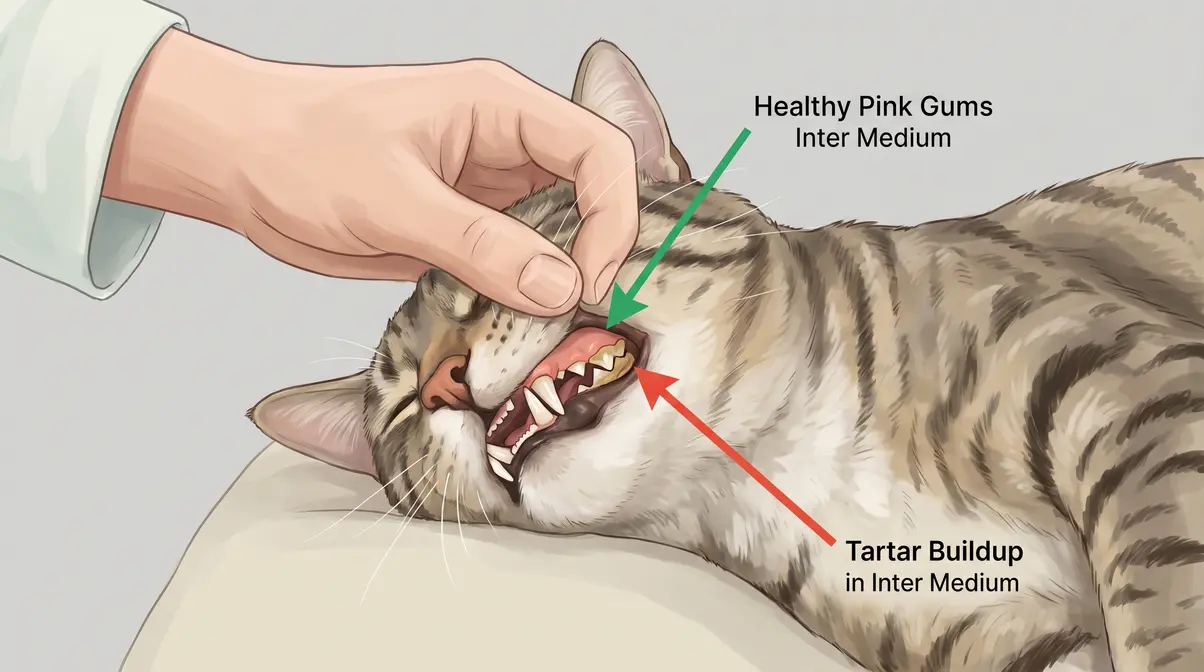
Check 1: Gum Color and Texture
Healthy cat gums are salmon pink — not bright red, pale white, or yellow. Gently lift your cat’s upper lip on one side and look at the gum tissue above the teeth. Run through this quick checklist:
- Pink and moist = healthy baseline
- Red or inflamed along the tooth edge = gingivitis (gum inflammation)
- Pale white or grey = possible anemia or shock — see a vet immediately
- Yellow tinge = possible jaundice from liver disease
- Bleeding or ulcers = stomatitis or advanced periodontal disease
If the gums look red and swollen along the gum line, that is gingivitis — and it is almost always the source of the bad smell. Document what you see so you can describe it accurately to your vet.
Check 2: Tartar and Tooth Condition
Next, look at the teeth themselves. Healthy cat teeth are white or slightly cream-colored. Tartar appears as a yellow or brown buildup, typically starting at the gum line on the back molars and upper canines — the teeth hardest to see.
- Signs of concern to note:
- Yellow or brown deposits along the gum line
- Cracked, chipped, or missing teeth
- A tooth that appears darker than the others (may indicate a dead tooth)
- Asymmetry — your cat favoring one side when chewing
You do not need to touch the teeth. Visual observation is enough. If you see significant tartar, that is almost certainly the primary source of the foul-smelling breath.
Check 3: Smell Test and Note the Odor
Finally, note the specific smell. This is the bridge to The Cat Breath Decoder. While your cat is calm, gently cup their face and take a careful sniff near the mouth — not directly in front of it. Then match what you smell to the decoder matrix above:
- Rotten or sewer-like → dental infection
- Ammonia or bleach-like → kidney disease
- Sweet or fruity → diabetes
- Metallic or foul → bleeding, liver disease, or stomatitis
Write down exactly what you smell. When you call the vet, this description is one of the most useful pieces of information you can provide.
Step 2 – How to Treat and Prevent Cat Bad Breath
Treating bad breath in cats always starts with identifying the cause. Dental disease — the most common culprit — has well-established treatments. Systemic causes like kidney disease or diabetes require disease-specific management your vet will direct. This section covers what you can do both professionally and at home.
Professional Dental Cleaning at the Vet
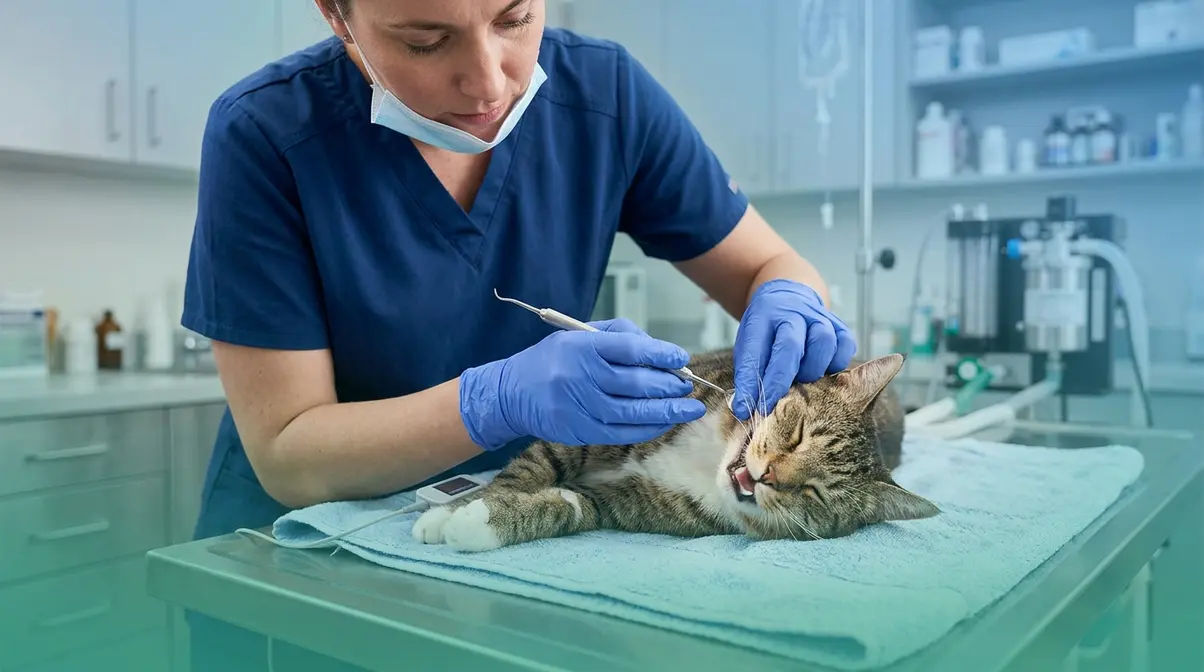
A professional veterinary dental cleaning is the most effective treatment for dental-related bad breath. Unlike human dentists, vets must perform this procedure under general anesthesia — which allows a thorough cleaning above and below the gum line, dental X-rays to assess root health, and extraction of severely damaged teeth if needed.
Most cats with moderate to advanced dental disease will need at least one professional cleaning before at-home care becomes effective. Without removing established tartar first, brushing at home has limited impact. The Cornell Feline Health Center recommends annual dental examinations for all adult cats, with cleaning frequency determined by the individual cat’s plaque accumulation rate.
After a professional cleaning, your vet will advise on the at-home routine below to extend the time between cleanings.
At-Home Oral Care Routine
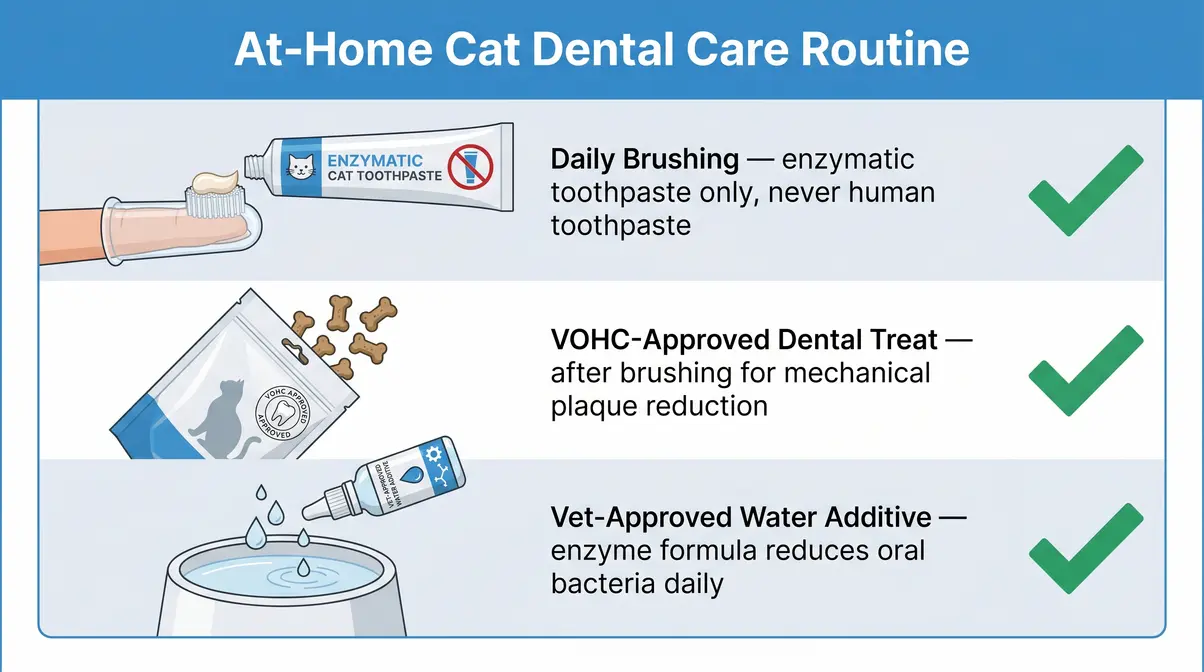
Veterinary consensus indicates that daily brushing is the single most effective at-home intervention for preventing dental disease — and the bad breath that comes with it. Here is how to build a routine your cat will tolerate:
What you’ll need: Pet-safe enzymatic toothpaste (never human toothpaste — see Common Mistakes), a finger brush or soft cat toothbrush, dental treats approved by the Veterinary Oral Health Council (VOHC), and a water additive designed for cats. Allow 5–10 minutes per session.
- Start slowly. Let your cat sniff and lick the toothpaste from your finger for several days before introducing a brush.
- Touch the gums first. Gently rub your finger along the gum line — outside the teeth only — until your cat accepts this calmly.
- Introduce the brush. Use small circular motions along the gum line for 30 seconds per side. Focus on the back molars and upper canines where tartar builds fastest.
- Add a VOHC-approved dental treat after brushing to reinforce the routine and provide additional mechanical plaque reduction.
- Use a water additive. Certain vet-approved water additives contain enzymes that reduce bacterial load in the mouth — add to your cat’s water bowl daily.
Even brushing two to three times per week provides meaningful plaque reduction compared to no brushing at all (The Pet Doctor Inc., 2026). To find the right products, check our list of VOHC-approved dental treats for cats.
Diet and Food for Better Breath
Diet adjustments can reduce food-related bad breath, though they do not treat underlying disease. Dry kibble creates slightly more mechanical abrasion on the tooth surface than wet food, but this effect is modest and should not replace brushing. Prescription dental diets — available through your vet — are specifically formulated with larger kibble pieces and fiber structures designed to scrub the tooth surface as your cat chews.
For cats with systemic disease (kidney disease, diabetes, liver disease), diet management is a core part of treatment — but the specific diet must be prescribed by your vet based on bloodwork and clinical assessment.
Step 3 – When to See the Vet (and What to Expect)
Persistent bad breath always warrants a vet visit. The question is how urgently. This section helps you triage: some situations need same-day care; others can wait for a scheduled appointment.
Red-Flag Warning Signs – Go Now
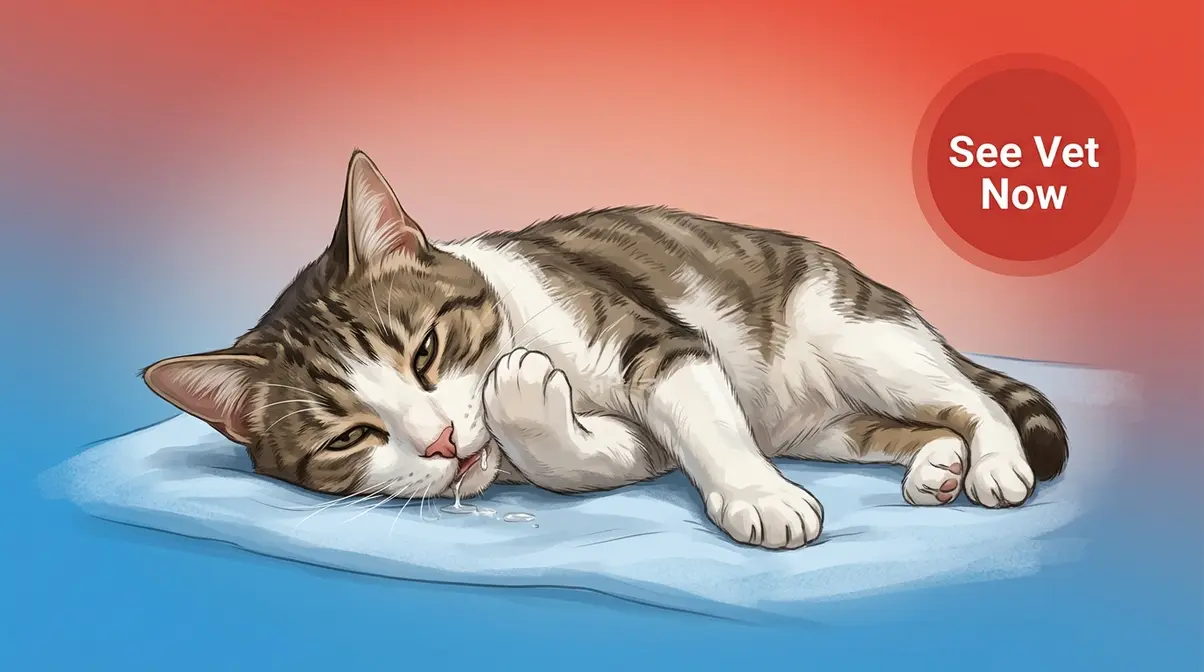
Call your vet today — or go to an emergency clinic if your regular vet is unavailable — if your cat shows any of these signs alongside bad breath:
- Ammonia or urine-like breath + increased thirst and urination → possible kidney disease
- Sweet or fruity breath + weight loss, weakness in hind legs → possible diabetes
- Refusal to eat or drink → pain, obstruction, or severe systemic illness
- Drooling excessively or pawing at the mouth → oral pain, foreign object, or stomatitis
- Pale, white, or yellow gums → anemia, jaundice, or shock
- Rapid weight loss alongside any odor change → systemic disease requiring urgent workup
These are not situations to monitor at home. Early intervention dramatically improves outcomes for kidney disease, diabetes, and stomatitis alike. Know exactly when to take your cat to the emergency vet to prevent complications.
Vet Diagnosis and Treatment
When you arrive at the vet, expect a systematic approach. Your vet will start with a full physical examination, including a careful oral inspection — often more thorough than what you can do at home. Based on what they find, they may recommend:
- Bloodwork and urinalysis: To check kidney function, blood glucose (diabetes), and liver enzymes — these panels identify systemic causes quickly.
- Dental X-rays: To assess the health of tooth roots and bone below the gum line, which is invisible to the naked eye.
- Professional dental cleaning under anesthesia: If dental disease is confirmed.
- Disease-specific treatment: Insulin therapy for diabetes, kidney-support diet and fluids for CKD, antifungal or antibiotic treatment for infections.
Bring your notes from the home inspection: the specific smell, any behavioral changes, when it started, and what your cat eats. This information helps your vet triage efficiently and choose the right diagnostic tests. For more details on the procedure, review our guide on cat dental cleaning under anesthesia.
Common Mistakes Cat Owners Make
Even well-meaning cat owners make a few predictable errors when dealing with bad breath. Knowing these in advance can save your cat from unnecessary pain — and save you from an avoidable emergency.
Waiting Too Long to See a Vet
The most common mistake is assuming bad breath is normal and waiting months before seeking help. As noted above, bad breath was detected an average of 1.2 years before a formal chronic kidney disease diagnosis in one study (PMC, 2010). That gap represents a window of opportunity — earlier diagnosis means earlier intervention, and better quality of life for your cat.
A practical rule: if your cat’s breath has smelled consistently bad for more than two weeks, and you can rule out a purely food-related cause, book a vet appointment. Do not wait until other symptoms appear. Incorporate oral checks into your annual cat health checkup guide routine.
Using Human Toothpaste on Cats
Human toothpaste contains fluoride and often xylitol — both toxic to cats. Fluoride can cause gastrointestinal upset and, in larger amounts, serious toxicity. Xylitol causes dangerous drops in blood sugar and liver failure in pets.
Always use toothpaste specifically formulated for cats. Enzymatic cat toothpastes are available in flavors cats accept — poultry and malt are common favorites. They work by breaking down plaque chemically, not just mechanically, which is why the flavor matters for compliance. Never substitute baking soda, salt, or any human oral care product.
Frequently Asked Questions
Is Stinky Cat Breath Concerning?
Yes — persistent bad breath in cats is almost always a sign of an underlying health issue and should not be dismissed as normal. A mild odor immediately after eating fish-based food is common and fades within 30–60 minutes. However, if the smell persists daily, smells like ammonia, sewage, or sweetness, or is accompanied by behavioral changes like refusing food or pawing at the mouth, schedule a vet appointment. Studies show that cat owners first notice bad breath an average of 1.2 years before a formal kidney disease diagnosis (PMC, 2010) — meaning early attention can catch serious disease early.
How to Get Rid of Bad Breath
Getting rid of cat bad breath requires treating the underlying cause first. For dental disease — the most common cause — your vet will perform a professional cleaning under anesthesia, followed by an at-home routine of daily brushing with enzymatic cat toothpaste, VOHC-approved dental treats, and a water additive. For systemic causes like kidney disease or diabetes, treatment is disease-specific and vet-directed. The Cornell Feline Health Center recommends annual dental exams for all adult cats as the foundation of prevention.
Can Cat Bad Breath Be Cured?
Yes, cat bad breath can often be cured if the underlying cause is definitively treated. For dental-related halitosis, a professional cleaning and extraction of diseased teeth will eliminate the odor-causing bacteria. Maintaining that cure requires diligent at-home care, including daily brushing and VOHC-approved dental treats. If the cause is a chronic systemic condition like kidney disease, the breath odor may be managed but not permanently cured. Regular veterinary checkups are the best way to ensure the odor does not return.
Are Water Additives Safe for Cats?
Yes, veterinary-approved water additives are generally very safe and effective for cats. These products use specialized enzymes to break down plaque-forming bacteria in the mouth every time your cat takes a drink. It is crucial to choose a product specifically formulated for felines, as some canine additives contain ingredients that cats cannot tolerate. The Veterinary Oral Health Council maintains a list of safe, proven water additives for pets. Always introduce the additive slowly so your cat does not stop drinking their water.
Wrapping Up: What Your Cat’s Breath Is Telling You
For concerned cat owners, understanding cat bad breath causes is one of the most valuable things you can do for your pet’s long-term health. Dental disease affects up to 90% of cats over four years old (Cornell Feline Health Center, 2026), and the specific odor — ammonia, sweet, sewer-like, or metallic — often maps directly to the underlying condition. The best approach combines regular at-home inspections, a consistent oral care routine, and prompt veterinary attention when the smell is persistent or unusual.
The Cat Breath Decoder framework exists to bridge the gap between noticing something is wrong and knowing what to do about it. Match the smell to the cause, check the gums, note the behavioral changes — and bring those observations to your vet. You’re not diagnosing your cat; you’re giving your vet the clearest possible picture to work from.
Your next step is concrete: if your cat’s breath has smelled consistently bad for more than two weeks, book a veterinary appointment this week. If the smell is ammonia-like, sweet, or sewer-like and appeared suddenly, call today. A single vet visit and bloodwork panel can rule out the serious causes — and that peace of mind is worth every minute.