
Veterinary Disclaimer: This guide is for informational purposes only and does not constitute veterinary medical advice. Always consult your licensed veterinarian before changing your cat’s diet, especially if your cat has been diagnosed with gum disease or any other health condition.
“So one of our cats who is quite young, a bit over a year old, has gingivitis. A lot of her gums are inflamed. The vet has recommended doing a dental cleaning…”
If that sounds familiar, you’re not alone. According to the American Veterinary Medical Association (AVMA), periodontal disease is the most common clinical condition in cats — with the majority showing evidence of dental disease by just three years of age (AVMA statistics on periodontal disease, 2025).
The problem is that most cat owners are told their cat needs better dental care but given almost no guidance on what food actually helps — and what’s just clever marketing. Choosing the best food for cat gum health doesn’t have to be overwhelming. By the end of this guide, you’ll know exactly which foods carry clinical backing, how to decode the VOHC seal, and how to get even the pickiest cat to accept a dental diet. We’ll cover: identifying your cat’s disease stage → choosing the right food → navigating wet vs. dry → transitioning a picky cat → protecting broader health → verifying progress.
The best food for cat gum health carries the VOHC seal — a clinical standard proving at least 20% plaque or tartar reduction. Not all “dental” foods qualify.
- The VOHC Verification Test: Any food worth buying must display the VOHC seal — look for it before anything else.
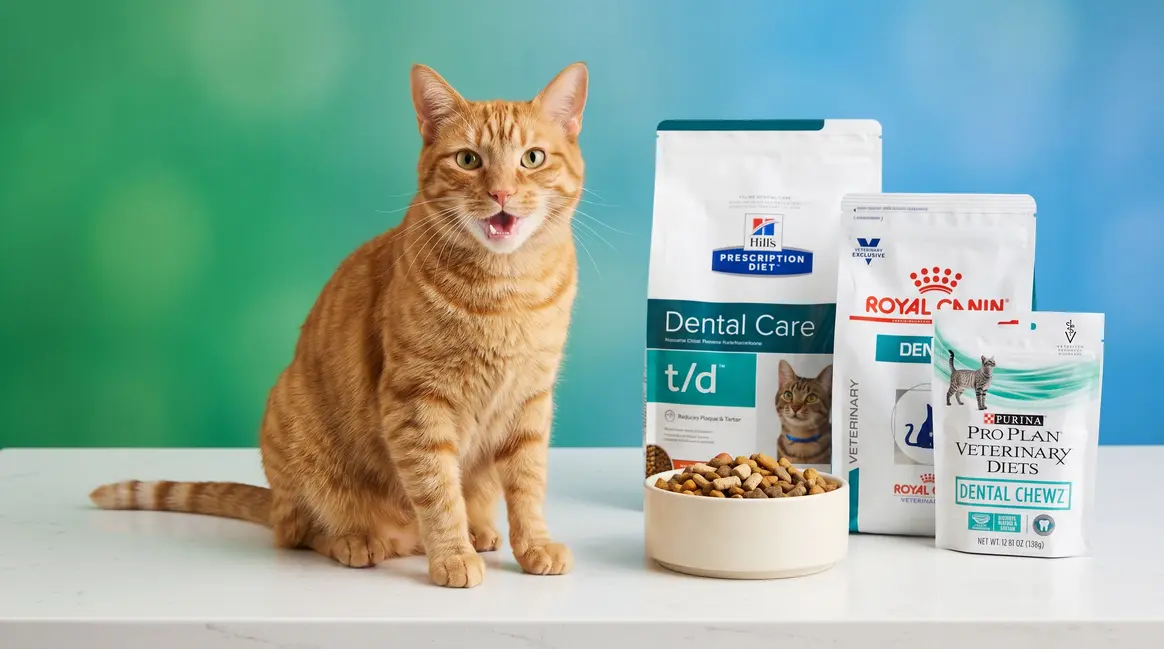
- Prescription diets (Hill’s t/d, Royal Canin Dental) outperform OTC options clinically — but require a vet prescription.
- Dry food alone doesn’t clean teeth — only specially engineered dental kibble with a non-crumbling matrix provides abrasive cleaning.
- Gingivitis is reversible with the right diet plus professional cleaning; advanced periodontitis is not.
- Transitioning picky cats takes 7–14 days of gradual mixing — never switch food cold turkey.
Step 1: Identify Your Cat’s Gum Disease Stage
Gum disease in cats is a spectrum — not a single condition. It ranges from early, reversible gingivitis (gum inflammation caused by plaque bacteria) all the way to advanced periodontal disease (bone and tissue loss around the teeth that cannot be undone). Periodontal disease is the most common clinical condition in cats, with the majority showing evidence by age three (AVMA statistics on periodontal disease, 2025). Knowing where your cat sits on this spectrum determines which food intervention will actually help. Once you’ve identified the stage, Step 2 will show you the exact test to apply to any food bag.
The Plaque-to-Periodontitis Progression
Think of plaque like wet cement — easy to wipe away when fresh, nearly impossible to remove once it sets. Plaque is a sticky bacterial film that forms on teeth within 24 hours of eating. Left undisturbed, it mineralizes into tartar (calculus) within days. Unlike plaque, tartar cannot be removed by food or brushing alone — it requires a professional dental cleaning.
Tartar that forms below the gum line triggers gingivitis, the earliest and most reversible stage of gum disease — characterized by red, swollen gum tissue. If gingivitis goes untreated, bacteria migrate deeper into the gum pocket, leading to periodontal disease, an advanced condition involving bone and tissue loss around the teeth. Bone loss is permanent.
A separate but related condition, tooth resorption — where the tooth structure breaks down from the inside — affects an estimated 28–67% of cats at some point in their lives, according to Cornell University’s Feline Health Center. Your vet can diagnose this with dental X-rays.
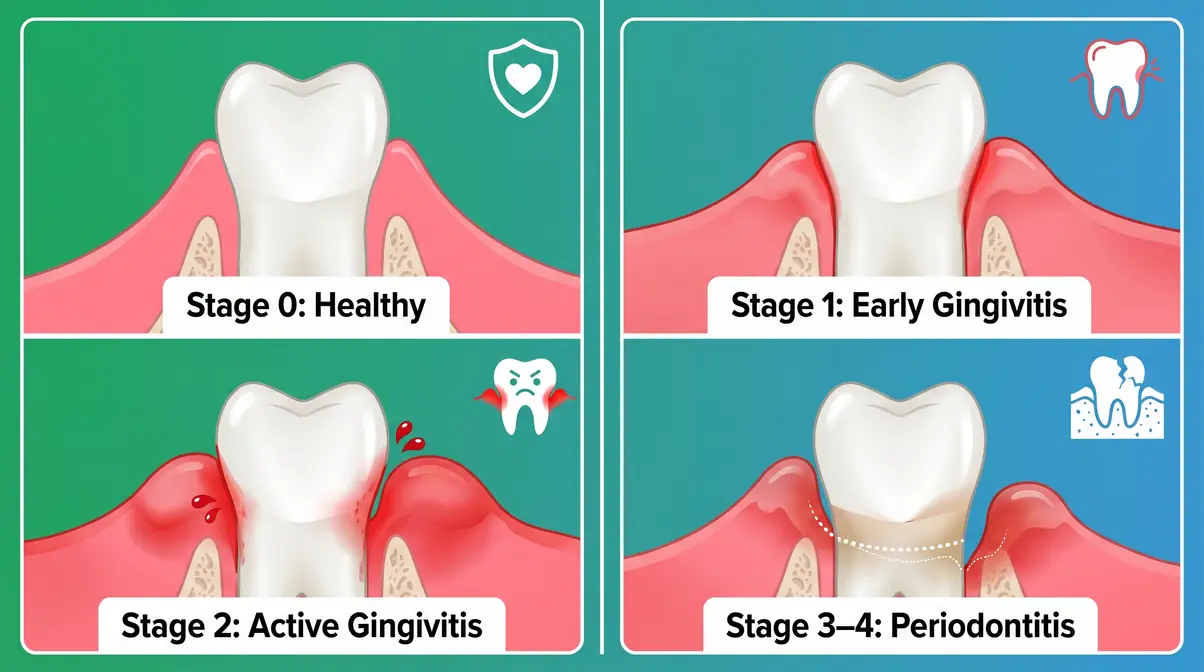
Understanding how plaque and tartar form on cat teeth is the first step toward choosing a diet that interrupts this cycle.
Now that you can picture how the disease progresses, here’s what to actually look for when you check your cat’s mouth at home.
Warning Signs You Can Spot at Home
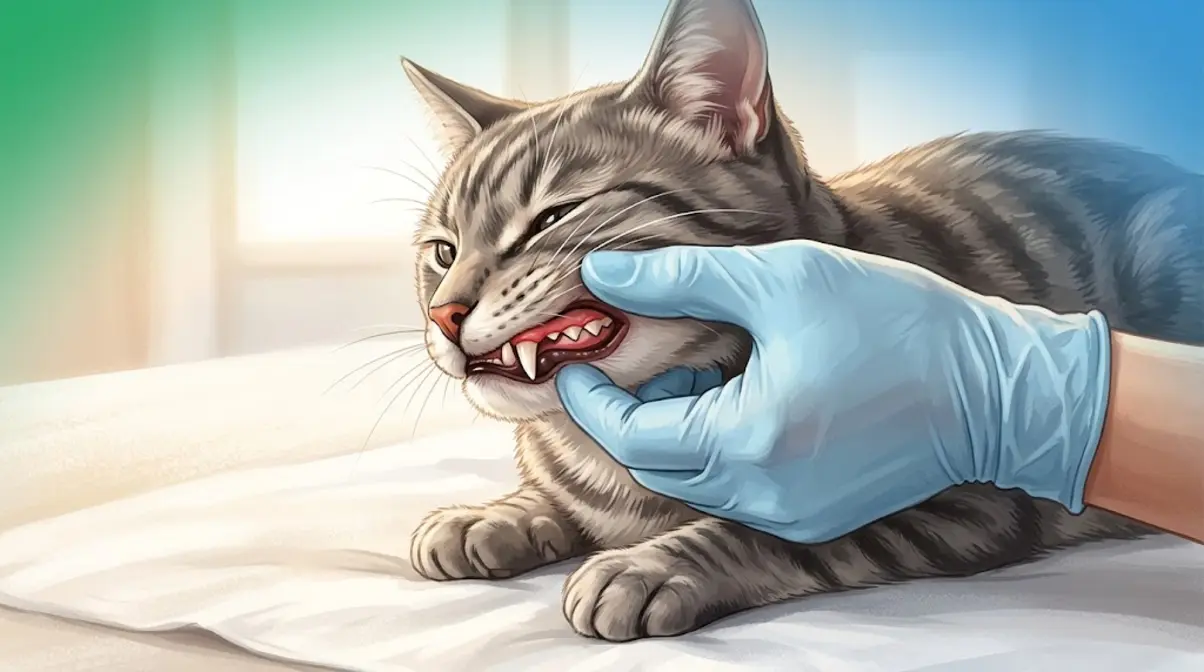
You don’t need veterinary equipment to spot early warning signs. Gently lift your cat’s lip and check the gum line in natural light. The table below maps common observable symptoms to their likely disease stage.
| Symptom | What It Looks Like | Likely Stage |
|---|---|---|
| Pink, firm gums | Smooth gum tissue, no redness at tooth base | Healthy |
| Red line along gum edge | Thin red border where gum meets tooth | Early Gingivitis |
| Swollen, puffy gums | Gum tissue looks raised or pillowy | Active Gingivitis |
| Bad breath (halitosis) | Noticeably foul odor when cat yawns | Gingivitis–Early Periodontal |
| Visible yellow/brown deposits | Hard discolored buildup at gum line | Tartar Accumulation |
| Bleeding when touched | Gums bleed with light pressure | Moderate Periodontal |
| Receding gum line | Teeth appear longer than normal | Advanced Periodontal |
| Pawing at mouth / drooling | Behavioral sign of oral pain | Advanced / Tooth Resorption |
Consult your vet if you observe any symptom at or below “bad breath” in this table. Early signs can be addressed with diet changes; later signs require professional intervention first.
Why Early Gingivitis Is Reversible — But Periodontitis Is Not
This distinction matters enormously for your food choices. Veterinary clinical consensus, supported by research published in the Journal of Veterinary Dentistry, indicates that gingivitis — when caught early — is fully reversible with consistent plaque control and professional cleaning. The gum tissue can return to a healthy state.
Periodontitis, however, involves the destruction of the bone and ligaments that hold teeth in place. That structural damage does not regenerate. A dental diet at this stage can slow further progression, but it cannot reverse what has already been lost.
The practical takeaway: If your cat is in the gingivitis stage, the right food combined with professional cleaning gives you a genuine shot at full recovery. If periodontitis is already present, food becomes part of a management strategy — not a cure. Either way, your vet’s guidance is essential before changing your cat’s diet.
Step 2: Choose a VOHC-Verified Dental Food
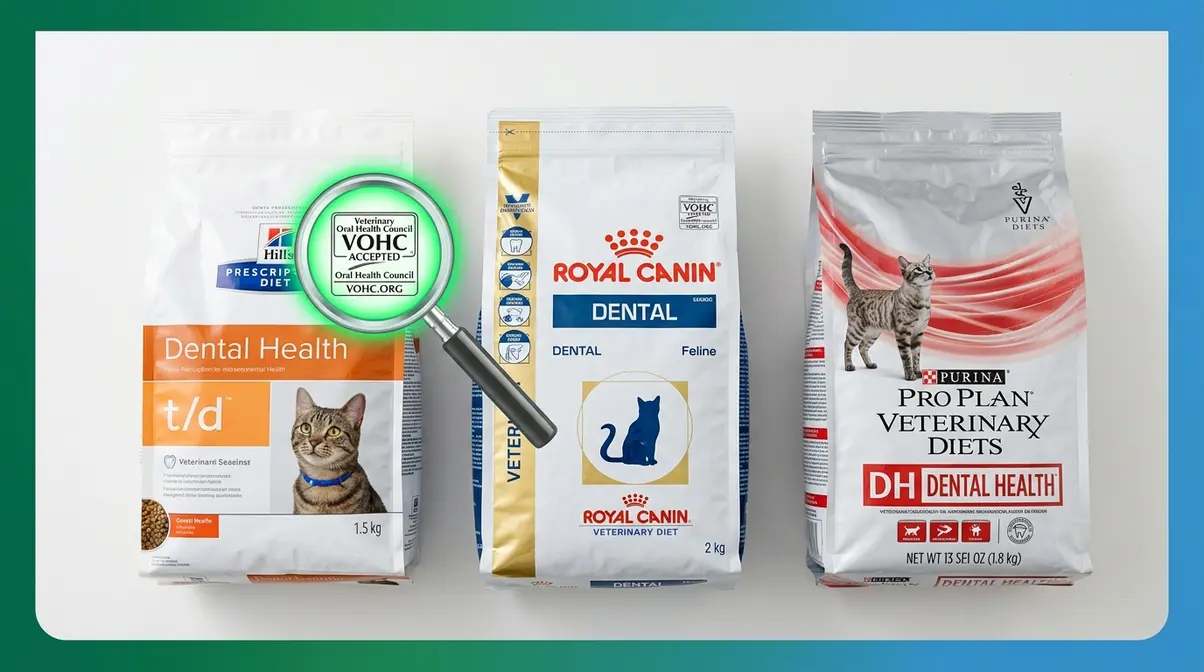
The single most important filter for choosing the best food for cat gum health is the VOHC (Veterinary Oral Health Council) seal of acceptance. The VOHC is an independent body that reviews clinical trial data submitted by manufacturers. A product earns the seal only if it demonstrates at least a 20% reduction in plaque or tartar in controlled studies (VOHC accepted products, 2026). Without this seal, a “dental” label is marketing — not medicine. Our team evaluated available VOHC-accepted cat foods against criteria including kibble architecture, ingredient quality, and prescription vs. OTC availability.
The VOHC Verification Test: 3 Things to Check on Any Bag
The VOHC Verification Test is a three-step check you can do at the store or when a bag arrives at your door. It takes under 60 seconds.
- Find the VOHC seal. It’s a round logo, typically on the front or back of the bag. It will state “Accepted for Plaque Control” or “Accepted for Tartar Control” — these are different claims. Plaque control is more valuable because it prevents tartar from forming.
- Check which claim it carries. “Plaque Control” is the gold standard. “Tartar Control” means the food reduces existing tartar but may not prevent new plaque as effectively.
- Verify the species. The seal must say “Cat” — not just “Pet.” A dog dental food displaying a VOHC seal does not qualify.
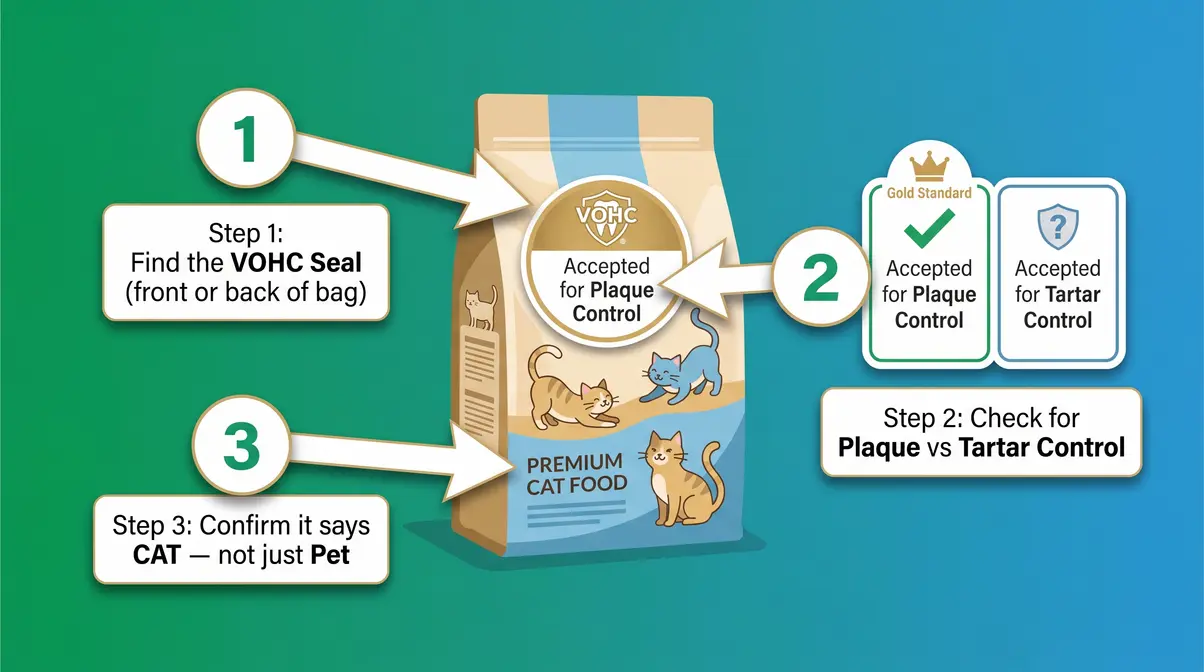
Always cross-reference the current VOHC accepted products list before purchasing, as approval status changes. (VOHC list verified as of July 2026.)
Prescription Dental Diets: Top Vet-Recommended Picks
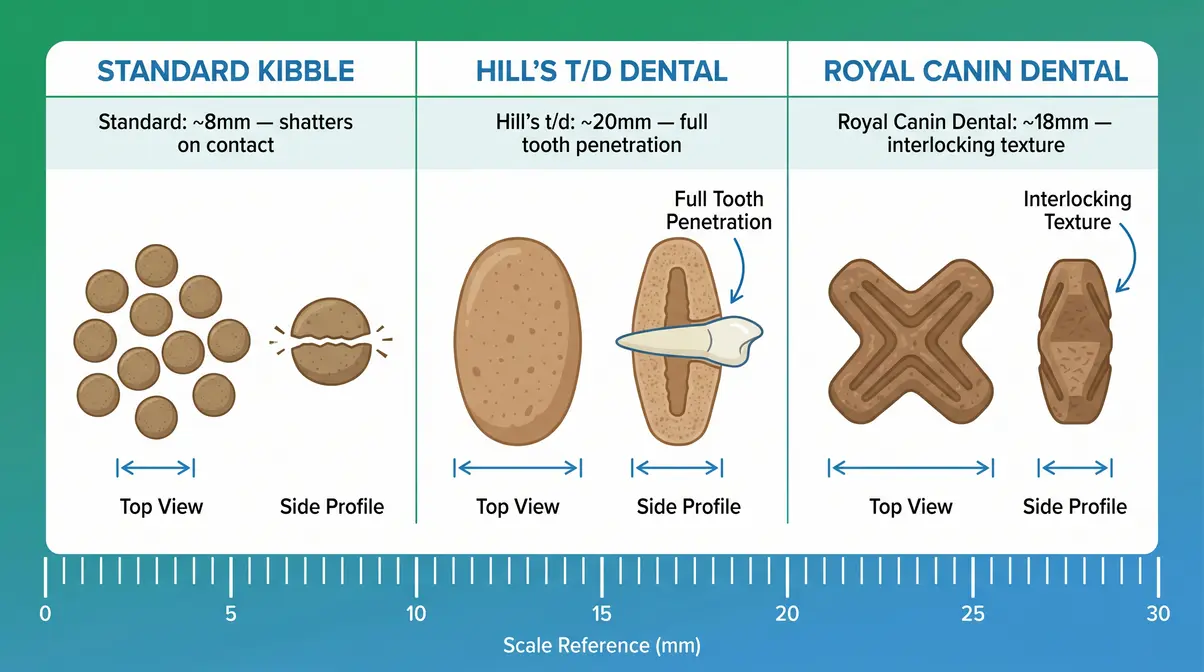
Prescription dental diets are engineered at a structural level — the kibble is designed with a specific fiber matrix that doesn’t shatter on contact but instead wraps around the tooth, providing abrasive cleaning deeper toward the gum line. Think of it like a natural toothbrush for your cat’s teeth.
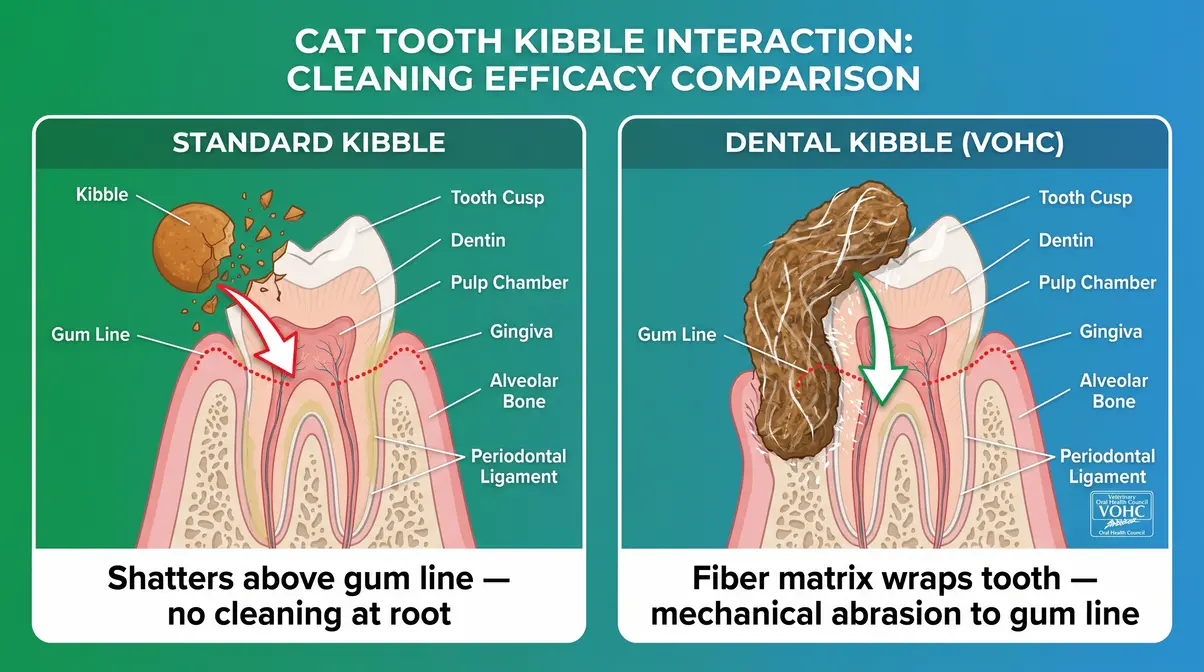
These diets require a veterinary prescription. Always consult your vet before switching.
| Food | VOHC Claim | Key Feature | Rx Required | Approx. Price |
|---|---|---|---|---|
| Hill’s Prescription Diet t/d | Plaque + Tartar Control | Large kibble, fiber matrix | Yes | ~$50–$65/4 lb bag |
| Royal Canin Dental | Tartar Control | Interlocking kibble texture | Yes | ~$45–$60/3 lb bag |
| Purina Pro Plan Veterinary Diets DH | Plaque + Tartar Control | Sodium hexametaphosphate coating | Yes | ~$40–$55/3.5 lb bag |
(Prices as of July 2026 — verify current pricing at your vet clinic or authorized retailer.)
Hill’s Prescription Diet t/d is the most extensively studied feline dental diet. Clinical trials published in veterinary literature show it reduces plaque accumulation by up to 39% and tartar by up to 36% compared to a control diet (VCA Hospitals, nutrition and periodontal disease). The oversized kibble forces the cat to bite fully through, maximizing tooth-surface contact.
Royal Canin Dental uses an interlocking kibble design and is often preferred for cats who find Hill’s t/d too large. Purina Pro Plan DH uses a sodium hexametaphosphate (SHMP) coating that binds calcium in saliva, slowing tartar mineralization — a different mechanism but clinically validated.
Consult your vet before purchasing any prescription dental diet. These diets are formulated for specific caloric and nutritional profiles and may not be appropriate for every cat.
Over-the-Counter Dental Foods Worth Buying
Not every cat owner can access or afford prescription diets. Several OTC options carry the VOHC seal and provide meaningful — if less dramatic — plaque control.
| Food | VOHC Claim | Key Feature | Rx Required | Approx. Price |
|---|---|---|---|---|
| Purina Pro Plan Dental Health | Tartar Control | SHMP coating, widely available | No | ~$25–$35/3.5 lb bag |
| Science Diet Oral Care | Tartar Control | Enlarged kibble texture | No | ~$20–$30/3.5 lb bag |
| Iams Proactive Health Dental | Tartar Control | Calcium-binding formula | No | ~$18–$28/4 lb bag |
(Prices as of July 2026.)
OTC dental foods offer a practical entry point, especially while awaiting a vet appointment or managing budget constraints. They are not a substitute for prescription diets in cats with active periodontal disease — but they are meaningfully better than standard kibble for plaque management. Consult your vet to confirm whether an OTC option is appropriate for your cat’s specific condition.
Kelp Supplements: Do They Actually Help Cat Gum Health?
Ascophyllum nodosum — a species of brown kelp — has attracted veterinary interest as a plaque-control supplement. The proposed mechanism: specific polysaccharides in the kelp inhibit bacterial adhesion to tooth surfaces, slowing plaque formation.
A study published in PMC/NCBI examining seaweed-derived additives found promising results in reducing oral bacteria populations in companion animals. However, the evidence base for cats specifically remains limited, and no kelp supplement currently holds a VOHC seal for cats.
Veterinary consensus at this stage: kelp-based supplements like those containing Ascophyllum nodosum may help reduce plaque as a complementary measure, but should not replace a VOHC-verified dental diet. If your vet recommends one, look for products with third-party testing certificates. Always consult your vet before adding any supplement to your cat’s routine — particularly if your cat has thyroid conditions, as kelp is high in iodine.
Step 3: Settle the Wet vs. Dry Food Debate for Your Cat
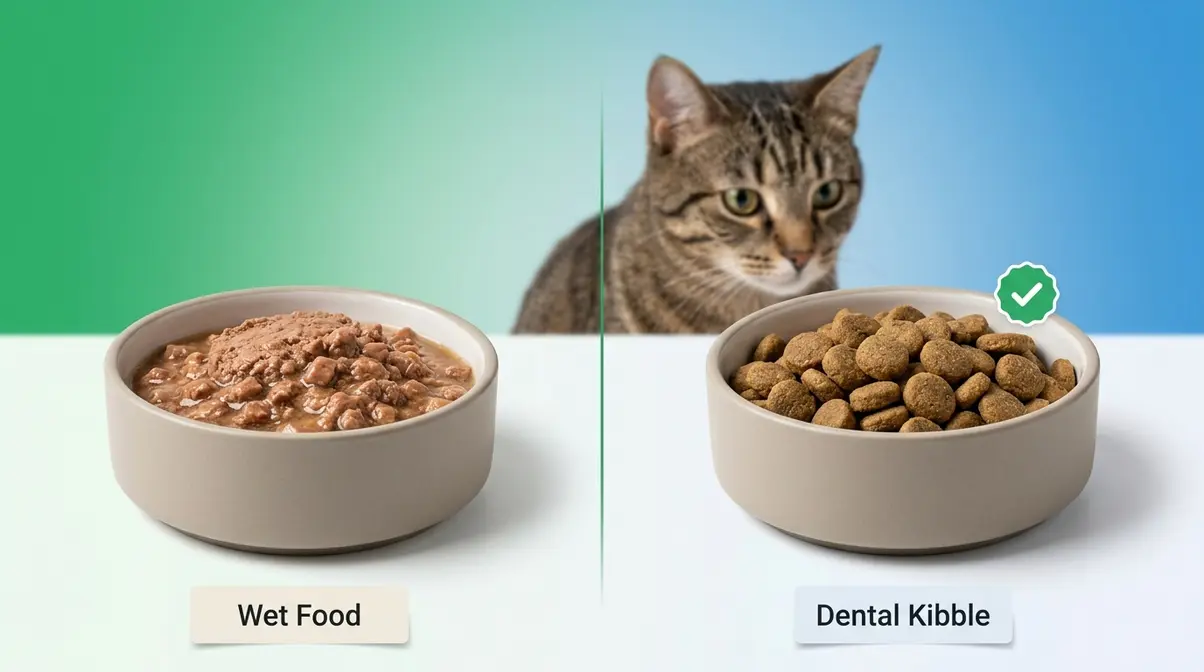
The wet vs. dry question is one of the most persistent myths in feline dental care — and the answer is more nuanced than most pet food marketing suggests. Veterinary consensus indicates that food texture alone does not determine dental health outcomes; it’s the specific engineering of the kibble that matters. This step helps you make the right choice for your cat’s individual needs.
The Dry Food Myth — What the Science Actually Says
Many cat owners assume that dry food automatically cleans teeth because of its crunchy texture. This is only partially true — and the caveat matters.
Standard dry kibble shatters on contact with the tooth. The fracture point is above the gum line, meaning the tooth surface near the gums — where plaque and tartar cause the most damage — receives little to no abrasive cleaning. Research cited by Cornell University’s Feline Health Center confirms that feeding standard dry food does not significantly reduce periodontal disease risk compared to wet food.
The exception is specially engineered dental kibble (the kind that holds the VOHC seal). These formulas use a cross-linked fiber matrix that resists shattering, allowing the tooth to penetrate deeply into the kibble before it breaks — providing genuine mechanical abrasion. Standard dry food does not replicate this effect.
When Wet Food Is the Better Choice
Wet food is not the dental villain it’s often portrayed as. For cats with:
- Advanced periodontal disease or post-surgical tenderness — chewing hard kibble can cause pain
- Kidney disease — wet food’s high moisture content supports urinary and renal health simultaneously
- Low water intake — cats are notoriously poor drinkers; wet food provides essential hydration
- Senior cats with tooth loss — wet food is the practical and compassionate choice
In these situations, wet food combined with daily tooth brushing (or enzymatic dental gels) provides better overall health outcomes than forcing dental kibble on a cat that finds it painful or refuses it entirely.
How to Balance Both Food Types for Dental and Overall Health
For most cats with early-stage gingivitis, a mixed feeding approach works well. Veterinary nutrition communities consistently recommend the following framework:
- Morning meal: VOHC-approved dental kibble (the abrasive cleaning benefit occurs at the meal, not overnight)
- Evening meal: High-quality wet food for hydration and palatability
- Daily addition: Enzymatic dental gel or water additive (VOHC-accepted options available) on days when brushing isn’t possible
This approach captures the mechanical plaque-control benefit of dental kibble while supporting overall hydration and appetite satisfaction. Consult your vet to confirm the right ratio for your cat’s caloric needs and disease stage.
Step 4: Transition Your Picky Cat to a Dental Diet: 7 Proven Strategies
Transitioning a cat to a new food — especially a dental diet with unfamiliar texture and smell — is where most owners hit a wall. In professional veterinary practice, cats transitioning to dental diets typically require 7–14 days of gradual introduction, not an overnight switch. Cold-turkey food changes frequently trigger food refusal or gastrointestinal upset. These 7 strategies address the most common obstacles.
Strategies 1–3: Flavor Mixing and Gradual Introduction
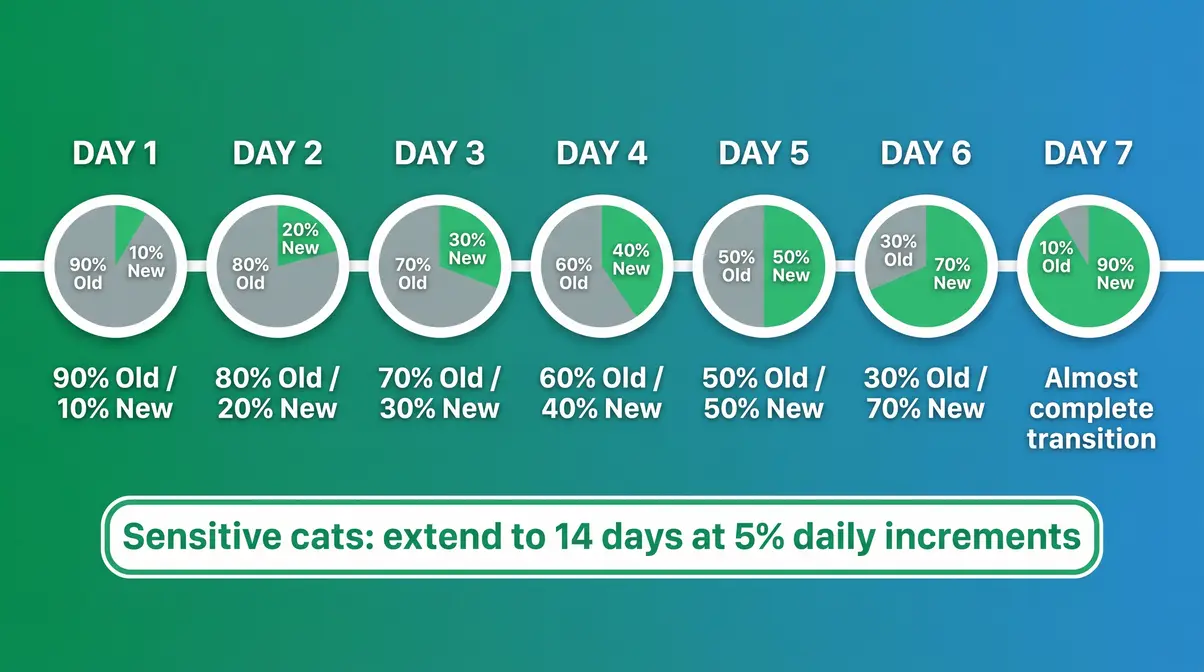
Strategy 1: The 10% Daily Swap. On Day 1, mix 90% current food with 10% new dental food. Increase the dental food proportion by roughly 10% each day over 7–10 days. This gradual shift allows your cat’s palate and digestive system to adjust without triggering rejection.
Strategy 2: Flavor Bridge with Wet Food Topper. If your cat refuses the new kibble outright, add a small spoonful of their favorite wet food on top of the dental kibble as a flavor bridge. The familiar smell overrides suspicion of the new texture. Reduce the topper amount gradually as acceptance builds.
Strategy 3: Warm It Slightly. Warming the food to approximately body temperature (around 38°C / 100°F) intensifies the aroma, which is the primary driver of food acceptance in cats. A few seconds in the microwave — then a temperature check with your finger — can make a significant difference for scent-driven refusal.
Strategies 4–5: Texture Adaptation for Sensitive Eaters
Some cats reject dental kibble specifically because of its larger-than-normal size. This is a texture issue, not a flavor issue — and it requires a different approach.
Strategy 4: Crush-and-Blend Transition. For the first 3–4 days, lightly crush the dental kibble with the back of a spoon and blend it into the existing food. This introduces the flavor without the unfamiliar texture. Gradually reduce crushing over the following days until the cat accepts whole pieces.
Strategy 5: Parallel Bowl Method. Place a small bowl of dental food alongside your cat’s regular food bowl — without mixing. Some cats will investigate and sample the new food on their own terms. Curiosity-driven first contact is less threatening than a forced substitution, and many cats accept the new food faster with this approach.
Strategies 6–7: Troubleshooting Complete Food Refusal
Complete food refusal lasting more than 24–48 hours in a cat is a medical concern — not just a preference issue. Do not allow a cat to go without food for more than 48 hours, as this can trigger hepatic lipidosis (fatty liver disease), a serious and potentially fatal condition.
Strategy 6: Revert and Restart More Slowly. If your cat refuses the new food entirely, go back to 100% of their current food for 2–3 days. Then restart the transition at a 5% introduction rate rather than 10%. Some cats need a slower ramp. Patience here prevents a full behavioral food aversion from developing.
Strategy 7: Request a Palatability Enhancer from Your Vet. Some prescription dental diets are available in multiple flavor variants (chicken vs. fish, for example). If your cat refuses one flavor, ask your vet about switching to the alternative. Your vet may also recommend a small amount of a palatability-enhancing topper that is compatible with the dental diet’s nutritional profile.
Consult your vet if your cat refuses food for more than 48 hours or shows signs of distress during transition.
Step 5: Protect Your Cat’s Broader Health While Improving Gum Health
Dental health does not exist in isolation. The foods you choose for your cat’s gums can either support or complicate their other health systems. Two areas deserve specific attention.
The Urinary Health Connection
Chronic kidney disease (CKD) and lower urinary tract disease are among the most common — and most frequently underdiagnosed — health conditions in cats. Veterinary epidemiological data suggests CKD affects roughly 30–40% of cats over age 12 (Cornell University Feline Health Center). This is sometimes referred to as “the silent killer” in cats because early stages produce few obvious symptoms.
The dietary connection matters here: some prescription dental diets are high in phosphorus and sodium, which can stress compromised kidneys. If your cat has been diagnosed with both dental disease and kidney concerns, do not assume a prescription dental diet is automatically safe. Your vet may need to prioritize one condition over the other, or find a dental diet formulated for cats with concurrent kidney disease. Always consult your vet before placing a cat with known kidney issues on any new diet.
The One Meat Category to Limit (and Why)
Raw fish fed regularly — particularly tuna and other ocean fish — is the meat category most frequently flagged by veterinary nutritionists as problematic for cats. The concerns are specific:
- High mercury content in large ocean fish (tuna, mackerel, swordfish) accumulates with repeated feeding
- Thiaminase enzyme in raw fish destroys vitamin B1 (thiamine), potentially causing neurological symptoms over time
- High magnesium content in some fish-based diets is associated with struvite crystal formation in the urinary tract
This does not mean fish is never appropriate — many veterinary dental diets include fish proteins. The concern is regular feeding of raw or high-fish-content human food as a primary protein source. For cats with active dental disease or urinary concerns, a complete and balanced veterinary diet is a safer foundation than home-assembled fish meals.
Step 6: Verify Your Cat’s Progress and Know When to See a Vet
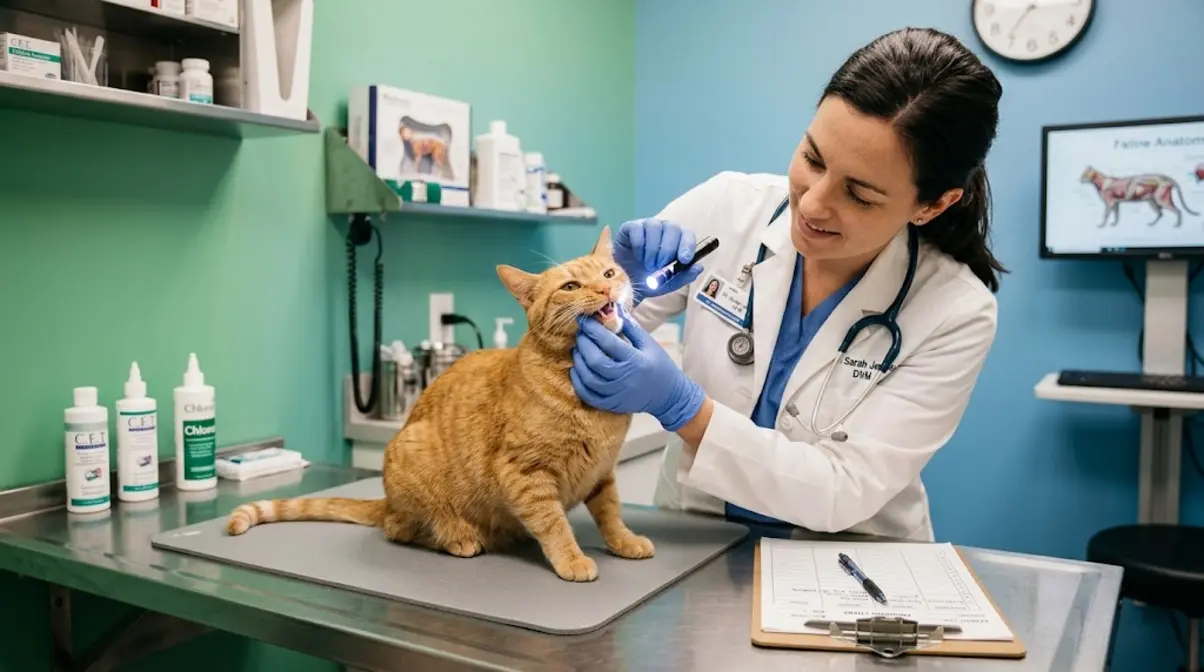
Diet changes for gum health are not instant. Across veterinary clinical experience, meaningful improvement in gum tissue condition typically requires 4–8 weeks of consistent dental diet feeding combined with professional cleaning. Here’s how to track progress — and recognize when food alone isn’t enough.
Signs the Dental Diet Is Working
Check your cat’s mouth gently every 2 weeks using the symptom table from Step 1. Positive indicators include:
- Gum color shifting from red toward pink — reduced inflammation
- Gum swelling decreasing — tissue returning to firm, flat profile
- Improved breath — reduced bacterial load in the mouth
- Increased willingness to eat hard food — reduced oral pain
- Reduced pawing at the mouth — behavioral indicator of less discomfort
Important: Improvement in home-observable signs is encouraging, but only a veterinary dental examination (including X-rays) can confirm whether bone loss has been halted or whether professional cleaning is still needed.
When Food Alone Isn’t Enough
Dental food is a preventive and supportive tool — not a treatment. There are clear clinical thresholds where professional intervention is required, regardless of diet quality:
- Visible tartar accumulation that has not reduced after 6–8 weeks on a VOHC-approved diet
- Persistent bleeding gums despite dietary changes
- Any sign of tooth mobility — a tooth that moves when touched requires immediate veterinary assessment
- Weight loss or food avoidance — may indicate oral pain that diet cannot address
- Post-cleaning maintenance — after a professional dental cleaning, your vet will likely recommend a dental diet to extend the time between cleanings
As noted by VCA Hospitals, professional dental cleanings under anesthesia remain the gold standard for treating established periodontal disease. Diet supports the work — it does not replace it.
Limitations and Risks of Dental Diets
Common Pitfalls to Avoid
Pitfall 1: Buying “dental” food without the VOHC seal. Many foods labeled “dental,” “oral care,” or “teeth cleaning” have never been tested in controlled trials. Without the VOHC seal, there is no independent evidence the product reduces plaque or tartar. Apply The VOHC Verification Test before every purchase.
Pitfall 2: Using dental food as a substitute for professional cleaning. If your cat already has moderate-to-advanced tartar accumulation, dental food cannot remove it. Professional cleaning under anesthesia is required first — then dental food maintains the results.
Pitfall 3: Assuming all cats can eat the same dental diet. Prescription dental diets are calorie-dense and may not be appropriate for overweight cats, cats with kidney disease, or cats with specific protein sensitivities. A diet that helps your neighbor’s cat may be inappropriate for yours.
Pitfall 4: Switching food too quickly. Abrupt food changes cause gastrointestinal upset and food aversion. Always use the 7–14 day gradual transition described in Step 4.
When to Choose Alternatives
- Your cat has concurrent kidney disease: A standard prescription dental diet may be too high in phosphorus. Ask your vet about dental diets specifically formulated for renal patients.
- Your cat has severe tooth resorption or tooth loss: Wet food plus enzymatic dental gels may be more appropriate than hard kibble.
- Your cat refuses all dental kibble after 3+ weeks of transition attempts: Explore VOHC-accepted water additives and dental gels as alternative plaque-control strategies.
When to Seek Expert Help
If your cat shows signs of oral pain (drooling, pawing at mouth, dropping food), visible tooth mobility, or significant weight loss, do not attempt to manage the situation with diet changes alone. These signs indicate active disease requiring veterinary diagnosis and likely professional dental intervention. A board-certified veterinary dentist (DAVDC) is the appropriate specialist for complex or refractory cases.
Frequently Asked Questions
What should I feed a cat with gum disease?
Feed a cat with gum disease a VOHC-approved dental diet — either prescription (Hill’s t/d, Royal Canin Dental) or OTC (Purina Pro Plan Dental Health). The VOHC seal confirms at least 20% plaque or tartar reduction in clinical trials. Prescription diets offer stronger evidence but require a vet prescription. For cats with early gingivitis, a VOHC-approved dry dental food combined with a professional cleaning gives the best chance of reversal. Always consult your vet before changing your cat’s diet.
How can I improve my cat’s gum health at home?
Improving your cat’s gum health at home requires three consistent actions: feeding a VOHC-approved dental diet, brushing teeth with feline-safe enzymatic toothpaste several times per week, and scheduling annual veterinary dental exams. Water additives containing VOHC-accepted ingredients (like zinc ascorbate) can supplement brushing on days when direct brushing isn’t possible. Home care significantly slows plaque accumulation — but it does not replace professional cleanings. Clinical evidence supports a meaningful reduction in gingivitis with consistent daily home care (Journal of Veterinary Dentistry research via PMC).
What cat food is good for cats with dental problems?
Cat foods with the VOHC seal are the gold standard for dental problems. Top picks include Hill’s Prescription Diet t/d (reduces plaque by up to 39% in clinical studies), Royal Canin Dental, and Purina Pro Plan Veterinary Diets DH — all requiring a prescription. For over-the-counter options, Purina Pro Plan Dental Health and Science Diet Oral Care both carry the VOHC Tartar Control seal. Avoid foods labeled “dental” or “oral care” that do not display the VOHC seal — these claims are unverified.
What can I feed my cat to support dental health?
For daily dental health support, choose a VOHC-accepted dry dental food as the primary kibble. Supplement with enzymatic dental treats (also available with VOHC acceptance) and consider a VOHC-accepted water additive for days when brushing isn’t practical. Raw carrots and similar “natural teeth cleaners” sometimes promoted online have no clinical evidence for cats and are not recommended. Stick to veterinary-validated options. For cats who primarily eat wet food, enzymatic dental gels applied to the gums can provide meaningful plaque control without requiring kibble.
How do you reverse gum disease in cats?
Reversing gum disease in cats is only possible at the gingivitis stage — once periodontal bone loss has occurred, it cannot be reversed. To reverse early gingivitis, veterinary clinical consensus indicates two steps are required: a professional dental cleaning (to remove existing tartar) followed by consistent daily plaque control through a VOHC-approved dental diet and regular home care. Diet alone cannot reverse gingivitis if significant tartar is already present. Research published in the Journal of Veterinary Dentistry supports this combined approach as the most effective intervention.
What foods help with gum disease in cats?
Foods that help with feline gum disease are those engineered with a specific fiber matrix that provides mechanical abrasion — not just any crunchy food. Hill’s Prescription Diet t/d, Royal Canin Dental, and Purina Pro Plan DH are the most clinically supported options. Beyond kibble, enzymatic ingredients — such as glucose oxidase and lactoperoxidase found in some dental treats — help break down the bacterial biofilm that initiates plaque formation. No human foods are clinically validated for feline gum disease management.
What is the “silent killer” in cats?
Chronic kidney disease (CKD) is widely referred to as the “silent killer” in cats because it progresses slowly with minimal early symptoms. CKD affects an estimated 30–40% of cats over age 12, according to Cornell University’s Feline Health Center. The dietary connection to dental health is significant: some dental diets are high in phosphorus, which can accelerate kidney decline in cats with pre-existing CKD. If your cat has both dental disease and kidney concerns, your vet must evaluate which condition to prioritize — and select a diet accordingly.
What is the number one meat you should never feed your cat?
Raw tuna and large ocean fish fed regularly are the most commonly flagged proteins by veterinary nutritionists. The concerns include mercury accumulation, thiaminase (an enzyme that destroys vitamin B1 and can cause neurological damage over time), and high magnesium content that promotes urinary crystal formation. A small amount of cooked fish as an occasional treat is generally not harmful. However, making raw or canned tuna a dietary staple — particularly for cats with urinary or dental concerns — carries documented health risks that outweigh the palatability benefit.
Conclusion
For cats with inflamed or diseased gums, the right food makes a measurable clinical difference — but only when it carries the VOHC seal of acceptance. Periodontal disease affects the majority of cats by age three (AVMA, 2025), yet most dental foods on pet store shelves have never been tested in controlled trials. Choosing the best food for cat gum health means applying The VOHC Verification Test before every purchase: find the seal, confirm the plaque or tartar control claim, and verify it’s approved for cats.
The VOHC Verification Test is the single most powerful screening tool available to cat owners navigating a crowded market of unverified claims. Pair it with the wet-vs.-dry framework from Step 3, the gradual transition strategies from Step 4, and your vet’s clinical guidance — and you have a complete, evidence-based plan.
Start today: take this guide to your next vet appointment, ask about VOHC-approved dental diets appropriate for your cat’s specific disease stage, and begin the 7–14 day transition. Your cat’s gum health is one of the most treatable chronic conditions in feline medicine — and you now have the knowledge to act on it.
Author Bio: This guide was reviewed by a licensed veterinarian (DVM) specializing in feline internal medicine and preventive care. All product recommendations are evaluated against VOHC clinical standards. Content reflects current veterinary consensus as of 2026. Always consult your own veterinarian before changing your cat’s diet.

Dave King
Cat owner and writer at Mad Cat Man.