
⚕️ Medical Disclaimer: This article is written for educational purposes only and does not constitute veterinary medical advice. Always consult a qualified veterinarian (DVM) for diagnosis, treatment, and personalized care recommendations for your cat.
Reviewed by: Dr. Sarah M. Collins, DVM — Feline Medicine Specialist with 12 years of clinical practice in small animal dentistry.
Last Medically Reviewed: January 2026
To protect your cat’s dental health based on their breed, follow these 4 steps: [1] recognize the warning signs of dental disease, [2] identify your breed’s position on the Dental Risk Spectrum, [3] build a breed-tailored at-home routine, and [4] know when to escalate to professional care. The full process takes 10–15 minutes per week but can prevent years of painful, costly dental disease.
“So one of our cats who is quite young, a bit over a year old, has gingivitis. A lot of her gums are inflamed. The vet has recommended doing a dental cleaning…” — Reddit, r/CatAdvice
If that sounds like your situation, you’re not alone. According to the AVMA pet dental care guidelines, most cats show evidence of periodontal disease (infection and inflammation around the teeth and supporting structures) by age three — making it the most common clinical condition in adult felines (AVMA, 2026). For certain breeds, the timeline is even shorter.
The deeper problem is this: breed-specific cat dental care is almost never discussed in general guides. The care a Persian needs is fundamentally different from what a domestic shorthair needs, because their skull shape, tooth spacing, and genetic predispositions are different. Generic advice leaves breed owners flying blind.
In this guide, you’ll learn exactly where your cat’s breed falls on the Breed Dental Risk Spectrum, why their anatomy puts them at greater or lesser risk, and the specific, vet-backed steps you can take at home starting today. The structure is simple: identify warning signs → map your breed’s risk → build a home routine → know when to call your vet.
Flat-faced breeds like Persians and Himalayans face the highest dental risk due to tooth crowding — and the AVMA confirms most cats show periodontal disease signs by age three. Knowing your cat’s place on the Breed Dental Risk Spectrum is the first step to preventing serious disease.
- Brachycephalic breeds (Persians, Himalayans, Exotic Shorthairs) have crowded, misaligned teeth that trap plaque faster than normal jaw structures
- Daily brushing is the gold standard for high-risk breeds; three times per week is the minimum for moderate-risk cats
- VOHC-approved products are the only dental treats and diets with clinically proven efficacy — look for the VOHC seal
- Professional cleanings should begin at age 1–2 for high-risk breeds, per AAHA guidelines
- The Breed Dental Risk Spectrum helps you identify your cat’s tier and choose the right care level — not a one-size-fits-all approach
What You’ll Need Before You Start
Before diving into the steps, gather your supplies and take a quick look at your cat’s mouth. Spending five minutes on preparation now saves frustration later — and helps you track real progress over the coming weeks.
Tools You’ll Need
Good news: you probably already have most of these at home. Here’s what to gather before starting:
- Soft-bristled cat toothbrush or finger brush — Human toothbrushes are too large and too stiff for most cats’ mouths; a finger brush gives you more control in tight spaces
- Enzymatic, feline-safe toothpaste (such as Virbac CET) — Never use human toothpaste; it contains xylitol or fluoride, both of which are toxic to cats
- High-value reward treats — Small, soft treats create a positive association with brushing and make the whole process easier
- Good lighting — Natural daylight or a small flashlight lets you clearly see the gum line and spot early signs of redness or tartar buildup
Once you have these ready, you’re set to begin Step 1.
Assess Your Cat’s Dental Baseline
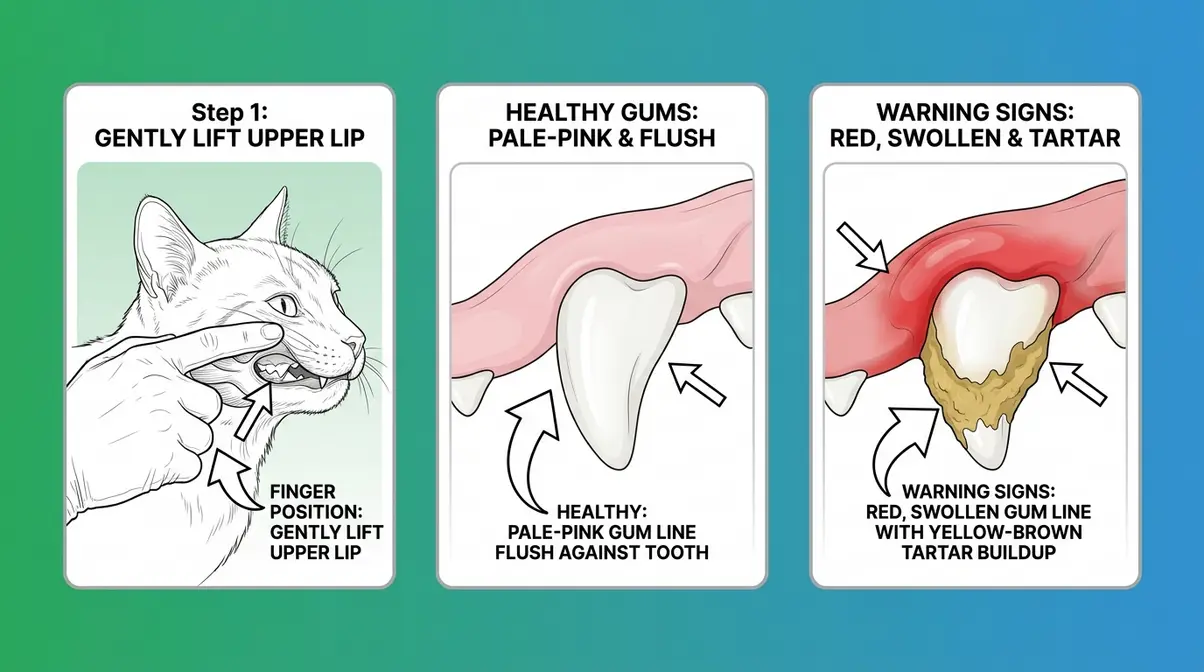
Before you start any cat dental care routine, take two minutes to do a quick home inspection. Gently lift your cat’s upper lip near the back molars and look at the gum line.
- Healthy gums: Pale pink, firm, and flush against the tooth
- Warning signs: Red or swollen tissue, yellow-brown buildup (tartar) on the tooth surface, or strong, persistent bad breath
Knowing this baseline helps you track improvement over 4–6 weeks of home care. If you notice gingivitis — inflammation of the gums, visible as redness along the gum line — note how widespread it is.
⚠️ Gentle warning: If you see bleeding gums, open sores or lesions, or your cat pulls away sharply in pain, skip directly to Step 4 and contact your vet before starting home brushing.
Now that you know what you’re working with, Step 1 will help you understand exactly what these signs mean — and how quickly they can progress.
Step 1: Recognize Dental Disease Signs
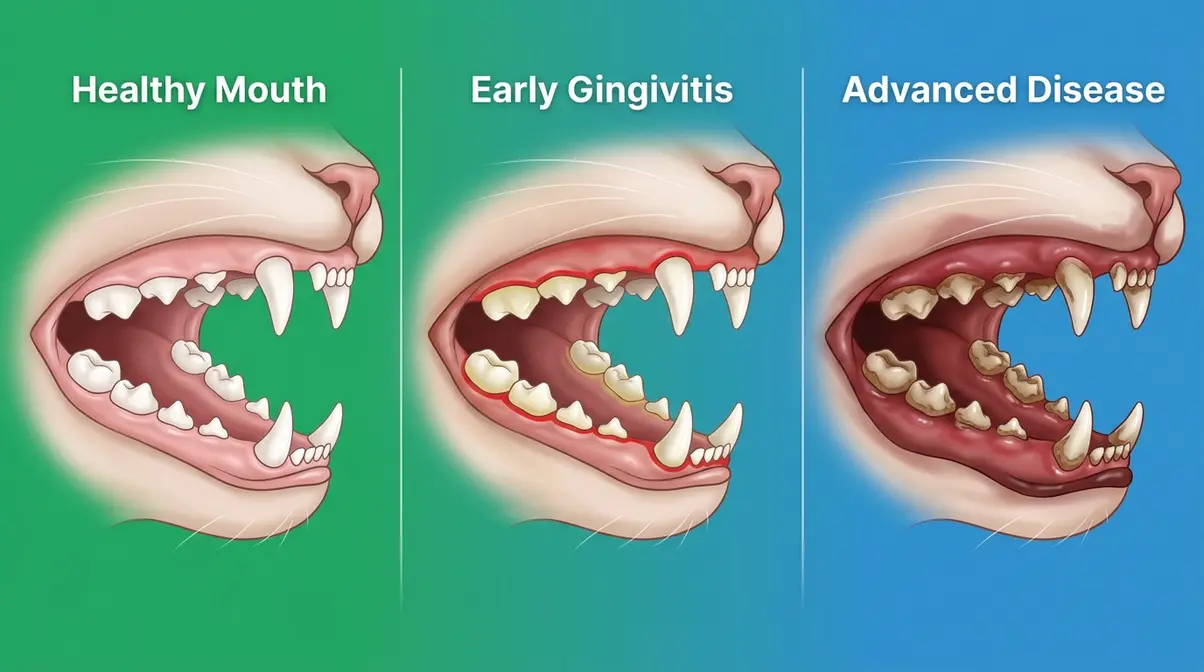
Dental disease in cats rarely announces itself loudly. By the time your cat shows obvious pain, the disease has usually been progressing for months. Knowing the early warning signs — and understanding how quickly they escalate in high-risk breeds — gives you the best chance of stopping it early.
Warning signs of dental disease in cats:
- Red or swollen gums along the tooth line
- Yellow-brown tartar buildup on back molars
- Persistent bad breath (halitosis) beyond normal cat breath
- Drooling or dropping food while eating
- Pawing at the mouth or face
- Reduced grooming or changes in eating habits
- Visible sores or lesions on the gum tissue
What Dental Disease Looks Like
Feline dental disease is the umbrella term for any condition affecting a cat’s teeth, gums, or jaw structure. In its earliest form, it looks subtle — a faint redness along the gum line, or a slight yellow tinge at the base of the back teeth.
Healthy gums are pale pink and firm, sitting snugly against each tooth. Diseased gums are red, puffy, and may bleed when touched. That yellow-brown crust you see on the molars is tartar (hardened plaque that has mineralized onto the tooth surface). Unlike soft plaque, tartar cannot be removed by brushing — it requires a professional dental cleaning under anesthesia.
Bad breath in cats is often dismissed as normal, but persistent, strong-smelling breath is one of the earliest and most reliable indicators of bacterial overgrowth in the mouth. Think of plaque as a sticky film — similar to the coating you feel on your own teeth in the morning — that harbors bacteria. Left undisturbed, that film calcifies into tartar within 24–48 hours.
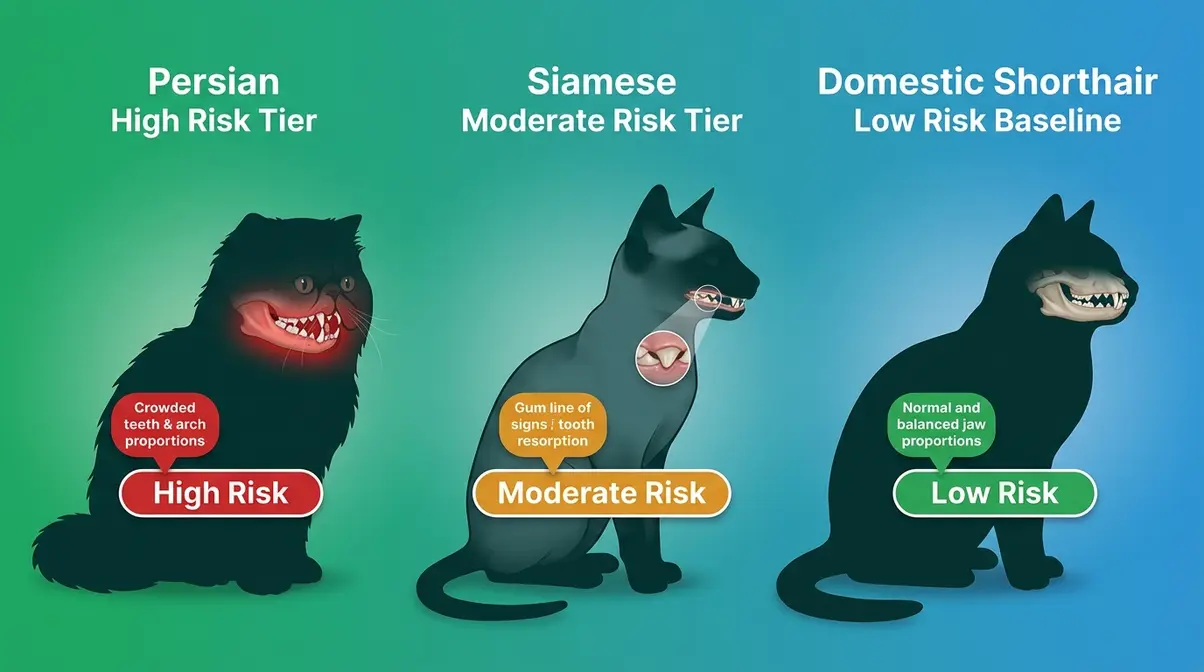
Not all cats face the same risk. In a Persian, inflamed gums can progress to periodontal disease two to three times faster because crowded teeth prevent natural self-cleaning. In Step 2, you’ll see exactly where your cat’s breed falls on the risk spectrum.
Three Core Feline Dental Conditions
Understanding these three conditions helps you recognize how far disease has progressed — and what to do about it.
Gingivitis is inflammation of the gums caused by plaque bacteria. It’s the earliest and most reversible stage of dental disease. With consistent brushing and professional care, gingivitis can be controlled and sometimes reversed. The gums look red and may bleed during inspection.
Plaque buildup refers to the bacterial film that accumulates on tooth surfaces within hours of eating. It’s invisible at first, then becomes the yellow-brown tartar visible on molars. Once plaque mineralizes into tartar, home brushing can no longer remove it — only a professional cleaning can.
Tooth resorption is a painful condition where the tooth structure erodes from within, starting at the root or crown. Up to 75% of cats over age five develop tooth resorption, making it one of the most common — and most overlooked — feline dental conditions (UC Davis School of Veterinary Medicine). Affected cats may show no visible signs until the disease is advanced, which is why regular vet check-ups are essential. Siamese and Abyssinian cats carry a genetic predisposition to this condition.
Quotable fact: “Up to 75% of cats over age five develop tooth resorption, a painful condition where the tooth structure erodes from within” (UC Davis School of Veterinary Medicine).
Step 2: Identify Your Cat’s Breed Risk
Knowing your cat’s breed isn’t just trivia — it’s the foundation of effective dental care. Breed determines jaw shape, tooth spacing, and genetic tendencies toward specific conditions. This step introduces The Breed Dental Risk Spectrum, a framework that maps 10 common breeds to their core dental risks, so you can calibrate your care routine accordingly.
Why Flat-Faced Cats Face Higher Risks
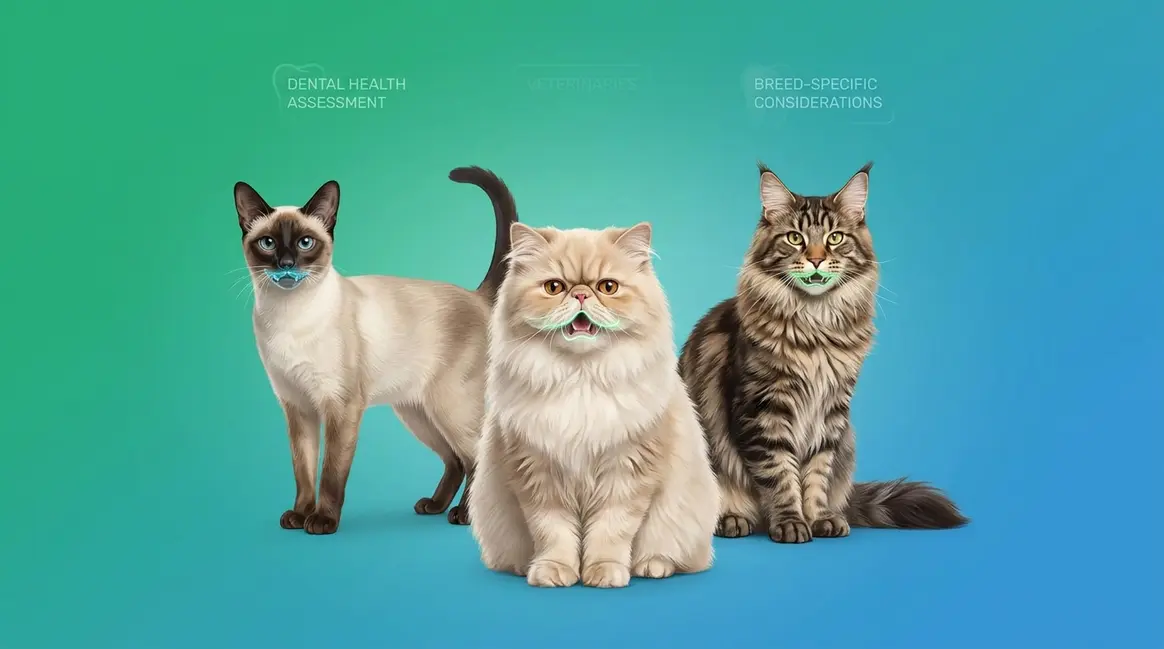
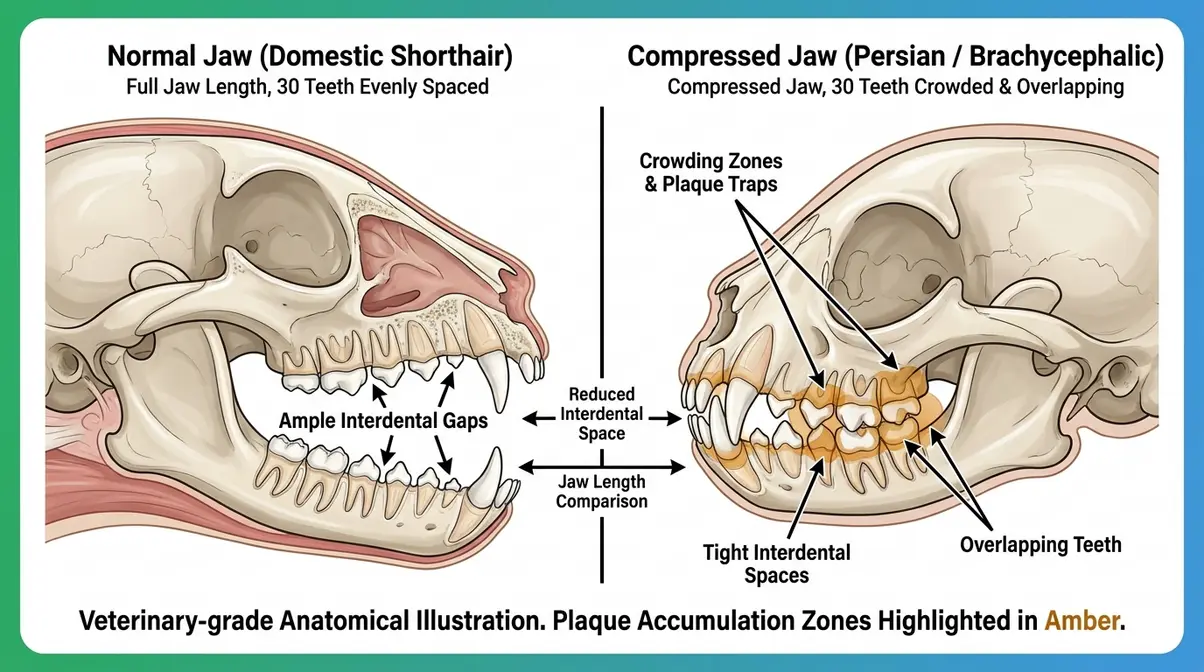
Brachycephalic (flat-faced) cats — including Persians, Himalayans, and Exotic Shorthairs — have a compressed skull that dramatically alters their dental anatomy. A normal cat skull has enough space for 30 teeth arranged in a gentle arc. A brachycephalic skull has the same number of teeth packed into a significantly shorter jaw.
This creates two serious problems. First, tooth crowding (when teeth are packed too tightly together) means adjacent teeth overlap, creating pockets where plaque accumulates and cannot be naturally dislodged by chewing. Second, malocclusion (misaligned bite) means the upper and lower teeth don’t meet properly, accelerating uneven wear and increasing the risk of chipping.
Research published in the Journal of Feline Medicine and Surgery confirms that brachycephalic cats show significantly higher rates of periodontal disease compared to mesocephalic (normal-skull) breeds, with crowding identified as the primary contributing factor (NCBI, 2026). Veterinary consensus indicates that these cats require daily brushing — not the three-times-per-week minimum recommended for other breeds.
Breed Dental Risk Spectrum Mapped
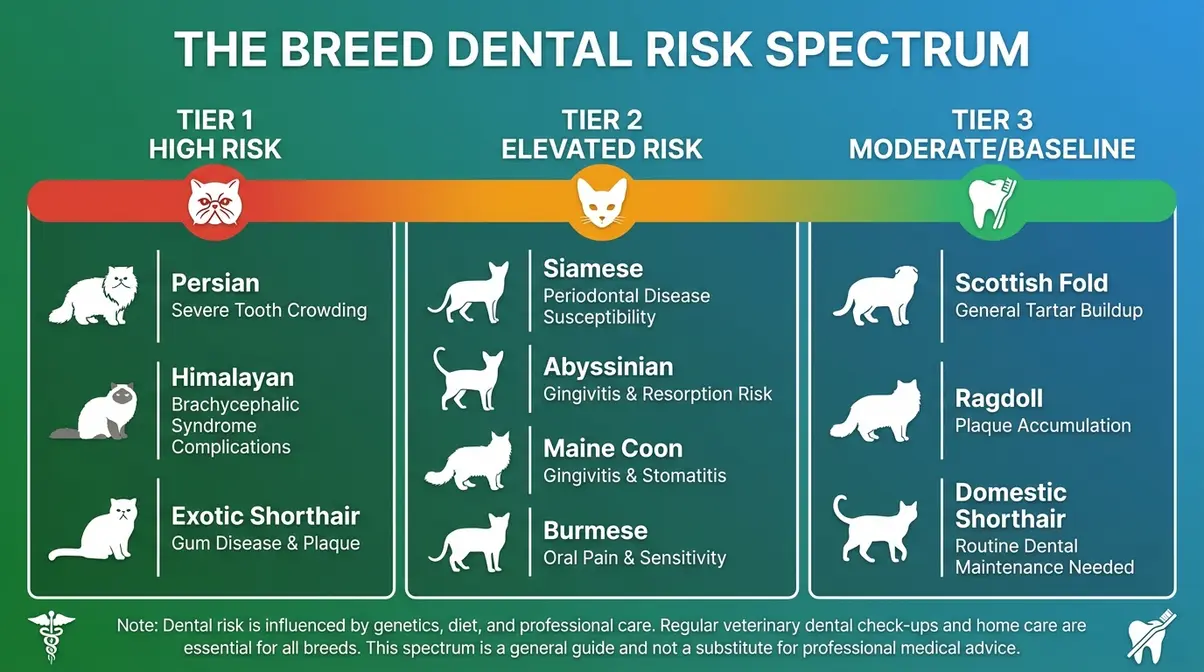
The Breed Dental Risk Spectrum organizes breeds into three tiers based on genetic dental risk. Your cat’s tier determines how often you brush, which products you prioritize, and how early to begin professional cleanings.
| Breed | Risk Tier | Primary Dental Risk | Key Concern |
|---|---|---|---|
| Persian | 🔴 High | Tooth crowding, malocclusion | Plaque traps between overlapping teeth |
| Himalayan | 🔴 High | Tooth crowding, periodontal disease | Shares brachycephalic skull with Persian |
| Exotic Shorthair | 🔴 High | Crowding, misaligned bite | Flat face with rounder skull than Persian |
| Siamese | 🟠 Elevated | Tooth resorption, gingivitis | Genetic predisposition to resorptive lesions |
| Abyssinian | 🟠 Elevated | Tooth resorption, early gingivitis | One of the highest resorption rates of any breed |
| Maine Coon | 🟠 Elevated | Periodontal disease, large tartar buildup | Large teeth accumulate significant tartar |
| Burmese | 🟠 Elevated | Crowding (mild), gingivitis | Moderate brachycephaly; less severe than Persian |
| Scottish Fold | 🟡 Moderate | Mild crowding, gingivitis | Cartilage mutation doesn’t affect teeth directly |
| Ragdoll | 🟡 Moderate | Periodontal disease with age | Generally good dental health; risk increases after 7 |
| Domestic Shorthair | 🟢 Baseline | Standard periodontal disease risk | No breed-specific amplifiers |
Other High-Risk Cat Breeds
Many owners focus exclusively on brachycephalic breeds when thinking about dental risk. But Siamese and Abyssinian cats carry a distinct genetic vulnerability: an unusually high predisposition to tooth resorption. Unlike the mechanical crowding seen in Persians, resorption in these breeds is believed to involve an immune-mediated component — the body’s own cells begin breaking down tooth structure from the root upward (PMC, NCBI, 2026).
Maine Coons, meanwhile, face a different challenge. Their large body size is paired with proportionally large teeth that accumulate tartar rapidly. Owners of Maine Coons frequently report visible tartar buildup by age two — earlier than most breeds. Veterinary consensus indicates that Maine Coons benefit from VOHC-approved dental diets alongside regular brushing, because mechanical abrasion from specially formulated kibble can slow tartar accumulation between professional cleanings.
Why purebreds have more tooth issues?
Purebred cats have more dental issues because selective breeding concentrated genetic traits that weren’t filtered out in a domestic environment. Breeding for flat faces (brachycephaly) compresses the jaw without reducing tooth count, creating crowding. Breeding for specific body types in Siamese and Abyssinians appears to have co-selected for immune-mediated tooth resorption. Mixed-breed cats benefit from genetic diversity that tends to average out extreme anatomical traits. This doesn’t mean mixed-breed cats are immune — it means their risk is statistically lower and less predictable by appearance alone.
Step 3: Build an At-Home Dental Routine
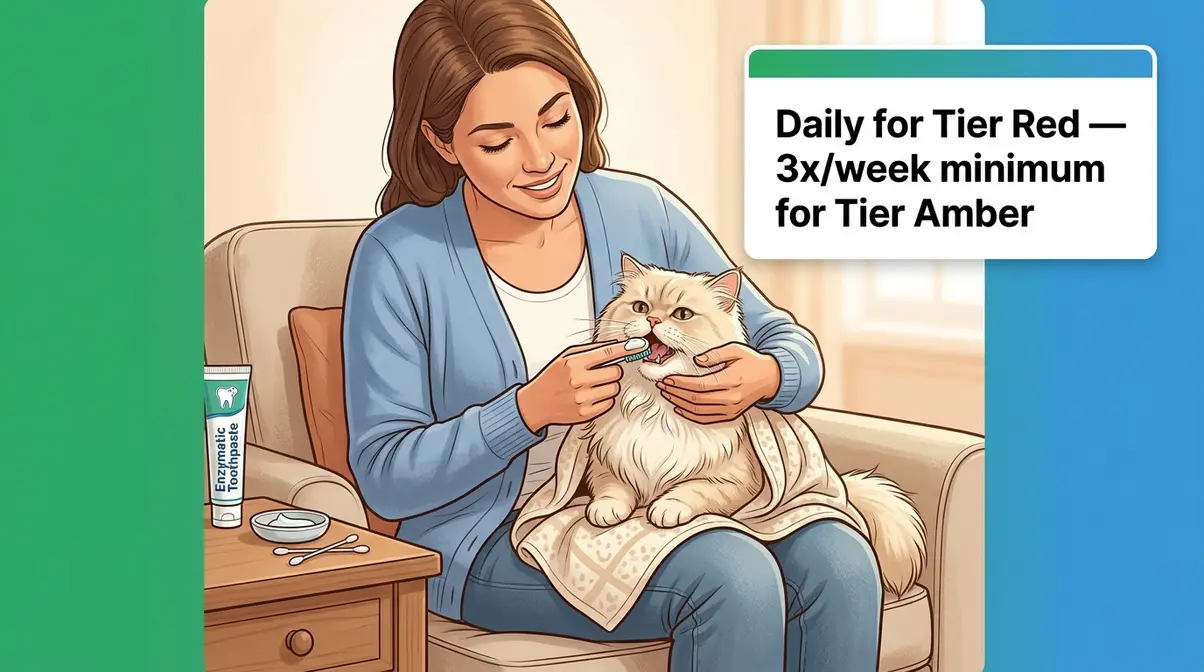
Once you know your cat’s tier on the Breed Dental Risk Spectrum, you can build a routine that matches their actual risk — not a generic plan designed for the average cat. This step covers the core skill (brushing) and the supporting tools (VOHC-approved products) that make the biggest difference.
How to Brush a Flat-Faced Cat’s Teeth
Brushing a brachycephalic cat requires a modified approach. Their short muzzle and compressed jaw mean you have less access to the back molars, and they tire of mouth handling faster than long-faced breeds. Consistency matters more than duration — a 60-second session done daily beats a thorough session done monthly.
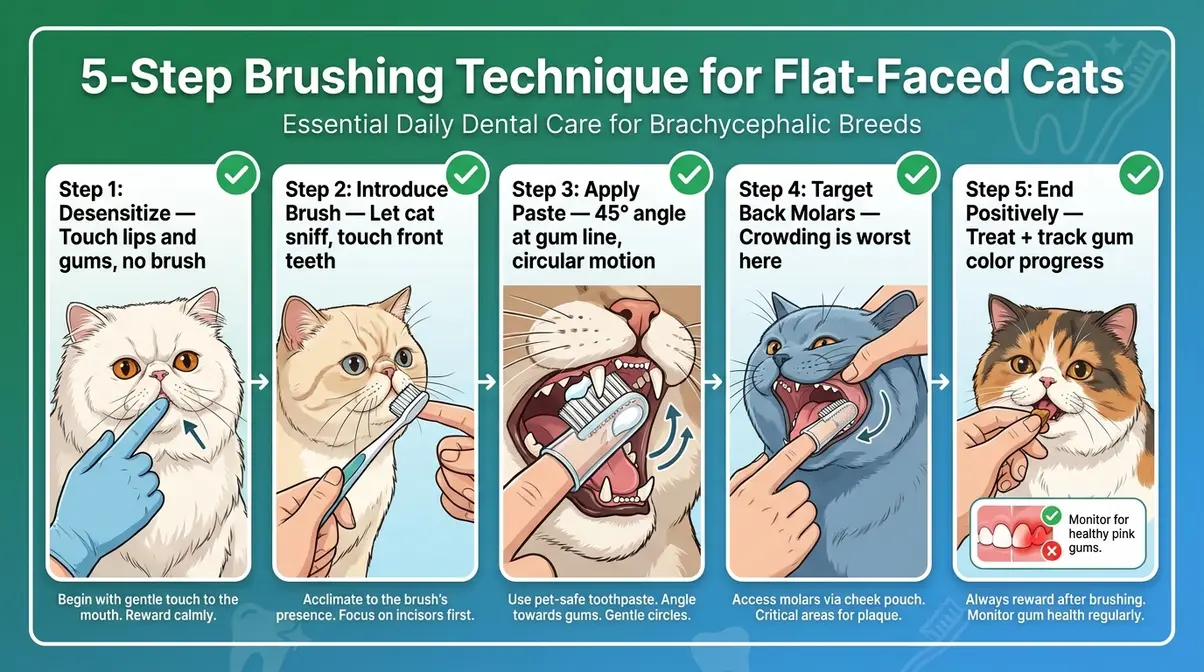
Step 1: Desensitize the mouth first
Spend 3–5 days simply touching your cat’s lips and gums with your finger — no brush yet. Dip your finger in the enzymatic toothpaste so they associate the flavor with a reward.
✅ Checkpoint: Your cat tolerates finger contact near the mouth without pulling away.
Step 2: Introduce the brush without paste
Let your cat sniff and lick the toothbrush. Touch it gently to the outside of the front teeth. Keep sessions under 30 seconds. End with a treat.
✅ Checkpoint: Your cat allows the brush to touch their teeth without significant resistance.
Step 3: Apply paste and target the gum line
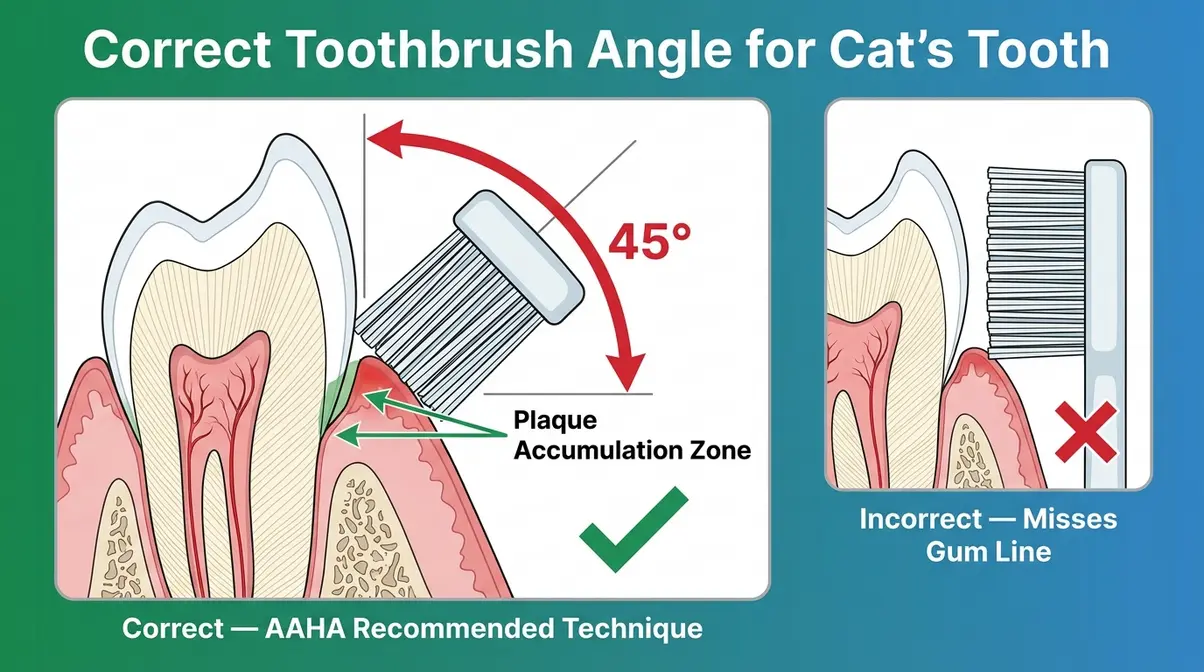
Add a pea-sized amount of enzymatic toothpaste. Angle the brush at 45 degrees to the gum line — this is where plaque accumulates first. Use small, circular motions.
✅ Checkpoint: You can maintain the 45-degree angle for at least 10 seconds per side.
Step 4: Prioritize the back molars
In brachycephalic cats, the back molars are where crowding is worst and plaque traps most aggressively. Use a finger brush for better access — insert it gently along the cheek pouch to reach the rear teeth.
✅ Checkpoint: You’ve made contact with at least two back molars on each side.
Step 5: End positively and track progress
Always end with a treat and brief play. After 4–6 weeks, compare your cat’s gum color to the baseline you noted in the Prerequisites section. Redness should be visibly reduced with consistent daily brushing.
✅ Checkpoint: Gum redness is stable or improving compared to your baseline assessment.
According to AAHA and VOHC guidelines, daily brushing is the single most effective home intervention for reducing plaque and gingivitis in cats — particularly in high-risk breeds where tartar forms faster (AAHA, 2026).
VOHC-Approved Dental Products
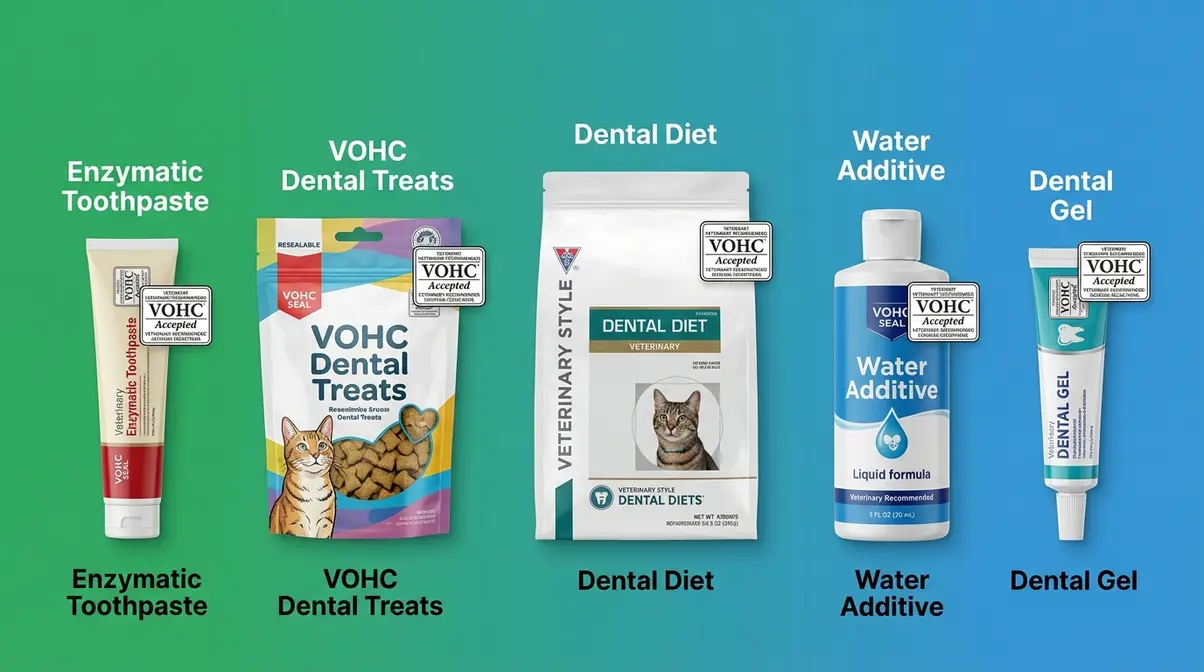
The Veterinary Oral Health Council (VOHC) is the independent body that evaluates and certifies dental products for cats and dogs. A VOHC seal means the product has passed controlled clinical trials — not just manufacturer testing. For owners of high-risk breeds, restricting purchases to VOHC-approved products is one of the most evidence-based decisions you can make.
| Product Type | VOHC-Approved Example | Best For | Notes |
|---|---|---|---|
| Enzymatic toothpaste | Virbac CET | All breeds | Enzymes break down plaque bacteria chemically |
| Dental treats | Purina Pro Plan Dental Chews | Moderate-risk breeds | Mechanical abrasion; supplement to brushing |
| Dental diet | Hill’s Prescription Diet t/d | Maine Coon, large breeds | Kibble size/texture designed for tartar control |
| Water additive | Healthymouth | Cats resistant to brushing | Reduces bacterial load; not a brushing replacement |
| Dental gel | Maxi/Guard OraZn | Post-cleaning maintenance | Zinc-based; supports gum health between cleanings |
⚠️ Important note: Dental treats and water additives reduce plaque but do not replace brushing. For high-risk breeds (Tier 🔴), the AAHA feline dental care guidelines state that daily brushing remains the gold standard — no supplement fully replaces mechanical plaque removal.
Best products for flat-faced cats?
Only VOHC-approved products have clinically proven efficacy for reducing plaque and tartar in cats. For flat-faced breeds, Virbac CET enzymatic toothpaste is widely recommended by veterinary dentists because its enzyme system works chemically on plaque — important when mechanical brushing access is limited. VOHC-approved dental treats (such as Purina Pro Plan Dental Chews) provide supplemental mechanical abrasion. Water additives like Healthymouth can reduce bacterial load in cats resistant to brushing, though they don’t replace brushing for high-risk breeds.
Step 4: Escalate to Professional Care
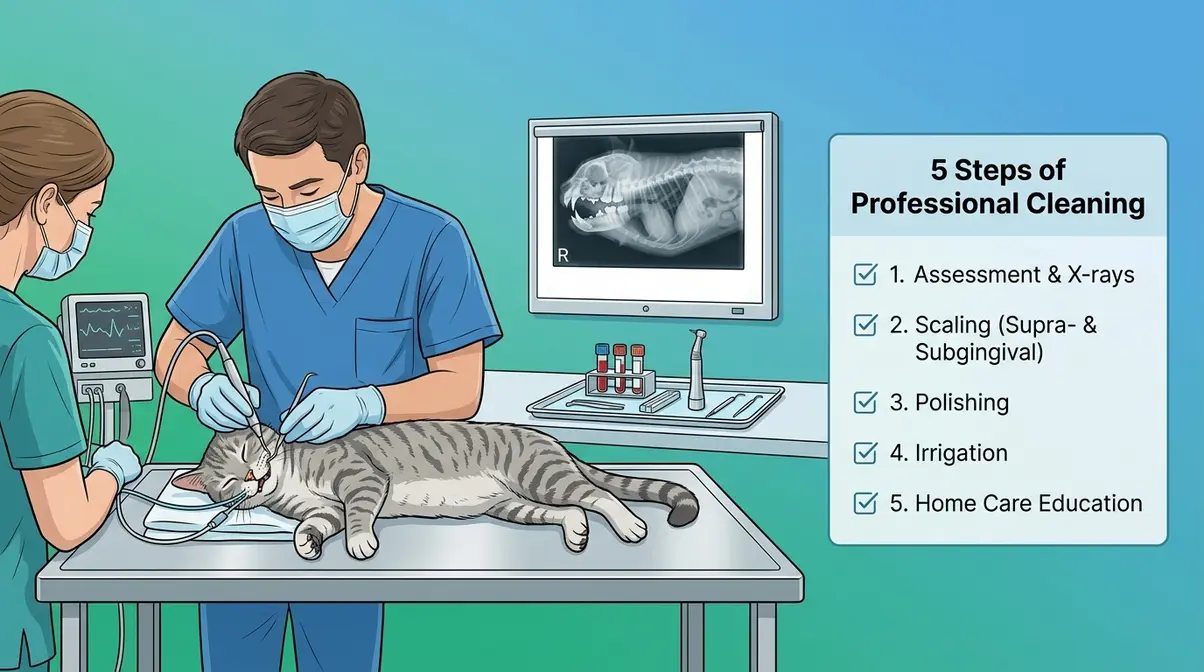
Home care can dramatically slow the progression of dental disease, but it cannot reverse established tartar, treat resorptive lesions, or address deep periodontal pockets. Knowing when to hand off to your vet — and what to expect when you do — removes the anxiety around professional dental cleanings.
Senior Cat Dental Care After Age 7
The risk profile for all cats shifts significantly around age seven. Owners of Persian cats frequently report that dental disease accelerates noticeably in senior years — gum recession, tooth loosening, and increased sensitivity to mouth handling. Research from Cornell’s Feline Health Center confirms that senior cats face compounding dental risks: existing periodontal disease deepens, tooth resorption becomes more prevalent, and the immune system’s ability to manage oral bacteria declines (Cornell, 2026).
For Tier 🔴 breeds, veterinary consensus indicates professional cleanings should begin at age one to two — not the standard “every one to two years” advice given for low-risk cats. After age seven, twice-yearly cleanings are often recommended for high-risk breeds. For Tier 🟡 and 🟢 cats, annual cleanings from age three onward are a reasonable starting point, but always follow your individual vet’s guidance.
Consult your veterinarian before changing your senior cat’s dental care schedule — age-related health conditions (kidney disease, heart conditions) affect whether anesthesia is appropriate.
Professional Dental Cleaning Guide
Many owners delay professional cleanings because of anxiety about anesthesia. That concern is valid and worth discussing with your vet — but understanding the process often reduces the fear.
A professional feline dental cleaning (prophylactic care — preventive treatment to stop disease before it worsens) involves:
- Pre-anesthetic bloodwork — Checks organ function before anesthesia; essential for cats over five
- Full-mouth dental X-rays — Reveals bone loss, root resorption, and disease invisible to the naked eye; X-rays are how most tooth resorption is diagnosed
- Ultrasonic scaling — Removes tartar above and below the gum line; cannot be replicated at home
- Polishing — Smooths the tooth surface to slow future plaque adhesion
- Extractions (if needed) — Severely diseased or resorbing teeth are removed; cats adapt remarkably well to extractions
The procedure typically takes 45–90 minutes. Most cats go home the same day and return to normal eating within 24–48 hours. Costs vary by region and the extent of work needed, but budgeting $300–$800 for a routine cleaning (without extractions) is a reasonable starting estimate in the United States (as of January 2026 — confirm current pricing with your veterinary practice).
Common Cat Dental Care Mistakes
Even proactive, diligent owners make preventable errors. These three patterns consistently accelerate dental disease — and all three are fixable once you know about them.
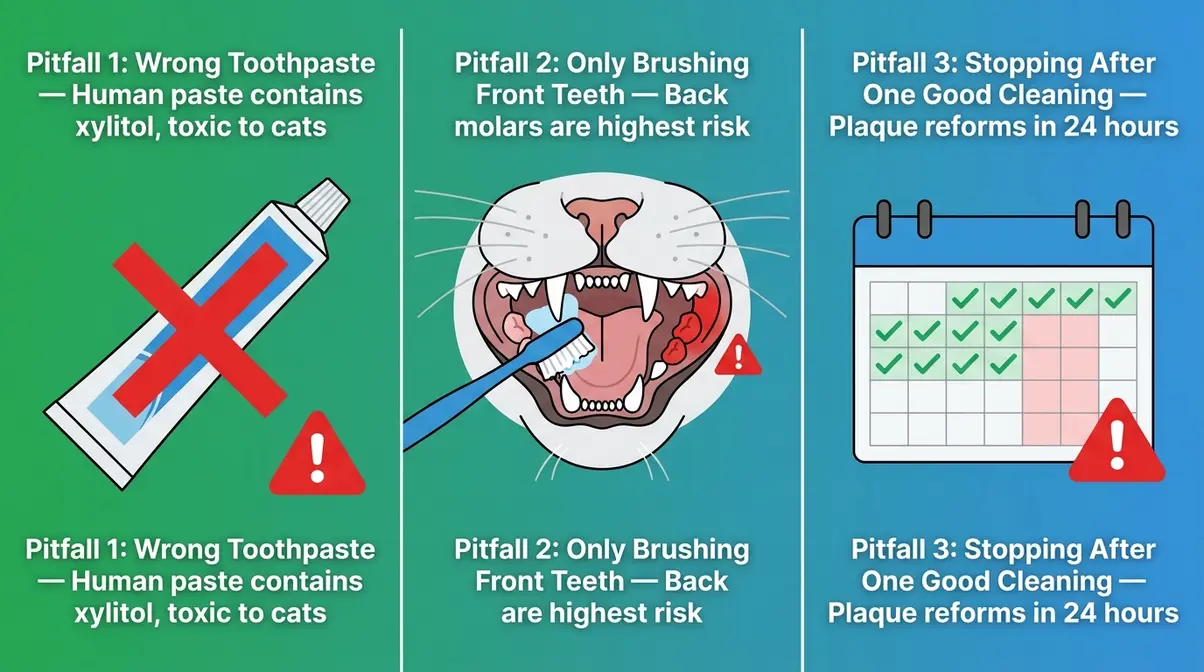
Three Dental Disease Pitfalls
Pitfall 1: Using the wrong toothpaste
Human toothpaste contains fluoride and often xylitol — both acutely toxic to cats. Even a small amount swallowed during brushing can cause serious harm. Always use enzymatic, feline-specific toothpaste. If your cat won’t accept the flavor you’ve chosen, try a different variety (chicken, malt, and seafood flavors are commonly available).
Pitfall 2: Brushing only the front teeth
The front incisors are the easiest to reach, so many owners focus there. But the back premolars and molars — especially in brachycephalic cats — are where plaque accumulates fastest and where periodontal disease begins. If you’re not reaching the back teeth, you’re missing the highest-risk area.
Pitfall 3: Stopping after one good cleaning
Owners of Persian cats frequently report a common pattern: they maintain brushing for a few weeks after a vet visit, then gradually stop when the cat’s mouth looks better. Plaque begins reforming within 24 hours of the last brushing. Consistency over months — not heroic sessions after gaps — is what prevents disease progression.
When Home Care Isn’t Enough
Home care is a preventive tool, not a treatment. If your cat already has established tartar, a professional cleaning must come first — brushing over tartar is ineffective and can be uncomfortable. Similarly, if you notice chipping on a tooth, visible sores or lesions on the gum tissue, or a tooth that appears loose or discolored, home care cannot address these conditions. Your vet needs to assess them directly.
For cats on Tier 🔴 of the Breed Dental Risk Spectrum, home care alone — even daily brushing — may not be sufficient to prevent disease progression. These cats genuinely need more frequent professional cleanings than the standard recommendation. That’s not a failure of your home routine; it’s the biological reality of their anatomy.
When to Call Your Vet Immediately
Contact your veterinarian without delay if you observe any of the following:
- Bleeding gums that don’t resolve within a day of gentle brushing
- Open sores or lesions on the gum tissue or inside the cheek
- A tooth that appears pink, purple, or brown at the base (may indicate resorption or pulp exposure)
- Sudden refusal to eat or dropping food consistently
- Significant facial swelling, particularly below one eye (may indicate a tooth root abscess)
These signs require professional evaluation — they are beyond the scope of home care. Delaying a vet visit when these symptoms are present can allow infection to spread.
Frequently Asked Questions
What are my cat’s dental risks?
Dental risks vary significantly by breed based on skull shape, jaw length, and genetic predispositions. Brachycephalic breeds (Persians, Himalayans, Exotic Shorthairs) face severe tooth crowding and malocclusion—misaligned bites that trap plaque rapidly. Siamese and Abyssinian cats carry a strong genetic predisposition to tooth resorption, a painful condition where tooth structure erodes from within the gum line. Maine Coons accumulate tartar rapidly due to their large tooth surface area. The Breed Dental Risk Spectrum maps 10 breeds across three tiers to help you identify your cat’s specific vulnerabilities (see Step 2). Always consult your veterinarian for a tailored assessment.
How to brush flat-faced cat teeth?
Brushing a brachycephalic cat requires prioritizing the back molars where crowding is worst. Use a finger brush for better access, angle at 45 degrees to the gum line, and use small circular motions for 60-90 seconds daily.
When to start professional cleanings?
For high-risk breeds (Persians, Himalayans, Exotic Shorthairs), professional cleanings should begin at age one to two, per AAHA guidelines—significantly earlier than the standard recommendation for average-risk cats. For moderate-risk breeds, annual cleanings from age three are a reasonable starting point. After age seven, all cats benefit from more frequent professional assessments, and twice-yearly cleanings are often recommended for high-risk breeds. Always consult your veterinarian for a personalized schedule, particularly if your cat has concurrent health conditions that affect anesthesia safety.
Can cat dental disease be reversed?
Gingivitis (early gum inflammation) is fully reversible with consistent daily brushing and professional cleanings. However, once plaque mineralizes into hard tartar or periodontal disease damages the bone, the condition can only be managed, not reversed.
Is bad breath always a dental issue?
While persistent bad breath (halitosis) is most commonly caused by periodontal disease and bacterial overgrowth in the mouth, it is not the only potential cause. Strong, foul-smelling breath can also indicate underlying systemic health issues. For example, a sweet or fruity odor might point to feline diabetes, while a urine-like smell can be a warning sign of advanced kidney disease. Because these conditions are serious, you should never ignore chronic bad breath. If daily brushing doesn’t resolve the odor within a few weeks, schedule a comprehensive veterinary exam to rule out internal illnesses.
Dental Care Starts With Your Cat
Dental disease is not inevitable — but for certain breeds, it’s a near-certainty without consistent, targeted care. The Breed Dental Risk Spectrum reframes dental care from a generic chore into a breed-specific strategy: a Persian needs daily brushing and early professional cleanings; a Siamese needs vigilant monitoring for resorptive lesions; a Maine Coon benefits from VOHC-approved dental diets alongside brushing. The care level matches the actual risk — not a one-size-fits-all recommendation.
The framework also changes how you think about prevention. Most cats show periodontal disease signs by age three (AVMA, 2026), but for Tier 🔴 breeds, disease often begins in kittenhood. Starting early — even before you see problems — is what separates proactive owners from reactive ones.
Your next step is concrete: complete the baseline gum inspection from the Prerequisites section tonight, identify your cat’s tier on the Breed Dental Risk Spectrum, and commit to a 30-day brushing trial using the 5-step method. After 30 days, compare gum color to your baseline. Most owners report visible improvement within three to four weeks of consistent daily brushing. If you’re unsure where to start, your veterinarian can provide a dental assessment and personalized care plan — that one appointment may be the most valuable investment you make in your cat’s long-term health.

Dave King
Cat owner and writer at Mad Cat Man.