Cat Veterinary Checklist: Vet-Backed Schedule for Dewormers, Probiotics, Supplements & When to Seek Emergency Care
Explore practical guidance for Cat Veterinary Checklist: Vet-Backed Schedule for Dewormers, Probiotics, Supplements & When to Seek Emergency Care to help…

Cat Veterinary Checklist: Vet-Backed Schedule for Dewormers, Probiotics, Supplements & When to Seek Emergency Care
Between decoding labels and late-night searches, caring for a cat can feel like a guessing game. This cat veterinary checklist translates what veterinarians do in the exam room into a friendly plan you can follow at home. Below you will find a vet-backed schedule for dewormers, probiotics, and supplements plus a clear line on when a situation is an emergency. I built it around the same questions new clients ask and the practical shortcuts experienced owners swear by.
If we have not met yet, I am the human who once switched my shy tabby, Poppy, to a richer food too quickly and learned why probiotics matter the messy way. That little hiccup taught me to pair real-world wisdom with science and to keep a simple, reliable routine. The goal here is not perfection. It is a calm, consistent plan that keeps your cat comfortable and you confident.
Why a Vet-Backed Checklist Matters for Cat Veterinary Care
There is a reason veterinarians harp on routines. Parasites, tummy upsets, and subtle pain often creep in quietly, long before a cat meows for help. Studies cited by the American Veterinary Medical Association [AVMA] suggest many cats hide illness until it is advanced, and dental disease is common by age three. Add in the fact that shelter and neighborhood surveys find 25 to 45 percent of kittens carry roundworms, and you can see why a simple timeline beats a stack of pamphlets.
But here is the twist. Your home life is unique, and your cat’s risks change by season and age. Indoor-only cats still pick up fleas on your shoes, tapeworms follow fleas, and stress flares up the digestive tract. A clear cat veterinary plan helps you adapt gracefully. You will know when to send a stool sample, when a probiotic can settle a travel day, and when a supplement helps or just makes expensive urine.
At Mad Cat Man, we organize advice so you can navigate without wading through jargon. Our product reviews, step-by-step checklists, and breed notes sit in organized categories for easy browsing. That way, whether you live with a curious Maine Coon or a nap-loving senior, you can grab the exact guidance you need in two clicks, not twenty.
Your Dewormer Schedule by Life Stage and Risk
Intestinal worms are common, treatable, and preventable. The cornerstone is not just medicating, it is timing. Combine regular fecal testing with targeted dewormers and year-round flea control to cut reinfection. Always confirm weight-based dosing with your veterinarian, and remember that certain actives are not safe for very young kittens or pregnant queens. When in doubt, bring a fresh stool sample in a sealed bag and ask the clinic to run a fecal flotation and antigen test if needed.
Watch This Helpful Video
To help you better understand cat veterinary, we’ve included this informative video from TheCatRanked. It provides valuable insights and visual demonstrations that complement the written content.
| Life Stage or Situation | Fecal Test Timing | Common Actives | Routine Schedule | Notes and Tips |
|---|---|---|---|---|
| New kitten, 6 to 16 weeks | At first visit; then every 3 to 4 weeks until 16 to 20 weeks | Pyrantel pamoate, fenbendazole; add praziquantel if tapeworm risk | Dose every 2 to 3 weeks until two negative fecals and after final core vaccines | Roundworms and hookworms are common. Keep litter boxes spotless and deworm all littermates. |
| Adolescent, 4 to 12 months | Every 6 months, or sooner if diarrhea, weight loss, or visible worms | Pyrantel pamoate or broad spectrum combo per vet advice | Targeted single dose as needed plus strict flea control | Outdoor access raises risk. Recheck 2 to 4 weeks after treatment. |
| Adult indoor-only | Annually, paired with wellness exam | Praziquantel for tapeworms; fenbendazole for giardia per vet | As indicated by test results or flea exposure | Fleas can hitchhike indoors. Keep preventives on a monthly schedule. |
| Adult indoor-outdoor | Every 6 to 12 months, plus after high-risk events | Broad spectrum dewormer; may include emodepside with praziquantel | Proactive deworming 1 to 2 times per year, guided by fecal results | Hunting and roaming increase exposure to tapeworms and roundworms. |
| Pregnant or nursing queen | Before breeding and during late gestation per vet plan | Fenbendazole is often used; avoid unsafe products | Follow veterinary protocol to protect kittens in utero and during nursing | Some actives are not safe. Confirm every dose with your veterinarian. |
| Flea infestation or visible tapeworm segments | At diagnosis and again 2 to 4 weeks later | Praziquantel for tapeworms plus speed-kill flea control | Treat immediately; repeat if segments reappear | Without flea control, tapeworms return. Treat all pets in the home. |
Practical tips that save time and stress: label a small container “fecal sample” and keep it in your pet drawer so you are never hunting at the last minute. Dose on the same day every month to automate flea control. If you foster or have multiple cats, create a one-page deworming log taped inside a cupboard door. That simple paper stops double-dosing, which can happen in busy homes.
Probiotics: When, What, and How Much
Probiotics help restore balance in the gut and can shorten bouts of soft stool from diet changes, stress, or antibiotics. Not all products are equal, though. Look for a guaranteed viable count through expiration, clear storage directions, and strains with studies in cats or dogs. When my Poppy had post-travel tummy gurgles, a two-week course of a veterinary probiotic settled things with zero drama and reminded me how much routine matters.
| Situation | Typical Strains | Suggested Daily Amount | Duration | Notes |
|---|---|---|---|---|
| Antibiotics or recent deworming | Enterococcus faecium, Lactobacillus plantarum, Saccharomyces boulardii | Per label providing 1 to 5 billion CFU [Colony Forming Units] | During treatment and 7 to 14 days after | Give probiotics at a different time of day than the antibiotic. |
| Diet transition or travel stress | Bacillus coagulans or multi-strain veterinary formulas | Per label providing 1 to 3 billion CFU [Colony Forming Units] | Start 2 to 3 days before change and continue 5 to 7 days | Pair with slow food transitions over 7 to 10 days. |
| Recurrent soft stool without fever or blood | Multi-strain with Enterococcus faecium plus prebiotic fibers | Per label; consult vet if no improvement in 48 hours | 10 to 14 days, then reassess | If signs persist, ask about fecal testing and a different diet. |
| Senior wellness and hairball season | Gentle daily probiotic with added prebiotic fibers | Lowest effective label dose | Ongoing, with periodic breaks | Supports regularity. Hydration and brushing matter even more. |
A few guardrails make probiotics work harder. Store powders in a cool, dry place and close the lid tight. If your cat refuses the taste, try a capsule sprinkled under a thin layer of favorite wet food or a freeze-dried topper. And if there is blood in the stool, black tarry stool, lethargy, or vomiting that lasts more than 24 hours, treat that as a veterinary problem first, not a supplement problem.
Supplements That Help and the Ones to Skip
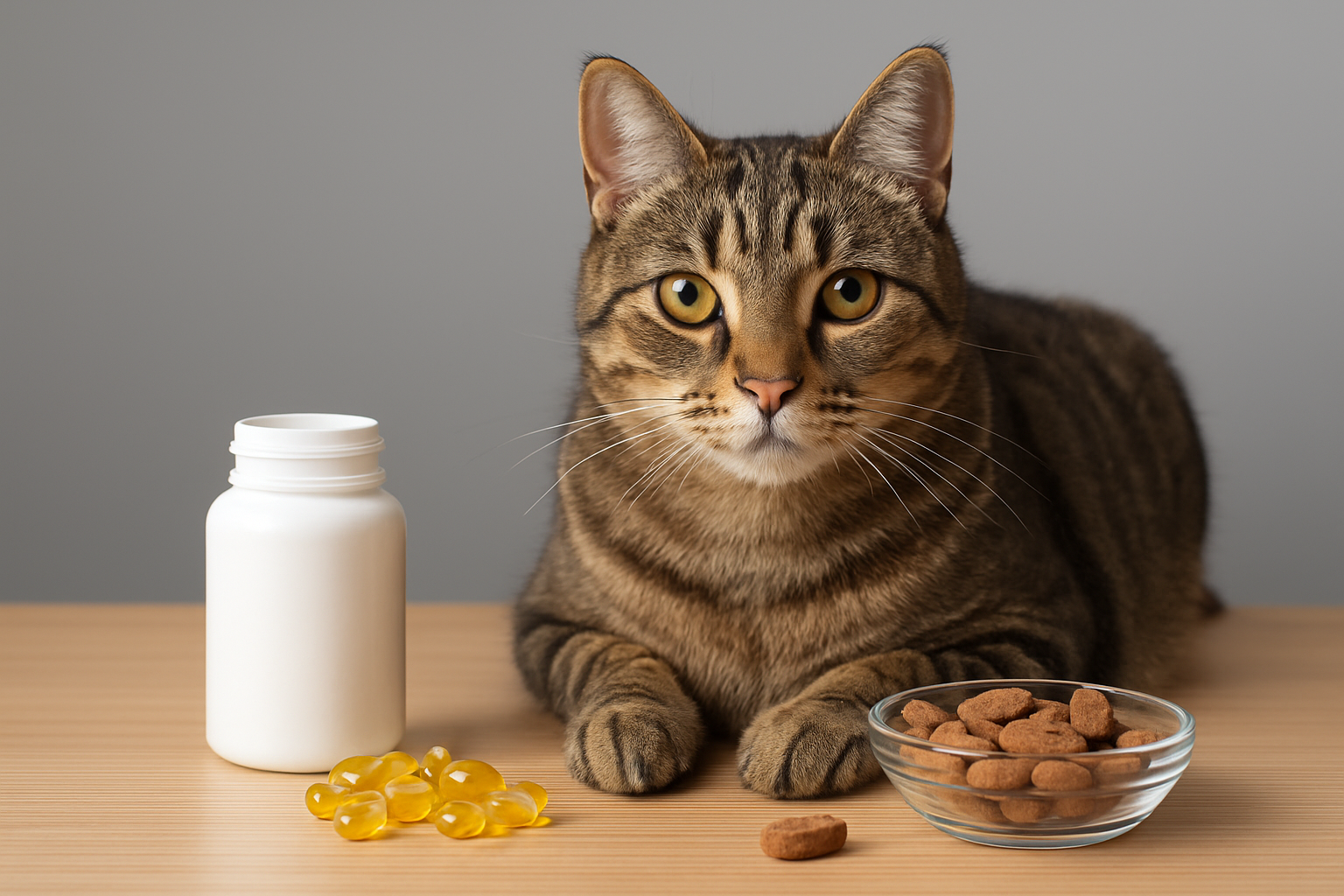
Supplements can shine when they fill a genuine gap. They can also clutter your shelf and your cat’s routine if you add them “just in case.” The safest path is to focus on a short list with evidence, buy products that are third-party tested, and avoid anything that promises miracle cures. Look for quality signals like the National Animal Supplement Council [NASC] Quality Seal and manufacturers that follow Food and Drug Administration [FDA] Good Manufacturing Practices.
| Supplement | What It Is For | Evidence Snapshot | Quality Check | Risks and Watch-outs |
|---|---|---|---|---|
| Omega-3 from marine fish oil | Skin, joints, kidneys, cognitive aging | Moderate support in cats for inflammation and coat health | Choose purified oil, oxidation-tested, with clear omega-3 content | Can thin blood at high amounts; introduce slowly with food |
| Joint blends with glucosamine and chondroitin | Stiffness in seniors, early arthritis | Mixed data; many vets use as part of multimodal care | Look for clear milligram amounts and batch testing | Gastrointestinal [GI] upset in some cats; avoid if shellfish allergy |
| Probiotics with prebiotics | Digestive balance, stool consistency | Good support when paired with diet and hydration | Guaranteed CFU [Colony Forming Units] through expiration | Stop and call vet if blood, fever, or severe lethargy appears |
| Taurine | Essential amino acid for heart and eye health | Critical if diet is not complete and balanced | Only needed if diet is unbalanced; most cat foods include it | Over-supplementing is unnecessary on complete diets |
| Calming chews with L-theanine or alpha-casozepine | Stressful events and travel | Supportive for mild stress when used with behavior strategies | Choose brands with clinical trial references | Do not rely on chews alone for severe anxiety or aggression |
| L-lysine | Historically used for feline herpes support | Evidence in cats is weak or conflicting | Discuss alternatives with your vet | May not help and can upset stomach |
| Vitamins A, D, E blends | General health | Not needed on complete diets | Only if bloodwork confirms a deficiency | Vitamin D can be toxic; avoid unless prescribed |
Two simple rules keep you safe. Never stack multiple products with the same active ingredient, and never give human Nonsteroidal Anti-inflammatory Drugs [NSAIDs] or human pain relievers to cats. If you are experimenting with a new supplement, add just one change at a time for two weeks so you can clearly tell what helps and what does not. And when shopping, Mad Cat Man’s product reviews flag third-party testing and real-world palatability, so you can spend money once, not twice.
Emergency Signs You Should Never Ignore
Cats are famous for pretending that everything is fine right up until it is not. Having bright lines around emergencies helps you act fast without second-guessing. Use the table below as a quick triage guide and then call your primary veterinarian or the nearest veterinary emergency hospital. While you dial, note your cat’s breathing, gum color, and recent exposures like lilies, medications, or falls.
| Urgency | What You See | Action To Take | Why It Matters |
|---|---|---|---|
| Immediate emergency | Open-mouth breathing, blue or pale gums, collapse, seizures, paralysis, severe bleeding, suspected toxin ingestion, straining to urinate with little to no urine, hit by car, trouble giving birth | Go to a veterinary emergency hospital now and call on the way | Minutes count for airway, heart, internal bleeding, urinary blockage, and toxin exposure |
| Urgent, same day | Repeated vomiting, blood in stool or vomit, painful abdomen, sudden severe diarrhea, fever, swollen face, severe limping, deep wounds, eye injuries | Call your vet for the earliest same-day appointment | Dehydration and infection escalate quickly in cats |
| Prompt, within 24 to 48 hours | Mild diarrhea or soft stool without blood, sneezing without breathing trouble, small cuts, decreased appetite for less than 24 hours in adult cats | Monitor at home, offer water and bland diet, schedule a visit if not improved | Many minor issues resolve, but a check prevents smoldering problems |
Keep these vitals in your back pocket. A comfortable resting cat breathes about 16 to 30 times per minute. Normal temperature is about 100.0 to 102.5 degrees Fahrenheit, or 37.8 to 39.2 degrees Celsius. Gums should be pink and moist. If you see blue, white, or brick red gums, or your cat is breathing faster than 40 breaths per minute at rest, that is an emergency until proven otherwise.
Before you head out, bring your cat’s current medications, a recent stool sample if diarrhea is present, and a photo of any chewed plant or product label. Never induce vomiting without direct veterinary guidance. Many toxins, like corrosive cleaners and certain human medications, can cause more damage coming back up.
Your At-Home Health Kit and Shopping Checklist
Think of this as your calm-in-a-box. A small, well-stocked kit turns frazzled moments into manageable routines. You do not need everything on day one. Start with the basics and add as you learn what your cat and your household actually use.
- Monthly flea and tick preventive appropriate for cats, on a calendar reminder.
- Broad-spectrum dewormer recommended by your veterinarian for your region and risks.
- Veterinary probiotic powder or capsules with guaranteed CFU [Colony Forming Units].
- Plain, unscented litter and a spare shallow litter tray for sick-day encouragement.
- Electrolyte powder for cats and a 5 milliliter oral syringe for gentle hydration guidance from your vet.
- Digital thermometer with a dab of lubricant, plus alcohol wipes for cleaning.
- Soft Elizabethan collar for post-procedure or wound protection.
- Gauze, non-stick pads, and paper tape for small first-aid needs.
- Enzymatic cleaner for accidents so your house does not smell like “mark here.”
- Travel-safe carrier with towel, plus a spare towel for stress wraps.
- Notebook or phone note titled “Cat Health Log” with deworming, probiotic, and weight entries.
To keep costs reasonable, Mad Cat Man’s buying guides compare budget and premium picks for carriers, litter boxes, and grooming tools. We field test scruff-proof pill pockets, spill-proof bowls, and quiet clippers so you do not have to. When you are ready to expand, our breed guides explain quirks like a Maine Coon’s love of climbing or a Persian’s grooming needs and match products to those realities.
Routine Vet Care Timeline to Pair With This Checklist

Dewormers, probiotics, and supplements land best inside a predictable healthcare rhythm. Here is a simple calendar you can print or save. Your veterinarian may tailor it based on your cat’s breed, lifestyle, and medical history, but this gives you a strong starting point.
| Life Stage | Wellness Visits | Key Preventive Tasks | Notes |
|---|---|---|---|
| Kitten, 6 to 16 weeks | Every 3 to 4 weeks | Vaccines, fecal tests, deworming, flea control, microchip | Socialization and behavior tips pay dividends later |
| Young adult, 4 months to 6 years | Once yearly | Exam, annual fecal, dental assessment, weight and body condition check | Discuss spay or neuter timing and enrichment needs |
| Senior, 7 years and up | Every 6 months | Exam, weight trends, bloodwork as advised, pain screening, dental plan | Arthritis and kidney changes are common and manageable when caught early |
According to wellness data shared in veterinary conferences and by the American Veterinary Medical Association [AVMA], more frequent senior checks catch chronic conditions earlier, which translates to fewer crises and a better quality of life. Match those visits with the deworming and probiotic schedules above and you will feel like you finally have the map, not just the compass.
How Mad Cat Man Makes Cat Veterinary Choices Simple
When you are overwhelmed, organization is not a luxury, it is relief. Mad Cat Man exists to make cat veterinary decisions clear and practical. We blend product reviews and buying recommendations with behavior and training tips, health and preventive care guides, breed comparisons, and safety content like humidifiers and houseplants. Everything is grouped into organized categories for easy browsing so you can move from big-picture planning to a specific shopping checklist without opening ten tabs.
Here is what readers tell us helps most:
- Product reviews that call out sizing quirks, materials, and cat reactions, not just specs.
- Step-by-step how-tos, like dosing a liquid dewormer without a wrestling match, or safely transitioning foods.
- Behavior advice that pairs low-stress handling with real-world life, from nail trims to carrier training.
- Breed-focused explainers that anticipate needs, like extra-large litter boxes for big-bodied breeds.
- Vet-approved health guides that translate medical notes into what to watch, when to act, and how to prepare.
Your time is limited and your cat is priceless. We are here to help you make confident choices, spend wisely, and reduce stress for everyone in the house, whiskers included.
Putting It All Together: A One-Page Cat Veterinary Checklist
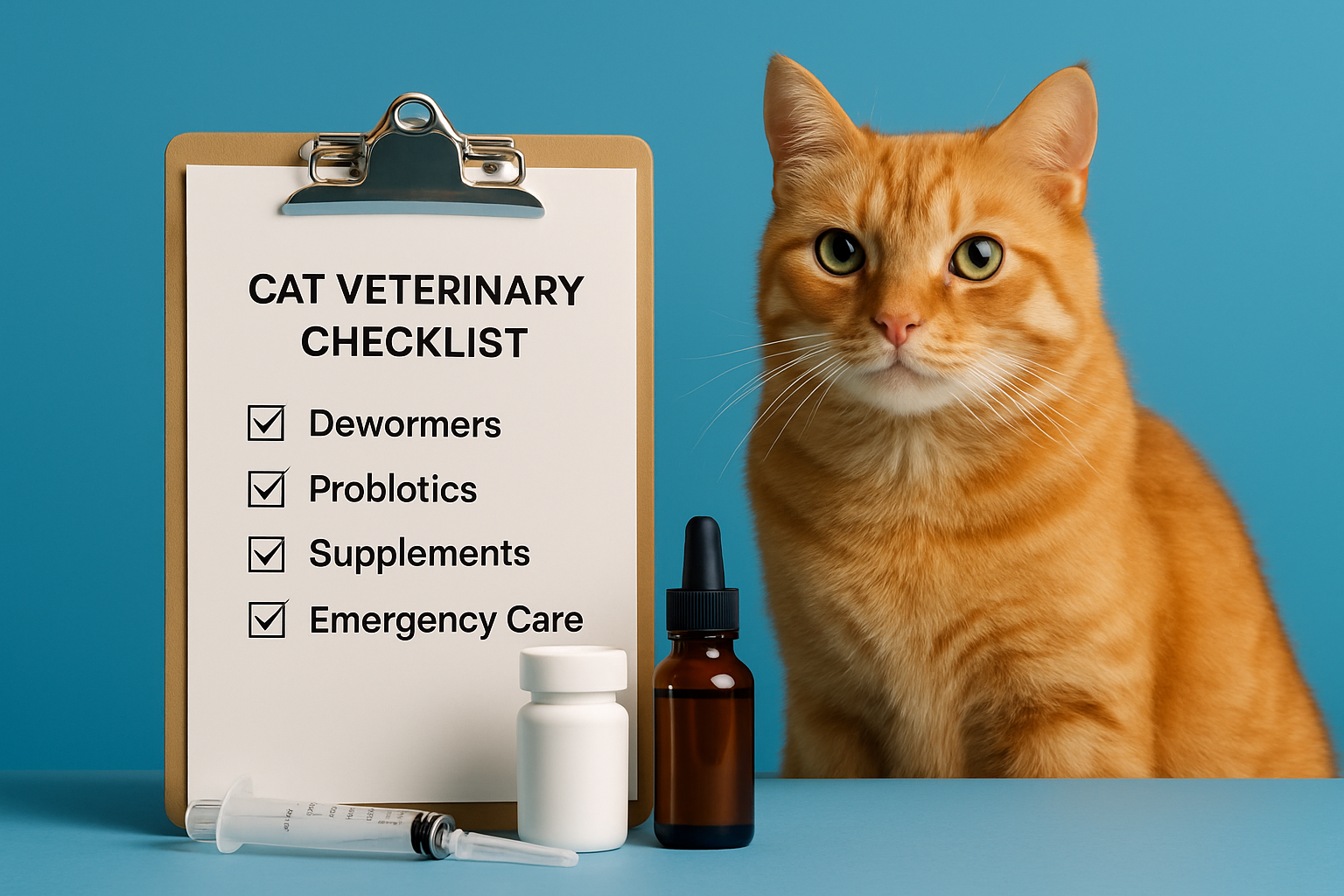
Bookmark this quick-reference summary and you will have a calm plan on busy days. You can also copy it into your phone’s notes app and tick items off as you go. Customize it for your cat’s age, lifestyle, and any vet instructions.
- Deworming and testing
- Kittens: deworm every 2 to 3 weeks until 16 to 20 weeks with fecal tests each visit.
- Adults: fecal test annually if indoors, every 6 to 12 months if outdoors or hunting.
- Treat tapeworms plus fleas on the same day to avoid reinfection.
- Probiotics
- Use during antibiotics, diet changes, or travel; give 1 to 5 billion CFU [Colony Forming Units] per label.
- Separate probiotics and antibiotics by several hours.
- Supplements
- Consider omega-3s for skin and joints; choose third-party tested products.
- Avoid stacking similar ingredients and skip human Nonsteroidal Anti-inflammatory Drugs [NSAIDs].
- Emergency checkpoints
- Breathing trouble, pale or blue gums, collapse, seizures, or urinary straining require immediate emergency care.
- Repeated vomiting, blood in stool, or eye injuries need same-day attention.
- Home kit essentials
- Monthly preventives, probiotic, spare litter tray, thermometer, electrolyte powder, carrier, first-aid basics.
- Keep a simple health log with dates, doses, weights, and notes.
If you prefer structured browsing, the Mad Cat Man categories group these topics so you can jump straight to product reviews, how-to tutorials, or health explainers. That way, you do not just read a plan, you follow it with exactly the right gear and timing.
Real-World Examples That Bring the Checklist to Life
Sometimes the best lessons come from everyday stories. A reader with two indoor-only cats noticed rice-like segments near the litter box. They had no fleas in sight, but a quick flea combing and a white sock test revealed tiny specks. The fix was textbook: a tapeworm treatment containing praziquantel and a fast-acting monthly flea preventive, plus a wash of bedding. Two weeks later, no segments, no itch, and a better vacuum schedule to boot.
Another reader moved apartments and saw loose stools during the first week. They kept mealtimes predictable, transitioned food over ten days, and used a veterinary probiotic for two weeks. They also refreshed water bowls twice daily and added a second litter tray for the temporary chaos. The result was a settled stomach, calmer humans, and a new routine that traveled well for future trips.
A final note for seniors. A twelve-year-old cat began skipping a meal here and there and hesitated to jump onto the sofa. A six-month wellness exam uncovered early arthritis and a dental issue. With a pain plan, gentle joint support, and a dental cleaning, he was back to greeting the sunbeams. Catching changes early is the heart of smart cat veterinary care.
Medical disclaimer: This guide offers general information and is not a substitute for personalized veterinary advice. Always consult your veterinarian for diagnosis, dosing, and treatment decisions.
Made it this far and still wondering which probiotic or dewormer to buy? Mad Cat Man’s categorized guides cut through the noise with vetted picks across budgets, plus behavior tips so you can actually get the stuff into your cat.
Conclusion
This checklist gives you clear timing for dewormers, probiotics, and supplements and draws a bright red line around true emergencies.
Imagine the next 12 months feeling calm and predictable, with fewer surprises and more purrs because you have a routine that works for you and your cat.
What will your first small step be today toward steadier cat veterinary care?
Additional Resources
Explore these authoritative resources to dive deeper into cat veterinary.
Make Cat Veterinary Choices Easier with Mad Cat Man
Explore organized categories for easy browsing to find vet-backed guides, behavior tips, and product picks that help every cat parent make confident decisions.

Dave King
Cat owner and writer at Mad Cat Man.