
Table of Contents
This blog post may contain affiliate links. As an Amazon Associate I earn from qualifying purchases.
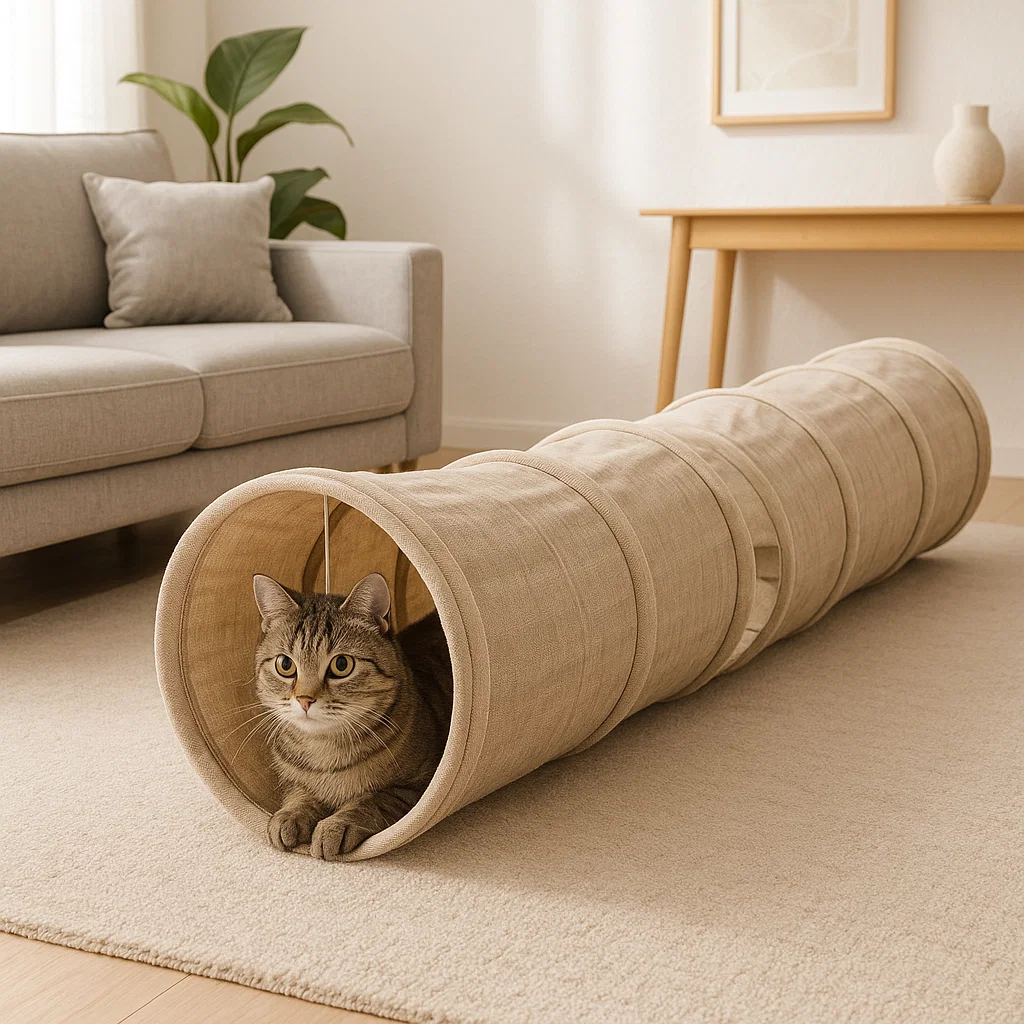
If you’ve ever seen your cat suddenly sprint across the room or hide behind the sofa, you already know their love for mystery and movement. Indoor cat tunnels tap into that instinct — offering adventure, exercise, and mental enrichment right in your living room. But these playful hideaways aren’t just toys; they provide comfort, confidence, and physical benefits your cat might secretly crave.
This complete guide explores everything you need to know about cat tunnels: how they benefit feline behaviour and health, what features to look for, where to place them, and even DIY options for creative cat parents. Whether you’re raising a shy rescue or a curious kitten, an indoor tunnel could become their new favourite playground.
What Are Indoor Cat Tunnels?
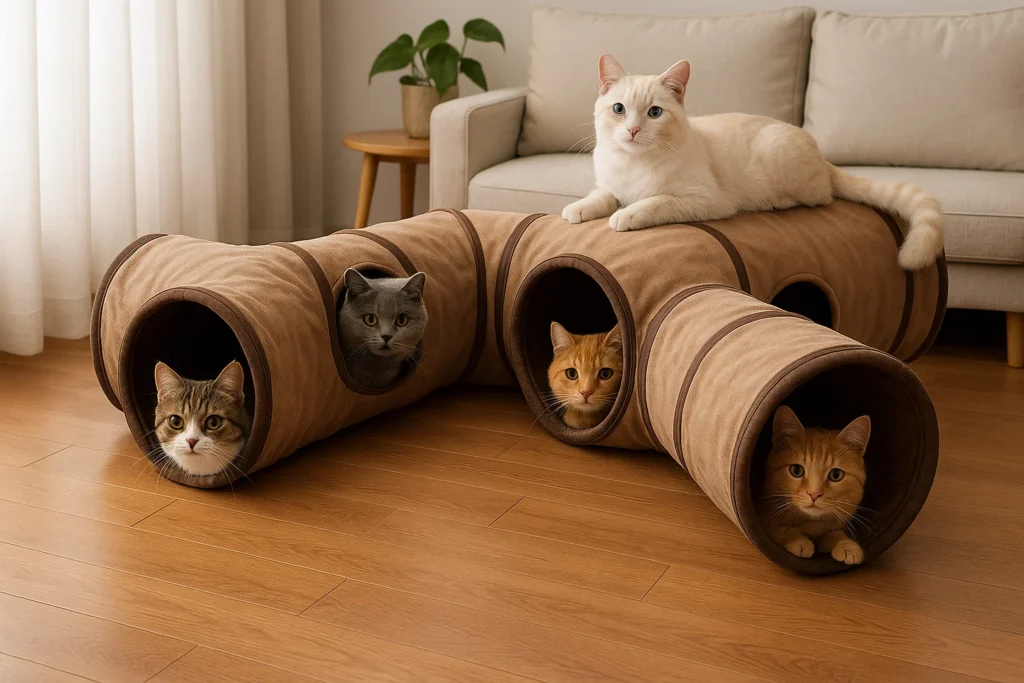
Indoor cat tunnels are collapsible tubes made from fabric, felt, nylon, or carpet designed for cats to run through, hide in, and play around. They mimic the enclosed, secure spaces that cats naturally seek in the wild for resting and hunting. Most tunnels fold away for easy storage and can connect with other tunnels, cubes, or cat furniture for a complete play system.
You’ll find options ranging from short, single tunnels to elaborate multi-section mazes with peek holes and crinkly textures. For nervous or indoor-only cats, tunnels create safe zones that help them feel more at ease — especially in busy households.
The Hidden Benefits of Indoor Cat Tunnels
What might look like a simple toy is actually a powerful enrichment tool that supports your cat’s mental, emotional, and physical wellbeing.
1. Encourages Natural Hunting Instincts
Cats are natural predators. A tunnel mimics the feeling of stalking prey in tall grass or hidden spaces. Tossing a toy mouse or feather wand through the tunnel turns ordinary playtime into a miniature safari. It keeps your cat engaged and satisfied — which can reduce boredom-driven mischief like scratching furniture.
2. Builds Confidence in Shy or Anxious Cats
For timid cats or rescues still adjusting to a new home, tunnels offer a sense of control and security. Hiding spots allow them to observe without feeling exposed, gradually encouraging them to explore new areas. According to VCA Animal Hospitals, environmental enrichment — such as tunnels and climbing structures — helps reduce feline anxiety and stress behaviours.
3. Promotes Exercise and Weight Control
Many indoor cats struggle with obesity due to limited activity. Running through tunnels or chasing toys that dart in and out provides healthy cardio exercise. Studies from Hill’s Pet Nutrition show that regular play helps maintain an ideal body weight, supports joint health, and boosts energy levels in adult cats.
4. Supports Multi-Cat Households
If you have more than one cat, tunnels become a neutral zone for play and interaction. Instead of fighting over perches or beds, cats can chase each other through tunnels or use them to take turns hiding and pouncing. This encourages cooperation and can even reduce territorial tension — especially if you have multiple tunnels set up in different areas of your home.
5. Keeps Indoor Cats Mentally Stimulated
Without outdoor adventures, indoor cats can become bored or restless. Tunnels give them opportunities to explore, hide, ambush, and problem-solve — all essential for mental stimulation. According to PetMD, enriching your cat’s environment with tunnels, climbing posts, and toys helps prevent destructive behaviour and depression.
Choosing the Right Indoor Cat Tunnel

When picking a tunnel, consider your cat’s size, personality, and play style. Here are some important factors to think about before buying:
- Material: Durable fabrics like canvas, nylon, or felt resist claws and are easy to clean.
- Size: Larger breeds (like Maine Coons) need tunnels at least 12 inches in diameter.
- Noise: Some cats adore crinkly tunnels; others prefer quiet options — experiment to see which your cat enjoys more.
- Openings: Look for models with multiple entry points or side peek holes for variety and visibility.
- Safety: Avoid tunnels with loose strings or small plastic parts that could be swallowed.
- Collapsibility: Foldable models make storage and cleaning simple, especially in smaller homes.
If you’re shopping online, check product reviews and photos for durability and stability. Tunnels from trusted brands like Frisco, Catit, and PetFusion receive consistently high ratings for design and longevity.
DIY Cat Tunnel Ideas for Creative Owners
Making your own indoor cat tunnel is surprisingly easy — and cats don’t mind whether it’s designer or homemade! Try these simple ideas:
- Cardboard box tunnels: Connect boxes with cut-out holes using duct tape. Cheap, recyclable, and cats love them!
- Fabric tunnel: Sew or glue a long tube from old blankets or felt for a cozy, soft hideaway.
- Paper bag chain: Line up sturdy paper bags with the bottoms cut out for a quick, crinkly tunnel adventure.
- PVC frame tunnel: Build a structure with lightweight PVC piping, then cover it with fabric or carpet scraps.
Whichever style you choose, always supervise your cat during early play sessions to ensure it’s safe and stable.
Placement Tips: Where to Set Up Your Cat Tunnel
The best tunnel spot is where your cat naturally spends time or passes through frequently. Here are smart placement ideas:
- Between a favourite sleeping area and food bowl — encourages mid-day activity.
- Next to a window perch — ideal for combined sunbathing and playtime.
- As part of a “cat zone” with scratching posts and toys.
- Along hallways or open spaces where your cat enjoys sprinting.
- Under the bed or sofa for shy cats that prefer low-traffic hideouts.
For added fun, rotate the tunnel’s position every few weeks. This keeps play sessions fresh and prevents boredom.
Maintaining and Cleaning Indoor Cat Tunnels
Keeping your cat’s tunnel clean is crucial for hygiene and longevity. Here’s my care routine:
- Vacuum inside weekly to remove fur and dust.
- Spot clean with a mild, pet-safe detergent as needed.
- Fully wash fabric tunnels every 2–4 weeks (check manufacturer instructions).
- Let air dry completely before letting your cat use it again.
Regular cleaning prevents odours and reduces allergens — making the tunnel both safe and inviting.
FAQs About Indoor Cat Tunnels
Are cat tunnels safe for kittens?
Yes, tunnels are perfect for kittens! They encourage exploration and play while giving young cats a sense of security. Always supervise until they grow confident.
Do indoor cat tunnels help reduce stress?
Absolutely. Hiding and playing through tunnels mimics natural feline behaviours, which helps calm anxious or overstimulated cats.
Can large cats use tunnels?
Yes, as long as the tunnel’s diameter is wide enough (ideally 12 inches or more). Look for reinforced tunnels designed for heavier breeds.
How many tunnels should I get?
It depends on your space and how many cats you have. Even one can make a big difference, but connecting multiple tunnels boosts fun and exercise potential.
Do cat tunnels help prevent destructive behaviour?
Yes — by offering physical and mental stimulation, tunnels can redirect energy away from furniture scratching or overgrooming.
Conclusion
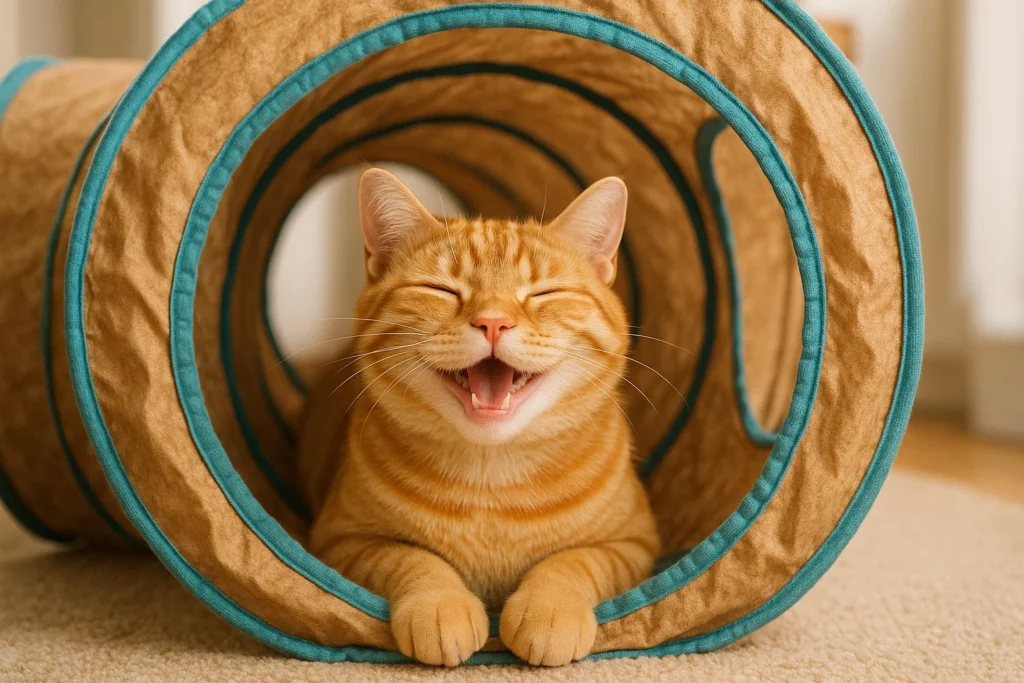
Indoor cat tunnels are far more than a toy — they’re a gateway to better feline health, happiness, and confidence. From playful kittens to cautious rescues, every cat can benefit from a safe space to hide, explore, and express their natural instincts. A tunnel turns your living room into a mini adventure park that keeps your cat entertained, exercised, and emotionally fulfilled. Invest in one (or make your own), and you’ll quickly see just how much joy it brings to your furry friend’s daily life.