
Table of Contents
- Why Sphynx Cat Care Matters
- Breed Overview: Biology & Behavior
- Creating a Sphynx-Friendly Environment
- Daily & Weekly Grooming Routine
- Nutrition & Diet
- Health & Veterinary Care
- Behaviour, Socialisation & Training
- Moving Into Your Home: The First Days & Weeks
- Common Questions (FAQ)
- Next Steps & Further Reading
This blog post may contain affiliate links. As an Amazon Associate I earn from qualifying purchases.
Sphynx Cat Care: The Ultimate Guide for Cat Owners
Owning a Sphynx cat—often seen as one of the most striking and unusual feline breeds—comes with rewards and responsibilities. Their hairless (or near-hairless) appearance gives them a unique charm, but also means they require specific care to stay healthy, comfortable, and happy. In this guide, you’ll find everything you need: from skin care and feeding to health screening, environmental setup, behaviour, and frequently asked questions—providing a more complete resource than any standard page.
Why Sphynx Cat Care Matters
Because Sphynx cats lack the usual fur barrier:
- Their skin is more directly exposed to environmental factors (sun, dirt, temperature).
- They secrete natural oils continuously, which can build up.
- They lose heat more easily and are more vulnerable to cold.
- They are prone to certain breed-specific health conditions.
With proper care, Sphynx cats can lead vibrant lives. But owners must be proactive, attentive, and informed.
Breed Overview: Biology & Behavior

Origin & Genetics
The Sphynx breed traces back to a natural hairless mutation in Canada in the 1960s. Wikipedia+2Ingleside Animal Hospital+2 Their hairlessness stems from a mutation in the KRT71 gene, resulting in little to no fur. Wikipedia
Interestingly, although they appear bald, many Sphynx cats still have a fine down (especially on the face, ears, feet, or tail). Wikipedia+1
Physical & Behavioral Traits
- They tend to have a muscular build, large ears, and bold, expressive eyes. Wikipedia+1
- They are highly social, often compared to dogs for their attachment to owners, curiosity, and willingness to greet people. Wikipedia+3Animal Hospital of Springfield+3Ingleside Animal Hospital+3
- Many Sphynx cats love warmth: you’ll often find them sunbathing by a window or snuggling under blankets. Animal Hospital of Springfield+2Ingleside Animal Hospital+2
- Their energy is relatively high. They benefit from play, interactive stimulation, and engagement. petplan.co.uk+1
Lifespan & Risks
A recent veterinary study (UK data) found that Sphynx cats had among the lowest life expectancy of domestic cat breeds, averaging about 6.68 years in one dataset. Wikipedia+1
However, individual outcomes vary greatly depending on genetics, disease burden, and quality of care.
As with many purebred cats, Sphynx are predisposed to:
- Hypertrophic cardiomyopathy (HCM) — thickening of the heart muscle Countryside Veterinary Clinic+3PetMD+3Wikipedia+3
- Dental disease and tooth loss or extraction in severe cases PetMD+2Animal Hospital of Springfield+2
- Skin conditions, including dermatitis, sunburn, irritant exposure, or pigment changes Countryside Veterinary Clinic+3Ingleside Animal Hospital+3Animal Hospital of Springfield+3
- Possible predisposition to urinary stones (e.g., urate uroliths) has been observed in some reports. Wikipedia
Because of these risks, preventive health care and screening are critical.
Creating a Sphynx-Friendly Environment
Indoor Safety & Temperature Control
- Sphynx should ideally live indoors year-round. Their lack of insulating fur makes them vulnerable to cold, heat extremes, and sun damage. Animal Hospital of Springfield+2Ingleside Animal Hospital+2
- Maintain ambient room temperature (around 20–24 °C or 68–75 °F). Provide extra cozy spots (e.g., heated pads, fleece blankets).
- Avoid direct sun exposure through windows for extended periods. Use UV-blocking film or curtains. If outdoors time is allowed (supervised), use vet-approved pet sunscreen in small, test areas. petplan.co.uk+2Ingleside Animal Hospital+2
- Watch for drafts, open windows, or cold floors — these can lead to chilling or respiratory problems.
- Because Sphynx have high metabolism and warm body temperature, they’re often found seeking heat sources (radiators, laptop surfaces, sunny spots). Monitor that this doesn’t lead to burns or overheating.
Furniture, Bedding & Surfaces
- Use materials that are easy to clean: faux leather, washable covers, easily wiped surfaces.
- Keep textiles (blankets, cushions) that can be laundered often, as oil from the cat’s skin can stain or soil fabrics. PetMD+2Denver Vet+2
- Provide multiple warm sleeping spots—we often hear from owners that “blanket spots everywhere” help the cat feel comfortable. > “They needs many blanket spots … The grease spots.” Reddit
- Use safe cat trees and climbing structures; ensure surfaces are warm or padded.
Litter Box Setup
- Scoop waste daily; fully change litter contents and clean the box weekly (or more often) to reduce odor and risk of skin contact with irritants.
- Many Sphynx owners avoid using plastic bowls or surfaces for feeding or litter handling, because plastics can irritate sensitive skin or contribute to feline acne. Sphynxlair
- Place multiple boxes if the home is large or there are multiple cats.
Daily & Weekly Grooming Routine
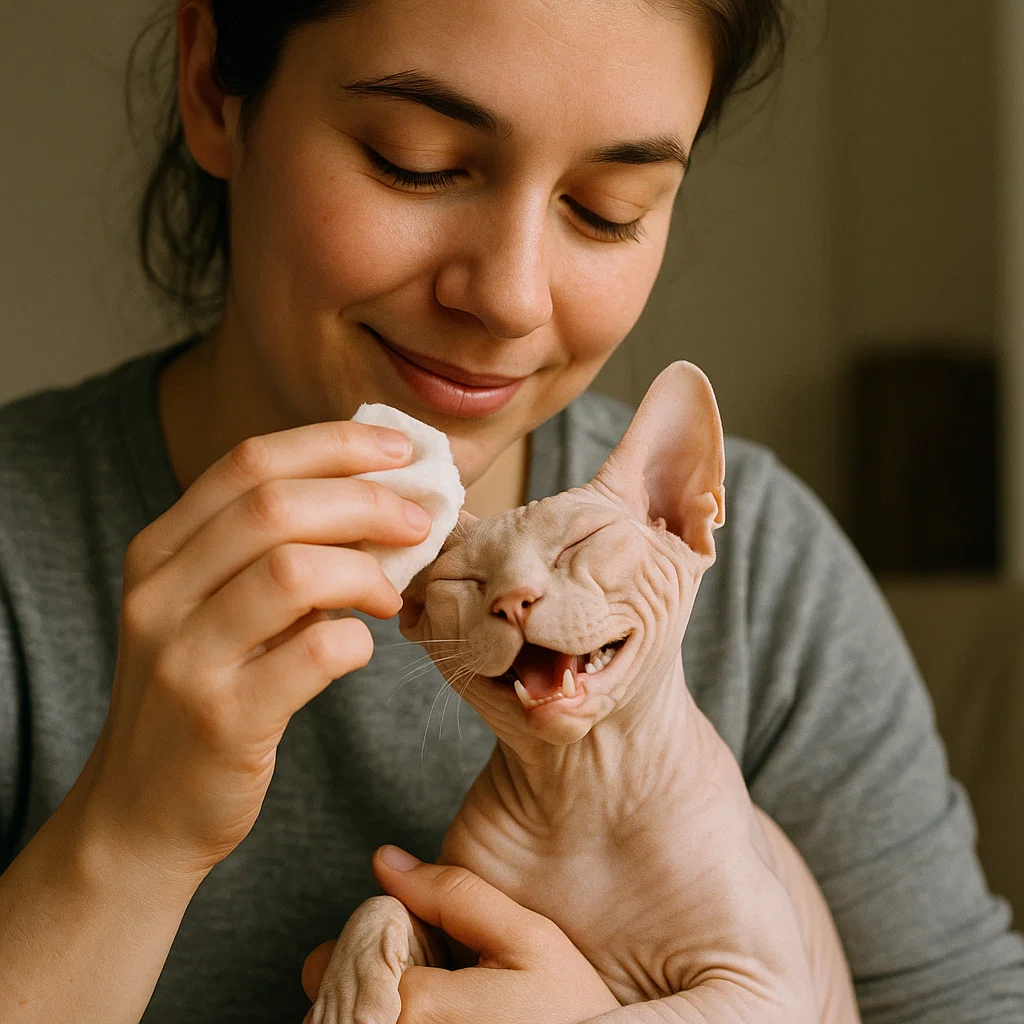
Contrary to what you might expect, hairless doesn’t mean low-maintenance. In fact, many care tasks intensify.
| Task | Frequency | Purpose & Tips |
|---|---|---|
| Bathing / wiping | Weekly to biweekly (or gentle wipe-down midweek) | Remove oil buildup, dirt, avoid clogged pores. Use pH-balanced, soap-free cat shampoo. petplan.co.uk+3PetMD+3Denver Vet+3 |
| Ears cleaning | Weekly | They collect wax and debris quickly. Use veterinarian-approved ear cleansers, cotton balls (avoid deep cotton swabs). petplan.co.uk+2Ingleside Animal Hospital+2 |
| Nail trimming | Every 1–2 weeks | Prevent overgrowth and injury; also clean between toes. PetMD+1 |
| Skin folds & nails | Weekly | Clean folds or wrinkles gently; they can trap oil, debris. Also wipe between toes where grime collects. petplan.co.uk+3PetMD+3Animal Hospital of Springfield+3 |
| Facial and eye area | As needed | Some cats produce tear stains or sebaceous secretions; use damp cloths or vet-approved wipes. |
| Dental care | Daily brushing (if tolerated) or 3–4 times a week | Use feline toothpaste; schedule professional cleanings. PetMD+2Animal Hospital of Springfield+2 |
Bathing Tips & Best Practices
- Start early (kitten stage) so they’re comfortable with water. petplan.co.uk+1
- Use a gentle, soap-free shampoo (coconut oil, aloe, oatmeal formulations are recommended). PetMD+1
- Use a soft washcloth or bathing glove to help with grip; some owners use exfoliating gloves to help lift oils. Sphynxlair+1
- Rinse thoroughly to remove all shampoo residue (which can cause irritation).
- Dry immediately and gently with a warm towel; avoid drafts or cold air.
- Don’t bathe too frequently—over-bathing can dry out skin and strip essential oils. Denver Vet+1
From owner communities: “we do [baths] weekly … clean ears and waxy buildup in feet.” Reddit+1
Nutrition & Diet
Nutritional Requirements
- Sphynx cats tend to have higher metabolisms because they must regulate body heat without fur.
- Feed a high-quality, complete and balanced diet (wet + dry) formulated for adult or kitten cats depending on age.
- A diet with good essential fatty acids, moderate protein, and controlled fat helps manage oil production. PetMD+1
- Watch for sensitivities or GI issues; Sphynx may be more prone to digestive upset or IBS-type conditions. petplan.co.uk
Feeding Schedule & Portions
- Many owners divide daily food into 2–3 meals rather than free-feeding, to support metabolism and avoid overeating.
- Avoid raw diets without consulting your vet carefully, as Sphynx may be more vulnerable to bacterial exposure.
- Always provide fresh water (some cats prefer multiple water stations).
Supplements & Add-ons
- Some get omega-3 / omega-6 fatty acids supplements to support skin integrity (ask your vet). Sphynxlair
- Others use L-lysine as a prophylactic additive in food for upper-respiratory protection (this is anecdotal in many cat communities). Sphynxlair
- Only add supplements under veterinary guidance; avoid unnecessary or overlapping nutrients.
Health & Veterinary Care
Wellness Exams & Preventive Care
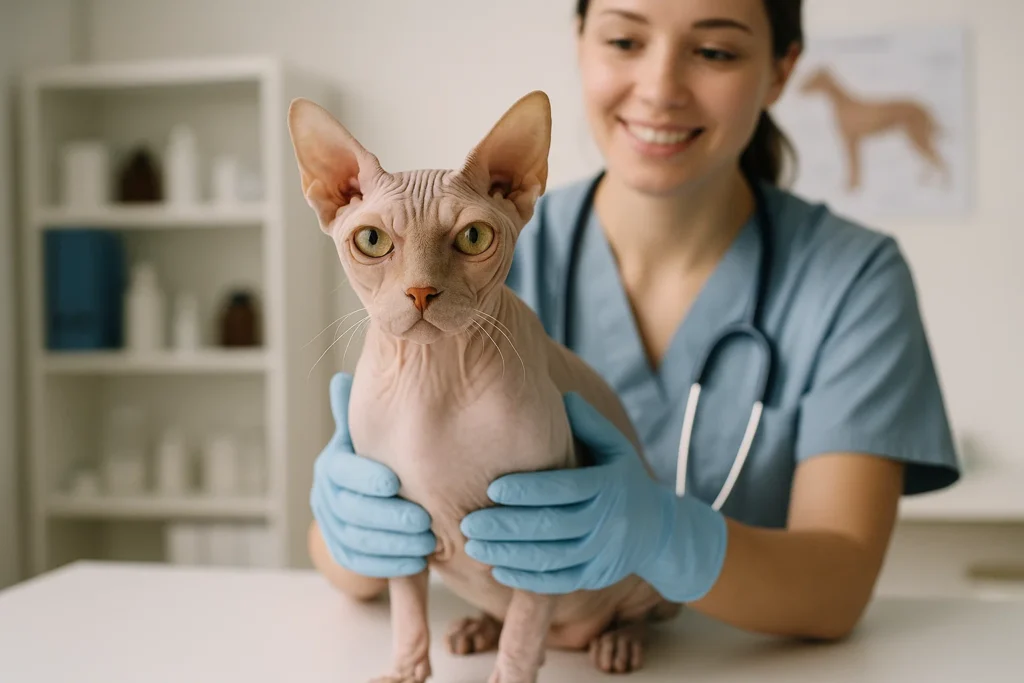
- Schedule twice-yearly veterinary checkups, including bloodwork, parasite screening, and physical exams.
- Cardiac screening (echocardiogram / auscultation) annually or more often is strongly recommended because of HCM risk. PetMD+2Animal Hospital of Springfield+2
- Discuss blood typing (especially for purebred cats) to prepare for possible transfusion needs. Animal Hospital of Springfield+2Ingleside Animal Hospital+2
- Stay current on core vaccines, parasite control, and dental care.
- Monitor weight and body condition; both obesity and being underweight are dangerous.
Common Conditions & How to Spot Them
- Hypertrophic cardiomyopathy (HCM)
- Signs: lethargy, rapid breathing, open-mouth breathing, sudden collapse.
- Some studies suggest up to ~34% prevalence in Sphynx populations in screening cohorts. Wikipedia+1
- Early diagnosis improves management options.
- Skin problems / sunburn / dermatitis
- Redness, lesions, scabbing, flaking, itchiness.
- Use sun protection and preventive skin hygiene.
- Dental disease
- Bad breath, reddened gums, missing/damaged teeth.
- Routine dental cleaning or extraction if disease is advanced.
- Urinary stones / urolithiasis
- Signs: straining to urinate, blood in urine, frequent visits to litter box.
- Manage with diet, hydration, and vet oversight.
- Respiratory or infection problems (especially in kittens)
- Because they may lack protective whiskers or fur, some Sphynx kittens are more vulnerable to upper respiratory infections. Wikipedia+1
- Urticaria pigmentosa (rare in Sphynx)
- Presents as itchy lesions and pigment changes. Ingleside Animal Hospital+1
Always contact your vet at the first sign of unusual symptoms.
Behaviour, Socialisation & Training
Early Socialisation
- Start handling, bathing, nail trimming, and positive reinforcement early in kittenhood to build trust. petplan.co.uk
- Introduce them to other pets carefully, supervise initial interactions.
Enrichment & Play
- Use puzzle feeders, interactive toys, climbing structures, and play sessions to satisfy their mental and physical needs.
- Many Sphynx cats enjoy routine, fetch-like play, or playing in water if accustomed early.
Training
- Sphynx respond well to clicker training and reward-based methods. petplan.co.uk
- You can teach them simple tricks (e.g., sitting, come, fetch) to stimulate their intelligence.
Companionship & Separation
- They don’t like being left alone for long periods. Providing another pet companion or engaging toys is helpful. Animal Hospital of Springfield+1
- Establish a safe, cosy resting space for times when you’re away.
Moving Into Your Home: The First Days & Weeks
- Kitten to adult transition: Keep your new Sphynx in a quiet, secure room initially so they adjust to the environment.
- Introduce litter box and feeding area first.
- Gradually expand their territory as they become comfortable.
- Observe for adjustment issues: reduced appetite, hiding, excessive scratching may indicate stress or skin irritation.
- Monitor health closely in early weeks: regular vet check and deworming as recommended.
- Acclimate them to grooming and bathing gradually, using positive reinforcement (treats, praise).
Common Questions (FAQ)
Q: Do Sphynx cats shed?
A: No. They don’t shed fur like typical cats. But they do shed skin cells and oils, which accumulate on furniture or fabrics.
Q: Are Sphynx cats hypoallergenic?
A: No. Many allergy reactions come from dander and the Fel d 1 protein from sebaceous glands, not just hair. Though some allergy sufferers report fewer reactions, it’s not guaranteed. petplan.co.uk+1
Q: How often should I bathe a Sphynx?
A: Typically weekly or every two weeks is ideal. Some owners use wet wipes mid-period to reduce the need for a full bath.
Q: Can a Sphynx go outside?
A: Only under strict supervision and protection. They are vulnerable to sunburn, temperature swings, and injury.
Q: What is the cost of caring for a Sphynx?
A: Beyond the initial pet/breeding cost, budgeting for frequent grooming supplies, veterinary screenings (cardiac, dental, etc.), controlled diet, environmental heating, and occasional health care costs is wise.
Q: How do I keep my Sphynx warm?
A: Use heated pads, warm blankets, clothing (that is safe and breathable), and keep ambient temperatures stable.
Q: What kills a Sphynx quickly?
A: Neglecting preventive health, heart disease, severe skin or infection issues, or untreated urinary blockages can lead to life-threatening consequences.
Next Steps & Further Reading
If you enjoyed this guide and want more on Sphynx care, try these live resources on Mad Cat Man:
Sphynx care articles (site search) — browse every current and future Sphynx post in one place.
Hairless cat tips (site search) — feeding, skincare, and home setup for hairless breeds.
Cat skin care guides (site search) — bath routines, safe shampoos, and irritation prevention.