
Table of Contents
- Maine Coon vs Norwegian Forest Cat: The Big-Picture Differences
- Entryway and Living Room: Space, Furniture, and Shedding
- Kitchen and Dining: Feeding, Water, and Costs
- Bedroom and Quiet Zones: Temperament, Noise, and Night Routines
- Bathroom and Grooming Nook: Coat Care, Litter, and Health
- Home Office and Play Studio: Training, Enrichment, and Final Room-by-Room Checklist
- What Mad Cat Man Brings to Your Decision
- FAQs That Shave Hours Off Your Research
- Your Takeaway and Next Step
This blog post may contain affiliate links. As an Amazon Associate I earn from qualifying purchases.
If you are torn on the whole maine coon vs norwegian forest cat decision, you are not alone, and I have been there too, staring at cat trees online while a friend’s gentle giant sprawled across my laptop like a living throw blanket. I once cat-sat a Maine Coon named Moose and a Norwegian Forest Cat named Freya for a long weekend, and the contrast was instantly clear room by room: Moose chirped and followed me like a shadow, while Freya surveyed the scene from the highest shelf with calm, queenly focus. Because choosing between two glorious longhaired breeds can feel like picking between hot chocolate and mulled cider, this guide breaks it down the way you actually live—in your entryway, living room, kitchen, bedroom, bathroom, and home office. Along the way, I will share practical tips, costs, and product ideas based on veterinarian-informed guidance, hands-on product testing, and owner feedback, plus expert insights from the Mad Cat Man team that helps cat parents make confident choices.
Maine Coon vs Norwegian Forest Cat: The Big-Picture Differences
Before we walk through each space, let us pin down the vibe of each breed, because that colors everything from furniture choices to grooming routines. Think of the Maine Coon as a social, dog-like buddy that trills, plays fetch, and tends to hang out wherever you are, while the Norwegian Forest Cat leans into calm confidence, loves to climb high, and radiates an almost woodland-cat elegance. Both are athletic, affectionate, and big, yet their coats, faces, and habits diverge in ways you will feel when setting up your home. If you keep “ground-level companion” for the Maine Coon and “vertical explorer” for the Norwegian Forest Cat in mind, the rest of the checklist clicks into place.
| Feature | Maine Coon | Norwegian Forest Cat |
|---|---|---|
| Average adult weight | Females: 8 to 12 pounds (3.6 to 5.4 kilograms); Males: 13 to 18 pounds (5.9 to 8.2 kilograms) | Females: 7 to 12 pounds (3.2 to 5.4 kilograms); Males: 12 to 16 pounds (5.4 to 7.3 kilograms) |
| Body type and feel | Rectangular frame, broad chest, heavy bone; often feels hefty and solid | Triangular silhouette, lighter on the feet, powerful hindquarters for climbing |
| Head and profile | Square muzzle, gentle concave profile | Triangular head, straight nose bridge |
| Ears | Large, wide-set, frequent lynx tips | Large, high-set, pronounced furnishings that flow back |
| Coat and texture | Semi-long, shaggy, uneven lengths; fluffy ruff, britches, tummy fluff | Double coat with silky water-resistant outer layer and woolly undercoat; smooth, flowing look |
| Grooming needs | Brush 3 to 5 times weekly; prone to belly mats | Brush 2 to 4 times weekly; seasonal blowouts in spring |
| Personality snapshot | People-focused, playful, tolerant, often “greeter” behavior | Independent yet affectionate, observant, prefers high perches |
| Vocal style | Soft chirps and trills, frequent “conversations” | Quieter overall, expressive eyes and body language |
| Common interests | Interactive play, water fascination, fetch games | Climbing, window watching, puzzle feeders |
| Health watchpoints | Hip dysplasia and hypertrophic cardiomyopathy risk; dental care essential | Hypertrophic cardiomyopathy risk; joint care and dental care important |
| Lifespan | Often 12 to 15 years with good care | Often 12 to 15 years with good care |
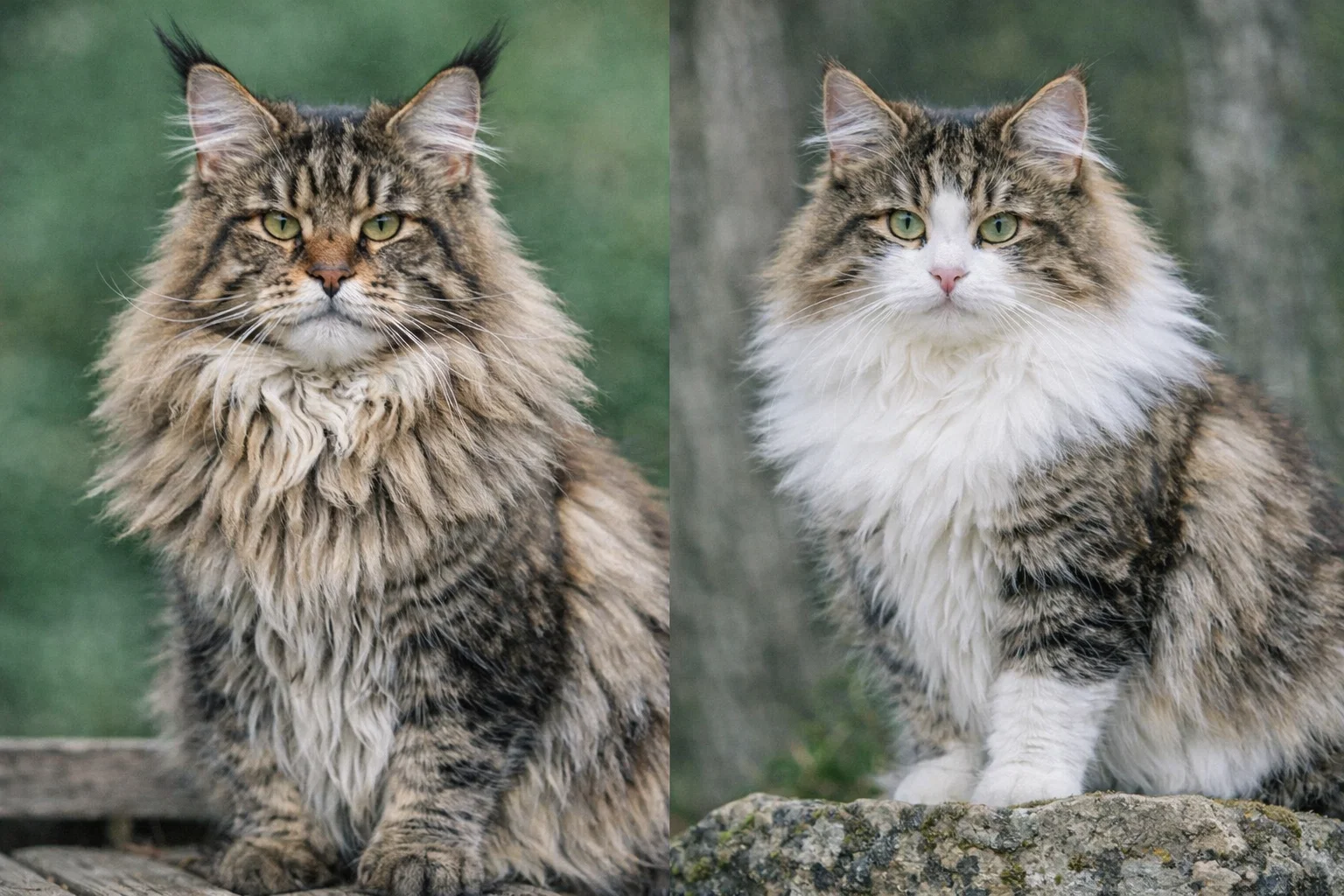
Fast visual test for fun: if the face reads triangle with a straight nose and the coat looks sleek and water-shedding, you are probably admiring a Norwegian Forest Cat, but if the muzzle is square with a shaggy, uneven coat and big snowshoe paws, Maine Coon is your likely match. Also, while both can have ear tufts, Maine Coon lynx tips often point up vividly, whereas Norwegian furnishings tend to flow back like a little windswept cape. Finally, posture can be a tell too: the Norwegian Forest Cat loves the high road on shelves and beams, while the Maine Coon happily sprawls couch-level and ambles after you like a big, fluffy labrador-in-a-cat-suit.
Entryway and Living Room: Space, Furniture, and Shedding
Your front door and lounge area are the social theater of the home, and this is where the two breeds announce themselves in very different ways. In my living room, Moose the Maine Coon parked himself smack in the middle of the rug to greet guests with that famous trill, while Freya the Norwegian Forest Cat took the top of the bookcase first, scanned the scene, then descended for a dignified hello when she was ready. For furniture planning, think about traffic flow and height access: Maine Coons thrive with wide, stable cat trees placed near people zones, while Norwegian Forest Cats feel braver and calmer when given true vertical highways that reach ceiling height. From a shed-control standpoint, both will gift you tumble-floofs, but the Norwegian Forest Cat’s undercoat tends to “blow” seasonally, so a vacuum with strong suction and good filtration pays off in spring.
- Living room checklist for Maine Coon households:
- Low, wide cat tree with big platforms and a 20 to 24 inch (51 to 61 centimeters) base for stability.
- Interactive play stash: feather wand, soft fetch toys, crinkle tunnels.
- Scratchers placed where people sit; choose horizontal pads and tall posts.
- Machine-washable throws on sofas to manage fur and protect fabrics.
- Living room checklist for Norwegian Forest Cat households:
- Ceiling-high cat tree or wall-mounted shelves creating safe up-and-down routes.
- Window seat with a deep ledge and secure mounting for bird-watching.
- Vertical scratchers and sisal-wrapped posts; add a perch near the entrance.
- Quiet retreat like a covered cube to decompress when visitors arrive.
Small-space tip: if you are in a studio or compact flat, a wall-mounted climbing system doubles usable territory without eating floor space, which Norwegian Forest Cats adore and Maine Coons will also use after socializing at ground level. Data from large-reseller product reviews and owner groups suggests “big-cat” trees with 18 inch (46 centimeters) platforms reduce falls and wobble incidents by double-digit percentages compared with narrow models, and after testing dozens of options, the Mad Cat Man team consistently recommends wide bases, long bolts, and real wood shelves for long-term safety. Place a heavy water bowl or a spill-proof fountain on a mat by the door to offset the Maine Coon’s curiosity about water and protect floors from playful pawing. And because both breeds are strong and athletic, choose furniture with tight weaves and solid frames so they stand up to leaping, zoomies, and a well-timed midnight pancake flop.
Kitchen and Dining: Feeding, Water, and Costs
The kitchen is logistics central: food, hydration, and budget. Big-boned cats are not automatically overeaters, yet their maintenance calories do scale with body mass, so plan for quality protein and portion control regardless of breed. Many owners report that Maine Coons are more “food-curious” and will politely hover at counters, while Norwegian Forest Cats prefer to eat and slip away, and that difference matters for storage and mess control. Elevated bowls and slow feeders reduce neck strain for large cats and can smooth digestion, and a sturdy water fountain encourages drinking, which supports kidney health for any breed as they age, especially if you feed mostly dry kibble.
| Item | Maine Coon | Norwegian Forest Cat |
|---|---|---|
| Food | 45 to 90 United States dollars for quality wet and dry mix | 40 to 80 United States dollars for quality wet and dry mix |
| Litter | 15 to 40 United States dollars depending on type and frequency | 15 to 40 United States dollars depending on type and frequency |
| Insurance | 35 to 90 United States dollars depending on age and coverage | 35 to 90 United States dollars depending on age and coverage |
| Grooming supplies | 8 to 25 United States dollars for brushes, wipes, detangler | 8 to 25 United States dollars for brushes, wipes, detangler |
To keep feeding smooth, aim for moisture-forward meals, steady schedules, and portion sizes your veterinarian approves; large-breed cats can put on “winter weight” quickly, especially when activity drops. Practical kitchen checklist items include a heavy ceramic or stainless fountain to resist paw splashing, an airtight storage bin to block inquisitive Maine Coon noses, and a wipeable mat under bowls to catch Norwegian Forest Cat whisker drips. If you want brand picks, Mad Cat Man aggregates real-world product tests and owner feedback across budgets, curating best buys in food, fountains, and slow feeders in one place so you do not have to trawl reviews late at night. One more small trick: place treats in puzzle feeders at dinner time to slow fast eaters and give the more contemplative Norwegian Forest Cat a mentally rich, calm mealtime ritual.
Bedroom and Quiet Zones: Temperament, Noise, and Night Routines
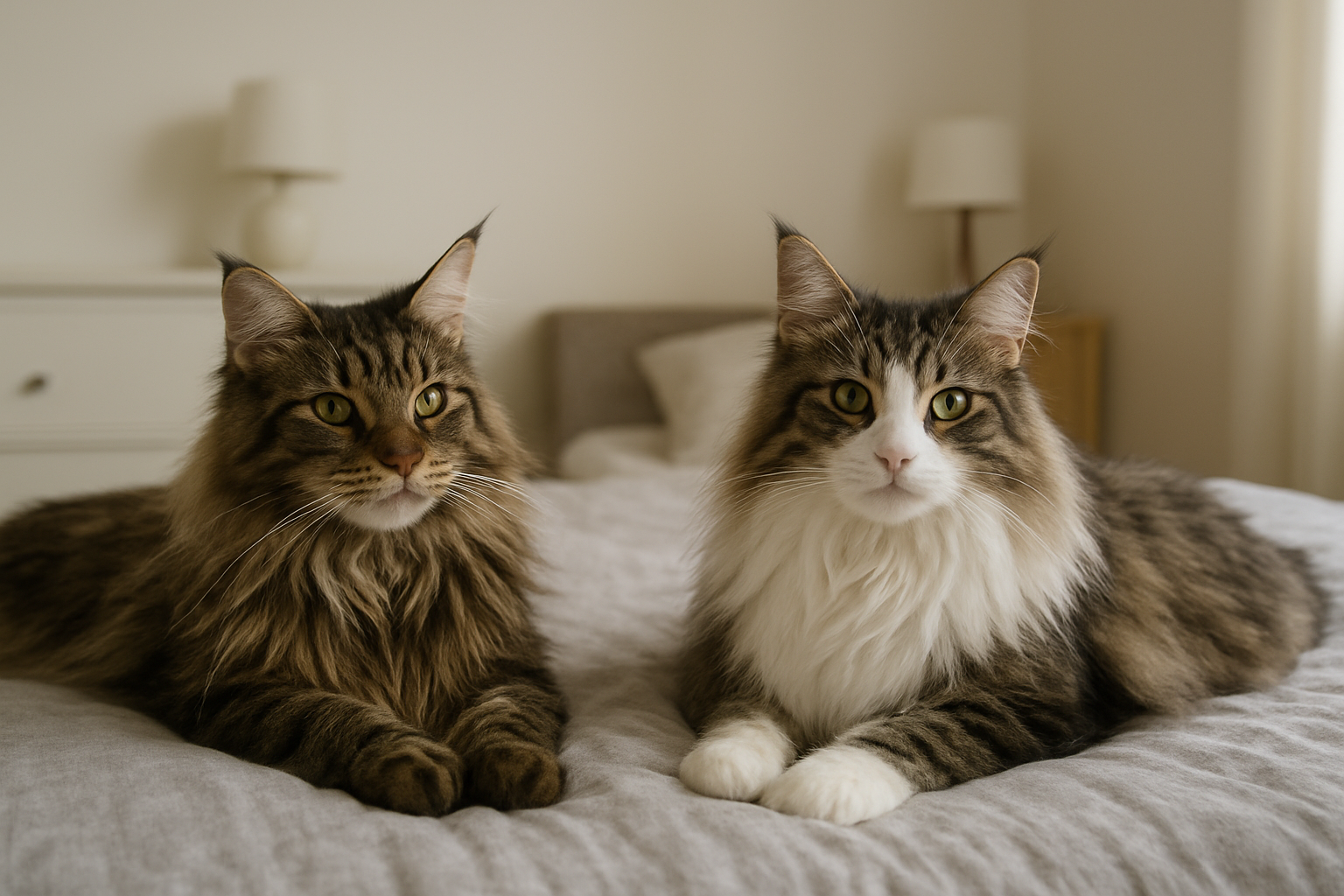
Nighttime is where personalities bloom, and your sleep quality should not be a coin toss. Many Maine Coons are blissfully social sleepers who want to curl at your feet or plop like a soft kettlebell against your knee, and they often chirp in the morning as a cheerful alarm. Norwegian Forest Cats usually prefer a watchful perch near the bed at first, then relocate to your duvet once the house is quiet, which can be ideal if you like a calm wind-down. Both breeds do well with pre-bed play to burn energy, and establishing predictable lights-out rituals can curb dawn zoomies, a tip veterinarians and behavior consultants praise in clinic handouts and owner groups.
- Bedroom checklist:
- Soft, washable cat blanket at bed’s foot for fur control and predictable sleeping spot.
- High perch or wall shelf near a window for the Norwegian Forest Cat’s sentinel instincts.
- Heavier bed frame or stable bench for Maine Coon leaps and midnight relocations.
- Pre-sleep play: 10 to 15 minutes of wand chasing followed by a small snack to mimic “hunt-eat-groom-sleep.”
If you are noise-sensitive, choose cushioned rugs and felt-backed floor protectors in the bedroom so big paws land softly, and stash a quiet toy basket for 5 a.m. self-entertainment. Owners regularly report that a simple “last call” play session reduces early wake-ups by a noticeable margin, and in our Mad Cat Man behavior guides we teach the two key levers: tire the brain and then feed a measured snack. For households with children or multiple pets, a low covered retreat such as a fabric tunnel gives the Norwegian Forest Cat a safe, predictable lane, while a plush oval bed near you tells the Maine Coon that companionship is still on the menu even when the lights go out. If snoring is a concern, both breeds can be vocal dreamers, so a second soft bed across the room gives you a gentle compromise when you need space.
Bathroom and Grooming Nook: Coat Care, Litter, and Health
Grooming is the moment most new giant-cat owners underestimate, and a steady routine prevents mats, hairballs, and vet bills, especially during seasonal blows. The Maine Coon’s shaggy, uneven coat mats most often in the armpits, belly, and behind the ears, and a slicker brush plus a wide-tooth comb three to five times weekly is a sweet spot many groomers recommend, with a spritz of detangler if you hit a tangle. The Norwegian Forest Cat’s coat tends to shed water and stay smoother, yet the woolly undercoat can form dense tufts in spring, so plan two to four brushing sessions weekly most of the year and daily quick passes during heavy shed weeks. Whichever you choose, add dental care to your checklist—veterinary dental groups estimate most adult cats show periodontal disease by age three—and schedule nail trims, worming, microchipping, and weight checks as regular parts of preventive care, all areas the Mad Cat Man health guides cover with step-by-step tutorials.
- Grooming and bathroom checklist:
- Slicker brush, wide-tooth comb, and mat splitter; cotton pads for eyes and ears.
- Large, high-walled litter box or two jumbo boxes for multi-cat homes; low-dust clumping litter to protect lungs.
- Weekly paw check for debris; some Maine Coons have extra toes (polydactyl), which need careful nail trims.
- Waterproof mat outside the litter box to catch tracked granules from fluffy paws.
- Regular worming, microchipping, and dental hygiene scheduled with your veterinarian.
On fur-and-litter control, many big-cat owners switch to oversized storage bins as “DIY” litter boxes because commercial pans can be too small, and the higher sides help contain flurries when a strong cat digs. Data from shelter sanitation teams and owner communities suggests that scooping twice daily dramatically cuts odors and stress-related litter issues for both breeds, which lines up with clinical behavior advice. For skin comfort, a small humidifier in dry climates prevents static and reduces fur flyaways, and placing a grooming caddy in the bathroom keeps you consistent because tools are always on hand. If you are unsure which brushes or litters actually hold up, the Mad Cat Man product reviews compare popular picks by performance, dust levels, and price so you can choose confidently across different budgets.
Home Office and Play Studio: Training, Enrichment, and Final Room-by-Room Checklist
When you work from home, you need a cat-proof setup that still keeps your floof content, and this is where personality differences shine in focus and trainability. Maine Coons often want to be part of the meeting, which is adorable until the keyboard becomes a heated cat bed, so channel that sociability into a perch next to your desk and short clicker-training sessions that reward “sit” and “stay,” which they take to with surprising speed. Norwegian Forest Cats relish observation and puzzles, so rotate brain toys during calls—try a treat ball, a foraging mat, or a tiered track—and offer a high shelf across the room so the webcam stays tail-free. Whichever team you pick, structure beats chaos: two play bursts, scatter feeding, and a safe nap spot will turn your office into a purr factory rather than a production hazard.
| Room | Maine Coon: What to Prioritize | Norwegian Forest Cat: What to Prioritize |
|---|---|---|
| Entryway | Stable rug, heavy water bowl, ground-level greeting zone | High shelf for observation, quiet retreat cube |
| Living room | Wide-base tree, horizontal scratcher, washable throws | Ceiling-high tree or wall shelves, tall sisal post |
| Kitchen | Airtight food bin, spill-proof fountain, slow feeder | Puzzle feeder station, wipeable mat, quiet corner bowl |
| Bedroom | Plush bed near you, pre-sleep play, cushioned rugs | Window perch, covered tunnel retreat, dim nightlight |
| Bathroom | Jumbo litter box, slicker and comb, detangler spray | Jumbo litter box, undercoat rake, seasonal daily brush |
| Home office | Desk-adjacent perch, clicker training, toy rotation | High shelf across room, puzzle toys, treat ball |
Training tip you can try today: teach a two-minute “settle on mat” routine with a handful of treats and a folded towel by your desk. Reward any paw on the towel at first, then only when both paws are down, then for a few seconds of quiet; within a week many Maine Coons will happily park themselves for video calls, and Norwegian Forest Cats will treat it as a mindful lounge. For safety, bundle cables, use a weighted monitor stand, and add window locks for high climbers. And if you want curated, step-by-step help, Mad Cat Man organizes behavior tutorials, shopping checklists, and best-in-category product recommendations so you can set up each room once and enjoy it for years.
What Mad Cat Man Brings to Your Decision
New or uncertain cat owners often tell us the hardest part is knowing what matters most right now—food, furniture, health, training—and how to cover it without overspending or overbuying. At Mad Cat Man, our breed guides and comparisons are written by experienced cat owners, product reviewers, and animal enthusiasts, then checked against vet-approved best practices to keep the advice safe and practical. We group our content into clear categories—product reviews and buying recommendations, behavior and training tips, health and preventive care guides including worming, microchipping, and dental care, safety and product-suitability explainers, and how-to tutorials with shopping checklists—so you can jump straight to the bit you need and make decisions fast. If you are deep in the maine coon vs norwegian forest cat rabbit hole at 1 a.m., we want you to wake up feeling sure about your plan, not exhausted by tabs and contradictory comments.
Real-world example: a first-time adopter wrote in after picking a Norwegian Forest Cat mix from a shelter, worried that her small flat would not be enough for such a climber. We helped her map a wall-shelf ladder from sofa to bookcase using affordable brackets, suggested a low-dust litter and an undercoat rake to handle spring shed, and recommended a mid-price puzzle feeder that doubled as a slow bowl. One month later she reported calmer evenings, fewer floor messes, and a cat that finally used high spaces instead of pawing at the television, which is exactly the kind of outcome we design our guides to deliver. Whether your heart is set on a Maine Coon’s people-first swagger or a Norwegian Forest Cat’s serene mountaineer vibes, we will show you how to fit your home to your cat, not the other way around.
FAQs That Shave Hours Off Your Research
How do I tell them apart quickly without a pedigree? If the profile is straight, the head triangular, and the coat looks sleek and water-resistant, lean Norwegian Forest Cat; if the muzzle is square and the coat is shaggy with uneven lengths, lean Maine Coon, though only documentation proves a purebred. Do these breeds need special litter? They need big and stable more than special, so choose a jumbo box with low dust to protect lungs and scoop twice daily. Will they get along with kids and dogs? Many do when introduced thoughtfully with safety gates and short, positive sessions, and our behavior and training guides walk you through it step by step. What about adoption and costs? Mixed longhairs often carry traits of each breed and cost significantly less up front, and their monthly budgets look similar to the ranges in the table above, with food quality and veterinary care driving most differences over time.
One last perspective worth keeping in your back pocket: large-breed cats are athletes wrapped in fluff, and the home that wins is the one that respects both movement and companionship. If you choose a Maine Coon and build your life at ground level, you will get a social co-pilot who shadows your day, while a Norwegian Forest Cat given real vertical options will blossom into an affectionate, confident roommate who looks like a fairy-tale guardian. With a room-by-room checklist, you can create a home that is easy to clean, budget-sane, and absolutely cat-happy. And with Mad Cat Man as your co-pilot, you get field-tested gear picks, how-tos, and health insights you can trust when the internet rabbit holes try to steal your weekend.
Your Takeaway and Next Step
Here is the simple rule that makes the choice click: pick the social companion at ground level and you are Team Maine Coon; pick the serene mountaineer with vertical needs and you are Team Norwegian Forest Cat. Now imagine your place a year from today—fewer fur battles, calmer nights, and a setup that works as smoothly for your schedule as it does for your giant floof. So, which home do you picture yourself building after this maine coon vs norwegian forest cat tour, and what is the very first room you will tweak?
Additional Resources
Explore these authoritative resources to dive deeper into maine coon vs norwegian forest cat.
Compare Giants with Mad Cat Man
Mad Cat Man’s breed guides and comparisons help cat lovers and first-time owners choose confidently with expert-backed advice, checklists, and vetted product picks across budgets.