
Table of Contents
- Introduction
- Understanding the Maine Coon Cat Shedding Basics
- Shedding Patterns: What to Expect
- Key Factors That Influence Shedding
- How to Manage Effectively: Grooming, Cleaning & Nutrition
- When Shedding May Signal a Problem
- Managing Shedding in Real Life: A Case Study
- Summary: Your Maine Coon Shedding Action Plan
- FAQS — What Maine Coon Owners Often Ask
- Conclusion
This blog post may contain affiliate links. As an Amazon Associate I earn from qualifying purchases.
Introduction
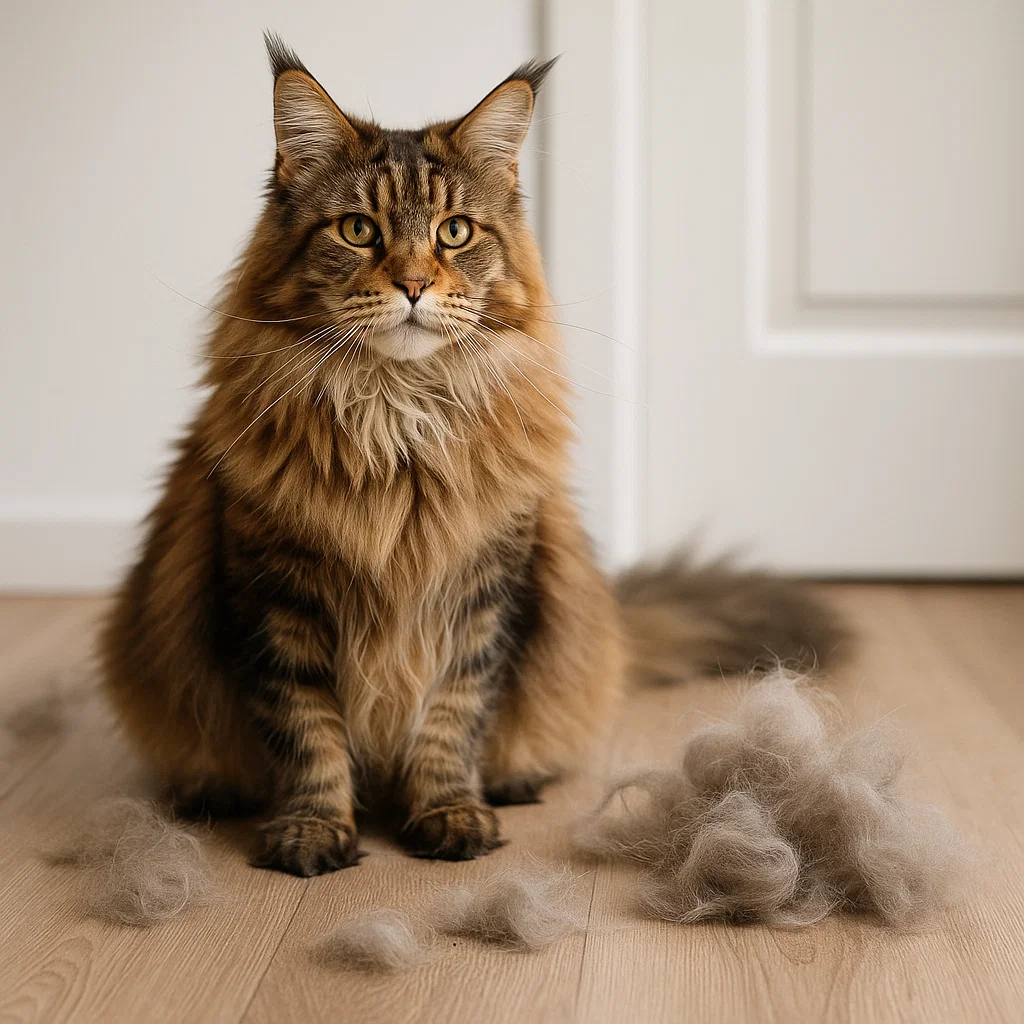
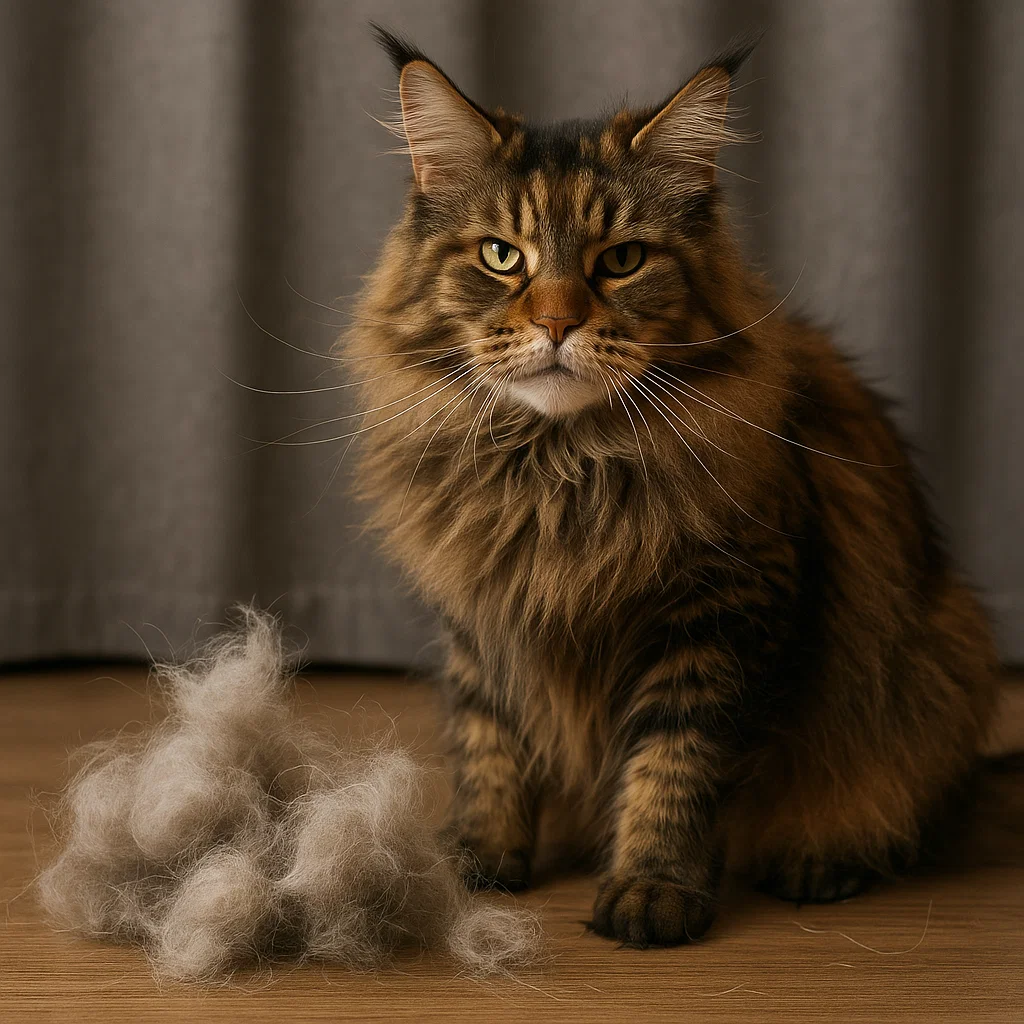
If you own or are considering bringing into your home a majestic Maine Coon cat, you may already be wondering: How much will this big-furred feline shed? Shedding is a natural part of a cat’s life—but with Maine Coons, their volume, seasonal patterns, and coat-care needs are different from most breeds.
In this article you’ll discover:
- What “normal” shedding looks like for a Maine Coon in the USA
- Why their thick, double-layered coat affects shedding
- What triggers more shedding (environment, health, diet, indoor living)
- How to manage shedding through grooming, cleaning and nutrition
- When shedding might not be normal—and signs to watch for
- Practical tools and tips to live comfortably with a Maine Coon’s fur
By the end, you’ll know exactly what to expect and how to stay ahead of the fluff—so you and your Maine Coon can enjoy every moment together with confidence.
Understanding the Maine Coon Cat Shedding Basics
What makes the Maine Coon’s coat unique
Maine Coons are renowned for their large size, spectacular ruff (mane), tufted ears and bushy tail—and all that fur isn’t just for show. Evolution from cold-climate Maine (USA) has shaped them with a dense undercoat plus a longer guard fur, offering insulation and protection. Untamed+2maine-coon-cat-nation.com+2
Key coat features:
- Undercoat: soft, woolly layer near the skin
- Guard hairs: outer longer hairs, giving the flowing appearance
- Ruffs & ear tufts: adding thickness around neck and head
Because of all these layers, more fur is available to shed than for shorter-haired breeds.
Do Maine Coon cats shed? Yes—but here’s the nuance
The simple answer: yes, Maine Coons shed. But the how much, when, and how visible it is depends on many factors. One breed-specific insight: although they have more fur, that doesn’t necessarily mean constant heavy shedding if the environment and care are right. Untamed+1
A poll conducted by specialized breed site showed: about 44% of Maine Coon owners said shedding was “large-extreme”, 44% said “medium”, and only 10% said “small levels”. mainecooncentral.com
Shedding Patterns: What to Expect
Seasonal shedding vs year-round shedding
For many outdoor cats, major shedding occurs twice a year—spring and autumn—as they adjust coat thickness. For Maine Coons:
- Outdoor Maine Coons: often heavy shedding in spring (shedding winter coat) and again in autumn (shedding summer coat) Untamed
- Indoor Maine Coons: may shed more evenly throughout the year because they do not experience strong natural daylight/temperature cues. Indoor climate control disrupts natural seasonal cycles. Cat Topia+1
Thus, owning a Maine Coon indoors in the USA often means steady, moderate shedding rather than dramatic “blow-out” periods.
Shedding volume: what you’ll see
- Expect furry tumble-clumps on clothing, furniture and pet beds—because the long hairs are more visible.
- Shedding may look worse in dark-coloured furnishings or carpets because light fur stands out.
- During “shedding peaks”, you might vacuum every day and still find loose hairs flying around.
But: shedding volume alone doesn’t indicate a problem—look for changes in pattern, bald patches, or increased grooming.
Key Factors That Influence Shedding
Knowing what drives shedding helps you control and minimise it. Below are the main categories.
Biological & genetic factors
- Breed genetics: The FGF5 gene variant in some long-haired breeds (including Maine Coons) increases hair-growth phase length, resulting in more fur available to shed. Cat Topia
- Age: Kittens may shed less. Older cats may shed more if metabolism or skin health declines.
- Hormones & health status: Stress, pregnancy, neutering/spaying changes, thyroid disease, parasites and skin conditions can trigger abnormal shedding. JustAnswer+1
Environmental & lifestyle factors
- Indoor climate control (constant temperature/lighting) can disrupt natural shedding rhythm and lead to year-round shedding. Untamed
- Humidity and air quality: Dry indoor air (especially winter) can lead to dry skin and more loose fur.
- Stress or major changes in home environment (new pet, moving house) may temporarily increase shedding.
- Lighting/photoperiod: Daylight length affects cats’ coat cycles—indoor artificial lighting can blur seasonal cues.
Diet, nutrition & grooming
- Poor nutrition (low protein, insufficient fatty acids, lack of vitamins) can compromise coat quality, increasing shedding. Untamed
- Hydration: Cats that don’t drink enough may have dryer skin and more shedding.
- Grooming regime: Regular brushing removes loose hair before it falls, reducing visible shedding. Without it, the appearance of shedding escalates.
- Skin health: Parasites (fleas, mites), allergies, infections may trigger fur-loss or excessive shedding. Always rule out underlying medical issues.
Quick summary table of influences
| Factor Category | Positive influence | Negative influence |
|---|---|---|
| Genetics & age | Stable coat, healthy metabolism | Older age, hormonal changes |
| Environment | Natural rhythm via outdoor access, good air/humidity | Artificial lighting, dry air, stress |
| Diet & grooming | High-quality protein, fatty acids, regular grooming | Poor diet, skipped grooming, skin issues |
| Health status | Healthy immune & skin systems | Parasites, infections, endocrine disorder |
How to Manage Effectively: Grooming, Cleaning & Nutrition
Grooming your Maine Coon
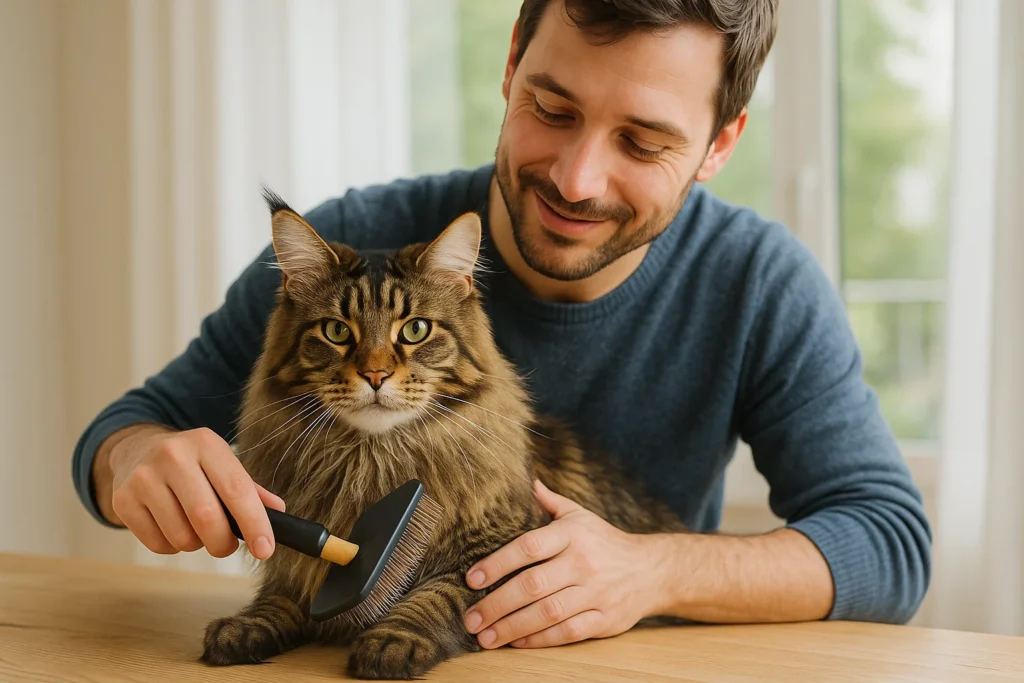
Good grooming is your best tool for managing shedding and keeping your cat comfortable.
How often & which tools:
- Brush 2-3 times per week; during peak shedding sometimes daily maine-coon-cat-nation.com
- Use a mix of tools:
- Slicker brush for outer coat
- De-shedding comb for undercoat
- Wide-tooth comb to detangle
- Rubber-mitt or grooming glove for light session and bonding
Tips for success:
- Introduce grooming early when your cat is relaxed and treat-positive.
- Work in sections: start at head/neck (comfortable zone) then body, tail, underbelly.
- Check for mats/tangles and gently work them out—don’t pull hard as it can hurt.
- Use a good quality cat shampoo if needed (rarely for long-haired breeds unless dirty). Avoid frequent bathing that dries out skin.
- Reward your cat after grooming—link it with positive experience.
Home cleaning & environment
To live comfortably with more fur, adapt your home environment:
- Vacuum regularly (ideally daily during higher shedding) with pet-hair capable vacuum with HEPA filter.
- Use lint rollers or handheld fur removers on clothes, upholstery.
- Cover favourite lounging spots with washable throws to catch fur and clean weekly.
- Maintain humidifier (if indoor air dry) especially in winter to reduce skin dryness.
- Keep litter-box area clean—cats may hide in litter area and fur may drop around.
- Consider air-purifiers if fur/allergen load is high.
Nutrition & general health
Feeding the right diet supports coat health and reduces shedding.
Diet checklist for coat health:
- High-quality animal-based protein (e.g., chicken, fish) as primary ingredient
- Omega-3 and omega-6 fatty acids (fish oil, flaxseed oil)
- Vitamins A, E, biotin and amino acids (like taurine) for healthy skin and hair follicles
- Moisture: wet food or added water to dry food to prevent dry skin
- Avoid fillers and poor-quality carbs which may compromise coat quality and increase shedding risk. Untamed
Health monitoring:
- Regular vet checks each year (or more often in older cats)
- Watch for signs of skin/coat problems: bald spots, dandruff, excessive licking/grooming
- Address parasites (fleas, mites) promptly—these cause shedding and skin damage.
- Manage stress: maintain routine, safe spaces, interactive play (helps reduce stress-induced shedding).
When Shedding May Signal a Problem
Because Maine Coons naturally shed, it can be tricky to know when it’s normal or when you should contact your vet.
Signs of abnormal shedding
- Sudden, dramatic increase in loose hair/bald patches
- Fur falling out in clumps rather than loose hairs
- Red, irritated or flaking skin
- Persistent scratching or grooming focused on one area
- Change in appetite, weight loss, or other health changes accompanying shedding JustAnswer
- Coat becomes dull, brittle, or a noticeable texture change
If you spot any of those, it’s wise to consult your veterinarian. The cause could range from allergies or flea infestation to endocrine disorders (e.g., hyperthyroidism) or nutritional deficiencies.
What to discuss with your vet
When you bring your cat in, be prepared to share:
- When the shedding increased (timing, pattern)
- Diet history (what food, any recent changes)
- Grooming routine/frequency
- Any other symptoms (change in behaviour, appetite, litter-box usage)
- Living environment (indoor vs outdoor, changes in home, stressors)
The vet may recommend skin scraping, blood tests, dietary changes or parasite control to diagnose underlying issues.
Managing Shedding in Real Life: A Case Study
Here’s a real-world example (names changed) to illustrate how good management can make a difference:
Case: Lara and “Hugo”, a 4-year-old indoor Maine Coon in Texas.
- Hugo shed heavily, coat looked dull, and Lara was vacuuming daily.
- Vet confirmed skin slightly dry, diet was average dry-food only.
- Lara introduced twice-weekly brushing, switched to wetter food with higher protein and added fish-oil supplement.
- Grooming frequency increased during spring/fall seasons; she also used washable throws in Hugo’s favourite spot.
- Within 3 months: coat looked shinier, hair on furniture dropped by ~60%, Hugo appeared more relaxed and less licking himself.
This example shows how diet + grooming + environment changes combine to manage shedding for a Maine Coon.
Summary: Your Maine Coon Shedding Action Plan
- Recognise that shedding is normal but larger in volume for Maine Coons due to their coat structure.
- Expect year-round moderate shedding indoors—or more noticeable shedding if outdoor.
- Provide brushing 2-3 times/week minimum, daily during peak—invest in appropriate grooming tools.
- Feed a high-quality diet with protein, fatty acids, moisture.
- Keep indoor climate stable (avoiding extremes of temperature/humidity) and monitor stress.
- Clean your home regularly to stay ahead of fur accumulation.
- Watch for red flags of abnormal shedding and get timely vet help.
With these steps in place you’ll enjoy your Coonie’s majestic coat — and spend far less time battling tumble-clumps.
FAQS — What Maine Coon Owners Often Ask
Q: How often do Maine Coon cats blow their coat?
A: In outdoor settings, many Maine Coons “blow” their coat twice a year (spring and fall). For indoor cats in the USA, shedding tends to be slower and more continuous rather than dramatic. Untamed+1
Q: Do Maine Coons shed more than other long-haired cats?
A: They have more fur volume, so it appears they shed more—but with thorough grooming and care, their shedding is comparable to other long-haired breeds when managed. maine-coon-cat-nation.com
Q: Can grooming reduce the amount my Maine Coon sheds?
A: Yes — regular brushing, using the right tools and cleaning up loose fur before it falls significantly reduces visible shedding and matting.
Q: Are Maine Coons hypoallergenic since they shed “a lot”?
A: No cat breed is truly hypoallergenic. Maine Coons may appear to shed more, but the allergens are in saliva and dander rather than hair itself. Grooming helps reduce loose hair and dander, which in turn may reduce allergen spread. maine-coon-cat-nation.com
Q: When should I worry about shedding in my Maine Coon?
A: If you notice sudden heavy shedding, bald patches, irritation, change in coat quality or other health changes like appetite loss or scratch reaction—consult your vet.
Q: Do I need special tools for a Maine Coon’s coat?
A: Yes, ideally. Use a slicker brush, de-shedding comb/rake and a wide-tooth comb. Tools that reach the undercoat and guard hairs are most effective for this breed.
Q: Does indoor living change a Maine Coon’s shedding pattern?
A: Yes, indoor cats often shed more evenly year-round because their bodies receive fewer natural cues from daylight and seasonal temperature changes. Indoor climate control and light schedule disrupt the traditional shedding cycle. Cat Topia+1
Conclusion
Owning a Maine Coon means embracing a bit of fur—but it also means embracing one of the most spectacular and affectionate cat breeds out there. With the right approach to grooming, nutrition, and environment, you can keep your home tidy, your cat comfortable, and the relationship strong.
At Mad Cat Man, we believe the same philosophy applies whether it’s your business systems or your pet care routine: smart tools, consistent maintenance and informed decisions lead to better outcomes. Applied to your Maine Coon, that means you’ll spend less time managing the fur and more time enjoying the majestic presence of your cat.
Take action now:
- Choose your grooming tool kit this week
- Review your cat’s diet and hydration
- Schedule a cleaning routine for your favourite furniture spots
- Monitor your cat’s coat and behaviour for any change
With those steps you’ll handle shedding like a pro—and your Maine Coon will thrive.