

Table of Contents
- Why Litter Training a Kitten Matters
- What You Will Get in This Guide
- When to Start Litter Training a Kitten
- Choosing the Right Equipment
- Step-by-Step: How to Litter Train a Kitten
- Common Mistakes (and How to Avoid Them)
- Troubleshooting: What to Do When Training Hits a Bump
- Bonus Tips for Long-Term Success
- FAQs
- Conclusion: Your Kitten’s Litter Box Success Starts Here
This blog post may contain affiliate links. As an Amazon Associate I earn from qualifying purchases.
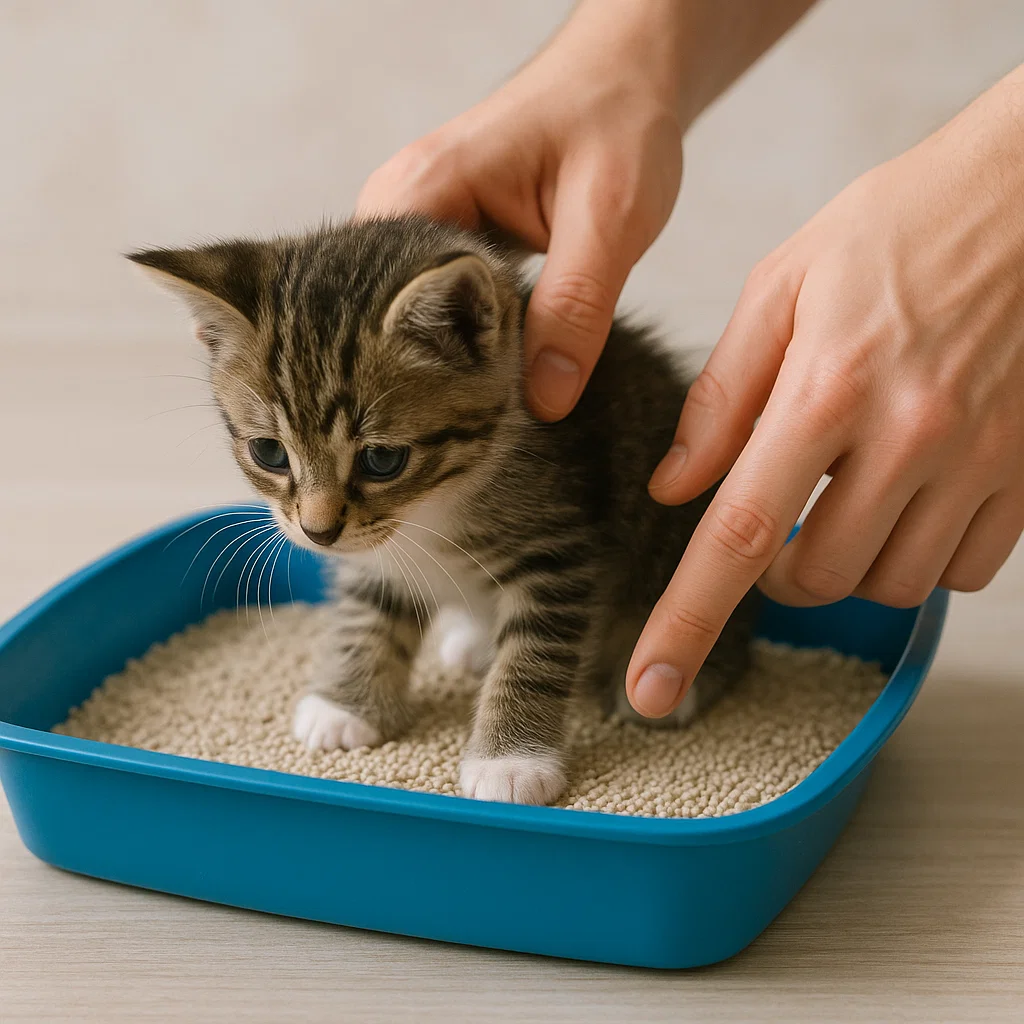
Helping your new kitten master the litter box is one of the most important foundational habits you can build. At Mad Cat Man, we know how critical this step is: a well-configured setup, positive reinforcement, and a little patience go a long way toward a lifelong cat + owner harmony.
In this comprehensive article you’ll learn why litter training matters, when to start, what to do (and avoid), and how to troubleshoot issues — all based on current best practices and expert sources.
Why Litter Training a Kitten Matters
Training a kitten to use the litter box isn’t just about convenience. There are several key reasons:
- Promotes health and hygiene – A designated elimination spot helps you monitor your kitten’s urine and faeces for signs of illness (changes in frequency, colour, consistency).
- Builds a strong foundation – A kitten that quickly adopts good litter box habits is less likely to develop avoidance behaviours or house-soiling problems later.
- Reduces stress for you and your kitten – A predictable, clean routine supports a confident kitten and a calmer household.
- Supports indoor lifestyle – For most homes in the USA, cats live indoors. Ensuring your kitten reliably uses the box makes indoor life smoother for everyone.
- Prevents behaviour problems – Improper elimination is a top reason cats are surrendered to shelters, so early success matters.
What You Will Get in This Guide
You’ll walk through:
- When to begin litter training a kitten
- Choosing the right equipment: box, litter, location
- Step-by-step training for your kitten
- Common mistakes and how to avoid them
- Troubleshooting when problems arise
- Frequently asked questions (FAQ) answered in featured-snippet style
Let’s dive in.
When to Start Litter Training a Kitten
Natural development and readiness
Kittens are born unable to eliminate on their own (their mother stimulates them) and gradually gain full elimination control. By about 3–4 weeks of age, some litter habits may begin. Kitten Lady+2greenvillehumane.com+2
In practical terms:
- If you are adopting a kitten at 6–8 weeks or older, you can begin training immediately. PetMD
- If your kitten is younger (3–4 weeks), you may start with a shallow box and simple encouragement, though full independence takes time. Kitten Lady+1
Key take-aways
- Start as soon as you bring the kitten home (in most cases). Trupanion Website
- Understand that younger kittens may need more hands-on assistance and supervision.
- If you adopt an older kitten or rescue, the same methods apply—be patient, consistent, and understanding.
Choosing the Right Equipment
Here are the three components that set you and your kitten up for success: the litter box, the litter itself, and the placement/spacing.
Litter box: size, shape & accessibility
- Go with a low-sided, shallow box for kittens so they can easily climb in and out. According to experts, a kitten-friendly box of around 13 × 9 inches is a good starting point. PetMD
- Avoid tall or covered boxes for young kittens—they may feel trapped or find them hard to use. Kitten Lady+1
- As your kitten grows, you can upgrade to a larger box (ideally 1.5× their body length) and possibly a covered option only if they prefer it. WIRED+1
Litter: type, depth & material
- For kittens younger than about 8–10 weeks, use non-clumping litter. Kittens often explore with their mouths, and clumping litter can pose a risk if ingested. PetMD+1
- Choose fine-grained, unscented, low-dust litter. Many cats prefer fine texture and react poorly to strong scented litters. indoorpet.osu.edu
- Fill the box with approximately 2 inches of litter, giving them room to dig and bury. For very young kittens, you may use less to make digging easier. Zoetis Petcare
Placement & number of boxes
- Position litter boxes in quiet, low-traffic areas, away from food and water bowls. Cats instinctively prefer a separation between elimination and feeding zones. fourpaws.com+1
- Ensure the box is easily accessible, not tucked under furniture or behind obstacles. The path must be clear so the kitten can get to it quickly. indoorpet.osu.edu
- For multi-cat households, or to be proactive, follow the rule: one box per cat, plus one extra. Humane World for Animals+1
Step-by-Step: How to Litter Train a Kitten
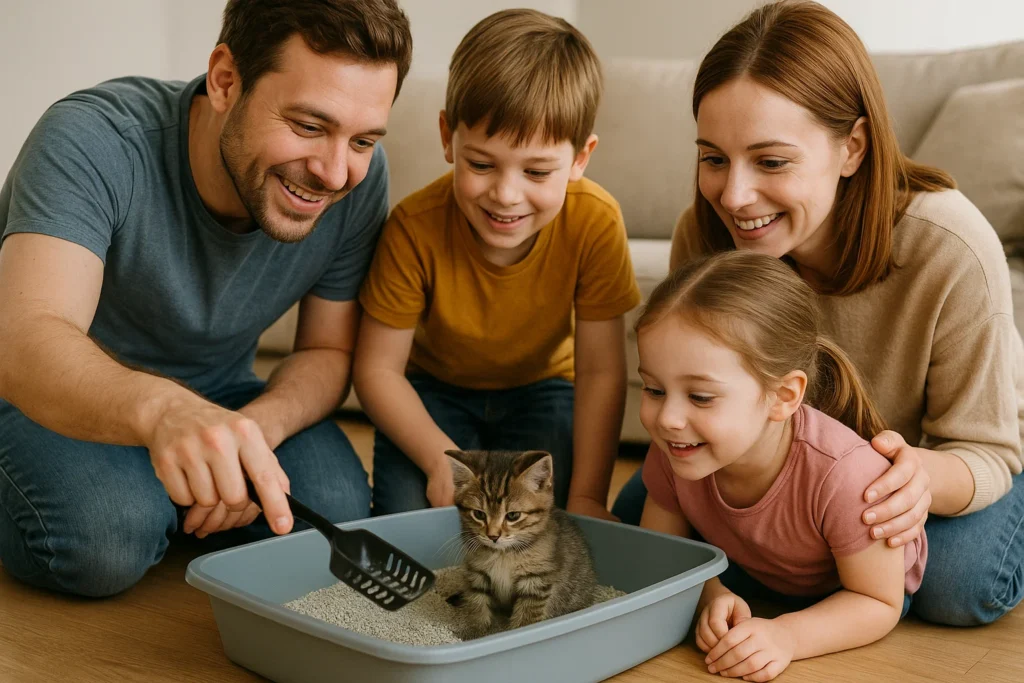
Introduction and first days
- Set up the box in a convenient, quiet spot before bringing the kitten home.
- When you bring the kitten in, show them the box location. Place them gently in the box—even if they don’t eliminate right away, it helps build familiarity. Trupanion Website+1
- After meals, naps or play are key times—they often stimulate the need to go. Place the kitten in the box right then. PetMD+1
Encouraging proper use
- Watch for signs your kitten needs to go: sniffing, scratching the floor, crouching posture. When you see these, gently pick up and place them in the box. armandhammer.com
- Let them dig and explore the litter; if they hesitate, gently take their front paw and mimic the scratching motion to cue them. Some owners report success this way. Reddit+1
- After your kitten uses the box correctly, offer calm praise or a treat. This reinforcement helps them associate the box with success. catsan.co.uk+1
Keeping it consistent
- Scoop the litter box at least once a day (and perhaps more often for kittens). Clean boxes encourage use. Kitten Lady+1
- Maintain the same box location for a while; moving it too soon can confuse your kitten. When you do relocate it, do so gradually. armandhammer.com
- When your kitten uses the box properly, you can gradually expand their roaming space. But ensure they always have a clear path to a box.
Common Mistakes (and How to Avoid Them)
Mistake: Too high-sided or covered boxes
Kittens may avoid boxes they can’t easily enter. Use shallow boxes until they’re confident.
Mistake: Using clumping litter too soon
Clumping litter can be ingested by inquisitive kittens and pose a health risk. Stick with non-clumping for young kittens.
Mistake: Placing boxes near food or water
Cats generally avoid eliminating near where they eat or drink. Respect this instinct to avoid resistance. fourpaws.com
Mistake: Punishing accidents
If your kitten eliminates outside the box, don’t punish them. Punishment can create fear and worsen the problem. Instead, calmly clean and redirect. catsan.co.uk
Mistake: Not enough boxes for multiple cats
If you have more than one cat (or kitten), fewer boxes than the “one per cat plus one” rule can cause competition or avoidance. Humane World for Animals
Troubleshooting: What to Do When Training Hits a Bump
Problem: Kitten is avoiding the litter box
Possible causes & solutions:
- Medical issue – Infection, urinary trouble or gastrointestinal problem can cause avoidance. Rule out with a vet. Louisiana SPCA
- Litter box setup issue – Maybe the litter type, box size or location isn’t suitable. Try changing to a shallower box or different litter. Kitten Lady+1
- Poor box location – If the box is in a loud, high-traffic or scary spot, relocate it to a calmer area. Zoetis Petcare
Problem: Kitten uses box sometimes, but also has accidents
- Clean the soiled spots with an enzyme-based cleaner to remove odour and avoid re-use of that spot. longmonthumane.org
- Consider temporary confinement to a smaller area with the box until habits solidify. Louisiana SPCA
- Observe whether accidents occur at a particular time or location and consider moving a box there.
Problem: Kitten is scratching but not eliminating
- Gently place the kitten in the box and allow time; ensure litter depth is appropriate.
- Make sure the box isn’t intimidating (lid too high, hidden behind furniture).
- If still no elimination after a reasonable period, consult your vet.
Bonus Tips for Long-Term Success
- Keep multiple litter boxes once your kitten becomes an adult cat; helps avoid territorial or access issues. indoorpet.osu.edu
- Monitor for changes in elimination habits—they often signal health issues.
- Use consistent cleaning routines: scoop daily, replace litter periodically, deep-clean the box monthly. catsan.co.uk
- When transitioning litter types (e.g., from non-clumping to clumping), introduce gradually by placing the new litter next to the old one so your kitten can choose. indoorpet.osu.edu
- Avoid moving the box frequently—cats like familiar routines. If you must move it, do so in small steps.
FAQs
How soon can I start litter training my kitten?
You can begin right away if you bring home a kitten that is 6 weeks or older. For very young kittens (3-4 weeks), you may introduce a shallow box but expect slower progress. greenvillehumane.com+1
Do kittens instinctively know how to use a litter box?
Yes, many kittens have a natural instinct to bury waste, but they still benefit from guidance: the right box, litter, location and reinforcement make a big difference. Class Act Cats
What type of litter should I use for a kitten?
For young kittens (under ~8–10 weeks), use non-clumping, unscented, fine-grain litter. As they grow older you may transition to clumping if desired. PetMD+1
How many litter boxes do I need?
A good rule: one litter box per cat, plus one extra. In multi-level homes, place boxes on each floor. Humane World for Animals
My kitten had an accident outside the box—what do I do?
Stay calm. Clean the spot with an enzyme cleaner. Place the kitten gently in the box, offer praise when they use it. Avoid punishment. Check box setup and consult vet if accidents persist. longmonthumane.org+1
Why is my kitten scratching at the floor but not using the litter box?
It could be a sign they need to go but feel uncomfortable in the box (size, location, litter type). It may also signal a medical issue. Evaluate the box setup and seek veterinary advice if needed.
Conclusion: Your Kitten’s Litter Box Success Starts Here

Litter training your kitten is one of the most rewarding investments you’ll make as a pet owner. With the right equipment, a good setup, consistency and gentle encouragement, you’ll set your furry friend on the path to good habits that will last a lifetime.
At Mad Cat Man, we believe in giving you the tools and knowledge you need to help your kitten thrive—and part of that is mastering the litter box. If you follow this guide and stay patient (and kind) through any hitches, you’ll have a confident kitten and a clean, stress-free home.
Ready to take the next step? Introduce that box, make it accessible, and watch your kitten succeed.