
Table of Contents
- What the homeopet feline uti+ urinary tract infection reviews really say
- How cat UTIs (urinary tract infections) really work: Vet insight you can use
- Is HomeoPet Feline UTI+ safe? Dosing, precautions, and when to skip it
- Safer alternatives and complements with stronger evidence
- Buying guide and owner trials: smart picks, budgets, and checklists
- Where Mad Cat Man fits in your plan
- FAQs: quick answers to common questions
This blog post may contain affiliate links. As an Amazon Associate I earn from qualifying purchases.
HomeoPet Feline UTI+ Urinary Tract Infection Reviews: Owner Trials, Vet Insight & Safer Alternatives
If you are scanning homeopet feline uti+ urinary tract infection reviews while watching your cat make too many trips to the litter box, take a breath. You are not alone, and you have options. In this friendly, expert-backed guide from Mad Cat Man, we unpack what owners really report, how a veterinarian’s lens changes the picture, and which safer, evidence-led steps you can take next. Along the way, I will share hard-learned tips from my own home and our team’s testing so you can decide with confidence instead of guesswork.
What the homeopet feline uti+ urinary tract infection reviews really say
Read enough owner accounts and a pattern emerges. Many guardians say their cats seem calmer and pee less frequently within a few days, especially in mild flare-ups or stressy weeks. Others report no noticeable change after the full course, or improvement that fades when the drops stop. The most consistent notes involve easy dosing and decent tolerance in picky cats, plus confusion about when to use it versus when a veterinarian visit is non-negotiable.
Why the split? A lot of what looks like a UTI (urinary tract infection) in cats is not a true bacterial infection. In fact, a big share of feline lower urinary tract issues are FIC (feline idiopathic cystitis), which is inflammation often linked to stress, not bacteria. That means a homeopathic liquid might coincide with natural improvement, or with changes you make at the same time such as more water, a calmer routine, or a switch to wet food. When underlying bacteria are present, only an appropriate antibiotic (antibacterial medication) guided by a urine culture truly resolves the infection.
- Common positives: easier litter box visits, calmer behavior, and fewer vocalizations during mild episodes.
- Common negatives: no change with severe symptoms, relapse after stopping, and uncertainty about real diagnosis.
- Most helpful contexts: early, mild discomfort; stress-related flare-ups; alongside hydration and diet tweaks.
- Least helpful contexts: male cats straining with little to no urine, blood clots, or full urinary blockage emergencies.
| Theme from Owner Reports | What It Likely Means | Who It Might Suit | Who Should Skip |
|---|---|---|---|
| Quick comfort in mild cases | May align with natural resolution or stress relief | Cats with occasional flare-ups and good hydration | Cats with recurrent confirmed infections |
| No change in severe symptoms | Underlying cause needs medical therapy | — | Male cats straining, cats with fever or lethargy |
| Easy to give | Liquid dosing blends with food or water | Finicky eaters who resist tablets | Cats who refuse any change in bowls or water |
| Relapse after stopping | Root cause not addressed | — | Cats with crystals or stones needing dietary therapy |
How cat UTIs (urinary tract infections) really work: Vet insight you can use
Here is the veterinarian view, distilled. A lot of feline lower urinary problems belong to FLUTD (feline lower urinary tract disease), an umbrella that includes FIC (feline idiopathic cystitis), crystals, stones, true bacterial UTI (urinary tract infection), and rarely tumors. Across veterinary texts and teaching hospitals, estimates typically show that the majority of young to middle-aged indoor cats with urinary signs have FIC (feline idiopathic cystitis), not bacterial infection. Older females, diabetic cats, and cats with kidney disease climb higher on the bacterial UTI (urinary tract infection) risk ladder.
Watch This Helpful Video
To help you better understand homeopet feline uti+ urinary tract infection reviews, we’ve included this informative video from Veterinary Secrets. It provides valuable insights and visual demonstrations that complement the written content.
Diagnosis matters because the treatments differ. A urinalysis with sediment exam and, where indicated, a urine culture tell the real story. If crystals or stones are present, prescription urinary diets that control minerals and urine pH (potential of hydrogen) outperform supplements. If stress drives inflammation, environmental enrichment, play, and routine are medicine. If bacteria are present, the right antibiotic (antibacterial medication) for the culture result is the fix, not guesswork drops.
| Red Flag Symptom | Action You Should Take |
|---|---|
| Straining with little or no urine, especially in male cats | Go to an emergency veterinarian immediately. Urinary blockage is life-threatening. |
| Blood in urine, fever, vomiting, or profound lethargy | Same-day veterinarian appointment for diagnostics and pain control. |
| New urinary accidents around the house | Schedule a veterinarian exam and urinalysis to rule out infection and crystals. |
| Recurring signs every few weeks | Ask your veterinarian about urine culture, imaging, and diet strategy. |
Is HomeoPet Feline UTI+ safe? Dosing, precautions, and when to skip it
HomeoPet Feline UTI+ is a homeopathic liquid that many owners use as an OTC (over the counter) comfort aid during urinary flare-ups. It is generally considered low risk and easy to give by mouth or in water. That said, low risk does not mean right for every cat, and it does not replace a proper diagnosis. Safety is about picking the right situations and avoiding the wrong ones.
Use it thoughtfully. If your cat is bright, eating, passing urine, and only showing mild litter box fussiness, a short trial while you boost hydration and reduce stress can be reasonable. Always read the label, stick to the manufacturer’s instructions, and check with your veterinarian, ideally a DVM (Doctor of Veterinary Medicine) who knows your cat’s history. If symptoms worsen or persist more than 24 to 48 hours, or if any red flags appear, stop and seek veterinary care immediately.
| Product Snapshot | What Owners Should Know |
|---|---|
| Form | Liquid drops for oral use or mixing with food or water |
| Intended Use | Comfort support for urinary tract signs; not a substitute for antibiotics (antibacterial medications) when infection is confirmed |
| Best Fit | Mild episodes in otherwise healthy cats, alongside hydration and stress reduction |
| Not For | Any cat with blockage signs, severe pain, fever, or repeat infections without culture-guided therapy |
| Storage | Follow label guidance; keep away from sunlight and heat |
| Veterinarian Tip | Use only as part of a plan that includes proper diagnostics if signs persist |
- Do use it as a short trial in mild cases while you also boost water intake and reduce stress.
- Do not use it to delay care if your cat strains, seems painful, or passes only drops.
- Do discuss any recurrent urinary signs with your veterinarian to prevent complications.
Safer alternatives and complements with stronger evidence
Because so many cat urinary issues are non-bacterial, routine and environment can be powerful medicine. Simple changes like switching to moisture-rich food and adding a gentle-flow fountain can transform the bladder from cranky to calm. If crystals or stones are in the picture, a prescription urinary diet that targets urine pH (potential of hydrogen) and minerals is the proven path. And if bacteria are confirmed, culture-guided antibiotics (antibacterial medications) cure the infection while pain relief supports comfort.
Below is a quick comparison to help you map a plan with your veterinarian. Notice how each option has a different job. You can stack several of these for best results, especially hydration, enrichment, and litter box hygiene. Think of them like puzzle pieces that click together for a calmer bladder and a happier cat.
| Approach | Best Use Case | Evidence/Notes | What to Watch |
|---|---|---|---|
| Veterinary diagnostics and culture-guided antibiotics (antibacterial medications) | Confirmed bacterial UTI (urinary tract infection) | Gold standard for infection; prevents relapse and resistance | Finish full course; recheck if signs persist |
| Prescription urinary diet | Crystals or stones; urine pH (potential of hydrogen) imbalance | Strong evidence for dissolving struvite and preventing recurrence | Feed exclusively; avoid treats that raise minerals |
| Hydration upgrade: wet food plus water fountain | FIC (feline idiopathic cystitis) and general urinary wellness | Increased water dilutes irritants and reduces bladder inflammation | Choose easy-to-clean, BPA (bisphenol A) free fountain with quiet pump |
| Environmental enrichment and stress reduction | FIC (feline idiopathic cystitis); multi-cat tension | Play, hiding spots, and routine reduce neurogenic bladder flares | Keep litter boxes at least one per cat plus one, cleaned daily |
| Targeted supplements | Some cats with recurrent discomfort | Glucosaminoglycans and omega-3s have supportive data; D-mannose has limited feline evidence | Discuss with a DVM (Doctor of Veterinary Medicine); avoid stacking too many products |
| Homeopathic aids like HomeoPet Feline UTI+ | Mild, early signs as comfort measure | Evidence is mixed; may help some cats alongside core care | Do not rely on it when red flags are present |
- Move most meals to wet food to raise water intake without battles.
- Offer at least two wide, whisker-friendly bowls or a quiet fountain away from the litter box.
- Play daily to lower stress, especially with indoor-only or high-energy breeds such as Maine Coons.
- Keep litter boxes large, unscented, and super clean to reduce straining and accidents.
Buying guide and owner trials: smart picks, budgets, and checklists
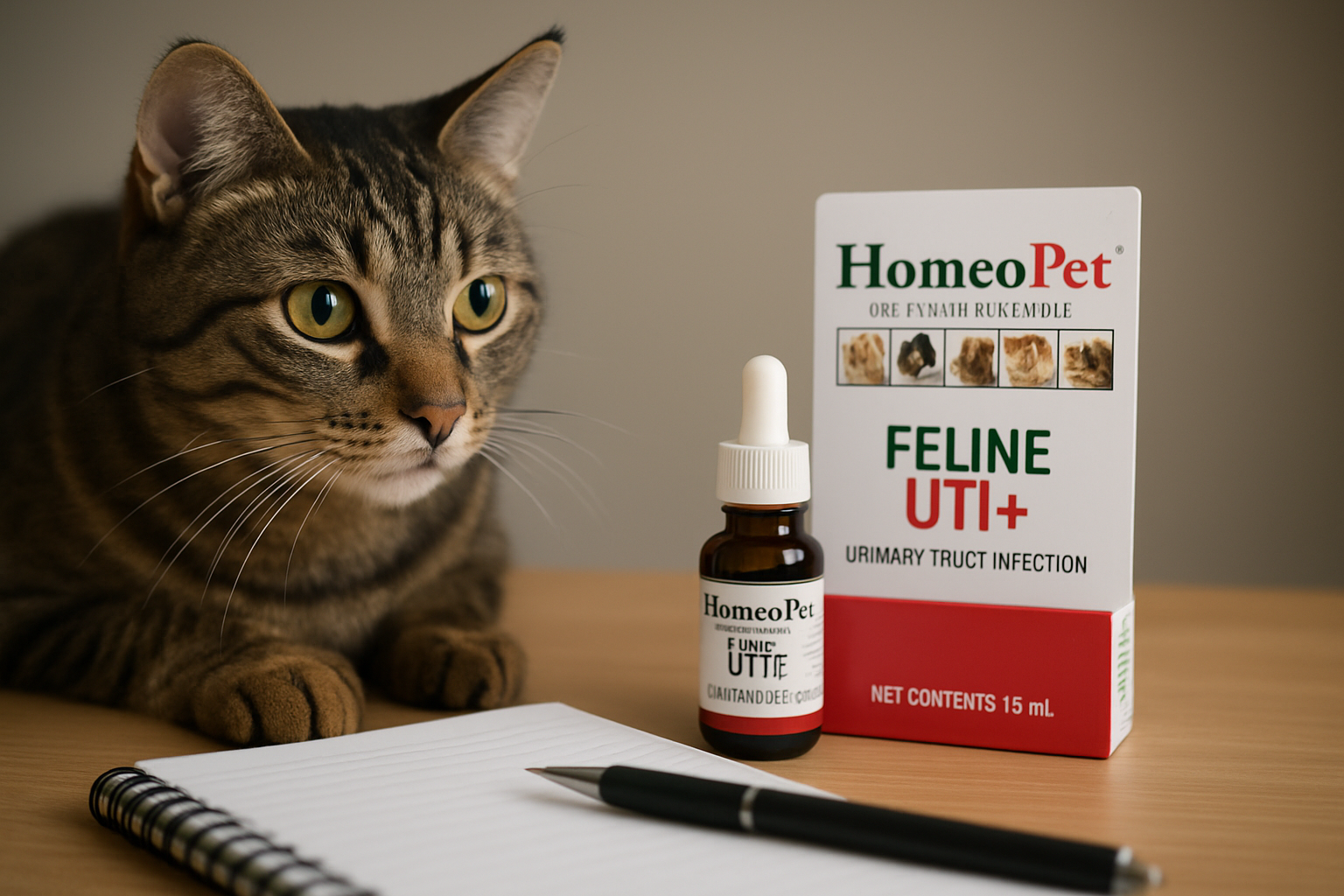
Let’s get practical. If you decide to trial HomeoPet Feline UTI+, buy from a reputable retailer, check the seal and expiration date, and track your cat’s behavior in a simple diary. Pair the trial with hydration upgrades and a calmer routine so you stack the odds in your favor. If nothing improves in 24 to 48 hours, or your cat seems worse, end the trial and call your veterinarian without delay.
On the gear side, not all products are equal. A water fountain that is quiet, easy to clean, and BPA (bisphenol A) free encourages more sipping. A large, high-sided litter box with unscented clumping litter helps your cat relax and fully empty the bladder. At Mad Cat Man, our product reviews and buying recommendations cut through marketing language with real-world tests across budgets, so you can confidently choose what fits your home, not someone else’s.
| Category | What to Look For | Budget Tip | Avoid |
|---|---|---|---|
| Water fountain | Quiet motor, dishwasher-safe parts, BPA (bisphenol A) free plastic or stainless steel | Buy spare filters in multipacks to lower cost | Tiny reservoirs that require constant refills |
| Litter box | Large footprint, high sides, easy entry | Storage tubs make roomy, affordable boxes | Covered boxes that trap odors and stress timid cats |
| Wet food | High moisture, quality animal protein, complete and balanced | Mix price tiers; rotate flavors to prevent boredom | Only dry food for cats with recurrent urinary signs |
| HomeoPet Feline UTI+ | Authentic product, clear dosing label | Track response in a diary to avoid re-buying blindly | Using to postpone needed veterinary care |
Here are three mini owner trials we have seen echoed across our reader community. First, Luna, a 2-year-old spayed female with stressy moves, improved when her guardian added a water fountain, played nightly, and trialed HomeoPet Feline UTI+ for a week. Second, Max, a middle-aged neutered male who strained with only drops, needed an emergency catheter and a prescription urinary diet; no supplement would have helped that crisis. Third, Daisy, a senior female with diabetes, had a true bacterial UTI (urinary tract infection) confirmed on culture, and antibiotics (antibacterial medications) cleared it while her guardian upgraded hydration and litter box hygiene to prevent recurrence.
Want a sanity-saving shortcut? Mad Cat Man organizes everything into easy categories so you can jump straight to what you need: product reviews and buying recommendations, behavior and training tips, health and preventive care guides including worming, microchipping, and dental care, breed guides such as Maine Coon comparisons, and safety checks for humidifiers and houseplants. The goal is simple: help you choose wisely, act calmly, and enjoy your cat more with fewer late-night panics.
Where Mad Cat Man fits in your plan
When your cat hurts, information overload hurts too. Mad Cat Man exists to reduce stress with clear, experience-based guidance, vet-approved insights, and practical checklists. We test gear, compare foods and fountains, and map out step-by-step plans so you are never guessing which lever to pull next. Whether you are a first-time pet parent or a seasoned cat enthusiast, you will find organized categories and straight-talking reviews that honor your budget and your cat’s comfort.
For urinary issues, that looks like this: a quick symptom triage, a hydration-first setup, smart shopping lists for bowls, fountains, litter boxes, and wet food, and balanced assessments of aids like HomeoPet Feline UTI+. Pair those with your veterinarian’s diagnosis and you will have a plan that is safer, kinder, and more likely to stick. That is the heart of our mission at Mad Cat Man.
FAQs: quick answers to common questions
Does HomeoPet Feline UTI+ cure a UTI (urinary tract infection)? No. If bacteria are present, only appropriate antibiotics (antibacterial medications) guided by a veterinarian can cure the infection. HomeoPet Feline UTI+ may offer comfort in mild, non-bacterial situations when used with hydration and stress reduction.
How fast should I see results? In mild cases, some owners report calmer litter box behavior within a few days. If your cat worsens, shows red flags, or no change occurs within 24 to 48 hours, call your veterinarian.
Is it safe to combine with other products? Usually, but stacking multiple supplements can create confusion and cost without benefit. Discuss combinations with your DVM (Doctor of Veterinary Medicine), especially if your cat takes other medications.
What about cranberry or D-mannose? Research in cats is limited compared with dogs and humans. These may help some cats, but hydration, stress control, and diet have stronger evidence. Always consult your veterinarian.
Can I prevent future UTIs (urinary tract infections)? You can reduce risk by keeping your cat hydrated with wet food and a fountain, maintaining a clean and plentiful litter setup, reducing stress, and following any prescription diet if crystals or stones were found.
Bottom line: this guide decoded what owner experiences really mean and how to use them well. Imagine having a plan that blends comfort measures with veterinary precision so you never feel stuck at 2 a.m. Again. In the next 12 months, a few smart habits could make flare-ups rare rather than routine. What will your first small step be after reading these homeopet feline uti+ urinary tract infection reviews?
Additional Resources
Explore these authoritative resources to dive deeper into homeopet feline uti+ urinary tract infection reviews.
Discover Smarter HomeoPet Feline UTI+ Choices with Mad Cat Man
Explore organized product reviews and buying recommendations for food, toys, furniture, and grooming supplies to help every cat owner make confident, budget-smart choices.