
Table of Contents
- The 12-Point Vet-Informed Checklist
- How to Interview a Cat Sitter
- What Great Visits Look Like: Timing, Tasks, and Updates
- Health, Behavior, and Safety Essentials
- Prep Your Home and Supplies for Seamless Care
- Pricing, Insurance, and Policies Without Surprises
- Real-World Example: A Shy Cat Wins
- Where Mad Cat Man Fits In
- FAQs: How to Hire The Right Cat Sitter
This blog post may contain affiliate links. As an Amazon Associate I earn from qualifying purchases.

If you have ever come home and found an overturned water bowl or a sulky stare from a whiskered roommate, you know the stakes are high when choosing a cat sitter. The right person keeps routines steady, reads feline body language, and notices tiny health changes before they become big problems. The wrong pick, well, can mean a stressed pet and a stressed you. This vet-informed guide pulls together practical steps so you can hire the right cat sitter with total confidence.
Here is the goal: calm visits, consistent care, and cats who greet you at the door like you never left. Along the way, I will share what veterinarians want sitters to track, common red flags, and the prep that turns good service into great service. I will also show you how Mad Cat Man’s organized categories for easy browsing help you research everything from litter scoops to grooming supplies, so your sitter has the right tools waiting on day one.
The 12-Point Vet-Informed Checklist
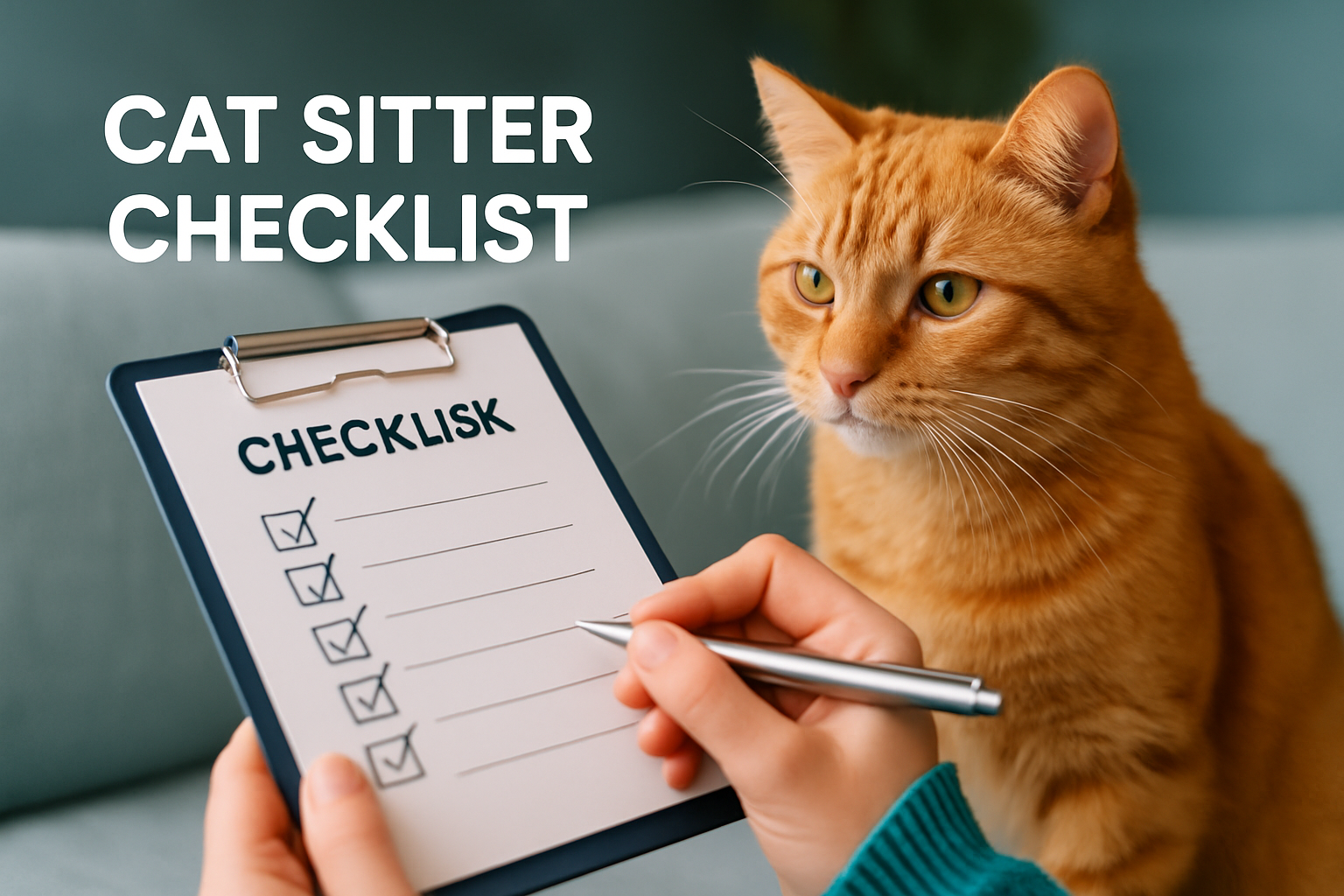
You do not need to be a behaviorist to hire smart. You just need a clear list and the resolve to ask follow-up questions. Use this twelve-point, vet-informed checklist during screening and your meet-and-greet. If you are new to pet care logistics, print it and check items off together with your sitter.
- Proof of insurance and background checks: Ask for current business insurance and recent background screening. Responsible sitters happily provide documentation. If they hesitate or get defensive, move on.
- Professional references you can call: Seek two to three clients with similar cats or needs, such as seniors or shy personalities. Listen for details about punctuality, communication, and follow-through.
- Veterinary emergency plan: A prepared sitter confirms your preferred clinic, after-hours emergency hospital, and consent for treatment. Bonus points if they carry pet first aid kits and know basic CPR (cardiopulmonary resuscitation).
- Medication competence: If your cat needs pills, insulin, or subcutaneous fluids, ask for specifics. A skilled sitter explains restraint techniques, dosing logs, and what they do if a dose is missed.
- Hygiene and litter standards: Expect scooping at every visit, full refresh as needed, and sanitizing accidents. Litter box issues often signal health changes, so the sitter should note clumps and stool consistency.
- Feeding precision: Clear measuring, fresh water, and no quiet “free-feeding” unless that is your plan. With over half of cats in the United States overweight, accurate portions matter, according to APOP (Association for Pet Obesity Prevention).
- Play and enrichment: Short, structured play reduces stress and unwanted behavior. Your sitter should rotate toys, use food puzzles, and tailor sessions to age and mobility.
- Daily health check: A quick nose-to-tail scan catches sneezes, squints, hair mats, or litter box changes. Many veterinarians recommend tracking appetite, thirst, and energy in a shared log.
- Secure home practices: Door and window checks, alarm codes, and key handling protocols should be routine. Professional sitters document entry and exit times to protect your home.
- Clear visit length and frequency: Adult cats typically do best with at least one substantial visit daily; kittens and special-needs cats may need two. Confirm exact timing in writing to prevent “rush-throughs.”
- Updates you can count on: Expect message summaries with photos, ideally around the same time each visit. Consistent updates calm your nerves and build trust.
- Comfort with personalities: Shy cat? High-energy kitten? Gentle giant Maine Coon? A great sitter adapts to temperament, letting timid cats set the pace while still meeting care needs.
If a sitter checks these boxes and can explain their approach in plain language, you are looking at a strong partner. Still, the interview is where you feel how they think on their feet, so let us set you up with the right questions.
How to Interview a Cat Sitter
Strong interviews are a blend of scenario questions and specifics. You are listening for calm reasoning, consistent process, and empathy for your cat’s point of view. Try these prompts, then compare answers using the quick table below.
Watch This Helpful Video
To help you better understand cat sitter, we’ve included this informative video from CaseOh. It provides valuable insights and visual demonstrations that complement the written content.
| Question to Ask | A Strong Answer Sounds Like | Red Flag to Watch |
|---|---|---|
| What is your plan if my cat hides? | “I sit quietly, use treats or wand toys, and observe from a distance. I still verify food, water, litter, and note behavior in the log.” | “I will just leave food and go.” No plan to confirm welfare. |
| How do you handle medication? | Explains techniques, shows a sample log, and asks to practice with treats. Comfortable with pills, liquids, or injections if needed. | “I have not done that, but I will wing it.” |
| What if there is vomiting or diarrhea? | Monitors frequency, photographs, saves a sample if requested, and contacts you and your veterinarian if it continues. | Dismisses it without tracking or communication. |
| How long is a standard visit? | Gives a precise time range and a checklist of tasks completed every visit. | Vague: “It depends” with no minimums. |
| What does enrichment look like? | Rotates toys, uses food puzzles, and adapts to age and health. Mentions play ending on a calm note to avoid overstimulation. | “I will throw a toy for a minute.” |
| How do you update clients? | “Photo and notes by 8 pm daily via text or app. Emergencies get a call.” | Unstructured or sporadic communication. |
One more tip: trust your gut, but verify. If someone claims years of experience yet cannot describe basic cat body language, keep looking. The right cat sitter will happily explain their methods because good process is a selling point, not a secret.
What Great Visits Look Like: Timing, Tasks, and Updates
Knowing what is “standard” prevents misunderstandings and sets your sitter up for success. Your cat does not count minutes, but consistency is everything. Use this table to align on visit types and what gets done each time.
| Visit Type | Typical Duration | Best For | Core Tasks | Extras to Confirm |
|---|---|---|---|---|
| Quick Check-In | 15 to 20 minutes | Confident adult cats on short trips | Food, water, scoop litter, visual health check, short affection | Mail, lights, plant watering, thermostat check |
| Standard Visit | 30 minutes | Most adult cats, single-cat homes | All basics plus targeted play or brushing, detailed update with photos | Medication administration if needed |
| Extended Care | 45 to 60 minutes | Shy cats, multi-cat households, kittens or seniors | Slow approach, longer play, pill or injection, deeper cleaning as needed | Enrichment rotation, puzzle feeding, behavior notes |
| Overnight Stay | 8 to 12 hours | High-anxiety cats or complex medical needs | Bedtime and morning routine, meds, multiple check-ins, home security | Morning photo and log, temperature monitoring |
Beyond timing, ask for a shared checklist with boxes: fed, water refreshed, litter scooped, play done, meds given, notes logged. Many owners love a quick “behavior snapshot” such as “ate 90 percent of dinner, normal clumps, playful for five minutes, rested by the window.” Clear patterns help you and your veterinarian spot subtle shifts early.
Health, Behavior, and Safety Essentials
Cats thrive on predictable routines. Research cited by AAFP (American Association of Feline Practitioners) consistently shows that environmental stability reduces stress behaviors like overgrooming or nighttime yowling. Plan visits around your cat’s usual meal and play windows, and ask your sitter to finish play with calm scent-marking or treat hunting so your cat settles happily afterward. Small details such as offering water at multiple stations and wiping food bowls daily support hydration and hygiene.
Health tracking is not scary; it is just pattern watching. Over several days, your sitter’s notes should reveal whether your cat is eating, drinking, and eliminating normally. A sudden change in litter clumps, strong urine odor, or straining can be early signs of urinary tract problems in male cats, which is an emergency. Meanwhile, APOP (Association for Pet Obesity Prevention) reports that the majority of cats in the United States are overweight, so accurate portions and short, daily play sessions are real health care, not “nice to haves.”
Safety is two-pronged: pet safety and home security. Ask the sitter to keep escape-prone cats away from doors by tossing treats to a “station” mat before opening. Homewise, create a key protocol, test the alarm code, and agree on a “photo on arrival” if that reassures you. If your cat is microchipped, note the registry number in the sitter’s binder; microchipped cats are far more likely to be reunited with owners according to multiple shelter datasets.
Prep Your Home and Supplies for Seamless Care
Great visits are built before your suitcase zips. Set out the exact scoop you want used, pre-measure portions if your cat is on a diet, and leave out two or three favorite toys. Do a quick “cat safety audit”: secure dangling cords, put chemicals away, and note plants that are not cat-safe. If your cat hates the carrier, place it open with a fleece and a sprinkle of treats so it is familiar if transport is ever needed.
- Printed care sheet: feeding, meds, allergies, veterinarian contact, emergency contact.
- Supplies staged: litter, liners, scoops, food, treats, cleaning sprays, spare bowls.
- Health basics: pill pockets, syringes if needed, grooming tools, a small towel for gentle restraint.
- Enrichment: wand toy, puzzle feeder, scratch options in at least two rooms.
- Home notes: breaker box location, Wi-Fi (wireless fidelity) password if using cameras, alarm instructions.
Quick resource spotlight: Mad Cat Man organizes product reviews, safety explainers, and how-to checklists into clear categories so you can gear up fast. Unsure which clumping litter keeps dust down for an asthmatic cat? Curious which vacuum minimizes dust and dander? Need a Maine Coon scratching post that will not wobble? Our step-by-step shopping checklists and vet-informed guides help you choose confidently and leave a tidy, stress-free setup for your sitter.
Pricing, Insurance, and Policies Without Surprises
Rates vary by location, visit length, and medical tasks. What you want is transparent pricing and policies that respect your time and your sitter’s. Use this table to benchmark common offerings, then confirm specifics. Prices below are ballpark USD (United States Dollar) ranges gathered from national directories and independent sitter sites.
| Service | Typical Price Range (USD) | What Is Usually Included | Policy Notes |
|---|---|---|---|
| Quick Check-In (15 to 20 min) | $18 to $30 | Food, water, litter scoop, brief play, update | May add weekend or holiday fee |
| Standard Visit (30 min) | $25 to $40 | All basics, play or brushing, photo update | Extra pets may add $3 to $10 each |
| Extended Visit (45 to 60 min) | $35 to $60 | Longer play, deeper clean, behavior notes | Better for shy or multi-cat households |
| Overnight Stay | $80 to $150 | Evening and morning routine, multiple checks, home security | Clarify earliest arrival and latest departure |
| Medication Administration | $5 to $20 add-on | Pills, liquids, injections, logs kept | Some include in extended visit rate |
| Emergency Transport | $25 to $75 per hour | Drive to clinic and wait time | Requires signed treatment consent |
Also check these policies in writing: cancellation windows, severe weather plans, key handling, and communication schedules. I like to agree on a “we escalate by phone after two missed text replies” rule so no message gets buried. A professional cat sitter will welcome clarity because it protects both of you.
Real-World Example: A Shy Cat Wins
On our team, we still talk about “Willow,” a tuxedo who would vanish the second a door clicked. Her owner booked extended visits, asked the sitter to enter quietly, and set a cozy station three meters from the favorite hiding spot. Day one, the sitter handled essentials and left a calm note. Day three, Willow crept out to sniff a wand toy; day five, she accepted chin rubs. The takeaway is not magic, it is process plus patience. Matching visit length to temperament and letting the cat set the pace turns anxiety into trust.
If your cat has medical needs, the same structure works. For example, a senior cat with arthritis may prefer two shorter visits to break up the day. The sitter tracks litter clumps for hydration insights, warms wet food with a splash of water, and keeps play low-impact. Small choices stack up to big comfort.
Where Mad Cat Man Fits In
You should never feel like you are guessing. At Mad Cat Man, we publish experience-based product reviews, how-to checklists, behavior insights, and vet-informed health guides, all organized into clean categories so you can find what you need in seconds. New to grooming? You will find step-by-step tutorials. Unsure about worming or microchipping? Our health and preventive care guides walk you through it. Comparing breeds for temperament and activity levels? Our breed guides, including Maine Coon deep dives and comparisons, make those choices clear.
Most importantly, we connect the dots between information and action. For a sitter handoff, our shopping checklists help you stage food, toys, and furniture that actually suit your cat’s preferences and your budget. Our safety content flags risky plants and outlines product suitability, from HEPA vacuums to furniture finishes. The result is a calm home, a confident sitter, and a cat who keeps purring while you are away.
One last reminder: your sitter’s skills work best when paired with your knowledge of your cat. The more you share about quirks, play styles, and “baseline normal,” the better the outcome. Think of this as you plus a trusted pro, not a handoff you disappear from.
Ready to make your short list? Scroll back to the twelve-point list, pick three non-negotiables, and schedule interviews. With the right questions and prep, hiring a cat sitter becomes simple, sensible, and genuinely stress-free.
FAQs: How to Hire The Right Cat Sitter
Because you are probably asking these right now, here are fast, evidence-informed answers that owners often want before they click “confirm.” Use them to align expectations with your sitter, then adjust for your cat’s needs.
- How often should a sitter visit? For healthy adult cats, once daily is common; kittens, seniors, or medical cases do better with two visits.
- Do cameras help? Many owners feel calmer with a living room camera. Share the Wi-Fi (wireless fidelity) password if you want the sitter’s live check-ins.
- What if my cat will not play? Quiet enrichment counts. Scent work, window perches, and food puzzles keep brains busy without chase games.
- Is outdoor time okay? Only if a secure catio or lead-trained routine is already established. New outdoor experiments are risky during your trip.
- Which supplies matter most? Clean litter, fresh water at two stations, a wand toy, and the food your cat’s stomach already trusts. New foods can wait.
If you want deeper dives on any of this, Mad Cat Man’s category pages bundle product reviews, behavior tips, health checklists, and safety explainers so you can skim or study as needed. That way, your sitter walks into a setup designed for success.
Here is the punchline you came for: a calm plan, a clear process, and a vetted pro make for truly stress-free visits. Imagine the next twelve months with zero “uh-oh” texts and photo updates that actually make you smile. What would you do differently right now to set your next cat sitter up for a win?
Additional Resources
Explore these authoritative resources to dive deeper into cat sitter.
Plan Cat Sitter Success with Mad Cat Man
Explore organized categories for easy browsing to make confident, low-stress cat sitter choices, ideal for current and prospective owners, enthusiasts, first-time parents, breed researchers, and budget-minded shoppers.
Pros
- Reduces appetite and cravings.
- Helps preserve lean muscle mass.
- Increases calorie burn (thermic effect).
- Supports long-term calorie control.
Cons
- Not suitable for some kidney conditions.
- High protein foods can cost more.
- Excess intake still leads to fat gain.
- Requires planning for fibre and hydration.